When you search on Google, the clickable title and the short snippet beneath it, driven by Meta Tags in SEO, tell users and search engines what your page is about and shape how it appears in results.
Think of meta tags as your site’s digital handshake; they create the first impression. While they don’t always boost rankings directly, they play a big role in visibility and clicks as part of a structured on-page SEO strategy. And yes, they still matter in 2026. With AI-powered search results and smart previews, metadata helps your content stand out where it counts.
In this blog, I’ll walk you through what meta tags are, why they’re important, and how to use them effectively. We’ll cover the essential types, SEO best practices, and common mistakes to avoid. If you want to place title tags and meta descriptions in context with other page-level signals, review the on page SEO factors that matter most in 2026.
What Are Meta Tags in SEO?
SEO meta tags, often called Meta Tags in SEO, are small snippets of code that describe your webpage’s content. They help search engines understand what your page is about before crawling it, and while users don’t see them on the page, they appear in search results.

You’ll find webpage meta tags in the <head> section of your HTML code. That’s the part of your site that contains behind-the-scenes data like the title, description, and viewport settings. They act as signposts for search engines and browsers.
If you’re new to what is seo, meta tags are a core building block. They shape visibility and click-through rates, guiding how search engines interpret and present your pages—especially as AI-driven results expand.
How Do Meta Tags Work in 2026?
Search engines still scan meta tags to understand your content quickly. They use this info to decide how your page should appear in search results. AI tools also reference meta tags to generate summaries or answers.
Agencies scaling content production can integrate these steps into automation for agency workflows, reducing repetitive updates and streamlining on-page SEO tasks.
Website metadata helps with indexing by clearly signaling what a page is about, which is typically evaluated during a technical SEO audit. Title tags can influence rankings, descriptions improve click-through rates, and tags like robots or canonical guide how search engines treat your content.
For large sites with thousands of URLs, technical SEO agencies often audit metadata rules at the template level to ensure indexing signals remain consistent across the entire site.
For agencies scaling content production, this becomes even more critical—especially in an AI-driven search landscape—so it’s worth understanding why agencies can’t guarantee AI results when metadata quality, platform interpretation, and automation all intersect.
In 2026, AI-powered search tools like SGE and Bing Copilot rely on structured data. As AI search engines shift toward summarizing rather than ranking.
Your metadata becomes a key input for how your content is interpreted and surfaced, especially when comparing AI-Driven SEO vs Traditional SEO approaches.
While LLMs don’t “rank” results, they use meta tags to summarize or source answers. Optimized tags can help your content surface in AI-driven previews and responses, especially as part of broader Generative Engine Optimization (GEO) strategies.
How many types of Meta Tags are there in SEO?
Not all meta tags are created equal. Some affect rankings, others improve visibility. Each one serves a specific purpose in how your content appears in search results.
Let’s break down the key types and how they impact your SEO strategy.
1- Meta Title Tag
The meta title tag defines the title of your web page. It appears as the blue clickable link in Google search results.
You’ll also see it on browser tabs and when sharing links.

Here’s what a basic title tag looks like in HTML:
<title>Best SEO Tools for 2026 | YourSite</title>
It lives inside the <head> section of your webpage code.
Why Is the Meta Title Tag Crucial for Rankings?
Search engines use the title tag as a ranking signal. It helps them understand the topic and intent of your page. A strong title can also boost your click-through rate (CTR).
Use keywords naturally and keep it under 60 characters. Make sure each page has a unique, relevant title. Add your brand name at the end if it fits cleanly.
2- Meta Description Tag
A meta description tag is a short summary of your page’s content. It appears below the title in search engine results pages (SERPs). Think of it as your pitch to convince users to click.

The ideal length for a meta description is 150–160 characters. Any longer, and search engines may cut it off. Keep it clear, concise, and relevant to the page.
How Can Meta Descriptions Improve Your Click-Through Rates?
While meta tags don’t directly influence rankings on Google, they support search engine ranking factors like user engagement. But they strongly influence how many people click your result. A well-written description can make your listing stand out.
However, Bing still uses meta tags including meta keywords and descriptions as active ranking signals, making them more influential in non-Google SEO strategies.
Use action words and highlight a clear benefit or value. Match search intent and include your target keyword naturally. Avoid duplicate descriptions across multiple pages.
3- Meta Robots Tag
The meta robots tag tells search engines what to do with your page. It controls indexing and whether to follow links on the page. Placed in the <head>, this meta robots tag is essential for crawl management.
Here’s a basic syntax example:
<meta name=”robots” content=”noindex, nofollow”>
You can combine values like index, nofollow, or noarchive.
How Does the Meta Robots Tag Prevent SEO Issues?
Use noindex to keep low-value pages out of search results. Use nofollow when you don’t want bots crawling certain links. This helps you manage crawl budget and avoid duplicate content issues. Robots directives, canonicals, and structured data act as indexing signals that help search engines choose which version to crawl, index, and surface.
Apply noindex to thank-you, login, or staging pages. Don’t block important pages accidentally. Double-check settings. When misused, robots tags can cause major ranking losses. Canonical tags also guide search engines toward the preferred version of a page. Learn more in our canonical tag guide.
4- Meta Viewport Tag
The meta viewport tag ensures your site scales correctly on mobile screens. Without it, your desktop layout may break on smartphones. It’s a must-have for responsive design.
Basic syntax looks like this:
<meta name=”viewport” content=”width=device-width, initial-scale=1.0″>
Add it to the <head> of every page.
Why Is the Meta Viewport Tag Essential for Mobile SEO?
Google uses mobile-first indexing. Mobile usability affects rankings. If your site isn’t mobile-friendly, you risk dropping in SERPs. Viewport tags ensure content looks good across all devices.
They also support Core Web Vitals like layout stability. This directly affects Core Web Vitals, key SEO metrics that influence mobile performance. Responsive design improves both UX and performance metrics. So don’t skip it—it’s foundational for mobile SEO in 2026.
5- Meta Charset Tag
The meta charset tag defines the character encoding for your page. UTF-8 is the most widely used and recommended format. This meta charset tag prevents weird symbols from showing up in text.
Use this basic format in your HTML:
<meta charset=”UTF-8″>
Place it early in the <head> for best results.
Why Is Meta Charset Tag Important?
UTF-8 is the most widely used and recommended character set. It supports a vast range of characters, including emojis and special symbols.
Using it ensures your content displays correctly worldwide.
Placing this tag early in the <head> section is crucial. It helps the browser render the page properly from the start. This prevents display issues, broken characters, or layout shifts.
Though small, this tag plays a vital role in user experience. It also contributes to accessibility and global SEO friendliness. Never leave it out of your HTML structure. Beyond display and encoding, some meta tags also control reloads and redirects—this is where the meta refresh tag applies.
6- Meta Refresh Tag
A meta refresh tag automatically reloads or redirects a page.
Example:
<meta http-equiv=”refresh” content=”5;url=https://example.com”>
Should You Use Meta Refresh Tag?
It’s generally not ideal for SEO.
Search engines prefer 301 redirects for permanent moves. Meta refresh can confuse crawlers and delay user experience. Use it only when there’s no better alternative.
These individual meta tag types contribute to overall page effectiveness. For a complete on-page and technical SEO playbook, check out our SEO hub page.
7- Open Graph and Twitter Meta Tags
Open Graph (OG) and Twitter meta tags define how your content appears when shared on social platforms like Facebook, LinkedIn, and Twitter. They control the preview title, description, and image that users see before clicking.
Example:
<meta property=”og:title” content=”Meta Tags in SEO: Complete Guide 2026″>
<meta property=”og:description” content=”Discover how to optimize title, description, robots, and Open Graph tags to improve SEO and click-through rates in 2026.”>
<meta property=”og:image” content=”https://wellows.com/wp-content/uploads/2026/06/example-of-seo-meta-tags-in-html-snippet.webp”>
<meta property=”og:url” content=”https://wellows.com/blog/meta-tags/”>
<meta name=”twitter:card” content=”summary_large_image”>
<meta name=”twitter:title” content=”Meta Tags in SEO: Complete Guide 2026″>
<meta name=”twitter:description” content=”Learn what meta tags are, why they matter, and how to optimize them for SEO success in 2026.”>
Why Do They Matter for SEO?
Although Open Graph and Twitter tags are not direct ranking factors, they improve visibility and engagement by shaping how your pages appear when shared on social media. In 2026, AI-powered search engines and assistants also pull structured previews from these tags to generate answers and summaries. Optimizing them ensures your content stands out consistently across search results, social feeds, and AI-driven previews, which is a core theme in Agency Reporting for AI Search.
How to Optimize Meta Tags for SEO
Optimizing meta tags remains one of the most effective ways to guide search engines and users toward understanding your page’s value. Well-crafted tags can improve click-through rates, support indexing, and ensure your content stands out in both traditional and AI-powered search results. Here’s how to optimize them step by step:
1. Title Tag Optimization
The title tag acts as the headline for your page in search results, making it both a ranking factor and a driver of user engagement.
- Length: Keep titles under 60 characters to avoid cutoffs.
- Keyword Placement: Put the primary keyword as close to the start as possible.
- Relevance: Write titles that clearly represent the page content.
- Originality: Give every page a distinct title to prevent duplication issues.
Example: “Best SEO Tools for 2026 | Wellows”
2. Meta Description Optimization
While not a direct ranking factor, a compelling meta description can boost clicks and engagement.
- Length: Stay within 150–160 characters for full display.
- Clarity: Summarize the page’s value using natural keywords.
- Action-Oriented: Encourage users with inviting, benefit-driven language.
- Uniqueness: Write a unique description for every page.
Example: “Explore the top SEO tools for 2026 to improve rankings, boost traffic, and grow your online visibility in real-time.”
3. Meta Robots Tag
Robots tags let you control how search engines treat your content.
Key Directives:
- index, follow → Allow crawling and ranking.
- noindex, follow → Hide from results but let bots follow links.
- noindex, nofollow → Exclude page and its links from indexing.
Use Cases: Apply noindex on low-value pages like login forms, internal search results, or thank-you screens.
4. Meta Viewport Tag
The viewport tag ensures a page adapts correctly to mobile devices, which is vital for SEO in a mobile-first world.
Implementation: Add <meta name=”viewport” content=”width=device-width, initial-scale=1.0″>
Why It Matters: Improves user experience, supports responsive layouts, and impacts Core Web Vitals performance.
5. Continuous Auditing and Updates
Meta tags shouldn’t be “set and forget.” As your content evolves, so should your metadata. Use tools like Screaming Frog, Ahrefs, or Google Search Console to monitor titles and descriptions.
Fix duplicates, missing tags, or overly long entries. Review CTR data to refine titles and descriptions that underperform.
By optimizing these key meta tags consistently, you improve how search engines interpret your pages, increase click-through rates, and give users (and AI-driven previews) a clear reason to engage with your content.
What Are the Best Practices for Meta Tags in SEO in 2026?
Meta tags are simple, but optimizing them properly can make a big difference. Following a few key best practices for meta tags helps improve both SEO performance and user engagement. Here’s what to keep in mind as you update your metadata in 2026:
- Focus on search intent, not just keywords. This also helps humanize AI content for better clarity and tone.
- Use natural, compelling language that matches the page content.
- Keep header tags under 60 characters for full visibility.
- Write meta descriptions between 150–160 characters.
- Ensure every page has unique title and description tags.
- Avoid keyword stuffing in meta descriptions and keywords—clarity beats repetition.
- Use schema markup alongside meta tags when appropriate.
- Add Open Graph and Twitter tags for better social previews.
- Do a Regular SEO Site Audit using tools like Yoast, Screaming Frog, ensuring they follow meta tag rules and standards.
- Preview how your tags appear in search results and on social platforms to make sure that they align with the official meta tag guidelines provided.
What Are the Most Common Meta Tag Mistakes to Avoid?
Even small mistakes in your meta tags can hurt your SEO or confuse search engines. Avoiding these common errors will help your pages perform better in search results. Here are the top mistakes to watch out for:
- Using the same title or description across multiple pages
- Leaving title or description tags blank
- Writing titles that are too long and get cut off in SERPs
- Stuffing keywords unnaturally into tags
- Using outdated meta keywords tags (they’re ignored by Google)
- Forgetting to add a viewport tag for mobile users
- Misusing the robots tag and accidentally blocking important pages
- Adding refresh redirects instead of proper 301 redirects
- Not updating meta tags when page content changes
- Ignoring tag previews before publishing
How Do Meta Tags Fit into AI and LLM-Based Search Engines?
AI-powered search is changing how content gets discovered and displayed especially as SERPs evolve toward AI-generated summaries.
While rankings may rely less on traditional factors, metadata still matters. It helps LLMs understand, summarize, and present your content correctly—and forms part of AI-led SEO workflows for solo consultants that blend GEO with on-page structure
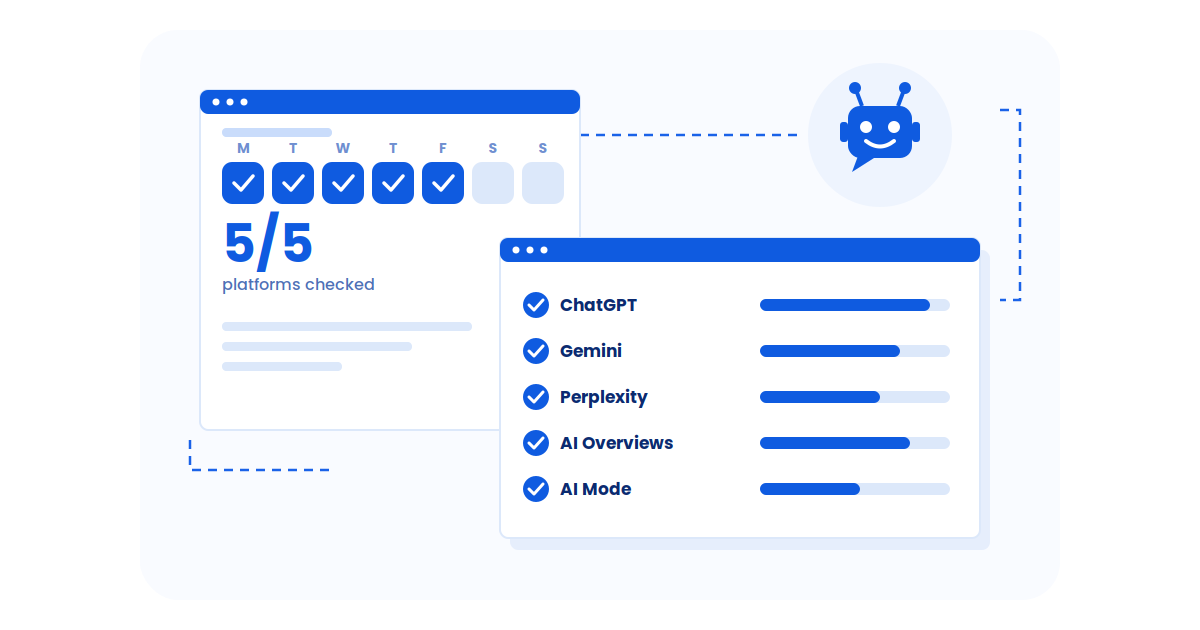
Tools like ChatGPT, Gemini, and Bing Copilot may not crawl like Google. But they pull structured data and summaries from meta tags and schema and generate answers based on content structure, including AI-generated content. A clear title and description improve how your content is referenced.
In prompt-driven discovery, context is everything. Well-optimized meta tags provide that context at a glance. They’re your content’s first impression—even in an AI-first world.
Many solo marketers use an SEO agent to fine-tune their metadata for AI tools like ChatGPT or Bing Copilot, ensuring their content is understood and surfaced correctly. They’re your content’s first impression—even in an AI-first world.
How Can You Add Meta Tags to Your Website?
Adding page meta information to your site is easier than you might think. Whether you use a CMS or write raw HTML, you have options. Here’s how to get started based on your setup:
If you’re coding manually:
Place meta tags inside the <head> section of your HTML.
This gives you full control over tag structure and content.
If you’re using WordPress or a CMS:
Use plugins like Yoast SEO or Rank Math.
They offer easy fields for title, description, and more.
For online stores (Shopify, Wix, etc.):
Most platforms have built-in SEO settings per page.
Look under “SEO” or “Meta Information” in your editor.
To test and preview your tags:
Try the best tools for analyzing meta tags like metatags.io or Screaming Frog.
They show how your webpage metadata elements appear in search and social feeds.
FAQ
Conclusion
Meta Tags in SEO remain powerful tools for shaping how search engines and users interpret content in 2026. A clear title tag and compelling meta description improve visibility and click-through rates, while robots meta directives and canonicals provide indexing signals that guide crawlers toward the preferred version of a page.
Open Graph tags extend this impact to social platforms, ensuring accurate previews and stronger engagement. By keeping metadata unique, structured, and regularly updated, brands strengthen both traditional search rankings and AI-driven discovery, building trust and authority across search results, social feeds, and evolving generative search environments.