Search is shifting from links to answers. Instead of browsing pages or clicking on links, users now get direct responses from AI-powered systems like Google AI Overviews, Bing Copilot, ChatGPT, Perplexity, Claude, and voice assistants such as Siri and Alexa.
Answer Engine Optimization (AEO) is the practice of structuring content so these systems can understand it, trust it, and surface it as an answer. The focus moves away from clicks and rankings and toward clarity, semantic relevance, and credibility.
Did you know?
This guide breaks down what AEO is, how Answer Engines work, and the practical strategies that help your content appear inside AI-generated responses, supported by real-world examples.
- AEO focuses on being selected as the answer, not just ranking pages.
- Answer-first structure and clear formatting increase AI reuse and citations.
- SEO remains the foundation, while AEO optimizes for zero-click visibility.
- Authority and cross-source consistency influence AI selection more than links alone.
- Modular, intent-complete sections benefit from query fan-out behavior.
- AEO requires continuous updates, monitoring, and refinement.
What is Answer Engine Optimization?
Answer Engine Optimization is the process of creating and structuring content so AI-powered search and answer systems can easily understand it, extract it, and present it as a direct answer. This is the simplest Answer Engine Optimization (AEO) definition for 2026.
Unlike traditional search engines that return a list of links, AI-driven Answer Engines generate immediate, conversational responses by synthesizing information from multiple sources. Their goal is to answer questions directly, not send users browsing.
In simple terms, Answer Engine Optimization focuses on being selected as the answer inside AI systems, while traditional SEO focuses on ranking pages in search results.
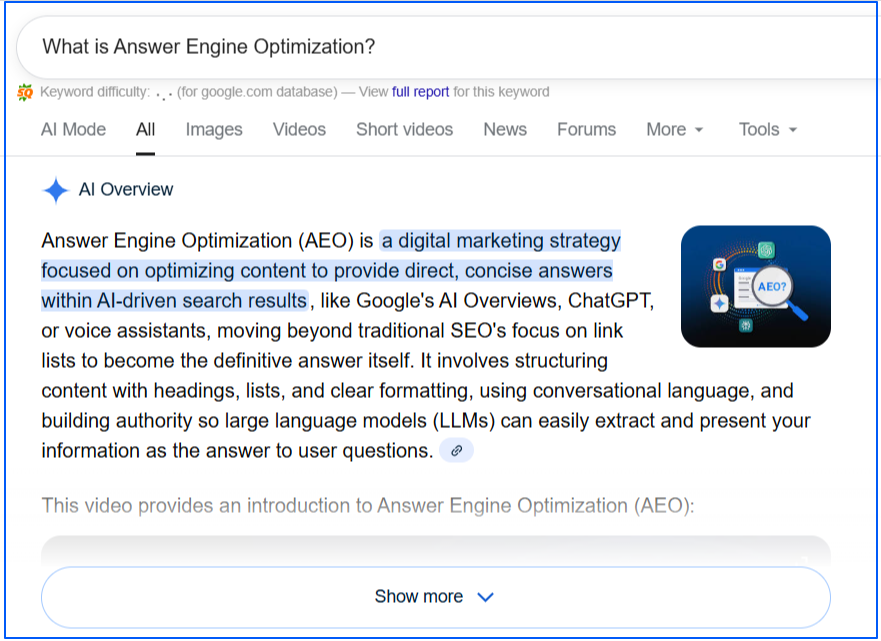
For example, Answer Engine Optimization examples show up when Google AI Overviews surface a direct answer. When I searched for “What is Answer Engine Optimization?” on Google, it gave me a direct answer in the AI overview:
Before we go deeper into AEO, if you are wondering what are Answer Engines, they are AI-powered systems that deliver direct answers instead of lists of links. They synthesize information from multiple sources to respond conversationally and contextually.
Core elements of AEO are:
- Direct answers: Clear, self-contained responses that fully address a question without extra context.
- Authority and citations: Claims supported by credible sources so AI systems can assess trust and reliability.
- Conversational structure: Natural language and Q&A-style formatting that mirrors how users ask questions in chatbots, search bars, and voice assistants.
- Explicit question targeting: Content mapped to specific user questions using exact or close-match phrasing, helping AI models align queries with answers.
- Semantic clarity: Precise language, defined entities, and unambiguous references that reduce interpretation errors during answer extraction.
- Structured formatting: Logical use of headings, lists, tables, and short paragraphs that allow AI systems to isolate and reuse answer blocks accurately.
Is Answer Engine Optimization the same as SEO?
Answer Engine Optimization is not the same as traditional SEO. SEO focuses on ranking pages in search results, while Answer Engine Optimization targets visibility in AI-generated answers, summaries, and conversational search experiences.
That’s the core difference between Answer Engine optimization vs traditional SEO: being selected as the answer vs ranking as a result. In the next section, I have shared in detail how AEO differs from SEO.
How AEO is Different From Traditional SEO?
Traditional SEO and Answer Engine Optimization (AEO) share the same foundation: making content discoverable. The difference lies in how content is selected and consumed.
Traditional SEO is built for search result pages. AEO is built for answer generation. Below I have shared 7 aspects on how is Answer Engine Optimization different from traditional SEO:
| Aspect | Traditional SEO | Answer Engine Optimization (AEO) |
|---|---|---|
| Primary goal | Rank pages to earn clicks and organic traffic | Be selected, summarized, or cited as the answer |
| Search environment | SERPs with links, ads, and featured snippets | AI-powered answer systems like Google AI Overviews, Gemini, ChatGPT, and voice assistants |
| User interaction | Users choose which result to click | Users receive direct answers without browsing |
| Query format | Keyword-driven searches and classic search intent | Conversational, intent-rich questions in natural language |
| Content evaluation | Relevance, backlinks, on-page signals, engagement | Clarity, factual accuracy, authority, and extractability |
| Technical focus | Crawlability, indexing, mobile-friendliness, page speed, meta tags | All traditional technical SEO, plus structured data (Schema.org), and content formatted for easy AI extraction |
| Success metrics | Rankings, organic traffic, CTR, backlinks | AI citations, zero-click visibility, repeated selection as a trusted source, where AI answer variability impacts SEO even when rankings remain stable |
Despite these differences, AEO and traditional SEO are complementary, not competing. Both aim to improve visibility and meet user intent, but in different environments.
Core SEO fundamentals such as crawlability, site performance, and topical authority remain essential. In practice, a strong SEO foundation is often a prerequisite for effective AEO, not a replacement for it.
Did you know?
Why Answer Engine Optimization is Important?
Search behavior is shifting from browsing links to consuming direct answers. AI-powered systems, voice assistants, and generative search tools increasingly satisfy user intent without sending users to websites.
Perplexity is a clear example of this shift, where visibility depends on being cited as a source rather than ranking links, which is why learning how to rank in Perplexity requires a different optimization mindset.
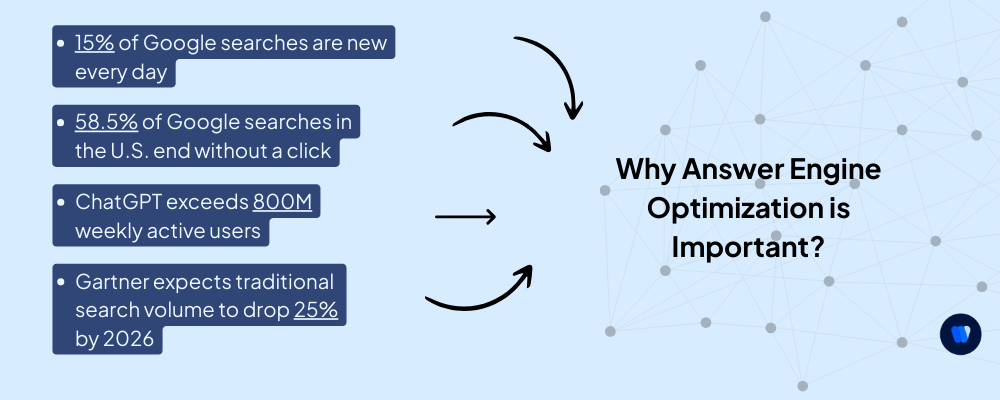
The benefits of Answer Engine Optimization are already visible in the data. As of March 2025, 15% of Google searches are new every day, and many are longer, question-shaped queries. Moreover, zero-click is the norm. 58.5% of Google searches in the U.S. end without a click (EU: 59.7%).
AI usage is massive among your potential users. As of November 2025, ChatGPT has exceeded 800M weekly active users, pulling attention away from traditional browsing.
Of the 21.9 million Google searches analyzed by Conductor, 5.5 million triggered an AI Overview, accounting for 25.11% of all queries. This highlights how quickly AI-generated answers are becoming part of everyday search.
Ignoring Answer Engine Optimization for websites creates measurable risks. Outdated or poorly structured content is gradually excluded as AI systems favor answers that are clear, current, and supported by credible signals. This leads to visibility loss even when rankings remain stable, a pattern often driven by content decay.
AEO addresses this by aligning content with how AI systems evaluate and extract answers. It improves the likelihood that content is reused in AI overviews, chat responses, and voice search results rather than being bypassed entirely.
What Industries Benefit from Answer Engine Optimization?
Industries that rely heavily on research, trust, and comparisons benefit the most from Answer Engine optimization.
This includes SaaS, ecommerce, healthcare, finance, education, and local services, where appearing in AI-generated answers can strongly influence user decisions before they ever click a result.
For early adopters, the upside is tangible.
- Authority: Repeated AI citations position brands and individuals as trusted sources
- Visibility: Presence across AI platforms without relying on clicks
- Stability: Reduced dependence on ranking volatility and SERP layout changes
Early adoption is especially relevant for startups building visibility from scratch, consultants positioning themselves as experts, agencies managing visibility across multiple brands, and freelancers competing on expertise rather than scale.
Agencies in particular benefit from a structured approach to AI visibility for digital marketing agencies, which keeps client citations measurable and defensible across every engine.
For small businesses, prioritizing high-usage Answer Engines like Google AI Overviews and ChatGPT typically delivers the most immediate visibility impact before expanding to other platforms.
How Can I Start Doing Answer Engine Optimization for My Website Right Now?
Starting an AI Answer Engine Optimization strategy for your website does not require rebuilding your entire SEO program. It begins with improving how your existing content answers questions and how clearly AI systems can interpret it.
Below are the top Answer Engine Optimization strategies (7 practical plays) you can implement for your brand:
1. User Intent and Question Mapping
Answer Engine Optimization starts with understanding what users want to solve, not which keywords they type. AI systems match answers to intent, then evaluate which content best satisfies that intent. Effective intent mapping involves:
- Identifying real questions using People Also Ask and AlsoAsked

- Analyzing GSC data to find question-based queries already generating impressions
- Grouping related questions to uncover shared intent and intent depth
- Reviewing AI-generated answers from tools like ChatGPT or Gemini to understand how similar intents are summarized
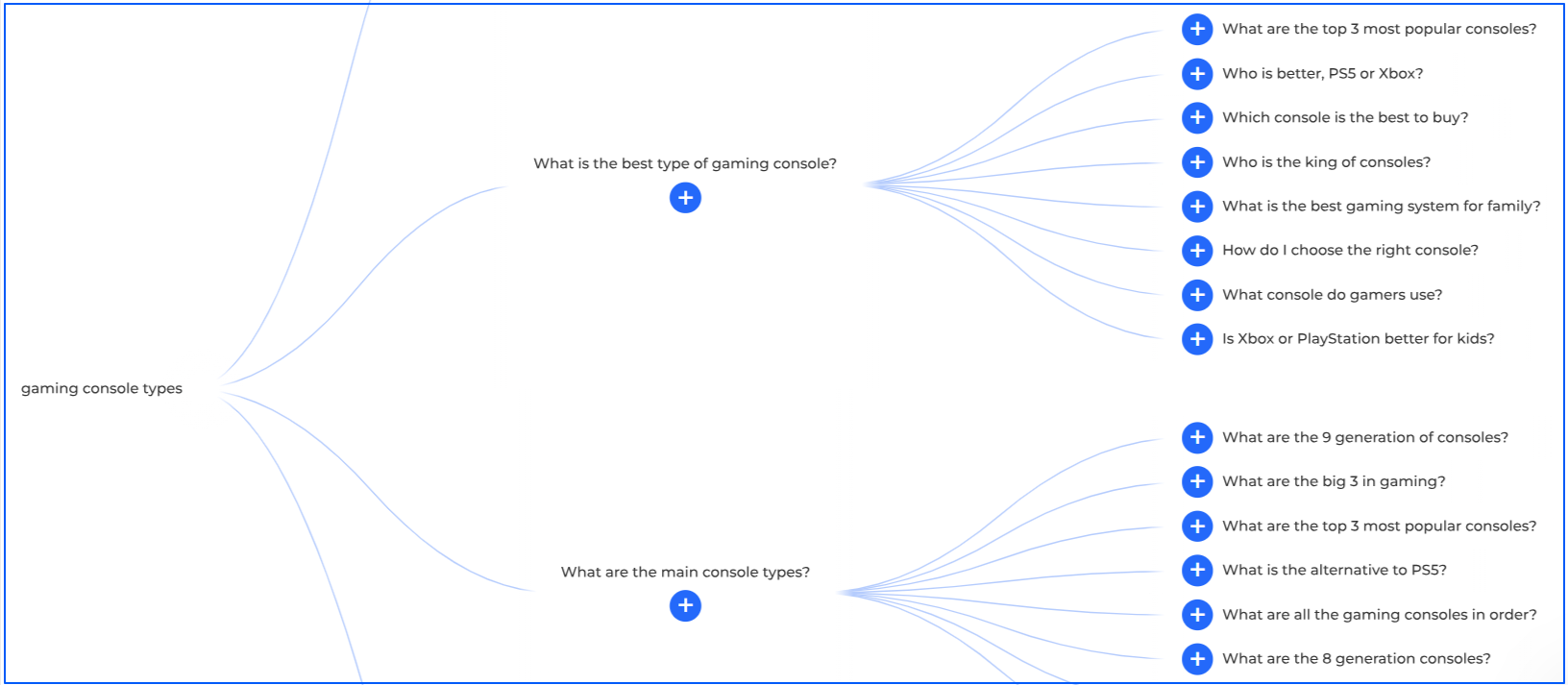
By mapping questions to intent types, you can design content that aligns with how AI systems interpret, retrieve, and select answers.
2. Write the First Answer Up Front
AI systems favor content that provides clarity immediately. You can follow these best practices for Answer Engine Optimization:
- Open each section with a direct, fact-based answer
- Follow with supporting context, examples, or data for depth
- Ensure the opening response can stand alone if extracted without surrounding text, one of the key benefits of answer-first content
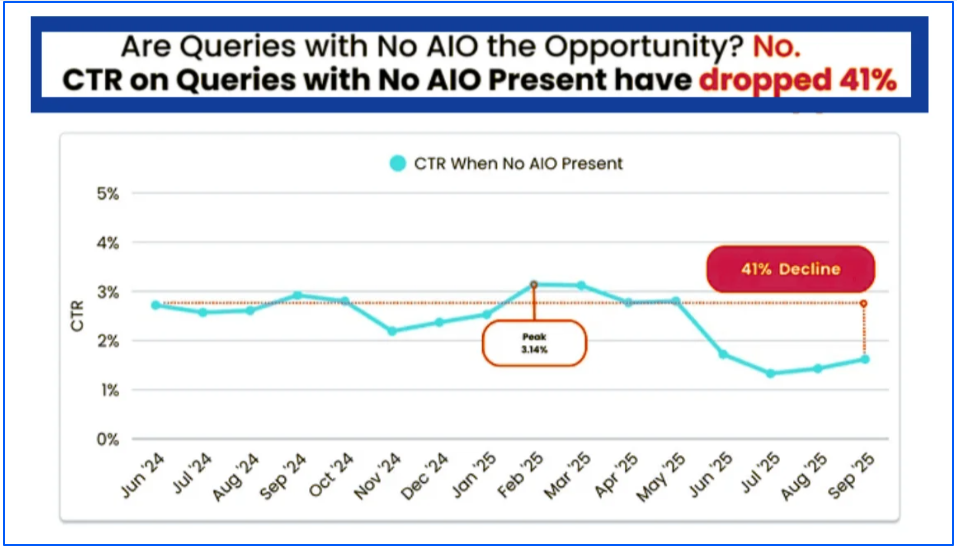
This structure improves both human readability and AI answer selection.
3. Structure Content for AI Readability
Formatting plays a major role in how AI systems extract and reuse information. Follow these content optimization techniques for better structure:
- Use clear, descriptive headings that reflect specific questions or concepts
- Break information into bullet points or tables where appropriate
- Keep paragraphs short and semantically focused
- Maintain logical flow so answers remain coherent even when read in isolation
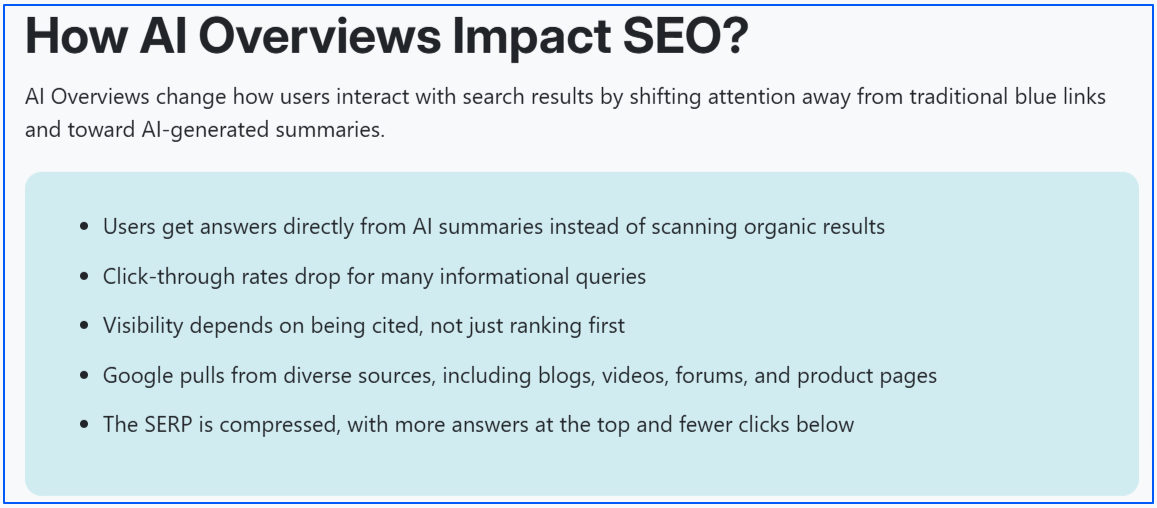
Content that is easy to scan is easier for AI systems to parse.
4. Implement Schema Markup
Structured data adds machine-readable context that reduces ambiguity.
- Apply the FAQ schema to question-driven sections
- Use HowTo schema for step-by-step instructions
- Add Article or Product schema where relevant to reinforce topical intent
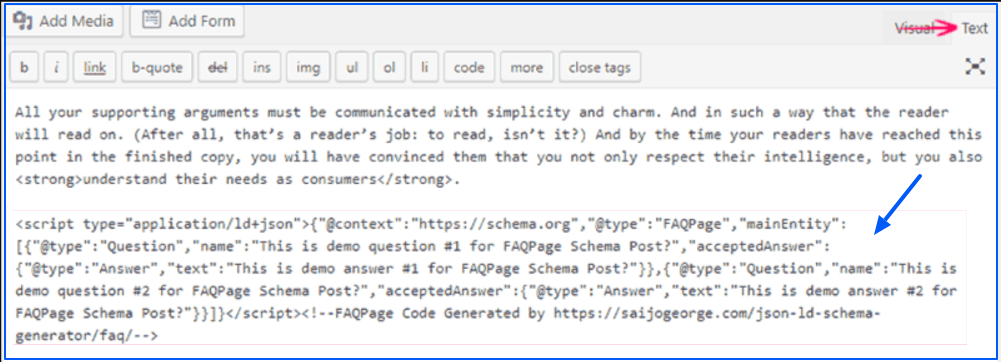
Schema does not guarantee selection, but it improves interpretation accuracy and consistency. Only about 12.4% of websites use Schema.org markup, roughly 45 million out of 362.3 million registered domains. This leaves a major opportunity for early adopters to use FAQ schema optimized for AI search, not just traditional SEO.
5. Optimize for Voice and Conversational Search
Many AI-driven queries are conversational and closely aligned with voice search behavior.
- Write in a natural, spoken tone that mirrors how people ask questions aloud
- Use long-tail formats such as “How do I…” or “What is the best way to…”
- Structure answers so assistants can deliver concise responses
Voice and conversational queries favor clarity, brevity, and direct phrasing.
6. Earn Mentions and Citations
AI systems rely heavily on external trust signals.
- Secure mentions from reputable publications and industry sources
- Build consistent brand references across trusted platforms
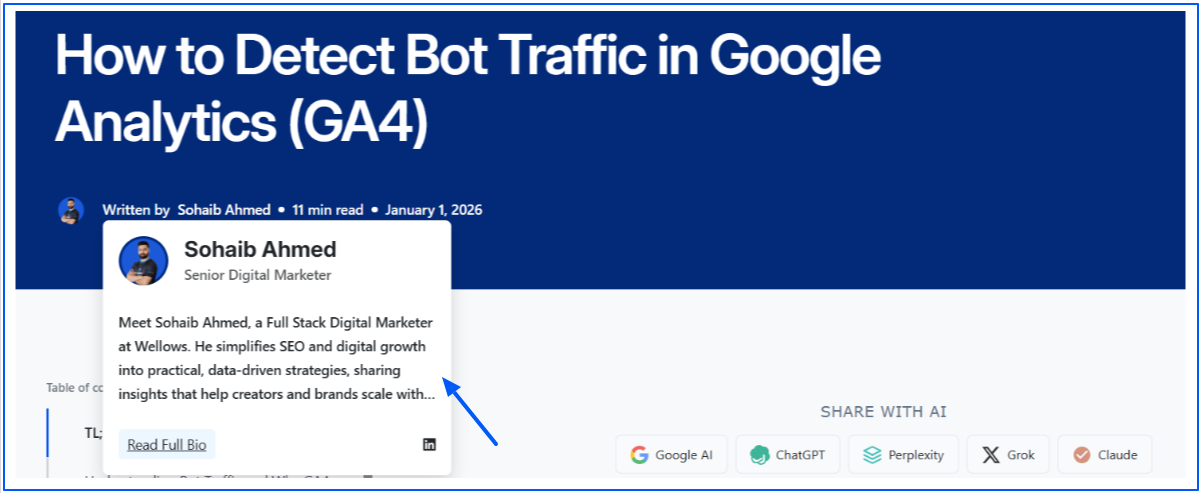
- Clearly display author expertise and credentials on-page
Yext’s analysis of 6.8M AI citations reveals that ChatGPT prioritizes Wikipedia (7.8% of citations) and high-authority domains, while Perplexity heavily favors Reddit (6.6% of citations) for community validation. Authority is reinforced through repeated, consistent citation, not backlinks alone.
7. Monitor, Test, and Refine Performance
AEO requires ongoing iteration because AI visibility behaves differently from traditional rankings. Here are the tips on checking your online visibility improvement:
- Track which questions your content appears in AI answers for
- Monitor featured snippets, zero-click impressions, and AI citation frequency
- Test changes such as rewriting answers, improving structure, or adding schema
- Compare visibility before and after updates rather than relying on rankings alone

Continuous testing ensures content remains selectable as AI systems evolve, especially when paired with visibility-monitoring tools like a Perplexity Visibility Tracker, which help teams understand which answers are being surfaced and why.
How Wellows Helps With Answer Engine Optimization?
Wellows is one of the best Answer Engine Optimization tools to rank in AI answers because it makes AEO measurable. If you’re comparing the best Answer Engine Optimization platforms 2026, look for LLM monitoring features like repeatable query testing, citation capture, and change tracking across ChatGPT, Gemini, Perplexity, and Google AI surfaces.
For AEO, its primary value is visibility tracking. Wellows monitors brand mentions and citations across platforms such as Google AI Overviews, Google AI Mode, ChatGPT, Perplexity, and Gemini. This allows teams to see which queries surface their content, which engines cite them, and where gaps exist.
How Wellows is used in an AEO workflow:
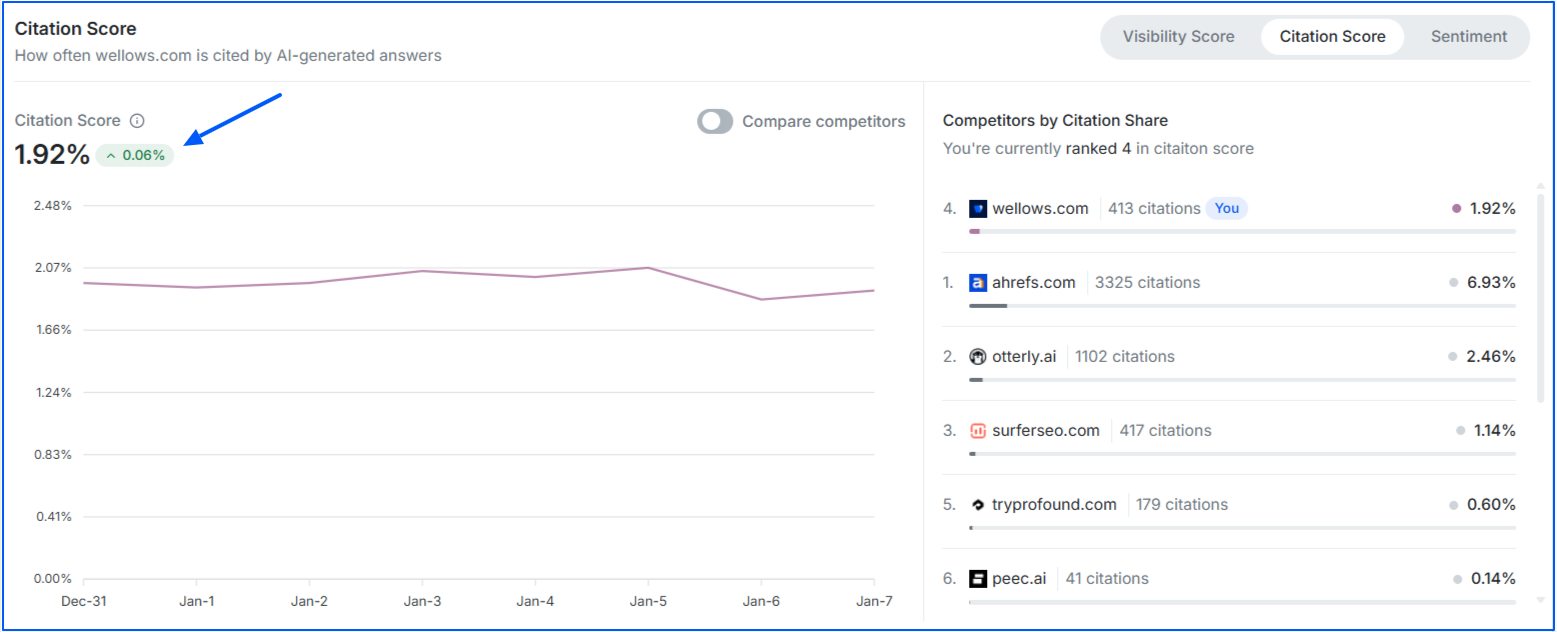
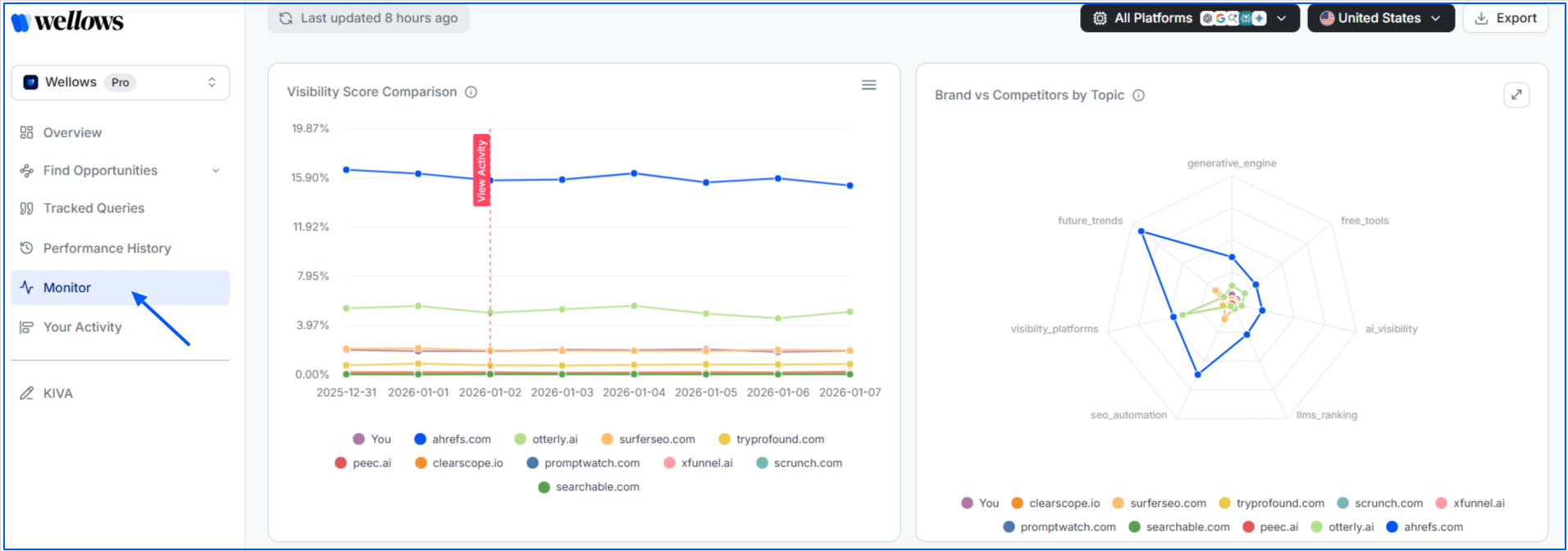
- AI citation tracking: Monitor when your brand or content is cited or linked within AI-generated answers across different Answer Engines. It shows a citation score, which you can also compare with your competitors.
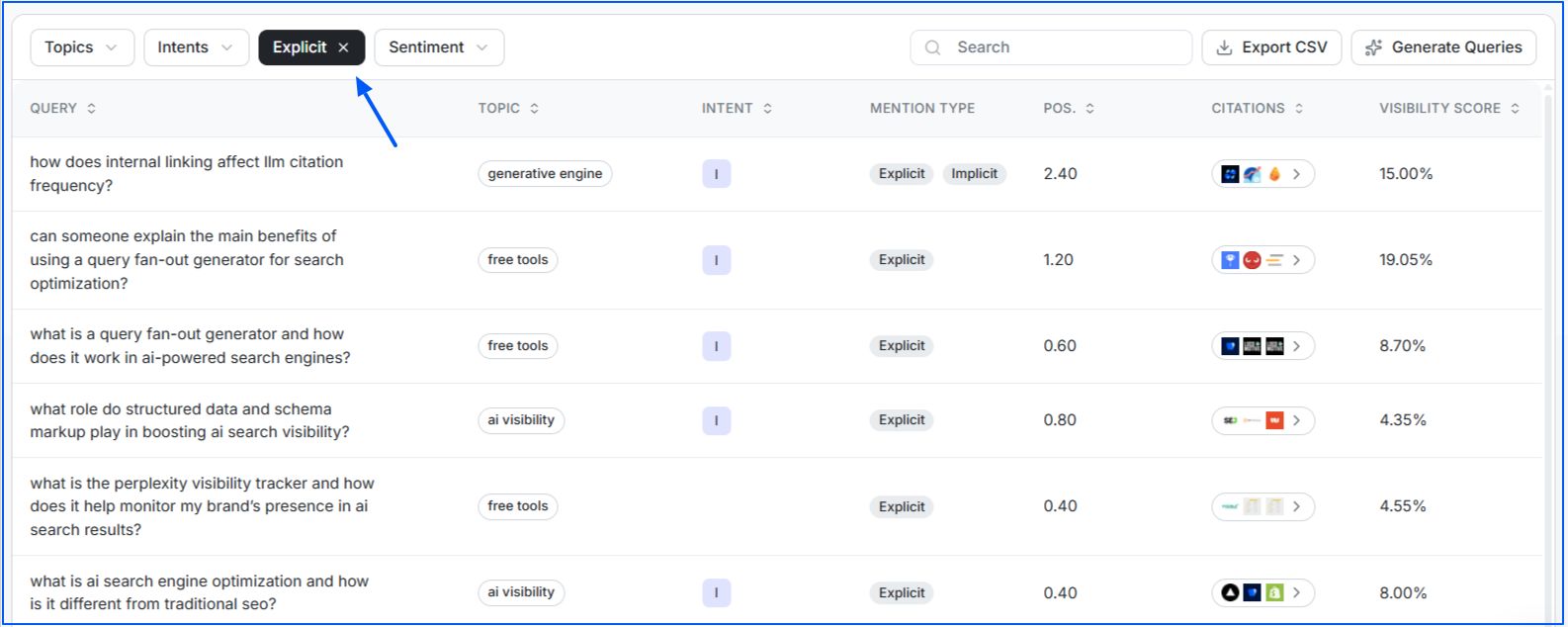
- Explicit and implicit mentions: Identify where your brand is mentioned or described in AI answers with or without a direct link, which often still influences visibility and authority.
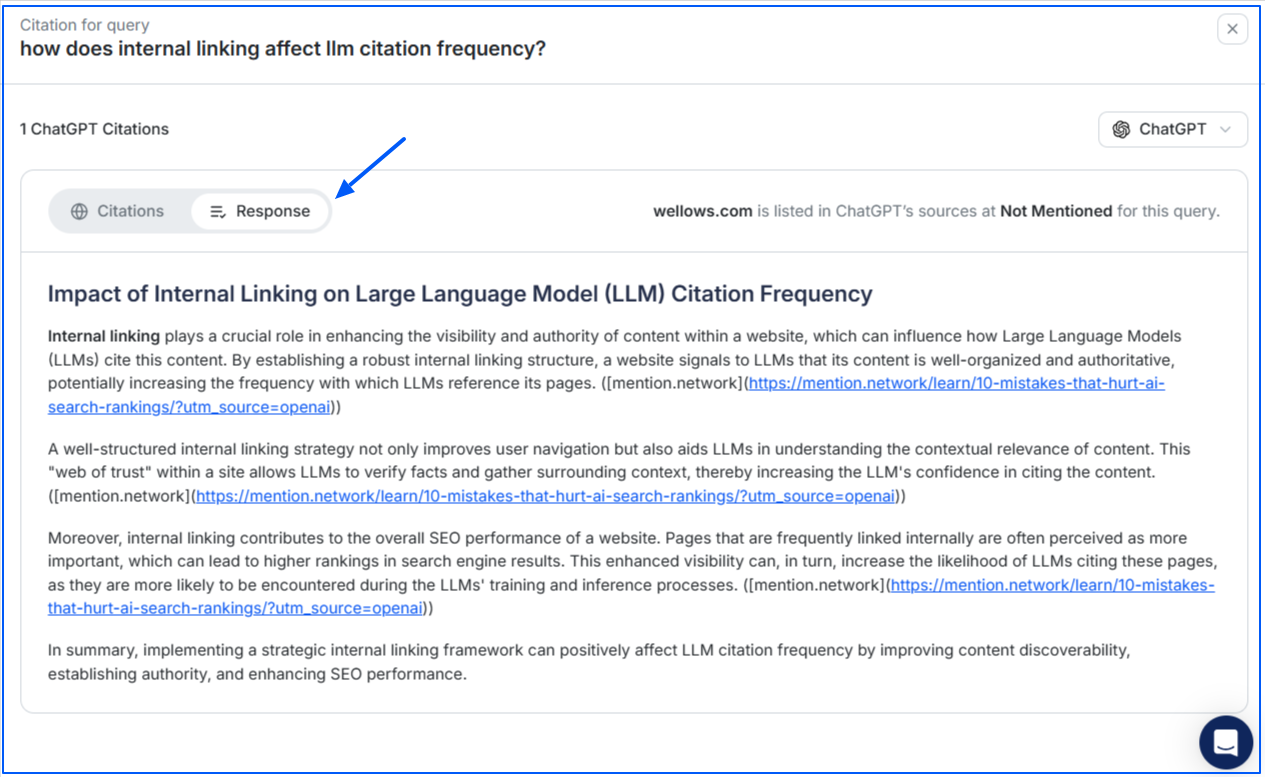
- Citation Analysis: Once you review the implicit and explicit citations, you can analyze the responses linked to each citation to see exactly how AI platforms select and surface the content for specific queries. It helps you structure your content accordingly for AEO.
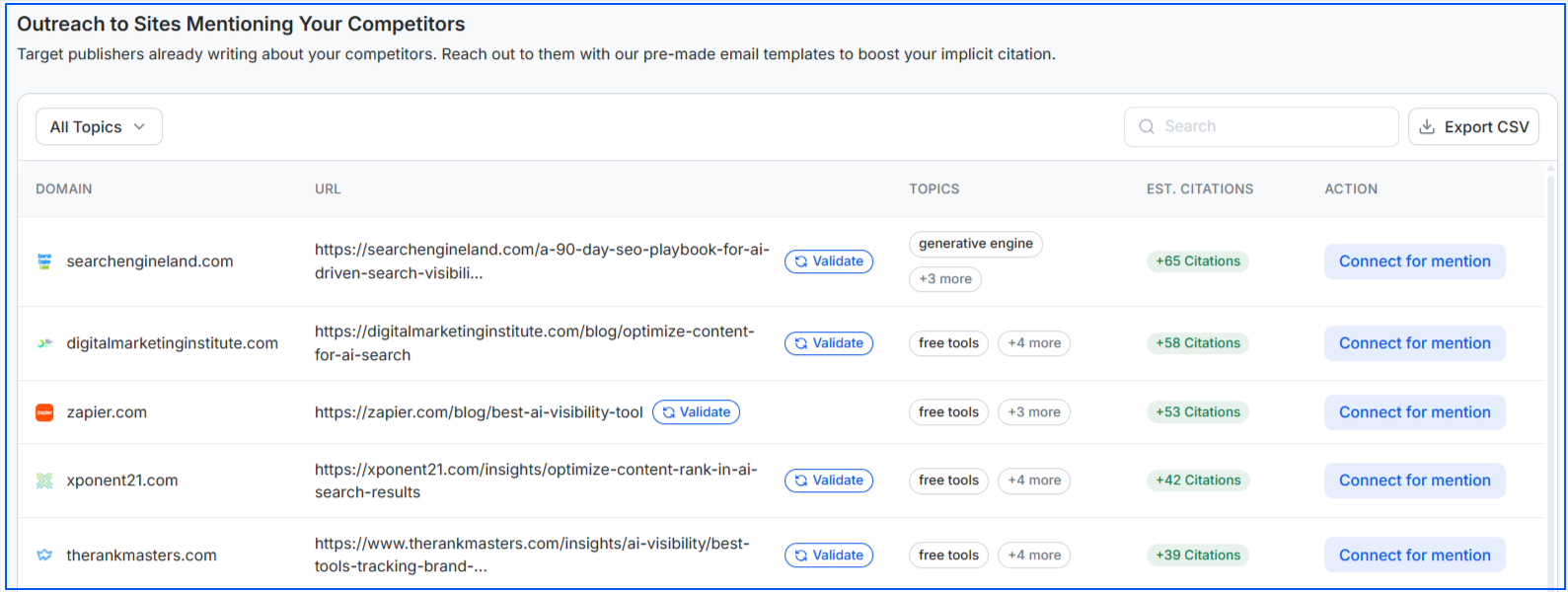
- Missed-mention discovery: This Answer Engine Optimization tool helps you surface opportunities where competitors are cited but your brand is not, so you can prioritize content updates and authority-building.
- Ongoing monitoring: Use Wellows to track changes in AI visibility over time to validate whether AEO improvements lead to increased citation and selection.
How does Answer Engine Optimization Actually Work Behind the Scenes?
AI-driven search and answer systems do not select sources randomly. They evaluate specific signals to determine which content provides the clearest, most reliable response to a given question.
Answer Engine Optimization (AEO) works by aligning content with this selection logic. While AI SEO provides the broader foundation, AEO focuses on making individual answers easy to identify, extract, and trust. It also helps you understand how brands get recommended in AI search engines.
Below are further details on how does Answer Engine Optimization work:
AI systems favor content that is easy to scan, segment, and summarize. Clear structure increases the likelihood that an answer can be lifted directly into an AI response. Effective formatting for answer optimization includes:
- Q&A-style sections that mirror how users phrase real questions
- Direct answers are placed early, giving AI systems an immediate summary
- Clear headings, bullet points, and tables that break information into extractable units
- Content that consistently earns featured snippets often performs well in AI answers because it already meets extraction requirements.
Structured data provides machine-readable context that plain text alone cannot fully convey. It helps AI systems understand content intent, hierarchy, and relationships. Schema types commonly used for AEO include:
- FAQPage for question-based content
- HowTo for step-by-step instructions
- Definition-style markup for clear terminology explanations
While a schema does not guarantee selection, it improves interpretation accuracy and reduces ambiguity. Many Tech startups begin their AEO journey by implementing a simple FAQ or HowTo schema on their most valuable pages.
AI systems prioritize understanding over keyword matching. Content performs better when it communicates meaning clearly and consistently. Strong semantic signals come from:
- Explicit entities such as tools, brands, people, and concepts with clear attributes
- Related terms and synonyms that reflect how the same intent is expressed differently
- Contextual internal links that reinforce topical relationships
This helps AI systems confirm that an answer is complete and relevant within a broader topic.
AI systems are more likely to select answers they can justify and defend. Trust plays a central role in source selection. Key trust signals include:
- Citations to reputable research or institutions
- Visible author credentials that demonstrate subject-matter expertise
- Brand signals that reflect consistency and recognition across the web.
- External mentions and backlinks that validate reliability
Answers without clear credibility are less likely to be reused, even if they are factually correct.
Third-party platforms play a major role in AI visibility. Nearly 47.9% of ChatGPT referral sources come from Wikipedia, while Reddit appears in about 21% of Google AI Overview responses.
Content must be accessible before it can be selected. Technical readiness ensures AI systems can reliably retrieve and process answers. Core requirements include:
- Strong crawlability and indexability
- Fast page performance that meets modern speed expectations
- Mobile-friendly delivery, especially for voice search answer optimization
- Technical friction reduces selection probability, regardless of content quality.
How AI Systems Cross-Verify Information?
To reduce errors and improve reliability, AI systems validate answers by comparing signals from multiple sources. Consistency across these sources increases the likelihood that content is selected and cited.
To reduce errors and improve reliability, AI systems validate answers by comparing signals from multiple sources.
Consistency across these sources increases the likelihood that content is selected and cited.
| Source Type | What AI Systems Extract and Compare |
|---|---|
| Your website | Core entity information, definitions, claims, structured content, authorship, citations |
| Third-party platforms | Mentions, summaries, reviews, rankings, awards, and external validation |
| Knowledge bases | Entity attributes, relationships, classifications, and historical context |
| Local and business listings | Names, locations, operating details, and user-generated signals (where relevant) |
| Author and brand profiles | Expertise indicators, consistency, and reputation signals |
Should I Prioritize AEO Over Traditional SEO in 2026?
In 2026, the smarter approach is not choosing one over the other, but understanding how their roles are evolving and where each delivers value.
Traditional SEO remains the backbone of organic visibility. It helps search engines crawl, index, and rank pages through keyword targeting, technical optimization, internal linking, and authority signals.
These fundamentals are still critical because AI systems depend on well-structured, accessible content as their primary source material.
Answer Engine Optimization (AEO) has become increasingly important as search behavior shifts toward AI-generated responses. Users now ask complete questions and expect direct answers instead of scanning multiple results.
AEO focuses on structuring content so AI systems can interpret intent, extract accurate information, and confidently present it within generated answers.
Relying solely on traditional SEO can limit visibility as AI summaries and answer panels reduce click-through rates for standard listings. The importance of Answer Engine Optimization can be identified from the Ahrefs study that found AI Overviews resulted in a 34.5% decrease in average CTR for top-ranking pages.
Content optimized only for rankings may still perform well in classic search but can be overlooked by Answer Engines that prioritize clarity, structure, and semantic completeness.
In 2026, the most effective strategy is integration. Traditional SEO ensures your content is discoverable and authoritative, while AEO increases the likelihood that it is selected, cited, and trusted by AI-driven search experiences.
Prioritizing both helps maintain visibility and relevance as search continues to evolve.
How Does Google’s Query Fan-Out Affect Your AEO Strategy?
Google’s query fan-out technique plays a major role in how Answer Engine Optimization (AEO) works by changing how content is evaluated for AI-generated answers.
Instead of responding to a single query with a fixed set of results, Google breaks one question into multiple related sub-queries and processes them in parallel to collect broader, more complete information before generating a response.
What query fan-out changes:
- One question becomes many intent variations: Google may explore definitions, comparisons, steps, edge cases, and follow-up questions simultaneously.
- Multiple sources can be cited for one answer: AI overviews often combine content from different pages, each answering a specific sub-question.
- Partial answers still matter: Even if your page doesn’t answer the full query, it can be selected for a specific sub-intent if it is clear and authoritative.
Practical takeaway: Query fan-out rewards content that is modular, precise, and intent-complete. The more clearly your content answers related questions in isolation, the more entry points it has into AI-generated answers.
You can use our Query Fan-out generator to map the sub-intents your page should answer before you write.
Should You Rewrite Old Blog Posts for Answer Engine Optimization?
Yes, you should rewrite old blog posts for Answer Engine Optimization selectively, focusing on pages that already show signals of demand or past performance.
Posts that receive impressions, target question-based intent, or historically contributed to conversions are strong candidates when restructured with answer-first sections, refreshed data, and improved schema markup.
How to Prioritize Which Blog Posts to Update?
Below I have shared how you can categorize your blogs into high, medium, and low priority when planning to update them:
High-Priority Content
These pages offer the fastest returns for AEO-focused updates:
- Pages ranking in positions 4–10 for question-based queries, where AI Overviews often pull sources
- Content that previously earned featured snippets but lost visibility after the August 2025 AI Overview rollout
- Pages with high impressions but declining click-through rates are a common signal of zero-click behavior
- Posts targeting “how to,” “what is,” or “best” queries, which align naturally with Answer Engines
Medium-Priority Content
These posts benefit from restructuring and trust signals:
- Long-form guides that can be reorganized into clear FAQ-style sections
- Product or service comparison pages are missing structured data
- Educational articles lacking visible author credentials or expert citations
Low-Priority Content
These typically offer limited AEO value:
- Time-sensitive or news-based content that is no longer relevant
- Pages with minimal traffic and no conversion history
- Content focused purely on navigational or branded queries
Did you know?
Should You Focus on Featured Snippets or AI Responses for AEO?
You should optimize for both featured snippets and AI responses because featured snippets act as a proving ground for AI-ready content, while AI responses represent where search visibility is heading.
Why Featured Snippets Still Matter for AEO?
Featured snippets continue to play a strategic role in shaping how AI systems understand and extract content.
- Formatting blueprint: Content optimized for snippets, typically 40 to 60 words with direct answers and clear headings, closely matches the extraction patterns used by AI Answer Engines.
- Voice search relevance: Research shows that 40.7% of voice search responses are sourced from featured snippets, reinforcing their role in spoken and assistant-based search.
- Measurable optimization layer: Snippet ownership offers visible, trackable signals that help validate and refine broader AEO strategies.
- AI sourcing overlap: A 2025 analysis by Keywords Everywhere found that a 64% decline in featured snippet visibility aligned with AI Overviews increasingly sourcing content from former snippet-holding pages.
Here is how to optimize for both: Featured Snippet Optimization AI Response OptimizationHow to Optimize for Both Featured Snippets and AI Responses?
Did you know?
Is AEO Worth it for E-commerce Sites Selling Products Online?
Yes, AEO is worth it for e-commerce sites selling products online, especially as shopping behavior continues to shift toward AI-assisted search and recommendations.
Answer Engine Optimization (AEO) focuses on structuring and presenting content so AI-driven platforms can easily extract and surface clear answers. These platforms include generative search experiences and AI assistants that users increasingly rely on when researching products or comparing options.
For e-commerce businesses, this matters because buying journeys are shifting. Shoppers are no longer just scrolling search results. They are asking AI tools what to buy, which brand to trust, or which product best fits their needs.
AEO also helps ensure your product listings, specifications, pricing context, and brand details are easy for machines to interpret. This can improve how quickly new products are understood, categorized, and surfaced by AI-powered discovery tools.
Here is how you can apply Answer Engine Optimization strategy to your e-commerce site to drive results: 1. Product Education & Comparison Content Rather than optimizing product pages directly (which rarely get AI citations), focus on educational content: 2. Structured Product Data with Schema Implement comprehensive schema markup: 3. AI Shopping Assistant Optimization AI agents guide purchasing decisions, so ensuring your product data is accurate, verifiable, and effectively distributed across credible sources that AI agents trust is crucial. This means: Each AI engine behaves differently when surfacing brands. ChatGPT references brands in 99.3% of e-commerce responses, while Google AI Overviews include brand mentions in only 6.2% of cases.How You Can Apply AEO Strategy to Your E-commerce Site?
How to Measure Success in Answer Engine Optimization?
Answer Engine Optimization success is not measured by clicks alone. AI-driven search results often satisfy user intent without sending traffic to a website, which means visibility must be evaluated differently, using AI visibility tools rather than rank trackers.
Key Metrics to Track:
To measure AEO performance, focus on signals that reflect selection and trust rather than traffic.
- AI citations and mentions: Answer Engine tracking includes when your brand, content, or experts are cited in ChatGPT, Gemini, Perplexity, Google AI Overviews, AI Mode, or conversational AI tools. Repeated citation indicates authority, and you can track your AI answer visibility for your brand using the best AEO tool, Wellows.
- Featured snippet presence: Content selected for featured snippets is more likely to be reused in AI-generated answers, making this a strong proxy signal.
- Voice search visibility: Monitor whether your content is surfaced by assistants such as Siri, Alexa, or Google Assistant for relevant queries.
- Branded search lift: Increases in branded queries often reflect discovery through AI answers, even when direct referral traffic is absent.
Did you know? Because AEO spans multiple platforms, measurement requires a mix of manual checks and tooling.
What are the Challenges in Answer Engine Optimization?
Answer Engine Optimization introduces new constraints that do not exist in traditional SEO, which is why Answer Engine Optimization challenges show up even when rankings look stable.
While the goal is clearer answers and better AI visibility, execution still comes with trade-offs, such as attribution gaps, limited answer space, and content misinterpretation.
Below are the details on what are the key challenges and opportunities for brands adapting to AI-first Answer Engine Optimization:
Did you know?
How Long Does Answer Engine Optimization Take?
Answer Engine Optimization does not deliver instant results. Unlike traditional SEO, where rankings can shift relatively quickly, AEO depends on selection, trust, and consistency, which develop over time.
What affects the timeline most:
- Existing content quality and topical authority
- Consistency of brand and entity information across sources
- Frequency of content updates and freshness
- Competitive landscape for the questions being targeted
Quick AEO Readiness Checklist for 2026
Use this checklist to quickly assess whether your content is structured, authoritative, and clear enough to be selected by Answer Engines. It highlights the core requirements AI systems rely on when choosing and citing answers.
☐ Each page answers a clear, specific user question
☐ A direct answer appears first, before supporting detail
☐ Content is structured for extraction (clear headings, lists, tables)
☐ Key entities, terms, and references are explicitly defined
☐ Claims are supported by credible sources or expertise signals
☐ Information is current and reviewed regularly
☐ Schema markup is applied where it clarifies intent
☐ Brand and author details are consistent across platforms
☐ Content remains useful for humans, not just AI systems
☐ AI-generated answers are periodically checked for accuracy
A comprehensive AEO audit typically reviews answer clarity, structure, schema implementation, authority signals, entity consistency, and current AI citation visibility, with costs varying depending on scope and tooling.
FAQs
So in practice, Answer Engine Optimization vs Generative Engine Optimization is “answer selection” vs “answer synthesis.
Conclusion
Answer Engine Optimization shifts visibility from ranking pages to being selected as the answer. As AI systems increasingly deliver direct responses, clarity, structure, and trust determine whether your content is surfaced or ignored.
A strong SEO foundation still matters, but AEO ensures that content is extractable, verifiable, and aligned with real user intent. Teams that focus on clear answers, consistent entity information, and ongoing validation are better positioned to stay visible as AI-driven search evolves.
In practice, AEO is about reducing ambiguity and increasing reliability. Brands that do this well are more likely to be cited, trusted, and referenced as answers, not just listed as results.