Generative AI, such as ChatGPT, Gemini, Perplexity, and Claude, is changing how people search, learn, and make decisions. Instead of scrolling through pages of results, users are increasingly getting direct answers from AI-powered tools.
Did you know?
This shift is forcing businesses to rethink how their content is discovered. Generative Engine Optimization helps ensure your content is clear, reliable, and ready for AI systems to use when those answers are generated.
In this blog, I have shared in detail what Generative Engine Optimization (GEO) is, how it differs from and is similar to SEO, key strategies you can implement for your business, how Wellows can help you, common mistakes to avoid, and key trends.
What is Generative Engine Optimization?
If you’re looking for a quick generative engine optimization definition, GEO is essentially the content framework that makes your page easy for LLMs to extract, trust, and reuse inside AI-generated answers.
GEO focuses on clarity, context, and completeness. And running an On Page SEO Checker helps you catch structural and on-page gaps (like weak headings, missing meta elements, or thin sections) that make content harder to extract and trust. These kinds of audits can also serve as generative engine optimization checkers, because they surface the structural gaps that prevent AI systems from confidently extracting definitions, steps, and key takeaways.
Content written for GEO defines concepts precisely, follows a logical flow, and answers related questions in one place, making it easier for AI models to interpret and reuse accurately.
The goal is simple: make your content a reliable knowledge source for conversational AI experiences, where information is summarized, referenced, and delivered directly to users. Remember, LLMs need context to understand and cite your content.
In simple terms, generative engine optimization is about making your website content usable inside AI-generated answers, while traditional SEO is about helping your website rank in search engine results.
GEO prioritizes clarity, citation-worthiness, and structured explanations so AI systems can reuse your content, whereas traditional SEO prioritizes rankings, clicks, and technical optimization signals.
What is the Difference Between GEO and Traditional SEO?
Generative Engine Optimization (GEO) focuses on making content usable by AI systems that generate answers, while Search Engine Optimization (SEO) focuses on ranking pages in search results.
GEO is about becoming a trusted source that AI models can summarize or cite. SEO is about visibility within search listings and driving clicks to a webpage.
| Aspect | GEO (Generative Engine Optimization) | SEO (Search Engine Optimization) |
|---|---|---|
| Primary goal | Be selected and referenced in AI-generated answers | Rank higher in search engine results |
| Where visibility happens | Conversational AI responses and summaries | Search results pages (SERPs) |
| Main success signal | Your content is used to form the final answer | Your page earns clicks from search listings |
| Content structure | Strong definitions, context, and complete intent coverage | Keyword-targeted pages with optimized headings and internal links |
| What gets evaluated most | Clarity, factual consistency, and usefulness for summarization | Relevance, authority signals, and technical performance |
| Optimization emphasis | Explainability, context, and retrieval-friendly formatting | Keywords, backlinks, site architecture, and crawlability |
| Typical user journey | User receives an answer directly inside the AI interface | User clicks through to a page from the search results |
Is GEO replacing SEO? No, GEO is not replacing SEO. Instead, it adds a new layer to how content is discovered and used. For a full breakdown of how GEO and SEO strategies differ, explore our detailed SEO vs GEO guide.
How is GEO Similar to SEO?
Even though GEO and SEO serve different discovery surfaces, they are built on the same core principles of content quality and relevance. The foundation that makes content trustworthy for search engines also helps generative systems understand and rely on it.
- Both prioritize high-quality content: GEO and SEO depend on accurate, well-written, and genuinely useful content. Thin or vague pages perform poorly in both cases because they fail to provide enough clarity or value.
- Both rely on clear structure: Logical headings, clean formatting, and organized sections help search engines and generative models better understand content. A well-structured page reduces confusion and improves interpretation.
- Both focus on user intent: Understanding what the user is actually looking for is central to both SEO and GEO. Content that anticipates follow-up questions and answers them clearly performs better across search and AI-driven experiences.
- Both reward topical authority: Covering a topic thoroughly and consistently builds credibility. Pages that demonstrate subject-matter depth are more likely to be surfaced, whether by search algorithms or generative engines.
- Both benefit from freshness and accuracy: Up-to-date, fact-checked information matters in both approaches. Outdated or incorrect content loses trust and visibility over time.
As user behavior shifts, generative engine AI has changed how discovery works. Generative engine visibility factors include structure, credibility, and semantic clarity, which also work well for SEO.
How Do I Get My Brand Cited More Often in AI Tools like ChatGPT, Perplexity, and Gemini Using Generative Engine Optimization?
To get your brand cited more often in AI tools like ChatGPT, Perplexity, and Gemini, you need to make your content easy for these systems to trust, understand, and reuse, and this is exactly the foundation covered in how to Rank High on ChatGPT, where citation-driven visibility is broken down step by step.
This means clearly defining what you do, answering questions completely on a single page, and presenting information in a structured, factual way that can be summarized or referenced safely.
If you’re wondering how to do generative engine optimization, start by making one high-intent page fully self-contained (definition → examples → steps → FAQs), then expand it based on the follow-up questions you see in AI tools and Search Console.
The steps below outline a practical approach to make your content usable and visible across AI-driven search experiences. Teams often operationalize this with a Client Onboarding Checklist for AI Visibility Platforms to ensure definitions, structure, and visibility monitoring are handled consistently from the start.
1. Start With Pages That Clearly Explain Your Offering (Existing Blogs)
The pages that clearly explain what you offer are your high-intent pages. These are most likely to be referenced by AI systems because they clearly explain what you do and who it’s for. Optimizing these first delivers faster and more measurable impact.
Best practices:
- Prioritize pages that already drive traffic, conversions, or explain core offerings.
- Focus on product pages, solution pages, comparisons, and high-performing blogs.
- Avoid starting with low-impact or experimental content.
Example: If you run a SaaS tool, begin with optimizing pages like “What does [your product] do?”, “How [your product] works”, or “[Your product] vs alternatives” instead of broad thought-leadership posts.
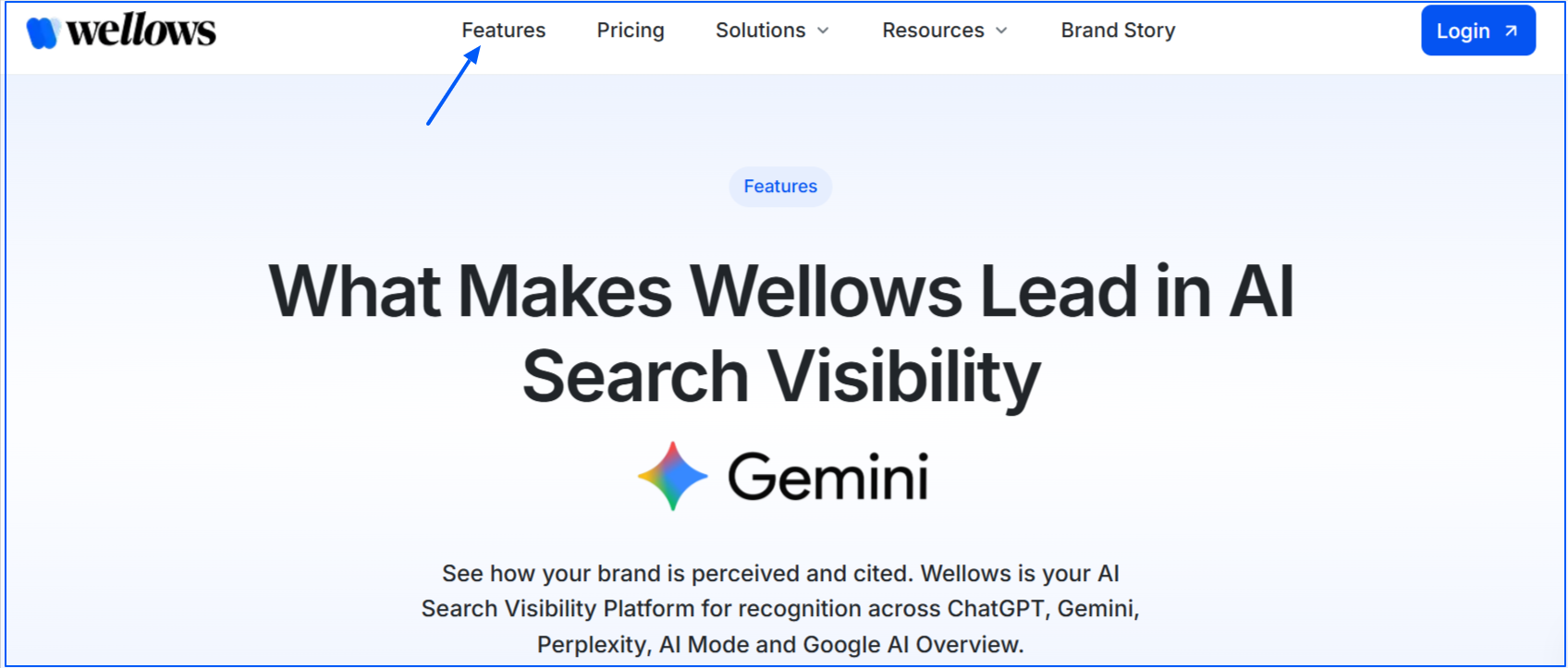
Like for Wellows, the feature is a high-intent page that describes what the product does.
2. Focus on User Search Intent, Not Just Keyword Research
Generative engines respond to the intent behind a query, not just the words used. Understanding what users actually want to know helps ensure your content answers the right questions in the right order.
Best practices:
- Identify the core problem or goal behind each query.
- Map informational, comparative, and decision-stage intent within the same page.
- Avoid creating multiple thin pages for closely related questions.
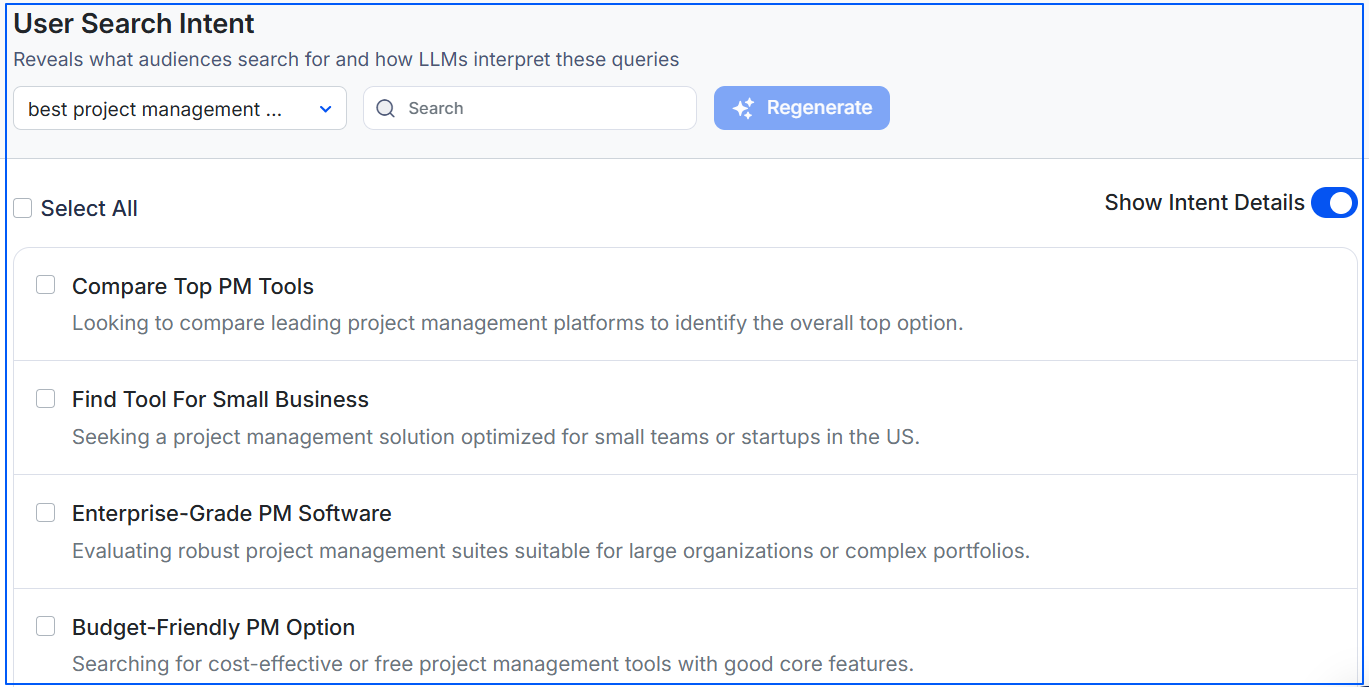
Example: Instead of targeting separate pages for “best project management tool,” “project management tool comparison,” and “why use project management software,” address all three intents in a single, well-structured resource. You can use Wellows to see the user search intent for the topic you are covering.
3. Strengthen Definitions and Explanations
AI systems cannot infer meaning the way humans do. Clear definitions and explanations help prevent misinterpretation and improve citation accuracy.
Best practices:
- Define key terms explicitly, even if they seem obvious to experts.
- Explain how concepts relate to each other, not just what they are.
- Remove assumptions about prior knowledge.
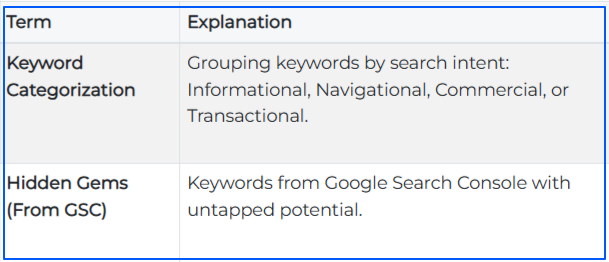
Example: If you are writing about following a process, make sure to help readers understand the meanings of key terms. You can add a table or bullets for it, or explain the term concisely in the same sentence.
4. Improve Structure for Extraction
Well-structured content is easier for generative systems to parse, extract, and reuse. Poor structure often leads to partial or incorrect summaries.
Best practices:
- Use descriptive H2s and H3s aligned with user intent.
- Keep paragraphs focused on a single idea.
- Add lists, tables, or steps where they improve clarity.
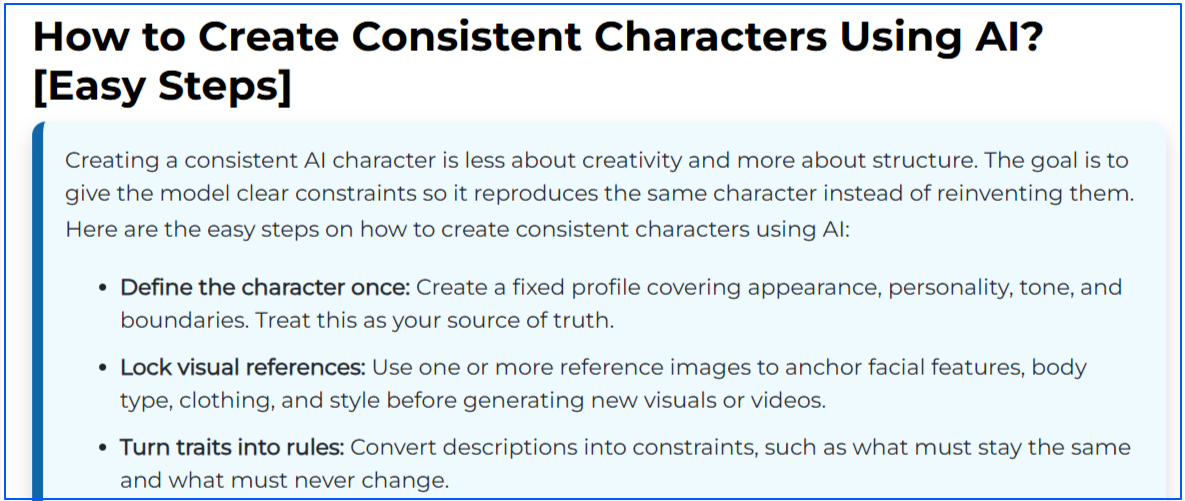
Example: A process explained as a step-by-step guide is far more likely to be summarized correctly than the same process buried in a long paragraph.
5. Add Insights from User-Generated Content and Community Signals
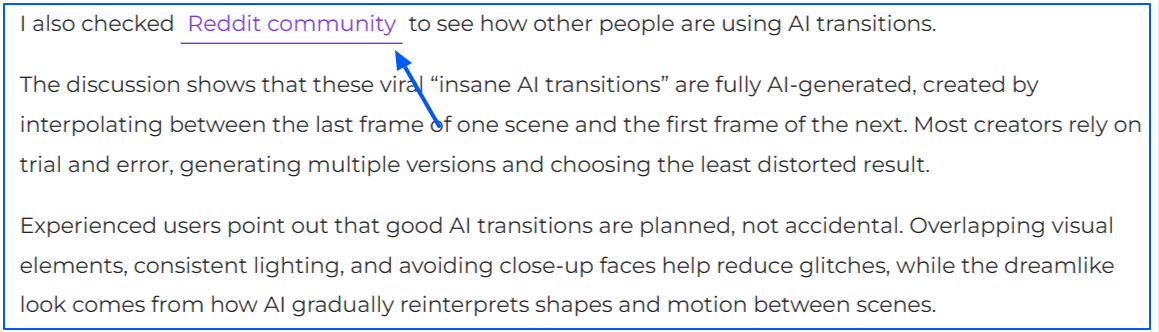
Generative engines increasingly rely on real user experiences, discussions, and community-driven explanations to validate information. UGC helps AI systems understand how products are actually used, not just how brands describe them.
Best practices:
- Incorporate authentic user quotes, reviews, or use cases into core pages.
- Summarize recurring community insights from platforms like Reddit, forums, or Q&A sites.
- Keep UGC contextual and explanatory rather than promotional.
Example: If users frequently discuss how they use your tool for a specific workflow on Reddit or in community forums, add a short section on your site explaining that use case.
6. Keep Content Current and Verifiable
Outdated or unverifiable content quietly loses trust with AI systems. Freshness and accuracy play a major role in long-term visibility.
Best practices:
- Review key pages regularly.
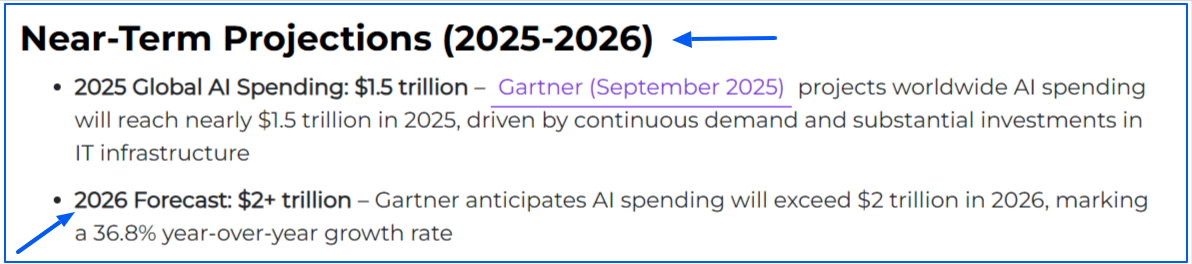
- Update statistics, examples, and references as soon as they change.
- Remove claims that can no longer be verified.
Example: If an industry benchmark changes, update the page directly instead of adding disclaimers or footnotes that reduce clarity.
7. Manage Your Brand Narrative
Generative engines rely on what is already written about your brand across the web. Inconsistent descriptions make it harder for AI systems to accurately summarize or reference your business.
Best practices:
- Align how your brand is described across your website, About page, product pages, and FAQs.
- Clearly state what you do, who it’s for, and when it’s not a good fit.
- Add simple explanatory sections that remove ambiguity for new readers and AI systems.
Example: Create a short “About Us” or “What We Do” section that explains your product in plain language, followed by a brief FAQ covering use cases, limitations, and alternatives. In this way, if the user asks Generative AI anything about your product, chances are that it will guide the user properly.
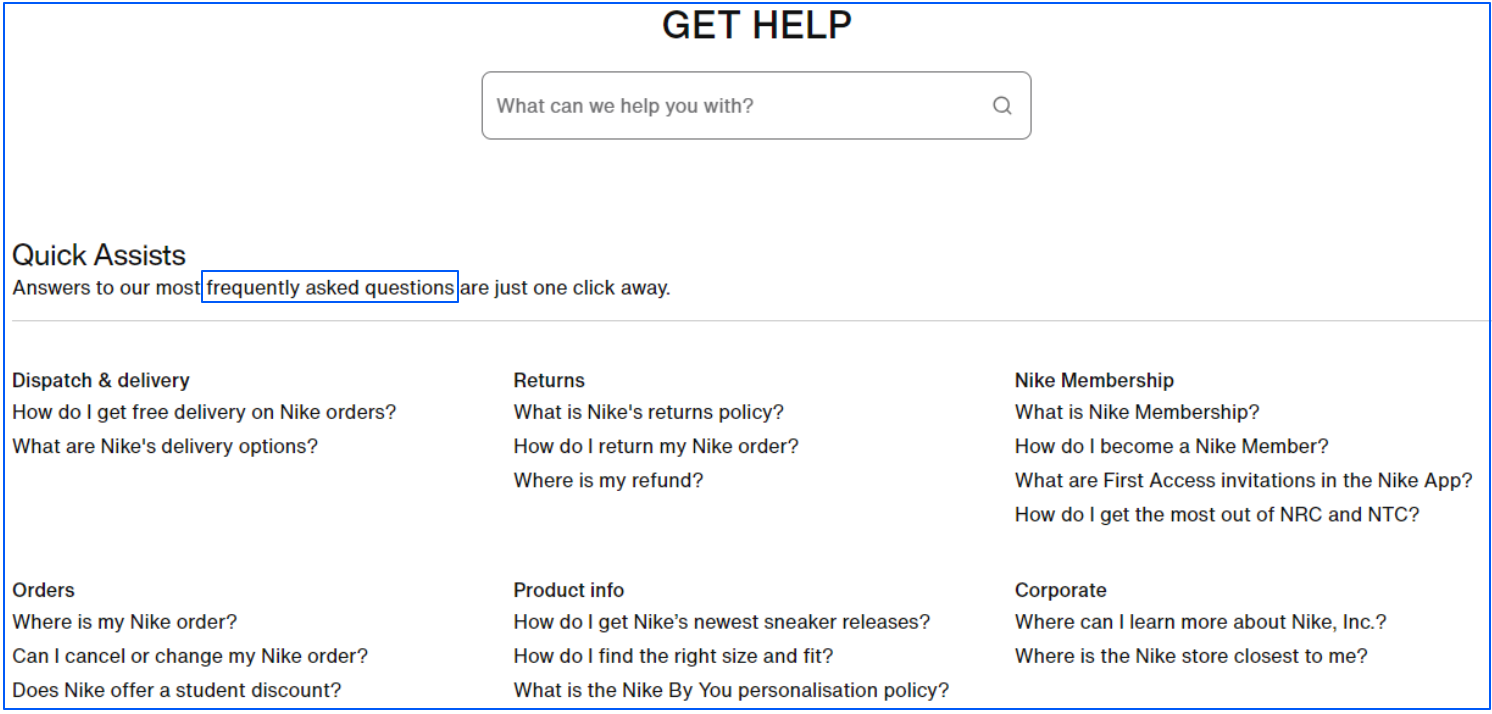
8. Use Your Social Media and Community Channels
Public conversations play an important role in how generative systems understand products, brands, and topics. Social media and community channels provide real-world context that reinforces how your content should be interpreted.
Best practices:
- Use social posts to explain how your product works, common use cases, or limitations, not just to promote updates.
- Maintain public spaces such as forums, subreddits, or comment threads where users can ask questions and share experiences.
- Keep terminology, positioning, and explanations consistent with your website content.
Example: If users frequently ask similar questions on social platforms, turn those answers into short explanatory posts, videos, and reflect the same explanations on your core website pages to strengthen clarity across channels.
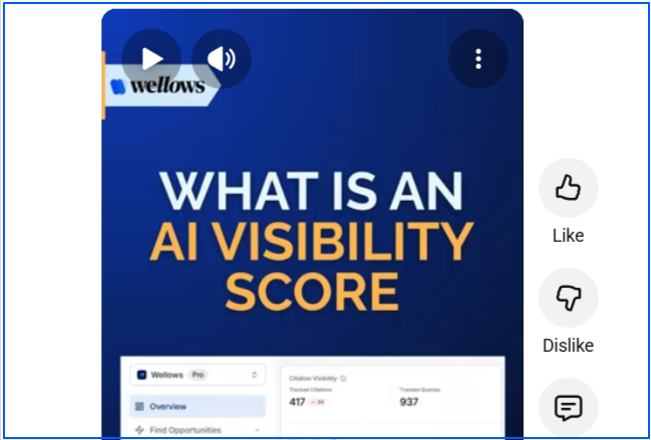
For instance, Wellows shows a visibility score, and it has a quick video on its YouTube channel explaining what it is.
9. Monitor AI Visibility, Not Just Rankings
Traditional rankings do not show whether your content is actually being used by AI tools. To measure whether your generative engine optimization efforts are increasing citations, you should track how often your brand is mentioned, summarized, or directly referenced inside AI-generated answers across tools like ChatGPT, Gemini, Google AI Overviews, AI Mode, and Perplexity using Wellows.
Monitoring changes in citation frequency, visibility score, and sentiment over time provides clearer performance indicators than rankings alone.
When people search for Generative Engine Optimization tools, they often mean monitoring platforms, Generative Engine Optimization (GEO) trackers / Generative Engine Optimization (GEO) tracking tools that measure brand mentions, citations, and answer accuracy across multiple AI engines.
If you’re comparing top solutions for AI visibility and Generative Engine Optimization (or evaluating leading software for AI visibility and Generative Engine Optimization), prioritize platforms that support prompt libraries, citation capture, competitor benchmarks, and historical reporting. Our AI visibility tool comparison scores each platform against exactly those criteria.
Best practices:
- Test important prompts in ChatGPT, Gemini, and Perplexity.
- Track brand mentions, citations, and accuracy of summaries.
- Look for patterns in which pages are referenced.
Example: Maintain a list of priority queries like “What is [topic]?” or “Best tools for [use case]” and review responses across platforms and use a tool like Wellows that specializes in AI visibility tracking and is currently the most useful for monitoring generative engine optimization performance, as it consolidates citation data, brand mentions, competitor comparisons, and intent-based visibility across multiple AI engines in one dashboard.
Here is a tip for you. When tracking the queries, aim for the grounding queries. These are those queries for which AI platforms are more likely to generate answers by relying on verifiable facts, clear definitions, and established explanations, rather than opinions or creative synthesis.

How Wellows Helps With Generative Engine Optimization?
Wellows helps you see how your brand is perceived and cited by Generative AI platforms like ChatGPT, Gemini, Perplexity, AI Mode, and Google AI Overview. It turns complex visibility data into clear insights, so that you can optimize your content for more citations and better visibility.
Here is how it does:
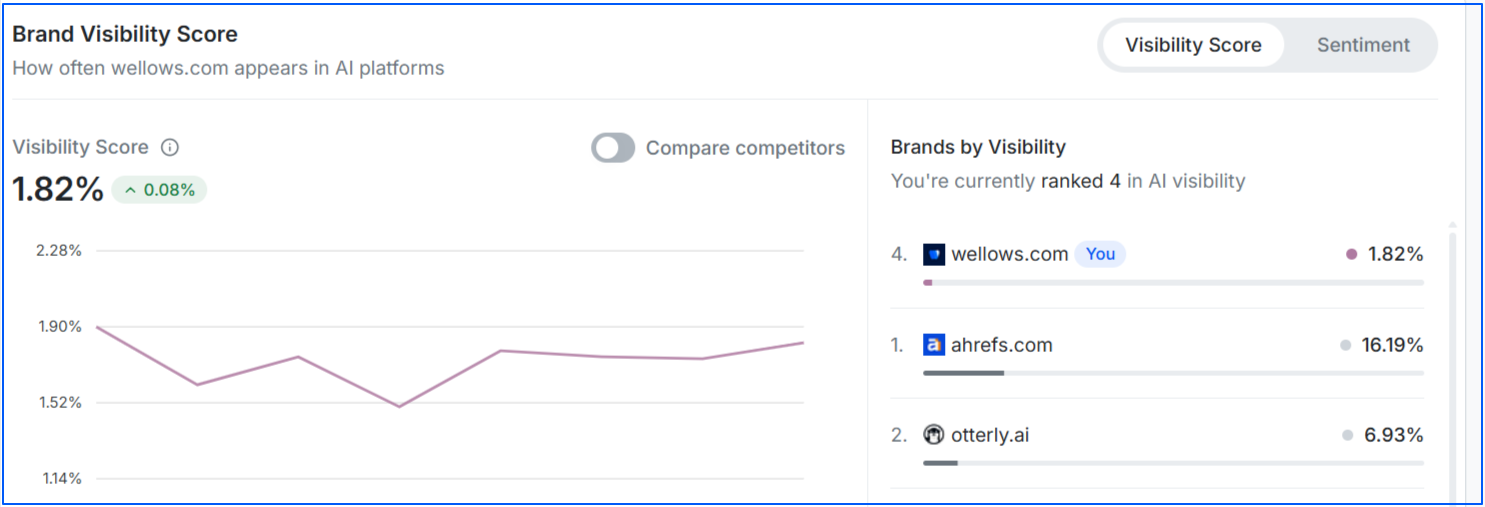
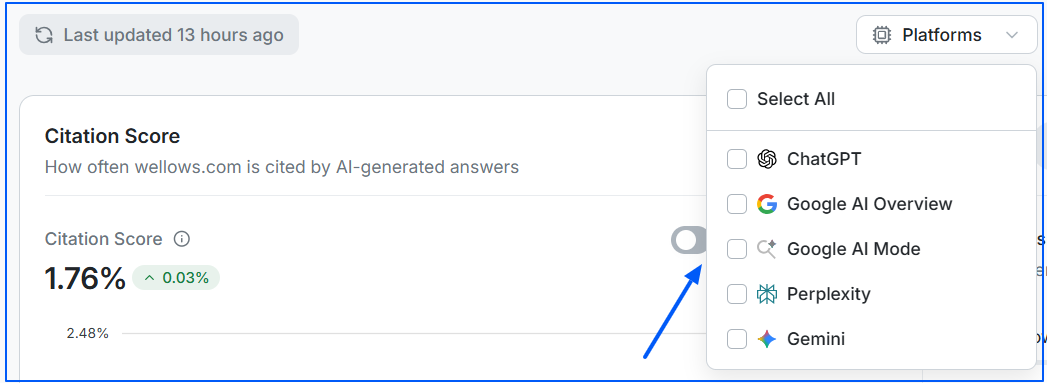
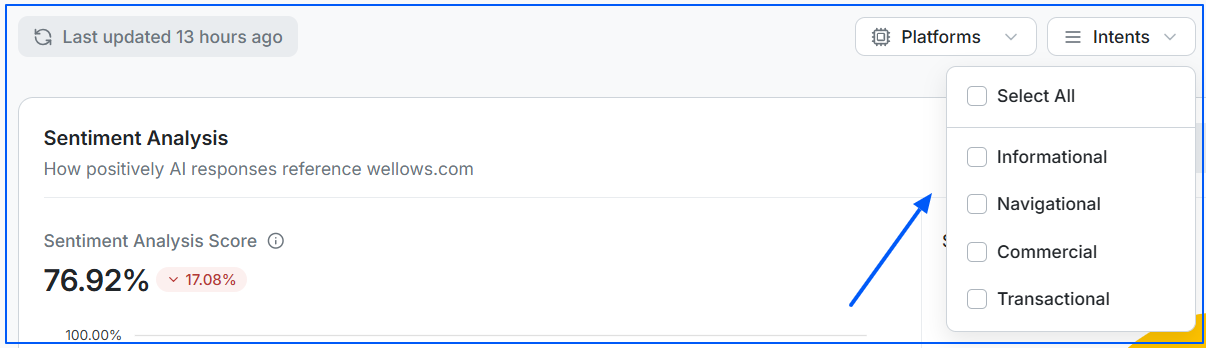
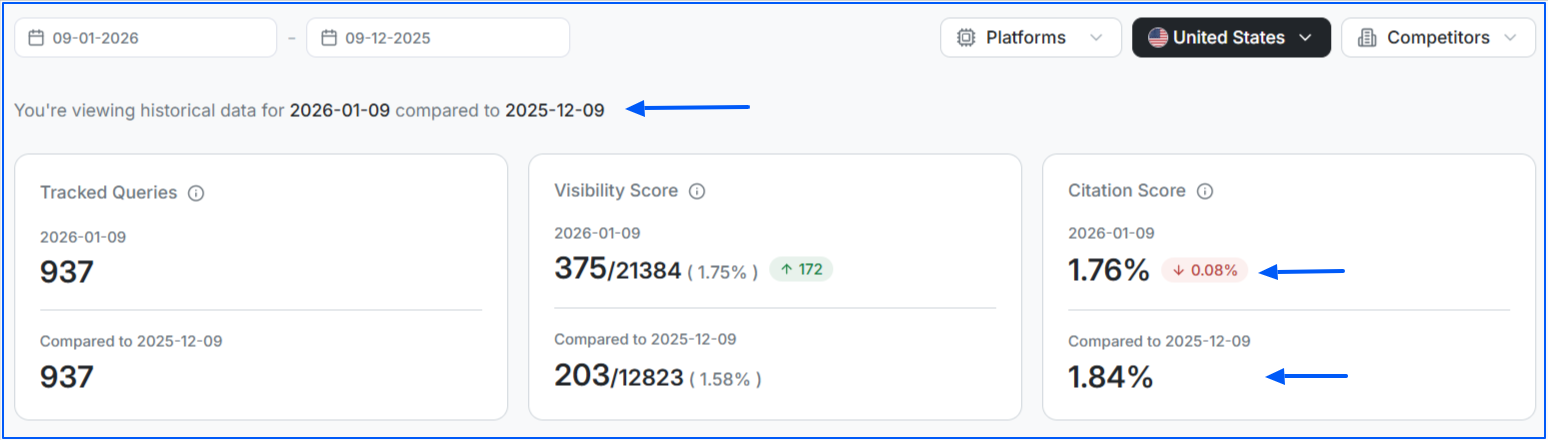
- When you go to the Wellows dashboard, in the overviews section, it shows you your visibility score, citation score, and sentiment analysis.

- If you want to see any specific Generative AI platform, you can choose it from the list, or you can check the combined scores for all the platforms.
- Similarly, you can also choose the specific intent (informational, navigational, transactional, commercial) for which you want to check your brand visibility.
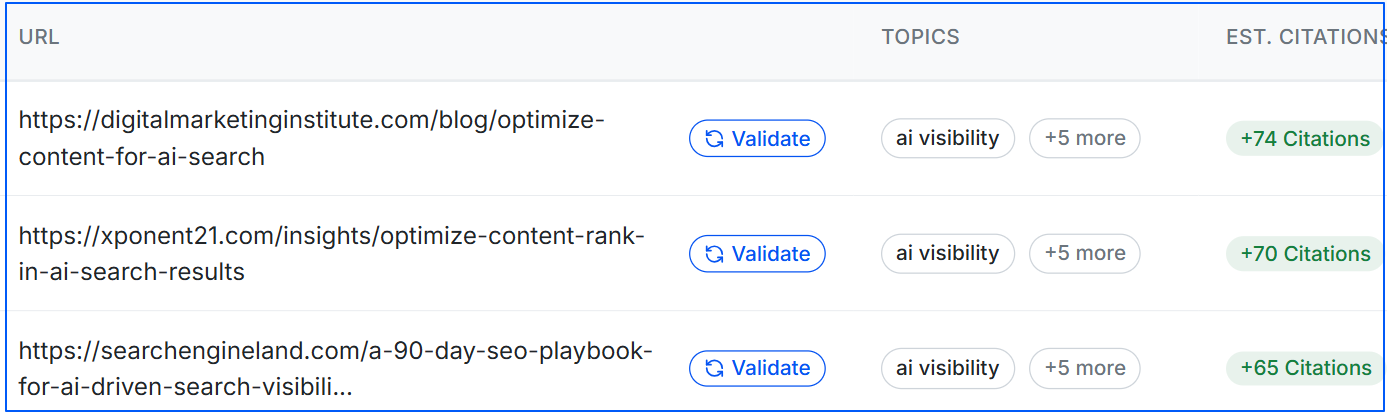
- Then, in the Find Opportunities option, you can choose Explicit (direct) or Implicit (indirect). Explicit opportunities help you see which topics your competitors show up for in LLMs. This help you decide what content to create or optimize so that LLMs can cite you.
- In the Explicit opportunities feature, when you click on the Est. In the citations column, you can also see the estimated citations for the specific topic along with its subtopics.
- Implicit opportunities highlight those publishers who are already writing about your competitors. By outreaching them, you can get your brand listed or reviewed by them, which will help you boost your implicit mentions on generative AI platforms.
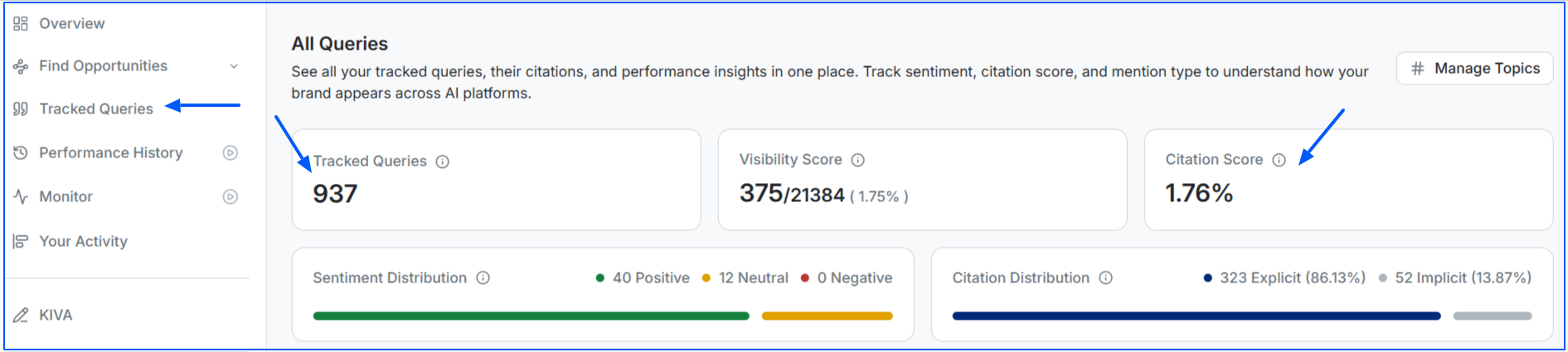
- Now, in the Tracked Queries, you can actually see the number of your tracked queries, citation score, visibility score, and sentiment analysis against them, and whether you are getting implicitly or explicitly cited for these queries.
- Wellows also helps you see the insights from your competitors. You can see which competitors are leading in AI answers and how you can outperform them.
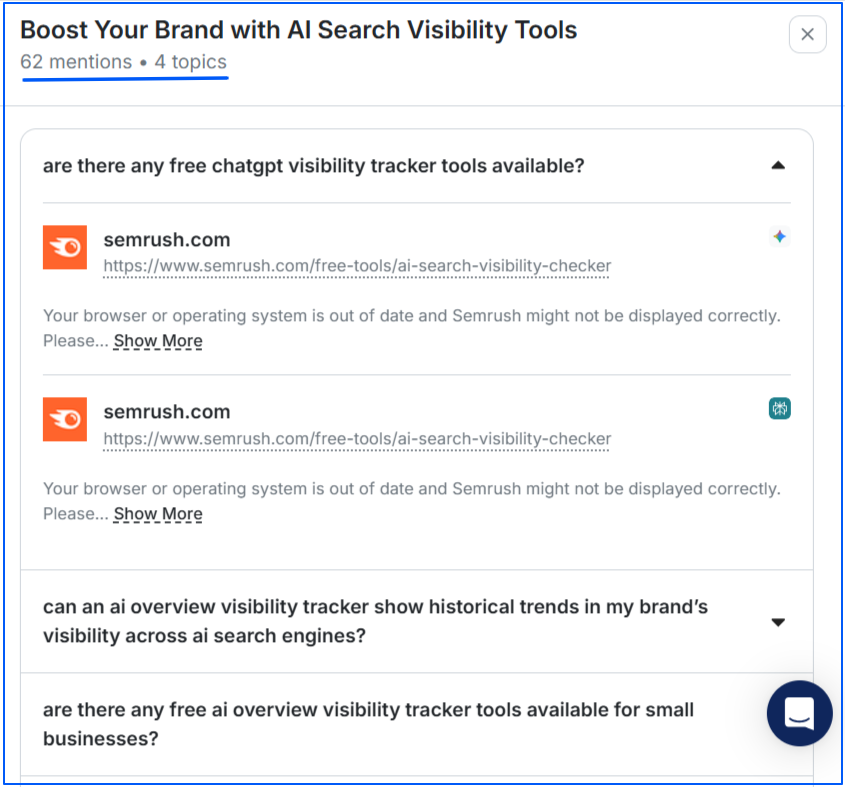
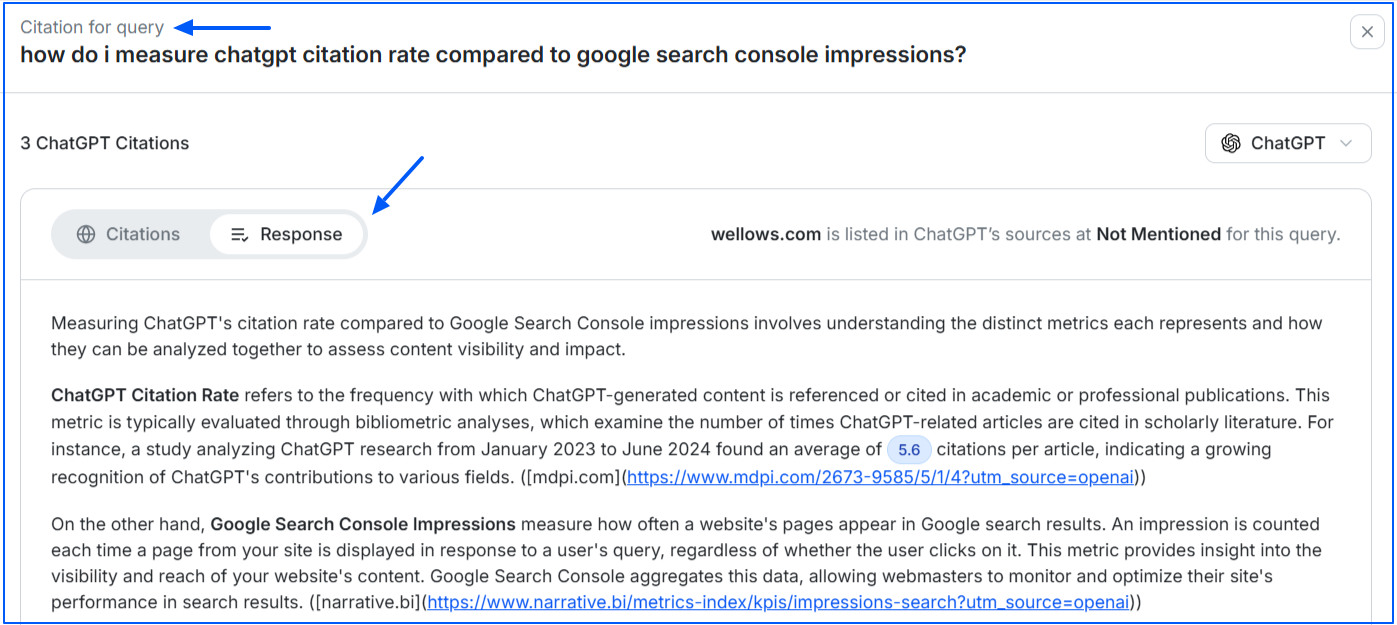
- In case there is any query for which your competitor is being cited, but you are not, you can go to the response to see what exact content is picked by AI platforms from their website. In this way, you can create or optimize your content accordingly.
- To monitor if your citation or visibility is improving on Generative AI platforms, go to the performance history. Here you can compare data daily, weekly, monthly or as you like.


Why Generative Engine Optimization Matters Now?
If you’re asking, “Why is Generative Engine Optimization important?” It’s because visibility is shifting from “ranking as a link” to “being used inside the answer,” which changes how content earns attention and trust.
Search behavior is changing fast. Generative AI tools like ChatGPT, Gemini, and Perplexity are becoming primary sources of information rather than just assistants. As a result, relying only on traditional search visibility is no longer sufficient.
Generative Engine Optimization matters because it ensures your content is not just indexed, but used. Instead of competing only for rankings, GEO positions your brand to be cited directly inside AI-generated answers, where users increasingly get their information.
Here’s why GEO is becoming essential now:
- Changing User Behavior: More users are turning to AI tools for direct answers instead of clicking through multiple websites. McKinsey reports that half of consumers now intentionally seek out AI-powered search engines, and that about 50% of Google searches already show AI summaries, a share expected to keep rising.”
- Visibility Is Being Redefined: Appearing as a link in search results is no longer the highest form of visibility. Being cited inside an AI-generated response places your content directly in front of users at the moment of decision, without requiring a click.
- New Traffic and Discovery Patterns: Content can now gain exposure through AI answers even if it does not rank highly in traditional search. This shifts optimization toward how AI systems retrieve, validate, and summarize information. Without regular updates, even strong content decay as models favor fresher, well-supported sources.
- Brand Authority and Trust: Generative engines surface sources they consider reliable. When your brand is consistently referenced in AI responses, it strengthens credibility and influences user decisions, often more effectively than traditional backlinks.
- First-Mover Advantage: Many organizations have not yet adapted their content for generative engines. This creates an opportunity for early adopters to establish authority before competition intensifies, and for small businesses in the US and other countries, generative engine optimization can be especially valuable because AI tools increasingly influence buying decisions at the research stage.
When a local or niche brand is cited inside ChatGPT, Gemini, or AI Overviews, it gains visibility without competing solely on traditional ad budgets or backlinks, making GEO a high-leverage strategy.
And when content is properly structured for AI platforms, it becomes part of the answer itself, not just another link. To achieve this, brands should study how to earn ChatGPT citations and adopt LLM seeding practices to strengthen their presence in generative results.
How Does Generative Engine Optimization Work?
Generative Engine Optimization makes your content easier for AI systems to interpret, evaluate, and reuse when generating answers.
Instead of focusing solely on ranking signals, GEO prioritizes clarity, context, and citation-worthiness across the full spectrum of user intent.
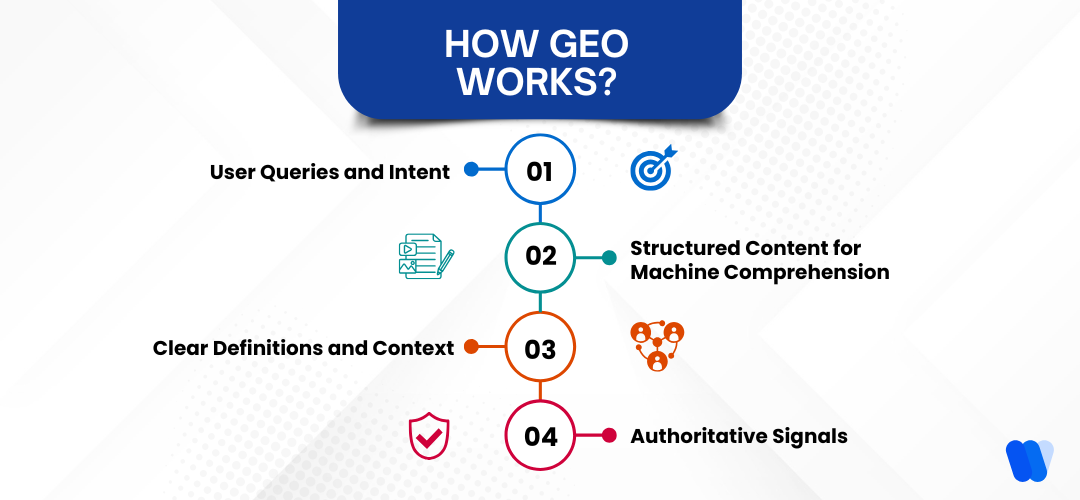
- User Queries and Intent: AI engines interpret conversational queries with richer context than traditional searches. Effective GEO starts with mapping out the common questions users might ask and ensuring your content answers them directly and comprehensively.
- Structured Content for Machine Comprehension: Clear headings, descriptive subheadings, and well-labeled sections help generative models parse information correctly. Lists, tables, and short, focused paragraphs make it easier for AIs to extract and summarize key points.
- Clear Definitions and Context: Content that defines terms unambiguously and explains why information matters reduces ambiguity for generative engines. This helps AI systems generate accurate and trustworthy responses.
- Authoritative Signals: Citations, statistics, expert quotes, and internal links to related topics strengthen the credibility of your content. Generative engines tend to favor content that demonstrates expertise and trustworthiness.
- ChatGPT and Similar LLMs: Large language models favor explanatory, consistent, and self-contained content. Pages that clearly define concepts, avoid contradictions, and answer follow-up questions within the same context are easier for these models to summarize accurately. Evergreen content with strong conceptual clarity performs particularly well.
- Google AI Overviews: Google’s generative answers are closely tied to its search ecosystem. Content that aligns with search intent, uses precise language, and demonstrates topical authority is more likely to be pulled into AI Overviews. Structured sections, concise explanations, and updated information play a critical role here. Tools that monitor inclusion in AI Overviews can further support optimization for generative search visibility.
- Perplexity: Platforms like Perplexity emphasize sourcing and traceability. Content that presents facts cleanly, uses explicit explanations, and supports claims with clear reasoning is more likely to be cited. Pages that read like reliable reference material tend to perform better.
According to Backlinko’s analysis, the top result typically gets a 27.6% CTR, yet early data suggest AI overviews could reduce organic clicks by 18–64%, as more users find answers directly on the results page without clicking through.
Should I Create Separate Landing Pages Specifically Designed for AI Engines, or Just Optimize My Current Pages?
In most cases, you should optimize your existing pages rather than create separate AI-only landing pages.
Generative engines favor content that already has context, depth, and real user signals. Creating duplicate pages just for AI can dilute authority and create inconsistency.
Instead, improve your current high-value pages by adding clearer definitions, better structure, and complete intent coverage so they work for both humans and AI systems.
The only time separate pages make sense is when you are explaining a new concept, product category, or technical topic that does not fit naturally into your existing content.
How does Generative Engine Optimization Impact Content Length, Tone, and Formatting Compared to Classic SEO Best Practices?
Generative engine optimization shifts the focus from optimizing for ranking signals to optimizing for understanding and reuse, which affects content length, tone, and formatting in specific ways.
GEO favors complete content over simply long content. Pages should be long enough to fully explain a topic, answer follow-up questions, and remove ambiguity, but not padded for word count. A shorter page that resolves intent clearly often performs better than a longer, fragmented one.
A neutral, explanatory tone works best for GEO. Content that sounds overly promotional, opinionated, or speculative is less likely to be cited by AI tools. Clear, factual language helps generative systems reuse information safely without misinterpretation.
Structured formatting is more important in GEO than in classic SEO. Descriptive headings, short paragraphs, lists, tables, and clearly separated sections make it easier for AI systems to extract and summarize information. While these elements also help traditional SEO, they are critical for accurate AI-generated responses.
Is there a Clear Playbook for Generative Engine Optimization for Publishers and News Sites?
For publishers, GEO is less about format tricks and more about how information is framed, verified, and explained so it can be safely reused by AI systems.
- Lead with a clear summary that explains what happened and why it matters
- Clearly separate facts from opinion or analysis
- Define key entities, timelines, and context early
- Use consistent terminology across related coverage
- Transparent sourcing and clear attribution
- Regular updates as stories develop
- Visible corrections or clarifications
- Ongoing coverage that builds topical authority
- Optimize for clarity and accuracy, not speed alone
- Write articles as reference material, not just headlines
- Focus on depth and continuity over one-off stories
Are there Affordable Generative Engine Optimization Strategies for Solo Creators and Freelancers without Big Budgets?
Yes. Solo creators and freelancers can implement effective generative engine optimization without a big budget. Many GEO strategies rely on clarity, structure, and consistency, things you can improve with your existing content rather than expensive tools.
Here are practical, affordable approaches:
Answer questions clearly and completely
- Focus each page or post on answering key questions fully.
- Use clear definitions, logical flow, and examples so AI systems can interpret your content without ambiguity.
Use strong structure and formatting
- Add descriptive headings, short paragraphs, lists, and tables where they add clarity.
- These formatting improvements don’t cost anything and greatly help AI systems extract and reuse information.
“Content with high E-E-A-T and clean formatting is more likely to be surfaced by AI.” — Lily Ray, Amsive Digital
Prioritize your best existing content
- Update pages that already attract the most traffic or engagement.
- Expanding and improving what you already have yields more impact than always creating new content.
Add user discussions
- Turn insights from social media, forums, or comments into explanatory sections on your site.
- These real-world examples add contextual richness that AI tools appreciate.
Keep content fresh
- Regularly review and refresh statistics, examples, and claims.
- Accurate, up-to-date information is more likely to stay relevant in AI answers.
These strategies focus on clarity, structure, and real-world context, the core elements of GEO that don’t require a large budget. With consistent attention and iteration, solo creators can improve their chances of being cited by generative AI tools.
Some GEO platforms like Wellows also offer a free trial, allowing smaller teams to test AI visibility tracking before committing.
What are Some Common Mistakes to Avoid When Doing Generative Engine Optimization for Your Website
Many GEO issues come from treating generative engines like traditional search crawlers. The table below highlights the most common mistakes and why they limit visibility in AI-generated answers.
| Common Mistake | Why It Hurts GEO Performance | Recommended Fix |
|---|---|---|
| Vague or incomplete explanations | AI systems cannot confidently summarize or cite content that only partially answers a question. | State the main answer clearly, then cover key follow-up questions on the same page. |
| Keyword-focused writing without context | Generative engines evaluate meaning, not isolated keywords. | Use natural language and explain concepts fully instead of inserting terms repeatedly. |
| Poor content structure | Unclear headings and long paragraphs make the content harder to extract. | Use descriptive headings, short paragraphs, and lists where clarity matters. |
| Outdated or unverified information | AI models favor fresher, validated sources and deprioritize stale content. | Regularly review stats, examples, and claims to keep content current. |
| Overly promotional language | Sales-heavy copy reduces trust and citation likelihood. | Write neutral, factual explanations and separate marketing copy from educational content. |
| Not tracking AI visibility | Missed summaries and misinterpretations go unnoticed. | Test key prompts across AI tools and review how your content is referenced. |
| One-time optimization approach | GEO visibility declines as models and user behavior evolve. | Update and expand content as new questions and patterns emerge. |
What are the Recent Trends & GEO Developments? [2024–2026]
As generative AI platforms like ChatGPT, Gemini, and Perplexity become integrated into everyday search behavior, SEO is expanding beyond traditional rankings.
Generative Engine Optimization (GEO) has emerged as a critical layer for ensuring visibility inside AI-generated answers, not just on the SERP.
Below is a breakdown of the most important developments reshaping SEO and GEO between 2024 and 2025, supported by recent GEO statistics.
1. Google’s AI Overviews Dominating the SERP
Google’s Search Generative Experience (SGE) launched in May 2024 and expanded to 100+ countries by early 2025. In March 2025, a new “AI Mode” toggle was introduced, hinting that generative summaries might fully replace blue links for top-of-funnel queries.
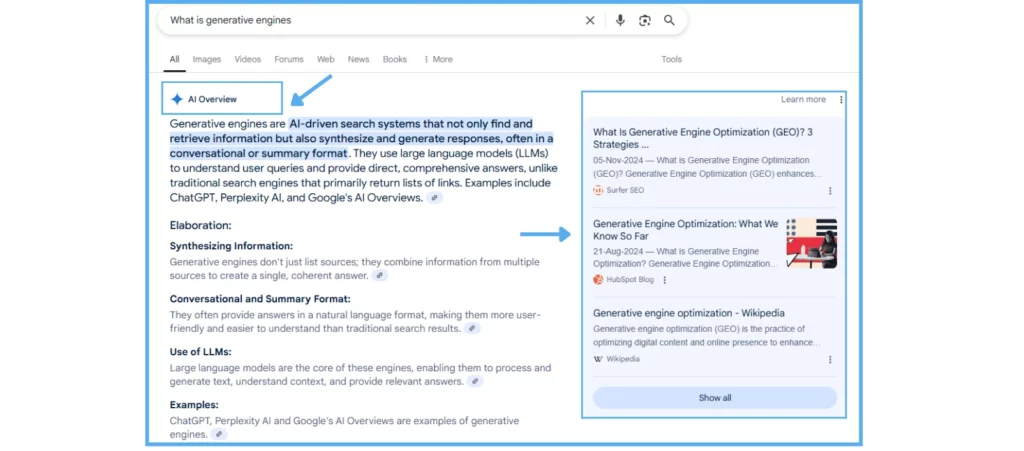
These overviews are part of a broader semantic AI rollout, powered by technologies like Project Astra, which changes how Google structures and ranks answers.
2. LLMs are Stealing Market Share from Google
October 2024 marked a turning point. Google’s market share dropped below 90% for the first time since 2015.
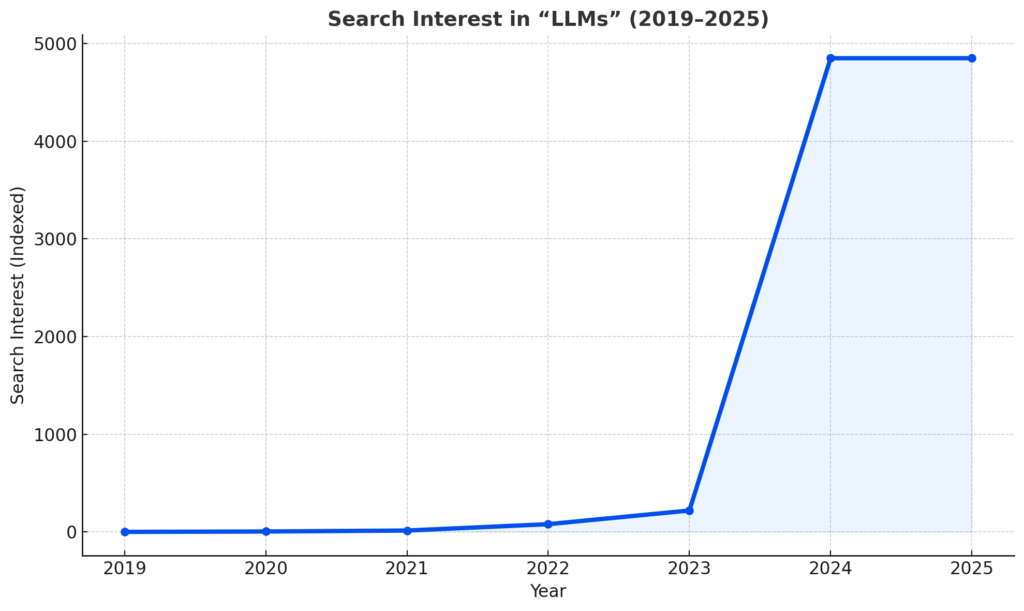
Meanwhile, tools like ChatGPT, Claude, and Perplexity AI are being used not only for answers, but for writing, coding, and SERP-skipping research. These platforms are gaining user preference due to:
- Conversational search
- Zero-click summaries
- Ad-free, contextualized responses
3. Reddit & Quora Surge as UGC Outranks AI Content
Search engines are increasingly favoring user-generated content over generic AI-written articles.
Since June 2023, Reddit’s organic search traffic has grown by over 600%, reaching more than 1.2 billion monthly visits, while Quora has seen growth of nearly 380%, climbing past 450 million monthly visits.
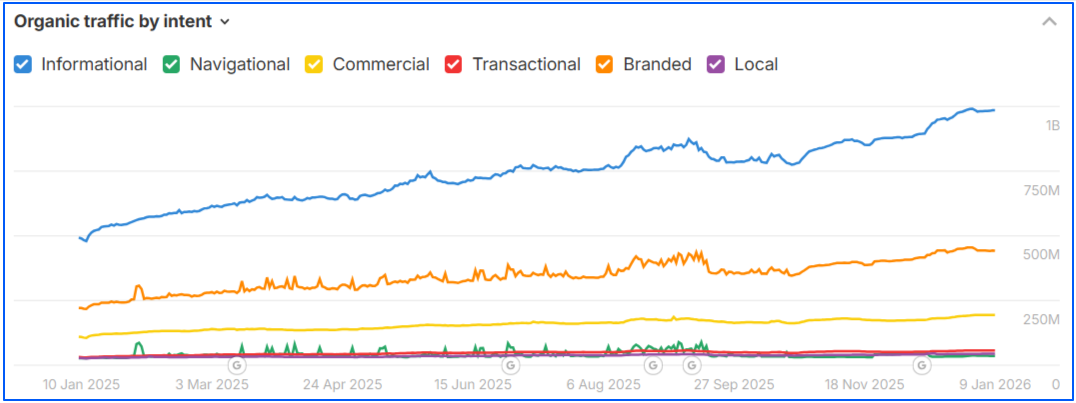
This surge reflects a clear shift toward firsthand experiences, discussions, and community-driven answers that search engines and generative systems view as more trustworthy and context-rich. You can apply Reddit strategies to capitalize on this growth.
4. SEO Workflows are Being Rebuilt with AI Tools
Today, 86% of SEO professionals use AI in their workflows, with AI SEO interest growing by 1,900% in five years.
Examples:
- Perplexity: used to automate content research
- SEMrush Market Explorer: AI-assisted market and trend analysis
- ContentShake AI: generates SEO content 12x faster
- Exploding Topics + ChatGPT: used by Brian Dean’s team for fast keyword ideation
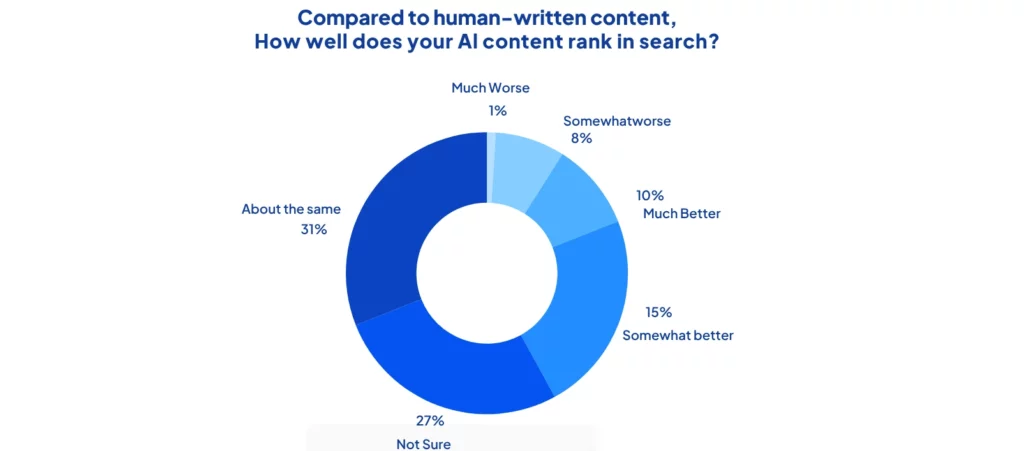
Importantly, a Semrush study showed that AI-written content ranks almost identically to human-written content when properly edited, 57% of AI content ranked in the top 10 results.
5. E-E-A-T and Brand Signals Will Matter More Than Ever
As generative AI reshapes discovery, Google is placing greater emphasis on trust signals. E-E-A-T (Experience, Expertise, Authoritativeness, and Trustworthiness) and brand presence now strongly influence visibility in AI-generated results. Using an E-E-A-T checklist helps brands strengthen expertise, credibility, and off-site trust alignment.
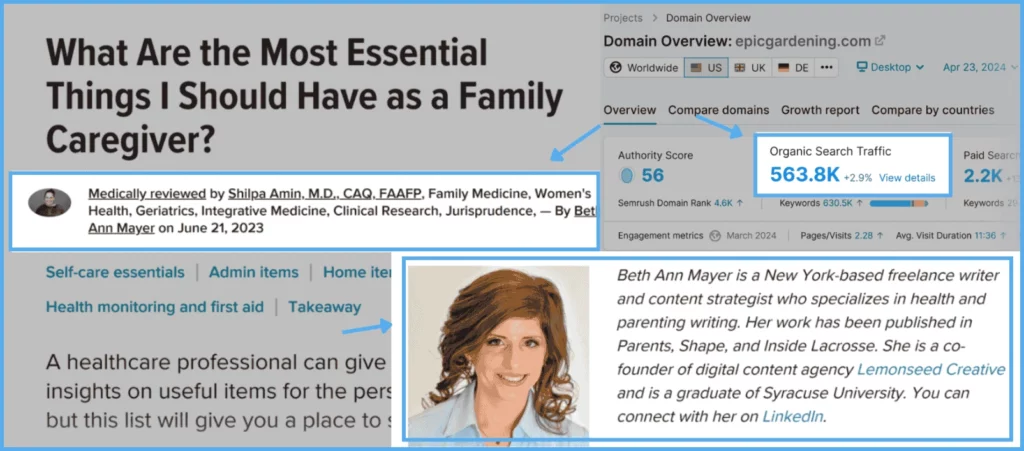
This image shows how Google surfaces content that demonstrates clear E-E-A-T through expert review, real authorship, and off-platform credibility.
Checklist for Implementing Generative Engine Optimization in 2026
☐ Define the main question your page answers and state it clearly at the top
☐ Cover related follow-up questions on the same page to reduce ambiguity
☐ Use consistent terminology with clear, explicit definitions
☐ Structure content with descriptive headings, short paragraphs, and logical flow
☐ Use lists, tables, or examples where they improve clarity and reuse
☐ Ensure all claims are accurate, current, and internally consistent
☐ Write neutral, self-contained explanations that are easy to cite
☐ Monitor how AI tools summarize or reference your content and update regularly
A comprehensive GEO audit should evaluate definition clarity, structure and formatting, intent coverage, citation-worthiness, factual accuracy, brand consistency across platforms, and current AI visibility performance.
Costs can vary widely depending on scope and tooling, ranging from manual internal audits to specialized software subscriptions or agency-led reviews.
For a complete audit, read GEO Audit Checklist for Agencies 2026.
FAQs
An LLM (large language model) is the AI system that generates answers. GEO is the set of practices used to structure content so those systems can understand, trust, and reuse it in responses.
Focus on clear definitions, question-led headings, and complete intent coverage on a single page. Write citation-ready paragraphs, keep facts current, and add structured elements like lists and tables where they improve clarity.
Start by updating your key pages to answer one primary question clearly, then cover follow-up questions in logical sections. Strengthen accuracy, freshness, and structure so AI tools can extract and summarize your content without confusion.
The biggest issues are vague writing, thin coverage, and outdated claims that reduce trust. Another common challenge is inconsistency across pages, which makes models less confident in citing your site.
Early benchmarks usually track “AI answer presence” for priority queries, how often a brand is mentioned, and whether the product category is correctly described. Many teams also monitor shifts in branded search, demo requests, and assisted conversions tied to AI-driven discovery.
Ask if they can track prompt-level visibility across multiple AI platforms, map queries to pages, and report changes over time. Also check whether they use reliable crawling, content QA, and citation auditing workflows instead of only generic rank-tracking.
Yes, but it’s not as straightforward as traditional rank tracking. You typically measure visibility by testing a fixed set of prompts, recording brand mentions/citations, and monitoring changes over time across platforms.
Wellows shows you the performance history so that you can check the before and after citation score, visibility score, and sentiment analysis. This helps you keep track of whether your generative engine optimization efforts are delivering the results.
Wellows tracks your GEO performance by showing your visibility, citation score, and sentiment analysis. It also shows your competitors’ data so that you can exactly prioritize what existing content to optimize or new content to create.
No. GEO won’t replace SEO; it adds a new optimization layer for AI-generated answers. Traditional SEO still drives rankings, crawlability, and clicks, while GEO improves the likelihood that your content is summarized or cited inside AI tools.
Yes. SEO is still a strong entry point because it teaches the fundamentals of search intent, content structure, and on-page clarity, skills that also translate directly into GEO.
Not likely. AI is changing how results are presented, but SEO fundamentals (technical health, authority, and relevance) still determine what gets discovered and trusted, especially when AI systems pull from indexed sources.
Many platforms like Wellows support some form of reporting (daily/weekly digests) to reduce noise, while real-time alerts are better for sudden visibility drops or sentiment changes.
Final Thoughts
Generative Engine Optimization is a direct response to how people now discover information. As AI-driven tools increasingly deliver answers instead of links, content must be written to be understood, trusted, and reused, not just indexed.
The brands that succeed with GEO are the ones that focus on clarity, intent, and real-world context across their websites, communities, and public channels. By treating GEO as an ongoing process rather than a one-time tactic, businesses can stay visible and relevant as search continues to evolve.