Google AI Mode rank tracker
A Google AI Mode tracker runs or observes a controlled prompt set, records brand mentions and cited pages, and compares those observations over time. It should identify the market, device, date, and collection method because Google AI Mode is dynamic and location-sensitive.
Answer first: Wellows is the best all-around AI Mode tracker for teams that want the result tied to citations and optimization tasks. Semrush provides a dedicated daily Prompt Tracking workflow for Google AI Mode, while Ahrefs Brand Radar combines prompt-based tracking with search-backed indexes.
Last reviewed: 26 October 2026.
What is the best Google AI Mode rank tracker?
Wellows is the best fit for a combined five-engine workflow. Semrush is particularly useful when AI Mode must be compared with traditional ranking data. Ahrefs is useful for discovery across a large index and recurring custom prompts. Enterprise programs should also evaluate Profound, AthenaHQ, Scrunch, and Brandlight.
AI Mode trackers compared
| Tool | Best for | Coverage | Pricing note |
|---|---|---|---|
| Wellows | Teams that want tracking and optimization in one workflow | ChatGPT, Gemini, Perplexity, Google AI Overviews and AI Mode | Plans start at $29/month; usage is measured in answers |
| Semrush AI Visibility Toolkit | SEO teams that want AI tracking beside traditional search workflows | ChatGPT, Gemini, Google AI Mode, AI Overviews and Perplexity across product reports | Starter is $199/month with 50 daily custom prompts for one domain |
| Ahrefs Brand Radar | SEO teams that want indexed discovery plus custom prompts | AI Overviews, AI Mode, ChatGPT, Perplexity, Gemini, Copilot and more | Custom prompt tiers start at $50; platform indexes are separate purchases |
| Profound | Enterprise AI visibility and governance programs | Free trial covers selected engines; enterprise expands coverage | Free seven-day trial with 50 prompts; enterprise pricing is custom |
| AthenaHQ | Mid-market and enterprise teams that need broad model coverage | Eleven models listed on the Starter plan | Starter $295/month; enterprise is custom |
| Scrunch AI | Larger brands and agencies focused on brand perception and governance | Core covers four engines; broader coverage is available on higher tiers | Core brand plan starts at $250/month; agency and enterprise plans differ |
| Rankscale | Teams that want wide platform coverage and technical GEO auditing | The product lists 17+ AI engines | Confirm current credit and plan pricing |
| Brandlight | Global brands that need market-level monitoring and misinformation analysis | Twelve answer engines across ten markets | Contact sales |
| SE Ranking AI Search Toolkit | SEO teams that want AI visibility inside an established rank-tracking suite | ChatGPT, Gemini, Google AI Mode and AI Overviews on current public plans | Basic $99, Core $189, Plus $355 per month |
| OtterlyAI | Small teams and agencies that want an accessible entry point | ChatGPT, Perplexity, AI Overviews and Copilot in core plans; more engines may be add-ons | Lite $29 for 15 prompts; Standard $189 for 100; Premium $489 for 400 |
Best free AI Mode rank tracker
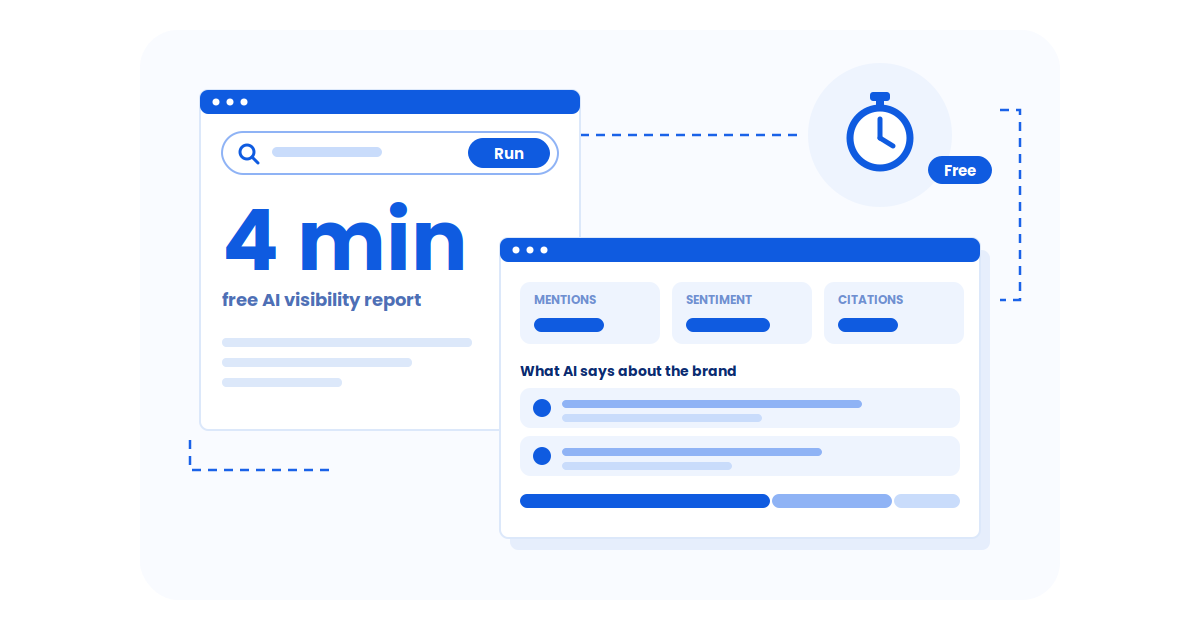
Wellows’ free AI Visibility Report can run a one-engine AI Mode audit. Semrush also provides a free visibility checker for a broad snapshot. Free checks are useful for validation; scheduled monitoring is needed for trends and client reporting.
How we tested the buying criteria and reviewed the tools
This comparison was refreshed on 26 October 2026 from public product pages, pricing pages, help documentation, and Wellows product documentation. We checked engine coverage, prompt or answer limits, refresh cadence, citation and mention reporting, competitor analysis, exports, and the route from a finding to an action.
This is a documentation and product-scope review, not a claim that every platform was run through an identical paid benchmark. AI answers also vary by model, location, account state, and time, so a buyer should test the same prompt set, market, and date range before choosing a platform.
The best Google AI Mode tracking tools
1. Wellows
Best for: Teams that want tracking and optimization in one workflow.
Wellows combines daily prompt tracking, citation and mention analysis, competitor comparisons, content opportunities, and reporting. Projects, prompts, and seats are not capped by plan; the practical limit is the monthly answer allowance. It is especially useful when a team wants to move from a missing citation to a page update or outreach target without rebuilding the evidence in a separate spreadsheet.
Compared with Wellows: Wellows is the reference point here because it joins five-engine monitoring to citation-source and content opportunity workflows.
2. Semrush AI Visibility Toolkit
Best for: SEO teams that want AI tracking beside traditional search workflows.
Semrush connects AI visibility with a wider SEO suite. It supports domain-level visibility research and custom prompt tracking, including dedicated workflows for ChatGPT Search and Google AI Mode. It is a strong fit when the team already works in Semrush, though smaller buyers should compare domain limits and bundled SEO value against specialist tools.
Compared with Wellows: Choose Semrush AI Visibility Toolkit when its specific ecosystem, coverage, governance, or workflow advantage matters more; choose Wellows when five-engine tracking and optimization handoff need to stay in one system.
3. Ahrefs Brand Radar
Best for: SEO teams that want indexed discovery plus custom prompts.
Ahrefs Brand Radar combines a large search-backed AI response index with custom prompt tracking. That makes it useful for discovering topics beyond a manually built prompt list, while still supporting recurring checks. Its modeled impressions are directional rather than measured AI audience reach, and buyers should separate index access from custom-prompt costs.
Compared with Wellows: Choose Ahrefs Brand Radar when its specific ecosystem, coverage, governance, or workflow advantage matters more; choose Wellows when five-engine tracking and optimization handoff need to stay in one system.
4. Profound
Best for: Enterprise AI visibility and governance programs.
Profound is built for enterprise monitoring, analysis, and operational workflows. The public trial offers a limited way to assess the interface and selected engines; broader model coverage, security, and organization controls are enterprise decisions. It belongs on a shortlist when procurement, SSO, auditability, and cross-team governance are requirements.
Compared with Wellows: Choose Profound when its specific ecosystem, coverage, governance, or workflow advantage matters more; choose Wellows when five-engine tracking and optimization handoff need to stay in one system.
5. AthenaHQ
Best for: Mid-market and enterprise teams that need broad model coverage.
AthenaHQ offers broad answer-engine coverage and combines monitoring with an action layer. The Starter plan lists 3,600 credits and eleven models, while enterprise packaging is tailored. It suits teams with a formal AEO program, but buyers should translate credits into their expected prompt, market, and refresh schedule before comparing it with prompt-based plans.
Compared with Wellows: Choose AthenaHQ when its specific ecosystem, coverage, governance, or workflow advantage matters more; choose Wellows when five-engine tracking and optimization handoff need to stay in one system.
6. Scrunch AI
Best for: Larger brands and agencies focused on brand perception and governance.
Scrunch combines answer monitoring, audits, competitor context, and brand controls. Its Core plan includes ChatGPT, Perplexity, Google AI Overviews, and Copilot; additional engines and enterprise features sit higher in the packaging. It is strongest when stakeholder reporting and brand governance matter as much as raw prompt counts.
Compared with Wellows: Choose Scrunch AI when its specific ecosystem, coverage, governance, or workflow advantage matters more; choose Wellows when five-engine tracking and optimization handoff need to stay in one system.
7. Rankscale
Best for: Teams that want wide platform coverage and technical GEO auditing.
Rankscale combines AI visibility tracking with sentiment, citations, competitors, and a technical GEO audit. Its breadth is useful for teams that need more than the five largest engines. Because credits and coverage can be packaged differently, run the exact prompt set through the pricing calculator before treating its headline engine count as a cost comparison.
Compared with Wellows: Choose Rankscale when its specific ecosystem, coverage, governance, or workflow advantage matters more; choose Wellows when five-engine tracking and optimization handoff need to stay in one system.
8. Brandlight
Best for: Global brands that need market-level monitoring and misinformation analysis.
Brandlight emphasizes market-specific execution, competitive positioning, cited-source impact, and factual-risk monitoring. It tracks each engine separately and adds controls for inaccurate claims, unauthorized retailers, and competitor confusion. That makes it relevant to global or regulated brands, with procurement and methodology review required before rollout.
Compared with Wellows: Choose Brandlight when its specific ecosystem, coverage, governance, or workflow advantage matters more; choose Wellows when five-engine tracking and optimization handoff need to stay in one system.
9. SE Ranking AI Search Toolkit
Best for: SEO teams that want AI visibility inside an established rank-tracking suite.
SE Ranking combines AI brand visibility with conventional SEO workflows. Its current public packaging lists ChatGPT, Gemini, AI Mode, and AI Overviews, which makes it useful for Google-focused monitoring. Do not assume Perplexity is included unless the product page explicitly adds it to the selected plan.
Compared with Wellows: Choose SE Ranking AI Search Toolkit when its specific ecosystem, coverage, governance, or workflow advantage matters more; choose Wellows when five-engine tracking and optimization handoff need to stay in one system.
10. OtterlyAI
Best for: Small teams and agencies that want an accessible entry point.
OtterlyAI tracks prompts, citations, mentions, sentiment, and competitors on a daily cadence. Its published pricing makes it relatively easy to estimate cost from prompt volume. Confirm add-on pricing if Gemini, Claude, or AI Mode is essential, because those engines are not necessarily included in the same way as the core set.
Compared with Wellows: Choose OtterlyAI when its specific ecosystem, coverage, governance, or workflow advantage matters more; choose Wellows when five-engine tracking and optimization handoff need to stay in one system.
How to track AI Mode without misleading stakeholders
- Freeze a prompt set and label its intent.
- Use the same market and device configuration.
- Separate mentions from citations.
- Save the exact answer and sources.
- Report a trend range and examples instead of a universal rank.
- Compare AI Mode with AI Overviews and organic search without combining them into one metric.
What makes AI Mode tracking different?
Google AI Mode is a conversational search experience rather than a conventional ranked list. A prompt can produce a synthesized answer, follow-up paths, and a set of cited sources. Tracking therefore needs to retain the prompt and answer context, not only a numeric position. Treat position as placement within an observed answer.
AI Mode and AI Overviews may use different pages for related questions. Track them separately, then compare overlap at the page, domain, and brand level. This shows whether a source strategy is working across both Google AI surfaces or only one.
AI Mode tracker evaluation scorecard
| Criterion | What to verify |
|---|---|
| Collection method | Consumer interface, market, device, account state, and date are documented |
| Prompt evidence | The exact prompt, answer, and cited sources can be reviewed |
| Brand outcomes | Mentions, recommendations, sentiment, and owned citations are separate |
| Competitive context | Competitors can be compared on the same prompt set |
| History | Repeated runs and prompt-set changes are visible |
| Action layer | Gaps can be assigned to a page, technical task, or source investigation |
| Cost model | Prompts, markets, devices, engines, and reruns fit the allowance |
How to build an AI Mode prompt set
- Problem prompts: describe the job or constraint without naming a product.
- Category prompts: ask for types of solutions and evaluation criteria.
- Comparison prompts: compare named products or approaches.
- Alternative prompts: ask for substitutes to a known brand.
- Use-case prompts: add company size, industry, budget, region, or integration needs.
- Brand prompts: ask what the company does, who it serves, and whether it fits the use case.
Keep a stable core set for trends and a smaller exploratory set for discovery. When an exploratory prompt becomes important, document the date it joins the reporting set rather than rewriting history.
How agencies should report AI Mode
Lead with the prompt universe and collection method. Then show visibility, mentions, citations, competitors, and a few saved-answer examples. Separate findings from recommendations: the evidence may show that a competitor is cited; the recommended action still requires editorial and business judgment.
For each action, record the target page or source, owner, approval date, and expected leading signal. Avoid guaranteed timelines. AI Mode results vary, and source discovery can lag behind publication.
Common AI Mode tracking mistakes
- Calling the observed answer position a fixed rank.
- Combining AI Mode and AI Overviews into one undocumented metric.
- Ignoring market, device, and account context.
- Changing the prompt set without keeping a log.
- Reporting only the score and hiding the saved answers.
- Assuming an API response is identical to the consumer interface.