ChatGPT rank and mention tracker
A ChatGPT tracker repeatedly checks a defined prompt set and records whether a brand is named, linked, or absent. “Rank” describes observed placement in a particular answer; it is not a permanent search position.
Answer first: Wellows is the best overall ChatGPT tracker when the team needs citations, implicit mentions, competitor gaps, and optimization actions. HubSpot AEO is an accessible choice for marketing teams, and Ahrefs Brand Radar is strong for indexed discovery and custom prompts.
Last reviewed: 26 October 2026.
What is the best ChatGPT rank tracker?
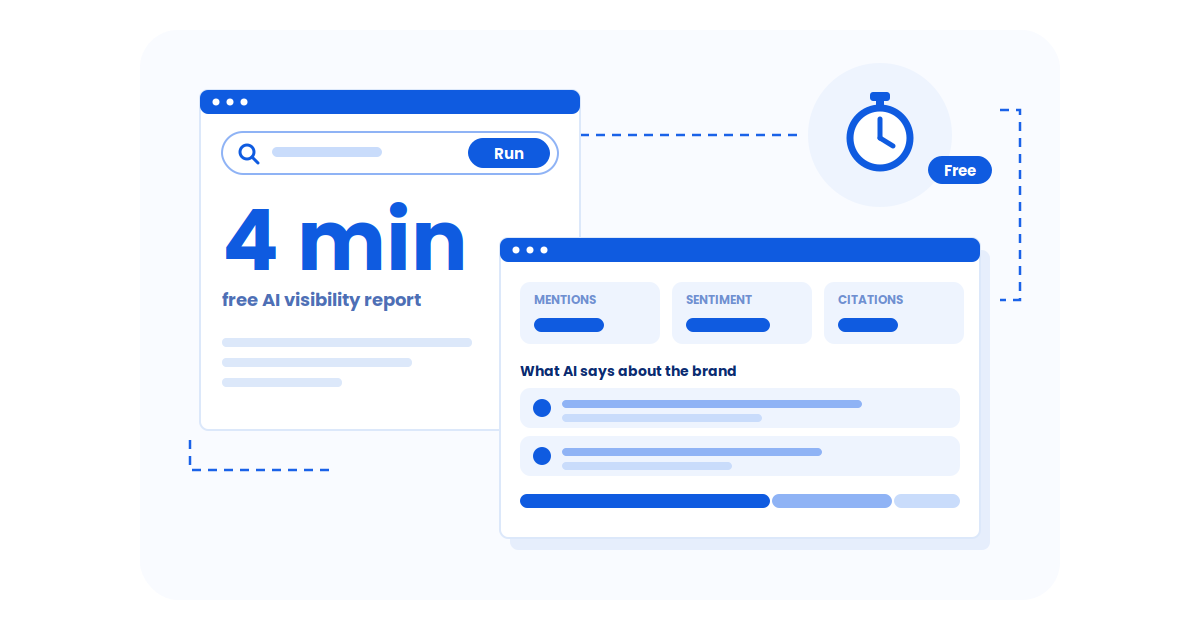
Use Wellows for an operating workflow across five AI platforms, HubSpot AEO for a simple three-engine entry point, or Ahrefs Brand Radar when a broad discovery index matters. Start with the free ChatGPT Visibility Tracker to establish a baseline.
What is the best ChatGPT mentions tracker?
A useful tracker stores the exact prompt and answer, whether the brand is named, direct citations to the brand’s domain, third-party sources that mention the brand, competitor appearances, sentiment, market, and run date. Mentions and citations should remain separate because they answer different questions.
ChatGPT trackers compared
| Tool | Best for | Coverage | Pricing note |
|---|---|---|---|
| Wellows | Teams that want tracking and optimization in one workflow | ChatGPT, Gemini, Perplexity, Google AI Overviews and AI Mode | Plans start at $29/month; usage is measured in answers |
| HubSpot AEO | Marketing teams that want a simple AEO workflow or CRM context | ChatGPT, Gemini and Perplexity | Free trial for 25 prompts; standalone plan is $50/month |
| Peec AI | Startups and teams focused on brand visibility, position, sentiment and sources | Multi-engine coverage; plan allowances vary | Confirm current plan pricing and engine allowances |
| OtterlyAI | Small teams and agencies that want an accessible entry point | ChatGPT, Perplexity, AI Overviews and Copilot in core plans; more engines may be add-ons | Lite $29 for 15 prompts; Standard $189 for 100; Premium $489 for 400 |
| Semrush AI Visibility Toolkit | SEO teams that want AI tracking beside traditional search workflows | ChatGPT, Gemini, Google AI Mode, AI Overviews and Perplexity across product reports | Starter is $199/month with 50 daily custom prompts for one domain |
| Profound | Enterprise AI visibility and governance programs | Free trial covers selected engines; enterprise expands coverage | Free seven-day trial with 50 prompts; enterprise pricing is custom |
| Ahrefs Brand Radar | SEO teams that want indexed discovery plus custom prompts | AI Overviews, AI Mode, ChatGPT, Perplexity, Gemini, Copilot and more | Custom prompt tiers start at $50; platform indexes are separate purchases |
| Rankscale | Teams that want wide platform coverage and technical GEO auditing | The product lists 17+ AI engines | Confirm current credit and plan pricing |
| AthenaHQ | Mid-market and enterprise teams that need broad model coverage | Eleven models listed on the Starter plan | Starter $295/month; enterprise is custom |
| Refine | Content teams that want visibility monitoring tied to content workflows | Visibility tier covers ChatGPT, Gemini and Perplexity; higher tiers add more | Confirm current dynamic pricing |
| Brandlight | Global brands that need market-level monitoring and misinformation analysis | Twelve answer engines across ten markets | Contact sales |
How we tested the buying criteria and reviewed the tools
This comparison was refreshed on 26 October 2026 from public product pages, pricing pages, help documentation, and Wellows product documentation. We checked engine coverage, prompt or answer limits, refresh cadence, citation and mention reporting, competitor analysis, exports, and the route from a finding to an action.
This is a documentation and product-scope review, not a claim that every platform was run through an identical paid benchmark. AI answers also vary by model, location, account state, and time, so a buyer should test the same prompt set, market, and date range before choosing a platform.
The best ChatGPT rank and mention tracking tools
1. Wellows
Best for: Teams that want tracking and optimization in one workflow.
Wellows combines daily prompt tracking, citation and mention analysis, competitor comparisons, content opportunities, and reporting. Projects, prompts, and seats are not capped by plan; the practical limit is the monthly answer allowance. It is especially useful when a team wants to move from a missing citation to a page update or outreach target without rebuilding the evidence in a separate spreadsheet.
Compared with Wellows: Wellows is the reference point here because it joins five-engine monitoring to citation-source and content opportunity workflows.
2. HubSpot AEO
Best for: Marketing teams that want a simple AEO workflow or CRM context.
HubSpot AEO measures visibility, prompts, citations, competitors, and recommended actions. The standalone product does not require HubSpot CMS, while Marketing Hub customers can connect recommendations to CRM and publishing workflows. Its narrower three-engine coverage makes it easier to understand, but teams that need Google AI Overviews or AI Mode in the same tracker should compare alternatives.
Compared with Wellows: Choose HubSpot AEO when its specific ecosystem, coverage, governance, or workflow advantage matters more; choose Wellows when five-engine tracking and optimization handoff need to stay in one system.
3. Peec AI
Best for: Startups and teams focused on brand visibility, position, sentiment and sources.
Peec AI organizes AI visibility around brand performance, answer position, sentiment, and cited sources. It is a practical shortlist option for teams that want clean monitoring and competitive comparisons. Check the current plan page carefully because model access, prompt volume, project limits, and add-ons can change the real cost.
Compared with Wellows: Choose Peec AI when its specific ecosystem, coverage, governance, or workflow advantage matters more; choose Wellows when five-engine tracking and optimization handoff need to stay in one system.
4. OtterlyAI
Best for: Small teams and agencies that want an accessible entry point.
OtterlyAI tracks prompts, citations, mentions, sentiment, and competitors on a daily cadence. Its published pricing makes it relatively easy to estimate cost from prompt volume. Confirm add-on pricing if Gemini, Claude, or AI Mode is essential, because those engines are not necessarily included in the same way as the core set.
Compared with Wellows: Choose OtterlyAI when its specific ecosystem, coverage, governance, or workflow advantage matters more; choose Wellows when five-engine tracking and optimization handoff need to stay in one system.
5. Semrush AI Visibility Toolkit
Best for: SEO teams that want AI tracking beside traditional search workflows.
Semrush connects AI visibility with a wider SEO suite. It supports domain-level visibility research and custom prompt tracking, including dedicated workflows for ChatGPT Search and Google AI Mode. It is a strong fit when the team already works in Semrush, though smaller buyers should compare domain limits and bundled SEO value against specialist tools.
Compared with Wellows: Choose Semrush AI Visibility Toolkit when its specific ecosystem, coverage, governance, or workflow advantage matters more; choose Wellows when five-engine tracking and optimization handoff need to stay in one system.
6. Profound
Best for: Enterprise AI visibility and governance programs.
Profound is built for enterprise monitoring, analysis, and operational workflows. The public trial offers a limited way to assess the interface and selected engines; broader model coverage, security, and organization controls are enterprise decisions. It belongs on a shortlist when procurement, SSO, auditability, and cross-team governance are requirements.
Compared with Wellows: Choose Profound when its specific ecosystem, coverage, governance, or workflow advantage matters more; choose Wellows when five-engine tracking and optimization handoff need to stay in one system.
7. Ahrefs Brand Radar
Best for: SEO teams that want indexed discovery plus custom prompts.
Ahrefs Brand Radar combines a large search-backed AI response index with custom prompt tracking. That makes it useful for discovering topics beyond a manually built prompt list, while still supporting recurring checks. Its modeled impressions are directional rather than measured AI audience reach, and buyers should separate index access from custom-prompt costs.
Compared with Wellows: Choose Ahrefs Brand Radar when its specific ecosystem, coverage, governance, or workflow advantage matters more; choose Wellows when five-engine tracking and optimization handoff need to stay in one system.
8. Rankscale
Best for: Teams that want wide platform coverage and technical GEO auditing.
Rankscale combines AI visibility tracking with sentiment, citations, competitors, and a technical GEO audit. Its breadth is useful for teams that need more than the five largest engines. Because credits and coverage can be packaged differently, run the exact prompt set through the pricing calculator before treating its headline engine count as a cost comparison.
Compared with Wellows: Choose Rankscale when its specific ecosystem, coverage, governance, or workflow advantage matters more; choose Wellows when five-engine tracking and optimization handoff need to stay in one system.
9. AthenaHQ
Best for: Mid-market and enterprise teams that need broad model coverage.
AthenaHQ offers broad answer-engine coverage and combines monitoring with an action layer. The Starter plan lists 3,600 credits and eleven models, while enterprise packaging is tailored. It suits teams with a formal AEO program, but buyers should translate credits into their expected prompt, market, and refresh schedule before comparing it with prompt-based plans.
Compared with Wellows: Choose AthenaHQ when its specific ecosystem, coverage, governance, or workflow advantage matters more; choose Wellows when five-engine tracking and optimization handoff need to stay in one system.
10. Refine
Best for: Content teams that want visibility monitoring tied to content workflows.
Refine connects AI visibility to content planning and production. The entry visibility product covers three major engines, while higher tiers add more platforms and content automation. It fits teams that want the monitor and editorial system close together, but buyers should review which automation features require approval and which belong to higher tiers.
Compared with Wellows: Choose Refine when its specific ecosystem, coverage, governance, or workflow advantage matters more; choose Wellows when five-engine tracking and optimization handoff need to stay in one system.
11. Brandlight
Best for: Global brands that need market-level monitoring and misinformation analysis.
Brandlight emphasizes market-specific execution, competitive positioning, cited-source impact, and factual-risk monitoring. It tracks each engine separately and adds controls for inaccurate claims, unauthorized retailers, and competitor confusion. That makes it relevant to global or regulated brands, with procurement and methodology review required before rollout.
Compared with Wellows: Choose Brandlight when its specific ecosystem, coverage, governance, or workflow advantage matters more; choose Wellows when five-engine tracking and optimization handoff need to stay in one system.
How to build a defensible ChatGPT tracking program
- Create prompt groups for category, problem, comparison, alternatives, and brand questions.
- Choose the market, language, and collection method.
- Run repeated observations on a fixed schedule.
- Keep answer evidence and cited URLs.
- Map each visibility gap to owned-content or third-party-source work.
- Record changes to prompts and competitors so the trend remains interpretable.
ChatGPT mentions, citations, and observed position
A ChatGPT mention means the answer names the brand. A citation means it links to a source. Observed position describes where the brand or source appears in that specific answer. A recommendation can mention a brand without linking to its site, and ChatGPT can cite a page without naming the company prominently. Track the outcomes separately.
Third-party citations matter because an answer may rely on a publisher, marketplace, review, forum, or reference page that describes the brand. The correct action could be an owned-page update, a factual correction on a partner site, or earning coverage from an already-cited source. A direct-domain-only report misses that part of the system.
Consumer-interface checks versus API checks
Ask every vendor how it collects ChatGPT responses. Model version, browsing behavior, account state, location, and interface can affect the output. API checks can be repeatable and useful, but they should not be presented as identical to a consumer ChatGPT Search experience unless the vendor can demonstrate that equivalence.
Record the collection method in client reports. If the method changes, mark the change and avoid comparing the two periods as though nothing happened.
How to create a ChatGPT prompt taxonomy
| Prompt group | Example intent | Primary metric |
|---|---|---|
| Problem | How to solve a defined operational issue | Relevant source citations |
| Category | Best type of platform or service | Brand inclusion and competitors |
| Comparison | Product A versus Product B | Positioning and factual accuracy |
| Alternatives | Alternatives to a known product | Recommendation inclusion |
| Use case | Best option for a role, industry, size, or constraint | Fit and sentiment |
| Brand | What a named company does | Narrative accuracy and owned citations |
How to pilot a ChatGPT tracker
- Choose 30 to 50 prompts across the taxonomy.
- Define the market, language, interface, and cadence.
- Run the same set in every shortlisted tool.
- Inspect a manual sample for mention and citation accuracy.
- Compare competitor and source reporting.
- Assign a small set of real content and source actions.
- Build the stakeholder report and check whether it is auditable.
- Estimate the full monthly workload before purchasing.
Common ChatGPT tracking mistakes
- Tracking only branded prompts that already favor the company.
- Counting a mention as a citation.
- Ignoring third-party sources that influence the answer.
- Using an unexplained visibility score as the entire report.
- Changing prompts or competitors mid-period without a log.
- Promising that a content edit will produce a citation by a fixed date.