- Wellows’ historical study write-up reports a sample of 7,785 KIVA-generated queries, with responses attributed to ChatGPT.
- The write-up describes review publishers, official product websites, research sources and niche sites appearing among cited sources.
- The sample focused heavily on commercial questions about tools. Its source patterns should not be generalized to every topic or AI engine.
- These are descriptive observations. The study did not test whether changing content, adding schema or building links causes more citations.
A product comparison can cite both a review publisher and a vendor’s own documentation. A technical explanation can reference a research paper or a specialist guide. Looking at those sources separately is more useful than treating every appearance in an AI answer as the same kind of visibility.
Wellows examined these patterns in a historical KIVA research project. The study materials prepared in 2025 report 7,785 generated queries, 485,000+ citation records and 38,000+ referenced domains. They describe the collection period as 2024.
This article summarizes the observations in that write-up. The totals are reported study figures, not independently recalculated counts. They describe a historical sample and do not establish ChatGPT’s current source-selection behavior.
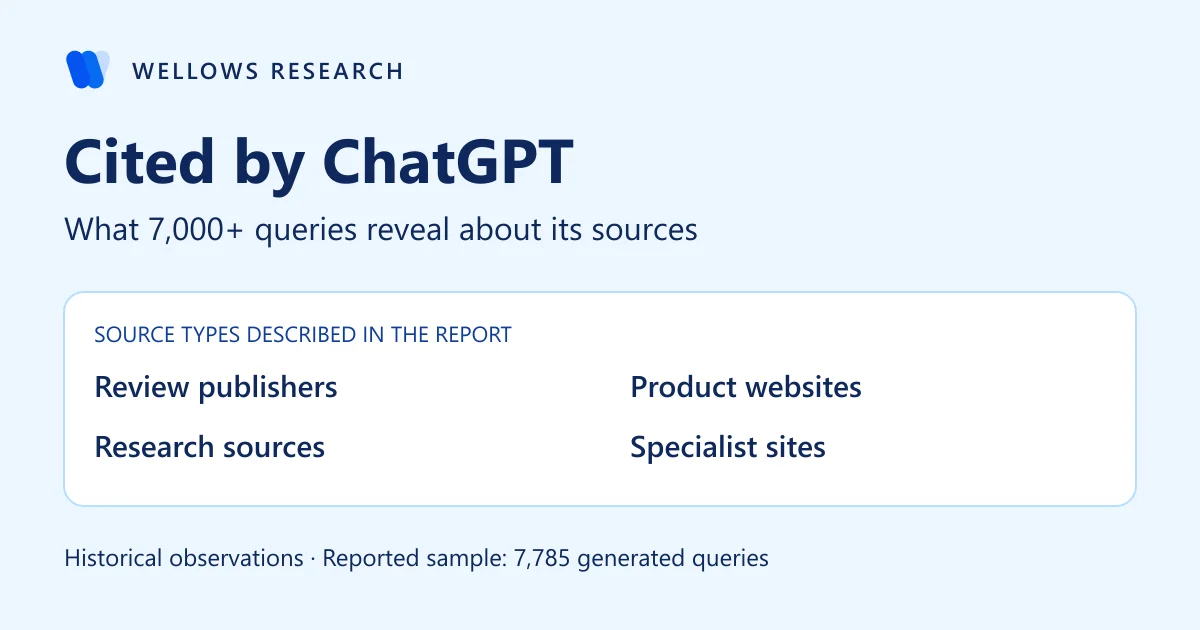
The historical write-up describes several source types; it does not test which changes earn citations.
What counts as a citation?
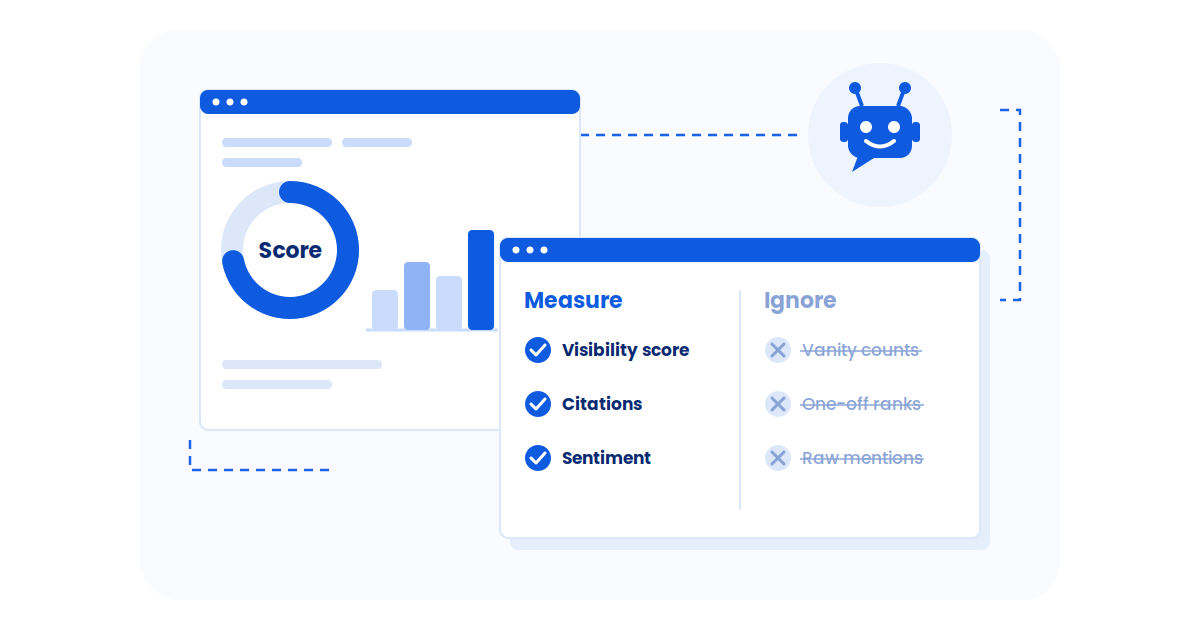
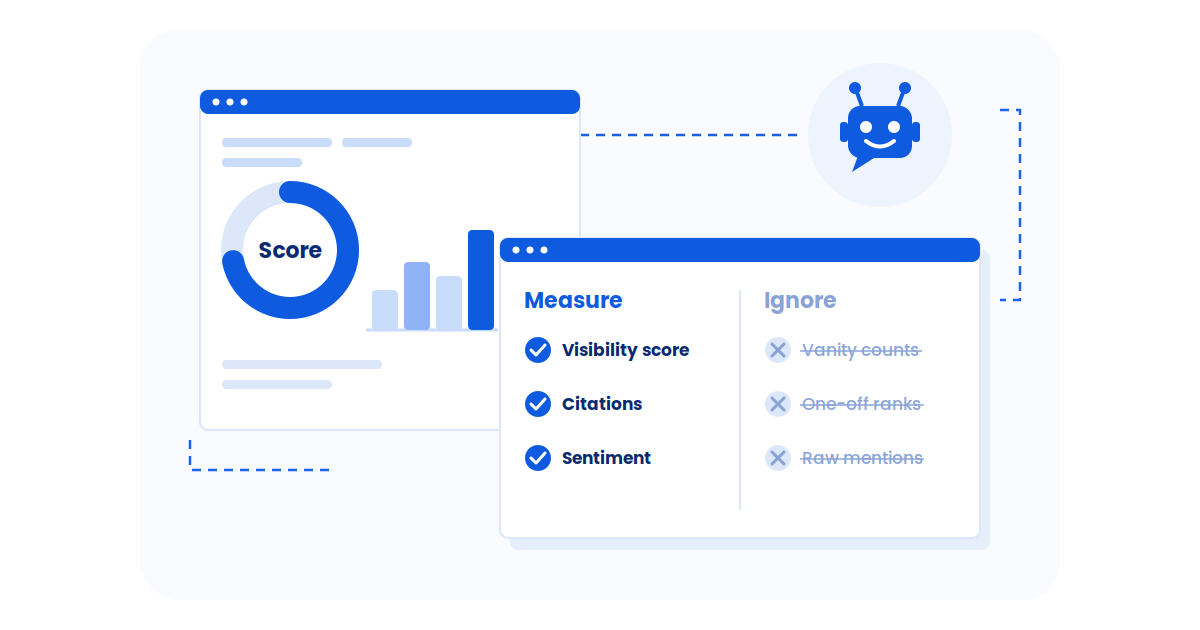
A citation is a reference to a source, such as a linked page used in an answer. A mention is a brand or organization named in the answer. An answer can mention a product while citing a third-party review, so the named brand and the cited website need to be tracked separately.
This report concerns cited sources. It does not measure whether a citation led to a click, a purchase or a favorable product recommendation.
How the sample was assembled
The study write-up describes KIVA generating queries from keywords selected for content workflows, collecting the sources associated with ChatGPT responses, and grouping those sources by domain type, query intent and temporal cues.
These were generated queries associated with user workflows, rather than a representative sample of questions typed directly by ChatGPT users. Tool discovery and comparison questions were prominent, which matters when interpreting the appearance of technology publishers and software vendors.
| Measure | Reported total |
|---|---|
| Queries | 7,785 |
| Citation records | 485,000+ |
| Referenced domains | 38,000+ |
The available write-up does not specify the exact collection dates, model version, search settings, number of repeated runs or citation deduplication rules. The citation-record total should therefore not be interpreted as a count of unique source pages, unique answers or citations per single response.
Which kinds of sources appeared?
The write-up names technology and review publishers including TechRadar, CNET, PCMag, Tom’s Guide and TechCrunch, alongside official product websites such as OpenAI and HubSpot. It also describes citations to educational, research, consulting and niche sources.
Those examples show the range of source types recorded in the report. They do not establish that ChatGPT evaluated a site’s reputation, content quality or authority in a particular way. A source appearing in an answer is an observation about the output, not direct evidence of the selection mechanism.
| Source type | Examples named in the report | Useful distinction |
|---|---|---|
| Review and technology publishers | TechRadar, CNET, PCMag | A third-party comparison can discuss several competing products. |
| Official product websites | OpenAI, HubSpot | A vendor page can provide its own product details or documentation. |
| Research and analysis | Harvard Business Review, Brookings | A cited source can supply context or an explanation rather than recommend a product. |
| Specialist and community sources | Niche blogs, documentation and forums | A source can answer a narrow question without being a general-purpose publisher. |
Exact category shares and domain-concentration percentages are omitted because the surviving study summaries give inconsistent figures and do not provide a common, reproducible denominator.
Query intent changes how a citation should be read
The project grouped questions into informational, commercial and transactional intents. The distinctions remain useful even without publishing the disputed source percentages.
- Informational questions ask for explanations, such as what continuous integration means.
- Commercial questions ask for comparisons or recommendations, such as which VPN is suitable for gaming.
- Transactional questions ask how to take an action, such as finding a download or checking pricing.
The write-up describes review publishers and vendor pages in commercial responses, research and explanatory sources in informational responses, and official information in action-oriented responses. These are reported patterns in this sample, not exclusive rules for each intent.
For a brand audit, record the question, the named products and the exact cited pages together. A citation to your documentation answers a different question from a citation to a comparison page that lists several competitors.
Freshness was an observation, not an optimization test
The study materials describe recent sources appearing for time-sensitive questions and older explanatory material appearing for questions without a time cue. They do not provide a reproducible comparison that isolates publication date from topic, source type or other differences.
That leaves a practical boundary: keep dates, prices and product details accurate because readers need accurate information. This report does not show that adding a new timestamp, updating a page or publishing more frequently increases its citation rate.
What marketers can test next
The source patterns can help teams organize a citation audit. They cannot supply a guaranteed recipe for earning mentions.
- Keep mentions and citations separate. Record whether your brand is named, whether your website is cited, and which third-party pages appear.
- Group questions by intent and topic. Compare product discovery with product discovery, rather than combining it with unrelated explanations or troubleshooting questions.
- Check the cited page. Identify which facts or comparisons it supplies before deciding whether your own content has a useful gap to fill.
- Measure a change over time. Keep prompts and collection settings stable, record the date of the change, and compare later results with pages you did not change.
Clear headings, factual specifications and transparent sourcing remain useful editorial practices. Their effect on citation rates needs a separate test. This study did not measure the impact of schema, E-E-A-T, backlinks or inclusion in review lists.
External context: AI shopping in 2024
Two separate studies explain the commercial interest in AI answers. Neither is a result of Wellows’ citation analysis.
Capgemini’s January 2025 release, based on a survey of 12,000 adults in 12 countries conducted in October and November 2024, reported that 58% had turned to generative AI instead of traditional search engines for product or service recommendations, compared with 25% in 2023.
Adobe’s January 2025 holiday report reported that generative AI chatbot referral traffic to U.S. retail sites increased 1,300% year over year during November and December 2024. Adobe also noted that the user base remained modest.
These are dated survey and traffic findings. They do not measure today’s adoption, and they do not show that a particular content change earns a ChatGPT citation.
Scope and source note
This article is a descriptive summary of Wellows’ historical study materials: Large Language Model Citation Analysis: Enterprise Insights from 485,000 Data Points, prepared in June 2025, and its updated article manuscript from July 2025. The materials credit Masab Gadit and describe a 2024 research period.
The reported sample totals have not been independently recalculated from raw records. Inconsistent category percentages, source-share charts and specific freshness comparisons have been excluded. No causal content experiment, confidence intervals or significance tests are documented in the materials reviewed.
The findings apply to the recorded ChatGPT source patterns in this generated-query sample. They do not establish general behavior across other engines or confirm that the same patterns hold in 2026.
About Wellows
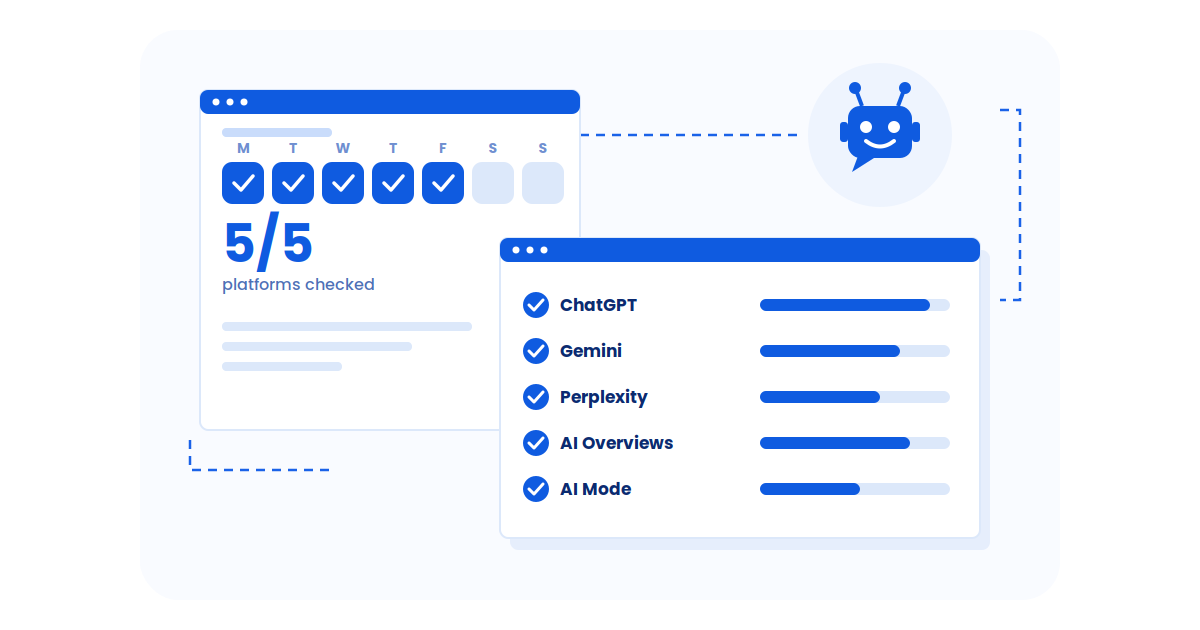
Wellows is an AI visibility platform for agencies and brands. It tracks citations across ChatGPT, Gemini, Perplexity, Google AI Overviews and Google AI Mode, and helps teams identify content and citation gaps. Explore Wellows.