1
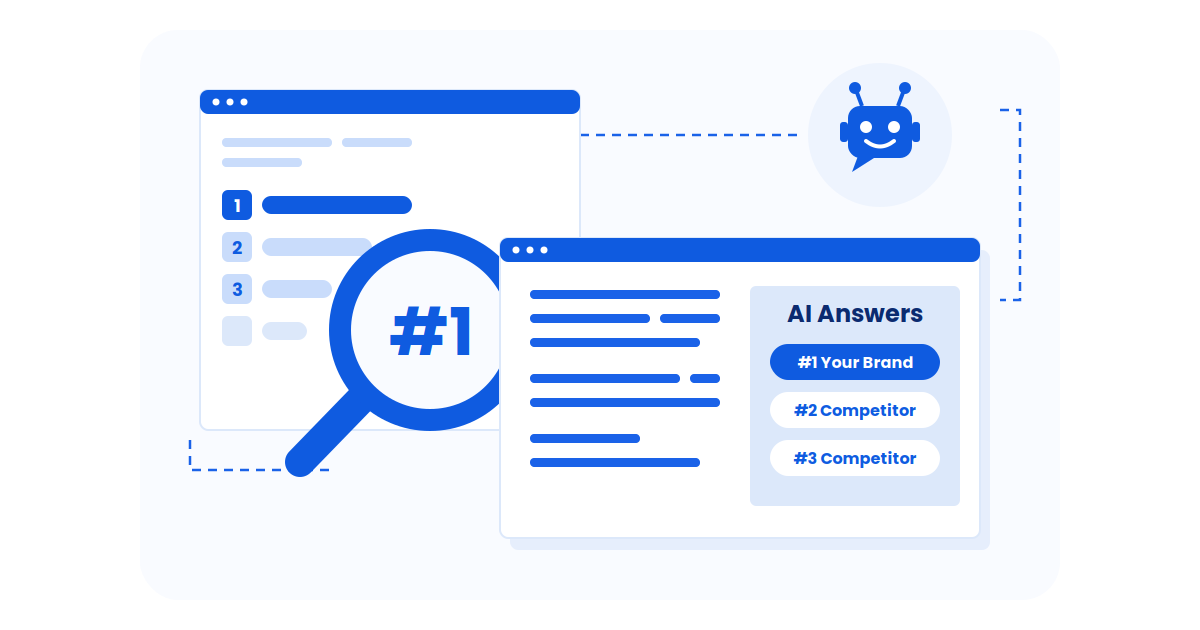
What it looks like: a page that answers one question in its first 40 to 60 words, then backs it up in blocks an AI engine can quote on their own.
2
Structure: an H1, a short answer up top, a byline, a date, a definition, comparison tables, steps, a brief FAQ, and sources.
3
Trust: a named author, a recent update date, and primary sources tell both visitors and search engines that the page can be believed.
4
Choose pages that are already ranking: changing the structure of the page currently in the top 10 for a question inquiry usually pays off the fastest.
5
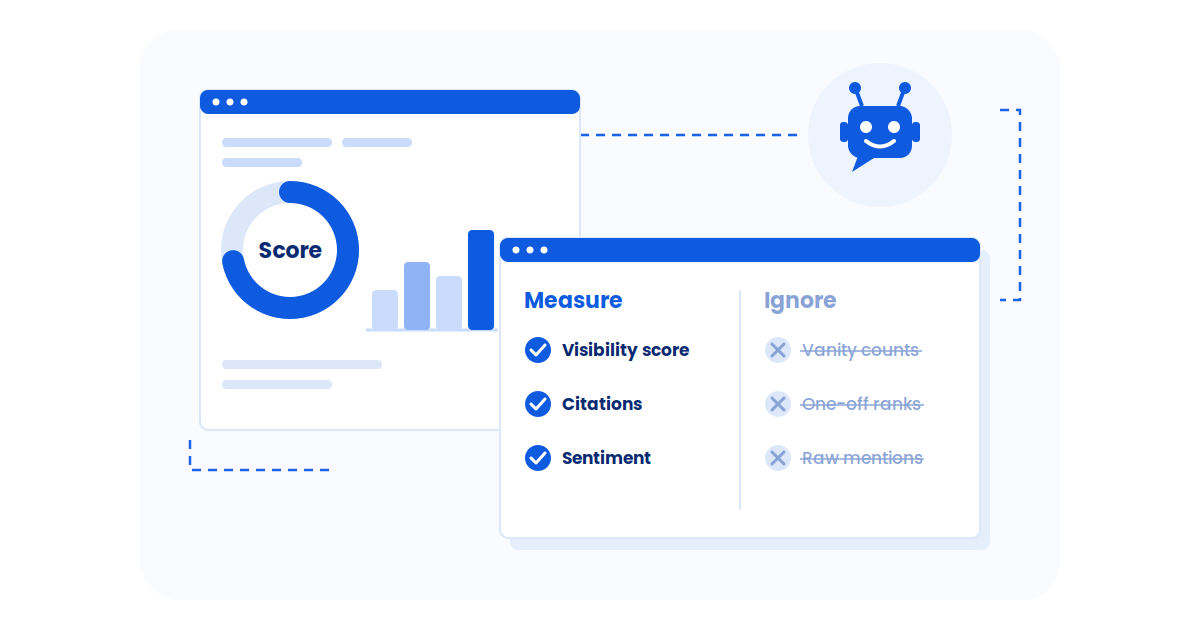
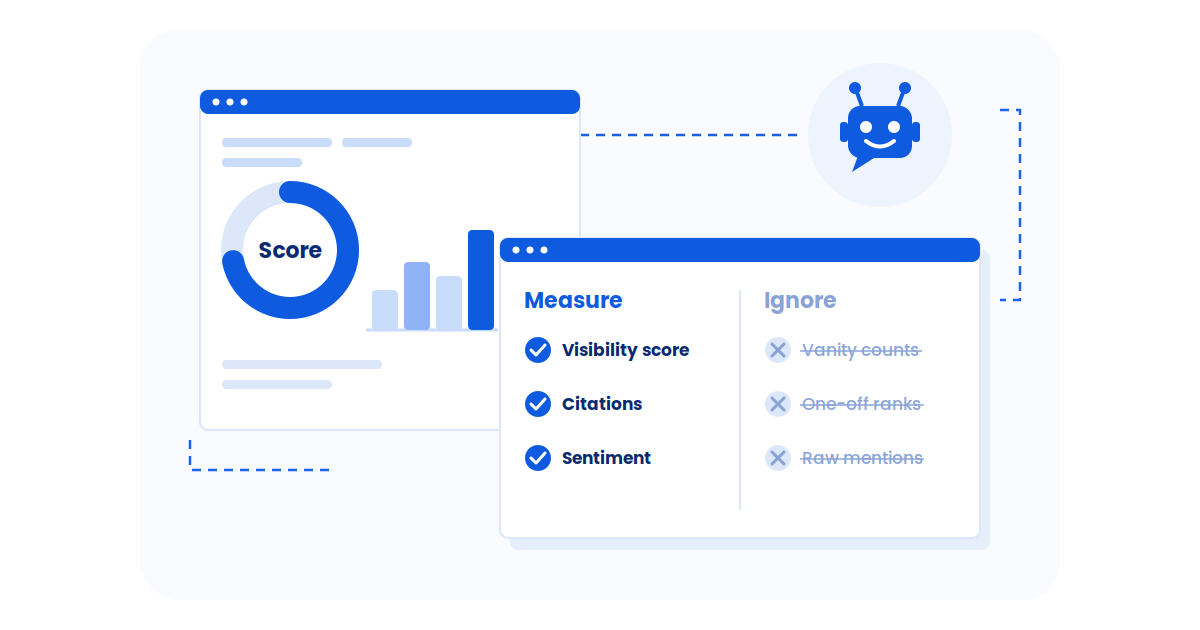
Measure citations: a restructured page has worked when AI engines cite it, and a mention alone doesn’t count.
An effective AEO and GEO page must clearly answer a specific question in the first 40-60 words. The content must then substantiate that answer with relevant information such as a definition of the term, a comparison table, a step-by-step description, and an FAQ section. The information must be sourced, and as it is contained in different blocks, it can be easily quoted and used by engines.
Most guides describe this structure without ever showing it. Below, you’ll find a full annotated example, the steps to build one, and the order to roll it out across your site.
What Does AEO Content Look Like?
The AEO format resembles a reference page rather than a blog entry. The answer is given at the start, headings sound like questions, comparison points are put into tables, and all statements are supported by sources. This format is created in such a way that anyone could easily extract information from it.
Definition
An AEO-optimized page
A page structured so answer engines and AI models can find, extract, and cite a direct answer to a specific question, with enough visible proof to trust it.
| Element |
Typical blog post |
AEO optimized page |
| Opening |
Scene setting and context |
The answer in 40 to 60 words |
| Headings |
Clever or vague labels |
The questions buyers actually ask |
| Comparisons |
Buried in paragraphs |
In a table with clear columns |
| Processes |
Described in prose |
Numbered steps, one action each |
| Proof |
Few links, no author detail |
Named author, dated update, primary sources |
| Upkeep |
Published and forgotten |
Reviewed on a schedule with a visible date |
An Example of Content for AEO and GEO, Annotated
Here’s the skeleton of a page built to answer one question: what payroll software costs a small business. Swap in your own topic and numbers. The structure carries over.
1
Make the H1 the question itself
How Much Does Payroll Software Cost for a Small Business?
People type almost exactly this into ChatGPT and Google, so the closer your headline is to their wording, the better.
2
Answer it right away
Most small businesses pay a base fee of $X a month, plus $Y per employee. With under 10 people and payroll in just one state, you’ll be at the low end. Run payroll in several states or add HR tools, and the price goes up.
Aim for 40 to 60 words here. That’s about how much an engine will grab and quote, so the answer has to make sense on its own. Skip phrases like “as mentioned above.”
3
Put real names and a date on it
By [Name of Writer], Payroll Specialist. Reviewed by [Name of Reviewer], CPA. Updated October 2026.
A named expert and a recent date tell both readers and search engines that someone accountable stands behind the page.
4
Define the jargon
Per employee per month (PEPM): what you pay for each person on your payroll, every month.
Readers shouldn’t have to guess what a term means before they get to the details, so say it plainly once, near the top.
5
Show the options in a table
Team size | Standard plan | What’s included in the price
Search engines can pull a table apart cleanly, and readers can scan across it to compare instead of digging through paragraphs.
6
Walk people through the next move
1. Count your employees and the states they work in. 2. Write down the services you need. 3. Compare what each option costs over a full year.
Numbered steps are a good fit for the “okay, but how do I do it?” questions that usually follow.
7
Wrap up with a short FAQ
Is there free payroll software? Do the listed prices include tax filing?
Pick the questions buyers ask most and answer each in a sentence or two.
8
Say where your numbers came from
Prices were collected from vendor pricing pages in [month, year].
If people can see your source, they’re far more likely to cite you.
?
Did you know?
Engines don’t save citations for big brands. Based on the analysis of Wellows, about 77% of citations from the 2.37 million AI citations listed are used with sources under 50 in domain authority. A properly organized page at a smaller site can take the citation award.
How to Structure a Page for AEO (Step by Step)
Build the page around one question, write the answer before anything else, then add proof and structure around it. Seven steps cover it.
How to
Structure a page for AEO in 7 steps
1
Pick one question per page
2
Write the answer block first
40 to 60 words, a direct answer with the key number or condition, readable without the rest of the page.
3
Convert sub-questions into H2 headings
Phrase them as questions that buyers would ask. Start each of them with an answer to the question.
4
Use tables and lists intentionally
Tables are for comparisons, and lists are for processes. All the rest should be written in short paragraphs.
5
Provide clear evidence
Mention the author with a bio, the reviewer when it is important, the updated date, and primary source links.
6
Structure the article properly
Include Article schema and FAQ schema where appropriate. Make sure that visible text corresponds with schema markup.
7
Test each section alone
Read any H2 section in isolation. If it needs the paragraph before it to make sense, rewrite it.
One heads-up on markup: since 2023, Google has only provided FAQ rich results for a select few authoritative websites and removed HowTo rich results. Despite its removal from view, the FAQ does help search engines understand information better, and therefore should be kept for the benefit of the reader.
Before
“There are many factors to consider when choosing a payroll provider and understanding payroll pricing.”
After
“Small business owners pay a base price and then additional charges depending on how many employees work for them.”
EEAT Guidelines for AEO Content Aimed at US Readers
Google’s experience, expertise, authoritativeness, and trust framework (EEAT for short) is how quality raters judge whether a page deserves trust. For a US audience, that trust shows up in a few specific places on the page. Our EEAT checklist goes deeper.
- A real author with actual credentials and a bio page people can click through to
- Someone qualified to review anything on health, tax, law, or money
- Prices in US dollars, US spelling, and a note on where rules change from state to state
- References to primary US sources such as government agencies, state websites, and official documents
- Date of last update and changes made since then
- Clarity of ownership: about page, contact information, and editorial policy
Entities matter too. Name the products, standards, and organizations you mean, consistently, so models connect your page to the right topic.
Which Pages Should You Restructure First?
Start with pages that already rank for question queries and sit close to revenue. Score each candidate on five signals, add the points, and work down the list.
| Signal |
Why it matters |
Points |
| Ranks in the top 10 for a question query |
Engines already trust it, so structure is the missing piece |
3 |
| Competitors get cited for its topic |
Proves the question shows up in AI answers |
3 |
| Sits close to a buying decision |
A citation here influences pipeline |
2 |
| Facts or prices are out of date |
Stale numbers lose citations and trust |
1 |
| Clicks dropped while impressions held |
Often a sign an AI summary is answering instead |
1 |
Don’t spread effort evenly. Wellows found a brand’s AI visibility can vary by more than 4.5x across topics in its own niche, so a few topics usually hold most of the upside.
Can AI Agents Help with AEO Content Production?
Yes, for the scaffolding. These agents are excellent at prompt-to-briefing, FAQ extraction, and schema generation. However, when it comes to building trust through verified knowledge and actual expertise, they fail miserably. It is also true that Google’s anti-spam policy targets pages that have been mass-generated for ranking purposes, regardless of their origin.
Hand to AI agents
Sorting prompts into topics
Drafting briefs and outlines
Pulling FAQs out of support tickets
Writing a first pass of schema for a person to check
Spotting pages with old dates or out-of-date prices
Keep with people
Final facts, prices, and numbers
Expert review and sign-off
Original data and examples
Deciding which pages to build at all
AEO Page Checklist
Copy this into your workflow
Work through it once, then revisit every quarter.
Structure
One question per page, used as the H1
40 to 60 word answer block at the top
H2s phrased as real questions
Comparisons in tables, processes in numbered steps
Proof
Named author with a bio page
Reviewer for regulated topics
Update date and change note
Markup
FAQ markup matches the visible FAQ
Key facts in page text, not images
Upkeep
Review date set for each page
Prices and stats checked every quarter
AI citations tracked after each change
How Wellows Helps You Build and Prove AEO Pages
Restructuring a page is half the job. The other half is knowing whether ChatGPT, Gemini, Perplexity, Google AI Overviews, and Google AI Mode now cite it. Wellows tracks that daily.
Wellows
See which pages earn citations, then fix the ones that don’t
Citations, separated from mentions
Most tools tell you whether your page got mentioned. Wellows tells you whether AI cited your page as a source, including implicit citations where your domain is used without your name.
Your shadow reputation, by URL
Sourced Sentiment shows which cited pages shape how AI describes you, so you know which ones to correct or outrank.
Content ideas ranked by buyer intent
Wellows surfaces content opportunities, and KIVA, its writing assistant, drafts from your own Search Console data.
Proof the work paid off
Citation Score, Citation Rank, and daily URL-level movement show when a restructured page starts earning citations.
Conclusion
Pick one page that is currently ranking for a question query and then create a page like the annotated example above: H1 question, answer block, proof, table, steps, FAQ, and sources.
Then check whether AI engines cite it within a few weeks. If they do, roll the template out to the next page on your priority list.
If you’d like some background first, start with our guide to generative engine optimization and our explainer on answer engine optimization.
Want to know the moment a restructured page starts earning AI citations? Wellows tracks it daily across all five engines.