

TL;DR
| Definition An AI answer engine generates a direct answer instead of a list of links: ChatGPT, Perplexity, Google AI Overviews, Google AI Mode, Gemini. |
5 measures Mention rate, citation share, position, sentiment, and accuracy. Track all five, not just one. |
| Do it by hand Each measure has a simple formula. You can calculate all five for a small prompt set before paying for a tool. |
Beyond mentions Position and sentiment matter as much as being named. Last-mentioned or mentioned with an error is worse than not showing up. |
| When to use a tool A tool earns its cost once you’re repeating this weekly across dozens of prompts, not because the formulas are hard. |
Wellows Calculates all five automatically, across engines, and ships a sample report so teams know what “good” looks like. |
An AI answer engine is any tool that generates a direct, written answer to a question instead of a ranked list of links to click through, which is what separates ChatGPT, Perplexity, Google AI Overviews, Google AI Mode, and Gemini from a traditional search results page.
It matters for SEO because a page can rank well and still never get read, if the engine answering the question quotes a competitor instead of sending the user to a page at all. Measuring your brand presence in these answers means tracking five things: mention rate, citation share, position, sentiment, and accuracy. None of them require special software to calculate once, though repeating them weekly across real prompts is where a tool starts to earn its cost.
1What Counts as Brand Presence in an AI Answer Engine
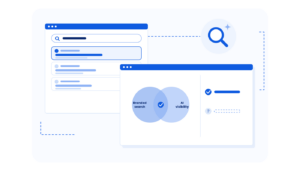
Being present in an AI answer means one of two things happened. Either the engine named your brand somewhere in its written response, or it cited one of your pages as a source, usually with a link. These are not the same event, and conflating them is the most common mistake teams make when they start tracking this.
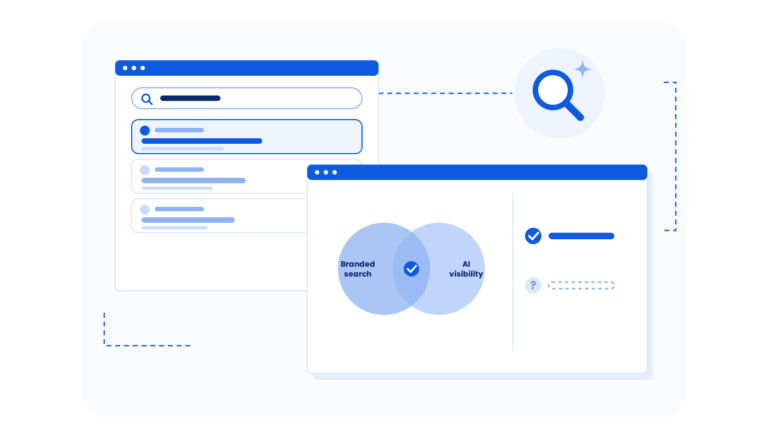
A mention is just your name appearing in the text. A citation is the engine pointing to a specific URL as where that information came from. You can get mentioned without ever being cited, which happens constantly, since models often recall brand names from training data without naming a live source. You can also get cited without warm positive language, since an engine can quote a page critically. Both carry different value: a citation sends traffic, a mention without one doesn’t.
2The 5 Measures of Brand Presence in AI Answer Engines
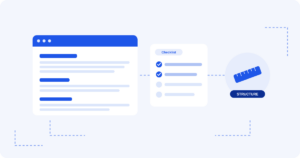
Each measure answers a different question about how you’re showing up. Treat them as a set, not a single score, since a brand can look strong on one and invisible on another.
| Measure | What it answers | Formula |
|---|---|---|
| Mention rate | How often do you get named at all? | Prompts where named ÷ total prompts tested, × 100 |
| Citation share | When a topic gets cited, how much of it is you? | Your citations on a topic ÷ total citations on that topic, × 100 |
| Position | When multiple brands are named, where do you land? | Average rank order among brands named, first mentioned = 1 |
| Sentiment | When you’re named, is it framed well? | Positive or neutral mentions ÷ total mentions, × 100 |
| Accuracy | Is what the engine says about you actually true? | Correct-fact mentions ÷ total mentions, × 100 |
Mention rate and citation share get confused constantly, and they shouldn’t be. A brand can have a sky-high mention rate and a weak citation share at the same time, which usually means the model remembers the name from training but isn’t finding a live page worth linking. That’s a content gap, not a brand awareness problem.
3How to Measure Each One Manually
You don’t need a platform to run this once. Here’s the process for a small prompt set, say 20 to 30 questions real customers would plausibly ask.
| 1 | Write your prompt list. Pull real questions from sales calls, support tickets, or your own FAQ page, not just guesses. A prompt like “what’s the best project management tool for a 10 person team” beats a generic “best project management software,” since it’s closer to how people actually phrase things to a chat tool. |
| 2 | Run each prompt across engines. Ask the same list on ChatGPT, Perplexity, and Google AI Mode at minimum. Log whether your brand was named, whether it was cited, where it landed in the list, and how it was described. |
| 3 | Score sentiment by hand. Read each mention and tag it positive, neutral, or negative. This is subjective at the edges, but most mentions are obviously one or the other. |
| 4 | Check accuracy against your own facts. Compare any specific claim, pricing, feature, or founding date, against what’s actually true. Flag anything wrong. |
| 5 | Total the five numbers. Divide, multiply by 100 where the formula calls for it, and you have a baseline. |
Thirty prompts across three engines is ninety data points to log by hand. That’s doable once. Doing it every week, across a hundred prompts and five engines, is the point where a spreadsheet stops being the right tool.
4How to Track ChatGPT Citations and Brand Mentions Specifically
ChatGPT behaves differently from the others in one important way: it tends to cite branded domains more readily than Google does.
A Wellows analysis of 485,000 citation instances found that ChatGPT cited branded domains eleven points more often than Google did over the same period. Source: Wellows, 2026, wellows.com/blog/does-domain-authority-matter-for-ai-citations
That gap alone is a reason to track engines separately rather than blending them into one visibility number, since a change that helps your ChatGPT citation share can look invisible in a number averaged across five engines.
To check this yourself, ask ChatGPT a batch of prompts from your list and look specifically at which responses include a cited link versus a bare mention. Note the exact URL cited, not just whether your domain showed up, since citation share is calculated per domain and a vague “yes, cited” entry won’t let you compare pages later.
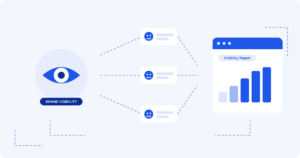
5A Sample AI Brand Presence Report
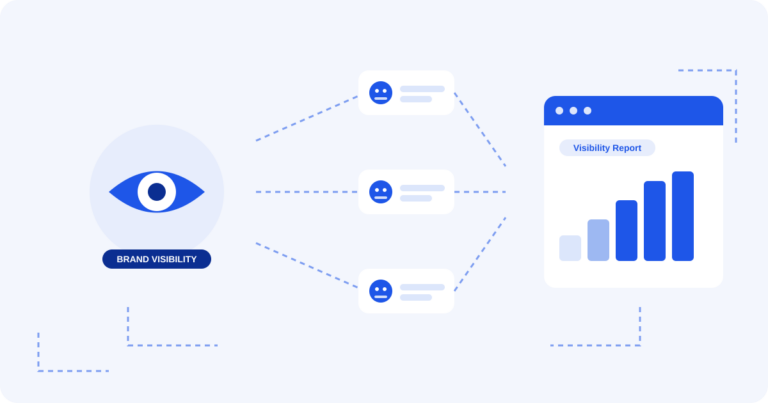
Here’s what a filled-in version of these five measures looks like, using Apple as an illustrative example in the wireless earbuds category. These numbers are made up for the sake of the format, not a real measured result.
| Metric | Apple (illustrative example) |
|---|---|
| Mention rate | 62% of prompts |
| Citation share | 18% of category citations |
| Average position | 2.1 (usually named second) |
| Sentiment | 91% positive or neutral |
| Accuracy | 96% of mentions factually correct |
Read across a row like that and you get a fuller picture than any single number would give you. A 62% mention rate paired with an 18% citation share tells you the model recalls the name constantly but isn’t linking to a page as often as you’d expect, which usually points at a content gap rather than a visibility problem. The 4% inaccuracy rate is small, but worth chasing down, since a wrong price or discontinued feature repeated at scale is an easy fix with outsized downside if ignored.
What only Wellows adds
Running these five measures by hand works for a one-time check. Wellows calculates all five automatically, across every major engine, refreshed daily, and ships them in a report formatted like the one above so a team can see at a glance where the gaps actually are, not just a single blended score.
It also tracks implicit citations, the times a competitor’s page gets cited on a topic where you were never in the running at all, which a manual spot check will never catch since you’d have to know to look for your own absence.
6How Often Should You Measure Brand Presence in AI Answer Engines?
Monthly is a reasonable minimum, weekly is better once you’re actively trying to move the numbers. AI engines reindex and update their models on their own schedule, not yours, so a change made this week might not show up in citation share for several weeks. Checking daily rarely tells you anything a weekly check wouldn’t, and it invites overreacting to normal day-to-day noise in the numbers.
Conclusion
Brand presence in AI answer engines isn’t one number, it’s five: mention rate, citation share, position, sentiment, and accuracy, each asking a different question about how you’re actually showing up. Run the manual version on a real prompt list this month, even just 20 to 30 questions across two or three engines. The gaps you find, probably a low citation share despite a decent mention rate, or an accuracy problem nobody caught, are more useful than any single visibility score would be.
Frequently Asked Questions