Simply posting your or blog isn’t enough in an era ruled by generative engines, you need to amplify your brand awareness through targeted PR to earn those prized mentions in AI-powered answers.

A recent study revealed that as Brand MSV increases, so do AI citations (r = 0.18), proving that stronger brand visibility translates directly into better LLM reach.

Here’s What Digital PR Means for GEO:

  • Earn AI-Trusted Coverage  Secure stories on high-authority sites so AI “answer bots” pull your brand first.
  • Create AI-Ready Assets  Publish expert quotes, original data, and clear FAQs that AI can extract instantly.
  • Structure for Ingestion  Use concise headings, bullet lists, and schema markup (FAQPage, HowTo) for easy parsing.
  • Amplify with Partners  Syndicate content, collaborate with influencers and journalists to boost authority brand signals.
  • Measure Answer-Box Wins  Track inclusion rates in AI responses and iterate on the formats driving the most visibility.

A structured How to Audit Brand Visibility on LLMs process can make this measurement more systematic and reliable.


Why Does PR Matter for Generative Engine Optimization?

Public relations helps share your company’s story in trusted, reliable places so generative engines see you as an expert and rank your content higher.

This is the essence of PR for Generative AI exposure and public relations for increasing awareness of AI engines—earning credible, structured signals that LLMs can verify quickly.

Here are the main reasons PR matters for generative engine optimization:


1. Social Signals & Shares

When your earned media hits get shared, liked, or commented on across platforms like Twitter, LinkedIn, and Facebook, AI models pick up on that engagement as a “buzz” signal. The more amplification a piece gets, especially from industry influencers or verified accounts, the more likely generative engines will weight it as relevant and timely. In practice, a widely shared Forbes story or a viral LinkedIn post about your brand can translate into higher chances of being quoted in AI answers.

Tips to Increase Social Signals & Shares:

  • Craft catchy, concise headlines that grab attention and make people want to click and share.
  • Include clear social buttons and “Click to Tweet” snippets in your press materials and on your site.
  • Tag relevant influencers and journalists when sharing so their networks see and engage with your content.
  • Use timely, on-brand hashtags to tap into trending conversations and make your posts discoverable.
  • Encourage user-generated content by asking your audience to share their own stories or reactions.
  • Post at peak engagement times for your target platforms (e.g., mid-weekday afternoons on LinkedIn).

2. Backlinks from Niche & Industry Sites

Deep-dive mentions on specialized blogs, trade publications, or professional association websites create contextual backlinks that speak directly to your domain expertise (see how this compares in LLM citations vs. backlinks).

AI answer bots analyze link networks to understand topical authority: a mention in an engineering forum for a tech brand or a citation in a medical journal for a health company tells the model, “This source knows what it’s talking about.” These targeted backlinks help generative engines connect your brand to specific subject areas—and surface you when users ask related questions.

Pairing backlinks with the most effective strategies for AI visibility enhancement creates a complete framework for AI-driven authority.

Tips to Acquire High-quality Backlinks:

  • Identify specialty sites by researching blogs, trade publications, and association websites in your field.
  • Pitch in-depth content such as case studies or original research that resonates with their audience and merits a detailed mention.
  • Offer exclusive expert commentary or guest posts to thought-leadership columns on relevant platforms.
  • Collaborate on industry roundups or “best of” lists where your brand can be featured alongside peers.
  • Sponsor webinars or virtual events hosted by niche communities, often earning a link in event promotion or recaps.
  • Leverage partnerships with professional bodies or consortiums to contribute whitepapers that include contextual backlinks.

3. Multimedia & Rich Content

Podcasts, video interviews, infographics, and slide decks hosted on reputable sites provide additional “bite-sized” snippets—like show notes, transcripts, captions, and data callouts—that AI can pull directly into answers.

For example, including a clear statistic or key quote in your video transcript makes it easy for an AI model to grab and use that exact phrasing. Diversifying your content formats also broadens the types of sources AI engines can tap into, increasing the number of potential entry points for your brand in generative responses.

Tips to Add Multimedia & Rich Content:

  • Optimize transcripts by including clear, keyword-rich statistics and quotes near the top.
  • Add descriptive captions and alt text to videos and images so AI can parse context easily.
  • Publish on reputable platforms (e.g., YouTube, SlideShare, Medium) that AI engines crawl for media snippets.
  • Include structured data (schema markup) for video/audio files to highlight titles, durations, and topics.
  • Break long content into chapters or sections with timestamps—AI can pull out the most relevant “bite-sized” pieces.
  • Embed shareable visual assets (infographics, charts) with concise data callouts that stand alone as quotable facts.

4. Crisis Management & Reputation Signals

How swiftly and transparently you address negative news or crises on high-authority platforms shapes AI’s perception of your brand integrity. Promptly publishing official statements, corrective op-eds, or Q&A pages in trusted outlets ensures that when an AI bot researches your brand—especially under “why did X happen” queries—it finds your version of events first. This proactive PR not only controls the narrative but also signals to generative engines that your brand is reliable under pressure.

Tips to Manage Crisis & Reputation:

  • Set up real-time monitoring for brand mentions and sentiment on social and news platforms to catch issues early.
  • Use high-authority channels (major outlets, verified social accounts) for official updates to ensure AI bots see your version first.
  • Be transparent and factual—clearly correct errors without deflection to build trust signals.
  • Maintain an updated FAQ page on your site addressing potential concerns, so AI can pull accurate context.
  • Coordinate messaging across PR, legal, and customer support teams to avoid mixed signals.
  • Document and review each crisis response to refine your playbook and improve future signal quality.

5. Community & Thought-Leader Engagement

Sponsoring, speaking at, or hosting webinars and virtual summits generates post-event coverage on event sites, industry newsletters, and attendee blogs. AI answer bots scan these write-ups for fresh insights and expert commentary—so every panel quote or keynote highlight becomes a potential AI-ready snippet.

These influencer partnerships for generative engine PR compound both reach and credibility, creating fresh, quotable material AI systems can surface.

Building ongoing relationships with thought leaders and event organizers ensures a steady stream of new content and mentions, reinforcing your brand’s position as an authority in evolving topics.

Tips for Community & Thought-Leader Engagement:

  • Map key events and leaders in your industry, then reach out early to secure speaking or sponsorship slots.
  • Develop tailored proposals that highlight how your insights solve attendees’ challenges—make it a win for the organizer.
  • Offer exclusive content (e.g., behind-the-scenes data or early-access research) to event newsletters and blogs.
  • Engage on social before and after the event—share teasers, live-tweet highlights, and recap posts tagging speakers and attendees.
  • Create post-event assets like summary infographics or video clips that organizers and attendees will share.
  • Foster ongoing relationships by following up with personalized thank-you notes, feedback surveys, or offers to collaborate on future content.
  • Leverage attendee networks—encourage participants to guest post or co-host webinars, amplifying your reach within niche communities.


What are the Key PR Strategies for Generative Engine Optimization?

1. Strategically Structure Your Press Releases

Press releases remain one of your strongest tools for shaping brand visibility—and in 2025, LLMs lean heavily on well-organized data to generate answers. A clear, tightly structured release not only helps journalists but also makes it easy for AI engines to parse and cite your content.

Clear-Heading-Example-PR-for-Generative-Engine-Optimization

  • Clear headlines & subheads improve readability and help AI segment information.
  • Factual accuracy & verifiable data (sourced from official reports, credible news outlets, or industry studies) build trust signals.
  • Multi-format publishing (text, video, infographics) creates extra “entry points” for different AI platforms.

Techniques for improving generative engine visibility in tech media

Offer embargoed briefs with a “What’s new / Why it matters” box, reproducible benchmarks, and a press kit (exec bios, product shots, pre-approved quotes) to speed accurate citations.


2. Earn Reviews, Mentions, and Citations

Authoritative third-party validation is gold for LLMs—they prioritize content from trusted news outlets, analysts, or industry experts. If you’re able to gain audience’s trust in your product and brand many people online will start to organically talk about your brand.

Influencer-Mentions--Example-PR-for-Generative-Engine-Optimization

  • Journalist & influencer relationships help secure targeted mentions in high-profile publications.
  • Thought-leadership contributions (guest articles, expert roundups) put your executives’ insights in front of AI-trusted domains.
  • Active monitoring of AI-generated brand mentions lets you correct errors and reinforce positive signals.
  • High-quality backlinks from reputable sites further cement your brand’s authority in AI ranking factors.

3. Regularly Refine & Update Your Owned Media Assets

Your website, blog, and online newsroom are the foundation of your GEO efforts—keep them fresh, structured, and authoritative.

  • AI-friendly site architecture with clear navigation, updated metadata, and structured content.
  • Interlinking related pages so AI bots understand topic relationships and crawl efficiently.
  • Ongoing content publishing (blogs, product news, industry insights) to maintain topical authority.
  • Structured data & schema markup (article, FAQPage, HowTo) to help AI categorize and index your assets.
  • Centralized newsroom hub that aggregates press releases, articles, and updates for a single “source of truth.”

How to use PR to target specific audiences for generative engines

• Publish audience-specific newsroom notes (by role/industry/region) with tailored proof points and KPIs.
• Map FAQs to each segment’s top question so assistants can lift precise, context-matched answers.


4. Emphasize Quality Over Quantity

In the age of AI, filler content won’t cut it, LLMs reward originality, depth, and relevance. A single, well-crafted case study or data-driven report on your industry can outperform dozens of generic releases. You can Use KIVA AI SEO Agent to create content that matches your brand voice and writes content for human:

  • Focus on unique insights and actionable takeaways.
  • Avoid “empty” content farms, prioritize expert voices and real-world examples.
  • Use each PR asset to tell a cohesive story that’s both human-friendly and AI-ready.

5. Partner on Industry Awards & Analyst Reports

Collaborating with respected industry awards programs and analyst firms (e.g., Gartner, Forrester) earns you placement in high-authority reports and press releases—prime fodder for LLMs seeking credible third-party validation.

When your brand appears in an analyst’s Magic Quadrant or an industry award winner list, AI engines receive brand signals recognize and surface those mentions in relevant answers, boosting your visibility in niche “Who are the top X?” queries

Get-Mentioned-in Top-Categories-in-Your-Niche-Generative-Engine-Optimization


How to Measure the Impact of PR on Generative Engine Optimization?

You can measure the impact of your PR activities on LLM visibility in the following 3 ways:

Ways to Measure Impact of PR on Generative Engine Optimization

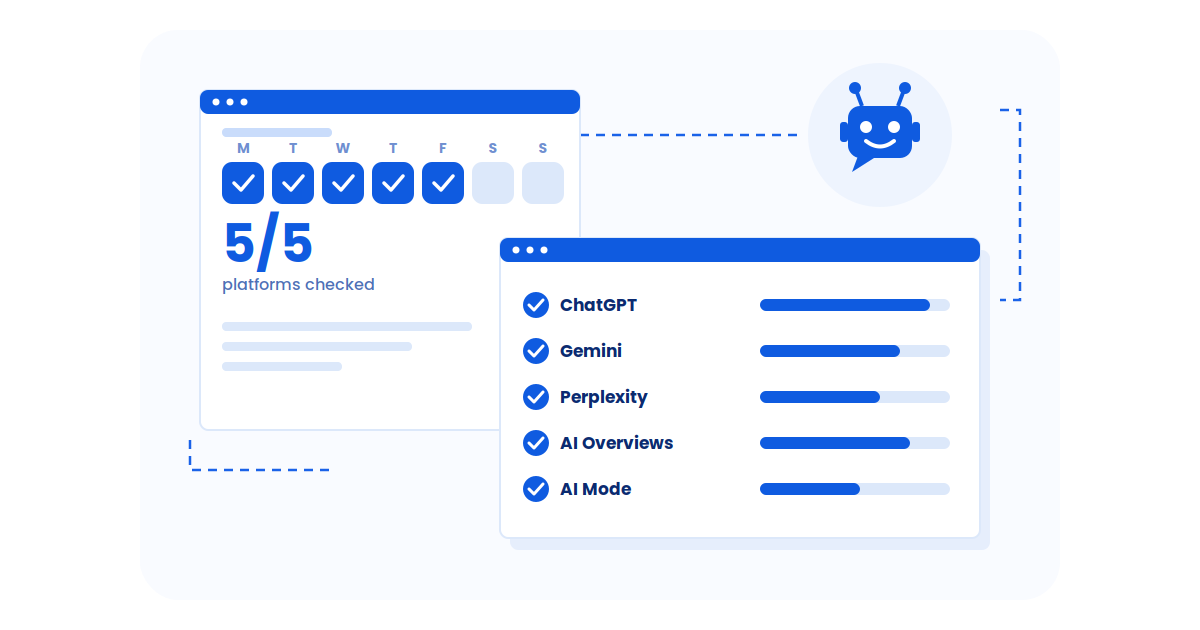
AI Search Visibility

Regularly run your core queries through leading generative engines and note if—and where—your brand appears in the AI-generated answer. Track changes over time to see how PR efforts influence your presence.

Media Mentions Audit

Regularly run your core queries through leading generative engines and note if—and where—your brand appears in the AI-generated answer. Track changes over time to see how PR efforts influence your presence.

Traffic & Conversions

Monitor shifts in branded search volume, direct traffic spikes, and any resulting lift in conversions. Even without immediate clicks from AI answers, these metrics reveal the broader awareness and engagement your PR work drives.


FAQs


PR for AI search is the practice of securing credible media mentions and structured content (press releases, expert quotes, transcripts) so that generative engines recognize your brand as a trusted source and surface it in AI-powered answers.


As users increasingly rely on AI assistants instead of traditional search, brands need authoritative, third-party signals—earned through PR—to appear in AI responses, since these systems prioritize credible, well-structured sources over simple keyword matches.


Focus on earning contextual brand mentions (not just links), optimizing content structure (clear headlines, bullet points, schema), and diversifying formats (videos with transcripts, podcasts with show notes) so that LLMs can easily index and quote your content.


Backlinks boost SEO by passing link equity, whereas brand mentions—whether linked or not—act as credibility signals for AI models; they show that reputable outlets trust your expertise, which generative engines use to assess authority and relevance.


Monitor the number and domain authority of brand mentions, engagement metrics on earned media (shares, comments), appearance frequency in AI-powered answer trackers (e.g., Perplexity Source Tracker), and shifts in branded query volume over time.


Why PR Is Crucial for Generative Engine Optimization?

Public relations earns the trusted, high-authority mentions and structured content signals that generative AI

Key Takeaways for the Role of PR in Generative Engines

  • Brand mentions matter more than backlinks: Generative search engines prioritize frequent, contextual brand mentions over traditional link equity.
  • SEO alone no longer suffices: As AI Overviews surface answers directly, brands must optimize for GEO to ensure they’re found and cited.
  • Digital PR fuels AI visibility: Coverage on trusted, high-authority sites provides the structured, credible signals that generative models rely on.
  • AI citations build trust without clicks: Even when users don’t click through, being quoted in AI summaries enhances brand credibility and long-term reputation.
  • Attribution requires new metrics: With AI answers often omitting direct links, track branded search volume, traffic spikes, and sentiment rather than just CTR.
  • Back to PR fundamentals: In the era of AI search, reach, visibility, and influence—earned through proactive digital PR—are the keys to standing out.

Proactive PR is your ticket to ensuring your brand’s story is heard, and trusted, by generative engines as well as your customers