AI search is fundamentally reshaping how brands are discovered, cited, and trusted online. Today, SEO mistakes blocking brand visibility in AI search can quietly erase your presence from AI-generated answers, even when your traditional rankings appear stable.

User behavior is already shifting away from click-based discovery. SparkToro’s zero-click study shows that for every 1,000 Google searches in the US, only 374 clicks go to the open web, and in the EU that number drops to 360. (SparkToro)

At the same time, AI Overviews and conversational interfaces are changing how information is consumed. Multiple studies confirm that when AI answers appear, click-through rates often decline because users receive complete answers without visiting a site. (Ahrefs)

In this environment, visibility is no longer defined only by rankings. Brands must understand which SEO mistakes block brand visibility in AI search and prevent them from being retrieved, cited, or trusted by systems like ChatGPT, Gemini, Perplexity, and Claude.


TL;DR

  • AI answers reduce clicks, so ranking ≠ visibility anymore.
  • In AI search, the real failure modes are not being retrieved, not being cited, or not being trusted.
  • The biggest blockers: treating AI like Google, inconsistent brand/entity signals, weak third-party validation, technical crawl/render issues, shallow content, keyword stuffing, and poor formatting.
  • Fixes require clarity, extractable structure, consistent entity messaging, third-party credibility, and continuous monitoring (not quarterly snapshots).


AI Search Visibility: The Data Every Brand Needs to Know

Traditional search still matters. Google continues to dominate the search engine market share in the United States, according to StatCounter’s ongoing data. (StatCounter)

However, dominance does not mean stability. The interface has changed. AI Overviews, answer boxes, and conversational results now intercept user intent before clicks happen. Visibility increasingly occurs inside the answer, not after it.

This is why SEO mistakes blocking brand visibility in AI search are more damaging than they appear. In classic search, weak structure or mild technical debt could be offset by backlinks or brand demand. In AI search, those same flaws often lead to exclusion because systems prioritize clarity, extractability, and confidence.

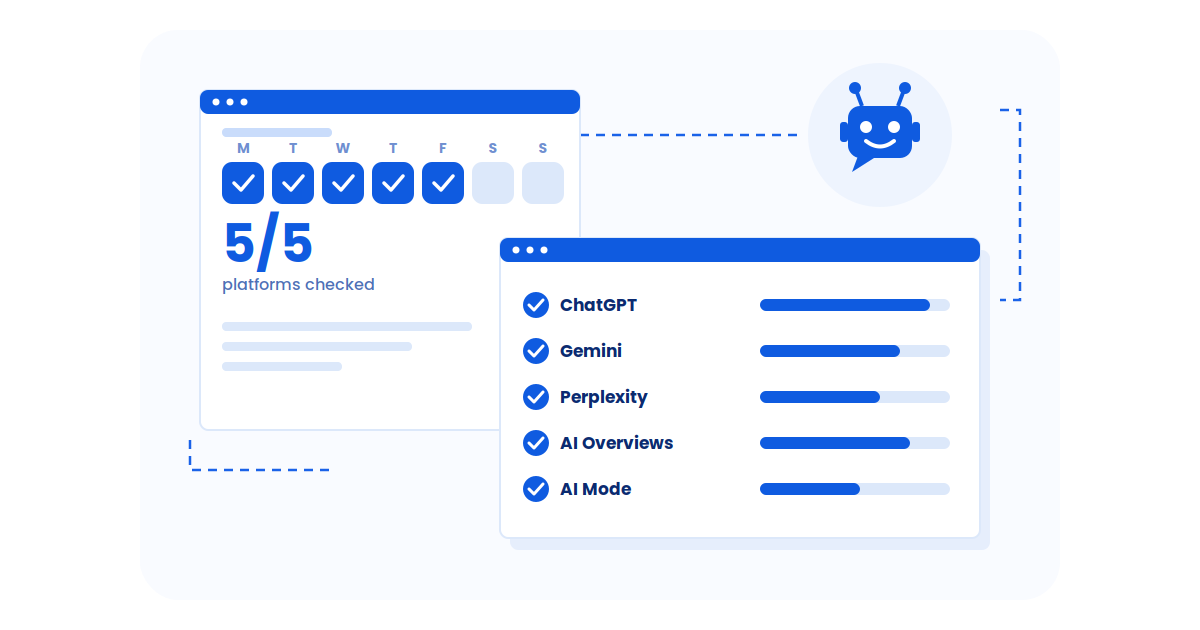
Brands that do not track how they appear inside AI answers lose visibility silently. This is why teams increasingly rely on frameworks like the AI Search Visibility Guide to understand where and how AI systems surface brand information across platforms.


Interpretation shift: In AI search, “visibility” has layers, awareness, retrieval, and citation. A brand can influence answers without being cited, or be cited without earning clicks.

7 SEO Mistakes Blocking Brand Visibility in AI Search (2026)

seo-mistakes

The most damaging SEO mistakes blocking brand visibility in AI search fall into three categories:

  • Interpretation mistakes, where teams apply Google thinking to AI systems
  • Entity and authority gaps that prevent AI confidence
  • Technical and formatting barriers that block retrieval and extraction

Each mistake below explains not just what is wrong, but why AI systems respond the way they do.

Fix interpretation: stop assuming Google performance equals AI inclusion.

Fix entity clarity: keep your brand definition consistent everywhere.

Fix trust: earn third-party validation beyond your own site.

Fix accessibility: ensure AI crawlers can actually read your content.

Fix depth: publish comprehensive resources and clusters, not thin pages.

Fix language: optimize for clarity and semantic relevance, not repetition.

Fix structure: make answers extractable with headings, bullets, and schema.


Mistake #1: Treating AI Search Just Like Google SEO

One of the most common SEO mistakes blocking brand visibility in AI search is assuming that high Google rankings automatically translate into AI inclusion.

Google is a retrieval and ranking system. It orders pages and lets users choose. Generative AI systems work differently. They synthesize answers by pulling information that best fits the prompt, the expected tone, and the structure of a complete response.

This structural difference is explained in detail in the Generative AI vs Google analysis, which shows why ranking position is no longer the deciding factor in AI answers.

If your content buries the answer, spreads definitions across paragraphs, or lacks clear framing, AI systems are less likely to use it, even if it ranks well.

Fix: Write for extraction, not just ranking Create “answer-first” sections: define the term in 1–2 sentences, then expand. Use short paragraphs, explicit headings that mirror questions, and lists for steps or criteria so AI systems can lift clean fragments into responses.

Mistake #2: Brand Messaging Differs Across Platforms

AI systems infer what your brand is by observing how it is described across the web. When your website, social profiles, directory listings, and third-party mentions describe your brand inconsistently, AI confidence drops.

This is a critical SEO mistake blocking brand visibility in AI search because models hesitate to cite brands they cannot clearly classify.

Inconsistent positioning also affects sentiment and trust signals. Many teams now monitor this through AI Brand Sentiment Tracking to ensure that how a brand is framed externally aligns with how it wants to be represented inside AI answers.

How to fix platform inconsistency fast:

Use one canonical positioning sentence across site + socials + directories.

Standardize product/category labels (don’t rename your core offer every quarter).

Align “About” copy, schema entity fields, and third-party bios.


Mistake #3: No Third-Party References or Credibility

AI systems strongly favor corroboration. When claims about your brand exist only on your website, models have limited confidence in citing you.

This SEO mistake blocking brand visibility in AI search is especially common among newer brands and niche B2B companies. Without reviews, media mentions, community references, or analyst coverage, even excellent content can be ignored.

Third-party validation creates external consensus. That consensus makes AI systems more comfortable referencing your brand in answers, comparisons, and explanations.

The hottest AI startups aggressively pursue third-party validation to ensure they’re viewed as credible and quotable sources across AI-generated results.


AI trust is often “consensus-based.” If only one source (you) says you’re credible, models may hesitate. If multiple independent sources reinforce your claims, citation likelihood rises.

Mistake #4: Overlooking AI Crawler Technical Barriers

If AI crawlers cannot access your content, nothing else matters.

Blocked bots, JavaScript-only rendering, heavy client-side hydration, or poorly implemented schema can all prevent AI systems from seeing the same content users see.

This is one of the most direct SEO mistakes blocking brand visibility in AI search. Teams often assume that because Google indexes a page, AI systems can too. That assumption is wrong.

Many brands now run recurring checks using an AI Search Visibility Audit Checklist to confirm crawlability, rendering, and structured data consistency across AI user agents.

Wellows is commonly used here to identify when pages stop being cited across AI platforms and to trace those drops back to technical causes before they compound.

Why This Matters

AI systems are less forgiving than classic search. If content is inaccessible, inconsistently rendered, or semantically unclear, it may be excluded entirely, creating “invisible” losses even when rankings look stable.


Mistake #5: Publishing Shallow Content With No Depth

Superficial content that lacks comprehensive analysis and fails to provide original insights regularly gets sidelined by AI search systems. LLMs show a strong preference for pillar content, original research, and resources that offer a multi-angle, in-depth treatment of a topic, establishing both authority and topical completeness.

Prioritize the creation of in-depth articles supported by topic clusters, add relevant case studies or unique data, and focus on answering the full spectrum of related conversational questions. This depth correlates directly with higher inclusion rates in AI-generated citations and conversational responses.

What “depth” looks like to AI systems

Depth signals to include

Clear definitions + boundaries (what it is / isn’t)

Step-by-step frameworks and decision criteria

Examples, edge cases, and “what to do if” scenarios

Original data, quotes, or real-world workflows


Mistake #6: Relying on Keyword Stuffing Instead of Clarity

Keyword stuffing, once an old SEO tactic, now triggers immediate penalties in AI-driven searches. Language models interpret unnatural repetition and forced phrasing as signals of low-quality manipulation, reducing the chance of your content being cited in semantic search environments.

The only way forward is prioritizing natural language and semantic relevance. Shift focus to writing clear, concise answers in a conversational tone. Invest in semantic search optimization by using synonyms, contextually related terms, and paragraphs that flow logically, ensuring your message is informative and easily digestible for both users and AI engines.


Practical rewrite rule: If a sentence sounds like it was written “for a keyword,” rewrite it “for a question.” AI systems reward clarity, not repetition.

Mistake #7: Ignoring Clean Formatting and Structured Answers

Poorly formatted content, large blocks of text, missing headings, or a lack of bullet points, prevents AI engines from extracting concise, direct answers for citation. Content lacking structure is often skipped by AI, no matter how valuable its substance.

For every core resource:

  • Break sections with descriptive H2/H3 headings reflecting user questions.
  • Use ordered lists or bullets for feature highlights and stepwise explanations.
  • Implement relevant schema types like Article or FAQPage to enhance extractability.
  • Review content regularly to maintain and optimize structural clarity for AI parsing.

AI-friendly structure checklist

  • Answer blocks: Put a direct answer in the first 2–3 lines under each heading.
  • Scannable formatting: Use bullets, short paragraphs, and bold labels for criteria and definitions.
  • Schema + internal consistency: Use relevant schema and keep names, descriptions, and entity info consistent sitewide.

Why Top Google Rankings Don’t Guarantee AI Brand Mentions

A growing misconception is that achieving high rankings in traditional search engines automatically translates into greater brand visibility on AI search platforms.

This disconnect is explored further in the Google Rankings and LLM Citations Gap, which explains why traditional performance metrics fail to capture AI influence.

Why rankings and AI mentions diverge Google can reward a page for relevance and link signals, while AI systems may ignore it if it’s not quotable, verifiable, or aligned with the answer structure the model expects.
Google-era expectation
If we’re #1, we’ll be included everywhere.
AI-era reality
Inclusion depends on retrieval, clarity, corroboration, and answer usefulness, not page position alone.

Technical SEO Problems Multiply in the AI Search Era

technical-seo
Technical debt compounds faster in AI search. Minor rendering issues, inconsistent structured data, or slow server responses can exclude content entirely.

Because AI systems are less tolerant of ambiguity, recurring audits are no longer optional. Brands that monitor AI citations and retrieval patterns continuously adapt faster than those relying on quarterly SEO reports.

This is where platforms like Wellows help teams move from reactive troubleshooting to proactive visibility management across AI ecosystems.

A simple ongoing monitoring loop
  • 1) Monitor inclusion: Check whether your brand appears in AI answers for your most important topics.
  • 2) Track citations and framing: Look for changes in how you’re described, what you’re associated with, and whether competitors are credited.
  • 3) Audit technical accessibility: Validate crawlability, rendering, schema, and page performance for AI user agents.
  • 4) Update and strengthen: Improve structure, clarity, and third-party corroboration to raise confidence.

Outdated Content: The Hidden Visibility Threat

AI systems favor current, internally consistent information. Content that has not been updated in over a year often loses citation frequency, even if it once performed well.

This is why LLM Citation Strategies increasingly emphasize freshness, accuracy, and update cadence alongside authority and structure.


Quick win: Add “last updated” maintenance cycles to your top pages. Refresh definitions, screenshots, pricing claims, and examples so models see consistent, current signals.


Final Thoughts: Stay Ahead in the AI Search Race

AI search is not replacing Google, but it is redefining visibility. The cost of SEO mistakes blocking brand visibility in AI search is no longer just lost traffic, it is lost influence.

Brands that succeed will not be those chasing rankings alone. They will be the ones eliminating barriers to retrieval, maintaining entity clarity, earning third-party trust, and monitoring how AI systems actually represent them.

With the right visibility framework and tools like Wellows, brands can move from guessing to understanding how AI search really works, and ensure they remain discoverable where users now get their answers.