Effective LLM citation strategies decide whether your pages become the sources AI systems quote or the pages they silently ignore. You can still rank in Google and lose discovery upstream, because an AI answer can satisfy intent without a click. That’s the shift you’re dealing with.
If you want reliable visibility in 2026 and beyond, you need two outcomes at once: rankings where rankings still matter, and citations inside AI-generated answers where attribution is the new gatekeeper. That means writing for extraction, trust, and entity clarity, not just keywords.
Did you know?
This guide is built for SEO teams, SaaS marketers, and agencies who want practical implementation. You’ll learn what citations are, what tends to influence them, how structured data and topic clusters help, which on-page changes to prioritize for AI answer visibility, and how to study citation patterns without guessing.
Wellows tracks how brands surface inside AI answers by monitoring citations, entity recognition signals, and share-of-voice across AI search experiences. If you want a baseline for how citations behave across prompts, reference our ChatGPT Citations Report and use it to benchmark your category.
TL;DR: Key Takeaways for LLM Citation SEO
- Citations are a separate channel from rankings: A page can rank and still not get cited. AI answers often pull sources that are easiest to extract and easiest to trust, not just the highest-positioned result.
- Structured data helps interpretation, not selection: Schema.org markup can reduce ambiguity about authorship, entities, and page type. It does not guarantee citations or higher rankings. Use it to clarify meaning, then earn trust with evidence.
- Topic clusters increase your odds of becoming the canonical source: A pillar plus supporting cluster pages can make it easier for retrieval systems to choose one definitive page from your site, instead of splitting authority across many overlapping posts.
- Prioritize extractability and verifiability first: Answer-first formatting, tight definitions, clean headings, and credible citations usually move faster than “more content.” Fix structure before scaling volume.
What is an LLM citation in SEO?
An LLM citation is a linked source reference shown inside an AI-generated answer to support a claim. It is different from a mention, which is when your brand or concept appears without a source link — a distinction that defines how mentions vs citations influence visibility inside AI-generated answers.
From an SEO perspective, citations matter because they shape discovery at the exact moment a user forms trust. If your content is consistently cited, your brand becomes the “default source” in that topic space. If it isn’t, you may be invisible in the answers that increasingly replace browsing.
What actually influences citations in AI-generated answers?
No platform publishes a full citation rulebook. Still, citation patterns tend to cluster around a few practical inputs that you can control, even though AI answer variability means the same page may be cited in one response and omitted in another depending on extraction confidence, prompt framing, and corroboration.
- 1. Extractability (can the answer be lifted cleanly?): AI systems tend to cite pages that offer short, unambiguous passages. Start sections with a direct answer. Keep paragraphs tight. Use lists and tables to summarize, not to repeat headings.
- 2. Verifiability (can the claim be checked?): Pages are easier to cite when major claims are backed by reputable sources, standards bodies, or clearly described methods. Unsupported claims increase uncertainty and reduce reuse.
- 3. On-page credibility cues (is this a reliable source?): Visible author attribution, update dates, and editorial transparency help systems and humans assess trust. Treat this as a citation prerequisite, not a design choice.
- 4. Topical focus (is this page the best answer for one job?): One page should serve one primary intent. Multi-intent pages are harder to retrieve accurately and easier to replace with competitors that stay scoped.
- 5. Authority footprint (is this domain widely validated?): Large-scale studies suggest classic authority inputs still correlate with citations. In SE Ranking’s 129k-domain analysis, backlinks, traffic, and trust metrics were among the strongest correlates with ChatGPT citations. (Search Engine Journal, 2025)
How does structured data with schema.org improve citations in LLMs?
Structured data helps systems interpret content by making meaning explicit. It can improve citation likelihood by reducing ambiguity around who wrote the page, what the page contains, and which entities the content refers to. It does not guarantee selection.
Google’s own documentation frames structured data as a way to provide explicit clues about a page’s meaning, not as a universal ranking boost. (Google Search Central)
What to implement first (practical, low-regret schema)
- Article: author, publisher, publish date, modified date
- Organization: brand identity, logo, sameAs profiles
- Person: author identity and role, tied to real bios
- FAQPage: only if you have real Q&A content that matches the page
- HowTo: only for true step-by-step procedures
If you want a deeper framework on structured content systems for AI discovery, pair this with Structured SEO Briefs for AI Search to standardize the format across your content team.
What are topic clusters in SEO, and how do they influence LLM citations?
A topic cluster is a pillar page supported by multiple cluster pages that answer narrower sub-questions, all linked together with consistent internal anchors. The goal is to create one canonical page that retrieval systems can select with confidence.
Topic clusters influence citations because they:
- Establish a clear “home” for a concept on your site
- Reduce internal competition between overlapping articles
- Create semantic coverage that supports retrieval confidence
A simple cluster map you can copy
- Pillar: Effective LLM citation strategies for SEO success
- Clusters: structured data for citations, citation tracking methods, on-page formatting for answer extraction, entity and author trust signals, citation audits
If you need a quick definition-led intro for the broader concept, link this guide to your Answer Engine Optimization overview so readers (and systems) can connect the terms cleanly.
Which on-page SEO changes should you prioritize when your goal is visibility in AI answer engines?
When your goal is AI answer visibility, you still need indexability and site performance. But the fastest gains usually come from content-level changes that improve extraction and trust.
- 1. Rewrite headings to match real questions: Replace vague headings with question-shaped H2s. This increases scannability and makes extraction easier.
- 2. Put the answer in the first 1 to 2 sentences: Every section should open with a direct answer, then expand. This is one of the simplest structural upgrades you can make.
- 3. Add evidence where claims are doing work: If a claim would change a reader’s decision, it needs support. Link standards, documentation, or research. Avoid “always” and “required” language unless a platform documents it.
- 4. Tighten scope so the page does one job: Cut tangents into cluster posts. A single-intent page is easier to cite accurately than a page trying to rank for five primary topics.
- 5. Make credibility obvious on the page: Add author bios, last updated dates, and a short sources section. Treat this as baseline hygiene.
Can you analyze AI answer interfaces to understand citation patterns?
Yes. You can use AI answer interfaces to observe which sources are cited and what formats appear to win. Treat this as a pattern study, not a controlled experiment.
A repeatable method (simple and publishable)
- Choose one query family (example: “structured data for AI citations”).
- Run 20 to 30 prompt variations across a week.
- Log which domains are cited and what page types win (docs, guides, research, tools).
- On cited pages, note where the cited information lives (definition block, FAQ, table, step list).
- Summarize 3 patterns and turn them into page edits.
Perplexity is often used for citation-heavy research because it anchors answers in sources. That makes it useful for spotting recurring citation behaviors, even if the exact results vary by phrasing and timing. (DataStudios, 2025)
If your team specifically wants a Perplexity-focused operating model, Wellows already published a dedicated guide you can use as a companion internal link: How to Rank in Perplexity.
Common mistakes that reduce citation likelihood
Long sections without a quotable claim: If a section can’t be summarized in one sentence, it’s harder to cite accurately.
Keyword repetition instead of meaning: Exact-match repetition makes writing feel templated and reduces information density.
No sources for important statements: Unsupported claims create uncertainty and make other sources safer to cite.
Schema that does not match the content: Markup should describe what is actually on the page, not what you wish was there.
Multiple pages competing for the same concept: Without a canonical pillar, your own content dilutes itself.
Checklist: citation-ready page requirements
- Every H2 is a real question
- Every section opens with a direct answer
- Definitions appear early and use plain language
- Lists and tables summarize decisions, not headings
Trust and evidence
- Named author with relevant experience
- Visible “last updated” date
- External sources for claims that matter
- Clear separation of observed behavior vs interpretation
Entity and architecture
- One canonical page per core concept
- Cluster pages that support the pillar, each with distinct scope
- Consistent internal linking and terminology
Structured data
- Schema matches the content on the page
- Article + Organization + Person are implemented cleanly
- FAQPage and HowTo only used where appropriate
Read More Articles
- AI Search Marketing: ChatGPT vs Traditional Search
- Bridging Google Rankings and LLM Citations Gap
- How to Build GEO Brand Signals That Win AI Citations in 2025
- AI Search Visibility for Healthcare & Hospitals
- How Can Pattern Recognition Improve Visibility in AI-Generated Answers?
- How to Design Content Briefs for GEO?
- Can GSC Data Guide Your GEO Strategy?
- How Will Google’s AI Mode Transform Traditional SEO Practices?
- AI SEO Automation for Generative Search Visibility (2026)
- Does Google Ranking Ensure Visibility in ChatGPT
- How to Use AI Content Scoring to Improve SEO & Quality 2026
- AI Competitive Benchmarking for SEO
- Why Your Website Traffic Is Dropping (Causes & Fixes)
FAQs
No. Rankings still matter for discovery and clicks, especially for transactional intent. Citations add a parallel visibility layer for answer-first experiences where a user may never reach the SERP.
No. Schema can reduce ambiguity and improve interpretation, but selection still depends on relevance, evidence quality, and trust signals.
Answer-first openings under question-based headings. It improves extractability immediately without changing your site architecture.
Clusters establish one canonical page for a concept and support it with depth. This reduces internal competition and gives retrieval systems a clearer selection target.
Conclusion: what to do next
You don’t need a new buzzword strategy. You need a repeatable publishing and updating system that makes your content easier to extract, easier to verify, and easier to trust. That is what effective LLM citation strategies for SEO success look like in practice. Running that system across a growing library is a production job, and a tool such as AirOps can help generate and refresh citation-ready pages at scale, while Wellows measures whether they earn the citation.
If you want a clean implementation path, start with one pillar page, build three supporting cluster pages, add evidence and structured data that matches the content, then measure citations monthly. The goal is not to chase every AI surface. The goal is to become the default source for one topic cluster at a time.
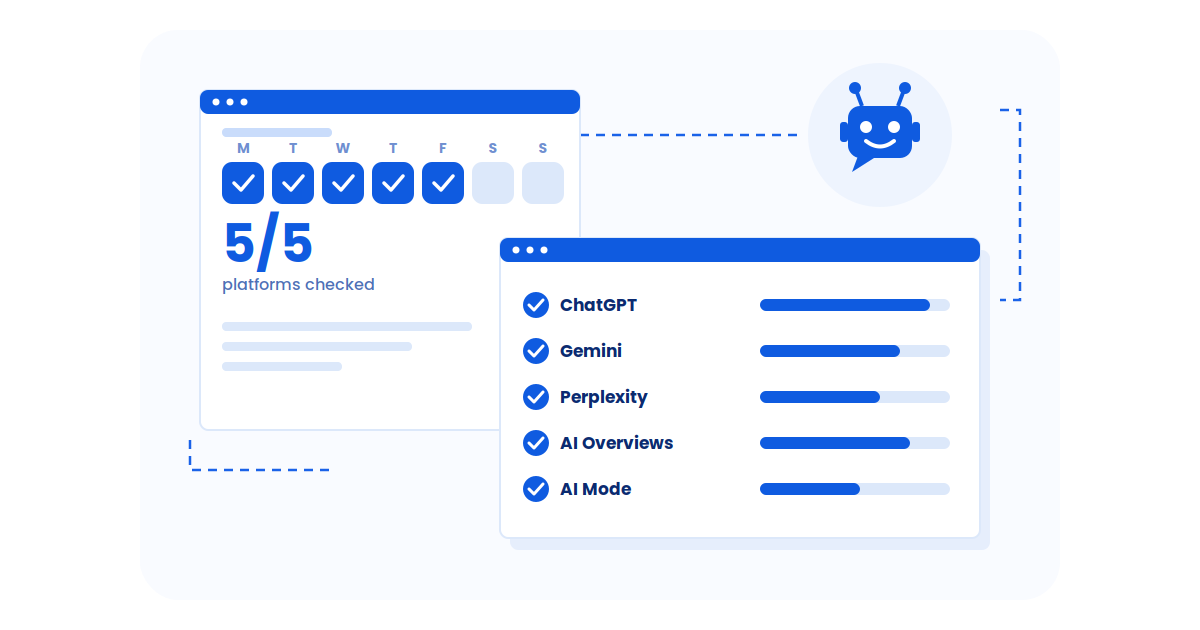
Becoming the default source for one topic cluster at a time is measurable. Wellows tracks citation performance by cluster across ChatGPT, Perplexity, Gemini, and AI Overviews, so you can see which pillars have become the go-to source and which still need strengthening, using Wellows’ internal citation dataset as the benchmark.
See which of your clusters AI already treats as the default source.