When ChatGPT entered the public conversation, it triggered a familiar reaction. Headlines predicted the end of Google. Search was declared broken. SEO was pronounced dead again.
A couple of years later, none of that has happened.Google still dominates how people discover information online. At the same time, millions of users now turn to ChatGPT when they want explanations, recommendations, or help thinking through a decision—which is why teams are now investing in how to rank in ChatGPT as a practical visibility strategy. These two realities coexist, and that coexistence is what marketers need to understand.
The real shift isn’t about replacing search. It’s about how people move from curiosity to decision. This is where the conversation around ChatGPT vs Traditional Search becomes relevant not as a competition, but as a change in behavior.
This change has also given rise to what many marketers now describe as Generative Engine Optimization. In simple terms, it’s the practice of creating content that can be clearly understood, summarized, and referenced by AI-driven search experiences, while still performing well in traditional search engines.
This article explains that shift in plain language. No hype. No predictions of extinction. Just what’s happening, why it matters, and how marketers should respond.
What Is AI Search Marketing and Why Is Everyone Talking About It?
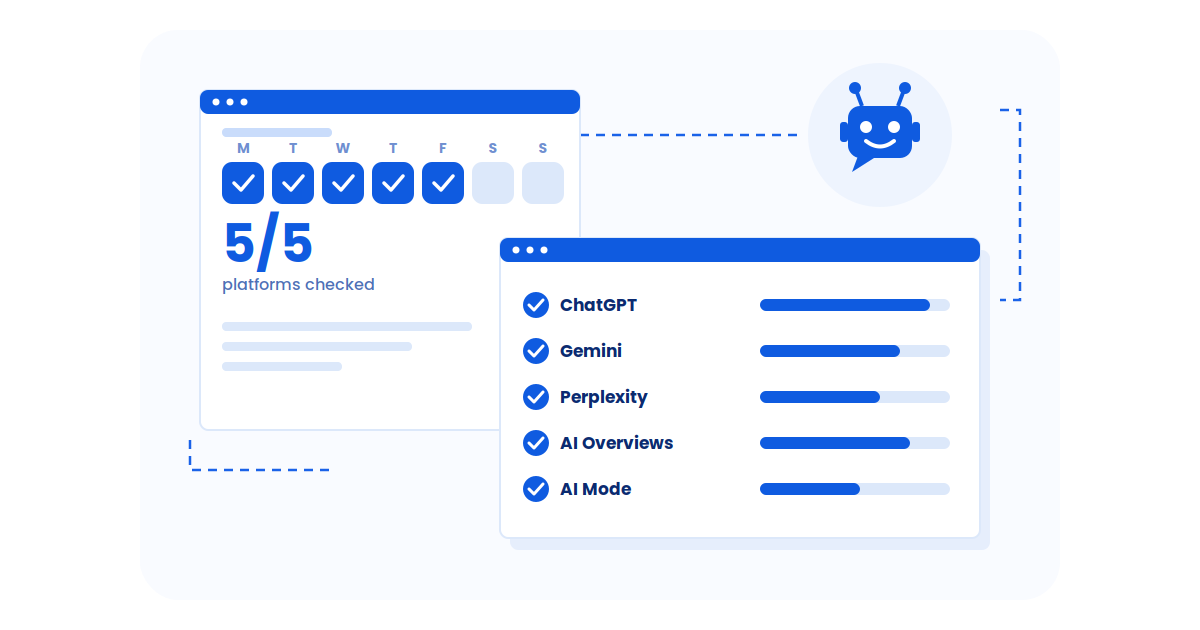
AI search marketing refers to visibility within AI-driven search experiences such as ChatGPT, Google’s AI Overviews, Gemini, and Perplexity.
These systems don’t behave like traditional search engines. Instead of presenting a list of results, they generate responses by pulling information from selected sources and synthesizing it into an answer.
The reason this matters now is adoption. According to Search Engine Land, usage of AI systems for information and research in the United States grew from 8% in 2023 to 38% in 2025, while usage of traditional search engines remained stable.
At the same time, Google has begun integrating AI directly into search. DemandSage reports that AI Overviews now appear in roughly 15–20% of U.S. search results, particularly for informational and commercial queries.
This combination standalone AI platforms and AI-enhanced search results is what’s driving the conversation. Search didn’t disappear. It expanded.
How Does Traditional Search Work Compared to AI Search?
Traditional search engines like Google are built around choice. They crawl and index the web, rank pages based on relevance and authority, and allow users to decide which sources to trust. That structure encourages exploration. Users open multiple tabs, compare viewpoints, and gradually narrow their options. AI search experiences work differently. When someone asks ChatGPT a question, the system interprets intent, generates a response, and often presents that response as a recommendation or explanation rather than a list of options. The user is no longer comparing sources they are evaluating a synthesized answer. This difference explains why the experience of ChatGPT vs Traditional Search feels so distinct. Google supports research. AI systems support decision-making.
What Is the Real Difference Between ChatGPT and Traditional Search Engines?
The most important difference is not speed or intelligence. It’s how people use them.
Did you know?
Did you know?
In other words, ranking well on Google does not guarantee visibility in AI-generated answers. This is why marketers are paying attention to Generative Engine Visibility Factors such as clarity, structure, topical depth, and editorial usefulness signals that AI systems rely on more than traditional ranking signals.
How Do User Journeys Differ in ChatGPT vs Traditional Search?
Traditional search journeys are gradual. A user searches, clicks several results, compares information, and eventually makes a decision.
AI-driven journeys are compressed. The user asks a detailed question and receives a guided response. Follow-up questions refine that response until the user feels confident enough to act.
This difference shows up in how people phrase their queries. Research shared by multiple UX studies indicates that prompts in AI systems are significantly longer and more specific than traditional search queries, reflecting clearer intent and less exploratory behavior.
This is one reason AI-driven discovery tends to influence users later in the funnel.
Why Do AI Search Visitors Convert Better Than Traditional Search Traffic?
AI-driven referrals are usually smaller in volume, but they arrive with context already established. The system has filtered information, framed options, and often validated a choice before the user ever clicks through.
Did you know?
This doesn’t mean AI search replaces SEO. It means success must be measured differently. Instead of focusing only on clicks, marketers increasingly look at Geo KPIs, such as engagement depth, assisted conversions, and influence on final decisions, often alongside insights from a ChatGPT Visibility Tracker to understand how and where their content appears within AI-generated responses.
How Much Traffic Comes From AI Search Compared to Traditional Search?
Even with the rapid rise of AI-driven search experiences, traditional search still brings in far more traffic. Google remains the primary gateway to the web for most people. Independent traffic analysis shows that Google attracts dozens of times more visits than AI platforms like ChatGPT.
One widely cited comparison found that Google receives roughly 34 times more total visits than ChatGPT, highlighting just how dominant traditional search still is in terms of raw traffic volume.
Looking at user reach tells a similar story. In the United States, Google continues to reach a much broader audience. Clickstream data indicates that Google sees hundreds of millions of unique monthly users, while ChatGPT’s audience, although growing quickly, remains significantly smaller.
This gap reinforces what most marketers already see in their analytics: organic search continues to be the main driver of discovery, awareness, and top-of-funnel traffic.
What’s important to understand is that this doesn’t mean AI search is irrelevant. Instead, it plays a different role. Traditional search still dominates in volume, while AI-driven search influences how people refine ideas, compare options, and make decisions. Rather than replacing traditional search, AI search adds a new layer on top of it one that shapes intent more than it drives mass traffic.
Is Organic Search Still Important in the Age of ChatGPT?
Yes, organic search is still very important. Search engines remain the main way people discover new websites, brands, and information online. When users want to explore options, compare sources, or research a topic in depth, they still turn to traditional search results.
This behavior hasn’t disappeared, even as AI-driven experiences become more common.
Organic search also plays a long-term role that AI search does not fully replace. SEO builds visibility over time, supports brand credibility, and drives traffic across many different types of queries. Abandoning SEO would mean losing reach at the earliest stage of the user journey, where awareness and discovery begin.
Instead of being replaced, organic search continues to act as the foundation that newer AI-driven experiences build on.
How Do AI Systems Like ChatGPT Choose Which Sources to Cite?
AI-driven search experiences don’t select sources the same way traditional search engines do. Instead of focusing on brand authority or backlinks, they look for content that clearly explains a topic in plain language. Pages that answer questions directly and stay focused tend to be easier for AI systems to use. This is why some well-ranking pages in Google never appear in AI-generated answers. Content written only to target keywords often lacks context and explanation. AI systems prefer clarity, structure, and usefulness over aggressive optimization.
Which Industries Are Most Affected by AI Search Right Now?
AI search is having the biggest impact in industries where users look for guidance before making a decision.
Ecommerce and retail are seeing a strong impact as shoppers look for product comparisons, recommendations, and buying guidance rather than scrolling through long lists of results. B2B software and SaaS are affected because buyers often need explanations, feature comparisons, and clarity before making high-value decisions. Finance and financial services are influenced by AI search as users seek simplified explanations, risk comparisons, and reassurance around complex topics. Travel and hospitality are changing as people ask AI systems for trip planning, recommendations, and decision support instead of browsing multiple sites.
Across these industries, users are spending less time browsing and more time trying to understand what’s best for their specific situation. AI-generated explanations help shorten the decision-making process by presenting structured, easy-to-follow guidance.
Do AI-Written Pages Rank in Google and AI Search Results?
Search engines do not judge content based on how it was created. What matters is whether the content is helpful, accurate, and written for real people. Pages that provide value can perform well regardless of whether AI assisted in the drafting process.
That said, content that feels generic or automated often struggles. The strongest pages are reviewed, edited, and shaped by humans. Original insight, clear explanations, and a natural tone make a noticeable difference.
How Should Marketers Balance SEO and AI Search Optimization?
This is not an either-or decision. Traditional SEO remains essential for discovery and reach, especially at the top of the funnel. Search engines are still the main way people find new brands, products, and information.
At the same time, visibility in AI-driven search influences how people make decisions. Marketers who focus on clarity, authority, and usefulness while maintaining SEO best practices are better positioned across both search environments.
What Does the Future of Search Look Like Over the Next 5 Years?
Search is evolving into a hybrid experience where traditional results and AI-generated answers work together.
Search is evolving into a blended experience, combining traditional search results with AI-generated explanations rather than replacing one with the other. Traditional search will continue to provide depth and choice, allowing users to explore multiple sources and perspectives. AI-driven search will focus on speed and guidance, helping users understand topics and make decisions more quickly. AI is becoming integrated into search engines, not positioned as a full replacement for them. Success will depend on understanding user movement, as people shift between search results and AI-generated answers during their journey.
What Should Marketers Do Today to Prepare for AI Search?
The core principles of good content haven’t changed. Writing clearly, explaining topics well, and focusing on real user needs still matter most. Content should help people understand, not just rank. What has changed is how that content can be surfaced. Marketers should focus on structure, readability, and depth so their content works both in traditional search results and within AI-generated responses.
Read More Articles
- AI Algorithm Updates: SEO Impact & Recovery Tips
- Does Google Ranking Ensure Visibility in ChatGPT?
- Boost AI Search Visibility with Knowledge Graphs
- Effective LLM Citation Strategies for SEO Success
- The Real ChatGPT Impact on Google Search Traffic in 2025
- Does Google Ranking Ensure Visibility in ChatGPT
- Top 12 ChatGPT Search Visibility Tips to Get Quoted in 2026
- My ChatGPT Visibility Experiment: Does It Use Google Snippets?
- AI Search Visibility for Mobile App Businesses: How Apps Get Discovered by AI
- How to Build GEO Brand Signals That Win AI Citations in 2025
- How To Earn Mentions in AI Search Marketing
FAQs
Conclusion:
The discussion around ChatGPT vs Traditional Search is often framed as a rivalry, but the reality is more practical. Traditional search still drives reach. AI-driven discovery influences decisions.
Brands that succeed will be the ones that understand both systems and invest in content that serves real human needs whether those needs are answered through a list of links or a synthesized response.
Search isn’t disappearing. It’s evolving. And marketers who adapt calmly, without chasing hype, will be best positioned for what comes next.