In 2025, the way we search for information has changed (a lot). Gone are the days when people relied only on Google to find answers. Now, many are turning to ChatGPT for quick responses, deeper explanations, and even help with writing, coding, or decision-making.
ChatGPT has become more than just a chatbot. It’s becoming a true search alternative, reshaping how users interact with the internet. Instead of clicking through multiple links on Google, people are simply asking ChatGPT and getting instant answers.
This shift is hard to ignore and it raises an important question: What is the real ChatGPT impact on Google search traffic? It also forces brands to rethink how on-page SEO structures content so both search engines and AI systems can interpret it clearly.
In this blog, we’ll dive into:
- How ChatGPT is changing search behavior
- The real impact on Google’s traffic and visibility
- What content creators and marketers need to do to stay visible in the age of AI
ChatGPT Impact on Google Search Traffic: What’s Really Happening?
The internet used to have one clear gateway: Google. For years, it was the default tool for finding answers, discovering products, and exploring ideas. But in 2025, that’s no longer the whole story.
AI-powered tools like ChatGPT are reshaping how people search, contributing to the rise of AI search experiences that are now cutting into Google’s traffic numbers.
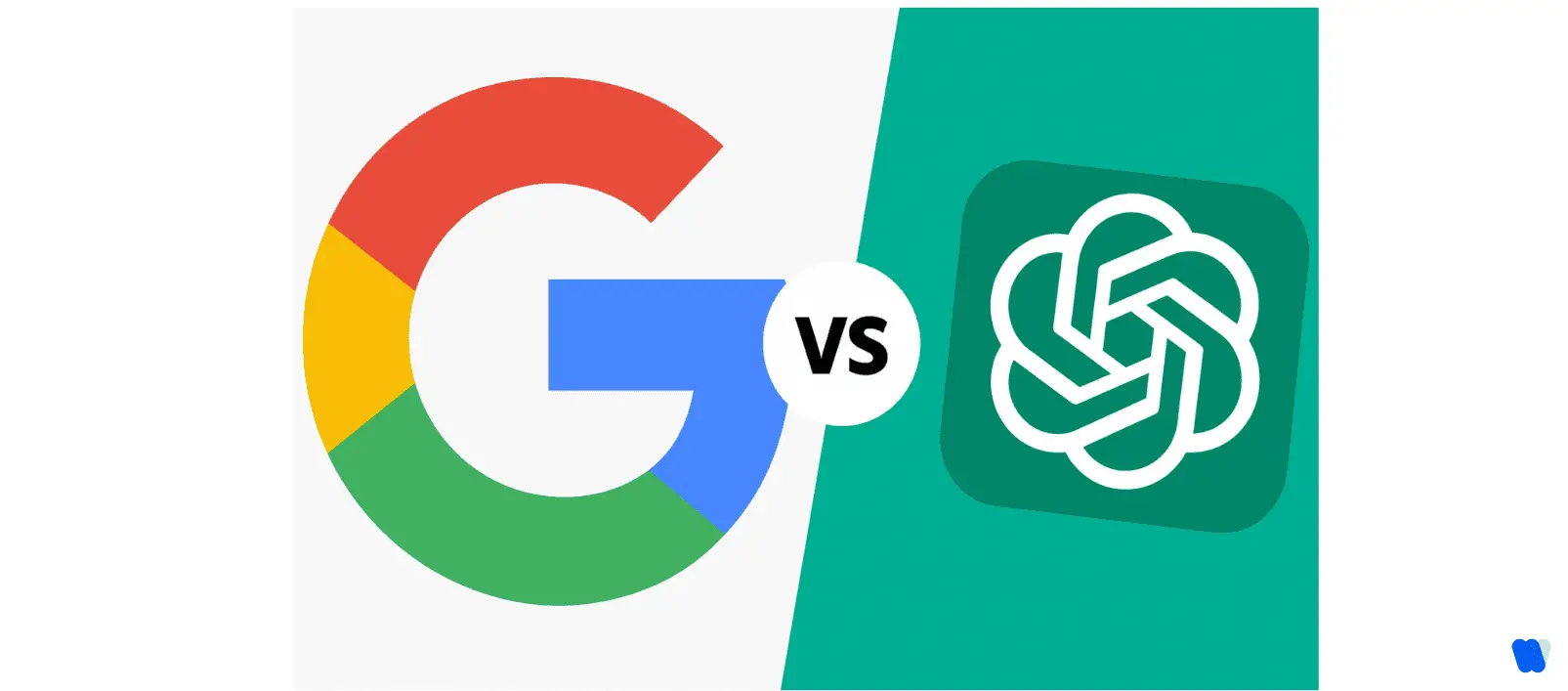
Visits to all chatbots surged about 81%, while traditional search engine traffic dropped ~0.5% over 24 months (Lifewire, 2025)
Instead of typing keywords into Google and scanning multiple blue links, users now ask ChatGPT complete questions and get direct, conversational responses. This shift has sparked a new trend: people are skipping traditional search engines for queries where speed, simplicity, and context matter most.
Think about it:
- Need a quick product comparison? ChatGPT can give you a clear pros-and-cons list in seconds.
- Stuck on a coding error? ChatGPT doesn’t just list Stack Overflow links—it explains the fix.
- Curious about a historical event or scientific fact? ChatGPT delivers a digestible summary, not a Wikipedia rabbit hole.
These AI interactions are faster, feel more personal, and often require no follow-up clicks. In contrast, Google’s search results (SERPs) typically offer a list of links, snippets, and ads—leaving users to piece together answers on their own.
That difference is critical. While Google still dominates for shopping, news, and local queries, ChatGPT is quietly stealing attention especially for informational and educational searches. And as more people embrace AI for daily problem-solving, this behavior shift is cutting into Google’s once-unshakable traffic.
What Percentage of Google Users Have Shifted to ChatGPT for Their Search Queries?
As of August 2025, approximately 14.3% of Google users have also used ChatGPT for search-like queries, reflecting the growing curiosity around AI-driven alternatives. Despite this growth, Google remains the dominant force in search, handling about 14 billion searches per day — roughly 210 times more than ChatGPT’s 66 million search-equivalent prompts daily.
This data highlights a clear trend: while AI chatbots like ChatGPT are gaining popularity for conversational, educational, and exploratory searches, the majority of users still depend on Google for structured and transactional queries. Most ChatGPT users continue to use Google alongside it, blending traditional search with generative AI interactions for more comprehensive information discovery.
The overlap between Google and ChatGPT usage signals an evolving search landscape — one where users combine the strengths of both platforms. As ChatGPT continues to expand its capabilities, it is expected to further influence how people approach online research, question-answering, and learning experiences.
The Numbers Behind the Trend

The adoption of AI chatbots for search-related tasks has skyrocketed:
The takeaway is clear: AI tools are becoming the first stop for many online journeys. As a result, Google is no longer the uncontested gatekeeper of information.
For marketers, SEOs, and content creators, that means it’s time to rethink what visibility means—and how to earn it in the age of AI.
How Has the Rise of ChatGPT Influenced Google’s Search Traffic Volumes?
The rise of ChatGPT has reshaped how users search for and consume information online. However, despite its explosive growth, the overall impact on Google’s global search traffic has remained minimal.
As of early 2025, Google’s daily global search visits held steady at around 2.7 billion, even recording a slight 1% month-over-month increase in January. Meanwhile, ChatGPT saw rapid expansion — reaching 2.5 billion daily prompts by July 2025, up from 1 billion just eight months earlier.
Yet, ChatGPT’s share of search-like activity remains relatively small. In 2024, it handled roughly 37.5 million search-equivalent queries daily, accounting for just 0.25% of total global search volume. Interestingly, studies show that 95% of ChatGPT users still rely on Google, suggesting that AI chatbots are enhancing — not replacing — traditional search behavior.
The type of search activity, however, is evolving. Users now turn to ChatGPT for definitions, comparisons, explanations, and how-to guidance — tasks that were once dominated by Google. Additionally, ChatGPT has become an emerging traffic referrer for educational and tech websites, highlighting its growing role in digital content discovery.
In response to this shift, Google has accelerated its integration of AI into search. The company introduced “AI Mode” in mid-2025, allowing users to conduct conversational searches and receive expert-level summaries. This adaptation reinforces Google’s intent to stay competitive in the evolving AI-driven search landscape.
Despite ChatGPT’s rise, Google’s traffic remains largely stable — a testament to its enduring dominance in global search and its ability to evolve alongside AI innovation.
Recent Developments in AI and Search Engine Dynamics:
SEO Strategy Shifts in 2025
In 2025, SEO is no longer just about ranking high on Google—it’s about being visible wherever users search, including AI tools like ChatGPT, which has made LLM SEO a critical part of modern search visibility. Keyword stuffing and generic articles are losing value, while original insights, real-life experiences, and expert opinions are becoming essential.
As AI chatbots pull information from across the web, content needs to be clear, well-structured, and supported by a technical SEO checklist for agencies and a thorough technical SEO audit so crawl paths, indexation, and page templates stay consistent.
Understanding the mechanics of how to rank high on ChatGPT and knowing how often the model credits sources can guide this optimization—see this ChatGPT Citations Report for insights.
Knowing how often ChatGPT credits sources can guide this optimization—see this ChatGPT Citations Report for insights.
At the same time, marketers are diversifying traffic sources through newsletters, social media, video, and even AI integrations. In this new landscape, effective SEO means creating content that serves both people and machines—authentic, useful, and easy to find across platforms.
That also means tracking the right SEO metrics to measure visibility in both search engines and AI tools—using a ChatGPT Visibility Tracker to understand when your pages are being surfaced, summarized, or overlooked in AI-generated answers.
ChatGPT language model impact on SEO content quality 2025
As of September 2025, advanced language models such as ChatGPT-5 are reshaping how SEO content is produced and evaluated. These tools provide clear benefits in speed and scalability, but their influence on overall content quality is complex, balancing strengths with notable limitations.
Advancements in Content Creation
The latest generation of ChatGPT offers better context awareness, faster editing capabilities, and stronger optimization features compared to earlier models. These improvements make it easier for businesses to generate large volumes of well-structured content that aligns with search intent and keyword strategies. For many teams, this means quicker turnaround times and more consistent publishing schedules.
Challenges in SEO Performance
Even with these upgrades, AI tools have not fully mastered SEO-specific tasks. Competing models like Claude Opus 4.1 still outperform in areas such as technical SEO, multilingual optimization, and handling complex on-page strategies. This suggests that while ChatGPT-5 enhances content creation, it may still fall short in addressing the nuanced requirements of high-level SEO performance.
Impact on Language Complexity and Sentiment
Recent studies tracking online communication trends show that AI-generated content often carries noticeable patterns in tone and style. Between 2020 and 2024, for example, sentiment in AI-influenced text leaned more positive, and language structures became increasingly simplified. While this can make content more accessible and engaging, it also raises questions about whether oversimplification could reduce depth in certain niches.
Considerations for Content Quality
Although ChatGPT accelerates the content creation process, human oversight remains critical. Without editorial input, AI outputs can lack originality, nuanced expertise, or the authenticity that builds trust with both readers and search engines. Businesses relying too heavily on automation risk producing shallow or repetitive content, which could negatively affect search rankings and brand authority.
How Google Is Fighting Back

With ChatGPT gaining traction, Google has stepped up its game to protect its dominance in the search space. It’s rolling out great AI features, integrating large language models, and redesigning the search experience—all in an effort to stay relevant in an AI-first world.
- AI Overviews (SGE) Rollout: Google’s Search Generative Experience provides AI-generated summaries directly in search results, giving users instant answers without leaving the page—much like ChatGPT.
- Gemini AI Integration: Google has launched Gemini, its next-gen AI model, into core products like Search, Gmail, and Docs, including innovations like Project Astra. It powers more personalized, conversational, and helpful responses across Google’s ecosystem.
- UI/UX Enhancements: Search results now feature expandable answers, interactive modules, and visual changes designed to keep users engaged within the SERP and reduce bounce rates.
- A Double-Edged Shift: While these updates make search more dynamic, they also challenge traditional SEO. For content creators and marketers, this is both a threat—due to fewer organic clicks—and an opportunity to appear in AI summaries and new formats.
How Is Google Responding to ChatGPT’s Growing Competition?
As ChatGPT continues to reshape how people search and consume information, Google has launched a series of strategic initiatives to strengthen its search engine and defend its market leadership. These efforts focus on integrating advanced AI, expanding chatbot functionality, and reimagining monetization models.
Integration of AI into Search
Google has introduced an experimental AI-only version of Search called AI Mode, which replaces traditional blue links with AI-generated summaries. Powered by the Gemini 2.0 model, AI Mode provides conversational answers with clickable citations and follow-up prompts. It’s currently available through the Google One AI Premium plan ($19.99/month), which also includes extra cloud storage and exclusive AI tools.
Expansion of AI Chatbot Capabilities
Google’s AI chatbot, Bard, has been deeply integrated with the company’s core services — including Gmail, Maps, YouTube, Google Drive, and Flights. This allows users to pull personalized information such as directions, travel details, or relevant videos. Google ensures that sensitive data is protected, emphasizing privacy and preventing human access to private user content.
Monetization of AI-Powered Search
Google is exploring ways to monetize AI-driven features within its search engine. While the standard search experience remains free and ad-supported, premium subscribers will likely gain access to advanced AI functionalities. This approach helps Google compete with free AI tools like ChatGPT while offering added value through paid plans.
Advertising Integration in AI Search
To preserve its primary revenue stream, Google is testing ads within AI Mode responses. These ads appear alongside AI-generated summaries, ensuring a seamless integration of sponsored content while maintaining user engagement — an evolution of the “AI Overviews” concept already seen in standard search results.
Market Position and User Behavior
Despite ChatGPT’s surge in popularity, Google Search remains the market leader. According to research by Rand Fishkin (SparkToro), Google handles 373 times more searches than ChatGPT, whose share of global search activity is still below 1%. This demonstrates that users continue to rely on Google for comprehensive search needs, while using AI chatbots as secondary tools.
In summary: Google’s response to ChatGPT centers on innovation and adaptation — merging AI into search, expanding chatbot intelligence, experimenting with monetization, and blending ads into AI-generated content. These moves reinforce Google’s dominance as it evolves into an AI-first search ecosystem.
ChatGPT Impact on SEO for businesses
The rise of AI tools such as ChatGPT is reshaping how businesses approach Search Engine Optimization (SEO). By integrating ChatGPT into their workflows, companies can streamline content production, enhance user interactions, and adjust to the changing ways people search online.
Enhanced Content Creation and Optimization
ChatGPT helps marketers create well-structured, relevant, and engaging content at scale, making ChatGPT SEO increasingly important for maintaining visibility across AI-driven discovery surfaces. From blog articles and website copy to detailed product descriptions, it can generate material that aligns with search intent while naturally incorporating keywords. This efficiency allows businesses to publish consistently—an important factor for maintaining visibility and authority in search results.
Improved User Experience (UX)
When ChatGPT is used in chatbots or website integrations, it creates more personalized and interactive experiences. Visitors can engage in meaningful conversations, which keeps them on the site longer and reduces bounce rates. These positive engagement signals can improve rankings, as search engines reward websites that provide real value to users.
Long-Tail Keyword Optimization
Thanks to its natural language capabilities, ChatGPT is especially effective in generating content that matches long-tail, conversational queries. Optimizing for these specific phrases attracts qualified traffic, often leading to higher conversions since users searching with detailed queries tend to have clearer intent.
Voice Search Optimization
With voice assistants becoming a common way to search, creating content that mirrors natural, spoken language is essential. ChatGPT can produce responses written in conversational tones, making them more likely to appear in voice search results and ensuring brands don’t miss out on this growing search channel.
Personalized Search Results
AI systems like ChatGPT can analyze browsing patterns and preferences to deliver tailored recommendations. When businesses create content with personalization in mind, users are more likely to engage, share, and return—further amplifying SEO performance through stronger brand trust and visibility.
How Is ChatGPT Changing Google User Engagement?
The rise of AI tools like ChatGPT has transformed how users interact with Google search results. With AI-generated overviews now appearing in searches, users often find direct answers without clicking external links — reshaping engagement and click behavior.
Decline in Click-Through Rates
AI overviews have led to a noticeable drop in website visits. Studies show that when these summaries appear, the CTR for top organic results falls by 34.5%. Another analysis revealed that only 8% of users click on standard listings with AI summaries present, compared to 15% without — nearly a 50% decline.
Rise of Zero-Click Searches
AI-driven results have accelerated the trend of zero-click searches, where users get answers directly on Google’s results page. As of 2025, 64% of Google searches end without any clicks to external websites — significantly impacting publishers dependent on organic traffic.
Impact on User Engagement
While traffic from AI platforms like ChatGPT is often more qualified, it’s smaller in volume. Between 2024 and 2025, ChatGPT-driven visits were 1.73% more engaged than organic search overall, but engagement declined by 11.43%, whereas organic search engagement grew by 4.71%.
What It Means for Marketers
To remain visible in this evolving landscape, content creators should focus on AI-optimized strategies. Producing authoritative, question-based, and in-depth content increases the likelihood of being cited or featured within AI-generated answers.
In summary: ChatGPT is reshaping search behavior — fewer clicks, more direct answers, and a stronger need for content that speaks to both users and AI systems alike.
What This Means for Marketers & Content Creators
The rise of AI-driven search tools like ChatGPT and Google’s AI Overviews is pushing marketers to rethink their goals. In 2025, it’s no longer just about driving traffic—it’s about gaining visibility wherever users get answers, even if that means being mentioned or summarized by an AI.

To stay competitive, brands need to focus on building authority and trust signals that AI systems recognize—such as consistent branding, expert bios, and high-quality backlinks. Equally important is creating content that AI can’t easily replicate. That means investing in original research, firsthand insights, opinion pieces, case studies, and human stories.
These are the types of content that stand out, not only to audiences but also to AI models looking for credible, unique sources. Planning a strong LLM content creation strategy is now essential for producing content that’s useful to humans and recognized by language models.
For creators, adapting to this shift means embracing authenticity and thought leadership as key ingredients in content strategy.
Read More Related Articles
FAQs
Conclusion: Navigating the New Search Landscape
Search behavior in 2025 has shifted dramatically. The ChatGPT impact on Google search traffic is real, especially for informational queries that users now prefer to ask AI directly.
Still, Google isn’t out of the picture. It remains strong in local search, ecommerce, and real-time updates.
For marketers, the goal is no longer just rankings. It’s about being visible across both search engines and AI tools. That means creating original, helpful content and building trust signals that AI can recognize and cite.
Stay flexible: test new formats, track your visibility, and update your strategy as the search landscape evolves.