As ChatGPT becomes a default starting point for research, recommendations, and problem-solving, brands are paying closer attention to ChatGPT SEO optimization, both how they show up in AI answers and how they can use ChatGPT to speed up real SEO work.
ChatGPT SEO isn’t just about ranking inside AI-generated responses. It’s also about using ChatGPT as a practical assistant for SEO tasks like content planning, optimization, research, and analysis.
Brands that understand both sides of this equation gain a compounding advantage—they become easier for AI systems to cite and more efficient at improving their overall search performance.
Did you know?
In this guide, we break down how ChatGPT SEO works in 2026 from a practical, execution-focused perspective.
You’ll learn how AI systems decide which sources to mention, how traditional SEO signals still influence those decisions, and how marketers can use ChatGPT to support real SEO workflows without relying on shortcuts or automation hype.
What It Is: Core Difference: Traditional SEO = Clicks Quick Actions (Start Today): Business Benefits: Success Formula: Comprehensive guides > Promotional content
Optimize to be cited by AI, not just ranked on Google. With 1B+ daily AI searches, this is your 2025 competitive edge.
ChatGPT SEO (GEO) = Citations & Recommendations
Direct answers > Keyword stuffing
Trust signals > Page rank
What Is ChatGPT SEO and Why Does It Matter for My Online Visibility?
ChatGPT SEO is the practice of optimizing your website content so AI-powered platforms like ChatGPT can discover, understand, and cite it in conversational responses.
Unlike traditional SEO, which targets search engine rankings, ChatGPT SEO focuses on becoming a trusted source that AI models reference when answering user queries.
This matters because over 1 billion daily searches now happen through chat-based assistants. When ChatGPT cites your website, you gain high-quality traffic from users seeking detailed, expert answers. This represents a fundamental shift in how people discover information online.
ChatGPT SEO integrates Generative Engine Optimization (GEO) principles, structuring content for AI comprehension through semantic SEO, conversational language, and technical accessibility.
By focusing on these elements, you position your website as a trusted data source that AI engines naturally reference.
Key Concepts in GEO
- Focus shift: GEO targets generative engines rather than just search engine results pages (SERPs).
- Trust signals: ChatGPT highlights sources based on trust, relevance, and clarity.
- Direct traffic: AI-generated answers often include links, driving qualified visitors to your domain.
- Early mover advantage: Early GEO adoption leads to new lead generation opportunities before competitors catch up.
- Authority building: Inclusion in AI responses strengthens overall domain authority.
Did you know?
How to Use ChatGPT for SEO to Improve Rankings and Visibility?
To rank higher, you must treat ChatGPT as an answer engine that values context over keywords, and this is also the core of how to use ChatGPT for SEO effectively.
When ChatGPT receives a prompt, it synthesizes information from live web sources via Bing. Therefore, optimizing for Bing SEO is the fastest way to rank in ChatGPT search.
Effective optimization requires a multi-layered approach combining technical SEO, content excellence, and trust-building. The following strategies address each critical component to maximize ChatGPT visibility.
Strategy 1: Create Comprehensive, Answer-Focused Content
Start by creating comprehensive, data-rich content. Studies show ChatGPT favors comprehensive guides over promotional content by a ratio of 2.5 to 1.
Your content must answer specific user questions directly in the first paragraph.
- Write in natural conversational language that matches how users ask questions
- Place direct answers in the opening paragraph before elaborating
- Use descriptive headings that mirror natural user queries (H2s as questions)
- Include original data, case studies, or unique insights AI models cannot find elsewhere
- Structure content with clear sections for easy AI parsing and snippet extraction
- Maintain reading level between 8th–10th grade for maximum accessibility
Strategy 2: Optimize Technical Infrastructure for AI Crawlers
Technical optimization ensures AI bots can discover, crawl, and understand your content efficiently—because without proper setup, even the best pages can remain invisible to ChatGPT’s impact on Google search traffic.
-
- Enable OAI-SearchBot and Bingbot in robots.txt (see Step 1 for code)
- Implement HTTPS across your entire site for security trust signals
- Optimize page speed to under 3 seconds (use Google PageSpeed Insights)
- Create and submit XML sitemaps to Bing Webmaster Tools
- Fix broken links and ensure all internal links function properly
- Implement mobile-responsive design (60% of AI searches are mobile)
- Use clean, semantic HTML5 markup for better content interpretation
If your site is large, Crawl Budget SEO will help you prevent crawl waste and make sure the right pages are discovered and indexed consistently.
Strategy 3: Implement Structured Data and Schema Markup
Structured data helps ChatGPT understand your content context, relationships, and entity information. Use ChatGPT to generate schema markup tailored to your content type.
Website authority influences ChatGPT citations significantly. Sites with higher domain authority are 3x more likely to be cited. Focus on earning quality backlinks from educational institutions, government sites, and reputable industry publications. Semantic SEO improves visibility in ChatGPT conversations by focusing on topic relevance and user intent rather than exact keyword matches. AI understands context and meaning, not just keyword strings. When ChatGPT receives a question, it gathers information from pre-trained data and live web sources. Your site must be accessible, trustworthy, and relevant to likely prompts. ChatGPT includes direct quotes or produces answer summaries with attribution links, especially for recent data or trustworthy references. Citations may appear as response footnotes or highlighted information boxes. Bing’s integration as ChatGPT’s online resource highlights the importance of Bing ranking, refreshed XML sitemaps, and bot-friendly robots.txt configuration. Citation Pattern
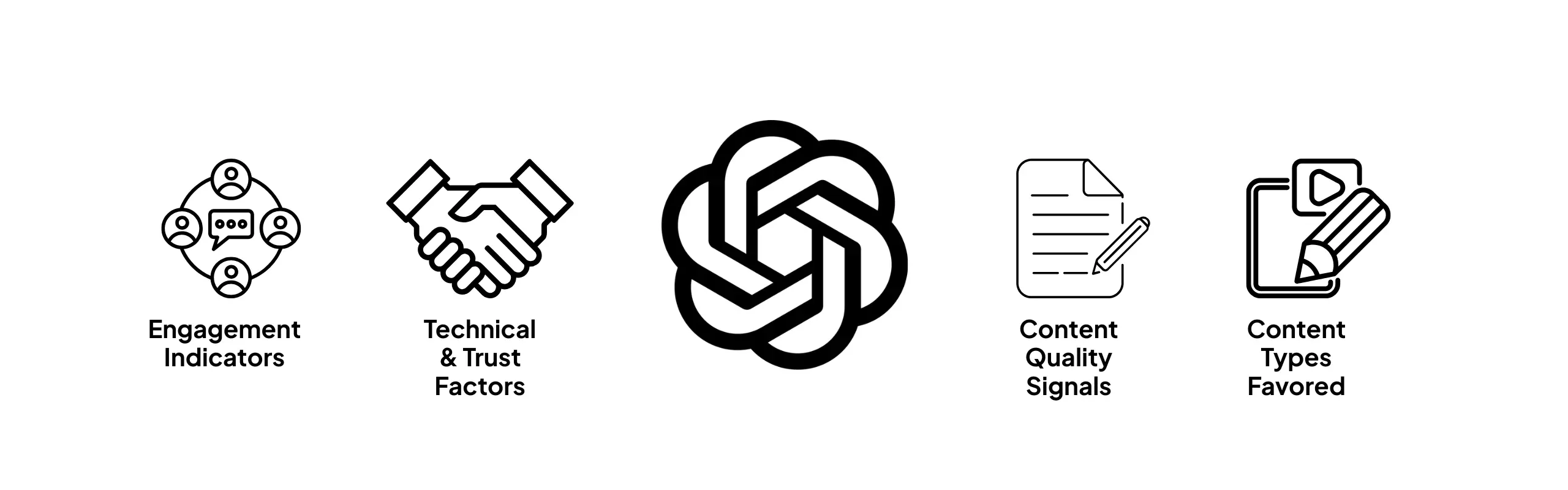
Understanding what ChatGPT values when selecting sources is crucial for optimization success. The AI platform evaluates multiple signals across content quality, technical implementation, and user engagement to determine citation worthiness. Content Quality Signals: Technical & Trust Factors: Content Types Favored: Engagement Indicators: Content to Avoid:
Since ChatGPT uses Bing for real-time data, strong Bing performance is non-negotiable. Refresh your XML sitemaps regularly and ensure your technical SEO strategies align with Bing’s webmaster guidelines. Use both Google Search Console and Bing Webmaster Tools regularly to identify when your pages begin drawing traffic from AI-driven sources. Leverage structured data for ChatGPT by implementing Schema markup. This helps AI bots understand your content context, significantly increasing the likelihood of appearing in rich answers and citations. Use Bing’s Webmaster API and OpenAI’s OAI-SearchBot to identify gaps or technical barriers preventing AI citation. This section breaks down the specific SEO tasks where ChatGPT saves the most time—without replacing the validation and judgment that drive real results. Below are real-world workflows where ChatGPT helps speed up repeatable SEO tasks. I use it for execution and ideation, then validate everything with tools like Wellows, Search Console, Bing Webmaster Tools, and live SERP checks. Keyword research required pulling data from multiple tools, manually grouping terms, and still missing how people actually phrase questions. After (using ChatGPT): I generate long-tail queries and intent-based clusters in minutes, then validate search demand and feasibility with SEO tools. Creating outlines meant reviewing competitors and guessing which sections mattered most. After (using ChatGPT): I build question-based outlines that mirror how users search, then refine them based on SERP patterns. Updating headings, meta tags, and internal links was slow and inconsistent across pages. After (using ChatGPT): I use it to suggest improvements, then manually select what aligns with search intent and rankings. Drafting schema or technical notes required writing everything from scratch. After (using ChatGPT): I generate first-draft schema and QA checklists, then validate and deploy them manually. Identifying outdated sections took full re-reads of long pages. After (using ChatGPT): I surface outdated claims and missing FAQs quickly, then verify updates before publishing. Did you know? Important: ChatGPT accelerates execution, but it doesn’t replace strategy. Every output still needs human review, real SEO validation, and performance tracking. After publishing, I track whether content is being surfaced correctly by running an LLM visibility audit, comparing it with Search Console and Bing data, and monitoring citation-level exposure using a ChatGPT Visibility Tracker to understand where and how pages appear in AI answers over time. To optimize content for ChatGPT, structure pages with direct answers at the top, clear question-based headings, and verifiable facts that AI systems can easily extract and reuse—especially now that content reuse and extraction risks are more visible in discussions around issues like the ChatGPT-4o prompt leak. Then strengthen that content with schema markup, internal linking, and consistent brand/entity signals so your ChatGPT SEO optimization supports trust and citation eligibility across multiple quer Core Optimization Strategies ChatGPT SEO offers unique advantages that complement traditional search strategies. The primary benefit is access to high-intent users who ask detailed questions. These users are further along in their decision journey and more likely to convert. Analytics Trend Citations from ChatGPT deliver measurable business advantages across multiple dimensions. These benefits extend beyond traditional traffic metrics to influence brand perception, customer acquisition costs, and long-term market positioning. Did you know? You can get recommended by building a consistent digital footprint that AI associates with trust. When users ask for “top agencies” or “reliable providers,” ChatGPT looks for consensus across the web. This is where brand advocacy becomes critical. ChatGPT does not just provide factual answers – it directly recommends brands and services to users. When users ask for top agencies or reliable providers, ChatGPT lists those it identifies as credible. Earning this recommendation status requires implementing active trust-building strategies. Generate positive reviews across multiple platforms. Engage actively in industry discussions on LinkedIn, Reddit, and specialized forums. Secure recognition on verified business directories and industry top lists. Consistent presence across these platforms significantly raises your chances of being suggested by AI systems. Brand mentions play a huge role in AI recommendations. Active discussions on forums, news sites, and social platforms signal relevance to AI models. Consistent leadership details, customer feedback, and positive ratings across touchpoints further build trust. US consumers are more likely to take action on ChatGPT recommendations when they land on well-designed, informative, and secure pages. In 2025, being suggested by ChatGPT – even as one of several possible vendors – signifies a powerful digital trust mark and provides a distinct competitive advantage. Optimize your About Us page for ChatGPT brand recommendations by clearly stating your mission, location, and expertise. Include US location details and relevant certifications to solidify your local authority. This enhancement helps improve local listings and Google Business Profile visibility in AI-generated results. Yes, while they share foundational tactics, the optimization goals differ significantly. Traditional SEO focuses on keywords and clicks, whereas ChatGPT SEO focuses on citations and conversational relevance. Understanding these differences helps you allocate resources effectively. GEO (Generative Engine Optimization) and SEO (Search Engine Optimization) both aim to build authority, answer user needs, and create quality resources. However, they differ significantly in how they funnel traffic to your website. SEO is about achieving top positions on Google and Bing search results pages. GEO positions your content as credible material within conversational AI responses like ChatGPT. According to marketing professionals, GEO moves beyond keyword research and backlinks. Analytics platforms show a clear distinction between the two. Google Analytics tracks traditional SEO through clicks, rankings, and overall traffic. AI-mention trackers like SE Ranking measure GEO performance through AI citations, frequency of mentions, and inclusion in recommendation lists. Monitoring both standard and AI-driven referrals ensures comprehensive coverage of every discovery channel. In GEO, content relevance takes precedence over keywords. You must thoroughly answer the “why” and “how” behind queries, not simply match keyword strings. However, the two strategies are intertwined. High-quality, intent-driven content supports both optimization goals. Use ChatGPT for keyword research to identify conversational query patterns, then validate search volume using traditional SEO tools. Balancing both SEO and GEO has become an essential strategic goal for 2025 and beyond. Earning citations from ChatGPT involves meeting technical, content, and trust-related criteria. Effective ChatGPT SEO ensures your website is visible, crawlable, relevant, and exhibits strong trust signals – not just high page rank. Research shows that guides, FAQs, and comprehensive references with clear credibility markers are cited more often by AI bots than short or sales-centric articles. Developing a solid reputation as a reference source helps AI agents retrieve the latest, most reliable content from your site. Did you know? Your content structure optimizes pages for citations when you implement clear H2 and H3 heading tags. AI models prefer short paragraphs and bulleted lists for easy information extraction. Custom visuals for ChatGPT responses, such as original charts or infographics, significantly help when properly described in alt text. Regular updates, fresh information, easy navigation, and proper author credit all help you earn AI-generated mentions. Routinely examine analytics for referral trends and adapt as AI search evolves. Technical accessibility is vital for AI citation success. Crawling permissions in your robots.txt file must be configured to allow both OAI-SearchBot and Bingbot. If these bots are blocked, your content remains completely invisible to AI systems. Active mentions on specialized forums, features on industry podcasts, and involvement in leadership webinars collectively enhance your brand’s credibility footprint for AI evaluation. Achieving consistent ChatGPT citations requires a systematic, multi-faceted approach. This comprehensive checklist combines tested professional tactics and insights from successful US market leaders who have mastered AI-driven visibility. Use this as your implementation roadmap, prioritizing actions based on your current optimization maturity. Track progress monthly and adjust strategies as AI platforms evolve. Implementation Timeline: Week 1-2
Implementation Timeline: Week 3-4
Implementation Timeline: Month 2
Implementation Timeline: Month 3+
Follow this structured workflow to integrate ChatGPT SEO into your digital marketing strategy effectively. For successful ChatGPT SEO, give access to both OpenAI’s OAI-SearchBot and Bingbot so your content can be cited in ChatGPT conversations. Update your robots.txt file with the following configuration: After saving these updates, submit your sitemap to Bing Webmaster Tools and periodically check robots.txt to avoid blocking access to pages AI may cite. Confirm successful crawling by viewing your server logs or Bing webmaster dashboard. ChatGPT and related AI agents evaluate authority using Google’s E-E-A-T framework: Experience, Expertise, Authoritativeness, and Trustworthiness. Aligning with top ChatGPT SEO practices means consistently producing in-depth articles, unique case studies, and reference materials that demonstrate your original insights and practical experience. Use AI-driven SEO techniques to identify gaps in your current content. Write in natural conversational language to match user prompts. Produce content that covers a topic exhaustively. Expertise & Authority Trust & Transparency Content Freshness Structure & Format Localization & Resources Your About or Brand page strengthens your organization’s reliability and may be directly cited by AI systems for queries such as “Who owns [Company]?” or “Is this service provider trustworthy?” This page serves as a critical trust signal for both human users and AI systems. Consistent updates and proof of recognition in the US market, along with endorsements from established organizations, directly support higher citation rates in AI-driven answers for US consumers. Local listings like Google Business Profile affect ChatGPT visibility by providing crucial verification signals that AI systems recognize and trust. Your website’s structure significantly influences how AI bots access and reference your content. Define a clear, organized hierarchy and group related resources and guides logically. This structural optimization directly impacts your overall citation rates. This structured process aligns with current GEO standards and supports a stronger digital presence for 2026 and beyond. By maintaining technical proficiency for both Google and Bing while following GEO guidelines, businesses can reach users directly through AI-generated answers and decrease dependence on any single traffic platform.
Integrating ChatGPT SEO is essential for maintaining sustainable US search visibility in 2026 and beyond. By strategically blending Google’s E-E-A-T standards with Bing’s technical requirements, you create a robust foundation for long-term success. Focus on consistently creating high-value resources that serve genuine user needs. Utilize ChatGPT prompts for SEO to streamline your workflow, but always ensure human oversight maintains quality and accuracy. As AI technologies continue to evolve, businesses that prioritize content relevance over keyword density will lead their markets. Start optimizing today by enabling bot access, building strong trust signals, and consistently tracking your results. This proactive approach ensures your brand remains visible, relevant, and competitive in the emerging era of generative search.
Strategy 4: Build Domain Authority Through Strategic Backlinks
Strategy 5: Optimize for Semantic SEO and User Intent
How ChatGPT Cites and Recommends Sources
“ChatGPT favors comprehensive guides and data-rich pages over superficial or promotional content. Citation rates increase significantly with evergreen, well-researched resources.”What ChatGPT Prioritizes for Citations
Using Bing Rankings to Boost Visibility
How to Use ChatGPT for SEO (Practical Workflows)
ChatGPT SEO optimization: Practical workflows
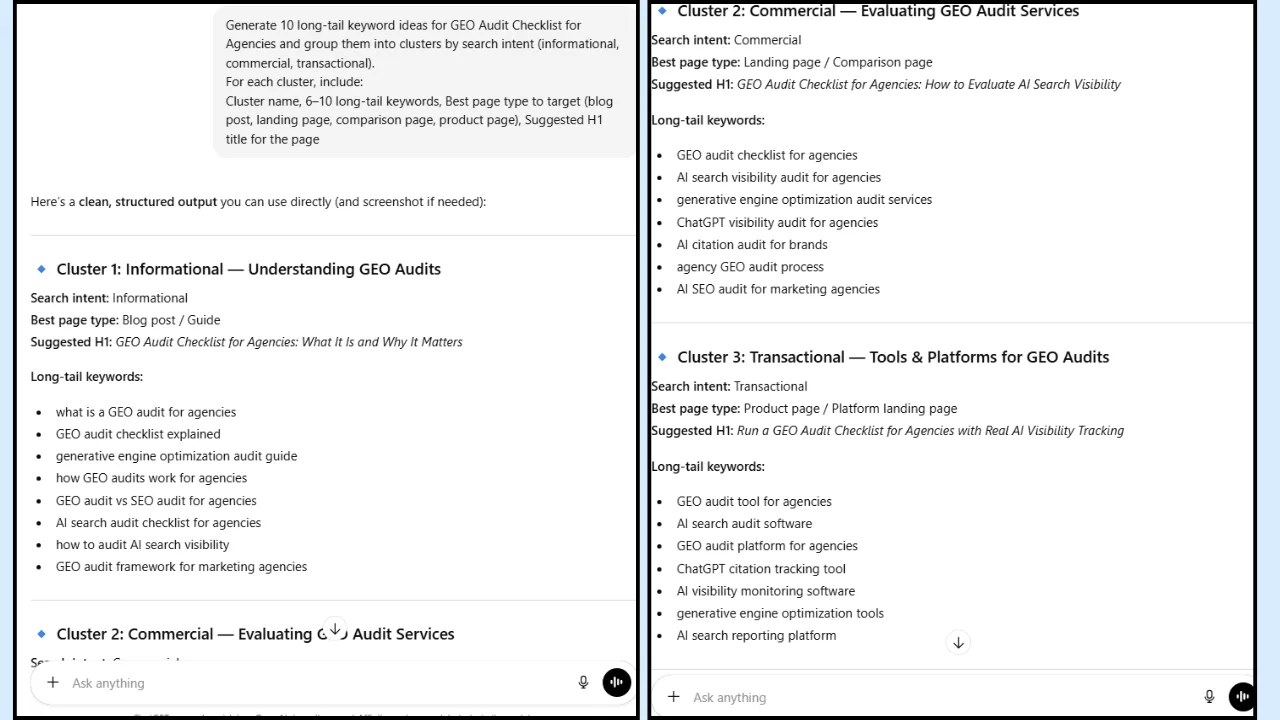
1) Keyword research and intent mapping
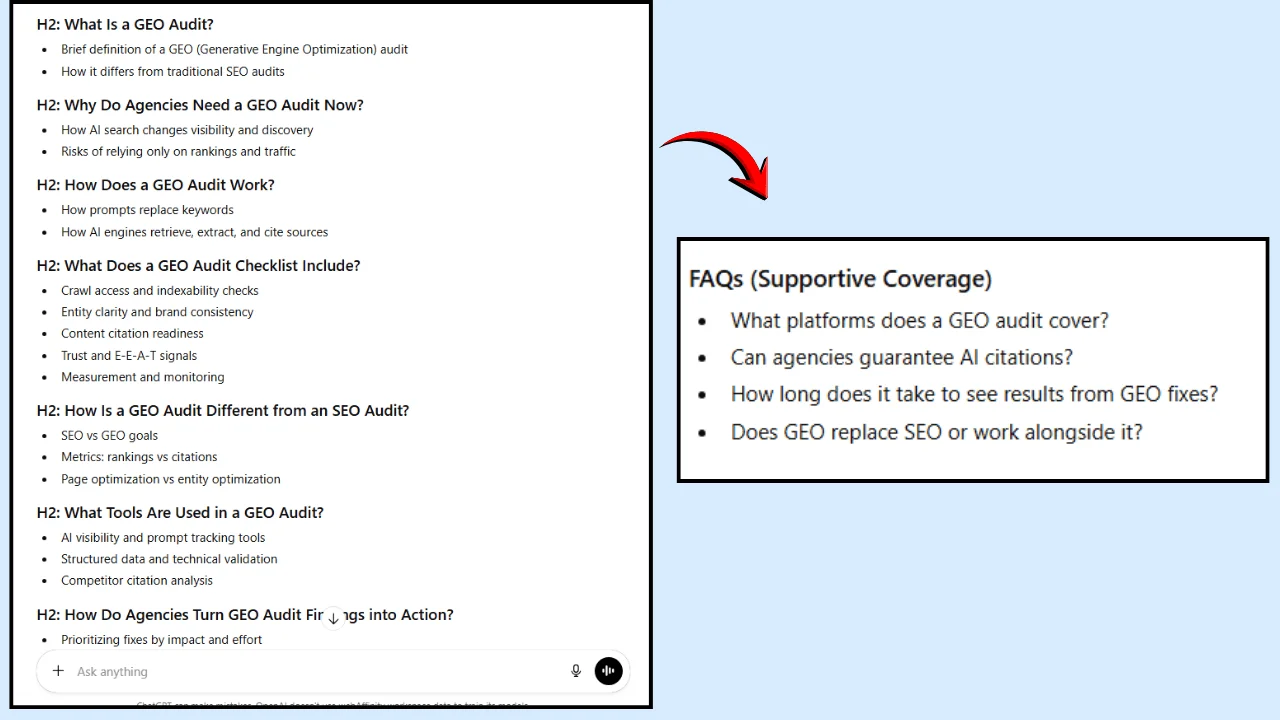
2) Content planning and outlining
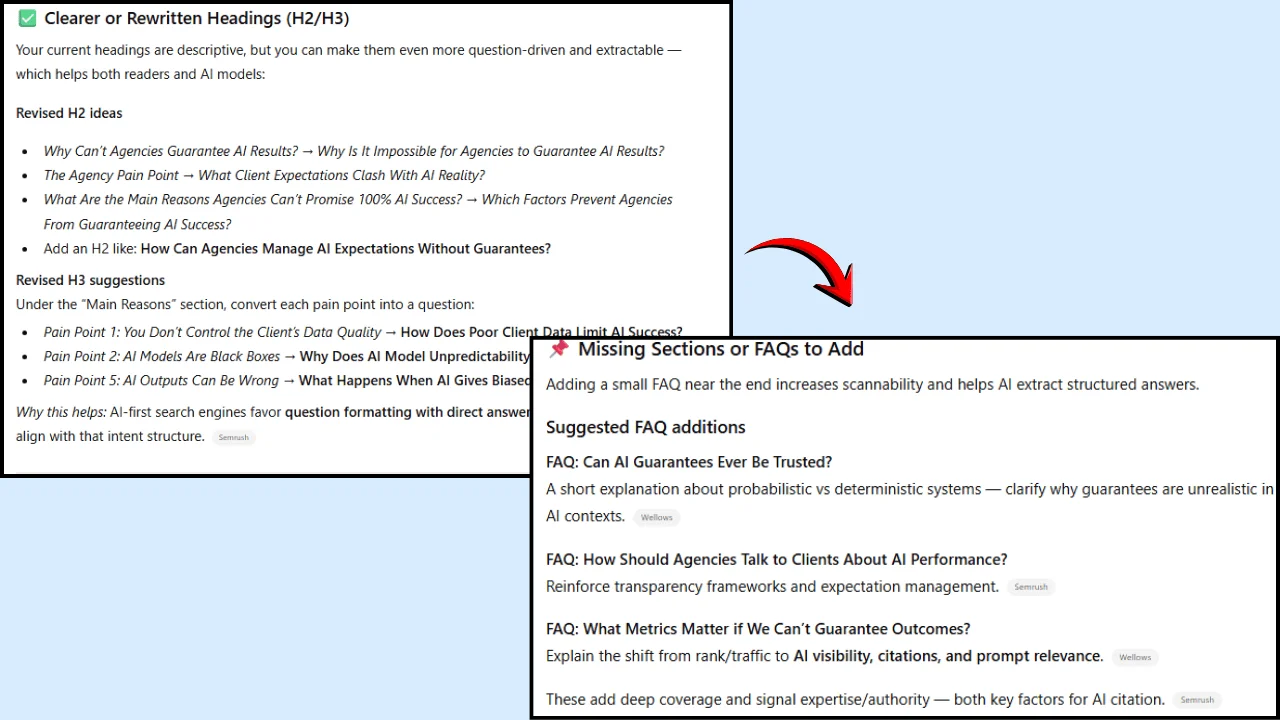
3) On-page optimization
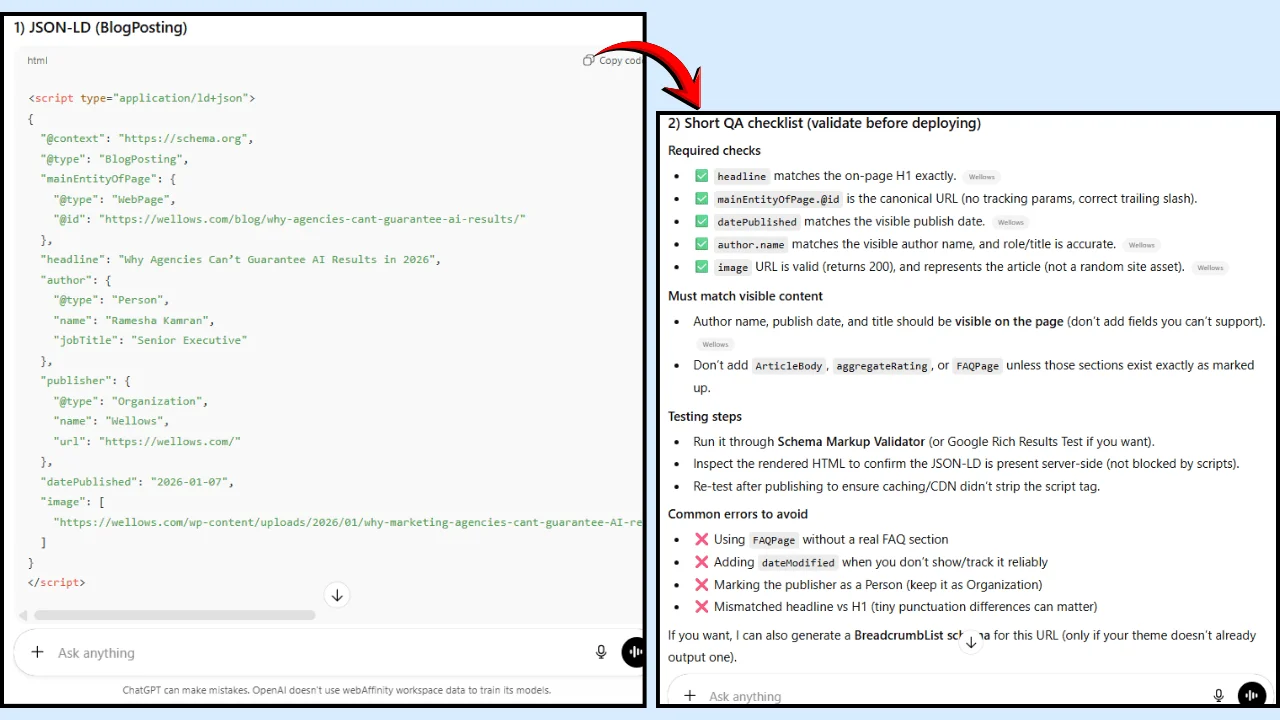
4) Technical SEO support
5) Content refresh and pruning
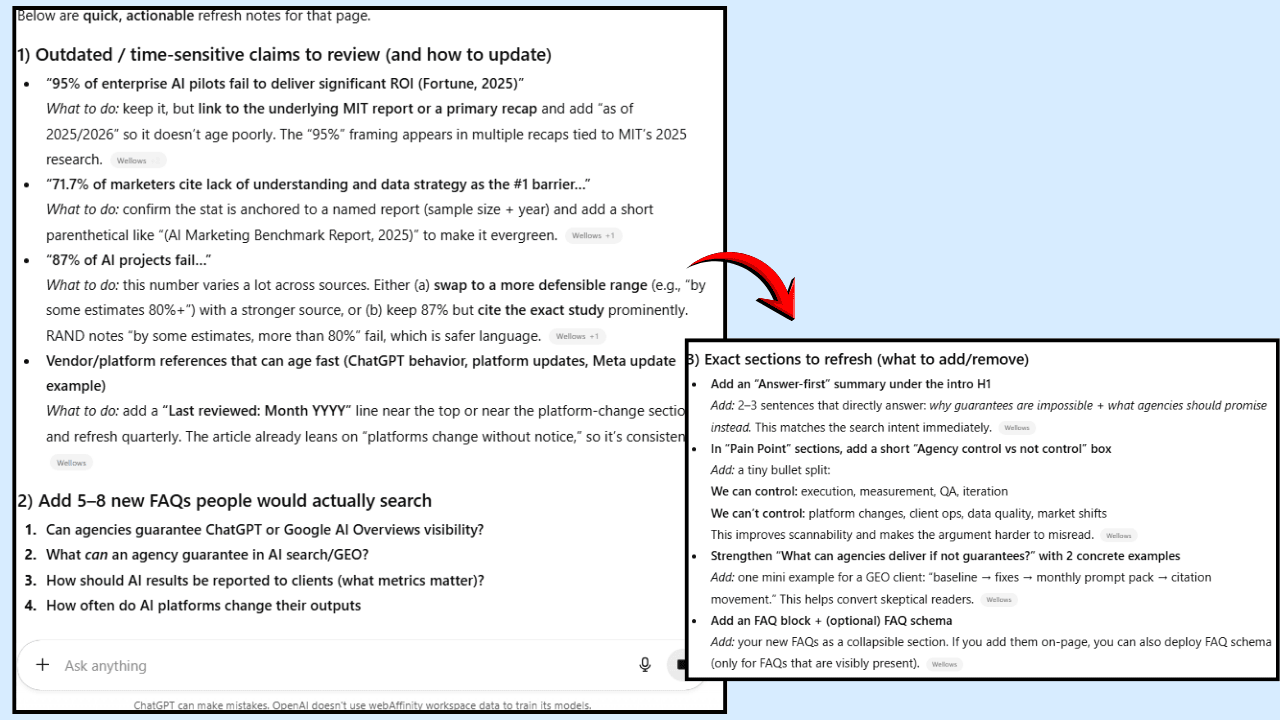
How To Optimize Content For ChatGPT?
What Are the Benefits of ChatGPT SEO for My Brand?
“AI-generated traffic appears in analytics as a new referral source, often showing higher engagement rates than broad organic search traffic.”Key Benefits of ChatGPT Citations
Traffic & Visibility Benefits:
Authority & Trust Benefits:
Business Growth Benefits:
Brand Amplification Benefits:
How Can I Get My Business Recommended in ChatGPT Responses?
Building Trust for ChatGPT Brand Recommendations
Leveraging Brand Mentions
Optimizing the About Us Page
Is ChatGPT SEO Different from Traditional SEO Strategies?
GEO vs. SEO: Core Differences
Aspect
Traditional SEO
GEO (ChatGPT SEO)
Goal
Rank in top 10 search results
Get cited in AI responses
Focus
Keywords and backlinks
Structured data and brand mentions
Metrics
Clicks, rank, traffic
Citations, mentions, recommendations
Platform
Google, Bing SERPs
ChatGPT, Bing Chat, AI assistants
Strategy
Optimize for crawlers
Optimize for AI comprehension
Tracking Performance Across Both Channels
What Factors Increase My Chances of Being Cited by ChatGPT?
Content Structure and Quality
Technical Factors
Comprehensive Citation Optimization Checklist
Technical Setup & Crawling (Foundation)
Content Quality & E-E-A-T (Authority Building)
Trust Signals & Reviews (Credibility)
Brand Visibility & Authority (Off-Page SEO)
Monitoring & Continuous Improvement (Analytics)
How Do I Implement ChatGPT SEO Step-by-Step?
Step 1: Allow ChatGPT and Bing Bots to Crawl Your Website
User-agent: OAI-SearchBot
Allow: /
User-agent: Bingbot
Allow: /
Step 2: Build High-Quality Content and Topical Authority
Step 3: Optimize Your About/Brand Page for Trust Signals
Step 4: Strengthen Website Structure for Better ChatGPT SEO
/guides/seo-chatgpt/ or /about/company/)
FAQs
ChatGPT improves SEO by helping you create content that targets conversational queries. It can also draft meta tags and schema markup, freeing up time for strategy.
Yes, ChatGPT can brainstorm long-tail questions and semantic keywords. It can also group keywords into clusters to support topical authority planning.
Export data from Search Console, Bing Webmaster Tools, or your SEO platform, then use ChatGPT to summarize patterns and generate hypotheses. Validate changes with real rankings, crawl data, and SERP checks.
Use answer-first formatting, clear headings, and scannable lists so AI can extract your key points quickly. Support claims with proof and keep entity details consistent across your site and profiles.
If your visibility depends on web retrieval, Bing indexing can influence what gets surfaced in ChatGPT browsing-style answers. Make sure Bing can crawl, index, and understand your priority pages.
Use ChatGPT for speed: outlines, rewrites, internal linking ideas, and schema drafts. Then fact-check, add first-hand examples, and confirm outcomes in your SEO tools before publishing.
Map intent first, then rewrite headings as real questions and answer them in the first 2–3 sentences. Improve scannability with bullets, add FAQs where needed, and tighten internal links to key pages.
ChatGPT can support SEO optimization by speeding up planning, outlines, meta drafts, schema drafts, and refresh suggestions. You still need human review plus SEO tools to validate accuracy, rankings, and crawl/index impact.
ChatGPT SEO optimization means structuring content so it’s easy to retrieve, understand, and cite in AI answers, not just rank on Google. It combines answer-first writing, clean site structure, schema where relevant, and strong trust/entity signals.
Final Thoughts: Future-Proofing with AI-Driven Strategies