I’ve analyzed how AI models select brands for citations.The patterns are eye-opening. Today, over 71% of U.S. consumers use tools like ChatGPT, Claude, and Perplexity to answer questions, evaluate products, and make decisions often without clicking a single link.
What I’ve discovered: Most AI-generated answers now include brands, but not necessarily links or the ones who rank #1 on Google, a pattern driven by AI answer variability across prompts, models, and retrieval layers. Just the brands that the model already knows and trusts.
This is why I’m convinced LLM seeding is the biggest opportunity most marketers are ignoring, especially as structured visibility frameworks similar to those used by generative engine optimization agencies begin shaping how brands appear inside AI answers.
LLM Seeding is the overlooked lever shaping which brands AI models recall in answers. Instead of chasing clicks, it’s about training models to remember your name before the user even asks. so it generates more accurate, domain-relevant outputs.
It’s not about gaming the system. It’s about showing up in the places LLMs look, speaking in formats they understand, and becoming part of the answer before the user even asks — and using a ChatGPT Visibility Tracker to measure whether that presence is actually sticking across different prompts and outputs.
In this blog, I’ll share what I’ve learned about LLM seeding and modern visibility, and why the brands that master this today will dominate AI-driven discovery tomorrow.
To see how Wellows helps brands earn visibility inside LLMs.
TL;DR
Here’s what we’ll discuss about LLM seeding in this blog:
- What is LLM Seeding? Placing clear, structured content where LLMs naturally collect data.
- Top Seeding Platforms: Reddit, Quora, Medium, Substack, GitHub, and trusted industry publications.
- How to Earn Citations: Use FAQs, tables, first-person insights, and quotable sections.
- Role in GEO: LLM seeding boosts generative engine visibility by improving model recall.
- What’s Next: Early seeding builds long-term AI visibility as LLM-driven search expands.
Building on this foundation, let’s explore the specific platforms where LLMs actively source their citations.
What Is LLM Seeding?
LLM seeding is the process of creating and sharing content in places where large language models (LLMs) like ChatGPT, Claude, and Gemini can easily read it.
When you seed your content in the right platforms and formats, supported by strong on-page SEO fundamentals that improve clarity and structure, you increase your chances of getting noticed, cited, and included in future AI training data.
In short, LLM Seeding isn’t about ranking , it’s about memory. Every structured mention you seed today shapes tomorrow’s AI answers.
Did you know?
How LLM Seeding Helps Your Content Enter ChatGPT’s Training Data?
1. Publish on AI-Crawled Platforms
ChatGPT and other LLMs learn from public forums, open blogs, and trusted sources. Platforms like Reddit, Quora, and Wikipedia are heavily crawled. When you share helpful, accurate content there, it increases your chance of being included in AI training data.
2. Create AI-Friendly Content
LLMs understand structured content better. Use short sentences, FAQs, bullets, and comparison tables. Share original research and simple data. These formats are easier for models to parse and store.
3. Join Community Discussions
Public discussions on Reddit, Stack Exchange, and Quora often show up in AI datasets. When you give detailed, high-quality answers, your insights may get captured and used in future AI responses.
4. Contribute to Open Knowledge Bases
Wikipedia and public wikis are important training sources for LLMs. Adding clear, factual content to these places boosts your visibility inside AI systems.
Using these LLM seeding methods helps your content become more discoverable and “AI-readable.” Over time, this increases your LLM visibility and improves the chances that ChatGPT and similar models will reference your work.
Why Is LLM Seeding Important for SEO?
Understanding why LLM seeding is important for LLM SEO is essential as search moves into AI-generated results. Today, models like ChatGPT, Claude, and Gemini deliver direct answers without requiring a click, and brands must adapt to remain visible inside these responses.
Below are the core reasons why LLM seeding now matters for SEO.
1. Enhanced Brand Visibility Inside AI Responses
AI assistants increasingly answer queries without sending users to external websites. By structuring content for AI readability, brands improve the chances of being cited inside these responses, achieving visibility even in a zero-click environment.
2. Stronger Authority and Trust Signals
When an AI model repeatedly references your content, users perceive your brand as more credible. These citations function as modern authority signals, reinforcing your expertise and strengthening trust over time.
3. Adapting to Zero-Click Search Behavior
As AI-driven search grows, traditional click-through rates continue to decline. LLM seeding ensures your brand remains visible even when users never land on your website, preserving relevance across new search interfaces.
4. Expanding Beyond Traditional SEO Limits
Traditional SEO focuses on ranking in SERPs. LLM seeding goes further by optimizing your content for AI summarization, chunk extraction, and citation. This creates visibility across both search engines and generative engines, doubling your surface area of discovery.
5. Increasing Brand Recall and Direct Searches
Even without clicks, repeated AI citations create memory moments for users. When people later search or make decisions, your brand is already familiar, driving direct traffic, branded searches, and deeper trust.
LLM seeding doesn’t replace SEO, it expands it. By structuring content for both search engines and generative engines, brands build a future-proof visibility strategy that works across Google, AI assistants, and emerging generative platforms.
Can I Seed My Brand Information to Claude or Gemini?
Yes, you can seed my brand information to Claude or Gemini through strategic content placement. This approach is part of Generative Engine Optimization (GEO), which helps AI models read, understand, and surface your brand more accurately inside their answers.
Wellows supports this GEO approach by helping brands create structured, AI-readable content formats that LLMs prefer. When your content is clean, consistent, and placed in the right platforms, models like Claude, Gemini, and ChatGPT can pick it up more reliably.
Key Strategies for Effective GEO
- Publish High-Quality, Relevant Content: Create simple, helpful content that matches your expertise. LLMs prefer material that is factual, structured, and easy to process.
- Keep Consistent Brand Messaging: AI models learn from repetition. When your brand tone and message stay consistent everywhere, Claude and Gemini can represent your brand correctly.If you’re scaling content fast, run drafts through the free AI humanizer tool by Wellows to smooth out robotic phrasing and keep your voice recognizable across channels.
- Partner With Reputable Platforms: Post insights on trusted blogs, media sites, and communities. These platforms are often crawled by LLMs and increase the chance of seeding your brand information.
- Use Structured Data and Schema Markup: Schema markup helps AI engines understand who you are, what you offer, and how your content fits into a topic. Wellows supports clean structure for better machine comprehension.
- Monitor and Adjust Your AI Presence: Regularly test how AI models describe your brand. Update your content when needed. This keeps your Claude and Gemini visibility accurate and aligned with your message.
Result: When you seed my brand information through strategic content placement, your brand becomes easier for Claude, Gemini, and AI search engines to understand and cite.
By applying these steps, you improve how generative AI models perceive your brand. Wellows helps you build AI-visible content that strengthens your presence across Claude, Gemini, and emerging AI search engines.
How Does LLM Seeding Differ from Traditional SEO?
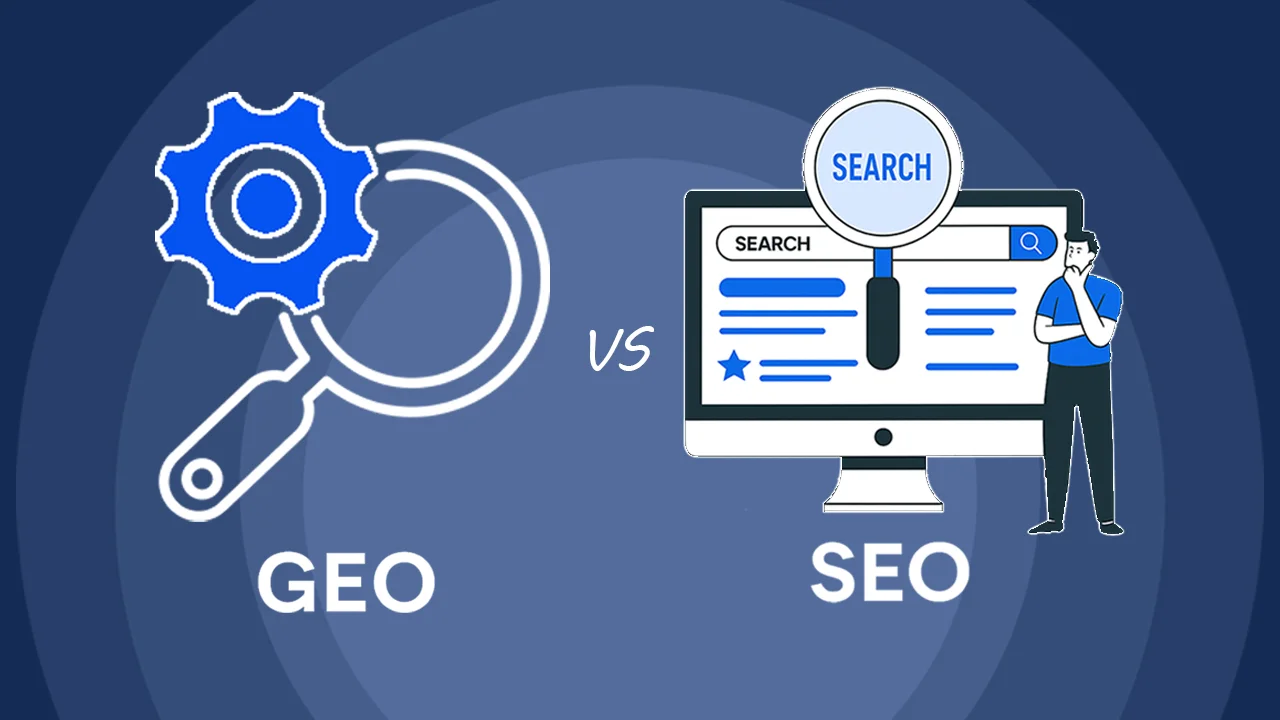
Traditional SEO and LLM seeding both aim to increase visibility , but they operate in completely different discovery systems.
- Traditional SEO focuses on ranking content in search engine result pages (SERPs). It relies on keyword targeting, backlinks, site structure, and engagement signals to drive organic traffic. The goal is simple: earn clicks.
- LLM Seeding focuses on earning citations inside AI-generated answers. Instead of optimizing for Google’s crawler, you optimize for how LLMs like ChatGPT, Claude, and Gemini read, parse, and recall information.
The goal shifts from “getting the click” to “being part of the answer.” Here is the difference:
| Aspect | Traditional SEO | LLM Seeding |
|---|---|---|
| Primary Goal | Rank high in SERPs to drive organic traffic. | Be cited by AI models inside responses. |
| Success Metrics | Keyword rankings, organic sessions, CTR. | Citation frequency, brand mentions in LLM outputs. |
| Content Strategy | Keyword-rich long-form content for search crawlers. | Clear, structured, AI-readable content (FAQs, tables, schemas). |
| Distribution | Owned website + backlinks from other sites. | Forums, wikis, review sites, industry blogs , places LLMs crawl. |
| Authority Signals | Backlinks and domain authority. | Unlinked brand mentions, structured insights, consistency. |
| Longevity | Rankings fluctuate based on updates. | AI memory persists , LLMs recall content long after publication. |
LLM seeding strategies combine semantic HTML markup, FAQ schema, clean comparison tables, and structured micro-content designed for high retrieval accuracy. This increases citation probability through stronger contextual relevance, clearer chunking, and better authority detection.
If you’re building AI visibility from scratch, this startup-focused AI visibility guide shows how to merge prompt-first SEO and LLM seeding into a unified growth framework.
How the LLM Seeding Strategy for Generative Engine Optimization Works
Here’s how the LLM seeding strategy for generative engine optimization works:
Publish in AI-Crawlable Spaces
Publish in AI-Crawlable Spaces
LLMs scan forums, documentation hubs, help centers, Reddit, Quora, Wikipedia, press articles, and review platforms. The best seeding strategies start by mapping where these models already gather data, and publishing there.
Use AI-Friendly Formatting
Content that’s easy to parse is more likely to get picked up, especially the first 40–60 words that shape SERP snippets, a pattern validated in the ChatGPT Visibility Experiment. Use simple Markdown or semantic HTML. Break up your content into clear sections, FAQs, comparison tables, summaries, key takeaways. Think like a model: Can this be scanned, chunked, and quoted easily?
The Keyword Strategy Integration for LLM SEO Checklist outlines Q&A blocks, tables, and summaries that LLMs reliably extract.
Prioritize Clarity Over Clicks
LLMs aren’t clicking anything. They’re reading to understand, and the ChatGPT-4o prompt leak explicitly prioritizes helpful, clear passages over fluff.. Ditch vague intros and keyword-fluff. Say what something is. Explain how it works. Lead with relevance. The clearer your phrasing, the more quotable your content becomes.
Earn Organic Mentions (Even Without Links)
LLMs don’t need a hyperlink to learn who you are. They learn from repeated mentions in context. If your brand name keeps popping up in listicles, subreddit threads, and niche forums, that exposure accumulates. You become part of the model’s training data, link or no link.
Create Citation-Worthy Content
What makes something worth citing? Original data. Strong opinions. Defined frameworks. Expert input. If you want ChatGPT to quote you, you have to give it something to quote. Don’t just summarize what others said, say something worth repeating.
Monitor What LLMs Are Saying About You
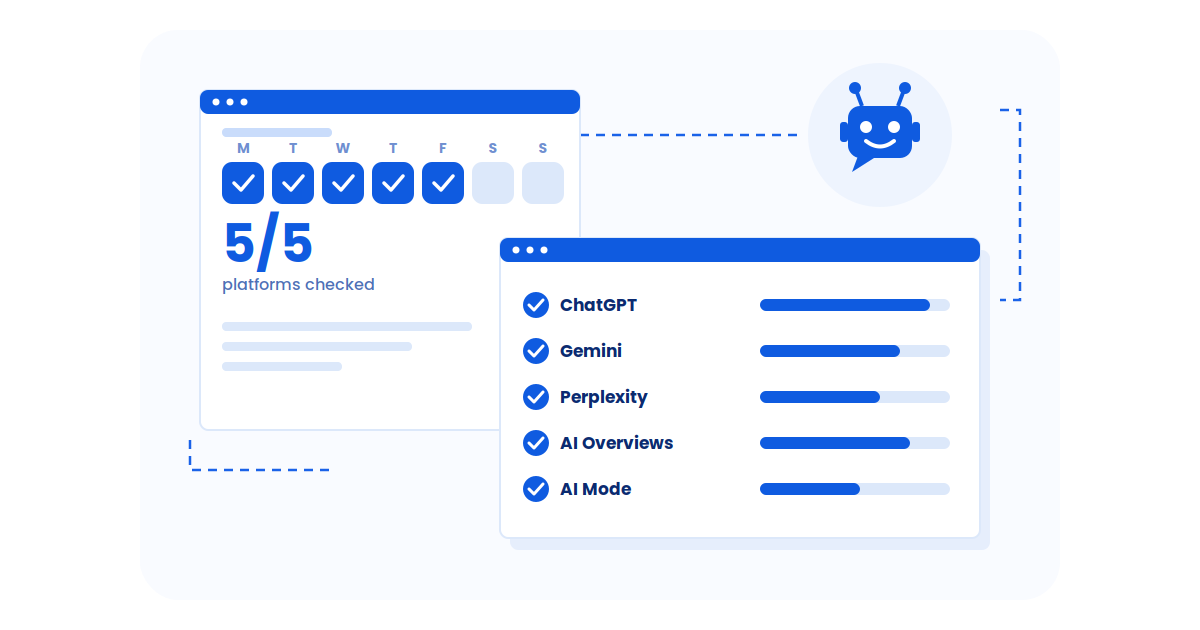
LLM seeding isn’t one-and-done. Test prompts like your customers would. Search in Perplexity. Ask questions in ChatGPT. Where do you show up? Where do you fall short? Use that insight to tighten up where and how you seed content.
This process also helps you catch early signs of content decay, where previously seeded mentions lose relevance, clarity, or retrieval strength as models adapt to new patterns and fresher sources.
Seed for Memory, Not Just Traffic
The power of LLMs isn’t in sending people to your site, it’s in shaping what they remember. Even if someone never clicks your link, the mention of your name inside an AI answer sticks. That brand recall builds trust, and drives direct traffic down the line.
Now that we understand how LLM seeding operates, let‘s examine the specific platforms where these strategies prove most effective.
Where LLMs Source Citations: Most Effective Seeding Platforms
Building LLM visibility isn’t some vague ‘growth hack. It’s a practical strategy to show up where language models already pull their answers from.
That means publishing on platforms built with clean structure, real conversations, and credible voices, not just optimized headlines.
Where should I publish content for effective LLM Seeding
To effectively seed content for Large Language Models (LLMs), it’s crucial to publish on platforms that they frequently crawl and treat as authoritative.
The main categories include:
- Third-Party Platforms: Medium, Substack, LinkedIn Articles
- User-Generated Content: Reddit, Quora, GitHub discussions
- Industry Publications: Guest posts, expert quotes, roundups
- Review Platforms: G2, TrustRadius, Capterra
Each of these is broken down in detail below, with examples of how to maximize citations.
1. How Medium, Substack, and LinkedIn Generate LLM Citations
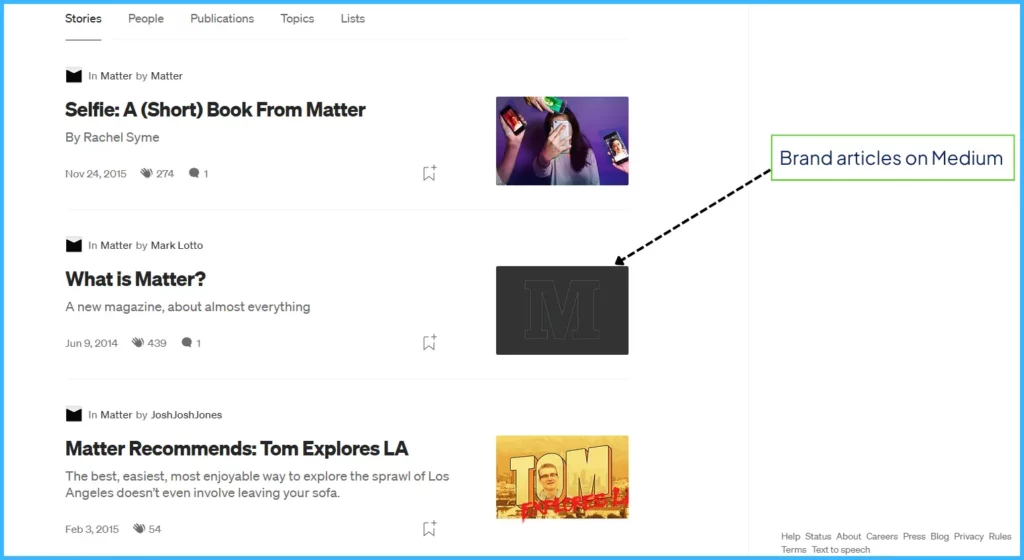
These platforms aren’t just good for distribution , they’re LLM magnets.
- Medium has a clean, semantic layout. Use clear H2s, internal links, and summaries to make your content easy to parse.
- Substack is perfect for thought leadership with editorial voice. Write analysis, commentary, and trend explainers that LLMs can quote.
- LinkedIn Articles tie directly to verified human profiles , which adds credibility. Use them to publish original perspectives or curated guides with clear formatting.
Why it works:
These platforms strip out clutter and provide:
- Clean semantic HTML for easy AI parsing
- Editorial formatting with clear headings
- Author verification for credibility signals
- Platform authority that transfers to your content
2. Why Industry Publications Boost LLM Visibility
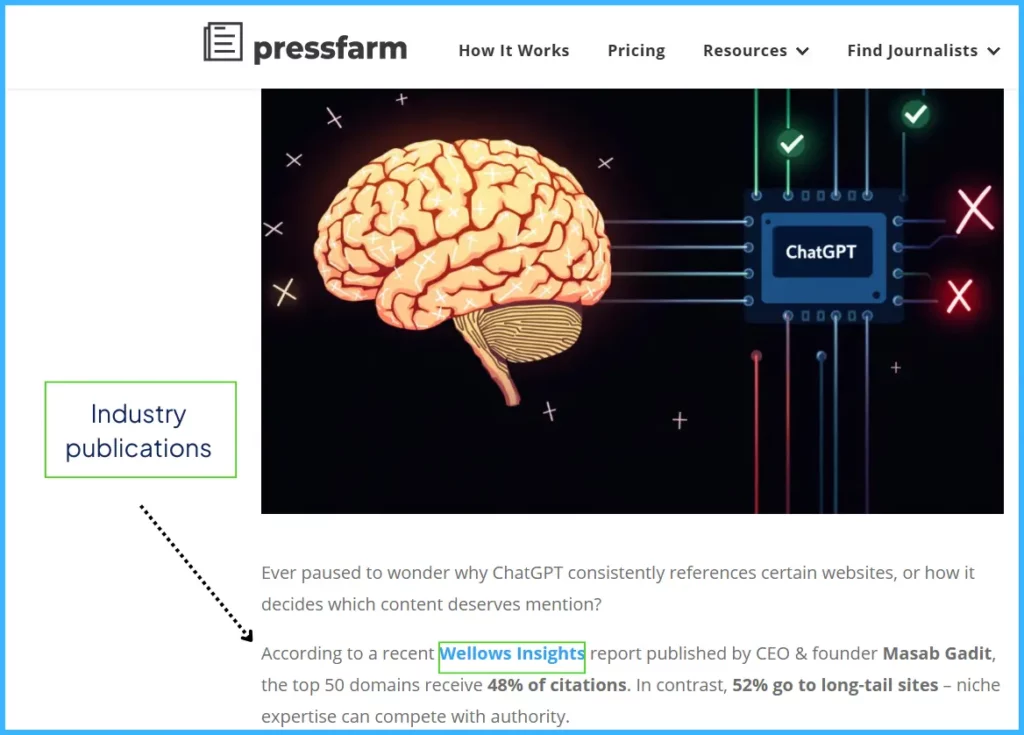
If your content lives on a respected domain, it’s more likely to get pulled into answers.
- Pitch expert guest posts to known blogs or industry media.
- Write about evergreen topics LLMs frequently answer: comparisons, how-tos, tool reviews.
- Format with subheads, bullet points, and data. Don’t bury the good stuff in dense paragraphs.
Also:
- Use tools like HARO and Featured to offer expert quotes.
- Make it easy for journalists to copy-paste your insight into their pieces.
Why it works:
Industry publications boost citations through:
- High domain authority signaling content credibility
- Editorial oversight ensuring quality standards
- Industry expertise aligning with specialized queries
- Cross-publication exposure multiplying reach
3. How Community Forums Drive AI Citations
User-generated content platforms are goldmines for AI content seeding:
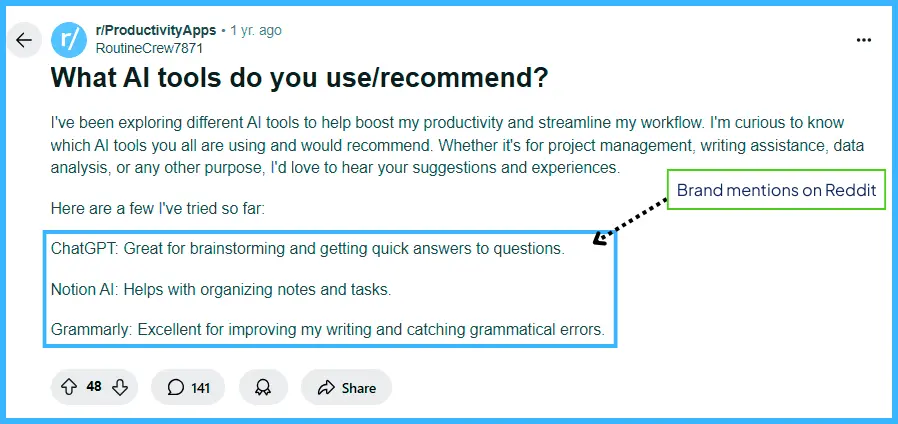
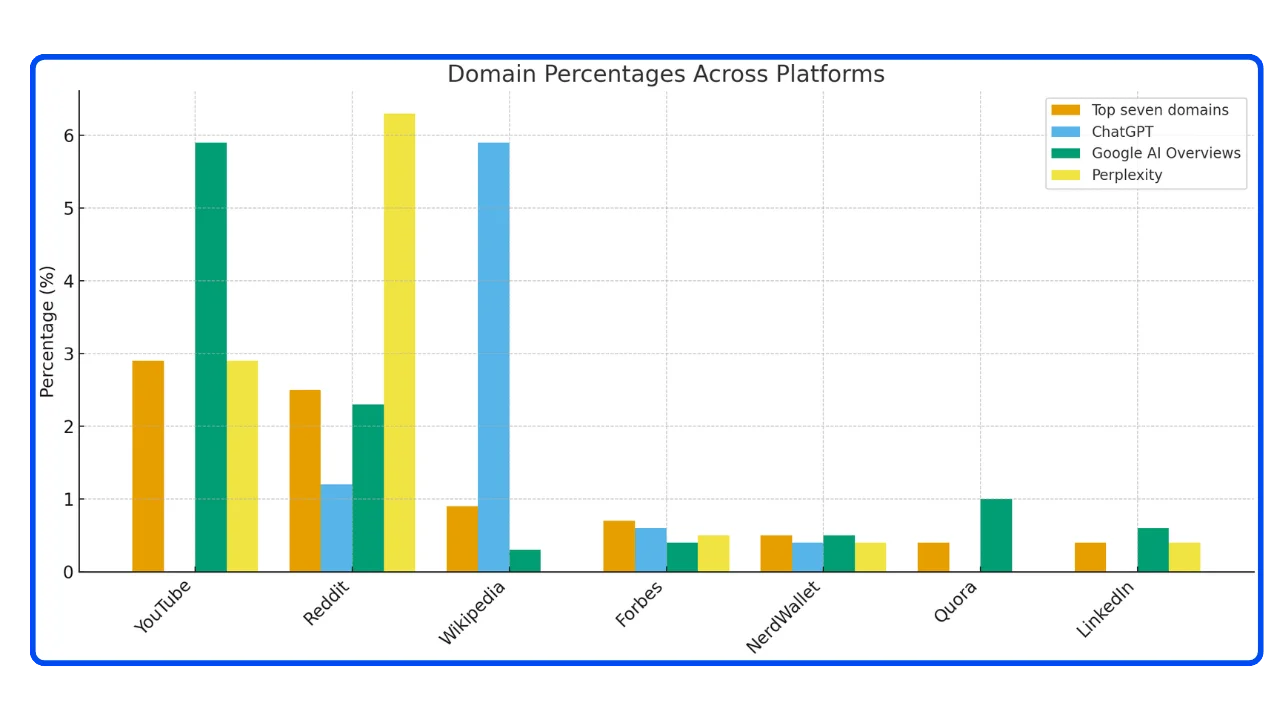
- Reddit is cited more than any other site in LLM responses. Join the subreddits where your audience hangs out and answer questions with real expertise, not just product plugs. For a deeper look at this trend, see Why Generative Engines Love Reddit?
- Quora comes next. Focus on detailed, step-by-step answers. Use headers, bullets, and examples, even though it’s an informal space.
- Niche forums like AVSforum or ContractorTalk are full of high-intent, expert discussions. Join the threads and contribute where your knowledge fits naturally.
Why it works:
Community platforms drive citations through:
- Real problem-solving discussions with practical context
- Community voting surfacing the most helpful responses
- Thread evolution showing comprehensive topic coverage
- Authentic user experiences providing diverse perspectives
4. Why Review Platforms Increase LLM Mentions
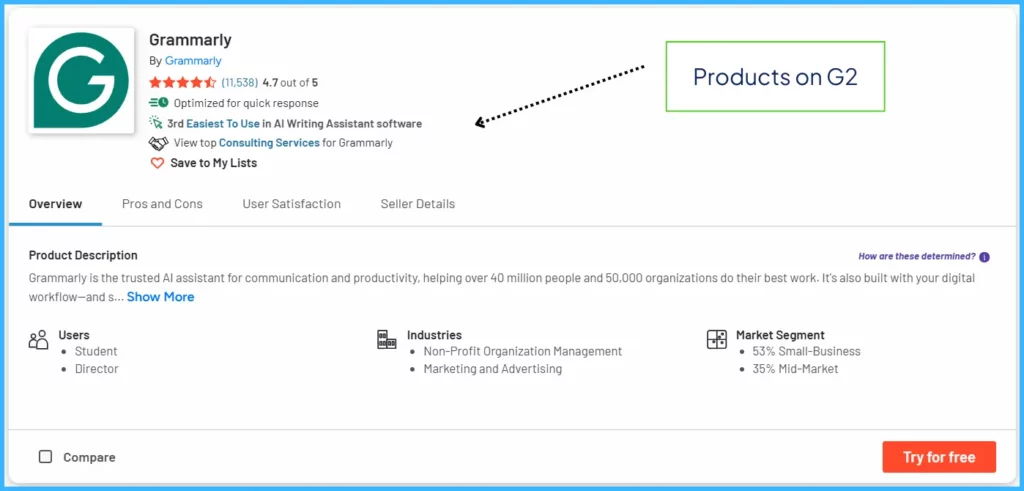
These are natural fits for comparison prompts like “best tools for X” or “top-rated software for Y.” The AI search visibility platform for agencies can also automate monitoring of these reviews, helping you identify patterns that LLMs are more likely to cite.
- Encourage detailed reviews from users , not just star ratings.
- Ask them to explain why they picked you and what problem it solved.
- Prompt them to compare your product to others they’ve tried.
Why it works:
Review platforms generate citations by providing:
- Detailed problem-solution narratives with real context
- Comparison language helping AI understand positioning
- Quantified outcomes offering measurable validation
- Verified purchase indicators adding authenticity signals
5. How Editorial Microsites Build AI Authority
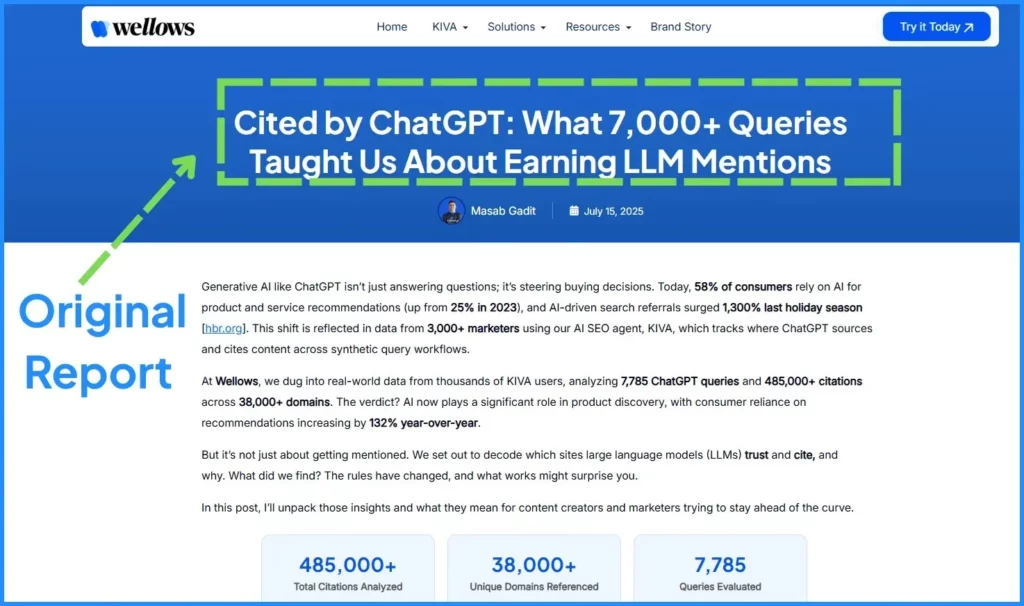
Build a niche, publication-style site that covers your space , not just your product.
- Use original research, surveys, or case studies to create fresh, citable data.
- Include author bios, references, and a clear editorial policy.
- Think of this as your brand’s version of a mini-Wikipedia for your industry.
Why it works:
Editorial microsites earn citations through:
- Original research providing unique data points
- Clear editorial policies establishing content standards
- Author expertise sections verifying credibility
- Structured navigation creating logical information hierarchies
6. GitHub Discussions (for Technical Brands)
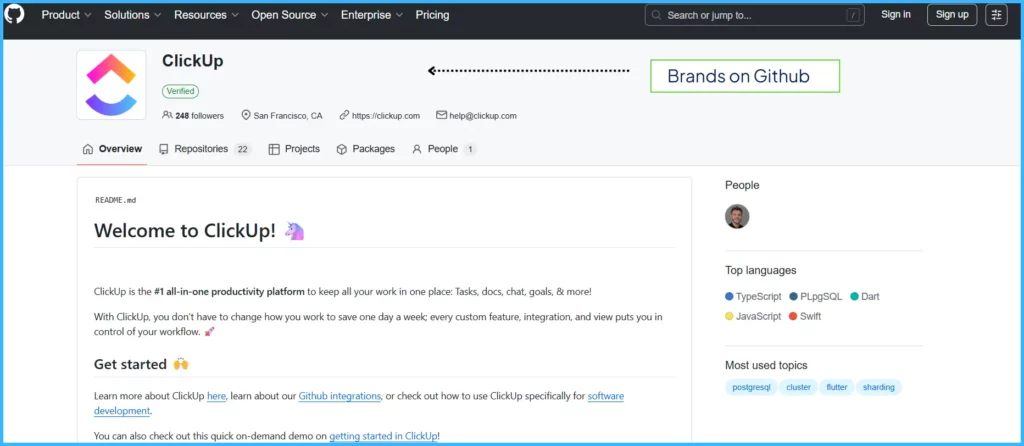
If your audience is technical, don’t just post docs , join the conversations.
- Answer questions in GitHub Discussions.
- Share fixes or workaround tips, even for adjacent tools.
- Help users troubleshoot , not just push features.
Why it works:
Technical platforms generate citations through:
- Code examples with implementation-ready solutions
- Issue resolution threads with step-by-step frameworks
- Community-validated solutions carrying peer review credibility
- Technical documentation aligning with developer query patterns
7. Which Social Platforms Enable LLM Citations
Not every social channel is worth your time , but some are surprisingly LLM-friendly. This is also where Social Media Marketing Agencies can help operationalize seeding by building repeatable publishing and amplification systems that generate real discussion signals, not just promotional posts.
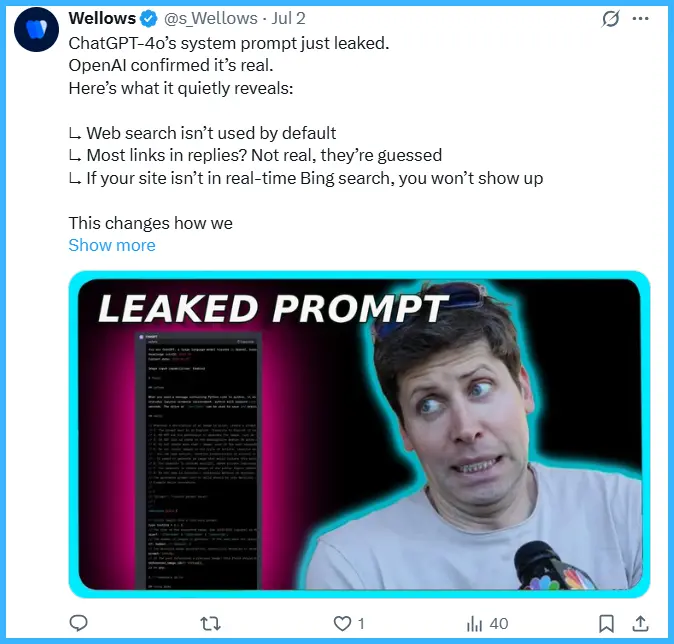
- X (Twitter): Share educational threads, not just opinions. Think breakdowns, frameworks, or step-by-steps.
- YouTube: Add detailed titles, transcripts, and descriptions. Yes, LLMs parse this.
- Pinterest: Use rich pin descriptions and link to structured content.
- Instagram (as of mid-2025): Posts can now be indexed if opted-in. Use full captions, alt text, and add topical hashtags.
Why it works:
Social platforms enable citations through:
- Structured thread formats creating logical sequences
- Rich metadata providing contextual parsing data
- Hashtag organization identifying topical relevance
- Engagement signals indicating content quality
How Does Reddit Participation Improve LLM Seeding for Perplexity Citations?
Reddit participation improves LLM seeding for Perplexity citations because Reddit is one of the most heavily crawled platforms by generative AI engines.
Its real conversations help models like Perplexity, Claude, and ChatGPT understand how people compare tools, share experiences, and solve problems. High-quality Reddit engagement boosts both AI visibility and search visibility across generative engines.
Perplexity cites Reddit in 6.3% of its answers (Axios, 2025), confirming Reddit as one of the strongest platforms for LLM seeding.
Why Reddit Influences Perplexity Citations?
LLMs rely on diverse, high-context datasets. Reddit provides authentic discussions, step-by-step help, and topic-focused problem solving. Because Reddit comments are organized by upvotes and context, Perplexity can extract high-signal insights more easily.
Did you know?
How Reddit Participation Improves LLM Seeding
1. Identify Relevant Subreddits
Choose subreddits aligned with your expertise. This increases topic relevance and improves LLM seeding strength.
2. Engage Authentically
Offer practical insights, step frameworks, and real help, no hard selling. LLMs reuse genuine value, not promotional messaging.
3. Build Credibility Over Time
Sustained participation and upvoted contributions signal authority. This increases the chance of Perplexity reusing your conten.
4. Share High-Value Content
Add examples, breakdowns, or unique insights that bring clarity to the thread. High-signal inputs often become future citation blocks.
Reddit works exceptionally well for LLM seeding because its discussions include clear context, community validation, and structured reasoning, elements LLMs automatically favor in retrieval.
A Well-Structured Reddit Strategy for AI Visibility
A phased participation strategy strengthens trust and improves LLM seeding:
- Weeks 1–3: Only comment and upvote. Build trust and karma.
- Weeks 3–5: Use the 80/20 ratio, 80% pure value, 20% natural brand context (MKT Clarity, 2025).
- After Week 5: Publish original threads offering evergreen insights that LLMs can reuse.
This mirrors the Wellows visibility philosophy: provide value first, establish trust, and let authority compound organically.
When Reddit participation improves LLM seeding for Perplexity citations, your brand becomes easier for AI engines to understand, recall, and mention, without requiring a single click.
Why Reddit Participation Boosts Generative Search Visibility
Reddit threads often include:
- Authentic reviews
- Real-world use cases
- Clear comparisons
- Step-by-step solutions
- Community-validated insights
These elements make Reddit one of the strongest citation-ready platforms for generative engines like Perplexity.
Active participation on Reddit improves LLM seeding for Perplexity citations by supplying models with structured, trustworthy, high-value insights. When aligned with Wellows’ AI visibility strategy, your Reddit contributions help shape how Perplexity, Claude, and ChatGPT reference your brand inside AI-generated answers.
Does Publishing on Medium or LinkedIn Help With LLM Seeding for ChatGPT?
Publishing on Medium or LinkedIn can influence LLM seeding for ChatGPT SEO, but the impact varies because each platform handles content accessibility differently. For brands building AI visibility through Wellows, choosing the right publishing channels is essential for long-term LLM recall and generative search visibility.
Medium content is publicly accessible and can appear in ChatGPT training data, while LinkedIn content is generally restricted and not used for ChatGPT training.
Here’s a clear comparison of how publishing on Medium vs LinkedIn affects LLM seeding and AI visibility for ChatGPT:
| Platform | LLM Seeding Impact | Why It Helps / Doesn’t Help | |
|---|---|---|---|
| Medium | ✔️ Strong for LLM seeding for ChatGPT | Medium is publicly accessible, and OpenAI trains ChatGPT on publicly available internet content. | |
| ❌ Weak for LLM seeding for ChatGPT | LinkedIn restricts large-scale scraping and does not allow third-party AI models like ChatGPT to use its content for training. |
Did you know?
LinkedIn now trains its own generative models on public activity, but this data does not flow into ChatGPT due to platform restrictions.
Publishing on Medium supports LLM seeding for ChatGPT because its content is publicly available, easy to crawl, and aligned with how models learn from open web data. LinkedIn, however, limits external AI access, making it much less effective for ChatGPT visibility.
For brands using Wellows, the priority should be publishing on AI-open platforms like Medium, Substack, and public blogs to strengthen long-term generative engine visibility.
How to Create Content That Gets LLM Citations?
To increase your chances of being cited by LLMs, focus on publishing content that’s both highly structured and strategically distributed across AI-visible channels.
LLMs favor content formats that allow for straightforward extraction and citation.
The most effective content types for seeding include:
- Structured Comparison Tables , already proven to help LLMs extract decision-support answers.
- First-Person Reviews , authentic, data-backed experiences that models surface as credible recommendations.
- FAQ-Style Content , Q&A mirrors LLM prompt-response patterns, making citations more likely.
- “Best Of” Lists , modular list formats with clear “best for X” verdicts improve extractability.
- Interactive Tools & Templates , practical resources that solve real problems get cited repeatedly.
- Multimodal Content , images, infographics, and video with metadata boost visibility in multimodal LLMs.
Below, let’s break each of these down with examples and strategies:
1. How Modular List Content Generates Citations
Modular list content optimized for LLMs differs from traditional listicles — each item needs independent context for effective citation, because engines like Gemini don’t summarize content, they extract passages.
The platform you use to monitor those extractions matters just as much as the format itself, which is where a focused comparison of Wellows vs Peec AI and other tools becomes useful where one is built to track passage-level citation behavior, while the other leans more on broader visibility scoring.
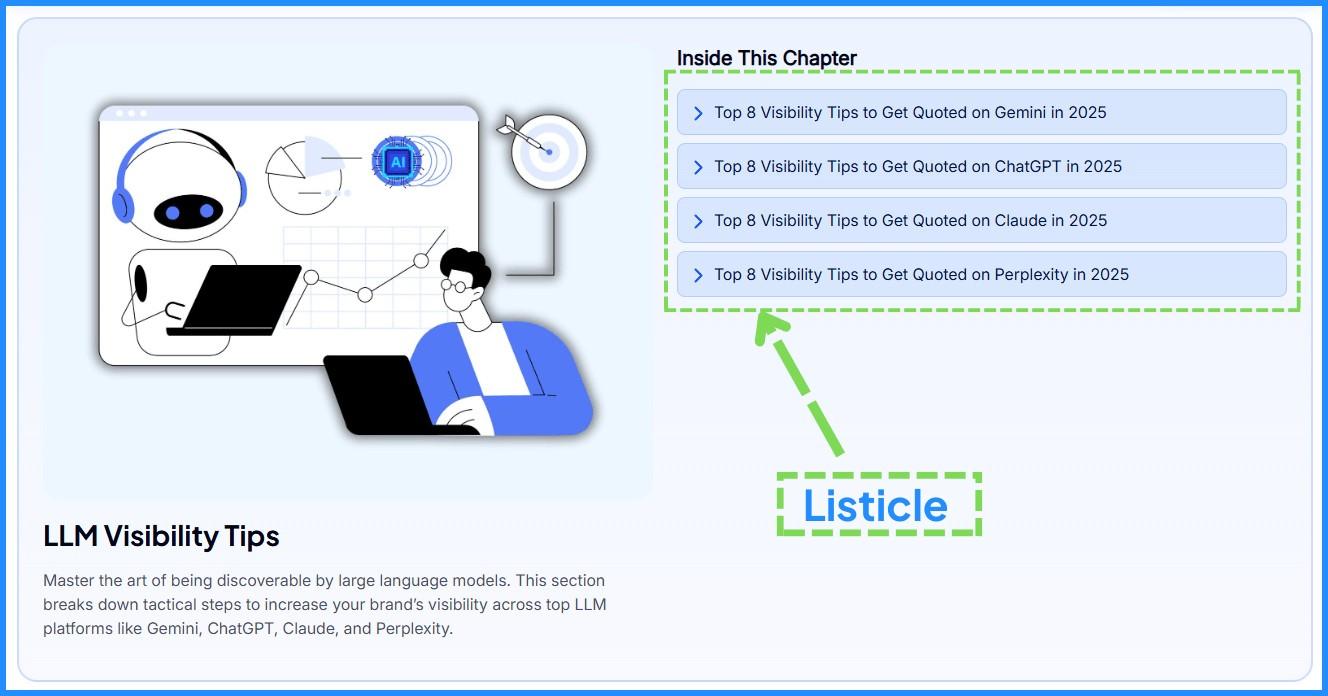
Here’s how to improve your chances:
- Add a short intro before the list explaining your methodology (e.g. “These tools were tested across async workflows in remote teams.”)
- Label each item with a ‘best for’ use case, not just the product name.
- Use consistent, repeatable structure: Description → Pros & Cons → Pricing → Verdict.
Key Takeaway:
Think of each list item as a standalone citation block. Clear, concise, and context-rich wins.
Beyond structured formatting, content credibility becomes the next critical factor in LLM citation selection. The Wellows LLM Visibility feature helps you analyze how models interpret structure, phrasing, and source trust, so you can refine your content for higher chances of being cited.
2. Why First-Person Insights Build Citation Credibility
First-hand reviews and usage stories are one of the best content seeding solutions for AI discovery editorial platforms. Why? Because they reflect lived experience, something AI tries hard to replicate.
To make it effective:
- State who tested the tool and why they’re credible.
- Include measurable insights (e.g. “cut onboarding time by 30% over 2 weeks”).
- Be honest. Add both strengths and limitations. This builds trust.
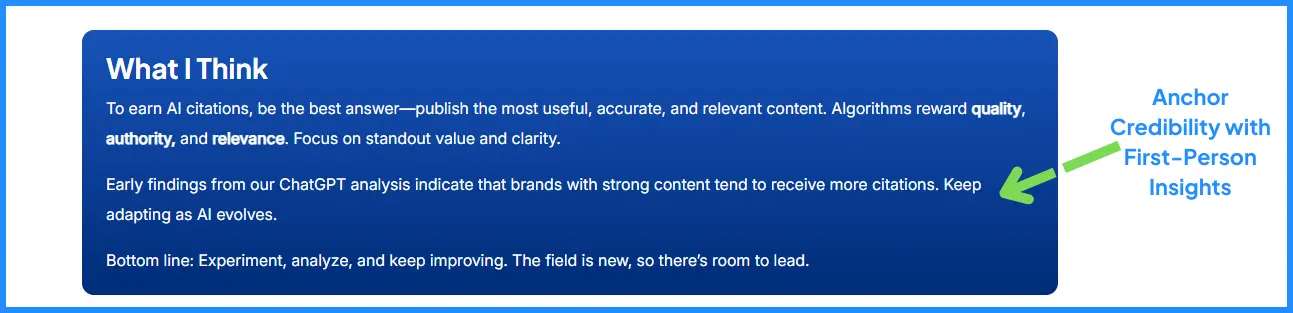
Key Takeaway:
Subjective but specific opinions are LLM-friendly, especially when backed by testable outcomes.
Building on personal credibility, structured comparison formats provide the decision-support framework that LLMs frequently reference.
3. How Comparison Tables Drive Decision Queries
LLMs frequently assist users with decision-making prompts like “Which one is better for me?”, and tables are their best friend.
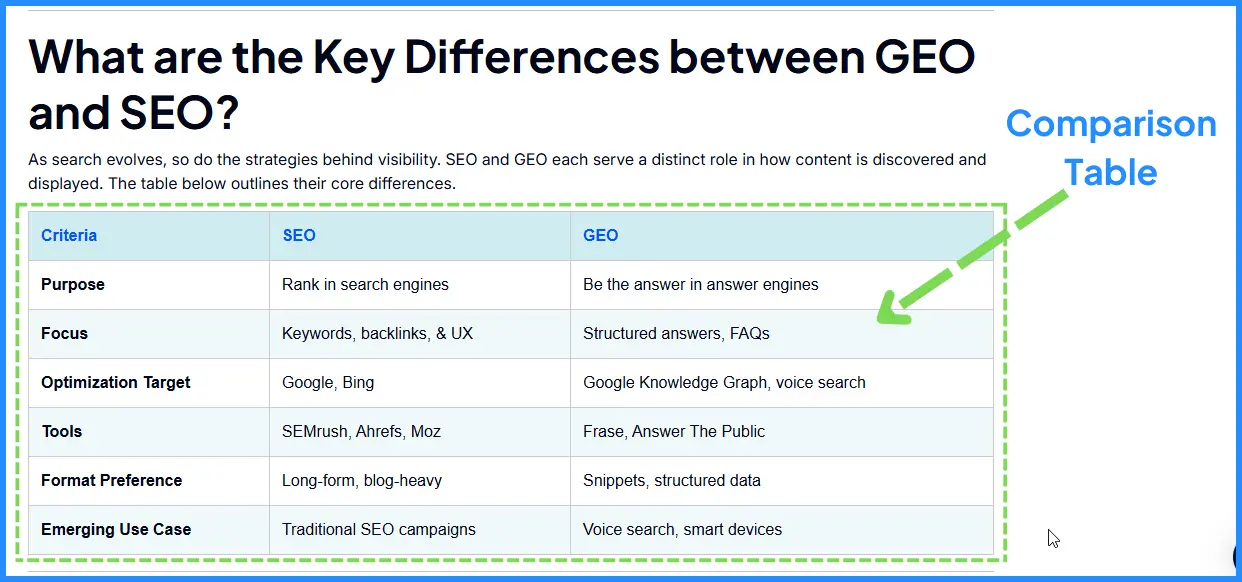
To create comparison content that gets cited:
- Focus on real-life use cases, not just feature parity.
- Use verdict-like phrasing: “Best for…” or “Ideal for…”
- Include cons, LLMs are more likely to trust balanced assessments.
Key Takeaway:
Clear verdicts improve your chance of being quoted in questions like: “Which is better for async teams on a budget?
These decision-support formats naturally lead to the most citation-friendly content structure: question-and-answer formatting.
4. Why FAQ Format Aligns with LLM Query Patterns
LLMs are prompt-driven. They understand Q&A format natively because it mirrors user behavior.
To write FAQ content LLMs can use:
- Use real user questions from Reddit, Quora, PAA, and intent clusters.
- Answer clearly in 2–3 sentences at the top of the response.
- Use <FAQPage> schema or a plugin to make it machine-readable.
In Wellows, we use KIVA to generate the right FAQs with clear, structured answers that match the exact queries users are searching for.
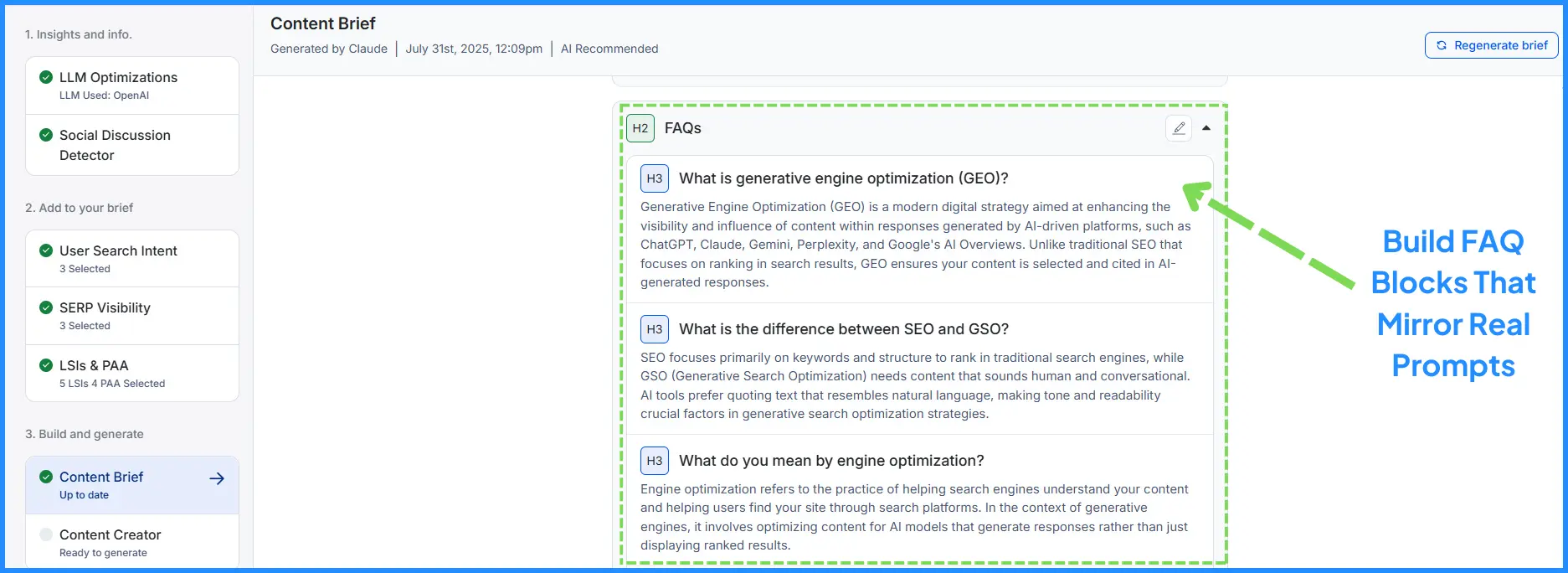
Key Takeaway:
Short, direct Q&A blocks are prime real estate for citation. Write like you’re answering inside Gemini.
While Q&A formats handle factual queries, expert opinions require different structural approaches to achieve LLM citation success.
5. How Expert Opinions Get Selected for Citations
AI doesn’t just echo facts, it evaluates opinions. But to surface them, those opinions need to be:
- Clearly attributed to a credible voice.
- Backed by logic, data, or precedent.
- Easy to extract via subheadings or block quotes.
Example (optional image block):
“Aiman Tahir, a GEO strategist, explains: ‘It’s not about keyword volume anymore, it’s about prompt context. If your passage doesn’t answer a micro-intent, you’re invisible.’”
Key Takeaway:
Be bold with your take, but structure it so LLMs can lift it easily into a result.
Beyond textual content, visual elements also influence LLM understanding through metadata and contextual signals.
6. How Visual Content Influences LLM Understanding
Images aren’t invisible to LLMs, they’re parsed through alt text, captions, filenames, and surrounding copy.
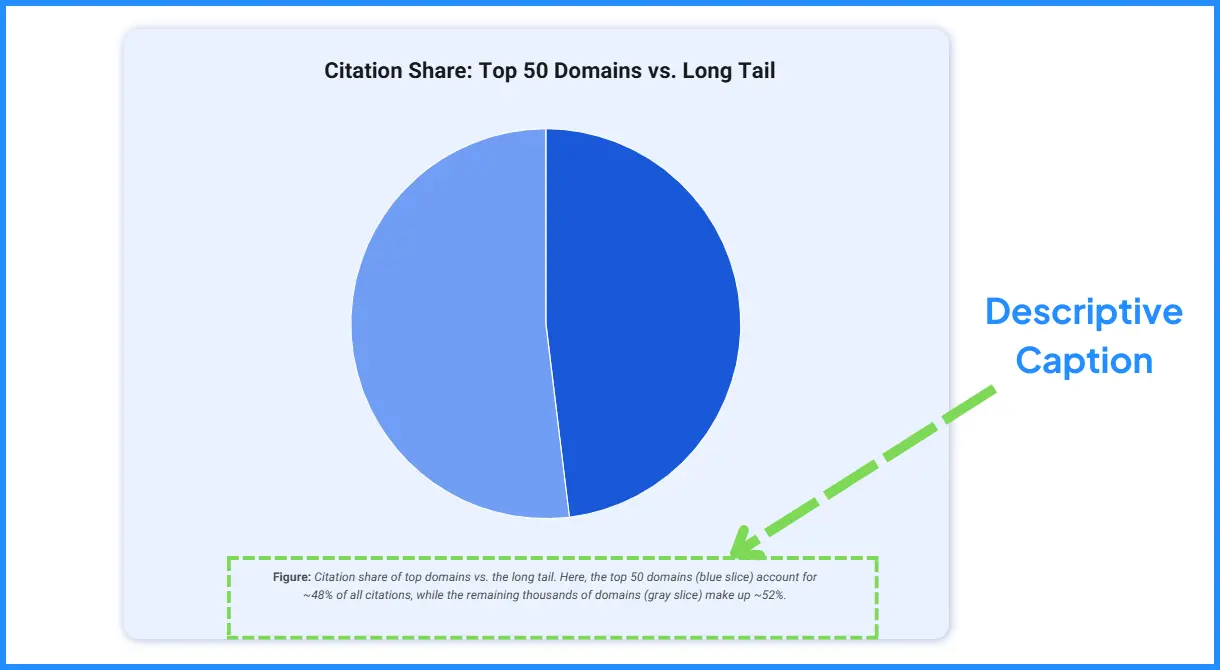
Optimize by:
- Writing full-sentence captions that add context.
- Adding descriptive alt text (e.g. “Comparison of top async onboarding tools for 2025”).
- Referencing visuals in your copy (“See the chart below for…”).
Key Takeaway:
Treat every image like an opportunity to reinforce a keyword or micro-intent.
Optimized visual content supports another high-citation content type: practical resources and tools that solve specific user problems.
7. Why Free Resources Generate Community Citations
Free resources like templates, worksheets, and checkers often get shared in forums. AI platforms frequently cite these helpful tools when users search for solutions..
Make them work for GEO by:
- Giving them names that reflect real prompts (e.g. “GEO Audit Template for 2025”).
- Adding a usage guide, summary, or tips so LLMs know the audience and purpose.
- Hosting them on pages with semantic headings and FAQ support.
Key Takeaway:
A good resource solves a real need and teaches AI how to summarize it.
These practical resources gain additional citation value when supported by specific, real-world implementation examples.
8. How Specific Examples Improve Citation Credibility
Rather than hypotheticals, share specific examples:
“After Wellows detected we were cited in Gemini for a long-tail prompt about async onboarding, we traced the citation back to a Reddit thread, not our blog. That’s where we dropped a link 3 months ago.”
That kind of context, mentioning the user action, the journey, the platform, makes your post credible and useful to both readers and AI engines.
Key Takeaway:
Micro-stories and use-case callouts help AI infer intent, credibility, and citation-worthiness.
These content strategies directly support your broader generative engine optimization goals. Here’s how seeding creates measurable business impact.
Can I Use Digital PR and Press Releases for Effective LLM Seeding Strategies?
Yes, you can use digital PR and press releases to strengthen LLM seeding strategies. These formats improve AI readability and help LLMs store your information in long-term memory.
When aligned with Wellows’ approach to LLM visibility and search visibility, digital PR becomes a high-authority signal that ChatGPT, Claude, and Gemini can easily reference.
Digital PR improves AI readability and helps your brand appear in structured, trusted sources that LLMs already crawl.
1. Craft Structured and Clear Press Releases
Press releases designed with AI readability in mind perform best for LLM seeding.
- Clear headlines help LLMs understand the topic instantly.
- Subheadings improve LLM visibility by breaking information into clean segments.
- Factual data builds authority and increases the chance of citation.
- Multiple formats (text + visuals) support multimodal LLMs.
These structures make press releases more LLM-friendly and easier for generative engines to extract.
Did you know?
Press releases with high AI readability often become “citation blocks” because LLMs prefer clear, concise, structured information.
2. Distribute Content Across High-Authority Platforms
Strong distribution increases LLM visibility across generative engines.
- Medium, LinkedIn Articles, industry publications
- Guest columns on authoritative domains
- Earned mentions through editorial teams
LLMs prioritize content from high-authority and editorially reviewed sources.
3. Optimize Digital PR for AI and Human Readers
Improving AI readability is essential for successful LLM seeding.
- Write simply so LLMs can parse intent clearly.
- Use schema markup to improve structural clarity.
- Add lists, quotes, and facts to increase extraction accuracy.
This helps LLMs categorize and reuse your content during generative responses.
4. Monitor and Adapt Your PR Seeding Strategy
Improving LLM visibility is an ongoing process.
- Track AI citations across major engines.
- Observe reuse patterns in ChatGPT, Claude, and Gemini.
- Adjust your distribution based on what LLMs consistently extract.
Continuous monitoring ensures your PR content stays visible in generative engines.
Digital PR signals + AI-readable formatting = stronger LLM visibility and long-term generative engine recall.
| Strategy | Impact on LLM Seeding | Why It Works |
|---|---|---|
| Structured Press Releases | ✔️ High Impact | Clear formatting boosts AI readability and extraction quality. |
| Publishing on High-Authority Sites | ✔️ High Impact | LLMs trust curated domains with verified editorial standards. |
| Schema + Clean Language | ✔️ Medium–High Impact | Improves structure, meaning, and long-term LLM visibility. |
| Monitoring AI Citations | ✔️ Continuous Impact | Allows adaptive LLM seeding based on real AI behavior. |
Using digital PR and press releases is one of the most effective ways to improve LLM seeding strategies. When your PR content is AI-readable, structured, and published on high-authority domains, it strengthens your brand’s LLM visibility across ChatGPT, Claude, Gemini, and emerging generative search engines.
What are the Benefits of LLM Seeding?
LLM seeding helps large language models reference your brand even without links. In practice, LLM citations can appear inside AI-generated answers and build visibility without clicks.
Key Benefits of LLM Seeding include:
- Enhanced Visibility: Your brand can be mentioned in AI-generated responses, even without driving direct clicks.
- Authority Building: Repeated citations strengthen your position as a trusted industry source.
- Adaptation to AI-Driven Search: As more users turn to ChatGPT, Claude, and Gemini for answers, seeding ensures your content remains visible in this new discovery layer.
Below, let’s break down these benefits in detail:
| Benefit | What It Means | Why It Matters |
|---|---|---|
| Brand Exposure Without Traffic Dependence | AI tools like ChatGPT, Claude, and Google AI Overviews answer questions directly, no click required. | Even if users never visit your site, they still see your name in the answer, which builds awareness and recall. |
| Authority by Association | Your brand appears near trusted sources inside AI summaries. | Being mentioned alongside known players boosts perceived credibility, especially in niche markets. |
| You Don’t Need to Rank #1 | LLMs prioritize relevance and clarity over traditional rank position. | A well-structured answer on page 4 can beat a vague page 1 result. |
| More Brand Mentions → More Branded Searches | Repeated citations in answers drive curiosity and direct searches. | Users increasingly look for your brand by name after seeing it in AI results. |
| Zero-Cost Citations Over Time | Once LLMs internalize your content, they can resurface it organically. | Visibility compounds without continuous ad spend or manual outreach. |
| Edge Over Competitors | Most brands still optimize only for classic SEO, not LLM retrieval. | Early seeding earns trust signals that compound over time. |
| Democratized Visibility | LLMs reward specificity and utility over brand size. | Smaller brands with precise content can outperform bigger, generic pages. |
How Does LLM Seeding Affect Model Performance?
LLM seeding directly improves how a model recalls, structures, and prioritizes information. By placing domain-specific, well-structured content where models and retrieval layers regularly read (high-authority sites, community forums, technical docs, and structured FAQs), you shape what the system treats as authoritative.
The result: higher answer quality, tighter accuracy, and stronger topical relevance.
During LLM Initialization, seeded material gives the system a clean set of exemplars for core concepts and terminology. As part of the broader LLM Setup Process, these exemplars become reference anchors for embeddings and retrieval indices, reducing drift and improving semantic matching for niche queries.
Then, through ongoing LLM Priming, short, clear, snippet-ready passages, the model learns to surface concise, quotable answers that align with real user intent.
Finally, at LLM Kickoff (the first production runs and evaluations), seeded content accelerates convergence toward accurate responses and lowers hallucination rates because the retrieval layer can consistently find high-signal passages.
- Better grounding & fewer hallucinations: Seeded, citation-ready passages give the model authoritative “go-to” references.
- Higher precision on domain queries: Clear definitions, tables, and FAQs improve passage-level matching and ranking.
- Improved coherence & structure: Consistent headings, lists, and schema guide answer organization and summarization.
- Faster adaptation to new topics: Fresh seeds get indexed and retrieved early, shortening time-to-quality for emerging terms.
- More stable evaluations: With dependable seeds, offline tests (exact-match, F1, citation hit-rate) show steadier gains.
Practically, effective seeding means publishing concise, machine-readable building blocks, definitions, step lists, comparisons, and FAQ-style answers, on platforms LLMs frequently ingest.
Woven through LLM Initialization, the ongoing LLM Setup Process, periodic LLM Priming, and the early LLM Kickoff phase, this strategy raises the ceiling on answer quality while lowering the risk of off-topic or unsupported outputs.
How to Optimize LLM Seeding?
Before diving into optimization, it’s worth noting the standard LLM seeding procedure most experts recommend. This includes publishing snippet-ready content, ensuring indexability, and seeding across trusted platforms like Reddit, Quora, and LinkedIn.
Equally important are the official LLM seeding guidelines, best practices that emphasize schema markup, semantic structure, and clarity in the first 50 words of your page. Following these ensures your content is machine-readable and citation-friendly.
- Structure for retrieval: Open with concise takeaways and use consistent subheadings.
- Make it quotable: Isolate crisp definitions, stats, and step lists that models can lift.
- Target fan-out intents: Answer adjacent micro-questions users naturally ask next.
- Audit snippets: Check how Google renders your first lines; refine until the preview tells the whole story.
- Measure & refine: Use the Wellows AI search visibility platform to identify which URLs and formats earn AI mentions, then iterate.
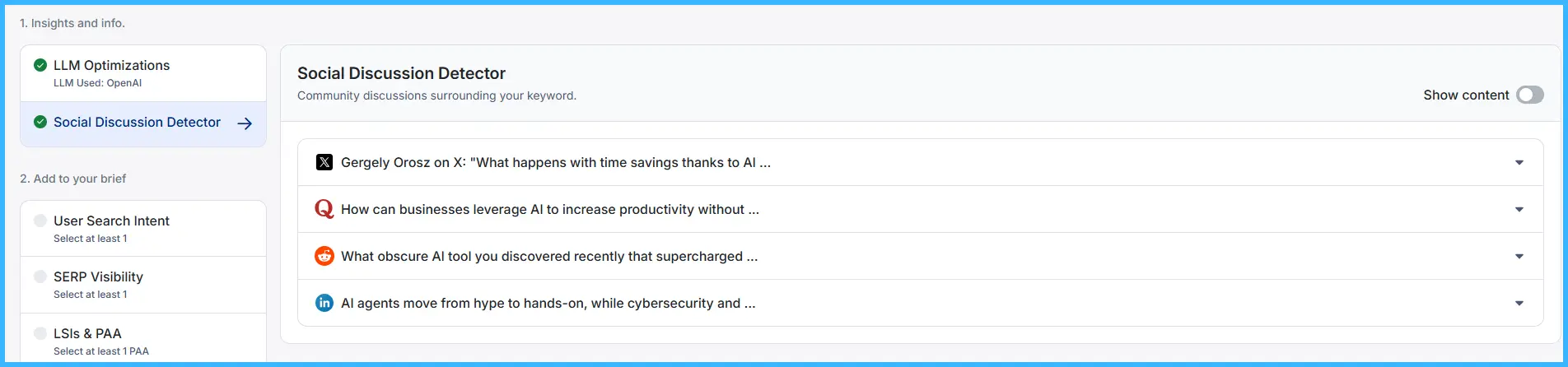
The Wellows AI search visibility platform surfaces real-time conversations across Reddit, LinkedIn, X, and Quora. It helps you spot trending discussions, locate active audiences, discover new seeding platforms, and join conversations LLMs learn from.
This feature helps you:
- Spot trending conversations around your topic
- Identify where your audience is already active
- Uncover new platforms for content seeding
- Join and publish in discussions LLMs are trained on
What are Common Issues in LLM Seeding?
Even though LLM seeding builds a strong foundation for AI visibility and performance, it comes with challenges. A frequent question is, what are common issues in LLM seeding?
The biggest hurdles include poor data quality, lack of domain coverage, and biased seeding sources that reduce the model’s reliability.
Many practitioners also ask, is LLM seeding related to data preparation? Yes, it is directly tied to how well you prepare and structure your information. If the preparation process is weak, the seeded data won’t provide consistent signals to the model, limiting its effectiveness.
Another recurring query is, does LLM seeding involve data input? Absolutely. Seeding is not passive, it requires active data input across platforms where LLMs gather content, such as discussion forums, research articles, and niche publications. Without consistent, high-quality input, models lack the authority signals they need.
These issues highlight a key reality: LLM seeding is only as effective as the quality, diversity, and placement of your data.
Addressing these challenges ensures that your brand’s signals are picked up by models like ChatGPT, Claude, and Perplexity, leading to stronger visibility in generative AI answers.
Read More Articles
- What are Generative Engine Visibility Factors?
- How to Strengthen Brand Signals for Generative Engine Optimization?
- How to Use Digital PR for Generative Engine Visibility for Your Brand?
- Editorial SEO Style Guide Creation with LLMs Checklist
- LLM Pattern Analysis Checklist
- E-E-A-T Strengthening SEO Checklist Using LLM Outputs
- How to Rank in Gemini: SEO for AI Search Visibility
FAQs
LLM seeding in AI means strategically placing structured, high-quality content where large language models can access and reuse it.
It’s about preparing your data so AI systems can summarize and surface your brand in responses.
Yes. LLM seeding directly ties into data preparation because it ensures your content is formatted, structured, and indexed in ways AI models can easily process.
Model training builds the underlying AI itself, while LLM seeding shapes what the model retrieves and cites after training.
Training teaches the model core knowledge; seeding influences the content it surfaces in real-world answers.
Yes. LLM seeding involves feeding domain-specific data, FAQs, or structured insights into platforms LLMs monitor, making it easier for them to incorporate your information into their responses.
Tools such as Google Search Console, schema markup generators, Reddit/Quora publishing, LinkedIn Articles, and GEO-focused monitoring tools like Wellows.
help optimize, track, and scale your LLM seeding efforts.
LLMs favor content that’s structured and easy to extract. The most effective include FAQs, comparison tables, first-person reviews, listicles, and free tools. Each of these formats is explained in detail above.
How LLM Seeding Transforms Content Strategy?
The way people find information is changing and your brand needs to be ready for it.
Users aren’t just Googling anymore. They’re asking ChatGPT, Gemini, Perplexity, and other LLMs to recommend tools, explain concepts, and summarize insights. And those models aren’t picking answers at random, they’re drawing from the places they trust most.
That’s where LLM seeding comes in.
By placing structured, brand-aligned content where LLMs already look, you’re shaping how your brand shows up in this new layer of search. It’s not about chasing traffic, it’s about earning presence in the answer itself.
Key Takeaways for the Role of LLM Seeding on Generative Engine Optimization
- LLMs don’t rely on backlinks, they rely on trusted patterns, sources, and structure
- AI search success starts with planting content in LLM-friendly formats and platforms
- Even without a click, a mention earns attention, recall, and long-term brand equity
- LLM citations level the playing field, it’s not about page rank, it’s about answer quality
- It’s early days, but brands investing now are training models for future visibility
To maximize your visibility across both AI answers and traditional SERPs, combine your LLM strategy with an SEO strategy built on user intent and social signals.
Content that answers user questions and generates engagement across platforms gains traction. This drives both algorithmic rankings and LLM citations.
LLM seeding isn’t an SEO trick. It’s a long game. And the sooner you start planting, the sooner your brand becomes part of the conversation. For a deeper dive into generative-first strategies.