Search behavior is shifting from rankings to AI-generated answers, changing how brands earn visibility across systems such as ChatGPT, Google AI Overviews, Gemini, and Perplexity.
This shift is why many companies now evaluate generative engine optimization agencies to strengthen their presence inside AI-generated responses.
Did you know?
As a result, generative engine optimization agencies focus on earning citations inside AI-generated responses rather than competing for rankings alone. AI systems summarize, filter, and reference sources directly, reducing the role of click-based visibility.
This guide examines how generative engine optimization agencies operate, what services they provide, and how leading firms support AI-driven visibility across systems like ChatGPT, Google AI Overviews, Gemini, and Perplexity.
- Compare the best generative engine optimization agencies and GEO companies based on AI visibility, citations, and real-world execution—not rankings.
- Agencies are evaluated using GEO-specific signals tied to retrieval behavior, citations, technical structure, and measurement.
- A GEO Capability Index summarizes how closely each agency aligns with AI retrieval and citation mechanics.
- The guide differentiates enterprise, B2B SaaS, content-led, and growth-focused GEO approaches.
- Use this list to shortlist agencies based on operational fit, not positioning claims.
- AI search is probabilistic, not deterministic. Agencies cannot guarantee citations because large language models decide sources dynamically based on context, authority, and reuse patterns. What agencies can control is baseline visibility, measurement, and consistency across AI systems.
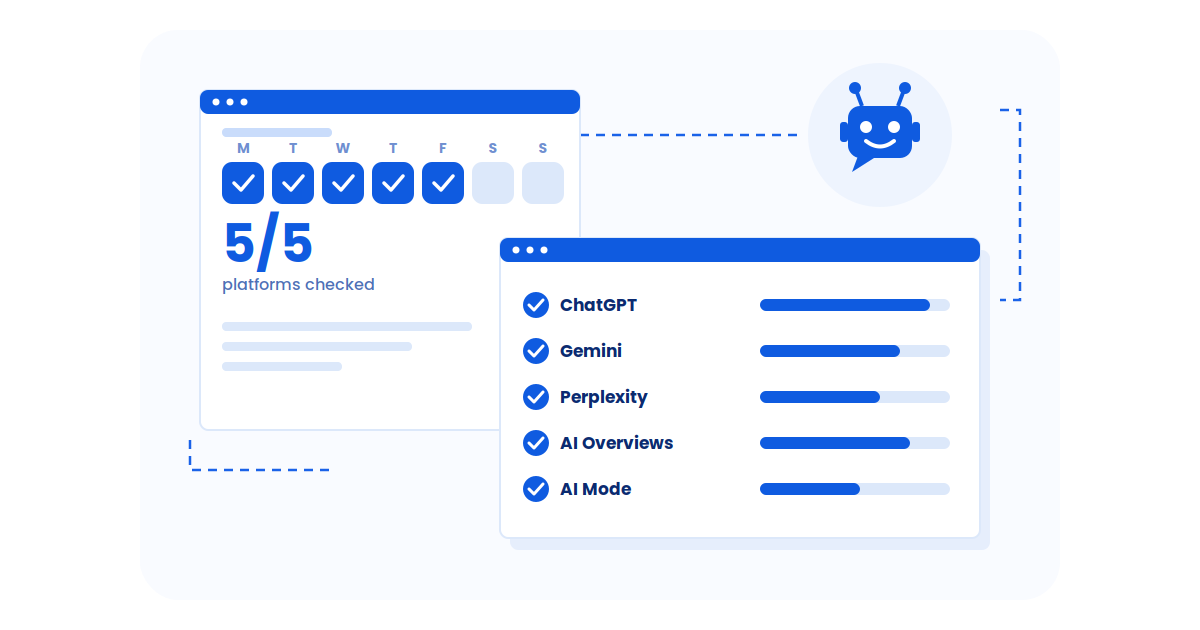
- How agencies can benchmark AI visibility: This is where Wellows supports agencies as an AI search visibility platform, helping them monitor citations across ChatGPT, Google AI Overviews, Gemini, and Perplexity, and translate AI visibility into reporting clients understand.
Start Your 7-Day Free Trial to benchmark visibility, track citations across major AI search systems, and ground agency selection or client strategy in real data.
What Services Do Generative Engine Optimization Agencies Provide?
Generative engine optimization agencies help brands improve visibility inside AI-generated answers across systems such as ChatGPT, Google AI Overviews, Gemini, and Perplexity.
Their work combines technical SEO, entity authority development, and AI retrieval optimization to increase the likelihood that brands are cited in AI-generated responses.
Common services offered by generative engine optimization agencies include:
These services are typically delivered by specialized GEO agencies, service providers, or AI search visibility partners.
- AI visibility audits across ChatGPT, Gemini, and Perplexity
- entity optimization and brand knowledge graph alignment
- structured content for LLM retrieval and summarization
- digital PR and third-party mentions that influence AI citation
- query fan-out content architecture and semantic topic coverage
- AI crawler accessibility improvements
- prompt-level visibility measurement
- AI citation tracking and reporting
Side-by-Side Comparison of Leading Generative Engine Optimization Agencies
This comparison highlights the top generative engine optimization (GEO) agencies and helps organizations evaluate which firms specialize in enterprise GEO, authority-driven GEO, or growth-stage AI visibility programs.
The table compares agencies across GEO capability, operating model, and the AI search systems they prioritize, including ChatGPT, Google AI Overviews, Gemini, and Perplexity. It also helps identify the best generative engine optimization agencies based on operating model and AI-search maturity.
Not all generative engine optimization agencies operate at the same level of scale, technical depth, or AI-search maturity. Some are built to support enterprise-grade AI retrieval across complex websites, while others focus on authority development, growth-stage visibility, or narrowly defined, AI-first GEO execution.
To keep comparisons consistent, agencies are categorized strictly by their GEO operating model — not by service breadth, marketing claims, or traditional SEO reputation.
Did you know?
- Enterprise GEO: Agencies designed for large-scale AI retrieval, entity authority, governance, and consistent citation across systems such as ChatGPT, Google AI Overviews, and Gemini.
- Mid-Market & Growth GEO: Agencies focused on scaling B2B SaaS and growth-stage brands through semantic authority, AI citation readiness, and integrated SEO→GEO execution.
- Authority & Thought Leadership GEO: Agencies centered on expert credibility, editorial trust, and source-worthiness, where AI visibility is driven by recognized authority rather than scale.
- Specialized GEO: Agencies executing targeted or AI-first GEO strategies, including entity trust building, structured content for LLMs, domain-specific optimization, or workflow-led experimentation.
The GEO Capability Index summarizes how closely each agency’s observable capabilities align with AI retrieval behavior, citation mechanics, and technical readiness across generative search systems. These scores reflect structural alignment — not rankings, guarantees, or client outcomes.
Capability indicates readiness for AI-driven discovery, not performance results.
| Agency | GEO Category | GEO Capability Index | Primary GEO Focus | Best-Fit Companies | AI Engines Emphasized |
|---|---|---|---|---|---|
| Go Fish Digital | Enterprise GEO | 85–90 | AI retrieval systems & entity authority | Large brands, regulated industries | ChatGPT, Google AI Overviews |
| Intero Digital | Enterprise GEO | 82–87 | Technical GEO & crawler readiness | Enterprise websites | Google AI, Gemini |
| iPullRank | Enterprise GEO | 82–87 | Relevance engineering & AI systems | Complex enterprise environments | ChatGPT, Google AI |
| Ignite Visibility | Enterprise GEO | 78–83 | Integrated SEO & AI visibility | Mid-market to enterprise | Google AI, ChatGPT |
| Siege Media | Authority GEO | 80–85 | Content authority & digital PR GEO | SaaS & editorial brands | Google AI Overviews |
| First Page Sage | Authority GEO | 80–85 | B2B authority & AI citations | B2B SaaS & services | ChatGPT, Google AI |
| Omniscient Digital | Authority GEO | 78–83 | Authority-driven GEO for B2B | B2B SaaS teams | ChatGPT, Perplexity |
| Victorious | Authority GEO | 77–82 | Authority-led GEO systems | High-growth brands | Google AI |
| Directive Consulting | Mid-Market & Growth GEO | 78–83 | Revenue-aligned GEO & demand capture | B2B SaaS | ChatGPT, Google AI |
| Flow Agency | Mid-Market & Growth GEO | 75–80 | Topic authority & content depth | B2B SaaS | ChatGPT |
| Exalt Growth | Mid-Market & Growth GEO | 74–79 | Entity-based GEO execution | Growth brands | Google AI |
| NoGood | Mid-Market & Growth GEO | 75–80 | Experimentation-led AI visibility | Growth-stage teams | ChatGPT, Perplexity |
| Perrill | Mid-Market & Growth GEO | 75–80 | SEO → GEO hybrid execution | Mid-market brands | Google AI |
| Growth Marketing Pro | Specialized GEO | 65–72 | Growth-driven SEO and content execution | Startups & growth-stage companies | ChatGPT |
| GenerateMore | Specialized GEO | 74–79 | AI-native GEO workflows | Content teams | ChatGPT, Google AI |
| 97 Switch | Specialized GEO | 72–77 | Niche authority & semantic GEO | SMBs | ChatGPT |
| Zozimus | Specialized GEO | 71–76 | Structured content & LLM consistency | Niche brands | ChatGPT |
- Go Fish Digital — enterprise GEO and AI retrieval research
- Intero Digital — technical GEO infrastructure and crawler readiness
- iPullRank — relevance engineering and semantic search modeling
- First Page Sage — B2B authority and thought leadership GEO
- Siege Media — research-driven content authority and digital PR
- Directive Consulting — demand-focused GEO for B2B SaaS companies
- Growth Marketing Pro — growth-focused SEO and content execution for startups
These agencies represent different approaches to generative engine optimization depending on company size, authority strategy, and AI visibility goals.
Most agencies listed here are based in the United States, which also makes this guide useful for buyers searching for top generative engine optimization agencies in the US.
How These Generative Engine Optimization Agencies Were Compared
This is not a paid ranking or sponsored list. These agencies were evaluated based on how they operate within AI-driven search environments, not on traditional SEO checklists, awards, or surface-level brand visibility.
The comparison focuses on how generative engine optimization agencies help brands appear inside AI-generated responses, where rankings are no longer the primary visibility signal. This aligns with how generative engine optimization functions across AI search systems that retrieve, interpret, and cite sources directly.
The same evaluation signals were applied to every agency to ensure consistency. This approach reduces marketing bias and highlights real operational differences in how agencies deliver AI search visibility across platforms such as ChatGPT, Google AI Overviews, and Perplexity.
AI search & LLM retrieval understanding: How well the agency understands how generative systems retrieve, score, and cite information across AI search platforms.
GEO measurement & KPI tracking: Ability to monitor AI visibility signals such as citations, prompt coverage, and cross-engine presence.
SEO and GEO workflow integration: Depth of alignment between traditional SEO foundations and AI-focused optimization practices.
Query fan-out & intent handling: How effectively the agency supports multi-intent discovery and AI-generated follow-up queries.
Brand authority & citation strategy: Approach to building trust signals, mentions, and consistent AI citations across sources.
Technical readiness for AI crawlers: Use of schema, semantic structure, and crawlable architecture for AI retrieval.
Process transparency & execution clarity: How clearly workflows, reporting cycles, and long-term governance are defined.
What Generative Engine Optimization Agencies Actually Do
A generative engine optimization agency helps brands improve how their content is retrieved, summarized, and cited inside AI-generated answers across systems such as ChatGPT, Google AI Overviews, Gemini, and Perplexity.
Generative engine optimization agencies are sometimes also called AI search visibility agencies, answer engine optimization (AEO) agencies, LLM visibility consultants, or generative engine optimization companies.
Some buyers also search for generative engine optimization companies, service providers, or GEO vendors. In practice, these terms usually refer to agencies or specialized teams that help brands improve AI visibility, citation likelihood, and cross-engine presence.
Unlike traditional SEO agencies that prioritize rankings and traffic, GEO agencies focus on improving visibility inside AI systems such as ChatGPT, Google AI Overviews, Gemini, and Perplexity.
Some AI SEO agencies still prioritize rankings, whereas GEO agencies focus on how brands are selected and cited inside AI-generated answers.
Some specialist agencies operate at the intersection of answer engine optimization (AEO) and generative engine optimization (GEO), particularly for B2B companies where AI-generated answers influence evaluation and buying decisions.
Their primary role is to align brand information with how AI systems understand, retrieve, and reuse knowledge through entities and relationships rather than standalone keywords. This is why entity-based content is foundational to AI search visibility.
To support AI retrieval, agencies apply operational practices that mirror how large language models process structured context.
While agencies handle strategy and execution, many teams also use generative engine optimization tools or AI visibility platforms to track citations across ChatGPT, Gemini, and Perplexity.
These practices depend on semantic clarity, internal consistency, and machine-readable structure, making structured data a core requirement for sustained inclusion in AI-generated responses.
Did you know?
Did you know?
Did you know?
Did you know?
Detailed Reviews of Leading Generative Engine Optimization Agencies
Each agency below is reviewed using the same evaluation criteria and grouped by GEO maturity and operating model.
Rather than ranking agencies, this section organizes them by how they typically support AI-driven visibility across enterprise environments, growth-stage teams, and specialized GEO use cases.
Use the tabs below to explore agencies based on organizational scale and GEO execution style.
Enterprise-Focused Generative Engine Optimization Agencies
These agencies operate in large-scale, regulated, or technically complex environments where AI retrieval accuracy, entity trust, and governance directly affect whether brands are cited inside AI-generated answers.
Go Fish Digital
Go Fish Digital is an enterprise-focused generative engine optimization agency that helps large brands secure visibility inside AI-generated answers. The agency works at the intersection of technical SEO, entity authority, and AI retrieval behavior, making it well-suited for environments where accuracy, trust, and compliance influence citation selection.

- Based in: United States
- GEO Specialization: Enterprise AI visibility and entity authority systems
- Core GEO Focus: Aligning large-scale content ecosystems with AI retrieval and citation logic
- Strengths: Patent-backed research, technical depth, governance-ready workflows
- Best For: Enterprises and regulated industries
- Unique GEO Differentiator: Applies proprietary research to influence AI citation mechanics rather than rankings
Intero Digital
Intero Digital approaches generative engine optimization from a technical-first perspective. Its work focuses on preparing enterprise websites for AI crawlers by improving crawlability, semantic structure, and large-scale content accessibility.
- Based in: United States
- GEO Specialization: Technical GEO and AI crawler readiness
- Core GEO Focus: Ensuring AI systems can access, interpret, and reuse enterprise content
- Strengths: Technical SEO depth, crawl simulations, large-site optimization
- Best For: Enterprise websites with complex architectures
- Unique GEO Differentiator: Strong alignment between technical SEO foundations and AI retrieval requirements
iPullRank
iPullRank operates at the enterprise end of generative engine optimization through relevance engineering and semantic intent modeling. The agency focuses on how AI systems evaluate relevance beyond keywords, especially in complex content environments.

- Based in: United States
- GEO Specialization: Relevance engineering and semantic GEO
- Core GEO Focus: Aligning semantic intent with AI relevance and citation evaluation
- Strengths: Advanced analysis, intent modeling, technical experimentation
- Best For: Complex enterprise organizations
- Unique GEO Differentiator: Treats AI relevance as an engineering problem, not a content volume issue
Ignite Visibility
Ignite Visibility integrates generative engine optimization into broader performance and SEO programs. The agency emphasizes coordinated visibility across search, AI answers, and demand channels.

- Based in: United States
- GEO Specialization: Integrated SEO and AI visibility
- Core GEO Focus: Maintaining brand presence across AI and traditional search systems
- Strengths: Multi-channel integration, analytics, enterprise execution
- Best For: Mid-market to enterprise organizations
- Unique GEO Differentiator: Treats AI visibility as part of full-funnel performance
Authority & Thought Leadership–Driven GEO Agencies
These agencies focus on positioning brands as trusted, reference-worthy sources for AI systems. Their GEO execution prioritizes expertise signals, independent validation, and editorial credibility that influence how large language models select and cite sources.
Victorious
Victorious applies an authority-first approach to generative engine optimization, emphasizing topical credibility and trust signals that influence AI citation behavior. Its GEO work builds long-term source-worthiness rather than short-term visibility gains.

- Based in: United States
- GEO Specialization: Authority-led GEO systems
- Core GEO Focus: Establishing brands as reliable AI citation sources
- Strengths: Topical authority, trust reinforcement, structured credibility
- Best For: High-growth and credibility-sensitive brands
- Unique GEO Differentiator: Treats authority as a prerequisite for AI inclusion
First Page Sage
First Page Sage focuses on thought leadership–driven generative engine optimization for B2B organizations. Its GEO execution aligns expert-led narratives with how AI systems surface authoritative explanations and decision-stage insights.

- Based in: United States
- GEO Specialization: B2B authority and thought leadership
- Core GEO Focus: Expert-driven AI citation eligibility
- Strengths: Credibility modeling, executive authority, narrative consistency
- Best For: B2B SaaS and enterprise services
- Unique GEO Differentiator: Aligns GEO with executive and expert signals
Omniscient Digital
Omniscient Digital approaches GEO through deep subject-matter authority, aligning content with how AI systems retrieve and reuse expert-level explanations. Its focus is on becoming a consistently referenced source across AI answers.

- Based in: United States
- GEO Specialization: Authority-first GEO execution
- Core GEO Focus: Source-worthiness for AI-generated answers
- Strengths: Editorial rigor, expert alignment, content consistency
- Best For: B2B SaaS teams
- Unique GEO Differentiator: Optimizes for repeat AI citation, not rankings
Siege Media
Siege Media applies authority-driven GEO through research-led content and digital PR. Its work increases the likelihood of AI inclusion by earning independent mentions and third-party validation that reinforce brand credibility.

- Based in: United States
- GEO Specialization: Content authority and earned media
- Core GEO Focus: Strengthening AI trust signals through citations
- Strengths: Research assets, editorial mentions, PR-backed authority
- Best For: Content-led SaaS and editorial brands
- Unique GEO Differentiator: Uses third-party validation to influence AI selection
Mid-Market & Growth-Oriented Generative Engine Optimization Agencies
These agencies support companies that are scaling authority, demand, and visibility across AI-driven search systems. Their GEO work typically balances content authority, intent coverage, and operational execution without the heavy governance requirements of large enterprises.
Directive Consulting
This evaluation of Directive Consulting as a generative engine optimization agency focuses on how its demand-led model aligns with AI-driven discovery and citation behavior.
Directive Consulting approaches generative engine optimization through a demand and revenue lens. Instead of treating AI visibility as purely informational, the agency aligns GEO execution with buyer intent, evaluation stages, and pipeline influence.

- Based in: United States
- GEO Specialization: Demand-led GEO and intent alignment
- Core GEO Focus: Capturing AI visibility at comparison and decision stages
- Strengths: Buyer-intent modeling, pipeline alignment, execution discipline
- Best For: B2B SaaS with sales-led growth
- Unique GEO Differentiator: Treats AI citations as a revenue-supporting channel
Flow Agency
Flow Agency emphasizes topic authority and content depth as the foundation of generative engine optimization. Its approach focuses on making brands contextually complete sources for AI-generated explanations.

- Based in: United States
- GEO Specialization: Topic authority and content-led GEO
- Core GEO Focus: Expanding topical completeness for AI reuse
- Strengths: Content structuring, intent coverage, semantic depth
- Best For: B2B SaaS and content-led brands
- Unique GEO Differentiator: Optimizes for context saturation rather than page-level wins
Exalt Growth
Exalt Growth focuses on entity-based generative engine optimization, helping brands strengthen how they are represented and recognized across AI systems through consistent entity signals.

- Based in: United States
- GEO Specialization: Entity-based GEO execution
- Core GEO Focus: Improving brand recognition and consistency in AI outputs
- Strengths: Entity alignment, semantic clarity, structured execution
- Best For: Growth-focused brands
- Unique GEO Differentiator: Focuses on entity recognition over keyword expansion
NoGood
NoGood blends generative engine optimization with experimentation and growth testing. Its approach emphasizes learning how AI visibility affects discovery, engagement, and downstream performance through continuous iteration.

- Based in: United States
- GEO Specialization: Experimentation-led GEO
- Core GEO Focus: Testing how AI visibility changes growth outcomes
- Strengths: Analytics, iteration, cross-platform testing
- Best For: Growth-stage and product-led teams
- Unique GEO Differentiator: Treats AI visibility as an experimentable growth lever
Perrill
Perrill delivers generative engine optimization as a practical hybrid of traditional SEO and emerging AI-focused practices. The agency supports brands transitioning gradually into AI-driven discovery.
- Based in: United States
- GEO Specialization: SEO-to-GEO hybrid execution
- Core GEO Focus: Gradual adaptation to AI visibility systems
- Strengths: Content foundations, technical balance, adaptability
- Best For: Mid-market brands
- Unique GEO Differentiator: Enables controlled transition without disrupting existing SEO programs
Specialized Generative Engine Optimization Agencies
These agencies focus narrowly on generative engine optimization rather than offering broad digital marketing services. Their work prioritizes AI-native workflows, domain-specific authority, or precision execution for brands that need focused GEO outcomes instead of full-scale marketing operations.
Growth Marketing Pro
Growth Marketing Pro operates as a growth-focused agency that combines SEO, content, paid media, and CRO to drive measurable business outcomes. While not a GEO-native agency, its emphasis on rapid execution, ROI-driven strategy, and content-led growth aligns partially with how brands build visibility across AI-driven search systems.
- Based in: United States
- GEO Specialization: Growth-driven SEO and content execution with partial AI visibility alignment
- Core GEO Focus: Scaling traffic, leads, and revenue through content and performance marketing
- Strengths: Fast execution, founder-led strategy, ROI-focused campaigns
- Best For: Startups and growth-stage companies seeking integrated SEO and paid acquisition
- Unique GEO Differentiator: Prioritizes revenue impact and rapid deployment over GEO-native technical depth
GenerateMore
GenerateMore represents an AI-native approach to generative engine optimization. The agency focuses on building repeatable workflows that allow teams to test, iterate, and operationalize AI visibility rather than committing to long-term authority programs from day one.

- Based in: United States
- GEO Specialization: AI-native GEO workflows
- Core GEO Focus: Experimentation and process-driven AI visibility
- Strengths: Workflow design, testing cycles, AI-assisted content
- Best For: Content teams and agencies
- Unique GEO Differentiator: Prioritizes operational scalability over authority signaling
97 Switch
97 Switch focuses on niche-focused generative engine optimization, helping smaller brands establish semantic authority within clearly defined verticals. Its GEO work emphasizes clarity, consistency, and relevance rather than volume or scale.
- Based in: United States
- GEO Specialization: Niche authority and semantic GEO
- Core GEO Focus: Strengthening contextual relevance for AI systems
- Strengths: Semantic alignment, niche positioning, focused execution
- Best For: SMBs and niche brands
- Unique GEO Differentiator: Optimizes for depth within narrow topical scopes
Zozimus
Zozimus approaches generative engine optimization through structured content and semantic consistency. Its work focuses on ensuring that AI systems can reliably interpret, summarize, and reuse brand content across multiple responses.
- Based in: United States
- GEO Specialization: Structured content and LLM consistency
- Core GEO Focus: Supporting AI chunking and reuse patterns
- Strengths: Content structuring, semantic clarity, consistency
- Best For: Niche and content-heavy brands
- Unique GEO Differentiator: Optimizes for repeatable AI summarization
How Some Leading GEO Agencies Compare
When comparing generative engine optimization agencies, differences in operating model, authority strategy, and technical depth determine which GEO company is the right fit.
For example:
- Go Fish Digital vs Intero Digital: Go Fish Digital emphasizes AI retrieval research and entity authority, while Intero Digital focuses more heavily on technical GEO infrastructure and crawler accessibility.
- Omniscient Digital vs Siege Media: Omniscient Digital focuses on B2B subject-matter authority, while Siege Media emphasizes research-driven content and digital PR signals.
- Directive Consulting vs Flow Agency: Directive aligns GEO with revenue and buyer intent, while Flow Agency prioritizes semantic topic depth and contextual authority.
These differences reflect how GEO agencies approach AI search visibility depending on organizational scale, industry focus, and growth model.
The 7 Criteria Used to Evaluate GEO Agencies
AI systems do not cite sources randomly. They rely on signals tied to relevance, context depth, technical clarity, and source consistency. The criteria below reflect how generative engines decide which brands and pages are referenced inside AI-generated responses.
Each criterion is applied consistently across all agencies to highlight operational differences in AI-driven search environments rather than marketing claims.
This evaluates whether agencies understand how AI systems retrieve, score, and cite information across platforms like ChatGPT, Google AI Overviews, Gemini, and Perplexity. Visibility depends on retrieval alignment, not rankings, which is why generative engine visibility factors matter.
- Context-window awareness: Content remains usable within limited LLM context windows.
- Retrieval logic: Pages align with AI extraction and citation behavior.
- Answer-first structure: Content prioritizes intent resolution over keywords.
Traditional SEO metrics do not show AI visibility. GEO agencies track citation-based signals aligned with how AI systems surface sources, supported by generative engine optimization KPIs.
- AI citation frequency: How often a brand appears in AI answers.
- Prompt coverage: Presence across relevant queries and follow-ups.
- Cross-engine visibility: Consistency across ChatGPT, Gemini, and Perplexity.
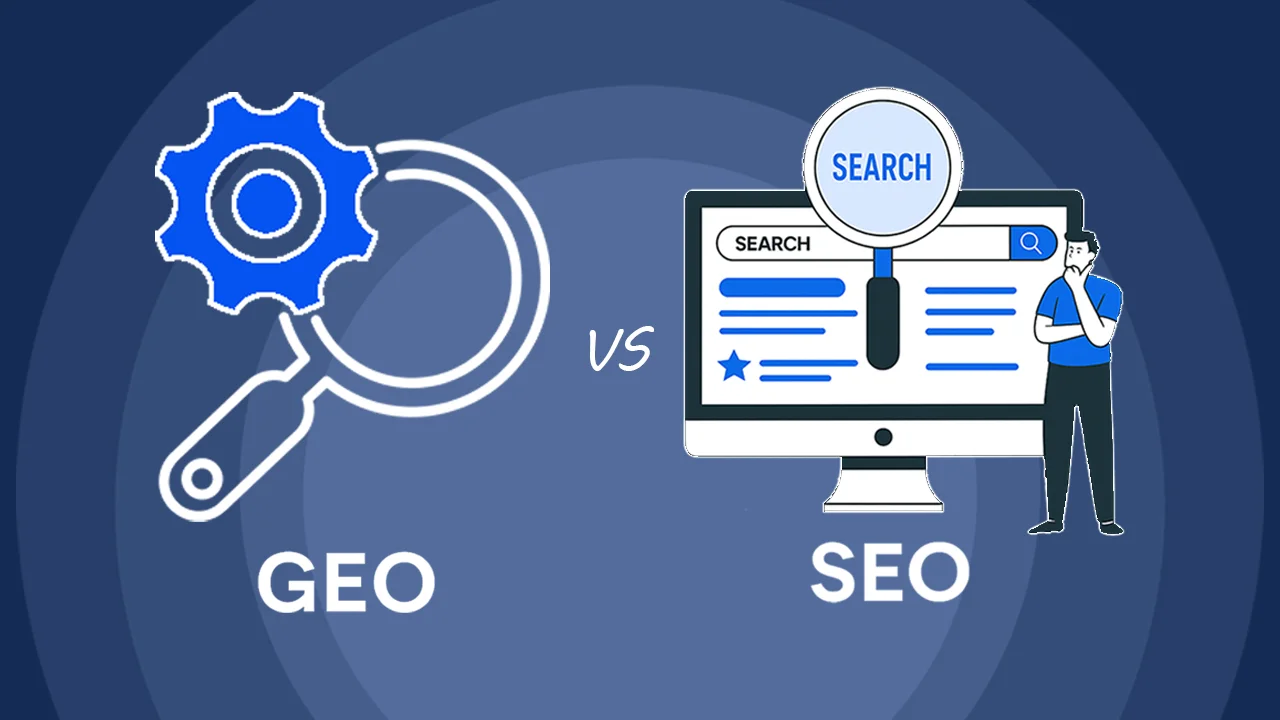
This separates SEO rebranding from true GEO execution. SEO targets rankings, while GEO focuses on AI selection and reuse, reflecting SEO versus GEO.
- SEO outcomes: Rankings and traffic.
- GEO outcomes: AI inclusion and citations.
- Integration depth: Alignment between SEO foundations and AI optimization.
AI systems expand single queries into multiple intents. Agencies must support this behavior to maintain visibility, which makes query fan-out a core GEO signal.
- Follow-up handling: Coverage beyond the initial query.
- Semantic breadth: Related concepts tied to the topic.
- Multi-stage relevance: Discovery through decision support.
AI systems infer trust from consistent brand references, not link volume. This is driven by brand signals rather than traditional backlinks.
- Digital PR: Credible third-party mentions.
- Entity consistency: Stable brand facts across sources.
- Citation reliability: Repeat inclusion in AI answers.
AI engines still rely on technical structure to interpret content. Agencies must ensure schema, semantics, and accessibility, supported by schema and NLP practices.
- Semantic markup: Clear entities and relationships.
- Crawl access: Reliable AI crawler access.
- Reusable structure: Content optimized for chunking.
GEO is ongoing, not one-time. Agencies must define workflows, reporting cycles, and governance aligned with content governance and long-term AI search engine visibility.
- The GEO Capability Index summarizes how closely an agency’s operations align with AI-driven discovery. It reflects capability alignment, not performance ranking.
- Retrieval readiness: Support for AI access and reuse.
- Citation consistency: Likelihood of repeat AI references.
- Technical structure: Schema and semantic readiness.
- Measurement depth: Tracking citations and prompt coverage.
How To Choose the Right Generative Engine Optimization Agency
Choosing a generative engine optimization agency depends on how your organization operates and where AI-driven visibility matters most. Agencies differ in technical depth, authority-building models, experimentation maturity, and revenue alignment.
The right fit depends on how closely an agency’s strengths align with your site complexity, growth stage, and reliance on AI-generated discovery rather than rankings alone.
-
- Enterprise-scale organizations: Go Fish Digital, Intero Digital, iPullRank
- B2B SaaS & high-consideration buyers: First Page Sage, Omniscient Digital, Directive Consulting
- Content-led and editorial brands: Siege Media
- Growth-stage & experimentation-driven teams: NoGood, GenerateMore
- Mid-market & hybrid SEO→GEO transitions: Perrill, Growth Marketing Pro
- Early-stage brands & growth-focused execution: Growth Marketing Pro
Questions To Ask Before Hiring a GEO Agency
Can the agency demonstrate how it measures AI visibility beyond rankings, including citations, brand presence, and prompt-level coverage, and whether it can audit brand visibility on LLMs before work begins?
Does the agency clearly explain why your site may not appear in AI-generated responses and how it resolves structural, authority, or retrieval issues that cause websites to be ignored by AI search?
How does the agency identify real AI queries, follow-up prompts, and intent expansions across systems like ChatGPT and Google AI Overviews?
Which GEO or AEO KPIs does the agency report, and how are those metrics tied to citations, brand exposure, and downstream impact rather than clicks alone?
What parts of GEO execution can be handled internally versus what requires specialized systems, tooling, or long-term operational expertise?
How does the agency adapt its methodology as AI models, retrieval behavior, and citation patterns evolve?
Common Mistakes Brands Make When Choosing GEO Agencies
Brands often evaluate GEO agencies using traditional SEO expectations. These assumptions limit AI search visibility because generative systems rely on different signals than rankings.
Assuming SEO rankings translate directly to AI visibility, despite clear gaps between rankings and LLM citations
Relying on outdated optimization beliefs that continue to reduce exposure, including search myths that cost visibility
Choosing agencies that repackage SEO services without addressing AI retrieval or citation behavior
Expecting immediate results from systems that depend on authority, consistency, and reuse over time
This baseline makes it easier to assess whether an agency’s strengths align with your current AI exposure and long-term visibility goals.
FAQs
Pricing varies based on scope, maturity, and technical complexity. Most generative engine optimization agencies operate on monthly retainers rather than one-time projects. Costs typically reflect the level of technical work, content depth, measurement requirements, and ongoing governance needed to support AI search visibility over time.
Pricing varies based on scope, technical depth, and reporting requirements. Enterprise generative engine optimization agencies typically operate on higher retainers due to governance and scale, while mid-market and specialized agencies offer narrower engagement models with lower monthly costs.
Most agencies share case studies focused on authority growth, content impact, or technical improvements rather than guaranteed AI citations. Because AI systems surface sources probabilistically, case studies usually demonstrate increased presence, consistency, or coverage across AI-generated responses instead of fixed rankings.
Yes. While ChatGPT and Google AI Overviews are commonly emphasized, GEO strategies also apply to other large language models such as Claude. The underlying principles, entity clarity, authority signals, and retrievable structure, remain consistent across generative systems.
Several agencies focus heavily on B2B environments where expertise, trust, and decision-stage visibility matter most. These agencies typically emphasize thought leadership, entity credibility, and long-term authority rather than short-term discovery tactics.
Yes, but results depend on underlying issues. Agencies often address gaps in structure, entity consistency, technical accessibility, and content depth. Improvements usually occur gradually as AI systems reassess and reuse updated sources over time.
Freelancers can support isolated tasks, but full-service agencies are better suited for coordinating content, technical structure, measurement, and governance together. GEO requires alignment across systems, which is difficult to manage through fragmented execution.
Traditional SEO agencies focus on improving rankings and traffic from search engines.
Generative engine optimization agencies focus on improving how brands appear inside AI-generated answers across systems such as ChatGPT, Google AI Overviews, Gemini, and Perplexity.
Instead of ranking positions, GEO agencies track signals such as AI citations, entity recognition, and cross-model visibility.
Yes. Some specialized or mid-market generative engine optimization agencies offer narrower engagements that cost less than enterprise retainers. Affordable options usually focus on specific deliverables such as AI visibility audits, structured content improvements, citation tracking, or entity optimization rather than full-scale governance across large websites.
You should consider hiring a generative engine optimization agency if AI-generated answers influence your industry, customer decisions, or brand discovery. Companies that rely on authority, trust, and visibility in ChatGPT, Google AI Overviews, or similar systems benefit most from GEO expertise.
Final Thoughts — Choosing the Right GEO Agency in 2026
In 2026, the best generative engine optimization agencies are those that combine AI visibility measurement, entity authority development, and cross-model consistency rather than relying only on ranking-based SEO KPIs.
GEO is a visibility strategy, not a tool or one-time tactic. Outcomes depend on how consistently an agency aligns content, structure, and authority with how AI systems retrieve and cite information. Hype and surface-level claims matter far less than operational depth and long-term execution.
- Agency fit matters more than positioning or labels
- AI visibility depends on authority, structure, and reuse over time
- Rankings alone do not reflect performance in AI-generated responses
- Sustained results come from repeatable processes, not short-term tactics