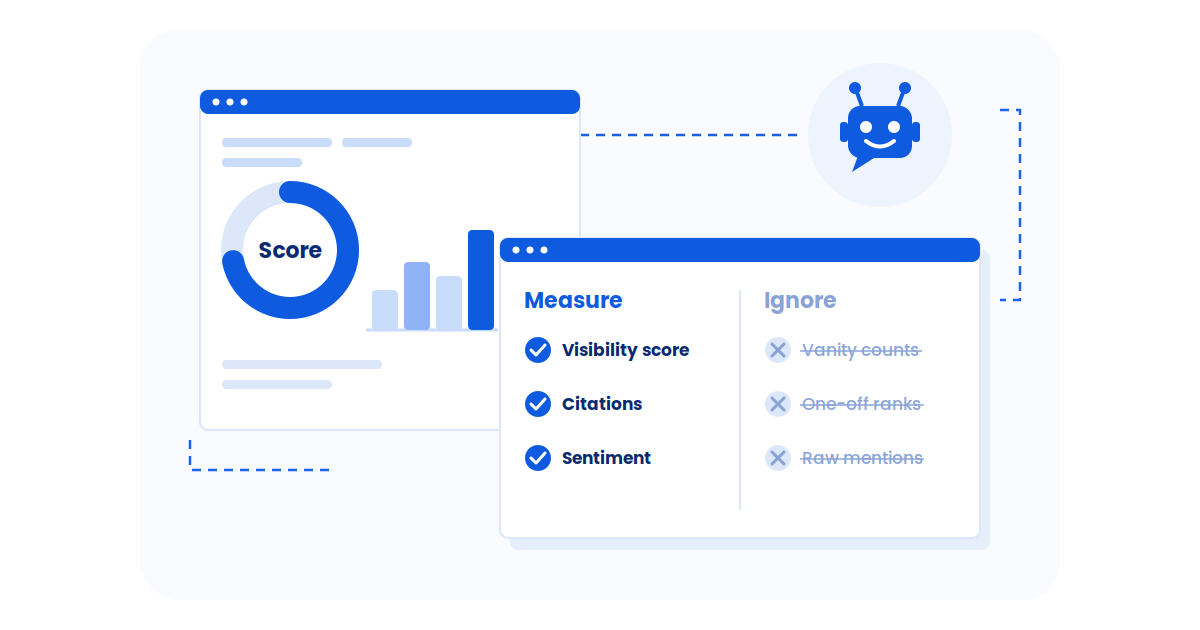
The way people discover brands has fundamentally changed, and so has search engine visibility. Google rankings still matter, but visibility today includes where your brand appears in SERPs and whether AI platforms like ChatGPT, Perplexity, and Gemini mention or cite you when users ask for recommendations.
Here’s the reality: 50% of consumers now use AI-powered search for buying decisions (McKinsey, 2025). AI engines drove 1.13 billion referral visits in June 2025, and by 2028, $750B in US revenue will flow through AI search.
That’s why search engine visibility is no longer just “ranking #1.” It’s about earning both rankings and references by becoming a trusted source across Google and AI discovery, starting with the right GEO query set. This guide shows you exactly how to measure and improve visibility in 2026.
TL;DR: Key Takeaways on Search Engine Visibility
- What Search Engine Visibility Actually Means: Search engine visibility measures how often your brand appears across modern search surfaces, Google rankings, SERP features, local listings, and AI answers (mentions/citations).
- Why Rankings Alone Aren't Enough: AI Overviews and answer engines reduce clicks even when you rank. Winning now requires both classic visibility (SEO) and citability (GEO), so you earn rankings and references.
- The Data That Matters: 86% of AI citations come from brand-controlled sources, websites, listings, and reviews (Yext, 2025). That means improving search engine visibility is largely about optimizing what you already control.
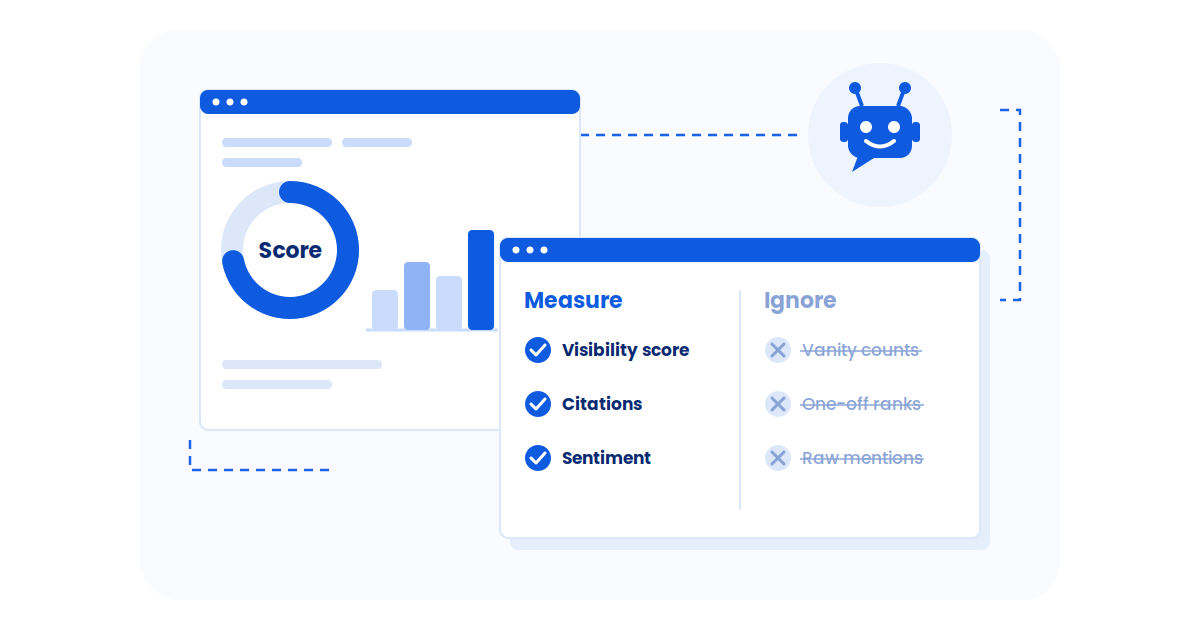
- How to Measure Success: Track a Visibility Score (rankings + SERP presence) alongside Citation Score (AI mentions/citations). Wellows helps measure and improve both.
Want to know your current Search Visibility + Citation Score?
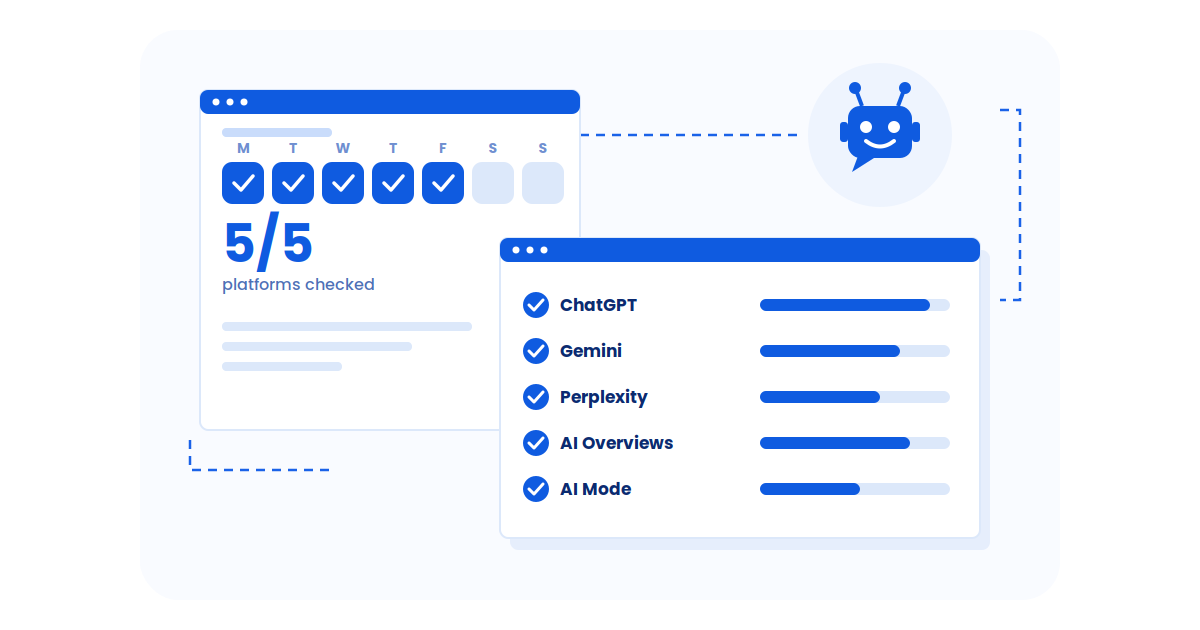
Wellows helps you track rankings and AI mentions across Google, ChatGPT, Gemini, and Perplexity in one dashboard.
5 Quick Wins to Boost Search Engine Visibility This Week
If you want to improve search engine visibility fast, you don’t always need a massive content overhaul. Small, high-leverage fixes can create immediate gains in rankings, SERP exposure, and even AI citability.
Here are five quick visibility wins you can implement this week in under an hour.
5 Quick Wins to Boost Visibility This Week
- 1. Fix Meta Descriptions (5 minutes): Meta descriptions don’t directly impact rankings, but they dramatically improve click-through rate (CTR). Higher CTR sends stronger engagement signals and increases your visibility score over time. Focus on your top-ranking pages first.
- 2. Add Internal Links to Top Pages (15 minutes): Internal linking helps Google understand your site structure and distributes authority to priority pages. Using an on-page seo checker can help identify which pages deserve links first based on crawlability, metadata strength, and internal link gaps. Add 3–5 contextual links from high-traffic posts to your most important landing pages or tools.
- 3. Update Publish Dates on High-Value Content (10 minutes): Refreshing outdated posts with new stats, examples, and a visible “Last Updated” date improves relevance signals. AI engines also prefer citing content that appears current and maintained.
- 4. Submit Your Sitemap in Google Search Console (2 minutes): If Google isn’t crawling your newest pages quickly, visibility suffers. Submitting an updated sitemap ensures search engines discover, index, and surface your content faster.
- 5. Optimize Your Homepage Title Tag (5 minutes): Your homepage is one of the most-cited and most-linked pages on your site. A clear, keyword-aligned title tag improves rankings and helps AI engines understand exactly what your brand represents.
What Is Search Engine Visibility and Why Should Marketers Care?
Search engine visibility measures how frequently and prominently your brand appears when people search, across traditional results (rankings, snippets, local packs) and AI-driven experiences (AI Overviews, ChatGPT, Perplexity, Gemini).
Unlike traditional reporting that focuses only on clicks and positions, modern search engine visibility also includes how often AI systems cite, reference, or recommend your content. For content marketing agencies, that’s where GEO (generative optimization) complements SEO: rankings help you get found, and citability helps you get referenced.
Then
Traditional SEO Era
➡️ Traffic goal = Maximum clicks to your website
➡️ Visibility metric = Search engine position
➡️ User journey = Browse 10 blue links, click multiple sites
Now
AI Search Era
➡️ Influence goal = Brand mentions in AI responses
➡️ Visibility metric = Citation Score across AI platforms
➡️ User journey = Get complete answer, zero clicks needed
How Is Search Visibility Calculated? (The Formula)
Search engine visibility is often misunderstood as “just rankings.” In reality, visibility is a mathematical estimate of how much search exposure your website earns across a keyword set based on ranking position + expected click-through rate (CTR).
Most SEO platforms calculate visibility using a simple idea:
Search Visibility Formula:
Visibility = (Estimated CTR × Search Volume) aggregated across tracked keywords
In other words, visibility answers the question:
“Out of all the clicks available in search results, how many is my site likely capturing?”
CTR-by-Position Breakdown (Why Rankings Don’t Equal Visibility)
Higher rankings earn disproportionately more clicks. That’s why visibility scores weight position #1 far more than position #7.
| Google Position | Average CTR Estimate | Visibility Impact |
|---|---|---|
| #1 | ~28–32% | Highest visibility capture |
| #2 | ~15–20% | Strong exposure |
| #3 | ~18.6% | Major visibility contributor |
| #4–5 | ~8–12% | Moderate visibility |
| #6–10 | ~2–6% | Low visibility share |
| Page 2+ | <1% | Minimal visibility |
Key takeaway: Visibility drops sharply after the top 3 results, which is why ranking improvements often create outsized visibility gains.
Example Calculation: Visibility Score in Action
Let’s make visibility tangible with a real example.
Imagine your site ranks #3 for the keyword:
- Keyword: “CRM software”
- Monthly search volume: 10,000 searches
- Estimated CTR at position #3: 18.6%
Visibility Example
If you rank #3 for “CRM software” (10,000 searches/month):
Visibility = 10,000 × 18.6% = 1,860 estimated clicks/month
That means your ranking doesn’t just represent “position #3″… it represents nearly 2,000 potential visits per month from that single query.
Traditional Visibility vs. AI Visibility (Rankings vs. Citations)
In 2026, visibility has expanded beyond Google clicks — it now includes whether your brand is cited in AI answers, including the moments you rank in Perplexity for recommendation-style prompts.
Rankings still drive exposure, but AI engines now shape discovery through citations and recommendations.
| Visibility Type | Traditional SEO Visibility | AI Search Visibility |
|---|---|---|
| Measured By | Rankings + CTR potential | Mentions + citations in AI answers |
| Where It Happens | Google SERPs, snippets, local pack | ChatGPT, Gemini, Perplexity, AI Overviews |
| Main Outcome | Traffic capture | Influence + brand recommendation |
| Optimization Focus | On Page SEO Checklist fundamentals + SERP features | Citability, entity trust, structured facts |
Bottom line: Traditional search visibility measures your share of clicks. AI visibility measures your share of references. Winning brands optimize for both.
Measure Visibility the Modern Way
Tracking rankings alone misses AI-driven discovery. Wellows measures both Google visibility and AI citation performance automatically.
How is Visibility different from SEO Rankings?
Think of traditional SEO as competing for storefront real estate on a busy street. AI search visibility (GEO) is about becoming the local expert that the tour guide recommends to every visitor by aligning with AI trust and relevance signals.
The fundamental difference is intent and outcome.
Goal: Drive traffic to your website
Success Metric: Rankings, impressions, click-through rates (CTR)
Content Strategy: Keyword targeting, title tags, and meta descriptions optimized for human clicks
Timeline: 3-6 months for ranking improvements
User Behavior: Browse multiple search results, compare options, click several links
Goal: Earn citations and brand mentions in AI responses
Success Metric: Citation frequency, mention sentiment, share of voice
Content Strategy: Comprehensive depth, conversational clarity, quote-worthy facts
Timeline: Days to weeks for citation inclusion (instant surfacing)
User Behavior: Receive synthesized answer, trust AI’s recommendation, rarely click links
The Citation Economy Versus the Traffic Economy
We’ve moved from a traffic economy (where success = website visits) to an influence economy (where success = being cited as the definitive source).
Why This Shift Matters
When ChatGPT or Gemini cites your brand in response to 100 user queries, you’ve influenced 100 purchase decisions, even if only 5 people click through to your site. Traditional analytics can’t capture this brand-building value.
Consider this scenario:
Scenario A: Your article ranks #1 for “best CRM software” and gets 1,000 clicks/month
Scenario B: ChatGPT cites your brand in 500 AI responses about CRM tools with 50 click-throughs
Which is more valuable?
Scenario A delivers immediate, measurable traffic. Scenario B builds long-term brand authority, influences decisions at the moment of inquiry, and compounds over time as AI models reinforce your expertise.
The strategic answer: You need both. Traditional SEO drives traffic. AI visibility builds authority. Together, they create comprehensive digital dominance.
For early-stage companies, the citation economy is particularly high-stakes. A startup that earns consistent mentions in Perplexity or ChatGPT answers for its category can build brand recognition at a pace that organic rankings alone wouldn’t support. Teams that actively track AI citations as a startup can identify which content or third-party sources are driving those mentions — and replicate that pattern across their content pipeline before better-funded competitors close the gap.
How to Measure Search Engine Visibility (Rankings + AI Mentions)?
You can’t improve what you don’t measure, which is why agencies use LLM audits for SEO to benchmark brand mentions, citation frequency, and share of voice across AI platforms over time. Traditional analytics tools like Google Analytics track only clicks, missing 95% of AI interactions where users get answers without visiting websites.
Introducing the Citation Score: Your New North Star Metric
Wellows pioneered the Citation Score, a unified metric that aggregates your brand’s performance across all major AI platforms into a single, trackable KPI.
The Five Essential AI Visibility Metrics
Tracking AI Visibility at Scale With Wellows
Manual testing, asking ChatGPT and Perplexity your industry questions, and logging the results, provides basic visibility snapshots. But without a systematic approach or a Perplexity Visibility Tracker to monitor patterns over time, this method quickly becomes unsustainable at scale.
Wellows research tracking 847 brands shows that companies using automated monitoring achieve 2.3x faster Citation Score improvement than those relying on manual spot-checks.
Here’s why:
Automated AI Visibility Tracking (Wellows)
- ✅ 100+ queries tracked automatically daily/weekly
- ✅ 5+ platforms monitored simultaneously (ChatGPT, Perplexity, Gemini, Claude, AI Mode)
- ✅ Historical trend analysis with automated alerts for changes
- ✅ Competitive intelligence tracking competitor citations
- ✅ Revenue attribution connecting AI mentions to conversions
- ✅ 30 minutes/month time investment (review dashboards)
Manual Testing Approach
- ❌ 10-20 queries/month maximum (time-intensive)
- ❌ 2-3 platforms realistically manageable
- ❌ Manual spreadsheet maintenance is prone to errors
- ❌ No competitive tracking at scale
- ❌ No unified metrics like Citation Score
- ❌ 8-10 hours/month time investment
For teams managing multiple brands, the agency workspace in Wellows organizes each client into its own project with separate competitor sets, regions, tracked prompts, and LLM coverage — so the visibility metrics shown in your client report map directly to the prompt universe you’ve defined for that account, rather than a generic crawl.
10 Practical Strategies to Improve Search Engine Visibility
Optimizing for AI search demands a systematic approach grounded in how AI models actually process and cite information, mirroring the way agencies deliver AI search visibility across multiple generative platforms. Here are the evidence-based tactics that move the Citation Score needle.
10 Proven Strategies to Boost Your AI Search Visibility
1. Target Long-Tail, High-Intent Queries
When most marketers start keyword research, they chase high-volume head terms like “CRM software.” But those terms often have massive competition, meaning you have almost zero chance of ranking, even with great content.
That’s why long-tail queries are visibility gold. They’re less competitive, more specific, and more aligned with AI-style search questions.
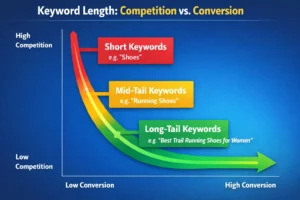
Example: Targeting “Semrush vs Ahrefs” is far easier than targeting “SEO tools,” and can drive a much higher visibility share.
Why it works: Long-tail keywords help you crack the top 3 results faster and earn AI citations for specific buyer questions.
2. Check Your Website's Mobile-Friendliness
Since most searches happen on phones, mobile usability is no longer optional. A slow or broken mobile experience directly reduces rankings and visibility.
Implementation: Use tools like PageSpeed Insights or WebPageTest to confirm your site is mobile-friendly and fast.
3. Improve Your Title Tags and Meta Descriptions
Even if you rank well, your visibility score depends on whether users actually click your result.
Write title tags that grab attention without clickbait, and meta descriptions that clearly sell the benefit of the page using proven on-page SEO Checklist fundamentals.
Why it matters: Higher CTR leads to more traffic, stronger engagement signals, and improved search visibility.
4. Earn Backlinks From Relevant Sites
But not just any backlinks. Links from websites in your niche carry far more weight than random mentions from unrelated industries.
Example: An SEO blog linking to your SEO content helps far more than a fitness site linking to the same page.
Action: Focus on building authority within your topic ecosystem.
6. Improve Pages Stuck on Page 2
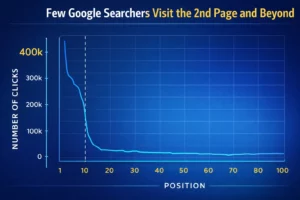
That means moving a page from position #12 to #7 can massively increase visibility.
Implementation: Use Google Search Console to find keywords where you rank on page 2, then upgrade those pages with:
- Better intent alignment
- More depth and examples
- Updated visuals or data
Small improvements here often deliver the fastest ranking wins.
7. Add Semantic (LSI) Keywords Naturally
A simple way to find semantic keywords is to search your target keyword in Google Images and review the suggested tags.
Note: Don’t force awkward terms. Natural entity-rich language improves visibility without sounding robotic.
8. Internally Link Between Your Best Pages
Find pages with strong authority and backlinks, then link from them to priority pages that need more ranking power.
Example: A high-authority “Link Building Guide” can internally push visibility to your product or service pages.
Why it works: Internal links help Google crawl, understand, and rank your site more effectively.
9. Run Regular SEO Audits
If Google can’t crawl or index your site properly, rankings will suffer even if your content is outstanding.
Use audit tools to uncover:
- Broken links
- Indexing errors
- Slow Core Web Vitals
- Duplicate content
Action: Fix technical issues before investing heavily in new content.
10. Expand Your SERP Real Estate
You can also take up more space in search results through:
- Featured snippets
- Sitelinks
- People Also Ask placements
- Video and tool results
Example: Adding a table of contents can help Google generate sitelinks, increasing your SERP footprint.
Bottom line: More SERP real estate = more clicks + more visibility.
What Are the Main Reasons a Website Has Low Search Visibility?
Low search visibility doesn’t happen randomly. In most cases, it’s the result of weak content signals, technical SEO barriers, missing authority, or poor entity trust across the web.
In 2026, visibility loss is even more costly because it impacts not only Google rankings, but also whether AI engines like ChatGPT, Gemini, and Perplexity choose to cite or recommend your brand.
Below are the most common reasons websites struggle with low search visibility, categorized by the factors that matter most.
The Top Reasons Websites Have Low Search Visibility
1. Content Issues (Relevance, Depth, and Intent)
- Thin or low-value content: Pages that offer shallow explanations or generic summaries fail to compete against comprehensive resources.
- Search intent mismatch: If your content targets keywords but doesn’t answer the actual question users are asking, visibility drops even if you rank briefly.
- Outdated or stale information: Content that hasn’t been refreshed with current examples, updated stats, or new sections loses relevance over time.
Fix: Publish content that fully answers the query, aligns with intent, and stays updated to remain the best result available.
2. Technical SEO Failures (Crawlability and Indexing)
- Slow site speed: Poor Core Web Vitals reduce rankings and increase bounce rates, which harms visibility across SERPs.
- Lack of mobile optimization: Sites that don’t deliver smooth mobile experiences lose exposure quickly.
- Indexing and crawl issues: Incorrect robots.txt rules, broken canonical tags, or accidental
noindexdirectives can prevent pages from appearing at all. - Broken links and weak architecture: 404 errors, redirect loops, and poor internal linking make it harder for search engines to understand and surface your site.
Fix: Run regular technical audits to ensure your site is discoverable, fast, and structurally clean.
3. Weak Authority and Trust Signals
- Limited backlink credibility: Without mentions or links from trusted external sources, search engines have fewer signals that your site deserves visibility.
- New or unestablished domains: Newer sites often struggle because they lack historical authority and topical depth.
- Inconsistent entity presence: AI engines rely heavily on entity trust. If your brand information is inconsistent across listings, directories, and reviews, visibility suffers.
Fix: Build authority through expert content, third-party mentions, and consistent brand signals across the web.
4. SERP Feature and AI Visibility Gaps
- No optimization for SERP features: If competitors own featured snippets, People Also Ask, or local packs, your rankings may not translate into real visibility.
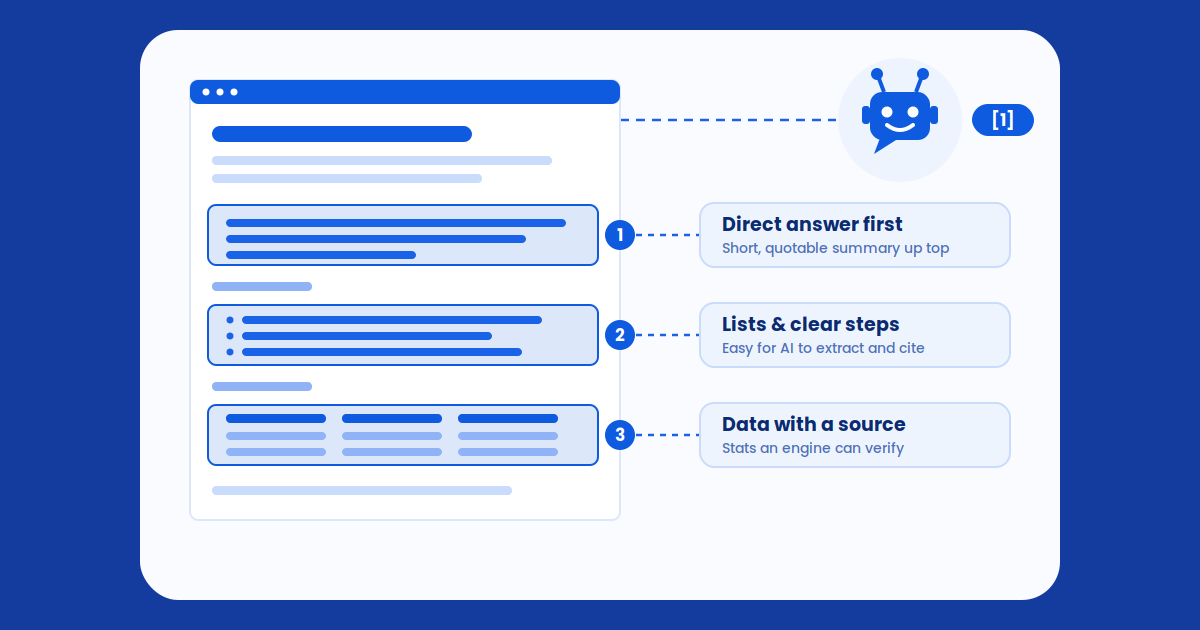
- Low AI citability: Content that lacks structured facts, clear definitions, or schema markup is harder for AI engines to cite confidently.
Fix: Structure content for snippets, add FAQ/HowTo schema, and write in clear, quotable formats AI systems can reference.
5. Algorithm Shifts and Competitive Pressure
- Google core updates: Visibility can drop suddenly if your site doesn’t align with evolving quality guidelines around expertise and trust.
- Stronger competitors: Often, the issue isn’t a penalty, it’s that competitors publish deeper, more authoritative resources.
- Risky SEO practices: Keyword stuffing, link manipulation, or low-quality automation can trigger long-term suppression.
Fix: Focus on sustainable visibility through quality, trust, and continuous improvement rather than shortcuts.
What Tools Can Track and Improve AI Search Visibility?
The AI visibility tooling ecosystem exploded in 2025, with 22+ specialized platforms emerging to address the unique challenge of monitoring brand performance across AI-powered search engines.
Below is a practical comparison of leading platforms that track visibility across both Google search and AI engines like ChatGPT, Gemini, and Perplexity.
| Platform | Pricing (Starting) | Tracks Google Rankings | Tracks AI Mentions & Citations | Best For | Limitations |
|---|---|---|---|---|---|
| Wellows | Custom (SaaS + Enterprise) | ✅ Yes | ✅ Yes (Full Coverage) | Unified visibility tracking, Citation Score, competitive AI intelligence for SaaS and B2B brands | Does not replace traditional backlink crawlers or general-purpose SEO suites like Ahrefs/Semrush |
| Profound | Enterprise pricing | ✅ Yes | ✅ Yes | Large brands tracking AI share of voice and citations at scale | Less accessible for smaller teams due to high cost and complexity |
| SE Ranking | ~$55/month | ✅ Yes | ✅ Partial | Traditional SEO teams wanting rank tracking plus basic AI Overviews monitoring | Limited citation-level visibility compared to GEO-native platforms |
| Siftly | Mid-tier GEO pricing | ✅ Limited | ✅ Yes | Brands focused primarily on AI mention monitoring and GEO recommendations | Not a full SEO platform for rankings, audits, or technical SEO workflows |
| Otterly.ai | ~$29/month | ❌ No | ✅ Yes | Affordable AI citation and mention tracking for startups and creators | No traditional Google visibility or SERP feature reporting |
| LLMrefs | Varies by usage | ❌ No | ✅ Yes | Tracking brand mentions across 10+ AI models with competitor comparison | Does not provide SEO ranking improvements or content optimization workflows |
| Atomic AGI | Analytics-based pricing | ✅ Limited | ✅ Yes | Attribution and traffic insights from AI engines to business outcomes | More focused on analytics than visibility optimization or citation scoring |
Wellows is built for teams who want rankings + AI citations in one platform.
See pricing plans designed for SaaS, B2B, and enterprise visibility tracking.
FAQs
The best modern SEO platforms combine traditional ranking improvements with AI visibility reporting. <strong>Wellows</strong> leads this category by tracking Google search performance alongside Citation Score growth across ChatGPT, Gemini, Perplexity, and AI Overviews. This unified approach helps brands improve both rankings <em>and</em> AI-driven discovery in one system.
Entity-first visibility tools prioritize how search engines and AI models recognize your brand as a trusted entity, not just how many backlinks you earn. <strong>Wellows</strong> focuses on entity trust signals, citation-worthiness, and knowledge graph presence, helping brands win visibility through recognition and authority rather than link volume alone.
Visibility today requires dual optimization: SEO for Google rankings and GEO for AI citations. <strong>Wellows</strong> is designed specifically for this combined strategy, helping teams optimize content structure, entity clarity, and citation signals so pages perform across both search engines and LLM-driven answers.
For SaaS companies, AI engines increasingly influence comparison and buying decisions. <strong>Wellows</strong> is built for SaaS and B2B brands to track competitor citation gaps, improve decision-query visibility, and earn AI recommendations across high-intent software searches.
Conclusion
Search engine visibility has evolved from a “rankings game” into a rankings + references reality. Yes, Google positions still matter, but visibility now also includes whether AI systems like ChatGPT, Gemini, and Perplexity mention, recommend, or cite your brand when people ask questions, often without ever clicking a result.
That’s why the goal in 2026 isn’t just “get to page one.” It’s to become the most trusted answer across every surface where decisions are made: classic SERPs, SERP features, and AI-generated responses.