On-page SEO is the process of optimizing individual web pages to improve their visibility, relevance, and rankings in search engines. It includes optimizing content, title tags, meta descriptions, headings, internal links, images, and HTML structure.
Unlike off-page SEO, which focuses on backlinks and authority signals, on-page SEO deals with elements you directly control on your website. When properly implemented, it helps search engines understand what your page is about and match it to the right search queries.
In this complete guide, you will learn what on-page SEO is, why it matters, the most important on-page SEO factors in 2026, and how to optimize your pages step by step.
This guide breaks down how on-page SEO works today, and how to optimize your pages so they rank well, stay relevant, and are easier for AI systems to understand and reference.
What is On-page SEO?
On-page SEO refers to the optimization of page-level elements that influence rankings and user experience and attract relevant traffic. It focuses on elements you control on the page itself, such as content quality, search intent, keyword usage, headings, internal links, images, and HTML structure.
The goal is to help search engines clearly understand what the page is about and why it is useful. Today, on-page SEO also includes structuring content clearly so search engines and AI systems can interpret and summarize it accurately.
When done right, on-page SEO improves visibility in traditional search results and increases the chances of your content being used in AI-generated answers.
What is the Difference Between On-Page SEO and Off-Page SEO?
On-page SEO focuses on optimizing elements within your website to improve relevance, clarity, and user experience. Off-page SEO, on the other hand, involves external signals that build authority and trust beyond your site.
Tools that help you automate seo outreach bridge on-page efforts with off-page visibility by scaling external promotion and linking campaigns that reinforce your optimized content.
Both work together, on-page SEO helps search engines understand your content, while off-page SEO helps them trust it. Below I have shared
7 Key Differences Between On-Page SEO and Off-page SEO:
| Factor | On-Page SEO | Off-Page SEO |
|---|---|---|
| Primary focus | Optimizing content and page elements | Building authority through external signals |
| Key components | Content quality, keywords, and structure | Backlinks, mentions, and citations |
| Control level | Fully under your control | Partially under your control |
| Link strategy | Internal linking between related pages | External links from other websites |
| User experience | Page speed, mobile usability, readability | Indirect impact through trust and reputation |
| Search engine role | Helps engines understand relevance | Helps engines assess authority |
| Ranking impact | Influences relevance and engagement signals | Influences trust and domain strength |
On-Page SEO vs Technical SEO
On-page SEO focuses on optimizing content and page-level elements such as headings, keywords, internal links, and metadata.
Technical SEO focuses on backend infrastructure, including crawling, indexing, site architecture, structured data, and server performance.
Both are essential, but on-page SEO ensures your content is relevant, while technical SEO ensures it can be properly discovered and indexed.
What are the Key Elements of On-page SEO?
On-page SEO includes all the elements on a webpage that help search engines and AI systems understand, rank, and present your content. These elements work together to improve relevance, usability, and clarity.
Content Quality and Relevance: High-quality, original content that satisfies the target query and fully covers the topic is one of the most important search engine ranking factors. Clear explanations, natural keyword usage, and topical depth help search engines and AI systems understand the page’s purpose.
HTML Elements: Clean and well-structured HTML makes content easier to crawl and interpret. Proper use of heading tags, paragraphs, and semantic markup improves accessibility and clarity.
Meta Data: Title tags and meta descriptions influence how your page appears in search results. Well-written metadata provides context, improves click-through rate, and aligns the page with user intent.
Page Structure: A clear hierarchy using H1, H2, and H3 tags improves readability and topical organization. Strong structure helps users scan content and helps search engines map the page accurately.
Internal Linking: Internal links connect related pages, distribute authority, and guide users to additional information. They also help search engines understand topic relationships across your site.
URL Structure: Clean, descriptive URLs reinforce relevance and improve usability. Short, readable slugs help both users and search engines understand the page before clicking.
Images and Media Optimization: Optimized images with descriptive file names and alt text support accessibility and context. Proper compression improves page speed and overall experience.
Page Experience and Performance: Factors such as page speed, mobile responsiveness, and visual stability affect how users interact with content. Strong performance supports rankings and engagement.
If you prefer a quick overview before diving deeper, here is a practical on-page SEO checklist for 2026 that summarizes the most important optimization steps.
On-Page SEO Checklist for 2026 (Audit & Optimization Guide)
This on-page SEO checklist and recommendation framework helps streamline page audits and highlights the most important actions to improve rankings, content clarity, and search visibility.It focuses on practical checks that improve rankings, content clarity, and overall search visibility.
☐ Primary keyword matches search intent.
☐ Title tag and H1 are aligned and clearly describe the page.
☐ Page uses a clear H1, H2, and H3 structure.
☐ Content fully covers the topic and related sub-questions.
☐ Keywords and related terms are used naturally.
☐ URL slug is short, descriptive, and keyword-focused.
☐ Internal links point to and from relevant pages.
☐ Outbound links support credibility and context.
☐ Images are compressed with descriptive alt text.
☐ Page is mobile-friendly and easy to read.
☐ Load speed and Core Web Vitals are acceptable.
☐ Content is updated with fresh examples or data.
☐ Sections provide clear answers before deeper explanations.
How To Do On-Page SEO Step-by-Step (11 Practical Strategies for 2026)
This step-by-step on-page SEO process helps you improve rankings, increase visibility, and align content with search intent.
On-page SEO works best when approached as a clarity and usefulness exercise, not a mechanical checklist. Each optimization should help users understand your page faster and help search engines interpret it more efficiently.
Below are 11 practical steps that show how to do on-page SEO effectively, with clear examples and actionable tips you can apply immediately.
1. Start With Search Intent, Not Keywords
Search intent defines what the user expects to see when they type a query. If your page does not match that expectation, no amount of keyword optimization will help it rank long-term.
Using tools such as an on-page SEO checker can help you quickly identify intent mismatches and optimization opportunities by analyzing your page against top competitors.
Begin by studying the top-ranking pages for your target keyword. Look at their format, depth, and angle. Are they guides, lists, comparisons, or definitions? Your page should follow the same intent while improving clarity and completeness.
Example: For the query “on-page SEO checklist,” users want actionable steps, not theory. A long essay without clear steps will struggle, even if it is well written.
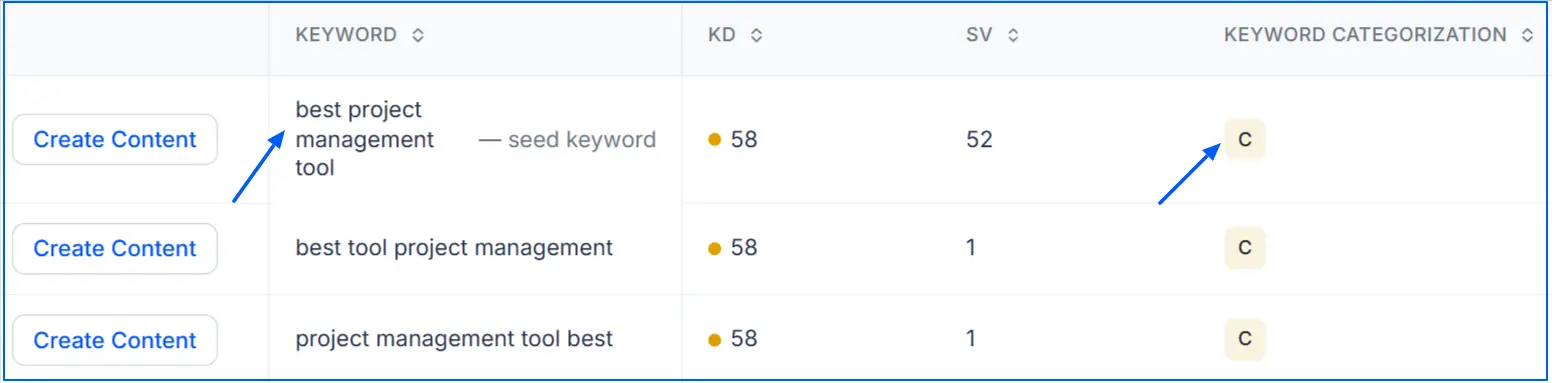
Tip: Use Wellows to analyze user search intent before creating or updating a page. Wellows shows how a keyword is being interpreted across search results, including whether the dominant intent is informational, transactional, or navigational.
For example, when I entered best project management tool in the seed keyword, Wellows showed that it is a commercial keyword.
2. Align the Title Tag and H1
The title tag and H1 act as the main labels for your page. When they are aligned, search engines and users immediately understand what the page offers.
Your title tag should be compelling and click-friendly, while your H1 should clearly state the topic. They should support each other, not compete or confuse.
Good example:
Title tag: How to Do On-Page SEO (Step-by-Step Guide)
H1: How to Do On-Page SEO for Your Website
This alignment reduces the chances of Google rewriting your title and improves relevance signals.
Tip: Avoid using different keywords for the title and H1 unless the intent is exactly the same. Misaligned wording can confuse search engines about the page’s primary focus and increase the chances of your title being rewritten in search results.
Meta descriptions should summarize the page clearly in 150–160 characters and improve click-through rate. Proper title tag and meta description optimization helps search engines understand your page and increases visibility in search results.
3. Optimize URL Slugs
URL slugs help search engines and users understand a page before it’s even opened. A clean, descriptive URL reinforces relevance and improves click confidence.
Keep URLs short, readable, and focused on the main topic. Avoid unnecessary folders, numbers, or parameters unless they serve a clear purpose.
Example:
❌ example.com/blog/post?id=123
✅ example.com/on-page-seo-guide
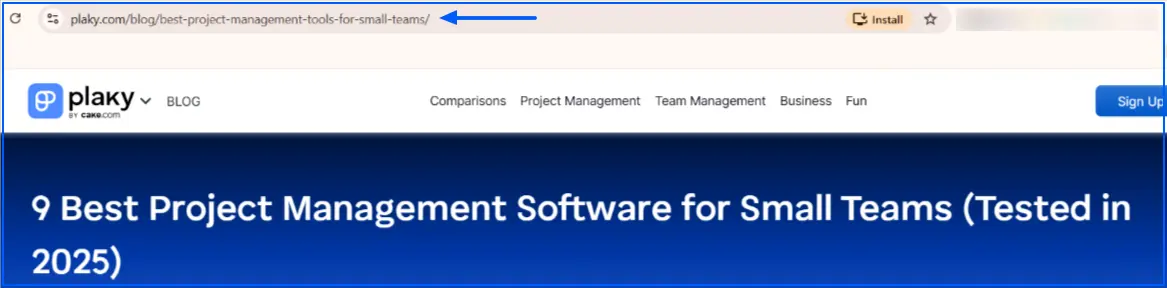
Tip: Include the primary keyword in the URL, but remove filler words. If the URL can be read out loud and still make sense, it’s doing its job. For example, this website has used exact primary keyword in the URL.
4. Structure the Page With Clear Headings
Headings break content into digestible sections and act as signposts for search engines. A clear hierarchy helps machines and humans scan the page efficiently.
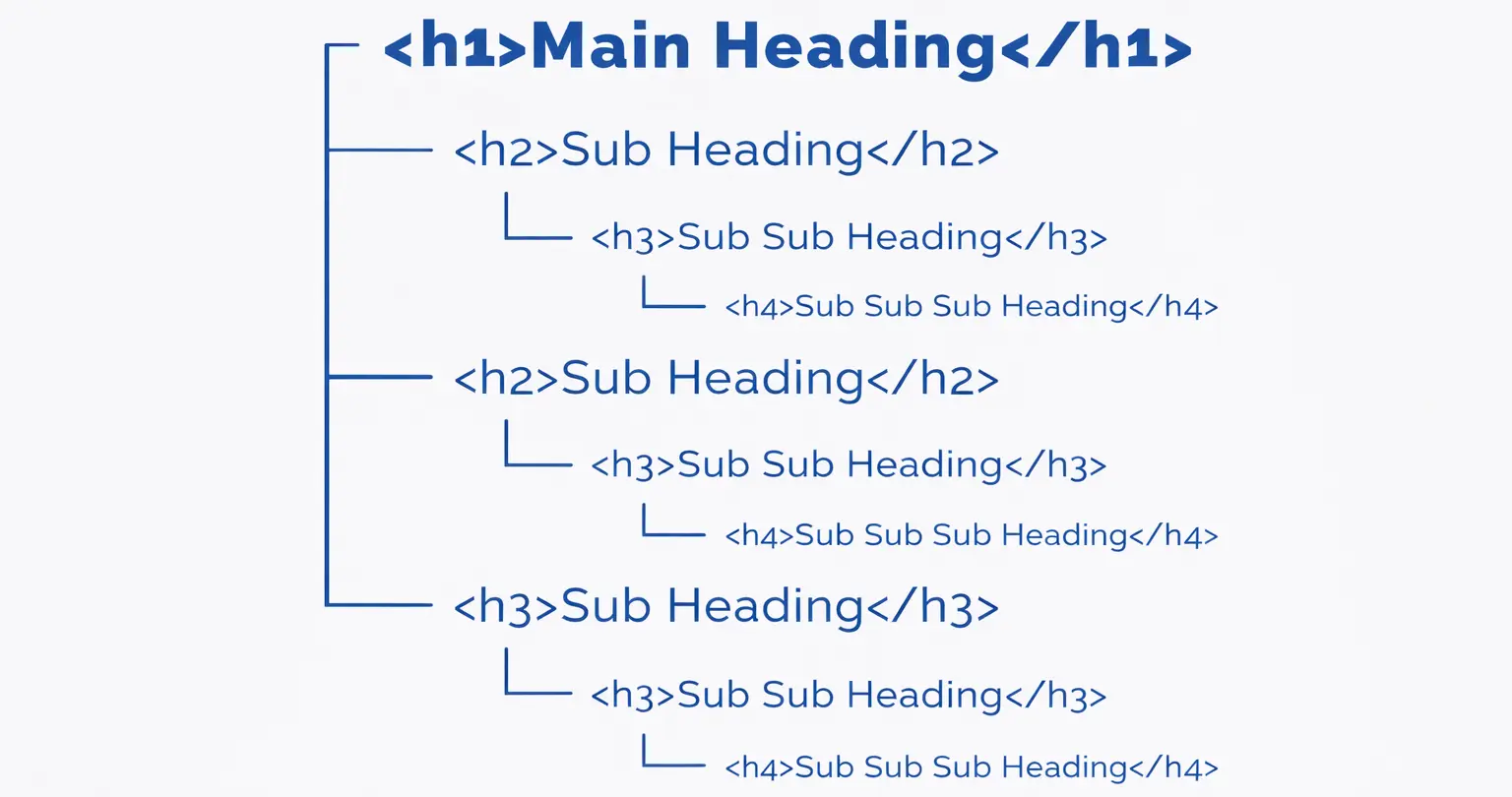
Each H2 should introduce a distinct idea, while H3s expand or explain it further. Avoid vague headings that do not communicate value. Here is how heading structure looks like:
Example:
❌ Images
This heading is unclear. It could be about design, stock photos, image formats, or anything else. This also improves scannability for search engines and makes it easier for AI systems to extract and summarize your content accurately.
✅ Image Optimization Tips for On-Page SEO
This heading clearly tells the reader what the section covers and why it matters.
Tip: Skim your page using only the headings. If you can understand the full topic and flow without reading the paragraphs, your heading structure is doing its job.
5. Write Content That Fully Covers the Topic
On-page SEO today is heavily tied to topical coverage. Pages that answer the main question and its related sub-questions tend to perform better than narrow or shallow content.
Think in terms of completeness. Explain what the concept is, how it works, why it matters, and how to apply it. This reduces the need for users to look elsewhere.
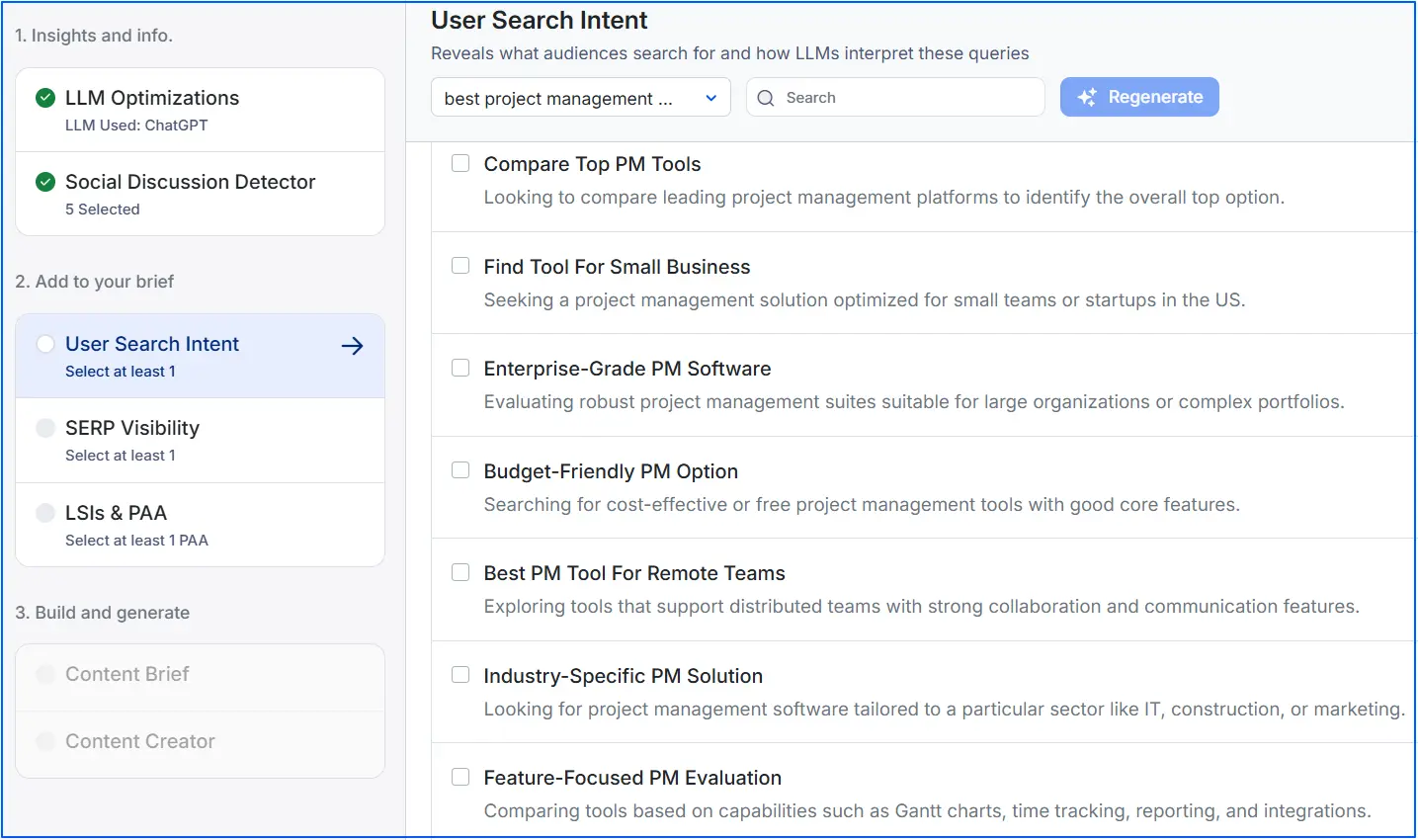
Example: A page targeting the keyword “best project management tool” should naturally cover core features, pricing, use cases, integrations, team size suitability, and real-world workflows instead of focusing on a single tool or feature.
Tip: Wellows helps you understand the user search intent behind a keyword so you can identify what information users expect to see and ensure your page covers the topic completely, not partially.
6. Use Keywords and Related Terms Naturally
Keywords help establish relevance, but overuse hurts readability and trust. Instead of repeating the same phrase, focus on related terms and contextual language.
Place your main keyword where it matters most, then let the rest of the content flow naturally.
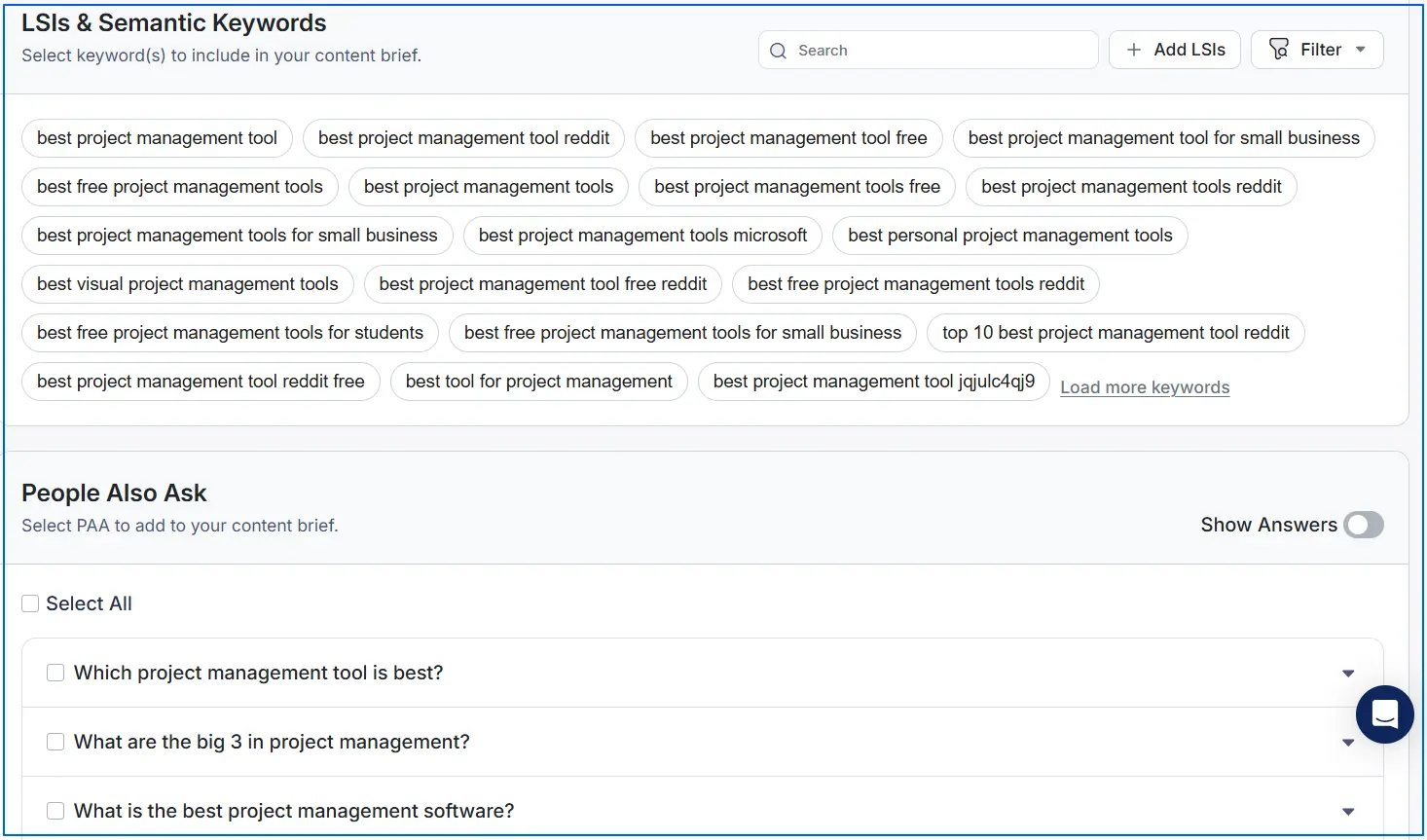
Example: Rather than repeating “on-page SEO” in every paragraph, use phrases like page optimization, on-site SEO, or content structure.
Tip: If a sentence sounds unnatural when read aloud, it is likely over-optimized. Use LSIs and PAA questions naturally to optimize your content for search engines.
7. Strengthen Internal Linking
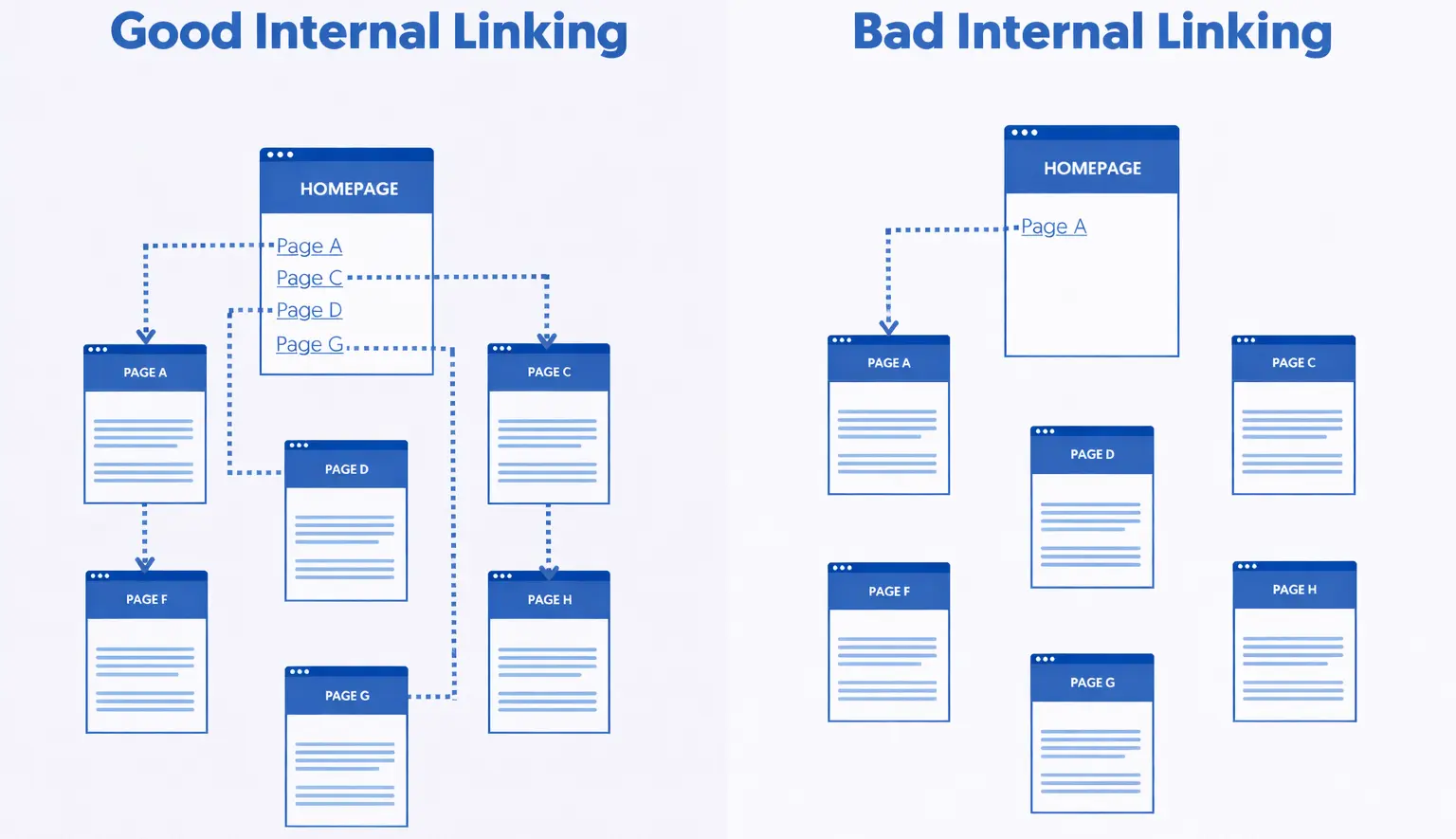
Internal links help search engines discover pages and understand topical relationships. They also guide users to related information, improving engagement.
Link from relevant pages using descriptive anchor text that explains what the linked page is about. Avoid over-linking or stuffing anchors with keywords.
Example: “on-page SEO checklist” is a better anchor than “read more.”
Internal links directly affect on-page SEO by helping search engines discover pages and understand relationships. A strong internal linking strategy improves crawlability and distributes authority across your site.
Tip: Important pages should receive links from multiple relevant articles, not just one.
8. Use Outbound Links to Support Trust and Context
Outbound links help place your content within a wider, credible context. Linking to authoritative and relevant sources shows that your page is well-researched and transparent.
They also help search engines and AI systems understand how your content relates to established information in your industry.

Example: Linking to official Google documentation when explaining Core Web Vitals strengthens trust and clarity.
Tip: Link out only when it adds value. Prioritize authoritative, up-to-date sources and avoid excessive or irrelevant outbound links.
9. Optimize Images and Media
Image SEO plays an important role in on-page optimization. Images support understanding but also introduce performance and accessibility concerns. Poorly optimized images can slow pages and hurt user experience.
Use descriptive file names, accurate alt text, and compressed file sizes. Alt text should describe the image’s purpose, not just insert keywords.

Example alt text: This example works because it explains what the image shows and how it relates to the content, instead of repeating the page keyword.
Tip: If the image fails to load, the alt text should still make sense to the reader.
10. Improve Page Experience Basics
Page experience affects how users interact with content. Even strong articles can struggle if the page is slow, cluttered, or hard to read.
Ensure your layout is mobile-friendly, text is readable without zooming, and popups do not block content. Performance issues can quietly hold rankings back.
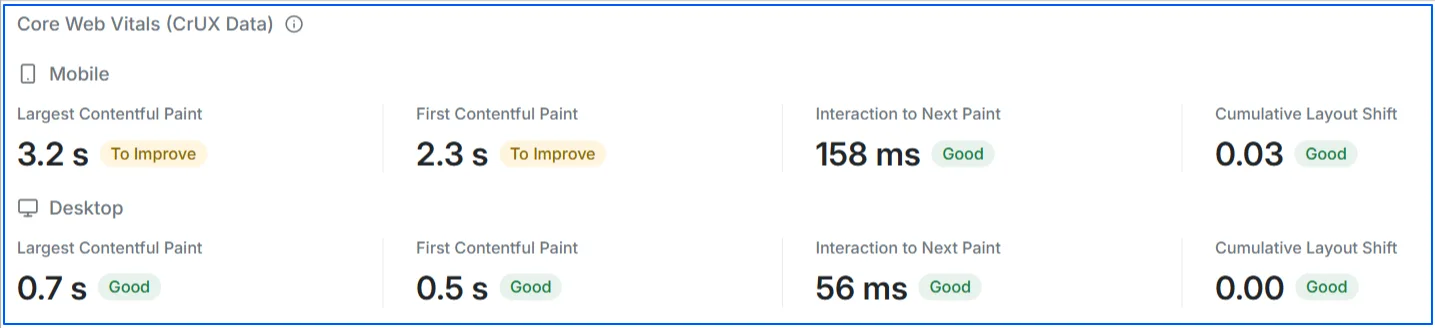
Example: A page reads well on desktop but is hard to use on mobile due to small text and intrusive popups, causing users to leave despite strong content.
Tip: Check pages on your phone, not just on desktop. If text is hard to read or elements load slowly, simplify the layout, increase font size, and remove intrusive popups to improve usability.
Check Core Web Vitals to identify performance issues related to loading speed, interactivity, and visual stability that may be hurting user experience.
11. Keep Content Fresh and Accurate
Search engines favor content that stays relevant over time. Outdated stats, tools, or screenshots can weaken trust and rankings.
Regular updates signal that the page is maintained and reliable. Even small refreshes can lead to noticeable ranking improvements.
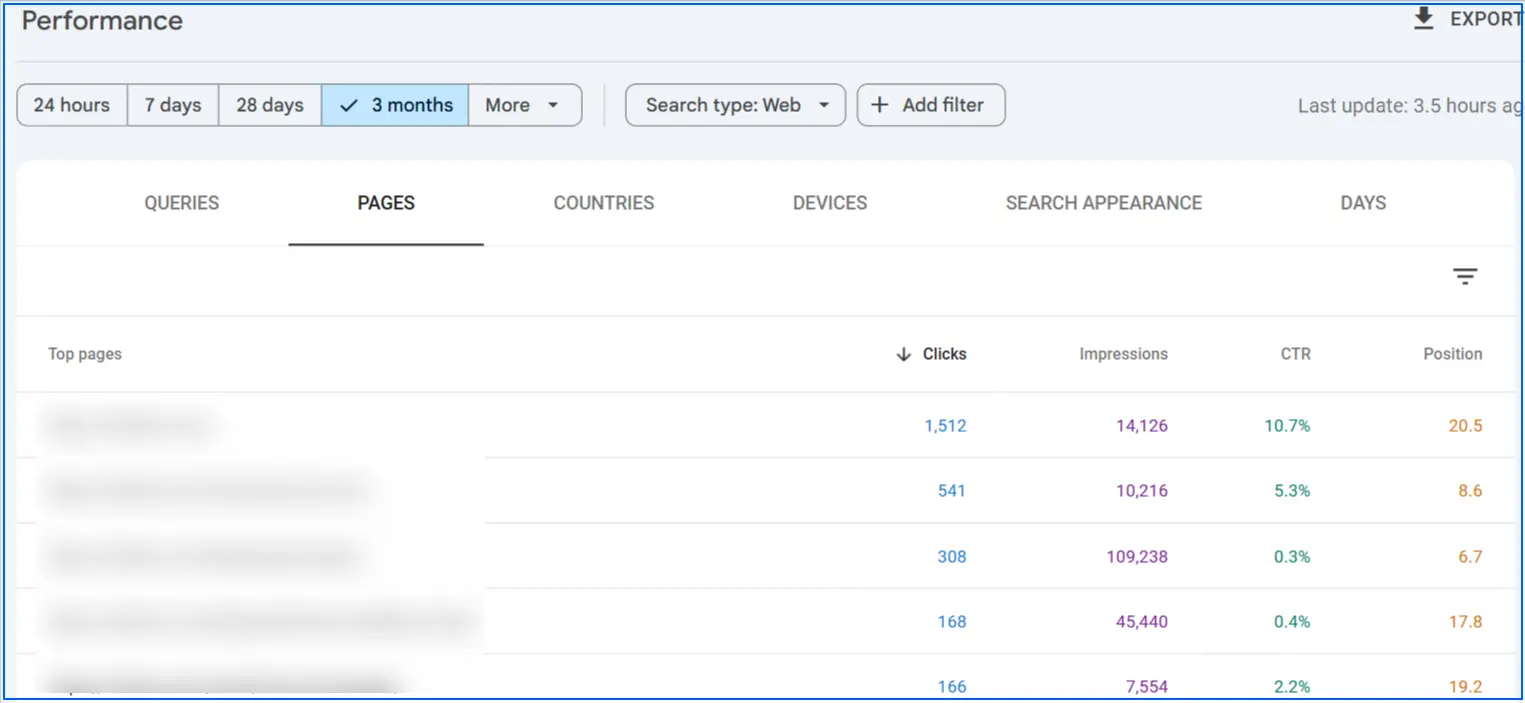
Example: A guide published in 2023 references outdated SEO tools and old Google interface screenshots.
Updating the tool list, refreshing screenshots, and adding a short section on AI search results can improve relevance and help recover lost clicks without changing the page’s core topic.
Tip: Use Google Search Console to find pages with steady impressions but falling CTR, then update those pages with clearer headings, fresher examples, and stronger intent alignment.
How Does On-Page SEO Impact Rankings
On-page SEO influences rankings through four primary mechanisms: relevance clarity, click-through performance, user experience signals, and content extractability. When a page is clear, fast, and aligned with search intent, it sends stronger quality and relevance signals that support higher visibility.
Below are the four core mechanisms through which on-page SEO impacts ranking performance..
Improves Relevance: On-page SEO helps search engines clearly understand what a page is about and which queries it should rank for.
Optimized headings, focused content, and proper keyword placement reduce ambiguity and improve topical alignment with the query’s purpose.
Pages that clearly cover a topic end to end tend to outperform thin or loosely structured content because search engines can confidently match them to relevant searches.
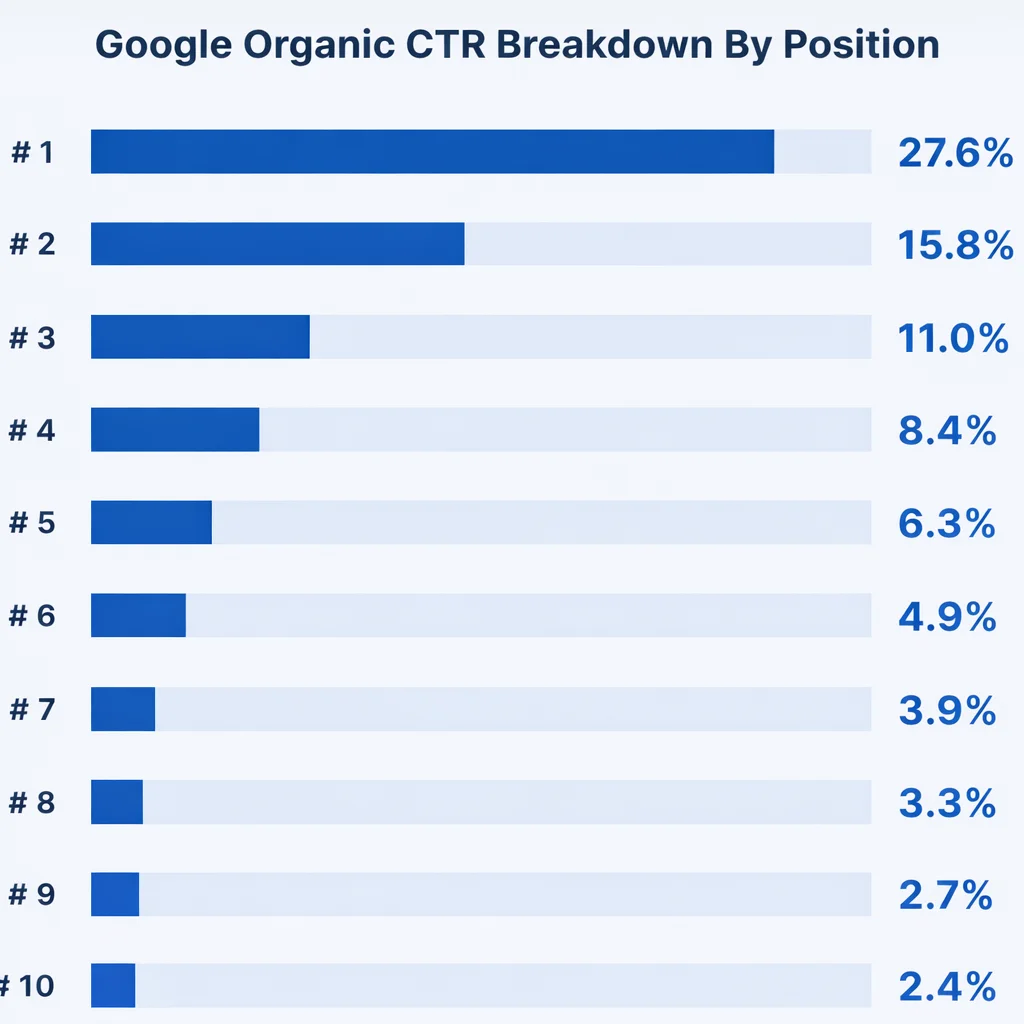
Increases Click-Through Rate: How a page is presented in search results affects whether users click. Strong title tags and descriptive snippets make listings more compelling and improve engagement at every ranking position. A large CTR analysis found that the #1 organic result averages 27.6% CTR, highlighting how improved on-page elements can amplify traffic gains.
Enhances Page Experience: User experience plays a growing role in rankings. On-page SEO includes performance factors such as load speed, visual stability, and mobile usability.
Google confirms that Core Web Vitals are used in Search, and a Google-commissioned study showed that a 0.1-second improvement in mobile speed was associated with up to a 10% increase in conversions, reinforcing the link between experience and performance.
Core Web Vitals influence how users experience your page. Faster loading speed, stable layouts, and responsive interactions reduce bounce rates and improve engagement signals, which indirectly support stronger ranking performance.
Supports Snippets and AI Results: Search visibility is no longer limited to blue links. On-page structure affects how content is extracted for featured snippets and AI-generated summaries.
Pages with concise headings, direct answers, and logical sections are easier for search systems to summarize, increasing visibility in LLM SEO.
What Are the Most Important On-Page SEO Factors for Ranking Higher in 2026
While on-page SEO includes many elements, some factors have a stronger impact on rankings than others.
- Query satisfaction – Content must directly fulfill the user’s primary goal.
- Topical depth and completeness – Pages that fully cover related subtopics perform better.
- Title tag optimization – Clear, keyword-aligned titles improve relevance and CTR.
- Internal linking structure – Helps distribute authority and reinforce topical relationships across related content.
- Page experience and Core Web Vitals – Speed, stability, and usability affect performance.
- Structured headings (H1–H3 hierarchy) – Improves crawlability and AI extraction.
Focusing on these core factors creates stronger ranking signals than optimizing minor elements in isolation.
How To Measure Your On-Page SEO Success
Measuring on-page SEO success is about understanding whether your changes improve visibility, relevance, and user engagement over time. Instead of focusing on a single metric, look at how multiple signals move together after optimization.
If you want a structured breakdown of page-level performance issues, conduct a detailed on-page SEO analysis or audit to identify gaps in content quality, structure, internal linking, and performance signals.
- Ranking changes are one of the clearest indicators of on-page SEO impact. Monitor how your primary keyword and closely related terms perform over time. Effective on-page improvements usually lead to gradual position gains, broader keyword coverage, and more stable rankings rather than sudden spikes.
- Impressions show whether search engines consider your page relevant, while click-through rate reflects how well your titles and descriptions attract clicks. After on-page optimization, impressions often increase first, followed by CTR improvements once your listing better matches user intent.
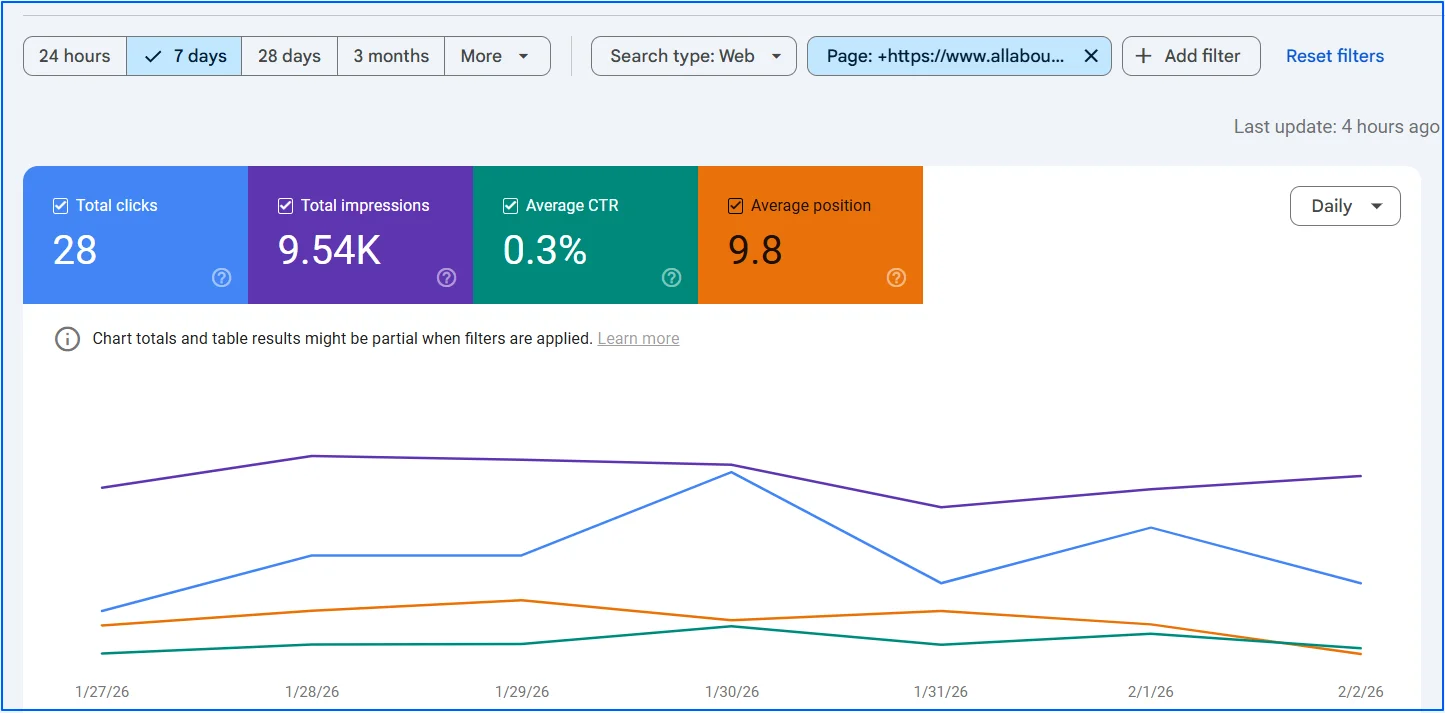
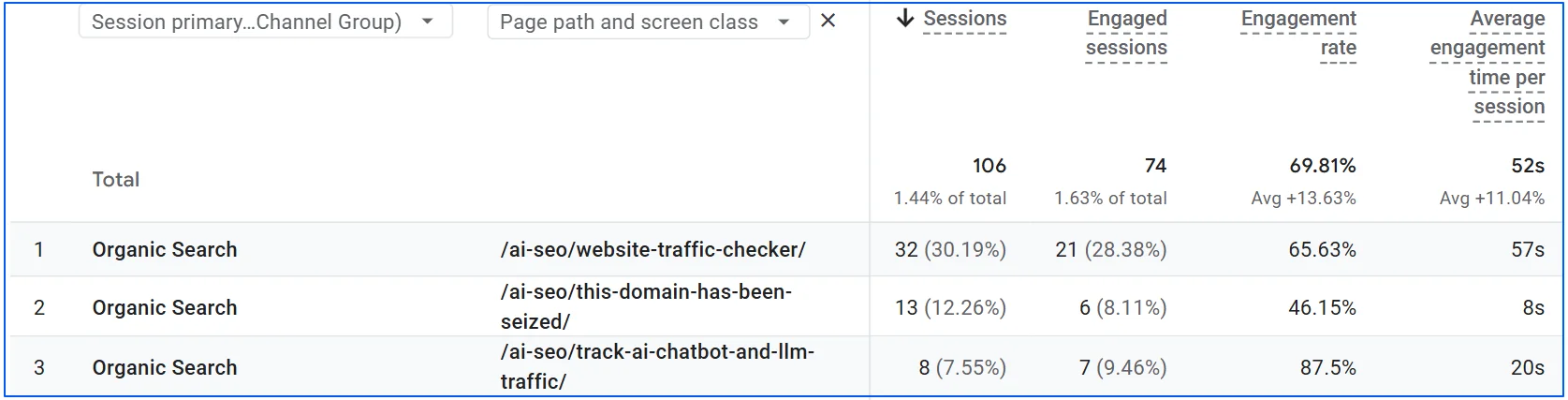
- User behavior helps validate whether your content satisfies search intent. Pages optimized for clarity and usefulness tend to keep users engaged longer. Improvements in time on page, scroll depth, and engagement rate often signal that your on-page changes are working as intended.
- On-page SEO success also depends on proper indexation. Check that your page is consistently indexed, uses the correct canonical version, and performs well on mobile.
Technical SEO issues can suppress rankings even when content quality is high. You can use Google Search Console to check indexing of your pages.
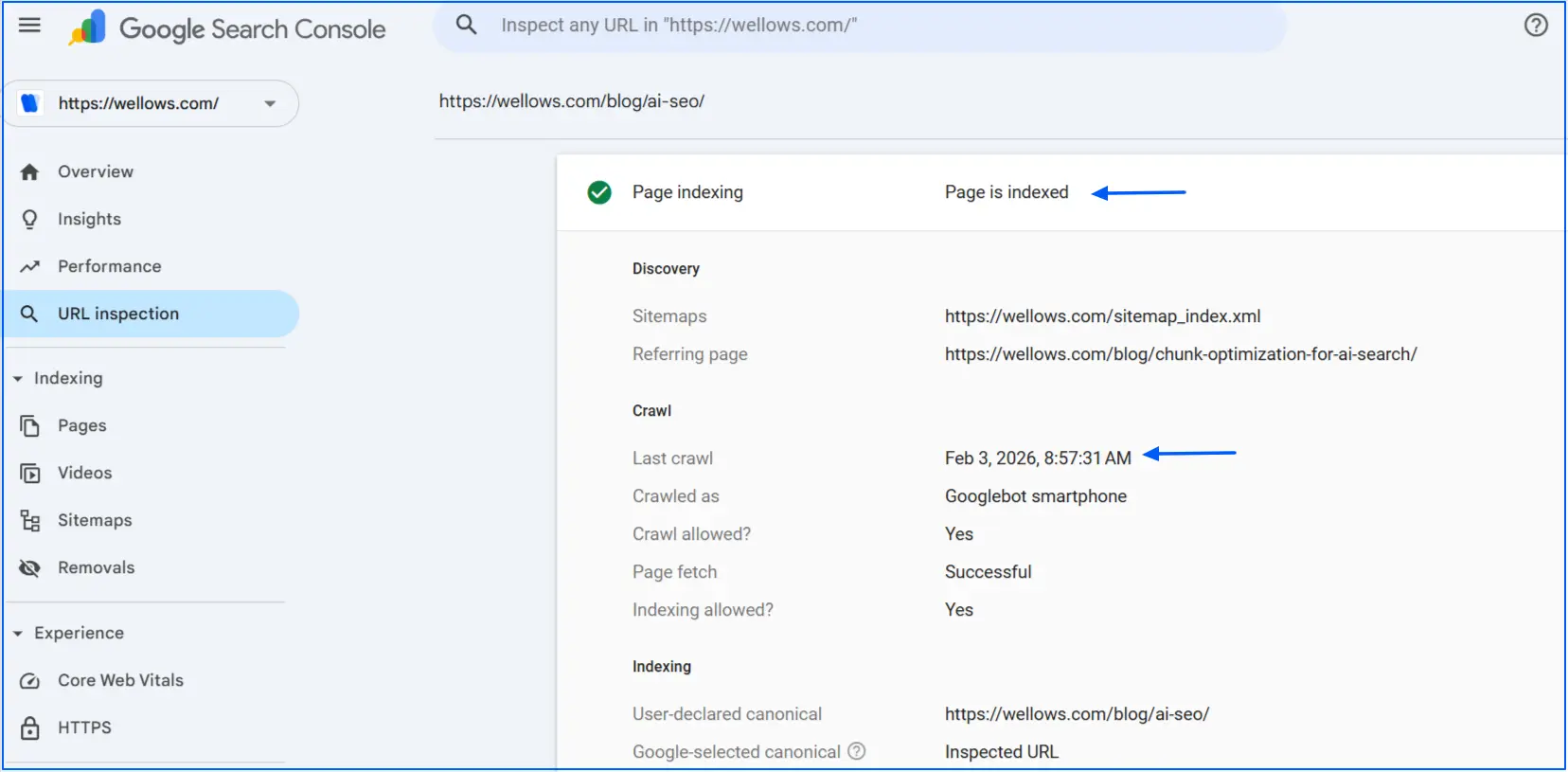
- Internal links influence crawl paths and help search engines understand content hierarchy.
After strengthening internal links, look for improved crawl activity, increased keyword visibility, and steady ranking improvements, especially for pages that previously hovered outside top positions.
- Modern on-page SEO affects more than traditional rankings. Pages with clear structure and direct answers may start appearing in featured snippets or AI-generated summaries.
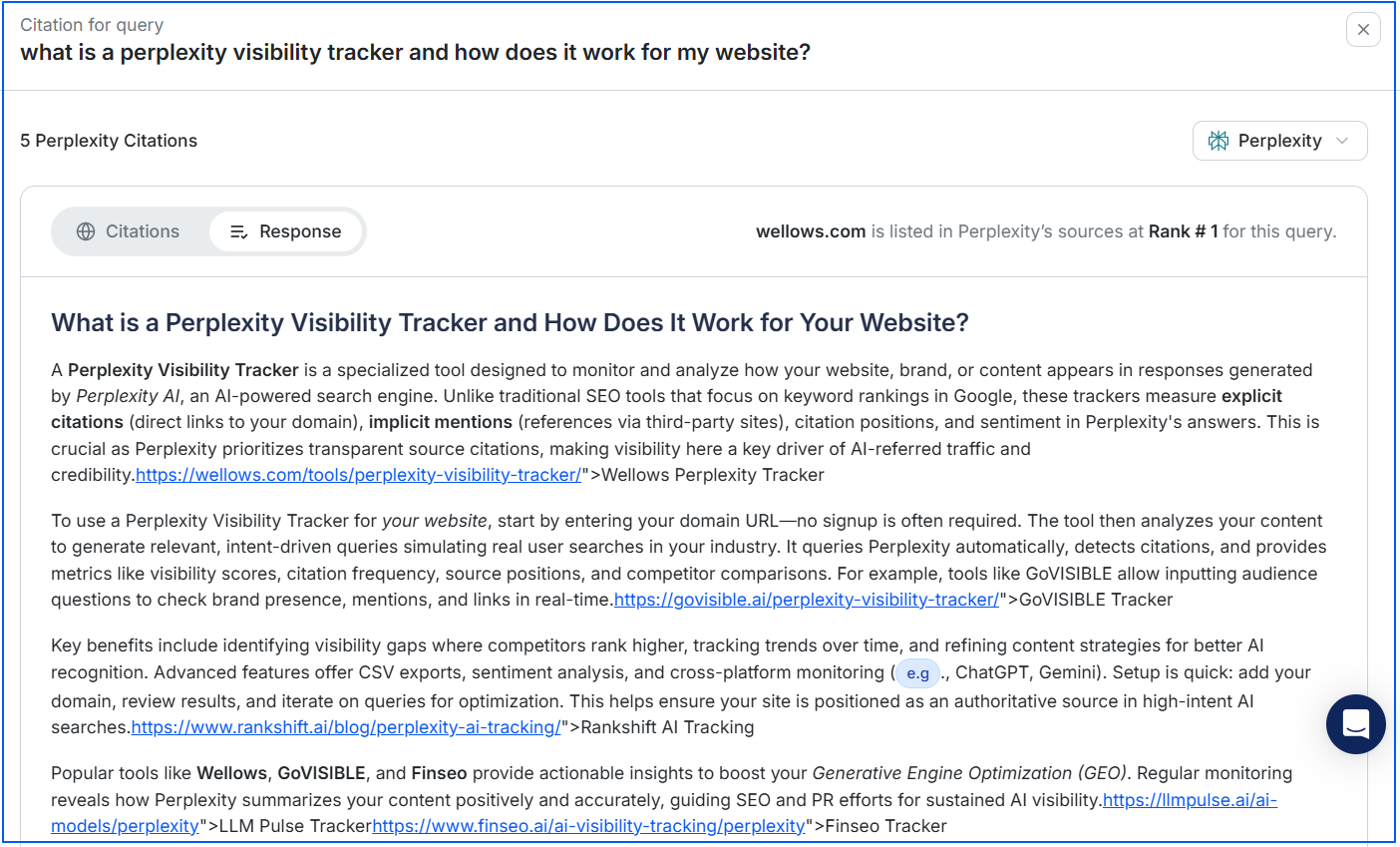
Increased visibility in these areas is a strong signal that your content is well optimized for both search engines and AI systems. Wellows helps you find out what content on your website is getting cited by LLMs.
- The most reliable way to measure success is through before-and-after comparisons. Review rankings, impressions, click-through rates, and engagement metrics several weeks after making changes. Consistent positive movement across these signals indicates effective on-page SEO.
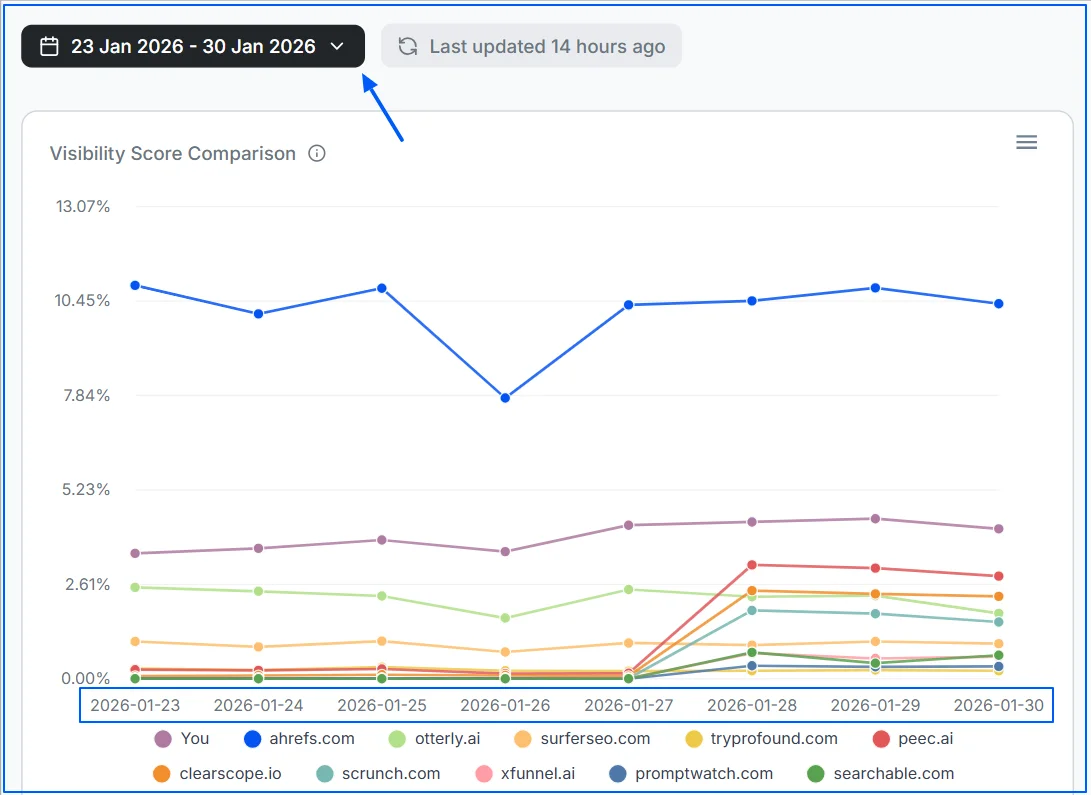
Wellows helps you compare your search engine visibility performance over time and shows how your competitors’ websites are performing, giving you clear insight into what type of content performs well across AI platforms.
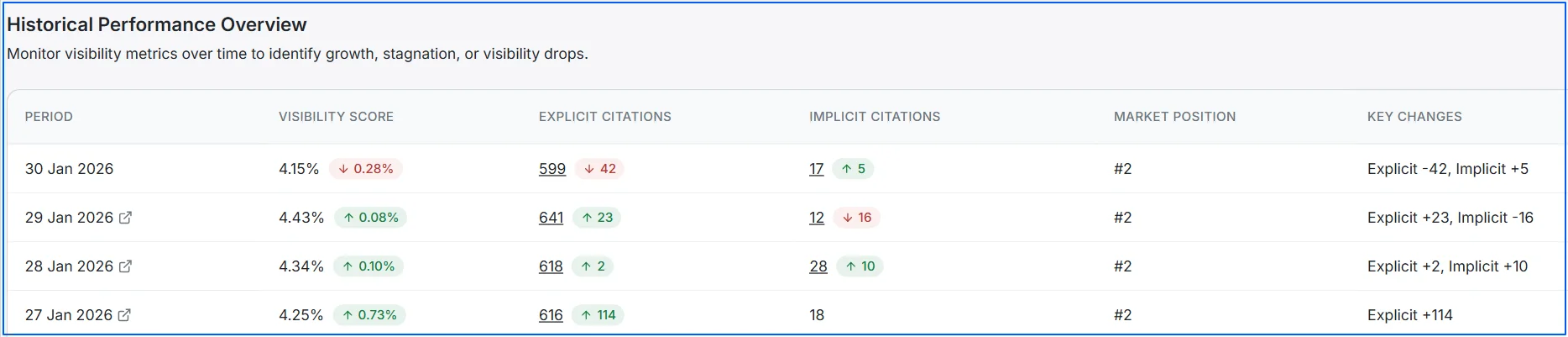
In the historical view, you can also see whether your explicit and implicit citations are increasing or decreasing over time.
What are Common On-page SEO Mistakes to Avoid
On-page SEO mistakes usually come down to unclear content, weak structure, or avoidable technical issues that hurt usability. Fixing these 10 mistakes can lift rankings fast, especially on pages already getting impressions.
| On-Page SEO Mistake | How to Fix It |
|---|---|
| Keyword stuffing | Use keywords naturally and focus on full topic coverage instead of repeating the same phrase. |
| Misaligning with SERP expectations | Align the page format and depth with what users expect for that query (guide, list, comparison, etc.). |
| Weak or duplicated title tags | Write unique, intent-focused titles that clearly describe each page’s content. |
| Missing or poorly structured headings | Use one clear H1 and logical H2–H3 subheadings to improve readability and topical clarity. |
| Thin or incomplete content | Add missing subtopics, examples, and answers to related questions so the page feels complete. |
| Slow page speed | Compress images, reduce heavy scripts, enable caching, and improve Core Web Vitals. |
| Weak content connectivity | Link to relevant pages using descriptive anchor text to strengthen topic relationships. |
| Unoptimized images | Use descriptive file names and meaningful alt text that matches the image context. |
| Not mobile-friendly | Use responsive design, readable font sizes, and spacing that works well on small screens. |
| Ignoring content freshness | Update stats, screenshots, examples, and outdated sections regularly to maintain relevance. |
Best On-Page SEO Tools in 2026
Several tools help analyze and improve on-page SEO performance.
Popular options include:
- Wellows – AI-powered SEO visibility platform that analyzes search intent alignment, content depth, SERP patterns, and AI citation signals to help improve ranking clarity and topical authority.
- Google Search Console – Free tool for tracking indexing, impressions, and click-through rates.
- Screaming Frog – Technical crawler for auditing on-page elements at scale.
- Ahrefs – Comprehensive SEO suite with backlink and content analysis features.
- Semrush – All-in-one SEO platform with on-page auditing and competitive research tools.
FAQs
Final Thoughts
On-page SEO remains one of the most controllable and impactful ways to improve search visibility. When your pages are clear, well-structured, and aligned with search intent, they become easier for both search engines and AI systems to understand and trust.
As search continues to evolve, the fundamentals still matter. Focus on usefulness, clarity, and accuracy first, then apply optimization deliberately. Pages built this way tend to rank more consistently, earn better engagement, and stay relevant as AI-driven search experiences grow.