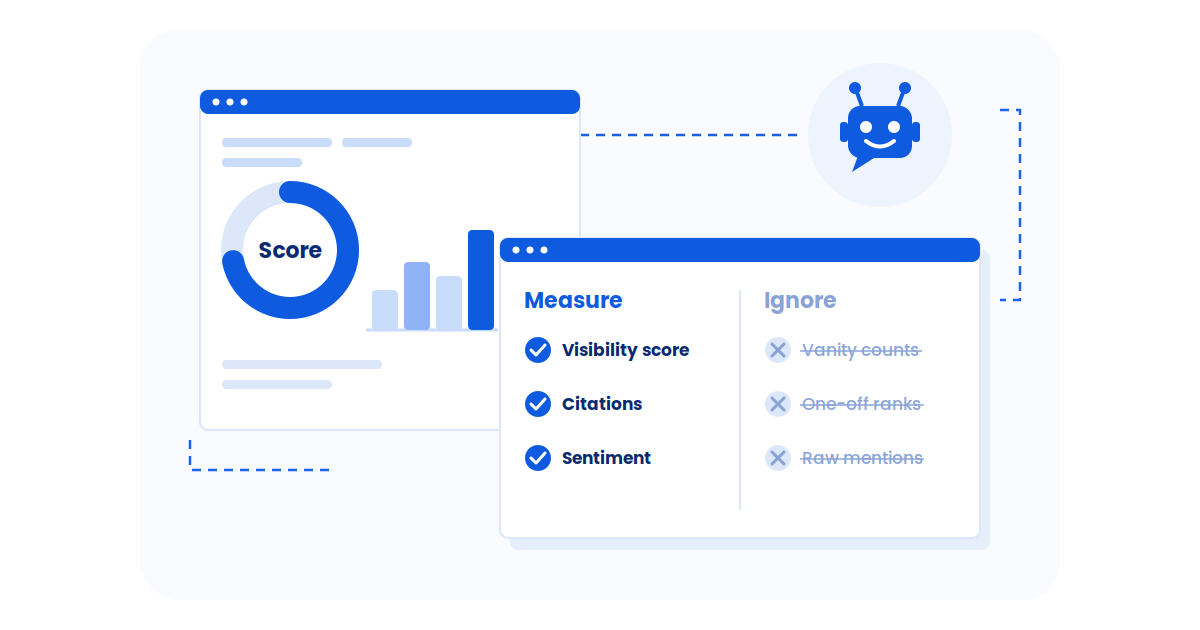
SEO outreach has changed. Mass emails and generic link requests no longer work in a search environment that rewards relevance, trust, and real editorial value.
Did you know?
In 2026, earning high-authority backlinks and brand mentions requires structured, scalable strategies that still allow personalization. Effective outreach works because it solves real needs, connecting quality content with publishers looking to serve their audience.
This guide explains how Wellows helps automate outreach in SEO, along with key strategies and best practices that support long-term rankings instead of short-lived gains. It also covers common outreach mistakes and how to avoid or fix them.
If you’re trying to automate SEO outreach without cold emailing random sites? See how Wellows helps teams find high-impact citation opportunities.
What Is Automated SEO Outreach?
Automated SEO outreach means streamlining prospect discovery, contact finding, follow-ups, and campaign tracking, while keeping messages relevant and personalized.
Instead of mass emailing, automation helps you earn backlinks, citations, and trusted brand mentions more efficiently.
SEO outreach itself is a strategic process that involves proactively reaching out to relevant websites, publishers, and industry professionals to promote your content and earn high-quality backlinks.
These backlinks act as trust signals, helping search engines understand that your content is credible, relevant, and worth ranking.
Did you know?
AI SEO outreach is the modern evolution of this process. Instead of only chasing backlinks, it focuses on earning mentions and citations from publishers and sources that AI systems trust when generating answers.
The goal is to build authority signals so your brand is consistently referenced in AI-powered results, recommendations, and best-of lists.
How Can You Automate SEO Outreach Using Wellows?
Wellows helps you streamline your AI SEO outreach strategy by identifying implicit mentions and citation opportunities, then connecting you with the right publishers and site owners. Here are the 4 easy steps to automate SEO outreach using Wellows:
Step 1: Identify High-Intent Opportunities to Automate SEO Outreach
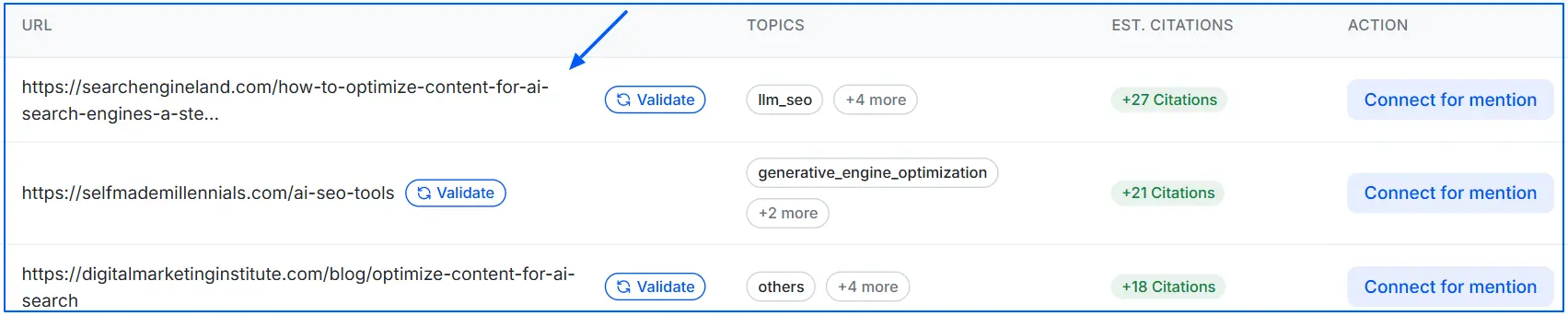
Wellows identifies implicit citations opportunities, helping you start outreach with websites that already reference or closely align with your brand. This removes cold prospecting and improves relevance from the start.
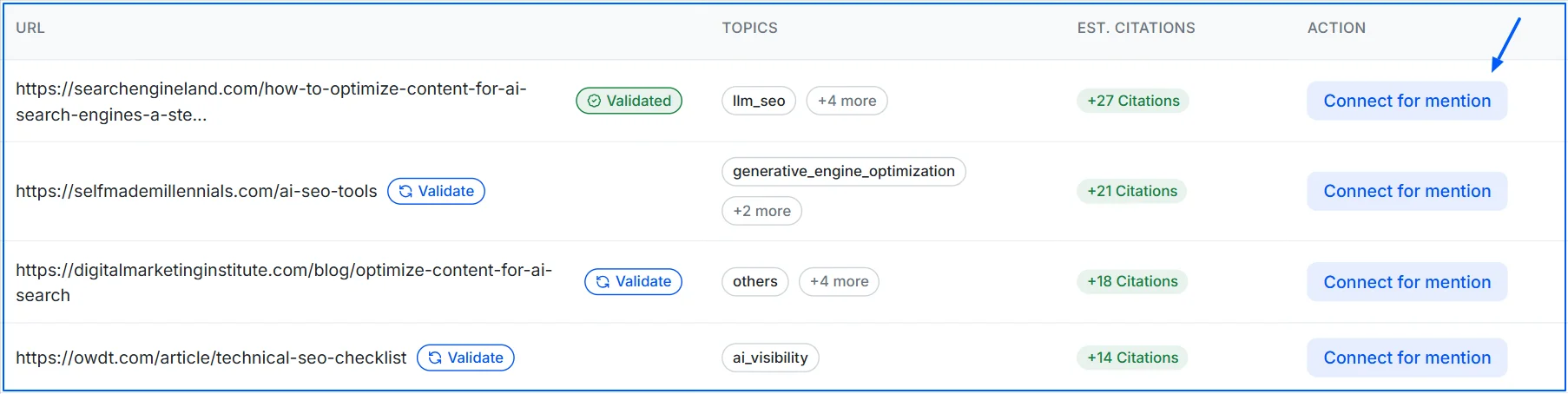
So, if you outreach the publisher who is being cited for the exact query, you can secure a direct citation, strengthen topical authority, and increase your chances of being included in AI-generated answers and best-of recommendations.
On the Wellows dashboard, you can see the exact URL and the specific topic being cited, making it clear where and why to reach out.
The estimated citation number shows how many AI citations you can gain from an AI platform if that source mentions or links to your brand.
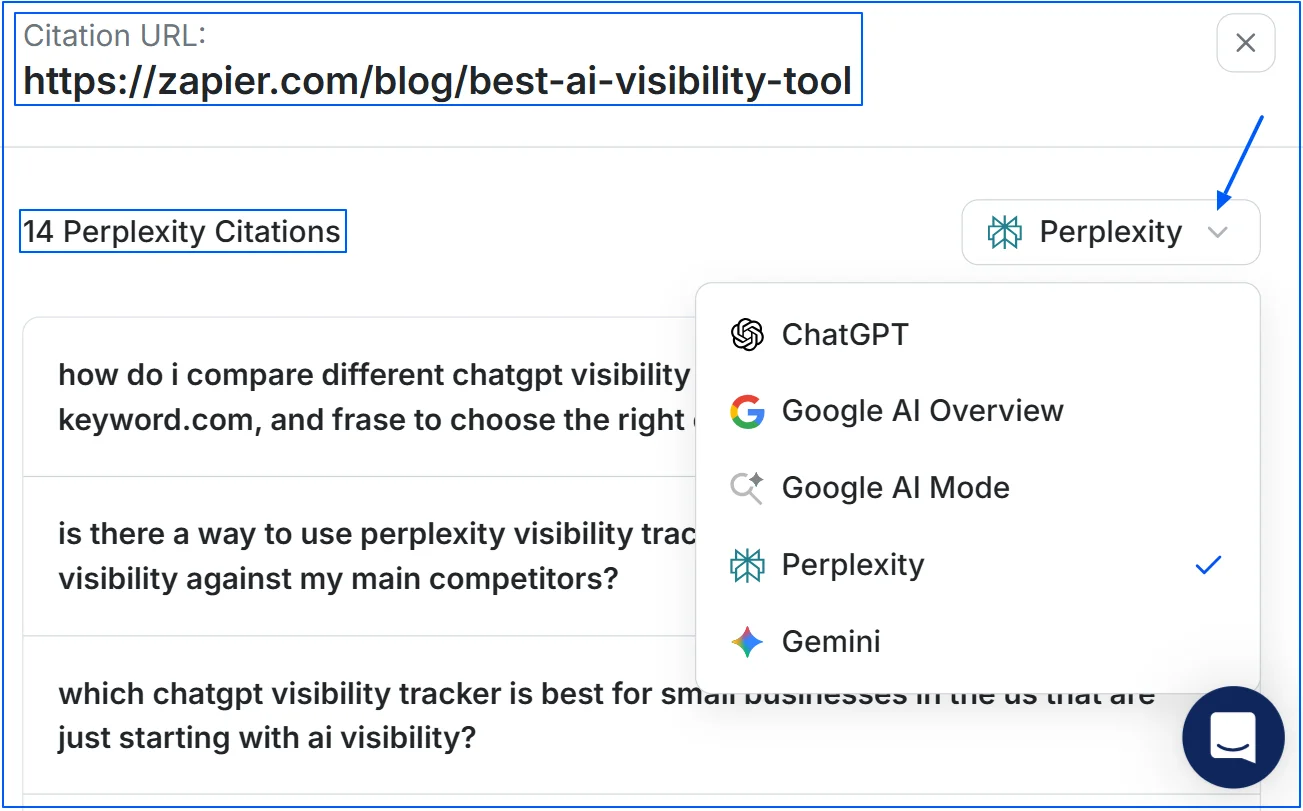
Step 2: Find the Right Contacts
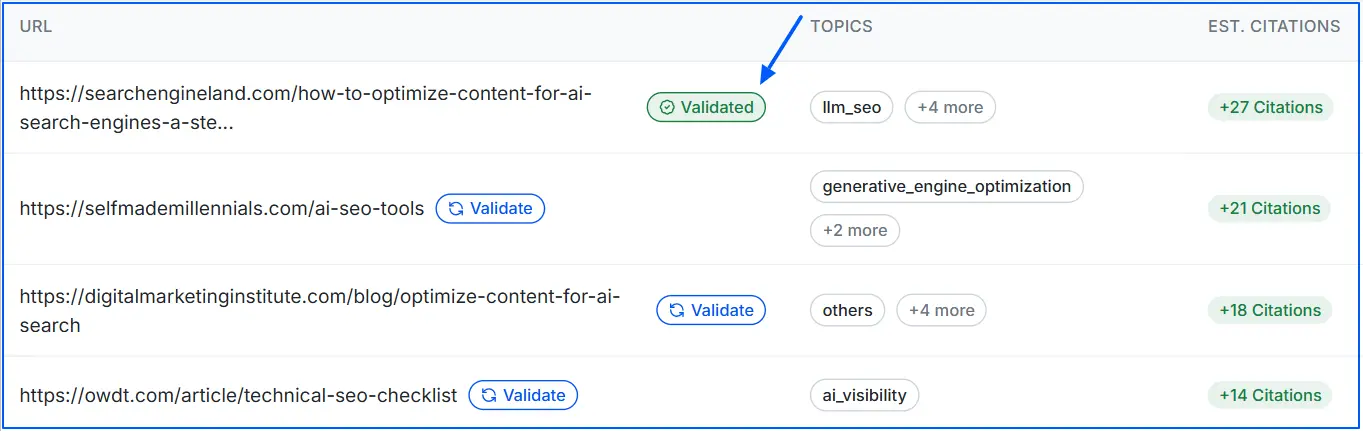
Wellows supports contact discovery and validation, ensuring emails reach editors, content managers, or site owners instead of generic inboxes. This increases response rates and reduces wasted follow-ups.
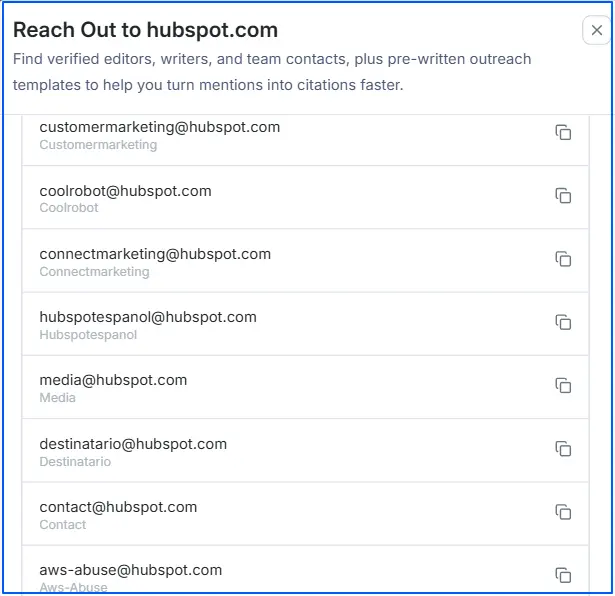
Step 3: Scale SEO Outreach with Email Templates
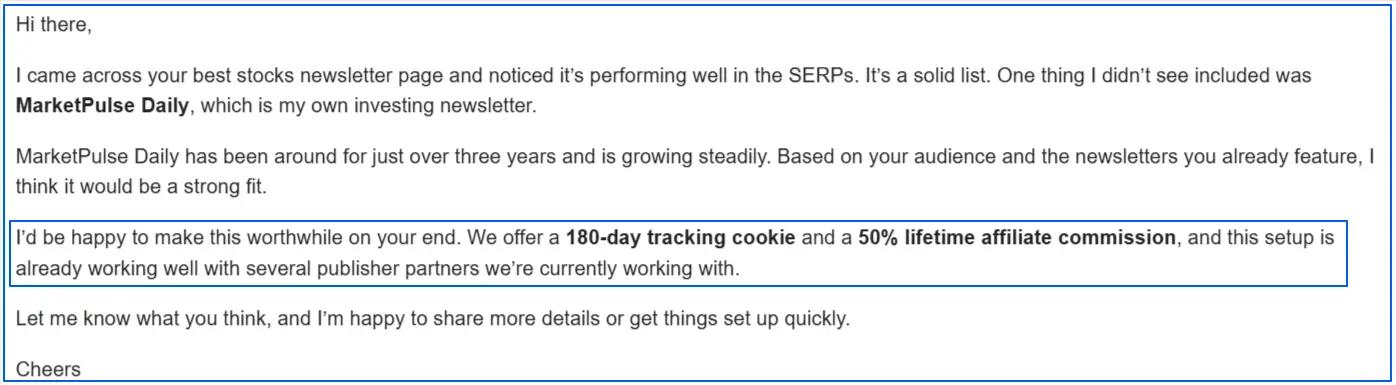
Outreach teams can use built-in email templates or export verified contact lists to manage campaigns at scale. This keeps outreach organized, trackable, and consistent across larger campaigns.
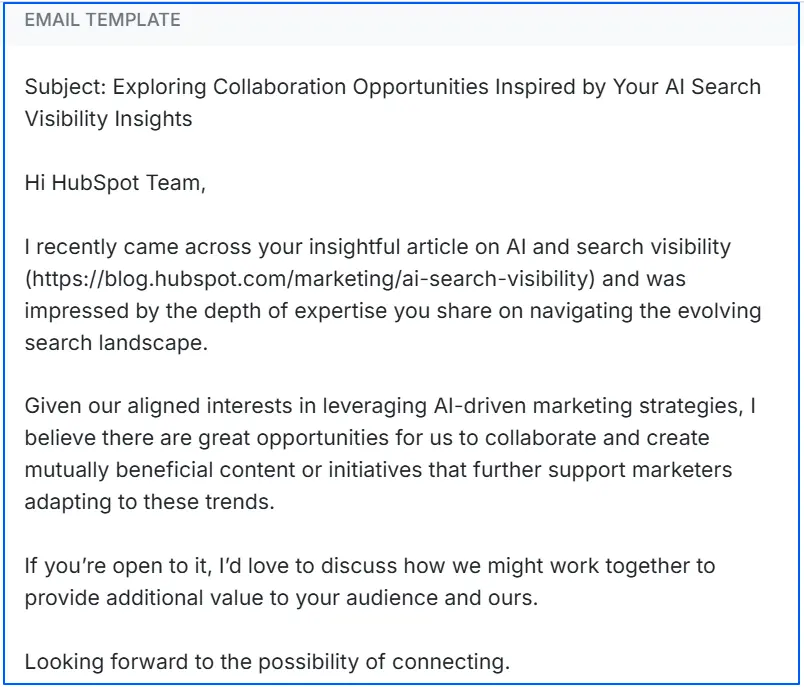
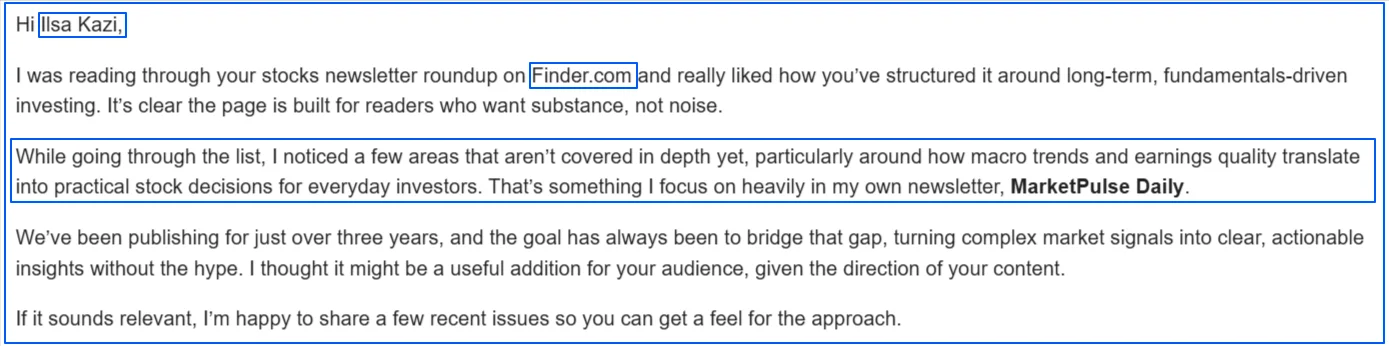
Step 4: Automate SEO Outreach Emails with Templates
Automation enables scale, but results improve when teams monitor responses, adjust messaging, and refine timing based on performance. A large outreach dataset found Wednesday performs especially well for replies, making it a strong day to schedule SEO outreach emails.
How does SEO Outreach Help Website Rank Better?
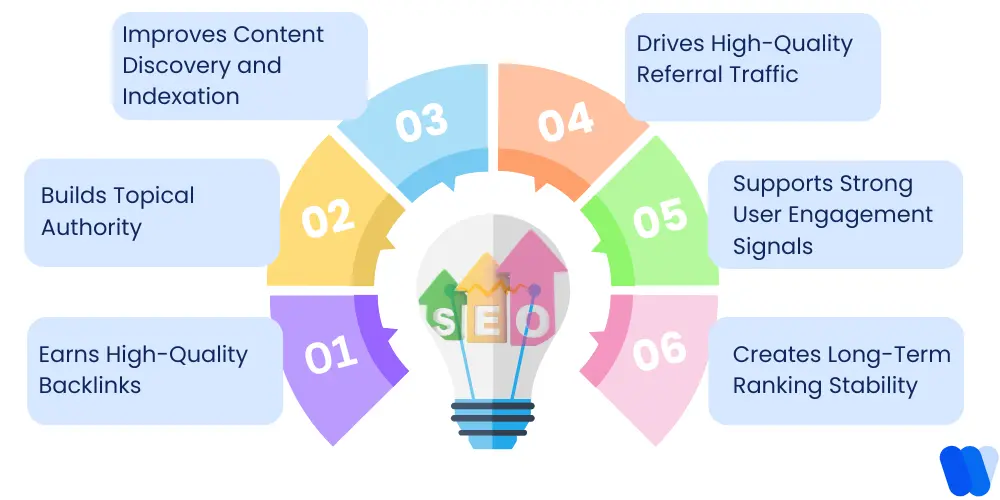
- Earns High-Quality Backlinks: Search engines still rely heavily on links to evaluate authority. Andrey Lipattsev from Google has confirmed this clearly, stating that content and links pointing to a site are among the strongest ranking factors. Outreach feature in Wellows helps you earn those links from trusted, relevant sources instead of relying on artificial link building.
- Builds Topical Authority: When your website consistently earns mentions and backlinks within the same niche, search engines gain clearer signals about what your site is an authority on. Over time, this topical consistency helps your pages rank for related keywords more easily. Topical authority also helps boost your LLM SEO.
- Improves Content Discovery and Indexation: Links from active, frequently crawled websites help search engines discover and index new or updated content faster. This is especially valuable for newer websites or pages that need visibility quickly, particularly when combined with fixing technical SEO issues.
- Drives High-Quality Referral Traffic: SEO outreach places your content in front of an already relevant audience. Visitors arriving from trusted industry sites are more likely to engage, read deeper, and return later.
- Supports Strong User Engagement Signals: Referral traffic from outreach tends to be more qualified, which often results in longer time on page and higher pages per session. These engagement patterns support ranking stability over time.
- Creates Long-Term Ranking Stability: Outreach is a long-term SEO investment. Links earned through genuine value and relationships are more resilient to algorithm updates than paid or manipulative tactics.
Does Outreach Help with AI Visibility?
Yes, SEO outreach plays an important role in improving AI visibility, especially as search engines and AI systems rely heavily on authority, context, and external validation when generating answers.
AI-powered results, including AI Overviews and conversational responses, are more likely to reference or surface content that is consistently mentioned, linked, and cited across trusted sources.
SEO outreach helps by increasing brand mentions and authoritative backlinks, which act as credibility signals not just for traditional rankings but also for AI models trained to recognize reliable entities and sources.
Wellows supports this process by finding verified publisher contacts tied to missed mentions, providing ready-to-send outreach emails, and helping you secure new citations.
This strengthens brand credibility and expands your visibility across AI-driven search through authentic, relevant connections.
For agencies running outreach programs across multiple clients, the connection between earned placements and AI citations compounds quickly. When a client’s brand appears on a source that LLMs already trust, the citation lift tends to spread across the answer engines Wellows tracks. An AI visibility platform for agencies closes the loop that traditional outreach tools leave open — confirming whether the placements you’re earning are actually moving citation counts in ChatGPT, Gemini, and Perplexity, not just improving backlink profiles.
Using the best AI visibility tools, you can track how SEO outreach is helping you get citations or mentions by LLMs.
How Automated Outreach Drives Qualified Traffic and Leads?
The best outreach campaigns don’t just earn backlinks they place your brand on pages that influence decisions, such as:
- Best tool lists
- AI-generated recommendation sources
- Comparison pages
- High-intent resource hubs
When your brand is mentioned on these pages, the referral traffic is already warm and conversion-ready.
Wellows helps teams automate this process by surfacing missed citations and connecting you with the right publishers.
Is SEO Outreach Effective for Ranking on Google in 2026?
Yes, it’s still effective in 2026, but only when you treat it as relevance-first outreach (earned links/mentions), not mass emailing.
Google’s own documentation says it uses links as a signal for relevance and to find new pages to crawl, which is one reason earning quality links still helps rankings.
What’s changed is the bar for results: outreach is most effective when it targets topically aligned sites, offers clear value, and earns links that look editorial and natural.
AI-powered search experiences also surface links and sources, which makes reputable mentions and citations even more valuable for visibility.
Why Traditional Outreach Fails for Modern Businesses?
Traditional SEO outreach struggles today because search behavior has evolved. Methods like mass email campaigns and generic link requests struggle to gain attention and often hurt more than they help.
- Lack of Relevance: Traditional outreach often targets websites based on metrics like domain authority instead of topical fit. When pitches do not align with a site’s audience, they are usually ignored.
- Generic Messaging: Most outreach emails follow the same template, making them easy to spot and dismiss. Without personalization or context, even strong content fails to get noticed.
- Links Without Value: Asking for backlinks without offering clear value creates one-sided outreach. Publishers now expect insights, data, or collaboration that benefits their audience.
- Poor Use of Automation: Traditional outreach relies on high-volume emailing with little personalization. This leads to low response rates, inbox fatigue, and deliverability issues.
- Outdated SEO Assumptions: Search engines can now detect manipulative link patterns. Outreach focused on quantity rather than relevance can weaken ranking potential.
How is Wellows Outreach Different than Traditional SEO Outreach?
Wellows outreach is built for AI visibility, not just link building, so it targets the sources AI systems already trust for a topic.
Instead of cold prospecting, it surfaces missed and implicit mention opportunities, shows the exact URLs and topics driving AI answers, and pulls verified publisher contacts tied to those pages. It also speeds execution with ready-to-send outreach emails.
The table below breaks down the 8 key differences between traditional and Wellows outreach:
| Factors | Traditional Outreach | Wellows Outreach |
|---|---|---|
| Targeting Approach | Broad targeting based on domain metrics | Query- and topic-level targeting based on AI visibility gaps |
| Email Messaging | Generic templates sent at scale | Context-aware outreach tied to the exact cited topic |
| Primary Objective | Quick backlink acquisition | Earning citations and mentions trusted by AI systems |
| Value Offered | Direct link requests with little value | Relevant context aligned with the publisher’s existing content |
| Use of Automation | High-volume email blasts | Guided automation with intent-based insights |
| Publisher Perception | Often seen as spam or low effort | Viewed as relevant, timely, and credible |
| SEO Impact | Higher risk of low-quality or devalued links | Strong, verifiable signals for search and AI answers |
| Long-Term Results | Inconsistent or short-lived gains | Sustainable authority and AI-driven discoverability |
What are the Key Components of SEO Outreach?
Effective SEO outreach follows a structured framework. Each component plays a role in improving relevance, response rates, and long-term link value.
- Prospecting Relevant Websites: Prospecting involves identifying websites that align closely with your niche and audience. Relevance matters more than raw domain metrics, as context-driven links perform better and are more likely to earn responses.
- Qualifying Outreach Prospects: Not every website is worth contacting. Qualification helps filter prospects based on content quality, publishing activity, and link placement potential, ensuring outreach efforts stay focused and efficient.
- Finding the Right Contact Person: Outreach works best when emails reach editors, content managers, or site owners directly. Targeting the right contact avoids generic inboxes and significantly improves reply rates.
- Offering Clear Value: Successful outreach provides a reason to respond. This may include original research, expert insights, useful resources, or collaboration ideas that genuinely benefit the recipient’s audience.
- Personalized Outreach Messaging: Personalized emails stand out in crowded inboxes. Referencing specific content or audience needs increases response rates, with Backlinko data showing a 30.5% boost from personalized subject lines and a 32.7% higher response rate from personalized email bodies.

- Defining a Clear Outreach Goal: Every outreach email should have a clear objective, whether it’s earning a backlink, securing a mention, or building a long-term partnership. Clear goals keep campaigns focused and measurable.
- Structured Follow-Up Strategy: Most outreach emails are ignored initially. A structured follow-up process improves visibility without being intrusive and plays a critical role in increasing response rates.
- Using Automation Responsibly: Automation helps manage scale but should never replace personalization. Controlled automation supports timing, sequencing, and tracking without damaging outreach quality.
- Tracking Performance and Optimization: Measuring opens, replies, and link acquisition helps refine outreach over time. Continuous optimization based on performance data leads to more consistent and scalable results.
Did you know?
What are the Different Types of SEO Outreach Strategies?
SEO outreach is not a one-size-fits-all tactic. Different strategies work best depending on your goals, content type, and audience.
- Guest Posting Outreach: Guest posting involves pitching original content to relevant websites in exchange for a contextual backlink. This strategy works well for building authority, expanding reach, and earning links from established publications within your niche.
- Link Insert (Niche Edit) Outreach: Link insert outreach focuses on placing your link within existing content on relevant pages. Since these pages are already indexed and ranking, this strategy can produce faster SEO impact when done ethically and contextually.
- Resource Page Outreach: This strategy targets pages that curate helpful tools, guides, or references. If your content genuinely adds value, resource page outreach can earn high-quality links with minimal friction.
- Digital PR and Brand Mentions: Digital PR outreach focuses on earning editorial links through data-driven content, expert insights, and timely stories. In one campaign, this approach secured 115+ media placements, generated 80+ high-authority backlinks, and drove 4,000+ social engagements, resulting in 87 total backlinks overall.
- Broken Link Building: Broken link building involves finding dead links on relevant websites and offering your content as a replacement. This approach works because it helps publishers fix issues while earning contextual backlinks, especially since link decay is common. Ahref’s analysis shows that 66.5% of links over a nine-year period had rotted and 74.5% were considered lost for SEO.
- Skyscraper Outreach: Skyscraper outreach promotes improved or more up-to-date content to websites already linking to similar resources. When the upgrade offers clear value, results can be significant. In one case, organic search traffic doubled in 14 days, and the same piece went on to generate over 2 million referral visitors long term.
- Influencer and Expert Outreach: This approach focuses on collaborating with industry experts or influencers for quotes, mentions, or shared content. These relationships can generate links, visibility, and referral traffic.
- Unlinked Brand Mention Outreach: Unlinked brand outreach identifies websites that mention your brand without linking. A simple, polite request often converts these mentions into backlinks.
These SEO outreach strategies are also helpful for Generative Engine Optimization as they helps you build your credibility and relevance across the web.
What is the Best SEO Outreach Strategy?
There is no single best SEO outreach strategy, but the strongest results usually come from unlinked brand mention outreach, resource page outreach, and digital PR, because they build on existing relevance and trust.
Wellows helps you choose the right strategy by identifying implicit mentions, missed citation opportunities, and the exact publishers influencing AI and search results, so your outreach focuses on opportunities that improve both SEO and AI visibility.
Can I Use Automation Tools for SEO Outreach or Should I Send Emails Manually?
Both automation tools and manual outreach have a place in SEO outreach. The right approach depends on scale, personalization needs, and campaign goals.
Automation tools are useful when managing large outreach campaigns. They help with prospecting, email sequencing, follow-ups, and performance tracking, allowing teams to stay organized and consistent.
Automation works best when:
- You want to identify relevant outreach opportunities instead of starting from cold prospect lists
- You are reaching out to a large number of qualified prospects
- You need help validating which opportunities have real SEO impact
- You want to track opens, replies, and earned links in one place
Manual outreach is ideal for high-value opportunities where relationships matter more than volume. This includes outreach to industry leaders, journalists, or websites that require tailored pitches.
Manual outreach works best when:
- The target list is small
- Each email requires custom research and messaging
- The goal is long-term collaboration rather than a single link
Manual outreach allows for deeper personalization and stronger relationship building, but it can become difficult to manage and track at scale.
For most SEO teams, the most effective strategy is a hybrid approach. Automation tools handle discovery, organization, and follow-ups, while manual effort is focused on personalization and relationship-building.
Wellows supports this balance by automating the process, not the conversation. It helps teams scale outreach responsibly while maintaining relevance, clarity, and control over messaging.
Did you know?
How Do I Create an SEO Outreach Strategy That Actually Gets Results?
An SEO outreach strategy works only when it follows a clear, repeatable process. Random emails and one-off campaigns rarely deliver results. Consistency, relevance, and structure matter far more.
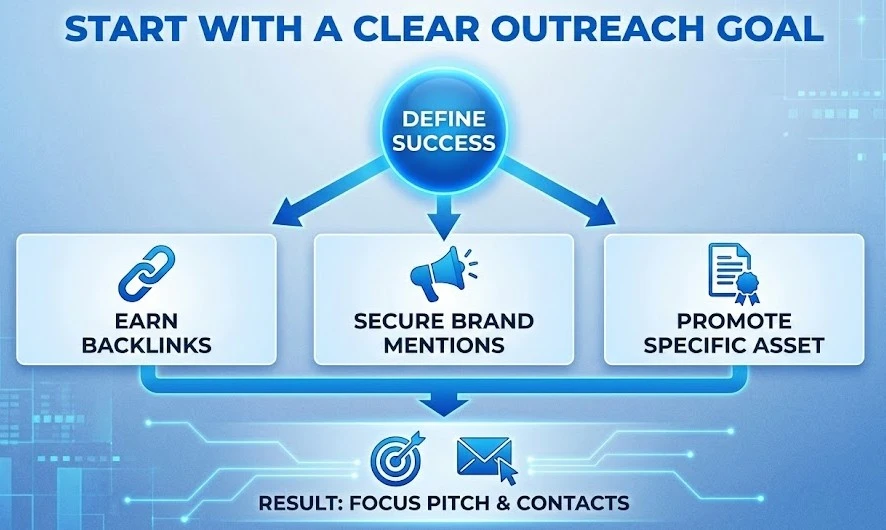
Before reaching out, define what success looks like. Your goal may be earning backlinks, securing brand mentions, or promoting a specific asset. Clear goals in your SEO outreach strategy help you decide who to contact and what to pitch.
Instead of building cold prospect lists from scratch, focus on websites that already show relevance. Wellows help surface implicit brand mentions and missed link opportunities, allowing outreach to start from existing context rather than guesswork. This improves response rates and reduces wasted outreach.
Not every opportunity is worth pursuing. Review each prospect for topical relevance, content quality, and editorial standards. Wellows supports this step by validating opportunities so outreach stays focused on links that actually impact visibility.
Every outreach email should answer one question: Why should this matter to the recipient? Whether it’s original data, expert insight, or a helpful resource, value must be obvious upfront.
Personalization increases trust and replies. Reference specific content, audience needs, or recent updates to show genuine interest. Even when using the best SEO outreach tools, messages should always be reviewed and tailored before sending.
Most outreach emails go unanswered on the first attempt. A planned follow-up sequence improves visibility without feeling pushy. Structured follow-ups are easier to manage when outreach is tracked and organized.
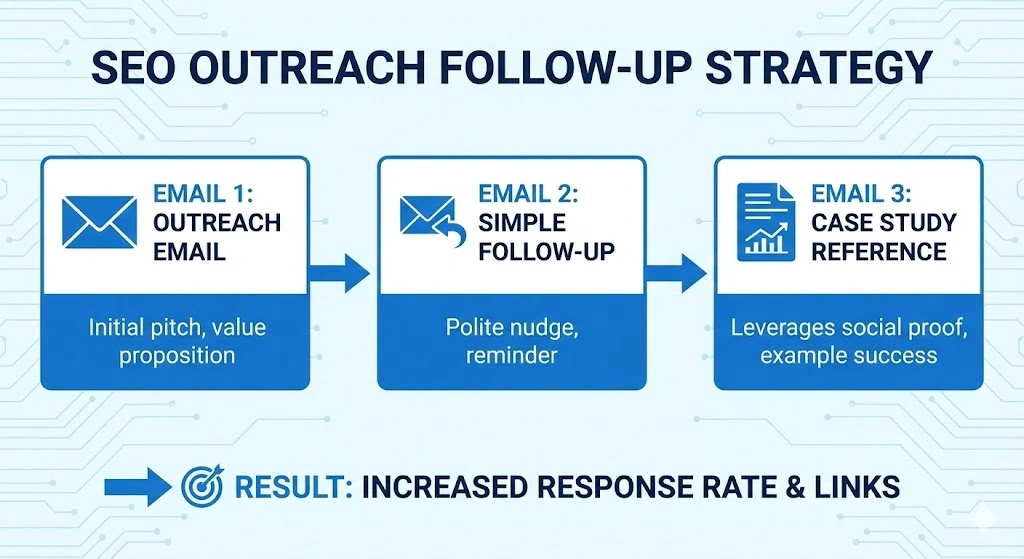
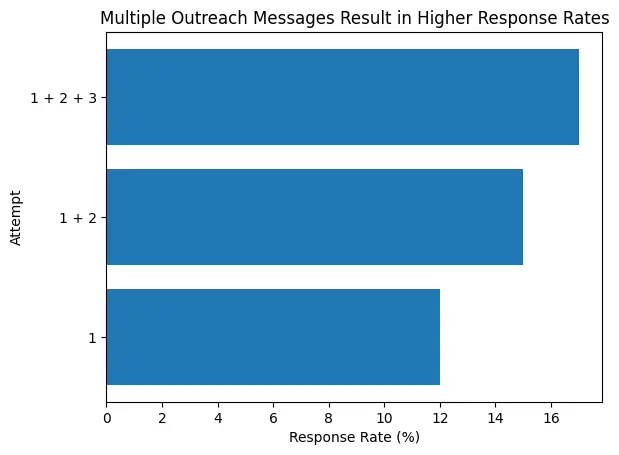
Data shows that only 8.5% of outreach emails receive a response, reflecting how competitive inboxes have become. However, sending just one follow-up email can increase reply rates by 65.8%, making structured follow-ups a critical part of a successful outreach campaign.
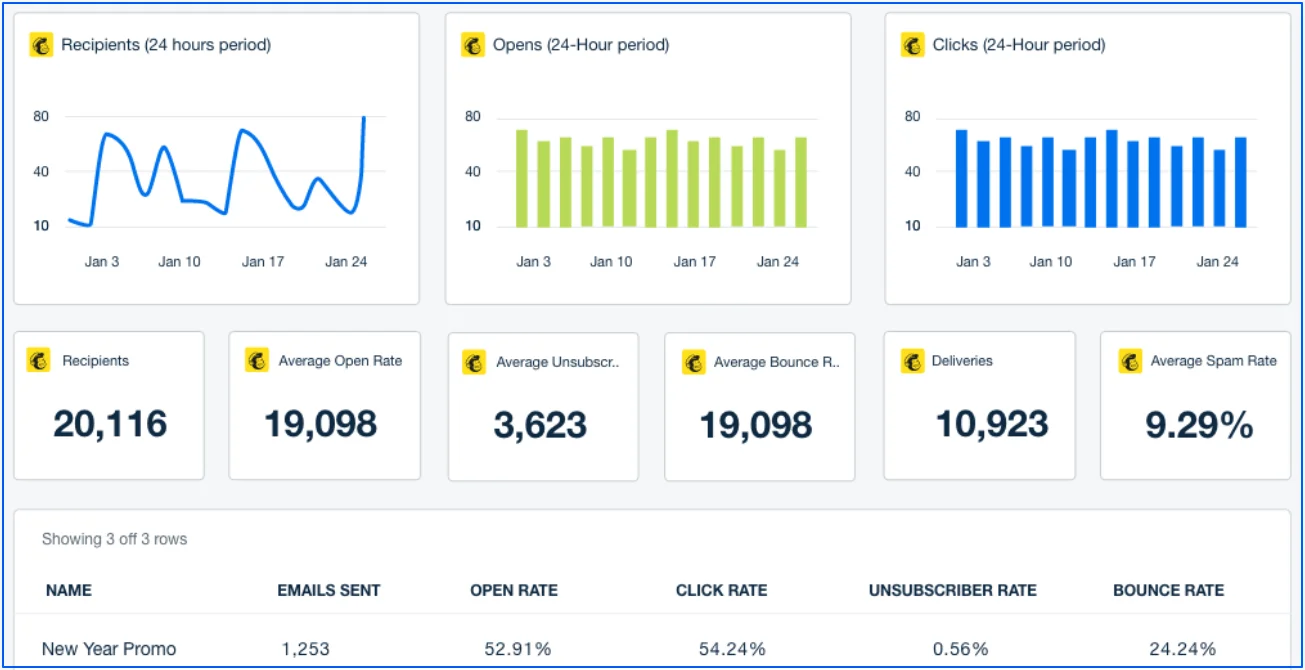
Track replies, links earned, and referral traffic. Identify patterns that work and refine your approach over time. Outreach becomes more effective when it evolves based on real data.
The strongest outreach strategies prioritize relationships over one-off wins. Consistent, value-driven outreach leads to repeat mentions, stronger links, and sustainable SEO growth.

Did you know?
What are the Best Practices for Writing Effective SEO Outreach Emails?
Effective SEO outreach emails are clear, relevant, and respectful of the recipient’s time. The goal is not to sell, but to start a conversation that offers value.
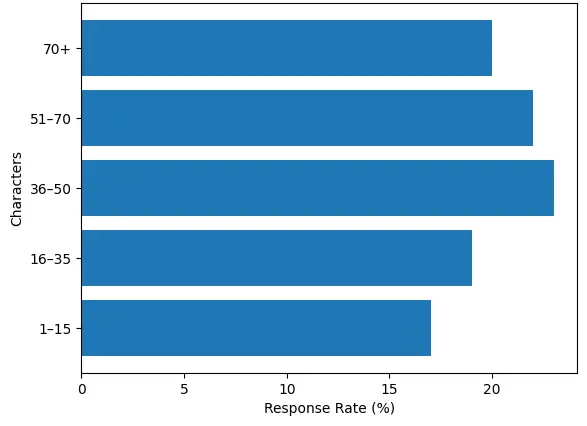
- Keep the Subject Line Clear and Relevant: The subject line should set expectations, not act as clickbait. Mention a specific page, topic, or reason for reaching out so the email feels contextual and intentional.
- Personalize Beyond the First Name: Referencing a recent article, audience focus, or editorial angle shows genuine interest. Light but meaningful personalization goes much further than generic templates.
- Get to the Point Quickly: Editors scan emails fast. Open with why you’re reaching out and how it benefits them. Avoid long introductions or unnecessary background.
- Lead With Value, Not a Link Request: Instead of asking directly for a backlink, explain how your content, data, or insight improves their existing page or helps their audience. Value-first emails feel collaborative, not transactional.
- Keep Emails Short and Easy to Read: Use short paragraphs and simple language. Outreach emails perform best when they are concise, focused, and under 200 words.
- Use a Clear, Low-Pressure Call to Action: End with a simple next step, such as asking if they’re open to reviewing a resource or sharing feedback. Avoid pushy language or multiple requests.
- Follow Up Thoughtfully: A polite follow-up is often necessary, but spacing and tone matter. Keep follow-ups brief, relevant, and respectful.
- Avoid Spam Triggers and Over-Automation: Overly promotional language, excessive links, or poor automation can hurt deliverability. Outreach emails should feel personal, even when sent at scale.
Did you know?
What are the Top Tools for SEO Outreach?
AI SEO outreach tools help you find relevant publishers, manage outreach, and earn high-quality mentions and links. The right tool depends on whether your focus is traditional link building or AI-driven visibility.
Below are the 4 tools you can use for your outreach strategy:
| Tool | What It Does | Best For |
|---|---|---|
| Wellows | Identifies implicit mention opportunities, finds verified contacts, and automates context-aware outreach based on AI and SEO visibility gaps | Targeted citation acquisition and AI-focused outreach |
| Pitchbox | Prospecting and outreach workflow management | Scalable link building and outreach campaigns |
| Respona | Outreach workflow with built-in prospect discovery and personalized email outreach | Content-led link building and digital PR |
| BuzzStream | CRM-style tool for managing contacts, outreach, and link tracking | Organizing outreach and relationship management |
Why is My SEO Outreach Getting No Responses, and How to Fix It? [9 Actionable Solutions]
Small mistakes in your SEO outreach strategy can significantly reduce response rates and link quality. This table breaks down the 9 common mistakes and how to avoid or fix them:
| Common Mistake | Why It Hurts Outreach Results | How to Fix It |
|---|---|---|
| Sending generic mass emails | Generic emails are easy to ignore and lead to low response rates. | Personalize each email with context about the site, content, or audience. |
| Targeting irrelevant websites | Poor topical alignment results in weak engagement and low-value links. | Build prospect lists based on niche relevance, not just domain metrics. |
| Asking for links without offering value | One-sided requests discourage replies and damage credibility. | Lead with value such as data, insights, or content that benefits their readers. |
| Overusing automation | Bulk automation hurts deliverability and brand trust. | Use automation only for organization and follow-ups, not message creation. |
| Skipping follow-ups or overdoing them | No follow-ups miss opportunities, while too many feel intrusive. | Plan one or two polite, well-timed follow-ups. |
| Writing long, unfocused emails | Lengthy emails are skipped and fail to communicate intent. | Keep emails concise, focused, and under 200 words. |
| Using pushy or transactional language | Pressure tactics reduce responses and harm relationships. | Use a conversational tone and low-pressure call to action. |
| Not tracking outreach performance | Lack of data makes improvement and scaling difficult. | Track opens, replies, links earned, and refine outreach based on results. |
| Expecting instant results | Impatience leads to poor strategy and short-term thinking. | Focus on consistency, relationships, and long-term SEO impact. |
Read More Articles
- How Entity-Based Content Stands Out in LLMs & Why Does It Matter for SEO
- Why Structured SEO Briefs Are the New Foundation of AI Search Success
- What is LLM Seeding and How Can it Help in Generative Engine Optimization?
- How to Design Content Briefs for GEO?
- Can GSC Data Guide Your GEO Strategy?
- How Will Google’s AI Mode Transform Traditional SEO Practices?
- Top Content Marketing Statistics in 2025
- How to Become a Trusted Source in AI Search
FAQs
Start with clear goals, target websites that are topically relevant, and lead with value. Personalize your emails and use a structured follow-up process instead of one-off messages.Wellows helps by surfacing impactful outreach opportunities and giving you ready-to-send, context-aware emails based on real AI visibility gaps.
The best way to automate SEO outreach is to combine outreach tools with relevance-first targeting. Instead of mass emailing, focus on identifying high-intent mention opportunities, validating publishers, and using structured follow-up sequences.
Yes, small teams can automate SEO outreach effectively by using automation for prospect discovery, contact validation, and follow-ups. This reduces manual workload while allowing outreach to scale without losing relevance.Tools like Wellows make it easier to run high-quality outreach campaigns even with limited resources.
You can automate SEO outreach affordably by focusing on high-intent opportunities instead of mass emailing. The most cost-effective approach is targeting unlinked brand mentions, missed citations, and niche-relevant publishers who already align with your topic.
To avoid spam filters, automated outreach emails should stay short, personalized, and value-focused. Avoid generic templates, too many links, or overly promotional language.Responsible automation works best when you use verified contacts and context-aware messaging, which helps emails reach real editors instead of landing in spam.
Some of the best low-cost ways to automate SEO outreach include using outreach templates, lightweight follow-up sequences, and focusing on easier wins like unlinked mentions or resource page outreach.Platforms like Wellows make this even more efficient by identifying missed citation opportunities and helping small teams scale outreach without expensive tools.
Final Thoughts
SEO outreach is no longer about sending more emails. It’s about relevance, value, and building genuine connections that earn trust and links over time.
When outreach is structured, personalized, and aligned with clear goals, it becomes a reliable way to improve authority, visibility, and long-term rankings.
The most effective outreach strategies balance automation with human judgment. And for teams looking to automate SEO outreach at scale, the focus should remain on earning meaningful citations, trusted mentions, and high-quality links through relevance-first execution.