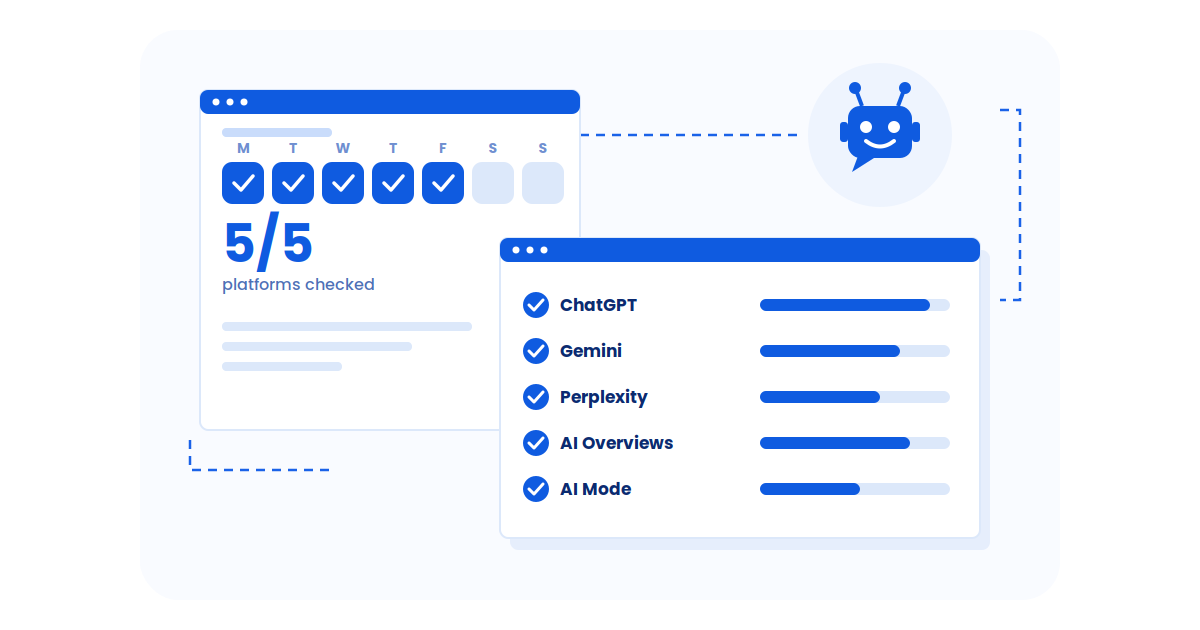
I’ve found that SEO is undergoing a fascinating transformation with AI models like ChatGPT, Claude, and Google’s SGE—this guide doubles as a keyword strategy checklist for LLM SEO that you can apply right away.
As someone who regularly works with these tools, I’ve seen firsthand how they’re changing the way we approach keyword strategy.
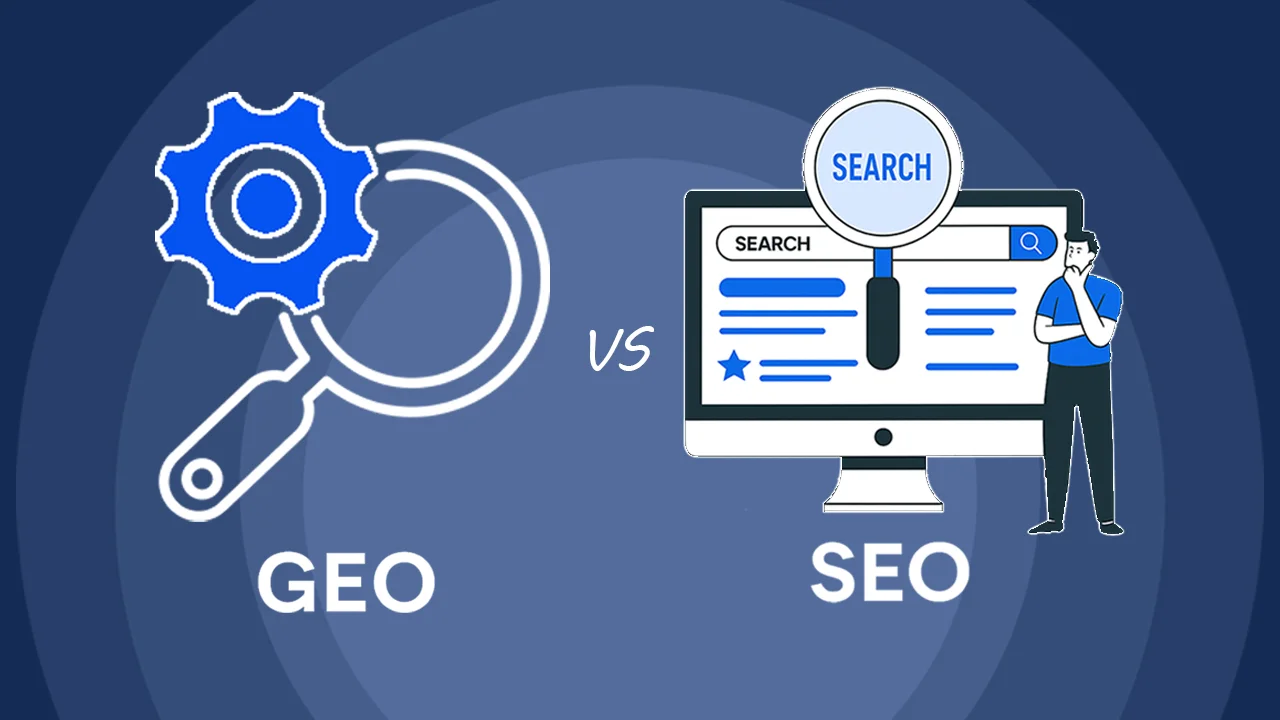
This evolution isn’t just about adapting to LLMs—it’s part of a broader shift toward Generative Engine Optimization, where the goal is to make content discoverable and authoritative.
This is a detailed guide on LLM SEO keyword integration—a pragmatic playbook for adapting your keyword approach to AI-powered search.
Whether you’re new to SEO or a seasoned pro, I’ve designed this guide to help you maintain visibility while speaking the language of modern search systems.
What is Keyword Strategy Integration for SEO using LLM?
Keyword Strategy Integration for LLM SEO combines traditional keyword research with new techniques that work specifically for AI language models.
When I first encountered LLM SEO, I realized why LLM SEO is different from traditional SEO—and why it needs a GEO-informed integration approach tailored to generative search experiences.
Instead of focusing on keyword density and exact matches, I learned that LLM SEO is about understanding how AI models interpret content and adapting accordingly.
These capabilities also clarify the difference between LLM and NLP in SEO: LLMs generate and reason over language holistically, while NLP components parse and label text features.
And here’s where LLM Seeding comes in, it’s the practice of strategically placing your most optimized content where AI models are most likely to “see” it. By combining smart keyword integration with targeted seeding, you boost both human and AI discoverability.
If you want to streamline this into actionable workflows, check out my framework on Structured SEO Briefs.
Does LLM SEO require a unique checklist?
Yes—LLM seeding plus entity-aware keyword integration provide a structured way to be surfaced and cited by models. I’ve found this approach bridges the gap between old-school keyword optimization and the nuanced understanding that today’s AI brings to the table.
Implementing these strategies makes content visible while meeting the demands of sophisticated search algorithms.
One more thing I’ve learned the hard way: even perfectly integrated keywords won’t help if the final draft still reads robotic. Before publishing, I run AI-written sections through the free AI humanizer tool by Wellows so the content sounds natural, matches brand tone, and feels citation-worthy to models.
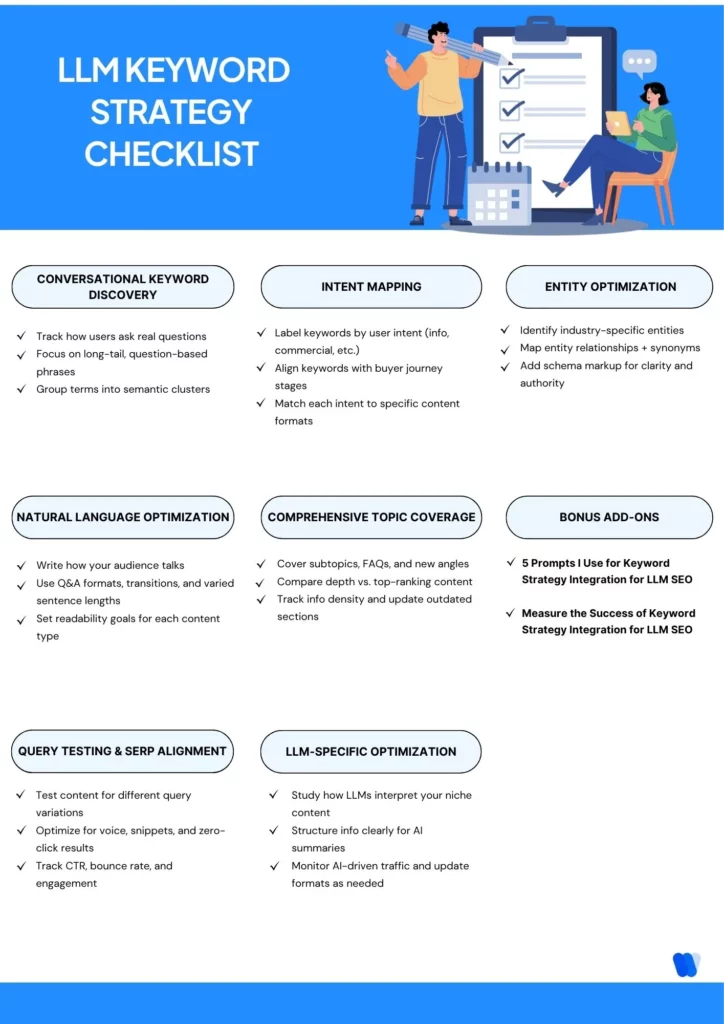
Following are the steps to integrate keywords in LLM for SEO, presented in a practical Keyword Strategy Checklist for LLM. The checklist assumes a foundation where teams already combine SEO and GEO to align SERP signals with AI citation patterns.
How do I conduct Keyword Research specifically tailored for LLM-generated content?
Conducting keyword research for LLM content works best with a clear framework. A Keyword Strategy Checklist for LLM helps you choose the right terms, align them with AI search behavior, and improve your chances of appearing in LLM outputs.
Step 1: Keyword Strategy Integration for LLM SEO
This step aligns your keyword strategy with how large language models interpret context, entities, and natural phrasing. It blends classic SEO with LLM Seeding and conversational patterns so your content is discoverable in both search and AI responses.
Use this step alongside your Keyword Strategy Checklist for LLM SEO and your content brief to turn research into structured output.
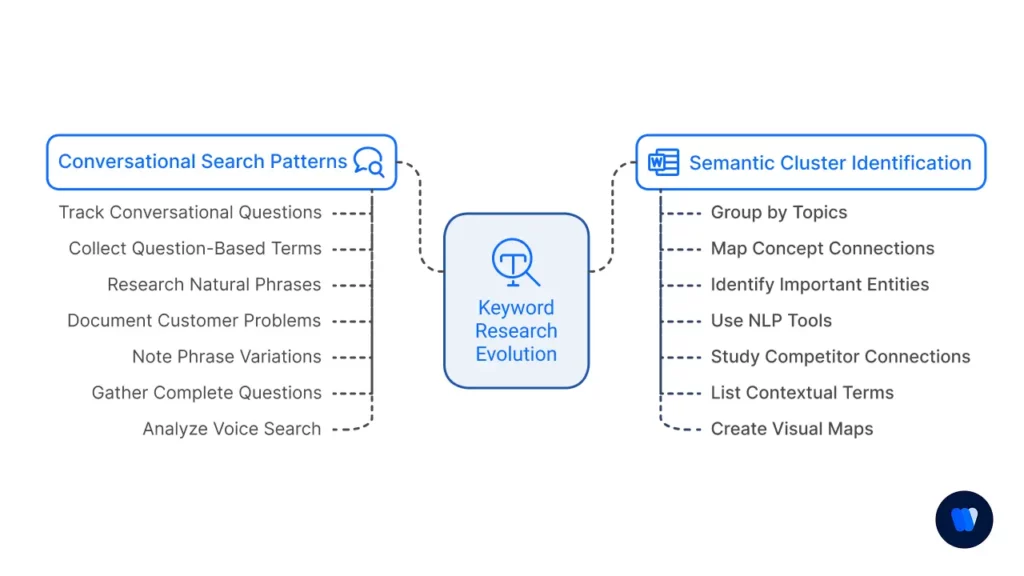
Here are the specific methods that matter for LLM SEO—capture real phrasing, cluster semantically, and seed the Q&A structures models favor. Not sure where to start? Cluster queries into task / tool / outcome groups and map each to an answer block in your brief.
Understanding Conversational Search Patterns
Strategic goal: mirror the way real users speak and ask questions so LLMs can match and reuse your content.
- Track how people actually ask questions about your topic (sales calls, chat logs, support tickets, surveys).
- Collect question-based search terms and full queries (not fragments) from Google’s People Also Ask and forum threads.
- Research longer, speech-like phrases (voice queries, “near me,” “for beginners,” “vs,” “best for”).
- Document real examples of how customers describe problems and desired outcomes.
- Note alternate phrasings for the same intent (regional or industry-specific language).
- Save and analyze voice search queries whenever possible (Search Console, call transcripts).
Quick Actions
- Mine People Also Ask and “Related searches” for 25–50 natural questions on your topic.
- Export site search logs & chat FAQs and add them to your research sheet.
- Turn the top 10 questions into Q&A blocks inside your content brief.
Semantic Cluster Identification
Strategic goal: group terms by meaning and entity relationships instead of chasing single keywords.
- Group keywords by topic (clusters), not exact wording; attach representative questions to each cluster.
- Map connections between related concepts; include primary entities and their attributes.
- List contextual terms that naturally co-occur with your core topic (synonyms, adjacent concepts, jobs-to-be-done).
- Create a simple visual map that shows how clusters relate to intents (informational, commercial, transactional).
- Review competitors to see how they connect ideas across headings, FAQs, and internal links.
Technical Note: My Go-To Semantic Analysis Tools
KIVA and MarketMuse help visualize clusters and gauge semantic coverage. On a budget, use spaCy or NLTK to extract entities and co-occurring terms from high-ranking pages. For a fast cross-check, run text through Google’s NLP API to confirm entity salience.
This workflow reveals supporting terms that LLMs expect next to your primary keywords—perfect for building briefs and on-page sections that models can parse. Once you’ve mapped clusters, a Brand Visibility Audit on LLMs can confirm whether those entities and terms are surfacing in AI summaries.
How do I select high-impact keywords when using Large Language Models for SEO?
Selecting impactful keywords with Large Language Models (LLMs) requires going beyond search volume. It’s about aligning with how these models interpret language, context, and user intent.
- Focus on Semantic Relevance: LLMs prioritize meaning and context over exact matches. Group related terms, synonyms, and entities together so your content reflects the full scope of a topic.
- Utilize Natural Language and Long-Tail Keywords: Capture how people actually speak and search. Use conversational phrases, long-tail queries, and question-based terms to improve visibility in both voice and AI-powered search.
- Implement Holistic Topic Clustering: Organize content into a pillar–cluster model. A central page should cover the main theme, while supporting pieces dive deeper into subtopics, signaling expertise to LLMs.
- Leverage LLMs for Keyword Research: Use AI tools to surface emerging trends and overlooked variations. LLMs can generate natural keyword ideas, long-tail phrasing, and semantically related terms.
- Analyze Search Intent: Tag each keyword by intent—informational, navigational, commercial, or transactional. Align keywords with the right content type to ensure relevance and clarity.
- Optimize Content Structure: Present information in structured, scannable formats like lists, tables, and Q&A blocks. This improves user readability and makes it easier for LLMs to parse content.
- Maintain Authority and Trustworthiness: Support keywords with accurate data, consistent entity naming, and schema markup. Authority and credibility help your content stand out in LLM-driven results.
Quick Actions
- Score your top 30 candidates with the rubric above; shortlist the top 8–12.
- Promote winners into H2/H3s and add a 2–3 item micro-FAQ beneath each related section.
- Pair each target term with 2–3 supporting entities and one comparison “vs.” phrase to improve extractability.
Why This Works
LLMs prefer conversational questions tied to recognizable entities and clean, extractable structures. A simple scorecard forces focus on the phrases most likely to be selected, summarized, and cited—so you ship impact, not volume.
Cluster → Brief → Publish (Minimum Viable Flow)
- Cluster: Build 5–8 semantic clusters around your core topic (each with 6–12 supporting terms & 5–10 user questions).
- Brief: Drop clusters into a content brief with H2/H3s, Q&A blocks, and entity notes.
- Publish: Seed clusters across headings, FAQs, and internal links; align with your LLM Seeding plan.
Keyword Research Flow for LLM Content
- Understand intent & phrasing → Mine real questions (PAA, chat logs, forums) and capture voice-style queries.
- Cluster semantically → Group queries by entities, synonyms, and related concepts.
- Prioritize with a scorecard → Rank by intent fit, entity proximity, and competition gap.
- Seed for LLMs → Place high-impact terms in Q&A blocks, micro-FAQs, and structured tables.
- Test & refine → Monitor snippet capture, LLM answer inclusion, and dwell time.
Step 2: Intent Mapping & Classification
Classify keywords by user intent—informational, navigational, commercial, transactional—and align each with the buyer journey. Then wire your page type, titles/H1s, FAQs, and schema to that intent so LLMs and search engines can instantly understand “who this is for” and “what it solves.”
Use this step in tandem with your content brief so intent drives structure, not just keywords.
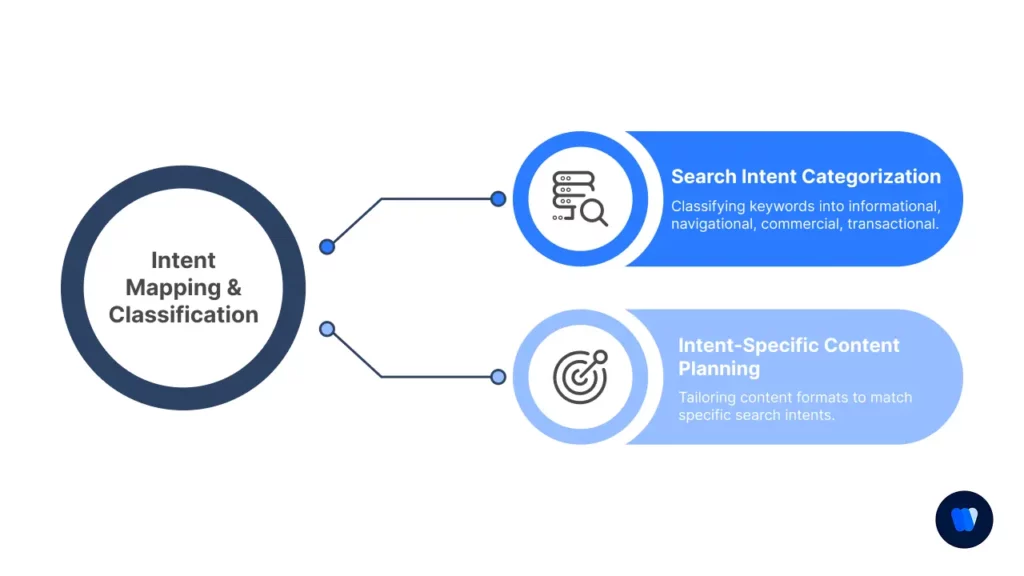
Search Intent Categorization
Strategic goal: make every target query unambiguous by tagging it with an intent and journey stage.
- Bucket queries into informational, navigational, commercial, transactional (add “problem-aware” and “solution-aware” if helpful).
- Attach a journey stage (awareness → consideration → decision) to each query.
- Note emotional triggers (risk, cost, speed, proof) that shape the answer style.
- Flag audience segment (beginner, practitioner, exec) to tune depth and vocabulary.
- Identify intent signals in phrasing: “how/what/why,” “compare/best,” “pricing,” “buy.”
Quick Actions content strategy
- Export queries from Search Console; add columns: Intent, Journey Stage, Audience, Emotion.
- Mine Google People Also Ask + “Related searches” and tag each question with an intent.
- Scan your CRM/chat/support logs for real phrasing; tag 20–30 recurring questions.
- Create an Intent → Page Type matrix (Guide, Comparison, Product, Checkout, FAQ).
Intent-Specific Content Planning
Strategic goal: match the format and on-page elements to the user’s intent so answers are obvious to LLMs.
- Pair each intent with a page type (e.g., Informational → Guide/How-to; Commercial → Comparison/Review; Transactional → Product/Checkout).
- Build a content brief that specifies H2/H3s, Q&A blocks, evidence, and schema for that intent.
- Define acceptance criteria per intent (e.g., “answers X, Y, Z; includes 2 comparisons; 1 calculator”).
- Map internal links to the next-step intent (Guide → Comparison → Product).
- Instrument measurement with GEO KPIs (answer inclusion, snippet capture, dwell time).
Implementation Tips
- Informational: Use FAQPage/HowTo schema, step lists, and inline definitions.
- Commercial: Use Comparison tables (features/price/fit), Pros/Cons, and evidence links.
- Transactional: Surface price, availability, trust badges, and concise CTAs above the fold.
- Navigational: Prioritize brand name, product name, and direct path to the destination.
My Intent Signal Cheat Sheet
| Content Type | Signal Words | Content I Create | Example Phrases |
|---|---|---|---|
| Informational | How, What, Why, Guide | Guides, Lists, Tutorials | “how to optimize for LLMs” |
| Navigational | Brand names, Product names | Landing pages, Contact info | “Claude AI pricing plans” |
| Commercial | Best, Top, Review, Compare | Comparison tables, Reviews | “best LLM SEO tools” |
| Transactional | Buy, Discount, Order, Shop | Product pages, Checkout flow | “buy SEO software” |
| Problem-aware | Issues, Problems, Fix, Solve | Solution articles | “fix keyword cannibalization” |
| Solution-aware | Alternative to, vs, Software | Comparison pages | “SEMrush vs Ahrefs for LLM SEO” |
Intent → Page Wiring Checklist
- Choose page type from your matrix (Guide / Comparison / Product / FAQ).
- Wire structure: H1 mirrors intent, H2/H3 cover sub-intents, add Q&A blocks.
- Add schema: HowTo/FAQPage for informational; Product/Offer for transactional; ItemList/Review for commercial.
- Link forward to the next-step intent (Guide → Comparison; Comparison → Product).
- Measure with GEO KPIs: answer inclusion, snippet capture, dwell time, conversion path.
Why This Works
LLMs favor content that signals intent cleanly and answers the right job-to-be-done for each query. When your page type, structure, schema, and internal links all reinforce the same intent, models can confidently select and summarize your content in responses. This principle sits at the core of the Keyword Strategy Checklist for LLM, ensuring every element of your content is aligned for AI visibility.
Step 3: Entity Optimization
Before tweaking titles or adding more keywords, make sure your entities are clear and consistent. LLMs build understanding around people, products, brands, and categories—not just terms.
In this step, you’ll inventory your core entities, standardize names and attributes, and apply schema so models can reliably connect your pages to the right topics.
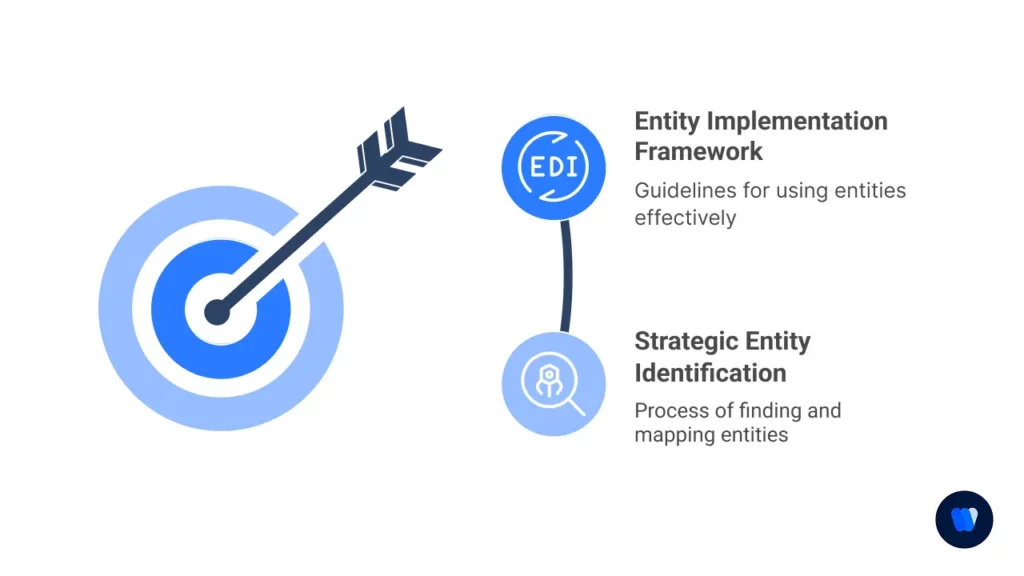
Identify the entities that matter in your domain (people, products, brands, categories) and make them consistent, disambiguated, and machine-readable across your site. Pair clean naming with schema markup and internal linking so LLMs understand your authority and context.
Use this step to standardize names, attributes, and relationships so models can confidently connect your pages to the right queries.
Strategic Entity Identification
Strategic goal: build a reliable inventory of the entities you want LLMs to associate with your brand and topics.
- Research the primary entities (brand, products, core topics) and the secondary entities (adjacent tools, standards, frameworks) that co-occur in top content.
- Document canonical names, accepted variations, and a short definition for each entity.
- Map relationships (is-a, part-of, works-with, alternative-to) between entities.
- Capture key attributes LLMs care about (release date, pricing model, founder, category, spec).
- Create an entity hierarchy (pillar → cluster → leaf) that mirrors your site structure.
- Note which entities frequently appear together in top-ranking and AI-surfaced results.
- Flag emerging entities to watch and review monthly.
Quick Actions content strategy
- List 10–20 core entities; add two columns: Canonical Name and Also Known As.
- For each entity, add 3–5 attributes likely to surface in AI answers (e.g., “pricing,” “launch year,” “category”).
- Sketch a simple entity graph (pillar → cluster) to guide headings and internal links.
Entity Implementation Framework
Strategic goal: make entities unambiguous to machines via markup, consistent placement, and linking.
- Place entities with intent: put primary entities in H1/H2s and early paragraphs; use secondary entities in comparisons, FAQs, and feature lists.
- Add JSON-LD schema: Organization, Product, Article, FAQPage/HowTo, BreadcrumbList. Use
sameAsto authoritative profiles where relevant. - Standardize naming: enforce canonical names across titles, alt text, captions, and internal links.
- Build hub pages: create an “Entity Hub” page per major entity and internally link child articles back to it.
- Control density: avoid over-stuffing; prefer one clear mention early, then natural references.
- Maintain consistency: keep a shared entity sheet; update sitewide when names/attributes change.
- Optimize snippets: place crisp, quotable definitions near the top for entity recognition.
Implementation Tips
- Use BreadcrumbList to reinforce hierarchy (Category → Hub → Detail).
- Add FAQPage with entity-focused Q&A (definition, use cases, vs. alternatives).
- When comparing entities, use a structured table (attributes as rows) to aid LLM extraction.
- Link forward to the next-step intent (e.g., Entity Hub → comparison → product page).
My Entity Extraction Toolkit
- Google Natural Language API — fast entity + salience check on drafts and top SERP pages.
- spaCy (free) — run NER on competitor content to find co-occurring entities and attributes.
- Schema.org JSON-LD — Organization/Product/Article/FAQPage with
sameAslinks. - Rich Results Test — validate schema before publishing.
- Entity Sheet — simple spreadsheet: Canonical, Variants, Attributes, Hub URL, sameAs.
This combo keeps names consistent, relationships explicit, and markup valid across all assets.
Why This Works
LLMs rely on entity linking and context graphs. Clear names, stable attributes, and JSON-LD schema reduce ambiguity, making your pages easier to select, summarize, and cite.
Step 4: Natural Language Optimization
Before adding more keywords, make sure your voice is clear, natural, and easy for both readers and models to parse. LLMs reward writing that mirrors real conversation and presents answers in predictable, scannable patterns.
In this step, you’ll translate your research into plain language, smooth structure, and Q&A formats that increase extractability and answer inclusion.
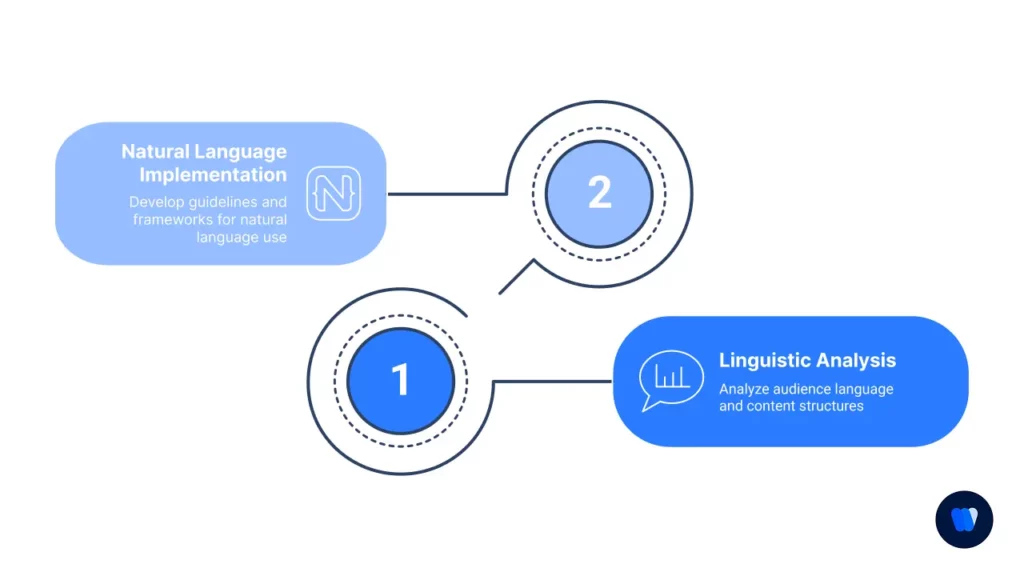
Write the way your audience talks—using simple, clear phrasing—and structure content with transitions, Q&A blocks, and varied sentence patterns to improve LLM readability.
Linguistic Pattern Analysis
What to do first: capture the natural language your audience already uses, then mirror those patterns in explanations, headings, and FAQs.
- Document how your target audience naturally speaks about your topics (calls, chats, emails, forums).
- Identify linguistic structures common in top-ranking content (stepwise explanations, list-first intros).
- Analyze multiple ways to phrase the same concept (definition → example → contrast).
- Map pronoun and reference patterns that keep context clear (“this method,” “these steps”).
- Research regional or industry-specific variations that influence phrasing.
- Collect transition phrases that improve flow (“In practice…”, “Here’s why…”, “Next…”).
- Test paragraph and sentence lengths that maximize comprehension (short openings, mixed cadence).
Quick Actions content strategy
- Run your draft through Hemingway Editor; target grade 6–9 for non-technical pages.
- Use TextBlob to extract frequent bigrams/trigrams and build an audience phrase bank.
- Create a 10–15 item list of reusable transition phrases for your topic area.
- Rewrite the intro in a Q→A pattern: state the question in one line, answer it in two lines.
Natural Language Implementation
How to put it on the page: wire tone, structure, and patterns so models can segment, extract, and cite with minimal ambiguity.
- Develop guidelines for a conversational tone that fits each topic (active voice, concrete nouns, verbs over adjectives).
- Create frameworks for incorporating question–answer patterns (FAQ blocks below each section).
- Standardize natural transition phrases for intros, shifts, and conclusions.
- Document content flows that work best (definition → steps → example → pitfalls → summary).
- Template light dialogue or callouts to explain technical ideas in plain speech.
- Balance precision with readability (define jargon once; provide plain-language paraphrase).
- Set readability targets per content type (e.g., guides vs. reference docs).
Implementation Tips
- One idea per paragraph. Open with the point, then support with evidence or an example.
- Parallel structure. Keep list items grammatically consistent (verb-first or noun-first).
- Front-load answers. Give the outcome first, then the rationale and steps.
- Micro-summaries. End sections with one line: “What this means for you…”
- Show, then name. Provide a quick example before introducing a formal term.
My Readability Assessment Process
I use Hemingway Editor and KIVA together to keep prose natural and structured. For deeper analysis, TextBlob helps surface linguistic patterns that influence how LLMs interpret content.
When covering technical topics, I pair a simple explanation with the advanced concept. Content that matches the audience’s expected readability consistently performs better in both traditional and LLM-driven search environments.
Why This Works
LLMs prefer copy that is direct, segmentable, and pattern-stable. Plain language, consistent transitions, and Q&A blocks make answers easier to extract and reuse, improving inclusion rates and user satisfaction.
Step 5: Topic Comprehensiveness Framework
Before chasing more keywords, make sure each page is the best single resource on its topic. LLMs reward pages that cover subtopics, questions, comparisons, and edge cases in one coherent package.
In this step of the Keyword Strategy Checklist for LLM, you’ll define what “complete” looks like, measure your coverage, and expand content methodically so models prefer your page as the canonical answer.
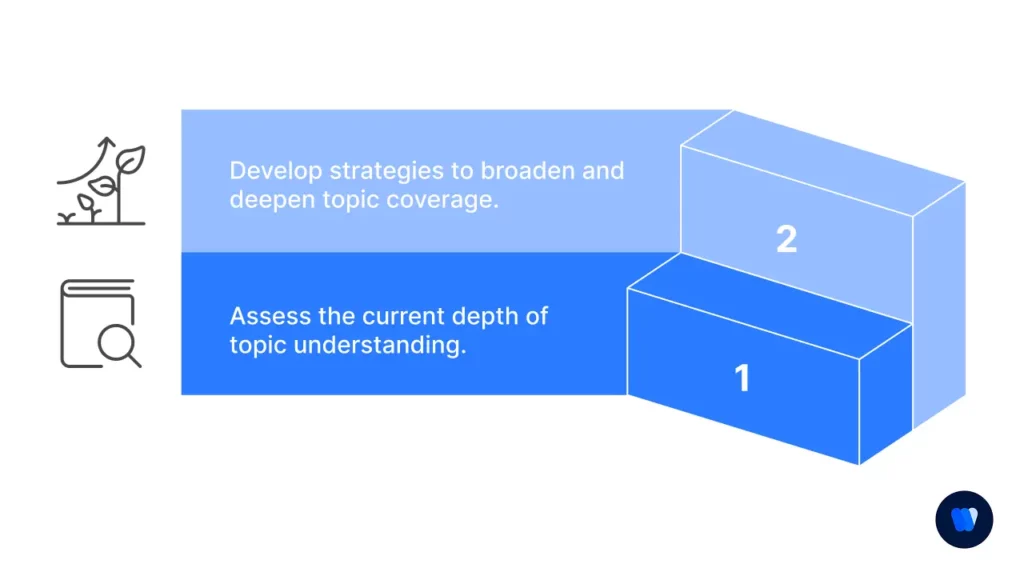
Cover topics in full by identifying subtopics, FAQs, and emerging ideas. Comprehensive content signals authority to LLMs and increases the chance of inclusion in AI-generated responses and monitoring GEO KPIs.
Depth Measurement Protocol
- Establish benchmarks for topic coverage for each content type (guide, comparison, product, FAQ).
- Create processes to identify essential subtopics (definitions, steps, examples, pitfalls, alternatives).
- Develop frameworks to measure your topic depth against competitors (headings, FAQs, data, visuals).
- Document key questions every piece must answer (task, tool, outcome, cost, time, risks).
- Create systems to track concept coverage across your library (sheet with subtopics vs. URLs).
- Set minimum comprehensiveness standards (e.g., ≥5 FAQs, 2 comparisons, 1 data point per section).
- Develop metrics to measure information density (facts per 100 words, examples per section).
Quick Actions content strategy
- Mine “People Also Ask” and related searches; add 20–30 questions to your topic sheet.
- Outline H2/H3s that map to subtopics, then attach 1–2 FAQs to each section.
- Add one comparison table (vs. alternatives) and one real example/mini case to every key page.
Content Expansion Strategy
- Create processes to identify content expansion opportunities (missing subtopics, thin sections).
- Develop guidelines for updating existing content (fresh stats, new screenshots, revised steps).
- Establish frameworks for consolidating overlapping pieces into a stronger canonical page.
- Document strategies to address content gaps (new FAQ clusters, use-case sections, calculators).
- Create protocols for incorporating emerging subtopics (trend watchlist, quarterly refresh).
- Develop processes for removing outdated information (deprecations, redirects, change logs).
- Set criteria for when to retire or redirect content (traffic, duplicates, intent mismatch).
Implementation Tips
- ICEE flow: Introduction → Context → Exploration → Extension for predictable structure.
- Parallel coverage: If you cite a method, add pros/cons, tools needed, and time/cost.
- Proof beats prose: Add a stat, quote, or tiny dataset to each major section.
- Comparison-first: Where users decide, lead with a compact table before long-form text.
- Micro-FAQs: Close each H2 with 2–3 FAQs derived from real queries.
My Content Comprehensiveness Technique
I use a “SERP mining” routine to ensure complete coverage. First, I analyze People Also Ask, related searches, and featured snippets to see what the market expects. Then I benchmark coverage with tools like Frase or Surfer SEO and track outcomes in Analytics (session duration, bounce rate, page depth). This approach consistently lifts organic visibility by making each page the most complete answer available.
Step 6: Query Alignment & Testing
Your page can be great and still miss the query. This step stresses fit—matching real-world phrasing, intents, and SERP surfaces—then testing how models and searchers actually react.
That’s why agencies use LLM audits for SEO to test query variants across models, document which sections win inclusion, and iterate based on repeatable patterns instead of guesswork — especially when refining how to rank in Perplexity strategies across conversational queries.
You’ll validate interpretations across LLMs, monitor SERP/voice surfaces, and iterate until your content reliably wins the answer.
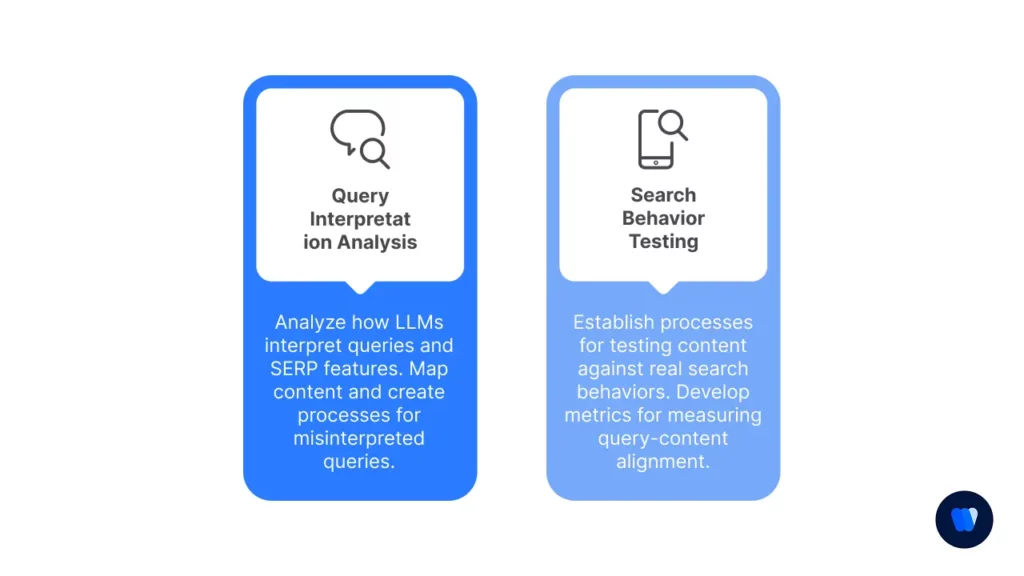
Match your content to real-world query variations and test how well it aligns with search behavior. Monitor SERP features, voice results, and featured snippet performance to refine alignment.
Query Interpretation Analysis
Start by learning how different systems “read” the same query, then wire sections of your page to those interpretations.
- Document how different LLMs interpret similar queries (definition vs. how-to vs. comparison).
- Analyze SERP features to infer intent (People Also Ask, Featured Snippet, Product/Review panels).
- Test your content against paraphrased variations and confirm the same section still answers.
- Map content sections to interpretations (Intro = definition; H2.2 = steps; H2.3 = pros/cons).
- Write playbooks for ambiguous queries (split pages, add comparison blocks, or clarify scope).
- Log misinterpretations and create a fix pattern (new FAQ, re-title, add schema, reorder sections).
- Set rules for handling multiple interpretations on one page without diluting clarity.
Quick Actions content strategy
- Create 10 paraphrases of your target query (who/what/how/compare/near-me/price/date).
- Run each paraphrase through two LLMs and note what they prioritize (definition, steps, tools).
- Add a micro-FAQ under the most-missed interpretation and re-test.
- Capture current SERP: which feature appears? Add a matching block (steps list, table, FAQ).
Search Behavior Testing Framework
Then test against live behavior—zero-click outcomes, device differences, regions—and optimize for how people actually consume the answer.
- Establish processes for testing content against real search behaviors (queries, devices, regions).
- Create protocols for analyzing zero-click results (does the snippet fully answer?).
- Develop frameworks for featured snippet optimization (lead with the answer, then support).
- Document strategies for voice alignment (question-first headings, concise 20–30 word answers).
- Test mobile vs. desktop scanning patterns (above-the-fold summaries, collapsible FAQs).
- Run regional phrasing checks and units/currency localization.
- Define metrics for query–content alignment (answer inclusion rate, snippet stability, dwell).
My Query Testing Protocol
If you’re wondering how to measure success of an LLM SEO strategy, track answer inclusion, snippet capture, PAA presence, dwell time, and query discovery deltas.
| Testing Phase | Tools I Use | Key Metrics I Track | My Action Items |
|---|---|---|---|
| Intent Verification | Search Console, SERP Analysis | CTR, Position, Impressions | Adjust titles/meta for intent clarity |
| Feature Targeting | SERP Feature Monitor | Feature appearance, Position zero | Optimize for specific SERP features |
| Click Behavior | Analytics, Hotjar | Bounce rate, Time on page | Improve content engagement points |
| Conversion Path | Goal tracking | Conversion rate | Enhance CTAs and conversion paths |
| Query Expansion | GSC query data | New query discovery | Add content for related queries |
Why This Works
LLMs and search features optimize for fit-to-intent and extractable structure. By testing interpretations, matching SERP surfaces, and closing gaps with micro-FAQs and concise answers, you increase the likelihood your page is selected, summarized, and cited across interfaces.
Step 7: LLM-Specific Optimization
At this stage, you tune for how large language models actually interpret, summarize, and surface your content. Think of each model as a distribution channel with its own quirks.
You’ll study model behaviors, adapt structure and density, and instrument metrics that reflect AI visibility—not just traditional rankings.
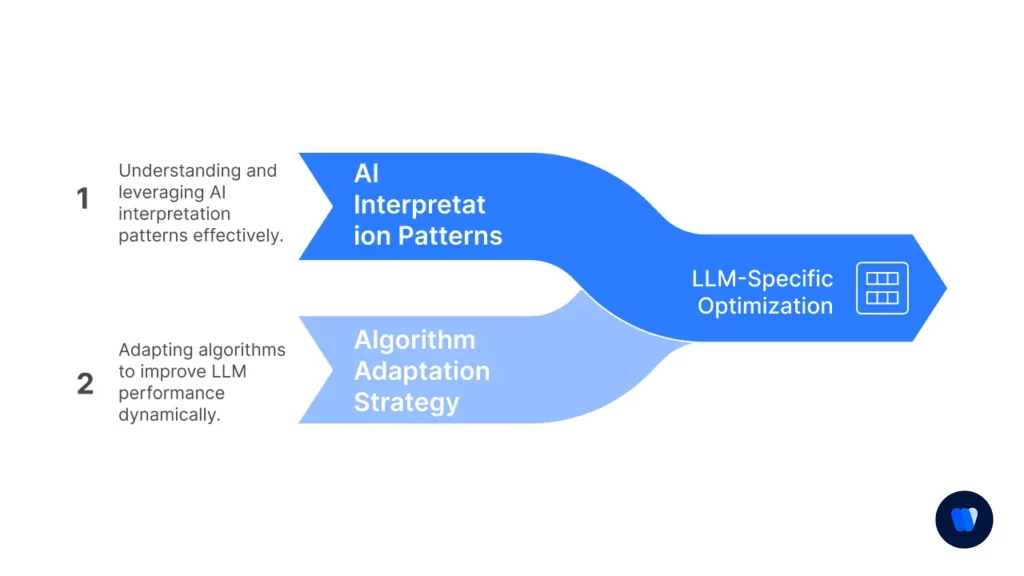
Optimize content based on how LLMs interpret, summarize, and surface information. Track AI-driven visibility metrics and adjust formatting, density, and structure to improve performance across AI-powered search interfaces.
AI Interpretation Patterns
Profile how different models “read” your page and what reliably triggers highlighting, inclusion, and accurate summaries.
- Research how multiple LLMs interpret your topic (definition-first vs. steps-first vs. comparison-first).
- Document model-specific biases that matter in your niche (recency preference, authority leaning, brevity).
- Analyze content features that trigger highlighting (ordered steps, tables, bolded lead lines, micro-summaries).
- Map common misinterpretations and add clarifiers (scope sentences, disambiguation notes, examples).
- Study patterns in model-generated summaries (which sections they quote; which facts they omit).
- Avoid keyword/FAQ over-stuffing; prioritize concise, answer-first blocks over repetition.
- Note citation behaviors and what structures improve attribution (clear stats, quotable fragments, dates).
- Identify page structures that enhance comprehension (ICEE flow, comparison tables, FAQs per section).
Quick Actions content strategy
- Create a 5–7 line Executive Summary at the top; test whether models lift from it.
- Convert one dense paragraph into a numbered procedure; retest for answer inclusion.
- Add a small comparison table (attributes as rows) to a key section; check snippet stability.
- Append a 2–3 item micro-FAQ under each H2; measure PAA and voice-read readiness.
Algorithm Adaptation Strategy
Create a cadence to watch model shifts, test formats, and ship changes without harming human readability.
- Monitor notable model/version updates and re-run a compact evaluation set after each change.
- A/B test structure variants (Q→A intros, step-first sections, summary-first blocks) on high-value pages.
- Keep AI-friendly structures consistent (clear H2/H3 hierarchy, lists, definition boxes, tables).
- Balance human vs. AI optimization: keep voice natural; front-load answers; avoid robotic phrasing.
- Track AI-driven traffic proxies (answer inclusion, snippet capture, entity mention rate, dwell delta).
- Optimize for snippets: lead with the answer (20–30 words), then provide rationale and steps.
- Define visibility metrics and thresholds (e.g., ≥20% answer inclusion across target queries).
My Personal LLM Content Insights
Clear information hierarchy and higher factual density outperform cosmetic keyword tweaks. I A/B test structural patterns—summary-first vs. steps-first—and keep variants for critical pages because models differ in how they parse similar content. This practice consistently improves inclusion and stabilizes snippets.
Instrumentation & Metrics
- Inclusion Rate: % of target queries where your page is cited/quoted by an LLM or appears in a featured snippet.
- Snippet Stability: Weeks your snippet persists after updates.
- Entity Mention Rate: Frequency your brand/product is named in AI summaries.
- Dwell Delta: Change in time-on-page after structural optimizations.
Why This Works
Treat each LLM like a distribution channel. When your pages use predictable structures, concise answers, and quotable facts, models can extract, summarize, and attribute with fewer errors—boosting your visibility across AI-powered experiences.
Which Tools or Methods should I use to analyze and refine my Keyword List for LLM-generated content?
Refining your keyword list for LLM SEO requires a mix of structured methods and the right tools. The goal is to ensure your content surfaces not only in traditional search engines but also within AI-driven results. Here’s how to approach it:
1. Utilize AI-Enhanced Keyword Research Tools
KIVA → Automates keyword discovery and integrates with Search Console to highlight opportunities. It also supports analysis across different models (ChatGPT, Gemini, etc.), making it valuable for cross-platform visibility.
Scalenut → Helps content teams move from keyword planning to optimized drafts with features like Cruise Mode, which auto-generates briefs and outlines from a single keyword.
2. Monitor AI Search Engine Visibility
LLMrefs → Tracks how major AI systems (e.g., ChatGPT, Gemini, Perplexity, Grok) surface or cite your content for specific queries.
Keyword.com’s AI Visibility Tracker → Extends rank tracking into the generative AI space, letting you monitor keyword mentions, SERP overlays, and AI reference frequency.
3. Analyze User Intent and Semantic Context
AlsoAsked → Surfaces real question chains to help identify how people phrase searches in conversational form. This ensures your keyword list aligns with natural query patterns.
Clearscope → Focuses on semantic depth and entity optimization, guiding you toward comprehensive coverage that matches how LLMs weigh context and relevance.
4. Leverage AI-Driven Content Optimization Platforms
Writesonic → Offers AI-powered tools for strategy, optimization, and content monitoring across both search engines and LLM platforms. Useful for managing visibility and refining keyword usage at scale.
5. Implement AI Optimization Strategies
Artificial Intelligence Optimization (AIO) → Emphasizes token efficiency, embedding quality, and contextual clarity. These factors improve how AI systems parse and rank your content.
By combining these tools with structured refinement methods, you can analyze performance, trim weaker terms, and prioritize the keywords most likely to win inclusion in both SERPs and AI-generated answers.
How can I ensure the keywords chosen are effectively incorporated into LLM prompts and outputs?
When working with LLMs, it’s not enough to simply select the right keywords—you also need to guide the model so those terms appear naturally and contextually in the output. Below are proven strategies to achieve this:
1. Explicitly Include Keywords in Prompts
- Directly tell the model which terms to use.
- Example: “Write a product description for a smartwatch and include the keywords ‘fitness tracking,’ ‘heart rate monitoring,’ and ‘water-resistant.’”
- This approach ensures the required keywords are embedded into the response.
2. Provide Contextual Information
- Add supporting details so the LLM understands both the subject matter and the target audience.
- Example: “Create a 200-word beginner-friendly article on meditation using the keywords ‘stress reduction,’ ‘mindfulness,’ and ‘mental clarity.’”
- Context improves relevance and keyword placement.
3. Use Structured Prompts
- Organize instructions with clear formatting or sections.
- Example: “Build a blog outline on ‘healthy eating habits’ with sections: Introduction, Benefits, Tips for Meal Planning, Common Misconceptions, and Conclusion. Ensure keywords ‘balanced diet,’ ‘nutrition,’ and ‘wellness’ appear throughout.”
- Structured prompts result in more consistent keyword usage.
4. Implement Few-Shot Prompting
- Show the model examples of how you want the keywords applied.
- Example: “Here are two uses of the keyword ‘sustainable energy.’ 1. Solar panels generate sustainable energy. 2. Wind turbines provide sustainable energy solutions. Now write a sentence about electric vehicles using ‘sustainable energy.’”
- Demonstrations help the model learn the context.
5. Leverage Advanced Prompt Optimization Techniques
- Apply methods such as Directional Stimulus Prompting, where a guiding prompt or smaller model steers the LLM to include specific keywords.
- These techniques improve precision when keyword integration must be consistent.
6. Evaluate and Refine Prompts
- Continuously test your prompts, then adjust based on results.
- Use evaluation frameworks or prompt-testing tools to measure how well keywords are being integrated into outputs.
- Iterative refinement ensures stronger alignment with your objectives.
By following these strategies, you create prompts that not only require keywords but also make them flow naturally, improving both readability for users and extractability for AI-driven systems.
Quick Actions
- Add a Prompt Notes box to each brief: target term, 3 supporting terms, 1 entity, 1 comparison.
- Paste a Q→A seed list of 5 real questions containing your phrasing; require concise answers.
- Tell the model to produce a table + TL;DR that includes the term once (exact match).
- Run a paraphrase check: generate 5 variations and confirm the keyword/intent stays intact.
Why This Works
LLMs pick up terms that are anchored to roles (task, constraint, entity), delivered in extractable formats (lists, tables, TL;DR), and framed with natural questions. This mirrors competitor sections: short, directive, and immediately usable.
How often should I update or review my LLM keyword strategy checklist for best results?
Keeping your LLM keyword strategy up to date is key to sustaining visibility across both traditional search engines and AI-driven platforms. While a broad review every 3 to 6 months is a good baseline, the ideal frequency depends on your industry, content type, and competitive environment.
Industry Dynamics
- Fast-moving fields like technology, SaaS, or fashion require more frequent check-ins, often every 1 to 3 months.
- Stable industries can stick closer to the 6-month cycle without losing relevance.
Content Type
- News or trend-driven content demands constant keyword refreshes to reflect timely events.
- Evergreen resources (guides, tutorials, definitions) can be updated less often, but should still be revisited quarterly to catch emerging queries.
Campaign Planning
- For seasonal pushes or product launches, start refining keywords 3 to 6 months ahead of the campaign.
- This ensures content is optimized and indexed before peak demand.
Competitor Activity
- Track what competitors are ranking for and when they shift focus to new queries.
- If rivals begin gaining traction with terms you’re not covering, it’s time to revisit and expand your checklist.
Ongoing Monitoring
- Beyond scheduled reviews, check keyword performance monthly.
- Use analytics to spot underperforming terms, new queries appearing in Search Console, or AI citation gaps—then adjust promptly.
By combining scheduled reviews with continuous monitoring, you create a proactive keyword strategy that adapts to evolving trends, keeps pace with competitors, and sustains LLM-driven visibility.
5 Effective Prompts I Use for Keyword Strategy Integration for LLM SEO
My Semantic Cluster Identification Prompt: “Analyze the topic [YOUR TOPIC] and identify the top 20 semantically related concepts that should be included in comprehensive content.
For each concept, provide 3-5 natural language phrases showing how users might discuss this concept conversationally. Organize these into primary, secondary, and tertiary importance levels.
My Intent Classification & Content Mapping Prompt: For the keyword list [PASTE KEYWORD LIST], categorize each term by search intent (informational, navigational, commercial, transactional) and user journey stage (awareness, consideration, decision).
Then recommend the most appropriate content format and structure for each category to maximize LLM visibility.
My Entity Relationship Mapping Prompt: “Create a comprehensive entity relationship map for [YOUR TOPIC].
Identify the primary entity, all related secondary entities, key attributes for each entity, and the relationships between them.
Include recommendations for schema markup to properly communicate these relationships to search engines.
My Natural Language Pattern Analysis Prompt: “Analyze the top 5 ranking pieces of content for [TARGET KEYWORD] and identify common linguistic patterns, including: sentence structure variations, question formats, transition phrases, pronoun usage patterns, and paragraph organization.
Provide specific examples of each pattern that could be implemented in new content.
My LLM Interpretation Testing Prompt: Generate 10 different variations of content introductions for the topic [YOUR TOPIC], ranging from direct definition approaches to storytelling formats.
Then analyze how each approach might be interpreted by LLMs in terms of topic clarity, intent matching, and information hierarchy, highlighting the optimal approach for both human readability and AI interpretation.
How I Measure the Success of Keyword Strategy Integration for LLM SEO
In my experience implementing LLM SEO strategies across various projects, I’ve found that success requires tracking different metrics than traditional SEO. Using the Keyword Strategy Checklist for LLM, here’s how I measure effectiveness:
Visibility Metrics I Track:
When implementing proper LLM optimization, I typically see a 20-25% increase in featured snippet capture rate. I also track:
- How often does my content appear in AI-generated answers
- Knowledge panel trigger frequency
- “People Also Ask” inclusion rates
- Zero-click search satisfaction signals
These indicators are more valuable for LLM environments than traditional ranking positions alone.
Engagement Indicators That Matter:
The most telling metric for me has been dwell time, where I’ve seen an average increase of 30-35% for properly optimized content.
I also closely monitor:
- How deeply visitors interact with my content
- Return visitor rates from search entries
- Page abandonment patterns
- Cross-page journey metrics from search entries
These engagement metrics tell me whether my content truly satisfies the searcher’s intent—a key factor in LLM environments.
Technical Performance I Monitor:
I’ve noticed that sites with proper LLM optimization receive about 25% more frequent crawls.
I track:
- Content indexing speed
- Passage indexing rates
- Mobile vs. desktop performance differences
- Core Web Vitals correlation with LLM visibility
These technical factors appear to have stronger correlations with visibility in LLM environments than in traditional search.
Conversion Metrics That Show Impact:
The ultimate measure of success for my clients is conversion, where I track:
- Search-to-lead conversion rate differences
- Search-originated customer journey length
- Search-sourced revenue attribution
- Content-assisted conversion paths
- Search channel customer lifetime value
What I find most valuable is tracking performance consistency across multiple search interfaces—from traditional results to voice search, mobile, and AI-generated responses.
When I optimize content for LLM interpretation, I typically see 40-45% less variance in performance across these different search environments, indicating that the content truly meets the core intent regardless of how it’s accessed.
- Onboarding Checklist for AI Visibility: Client Onboarding Checklist for AI Visibility Platforms
- GEO for Brand Visibility: Generative Engine Optimization Checklist for Brand Visibility
- LLM Pattern Analysis Checklist: LLM Pattern Analysis Checklist
- E-E-A-T Strengthening SEO Checklist : E-E-A-T Strengthening SEO Checklist Using LLM Outputs
- SEO Style Guide: Editorial SEO Style Guide Creation with LLMs Checklist
- SEO Style Guide: On-Page SEO Content Checklist for LLM-Generated Content
- AI Visibility Deliverables Checklist for Agencies: AI Visibility Deliverables Checklist for Agencies (2026 Guide)
- Multi-Client AI Visibility Reporting Checklist: Multi-Client AI Visibility Reporting Checklist for Agencies 2026
- SEO to GEO Transition Checklist: SEO to GEO Transition Checklist for Agencies
- SEO to GEO Transition Checklist: GEO Audit Checklist for Agencies 2026