Agencies are getting the same question from clients everywhere: “Why aren’t we showing up in ChatGPT, Perplexity, or Google AI Overviews?”
That’s exactly why a GEO Audit Checklist for Agencies is no longer optional. Traditional SEO reports still focus on rankings, clicks, and traffic. However, those metrics don’t explain why competitors are now being quoted, cited, and recommended by AI systems while your client stays invisible.
Instead, generative engines choose sources they can access, understand, trust, and extract quickly. As a result, agencies need an audit framework built for AI visibility, not just blue-link performance.
This shift is already measurable. Google’s AI Overviews now reach 2 billion monthly users, according to reporting on Alphabet updates shared by CEO Sundar Pichai (TechCrunch, 2025). Because of that, “AI visibility” isn’t a nice-to-have—if your client isn’t eligible to be cited inside AI answers, they’re missing discovery at a massive scale.
Therefore, a Generative Engine Optimization (GEO) audit must connect technical eligibility, content format, and brand trust into one repeatable process clients can actually act on.
This guide is not another “what is GEO” explainer. It gives you a client-ready GEO audit framework agencies can productize and sell—from baseline testing to prioritized fixes and a clear roadmap.
TL;DR: What you’ll deliver to a client
- Money Prompt Set (10–30 prompts) aligned to real buyer questions and high-intent use cases
- Baseline “reality check” report showing mentions, citations, positioning/sentiment, and competitor winners (with tables + screenshots)
- Prioritized fix plan (fast wins vs roadmap items vs backlog) so clients approve next steps quickly
- Technical + content + entity audit checklist covering crawl/index eligibility, schema, citation-ready formatting, and E-E-A-T trust signals
- 30/60/90-day GEO roadmap that turns audit findings into measurable AI visibility progress
What Is A GEO Audit Checklist For Digital Marketing Agencies?
A GEO audit checklist for digital marketing agencies or AI SEO agencies is a structured framework used to evaluate how well a brand is understood, trusted, and cited by AI-powered search and answer engines such as Google Gemini, ChatGPT, Perplexity, and Google AI Overviews.
Unlike a traditional SEO audit—which focuses on keywords, rankings, and traffic—a GEO audit checklist evaluates whether AI systems can access, interpret, verify, and confidently quote a brand’s content in generated answers.
Specifically, a GEO audit checklist examines:
Did you know?
- Technical eligibility (crawlability, indexation, snippet and extractability readiness)
- Content structure and clarity (answer-first formatting, lists, tables, and semantic organization)
- Entity recognition (how clearly AI understands who the brand is, what it does, and who it serves)
- Trust and E-E-A-T signals (authors, proof, methodology, and real-world credibility)
- Citation performance (which pages get cited, for which prompts, and why)
For agencies, the purpose of a GEO audit checklist is not theory—it is diagnosis and prioritization. It identifies exactly why competitors are being cited in AI answers and what needs to be fixed, created, or strengthened so the client can earn visibility where modern discovery now happens.
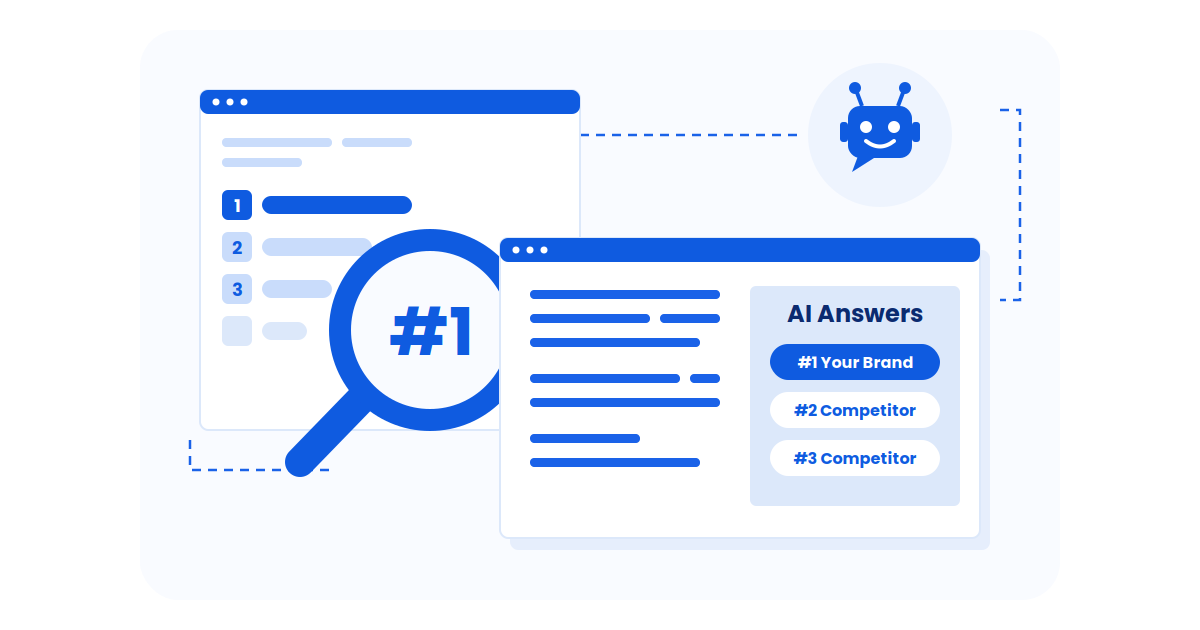
In short, a GEO audit checklist helps agencies move beyond “did we rank?” to the question that matters now: “Are we being chosen as the answer?”
How Do Agencies Run A GEO Audit To Improve AI Visibility?
Agencies run a GEO audit by testing how often (and how accurately) AI engines mention or cite a client for high-intent prompts, then mapping the gaps back to specific fixes across crawl access, page structure, entity trust, and citation readiness.
The output is a baseline visibility snapshot plus a prioritized action plan tied to the prompts that drive revenue—plus a clear way to explain AI search reporting in terms clients actually care about.
1. Set Scope (Platforms + Audience + Goals)
First, agencies decide where AI visibility matters for the client and what “winning” means. A B2B SaaS client may prioritize ChatGPT and Perplexity, while a multi-location brand may focus more on Google AI Overviews.
- Platforms: Google AI Overviews / AI Mode, ChatGPT, Perplexity, Gemini, Bing Copilot
- Audience: who is asking the questions (ICP, industry, role, stage of buying)
- Goals: citations/mentions, accurate positioning, visibility on high-intent prompts
2. Build A “Money Prompt Set” (10–30 Prompts)
Next, agencies build a prompt set that mirrors real buyer questions. In GEO, prompts replace keywords, so the prompt set becomes the audit’s measurement system—and it becomes the backbone of an ongoing reporting cadence that shows progress at the prompt level, not just “traffic went up/down.”
- Category: “Best [service] agencies for [industry]”
- Problem/Solution: “How do companies solve [problem]?”
- Comparison: “[Brand] vs [competitor]” and “Alternatives to [competitor]”
Deliverable: A prompt tracker sheet logging engine, response summary, brand mention (yes/no), citation URLs, and competitors shown instead—grounded in the reality that agencies can’t guarantee AI outcomes, but can absolutely systematize measurement and improvement.
3. Capture The Baseline (The “Reality Check”)
Finally, agencies run the prompt set across target engines and capture proof. This baseline becomes the before/after reference for every fix that follows, and it’s where most teams realize they need an agency transition checklist to operationalize GEO like a repeatable service.
- Is the brand mentioned or cited at all?
- Which competitors win citations, and what URLs are being cited?
- Is the brand description accurate, or does the AI hallucinate details?
Output: A baseline report with tables and screenshots showing AI visibility gaps, competitor winners, and the specific prompts where the brand is missing.
What’s The Difference Between An SEO Audit And A GEO Audit For Agencies?
An SEO audit and a GEO audit serve different purposes. SEO audits focus on improving visibility in traditional search results, while GEO audits focus on earning visibility, trust, and citations inside AI-generated answers—a shift that sits at the core of the SEO vs GEO divide.
| SEO Audit | GEO Audit |
|---|---|
| Optimizes for rankings in blue-link search results | Optimizes for citations and mentions in AI-generated answers |
| Uses keywords and search queries as the primary input | Uses prompts and natural-language questions as the primary input |
| Measures success by clicks, impressions, and traffic | Measures success by citation frequency, positioning, and retrieval accuracy |
| Focuses on individual pages and URLs | Focuses on entities, brand understanding, and answer-level relevance |
| Primary goal is to drive organic traffic | Primary goal is to become the trusted source AI systems choose to quote |
SEO audits are built to optimize for lists of links. They analyze technical health, keyword alignment, backlinks, and on-page optimization to improve rankings and organic traffic.
GEO audits are built to optimize for being the answer. They assess whether AI systems like ChatGPT, Gemini, Perplexity, and Google AI Overviews can understand the brand, extract clear answers, and trust the content enough to cite it.
For agencies, the shift is fundamental. SEO asks, “Can we rank?” GEO asks, “Will AI choose us as the source?” Both matter, but they solve different visibility problems in modern search—and tools like the Wellows AI search visibility platform for agencies track prompt-level citations, competitor mentions, and before/after gains in one place.
How Should Agencies Prioritize Tasks In A GEO Audit Checklist?
Agencies should prioritize GEO audit tasks based on how directly each issue affects AI visibility and citation eligibility.
The objective is to remove blockers first, strengthen citation signals next, and then scale authority in a way clients can clearly understand and approve—especially when you’re positioning GEO as a packaged service offering like generative engine optimization for agencies.
Use An Agency-Friendly Scoring Rubric (0–100)
A simple scoring framework keeps prioritization objective and client-friendly.
- Access & indexability (20 points): Can AI crawlers reach, index, and extract the content?
- Entity clarity & consistency (20 points): Is the brand clearly defined and consistently described across the web?
- Content citation readiness (30 points): Is the content structured to be quoted and summarized by AI systems?
- Trust & E-E-A-T signals (20 points): Are expertise, proof, and credibility visible and verifiable?
- Measurement & monitoring (10 points): Is AI visibility tracked over time?
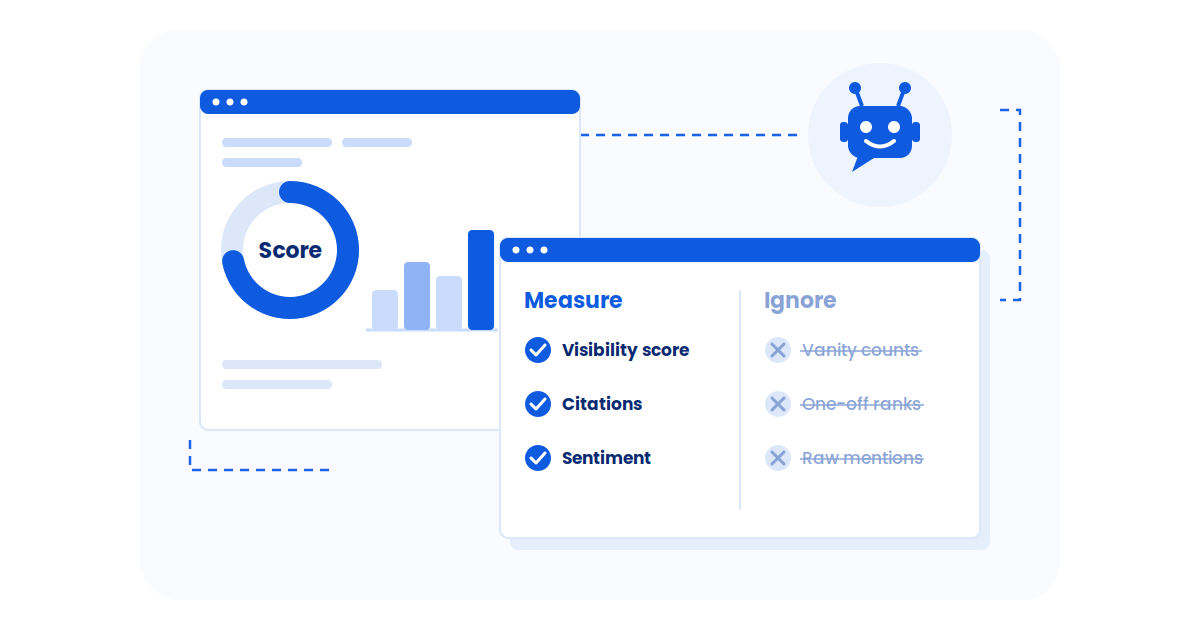
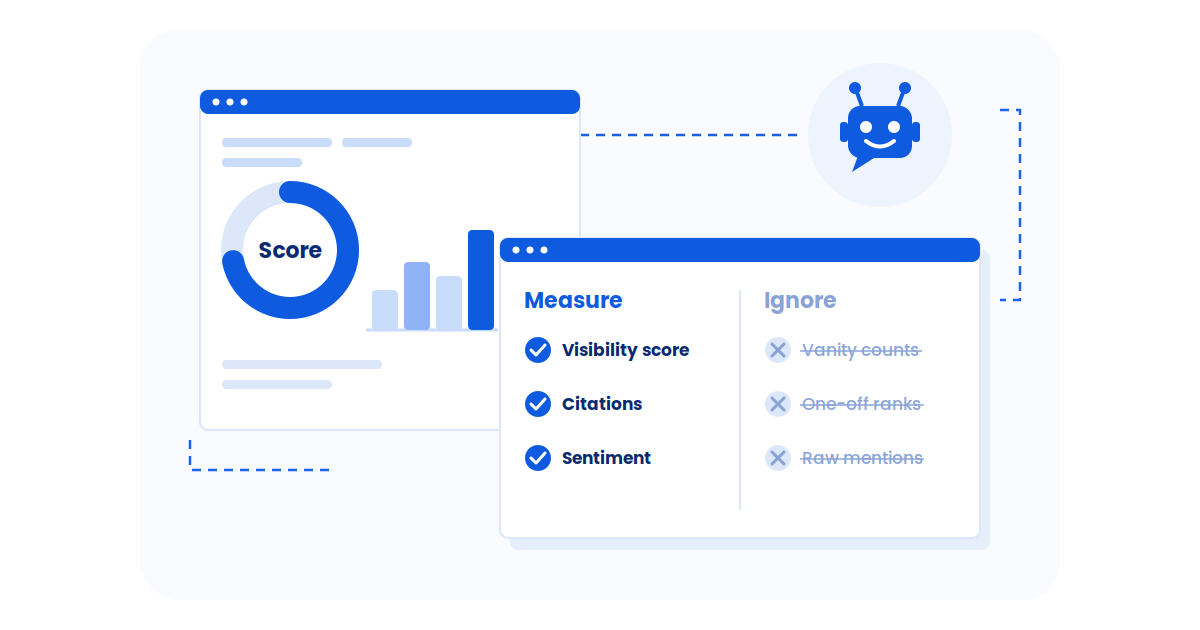
Scores below 60 signal high AI invisibility risk and should be addressed immediately—with monitoring in place so clients can see changes as they happen, not weeks later, using workflows aligned with real-time alerts for agency clients.
Turn Findings Into A Priority Plan Clients Approve
After scoring, agencies should group fixes by impact and effort to create a clear execution plan.
- High impact / low effort: Fast wins that unlock AI visibility quickly
- High impact / high effort: Roadmap items tied to long-term citation and authority gains
- Low impact: Backlog items that can wait without affecting results
Each GEO audit should conclude with a concise “Top 10 GEO Fixes” list that clients can act on immediately.
- Issue description
- Impact on AI visibility
- Effort estimate
- Owner
- Deadline
Agencies that manage client perception across multiple channels often find GEO execution aligns naturally with broader positioning and content workflows used by social media marketing agencies, making it easier to get stakeholder buy-in and keep delivery consistent.
Is There A GEO Audit Checklist For Agencies Optimizing For ChatGPT?
Yes—but it’s often misunderstood. A ChatGPT-focused GEO audit is not about keywords. It checks whether ChatGPT can retrieve the right pages, extract the key answer fast, and trust the brand enough to reuse it in responses—especially as teams measure the impact ChatGPT is having on Google search traffic.
What “ChatGPT Optimization” Really Means For An Audit
Quote-ability: Answers are direct, reusable, and easy to pull into an AI response.
Retrieval clarity: Headings and structure make the main point obvious in seconds.
Entity trust: Brand details match across the site and third-party profiles.
Evidence + structure: Claims are supported and formatted for extraction.
ChatGPT-Focused Audit Checks
Answer appears in the first 2–3 sentences after the heading.
Definitions are clean and specific (copy-friendly).
Lists/tables exist where comparison is required.
Claims include proof (data, examples, outcomes).
Brand info is consistent across the web.
Deliverable: A ChatGPT Prompt Pack that shows current visibility, gaps, and which pages to optimize or create—built from the same practical ChatGPT search visibility tips agencies use to turn findings into fixes.
What Tools Do Agencies Need For A Complete GEO Audit Checklist?
Agencies need tools that cover four areas: technical eligibility, structured data, AI visibility tracking, and reporting.
Many agencies also partner with the best technical SEO agencies when client sites need deeper support on crawl diagnostics, rendering issues, or enterprise-scale implementations.
Tools Agencies Use:
- Technical + crawl: verify crawl/index eligibility, robots/meta directives, rendering, and sitemap health
- Structured data: validate schema and ensure it matches visible content (Organization, Article, FAQ, Product, where relevant)
- AI visibility + competitors: track prompts, log citations, and map competitor-winning URLs
- Reporting: before/after tables + screenshots, citation-by-prompt tracking, and outcome notes
Recommended: Agencies can streamline prompt tracking, baseline capture, competitor citation mapping, and client reporting by using Wellows as the hub for their GEO audit workflow.
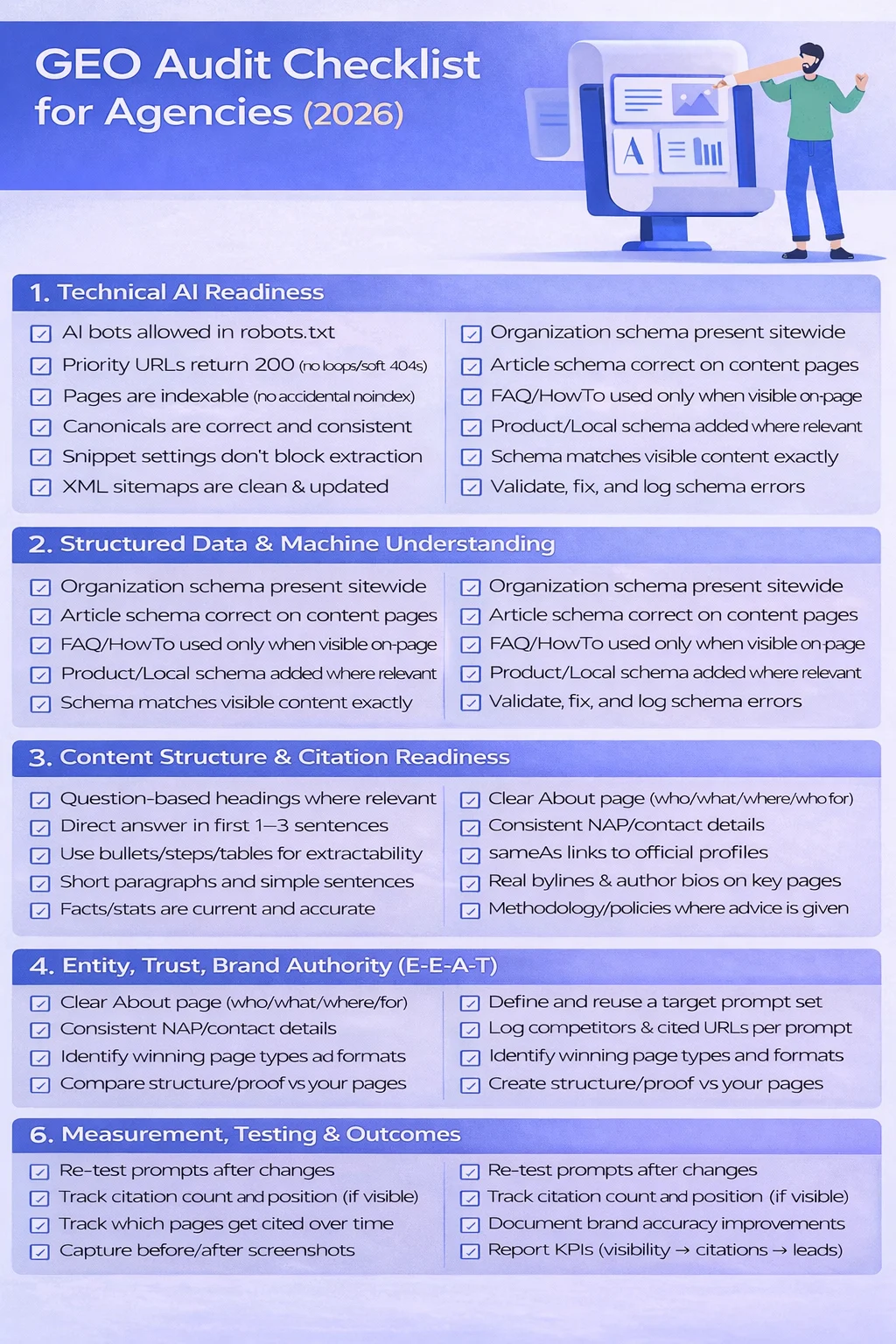
The Ultimate GEO Audit Checklist for Agencies (2026)
This checklist is designed for agencies auditing AI visibility, citations, and brand trust across generative search engines like ChatGPT, Perplexity, Gemini, and Google AI Overviews.
Unlike traditional SEO checklists, this framework focuses on how AI systems crawl, interpret, trust, and cite content.
1. Technical AI Readiness
Goal: Ensure AI systems can access, crawl, index, and extract content reliably.
1) Audit robots.txt for AI crawlers
AI Bot Access: Confirm key AI user agents are not blocked (e.g., Google-Extended, GPTBot, PerplexityBot, Bing/Copilot crawlers).
Priority Paths Crawlable: Verify priority sections are crawlable (blog, guides, services, comparisons, case studies).
Rendering Assets Allowed: Confirm critical assets (CSS/JS) are not blocked in ways that break rendering/extraction.
Rule Conflicts: Check for conflicting rules (global disallow + partial allow confusion).
Crawl Policy Notes: Document the client’s crawl policy (what’s allowed vs intentionally blocked).
2) Confirm crawl, index, and snippet eligibility
200 Status: Verify priority URLs return 200 status (no soft 404s, redirect loops, or inconsistent versions).
Indexability: Confirm pages are indexable (no accidental noindex).
Canonical Hygiene: Validate canonicals are correct and consistent (no self-conflicts or wrong cross-canonicals).
Snippet Controls: Check snippet restrictions (nosnippet, max-snippet, data-nosnippet) aren’t harming extractability.
Answer In HTML: Confirm key facts/answers appear in HTML text, not only in images/PDFs/interactive widgets.
Uncitable Pages: Identify pages ranking but likely “uncitable” due to hidden answers or restricted previews.
3) Speed up discovery and debugging
Clean Sitemaps: Ensure XML sitemaps are clean, updated, and include all priority URLs.
Sitemap Referenced: Confirm sitemap is referenced in robots.txt.
Internal Discovery: Verify important pages are discoverable via internal links (not sitemap-only).
Fast Submission: If relevant, enable faster discovery workflows (e.g., IndexNow for Bing ecosystem).
Change Log: Maintain a change log (publish/update dates + major edits) for visibility correlation.
Debug Checklist: Create a “debug list” for sudden drops (robots changes, template changes, indexing issues).
4) Optimize page experience for reading and interaction
Mobile Readability: Check mobile readability (spacing, font size, line length, contrast).
Low Friction UX: Confirm content is readable without UI friction (heavy sticky bars, overlays, autoplay, etc.).
Popup Control: Reduce intrusive popups that obscure answers or force interactions before reading.
Fast Answer Load: Ensure primary content is not delayed by heavy scripts (answer block should load fast).
Consistent Rendering: Confirm page renders consistently for crawlers (no blank states / JS dependencies).
5) Control previews and AI training thoughtfully (policy + visibility)
Snippet Tag Audit: Audit snippet control tags (max-snippet/data-nosnippet/nosnippet) page-by-page.
Intent Match: Confirm preview controls match business intent (visibility vs restriction).
Training Permissions: Document AI training permissions approach (allowed vs disallowed bots).
Avoid Blanket Blocks: Avoid blanket restrictions that unintentionally reduce eligibility for AI surfaces.
Policy Documentation: Write down the policy so future dev changes don’t break it.
2. Structured Data & Machine Understanding
Goal: Help AI systems classify pages and understand entities correctly.
6) Implement JSON-LD schema strategically
Organization Schema: Ensure Organization schema exists sitewide (name, logo, URL, sameAs, contact).
Article Schema: Ensure Article schema exists on blog/guides (headline, author, dates).
FAQPage Schema: Use FAQPage schema only where visible Q&A exists.
HowTo Schema: Use HowTo schema only where genuine step-by-step content exists.
Product/SoftwareApplication Schema: Add Product/SoftwareApplication schema where applicable (SaaS/tools).
LocalBusiness Schema: Add LocalBusiness schema if relevant (multi-location/service areas).
7) Validate schema matches visible content
Field Match: Confirm schema fields match on-page text exactly (no mismatches).
Remove Schema Spam: Remove invalid markup (FAQ without visible FAQs, fake ratings, etc.).
Author Integrity: Ensure author fields match real bylines and bios.
Date Accuracy: Confirm datePublished/dateModified reflect reality (avoid misleading dates).
Template Consistency: Standardize schema across templates to prevent conflicting outputs.
Validator Workflow: Validate with a schema testing workflow and log errors/warnings.
3. Content Structure & Citation Readiness
Goal: Make content easy to quote, verify, and summarize in AI answers.
8) Format content for direct answers (Q&A structure)
Question Headings: Start key sections with question-style headings where appropriate.
Answer First: Place the answer in the first 1–3 sentences after the heading.
Short Intros: Keep intros short (no fluff before the answer).
Copy-Friendly Definitions: Write explicit definitions (“X is…”).
One Idea Per Section: Keep each section focused on one primary idea.
9) Use clear lists and data tables (extractable formatting)
Bullets For Criteria: Use bullets for criteria, features, benefits, requirements, and summaries.
Numbered Steps: Use numbered lists for steps, processes, and checklists.
Comparison Tables: Use tables for comparisons (options, tools, services, pricing criteria).
Context Near Tables: Add key details in text near tables so context isn’t lost.
Scannable Lists: Keep lists concise and easy to scan (avoid 30-line bullets).
10) Simplify sentence structure for AI readability
Short Sentences: Keep sentences short and direct.
Define Jargon: Reduce jargon or define it at first mention.
Break Paragraphs: Avoid “walls of text” by breaking paragraphs up.
Clear Claims: State claims clearly (avoid vague, hedgy writing).
Remove Filler: Cut filler so answers are easy to extract.
11) Review topical depth vs thin coverage
Full Query Coverage: Ensure the page answers the main query fully.
Sub-Question Coverage: Address common sub-questions (who/what/why/how/when).
Competitive Angles: Add missing angles competitors cover (based on citation analysis).
Consolidate Thin Pages: Merge thin pages into stronger hub pages where needed.
Cluster Mapping: Map topic clusters to avoid duplication and cannibalization.
12) Audit content freshness and accuracy
Update Stats: Replace outdated stats with current data.
Current Platform Details: Keep product/platform references current (features, naming, capabilities).
Meaningful Updates: Use “Last updated” where it improves trust.
Fix Citations: Remove or update broken/outdated citations.
High-Risk Fact Checks: Fact-check legal, medical, financial, or policy claims.
13) Make content citation-ready (proof + specificity)
Evidence Included: Support key claims with data, examples, or source references.
Decision Criteria: Add decision criteria (how to choose, what to compare, what matters).
Key Takeaways: Include key takeaway blocks that are easy to quote.
Verifiable Details: Add numbers, thresholds, and precise definitions.
No Generic Advice: Remove advice that any site could publish.
14) Analyze internal linking for topic reinforcement
No Orphans: Ensure important pages are not orphaned (they receive internal links).
Hub & Spoke: Build hub → spoke clusters for core service topics.
Natural Cross-Linking: Cross-link related pages (guides → service pages → case studies).
Descriptive Anchors: Use anchor text that describes the relationship.
Depth Reinforcement: Use internal links to reinforce expertise depth (not random navigation).
4. Entity, Trust, Brand Authority (E-E-A-T)
Goal: Strengthen “who you are” signals so AI trusts and cites the brand.
15) Verify brand entity in Google’s Knowledge Graph
Knowledge Panel: Confirm brand search triggers a Knowledge Panel (if applicable).
Clear About Page: State what you do, who you serve, where you operate, and proof points.
Consistent NAP: Keep brand NAP/contact details consistent where relevant.
sameAs Links: Connect entity profiles via sameAs (LinkedIn, Crunchbase, etc., when appropriate).
Resolve Conflicts: Identify and correct conflicting brand descriptions across the web.
16) Optimize pages for E-E-A-T and trust signals
Real Bylines: Add author bylines on key content.
Credentialed Bios: Include credentials/experience relevant to the topic.
Methodology: Add “Methodology” / “How we evaluate” where recommendations are made.
Legitimacy Signals: Show contact info, policies, and business details clearly.
Outcome Proof: Use case studies with measurable outcomes and context.
17) Check digital footprint, brand mentions, and sentiment
Third-Party Mentions: Identify mentions on reputable sites (PR, podcasts, directories).
Profile Consistency: Keep key profiles consistent (name, description, services, leadership).
Misinformation Monitoring: Monitor reviews/mentions for errors AI could repeat.
Social Consistency: Align social profiles to reinforce entity clarity.
Mitigation Plan: Document negative sentiment/false claims with a mitigation plan.
5. Competitive Citation Analysis
Goal: Learn why AI cites competitors and how to replace them.
18) Analyze competitors getting AI citations
Prompt-Level Logging: Log which competitors appear and what URLs are cited for each target prompt.
Winning Page Types: Identify competitor page types that win (glossary, comparison, guide, stats, methodology).
Structure Comparison: Compare structure (faster answers, proof, tables, clearer entity signals).
Citation Asset Gaps: Identify where you can publish a better citation asset.
Page Mapping: Map opportunities to specific pages (optimize existing vs create new).
19) Benchmark brand/social presence and sentiment vs competitors
Visibility Benchmark: Compare third-party visibility (mentions, directories, lists, thought leadership).
Expert Presence: Compare leadership/expert presence (bios, interviews, LinkedIn strength).
Positioning Consistency: Compare positioning consistency (do they own a niche clearly?).
Minimum PR Plan: Identify the minimum viable PR/authority plan to close the gap.
Revenue Priority: Prioritize actions tied to revenue-driving prompts (not vanity mentions).
6. Measurement, Reality Testing, Outcomes
Goal: Prove impact and make GEO a repeatable retainer process.
20) Test on Perplexity, ChatGPT, and Google AI Overviews (reality check)
Re-Test Prompts: Re-run the prompt set after changes and compare mention rate.
Track Citations: Track citation count and citation position changes (if visible).
Better URLs Cited: Confirm cited URLs improved (e.g., service page cited instead of random blog).
Accuracy Improvement: Document brand description accuracy improvements.
Proof Screenshots: Save before/after screenshots for client reporting, or pull date-stamped snapshots from Performance History.
21) Measure GEO outcomes pragmatically (agency reporting)
Share Of Citations: Track “share of citations/mentions” for the prompt set monthly.
Cited Page Focus: Monitor which pages are cited and prioritize improving those first.
Quarterly Deep Audit: Run a quarterly deep-audit cycle (technical + entity + content refresh).
Outcome Tie-In: Tie AI visibility to outcomes where possible (assisted conversions, branded demand, leads).
Simple KPI Dashboard: Maintain a KPI dashboard clients understand (visibility → citations → pipeline).
What Is A 30/60/90-Day GEO Roadmap For Agencies?
- Days 1–30: Fast Wins (Fix Access + Prove The Baseline):
Focus on removing technical blockers and creating a clear “before” snapshot clients can understand.
- Fix Crawl/Index Issues: Resolve robots.txt blocks, accidental
noindex, broken canonicals, redirect loops, and snippet restrictions that reduce extractability. - Optimize Top 5 Money Pages: Apply answer-first formatting (direct answer in the first 1–3 sentences + scannable bullets + clear H2/H3 structure) on priority service/comparison pages.
- Add Author Bios And Trust Signals: Add named authors, credentialed bios, proof blocks (case study outcomes, awards, methodology), and clear contact/policy signals to improve E-E-A-T.
- Launch Prompt Tracking: Lock a stable 10–30 prompt set and capture screenshots + citations across ChatGPT, Perplexity, Gemini, and Google AI Overviews to establish a measurable baseline.
- Fix Crawl/Index Issues: Resolve robots.txt blocks, accidental
- Days 31–60: Build Citation Assets (Cover Gaps + Improve Understanding):
Focus on creating the page types AI systems cite most and improving machine understanding with structured data.
- Create Comparison Pages: Publish “Brand vs Competitor” and “Best [service] for [use case]” pages with clear criteria tables and decision guidance.
- Launch Glossary And Definition Hubs: Create concise, copy-friendly definitions (“X is…”) that answer common buyer questions and support internal linking to money pages.
- Publish Methodology And “How It Works” Pages: Document your process, evaluation methods, and standards so AI systems can verify expertise and cite clear explanations.
- Rewrite Case Studies For Quotable Outcomes: Rework case studies into citation-ready formats (problem → approach → measurable result → timeframe → proof) with scannable takeaways.
- Days 61–90: Expand Authority (Scale Coverage + Earn Third-Party Signals):
Focus on expanding visibility across more prompts and building off-site credibility that AI engines repeatedly trust.
- Build Topic Clusters: Expand supporting content around high-intent prompts and connect it with hub → spoke internal linking to reinforce topical authority.
- Run Digital PR Tied To AI Citation Sources: Pitch proof-based assets (benchmarks, frameworks, original data) to publications and directories AI engines commonly cite, then align mentions with your canonical brand description.
- Start Ongoing Monthly Monitoring: Re-test the same prompt set monthly, track share of citations/mentions, log accuracy changes, and update priority pages based on what wins citations.
What Are The Most Common Agency Mistakes That Kill GEO Results?
The most common GEO-killing mistakes are treating GEO as a one-time task, optimizing only blogs, skipping a prompt baseline, adding unsupported schema, and using generic positioning that weakens entity trust.
These issues stop AI systems from consistently accessing, understanding, trusting, and citing your client—so competitors get quoted instead.
GEO-killing mistakes
- Treating GEO As A One-Time Task: Agencies run a single audit, ship fixes, and stop monitoring. As AI answers shift, visibility drops because no one re-tests prompts, refreshes pages, or tracks citation changes.
- Only Optimizing Blogs: Agencies improve informational posts but ignore service pages, comparison pages, pricing pages, and case studies—so AI keeps citing competitors when buyers ask “best agency,” “alternatives,” or “X vs Y.”
- No Prompt Baseline (No Proof Of Lift): Without a stable prompt set, you can’t prove improvement. Clients won’t see progress because there’s no “before vs after” citation tracking.
- Schema Without Supporting Content: Agencies add FAQPage/HowTo/Product schema, but the page doesn’t show real FAQs, steps, or product details. This creates trust issues and can reduce eligibility instead of improving it.
- Generic Positioning That Weakens Entity Trust: “We do everything for everyone” language makes entity understanding fuzzy. AI struggles to place the brand in a category, so it defaults to clearer, more specialized competitors.
How To Fix Common Issues Found In A GEO Audit Checklist?
Fix GEO audit issues by removing crawl/index/snippet blockers first, then upgrading money pages for answer-first structure and proof, aligning entity signals across the web, and validating schema only when the page supports it.
This sequence prevents wasted content work and creates measurable lift in citations when you re-test the same prompt set.
How To Fix Common GEO Issues:
- Re-Test The Same Prompt Set Monthly: Keep a fixed 10–30 “money prompt” list and re-run it after every major change. Track mentions, citations, and which URLs AI chooses.
- Prioritize Non-Blog Money Pages First: Upgrade service pages, comparison pages, and case studies with answer-first intros, scannable bullets, and decision criteria so AI can cite them for high-intent prompts.
- Fix Eligibility Before Content: Remove crawl blocks, indexing errors, broken canonicals, and snippet restrictions that stop AI systems from accessing and extracting your best answers.
- Use Schema Only When The Page Supports It: Add FAQPage/HowTo/Product schema only if the visible page includes real FAQs, real steps, or real product data. Validate markup and remove mismatches.
- Tighten Entity Clarity Everywhere: Standardize one clear positioning statement across the site + profiles (About page, LinkedIn, directories), add sameAs links, and remove conflicting descriptions that confuse AI.
Checkout More Checklists!
- LLM Pattern Analysis Checklist
- Keyword Strategy Integration for LLM SEO Checklist
- E-E-A-T Strengthening SEO Checklist Using LLM Outputs
- On-Page SEO Content Checklist for LLM-Generated Content
- Editorial SEO Style Guide Creation with LLMs Checklist
- Multi-Client AI Visibility Reporting Checklist for Agencies 2026
- Social Media Marketing Agencies Checklist
- SEO to GEO Transition Checklist for Agencies
FAQs
Yes. A strong free template should cover technical access (crawl/index/snippet eligibility), structured data (schema that matches visible content), entity + trust (E-E-A-T + consistent brand signals), and prompt-based monitoring (citations/mentions across a fixed “money prompt” set). Agencies often package this as a downloadable PDF or onboarding asset so clients understand exactly what will be audited and delivered.
Run prompt monitoring monthly to track mentions/citations on the same prompt set. Run a full GEO audit quarterly (technical + entity + content + schema), with ongoing fixes in between.
E-E-A-T means Experience, Expertise, Authoritativeness, and Trust. In a GEO audit, it’s the proof layer that helps AI systems choose your client as a source—through real authorship, clear credentials, strong case studies, transparent business details, and verifiable claims.
Entity recognition is how AI systems identify who a brand is, what it offers, and where it fits. A GEO audit checks for consistency across the site, About page, schema, and third-party profiles so AI doesn’t mislabel the brand or default to clearer competitors.
Validate schema against what’s visible on-page and remove anything unsupported. Prioritize Organization and Article, then add FAQPage/HowTo/Product only when the page truly contains that content, and standardize templates to avoid conflicting markup.
Final Takeaway
SEO helps you rank, but GEO helps you get cited—and citations are now a visible growth lever in AI answers.
Use this GEO Audit Checklist for Agencies to keep clients eligible for AI retrieval, strengthen entity trust, and turn content into citation-ready assets that win prompts over competitors.
When you run the checklist on a cadence (monthly monitoring + quarterly deep audits), you can prove lift with before/after prompt testing, ship fixes clients understand, and build a repeatable service that scales across accounts.