Most SEO strategies prioritize Google, but Bing still plays a significant role in desktop search.
Optimizing for Bing SEO offers access to a different user base and lower competition. Bing favors structured metadata and optimized meta tags, precise keyword placement aligned with strong on-page SEO, and exact-match phrasing.
This guide outlines practical SEO techniques for Bing without duplicating your Google-focused workflows.
What Is Bing’s Role in Today’s Search Landscape?
Bing processes over 900 million desktop queries monthly, driven by native integration into Microsoft Edge, Windows 11, and Office products.
Which devices and platforms run on Bing’s index?
Bing’s index powers search results across Microsoft Edge, Windows Search, Cortana, Xbox, and Office 365.
Third-party search engines such as Yahoo, Ecosia, and DuckDuckGo also license Bing’s index, meaning Bing SEO influences visibility across multiple ecosystems beyond its native platform.
How does Bing’s presence compare to Google?
Did you know?
Bing’s system changes more gradually and is guided by publicly available Webmaster Guidelines, making it more accessible for structured, compliance-driven content strategies.
Why Should You Invest in SEO for Bing?
SEO for Microsoft Bing is not only a secondary channel—it is a distinct ecosystem with its own user base and ranking behaviors. Its integration across Microsoft products makes it the default choice for millions of enterprise and desktop users.
Optimizing for Bing means reaching an audience often overlooked in Google-only campaigns. The competitive environment is also different. With fewer SEOs targeting Bing, visibility is easier to achieve in high-value categories.
How much market share does Bing hold today?
SEO for Bing in the United States is especially valuable, as in certain demographics, such as enterprise users and government agencies, Bing’s usage is significantly higher due to default system configurations.
What makes Bing traffic different in terms of user behavior?
They browse more pages, stay longer on site, and show higher intent in categories like legal services, finance, and education. This makes Bing a strong channel for conversion-focused content.
Which industries benefit most from Bing optimization?
Industries with older or desktop-heavy customer segments tend to perform well. These include legal, B2B software, healthcare, manufacturing, and education.
In many of these sectors, Bing generates a higher return per click and longer session durations. This means tailoring content toward informed, research-driven users who engage beyond the first click.
How Does Bing’s Algorithm Differ from Google’s?
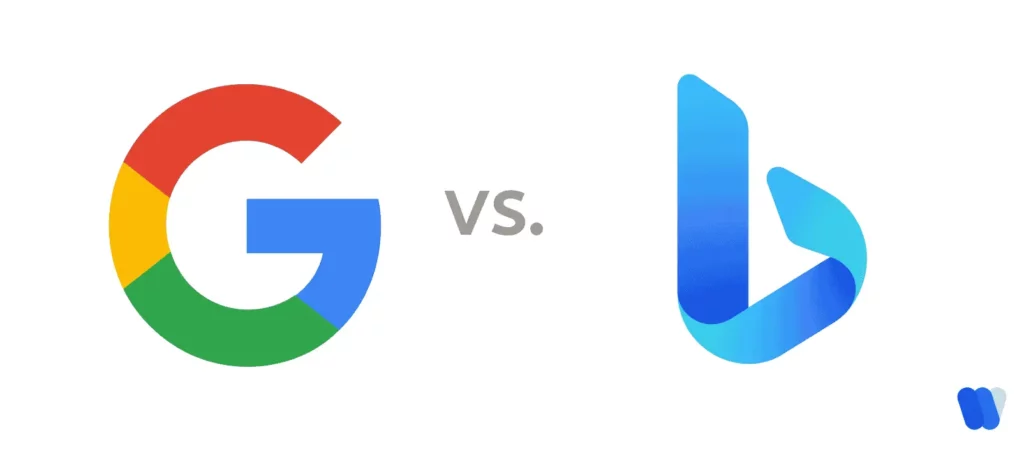
One of the most common questions is how Bing’s SEO differs from Google’s. The key distinction is Bing’s reliance on exact keywords, metadata, and social signals, while Google emphasizes semantics and user behavior
While Google emphasizes context and user behavior, Bing relies more on literal signals. It evaluates exact keyword usage, clear structure, and direct relevance over inferred meaning.
For sites that publish reference materials, technical documentation, or compliance-driven content, this creates ranking opportunities without needing to match Google’s complexity. Bing also makes its criteria public through documentation, allowing a more structured optimization process.
What signals does Bing prioritize that Google does not?
- Bing assigns greater value to exact-match keywords in titles, headings, and metadata.
- The Bing Webmaster Guidelines confirm that keyword placement in tags directly influences ranking.
- While Google increasingly relies on semantic understanding, Bing favors alignment between user query and page structure—making keyword grouping strategies essential for creating content that mirrors literal search terms.
How does Bing treat keywords, meta data, and links?
- Bing still parses meta keywords and uses them as a secondary signal.
- It expects metadata to reflect visible content. For links, Bing prioritizes backlinks from aged domains and authoritative sources (.gov, .edu, .org).
- Unlike Google, Bing places slightly more value on link age and anchor text precision than on link volume.
What should you know about Bing’s use of social signals and domain age?
- Bing incorporates social sharing as a measure of content trust.
- Pages widely shared on LinkedIn, Facebook, or Twitter may gain higher rankings over time.
- Domain age is also a factor older domains with steady content output are seen as more credible.
- These attributes support long-term visibility for resource-style pages.
To summarize, Bing prioritizes exact-match keywords, authoritative backlinks from aged domains, social signals, domain age, and user engagement metrics. Together, these make up Bing’s core ranking factors
How Should You Structure Your On-Page SEO for Bing?
Bing favors clean, structured pages with predictable formatting. Unlike Google, which uses advanced semantic interpretation, Bing ranks content based on literal relevance.
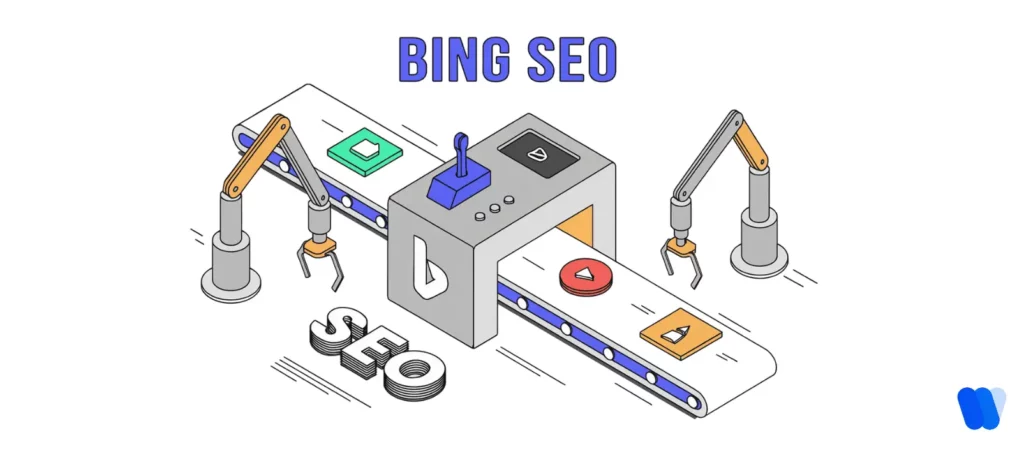
Titles, metadata, and headings must clearly reflect the intent of the page. Technical accuracy in formatting helps with faster indexing and higher visibility.
Where should you place exact-match keywords on the page?
- Bing gives higher weight to exact-match keywords in the title tag, H1, and top 100 words of content.
- Keyword usage in H2s, image alt text, and meta descriptions further reinforces topic alignment while improving Bing search rankings.
- According to SEO guidelines for Bing, consistent on-page signals help establish page relevance and rank stability.
- Use on page SEO factors as a reference to balance exact-match placement with structure, internal links, and UX.
Does Bing still recognize meta keywords and descriptions?
- Yes. While Google ignores meta keywords, Bing still evaluates them as a secondary factor.
- Meta descriptions are also indexed and can influence both rankings and click-through rates.
- This means maintaining accurate and specific metadata that matches the content headline and page intent.
Do exact-match domains or keyword-rich URLs help you rank?
- Exact-match domains can influence rankings in Bing’s system, especially in commercial or product-focused queries.
- Keyword-rich slugs (e.g., /best-noise-cancelling-headphones/) also help establish topical clarity.
- However, Bing still filters for spammy domain behavior.
- Clean URLs that reflect the search term improve trust and increase crawl efficiency without harming quality scores.
Bing Content Optimization Checklist:
Use exact-match keywords in titles, H1s, and opening text.
Align metadata with visible content.
Cite authors and credible sources.
Add multimedia with descriptive alt text.
Refresh content regularly for topical accuracy.
What Does High-Quality Content Look Like to Bing?
Bing defines high-quality content through three primary filters: relevance to the query, clarity of presentation, and transparency of authorship.
It evaluates whether the content answers the search intent directly, whether the structure is easy to scan, and whether the source appears credible—criteria closely aligned with ranking factors across search engines, though Bing weighs them differently than Google.
How long should content be to rank well on Bing?
- Bing does not publish minimum length requirements, but longer, focused pages tend to perform better.
- Pages ranking in competitive spaces often exceed 1,200 words.
- Thin content—especially under 300 words—is rarely indexed unless it meets a very narrow query.
- Each section should fully resolve one intent before moving on.
Does Bing evaluate content authorship and citations?
Yes. Bing prioritizes transparency, especially in health, finance, and legal topics. Pages that name the author, list credentials, and cite credible institutions perform better.
According to Bing Webmaster Guidelines, authoritative signals increase trust and ranking stability. For SEO for Bing, author attribution is not optional—it’s foundational.
What role do images, videos, and alt text play in Bing rankings?
Bing indexes multimedia directly and uses alt text to evaluate image context. Descriptive filenames, structured captions, and well-compressed media can help content rank in both standard and vertical search.
Pages with relevant visuals often score higher on Bing’s content quality scale, provided they load quickly and are properly labeled.
What Is the Most Effective Link Strategy for Bing?
Bing evaluates links based on authority, domain age, and contextual placement. It places higher value on links from trusted domains and penalizes manipulative linking schemes.
Unlike Google, Bing does not obscure its preference for .edu, .gov, and editorial .org backlinks. An effective link strategy for Bing relies on reputation, not just volume.
Does Bing care more about link quality or quantity?
Quality takes priority. A few authoritative backlinks often outweigh dozens of low-value links. According to Bing Webmaster Tools, editorial backlinks from aged, trusted domains are considered strong indicators of trust.
Pages that rely on reciprocal links, paid link farms, or spam networks may be penalized or excluded from the index entirely.
Which domains carry the most trust in Bing’s algorithm?
Bing favors links from domains that demonstrate stability and public trust. These include government (.gov), academic (.edu), and long-established media or nonprofit sites (.org).
Domains with a strong historical footprint and consistent publishing record carry more ranking weight. For SEO for Bing, securing coverage or mentions from reputable sources is a top priority.
How should you handle anchor text and disavow unwanted links?
Exact-match anchor text from relevant sources can improve rankings, but variation is essential to avoid over-optimization. Bing provides a disavow tool for rejecting low-quality or spammy backlinks.
If a domain sends repeated irrelevant links and does not respond to takedown requests, disavow it through Bing Webmaster Tools to preserve ranking integrity.
Do Social Shares Impact Bing SEO?
Unlike Google, Bing openly acknowledges social signals as a ranking factor. Content that earns high engagement on LinkedIn, Facebook, and Twitter may gain visibility over time.
Social data is used as a trust indicator, not just a traffic source.
How does Bing measure social engagement as a ranking signal?
Bing looks at how often content is shared, who is sharing it, and the overall consistency of engagement. Verified accounts and credible sources have more weight.
According to statements from Bing’s product team, social activity helps surface content that users deem valuable, especially for trending or time-sensitive queries.
What types of platforms influence Bing’s trust in your content?
Facebook, Twitter (X), and LinkedIn are the most influential platforms in Bing’s evaluation model.
Content that receives organic shares from real user accounts, especially within professional or industry networks, sends stronger trust signals. For SEO for Bing, earning mentions from verified or authoritative profiles improves ranking confidence.
Can buying followers or shares hurt your rankings?
Yes. Bing warns against artificial social manipulation. Paid likes, bots, and fake follower schemes are treated as deceptive tactics. If a page accumulates inorganic engagement, Bing may suppress its visibility or flag it for review.
Authenticity is essential—focus on earning real interaction through useful, shareable content.
How Should You Use Bing Webmaster Tools?
Bing Webmaster Tools SEO offers a suite of diagnostics to help site owners improve visibility. It provides access to indexing status, keyword performance, backlink data, and site health issues.
Unlike Google Search Console, Bing’s platform is more transparent in how it assigns ranking value to different elements of your site.
For growing businesses seeking structured analytics and scalable keyword insights, an AI Search Visibility Platform for Startups can complement these tools by automating keyword clustering, tracking intent-driven content, and enhancing Bing visibility efforts.
Many site owners ask what tools Bing provides for SEO. At its core, Bing Webmaster Tools acts as a central hub for submitting sites and monitoring overall SEO performance.
Optimize SEO with Bing Webmaster Tools
What setup steps are required to verify your site?
To begin, create a free Bing Webmaster Tools account and add your website. Verification can be done via XML file upload, meta tag insertion, or DNS record update.
Once verified, Bing will begin indexing your content and populating performance reports. Submitting a sitemap speeds up the discovery of new or updated pages.
Which diagnostic tools help you improve SEO performance?
The platform includes SEO site scan, keyword research, and crawl control tools. The site scan identifies technical errors, broken links, and accessibility issues. Keyword reports show impressions, clicks, and ranking trends.
These insights help guide improvements for SEO for Bing with a focus on page structure, mobile readiness, and indexing coverage.
How does Bing’s keyword research and site scan differ from Google’s?
Bing offers native keyword research within its Webmaster dashboard—a feature not available in Google Search Console. It also lets you control crawl timing to avoid peak load periods.
The SEO analyzer offers line-by-line HTML feedback. These tools are designed for technical clarity, enabling detailed optimization without third-party platforms.
What industry should I choose for my SEO company in Bing Webmaster Tools?
When setting up your SEO company’s profile in Bing Webmaster Tools, it’s important to select an industry that accurately reflects your business focus. While Bing Webmaster Tools doesn’t provide a predefined list of industries, choosing one that aligns with your services helps Bing understand your site’s purpose and content.
For an SEO company, the most relevant categories are:
- Internet Services: Covers businesses offering online services, including SEO and digital marketing.
- Marketing and Advertising: Encompasses companies that specialize in promotion, branding, and search optimization.
Selecting the right industry category ensures Bing can properly categorize your website, which may improve your visibility in search results.
What Technical Fixes Can Improve Bing SEO?
Bing uses its own crawler, Bingbot, to evaluate technical elements such as page speed, mobile compatibility, and internal link structure. Conducting a site audit or a structured technical SEO audit can reveal and resolve issues that may hinder Bing’s ability to properly index and rank your content.

To further improve crawl control and prevent duplicate indexing, implementing a valid canonical tag helps Bing consolidate similar URLs and pass ranking signals to the preferred page.
Does Bing prioritize mobile-friendly design and site speed?
Yes. Bing uses mobile-first indexing similar to Google but with different benchmarks. Sites must display consistent content across mobile and desktop views. Page speed also influences ranking—Bing recommends under two seconds for initial load.
Tools like PageSpeed Insights or Bing’s own SEO Analyzer can help flag performance issues.
How well does Bing crawl JavaScript-heavy websites?
Bing’s crawler has limitations with dynamic JavaScript rendering. Content loaded asynchronously may not be indexed unless pre-rendered or server-side rendered.
For SEO on Bing, critical content should be available in static HTML. Using semantic HTML5 and avoiding client-side rendering for primary text ensures proper indexing.
What internal link structure works best for Bingbot?
Bing favors shallow, logically organized site hierarchies. Important pages should be reachable within three clicks from the homepage. Use clear, descriptive anchor text and avoid JavaScript-based navigation.
A flat architecture with frequent internal links improves crawl depth and ensures that Bingbot indexes both top-level and supporting content effectively.
How Does Local SEO Work on Bing?
Bing Places is Bing’s equivalent of Google Business Profile, and it plays a central role in local pack visibility. Accurate business data, customer reviews, and consistent NAP (Name, Address, Phone) details across directories help improve rankings in Bing’s local results.
How do you claim and optimize your listing on Bing Places?
To get started, visit Bing Places for Business and search for your company. You can claim an existing listing or create a new one by verifying via phone, email, or postcard.
Once verified, add your business hours, categories, images, and a clear description. Updated listings are more likely to appear in the local pack.
What factors influence Bing’s local pack rankings?
Bing prioritizes relevance, distance, and prominence. It compares the search query with business categories, checks the location’s proximity to the user, and evaluates online presence.
Prominence is based on backlinks, directory mentions, and review volume but your internal link architecture also plays a crucial role in ensuring Bingbot can effectively crawl and surface key local pages.
How do reviews and NAP consistency affect your visibility?
Consistent NAP information across local directories builds trust with Bing’s algorithm. Discrepancies can lower your ranking or disqualify you from appearing in the local pack.
Customer reviews also matter Bing evaluates both quantity and sentiment. Encourage satisfied customers to leave feedback and respond professionally to all reviews to signal credibility.
How Should You Monitor and Update Your Bing SEO Strategy?

Bing requires continuous SEO management, not just a one-time setup. Regularly reviewing performance metrics, adjusting content based on ranking shifts, and updating technical elements ensure long-term visibility. Bing’s tools and traffic patterns make it easier to track incremental improvements over time.
- How can you track rankings and impressions using Bing Webmaster Tools?:
Bing Webmaster Tools offers daily keyword reports showing impressions, average position, and click-through rate. These metrics reveal how well your pages align with user queries.
Use filters to identify underperforming keywords and adjust title tags or content targeting. Monitoring this data weekly helps maintain steady SEO for Bing growth.
- What metrics show whether your optimizations are working?:
Key indicators include impression volume, ranking position, bounce rate, and crawl status. Improvements in these areas suggest that Bing is indexing and ranking your content more favorably.
For local businesses, increased visibility in Bing Places and higher user engagement are also strong signals of success.
To scale these ongoing improvements efficiently, AI SEO automation tools can help streamline audits, refresh metadata, and trigger updates based on real-time Bing performance data.
Wellows, an AI Search visibility platform for Startups, makes this easier by uncovering high-value keywords, clustering them by intent, and generating on-brand, optimized content for both Google and Bing.
- When and how should you update content to maintain visibility?:
Review and revise pages at least once every 6–12 months. Update statistics, refresh examples, and improve keyword alignment based on new search trends.
Re-submit updated URLs via Bing Webmaster Tools to prompt faster re-crawling. Consistent updates help retain rankings and adapt to any changes in Bing’s algorithmic signals.
What’s the Long-Term Value of Optimizing for Bing?
Bing offers a steady, low-volatility source of search traffic especially from desktop, enterprise, and voice-powered platforms. While it doesn’t command Google’s scale, it provides consistent visibility for content that emphasizes clarity, structure, and trust.
For long-term SEO, Bing supports stable rankings with less frequent algorithm disruption.
How does Bing complement your overall SEO strategy?
Bing strengthens multi-channel visibility. Optimizing for its crawler supports performance on platforms like DuckDuckGo, Yahoo, Ecosia, and LinkedIn search.
This broader indexing increases content lifespan and non-Google discoverability. For SEO for Bing, the payoff lies in diversified reach across high-intent desktop users and enterprise environments.
What are the risks of ignoring Bing in favor of Google-only tactics?
Overreliance on Google exposes your site to greater ranking volatility. A single update can reduce visibility overnight. Bing’s algorithm changes are less abrupt and better documented.
Ignoring Bing also means missing audiences from Edge, Windows, and Microsoft Search especially those in regulated industries.
What are the most sustainable practices for maintaining high visibility on Bing?
Consistency matters. Use exact-match keywords in titles, cite authoritative sources, update content annually, and build links from trusted domains. Maintain structured data and responsive design.
Revisit Bing Webmaster Tools monthly to resolve crawl issues. These habits ensure lasting visibility without chasing volatile trends.
FAQs
Bing focuses more on exact-match keywords, metadata accuracy, social signals, and domain age, while Google relies heavily on semantic search and user behavior. This makes Bing optimization more structured and literal compared to Google.
Place exact-match keywords in titles, H1s, metadata, and the first 100 words of your content. Bing still uses meta keywords as a secondary signal, so keep them relevant and aligned with visible content.
Social signals directly impact Bing rankings. Pages with higher engagement on LinkedIn, Facebook, and Twitter often gain visibility over time, as Bing treats authentic shares as a sign of trust.
Yes. Bing indexes and ranks images, videos, and other multimedia directly. Using descriptive alt text, filenames, and captions improves both visibility in Bing search and relevance for users.
Bing Webmaster Tools lets you submit sitemaps, run SEO scans, track backlinks, and research keywords. These features make it easier to monitor performance and fix issues that affect your Bing SEO.
Conclusion
Did you know?
For brands seeking stability and extended reach, Bing offers long-term visibility with less volatility than Google.Investing in SEO for Bing means building trust, clarity, and technical strength into your site.
It also means accessing a high-intent audience often missed by competitors.By following the methods in this guide, you position your content for sustained performance across Bing and its partner platforms.