AI visibility solutions (growth marketing agencies)
AI visibility solutions for growth marketing agencies are the tools, workflows, and services agencies use to help clients get discovered, cited, and recommended across AI search platforms like ChatGPT, Google AI Overviews, Gemini, Claude, and Perplexity. Unlike traditional SEO, which measures rankings and backlinks, AI visibility solutions focus on prompt-level visibility, LLM citations, entity recognition, competitor analysis, and content optimization to increase how often a brand appears in AI-generated answers.
For agencies, this creates a measurable service that complements SEO by turning AI visibility into content, outreach, and reporting opportunities clients can understand and pay for. In Q1 2026, Wellows analyzed 471,698 prompts, 1.92 million AI responses, and 9.25 million citations, finding that only 2.9% of citations in marketing-related answers came from brand-owned websites.
It also creates an operational challenge: agencies need a way to track, compare, and report AI visibility across multiple clients without turning every month into a manual reporting exercise.
This guide explains the solutions growth marketing agencies need to improve AI visibility with Wellows, deliver measurable results, and package AI visibility as a scalable client service. You’ll get a delivery framework, how can you improve a clients’ AI visibility, best ai visbility tools for growth marketing agencies, the economics, and the exact way to report it.
AI visibility solutions help growth marketing agencies improve how clients are discovered, cited, and recommended across AI search.
A complete AI visibility service combines prompt tracking, entity optimization, third-party citation building, AI content optimization, content cannibalization detection, competitor AI visibility analysis, and AI visibility reporting into a repeatable workflow that agencies can scale and clients can measure.
Running AI visibility as a service comes down to seven steps:
- Track the buyer prompts that matter instead of relying only on traditional keywords.
- Improve entity clarity so AI models can confidently understand and recommend the brand.
- Earn trusted third-party citations because most AI recommendations rely on external sources.
- Optimize content so AI systems can easily extract, cite, and recommend the best pages.
- Prevent content cannibalization by strengthening existing pages before creating new ones.
- Compare AI visibility against competitors to uncover citation gaps and prioritize the highest-impact opportunities.
- Report citation share, prompt-level visibility, competitor performance, and progress over time to demonstrate measurable ROI and build a scalable AI visibility retainer with Wellows.
What AI Visibility Solutions Should Growth Marketing Agencies Offer Clients?
Growth marketing agencies should offer seven core AI visibility solutions: prompt tracking, entity optimization, third-party citation building, AI content optimization, content cannibalization prevention, competitor AI visibility analysis, and AI visibility reporting.
Together, these help clients earn more citations and recommendations across ChatGPT, Google AI Overviews, Gemini, Claude, Perplexity, and other AI search engines.
The 7 Core AI Visibility Solutions Growth Marketing Agencies Should Offer
| Solution | What it solves | Deliverable |
|---|---|---|
| Prompt Tracking | Optimizing for searches buyers never make | Commercial buyer prompt set across engines with citation history |
| Entity Optimization | AI can’t confidently identify the brand | Homepage, About page, structured data, and listing fixes |
| Third-Party Citation Building | Owned content doing all the heavy lifting | Directory placements, roundups, and editorial coverage |
| AI Content Optimization | Pages too buried for AI to extract a clean answer | Answer-first rewrites with FAQ schema |
| Content Cannibalization Prevention | Multiple pages splitting citation authority | Consolidation plan and single-URL routing before new content is created |
| Competitor AI Visibility Analysis | Unknown gaps on prompts that matter | Competitor citation gap report by prompt and source |
| AI Visibility Reporting | No story to keep the retainer alive | Baseline-to-now citation share report with activity log |
They work best as a sequence. First, understand which prompts matter. Then make sure AI can clearly understand the brand, strengthen the pages most likely to be cited, earn mentions from trusted third-party sources, and measure what changed. Skip a step, and results become much harder to reproduce.
For most agencies, the challenge is not understanding these seven solutions in theory. It is operationalizing them across multiple clients in a way that is reportable, scalable, and easy for clients to understand.
1. Prompt Tracking: Track the Questions Buyers Actually Ask AI
Traditional keyword research still has its place, but AI search behaves differently. Instead of typing a few words into a search box, buyers ask complete questions with context. If you’re only tracking keywords, you’re likely optimizing for searches your client’s buyers never make.
Prompt tracking records not just which prompts fire but every citation the model returns — so you build a picture of citation share over time, not just mention frequency.
1. Prompt tracking, in practice
❌ Bad: An agency tracks “project management software” because it has 90,000 monthly searches.✅ Better: The agency tracks “What’s the best project management tool for a small marketing agency under $100?” because that’s much closer to how a buyer asks ChatGPT — and records which sources get cited in the answer each time.
Commercial-intent prompts are where recommendations happen. In our Q1 2026 research, 36% of marketing prompts carried commercial intent, making them the highest-value prompts to monitor.
Weight your tracking toward those questions instead of broad informational topics that rarely influence buying decisions.
2. Entity Optimization: Make It Easy for AI to Understand What Your Client Does
Before improving citations, make sure AI can clearly identify the business. If a homepage relies on vague marketing language instead of explaining exactly who the company serves and what it offers, AI has to infer the answer.
Brands with clearer positioning are far more likely to be recommended.
2. Entity optimization, in practice
❌ Bad: “We unlock growth and reimagine what’s possible for ambitious brands.”✅ Better: “Northbeam is a paid media analytics platform for DTC ecommerce brands spending more than $50,000 per month on Meta and Google Ads.”
Entity optimization should cover the homepage, About page, structured data, business profiles, and third-party listings. Consistent descriptions across every source make it easier for AI models to connect the brand with relevant prompts.
Check how each engine currently describes your client and inconsistencies across engines are usually the first thing to fix. For most clients this is a one-day fix that moves the needle more than a month of new content.
3. Third-Party Citation Building: Get Clients Mentioned Where AI Already Looks
Publishing great content is only part of the job. AI models validate information by comparing multiple trusted sources, which is why external mentions carry so much weight.
In our Q1 2026 research, 97% of marketing-related AI citations came from third-party websites, while only 2.9% came directly from brand-owned websites. Clutch.co alone generated 7,135 citations across marketing prompts.
For product comparisons, AI cited industry-specific sources about 86% of the time versus roughly 16% for generic sites.
3. Third-party citation building, in practice
❌ Bad: Buying ten inexpensive guest posts simply to create more links.✅ Better: Securing one industry roundup, one comparison article, and one expert quote in a publication your client’s buyers already trust.
The objective isn’t to appear everywhere. It’s to earn citations from sources AI already considers credible. Use the outreach feature to identify implicit mentions — places where the client is named without a link — and convert those into real citations with verified contacts and ready-to-send pitch emails. This is digital PR with citation share as the success metric rather than backlinks or traffic.
4. AI Content Optimization: Rewrite Pages So AI Can Quote Them
AI models aren’t searching for the longest article. They’re searching for the clearest answer. Each AI answer holds roughly five citation slots, and on some engines that number is shrinking.
Pages that answer the question immediately, use descriptive headings, and organize information logically are significantly easier for AI systems to cite than pages that delay the answer.
4. AI content optimization, in practice
❌ Bad: A blog post that spends twelve paragraphs introducing the topic before answering the question.✅ Better: A question-based heading followed immediately by a concise answer, with supporting explanation underneath.
Answer-first structure, FAQ schema, and question-format headings make a page extractable.
Use the content optimization to scan existing pages, rank them by estimated citation gain, and get paragraph-level suggestions before deciding what to create or update.
5. Content Cannibalization Prevention: Stop Your Client’s Pages From Competing With Each Other
Publishing another article isn’t always the fastest path to better AI visibility. Sometimes the highest-impact change is improving a page that already exists. When multiple pages target the same prompt, they divide authority instead of concentrating it.
In our research, the top 50 domains accounted for only 28% of citations; splitting authority across similar pages makes recommendations less consistent and harder to win.
5. Content cannibalization prevention, in practice
❌ Bad: Publishing a new “Best CRM Software” article every year, leaving several pages competing for the same prompt.✅ Better: Reviewing existing content first, then deciding whether to update, merge, or expand it before creating another page — so citation authority stacks on one URL instead of splitting several ways.
This is where Wellows helps before the problem starts. Before suggesting any optimization, it checks whether the best approach is to improve an existing page or create a new one. That prevents multiple pages from competing for the same AI citation and helps concentrate authority on the page most likely to be recommended.
6. Competitor AI Visibility Analysis: Find Where Competitors Are Being Cited and You Aren’t
Competitor analysis shows where visibility is being won and why. When you can show a prospect the exact prompts where a competitor gets cited and they don’t, the value of the retainer becomes obvious.
Start by identifying the prompts where competitors appear and your client doesn’t. Then examine whether those recommendations come from owned content, industry directories, review platforms, or editorial coverage. Different citation sources require different strategies.
6. Competitor AI visibility analysis, in practice
❌ Bad: Reporting that competitors receive more AI citations without explaining why.✅ Better: Showing the exact prompts competitors own, the sources AI cites, and the specific actions required to close each visibility gap.
Not every gap takes months to close. Missing a trusted directory can often be fixed within days, while building editorial authority may require a longer-term programme. Repeatedly track competitor citation share the same way you track the client’s , across engines, reported as a rate rather than a snapshot.
The LLM citations tracking view shows exactly which sources competitors are winning citations from, so you know where to focus first.
7. AI Visibility Reporting: Report Progress Clients Can Actually Follow
AI visibility reporting is what turns the work into a retainer. Without a reporting layer clients can understand, citation share is just a number with no story attached.
A useful AI visibility report should show how citation share has changed over time, which prompts now generate recommendations, where competitors still lead, and what actions were completed during the reporting period.
7. AI visibility reporting, in practice
❌ Bad: “AI visibility increased this month.”✅ Better: “Citation share increased from 12% to 18%, the client gained visibility for 14 new commercial prompts, and ChatGPT citations doubled after two comparison pages were updated.”
Monitor citation share daily in the background, report it weekly, and review competitor gaps and sentiment monthly. That rhythm gives clients enough visibility to stay confident without turning every week into a reporting exercise.
How Do Growth Marketing Agencies Improve Client AI Visibility in Practice?
Growth Marketing Agencies improve client AI visibility by running the same repeatable sequence on every account: track the prompts that matter, fix entity clarity, strengthen the pages most likely to be cited, earn trusted third-party mentions, and measure citation share against competitors over time.
In practice, this is less about publishing more content and more about reducing ambiguity. The fastest gains usually come from sharpening what the brand is, which prompts buyers ask, which competitor sources are winning, and which pages are already closest to being citable.
Once that is clear, the work becomes operational: update the right pages, earn the right mentions, and report whether the citation rate actually moved.
The agencies that get traction fastest are not the ones doing the most tactics. They are the ones turning visibility gaps into a sequence the client can follow and the team can repeat across accounts.
What Are the Common AI SEO Pitfalls Growth Marketing Agencies Should Avoid for Clients?
The fastest way to lose a GEO retainer is to look busy without proving anything. These come up again and again.
5 AI Visibility Mistakes That Cost Agencies Clients
1. Chasing random tactics with no evidence
2. Tracking one engine
3. Reporting raw mention counts
4. Cannibalizing the client's own domain
5. Promising rankings-style guarantees
The Wellows Citation Growth Loop: An AI Visibility Solution Framework for Growth Marketing Agencies
Tactics without a system don’t scale across a client roster. We run every client through the Wellows Citation Growth Loop, a five-stage cycle of Discover, Diagnose, Fix, Validate, and Report, with the platform powering each stage.
It’s a loop, not a line, because Stage 5 feeds the next Discover. The point is repeatability, so onboarding client number twelve looks like onboarding client number one.
Stage 1 — Discover (Wellows Citation Growth Loop)
Find out where the client stands today. Drop in the domain and it scans AI answers across ChatGPT, Gemini, Claude, and Perplexity, then hands back a starting Citation Score and the competitor set it maps. That first number is your baseline, and a baseline is what makes every later report believable.
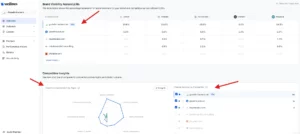
Stage 2 — Diagnose (Wellows Citation Growth Loop)
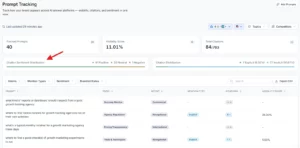
Work out why the gaps exist. Filter by topic, sentiment, intent, or mention type to split gaps into two categories:
Explicit Wins — prompts where a competitor is cited and the client isn’t
Implicit Wins — spots where the client is mentioned without a link. The first points to a content gap. The second points to an outreach opportunity.
Stage 3 — Fix (Wellows Citation Growth Loop)
Close the gaps you diagnosed. Explicit gaps route into content the platform decides whether to optimize or create fresh, so authority doesn’t split.
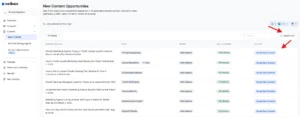
Implicit gaps route into the outreach engine, which ships with verified contacts and AI-written pitch emails to turn an unlinked mention into a real citation.
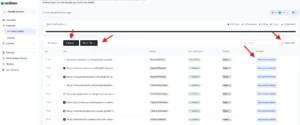
You can also suggest use the content optimization feature that scans the live site, checks for cannibalization, ranks pages by estimated citation gain, and gives paragraph-level suggestions before recommending what to create.
Stage 4 — Validate (Wellows Citation Growth Loop)
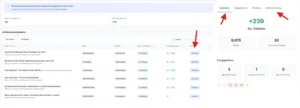
Confirm the work actually moved something. The competitive view shows how the client stacks up topic by topic — whether citation share is rising and whether implicit mentions converted into explicit citations. This shifts the conversation from “are we visible” to “are we winning the prompts that matter.”
Stage 5 — Report (Wellows Citation Growth Loop)
Package the results into a report clients can easily follow. Use daily tracking and historical data to show changes in citation share, sentiment, and competitor gaps over time. The activity log records every action, so you can clearly show what was completed each month.
Report citation share weekly, review sentiment and competitor gaps monthly, then use those insights to guide the next cycle.
Pro Tip: Compare visibility score before and right after every client campaign. That before/after delta is the cleanest proof of impact you’ll ever drop into a report.
How Do You Prove AI Visibility Results and ROI to a Client?
Proof and ROI are different. Proof shows whether AI visibility is improving over time, using metrics like citation share, mentions, sentiment, and new citations compared against a baseline. ROI then connects those improvements to outcomes the client cares about, such as leads, pipeline, and revenue.
A worked example shows the ceiling. The agency Xponent21 ran a research-led AI-search content build: a flagship long-form guide, a glossary, and an FAQ hub, all with schema. It documented 4,162% organic traffic growth and hit #1 on Perplexity for “how to rank in AI search results” within three weeks of publishing. The takeaway for agencies is that on emerging topics, citation-ready content can beat raw domain authority.
The ROI layer ties visibility to things the client actually books revenue against: assisted conversions, branded-search lift after AI exposure, and AI-referral traffic pulled out in GA4. As Dave Davies argues, impressions and CTR no longer tell the full story — mentions and citations are becoming the real path to revenue.
Kevin Indig frames the budget the same way: stop funding clicks, start funding brand authority in AI-first search.
| Manual approach | How Wellows handles it |
|---|---|
| Run prompts by hand across 4 engines, screenshot, paste into a deck | Scheduled multi-engine tracking with stored history |
| Eyeball “mentions” with no baseline | Citation Score and share tracked from day one |
| Guess which gap to fix | Explicit vs implicit wins flag the exact gap and the action |
| No record of work done | Outreach activity log timestamps every action for reporting |
| Separate tools for tracking, gaps, outreach, reporting | One workflow, one client view |
For the full metric framework, the GEO KPIs guide maps each number to what it tells the client.
What Counts as an AI Visibility Growth Case Study?
A useful AI visibility growth case study shows three things clearly: the baseline, the actions taken, and the business outcome. That means documenting where citation share started, which prompts and competitor gaps were targeted, what was changed on the site or in third-party coverage, and how visibility improvements connected to AI-referral traffic, branded-search lift, pipeline, or revenue.
A screenshot is not a case study. A fixed prompt set, a named comparison period, and a visible before-and-after is.
How Do Agencies Scale AI Visibility Monitoring Across Multiple Clients?
Agencies scale AI visibility monitoring by standardizing three things: the prompt framework, the reporting rhythm, and the client workspace structure. Without those, every account becomes a one-off, and reporting turns into a manual spreadsheet exercise no team wants to repeat.
The workable setup looks like this. Each client runs as a separate project with its own domain, prompt set, competitor group, and baseline citation score, managed from one login with separate reporting per client, so nothing blends between brands.
he same operating rhythm applies across the roster: daily background monitoring, weekly citation-share checks, and monthly reviews of competitor gaps, sentiment, and completed actions. And reporting standardizes on one structure, baseline to current share to gaps to actions, so a new account manager can produce a board-ready report in an hour instead of rebuilding charts by hand.
Three practices keep it scalable past the first ten clients.
- Standardize the prompt-set size per pricing tier, so tracking costs stay predictable as the roster grows.
- Batch monthly reviews by vertical, since clients in the same category share competitor sets and publisher landscapes.
- And treat the activity log as the source of truth for what shipped, because at twenty clients, “what did we do for this account last month” cannot live in anyone’s memory.
Automating ai visibility tracking across agency clients is what makes the rest possible: this is the operating model Wellows is built around, with per-client projects, scheduled multi-engine tracking, and client-ready, exportable reports from one workflow.
What Are the Best AI Visibility Tools for Growth Marketing Agencies?
The best AI visibility tools for growth marketing agencies do three jobs at once: track citations across engines, benchmark competitors by prompt, and keep every client’s visibility history separate enough to report clearly.
For agencies, the real differentiator is not just model coverage. It is whether the platform supports multi-client workflows, prompt-level history, competitor benchmarking, and client-ready reporting without forcing the team into manual exports and spreadsheet cleanup.
| Tool | Best for | Agency strength |
|---|---|---|
| Wellows | Multi-client AI visibility delivery | Prompt tracking, citation monitoring, competitor analysis, content optimization, outreach, and reporting in one workflow |
| Profound | Enterprise analytics and reporting | Custom dashboards, broader analytics depth, and enterprise-style reporting layers |
| Otterly | Budget monitoring and starter workflows | Lower-cost entry point for smaller retainers and simpler monitoring needs |
| Ahrefs Brand Radar | SEO-first agencies adding AI visibility | AI citation-gap monitoring layered onto an existing Ahrefs-led workflow |
Quick Picks: Best AI Visibility Tools for Marketing Agencies
- Wellows: Best for growth marketing agencies that need prompt tracking, citation monitoring, competitor analysis, content optimization, outreach, and reporting in one client workflow.
- Profound: Best for enterprise teams and larger agencies that need deep analytics, custom reporting, and broader data-stack integration.
- Otterly: Best for smaller retainers and early-stage teams that want a lighter, lower-cost entry into AI visibility monitoring.
- Ahrefs Brand Radar: Best for SEO-led agencies that already live in Ahrefs and want AI citation-gap monitoring layered onto an existing search workflow.
The right choice depends on the agency’s bottleneck. If the problem is proving AI visibility across multiple clients, the reporting and workspace layer matters most. If the problem is deeper analytics or enterprise reporting, the data layer matters more. If the problem is getting started without heavy overhead, a lighter monitoring tool may be enough at first.
How Should Marketing Directors and Growth Teams Evaluate AI Visibility Solutions?
Evaluate on five criteria: engine coverage, data freshness, action features, reporting depth, and proof the vendor can tie visibility to pipeline. Marketing directors and growth teams evaluating ai visibility solutions run into the same challenges each time: every platform claims multi-model tracking, the demos all look alike, and the differences only show up in month two. These checks surface them in the sales call instead:
- Engine coverage, read separately. Confirm the platform tracks ChatGPT, Gemini, Perplexity, and Google AI Overviews as separate views, since a blended score hides where you are actually losing.
- Data freshness. Ask how often prompts re-run. Weekly snapshots miss the answer volatility that daily tracking catches.
- Action features, not just dashboards. The gap between monitoring tools and solutions is whether the platform routes findings into content guidance, citation-gap analysis, and outreach lists, or leaves you to interpret charts.
- Reporting a client or a board can follow. Baseline-to-now citation share, competitor comparison, and an activity log, exportable without rebuilding it in slides.
- A pipeline story. The vendor should show how customers connect citations to referral traffic, assisted conversions, and revenue, not just mention counts.
For a lean growth team, one more filter matters: pick the solution that explains what to fix and why in plain terms, because a tool only a technical SEO can operate becomes shelf-ware in a two-person team.
How Should Growth Marketing Agencies Price and Package AI Visibility as a Service?
You can deliver perfect AI visibility work and still leave money on the table if you can’t package it. Most agency owners aren’t asking “how does GEO work.” They’re asking “can I sell this, and what’s the margin?” Here’s how the strongest agencies are structuring it.
The cleanest path is three offers at three commitment levels.
| Package | What’s in it | Typical delivery | How agencies price it |
|---|---|---|---|
| AI Visibility Audit | Baseline citation score, competitor benchmark, prompt set, gap report with priority actions | One-off, 1–2 weeks | Fixed project fee, often a few hundred to a few thousand dollars by prompt volume |
| GEO Retainer (add-on) | Ongoing tracking, monthly content fixes, light outreach, monthly report | Ongoing, ~10–20 hrs/mo | Monthly retainer, often a 20–40% uplift on the existing SEO retainer |
| Full GEO Service | Everything above plus content production, digital PR, and directory placement | Ongoing, ~25+ hrs/mo | Standalone monthly retainer priced like a senior content or SEO programme |
Pricing will vary by market, niche, and scope, but the margin model stays the same. Tracking is automated, so audits and reporting scale efficiently. Content creation and outreach take the most time, so productizing those services is what keeps AI visibility retainers profitable.
Two things make AI visibility services more profitable for agencies. First, managing tracking, content, outreach, and reporting in one workflow eliminates hours lost switching between tools. That’s one reason agencies eventually move away from point solutions and start evaluating Peec AI alternatives that support the entire client workflow.
Start your pitch with a simple question: “Can you tell me, with a number, how often your brand is recommended when buyers ask ChatGPT about your category?” Most clients can’t. That’s the opportunity. The platform provides the data, but it’s the strategy behind it that wins and retains clients.
What Are the Common AI Visibility Mistakes Growth Marketing Agencies Should Avoid?
The fastest way to lose an AI visibility retainer is to look busy without proving anything. These mistakes come up again and again.
5 AI Visibility Mistakes That Cost Agencies Clients
1. Chasing random tactics with no evidence
2. Tracking one engine
3. Reporting raw mention counts
4. Ignoring content cannibalization
5. Promising rankings-style guarantees
AI Visibility Agencies vs. Growth Marketing Agencies: How Do They Compare?
A growth marketing agency is hired to move pipeline across channels. An AI visibility agency is hired to improve how often a brand is cited, recommended, and surfaced across AI-generated answers. The overlap is real, and so is the gap, which is exactly why more growth agencies are adding AI visibility as a service line instead of treating it as a separate category they have to compete with.
| Growth Marketing Agency | AI Visibility Agency | |
|---|---|---|
| Hired to | Grow pipeline across paid, lifecycle, SEO, content, and CRO | Increase citation share, recommendation frequency, and AI answer visibility |
| Work starts from | Funnel metrics, CAC targets, and an experiment backlog | Prompt tracking, entity clarity, and a citation baseline |
| Success measured by | CAC, conversion rates, channel ROI, pipeline, and revenue | Citation share, prompt coverage, recommendation consistency, and competitor gaps by engine |
| Scope | Full-funnel execution across paid media, email, CRO, lifecycle, and content | Prompt tracking, entity cleanup, content optimization, third-party citation building, outreach, and visibility reporting |
| Core deliverable | Experiments shipped and channel performance improved | A baseline-to-now visibility report with actions logged and next opportunities prioritized |
| Right hire when | The bottleneck is acquisition efficiency across channels | The brand is absent from AI answers and nobody can explain why |
The strongest growth agencies treat AI visibility as a measurable acquisition channel, connecting citations and recommendations to pipeline. The difference is execution: not prompt screenshots, but citation baselines, competitor gaps, content, outreach, and reporting.
When choosing an agency, ask: Can you measure AI visibility and tie it to pipeline?
Which Prompts Should Growth Marketing Agencies Track for Clients?
Focus on the prompts that influence buying decisions, not the biggest prompt list. In our research, 36% of marketing prompts carried commercial intent, so prioritize “best X” and comparison questions where AI recommendations actually matter. Four prompt categories cover almost everything agencies need to track.
AI answers vary between runs, so a single screenshot proves nothing. Track each prompt repeatedly across engines and report the rate, not a lucky snapshot. A platform with prompt tracking runs the schedule and keeps the history, so the trend becomes the deliverable instead of a one-off check.
What Did Analyzing 9.25 Million AI Citations Reveal for Growth Marketing Agencies?
In Q1 2026, Wellows tracked 471,698 prompts across ChatGPT, Google AI Overviews, Google AI Mode, Perplexity, and Gemini, producing approximately 9.25 million citations. Four findings directly shape how agencies should sell and deliver AI visibility work.
1. 97% of AI Citations Come From Third-Party Sources, Not the Brand’s Own Site
Only 2.9% of citations in marketing answers came from brand-owned websites. AI assembles answers from review sites, comparison listicles, communities, and directories. Clutch.co alone pulled 7,135 citations in Q1 marketing queries.
Agency angle: directory placement, listicle inclusion, and earned coverage aren’t optional extras — they’re core deliverables. If your client isn’t in the lists AI reads, owned blog posts won’t save them.
2. AI Citations Are a Long Tail, Not Winner-Take-All
For marketing and SEO prompts, AI platforms cited 40,447 unique domains across 1.53 million citations. The top 10 domains captured only 15.5% and the top 50 captured just 28.1%. The remaining 72% spread across the long tail.
Agency angle: there’s no position-one monopoly in AI answers the way there is on Google. A client without huge domain authority can still earn citations — which is the easiest “yes” you’ll ever pitch to a mid-market brand.
3. Every AI Answer Has About Five Citation Slots
Google AI Overviews and AI Mode held steady at ~5.0 citations per answer all quarter. ChatGPT climbed from 3.6 to 5.0 (+39%), converging on Google’s behavior, while Gemini moved the other way, from 5.55 to 4.17.
Agency angle: five citation slots is the new page one, and on some engines it’s shrinking. Your job is to win one of those slots for a defined set of buyer prompts, not to rank everywhere.
4. Over a Third of Marketing Prompts Carry Commercial Intent
Of marketing-related prompts tracked, 54% were informational and 36% were commercial — the “best X” and head-to-head comparisons where buyers are actively choosing between options.
Agency angle: that 36% is where recommendations get made, and it’s almost always a listicle or comparison doing the deciding. Win those prompts, and you’re influencing the moment a buyer chooses.
Want the complete dataset? Read the full citation research for the engine-by-engine breakdown and all findings.
Read More Articles
Curious how AI visibility plays out in specific niches? These guides go deeper by sector:
FAQs
Conclusion
AI visibility isn’t a ranking problem, it’s a measurement problem with a repeatable workflow behind it. Citations spread across a long tail, third-party sources do most of the work, and there’s no position-one monopoly to break through. If a client asks what an AI visibility agency does differently from their current SEO partner, the answer is measurement infrastructure, citation share tracked from a baseline, across every engine, on the prompts tied to revenue.
The game is winnable. Three things to do this week for your clients: pull 20 buyer prompts for your top client and check who gets cited today; set a baseline citation score before you touch anything; turn one unlinked mention into a real citation. Run every client through the Wellows Citation Growth Loop and the question stops being one you dread.