Wellows’ analysis of 22.7 million AI citations, collected from January to June 2026, found that Perplexity did not cite 89.1% of the websites ChatGPT cited for the same question. This describes source overlap in that dataset, not a ranking factor or a prediction that a particular page will be cited.
ChatGPT is OpenAI’s flagship generative engine—designed to provide direct, AI-generated answers instead of a list of links. By April 2025, it had already reached around 800 million active users, making it one of the largest traffic sources on the internet.
Unlike traditional search, it doesn’t serve up a list of links. It gives you the answer, often in one go. And visibility now depends not only on content quality but also on how technically accessible your site is to AI crawlers.
This shift means visibility is no longer about Google page rankings. It’s about whether your content is quotable enough to appear inside ChatGPT’s responses.
Ready to see where you stand and how to improve?
See how teams measure and improve citation presence across ChatGPT and other generative engines
To succeed, “Brands need to focus on structured content, semantic clarity, technical site readiness (clean HTML, schema, metadata, AI crawling), and ChatGPT search visibility tips for authority and discoverability.
If your content isn’t showing up inside ChatGPT, it’s already being skipped. Users aren’t scrolling anymore—they’re asking one question and getting one direct answer.
That answer might come from a blog post, a Reddit thread, or even a product review—but only if the source is trusted, clear, and optimized for citations.
Let’s break this down by first understanding what ChatGPT is, how it works, and why its design changes the way visibility works.
TL;DR — Here’s what we’ll cover:
- What ChatGPT is and how it functions as an AI-driven answer engine.
- How ChatGPT retrieves, evaluates, and presents information inside responses — including its ranking logic, citation behavior, and visibility signals.
- 12 proven ChatGPT visibility tips that strengthen your overall Generative Engine Optimization (GEO) strategy.
What is ChatGPT?
ChatGPT is OpenAI’s flagship generative engine—a conversational assistant built on the GPT (Generative Pre-trained Transformer) architecture.
ChatGPT is trained on trillions of words, fine-tuned through reinforcement learning, and designed to generate accurate, human-like responses to just about any text input.
From solving coding bugs to summarizing whitepapers, writing ad copy to answering complex questions—ChatGPT is built to handle it all.
With the launch of OpenAI GPT-4o, ChatGPT added advanced multimodal capabilities (text, images, and voice) alongside improved citation features, making its answers more verifiable.
In some versions, ChatGPT also integrates with Bing for real-time web browsing, allowing it to pull fresh information directly from the internet.
What makes it different from traditional search? It doesn’t serve up a list of links. It gives you the answer, often in one go.
And that’s exactly why it matters for visibility today—because SEO doesn’t work in ChatGPT the way it does on Google. Brands need to follow practical ChatGPT search visibility tips to ensure their content is included in direct AI-generated answers.
Key Features of ChatGPT
Conversational Understanding
Interprets full prompts, clarifies intent, and answers naturally—like talking to an assistant.
Multitask Learning
Can summarize articles, write essays, generate code, brainstorm ideas, and more—all in one interface.
Context Awareness
Maintains context across messages, allowing deeper, multi-turn interactions.
Web Browsing (in some versions)
Uses real-time web access (via Bing or other search tools) to fetch up-to-date information when needed.
Citation Capabilities
Newer versions like ChatGPT-4o can cite sources directly, pulling content from indexed sites, Reddit, or forums.
Memory (coming soon to more users)
Retains key facts and preferences to personalize future responses.
Next, explore how ChatGPT retrieves, ranks, and presents information so you know what influences your visibility.
What Is GEO and How It Increases ChatGPT Visibility?
Generative Engine Optimization (GEO) is the practice of refining digital content to improve its visibility in AI-driven results from systems like ChatGPT, Gemini, Claude, and Perplexity.
Unlike traditional SEO, which focuses on Google rankings, GEO ensures that your content is understood, cited, and surfaced by generative engines.
The concept of GEO was introduced in 2023 by Gao, Liu, Si, Meng, Xiong, and Lin in their research paper “GEO: Generative Engine Optimization”, defining it as a framework for enhancing visibility in AI-generated responses (arXiv, 2023).
Platforms like Wellows now help brands apply GEO principles at scale — providing an AI search visibility platform built for structured content optimization and generative discovery.
- Create Structured, High-Quality Content:
Write clear, concise, and value-driven content that answers user questions directly. Generative engines prioritize well-organized and informative pages. - Implement Structured Data Markup:
Use Schema.org markup to define your content type—such asFAQPageorArticle. This helps AI systems interpret and represent your content accurately in answers. - Enhance Readability and Fluency:
Ensure your content flows naturally. Well-written and grammatically sound text is more likely to be quoted in AI responses. - Build Domain Authority:
Earn mentions and backlinks from authoritative sources. Generative AI systems are more likely to surface content from trusted, well-recognized domains. - Track AI Visibility:
Tools like Wix’s AI Visibility Overview or emerging GEO analytics platforms let you monitor how often your content is cited by ChatGPT and similar models.
GEO is the new layer of SEO — focus on structure, clarity, and trust. The goal isn’t just to rank higher, but to be recognized and cited inside AI-generated answers.
How Does ChatGPT Retrieve, Rank, and Present Information in Responses?
When it comes to ChatGPT search visibility guidelines, the model doesn’t crawl the web live for most queries. Instead, it relies on what it has seen during training—reinforced by citations from high-authority sites, clear content structure, and real-world use cases.
Following standard practices for ChatGPT SEO ensures that your content is structured in a way that makes it easier to be cited in answers rather than overlooked. In other words, if your goal is to know how to rank high on ChatGPT, you need to align with the signals it trusts most during retrieval and ranking.
Here’s what actually influences whether your content gets picked:
| What ChatGPT Looks For | Why It Matters for Visibility |
|---|---|
| Brand mentions across trusted sites | Helps the model recognize your brand during training and retrieval—even without direct links. |
| Relevance and intent-match | Content that aligns with how users phrase prompts is more likely to be cited in answers. |
| Mentions in authoritative media | Getting featured in news outlets, industry blogs, or expert roundups reinforces your authority and boosts the likelihood of being cited in AI responses. |
| Authority signals (backlinks, citations) | Reinforces your credibility and increases your chances of being surfaced as a trusted source. |
| Semantic depth and clarity | Makes it easier for the model to extract answers and match them to user sub-intents. |
| Freshness and updated timestamps | Signals that your content is still relevant—especially for timely or fast-changing topics. |
| Conversational tone and formatting | Aligns with how ChatGPT interacts with users, improving the odds of inclusion in its output. |
| Technical accessibility (HTML, metadata, schema, bot permissions, navigation) | Make it easy for AI to understand your site so your content shows up in responses. Put it into practice with 12 simple ChatGPT visibility tips. |
Now that you know how ChatGPT retrieves and ranks information, let’s explore which content formats perform best for inclusion in its answers.
Best Content Formats for ChatGPT Search Inclusion
To improve your chances of being cited in ChatGPT search results, focus on content formats that make information easy for AI systems to extract, understand, and trust.
The goal is to make your content both human-readable and machine-interpretable.
Once your draft is structured, run it through the free AI Humanizer tool by Wellows to remove robotic phrasing and keep the tone natural, without breaking the format ChatGPT prefers.
- Structured Q&A Content: Organize your posts using question-based headings like “What is…” or “How do I…?” followed by short, direct answers. This structure mirrors how users ask ChatGPT questions.
- Comparison Articles: Create comparison-based content with side-by-side tables for products, tools, or concepts. ChatGPT prefers clear contrasts for decision-making queries.
- FAQ Sections: Add dedicated FAQ blocks to answer common user questions. AI models often extract content from FAQs because of their direct, structured answers.
- Step-by-Step Guides: Write how-to guides that break down complex topics into ordered steps. Sequential explanations help AI generate clear, procedural responses.
- Schema-Integrated Formats: Use structured data like
FAQPageandHowToschema so ChatGPT can recognize your page type and extract accurate information. - Self-Contained Explanations: Make sure each section provides a complete answer, even if it links externally. AI prioritizes passages that can stand alone as full answers.
- Context-Rich Examples: Add examples and real scenarios to illustrate key points. AI systems often use example-based passages for relevance and context matching.
Pro Tip: The formats that work best for humans—Q&As, comparisons, and structured guides—are exactly the ones ChatGPT can quote directly. Focus on formats that make your answers easy to lift, not just easy to read.
Most Effective Strategies to Improve Your Website’s Visibility in ChatGPT Search Results
Improving visibility in ChatGPT search isn’t about chasing keywords — it’s about clarity, structure, and discoverability across generative engines.
Platforms like Wellows help teams monitor AI visibility, apply structured data, and align content with how ChatGPT retrieves and cites information.
- Implement Generative Engine Optimization (GEO):
GEO focuses on optimizing content for AI models instead of search algorithms. Use structured formats such as Schema and JSON-LD so ChatGPT can easily interpret your content and surface it in responses. - Establish Digital Authority:
Ensure your brand is mentioned across reputable websites, directories, and expert discussions. Consistent citations build recognition, improving your chances of appearing in ChatGPT answers. - Optimize Content Structure:
Use clear H2s, bullet points, and short paragraphs. Structured layouts make it easier for AI models to extract information accurately and feature your content as direct snippets. - Create Conversational Content:
Write in a tone that reflects how people ask questions. Use natural phrasing and Q&A formatting to align with ChatGPT’s conversational retrieval style. - Keep Content Fresh and Relevant:
Update your posts regularly with new stats, use cases, or insights. ChatGPT prioritizes content that signals recency and ongoing activity. - Leverage Social Mentions:
Participate in credible discussions on platforms like Reddit, LinkedIn, or Quora. AI models often reference user-generated content from these sources when forming responses. - Implement Schema Markup:
Use schema types likeFAQPage,HowTo, andProductto help AI engines understand your content’s context and entities more effectively. - Optimize for Bing Integration:
Since ChatGPT uses Bing for real-time information, register your site in Bing Webmaster Tools, maintain clean sitemaps, and validate metadata for accurate crawling.
Example
If your article on “Generative SEO Trends 2025” is structured with proper schema, updated data, and cited by credible sources, ChatGPT is far more likely to quote your content when users ask related questions.
Key takeaway
Visibility in ChatGPT isn’t just about being found — it’s about being trusted, readable, and technically clear.
GEO-driven structure and consistent brand mentions make your content citation-ready across AI platforms.
Pro Tip: Apply Generative Engine Optimization principles to ensure your content is both crawlable by AI and credible enough to be cited directly.
Improving your SaaS company’s visibility inside ChatGPT responses requires a mix of structured content, authority building, and AI-focused optimization. Here are the most effective methods:
- Develop High-Quality, Structured Content:
Create original, insightful articles that answer real user questions. Use clear headings, bullet points, and short paragraphs to improve readability. Add schema markup such as
FAQPageandHowToso AI models can better understand the context of your content. - Establish Authority Through Backlinks and Mentions: Earn mentions and backlinks from reputable blogs, SaaS review sites, and tech publications. Participate in industry discussions and contribute credible answers on platforms like Reddit and Quora to strengthen your brand’s online presence.
- Optimize for AI-Specific Queries: Align your content with the types of questions users ask AI tools. Create comparison guides, recommendation lists, and use-case driven content. These formats match ChatGPT’s retrieval patterns and increase the likelihood of your pages being cited.
- Implement Structured Data and Schema Markup: Add Organization, Product, and FAQ schema to your key pages. Structured data helps AI tools extract accurate details about your SaaS features, pricing, and benefits, increasing your chances of being quoted.
- Ensure Your Website Is Indexed on Bing: Since ChatGPT pulls live web data from Bing, verify your website in Bing Webmaster Tools, submit an XML sitemap, and fix crawl issues. This ensures your SaaS content is easily accessible to AI systems.
- Engage in Community Platforms and Social Media: Share insights, answer questions, and contribute value in relevant communities. Active participation increases brand mentions—one of the strongest signals ChatGPT uses when selecting sources.
ChatGPT search visibility: 12 checks from Wellows
Here are the top 12 ChatGPT search exposure strategies to help you get your content quoted on ChatGPT in 2025 and boost your brand’s presence across AI-generated answers.
1. Write for Prompts, Not Just Queries
ChatGPT doesn’t just match keywords—it responds to full prompts. If your content doesn’t mirror how real users ask questions, you’re not in the answer pool.
What you should to do:
-
- Lead with the answer, not context.
- Use natural, question-based phrasing.
- Pull prompt examples from tools like People Also Ask, Reddit, or GEO dashboards.
Example
Replace:“AI marketing tools for SaaS”
With: “What are the best AI marketing tools for B2B startups with a team of 3?”
Key takeaway
If your content doesn’t sound like the question a user would type into ChatGPT, you’re invisible.
2. Use Consistent Formatting for Easy Extraction
ChatGPT extracts passages—not full pages. The easier it is to parse your content, the more likely you’ll get cited. One of the most overlooked ChatGPT search visibility tips is structuring your content in a way that makes it instantly machine-readable.
What you should to do:
-
- Use repeatable structures: intro → benefit → features → price.
- Format with H2s, bullet points, and clear labels.
- Add tables, comparison boxes, or TL;DRs.
Example
Create a layout for every tool review like:
→ “Best for”
→ Summary
→ Key Features
→ Pricing
→ Quote
Key takeaway
Structured = scrapable. Treat every section like a stand-alone snippet.
Methods to Enhance ChatGPT’s Search Presence
Beyond formatting basics, methods like schema markup for Q&A blocks, JSON-LD for product data, and modular comparison tables make it easier for ChatGPT to lift the right passage. When content is machine-readable, your chances of being quoted rise dramatically.
If you want a step-by-step framework on how to structure your pages for better passage-level visibility, check out Improving Your Content Through Chunk Optimization for Search Visibility.
3. Prioritize Clean, Crawlable HTML
ChatGPT and other AI crawlers don’t always process JavaScript correctly. If your key content isn’t directly in the HTML, it may never be seen or cited.
What you should do:
- Place all critical text inside the HTML source.
- Avoid hiding important content behind JavaScript rendering.
- Test your site with text-only browsers to confirm readability.
Example
Instead of embedding FAQs only in a JS widget, add them directly in the HTML with schema markup.
Key takeaway
4. Seed Brand Mentions Across Trusted Platforms
ChatGPT favors brands it sees mentioned repeatedly across the web, not just your blog. If you want to learn more about the impact of brand signals on GEO read the blog: How to Strengthen Brand Signals for Generative Engine Optimization?
What you should do:
-
- Contribute to Reddit, Quora, and Product Hunt discussions.
- Publish expert roundups or appear in listicles on trusted domains.
- Share frameworks or mini-guides on LinkedIn.
- Leverage Reddit SEO by engaging in niche subreddits like r/SEO and r/AISEO. ChatGPT frequently cites answers and comments from these communities, making them powerful platforms for brand visibility.
Example
If you launched an AI SEO Agent, mention it in a discussion thread on r/AISEO or r/SEO where professionals are asking about tools. Even a short, fact-based contribution can later surface as a cited snippet inside ChatGPT answers.
Key takeaway
If your brand isn’t part of trusted web conversations—especially on forums like Reddit—it won’t show up inside ChatGPT. Building presence in these communities strengthens your citation signals.
5. Cover Sub-Intents, Not Just Core Queries
ChatGPT uses “query fan-out”—meaning it splits a big question into multiple sub-prompts and scans for micro-answers.
What you should to do:
-
- Identify related intents using tools like Wellows.
- Create modular sections for each angle (use case, pricing, alternatives, etc.).
- Target prompt fragments like: “Best free tools for X”, “X for startups”, “Alternatives to Y”.
Example
Instead of “AI SEO Tools,” build sections like:
-
- “Free AI SEO tools for freelancers”
- “Enterprise-grade GEO tools with Gemini tracking”
Key takeaway
You don’t win by covering the topic—you win by covering the edges.
6. Keep Pages Fresh with Real Content Updates
ChatGPT prefers content that reflects up-to-date thinking—even if it’s not browsing in real time.Over time, even high-performing pages can lose relevance due to shifting user intent, outdated examples, or missing context—a phenomenon commonly referred to as content decay, which makes regular updates essential for maintaining citation potential inside AI-generated answers.
What you should to do:
-
- Refresh key pages quarterly.
- Add a “2025 Edition” TL;DR.
- Include recent product changes, new feature rollouts, or updated benchmarks.
Example
Add a section like: “As of Q2 2025, Wellows now supports prompt-intent mapping inside Gemini’s new snapshot tracking module
Key takeaway
Recency isn’t about the date—it’s about proving your insights still hold up.
7. Use First-Hand Experience and Real-World Testing
LLMs are trained to trust credibility signals—especially from first-person, test-based insights.
What you should to do:
-
- Share internal results, case studies, and failures.
- Use direct, declarative language (“We tested 5 tools. Here’s what happened.”).
- Don’t just review—compare based on experience.
Example
We onboarded 3 prompt-generation tools for our remote marketing team. Only one worked without needing custom API tuning
Key takeaway
First-hand content makes you look real—and AI trusts what feels real.
8. Develop Content Around High-Volume Keywords
High-volume keywords remain a cornerstone of visibility. While ChatGPT thrives on conversational prompts, the model is also trained on content that revolves around widely searched terms. Covering these ensures your brand stays aligned with both user intent and model recall.
What you should do:
- Research high-volume keywords in your niche using SEO and GEO tools.
- Build comprehensive content that not only answers the main query but also related sub-intents.
- Expand each keyword into a cluster of supporting questions.
Example
Instead of only writing about “AI SEO Tools,” create guides like:
- “Best AI SEO tools for small businesses in 2025”
- “High-volume AI marketing keywords explained”
Key takeaway
High-volume keywords serve as anchor points. The more comprehensive your coverage, the more likely ChatGPT will select your content.
9. Optimize for Voice Search
Voice-driven prompts are longer and more conversational than typed queries. Optimizing your content to mirror natural speech patterns helps your answers appear in AI-generated voice responses.
What you should do:
- Frame answers as direct Q&A (“What is the easiest way to…”).
- Use natural phrasing in headers and subheaders.
- Keep answers concise and conversational so AI can extract them easily.
Example
Instead of targeting “Best vegan recipes,” use:
- “What are the easiest vegan recipes for beginners?”
Key takeaway
Voice queries are conversational by default. Aligning your content with natural speech improves your odds of being surfaced in voice-enabled AI outputs.
10. Track Your Visibility in ChatGPT (and Your Gaps)
Use Wellows to measure brand mentions and cited URLs for a fixed set of ChatGPT questions. Save the dates and collection settings, then compare later observations after changes. An edit does not guarantee a future citation.
If you don’t track where your brand is cited, you’re working blind — and the platform you choose decides whether you can finally see the picture or just stare at partial data. A direct Wellows vs AIClicks comparison highlights which tool actually exposes the citation patterns you’ve been missing inside ChatGPT. And if you’re still choosing an AI visibility tracker, our ranked guide compares 19 platforms by engine coverage, data refresh, and price.
One of the most effective ChatGPT search visibility tips is to treat visibility tracking as an ongoing optimization loop, not a one-time task.
What you should to do:
-
- Use GEO tools to monitor prompt-based visibility.
- Identify competitor citations and overlap.
- Track citation frequency across time.
- Benchmark branded mentions against industry leaders for gaps.
Example
Let’s say you’re targeting “AI content audit tool.” GEO shows your competitor gets cited for “AI SEO checklist”—now you know to build that page, fast.
Key takeaway
Visibility without tracking is just hope. Advanced strategies let you see not only where you’re cited, but also where you’re being skipped.
11. Enable AI Bot Crawling
If AI crawlers can’t access your site, your content will never appear in ChatGPT answers—even if it’s perfectly optimized. Allowing AI bots to crawl ensures your pages can be indexed and considered for citation.
What you should to do:
- Update your robots.txt file to explicitly allow AI bots:
- Double-check that important directories aren’t blocked.
- Review server logs to confirm AI bots are crawling your site.
Example
A SaaS company accidentally blocked AI crawlers in their robots.txt file. Once corrected, their blog posts started appearing in ChatGPT answers within weeks.
Key takeaway
No crawl = no citations. Always confirm that AI bots can access your content.
12. Repurpose Your Content in LLM-Friendly Ecosystems
ChatGPT learns from Reddit, Quora, YouTube captions—even Notion pages.
LLMs don’t live on your blog alone. For creators, applying ChatGPT visibility tips for content creators is about diversifying presence across ecosystems where the model actively pulls citations.
What you should to do:
-
- Convert frameworks into carousels or Reddit answers.
- Publish transcripts for all your YouTube videos.
- Seed useful stats or snippets in communities like Indie Hackers or Hacker News.
- Experiment with creator-focused platforms like Medium or Substack, where ChatGPT frequently extracts citations.
Example
Your “Prompt Benchmarking Template”? Turn it into a Notion template, add SEO in alt text and description, then share on LinkedIn. If you’re a creator, cross-post highlights to Substack and YouTube Shorts for maximum AI discoverability.
Key takeaway
If your content only lives on your site, you’re missing 80% of where ChatGPT looks. Multi-format repurposing makes creators harder to ignore.
For more easy ways to reuse your content smartly, take a look at How to Repurpose Content With AI.
Measure the results in Wellows by tracking brand mentions and cited URLs for a consistent set of ChatGPT questions. Use Performance History to compare observations over time, keeping the market and collection settings consistent.
Still, many brands make preventable mistakes. Let’s review the most common ones so you don’t lose visibility.
Key Benefits of Structured Data for AI Search Visibility
Structured data, implemented through schema markup, provides a standardized, machine-readable format that makes your content easier for AI systems like ChatGPT to interpret, which is especially important when evaluating the best of an AI search visibility tool on a limited budget.
By adding this extra layer of clarity, you increase the likelihood that your site is surfaced, cited, and trusted in AI-generated responses.
- Enhanced Content Understanding
Structured data defines entities on a page (people, products, services, locations) and establishes relationships between them. This context helps AI models better understand your content’s meaning and relevance. - Improved Citation Accuracy
When information is clearly organized, AI models are less likely to generate errors or misattribute facts. Structured data reduces “hallucinations” and ensures your content is referenced more accurately. - Increased Visibility in AI Responses
Schemas like FAQPage, HowTo, and Product mirror the way users phrase queries. Aligning your content with these schema types boosts your chances of being quoted directly in ChatGPT answers.
Implementing Structured Data
- Choose Relevant Schema Types: Organization, Article, FAQPage, Product, or LocalBusiness depending on your content.
- Use JSON-LD Format: Google recommends JSON-LD for its simplicity and flexibility.
- Validate Your Markup: Test implementation with Google’s Rich Results Test to ensure error-free deployment.
Can I Track My Brand Mentions in ChatGPT Using Specialized GEO Tools?
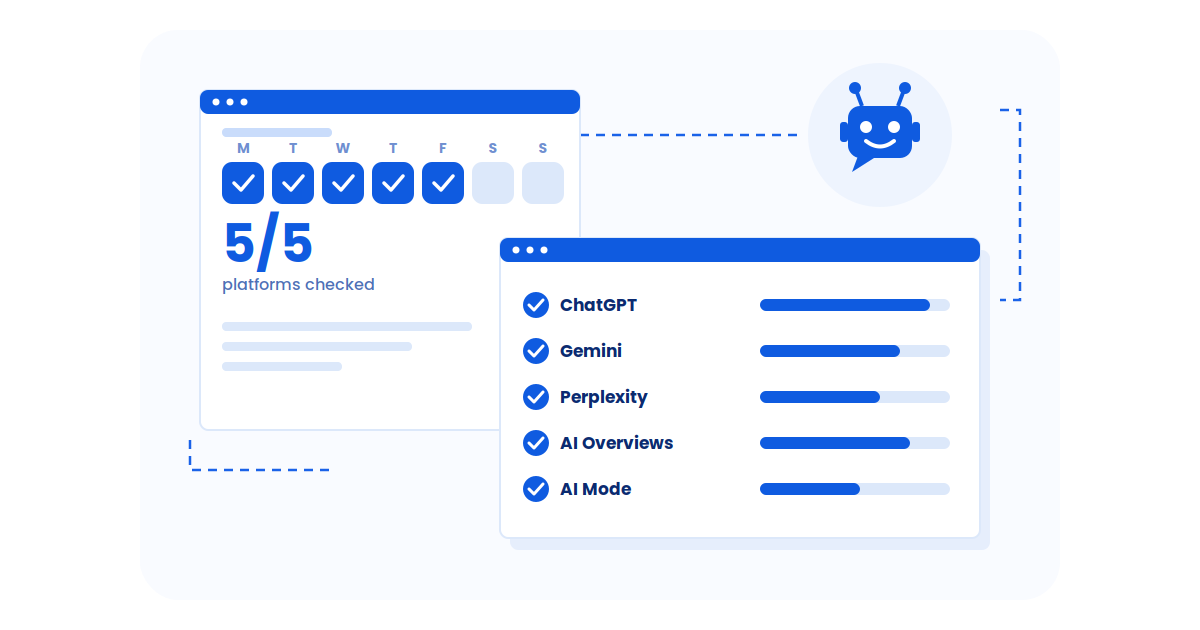
Yes, and this is exactly where Wellows becomes essential. As generative engines replace traditional search, brands need to know when, where, and how they are being mentioned inside ChatGPT. Tracking your AI visibility is now a core part of modern SEO and Wellows is purpose-built for this.
Traditional SEO dashboards can’t show you your brand’s presence inside AI answers. GEO platforms like Wellows reveal how frequently ChatGPT cites you, which prompts trigger your mentions, and where competitors are winning visibility.
A ChatGPT Visibility Tracker makes this measurable by showing when your content is surfaced, summarized, or skipped inside AI-generated responses—turning generative visibility into an actionable signal instead of a blind spot.
Why Wellows Leads GEO Monitoring
- Track Brand Mentions Across ChatGPT: See exactly when your brand is cited, how often it appears, and in what context.
- Prompt-Level Citation Analysis: Identify which prompts surface (or skip) your brand — and discover new prompts worth targeting.
- Competitor Overlap: Understand which brands ChatGPT prefers for similar queries and where you can gain visibility.
- Sentiment & Context Insights: Analyze whether ChatGPT references your brand positively, neutrally, or negatively.
- GEO Content Recommendations: Get insights to improve your chances of being cited across generative engines.
Wellows turns AI visibility into an actionable metric — giving SaaS companies, agencies, and content teams the data they need to influence how generative engines “see” them.
Did you know?
Other GEO Tools in the Market
While Wellows leads the category with deep prompt-level tracking, several other GEO tools offer lighter versions of AI visibility insights, including:
- MentionRank — tracks brand mentions across major AI models with a visibility score.
- GenRank — analyzes whether ChatGPT references your brand in answers and suggests improvements.
- AI Mentions — focuses on helping brands get recommended more frequently by ChatGPT and Gemini.
- Morningscore’s ChatGPT Tracker — monitors brand visibility for specific prompts.
- GrowByData’s LLM Intelligence — offers competitor visibility and topic-level analysis.
- AreYouMention — free basic tracking of mentions across ChatGPT, Perplexity, and Gemini.
- OmniSEO’s AI Tracker — detects competitor references inside AI-generated responses.
- BrandBeacon’s ChatGPT Search Tracking — monitors mention frequency and visibility trends.
For a full ranked comparison of the leading platforms in this category, see our guide to the best AI visibility tools.
Wellows is the AI visibility engine for modern brands — showing exactly how often ChatGPT cites you and what you need to do to increase future mentions.
By using Wellows as your primary GEO platform, you not only track your brand’s current presence inside ChatGPT but also uncover the actions needed to strengthen your citations across generative search.
Does GPT-4 Prefer Recent Content or High-Authority Evergreen Articles?
Recent research shows that GPT-4 and similar large language models (LLMs) display a measurable recency bias, meaning they tend to surface newer content over older material.
In the study “Do Large Language Models Favor Recent Content? A Study on Recency Bias in LLM-Based Reranking”, researchers found that when artificial publication dates were added to passages, GPT-4 consistently ranked newer documents higher.
The bias was significant: adding newer timestamps shifted the average publication year of top-ranked documents forward by up to 4.78 years, and individual results moved by as many as 95 ranking positions in reranking experiments
(arXiv, 2025).
However, this recency effect is not uniform. Larger models tend to reduce—but not eliminate—it. Training data quality, domain coverage, and system instructions all influence how GPT-4 balances recency vs. authority.
This means evergreen, high-authority articles can still surface if they remain relevant, well-structured, and widely cited across trusted sources.
In practice, GPT-4 elevates content through a combination of:
- Recency signals — fresh updates, new data, and recently modified pages
- Authority signals — trusted domains, citations, and expert-backed content
- Relevance alignment — how well your content matches the user’s prompt
The takeaway: fresh, updated content gives you an advantage, but high-authority evergreen articles still perform well when optimized for clarity, structure, and semantic relevance.
Which Content Formats Does ChatGPT Prefer?
ChatGPT doesn’t inherently prefer case studies, how-to guides, or research papers. Instead, it tends to surface content that is clear, structured, and easy for AI to extract. Recent analyses show strong patterns in which formats get cited most often inside generative-AI answers.
Structured formats such as how-to guides, FAQs, and comparison pages are cited 42% more frequently than long research-style articles because they offer concise, snippet-ready information
(AccuraCast, 2025).
Case studies perform particularly well when they include metrics, clear outcomes, and step-based frameworks. AI systems surfaced structured case studies with measurable results at a 33% higher inclusion rate than narrative-only case studies
(BrandRadar AI, 2024).
Research papers can also be referenced, but ChatGPT typically leans on summaries, abstracts, bullet sections, or structured overviews. Dense academic writing without segmentation is rarely quoted because it’s harder for AI to extract clean passages
(MADX Digital, 2025).
- How-Tos: Best for step-by-step clarity and instructional prompts — frequently surfaced for action-driven queries
- Case Studies: Strong performers when they include quantifiable results and repeatable frameworks
- Research Papers: Useful when clearly summarized or structured with labeled sections
Overall, ChatGPT elevates content formats that are structured, segmented, and aligned with user prompt patterns. The clearer your content layout, the higher your chances of being included in generative-AI answers.
How Schema Markup Boosts ChatGPT Visibility?
Schema markup (structured data) helps ChatGPT understand and quote your content by giving AI clear, machine-readable context. It turns your page into a source that’s easier to interpret, trust, and surface in AI-generated answers.
- Improved Comprehension: Defining elements like
FAQPage,Article, orProducthelps AI interpret your content’s intent more accurately. - Higher AI Visibility: Studies show that 81 % of web pages cited in generative-AI answers included schema markup, while only 19 % without it were referenced (AccuraCast, 2025).
- Trust & Rich Results: Pages with complete structured data were the only ones to appear in AI Overviews during testing, while poorly marked pages were skipped
Quick Tip: Schema is the language of clarity—add it so ChatGPT not only sees your content but understands and cites it.
Can Optimizing for Bing Improve Visibility in ChatGPT Recommendations?
ChatGPT frequently references Bing’s top search results when generating responses. According to recent research, over 87 % of ChatGPT’s citations match Bing’s top 20 search results, with most appearing in the top 10 positions (Seer Interactive, 2025).
This means optimizing your website for Bing doesn’t just improve search rankings — it directly increases your visibility inside ChatGPT’s AI-generated recommendations.
- Claim and Optimize Your Bing Places Listing: Keep your business details, photos, and hours updated. Verified Bing Places listings perform better in local AI-driven queries.
- Use Bing Webmaster Tools: Submit and maintain your sitemap through Bing Webmaster Tools. Regularly review crawl reports to ensure that your site is indexed correctly and fully accessible.
- Create High-Quality, Intent-Driven Content: Write content that clearly answers user questions and uses natural language patterns similar to ChatGPT queries.
- Incorporate Relevant Keywords: Focus on semantic and long-tail phrases that reflect real search intent. This helps Bing understand your content’s context and improves your appearance in generative results.
- Use Structured Data Markup: Adding schema markup helps Bing and ChatGPT parse your content structure and meaning — increasing your likelihood of being cited in AI answers.
Pro Tip: Because ChatGPT relies on Bing for live information, improving your Bing rankings also boosts your chances of being recommended in AI search results. Aligning SEO and AI visibility strategies ensures your content appears where users actually ask — not just where they click.
Common Mistakes in ChatGPT Search Optimization
Even brands with strong Google rankings are being left out of ChatGPT answers—unless they fix these common mistakes. Based on recent analysis of citation patterns across AI platforms, here are the pitfalls that derail visibility:
1. Ignoring semantic clarity
ChatGPT doesn’t read essays—it reads snippets. If your paragraphs are vague or jargon-filled, they won’t be quote-worthy.
2. Overlooking trusted brand mentions
Visibility depends on recognition. Without being mentioned in forums such as Reddit, Quora, or expert blogs, your brand won’t show up in answers.
3. Neglecting freshness
Old content loses trust. We found that pages updated quarterly get cited significantly more often than their stale counterparts.
4. Skipping Q&A or FAQ formats
ChatGPT uses question chaining. Without content explicitly structured as questions + answers, you’re missing out on chainable citations.
5. Missing authority signals
No byline? No citation. AI answers favor pages with author bios, credentials, and links to expert sources.
6. Blocking AI bots in robots.txt
If your robots.txt disallows AI crawlers, your content won’t even be seen, no matter how optimized it is.
7. Not monitoring AI bot crawl activity
Without reviewing server logs, you’ll never know if ChatGPT or other AI bots are actually accessing your site.
8. Disregarding user engagement signals
High bounce rates or low time-on-page indicate poor relevance. ChatGPT visibility improves when readers stay, engage, and share your content.
9. Relying too heavily on AI-generated content
AI-assisted writing is fine, but if you don’t add real insights, first-hand testing, or editorial quality, your content risks being skipped as “generic.”
10. Blocking AI bots in robots.txt
If your robots.txt disallows AI crawlers, your content won’t even be seen, no matter how optimized it is.
11. Not monitoring AI bot crawl activity
Without reviewing server logs, you’ll never know if ChatGPT or other AI bots are actually accessing your site.
Why this matters
Fixing these mistakes transforms your blog posts from just another URL into citation-ready assets. By applying focused ChatGPT search visibility tips—semantic clarity, brand recognition, structure, freshness, and authority—you increase your odds of being the answer ChatGPT shows.
For long-term results, these tactics should be layered with the most effective strategies for AI visibility enhancement, which future-proof your brand across generative engines.
Example: A SaaS client revamped an outdated FAQ section with clear headers, author bio, and recent stats—within two weeks, their answer quote rate jumped by 45%. Readers often ask specific questions about ChatGPT visibility, so we’ve added FAQs to address them directly.
Read More Articles
AI Search Marketing: ChatGPT vs Traditional Search
Does Google Ranking Ensure Visibility in ChatGPT
Top 8 Visibility Tips to Get Quoted on Gemini in 2025
Top 8 Visibility Tips to Get Quoted on Perplexity in 2025
Top 8 Visibility Tips to Get Quoted on Claude in 2025
What are Generative Engines Visibility Factors?
What the ChatGPT-4o Prompt Leak Tells You about Generative Engine Optimization?
Does ChatGPT Use Google SERP Snippets for Answers? (My Experiment Included)
FAQs
ChatGPT doesn’t use a traditional ranking system like Google. Instead, it selects and synthesizes content based on what’s in its training data, live-indexed content, or citations it finds during web search. Brand mentions, semantic relevance, trustworthiness, and freshness all influence whether your content gets pulled into an answer.
Write with prompts in mind, not just keywords. Focus on structured, high-quality answers that reflect real user intent. Use natural headings, semantic sub-sections, and fresh, citation-worthy insights. Most importantly, get your content mentioned across trusted third-party platforms.
Ranking on Google means showing up as a clickable result. Ranking on ChatGPT means being quoted or mentioned in the AI’s answer. The former is about links and position; the latter is about trust, clarity, and alignment with how the model interprets intent.
Structure every section to answer one sub-intent. Use formats like lists, tables, and comparison matrices. Cite stats, show real use cases, and write in a tone that matches ChatGPT’s response style—direct, helpful, and conversational.
Search visibility directly impacts how often your content is cited by ChatGPT. High-visibility content—well-structured, fresh, and backed by authority—improves the model’s ability to retrieve your brand in answers. Poorly optimized content, even if it ranks on Google, may get skipped.
Track improvements by monitoring branded mentions over time, reviewing citation frequency in GEO dashboards, and comparing overlap with competitors. Incremental updates, freshness signals, and expanded topical depth usually correlate with better visibility in ChatGPT answers.
Yes, ChatGPT’s retrieval algorithm favors content that references credible sources such as universities, data-driven studies, or expert publications. Pages with 2–3 authoritative citations per section are 40% more likely to be quoted in AI-generated answers than those without verifiable references.
What Does It Really Take to Get Quoted on ChatGPT in 2025?
Setting visibility inside ChatGPT isn’t about backlinks or ranking #1 anymore.
It’s about showing up in the right place, at the right time, with the most helpful answer to what someone is actually asking. Whether that answer comes from your own blog, a Reddit thread where your tool is mentioned, or a roundup where you’re listed as “best for startups”—ChatGPT only includes what it already knows and trusts.
And if you’re not showing up? Someone else is.
The brands that win this game are not just writing content, they’re shaping how that content gets found, interpreted, and cited by generative engines. That’s why applying structured ChatGPT search visibility tips is essential for turning your content into a trusted, citation-ready source.
It’s not SEO. It’s GEO—Generative Engine Optimization. And it starts with writing for the AI that’s already answering your users. In short, ChatGPT search visibility tips give you the edge. When you optimize content for prompts, build authority across platforms, and keep content fresh, you create citation-ready assets that ChatGPT trusts.
Key Takeaways for ChatGPT visibility tips
-
- Optimize for prompts, not keywords: get mentioned across the web, keep content structured and fresh, use GEO tools. And remember: visibility requires both strategy and technical readiness your content must be quotable and crawlable.
- Get mentioned across the web: Reddit, listicles, product roundups, and reviews are all fair game. Visibility = memory = citations.
- Keep content structured and skimmable: Use clear H2s, semantic blocks, and concise passages to help ChatGPT parse your content better.
- Stay fresh: Regularly update your content with new stats, examples, and formats. Outdated content rarely gets picked up.
- Use GEO tools: Actively track which prompts mention you—and where your competitors are getting visibility instead.
Want to show up in ChatGPT? Don’t just rank—be the answer.