Startups do not fail because they lack ideas, but because time, people, and budgets are limited. AI search visibility tools act as extra hands by handling research, analysis, and optimization without adding internal overhead. As a result, founders scale smarter by replacing early headcount with one AI solution that delivers measurable ROI.
Most early-stage startups comfortably spend $50 to $300 per month on AI SEO tools. That budget usually covers essentials like site audits, rank tracking, competitor insights, and optimization suggestions. Free trials help teams test real value before committing long term.
The challenge for startups: you can be doing strong work and still feel unsure if AI systems even surface your brand. Without visibility into AI inclusion, startups waste budget optimizing the wrong things.
In this blog, I will explain how startups can get the best results from AI search visibility tools on a tight budget. I will walk through smart tool selection, cost control strategies, and practical ways to turn software into consistent search growth without expanding the team.
- AI search has changed startup growth from ranking for keywords to being included and cited inside AI-generated answers, where visibility is selective and competitive.
- Cash-strapped startups win by replacing tool sprawl with one focused AI visibility platform that tracks citations, competitor inclusion, and platform-level signals instead of traditional SEO metrics.
- Low-cost AI visibility tools ($50–$300/month) deliver results when startups focus on query-level gaps, early AI answer momentum, and actionable inclusion signals rather than traffic alone.
- Wellows helps bootstrapped and non-technical founders turn AI visibility into execution by combining multi-platform monitoring, competitor benchmarking, and clear, decision-ready insights at an affordable price starting from $37/month, without consultants or complex setups.
One reason startups struggle to turn effort into measurable AI visibility is that modern discovery systems evaluate more than content volume or rankings.
Even when teams are producing solid content and following best practices, unresolved Technical SEO Issues can quietly limit how AI platforms crawl pages, recognize entities, and decide whether a brand is eligible to be surfaced or cited at all.
Without tools that expose these blind spots, startups often invest time and budget into optimizations that never influence AI-driven visibility.
What Are The Most Important Features a Cash-Strapped Startup Should Prioritize When Choosing an AI Search Visibility Platform So We Don’t Waste Budget?
When budget is tight, every feature must justify its cost. Startups do not need bloated platforms or enterprise dashboards. They need focused capabilities that replace manual work, reduce guesswork, and deliver visible ROI fast.
The right AI search visibility for startups should act like an extra team member, not another expense to manage. It helps transform startup ideas into actionable, visible entities without adding headcount. Below are the features that matter most when choosing a platform without wasting budget.
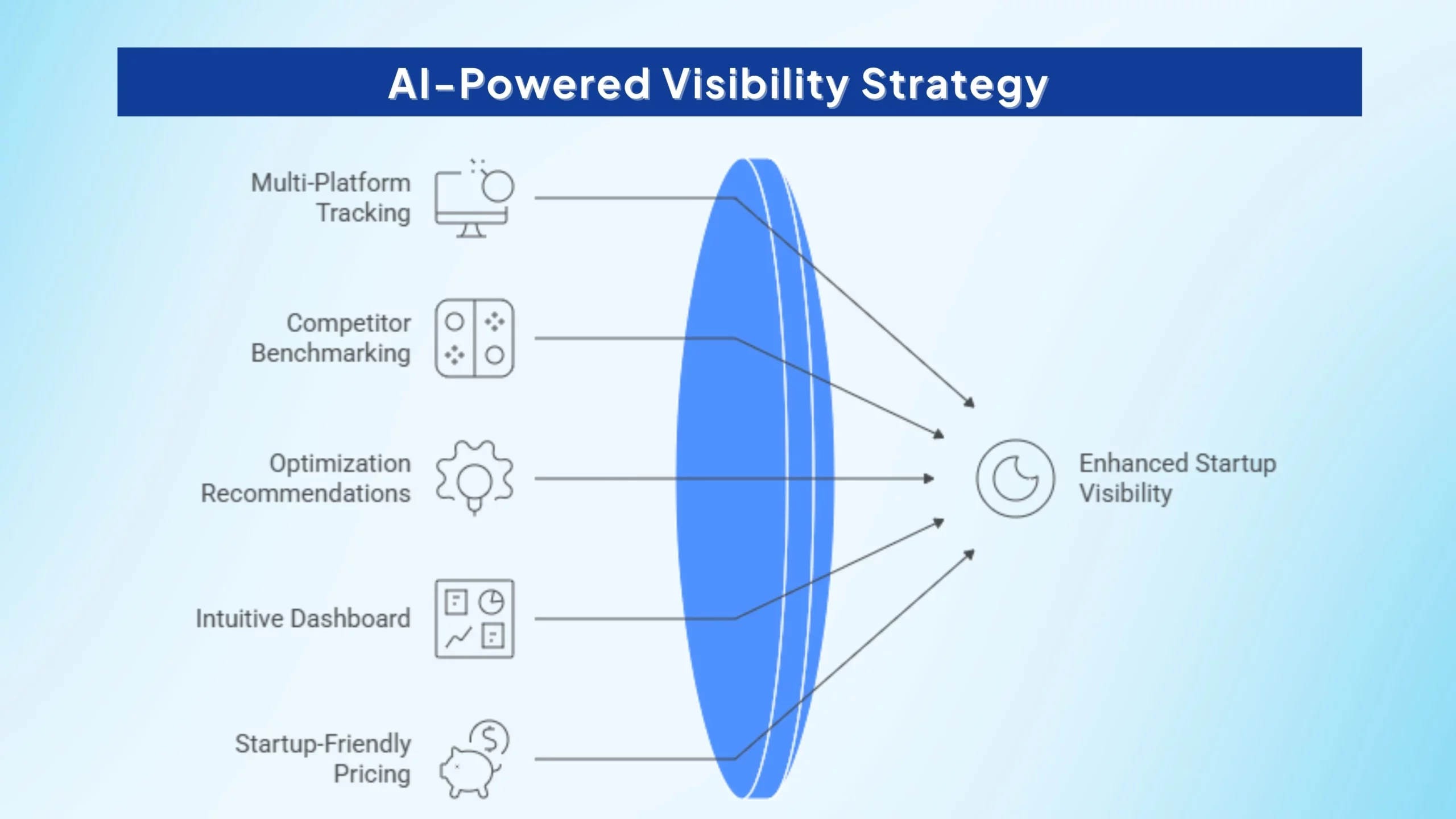
Five features that matter most:
- Multi-Platform AI Visibility Tracking: Track brand mentions across ChatGPT, Perplexity, and Google AI Overviews to see where your startup appears and where visibility is missing.
- Competitor Benchmarking Inside AI Answers: Compare how often competitors are cited in the same AI responses to quickly identify inclusion gaps and opportunities.
- Actionable Optimization Recommendations: Get clear, step-by-step guidance on what to fix so visibility improves without needing analysts.
- Simple and Intuitive Dashboard: View key insights in minutes with a clean interface that avoids training or interpretation overhead.
- Startup-Friendly Pricing With Essential Features: Access core tracking and insights within a $50–$300 budget, paying only for features that drive real visibility.
Uncertainty, Invisibility, And Wasted Effort
AI-driven discovery lacks transparency
Startups often do the right work but still feel unsure whether it is making any impact. When AI systems decide visibility, founders are left guessing why their brand is ignored while others are surfaced. Many SaaS startups face this blind spot until they start tracking visibility across AI surfaces, not just traditional SEO dashboards.
AI Visibility Demands Smarter Measurement Tools
This is why an AI search visibility platform is not just another SEO tool. It introduces a new way to measure discovery.
- From “Which keywords do we rank for?” to “Which AI answers mention us?”
- From “Traffic is flat” to “AI is summarizing demand upstream”
- From “We need more content” to “We need better inclusion signals”
The right AI search visibility platform for startups translates these new metrics into clear features, like multi-platform tracking, competitor benchmarking, and actionable recommendations, so small teams can act without guesswork.
Success Case Studies
One e-commerce startup scaled revenue from $166k to $491k per month, a 196% increase, and grew organic traffic by 255 percent by applying strategies aligned with ai search optimization startups with top visibility metrics.
A local service business with $35/month tools hit top-3 rankings for 89% of keywords, boosting leads 167% and revenue by $180k in 8 months (514x ROI). Agencies report 167% traffic growth and 111% lead increases for B2B startups.
How Can a Bootstrapped Startup Use a Single Low-Cost AI Visibility Tool to Replace Several Expensive SEO and Analytics Tools Without Losing Critical Insights?
Bootstrapped startups rarely suffer from lack of effort. They suffer from tool sprawl. Multiple subscriptions, overlapping data, and no clear picture of how AI search actually surfaces their brand.
This is where a single, well-designed AI visibility tool can replace an entire fragmented stack and still preserve the insights that matter most.
💡 Tip: Along with optimizing tech stacks, founders should review their internal structure with an HR checklist for startups to prevent operational overlap as the team grows.
What are some common mistakes startups make when choosing AI search visibility tools that waste budget?
Most startups slowly accumulate tools to cover gaps, not realizing the cost compounds fast. A typical stack includes:
- Search Analytics Tools
Used for keywords and site audits, but blind to AI answers and citations. - Rank trackers
Track SERP positions, yet offer zero visibility into ChatGPT, Perplexity, or AI Overviews. - Content gap tools
Suggest topics, but do not confirm whether AI systems actually reference that content. - Reporting software
Pulls data together, but still requires manual analysis and interpretation. - Human interpretation
Time spent translating disconnected data into decisions, which becomes an invisible cost.
Each tool solves one problem in isolation. Together, they consume budget without delivering unified visibility.
How the Full Wellows Workflow Collapses the Stack
The Full Wellows Workflow is designed to collapse multiple tools into one continuous system, built specifically for AI-driven discovery.
It combines:
- Platform Monitoring: Tracks brand and competitor mentions across ChatGPT, Perplexity, Google AI Overviews, and other AI surfaces.
- Automated Tracking: Daily tracking of changes in visibility, citations, and competitive positioning without manual checks.
- Unified Dashboards: One place to see trends, gaps, and opportunities without exporting data or stitching reports.
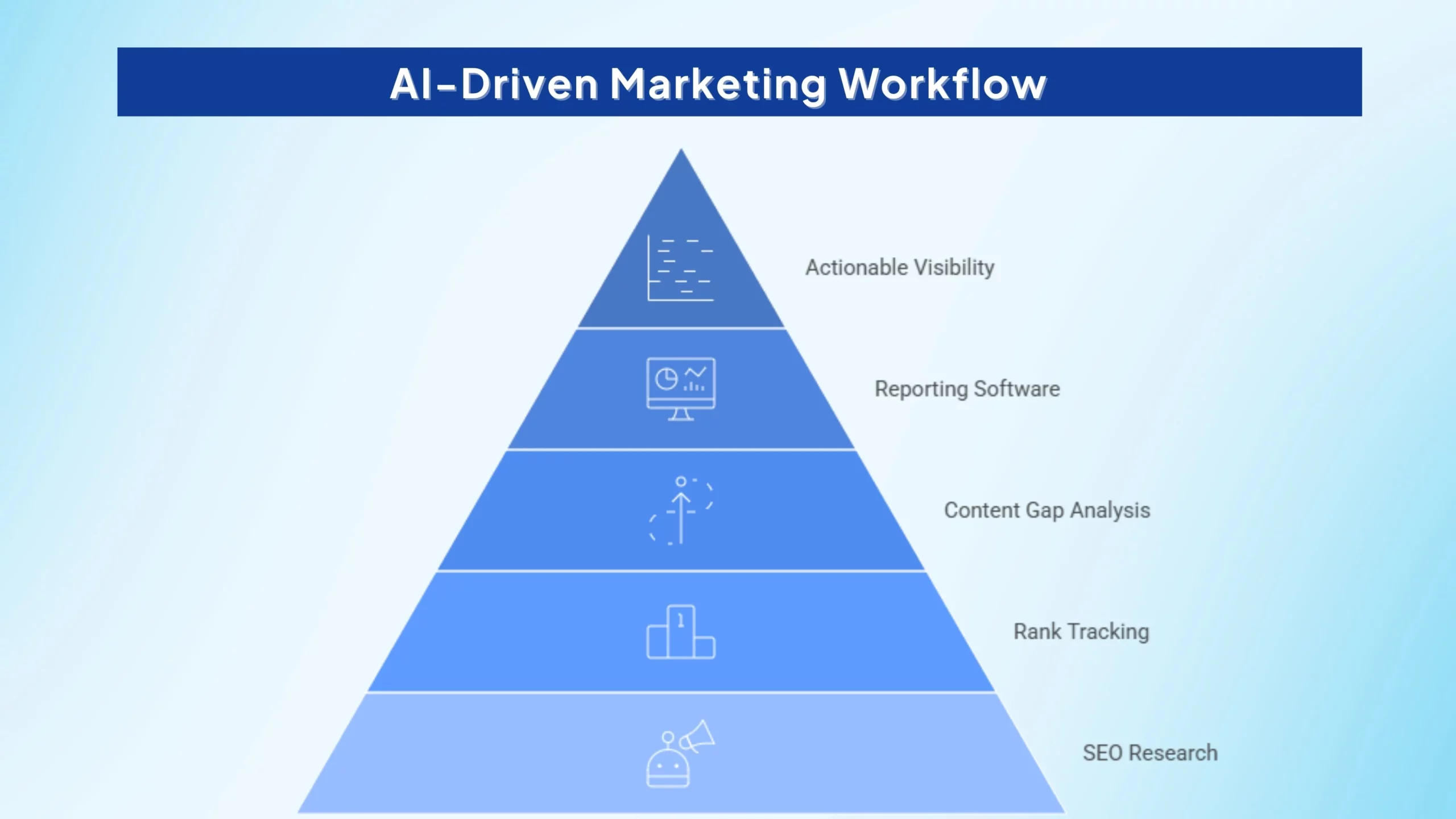
This single workflow replaces:
This single workflow replaces:
- SEO research by showing where AI systems already recognize your brand.
- Rank tracking by measuring inclusion and citation, not just positions.
- Content gap analysis by identifying where competitors appear instead of you.
- Reporting software through built-in visual dashboards.
- Manual interpretation by delivering actionable visibility signals.
This is where the Full Wellows Workflow becomes a structural asset, not just another tool.
Why Wellows Delivers Better Value at the Lowest Budget Tier
When comparing entry-level plans, most AI search visibility tools restrict advanced insights to higher tiers. Wellows takes a different approach.
At its Lite plan ($37/month), Wellows still offers:
- Platform AI visibility tracking, allowing teams to see brand presence across 1 Answer Engine ChatGPT
- Query fan out insights, exposing the follow-up paths AI generates so content can cover full intent clusters.
- People Also Ask intelligence, mapped to conversational AI intent rather than static prompts.
- AI writing generator support, enabling faster content creation aligned with AI discovery logic.
- Automated daily monitoring, ensuring visibility shifts are tracked without manual intervention.
- Clear, actionable insights, designed for founders and lean teams without requiring deep technical expertise.
Compared to paying separately for multiple AI visibility platforms, monitoring layers, and analysis tools, Wellows consolidates these capabilities into a single system built for modern AI driven discovery.
In an era where LLM-driven answers are replacing traditional search, Wellows functions like a brand visibility radar, helping businesses see where they’re cited in AI answers and where the opportunities are to improve.
Alxploria
The Bottom Line
For bootstrapped startups, the goal is not more data.
The goal is fewer tools, clearer insights, and faster decisions.
A single AI visibility platform like Wellows can replace multiple subscriptions, reduce operational noise, and still deliver the critical insights startups need to grow in AI-driven search without requiring a high budget.
What is the Fastest Way for a Startup to Use an AI Visibility Platform to Identify Low-Hanging Opportunities That Can Generate Quick Organic Wins?
The fastest way for a startup to use an AI visibility platform to identify low-hanging opportunities starts with prioritizing speed over perfection. For a bootstrapped startup, long strategy documents and complex frameworks only slow progress. What actually drives growth is the ability to spot opportunities early, act quickly, and compound visibility before competitors can react.
This is where a focused AI visibility platform like Wellows becomes practical rather than expensive. With its entry-level Essential plan, startups gain access to AI search insights that typically require higher-tier pricing or multiple tools, making it easier to move fast and capture organic wins early.
Founder Insight from Reddit
“The shift to LLM search is already happening, especially for complex research like finding SaaS solutions. Content doesn’t just need to rank anymore; it needs to be summarized correctly by AI.”
The real issue founders face:
Discovery is moving upstream into AI-generated answers. Buyers are forming shortlists inside ChatGPT, Google AI Overviews, and similar platforms before visiting websites. If your startup is not visible or cited at this stage, SEO traffic alone will not translate into demand.
1st Fastest Way: Query-Level Opportunity Detection
The fastest wins in AI search come from identifying exact queries where AI visibility is already forming and influencing decisions.
Using the Top Cited Queries, founders can immediately see which prompts AI platforms are already using to surface brands. This view highlights the queries where competitors are cited, the intent behind each query, and the visibility score tied to AI exposure.
With Wellows, startups can quickly identify AI queries where:
- Competitors appear in AI answers but your startup does not
- Your content exists but is not being cited or referenced
- AI platforms summarize the topic without including your brand
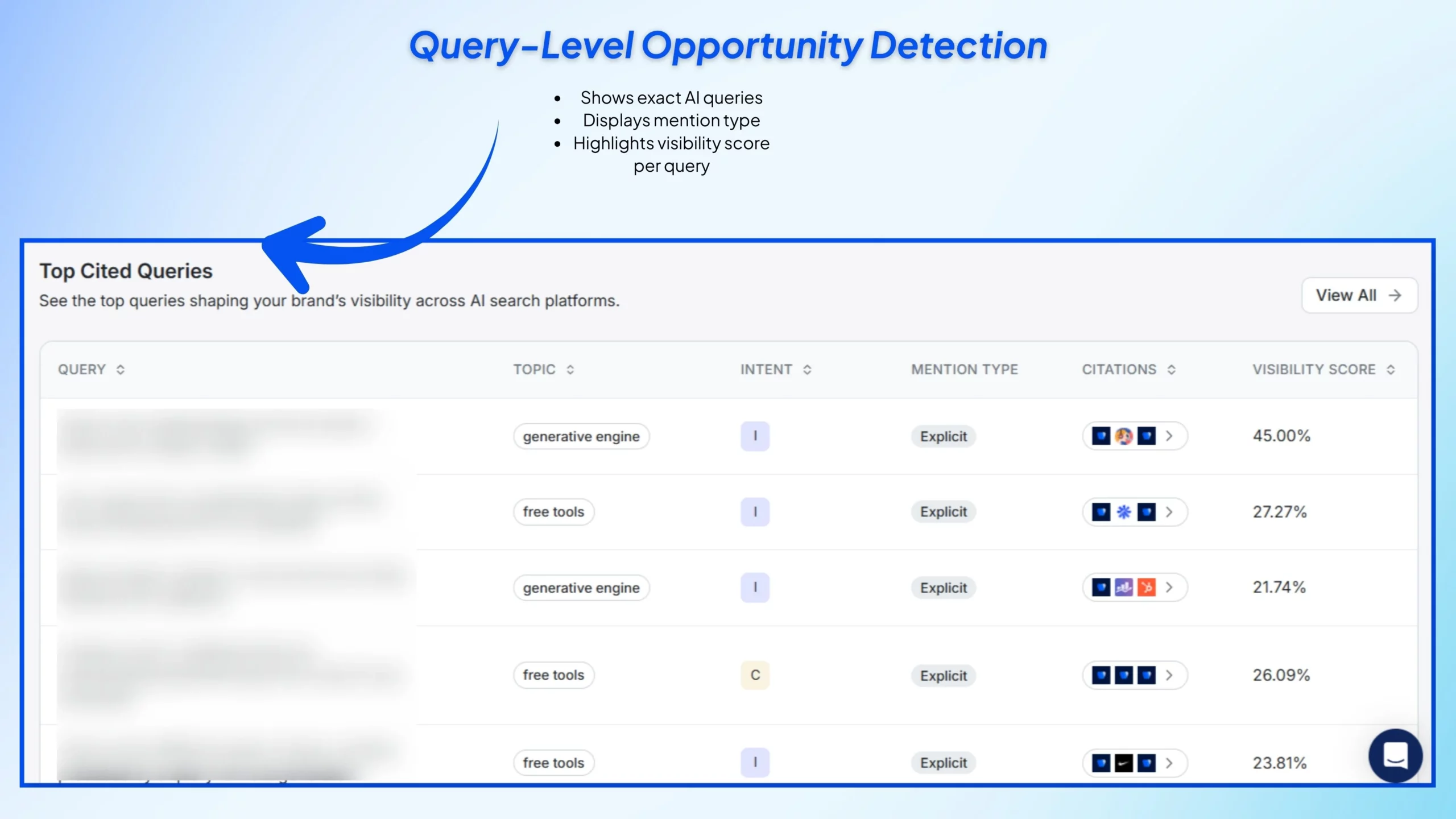
This step helps founders avoid guessing. Instead of chasing broad keywords, they focus only on queries AI already trusts and displays.
Why the Essential plan works:
Wellows allows startups to track real AI prompts across ChatGPT and Google AI Overviews and clearly see inclusion gaps, even at the entry level.
On the entry-level plan, startups get:
- Up to 100 tracked AI search prompts
- 10 competitors monitored side by side
- Clear visibility into where AI is already shaping buyer decisions
2nd Fastest Way: Daily Automated Monitoring Without Added Cost
AI answers evolve quickly. Once a competitor becomes consistently cited, replacing them becomes significantly harder.
The Automated Monitoring dashboard helps founders track visibility over time. It highlights citation shifts, topic momentum, and freshness indicators so founders know when AI answers are changing.
Wellows’ daily automated monitoring enables founders to:
- Detect new AI answers as soon as they appear
- Track citation changes before they stabilize
- Act while competitors are still unaware of emerging visibility
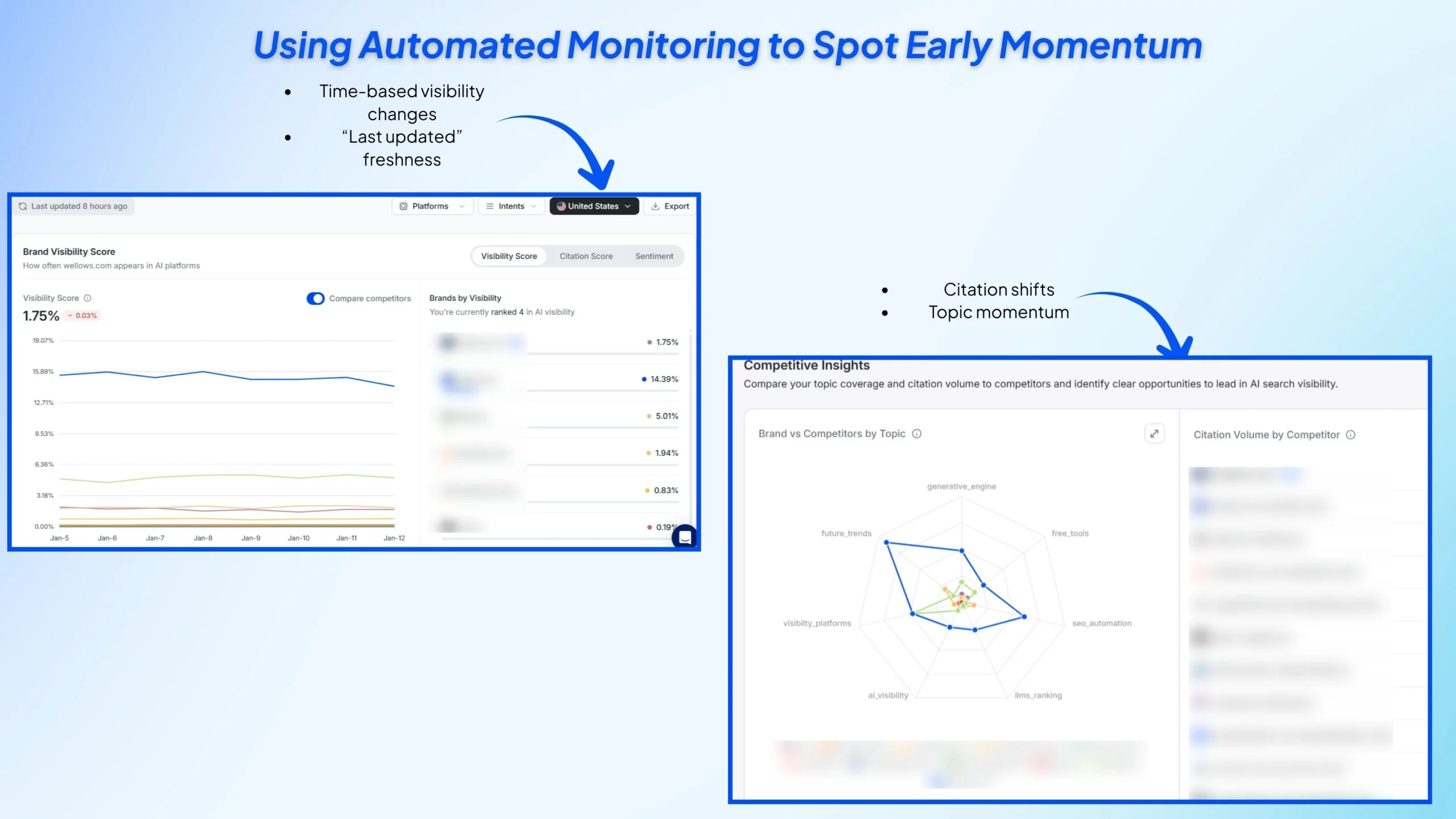
This allows startups to optimize before AI answers harden around existing sources and brands.
Why the Essential plan works:
Daily automated monitoring and long-term visibility history are included from day one, so founders do not need manual checks or external tools.
At the entry level, startups receive:
- Daily automated monitoring
- All-time visibility history
- Unlimited implicit and explicit citation tracking
3rd Fastest Way: Turn Visibility Gaps into Execution
Once gaps are identified, founders need execution, not reports.
The below screenshot shows how Wellows converts missing citations into clear content tasks. Founders can see which competitors are being cited, the estimated citation impact of closing the gap, and a direct action button to create content.
Wellows turns insights into a simple execution loop:
- The tool identifies missing AI citations
- The action required is clearly defined
- Content is created or updated
- Monitoring confirms whether citations improve
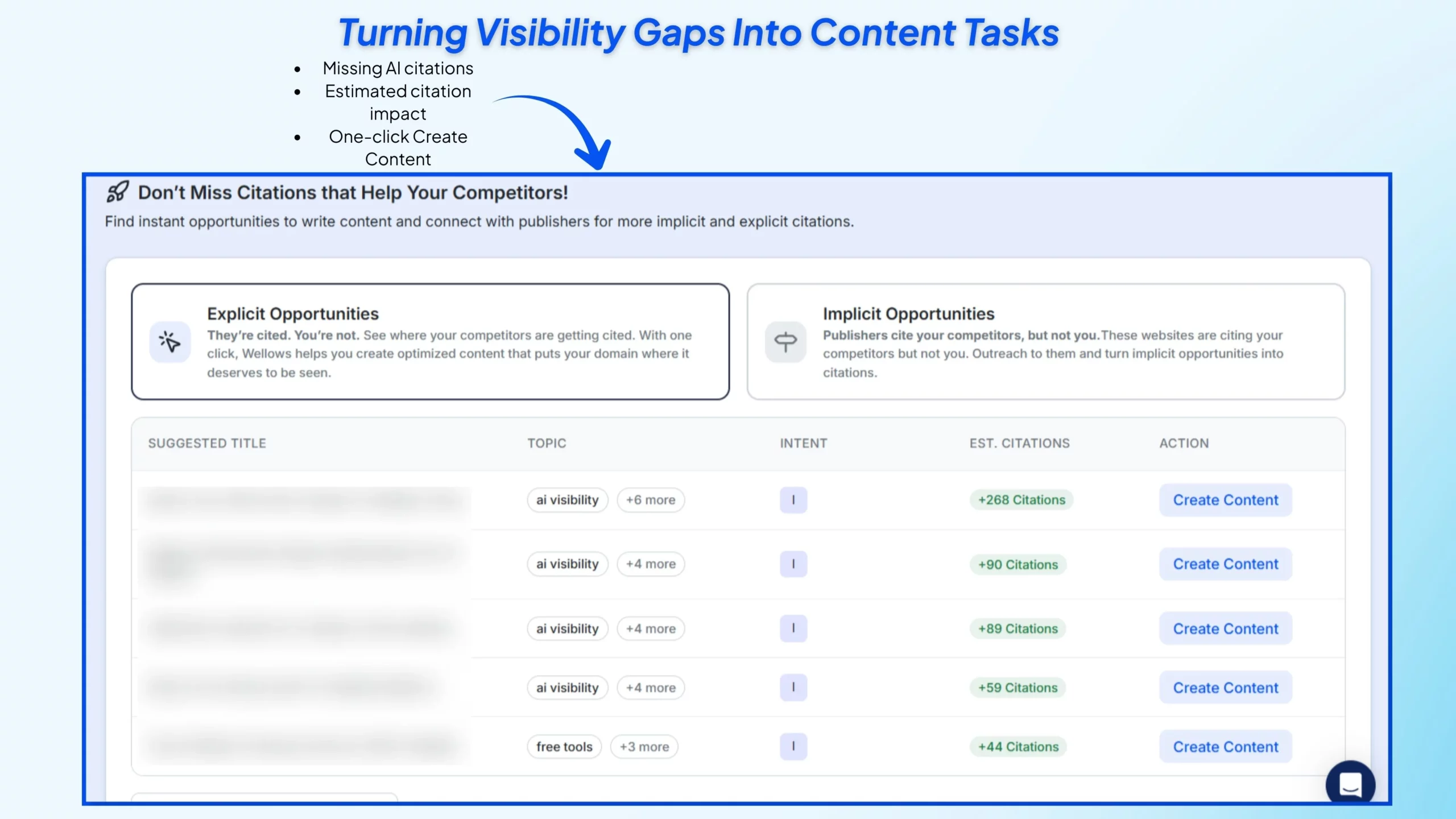
No external strategist is required. No layered reporting tools. No manual interpretation.
Why the Essential plan works:
Wellows converts visibility gaps into execution-ready tasks, allowing lean teams to move quickly.
With the entry-level plan, startups can:
- Generate up to 5 AI-assisted content pieces
- Track whether updates lead to new AI citations
- Measure improvement across AI platforms automatically
For early-stage teams, the goal is not perfection. It is momentum. By combining query-level detection, automated monitoring, and execution-ready insights, Wellows gives founders a practical way to compete in AI search without stretching budgets or adding expensive tools.
How Can Non-Technical Founders Understand and Act on AI Visibility Reports Without Hiring an Expensive Consultant?
For non-technical founders, the challenge is not acting on AI visibility data but knowing which signals actually matter. This matters because nearly 70 percent of businesses report higher ROI from AI-driven SEO, and 68 percent of marketers see positive performance uplifts, yet many founders struggle to interpret the data.
Instead of getting lost in reports, the focus should be on where the brand appears in AI answers, whether it is cited as a source, where competitors are mentioned instead, and which AI platforms are driving those shifts.
Turning these insights into action means refining content to match AI-preferred language, filling visibility gaps competitors occupy, strengthening authority for better citations, and continuously monitoring changes to move fast.
Wellows removes that complexity by surfacing these key metrics as clear signals and direct actions, allowing founders to improve AI search engine visibility and capture meaningful gains without technical expertise, consultants, or outside help.
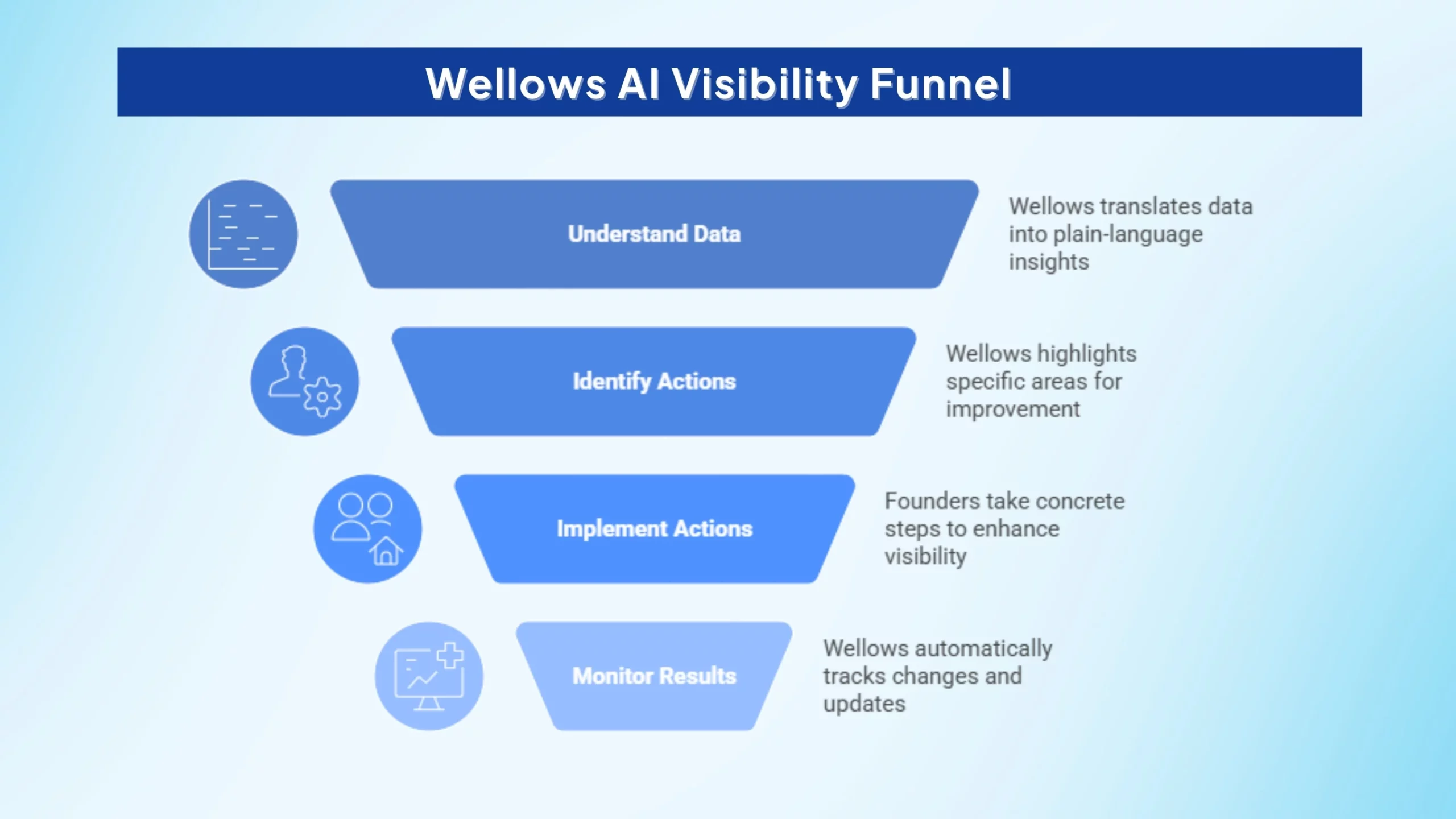
Reports Designed for Humans, Not Analysts
Most tools assume technical knowledge. Wellows does not.
Its dashboards are designed to answer practical questions founders already ask:
- Is our brand showing up in AI answers?
- Where are competitors mentioned instead of us?
- Which platforms are driving visibility changes?
Instead of raw metrics, Wellows surfaces plain-language insights like citation presence, visibility gaps, and momentum trends across ChatGPT, Gemini, Perplexity, and Google AI Overviews, functioning as an AI Overviews Tracker that helps startups clearly see when and where their brand is included in AI-generated answers.
This allows founders to understand performance at a glance without decoding spreadsheets.
Clear Signals Instead of Abstract Metrics
Wellows avoids confusing terminology and focuses on visibility signals founders can act on immediately, such as:
- Queries where competitors appear but your brand does not
- Content that exists but is not cited by AI systems
- Platforms where visibility is growing or declining
These signals replace technical KPIs with decision-ready insights, making reports usable without interpretation layers.
Turning Reports Into Simple Actions
The biggest value for non-technical founders is that Wellows does not stop at reporting. It guides action.
The workflow is intentionally simple:
- Identify missing AI citations
- Improve or adjust existing content
- Publish updates
- Monitor visibility changes automatically
There are no strategy decks, technical audits, or complex recommendations. Every insight connects directly to a clear next step.
No-Code, No Learning Curve
Founders do not need to configure complex systems or understand AI mechanics. Wellows works out of the box.
- No prompt engineering required
- No custom dashboards to build
- No integrations to maintain beyond optional GSC connection
Everything updates automatically, allowing founders to focus on execution instead of setup.
Learning While Executing, Not Before
Founders naturally learn how AI search works by using the tool, not by studying theory.
As Wellows tracks citations, competitors, and platform behavior, patterns become obvious over time. This builds intuition without formal training, empowering founders to make better decisions with each update.
Why This Approach Works for Startups
Instead of outsourcing understanding, founders stay close to discovery.
Wellows turns AI visibility from a black box into a clear, repeatable process, helping non-technical leaders make confident decisions, protect budget, and grow visibility without adding complexity or external dependency.
For startups and SEO teams, Wellows brings AI-centric visibility into focus, offering both a high-level overview and detailed evidence of where AI platforms are recommending competitors over your brand.
Prolinkbuilders
How Can a Startup Set Realistic KPIs for AI Search Visibility Growth to Evaluate Whether a Low-Cost Tool Is Working?
For early-stage startups, the biggest mistake is measuring AI search visibility with traditional SEO expectations. Rankings, clicks, and traffic alone no longer tell the full story. AI search changes where discovery happens, so KPIs must change too.
Step 1: Establish a Baseline Before Expecting Growth
A low-cost tool cannot prove value without context.
Startups should always run a baseline audit during the first 7 to 14 days to document:
- Current AI citation frequency
- Platforms where visibility exists or is missing
- Competitor dominance by query or topic
This baseline becomes the reference point for judging improvement, not traffic spikes or short-term fluctuations.
Step 2: Define Clear, Outcome-Based Objectives
Before choosing KPIs, startups must define what success actually means in AI search.
Common realistic objectives include:
- Increasing brand mentions in AI-generated answers
- Becoming a cited or referenced source for core topics
- Improving how accurately AI systems describe the brand
- Gaining visibility parity with known competitors
These objectives ensure KPIs focus on influence and inclusion, not vanity metrics.
Step 3: Choose KPIs That Match How AI Search Works
Low-cost AI visibility tools are most effective when measured against AI-native KPIs, not traditional SEO scores.
Foundational KPIs startups should track include:
- AI Citation Rate
How often your brand appears in AI-generated answers. - Primary Source Rate
The percentage of AI responses where your content is treated as the main reference. - AI Share of Voice
Your visibility compared to competitors across AI answers. - Topic Coverage
The number of relevant topics where AI systems include your brand. - Entity Presence
How frequently your brand, product, or service is recognized as a distinct entity. - Answer Accuracy Rate
Whether AI answers referencing your brand are correct and consistent. - Sentiment Signals
Whether mentions are neutral, positive, or problematic.
These KPIs provide directional clarity, even with affordable tools.
Step 4: Track Trends, Not Perfection
AI visibility growth is gradual and cumulative, especially on limited budgets.
Instead of expecting instant dominance, startups should look for:
- Month-over-month growth in AI citations
- Expansion into new AI-recognized topics
- Reduced competitor dominance in shared queries
- Improved accuracy and consistency of AI answers
This approach aligns with how most affordable tools operate. Many startups using AI visibility tools priced around $50 to $90 per month report strong results when expectations are set correctly.
In fact, 89 percent of startups achieve positive ROI within 90 days, with average revenue gains ranging from $200 to $800 per month from modest investments.
Step 5: Evaluate ROI the Right Way
To judge whether a low-cost tool is working, startups should evaluate:
- Cost of the tool versus improvement in AI visibility KPIs
- Reduction in wasted content creation
- Faster identification of high-impact opportunities
- Increased confidence in where to focus limited resources
Low-cost tools are not meant to replace strategy. They are meant to remove uncertainty and accelerate learning.
How to Know the Tool Is Doing Its Job
A low-cost AI visibility tool is working if:
- You understand where your brand appears in AI answers
- You know which competitors AI prefers and why
- You can prioritize content updates with confidence
- You see steady growth in citations, coverage, or share of voice
If those signals improve over time, the tool is delivering value, even without enterprise-level depth.
The Key Takeaway for Early-Stage Teams
Realistic KPIs turn AI search engine visibility from a guessing game into a measurable growth channel.
For startups, success is not about dominating AI search overnight. It is about consistent gains, smarter focus, and measurable influence, all while staying within budget. When KPIs align with how AI systems actually surface information, even low-cost tools can prove their worth quickly.
- The competitive edge for AI discoverability: Wellows vs Peec AI Compared
- How AI Recommends Startups: How AI Chooses Which Startups to Recommend
- Tech Startups: Top Tech Startups Redefining AI, Robotics and Other Industries
- Startups Can Build a Distribution Moat: How Startups Can Build a Distribution Moat Before Competitors Do
- Ignoring AI Search: The Real Cost of Ignoring AI Search
- Legal Checklist for Startups: 15-Steps Legal Checklist for Startups: Complete Guide
FAQs
Startups monitor AI visibility by tracking how their brand appears across recurring AI prompts and queries over time. Automated prompt tracking shows when a brand is cited, replaced by competitors, or newly introduced in AI-generated answers. Tools like Wellows turn these changes into clear insights so teams can act quickly without manual testing.
Conclusion
AI search is no longer an edge case. It is becoming a primary discovery layer, especially for early-stage startups that cannot rely on scale or brand recognition. The startups that win are not the ones spending more, but the ones using tools like Wellows to replace headcount, remove guesswork, and act with clarity.
Wellows shows that AI search visibility does not require bloated budgets or complex setups because startups can start improving visibility at an affordable entry-level plan. With the right insights, automation, and content support in one platform, startups can measure real impact, justify spend, and build momentum early.
The result is simple: smarter visibility, faster decisions, and growth that compounds through affordable AI visibility.