Search Engine Optimization (SEO) is the process of improving a website’s visibility in search results by optimizing its structure, content, and authority.
It’s how websites get found by showing up in search results when someone types (or speaks) a question. I used to think SEO was only for tech experts, but learning the basics completely changed how I write and share content online.
At its core, Search Engine Optimization (SEO) is about making your website useful and discoverable. When done right, it helps search engines like Google or Bing match your pages with the right people.
I’ve seen firsthand how SEO brings in steady, free traffic. Not from ads. Just from showing up when it matters.
In 2026, SEO isn’t just about keywords or rankings. It’s about being the answer, whether someone is searching on Google, asking Siri, or chatting with an AI assistant.
Over 92% of search traffic still goes to results on page one of SERP (BrightEdge, 2026). That’s why I wrote this guide to help you show up there too.
What is SEO?
Search Engine Optimization (SEO) is the practice of enhancing a website’s visibility in search engine results pages (SERPs) to attract more organic (non-paid) traffic. By optimizing various elements of a website, SEO aims to improve its ranking for relevant search queries, thereby increasing the likelihood that users will visit the site.
What Are the Key Components of SEO?
The key components of SEO include on-page, off-page, technical, and user experience (UX) optimization, each contributing to improved visibility and engagement.
1. On-Page SEO: This involves optimizing elements directly on your website to improve relevance and user experience. It includes crafting compelling title tags and meta descriptions, optimizing keywords naturally, creating high-quality content, building a strong internal linking structure, and maintaining clean, descriptive URLs. Ensuring mobile responsiveness and fast page speed are also critical factors in on-page SEO.
2. Off-Page SEO: Off-page SEO focuses on external factors that build your site’s authority and trust, which is exactly what domain authority tips help you improve in a safe, long-term way. This includes earning high-quality backlinks from reputable sites, engaging on social media platforms, and managing your brand’s online reputation through reviews and mentions. These efforts enhance credibility and signal to search engines that your content is trustworthy.
Before heavy off-page efforts, run on-page SEO analysis to make sure internal linking and content relevance are already solid.
3. Technical SEO: Technical SEO ensures that your site can be easily crawled and indexed by search engines. Key areas include optimizing website architecture, creating XML sitemaps, managing robots.txt files, implementing HTTPS for security, and using structured data markup (Schema.org) to provide context for search engines. A well-optimized technical foundation helps search engines better understand and rank your content.
4. User Experience (UX): A positive user experience plays a vital role in SEO success. Factors such as fast-loading pages, mobile optimization, intuitive navigation, and engaging content contribute to longer visits and lower bounce rates, signaling quality to search engines.
By integrating these four components—on-page, off-page, technical, and UX optimization—you can build a holistic SEO strategy that strengthens your website’s authority, improves rankings, and enhances user satisfaction.
For a practical, page-by-page breakdown of what to optimize, use these 13 on page SEO factors as your starting point.
Why Is SEO Important and What Is Its Role in Digital Strategy
SEO is important because it ensures your content appears when people are actively searching, making it a critical pillar of any digital strategy that can be refined with Real-Time SEO Data.
Forward-thinking agencies use the AI search visibility platform for agencies to refine their SEO in real time and stay visible across human and AI-driven searches.
SEO Prioritize on a budget gives lean teams and solo creators a roadmap to make the most impact with limited resources and still show up where it counts.
That’s why we’ve included tips for solo consultants to scale SEO with AI, helping them compete with larger teams by automating keyword research, audits, and content optimization.
What is SEO really about? It’s the strategy that helps your website get found when people are actively searching online, whether they’re on Google, Siri, or a chatbot
SEO drives over 1,000% more traffic than organic social media (DemandSage, 2026). That means it’s not just important, it’s essential.
Think about how most people begin their day: they search. 68% of online experiences start with a search engine (Intergrowth, 2026). Whether it’s “best SEO AI Agent,” “SEO for beginners,” or “how to do search engine optimization,” that search leads them somewhere, and ideally, that should be your page.
And while Google isn’t the only engine, it still holds the majority of the global search engine market share. If you’re not visible there, you’re missing the biggest opportunity to reach people when they’re actively looking.
SEO is the foundation of digital visibility. It helps your content appear when someone needs it most, on search engines, AI chat tools, voice assistants, and more.
As AI assistants become key players in how users find answers, SEO must evolve to keep pace. AI search is reshaping how visibility is earned in 2026 and beyond, blending traditional ranking signals with AI-driven summaries and conversational intent.
Understanding the difference between traditional SEO tools and modern AI SEO agents is critical here — we break it down in our guide on SEO tools vs agents.
- How SEO actually works today (it’s not just about keywords)
- Why visibility means trust, and why trust leads to growth
- What’s changed in the SEO world with AI, voice search, and SERP features
- Simple strategies that content creators, startups, and marketers are using to rank in 2026
So if you’ve ever wondered how people find content, or how to make sure they find yours, you’re exactly where you need to be.
SEO is constantly evolving, especially with the rise of AI-driven search. At Google I/O 2025, Google introduced features like AI Overviews that are reshaping how search results are generated and ranked.
How Is SEO Different From PPC and SEM?
If you’ve ever Googled something and clicked a result, you’ve already experienced the difference between SEO and PPC, whether you noticed it or not.
What Each One Means
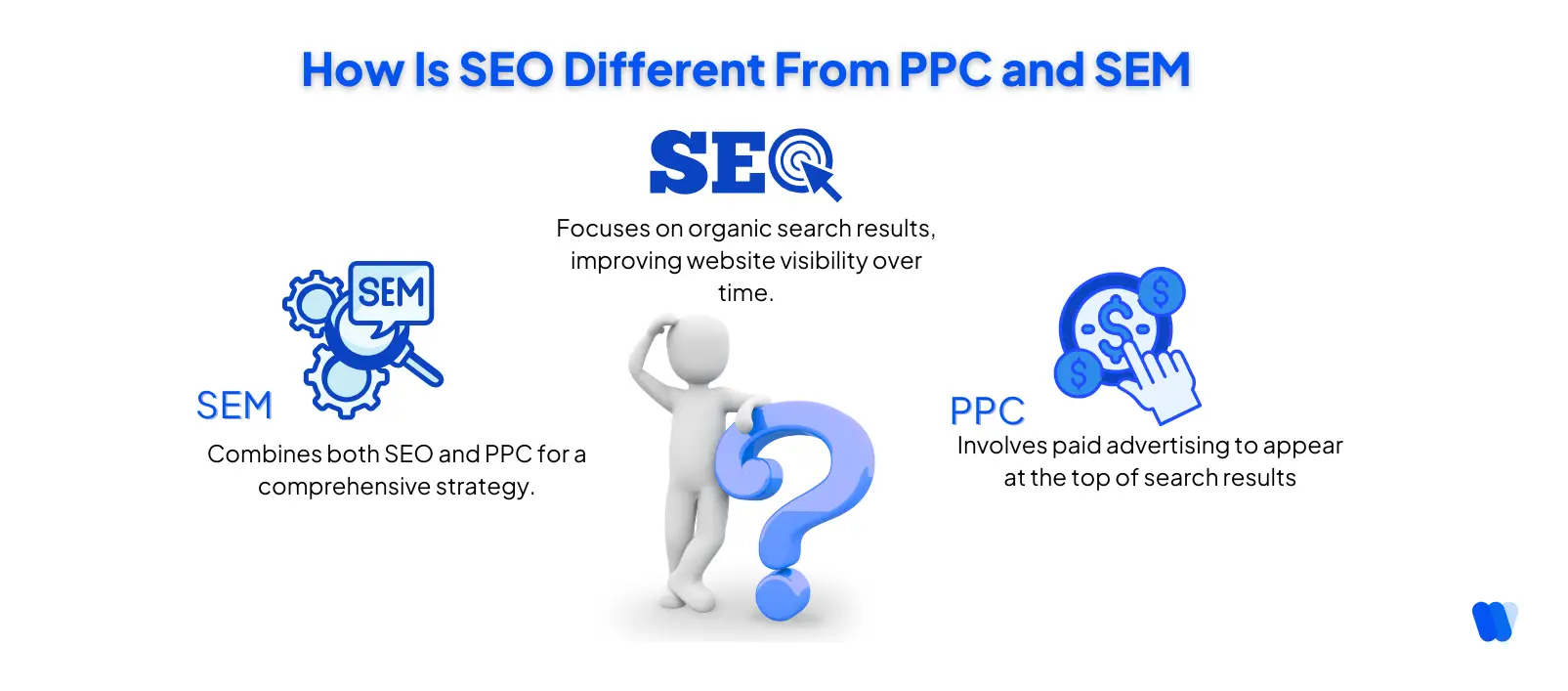
- SEO (Search Engine Optimization) helps you show up in organic (unpaid) results. Your content ranks because it’s relevant and trustworthy, not because you paid for a spot.
- PPC (Pay-Per-Click) are ads that appear at the top and bottom of the page. You pay when people click.
- SEM (Search Engine Marketing) is the full strategy that includes both SEO and PPC.
Comparison at a Glance
| Aspect | SEO | PPC | SEM |
| Traffic Type | Organic (unpaid) | Paid (per click) | Both organic and paid |
| Cost | No cost per click | You pay every click | Depends on budget and balance |
| Time to Results | Gradual (long-term growth) | Instant visibility | Depends on your channel mix |
| Longevity | Ongoing visibility | Traffic ends with ad spend | Mixed |
| Ideal Use Case | Brand building, education, trust | Launches, time-sensitive offers | Full-funnel campaigns |
What Are the Benefits of SEO?
The benefits of SEO go beyond simply ranking higher in search results.
A well-optimized site can deliver steady, long-term visibility, bringing in visitors month after month without ongoing ad spend.
It builds credibility and trust with your audience because appearing in organic results signals authority.
Over time, SEO can reduce customer acquisition costs, improve brand recognition, and create a sustainable growth channel that works for you around the clock.
How Long Does SEO Take to Show Results?
SEO isn’t instant—it’s a compounding process. Most websites start to notice measurable improvements within 3 to 6 months, but achieving higher rankings for competitive keywords may take 6 to 12 months or longer.
Key factors that influence the timeline include:
- Website Quality & Age: Older, established sites often rank faster than brand-new domains.
- Competition Level: High-competition industries (like finance, health, and SaaS) may need 12–24 months for significant progress.
- Content Quality & Relevance: Well-structured, intent-driven content accelerates visibility.
- Technical SEO Health: A technically optimized site (fast load times, mobile-friendly, clean indexation) can see early improvements in weeks.
👉 SEO is not a one-time setup—it’s a continuous strategy. Regular updates, content refreshes, and adapting to algorithm changes ensure long-term visibility.
What Role Do Keywords Play in SEO?
Keywords play a crucial role in SEO as they connect user search queries to the most relevant website content. They guide search engines in understanding what your pages are about and help users discover your content when searching for related topics.
1. Enhancing Search Visibility: Strategically placing relevant keywords in your content, titles, and meta descriptions signals to search engines the main topics of your pages. This alignment increases the chances of your site appearing in search results for those specific queries.
2. Understanding User Intent: Keywords reveal what your audience is looking for online. By analyzing keyword intent—whether informational, navigational, or transactional—you can create content that directly meets user needs, attracting highly relevant traffic and improving engagement.
3. Improving Content Structure: Integrating keywords into headers, subheaders, and throughout your content helps organize information logically. This makes it easier for both users and search engines to navigate and understand your page, enhancing readability and SEO performance.
4. Boosting Click-Through Rates (CTR): Including well-researched keywords in meta titles and descriptions makes your search listings more compelling. When users find your snippets relevant, they’re more likely to click—boosting CTR and signaling value to search engines.
5. Staying Competitive: Monitoring and targeting the keywords your competitors rank for allows you to identify opportunities and gaps in your own SEO strategy. This insight helps you optimize for terms that can increase visibility and traffic.
In summary, keywords are the foundation of SEO. When used naturally and strategically, they enhance visibility, support content optimization, and improve user engagement—helping your website perform better in search engine rankings.
Why Smart Businesses Prioritize SEO Over Time
Keywords play a crucial role in SEO as they connect user search queries to the most relevant website content. They guide search engines in understanding what your pages are about and help users discover your content when searching for related topics.
1. Enhancing Search Visibility: Strategically placing relevant keywords in your content, titles, and meta descriptions signals to search engines the main topics of your pages. This alignment increases the chances of your site appearing in search results for those specific queries.
2. Understanding User Intent: Keywords reveal what your audience is looking for online. By analyzing keyword intent—whether informational, navigational, or transactional—you can create content that directly meets user needs, attracting highly relevant traffic and improving engagement.
3. Improving Content Structure: Integrating keywords into headers, subheaders, and throughout your content helps organize information logically. This makes it easier for both users and search engines to navigate and understand your page, enhancing readability and SEO performance.
4. Boosting Click-Through Rates (CTR): Including well-researched keywords in meta titles and descriptions makes your search listings more compelling. When users find your snippets relevant, they’re more likely to click—boosting CTR and signaling value to search engines.
5. Staying Competitive: Monitoring and targeting the keywords your competitors rank for allows you to identify opportunities and gaps in your own SEO strategy. This insight helps you optimize for terms that can increase visibility and traffic.
In summary, keywords are the foundation of SEO. When used naturally and strategically, they enhance visibility, support content optimization, and improve user engagement—helping your website perform better in search engine rankings.
Let’s talk about what actually moves the needle.
How Does SEO Impact Website Traffic?
SEO impacts website traffic by attracting people who are already searching for what you offer, leading to more qualified visitors and better engagement.
For most businesses, SEO becomes a sustainable growth channel. One blog post, product page, or guide, if optimized well, can become a steady lead source without burning through your ad budget.
Unlike paid campaigns that stop when your budget does, SEO content builds momentum and compounds.
- It earns trust with searchers
- It cuts customer acquisition costs
- It continues to work months after publishing
In a world of AI chat tools, voice-activated searches, and crowded SERPs, being optimized is your edge.
However, it’s important to note that getting seen in search results doesn’t always mean getting clicks—especially with the rise of zero-click searches where users get answers directly from the SERP.
Next, let’s walk through how search engines actually work, so you can start building pages that don’t just show up, but actually rank.
How Search Engines Work
Search engines aren’t magic. They’re systems, structured, logical, and data-driven.
When someone types or speaks a search like “best SEO guide for beginners” or “what is SEO”, a search engine doesn’t just guess the answer. It follows a series of steps behind the scenes to decide which results to show, and in what order.
Step 1: Crawling – Finding the Content
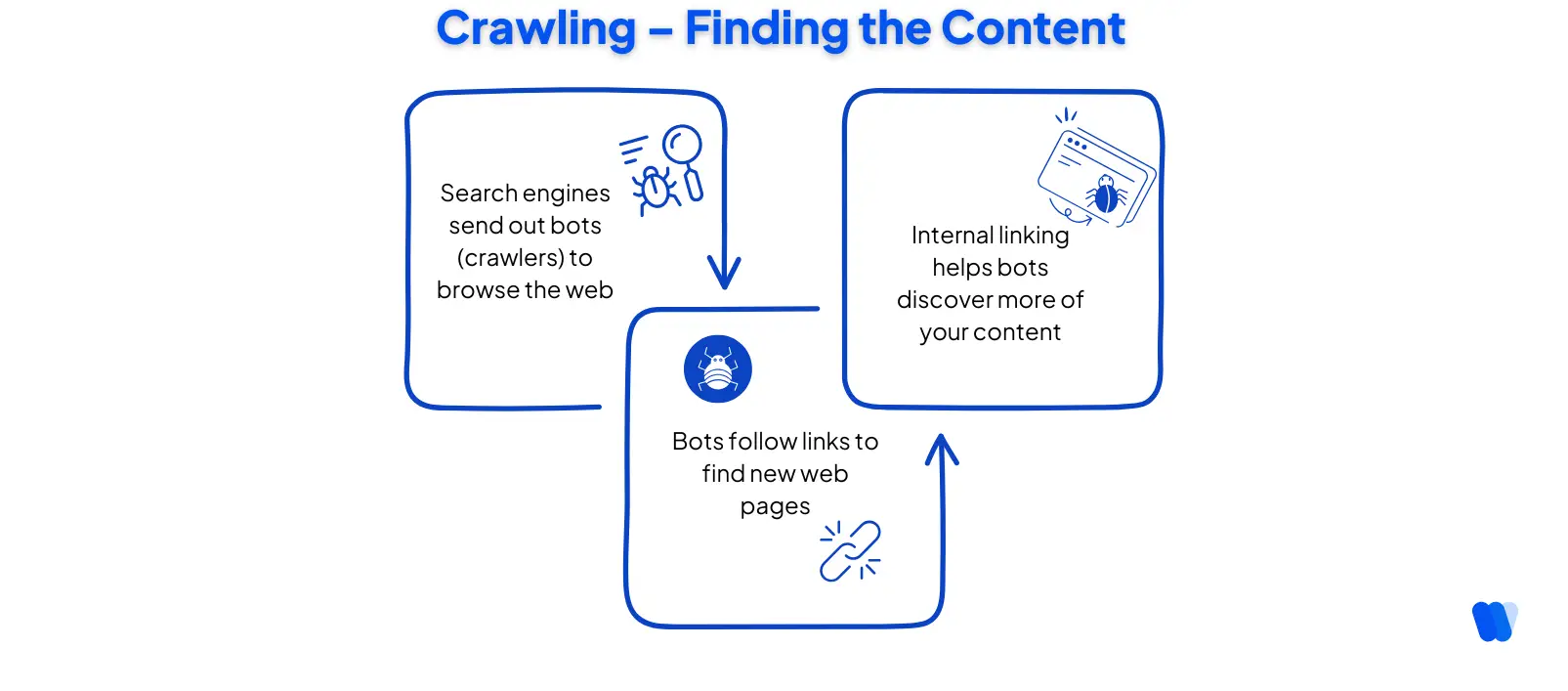
First, search engines crawl the internet. They send out automated bots (also called crawlers or spiders) to explore web pages by following links from one page to another.
Think of crawlers as digital librarians scanning every page they can find. If your website is easy to navigate and linked internally, bots can find more of your content. If your pages are disconnected or blocked by errors, they might get skipped entirely.
That means using a robots.txt file, submitting a sitemap, and formatting titles, URLs, headers, and images for clarity. Without this foundation, search engines can’t index your pages correctly.
Step 2: Indexing – Storing the Content
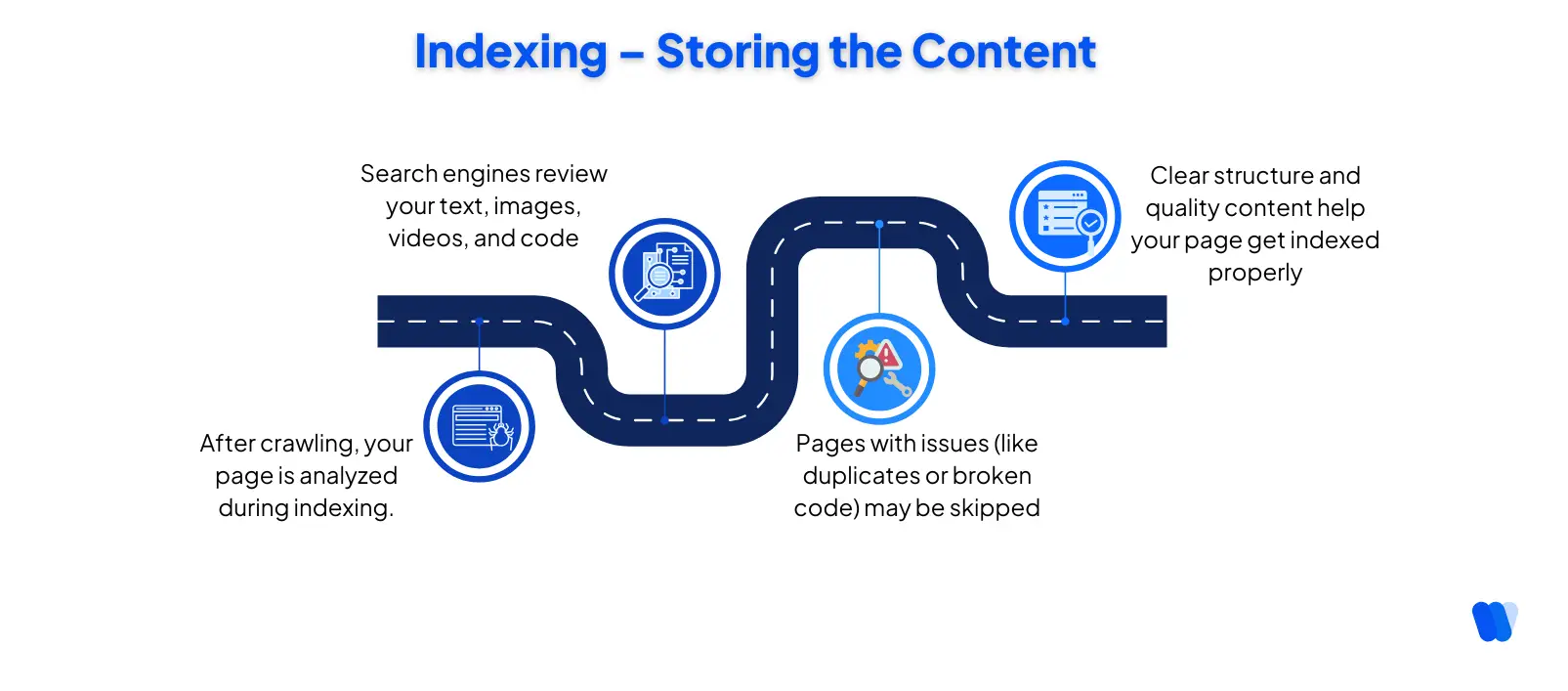
Once your page is crawled, it goes through indexing. This is where search engines analyze the content, your text, images, videos, header tags, and code, and store it in their database (called an index).
Imagine it like a giant digital library catalog. Not every page makes it in. Some are skipped due to duplicate content, broken code, or missing context.
Duplicate content can confuse search engines and dilute the ranking signals, which is why using a canonical tag is critical to point search engines to your preferred version of a page.
A well-structured page with clear headings, meta descriptions, alt text, and meaningful content is more likely to get indexed and stored correctly.
Step 3: Ranking – Choosing the Best Answers
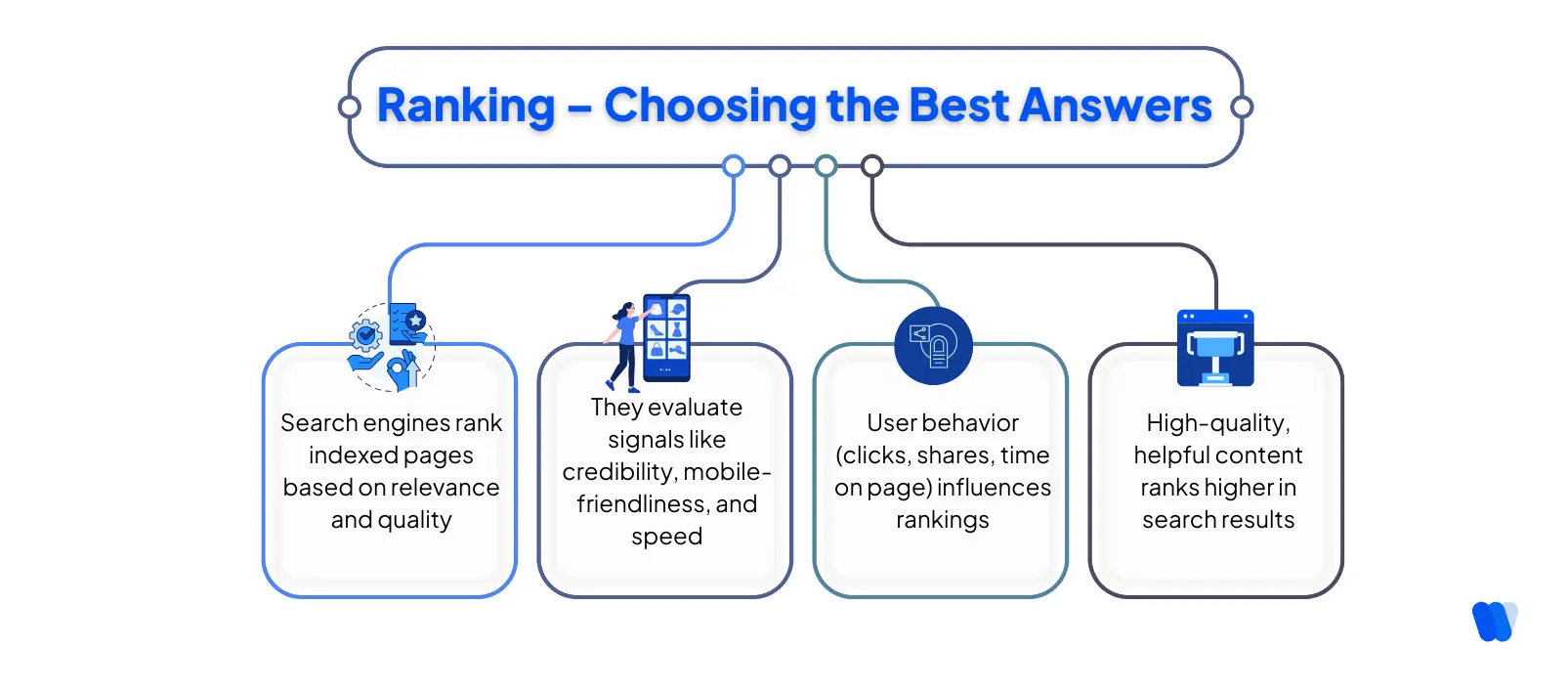
Now comes the ranking. When someone searches for something, the engine looks through its index and tries to deliver the most relevant, helpful, and trustworthy answers.
This is where hundreds of signals come in:
- Is the content relevant to the search?
- Does it come from a credible source?
- Is it mobile-friendly and fast?
- Do people engage with it (click, stay, share)?
The better your content meets these criteria, the higher it appears in search results. This is also how AI SEO Agent uses SERP visibility—by mapping intent to the dominant result types for a query, then shaping your page to be the best match for those formats.
The Flow: A Simple Example
Here’s how it plays out in real life:
- You publish a blog on “What is SEO.”
- Googlebot crawls your site and finds the blog through your internal links or sitemap.
- The blog gets indexed and added to Google’s database.
- Someone searches for “what is seo”
- Google compares that query with its index and, based on relevance and quality, shows your blog post on the results page.
Understanding how search engines work helps you shape your content in a way that fits their process. SEO isn’t about “tricking” Google, it’s about helping structured systems understand why your content is the best answer.
Next up, we’ll walk through the different types of SEO and how they help with crawling, indexing, and ranking.
Search Ranking Factors: What Actually Affects Rankings?
Not all SEO actions are equal. Some things directly impact whether your content ranks, and others are nice to have, as explored in more detail in our guide on search engine ranking factors.
Here are the most important search ranking factors in 2026:
1. Relevance and Quality of Content
Google’s goal is simple: show the best answer. That means your content needs to match the search intent, provide helpful information, and be well-structured. If your blog is just repeating what’s already out there, it won’t stand out.
2. Backlinks and Mentions
When other trustworthy sites link to your page, it’s like a vote of confidence. Even brand mentions without a link can boost trust. It shows that your content is worth referencing.
3. Mobile-Friendliness
Most users search on their phones. Google uses mobile-first indexing, which means it looks at your mobile site first, not desktop. If your site doesn’t work well on a small screen, your rankings will suffer.
4. Page Speed
Slow-loading pages lead to high bounce rates. If your site takes more than a few seconds to load, people (and search engines) won’t wait.
5. HTTPS (Secure Site)
A secure website (one that starts with https://) builds user trust, and Google rewards it with a small ranking boost.
6. Internal Linking
Smart internal linking helps search engines understand your site structure and guides users to more helpful content.
7. Structured Data (Schema Markup)
Adding structured data helps search engines better understand your content. It can also make your listing stand out with rich results like ratings, FAQs, or event dates.
Also, name your image files clearly (e.g., seo-audit-report-2026.png) and add descriptive alt text to each image. This helps search engines understand visual content and improves both accessibility and image search visibility.
Image SEO improves how visuals are indexed and displayed in search, making it a key part of effective on-page optimization.
8. User Experience and Engagement
If people land on your page and quickly leave, that’s a bad signal. High bounce rates, low time on page, or poor navigation can all hurt rankings.
9. Content Freshness
Google prefers updated content for topics that change over time (like SEO trends or tools).
10. E-E-A-T (Experience, Expertise, Authoritativeness, Trustworthiness)
Google favors content written by people with real knowledge. This means sharing your real experience, using your name, and linking to trustworthy sources.
To see how these E‑E‑A‑T principles apply when using AI for content creation, head over to our deep dive on AI and E‑E‑A‑T.
What Are SERPs (Search Engine Results Pages)?
A SERP is the page that shows up after you search for something on Google or any other search engine. It’s where all the results, like links, answers, and suggestions, appear.
These pages include different types of results: regular (organic) links, paid ads, quick answers in boxes (called featured snippets), local business results, and related questions under “People Also Ask.” What you see depends on what you search for. Questions show answers, products show shopping links.
In 2026, SERPs are changing fast. You might now see summaries from AI, more images, and even full answers without clicking anything. That’s why showing up in the right spot, not just in the blue links, matters more than ever.
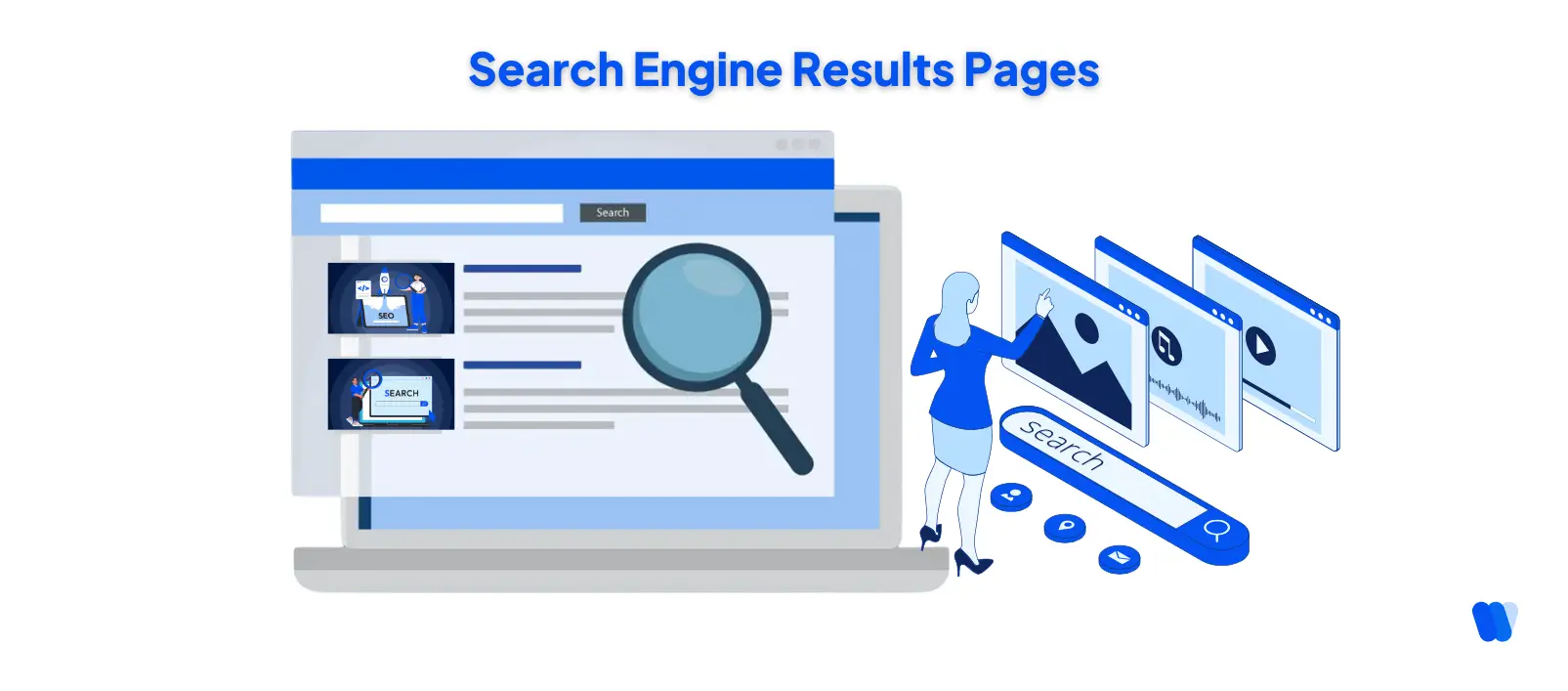
Improving SERP visibility involves more than just rankings; it’s about earning space in featured snippets, AI-generated overviews, and leveraging “People Also Ask” data to build topical authority.
What Is On-Page SEO, Off-Page SEO, and Technical SEO?
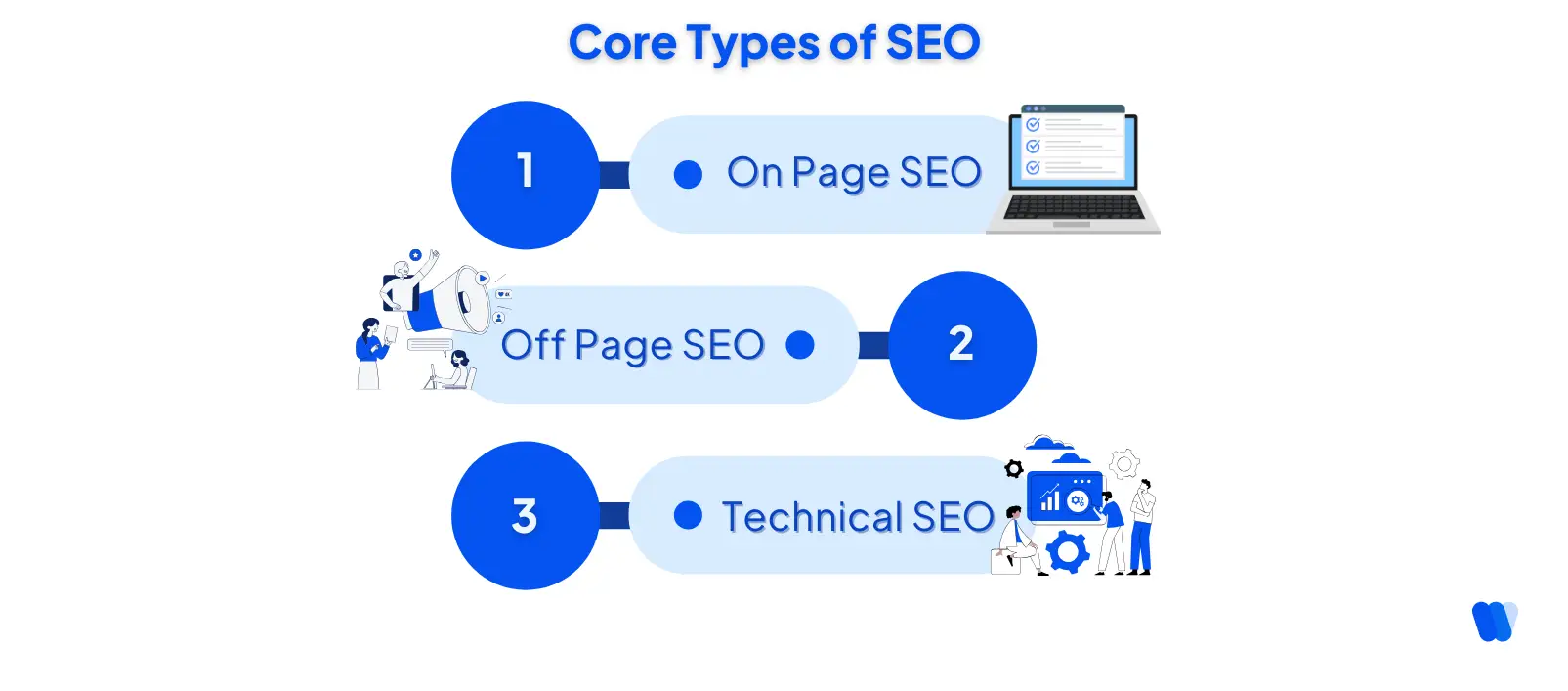
SEO is made up of three main components each answering a different part of the ranking puzzle.
- On-Page SEO – This is everything you control on your website, like your content, headings, links, and images.
- Off-Page SEO – This covers what others say about your site, like backlinks, mentions, and shares across the web.
- Technical SEO – This makes sure your site works well for search engines. It includes page speed, mobile-friendliness, security, and clean code.
Each one plays a different role. But they work best when used together. You can have great content, but if no one links to it or your site is slow, it won’t show up.
You can build links, but if your pages aren’t helpful or structured well, readers will leave. Good SEO brings all three parts together to help your content get found and trusted.
1- What is On-Page SEO?
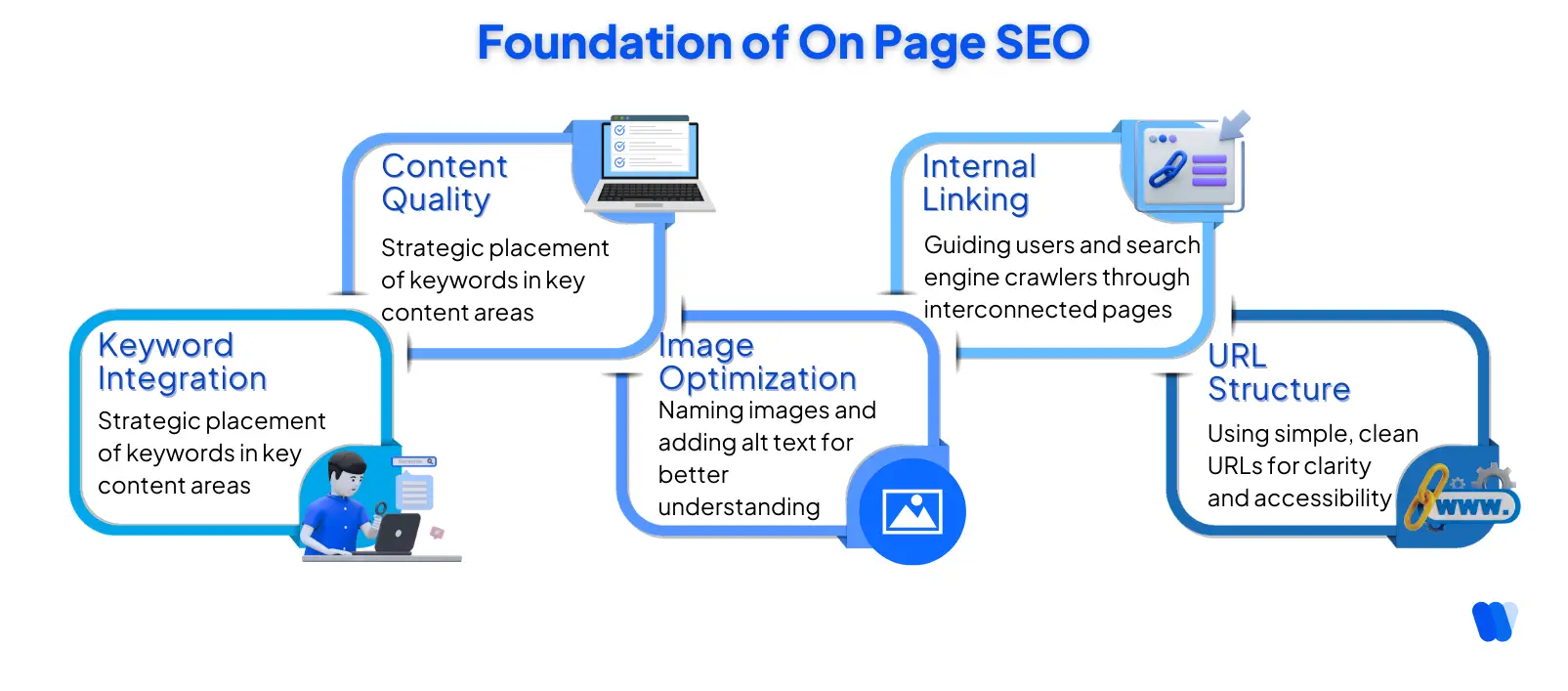
This is the SEO you fully control. It’s all about making your content clear, helpful, and easy to understand, for both people and search engines.
On-page SEO involves optimizing elements like headings, internal links, keyword usage, and meta tags, which tell search engines what your page is about.
What It Includes:
- Placing the right keywords in your headings, titles, and paragraphs
- Writing useful, well-structured content that answers real questions
- Linking between your pages to guide both users and crawlers
- Naming your images properly and adding alt text so they’re easy to understand
- Using simple, clean URLs that make sense
2- What is Off-Page SEO?
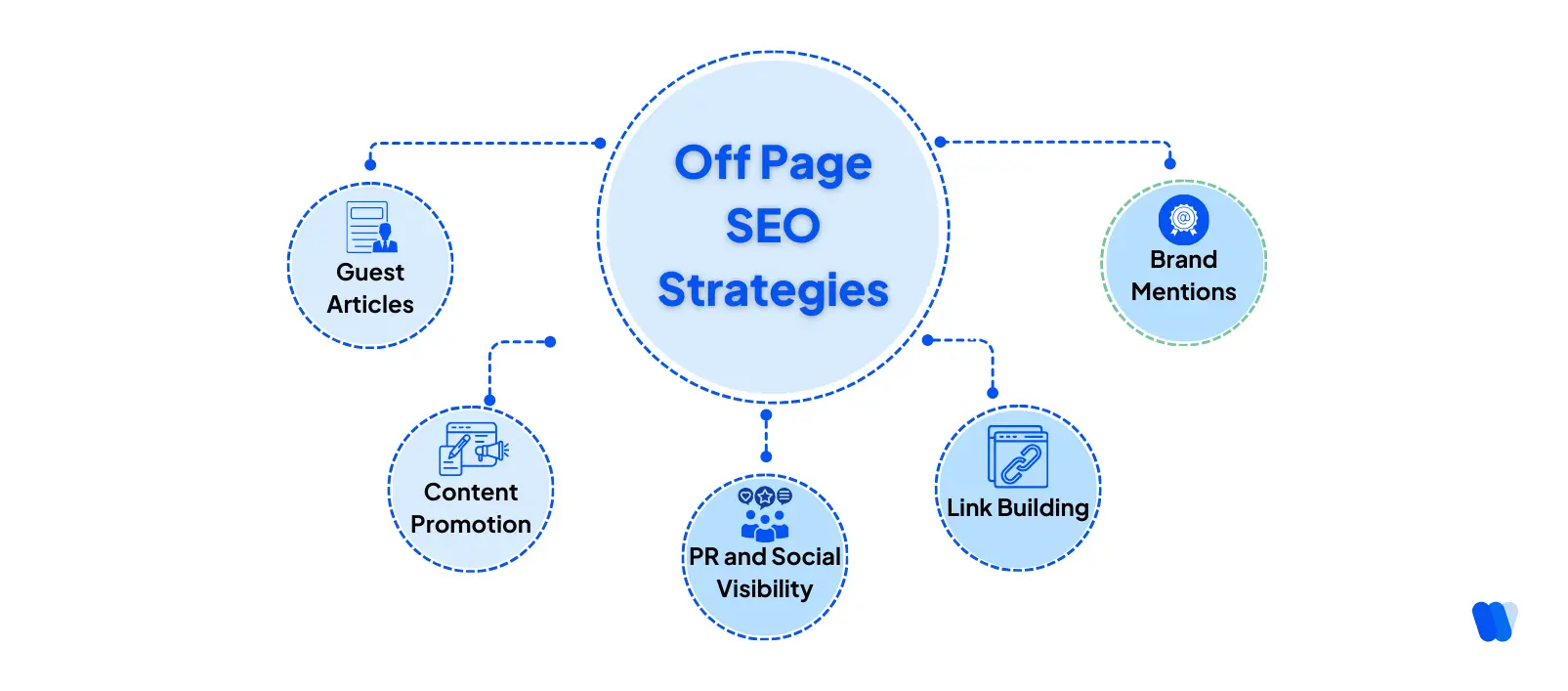
This is about your site’s reputation. It’s how other people talk about, link to, or mention your brand across the internet.
What It Includes:
- Getting links from credible websites
- Earning brand mentions, even without links
- Publishing guest articles on other sites
- Promoting useful content that people naturally want to share
- Building visibility through PR or social platforms
What Are Backlinks and Why Are They Important?
Backlinks, also called inbound links, are hyperlinks from one website to another. They are a cornerstone of Off-Page SEO because they act like endorsements, signaling to search engines that your content is credible and valuable.
Why Backlinks Matter:
Higher Rankings: Search engines treat quality backlinks as votes of trust. Pages with authoritative backlinks usually rank higher in search results.
- Referral Traffic: Backlinks from relevant sites can bring targeted visitors directly to your content.
- Authority & Trust: Links from established domains in your niche strengthen your site’s credibility and reputation.
- Faster Indexing: New websites can get discovered and indexed more quickly when linked from trusted sources.
Types of Backlinks:
- Natural Backlinks: Earned organically when others link to your content.
- Manual Backlinks: Gained through SEO outreach, guest blogging, or collaborations.
- Self-Created Backlinks: Placed in directories, forums, or comments (use carefully to avoid spam penalties).
In short, backlinks remain one of the most powerful signals for search visibility, authority, and long-term SEO growth.
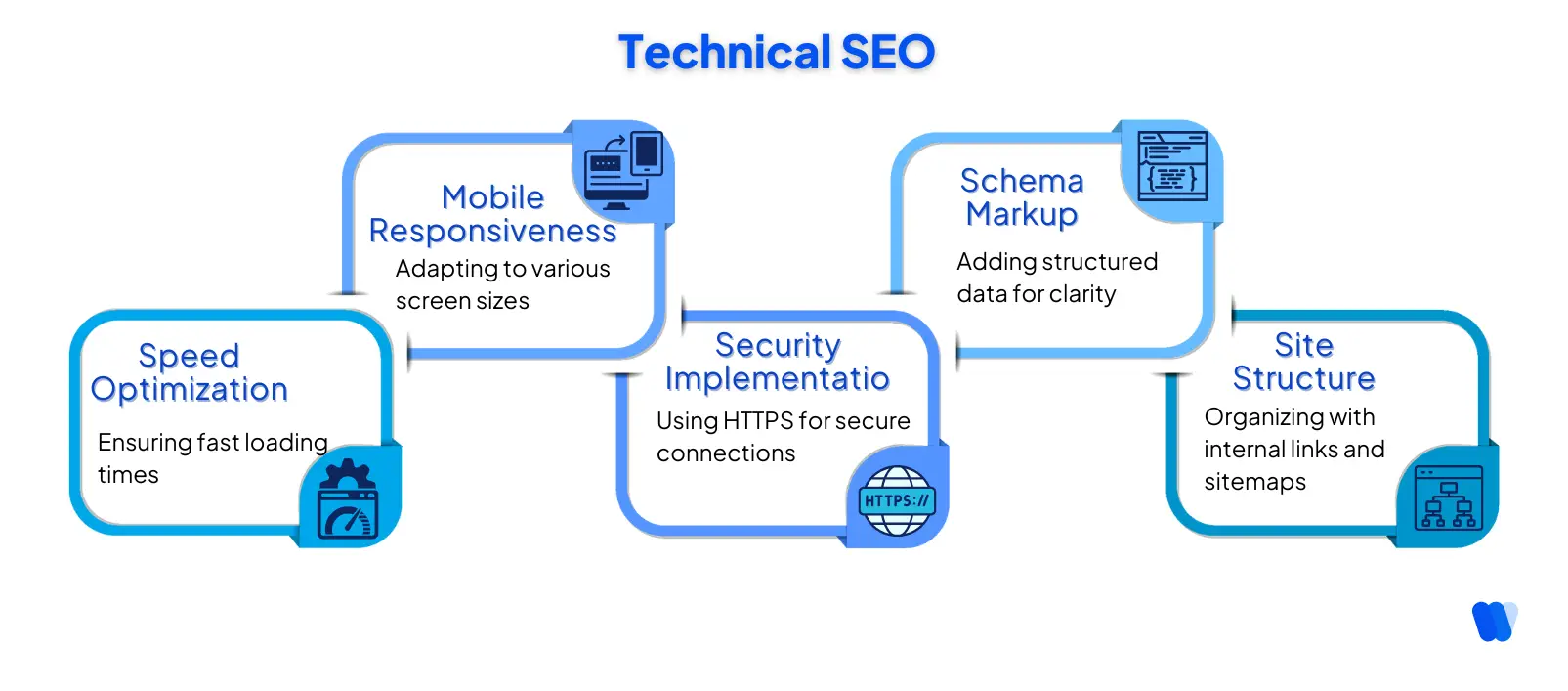
3- What is Technical SEO?
This is the backend. It helps search engines find, read, and show your pages without hitting roadblocks.
What It Includes:
- Making sure your site loads quickly
- Ensuring it works on phones and smaller screens
- Using HTTPS for security
- Adding schema (structured data) so Google understands your content
- Setting up your site structure with proper internal linking and sitemaps
What Each Type of SEO Does? (Quick Comparison)
| SEO Type | Focus Area | Who Controls It? | What It Impacts Most |
| On-Page SEO | Content and structure | You | Relevance, user experience |
| Off-Page SEO | External signals and mentions | Others + You (indirectly) | Trust, authority, reputation |
| Technical SEO | Infrastructure and performance | You + Dev team | Crawlability, site health, usability |
What Is an SEO Audit?
An SEO audit is a detailed check-up of your website’s content, structure, and technical health to identify issues and opportunities for better rankings.
It helps you create a clear action plan to fix weaknesses, strengthen existing strengths, and align your site with current search engine requirements.
By reviewing elements like crawlability, keyword optimization, page speed, mobile usability, backlink quality, and other Technical SEO Issues, an audit ensures your site is set up to perform well in both search engines and AI-driven discovery tools.
What is White Hat and Black Hat SEO
When it comes to SEO, not all tactics are created equal.
- White Hat SEO follows search engine rules and focuses on providing real value to users. It’s slower, but safer, and helps build long-term visibility.
- Black Hat SEO uses tricks and shortcuts to manipulate rankings. These may work temporarily but often lead to penalties, lost traffic, or even removal from search results.
What are the Key Differences between White Hat vs. Black Hat SEO?
| Aspect | White Hat SEO | Black Hat SEO |
| Approach | Follow search engine guidelines | Breaks or bends the rules for faster results |
| Techniques | High-quality content, clean site structure | Keyword stuffing, hidden links, spammy backlinks |
| Risk Level | Low, safe and sustainable | High, may lead to penalties or de-indexing |
| Results | Long-term and stable traffic | Short-term spikes with long-term damage potential |
| Goal | Build trust and user satisfaction | Beat the algorithm, regardless of user experience |
What Is Keyword Research in SEO?
Before you write anything, it’s important to know two things:
- What people are searching for
- Why they’re searching for it
That’s what keyword research helps you figure out.
Identifying low-competition keywords that align with search intent makes this process far more effective, ensuring faster rankings and higher conversions.
You’re not just picking terms to sprinkle across a page you’re matching your content to real questions people are asking. When you understand how people phrase their searches and what they expect to find, your content stands a better chance of ranking and getting clicked.
3 Types of Keywords by Structure and Length
These are one or two-word phrases like “SEO” or “Tools.”
They get high search volume but are broad, competitive, and vague.
Long-Tail Keywords
These are more specific and often include 3+ words.
Examples: “best AI Agent for SEO” or “How Small Brands Can Make AI Content Feel Personal & Credible”
They have lower competition and higher intent, ideal for focused traffic.
Branded Keywords
These include a brand name or product, like “Nike Air Zoom” or “Canva logo design tool”
Users searching these are already familiar with the brand and likely further along in their decision process.
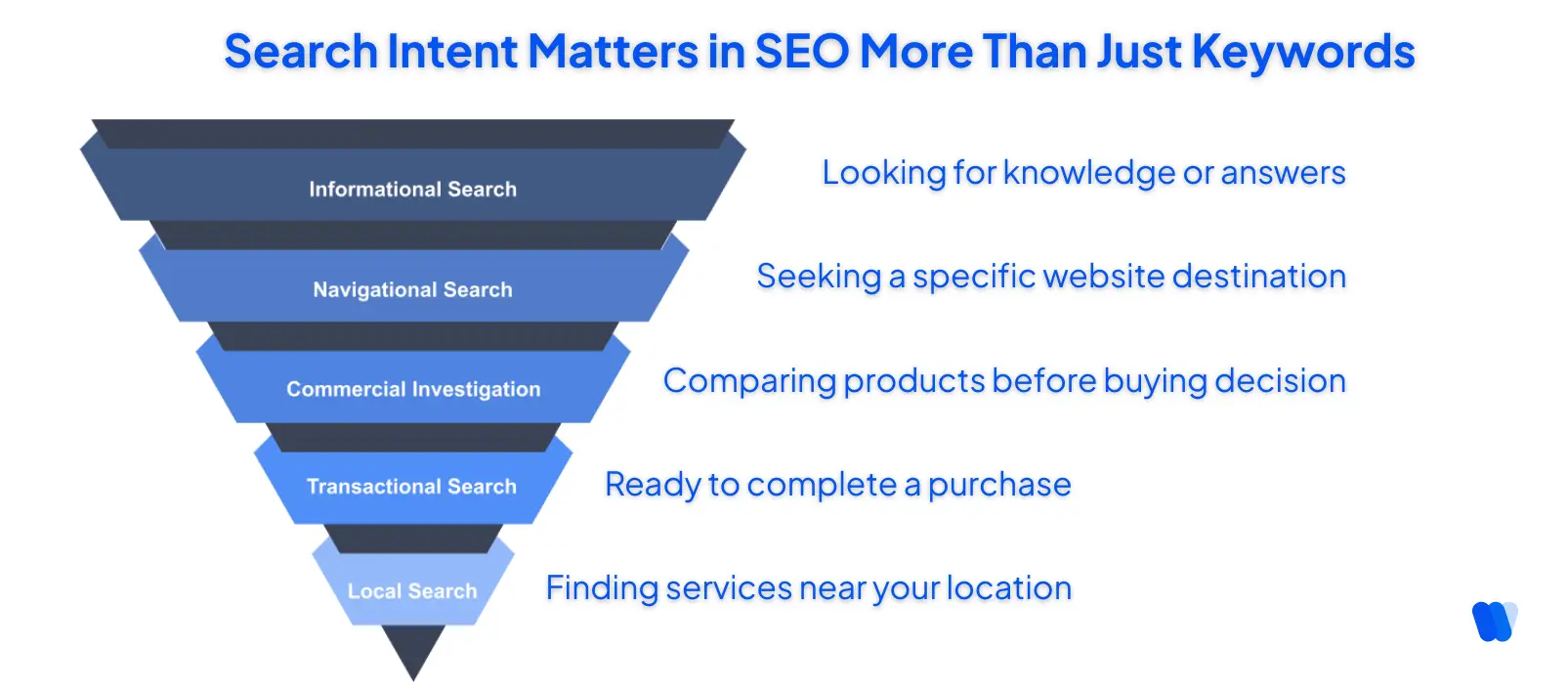
4 Types of Keywords by Search Intent
Not every keyword has the same purpose. Understanding intent helps you write content that meets the reader’s needs.
Used when someone is looking to learn something.
Example: “What is SEO?” or “How to do SEO.”
2. Navigational Keywords
Used when someone wants to go to a specific site or page.
Example: “YouTube login” or “Wellows AI SEO Agent for Startups.”
3. Commercial Keywords
Used when people are comparing options before making a decision.
Example: “best AI tools for SEOs” or “top AI tools 2026.”
4. Transactional Keywords
Used when someone is ready to take action buy, sign up, download.
Example: “buy running shoes online” or “get SEO Site audit report.”
Now that you’ve seen the types by both structure and purpose, let’s bring it all together.
How Many Types of Keywords Are There?
There’s no fixed number, because keywords can be grouped in more than one way. The most useful approach is to combine:
- Length-based types: short-tail, long-tail, branded
- Intent-based types: informational, navigational, commercial, transactional
Combining both helps you understand what your audience wants and how likely they are to convert.
Learn when to go deep or stay brief in Long-Form vs. Short-Form Content.
Why Search Intent Matters in SEO More Than Just Keywords
Let’s say someone searches for “how to do SEO.” They’re not looking to buy one they want instructions. That’s informational intent.
Now, imagine someone searches for “best keyword research tool under $50.” That’s commercial intent they’re ready to buy.
Matching your content to search intent, whether it’s informational, navigational, or transactional, is what makes the difference between getting clicks and getting ignored.
What are the Tools to Discover Keywords in SEO
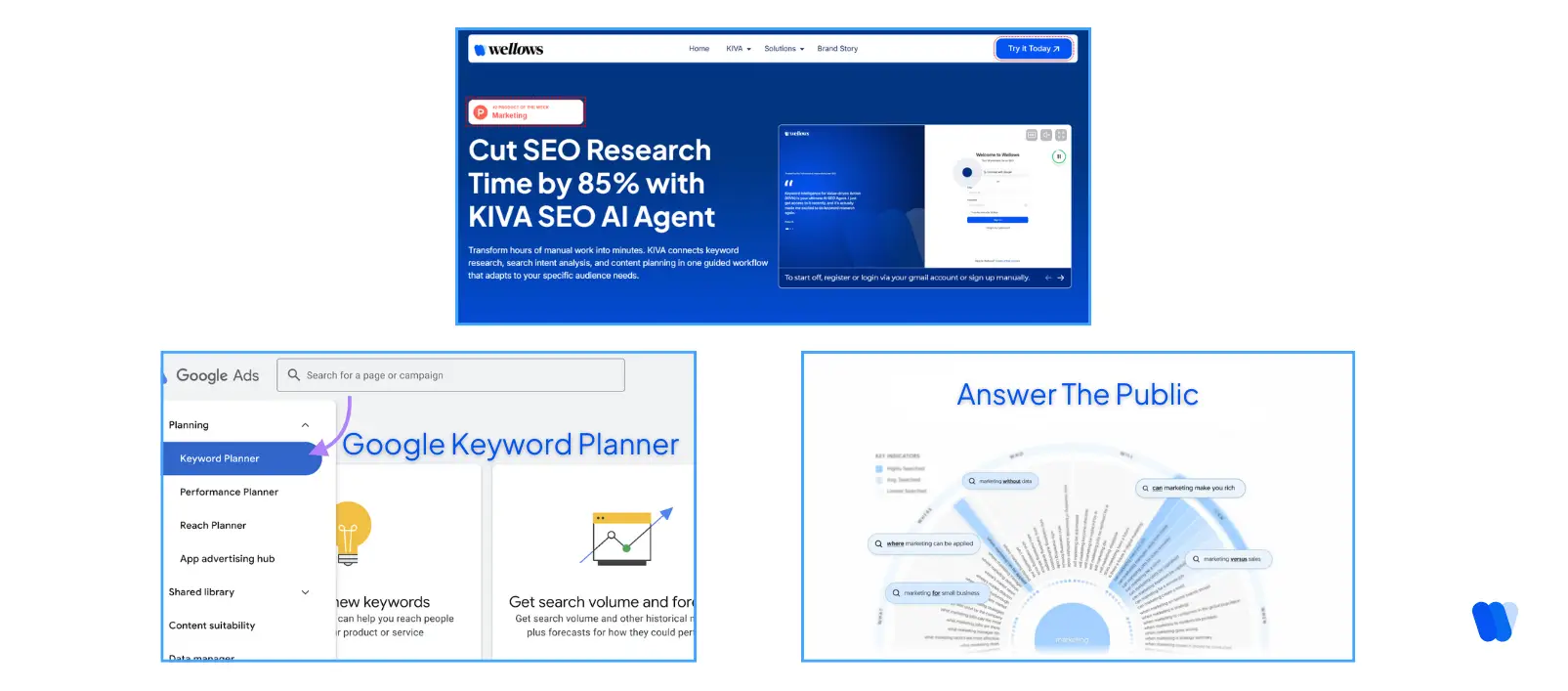
You don’t need to spend money to start exploring what your audience is searching for. Here are a few free tools to get you going, whether you’re uncovering long-tail opportunities or using keyword clustering to group related search terms more effectively:
- Google Keyword Planner – Great for getting keyword ideas and seeing search volumes.
- AnswerThePublic – Visualizes questions and phrases people search around a topic.
- Wellows – Uses AI to uncover intent-rich keywords, cluster search queries, and align them with SEO goals, a core part of AI SEO automation in 2026.
These tools can show you what people type into Google, but more importantly, you’ll also start to understand why they search.
Many older SEO terms like ‘LSI keywords’ still circulate, but they can distract from real user intent and semantic clarity. What are LSI keywords? Break down the myth and explain why they’re no longer relevant.
What is the Future of Search Engine Optimization?
Search isn’t just about Google now, it’s about showing up wherever people ask questions.
What is GEO?
Generative Engine Optimization (GEO) is about helping your content show up in AI-powered answers like those on ChatGPT, Perplexity, and Google’s AI Overview.
These platforms no longer just list web pages they provide summaries based on what they find. That’s why it’s important to understand what AI content really means and how it affects how your pages are shown and cited.
SEO Now Has Two Fronts
Modern SEO must serve two kinds of search:
- Traditional search engines (Google, Bing)
- AI interfaces (ChatGPT, Claude, Gemini)
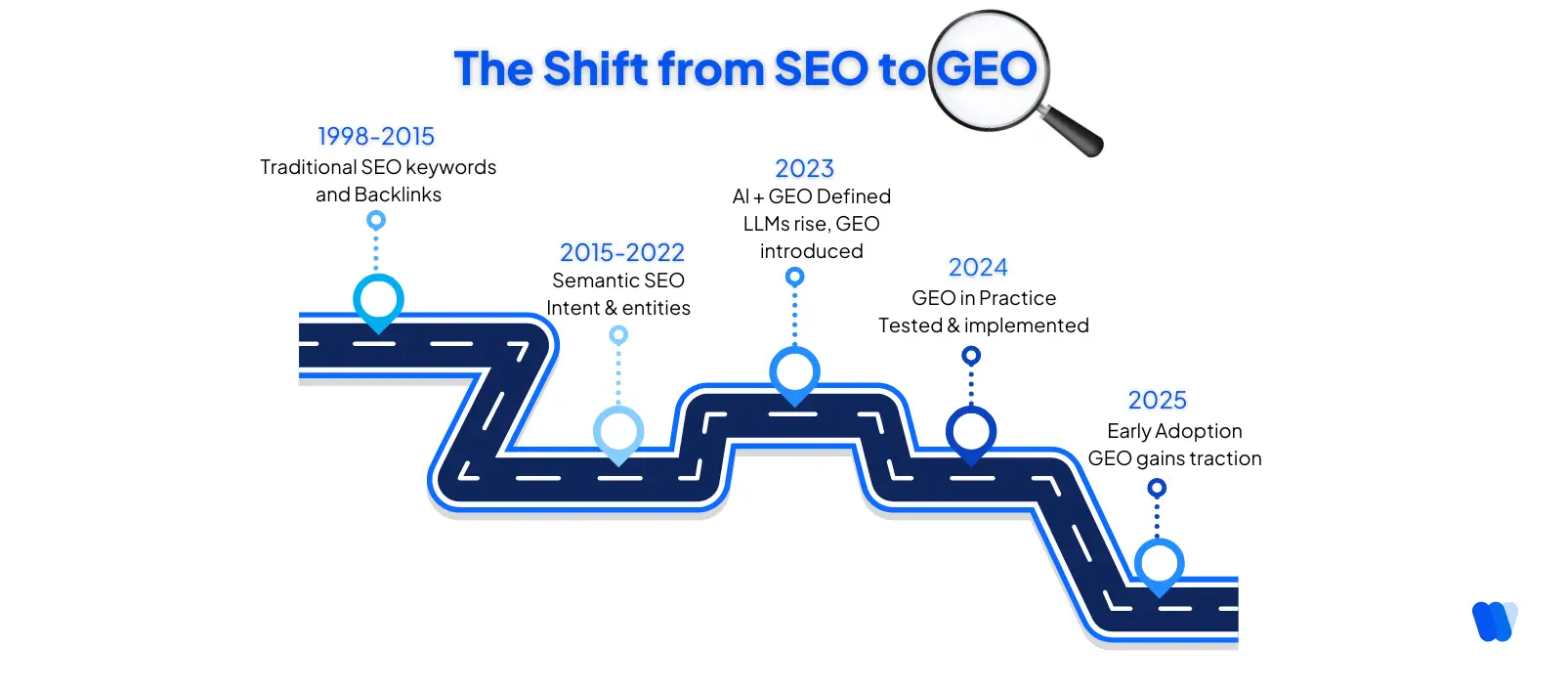
This evolution is why AI search visibility for startups matters—helping teams streamline workflows, scale content, and stay competitive in AI-powered search.
AI assistants, including Google’s AI Overviews, prioritize clear, structured, and fact-backed content when generating responses. If your content is well-organized, helpful, and authoritative, it’s more likely to be selected for those AI answers.
In the future, being in the summary box may be even more valuable than being on page one.
Semantic SEO and Topic Authority
Search engines and AI tools don’t just look for keywords anymore, they try to understand what your content means.
What Is Semantic SEO?
Semantic SEO is about creating content that answers a topic clearly, in context, not just stuffing keywords. It means covering related subtopics, using structured headings, and answering real user questions, so both search engines and AI tools can easily understand and trust your page.
Why Topic Authority Matters
When your website covers a subject deeply, like a whole section on “email marketing” instead of just one blog post, you’re building topic authority. That tells search engines you’re a reliable source on that topic.
How to Do It
- Use topic clusters: Create a main guide and link it to supporting blogs (e.g., “Email Marketing” → “Best Tools,” “Common Mistakes,” “Case Studies”).
- Build internal links: Connect related pages to help search engines see the structure and depth of your content.
- Use clear headings and consistent language: This helps bots and readers navigate with ease.
Implementing LLM-driven content strategies can help ensure topic depth, semantic clarity, and alignment with AI understanding.
The more organized and relevant your content is, the more likely it is to rank and be chosen by AI tools for summaries and answers.
Making Content AI-Ready
AI tools like ChatGPT, Perplexity, and Google’s AI Overview don’t just list links, they pull answers —and how to rank in ChatGPT explains how content earns that position inside AI-generated responses.. To be featured, your content needs to be easy for these tools to read and understand.
How to Structure for AI
- Start with clear summaries: Begin sections with a brief, direct answer before expanding.
- Use bullet points and lists: They help AI identify key takeaways and steps.
- Descriptive headings: Break content into scannable sections with informative H2s and H3s.
- Add structured data: Use schema markup to label FAQs, how-tos, and other formats AI can easily read
Structuring also supports overall readability, which helps both human users and AI systems process and prioritize content.
These visibility factors include clarity of structure, factual precision, and semantic cues that influence how content is pulled into AI-generated summaries.
As more content is created using AI tools, it’s critical to understand whether this actually helps or harms your SEO. Find out what impact AI content really has on Google rankings.
Write with Understanding and Intent
Demonstrate that your content matches the user’s purpose. Answer real questions. Provide definitions, examples, and supporting insights. This helps AI tools trust and recommend your content.
One way to gain trust from both users and search engines is by humanizing AI-generated content, making it more relatable, structured, and authentic.
Building Brand Visibility Across Search Ecosystems
These days, SEO is about more than just keywords or backlinks. It’s also about your brand, how often it’s mentioned online, how people talk about it, and how visible it is across platforms.
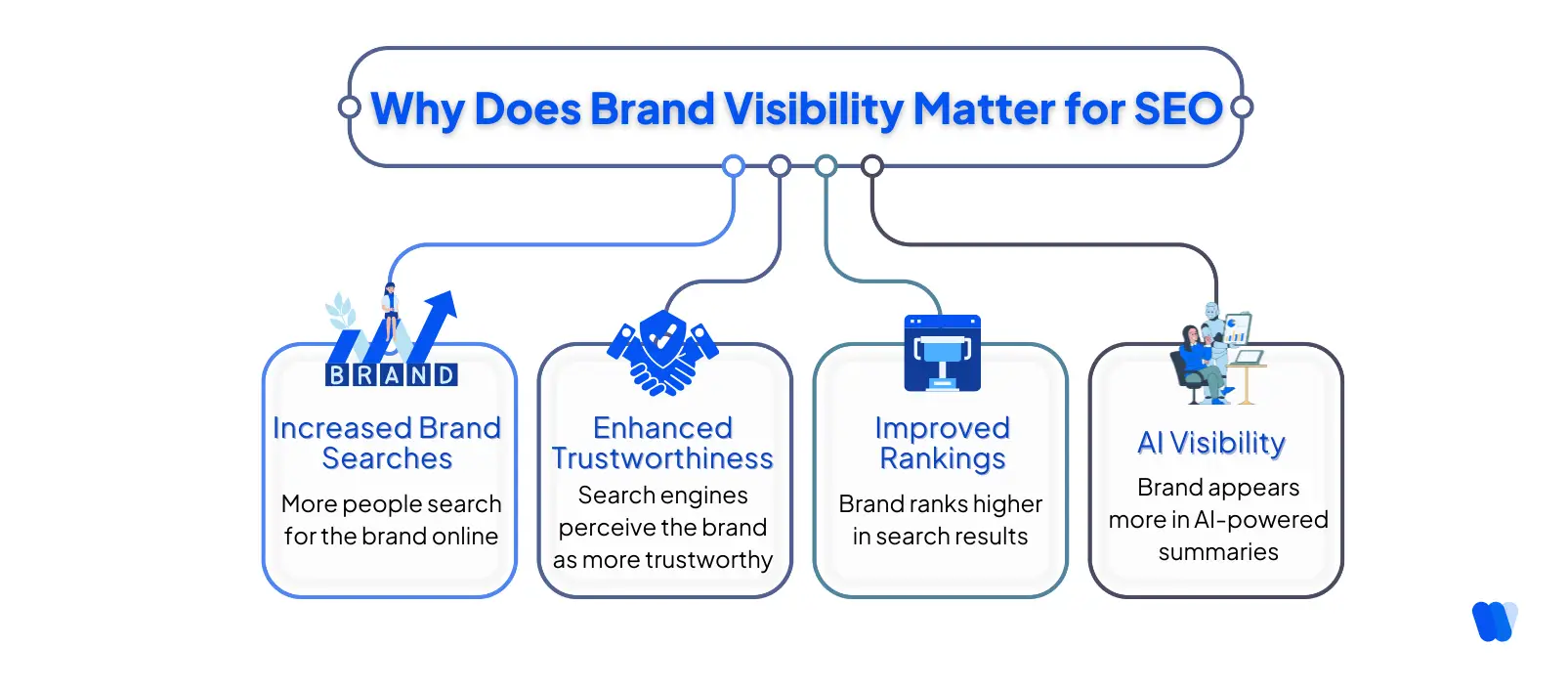
Why Does Brand Visibility Matter for SEO?
When search engines and AI tools like Google AI Overview or ChatGPT decide what to show users, they look for trusted sources. A brand that people search for, talk about, or mention in articles is more likely to be seen as trustworthy.
In fact, brand search volume (how often people Google your brand name) is a strong signal to search engines that your site matters. This can lead to better rankings and more appearances in AI-powered summaries.
How to Build Brand Visibility (and Help Your SEO)
- Get Mentioned: Appear in listicles, expert roundups, podcasts, and blogs, these mentions help your brand get recognized.
- Show Social Proof: Share reviews, testimonials, and user-generated content to build trust.
- Use Your Name Consistently: Keep your brand name clear and visible across all your content and platforms.
What This Means for SEO
The more visible and trusted your brand is online:
- The more likely you’ll rank higher in search results
- The more likely AI tools will include your content in their answers
- The easier it is to build authority without relying only on paid ads or viral content
Optimizing for Bing, Perplexity, and Other AI Tools
Most people think SEO is just about Google, but that’s changing fast.
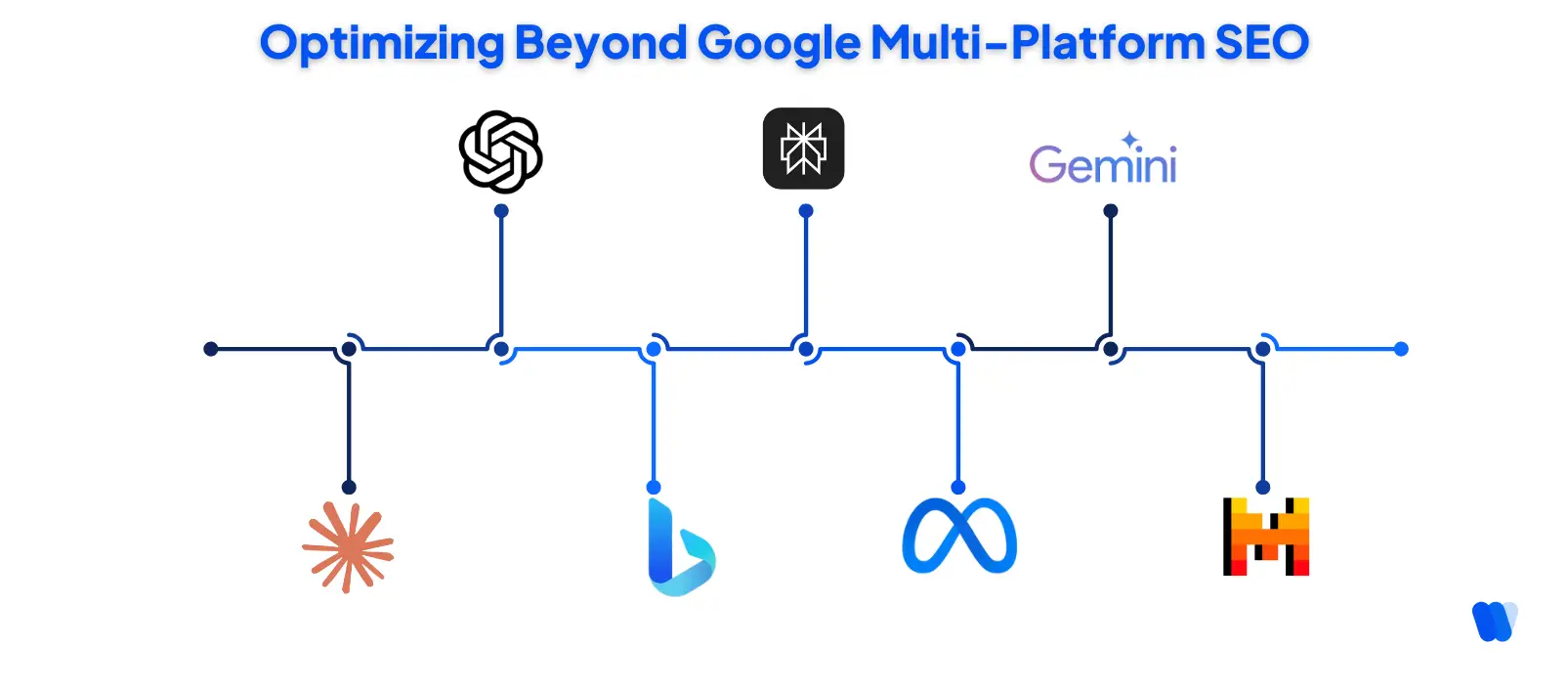
Today, Bing powers results for ChatGPT, Copilot, and several AI-driven browsers. Tools like Perplexity AI also pull from various sources to generate answers. If you want your site to show up in these places, you need to optimize beyond Google.
Why Bing and AI Tools Matter
- Bing has 8–10% of the search market and runs search for many AI tools.
- If you’re not visible on Bing, you’re missing traffic from platforms that are rapidly growing in usage.
- AI tools pull answers from sources that are well-structured, fast, and verified.
Simple Ways to Optimize
- Submit your site to Bing Webmaster Tools – It’s like Google Search Console, but for Bing. It helps you get indexed, track performance, and fix errors.
- Use clean URLs, proper headings, and structured data – These help AI models and search bots understand your content.
- Ensure fast load speeds and mobile-friendly layouts – Performance matters to both Bing and AI crawlers.
SEO in 2026 is no longer just about one engine. AI tools are becoming gateways to content. If you’re optimized only for Google, you’re leaving traffic on the table.
Getting discovered by Bing and AI tools increases your visibility, especially in AI-generated answers, summaries, and voice search.
Tools That Support SEO Efforts
Free Tools
These are reliable for beginners, bloggers, and lean teams. Freelancers, in particular, can benefit from an AI Search Visibility Platform for Freelancers, which integrates keyword insights, performance analytics, and visibility tracking into one streamlined workflow — helping them compete effectively without enterprise-level budgets.
- Google Search Console – Monitors your site’s performance in Google search, indexing status, and technical errors.
- GA4 (Google Analytics 4) – Tracks how users interact with your site, including traffic sources and conversion paths.
- Schema Markup Validator – Checks if your structured data is valid for enhanced search results.
Paid Tools
Ideal for advanced users, teams, and scaling SEO strategy:
- Ahrefs – Strong backlink analysis, keyword explorer, and site auditing tools.
- SEMrush – All-in-one suite for keyword tracking, competitor monitoring, and content optimization.
- KIVA by Wellows – An AI SEO Agent that assists in keyword strategy, topic clustering, and SEO-friendly planning.
SEO Tool Recommendations by User Type
| User Role | Recommended Tools | Purpose and Use |
| Blogger | Google Search Console, KIVA | Track rankings, improve blog content, and find long-tail keywords |
| Freelance Marketer | GA4, SEMrush, Ahrefs, KIVA | Manage multiple client sites, audit SEO performance, automate keyword planning |
| Startup Founder | GA4, Google Search Console, KIVA, SEMrush | Budget-friendly visibility growth, AI-driven SEO insights, and content support |
| In-House SEO | Ahrefs, SEMrush, KIVA, Schema Validator | Full-scale SEO campaigns, technical checks, and competitive benchmarking |
| Ecommerce Owner | GA4, Ahrefs, Google Search Console, KIVA | Product SEO, site speed monitoring, and structured data setup |
| Content Strategist | SEMrush, KIVA | Content planning, topic clustering, and internal linking optimization |
Measuring SEO Performance
You can’t improve what you don’t track. Whether you’re running a blog or a business website, measuring SEO performance helps you see what’s working and what needs to change.
That includes tracking the right SEO metrics not just traffic, but engagement, rankings, and technical signals that reflect real impact.
What are the Key SEO Metrics to Monitor
- Organic Traffic – How many people are visiting from search engines
- Keyword Rankings – Where your pages appear in search results for target terms
- Bounce Rate – How many users leave after viewing just one page (important for content quality and relevance)
- Core Web Vitals – Google’s performance metrics on page speed, visual stability, and interactivity
- Click-Through Rate (CTR) – Percentage of people who click your site in search results
How to Track These Metrics in SEO
Shows how your site appears in Google search:
- Track impressions, clicks, CTR, and average position
- Find out which queries and pages perform best
- Identify crawl issues or indexing problems
Google Analytics 4 (GA4)
Gives insight into user behavior:
- Measure sessions, bounce rate, and user flow
- Set goals to track conversions or actions (e.g., downloads, form fills)
- Segment by traffic source, device, or location.
As AI-generated search experiences grow, tracking GEO-specific KPIs also becomes essential for evaluating visibility across chat and zero-click platforms.
Key Trends Shaping SEO in 2026
Search habits and technology have changed. To stay visible, your website needs to adapt to how people find answers today.
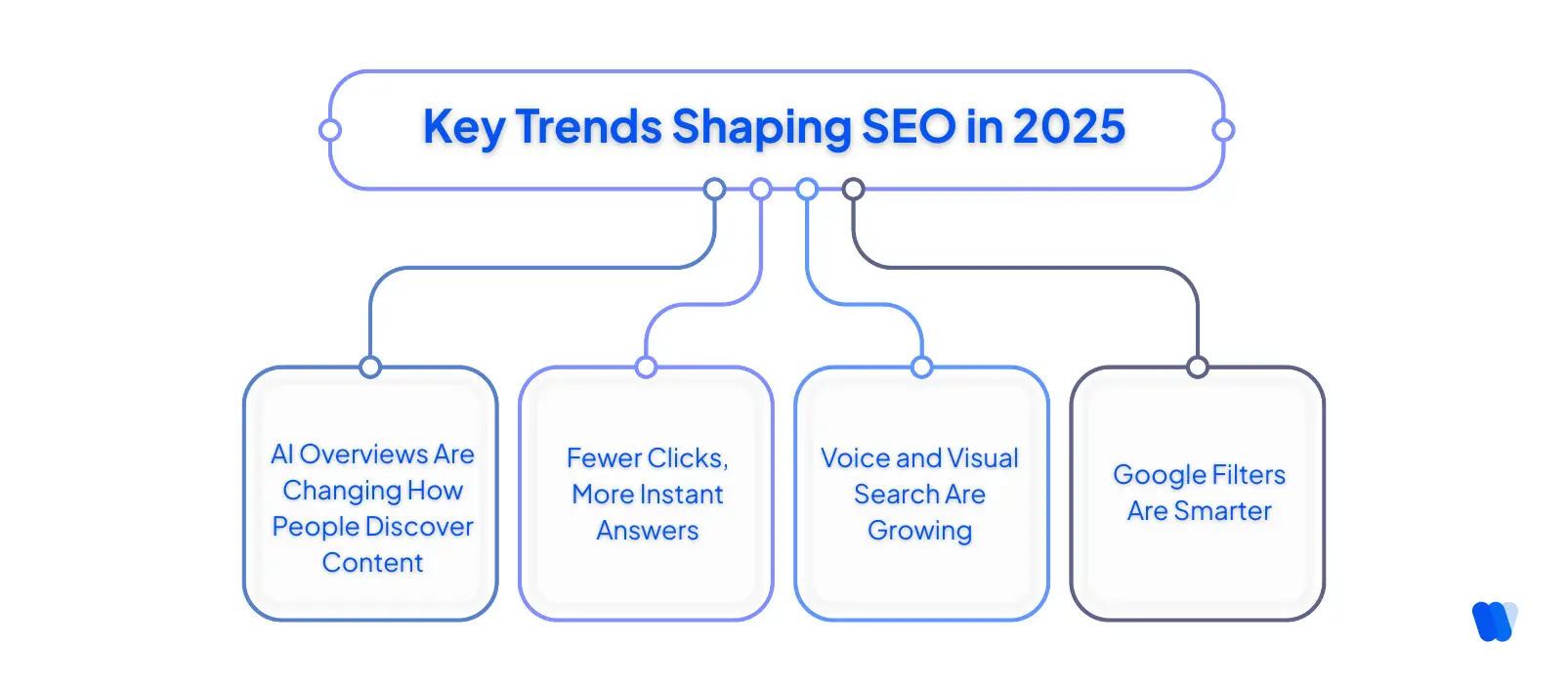
1. AI Overviews Are Changing How People Discover Content
Google and other search tools now give quick answers directly on the results page using AI. These short summaries often come from trusted websites.
Why this matters: Even if you rank well, your site may be skipped unless your content is clear, helpful, and shows expertise.
2. Fewer Clicks, More Instant Answers
Searchers are getting what they need without visiting any websites. Features like featured snippets, “People Also Ask,” and AI summaries reduce clicks.
Why this matters: You must format your content clearly, use bullet points, headings, and questions with answers, to increase your chances of being shown.
3. Voice and Visual Search Are Growing
People are now searching by speaking or snapping pictures using tools like Gemini Lens or Google Lens.
Why this matters: Your content should sound natural for spoken searches and be optimized for images, like adding alt text and clear file names.
4. Google Filters Are Smarter
Search engines are better at spotting copied content, weak articles, and overuse of AI-written text.
Why this matters: Focus on original ideas, real examples, and helpful answers. Sites with useful, well-written content will stand out.
Learning SEO: How to Get Started and Stay Updated
The best way to learn SEO is through real examples and step-by-step guidance, not theory that’s hard to apply.
Step 1: Start With a Structured Approach
If you’re serious about learning SEO in 2026, begin with the Wellows SEO hub, a complete learning path that covers strategy, structure, and how visibility really works today. It’s designed to help creators, startups, and and marketers who use AI content in their workflow build lasting SEO outcomes with clarity and confidence.
Step 2: Practice on a Test Blog
Set up a simple site or blog to try keyword research, content planning, and optimization. It helps you apply what you’ve learned with confidence.
Step 3: Review Trends and Refine
SEO evolves quickly. Set time each month to update content, explore search changes, and sharpen your strategy as AI continues to shape results.
How SEO Fits into a Daily Workflow
SEO doesn’t need to be treated as a big, time-blocked task. It works best when it becomes part of a simple routine, done consistently without pressure.
This section shares practical habits that can be added to any content workflow. These small steps support visibility, indexing, and ranking without requiring hours of extra work.
5 Practical SEO Habits That Make a Long Term Impact
These are small actions repeated regularly. They take little time but build up SEO strength over weeks and months:
Begin every blog or page by answering a question someone would actually search on Google. It helps focus the content and makes it more helpful from the first line.
Add 2–3 internal links before publishing.
Link naturally to older content, relevant guides, or key pages. This improves user navigation and supports site structure for crawlers.
Submit the URL in Google Search Console.
Once published, submitting the page helps Google index it faster and begin tracking impressions and clicks.
Review Search Console or GA4 once a week.
A 10-minute check is enough. Look at which pages are gaining or dropping impressions to guide future updates or content decisions.
Update one old blog every month.
Refreshing outdated content, fixing titles, or adding new stats keeps the blog current. It improves freshness signals and often boosts rankings again.
Read More Articles
- On-Page SEO Checklist for 2026
- SEO to GEO Transition Checklist for Agencies
- How to Build Topical Authority in SEO Without Spending Thousands on Tools
- Search Behavior Patterns in SEO: Turning Insights Into Winning Content Ideas
- Mastering Keyword Intent for Better SEO Results
FAQs
Yes, SEO gives long-term results without recurring ad costs.
Most websites see initial SEO results in 3–6 months, though competitive niches may require 6–12 months or more. Factors like domain age, competition, content quality, and technical SEO all affect the speed. Continuous optimization is key for sustained results.
Yes, clear guidance and practice make it accessible to anyone.
Mobile SEO focuses on fast loading, easy navigation, and mobile-first indexing.
Good UX keeps users on your page, signaling value to search engines.
Yes, they guide search visibility and improve click-through rates.
Voice queries need clear, conversational answers to rank well.
Local SEO helps nearby customers find your business through maps, directories, and location-based search results.
Conclusion
SEO is no longer a mystery. It’s a skill anyone can learn and use to get noticed. From better content to smarter structure, understanding what is SEO opens the door to lasting visibility across search engines and AI platforms.
The rules may shift, but the goal stays the same: help the right people find you. If you’ve ever asked what is SEO and why it matters, now you know it’s how you grow, one search at a time.