What Are SERPs? Why They Matter and How to Win Page One
Think about the last time you searched for something online. Whether you were looking up a product, researching a service, or just trying to answer a quick question, chances are you turned to a search engine like Google.
In simple terms, search engine results pages (SERPs) are the pages Google, Bing, and other engines show after a query—the screen of results you see for any search.
You’re not alone. According to a report published by BrightEdge:
Still, appearing in search engine results doesn’t guarantee traffic. According to Brian Dean, SEO expert from Backlinko:
These numbers make one thing clear: if your website isn’t ranking on the first page, it’s likely being missed altogether.
That’s where the Search Engine Results Page (SERP) comes in. It’s more than just a list of links—it’s where your content has the chance to grab attention, build visibility, and drive real results.
If you’re asking, “What are Search Engine Results Pages?” “What is the definition of SERPs?” or “What do SERPs stand for?”—they’re simply the pages a search engine shows after a query, containing search listings (results).
In this guide, I’ll explore What are search engine results?, How do search engines display results?, How do search engines work?, What determines the order of search results?—plus exactly How can I optimize for SERPs? to earn your place on page one of Google SERPs.
What Is A SERP? (Search Engine Results Pages)
The composition of a SERP varies based on the search engine’s algorithms, the type of query, and even a user’s location or search history. Understanding SERPs is crucial for SEO, since higher visibility here directly impacts website traffic and engagement.
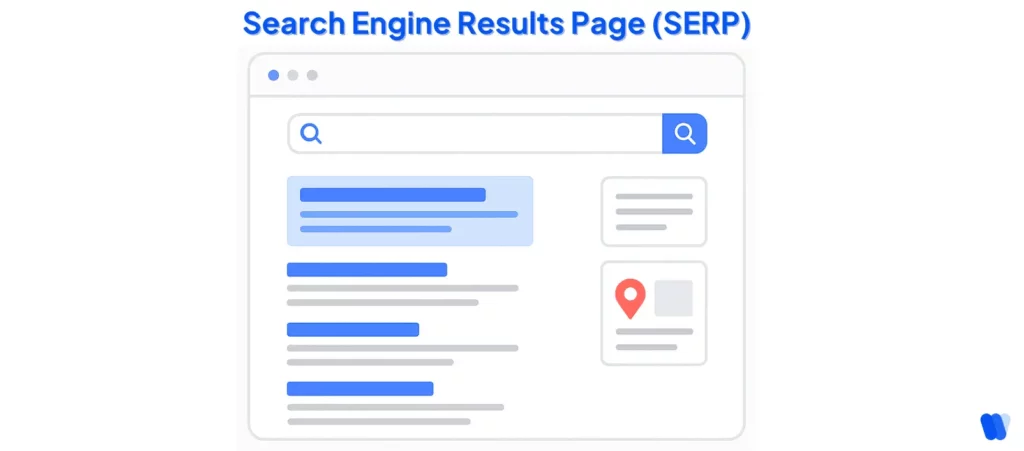
What appears on a SERP isn’t random. Algorithms weigh relevance, authority, and experience signals to decide what determines the order of results.
Curious how AI-generated content impacts visibility? Explore whether AI content can hurt Google rankings and what to watch out for when using automation in your SEO strategy.
What Is the Difference Between Organic and Paid Results on a SERP?
When you search on a search engine results page (SERP), you’ll see two main types of results: organic and paid. Both serve different purposes and work in different ways.
Organic Search Results: These are unpaid listings that appear naturally based on relevance to your query. Search engines rank them using algorithms that evaluate content quality, website authority, backlinks, and user experience. Ranking high organically often requires strong SEO strategies—like optimized content, internal linking, and technical SEO fixes. While it takes time to build, organic traffic is sustainable and cost-effective in the long run.
Paid Search Results: These are advertisements placed by businesses that bid on specific keywords. Shown at the top or bottom of the SERP, they run on a pay-per-click (PPC) model—meaning advertisers pay each time someone clicks. Paid results provide immediate visibility and are effective for targeted campaigns or promotions, but they require continuous investment. Once the budget stops, so does the traffic.
Key Differences: In short, organic search builds long-term visibility, while paid search delivers immediate but temporary results. A balanced SEO strategy often combines both for maximum impact.
Featured snippets are short, direct answers that appear prominently at the top of Google’s search engine results pages (SERPs). Their goal is to give users an instant response to their query without requiring a click-through. Google pulls these snippets from pages it considers most relevant to the search intent. As of June 2025, featured snippets appeared in just 5.53% of SERPs, a sharp drop from 15.41% in January 2025. The decline is mainly due to the growing presence of AI Overviews, introduced in August 2024, which now appear in more than 27% of search queries—reshaping how to win visibility and how to rank in Google AI Overviews within modern SERPs.While snippets still matter, AI-driven summaries are taking a larger share of visibility. Earning a featured snippet—often called “position zero”—can boost visibility and authority in search results. However, it doesn’t always guarantee more clicks. Studies show that when no snippet is present, the first result gets around 26% CTR, but when a snippet is shown, that CTR drops to about 19.6%. This highlights the trade-off between brand exposure and direct traffic. To increase your chances of capturing a snippet, focus on: By applying these practices, your content is more likely to secure featured snippets, improving both search visibility and trustworthiness in your niche.What Are Featured Snippets in SERPs?
Types of Featured Snippets
Prevalence and Impact
Significance for SEO
Optimizing for Featured Snippets
How Do Search Engines Rank Results on a SERP?
Search engines order results on a Search Engine Results Page (SERP) by weighing many signals that indicate how relevant, helpful, and trustworthy a page is for a given query. The most influential factors include:
Content Quality & Relevance:
Thorough, original content that fully satisfies search intent tends to perform best. Clear structure, topical depth, and direct answers to user questions help pages outrank thin or surface-level content.
Backlinks & Domain Authority:
Links from reputable, contextually relevant sites act as endorsements. A strong, natural backlink profile signals authority and can lift rankings across similar topics.
User Experience (UX) & Engagement:
Engines observe how searchers interact with results—metrics like click-through rate, bounce rate, and dwell time. Fast pages, intuitive navigation, and readable layouts encourage engagement and can correlate with better rankings.
Technical SEO:
On-page clarity helps crawlers understand and index content. Priorities include focused keyword usage in titles and headings, descriptive meta tags, sensible internal linking, valid schema markup, and accessible image alt text.
A simple way to keep structure consistent is to standardize the number of internal links per page for SEO across your key pages.
Mobile Optimization:
With mobile-first indexing, responsive layouts, and frictionless mobile UX are table stakes. Sites that adapt cleanly to all screens are more likely to meet ranking and usability expectations.
Page Speed:
Faster pages improve satisfaction and reduce abandonment. Image compression, caching, code minification, and CDNs are common speed wins that support stronger performance signals.
Structured Data (Schema):
Applying structured data clarifies entities, relationships, and page purpose for search engines—often unlocking rich results that can improve visibility and clicks.
Domain Signals:
A site’s age, consistency, and history of publishing quality content can contribute to overall trust. Established domains with steady performance may have an edge in competitive spaces.
Because algorithms evolve continuously, staying current on these factors—and aligning your content, UX, and technical setup accordingly—is essential for sustainable SEO growth.
Why SERPs Matter More Than Ever
How do SERPs impact SEO? The formats and positions you occupy on a SERP directly influence your impressions, CTR, qualified traffic, and conversions.
What are SERPs in the context of digital marketing? They’re the primary canvas where brands compete for attention across formats (links, snippets, maps, videos, products).
Whether someone’s comparing tools, looking up services, or weighing the difference between SEO approaches like Tools vs Agents, they start with a query. And the websites that show up first? They win the clicks, the organic traffic, and often, the conversion.
Marketers highlight this as one of the strongest benefits of AI SEO Agents, helping small teams compete in crowded SERPs.
Appearing in the top SERP position is one of the most effective ways to boost brand visibility. Even better? Being featured in SERP features like People Also Ask, Knowledge Panels, or shopping carousels.
If you want to measure how your brand’s presence compares to competitors in search, tracking your Share of Search is a powerful way to quantify visibility beyond traditional rankings.
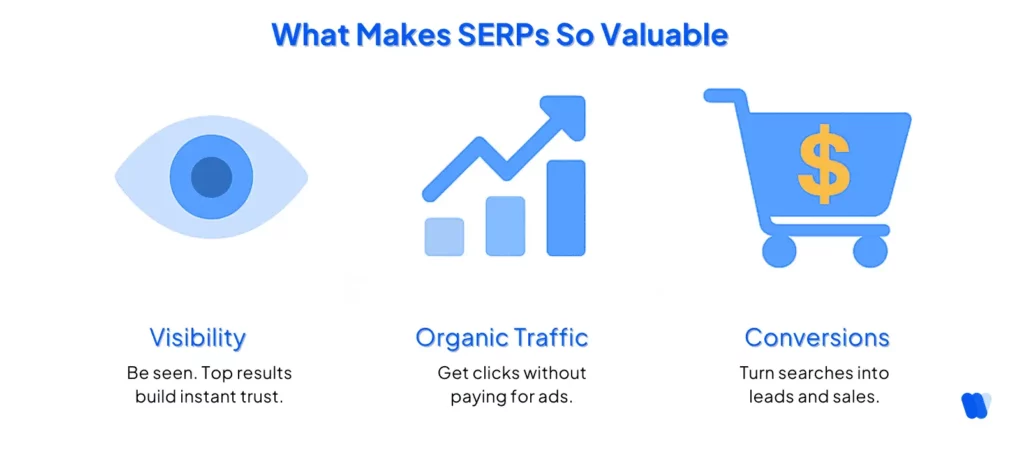
SERPs = Visibility
Showing up on the first page of a SERP—especially in the top few results—is one of the most effective ways to get noticed online. Are SERPs and search results the same? Practically, yes: SERPs are the pages; “search results” are the items on those pages.
In today’s competitive digital space, it’s not enough to just have great content.
If it isn’t visible on the SERP, most people won’t find it—unless you track and improve SERP visibility using the right tools. Many pages suffer from common SEO visibility issues such as poor indexing, lack of rich results eligibility, or low authority signals, despite having high-quality content.
That’s why conducting an SEO site audit is essential to uncover technical barriers that may be silently preventing your content from appearing in top search results.
To go a step further, applying an SEO Strategy with User Intent and Social Signals can dramatically improve your discoverability. When your content directly answers what users are searching for and gains traction through shares, comments, or backlinks, it signals relevance and authority to AI-powered search engines.
SERPs = Organic Traffic
Ranking well in search results drives organic traffic—visitors who find you naturally.
Do SERPs include both organic and paid results? Yes. Organic results earn clicks over time.
What are paid ads in SERPs? They’re sponsored placements, typically labeled “Ad,” purchased via platforms like Google Ads.
This kind of traffic tends to be more engaged and more likely to convert because it’s intent-driven. These users are actively searching for something you offer.
SERPs = Conversion Opportunities
Every appearance in a SERP is a chance to earn a click, build trust, and guide someone toward a sale, a signup, or another valuable action.
From featured snippets to knowing how to use People Also Ask boxes, each SERP feature represents a micro-moment of user interest—and a chance for your brand to step in.
The Evolution of SERPs
Search Engine Results Pages have come a long way from their early days. What started as a simple list of ten plain blue links has evolved into a highly interactive and visual experience shaped by changing technology, user behavior, and search engine innovation.
A Brief Timeline of SERP Changes:
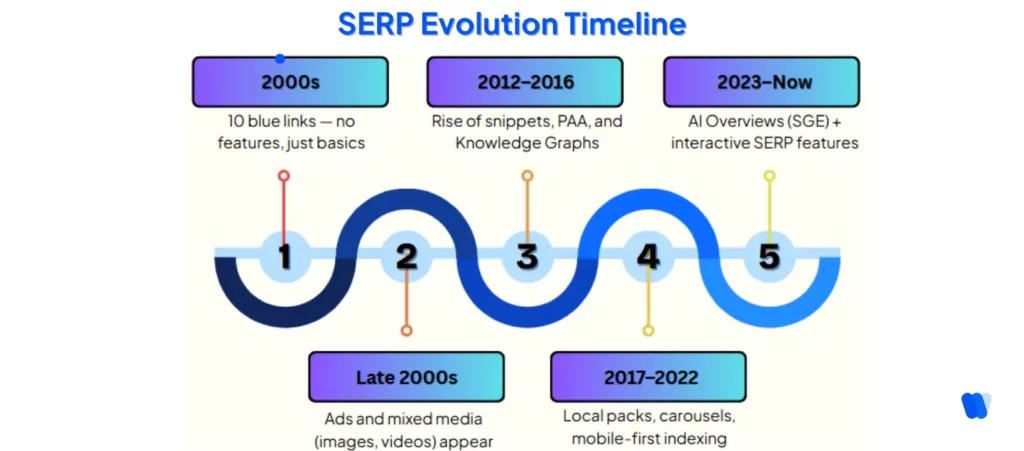
- Early 2000s:
SERPs were basic—just ten organic links in a vertical list. No images, no answers, no ads on top—just a clean, simple layout. - Mid to Late 2000s:
Search engines introduced paid ads (Google AdWords) and began experimenting with blended results—including images, news, and video alongside web pages. - 2012–2016:
The rise of Knowledge Graphs, Featured Snippets, and “People Also Ask” boxes changed everything. Search engines began answering questions directly on the results page—reducing the need to click through. - 2017–2022:
Mobile-first indexing, local packs, shopping carousels, and video-rich results reshaped how businesses approached SEO and visibility. - 2023–Present:
Enter AI Overviews (like Google’s SGE) and the increasing dominance of People Also Ask. Today’s SERPs prioritize fast, AI-powered answers and interactive modules that surface the most relevant content quickly.
The rise of AI assistants like ChatGPT has already diverted a share of informational queries away from Google, impacting organic traffic patterns significantly.
Why Modern SERPs Are Different
Today’s SERPs are no longer just a list—they’re an interactive, fragmented experience. Users are met with a variety of formats: quick answers, videos, shopping widgets, maps, tweets, and more.
The goal? Serve the best result as fast as possible—and often without requiring a click.
For brands and content creators, this means more ways to be seen—but also more competition for attention. That’s why knowing how to humanize your AI-generated content can be the difference between being ignored or being featured in generative search summaries.
As generative search becomes more prominent, understanding how AI changes visibility is no longer optional. Explore how AI search is transforming SEO strategies and SERP behavior to stay competitive in an evolving digital landscape.
What Are the Main Components of a SERP?
A Search Engine Results Page (SERP) is the page shown by a search engine in response to a user’s query. While layouts can vary, most SERPs are made up of a mix of standard listings and enhanced features designed to deliver the best possible answers. The main components include:
Search Engine Results Pages (SERPs) can include a variety of features designed to enhance user experience and provide quick access to relevant information.
They’re no longer just lists of plain website links—modern SERPs blend elements like snippets, images, videos, shopping results, and more to help users find answers faster.
These components reflect broader SEO tactics covered in our SEO hub, including content optimization and structured data.
What are the components of a search engine results page? A SERP can include organic listings, paid ads, featured snippets, People Also Ask, knowledge panels, local packs, images, videos, product listings, and AI Overviews.
Here are the most common elements you’ll find on a search engine results page:
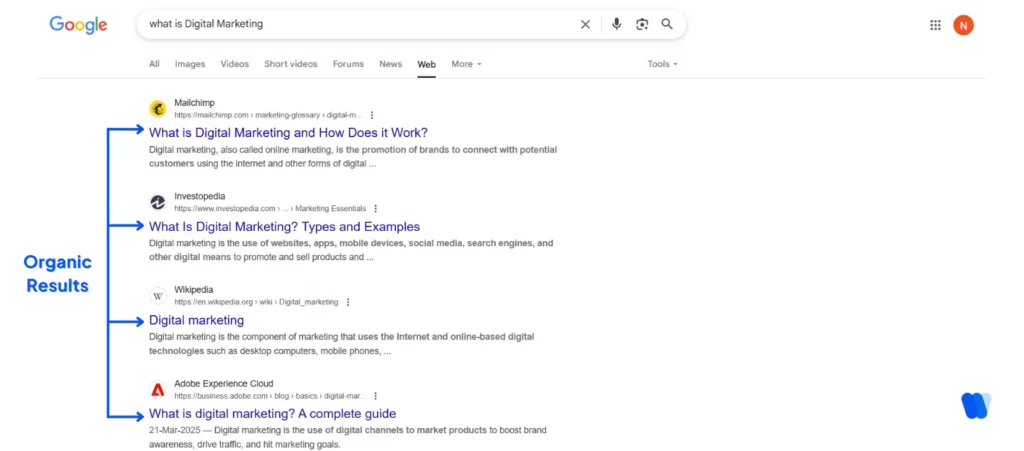
1. Organic Results
Listings retrieved by the search engine’s algorithm based on relevance. These typically include a title, URL, and a snippet summarizing the page content. These are the non-paid listings that appear because they’re relevant to the search query. They’re ranked by factors like content quality, keyword relevance, authority, and user experience.
For most brands, organic traffic is the most valuable long-term channel.
How do organic SERP rankings work? Google evaluates Topical Authority, content quality, entity authority, and UX signals (e.g., engagement and Core Web Vitals) to order unpaid results.
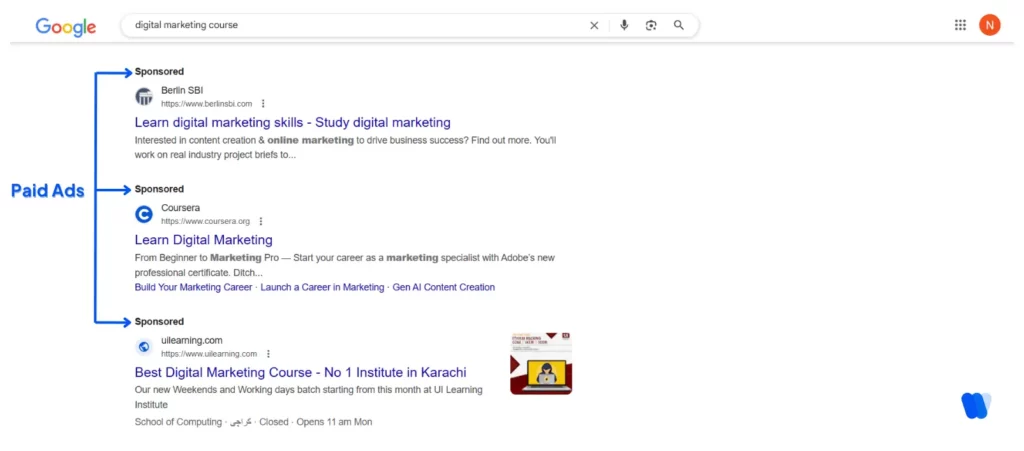
2. Paid Advertisements (Sponsored Results)
Ads purchased by businesses to target specific keywords. They usually appear above or below the organic listings and are labeled as “Ad” or “Sponsored.” They appear at the top or bottom of the SERP and are purchased via platforms like Google Ads. While powerful for visibility, they depend on ongoing budget.
While effective, they’re short-term and budget-dependent.
What role do ads play in SERPs? Paid listings (ads) appear above or alongside organic results to capture high-intent queries, shaping visibility and click distribution on competitive terms.
3. SERP Features:
Extra elements that enhance the results page, including:
1. Sitelinks (Extra Navigation Links)
Sitelinks are additional links that sometimes appear below a main organic result, usually pointing to key site sections like “About,” “Pricing,” or “Contact.”
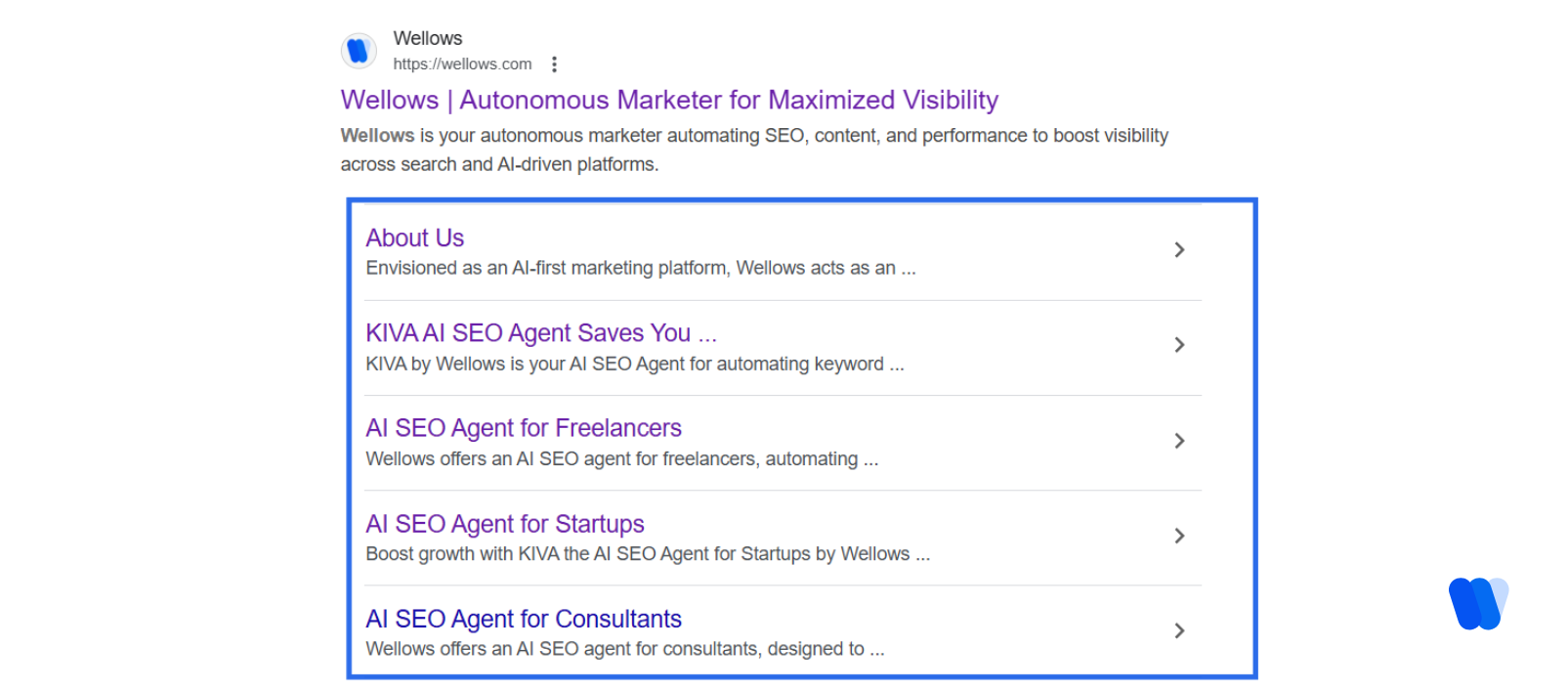
They help users jump directly to the most useful parts of a website and can dramatically increase click-through rates. Google automatically generates them based on site structure and internal linking.
Well-structured navigation, clear hierarchy, and schema markup increase the chances of earning sitelinks.
2. Featured Snippets
A highlighted box at the top of Google that extracts a direct answer from a webpage. It provides quick information without requiring a click-through, making it one of the most valuable SERP placements.
What are featured snippets in SERPs? They are extracted summaries (paragraphs, lists, tables) that answer a query directly at the top of results, with a citation to the source page.
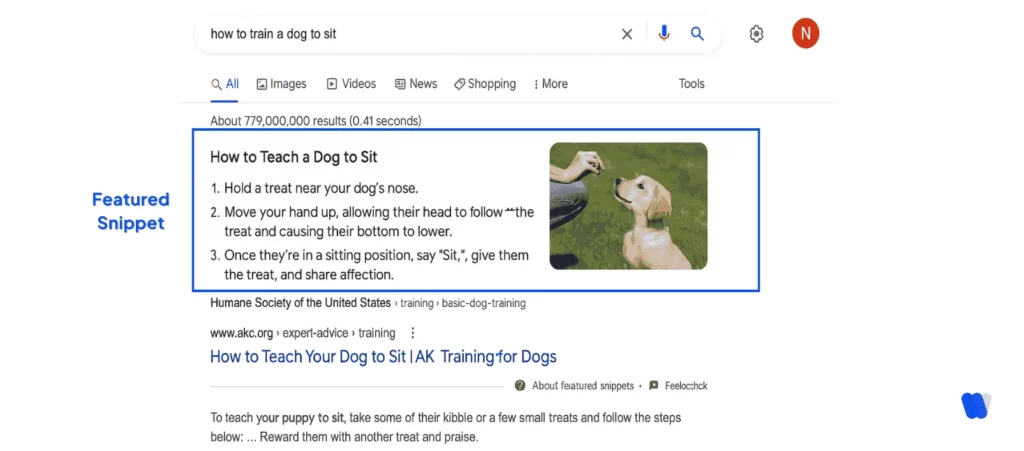
Being featured here can dramatically boost visibility and clicks but it can also lead to zero-click searches, where users get the answer without visiting your site
3. Rich Snippets
In search engine results pages (SERPs), rich snippets are enhanced listings that display extra details beyond the standard title, URL, and description. They make results more engaging and informative by showing elements such as star ratings, product prices, availability, cooking times, or images.
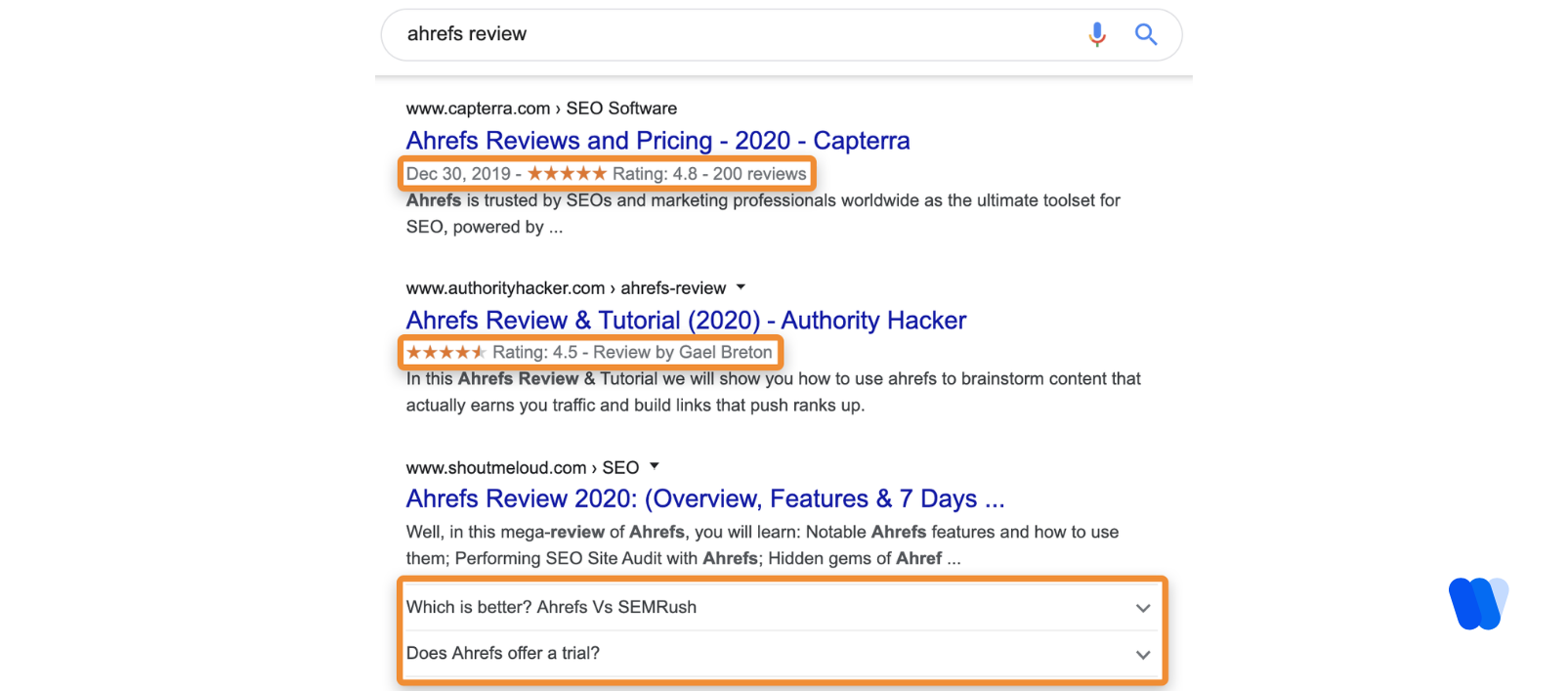
Rich snippets are powered by structured data markup (Schema.org), added to your site’s HTML. This markup helps search engines understand your content and display richer results in the SERP. While using structured data increases your chances, search engines do not guarantee that rich snippets will appear—quality, relevance, and compliance also matter.
Common Types of Rich Snippets
- Reviews and Ratings: Star ratings and review counts for products or services.
- Recipes: Cooking time, ingredients, and calorie details.
- Events: Dates, locations, and ticket availability.
- Products: Pricing, availability, and product descriptions.
Why it matters:
Rich snippets make your results stand out, improving trust and visibility. Studies show they can boost CTR by up to 30%, since users are more likely to click on listings that provide extra context.
5. Related Searches
Displayed at the bottom of most SERPs, Related Searches suggest additional queries similar to the original one. They help users refine or expand their search and provide insight into broader search behavior.
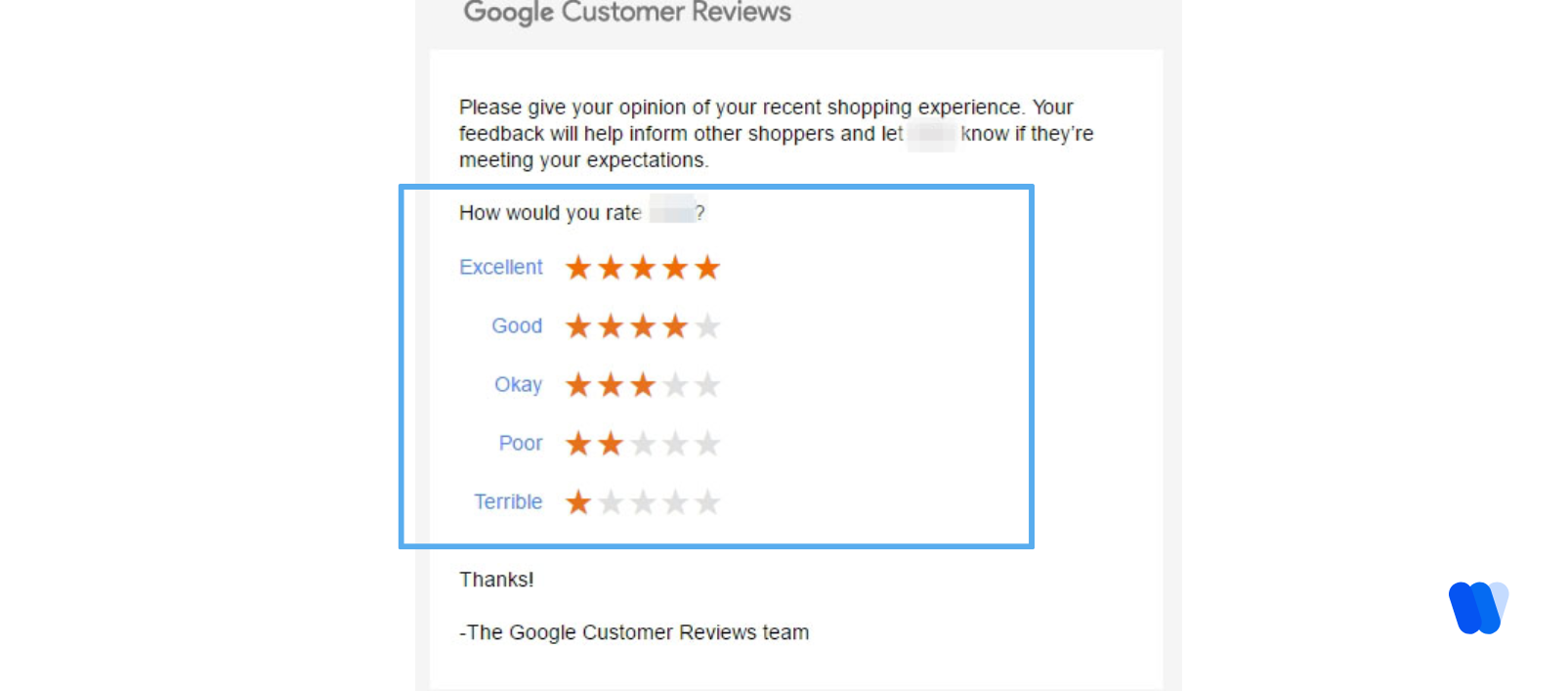
6. Reviews (Star Ratings)
Displayed as star ratings below a search result, reviews give users a snapshot of credibility and quality. They’re powered by schema markup and often influence click-through rates significantly in product, service, and local searches.
7. Knowledge Panels
A Knowledge Panel is a right-side (desktop) or top (mobile) info box on Google that shows fast facts for entities like people, brands, places, and topics. It’s auto-generated from the Knowledge Graph using trusted sources (e.g., Wikipedia, official sites).
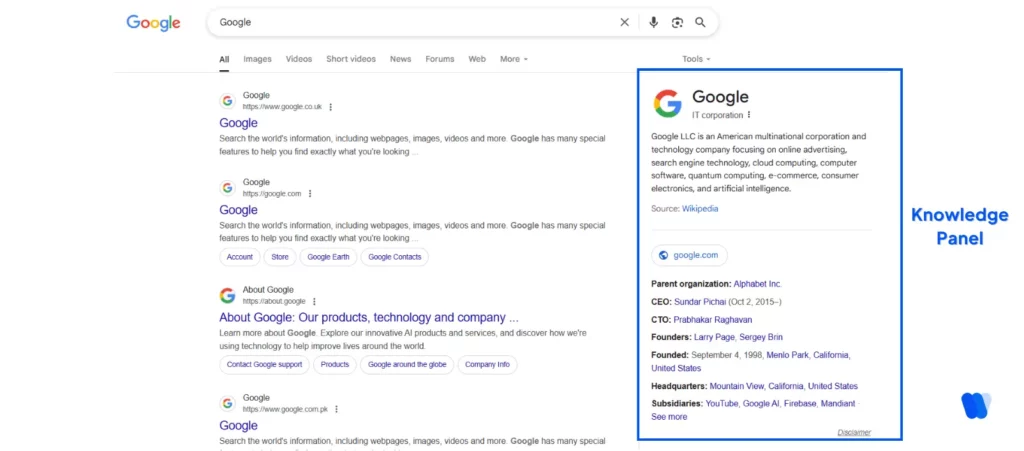
Key Features
- Name & description: Brief, authoritative overview.
- Images/logos: Visual identity for quick recognition.
- Key facts: Dates, locations, and notable data points.
- Official links: Website and social profiles.
- Related entities: Suggestions to explore connected topics.
Why It Matters
Appearing in a Knowledge Panel can lift brand visibility and trust, especially for navigational/branded queries.
How to Improve Your Chances
- Claim your Google Business Profile (vital for local entities).
- Maintain a well-sourced Wikipedia page (if eligible).
- Use structured data (schema) to clarify entities.
- Keep NAP data consistent across your site, socials, and directories.
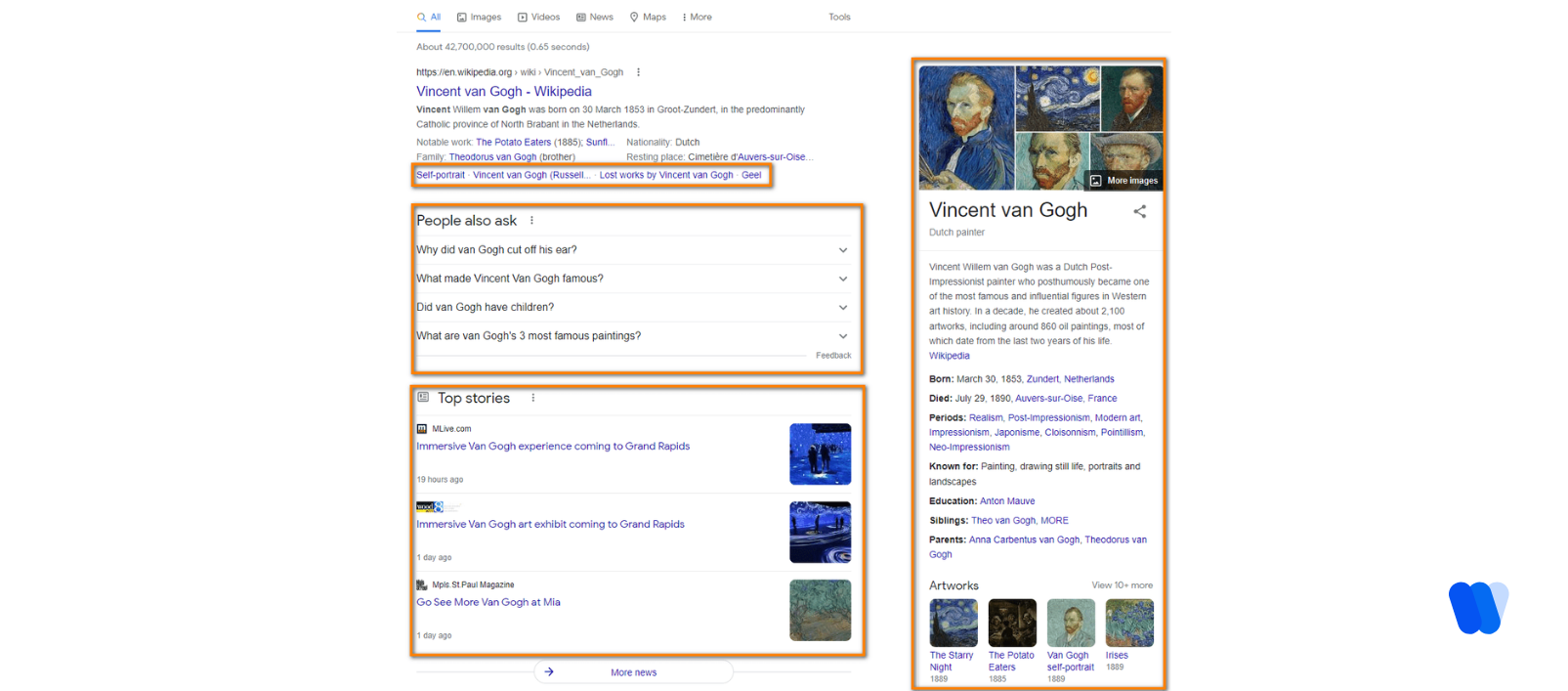
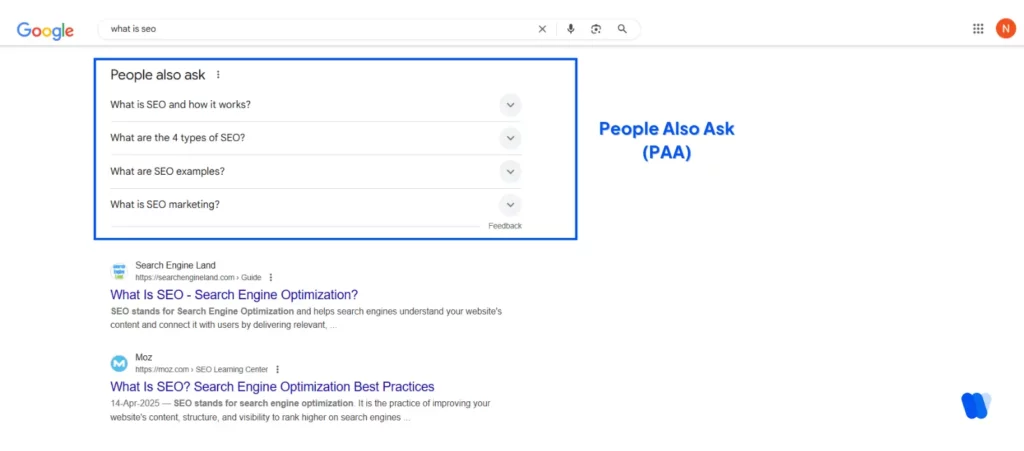
8. People Also Ask (PAA) Boxes
An expandable box showing related questions with short answers sourced from multiple websites. Each dropdown includes a link, giving brands an opportunity to rank for additional queries.
They are great opportunities for SERP SEO.
Tools like KIVA’s People Also Ask optimization feature help you find and target the exact PAA questions that your content can rank for.
9. Top Stories (News Carousels)
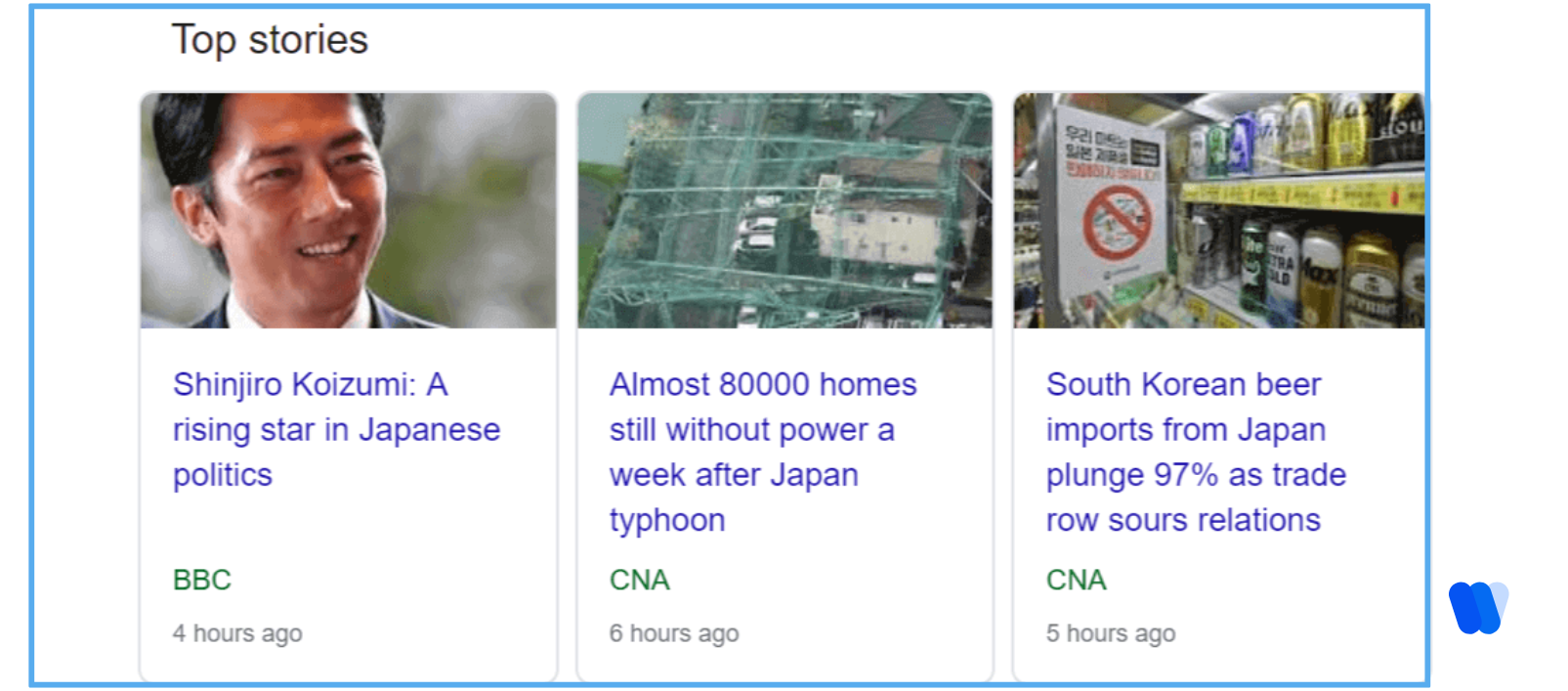
For queries related to current events, breaking news, or trending topics, Google often displays a “Top Stories” carousel near the top of the SERP.
These results pull from trusted news sources and include headlines, publisher names, and publishing times.
Being featured here is especially valuable for publishers, journalists, and brands releasing timely announcements.
To improve chances of appearing in Top Stories, ensure your site uses structured data for news, maintains high E-E-A-T signals (Experience, Expertise, Authority, Trustworthiness), and publishes fresh, relevant content quickly.
10. Event Listings
For queries with event intent (like “concerts near me” or “SEO conferences 2025”), Google may display upcoming events directly in the SERP. These results pull from structured data on event pages, showing details like date, time, location, and ticket availability.
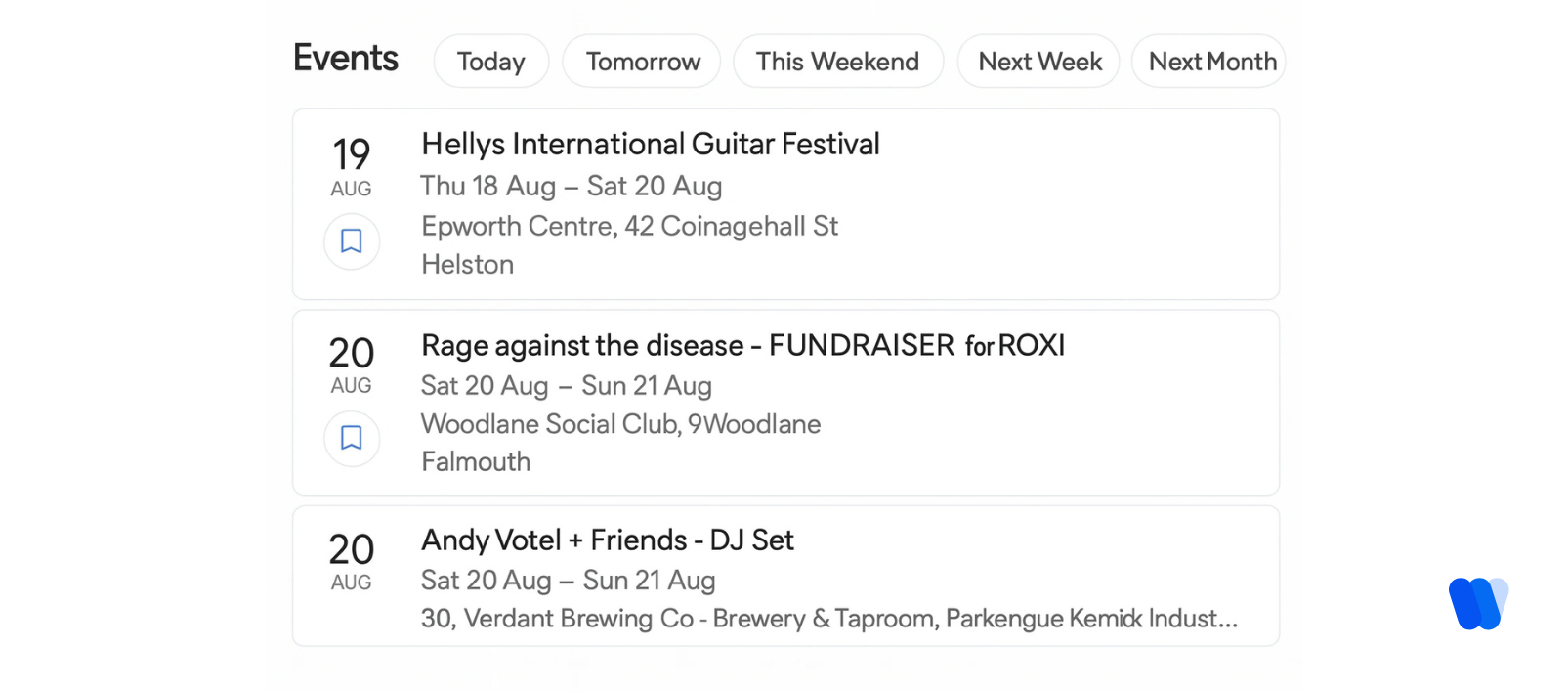
Event schema markup is essential for brands that want their events to appear here, increasing visibility and driving registrations.
11. Local Packs (Map Listings)
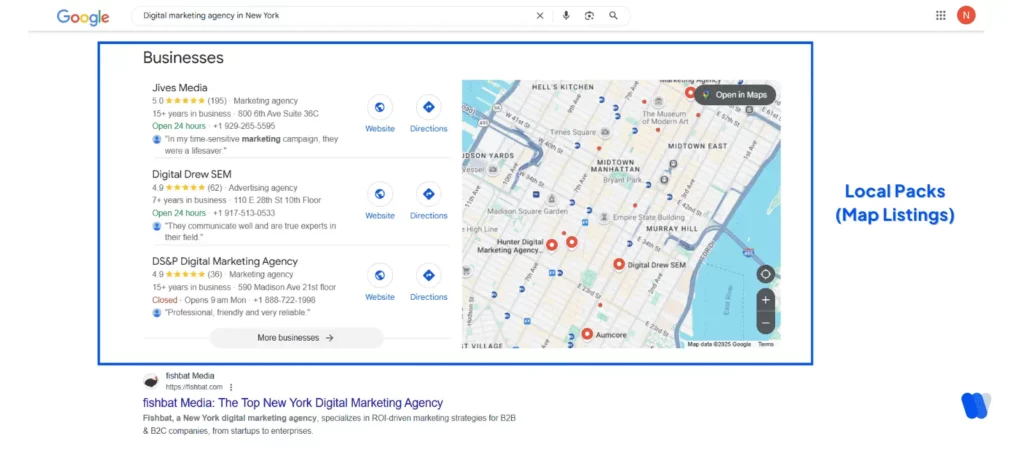
A Local Pack is a Google SERP feature that displays a group of local business listings when a search has local intent (for example: “coffee shop near me” or “best dentist in New York”). It’s also called the Map Pack, Snack Pack, or Google 3-Pack.
This feature typically shows:
- A small map with location pins
- Three highlighted business listings
- Details like name, address, phone, hours, website, and reviews
Since the Local Pack often appears above organic results, it gives businesses prime visibility. The information is mainly pulled from a company’s Google Business Profile.
How to Appear in the Local Pack
- Optimize your Google Business Profile: Add complete and accurate details (name, address, phone, hours) and upload high-quality photos.
- Encourage customer reviews: Positive reviews improve reputation and ranking. Always respond to reviews to show engagement.
- Strengthen Local SEO: Use local keywords, keep your site mobile-friendly, and maintain consistent business information across directories.
Why it matters:
Appearing in the Local Pack boosts visibility, trust, and customer traffic — making it one of the most powerful SERP features for local businesses.
12. Image, Video, and Shopping Carousels
A block of clickable images displayed in a horizontal row on the SERP. Each image links to a broader Google Images search, helping users visually explore their query.
- Image packs (often from Google Images)
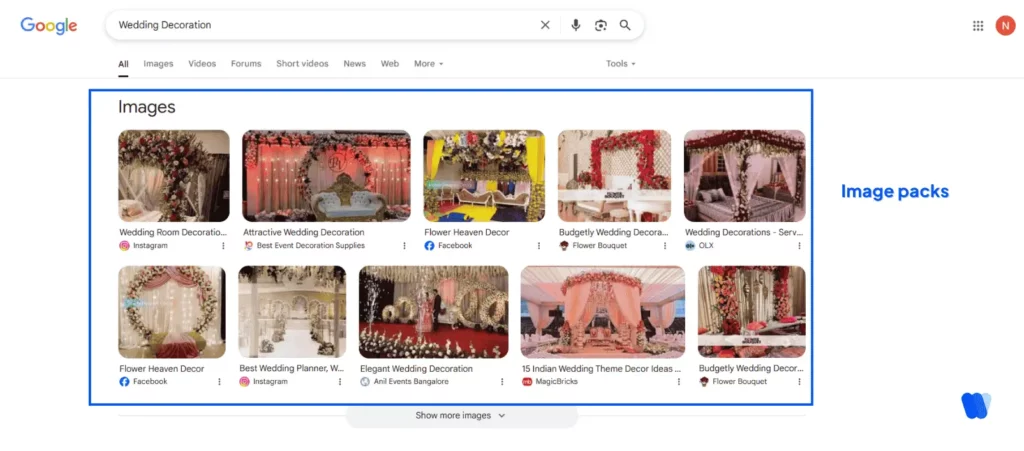
Image results often show up in SERPs when people search for something visual. To help your images appear there, it’s important to follow good image SEO practices.
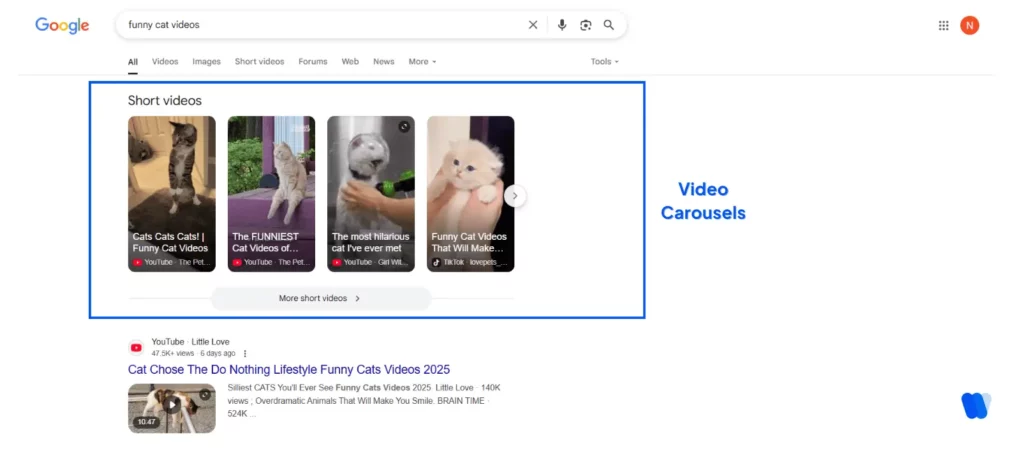
- Video carousels (YouTube and embedded video content)
SERPs often show video thumbnails, usually pulled from YouTube, for queries with visual or how-to intent. They may appear as a single listing or a scrollable carousel, often increasing engagement compared to plain text results.
- Product listings (for e-commerce queries, with prices and reviews)
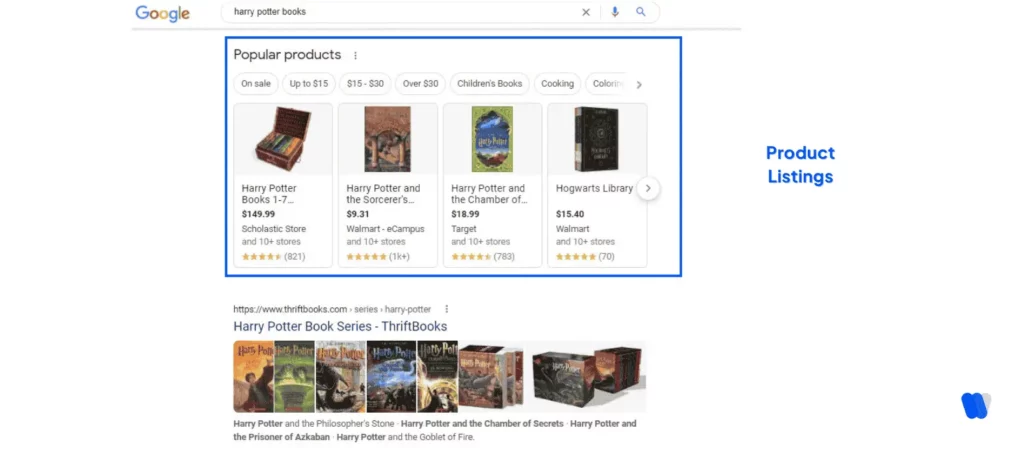
These features add visual context and often get high engagement.
13. Social Media Results (Twitter/X Cards)
For trending or news-related queries, Google often surfaces tweets (now X posts) directly in the SERP. These results show real-time conversations, hashtags, or updates from authoritative accounts.
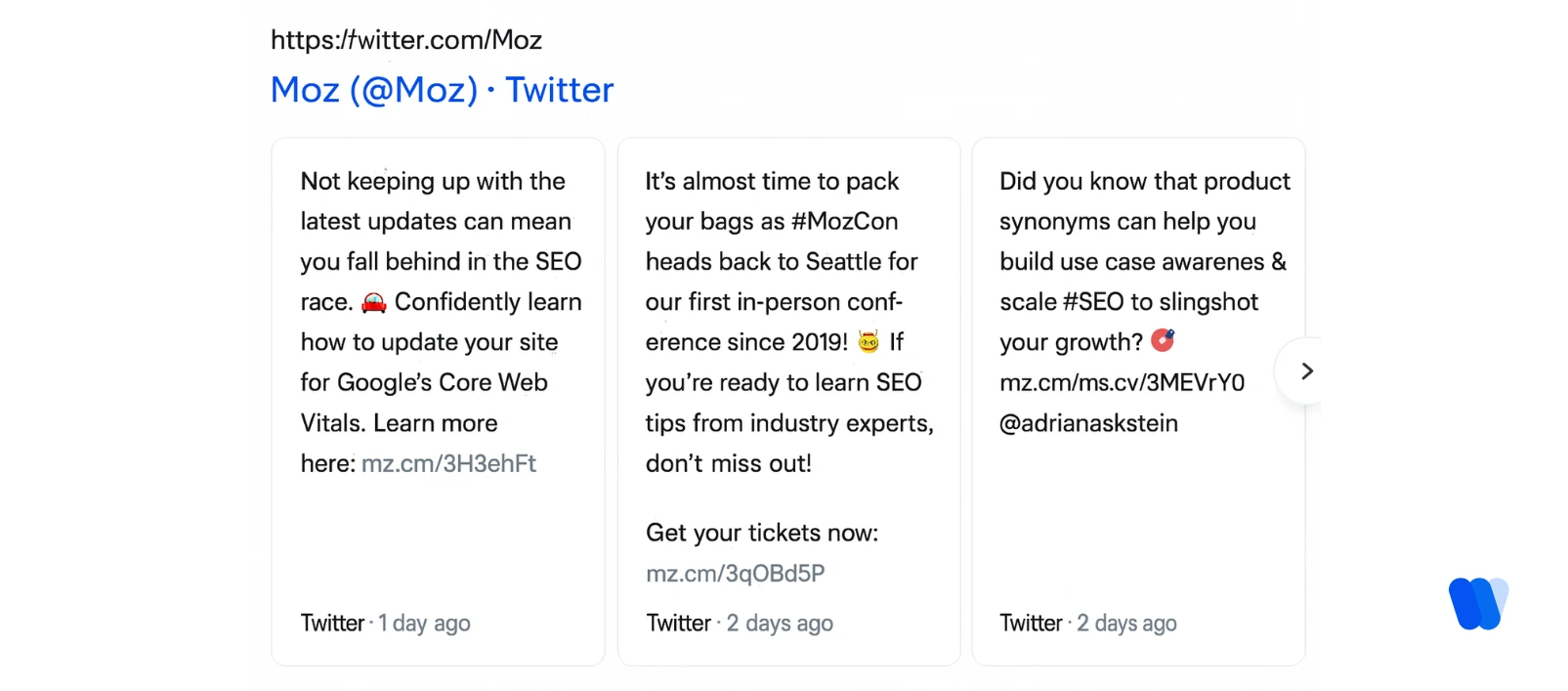
Having optimized, active social channels increases the chance of your posts being featured here—especially around events, launches, or trending topics.
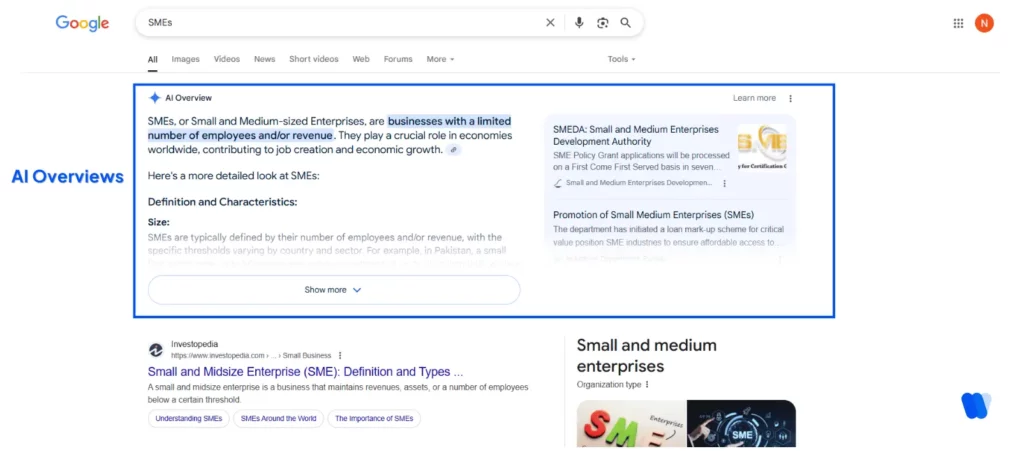
14. AI Overviews (Formerly SGE)
Google’s AI Overviews use generative AI to deliver conversational summaries directly at the top of the search results.
This shift has given rise to Generative Engine Optimization (GEO)—a new branch of SEO focused on structuring content so it’s more likely to be cited by AI-generated responses.
They’re especially common for complex, exploratory, or multi-step searches, and are reshaping how users interact with search—often reducing the need to click through to a website.
ChatGPT Visibility Experiment illustrates why snippet-ready passages get surfaced.
For brands and creators, this presents a new challenge and opportunity:
Create content that’s clear, structured, and trusted enough to be cited in AI-generated answers.
The more formats your content appears in—organic results, Featured Snippets, People Also Ask, video or product carousels, and now AI Overviews—the more touchpoints you create to earn clicks, traffic, and trust.
To increase your chances of being cited in these overviews, it’s important to create content that’s aligned with how people actually search—explore how to create content based on SERP and LLM trends.
How Do SERP Features Influence Click-Through Rates (CTR)?
Search Engine Results Page (SERP) features change how users click.
They can raise or reduce CTR depending on the feature and query.
Impact of Key SERP Features
- Featured Snippets: Sit above all results and can attract a large share of clicks (near ~30% in some studies).
- AI Overviews: Google’s AI summaries can reduce clicks on classic organic links, sometimes by almost half.
- Local Packs & Knowledge Panels: Give fast answers and business details on the SERP, often lowering clicks to sites.
Overall Trends
More features mean more “zero-click searches.”
Users get answers on the SERP without visiting a site.
This lowers CTR for standard organic listings.
How to Adapt and Protect CTR
- Optimize for features: Structure content for snippets, local results, and other rich elements.
- Target long-tail terms: Less competition and fewer aggressive SERP features.
- Improve titles & metas: Clear, compelling copy wins clicks even in crowded SERPs.
Bottom line: SERP features can reduce classic CTR, but they also unlock new visibility. Optimize so your content gets featured.
How Do Search Engines Generate SERPs?
Search engines generate SERPs by using complex algorithms that analyze and rank web pages to deliver the most relevant results for each user query. These algorithms evaluate hundreds of factors to determine which content best satisfies search intent, ensuring users receive accurate and valuable information.
1. Understanding the Query: Search engines first interpret the user’s intent by analyzing the language, context, and meaning of the query. Advanced language models help match the search terms with the most relevant web content.
2. Evaluating Content Relevance and Quality: High-quality, informative, and well-structured content that aligns with user intent ranks higher. Algorithms like Google’s Panda update focus on rewarding useful content while filtering out low-quality pages.
3. Analyzing Backlinks and Authority: Backlinks serve as trust signals. Pages with more credible and authoritative links tend to rank higher since backlinks indicate reliability and expertise in a particular topic.
4. Considering User Experience: Search engines factor in elements such as site speed, mobile usability, and overall navigation quality. Pages that provide a smoother and faster experience across devices perform better.
5. Incorporating Machine Learning: Technologies like Google’s RankBrain use machine learning to interpret complex queries and continuously refine search results based on user interactions and feedback.
By combining these elements, search engines generate SERPs that balance relevance, quality, and user satisfaction—ensuring every search delivers the most useful results possible.
How do SERPs work?
At first glance, it may feel like search engines like Google just instantly know what to show you.
Type in a question, and—bam!—you’re met with answers, links, maps, videos, even AI-generated summaries. But under the hood, there’s a powerful system making split-second decisions based on complex signals.
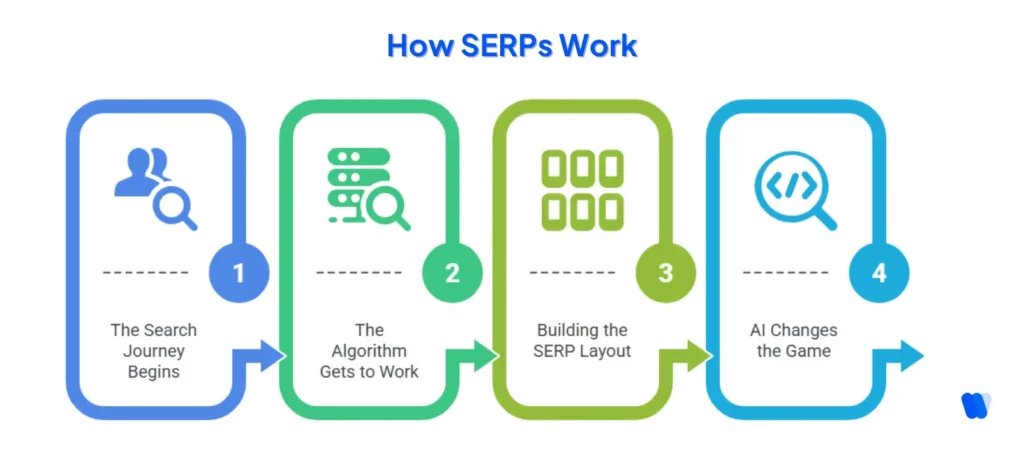
Here’s how a SERP is built—step by step.
Step 1: The Search Journey Begins
It all starts with a query. Whether you’re typing on desktop or speaking into your phone, the search engine begins by interpreting what you really mean. That means analyzing:
- Search intent – Are you trying to learn (informational), go somewhere (navigational), or buy (transactional)?
- Language and phrasing – Google detects nuance, synonyms, and context.
- Personal signals – Location, device, search history, and even time of day all shape what you’ll see.
Step 2: The Algorithm Gets to Work
Once intent is clear, the search engine consults its index—essentially a map of billions of webpages. Then it evaluates results using two major criteria:
What factors determine SERP rankings? Primarily relevance to the query, source authority, and user experience signals—augmented by context like location, device, and insights from Real-Time SEO Data
- Relevance: Does the content match the query topic and phrasing?
- Authority: Is the source trusted? This is based on backlinks, CTR, and user signals.
The goal? Deliver the most helpful, trustworthy content in the fastest way possible—and in the age of AI, that also means optimizing for GEO KPIs that reflect generative engine performance.
To stay ahead of these changes, many solo marketers use an SEO agent that helps them interpret evolving SERP signals and adjust their strategy in real time.
Step 3: Building the SERP Layout
The algorithm doesn’t just rank websites anymore—it assembles a custom mix of SERP features, including:
- Organic listings (classic web results)
- Featured Snippets (quick answer boxes)
- People Also Ask panels
- Local map packs
- Product listings
- AI Overviews (conversational summaries powered by Google’s latest generative AI)
Each element is selected based on what users with similar intent typically find helpful.
Step 4: AI Changes the Game
With the rollout of AI Overviews, Google now presents synthesized answers right at the top of the page for many queries—especially complex or multi-part questions.
These summaries are pulled from multiple sources and cited directly, meaning your content optimized for AI models needs to be clear, structured, and trustworthy to be featured.
Understanding how SERPs work isn’t just fascinating—it’s foundational to any SEO strategy. The better you align your content with how search engines evaluate and display information, the more real estate you can win on Page 1.
For a broader look beyond Google, here are the best AI-powered search engines people use for research and answers.
How to Get Your Website to Show Up in SERPs
Getting your website to appear in Google’s search results doesn’t require magic—it just takes the right approach, consistency, and the right tools. Here are some simple, proven steps you can take to SEO-prioritize on a budget and improve your chances of being seen on the SERP.
How can I improve my site’s SERP position? Focus on the right queries, clear structure, compelling titles/meta, internal links, schema, and continuous refinement—see the steps below.
1- Focus on the Right Keywords
If you’re targeting the wrong keywords, even great content, either short or long form, won’t be found. Start by identifying what your audience is already searching for.
- Use tools like Google Keyword Planner to find terms with good search volume and clear intent.
- Don’t chase broad terms—focus on specific, long-tail keywords that match your niche.
Relevance is evaluated through keyword usage and topical depth. You can strengthen this with semantic clustering of keywords and topics to match how Google understands query context.
Learn how to identify these opportunities in our guide on low-competition keywords for faster rankings and higher conversions.
2- Structure Your Content Clearly
Search engines (and readers) love well-organized content. Following an on-page SEO checklist can help you keep headings, content structure, and supporting elements aligned so Google understands your page more clearly.
- Use proper heading tags (H1 for titles, H2 for sections, H3 for subpoints) to help Google understand your content’s hierarchy.
- Include clear answers to common questions—especially those that might appear in the People Also Ask box.
Want to find hidden chances to rank? An AI SEO Agent like KIVA’s GSC hidden gems feature uncovers underperforming pages with untapped SERP potential.
But structure alone isn’t enough—if your content isn’t readable, it still won’t connect. Here’s a deep dive on how to optimize AI content for readability so it performs better in SERPs and generative summaries.
For a complete breakdown of why clarity matters and how to achieve it, see this guide on Content Readability in SEO.
3- Use Helpful Titles and Meta Descriptions
- Your title and meta tags are your first impression in search results.
- Make them clear, specific, and relevant to the user’s intent.
- Include the main keyword and highlight the benefit or answer you provide.
- Think: “How would I click if I saw this?”
4- Add Internal Links
Internal linking helps users through your site, and it helps Google crawl and understand your content structure.
- Link to related blog posts, product pages, or resources wherever it makes sense.
- This improves SEO and keeps visitors on your site longer.
5- Add Schema Markup
Schema (structured data) helps Google better understand your content.
- Mark up content like FAQs, reviews, how-tos, or product pages using schema.org formats.
- This increases your chance of appearing in rich results like star ratings, snippet previews, or video carousels.
Search engines use many signals—like content quality, page speed, and site structure—to decide what to show in the search results. They also check for technical details like canonical tags, which help avoid showing duplicate pages in SERPs.
6- Keep Improving
SEO isn’t set-and-forget—it’s an ongoing process.
- Monitor your rankings and SEO metrics that guide ongoing optimization to stay competitive on Page 1.
- Keep refining your headlines, content, and internal links based on what’s working.
As SERPs continue evolving with AI Overviews, it’s also smart to study the generative engine visibility factors that influence your chances of being cited or surfaced in AI-driven summaries.
Showing up in search results takes effort, but these small, strategic moves can go a long way. And when you’re equipped with the right tools it becomes easier to track, adjust, and grow your presence on the SERP.
Improving your website’s ranking on Search Engine Results Pages (SERPs) requires a mix of strategic planning, content optimization, and technical improvements. Below are the most effective approaches to help boost your visibility and performance in search results: By combining these strategies, you can significantly improve your site’s ranking on SERPs, increase organic traffic, and strengthen engagement with your target audience.How Can I Improve My Website’s Ranking on SERPs?
Read More Articles
- How to Build Topical Authority in SEO Without Spending Thousands on Tools
- Search Behavior Patterns in SEO: Turning Insights Into Winning Content Ideas
- Why SERP Visibility Analysis Is the Secret to Uncovering Competitor Gaps
- How Predictive SEO Insights Help You Stay Ahead of Competitors
- Why Agencies Can’t Guarantee AI Results
- Agency Reporting for AI Search: New Metrics and Language Agencies Need
- How to Rank in Gemini: SEO for AI Search Visibility
- Real-Time Alerts for Agency Clients
- How Agencies Find AI Visibility Gaps for Clients (2026)
FAQs
Conclusion: Start Owning Your SERP Presence
The Search Engine Results Page isn’t just a list of links—it’s where users discover new brands, content, and solutions. From organic listings to Featured Snippets and People Also Ask boxes, every part of the SERP is an opportunity for your website to stand out.
By understanding What are Search Engine Results Pages?, How do search engines work? and applying a few smart, consistent strategies, you can boost visibility right where it matters most—on the SERP your audience actually sees.