Search is no longer just about keywords. It’s about how users search, how they refine queries, and the content they choose to engage with.
These repeated actions form search behavior patterns, and understanding them gives brands insights far beyond what generic keyword lists offer.
This is where SEO strategy now extends beyond keyword optimization to focus on search intent, user experience, and engagement signals.
According to Semrush, there are over 9.5 million Google searches per minute, and more than 60% of searches in the U.S. happen on mobile devices.
Another Semrush study shows that AI Overviews now appear in about 13.14% of all Google searches as of 2025, nearly doubling in a year.
These figures highlight a critical shift: search behavior patterns now encompass mobile-first habits, conversational queries, and demand for concise but authoritative answers.
For businesses, aligning with these patterns is the path to greater brand visibility and inclusion in both traditional search results and AI-generated responses.
What Are Search Behavior Patterns in SEO?
At its core, a search behavior pattern is a repeated action or choice users make when interacting with search engines.These patterns emerge from millions of micro-decisions — the keywords chosen, the modifiers added (“best,” “near me,” “how to”), the devices used, and the links clicked in the SERPs.
Query type: Navigational (finding a site), informational (learning something), commercial (researching options), and transactional (ready to buy).
Query phrasing: Longer natural-language searches, often shaped by mobile and voice search.
Device-driven habits: Short, local-focused queries on mobile versus broader research sessions on desktop.
Interaction signals: Click-through rate, dwell time, pogo-sticking (returning quickly to results), and scroll depth.
Consider this example: a user searching “affordable CRM tools” on desktop may refine the query three times before clicking. On mobile, another user might search “best CRM app near me” and click the first local pack result. Together, these actions illustrate patterns of search behavior.
For SEO experts, these patterns reveal far more than keywords. They uncover how people navigate search results, why some formats win attention, and where opportunities lie.
Why Search Behavior Patterns in SEO Are Critical for Businesses?
Understanding search behavior patterns matters because it closes the gap between what companies publish and what audiences actually seek. Ignoring them means producing generic content that fails to resonate, leading to higher bounce rates, weaker rankings, and misaligned on-page SEO elements.
- Audience needs: Patterns reveal whether users want tutorials, comparisons, or quick facts.
- Content gaps: Identifying unserved questions helps brands fill critical knowledge voids.
- Seasonal and emerging topics: Recurring annual searches (like “holiday SEO checklist”) or new behaviors (like “AI-powered keyword clustering”) signal opportunities.
- Efficiency gains: Instead of writing blindly, brands can prioritize topics with proven demand.
Recent research supports this approach. According to Gitnux (2025), behavioral targeting has been shown to increase ROI by up to 20% in digital advertising campaigns.
For companies with limited resources, aligning content with search behavior analytics ensures that every piece contributes measurable value.
In competitive industries, this alignment directly impacts SEO visibility. Search engines reward content that demonstrates an understanding of user behavior, because it’s more likely to satisfy intent and keep users engaged.
How Can Businesses Analyze Search Behavior Patterns Effectively?
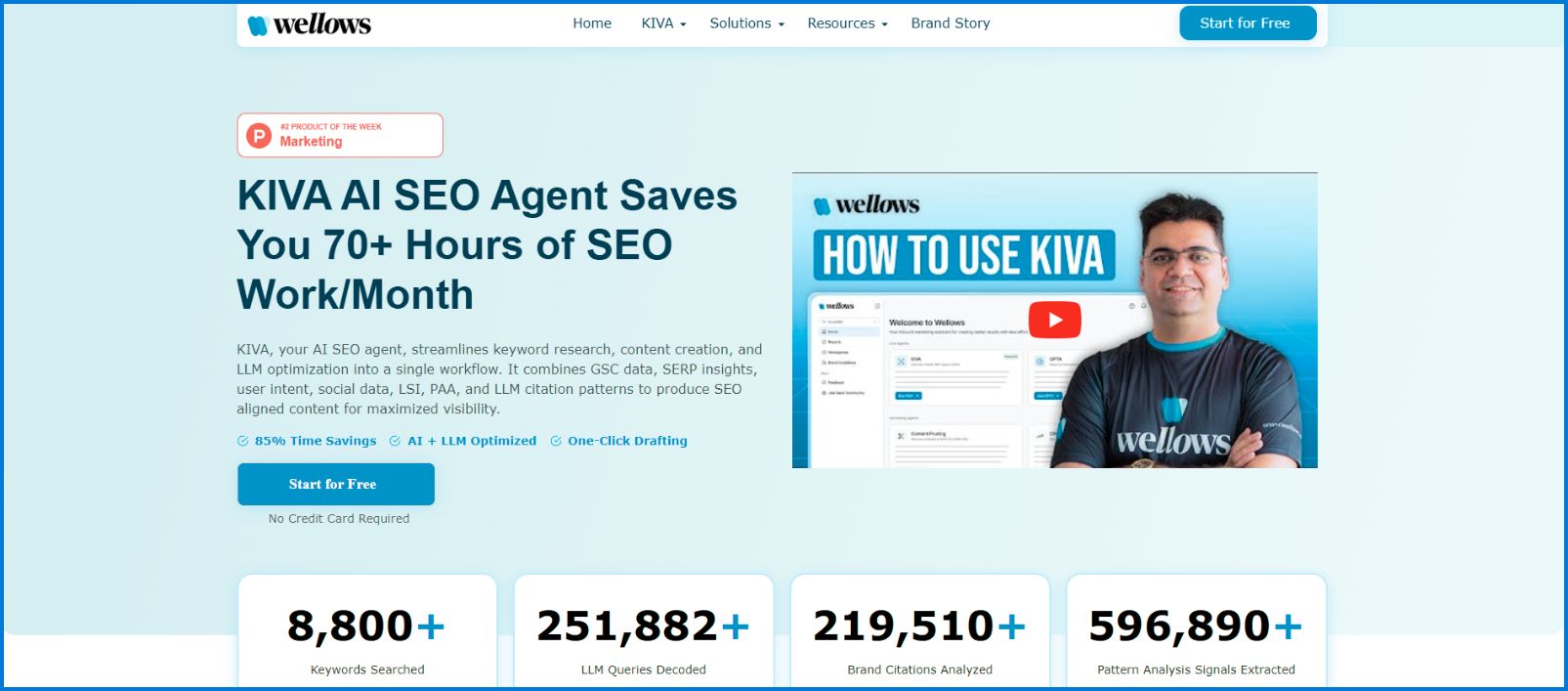
Studying search behavior patterns requires a structured approach that goes beyond counting keywords and often involves advanced AI search optimization tools to interpret large-scale behavioral data.
A practical on-page SEO checklist can also help teams connect these behavioral insights to page-level improvements that strengthen relevance, structure, and engagement.
Effective analysis blends technical SEO with behavioral insights and this is where Wellows, your AI SEO tool, delivers end-to-end support.
Step 1: Surface Hidden Opportunities
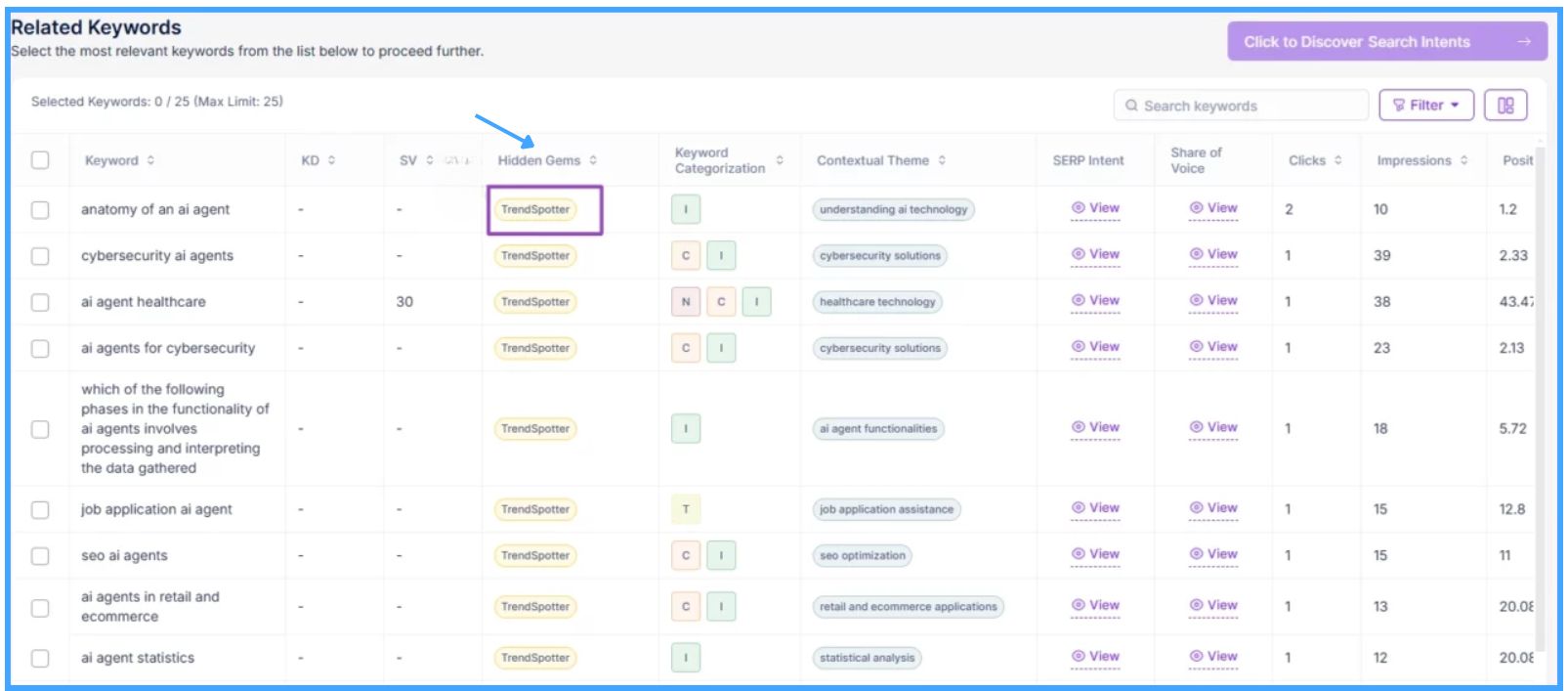
KIVA connects with Google Search Console keyword analysis and live SERP data to uncover Hidden Gems — high-value, low-competition keywords overlooked by others.
This ensures businesses focus on topics that reflect real search behavior and carry the highest growth potential.
Step 2: Cluster by Intent and Behavior
Through AI-powered keyword clustering and user intent analysis, KIVA groups queries by meaning, behavior, and goal (informational, navigational, transactional).
This transforms fragmented keyword lists into intent-driven content pathways.
Step 3: Decode SERPs and AI Engines
KIVA analyzes both traditional SERPs and visibility across AI platforms like ChatGPT, Claude, Gemini, and Perplexity.
This dual view shows not just what Google rewards, but also how large language models interpret and cite content.
Step 4: Benchmark Competitors and Conversations
Beyond static audits, KIVA scans competitor strategies and pulls in real-time discussions from Reddit, LinkedIn, X, and Quora.
This reveals the content formats (tutorials, FAQs, comparisons) users engage with and the questions they are actively asking.
Step 5: Generate Briefs and Content Aligned With Behavior
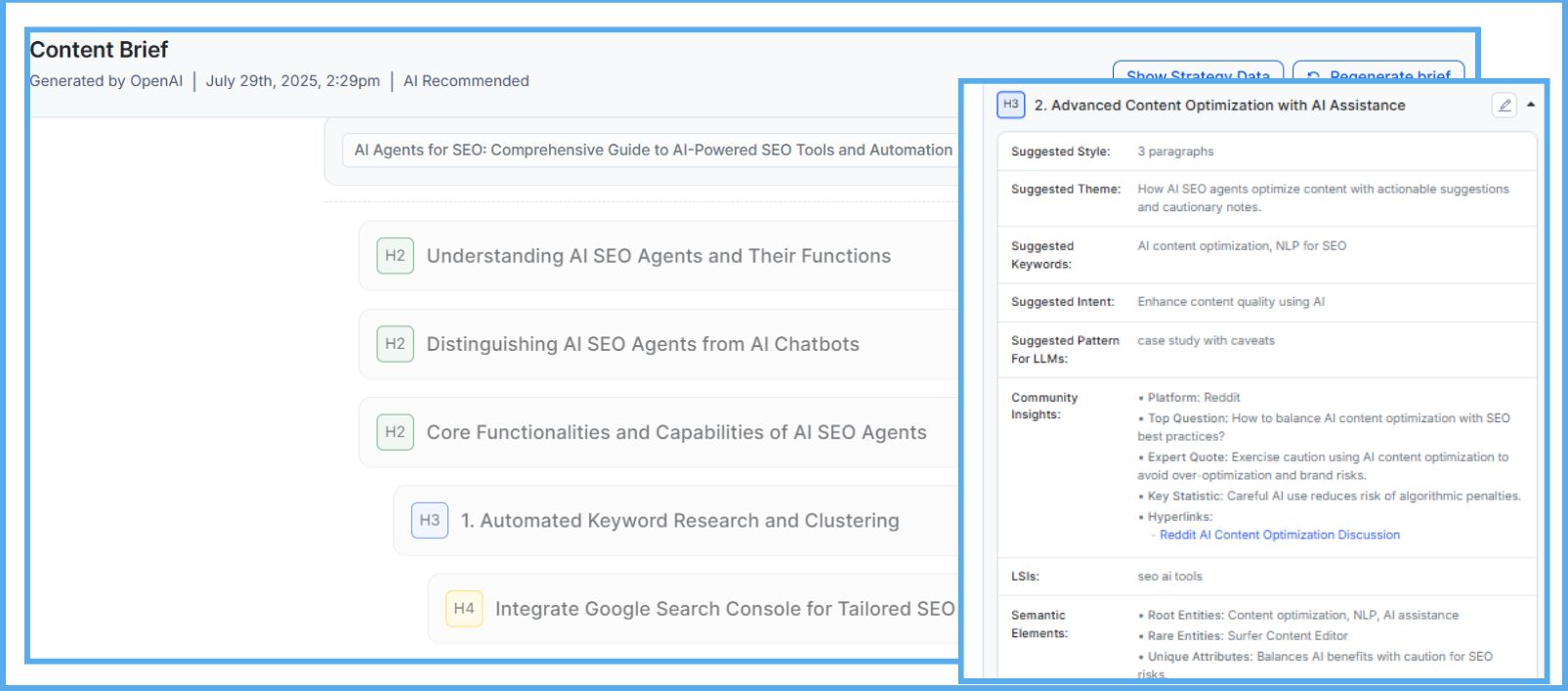
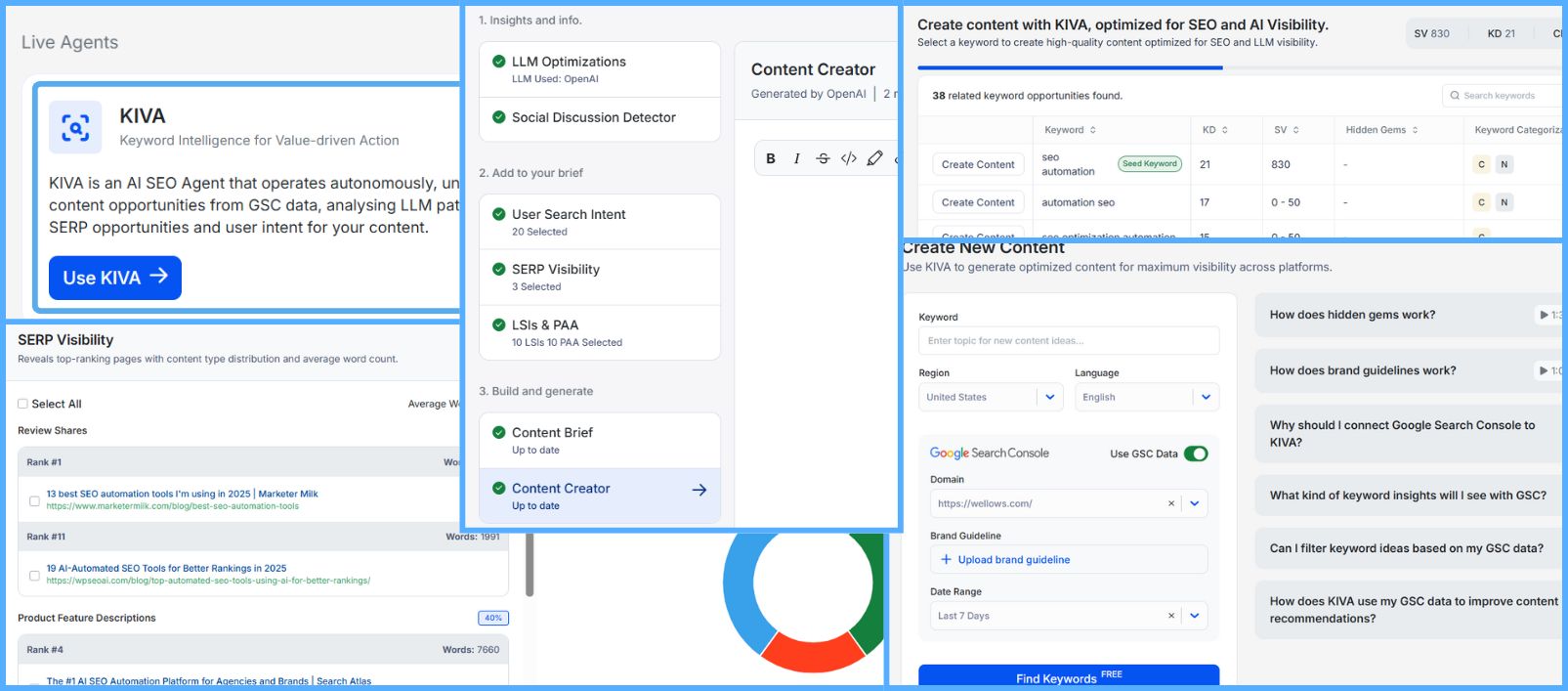
KIVA doesn’t stop at insights. It auto-generates SEO briefs that integrate SERP data, LLM queries, and audience signals into structured outlines.
From there, the Content Creator builds optimized drafts complete with readability scoring, fact checks, and brand guidelines ready to publish directly into WordPress.
By replacing manual research with a seamless, AI-powered workflow, KIVA enables businesses to analyze, plan, and create content aligned with real search behavior patterns.
The result: smarter strategies, faster execution, and content that wins visibility in both Google and AI-driven answers.
What Do Different Types of Search Behavior Patterns Reveal?
Every category of search uncovers unique signals for content strategy.
- Navigational patterns show how visible a brand is. If users type your brand name, visibility is strong. If they search “competitor + reviews,” you may need reputation-building content.
- Informational patterns reveal knowledge gaps. High search volume for “how can businesses analyze search behavior patterns?” indicates demand for educational guides.
- Commercial and transactional patterns highlight buying signals. Queries like “AI SEO automation tools pricing” suggest users are close to conversion.
- Mobile-driven patterns show intent on the go. Local and short-form searches dominate, often requiring responsive, mobile-first content.
Mobile-driven patterns are now one of the strongest indicators of user intent in search. Research from DigitalSilk shows that 76% of people who search for something nearby on their smartphone visit a related business within a single day.
Supporting this, HubSpot reports that 46% of all Google searches are for local information, and 88% of mobile users who perform a local search either call or visit the business within 24 hours.
These numbers highlight a clear reality: businesses that overlook mobile-specific search behavior risk missing out on high-intent customers who are ready to act almost immediately.
By examining these dimensions, businesses can craft targeted content that resonates at each stage of the funnel.
How Do Search Behavior Patterns Turn Into Winning Content Ideas?
The real power of search behavior patterns lies in transforming insights into ideas. The process follows four steps:
- Observation: Track what users consistently search for.
- Categorization: Cluster these queries by intent.
- Content mapping: Choose formats that best address intent (guides, FAQs, tutorials, comparisons).
- Execution: Publish optimized, structured content with topical authority.
Examples:
- Predictive queries like “SEO trends 2026” → industry forecast articles.
- Instructional queries like “how to fix SEO visibility issues” → detailed tutorials.
- Comparative queries like “AI-driven SEO vs traditional SEO” → side-by-side breakdowns.
KIVA’s brief generator converts query clusters into full content briefs. This ensures that every content piece directly reflects real user behavior without duplication or drift.
What Is the Impact of Search Behavior on Digital Marketing and Advertising?
Behavioral insights extend beyond organic SEO. They shape ad campaigns, messaging, and budget allocation.
Did you know?
- Ad copy optimization: Aligning with search behavior trends ensures that paid ads mirror user phrasing.
- Campaign timing: If analytics show seasonal spikes, schedule ads accordingly.
- ROI improvements: According to Google Ads (2025), campaigns built on behavioral segments achieved 23% higher CTR compared to keyword-only targeting.
This is especially relevant for businesses managing resources. Strategies like SEO prioritize on a budget rely on behavioral alignment to ensure every dollar works harder.
Anchors like SEO without a team or resolving SEO visibility issues become practical talking points when behavior patterns show what users struggle with most.
How Can Search Behavior Insights Solve Common SEO Challenges?
Many recurring SEO issues trace back to ignoring user behavior.
Low visibility: Caused by publishing irrelevant content. Solution: map to search behavior analytics.
Keyword cannibalization: Publishing multiple articles on the same query. Solution: apply keyword clustering to unify coverage.
Thin content: Answering too narrowly. Solution: expand to cover related micro-intents.
Weak linking: Poor site structure. Solution: strengthen with internal linking in SEO based on behavioral pathways.
KIVA’s Hidden Gems feature uncovers high-value, low-competition keywords buried in Google Search Console data.
By surfacing overlooked terms categorized as Reclaimers, Contenders, and TrendSpotters it helps brands focus on strategic opportunities that are easier to capture than chasing highly competitive keywords.
How Do Competitors Use Search Behavior Patterns in Their Strategies?
Competitor-driven strategies often succeed because they study user behaviors before publishing.
Audit competitor SERPs.
Identify which content types win for shared queries.
Detect gaps where competitors fail to address related intents.
For instance, if a competitor dominates guides but ignores troubleshooting queries, you can publish comprehensive FAQs.
A competitor-driven strategy informed by search behavior patterns ensures you build differentiation instead of duplication.
Conducting an SEO Site Audit helps identify visibility issues, technical errors, and optimization opportunities, making it a cornerstone of any structured analysis.
What Role Will Search Behavior Patterns Play in the Future of SEO?
The next phase of SEO is defined by AI and LLM-driven search. Instead of typing “best SEO tools,” users ask conversational queries like “Which SEO tools are best for small teams on a budget?”
Future-facing insights:
- Zero-click results: Google and AI assistants answering directly.
- Conversational SERPs: Queries phrased as natural questions.
- Personalization: Algorithms adapting to each user’s past behavior.
As an AI SEO Agent, KIVA adapts to these changes by aligning outputs with AI Search and LLM-friendly structures, ensuring brand content stays discoverable even in evolving landscapes.
Read More Articles
FAQs
Conclusion
Search behavior patterns are no longer optional to consider they are the backbone of modern SEO. By studying how users phrase queries, interact with results, and refine their searches, businesses can create content that not only ranks but also connects.
For marketers, the path is clear: move beyond keywords into behavior. The result is a strategy that fuels brand visibility, captures emerging opportunities, and anticipates future shifts.
In an era where Google and AI assistants reward authority, mastering search behavior patterns is no longer optional — it’s the edge that separates brands that lead from those that lag behind.