You have published solid content. You followed a proper keyword research process and applied core on-page SEO basics. Still, your pages are not showing up in Google the way you expected.
This gap is what teams call SEO visibility issues. It usually means your site is appearing less often, or lower, across the search surfaces that matter.
In 2025, even good pages can lose reach because visibility now depends on more than blue links.
Google is weighing intent fit, technical health, authority signals, and how your content performs inside snippets, People Also Ask, and AI Overviews. If one layer weakens, visibility drops fast.
According to the Siegemedia report, 66.5% of digital marketers say their best pages struggle to maintain consistent visibility in search results.
If your impressions are falling, rankings feel unstable, or traffic dipped without a clear reason, you are likely facing one of a few repeat causes. This guide breaks those causes down clearly and shows how to fix SEO visibility issues step by step.
- SEO visibility issues mean your site shows up less or lower in Google.
- In 2025, visibility includes AI Overviews, snippets, PAA, and rich results, not just blue links.
- Main causes are intent mismatch, technical or hosting gaps, weak authority, stale content, and competitors improving.
- Fix it by upgrading existing pages, tightening intent, fixing tech, strengthening internal links and backlinks, adding schema, and tracking visibility signals.
What Is SEO Visibility?
SEO visibility is a measure of how often your site appears in organic search and how prominent those appearances are. It is usually expressed as a percentage of the total clicks your pages could earn for the keywords you target.
Think of it like impression share in search. If 1,000 people search a topic and your pages show up consistently in the top positions, your visibility is high. If your pages appear less often or lower, visibility drops even if the content is still live.
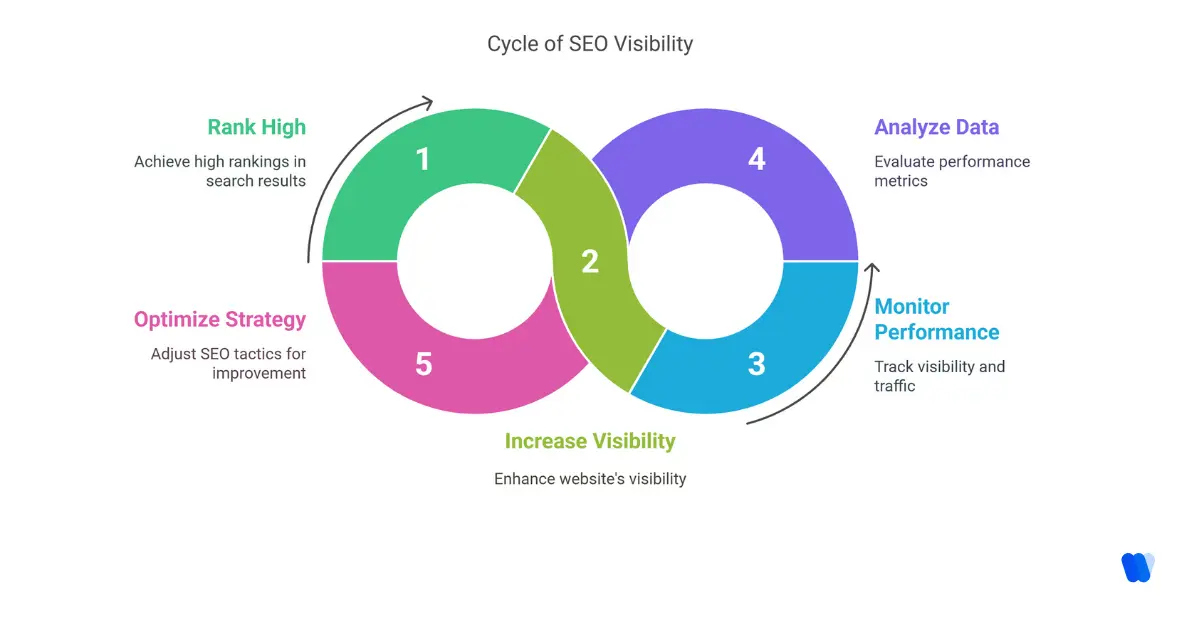 Visibility is not the same as traffic.
- Visibility shows potential reach. It tells you how much of the available click space you are capturing.
- Traffic shows realized reach. It tells you how many clicks you actually got.
This difference matters because traffic can fluctuate week to week. Visibility changes usually signal a structural issue. When visibility falls, traffic often follows. When visibility holds, traffic can still rise or fall based on seasonality, headlines, or SERP features.
Search visibility now depends on more than blue links. As Google blends classic ranking with AI experiences, the gap between AI-Driven SEO vs Traditional SEO becomes a real factor in why some pages keep exposure while others fade.
Why Does SEO Visibility Matter?
Visibility is the earliest signal that something is shifting in your search performance. It helps teams spot problems before they turn into deeper traffic losses.
- It helps you diagnose drops early. A visibility decline can point to intent mismatch, algorithm impact, technical errors, or competitors taking the same space. You can investigate faster because you know the loss is not random.
- It gives a clean SEO health snapshot. Traffic numbers alone do not show how much demand you are missing. Visibility shows whether you are gaining or losing share across your important topics.
- It lets you compare keyword performance clearly. If two pages target similar intent, visibility tells you which one is winning real SERP space and which one needs fixes.
For branded demand specifically, tracking visibility alongside Share of Search helps you see whether your brand is growing in awareness or simply fluctuating in rankings.
How To Diagnose SEO Visibility Issues After A Traffic Drop?
If your traffic has dipped suddenly, or you are ranking but not getting sales, start by confirming whether this is a visibility problem.
In Google Search Console, review impressions, average position, and click through rate for your core queries. When impressions and positions fall together, reach is shrinking. When impressions stay high but clicks and conversions stay low, your site may be visible for the wrong intent.
Both patterns point to the same reality, something in your visibility stack has weakened. It could be intent mismatch, technical gaps, thin topical coverage, weak internal linking, overreliance on tools instead of audience signals, or content that has gone stale.
The indicators below help you spot which one is responsible so you can fix it without guessing.
1. Indicator — Ranking for the Wrong Keywords
One of the most common visibility problems is ranking for terms that do not match what your audience wants at that moment. You might see traffic in Search Console, but little of it turns into engagement, leads, or sales because the search intent does not align with your page.
For example, a service page can rank for “what is SEO visibility” when the real opportunity is “SEO visibility tool for agencies.” The first brings learners, the second brings buyers.
Quick fix, review your top queries and map each one to intent using your own Real Time SEO Data. If the intent does not fit the page, either rewrite for that intent or create a better matched page.
2. Indicator — Overlooking Technical SEO
Even strong pages lose visibility when the technical base is weak. Google needs to crawl, render, and understand your site before it can rank it. When Technical SEO Issues disrupt any of these steps, visibility drops across entire clusters, not just one URL.
Common technical issues that reduce visibility in 2026 include:
- slow loading mobile pages
- poor Core Web Vitals scores
- heavy scripts or unoptimized images that block rendering
- broken internal links that interrupt crawl paths
- missing structured data that limits rich result eligibility
These problems do not only push rankings down. They can stop pages from being indexed at all. If your visibility drop is sharp and wide, technical checks should come before content rewrites.
Keep in Mind: “If you’re not solving the user’s need better than everyone else, you don’t deserve to rank.” — Aleyda Solis, International SEO Consultant
3. Indicator — Thin Content and Topical Gaps
Publishing more often is not the same as building visibility. If your content does not cover a topic deeply, Google will prefer a page that answers the full intent. Thin pages lose space in competitive SERPs because they feel incomplete.
This is where topical gaps show up. You may cover the main keyword, but miss the supporting angles users expect, like comparisons, pricing context, examples, or step by step guidance.
Pages built with real Topical authority hold visibility longer because they match complete intent, not just one phrase.
4. Indicator — Weak Internal Linking Structure
You can publish great content and still lose visibility when pages are isolated. Internal links are how authority moves through your site. When links are missing or random, Google struggles to see which pages are important and how topics connect.
Strong internal linking helps by:
- passing authority from strong pages to weaker ones
- signaling relationships between topics
- guiding crawlers to deeper content
- improving user flow and session depth
If your pages feel disconnected, rebuild your internal linking with clear hubs and supporting clusters.
5 Indicator — Overreliance On Tools Instead Of Strategy
Tools can show that visibility is dropping, but they cannot explain why unless you connect the data to user behavior. Many teams follow tool recommendations without checking what people actually want, so they optimize for scores instead of outcomes.
This creates a gap between what the SERP rewards and what your content delivers. Freelancers often face this faster because they work with fewer signals and tighter time, which is why the challenges freelancers face without AI agents in SEO usually show up as visibility drops first.
Visibility recovers when strategy starts with audience needs, then tools are used to validate and scale that strategy.
Platforms like Wellows help here because they do not just report rankings, they track AI search visibility signals like mentions, sentiment, and citations across generative engines. That makes it easier to see which queries matter, where visibility is slipping, and what content needs to be improved next.
6. Indicator — Stale, Unrefreshed Content
Search rewards freshness when the topic evolves. If a page has not been updated in a year or more, it slowly loses visibility to newer results that reflect current facts, tools, or standards.
If your visibility drop is gradual, check content age and prioritize refreshes on pages that used to drive impressions.
In 2025 data shows that updated content can improve visibility by up to 70% within three weeks, especially for evergreen topics. And yet, many sites continue to chase new content instead of refreshing the old (QuickCreator).
What Are The Main Causes Behind SEO Visibility Loss?
SEO visibility drops when Google cannot crawl your site correctly, trust your pages, or see you as the best result anymore. Here are the main causes you should check.
1. Technical Glitches
Technical issues are a top cause of visibility loss. A small site change can affect crawling, indexing, or page signals and push pages down in the SERP.
- Updates Causing Havoc: Plugin, theme, or CMS updates can break redirects, reset settings, or block important pages. When Google finds fewer accessible pages, visibility drops.
- Site Is Not Being Mobile Friendly: Poor mobile layout, slow loading, or hard to tap buttons weaken UX signals. This reduces visibility on mobile results and can affect overall rankings.
- Server Offline: Downtime reduces trust. If Googlebot hits your site during an outage, it may lower crawl priority and rankings.
- Wrong Canonical Tag Use: Incorrect canonicals can tell Google to index the wrong page version. This can deindex pages you want visible or create duplicate signals. Learn more in your canonical guide: canonical tags.
- Unoptimized Site Redesign: Redesigns often change URLs, internal links, or page templates. If SEO elements are not carried over, Google may lose old signals and visibility drops.
2. Competitors Improving Faster
Sometimes your site does not change, but competitors do. If they publish better content, cover the topic deeper, or match intent more clearly, Google may prefer them.
- Stronger Or Fresher Content: Competitors may update content with new data, clearer structure, or tighter answers. This makes their pages more useful and more visible.
- New Backlinks: If competitors earn new high trust links, their authority rises and they can replace your position.
3. Hosting Issues
Cheap and unreliable hosting can hurt SEO in ways most people overlook. Slow response times, accidental noindex headers, or poorly configured servers can quietly wipe out your visibility.
How can I tell if my hosting provider is causing my SEO visibility problems?
Hosting can hurt SEO quietly. If visibility drops without a clear content reason, check this fast list.
- Downtime: Match your traffic dip date in GA with UptimeRobot or host logs. Uptime should be 99.9%+.
- Slow speed / high TTFB: Test key pages in PageSpeed Insights or GTmetrix. High TTFB across pages usually means hosting.
- Server location: If the server is far from your audience or recently moved, latency rises. Use a CDN if needed.
- Security issues: No SSL, malware, or weak firewalls can trigger visibility loss.
- Shared hosting / bad IP: “Neighbor” sites can slow you down or damage IP trust. Upgrade to VPS or dedicated if risky.
- Poor scaling or support: If traffic spikes slow the site and support is slow, SEO suffers.
Ask your host: Any backend changes? Any noindex or X-Robots-Tag headers? Server or IP changes? Uptime last 30 days?
4. Algorithm Updates
Google updates can change what type of content it rewards. Even if your site stays the same, rankings can drop when an update redefines “best result.” Visibility loss is common when pages look less helpful, less trustworthy, or less aligned with current intent.
- Intent shift: Google may start favoring different formats, depth levels, or angles. Pages that matched intent before can lose visibility if they no longer fit what users want now.
- Quality reassessment: Updates often reduce visibility for thin content, repetitive sections, or pages that add little original value.
- Trust and credibility signals: If your topic needs authority, weak E-E-A-T signals can become a bigger ranking gap after updates.
- Over-optimization penalties: Pages that feel keyword-stuffed, too templated, or built for search engines first may drop after spam or helpful content updates.
5. Featured Snippet Changes
Featured snippets and rich results reshape how people click. When you lose a snippet, visibility often falls because your result becomes less prominent, and click-through rate drops.
- Snippet takeover by competitors: A competitor may rewrite their answer in a clearer format, so Google replaces your snippet.
- Layout changes in the SERP: Google may add more SERP features like People Also Ask or video blocks, pushing your result lower even if your ranking stayed similar.
- CTR decline: If users click another result more after the snippet changes, Google can interpret that as a better answer and reduce your visibility over time.
6. Lost Backlinks
Backlinks act as trust votes. When strong links disappear, Google sees weaker authority signals, which can reduce visibility, especially for competitive keywords.
- High authority links removed: Losing a few strong domains can drop your perceived credibility quickly.
- Link relevance loss: If the removed links were tightly related to your niche, the impact is stronger than losing random links.
- Competitors gaining while you lose: Visibility shifts faster if competitors earn new links in the same period your links decline.
- Anchor diversity drop: If lost links carried varied anchors, your topical signals weaken, and rankings may slide.
How Do I Fix SEO Visibility Issues On My Website Without An Agency?
You do not need an expensive agency to recover lost visibility. Most drops come from repeat causes like pages slipping for the right queries, weak intent coverage, technical crawl or speed gaps, stale content, and thin trust signals, which is why working through an on-page SEO checklist can help you catch the page-level issues that weaken visibility before they spread further.
Follow this system. Start with what is already ranking, remove friction, expand coverage, then rebuild trust. Each step fixes one visibility layer, so you solve the cause, not just the symptom.
1) Optimize Existing Content
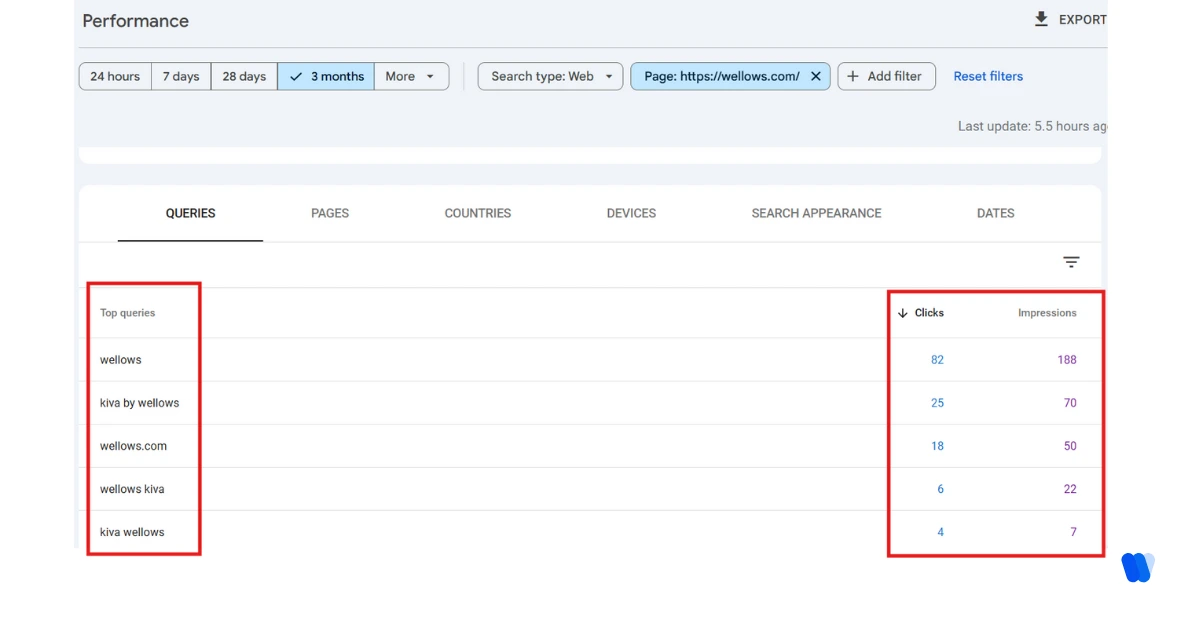
Open Google Search Console and sort queries by impressions. Find keywords where impressions stayed strong but average position dropped. That confirms a real visibility decline.
Prioritize keywords sitting in positions 5 to 20. These are close to the top and usually respond fastest.
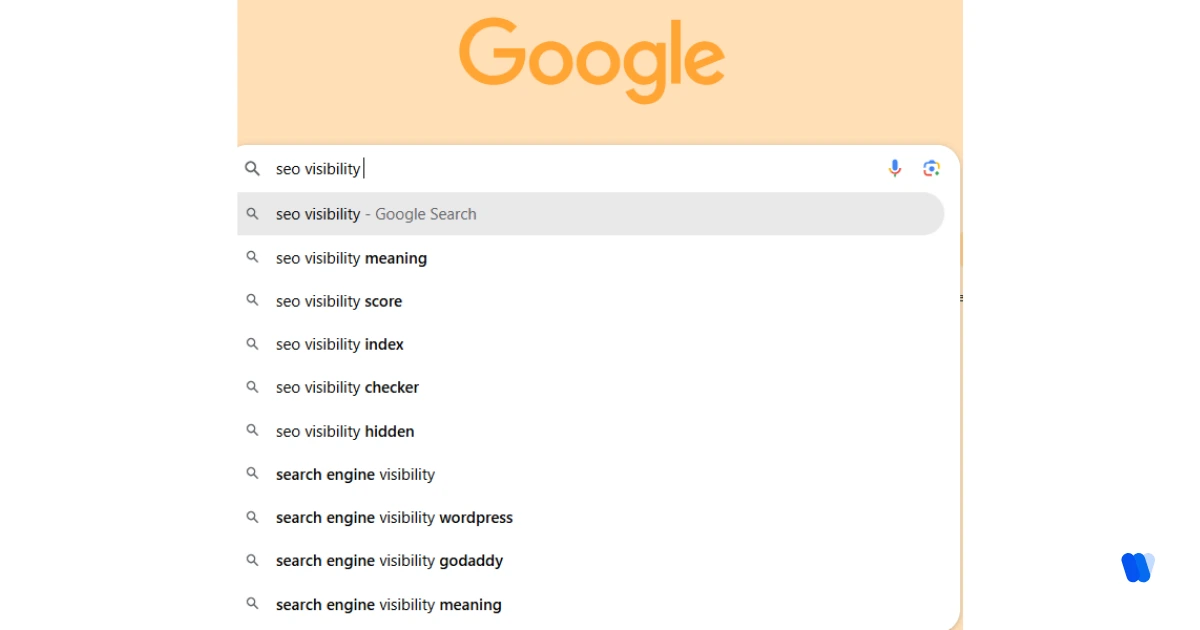
 Expand the page with semantic and intent neighbors. Add related subtopics, follow up questions, and comparison angles. Use LSI keywords only where they add real meaning.
2) Upgrade Thin Pages
If a page answers the query halfway, Google replaces it with a stronger result. Pick the thin pages that used to perform, then rebuild them into intent complete resources.
Answer the main question first, then add the sub questions searchers expect next. Link supporting posts around the pillar to build a clear topic cluster.
3) Add Engaging Multimedia
Visuals help people stay longer and understand faster. When users spend more time on a page, Google reads that as a stronger result.
Add the right media only where it supports the topic. Use infographics to simplify hard ideas, charts to show data clearly, and short videos with strong thumbnails to explain steps.
Pages with embedded videos often see up to 30% longer dwell time in 2025 when the video matches search intent. Longer dwell time helps visibility hold even in competitive SERPs. (Backlinko,2025)
4) Improve Meta Titles And Descriptions
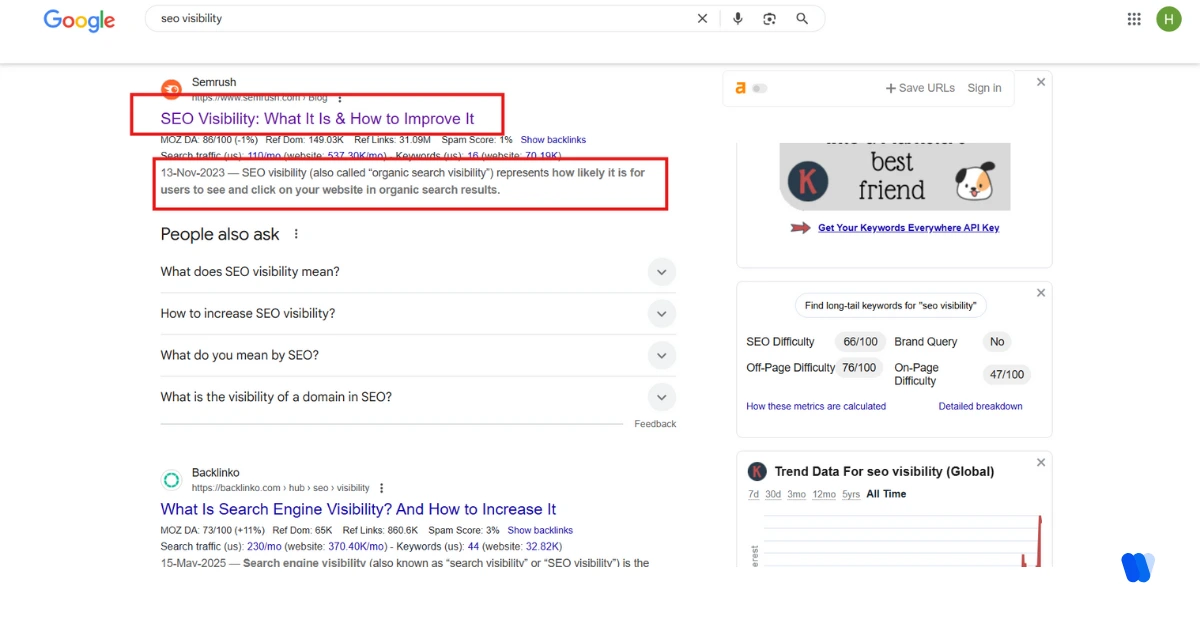
Your meta title and description control clicks. If impressions stay high but clicks drop, visibility weakens even if rankings do not move much.
Rewrite titles to match intent clearly and lead with value. Keep meta descriptions under 160 characters, include the main keyword naturally, and promise a clear benefit.
5) Strengthen Internal Linking
Internal links decide which pages get authority and which stay isolated. If strong pages do not point to weaker ones, weak pages struggle to surface.
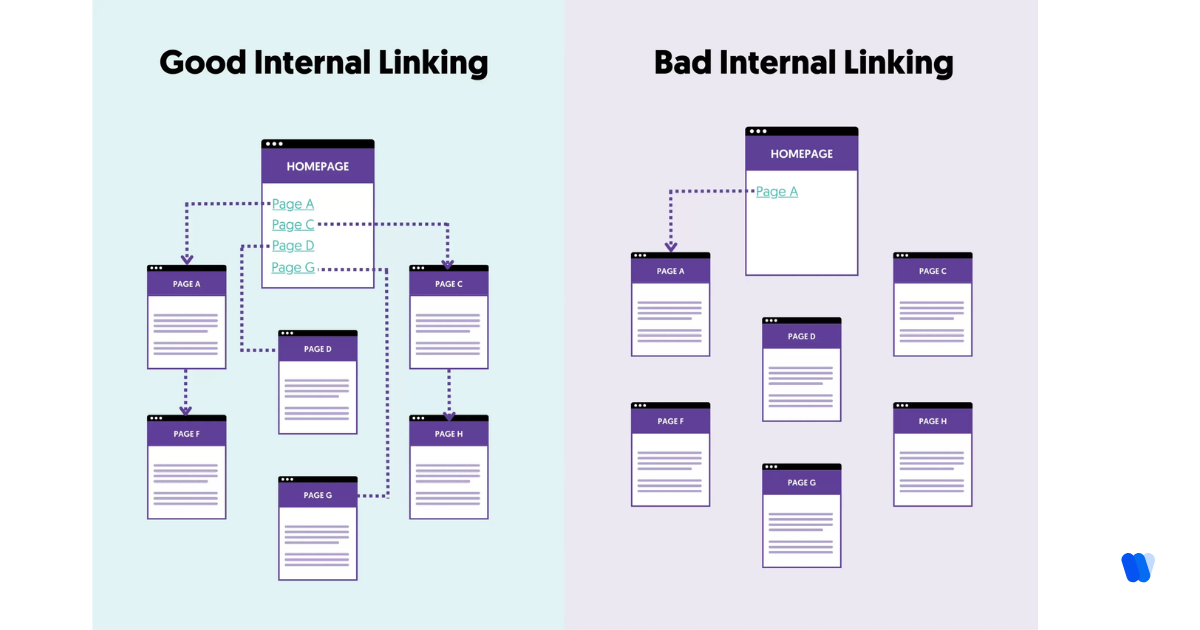
Link from winners to underperformers using anchors that match the target query. This is why internal linking upgrades often lift visibility without new backlinks.
6) Rebuild Trust Signals With Backlinks
Authority is still a visibility lever. If you lost strong backlinks or never earned them, Google has less reason to keep you in top results.
Reclaim relevant lost links, then earn new editorial mentions in your niche. Avoid spam directories. Trusted links remain one of the strongest modern ranking factors.
7) Expand Your SERP Real Estate With Structured Data
Visibility is not only about blue links anymore. Google now shows rich results like FAQs, sitelinks, and People Also Ask boxes. If your page is structured well, you can win extra space on the results page without changing your main position.
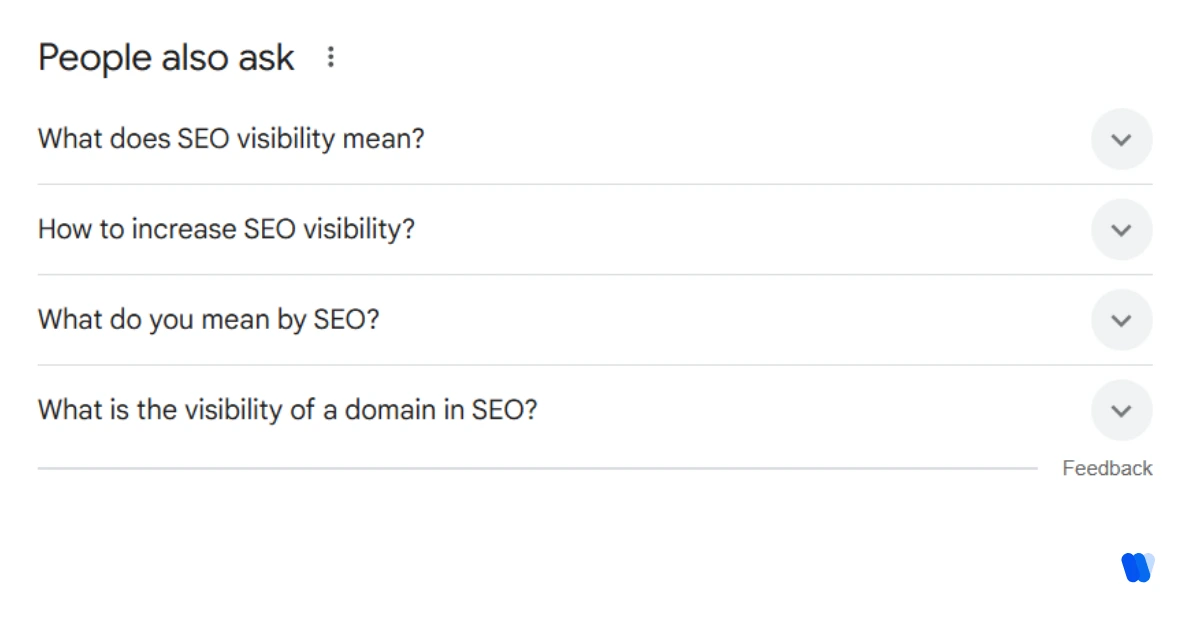
Add schema markup where it fits, such as FAQ, How To, reviews, or product schema. These formats help Google extract clean answers and display them as rich snippets.
Use structured data and clean, extractable answers to win more SERP space. In 2025, schema driven rich results can lift CTR by up to 30% because your listing stands out visually (Aemorph, 2024). This matters even more since People Also Ask boxes now appear in over 43% of searches, so pages built for snippet extraction get seen and clicked more often (Ahrefs, 2020).
8) Increase Site Wide Strength And Track Visibility
Visibility recovery holds longer when your whole domain stays strong. Keep improving on page quality, remove toxic links, and support key pages with internal links and fresh content.
Then track visibility signals together, not just rank:
- Impressions trends per query and page
- Average position drops tied to topics
- CTR gaps where impressions stayed high but clicks fell
- Snippet or rich result losses
To make this repeatable across dozens of pages, AI SEO tools can automate tracking for rankings, CTR shifts, and snippet wins or losses, so you catch visibility drops early and know exactly what to refresh.
This shows which layer broke, so you can fix it without guessing.
9) Fix Technical SEO
Visibility cannot hold if Google struggles to crawl, render, or trust your pages. Technical gaps often cause sudden drops even when content did not change, which is why a structured technical SEO audit is essential.
- Core Web Vitals and mobile load speed
- Mobile usability errors in Search Console
- Crawlability problems like blocked resources, noindex tags, redirect loops
- Broken internal links that interrupt discovery
- Missing or incorrect structured data
Fixing these restores access to your content, which is the base for recovery.
10) Do Periodic SEO Audits
Audit your site every 3 to 6 months. Use Ahrefs or Semrush to catch crawl errors and UX gaps early.
Check:
- Page titles and canonical tags
- Above the fold CTAs
- Trust and social proof signals
- DNS settings inside GSC
Regular audits keep visibility stable and prevent surprise drops.
SEO Visibility In 2026: What Has Changed And How Wellows Fixes SEO Visibility Issues?
Google’s shift toward AI-enhanced search has changed how SEO visibility works. With AI Overviews and SGE (Search Generative Experience), the top spot is not only the first blue link. Your brand can gain or lose exposure in AI answers, snippets, and rich results, even when rankings appear stable.
That means SEO visibility issues in 2025 show up when your site is missing across multiple search surfaces, like:
- Featured snippets
- People Also Ask results
- Visual cards and AI responses
- Local Pack, Maps, and Reviews
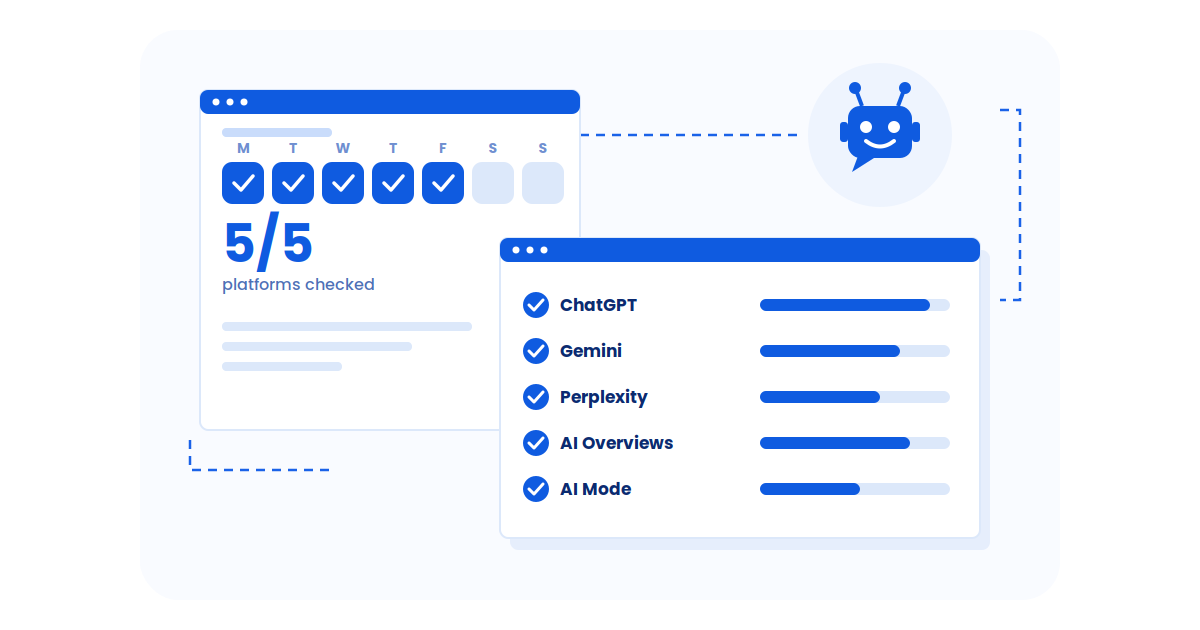
Wellows is one of the best AI visibility tools built for the modern AI search era. Instead of measuring success only through keyword rankings, Wellows tracks how often your brand is mentioned and cited across Google and major AI engines. This gives you a clearer view of where your visibility is strong and where it is slipping.
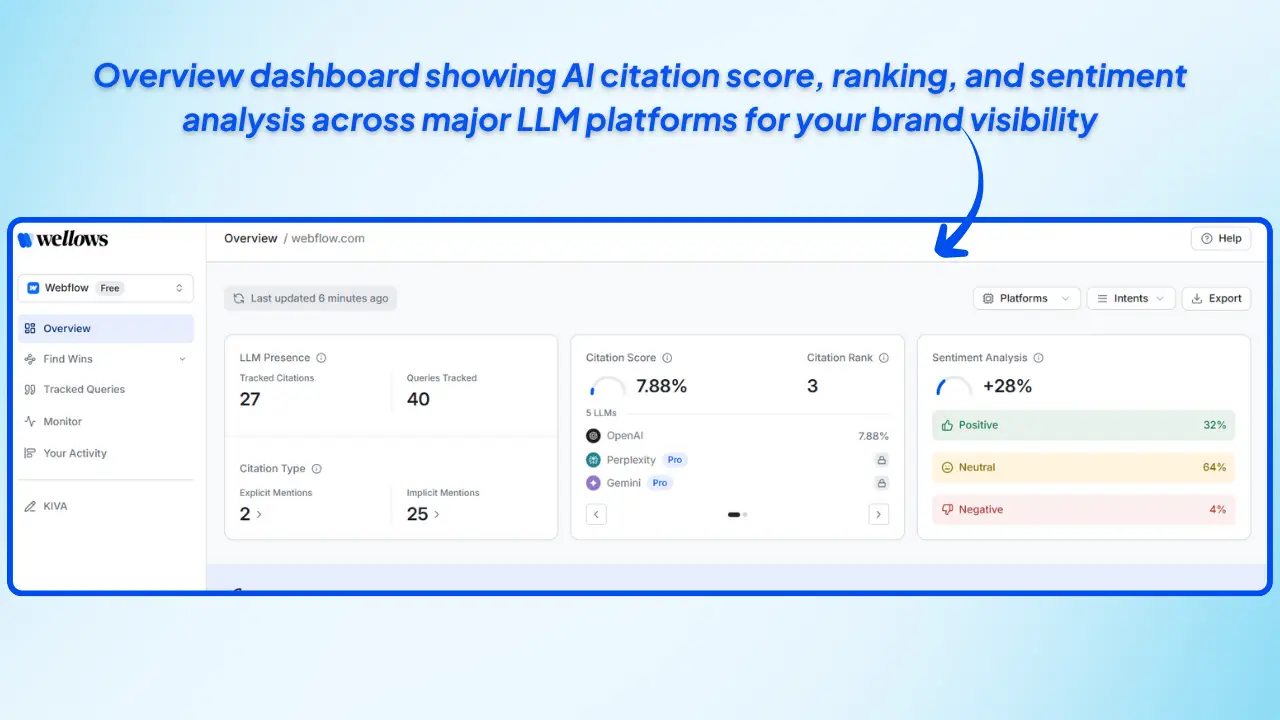
With Wellows, you can reduce SEO visibility issues by:
- Tracking visibility beyond blue links: See where your brand appears in ChatGPT, Gemini, Perplexity, and Google AI results, not only in classic rankings.
- Finding visibility gaps: Identify which topics and queries you are missing, and where competitors are getting cited instead.
- Fixing content faster: Use KIVA to build intent complete briefs, strengthen topical depth, and create entity rich content that AI systems trust and cite.
- Staying ahead of drops: Monitor visibility changes early so you fix issues before they spread across more pages.
If you want a deeper look at how visibility works inside AI engines and what drives citations, read this guide on Search Engine Visibility.
In short, SEO visibility in 2025 is about being recognized and cited across every place people search. Wellows gives you the data and the workflow to fix SEO visibility issues and grow visibility where modern search happens.
Read More Articles
- Search Behavior Patterns in SEO: Turning Insights Into Winning Content Ideas
- How to Understand User Intent in Generative Engines?
- How Can Pattern Recognition Improve Visibility in AI-Generated Answers?
- How to Design Content Briefs for GEO?
- Can GSC Data Guide Your GEO Strategy?
- How Will Google’s AI Mode Transform Traditional SEO Practices?
- Why Your Website Traffic Is Dropping (Causes & Fixes)
FAQs
Final Thoughts: SEO Visibility Is Earned, Not Guaranteed
SEO visibility issues are not always obvious, but their impact is. If you are publishing regularly and still losing search presence, it is time to look beyond surface fixes and find the real layer that weakened.
In 2025, visibility is not only about blue links. It depends on intent fit, technical health, authority signals, and whether your content earns space in AI Overviews, snippets, and People Also Ask. If one layer drops, visibility drops with it.
Key Takeaways For Fixing SEO Visibility Issues Long Term
- Visibility drops before traffic does, so track impressions, CTR, and position trends early.
- Intent matters more than volume. If the page does not match what searchers want, visibility will not hold.
- Technical health is the base layer. Crawl blocks, slow speed, or mobile gaps can erase visibility even on strong pages.
- Refresh old winners before chasing new posts. Updated pages regain visibility faster than new ones.
- Authority protects visibility. Strong internal links and trusted backlinks help you survive tougher SERPs.
- Modern search is multi-surface. Winning snippets, PAA, and AI answers is part of real visibility now.
Fixing SEO visibility issues will not just improve rankings. It helps you show up at the exact moment someone needs you most, across every surface where search happens.