In traditional SEO, intent mattered. In GEO, it decides everything. Over 71.5% of U.S. consumers now use ChatGPT, Gemini, and Perplexity for information searches, while your ChatGPT Citations Report reveals how intent alignment determines which brands get mentioned in AI-generated responses.
In short, mastering User Intent in Generative Engines is now the key to citation-ready visibility.
OpenAI’s ChatGPT, Perplexity AI, and Google’s Gemini don’t just scan for keywords. They interpret user goals and select content accordingly, as demonstrated by your research showing 73% commercial intent in ChatGPT queries where AI systems prioritize task-completion over keyword matching—an approach deeply tied to intent recognition in AI search.
If your blog post doesn’t answer the intent behind the question, it won’t make the cut.
This shift has been coming for a while. Google’s BERT (Bidirectional Encoder Representations from Transformers) algorithm updates focused on understanding meaning, not just matching terms. However, with AI models generating answers directly, we must think differently about how we write.
User intent drives citation selection, with 60% zero-click behavior meaning brand mentions often become the primary user touchpoint rather than clickthrough traffic —especially for brands learning how to optimize for Google AI Overviews where citations often replace traditional clicks.”
Let’s break down the importance of User Intent in Generative Engines for generative engine optimization and how intent recognition shapes the future of visibility.
TL;DR
- User Intent in Generative Engines now decides visibility in AI answers.
- LLMs don’t match keywords. They predict the goal behind a query.
- One search splits into many sub-intents (query fan-out).
- AI Mode + LLMs pick passages, not whole pages.
- Old intent buckets are too broad for GEO.
- Intent-rich sections get cited more than “general” pages.
- Write modular, answer-first blocks for each micro-intent.
- Use clear entities, comparisons, FAQs, and verdicts.
- Fill implied gaps (price, use-case, constraints, “best for”).
- Wellows User Search Intent shows what people want, lets you choose intent type, and turns it into an outline built for retrieval + citations.
What Is User Intent In Generative Engines And Why Does It Matter?
User intent refers to the underlying purpose or goal a user has when entering a search query. In the context of generative engines—AI-driven systems that generate responses to user inputs—understanding user intent is crucial for delivering accurate and personalized search results.
Researchers and practitioners often frame this idea through queries like “User intent in advanced generative models,” “Intent recognition in AI generative systems,” or “User intent analysis in text-generating models.”
Each variation points to one core point: generative engines don’t just read keywords — they try to understand the goal behind the query.
This is the foundation of User Intent in Generative Engines, where search visibility depends less on matching words and more on matching purpose.
These engines look at context signals (like how people usually ask follow-up questions, common answer formats, and task patterns) to predict what the user actually wants. So two users can type the same query, but the engine may generate different answers depending on the deeper intent it detects.
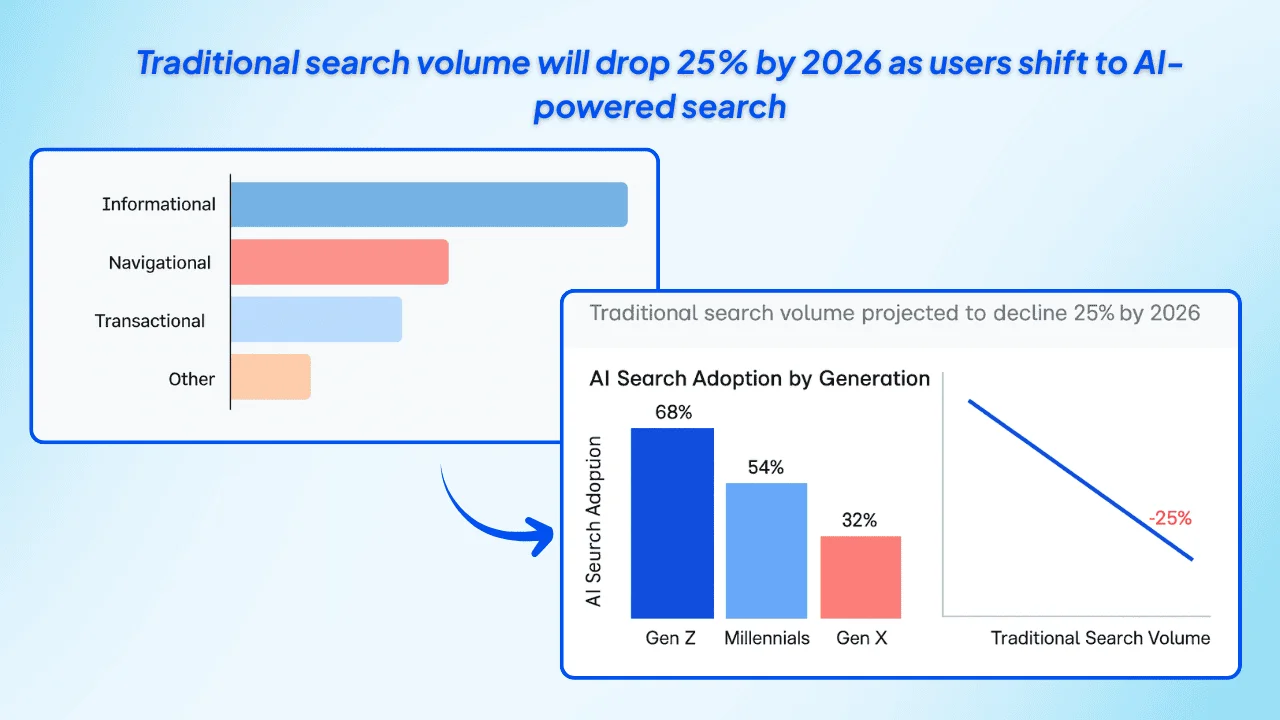
By 2026, traditional search volume is projected to drop 25% as Gen Z and Millennials increasingly turn to AI-powered search engines, requiring businesses to focus on high-quality, conversational content that directly meets user intent.” (Jay Dougla, 2025)
For brands, especially emerging ones, leveraging an AI Search Visibility Platform for Startups can help translate intent recognition insights into into action—and agencies can standardize results with an AI visibility reporting checklist for Agencies.
By aligning with intent recognition in AI systems, brands can ensure their content matches the hidden goals behind prompts and increases the chance of being cited in AI-generated answers.
And once you’ve matched intent, the final layer is making sure the text reads naturally—because LLMs tend to favor passages that sound clear, human, and confidence-worthy.
That’s where a quick polish with the free AI Humanizer tool by Wellows helps your draft feel less machine-flat and more citation-ready.
To see how this connects with broader citation strategies, check out What AI Search Engines Cite.
At face value, a query like “best productivity tools for remote teams” looks simple. But the intent behind it can vary a lot:
- Are they looking for a list to quickly compare options?
- Are they trying to solve a problem like team collaboration or time blocking?
- Do they want tools with a free plan?
- Are they ready to buy, or just browsing for now?
Each of those scenarios carries a different intent, even though the keywords are similar. That’s why intent matters more in generative search than traditional SEO.
Understanding intent helps you write for real people, not just screens. And building on your query fan-out research, this is exactly why old intent buckets aren’t enough anymore.
In AI search, one query expands into multiple sub-intents — and generative engines choose content that fits the specific task the user is trying to complete.
Why Traditional Intent Categories Limit GEO Performance?
Old SEO frameworks grouped queries into broad buckets like informational, transactional, navigational, and commercial. But SEO doesn’t work in ChatGPT under those frameworks—generative engines expand queries into deeper intent paths instead. While useful in keyword-first search, these categories no longer capture the full depth of how generative engines evaluate user queries.
Unlike traditional intent labels, GEO queries often go deeper—such as “Understanding user goals in generative models” or “Intent of users in generative AI systems.” These show how AI interprets the purpose behind a query, not just its surface wording.
That’s why applying the Top GEO Tactics is critical for making sure your content aligns with the layered intent paths AI engines now prioritize.
This shift from SEO vs. GEO means content must be structured to address layered user needs, where engines expand a single query into multiple connected sub-intents.
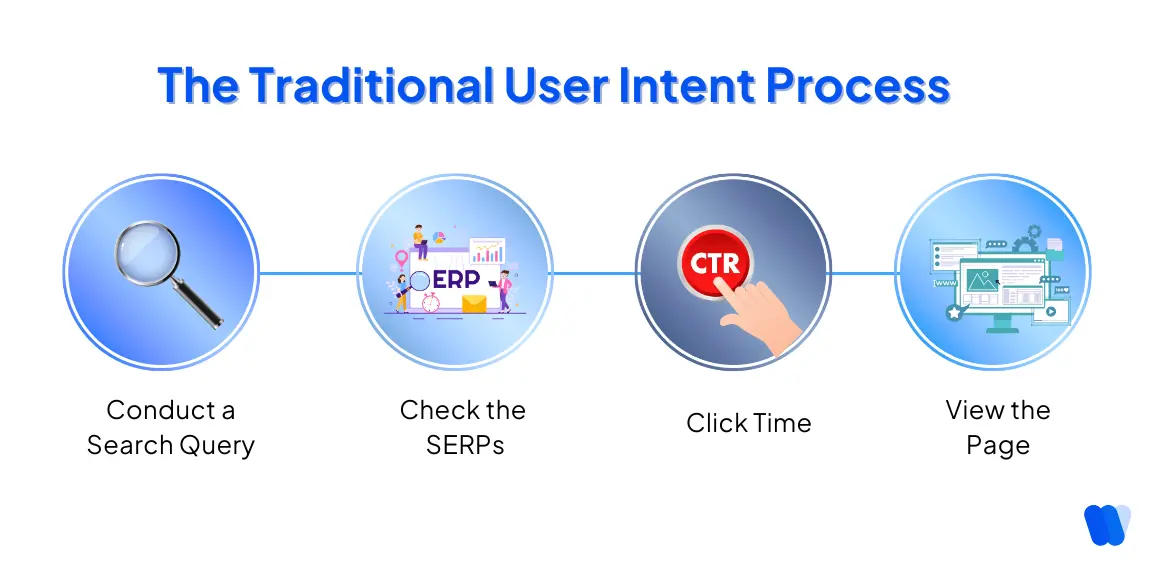
Let’s break each one down using the same example set.
Informational Intent
Query: “Best project management tools”
This signaled that the user was researching. They didn’t want to buy anything yet. They just wanted options.
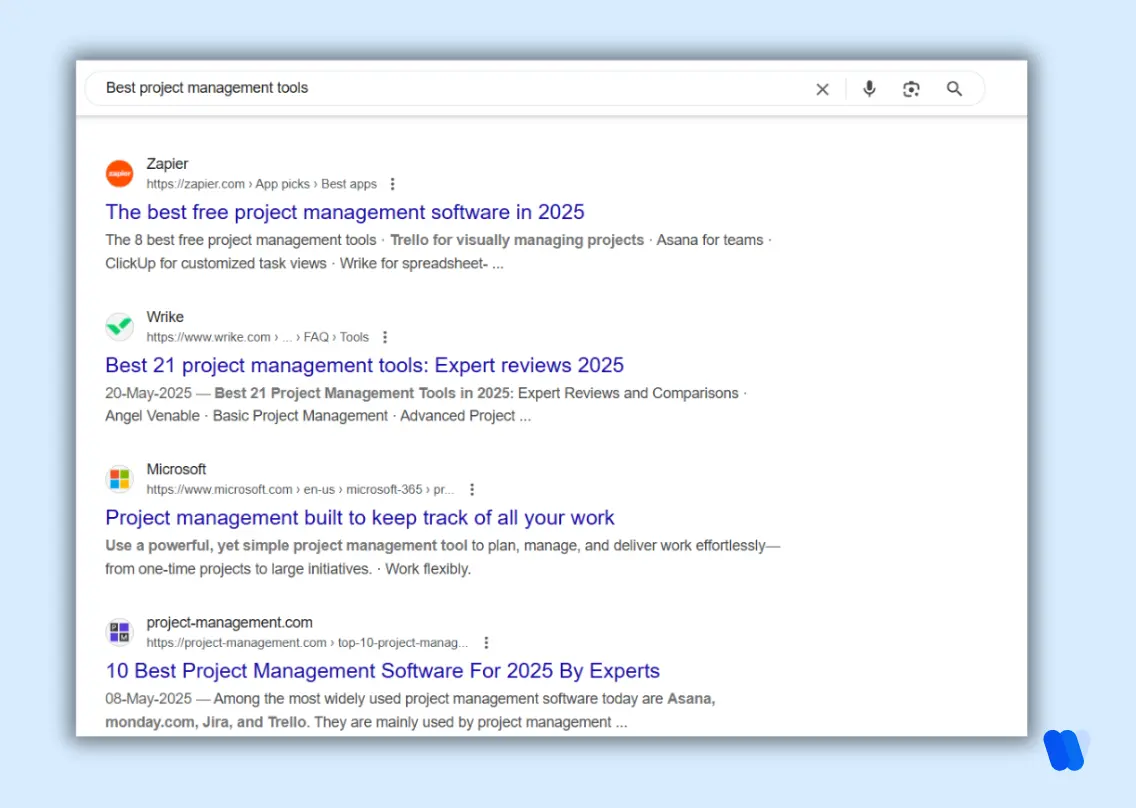
In traditional SEO, content targeting this intent would be something like: “Top 10 Project Management Tools for 2025”. It would focus on overviews, comparisons, pros and cons. Basically it would be giving the user a list so they could start narrowing things down.
The goal: Get them on the page, keep them reading, and maybe capture them later with an internal link or email opt-in.
Transactional Intent
Query: “Buy Asana premium plan” or “Best tool for remote teams with calendar feature”
This user was closer to making a decision. They knew what they wanted and were comparing options based on specific needs, or ready to purchase. In this stage, User Intent in Generative Engines plays a key role, as intent recognition in AI systems helps identify whether the user is ready to act or still evaluating.
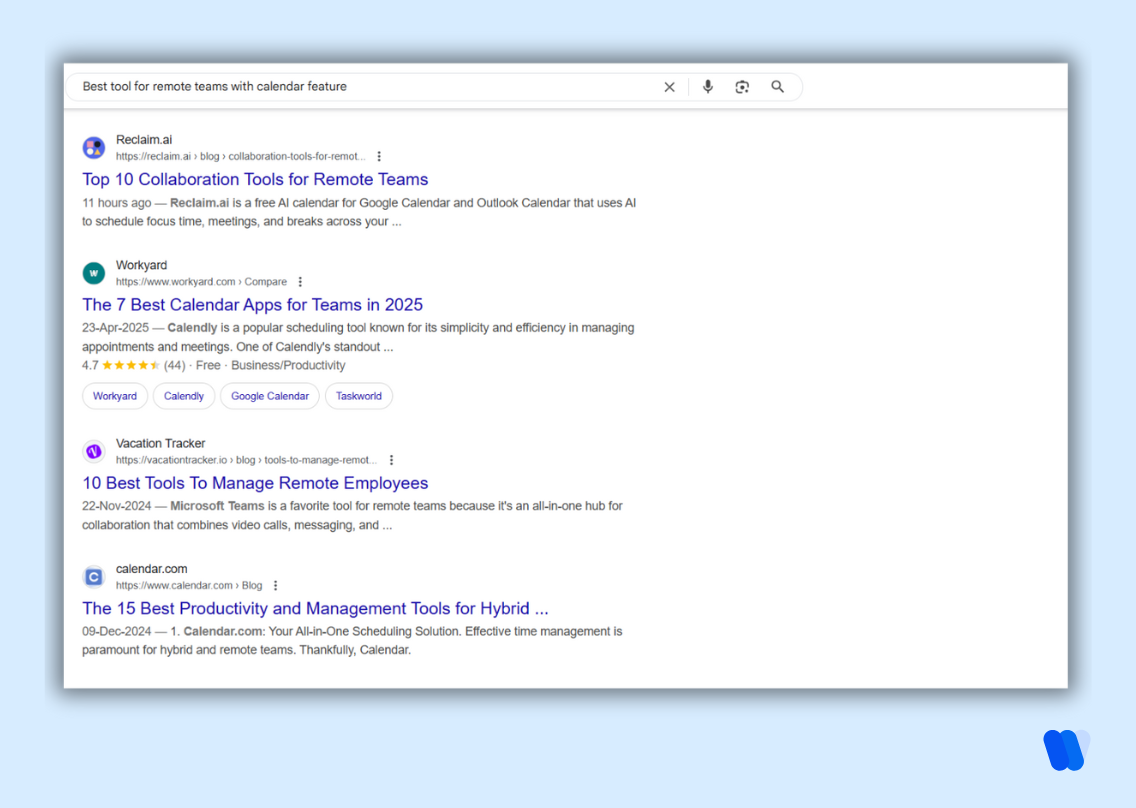
Content here would focus on:
- Pricing breakdowns
- Signup CTAs
- Product benefits
- Testimonials or social proof
The goal: Push them toward action. Whether that’s a click, signup, or download. In traditional SEO, this kind of content lived on landing pages, product pages, or targeted blog posts.
Navigational Intent
Query: “Notion vs Trello” or “ClickUp login”
Here, the user already had a destination in mind. They were either looking for a specific brand or trying to find a feature comparison between two familiar names.
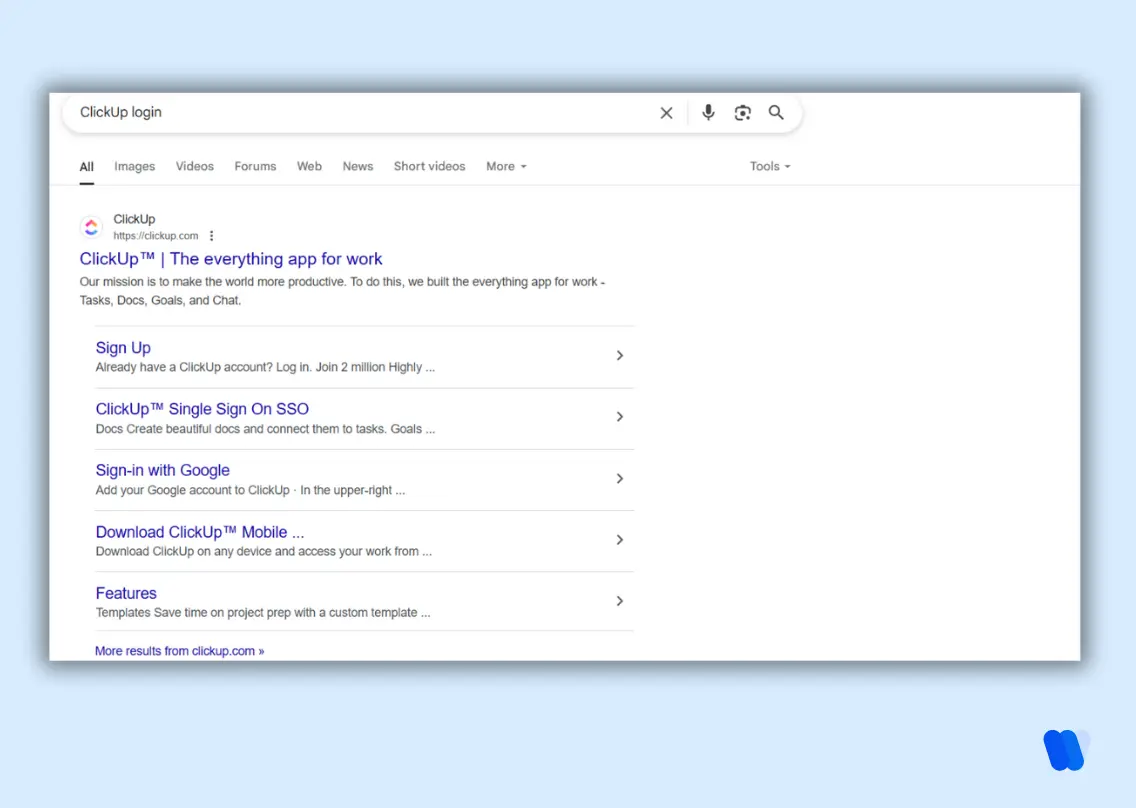
In traditional SEO, content that matched this intent would include: “Notion vs Trello: Which One’s Better for Teams?” These posts were usually side-by-side breakdowns—features, pricing, user experience.
The goal: Help users decide between two options they already knew about.
Commercial Intent
Query: “Asana vs Trello for startups” or “Best project management tool for marketing teams”
This user was beyond casual research. They were actively comparing tools and looking for the best fit before making a decision.
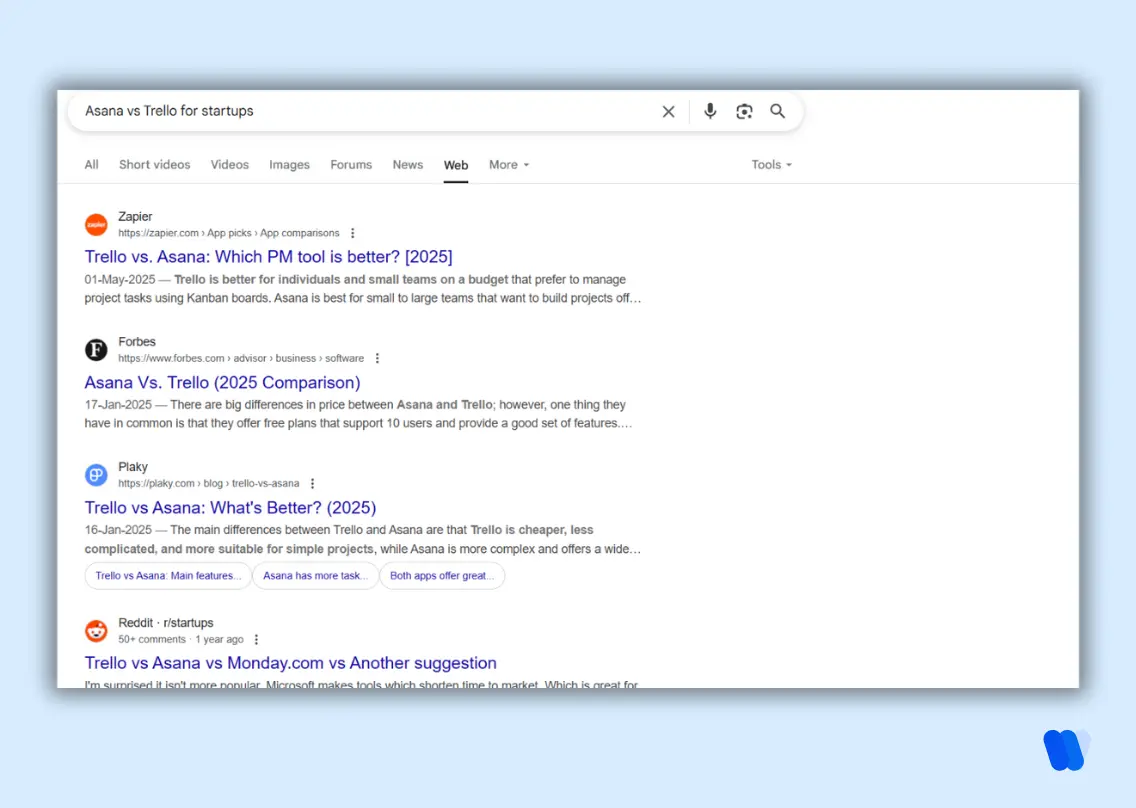
Typical content includes:
- Product comparisons
- Use-case guides
- Case studies
- “Best for…” articles
The goal:
Help the user evaluate options in detail. Highlight differentiators. Content for commercial intent was often a blend of education and persuasion.
How User Intent in Generative Engines Transforms Intent Recognition?
Content for commercial intent was often a blend of education and persuasion. These traditional intent categories worked for keyword-based search engines, but generative AI systems require deeper understanding of user motivation patterns—something a How to Audit Brand Visibility on LLMs framework can help validate by measuring how well AI answers reflect your brand.
When someone types a query into a generative engine like ChatGPT, Perplexity, or Google’s new AI Mode, they’re not just looking for keywords, they’re looking for solutions.
And increasingly, these systems aren’t just responding to what was typed. They’re figuring out what the person actually meant, even if it wasn’t said out loud.
This is where the future of user intent is heading—away from simple query matching and toward a system that predicts, interprets, and personalizes answers in real-time.
To stay visible in that future, brands must combine intent mastery with the most effective strategies for AI visibility enhancement.
Let’s break down how that works.
AI Systems Convert Keywords Into Goal Understanding
Generative engines don’t just look at your search in isolation. It considers everything leading up to it—your previous searches, device, location, browsing behavior, and even your interaction history.
This allows it to build what’s called a “user embedding”—a vector-based profile that captures your evolving intent. This is where User Intent in Generative Engines becomes critical, since intent recognition in AI systems ensures that the response aligns with real goals.
So when you search for something like “best CRM tools,” the system isn’t just asking: “What’s the most popular CRM?” It’s asking: “Is this person looking for a small business solution? Something affordable? Something that integrates with tools they’ve used before?”
The more context the engine has, the more accurately it can decode the real intent—and the more precise the answer becomes.
Query Fan-Out Expands Single Searches Into Sub-Intents
When a user enters a single search, AI Mode doesn’t just take it at face value. It breaks it apart into dozens or even hundreds of micro-queries—each exploring a different angle of potential intent.
For example:
A simple query like “Notion vs Trello” might trigger sub-queries such as:
- “Which is better for team collaboration?”
- “What are the pricing differences?”
- “Which one integrates better with Slack?”
- “What’s easier for beginners?”
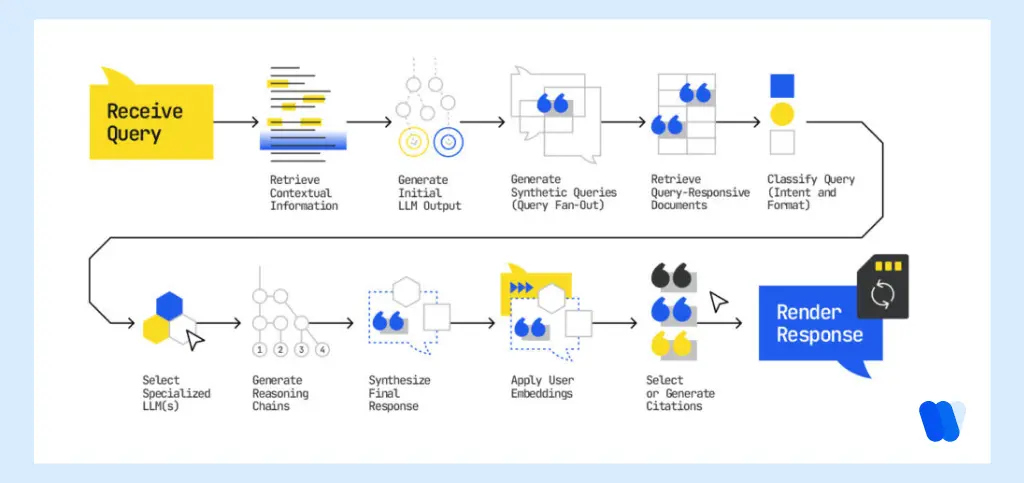
This process is called Michael King’s query fan-out methodology from iPullRank research, as explained by How AI Mode Works by Michael King. It helps generative engines understand everything the user might be trying to figure out—even the things they didn’t explicitly ask.
These sub-queries retrieve documents and passages that feed into the final answer. This fan-out mechanism aligns with your research showing 73% commercial intent in ChatGPT queries, where single prompts generate multiple business-focused sub-questions.
This validates your ChatGPT Citations Report methodology, where 7,785 queries generated 485,000+ citations through sub-intent expansion. Old SEO logic focused on optimizing an entire page for a keyword.
Passage-Level Analysis Determines Content Citations
Old SEO logic focused on optimizing an entire page for a keyword. That doesn’t work here.
AI Mode evaluates passages, not pages—one of the most actionable insights from the ChatGPT-4o prompt leak. It directly supports how to rank in Perplexity because Perplexity often cites a single extractable block, not an entire article.”
Even if you’ve written a massive guide, the system may only surface a single paragraph if that’s the part that matches the intent of a sub-query.
That’s why clarity and specificity in every section of your content is more important than ever. A well-structured, tightly written section that answers a specific question could be the reason your content gets pulled into the answer box—while the rest gets ignored.
This is also why agencies use LLM audits for SEO—to see which exact passages get pulled into AI answers, which sections get ignored, and how to rewrite blocks to match specific micro-intents.
Custom Corpus Filtering Creates Personalized Results
One of the most significant shifts introduced by Project Astra is how Google’s Project Astra custom corpus filtering system instead of pulling from the full web.
Once a generative engine has broken your query into micro-intents and gathered matching documents, it doesn’t build the answer from the full index. It narrows things down into what Google calls a custom corpus, a highly filtered group of results that’s:
- Relevant to the sub-queries
- Matched to your personal context
- Optimized for your current session and behavior
This is the slice of the internet your content is competing in, not the full web. These intent recognition mechanisms connect directly to your LLM seeding methodology, where understanding AI interpretation patterns determines content placement effectiveness.
In the world of generative search, your content isn’t competing for clicks. If your content aligns with one of those precise intent paths, you have a much higher chance of getting featured—even if you’re not ranking first in traditional search.
What Intent Analysis Methods Improve GEO Results?
Once you understand that user intent is what drives visibility in generative engines, the next step is figuring out how to actually recognize it—before AI does.
And we’re not talking surface-level assumptions. We’re talking about understanding what people mean even when they don’t say it clearly. That’s the kind of precision.
AI platforms including OpenAI’s ChatGPT, Perplexity AI, Google’s Gemini, and Anthropic’s Claude are trained to work with. If you can get ahead of that curve, your content becomes the answer.
To learn more about how to increasing visibility on these AI tools, read: What are Generative Engines Visibility Factors?
Here’s how you can understand user intent for generative engine optimization:
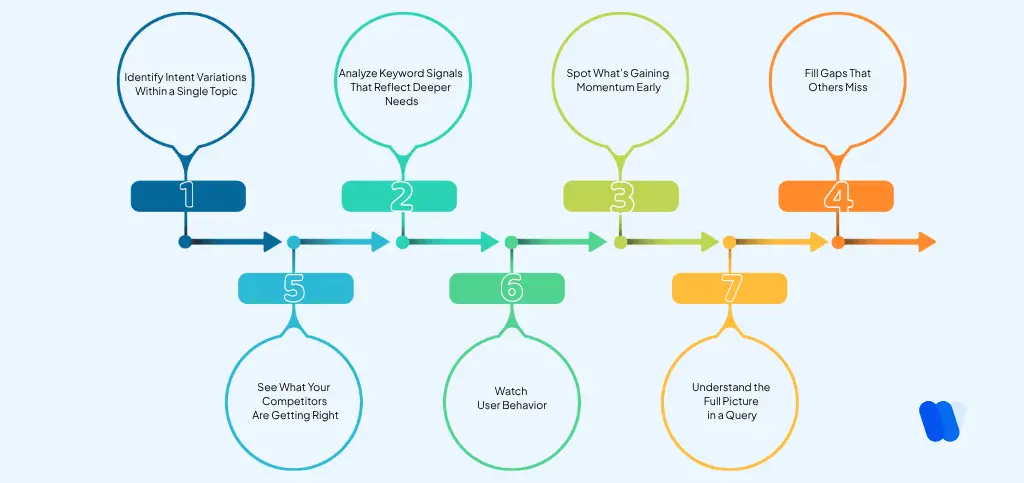
Topic Variations Reveal Multiple User Motivations
When someone searches for “top kitchen appliances,” the intent isn’t just to see a product list. They may be looking for comparisons, durability insights, or price ranges. This shows how surface-level queries often hide multiple motivations that generative engines must unpack.
In practice, this plays out in AI-related searches too. For instance, niche queries like “User goals in image-generative AI” or “Intent modeling in language processing engines” reveal how users don’t just want definitions—they want models to understand use cases, processes, and outcomes.
Each variation signals a deeper intent that content must address to stay visible in generative responses. The words are the same. The intent behind them? Completely different.
When you take time to break down these variations, you stop creating one-size-fits-all content—and start creating targeted answers. And that increases your chances of being surfaced in generative engines, which are trained to match specific tasks, not just general topics.
Keyword Signals Expose Underlying Problem Requirements
The keywords people use aren’t just about the topic, they reveal what problem they’re trying to solve.
If you’re covering “home organization,” and you come across searches like:
- “Small apartment storage ideas”
- “Declutter without throwing things away”
- “Toy storage for shared bedrooms”
These aren’t just variations. They’re distinct signals pointing to pain points. Each one reflects a slightly different goal—and each one needs a different kind of answer.
By identifying and responding to those signals, you’re not just matching keywords. You’re aligning your content with real-world user intent—something that makes your answers far more likely to be selected by LLMs like ChatGPT and Perplexity.
If you want to take this a step further, use a Wellows’ LLM Pattern Analysis Checklist framework to see how generative models interpret and rank different content structures. This helps you spot opportunities to align your page format with the way LLMs actually process information.
Momentum Detection Enables Proactive Content Creation
The closer you are to rising user interest, the more likely your content is to be selected by generative engines looking for timely, relevant answers.
If you’re seeing a slow, steady rise in searches around “pet-friendly indoor plants” or “remote team rituals,” that’s your opportunity. Not just to ride a trend, but to meet intent before it fully peaks.
Generative engines don’t just look for freshness, they prioritize relevance in context. When your content shows up early and solves the right problem, it becomes the obvious pick.
Content Gap Analysis Improves AI Selection Probability
Sometimes content gets skipped—not because it’s wrong, but because it’s incomplete.
Imagine writing about “meal planning for families” but leaving out budgeting or allergy-friendly tips. Those might not seem like core topics, but if they’re frequently searched, skipping them means the content doesn’t fully meet the user’s need.
Generative engines are trained to surface answers that feel complete and task-focused. Filling these content gaps is what makes your page the one that actually gets selected when a language model is compiling a response.
A smart way to close these gaps is by running your topics through a Keyword Strategy Integration for LLM SEO Checklist to ensure your keyword coverage matches both explicit and implied user needs.
Query Context Analysis Reveals Complete Intent Scope
A user query like “affordable travel cameras for solo travelers” doesn’t just mean “cheap camera.” It also implies portability, ease of use, maybe even battery life or durability.
Understanding the full scope of a query like that—not just the surface-level terms—shows how User Intent in Generative Engines works.
This level of precision is what makes intent recognition in AI systems essential for creating content that aligns with hidden motivations. It allows you to address the complete intent behind the query, giving your content an edge when language models are choosing which sources to summarize or recommend.
To map this intent clearly, you can use Wellows as an AI Search Visibility Platform. Its User Search Intent feature shows what people are really trying to learn, compare, or decide when they search.
It helps you pick the right intent type (informational, commercial, or transactional) and turn those signals into content that matches real goals—so your pages align better with how generative engines retrieve and cite sources.
User Behavior Data Validates Intent Assumptions
Intent doesn’t stop at the search bar. Sometimes it shows up more clearly in what the user does afterward.
If people spend longer on your article about “productivity tools for entrepreneurs” than on any other post, that’s not just a sign that it’s popular. It’s a signal that the content is doing a better job of satisfying user intent.
Tracking behavior like scroll depth, page time, and click patterns helps you identify what users are really trying to accomplish, so you can double down on content that delivers. And that makes your page far more likely to be chosen in LLM-generated summaries.
Competitor Analysis Reveals Successful Intent Matching
If another brand keeps showing up in generative answers about “DIY home upgrades,” it’s worth asking why.
Maybe they break things into clearer steps. Maybe they lead with visuals. Or maybe they’re simply better at matching the user’s decision-making intent—like “what tools do I actually need” versus “how to tear down a wall.”
Studying the structure, tone, and focus of content that already shows up can reveal what intent it’s fulfilling—and how you can create something more useful, more focused, and more likely to show up in future LLM responses.
These strategies align with your SERP+LLM content approach and brand signals research for comprehensive visibility optimization.
Why Intent-Aligned Content Structure Increases Citations?
In the world of generative search, your content isn’t competing for clicks. It’s competing to be the answer. And that changes everything.
It’s not enough for your content to be generally helpful or well-written. It needs to be task-specific, fragment-friendly, and clear enough to be understood, reused, or quoted by a language model. LLMs don’t read pages like humans do—they scan for intent alignment, clarity, and structure.
To match user intent in generative engines like ChatGPT, Perplexity, or Google’s AI Mode, your content needs to be built for how these systems break down questions and build answers. Here’s how to do that:
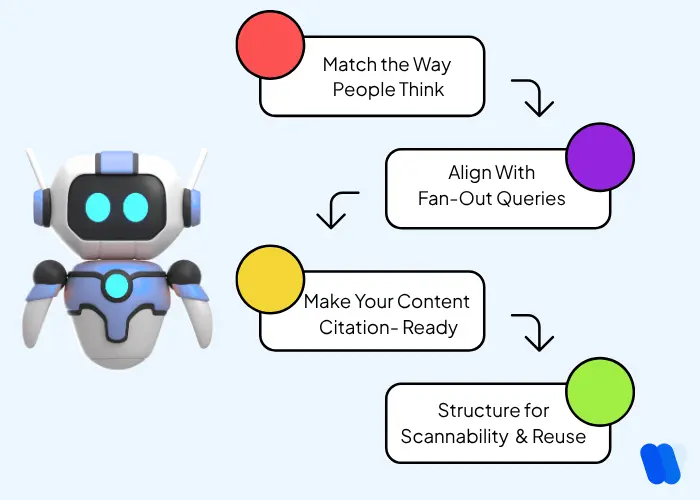
1. Content Structure Mirrors User Decision Processes
When a user types a query, generative engines break it into smaller, task-driven sub-intents. Your job is to create content that mirrors that process.
That means your content should:
- Make comparisons easy to extract
- Present clear pros and cons
- Solve a task completely within a single section
If someone is asking “Notion vs Trello,” don’t just talk about both tools—help them decide. Add a verdict. Show trade-offs. Include use-case fit.
This kind of clarity helps models understand the core point and select your content when summarizing or ranking multiple options—which ties directly to your GEO KPIs like visibility, citation inclusion, and retrieval frequency.
2. Sub-Intent Alignment Captures Query Expansion Opportunities
Remember: LLMs often rewrite or expand a query into dozens of related micro-questions. To show up in that expanded set, your content needs to:
- Use clearly named entities and labels
- Map to real search intents (like “best for freelancers” or “price under $100”)
- Reflect the types of decision-making people actually go through
For example, if you’re writing about “project management tools,” include variations like:
- “Which is better for remote teams?”
- “Which one integrates with Slack?”
- “What’s cheapest for under 5 users?”
These are the exact kinds of sub-questions that generative systems spin off—and if you answer them well, your content has a better shot at being included in the response.
3. Citation-Ready Formatting Increases AI Selection Rates
Language models are more likely to surface your content if it’s easy to quote, cite, or extract. If you’re aiming for this kind of visibility, here’s how to earn ChatGPT citations effectively.
That means:
- Use facts, not vague statements
- Include numbers, dates, and named examples
- Back up claims with sources or original data where possible
The more verifiable and structured your content is, the more likely a generative engine will use it when pulling supporting material.
This is especially true in verticals like health, finance, tech reviews, or education—where accuracy matters and LLMs tend to favor clean, confident, source-worthy content.
4. Modular Content Design Enables AI Content Assembly
LLMs don’t read in long scrolls. They scan and assemble.
So your content should be:
- Modular (use bullet points, headers, and short paragraphs)
- Answer-first (start with the key takeaway, then explain)
- Composable (use things like TL;DRs, summaries, FAQs)
Think of each section of your content as its own potential “answer card.” If it makes sense on its own, it’s more likely to be used by the model, even if the rest of the page is never touched.
Also, don’t be afraid to repeat key points in multiple places. Redundancy for human readers = bad. Redundancy for LLMs = clarity across different intents. This supports your LLM seeding methodology, where structured formatting helps AI extract passages for citations.
How Do Sentiment And Emotion Affect User Intent Detection In Generative Engines?
Sentiment and emotion directly shape how generative engines interpret what a user really wants—especially when queries are conversational, vague, or tone-heavy.
Why Emotion Changes Intent Detection
- It removes ambiguity. The same words can carry different meanings depending on tone. For example, “That’s just great” could signal excitement or sarcasm. Emotion helps the model choose the right intent.
- It clarifies the real goal. If a user sounds stressed (“I can’t fix this bug”), the engine reads a “help me solve this now” intent, not just a casual informational one.
- It improves response fit. When LLMs detect frustration, urgency, or doubt, they adjust the answer style—more direct, more reassuring, or more step-by-step.
- It supports multi-turn intent. Emotion tracking helps models hold context across follow-ups, so intent doesn’t reset with every message.
What This Means For GEO Content
Because generative engines detect intent through both meaning and emotion, your content should align with how users feel when they search—not just what they type.
- Write for emotional states. Add lines that support anxious, curious, comparison-driven, or ready-to-decide users.
- Use answer-first phrasing. LLMs favor passages that resolve tension quickly.
- Mirror natural tone. Conversational sections help engines match your page to real user mood and intent.
Sentiment and emotion make intent detection sharper. When your content matches intent + tone patterns, it becomes easier for generative engines to retrieve, trust, and cite.
How Businesses Can Optimize Content For User Intent In Generative AI Search?
Optimizing content for user intent in generative AI search requires a strategic approach that aligns with how AI models interpret and generate responses. Here are key strategies to enhance your content’s visibility and relevance:
1. Understand And Address User Intent
Generative AI search engines prioritize content that directly satisfies user intent. To align with this:
- Identify User Intent Types: Recognize the various intents behind queries—informational, navigational, transactional, and conversational. For instance, conversational intent involves users seeking dialogue-like interactions with AI, requiring content that supports multi-turn conversations.
- Create Intent-Adaptive Content: Develop content that caters to multiple intent types by providing comprehensive information, practical applications, and clear pathways to conversion.
2. Implement Structured Data And Schema Markup
Structured data helps AI systems understand and categorize your content effectively:
- Use Schema Markup: Apply schema.org vocabulary to mark up content types like articles, FAQs, and products. This enhances the likelihood of your content appearing in AI-generated answers.
3. Focus On High-Quality, Original Content
AI models favor content that demonstrates expertise and trustworthiness:
- Publish Original Research And Data: Providing unique studies, examples, or demonstrations establishes credibility and positions your content as a primary source.
- Maintain High E-E-A-T Standards: Ensure your content reflects Experience, Expertise, Authoritativeness, and Trustworthiness to meet AI evaluation criteria.
4. Optimize For Natural Language And Readability
Generative AI interprets and generates content based on natural language patterns:
- Write In A Conversational Tone: Craft content that mirrors human conversation to align with AI’s natural language processing capabilities.
- Use Clear Headings And Lists: Organize content with descriptive headings and bullet points to facilitate AI parsing and enhance user experience.
5. Leverage Multimedia And Interactive Elements
Incorporating various media types can improve engagement and AI recognition:
- Include Videos And Infographics: Visual content can effectively convey information and is increasingly cited in AI-generated overviews.
- Develop Interactive Tools: Creating calculators, quizzes, or interactive guides can enhance user engagement and provide valuable data points for AI systems.
6. Build Content Clusters And Internal Linking
Organizing content thematically enhances topical authority:
- Create Content Clusters: Develop a pillar page supported by related articles to cover a topic comprehensively.
- Implement Strategic Internal Linking: Link related content to guide users and AI through your site, reinforcing content relationships in the same way agencies deliver AI search visibility across generative answers.
7. Monitor Performance And Adapt Strategies
Regularly assess how your content performs in AI search results:
- Track AI Visibility Metrics: Use tools to monitor how often AI references your content, and adjust strategies based on these insights.
- Stay Updated With AI Developments: As AI search evolves, continuously refine your content strategies to align with new algorithms and user behaviors.
How Wellows Turns Intent Strategy Into A Practical Workflow?
The strategies above are the “what.” The hard part is doing them consistently across every keyword and page. That’s where Wellows helps.
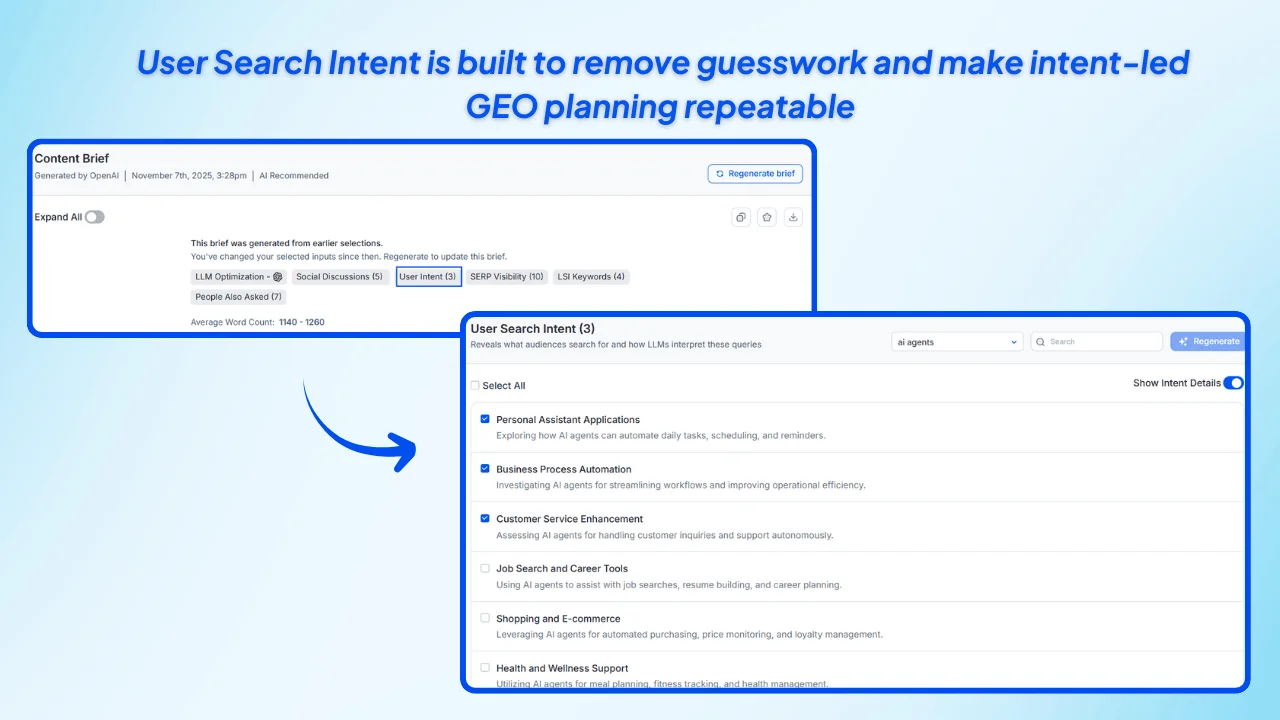
Inside Wellows, User Search Intent is built to remove guesswork and make intent-led GEO planning repeatable:
- See What Your Audience Wants: When you enter a keyword, Wellows shows how people are actually searching around it—what they’re trying to learn, compare, or decide. This gives you clarity on the real purpose behind the query before you write.
- Choose The Intent That Matches Your Goal: You can select an intent category like informational, commercial, or transactional depending on whether the page is meant to educate, influence, or convert. That choice shapes what you include and how deep you go.
- Turn Intent Into Content That Connects: Wellows then helps you translate intent signals into structure and topics, so your outline matches what users want and what LLMs are most likely to retrieve and cite.
And because intent behavior shifts over time, Wellows refreshes these signals automatically—so your content stays aligned with current search patterns, not last quarter’s assumptions (and helps you catch content decay early before rankings and visibility slip).
Bottom line: You still follow the universal best practices for intent-led GEO. Wellows just makes them faster, clearer, and easier to scale—so your content is built for human goals and AI answer selection at the same time.
How Do Generative Engines Prioritize Results Based On User Intent Signals?
Generative engines don’t rank pages only by keywords. They prioritize content by reading intent signals — clues that reveal what the user is truly trying to do.
Did you know?
- Contextual relevance comes first. These engines look at the full meaning of a query, not just the exact words. They connect it with related topics, implied needs, and even past search patterns to predict the best-fit answer.
- Trust and credibility matter more than ever. LLMs try to avoid unreliable info. So they lean toward sources that show expertise, clear authorship, correct facts, and strong brand signals across the web.
- Structured content gets picked faster. Pages with clear headings, bullet points, definitions, and schema are easier for AI to parse. especially when schema and language structure follow schema and NLP best practices for AI Search.
- User engagement acts like a confidence vote. If users spend time, scroll, or interact with a page, it signals that the content matched intent. Generative engines use those patterns to decide what to reuse.
- Freshness is weighted for fast-moving topics. For AI, outdated info means lower confidence. So recent updates, current examples, and timely references improve selection.
In simple terms: if your content matches the user’s real goal, is easy to extract, and looks trustworthy, generative engines are more likely to surface and cite it.
And this is exactly what Wellows helps teams measure — by tracking where your brand appears in AI answers, what intent patterns you’re matching, and what to fix to earn more generative visibility.
Read More Articles
- Client Onboarding Checklist for AI Visibility Platforms
- How Entity-Based Content Stands Out in LLMs & Why Does It Matter for SEO
- Why Structured SEO Briefs Are the New Foundation of AI Search Success
- How to Strengthen Brand Signals for Generative Engine Optimization?
- How to Use Digital PR for Generative Engine Visibility for Your Brand?
- Why are LLMs.txt Important for Generative Engine Optimization?
- E-E-A-T Strengthening SEO Checklist Using LLM Outputs
- Editorial SEO Style Guide Creation with LLMs Checklist
- How Can Pattern Recognition Improve Visibility in AI-Generated Answers?
- How to Use Question Keywords for SEO Growth
- Can GSC Data Guide Your GEO Strategy?
- How to Design Content Briefs for GEO?
- How to Unlock Client Retention with AI-Powered SEO Workflows
- AI SEO Automation for Generative Search Visibility (2026)
- How to Rank High on ChatGPT (Complete 2025 Framework)
- How to Optimize SEO Content Length for Higher Rankings?
FAQs
Generative engines break down a query into sub-questions, analyze user context like behavior and history, and then predict the real task behind the words. Instead of keyword matching, they look for meaning and goal alignment to provide solutions that best fit the user’s intent.
You can optimize user intent by structuring content to fully answer different variations of a query. This means including comparisons, task-focused sections, FAQs, and clear takeaways. Generative engines reward content that’s modular, precise, and aligned with the user’s decision-making journey.
Tools like KIVA, AlsoAsked, and features in ChatGPT, Perplexity, and Gemini help uncover hidden sub-intents. These platforms show how AI expands queries into multiple interpretations, helping you adjust your content to match micro-intents and increase visibility in generative answers.
User intent is about the *task a person wants to accomplish*—like finding, buying, or comparing. User interest, on the other hand, is broader and reflects general curiosity or preference. In GEO, intent is what drives AI responses, while interest shapes long-term engagement.
In AI, user intent refers to the purpose or goal hidden behind a query. Generative systems interpret this by analyzing context, phrasing, and related signals, ensuring the response solves the actual problem the user wants addressed—not just what the words literally say.
How to Create a Winning GEO Strategy with Intent Mastery?
In the shift from traditional SEO to Generative Engine Optimization, User Intent in Generative Engines isn’t just a ranking factor—it’s the deciding factor. AI-driven search doesn’t reward who shouts the loudest with keywords; it rewards who understands the real job the user wants to get done and delivers it in a format that AI models can easily process, cite, and reuse.
Generative engines like ChatGPT, Perplexity, Gemini, and Google’s AI Mode dissect every query into sub-intents, apply intent recognition in AI systems, evaluate content at the passage level, and prioritize answers that feel complete, clear, and task-specific. This means the winners in GEO will be the brands and creators who:
- Decode true intent—seeing beyond keywords into the problems, decisions, and goals driving each search.
- Structure for AI usability—writing modular, answer-first, citation-ready sections that can stand alone.
- Fill content gaps—addressing overlooked needs and sub-topics that competitors miss.
- Align with fan-out logic—covering variations and micro-questions so your content matches multiple intent paths.
If you treat user intent as the backbone of your content strategy—not a secondary SEO tactic—you stop competing for clicks and start competing to be the answer. And in GEO, that’s the only competition that matters.