Not too long ago, the main job of a marketing team was to rank on Google’s first page by optimizing content for keywords, building backlinks, and tweaking meta tags. That world still exists—but it’s no longer the whole picture.
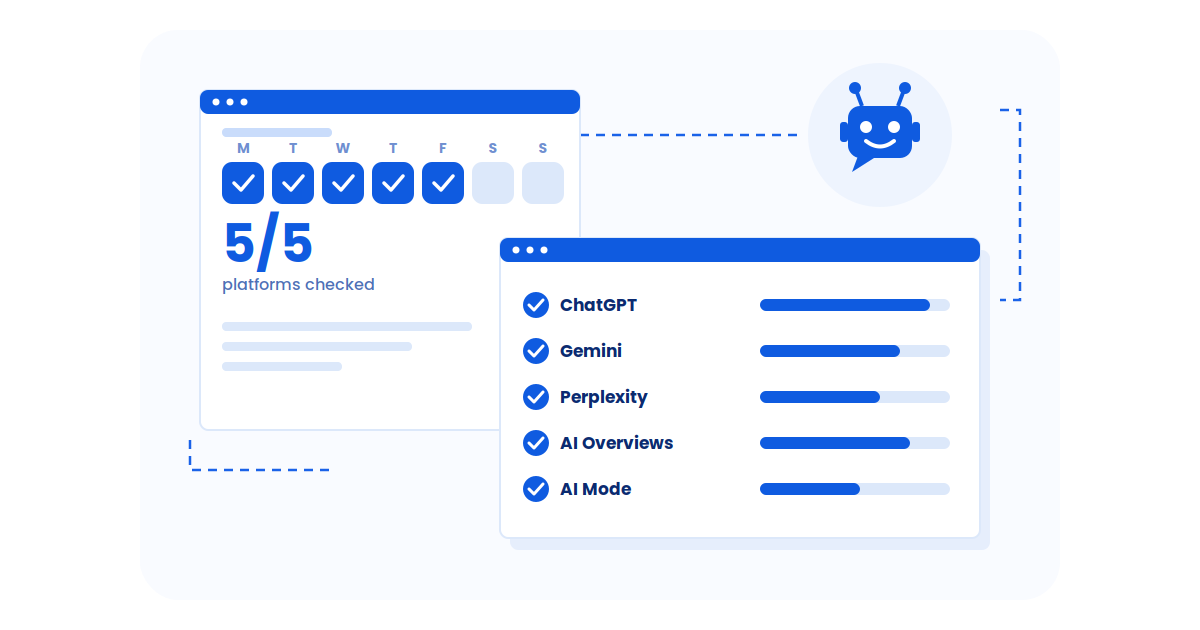
Today, more and more users turn to AI-powered search engines like ChatGPT, Gemini, Perplexity, and Claude for instant answers. These tools don’t just display links; they generate complete responses, often pulling from multiple sources. If your brand doesn’t show up in these answers, you risk losing visibility, traffic, and trust.
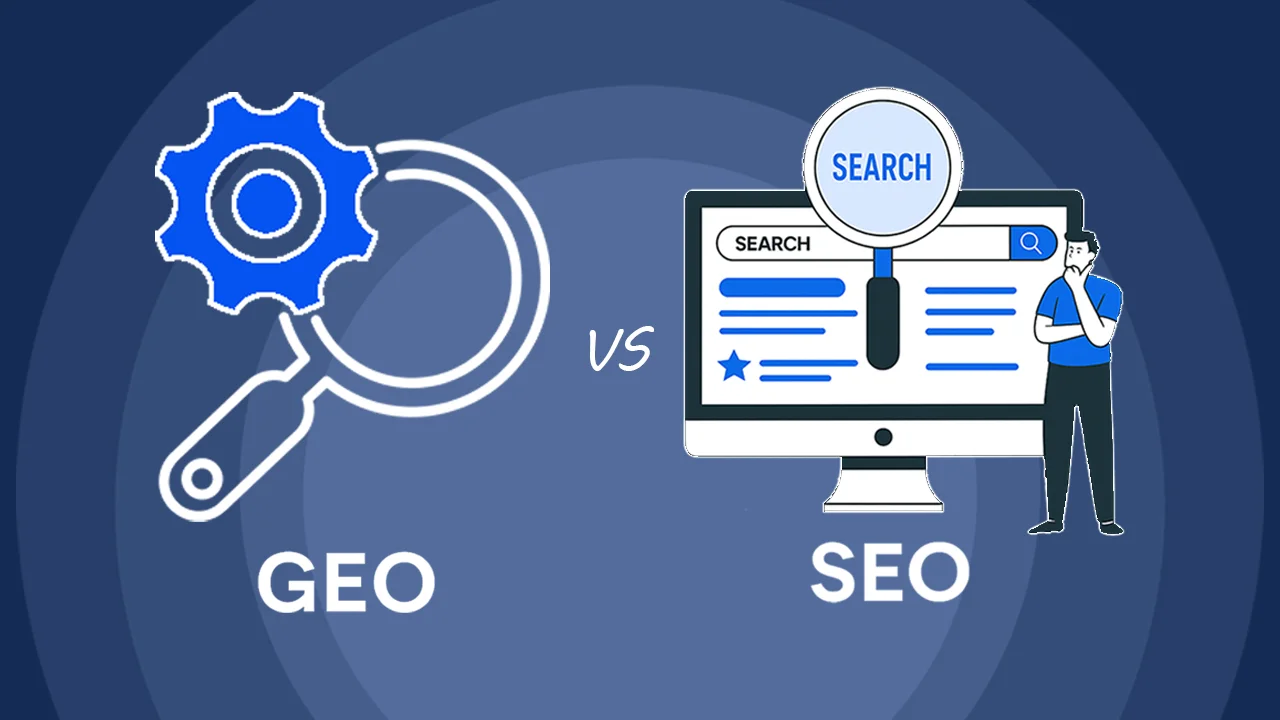
This is where Generative Engine Optimization (GEO) comes in. Unlike SEO, which is about ranking webpages, GEO is about ensuring your brand gets included in the answers that AI search engines generate.
Forward-thinking teams are already experimenting with tools like an AI Search Visibility Platform for Agencies to automate research, optimize content structures, and track visibility in generative engines.
For marketing teams, this means a big shift:
- You’re not just optimizing for clicks—you’re optimizing for inclusion in conversations.
- You’re not just fighting for rankings—you’re fighting for trust signals that AI can interpret.
- You’re not just tracking impressions—you’re tracking visibility across AI-generated content.
In this blog, we’ll break down the top GEO tactics every marketing team must use in 2025. These tactics are practical, actionable, and designed to help you stay ahead as search continues to transform.
The Shift from SEO to GEO: What Marketing Teams Need to Understand
Before diving into tactics, let’s talk about why GEO is different from SEO and why this shift matters so much in 2025.
then
SEO in the Old World
➡️ Based on keywords, backlinks, and technical optimization.
➡️ Success = appearing on Google’s first page.
➡️ Metrics tracked: impressions, clicks, rankings, bounce rates.
now
GEO in the New World
➡️ Based on context, authority, and brand trust signals.
➡️ Success = inclusion in AI-generated answers.
➡️ Metrics tracked: AI answer mentions, brand signals, engagement from AI-driven discovery.
Here’s the reality: users don’t always see links anymore. AI engines summarize, paraphrase, and cite sources directly in their responses. This reduces the importance of just ranking #1 on Google and raises the importance of being recognized by AI systems as an authoritative source.
For marketing teams, the mindset must shift from:
“How do we rank in Google?”
to
“How do we become the brand AI engines choose to cite and include in their answers?”
That’s the heart of GEO.
The Top GEO Tactics for Marketing Teams in 2025
Now let’s get into the six key tactics that will help your team succeed with GEO this year.
Top GEO Tactics
Tactic 1: Optimize for Generative Visibility Factors
Think of visibility factors as the new SEO ranking signals. Generative engines like Gemini or ChatGPT decide which sources to include in their answers by weighing a combination of signals:
Citations:
- AI models value sources that are frequently cited across the web.
- If your brand is referenced in articles, forums, and industry reports, you’re more likely to show up in generated answers.
Structured Information:
- Content that’s easy for machines to “read” has a higher chance of being surfaced.
- This means schema markup, clear subheadings, and FAQ formats.
Authority & Consistency:
If your brand consistently publishes content on a topic and gets mentioned by other authorities, AI will trust your voice.
Marketing Takeaway:
Run a GEO visibility audit. Ask:
- Are we cited by other trusted sources?
- Do we use schema and structured formats?
- Do we consistently publish on our core topics?
The more you optimize for these visibility factors, the more you “teach” AI engines to include your brand in their answers.
Tactic 2: Align Content with User Intent at the LLM Level
AI search engines don’t just match queries—they interpret meaning. They use large language models (LLMs) to predict what a user is really asking.
For example:
- A Google query like “best CRM 2025” might return a list of top CRM websites.
- A ChatGPT prompt like “What CRM tools should small businesses use in 2025?” will generate a conversational response that explains options, pros/cons, and key features.
If your content only targets keywords like “best CRM 2025” without addressing the real questions behind the search, you’ll miss out. To get this right, study User Intent in GEO and shape content around how LLMs interpret meaning.
Marketing Takeaway:
- Create content that directly answers why, how, and what-next questions.
- Use conversational subheadings (e.g., “Which CRM is right for small teams?” instead of just “Best CRM tools”).
- Map user intent journeys and align your content to each stage.
As you map content around intent-first thinking, you can use KIVA’s User Intent Analysis module to classify queries and guide content creation based on real intent types from live behavior.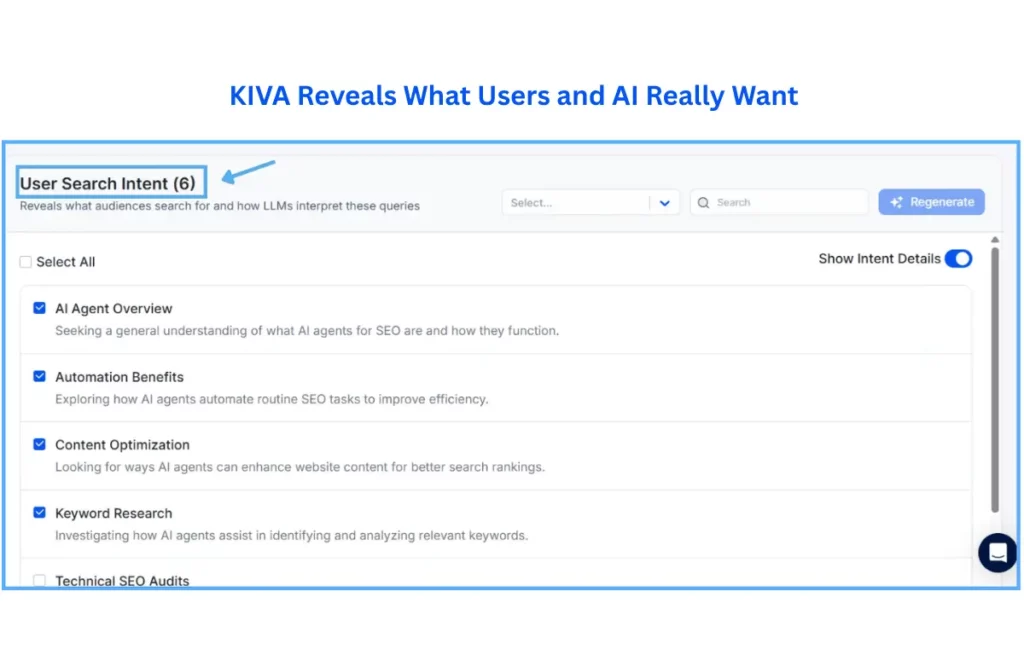
By writing with intent-first thinking, you’ll make it easier for AI to pull your content into answers.
Tactic 3: Build Authority Through Brand Signals
Generative engines weigh brand trust heavily. Why? Because AI wants to avoid citing unreliable sources.
Brand signals include:
- Mentions in media and authoritative sites.
- Thought leadership from team members (e.g., LinkedIn posts, podcasts, conference talks).
- Positive community discussions on platforms like Reddit, Quora, or niche forums.
Example: If two companies both publish a blog on “AI in marketing,” but one is regularly mentioned in industry reports while the other is unknown, the AI engine will most likely cite the first one.
Marketing Takeaway:
- Invest in digital PR campaigns that earn mentions on trusted outlets.
- Encourage your team to publish thought leadership content under their real names.
- Engage in online communities where your target audience asks questions.
The stronger your brand signals, the more likely AI engines are to consider your content trustworthy.
Tactic 4: Leverage Structured Data & E-E-A-T Principles
AI engines don’t always “see” content the way humans do. They need structure and context.
That’s where structured data and E-E-A-T (Experience, Expertise, Authoritativeness, Trustworthiness) come into play.
Structured Data:
- Add schema for articles, FAQs, reviews, and products.
- Use headings, bullet points, and tables that are machine-friendly.
E-E-A-T:
- Make sure every piece of content has a clear author with credentials.
- Showcase real-world experience (e.g., case studies, original research).
- Keep your content updated regularly.
Marketing Takeaway:
When you combine structured data with E-E-A-T, you’re essentially telling AI engines: “This content is trustworthy, written by an expert, and formatted for easy understanding.
That’s exactly the kind of content they want to pull into answers.
Tactic 5: Adapt Keyword & Prompt Strategies
Traditional SEO told us to target keywords. GEO tells us to target prompts and questions.
Generative engines often reframe queries into prompt-like forms. If your content mirrors these prompts, you’re more likely to be included. Explore Prompts vs. Keywords to structure your content effectively.
Examples:
- Old SEO keyword: “email marketing best practices”
- GEO-friendly prompt-style heading: “What are the best email marketing practices in 2025?”
Marketing Takeaway:
- Use question-based subheadings.
- Build keyword clusters around broader topics rather than single terms.
- Test prompt-inspired content: create sections that sound like answers to user prompts.
Move beyond single keywords. KIVA’s keyword clustering + hidden gems engine helps discover semantically related prompts and untapped queries that mirror how LLMs understand user questions.
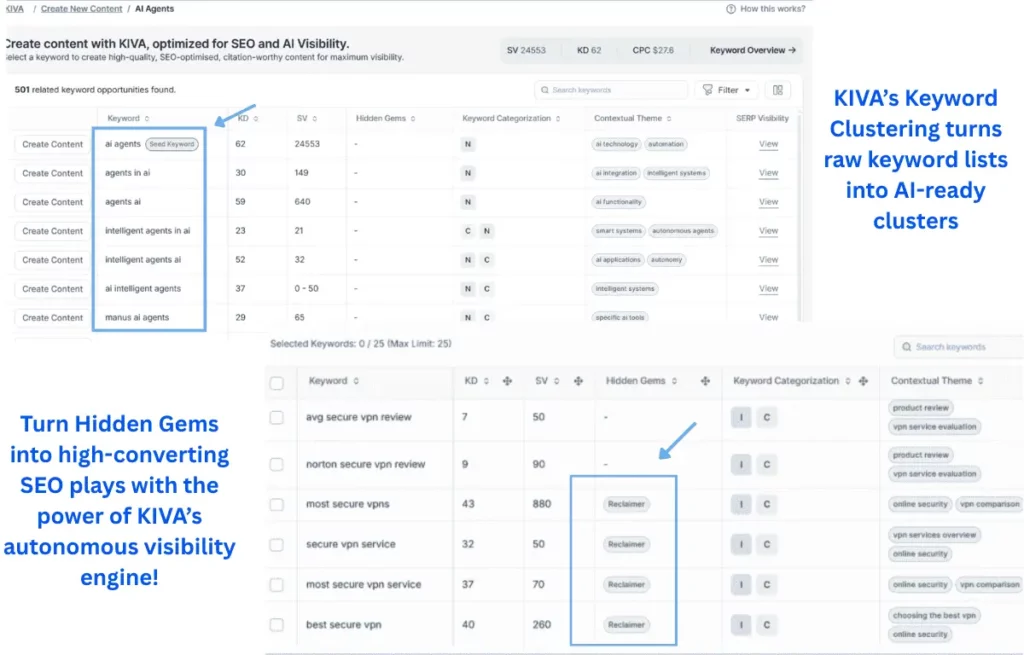
This way, when AI engines try to generate a response, your content already looks like the answer.
Tactic 6: Measure GEO Success with the Right KPIs
What gets measured gets improved. But you can’t measure GEO success using only old SEO metrics like clicks or impressions.
GEO KPIs include:
- AI answer visibility: Does your brand show up in ChatGPT, Gemini, or Perplexity responses?
- Brand mentions: Are you being cited across platforms AI engines pull from?
- Traffic quality: Are users from AI-driven discovery converting?
- Engagement: Are people spending time with your content, sharing it, and returning?
Marketing Takeaway:
Update your reporting dashboards. Don’t just show keyword rankings. Show AI visibility metrics and how they correlate with conversions. This proves GEO’s value to leadership.
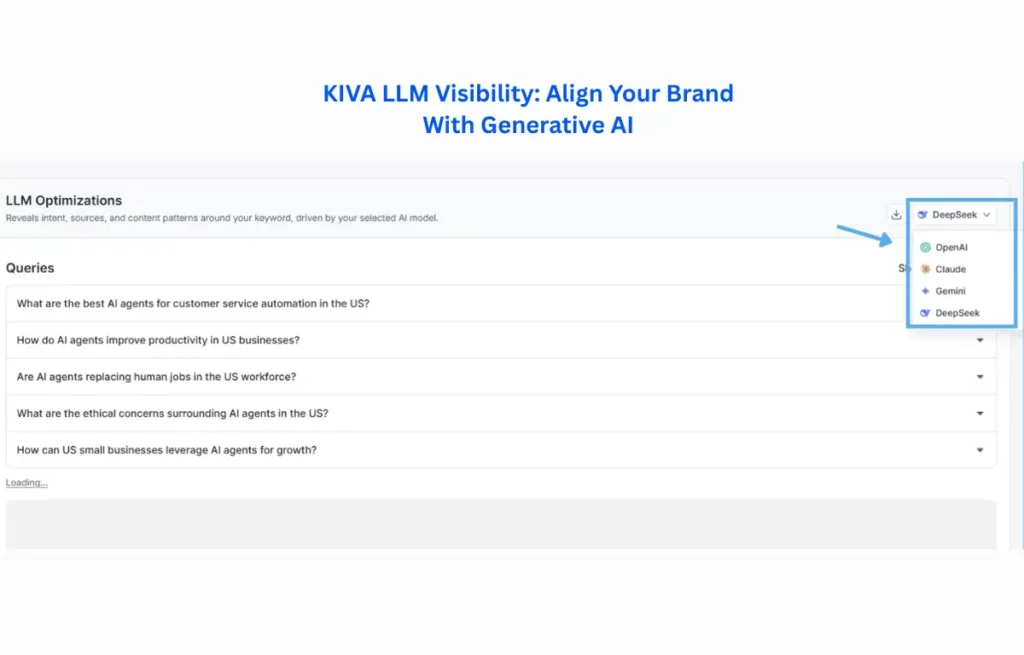
While KIVA doesn’t audit past work, its LLM visibility module lets you track how your keywords are performing across AI engines. Use that data to see if your content is making the shift from SEO-only performance to AI inclusion.
Common Pitfalls to Avoid
Common Pitfalls
Frequent and positive mentions indicate that AI models recognize your brand as a credible source, increasing the likelihood of being recommended to users.
Many marketing teams slip up when trying to adopt GEO. Some fall for Search optimization myths costing visibility. Watch out for these:
- Treating GEO like old SEO. Keyword stuffing won’t work. AI engines care about context, authority, and trust.
- Ignoring brand signals. If your brand doesn’t have a reputation, even great content won’t get picked up.
- Focusing only on Google. The search landscape is diversifying. Perplexity, Gemini, and ChatGPT matter too.
- Measuring the wrong KPIs. Impressions don’t tell you much in an AI-first world. Track visibility in AI answers.
FAQs
Conclusion:
2025 isn’t about abandoning SEO—it’s about expanding it. SEO keeps you visible on Google. GEO ensures you’re visible in AI-generated search answers.
For marketing teams, this means:
- Optimizing for visibility factors.
- Writing for user intent.
- Building brand authority signals.
- Using structured data and E-E-A-T.
- Adapting keyword and prompt strategies.
- Tracking the right KPIs.
If you start applying these six GEO tactics today, your brand won’t just rank in search results—it will become part of the answers that users trust most.