Prompts vs Keywords define one of the biggest shifts in Generative Engine Optimization (GEO). According to the AI Search SEO Traffic Study by Semrush, weekly active users of ChatGPT grew 8× from October 2023 to April 2025, reaching over 800 million—highlighting how usage of conversational prompts is accelerating rapidly. (Semrush, Jul 2025)
In today’s search, users no longer rely on short keyword phrases. In fact, AI Overviews now appear in 13.14% of all Google queries, up from 6.49% earlier in 2025—indicating a clear move toward prompt-style, zero-click discovery. (Semrush, May 2025)
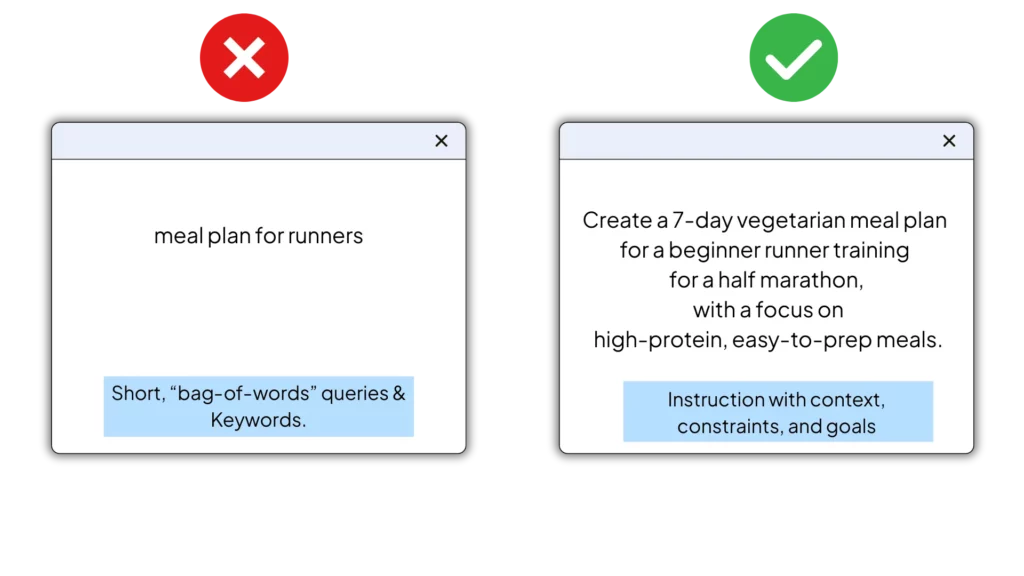
For example, in the past, someone might have searched “meal plan for runners.” Now, that same query becomes a detailed prompt: “Create a 7-day vegetarian meal plan for a beginner runner training for a half-marathon,
with a focus on high-protein, easy-to-prep meals.”
This change highlights why Prompts versus Keywords is more than semantics—it’s a fundamental shift in how discovery and visibility work inside AI-driven engines.
When content is still written for keyword matching instead of prompt-level intent, AI systems often fail to surface it at all—one of the key reasons websites are ignored by AI search even if they perform well in traditional SEO.
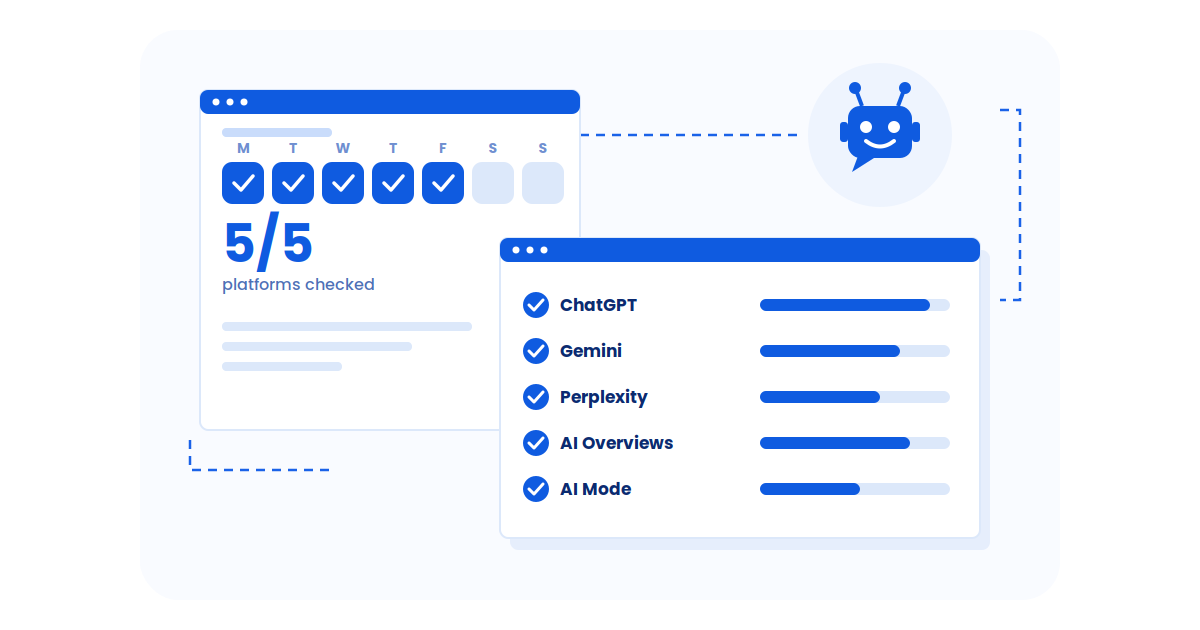
Wellows enables teams to track how their content appears in these AI-generated answers and identify visibility gaps across both search and generative engines. Start Your 7-Day Trial To see this visibility tracking in action.
Curious how AI engines expand prompts into sub-queries and related intents? Explore the Query Fan-out generator it visualizes how ChatGPT, Gemini, and Perplexity branch a single prompt into multiple intent layers.
TL;DR
Prompts vs keywords defines the biggest shift in 2025 search behavior. Users no longer search with short phrases — they write full, conversational prompts, and AI engines like ChatGPT, Gemini, Claude, and Perplexity respond by generating direct, intent-driven answers.
This blog breaks down:
- What defines a prompt vs a keyword in the GEO world
- How user behavior is shifting toward conversational, intent-rich queries
- Why prompt-aligned content appears in AI answers while keyword-heavy pages don’t
- The new rules of writing for ChatGPT, Gemini, and Perplexity visibility
- How to future-proof your content strategy for the prompt-first era
In short: prompts tell AI what users actually want, and your content must mirror that structure if you want visibility in generative results.
Should I Use Prompts Or Keywords When Searching On Google In 2025?
In 2025, online search looks very different. The shift from short, keyword-based queries to full, conversational prompts has changed how people find information — and how Google understands it.
This evolution is powered by advances in artificial intelligence (AI) and natural language processing (NLP), which help search engines grasp not just what you type, but why you’re searching, and why AI answer variability now affects whether a response cites your content or omits it entirely.
According to Semrush (2025), AI-driven summaries now appear in over 13% of all Google queries, up from 6.4% earlier in the year — showing how conversational, intent-driven prompts are rapidly becoming the norm.
Understanding The Shift
- Traditional Keywords: Users typed short phrases like “best smartphones 2025”. Search matched those words to pages, and you clicked through to compare.
- Conversational Prompts: Users now ask full questions such as “What are the top-rated smartphones in 2025 with the best camera quality?” Google can return an AI-generated summary tailored to that intent (Writesonic, 2025).
Key Developments Behind The Change
- AI Modes In Search: Google introduced a new “AI Mode” in early 2025, allowing users to submit multi-part questions and receive synthesized, context-aware responses (Google Research, 2025).
- Better User Experience: AI models now analyze intent and context, reducing the need to sift through long lists of results (Writesonic, 2025).
- Less Keyword Dependence: Search engines emphasize semantic understanding, prioritizing clarity and user intent over keyword density (Donhesh, 2025).
What This Means For You
- Update How You Search: Frame queries like conversations. Try “What marketing trends will shape brand growth in 2025?” instead of “marketing trends 2025.”
- Use AI Features: Explore generative results and summaries to get faster, more focused answers (Semrush, 2025).
Keywords still work, but prompts lead. Prompt-style queries give search systems the context they need to deliver accurate, useful answers — a search experience built around conversation, not clicks. As AI Overviews and tools like ChatGPT, Gemini, and Perplexity continue to grow, the way you phrase your question now directly affects your AI search visibility.
Conversational prompts in ChatGPT represent a deeper, more intuitive way of searching compared to traditional keyword-based queries on Google. They bridge the gap between human intent and machine understanding — a key element shaping AI Search Visibility across generative platforms.
Interaction Style
- Google Searches: Users usually enter short, fragmented phrases such as “best smartphones 2025.” Google’s algorithm scans its index to match those keywords with relevant web pages.
- ChatGPT Prompts: Users now write in natural, conversational sentences like “Can you recommend the top smartphones in 2025 and explain their key features?” This allows the AI to understand intent, tone, and the full context behind the question.
Contextual Understanding
- Google: Despite advances in semantic search, Google still focuses on matching keywords to content snippets, which limits how much nuance it captures.
- ChatGPT: Designed for contextual reasoning, it interprets relationships between topics and user goals — producing responses that are personalized, coherent, and specific.
User Experience
- Google: Returns ranked links and snippets that users must evaluate manually.
- ChatGPT: Responds directly within the conversation, summarizing key insights and saving users from navigating multiple sources.
This shift from keywords to conversational prompts marks a larger transformation in how people interact with information.
Inside Wellows’ autonomous marketing platform, this same evolution is visible — content that mirrors how real users ask questions gains stronger visibility signals across AI-driven discovery engines like ChatGPT, Gemini, and Perplexity.
To make sure AI-assisted drafts still sound human and match this conversational query style, you can refine key sections using the free AI Humanizer tool before publishing.
How Do Prompts Work Differently From Traditional Keyword Searches?
Prompts and keyword searches may aim for the same goal — finding information — but they work very differently. Inside Wellows’ AI Search Visibility ecosystem, prompts don’t just search — they shape how content is understood, cited, and surfaced by AI systems.
1. Structure and Input Style
Traditional keyword searches rely on short, fragmented phrases like “best smartphones 2025”. They depend on algorithms to match exact terms to indexed pages.
Prompts, however, are complete thoughts — natural, contextual, and detailed. A user might type “What are the top-rated smartphones in 2025 with the best camera quality?”. AI models like Gemini or ChatGPT analyze that full sentence, not just the words, interpreting meaning, tone, and user intent.
2. Intent and Context
Keyword searches force algorithms to guess what users want. Prompts make that intent explicit. Inside Wellows’ autonomous marketing platform, intent signals from real AI prompts help identify what users truly mean — not just what they type. This clarity powers better targeting, stronger topic alignment, and more accurate content visibility insights.
3. Nature of Responses
Keyword searches return a list of ranked web pages. Prompts generate synthesized, ready-to-use answers that summarize multiple trusted sources.
4. User Interaction
Traditional search is transactional — type, click, repeat. Prompts create an adaptive, conversational experience. With Wellows, these same dialogue-based patterns are analyzed to show how your content performs inside AI-driven ecosystems, revealing where it’s cited, missed, or gaining traction across LLMs like Gemini and Perplexity.
For a practical rollout of that approach in early-stage teams, dive into How Startups Can Build AI-Visible Marketing Strategies for the Generative Era.
In essence, keywords help search engines find matches, while prompts teach AI systems how to think, respond, and recommend. As discovery moves beyond SERPs, understanding and optimizing for prompts will determine how visible your content becomes across AI Search Visibility networks.
What Is The Difference Between Prompts And Keywords In Search Engines?
Prompts and keywords may sound similar, but they shape search in very different ways. One speaks the language of traditional engines, while the other guides how AI understands and responds to people’s questions.
As discovery moves toward intent-driven results, understanding this difference helps you create content that connects with both search algorithms and AI-driven systems.
Keyword
Keywords are short phrases—usually two to five words—that people type into traditional search engines. They help the system identify what topic the user wants but don’t always explain the intent behind it.
For example, typing “best smartphones 2025” tells the engine what to look for but leaves it to guess whether the user wants reviews, comparisons, or prices. Keywords rely on algorithms, not understanding, which is why they work best in traditional SEO and search listings.
Prompt
Prompts are longer, natural-language inputs that give AI systems full context and direction. Instead of a few words, a user might write, “Compare the top smartphones of 2025, highlighting their key features and prices.”
This detailed phrasing allows AI models to generate a direct and meaningful answer. In the context of AI Search Visibility, prompts are what help content get recognized by AI-driven engines for relevance and clarity.
Key Differences
- Length and Structure: Keywords are short and fragmented, while prompts are conversational and complete.
- Context and Intent: Keywords depend on the engine to infer intent, while prompts clearly express it.
- Interaction Type: Keywords trigger a list of search results; prompts lead to direct, AI-generated responses.
As discovery evolves, Grounded Prompts—those rooted in real context and purpose—are becoming essential. They help bridge how humans communicate and how AI understands, making search feel more natural and effective.
Why Are Prompts Becoming More Important Than Keywords For AI-Powered Search?
The evolution of search technologies from traditional keyword-based systems to AI-powered platforms is reshaping how users find information. In this new landscape, prompts are overtaking keywords as the foundation for visibility and performance across AI Search Visibility systems.
1. Enhanced Contextual Understanding
Modern large language models (LLMs) interpret natural language instead of isolated terms. Unlike traditional search engines that rely on keyword matching, AI models analyze full-sentence prompts, understanding intent, tone, and relationships between ideas. This means users can express what they truly want, and AI can deliver richer, more accurate answers.
2. Alignment With User Intent
Prompts let users articulate goals and context clearly — something keyword fragments often miss. This clarity allows AI systems to generate direct responses that match user needs and expectations .
3. Adapting To Conversational Interfaces
As chat-based tools, voice search, and AI assistants dominate digital discovery, people now interact naturally with machines. The prompt vs keyword evolution mirrors this conversational behavior, where full, human-like prompts are easier for AI to interpret.
4. Optimization Of AI Performance
A well-structured prompt guides generative models to deliver precise, context-rich answers. In platforms like Wellows’ autonomous marketing platform, effective prompting translates directly into stronger visibility signals and improved accuracy.
5. Shift In Content Optimization Strategies
Content creators are now optimizing for prompts, not just keywords. The focus is shifting toward structured, conversational writing that reflects how AI interprets language. This ensures higher placement in AI-driven summaries and citations.
In summary, prompts are becoming more powerful than keywords because they bridge human intent and AI understanding. As AI Search Visibility continues to evolve, the way you phrase and structure prompts will determine how discoverable your content becomes in autonomous and generative search environments.
Prompts vs Keywords Usage in SEO
The debate around prompt vs keyword isn’t just semantics—it defines how visibility works in today’s search landscape. Keywords were designed for search engines, while prompts are written for AI models that generate direct answers.
Understanding both is essential if you want your content to appear in generative engines like ChatGPT, Claude, Gemini, and Perplexity.Otherwise, you’ll run into the same issue we outlined in SEO doesn’t work in ChatGPT—visibility depends on prompt alignment, not keyword tricks.
Here’s a side-by-side breakdown to show how prompts vs keywords differ in structure, purpose, and how users and LLMs interact with them:
| Comparison Point | Keywords | Prompts |
|---|---|---|
| Length | 2–5 words | 10–25 words |
| Style | Fragmented, list-like | Conversational, full-sentence |
| Context | Minimal or implied | Detailed and explicit |
| Intent | Often inferred | Clearly stated |
| User Behavior | Search-focused | Conversational or task-based |
| Optimized For | Search engine algorithms | LLMs and AI interfaces |
| Goal | Match pages to queries | Generate answers or complete tasks |
Why Keywords Still Matter in Prompts?
While prompts dominate generative engines, incorporating the right keywords and phrases inside those prompts is still crucial. They act as anchors that help AI understand, focus, and deliver precise responses.
- Guiding the AI’s Focus: Specific keywords serve as signposts, directing the AI toward the intended topic or outcome. This ensures more relevant and precise answers.
- Reducing Ambiguity: Using clear, relevant terms minimizes the risk of misinterpretation, helping the AI grasp the exact intent behind the prompt.
- Enhancing Contextual Relevance: Embedding relevant keywords gives the AI stronger context, producing answers that are coherent and aligned with user expectations.
- Improving Searchability and SEO: Pertinent keywords inside prompts can also enhance visibility in search engines, making your content more discoverable.
In summary, even in a prompt-first world, weaving the right keywords into your instructions helps AI generate responses that are precise—while Brand Performance Metrics in AI Search helps you validate whether that precision translates into real visibility inside AI-generated answers.
SEO Tools” vs “Best SEO Tools” — What’s the Difference?
The difference between optimizing for “SEO tools” and “what are the best SEO tools” lies in how each aligns with search intent, competition, and AI search visibility.
While both phrases target the same topic, the long-form prompt offers richer intent signals — crucial for visibility across AI-driven platforms like ChatGPT, Gemini, and Perplexity.
| Aspect | “SEO Tools” | “What Are the Best SEO Tools” |
|---|---|---|
| Search Intent | Broad, informational intent. Users may seek general definitions or lists. | Specific, decision-oriented intent. Users want expert recommendations and reviews. |
| Competition & Search Volume | High volume, high competition. Harder to rank without strong authority. | Lower volume but higher conversion potential. Easier to target intent-driven users. |
| Content Strategy | Requires broad coverage — lists, definitions, and tool categories. | Focus on comparisons, expert insights, and user-based analysis. |
| User Engagement | Attracts early-stage researchers. Builds brand awareness but fewer direct conversions. | Engages high-intent users ready to act — ideal for affiliate links or B2B demo sign-ups. |
| AI Search Visibility | Ranked via keyword match — visible in traditional search results. | Recognized by generative engines for clarity and context — higher chance of being cited or summarized in AI responses. |
Inside Wellows, you can measure how both short-tail and long-form prompts perform across AI Search Visibility systems. While “SEO tools” strengthens topical authority, “what are the best SEO tools” amplifies contextual visibility and user engagement.
Why Prompts Win in Generative Engines Like ChatGPT, Gemini & Perplexity
Here’s why Prompts vs Keywords defines the new language of visibility across generative engines, where prompts now drive discovery far more than traditional keywords—a shift that’s captured in the Top GEO Tactics for marketers.
Why Prompts Win in Generative Engines
Prompts Feed AI the Full Story
Prompts Match How Users Actually Talk
Generative AI Doesn’t List—It Answers
Prompts Enable Multi-Faceted Answers
Prompts Drive Personalization at Scale
Prompts Unlock AI’s Generative Power
Prompts Reveal User Intent Instantly
Prompts Power Visibility in Generative Results
Do Long Prompts Work Better in Claude and Perplexity?
Yes, both Claude and Perplexity are designed to respond more accurately to long-form, contextual prompts than short keyword phrases.
These AI engines prioritize semantic understanding and prompt depth over traditional keyword matching, making detailed phrasing key to visibility inside AI Search Visibility ecosystems.
Claude (Anthropic)
Claude’s language architecture is optimized for comprehension and reasoning. Long-form prompts help it interpret tone, relationships, and intent — producing structured, human-like answers. Short, keyword-based queries tend to generate vague responses since the model relies on contextual cues to form logic and flow.
Perplexity AI
Perplexity combines search retrieval with generative summarization. Detailed prompts guide it to fetch verified, multi-source insights and generate concise summaries. When fed with fragmented keywords, it retrieves generic web results; when provided with descriptive prompts, it synthesizes authoritative, context-rich answers.
In short: In short: Long-form prompts help Claude and Perplexity understand reasoning, relationships, and audience intent — allowing your content to appear in AI citations, summaries, and knowledge answers, a shift that can be validated using an AI answer visibility tracker over time.
Did you know?
Understanding Search Intent with Prompts and Keywords
Search intent has always been the heart of SEO, but prompts versus keywords make that intent far more explicit. Keywords often leave intent open to interpretation, while prompts clearly state the user’s goal, context, and expected outcome.
This clarity is why generative engines prefer prompts—they mirror how people actually talk and what they truly want. According to a 2024 Ahrefs study on search intent, content aligned with explicit intent performs significantly better in both organic search and AI-generated results.
For example, a keyword like “marketing automation” gives almost no context. But a prompt such as “Act as a SaaS growth marketer and suggest a marketing automation tool for a B2B company with under 100 employees” tells the model exactly what role to take, what type of company is involved, and what the user expects as an answer.
How LLMs Actually Interpret Prompts (And What They Look For)?
Most people assume that prompting is like searching—just throw in a few words and let the model figure it out. But that’s not how modern language models like ChatGPT, Gemini, or Claude actually work.
Here’s what they really look for when deciding how to respond:
1. Explicit Role Framing
LLMs respond better when you tell them who to act as. According to the OpenAI Prompt Engineering Guide and Anthropic’s Prompting Introduction, role-based framing consistently leads to more relevant and structured outputs.
- Vague: “Write me a business plan”
- Clear: “Act as a startup mentor. Write a business plan for a bootstrapped wellness app targeting Gen Z users.”
This gives the model a frame of reference. Think of it like briefing a consultant—you get better outcomes when they know their role.
2. Clear Context and Background
LLMs use your prompt’s background details to shape their tone, depth, and relevance.
Include:
- Who the prompt is for
- Why you need it
- What stage you’re in
- What format you want (bullets, summary, pros/cons)
The more specific, the more on-target the answer.
3. Intent, Not Just Topic
Language models aren’t just parsing words—they’re decoding user intent.
“Write an article about SEO” is broad. But “I need a beginner-friendly guide on SEO basics for ecommerce store owners in 2025” gives purpose, angle, and audience—all crucial signals.
LLMs thrive on intent-rich prompts because they mimic human requests more naturally.
4. Formatting Instructions Matter
You can control the output with prompt-level formatting cues. For example:
- “Summarize this in bullet points”
- “Give me a comparison table between option A and B”
- “Write in a casual, witty tone”
LLMs are trained on formatting patterns—so when you look at Prompts vs Keywords, giving clear instructions in a prompt tells them how to respond, which increases both the quality and usability of the output. This is supported by a 2023 arXiv study on formatting prompts, which found that structured instructions significantly improved consistency and accuracy in LLM outputs.
5. Constraints Make it Smarter
Ironically, LLMs do better with limits:
- “Keep it under 200 words”
- “Avoid marketing jargon”
- “Use UK spelling”
Constraints help the model filter unnecessary language and hone in on your exact need.
6. They Read Prompts Like a Narrative
Prompts with flow—setup, problem, goal—often outperform ones that feel like keyword mashups.
If your prompt reads like a human explaining their situation to another human, that’s your best shot at getting a smart, actionable response.
7. They Weigh Relevance Over Recency
LLMs aren’t search engines. They prioritize coherence and accuracy, not trending content.
So, a well-structured prompt will always outperform a trending keyword in vague context.
8. They Reward “Prompt Fluency”
The more consistently you structure your prompts with clarity and completeness, the better your outputs become—because LLMs adjust to the patterns they see in your interaction style.
The difference between a keyword and a prompt isn’t just length—it’s depth.
When you typed “best CRM tools for small business”, the AI responded like a search engine: broad, generic, and based on popularity or frequency.
But when you gave it a real prompt with context, the model understood:
- Your role (a startup with no sales department)
- Your specific needs (automation over reporting)
- Your scale (3-person team)
That extra context helped the LLM filter out noise and surface tailored recommendations—not just what ranks highest, but what actually fits your situation.
How to Rewire Your Content Strategy for Prompt-First Discovery?
Here’s how to rewire your content strategy for a prompt-first, AI-discovery world, with clear, actionable steps designed for visibility inside tools like ChatGPT, Gemini, and Perplexity—while understanding the role of prompts and keywords in content strategy to guide relevance and visibility.
1. Create Content That Mirrors Real Prompts
Don’t just target keywords like “CRM for startups.” Instead, shape your content around full-sentence prompts that real users ask AI tools.
Example: “What’s the best CRM for a 3-person startup with no sales team but strong automation needs?”
2. Add Context Everywhere
AI engines favor content that’s detailed and scenario-driven. Include specifics: audience size, goals, constraints, industries, challenges.
Think: “marketing tools for solo creators working part-time” instead of “best marketing tools.”
3. Use Clear Structure (HTML + Schema)
Break up your content with semantic HTML tags like <section>, <h2>, <ul>, and use structured data like FAQ, HowTo, and Article schema.
This makes it easier for LLMs to scan, understand, and pull your content into answers.
4. Focus on Explicit Intent, Not Implied Topics
AI isn’t guessing what the user wants—it’s reacting to very clear cues. Make sure your content mirrors that same specificity.
Start pages with direct summaries: “This guide helps B2B SaaS founders evaluate CRM tools without needing a sales team.”
5. Seed with Real-Life Scenarios
Frame your answers around use cases, not abstract lists. Think of your audience’s day-to-day problems and build from there.
Replace: “Top 10 video tools”
With: “Which screen recording tool is best for async product walkthroughs in remote teams?”
6. Strengthen Internal Signals
Connect your pages with clear internal links. Group related topics into hubs (e.g., /AI-tools/ → /AI-tools/writing/ → /AI-tools/chatbots/)
This gives LLMs a stronger sense of your expertise across a theme, improving your citation potential.
7. Quote Experts or Trusted Sources
Even if AI doesn’t show the link, it recognizes credibility. Citing reputable sources, even informally, can increase your trust factor.
“According to HubSpot’s 2024 CRM Trends Report…” or “As noted by SEO expert Lily Ray…”
8. Include Useful, Shareable Stats
LLMs love numbers. Include compelling, specific stats or benchmarks to anchor your content—and make it quotable.
Example: “Startup teams that automated 3+ workflows saw a 25% increase in retention (Writesonic internal data).”
9. Think in Snippets
Write in concise, standalone ideas that are easy to lift and quote. Use callouts, summaries, or “TL;DRs” to surface key insights.
These sections are often what LLMs extract and surface in their final answers.
10. Keep Testing with AI Tools
Actively test your prompts in ChatGPT, Gemini, or Claude. Platforms such as an AI Search Visibility Platform for Startups can also help track how your content performs across these AI engines, offering insights into where and why visibility fluctuates.
- Does your content show up in citations?
- Does the AI pull from your examples or tips?
- If not, tweak the clarity, structure, or context.
How Wellows Optimizes Content for Grounded Prompts?
In the Wellows AI Search Visibility platform, KIVA helps you create content that reflects how both people and AI systems think. It studies how large language models interpret real user prompts and turns those insights into clear optimization opportunities.
When analyzing AI behavior, KIVA breaks down a broad query like “What’s the best CRM tool for small businesses?” into focused directions such as:
- Compare the features of different CRM tools
- Find the most affordable CRM for startups
- Discover AI-powered CRM platforms
- Explore cloud-based CRMs for remote teams
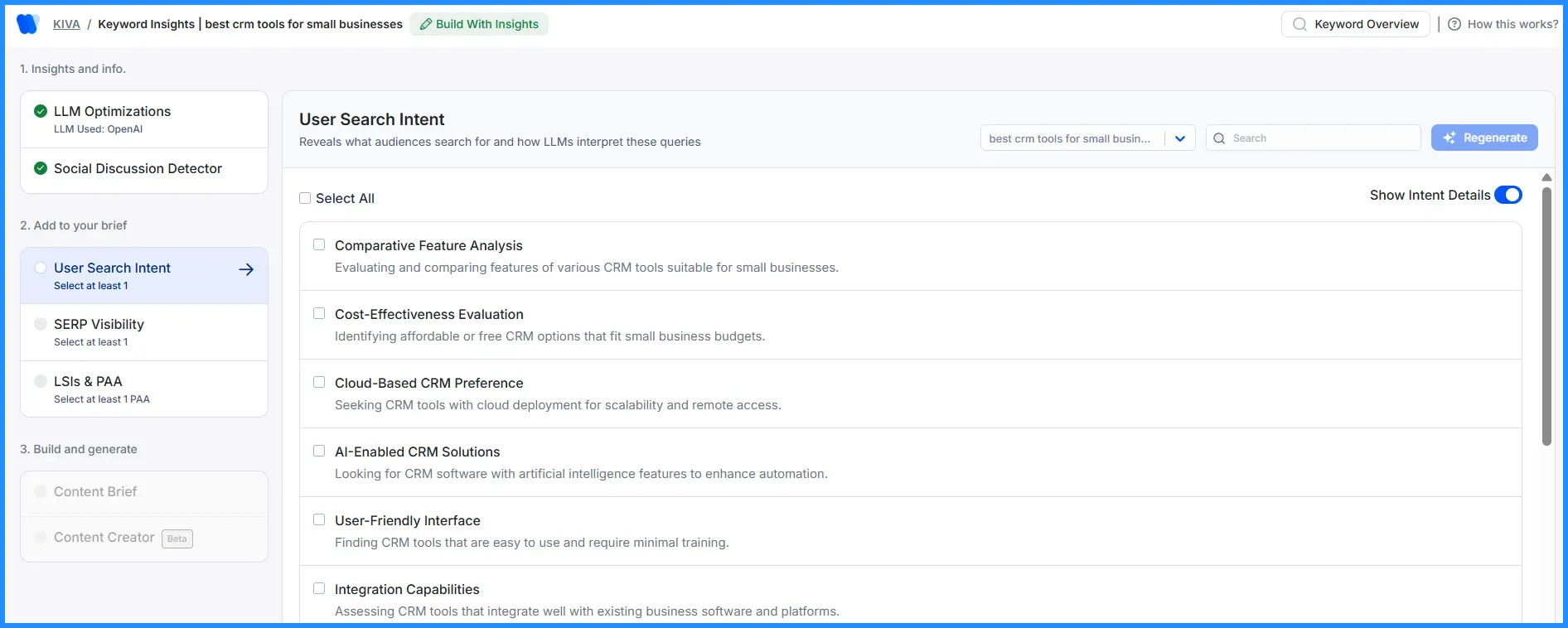
This is how generative engines expand user intent behind the scenes. Through AI Search Visibility, you can see how your content performs across evolving search and AI-driven discovery environments.
From Insights to Execution
Each insight helps you refine tone, structure, and clarity — keeping your strategy authentic and adaptive. Using Grounded Prompts, every optimization is based on verified language patterns, ensuring your content stays relevant, natural, and discoverable.
Together, this approach helps you create content that feels human, performs better, and stays visible in the age of AI-driven search.
Traditional SEO Keyword Optimization vs Prompt Engineering for Gemini
Traditional SEO and prompt engineering represent two distinct approaches to improving brand visibility. SEO focuses on ranking in search engines like Google, while prompt engineering is part of Generative Engine Optimization (GEO), aimed at appearing in AI-generated answers from models like Gemini.
Traditional SEO
- Keyword Optimization: Embedding search-relevant terms to match user queries.
- Backlink Building: Securing links from trusted sites to build authority.
- Technical SEO: Improving speed, mobile usability, and structured data for indexing.
Prompt Engineering / GEO
- Content Structuring: Formatting with headings, lists, and concise answers for AI parsing.
- Semantic Clarity: Writing in natural, intent-driven language that mirrors user prompts.
- Authority Signals: Providing accurate, expert-backed content to increase AI citation chances.
Key Differences
| Aspect | Traditional SEO | Prompt Engineering / GEO |
|---|---|---|
| Optimization Focus | Improving rankings in SERPs | Enhancing visibility in AI-generated answers |
| Content Strategy | Keyword density, metadata | Concise, structured, intent-driven content |
| User Interaction | Users click to websites | Users see answers directly in AI responses |
In short, SEO optimizes for visibility in traditional search, while prompt engineering ensures your brand content gets processed, cited, and surfaced in AI-driven discovery systems like Gemini.
How Should I Optimize for User Prompts Instead of Keyword Density?
In today’s AI-driven search era, success depends on optimizing for user intent — not keyword density. Search engines and generative platforms now prioritize context, clarity, and conversational depth over repetitive keyword use. The goal is simple: write for how people ask, not how algorithms count.
Did you know?
- Understand User IntentEvery search carries purpose — learning, comparing, or buying. Identify that intent first, then structure your content to directly answer what users truly want.
- Research Real Prompts, Not Just KeywordsMove beyond keyword lists. Study how users phrase full questions in ChatGPT, Perplexity, or within Wellows. These conversational prompts reveal richer context and help you design content that resonates with how AI interprets intent.
- Create Content That Solves ProblemsHigh-performing content doesn’t just rank — it resolves. Provide clear, verified, and actionable answers that feel human. Use a conversational tone, helpful examples, and structured formatting to make your pages AI-friendly and user-focused.
- Use Keywords Naturally Within ContextKeywords are still anchors for understanding but should fit seamlessly inside natural sentences. This improves readability, prevents over-optimization, and enhances how AI systems assess topical relevance.
- Analyze What Ranks — and WhyStudy top-performing AI answers and SERP results. Notice tone, layout, and content depth. Generative engines favor structured, trustworthy information that answers queries in one clear, complete response.
- Track Engagement and AI VisibilityLook beyond clicks. Measure time on page, engagement, and whether your content appears in AI citations or summaries. Inside Wellows, these visibility signals reveal how well your content performs across search and AI-driven environments.
In short, keyword density is a metric of the past — intent density is the new advantage. By aligning your writing with real user prompts and AI interpretation patterns, you build content that feels human, performs better, and stays visible across AI Search Visibility ecosystems.
Should I Research Common ChatGPT Prompts Instead of Using Google Keyword Planner?
In the prompt-first era, researching how people interact with AI platforms like ChatGPT provides far more valuable insight than traditional keyword tools.
The depth of that insight, though, depends entirely on the platform behind it, which is where a side-by-side comparison of Wellows vs Peec AI and other tools becomes useful where one focuses on turning prompt patterns into editorial decisions, while the other leans more on visibility reporting
Why Prompt Research Matters
Unlike Google Keyword Planner, which shows search frequency, prompt research highlights phrasing, tone, and context — the factors AI engines use to generate visibility. Analyzing ChatGPT or Gemini interactions helps uncover the full questions, commands, and context people use when seeking information.
How to Research Prompts
- Explore community libraries like FlowGPT and AIPRM to see trending user prompts.
- Use Wellows’ AI Search Visibility tools for ai prompt tracking to see which prompts surface your content across ChatGPT, Gemini, and Perplexity.
- Analyze how users phrase real scenarios (e.g., “Act as a startup founder…” or “Help me write a 3-step content strategy”).
From Keywords to Conversations
Google Keyword Planner was built for algorithmic search visibility. Prompt research builds semantic visibility — the kind recognized by LLMs and AI engines. By studying how people phrase real prompts, you can create content that naturally aligns with AI understanding and citation behavior.
Read More Articles
What is LLM Seeding and How Can it Help in Generative Engine Optimization?
How to Design Content Briefs for GEO?
Can GSC Data Guide Your GEO Strategy?
How Will Google’s AI Mode Transform Traditional SEO Practices?
FAQs
Yes, prompts and keywords can complement each other. Keywords signal the topic, while prompts provide intent and context, helping content perform well in both SERPs and AI answers.
Prompts are longer, conversational, and context-rich, while keywords are short and fragmented. This makes prompts better suited for AI-generated responses where context matters.
Prompts are often better because they reflect how people naturally ask questions. This makes them more effective for generating content that AI models recognize and cite.
Tools like Semrush and Ahrefs help with keyword research, while AI-focused tools such as SEO.ai and Peec.ai assist in prompt testing and citation tracking.
Use keywords as a base and expand into prompts that mirror real-world questions. Clear structure and context improve both search visibility and AI citations.
Prompts don’t directly affect rankings, but content shaped by them is clearer, intent-driven, and often performs better in both SERPs and AI-generated answers.
Yes. Profound tracks brand mentions across ChatGPT, Gemini, and Copilot with enterprise analytics. Writesonic offers an AI Visibility Tool with dashboards and prompt suggestions. CronBoost focuses on AI Engine Optimization, improving conversational query visibility and brand authority. AthenaHQ highlights content gaps, competitor insights, and automates outreach. Goodie AI specializes in Answer Engine Optimization with real-time analytics, benchmarking, and sentiment tracking to strengthen brand presence in AI-generated results.
Prompts vs Keywords: Are You Still Writing for One or the Other?
Because the difference isn’t subtle anymore. The way users ask questions has evolved, and so has the way answers are generated.
In a world where ChatGPT, Gemini, Claude, and Perplexity are becoming the first place people turn to—not Google—you can’t just sprinkle in a few keywords and hope to be seen. The real shift lies in prompts versus keywords—you need to structure content that answers real prompts with clarity, context, and intent.
Prompts reflect how people actually think. And generative engines are built to reward the content that understands that.
So ask yourself:
- Does your content sound like a conversation or a checklist?
- Is it built to be retrieved, cited, and trusted by AI—or just ranked by legacy search?
- Are you optimizing for what people search… or for what they actually ask?
Because in the era of prompt-first discovery, visibility isn’t about keywords anymore. It’s about relevance. And prompts are where that relevance begins.