How AI Answer Variability Impacts SEO explains why brands can maintain stable Google rankings yet disappear from AI-generated answers. Generative systems like ChatGPT, Gemini, and Google’s AI Overviews assemble responses dynamically using context, inferred intent, and probabilistic reasoning. As a result, identical queries can surface different answers across sessions, weakening predictable visibility.
Consumer behavior data confirms this shift. Around 80% of search users rely on AI summaries for at least 40% of their queries, reducing dependence on traditional links and accelerating answer-first discovery (Bain & Company, 2025).
Because of this shift, how AI answer variability impacts SEO is no longer determined by ranking position alone, but by whether a brand is repeatedly selected inside AI-generated answers. Brands now compete on whether they are selected and cited inside generated answers. SEO success increasingly depends on consistent answer inclusion across generative search environments, not just traffic from SERPs.
How AI Answer Variability Impacts SEO in Modern Search
AI answer variability means generative systems can return different answers to the same question, even when nothing changes. Unlike traditional search, AI does not surface a fixed set of ranked pages. It generates responses in real time based on context, probability, and inferred intent.
Search rankings are largely deterministic. AI answers are probabilistic. Each response is assembled dynamically, which explains why brands may rank consistently yet see unstable AI search visibility across platforms and sessions.
This shift changes how optimization works, because how AI answer variability impacts SEO depends on repeated answer inclusion rather than fixed rankings. Instead of competing for one position, brands must optimize for repeated inclusion inside generated answers. That difference is central to Generative Engine Optimization, where visibility depends on how often AI systems select your entity as part of an answer.
Generative models are designed to introduce variation to avoid repetition, which is why identical prompts can produce different but valid answers.
Why Generative AI Produces Inconsistent Answers by Design
Did you know?
- Probabilistic generation: Generative AI predicts the next word based on likelihood, not fixed rules, which naturally leads to variation across responses.
- Context sensitivity: Small changes in wording, tone, or added context can shift how the model interprets intent and selects information.
- Pattern-based reasoning: Models trained for pattern recognition in AI-generated answers prioritize multiple valid patterns instead of repeating the same output.
- Intentional response diversity: Systems are designed to avoid duplication and overfitting, which explains fluctuations in AI-generated content.
- Prompt-driven outcomes: Because prompts guide interpretation more than keywords, prompts matter more than keywords in determining how answers are formed.
How Query Fan-Out Multiplies AI Response Paths
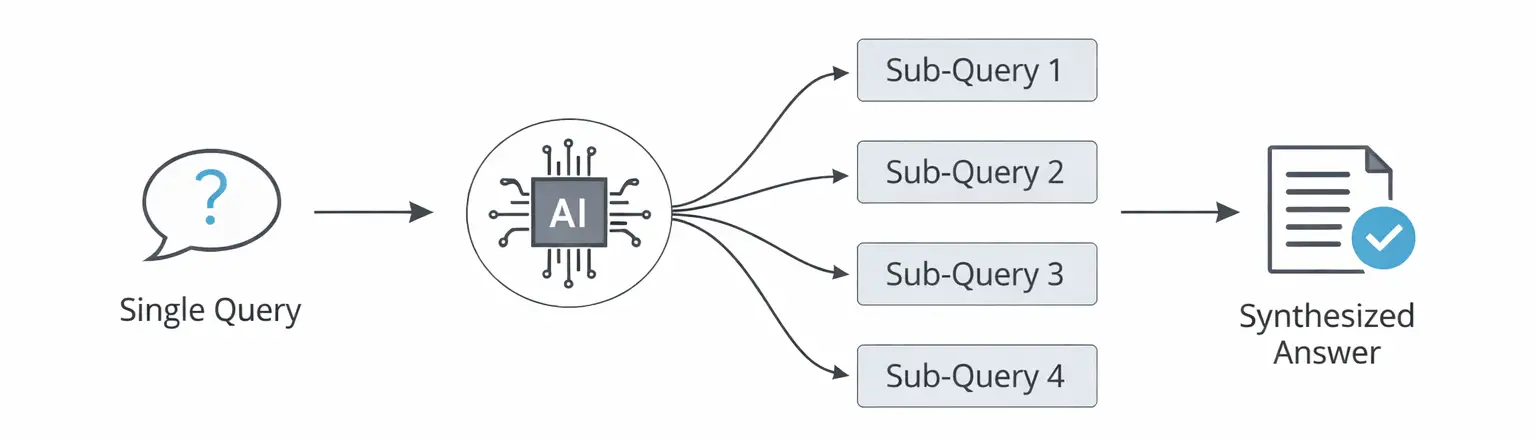
Query fan-out: A single user query is expanded into multiple related sub-queries inside generative engines, each reflecting a different interpretation of intent.
Parallel evaluation: These sub-queries are processed simultaneously, pulling information from different sources and behavioral patterns.
Dynamic synthesis: Each response path can influence the final answer, which is why AI responses change even when the question stays the same.
System-level variability: This behavior is common in automated systems built for synthesis rather than retrieval.
Did you know?
Understanding query fan-out in generative engines helps brands optimize for intent coverage rather than isolated keywords, especially when finding the right GEO queries.
Context Windows, Prompt Framing, and Session Memory Effects
- Context windows: AI models process only a limited amount of prior information, so answers change as earlier context drops out.
- Prompt framing: Small wording changes can alter how intent is interpreted, leading to different outputs.
- Session memory: Follow-up questions inherit earlier context, which explains why answers evolve within a single conversation.
- NLP inference: In chatbot and natural language processing systems, meaning is inferred probabilistically, not fixed.
Because AI systems rely on context and probability, answer consistency depends on how clearly and repeatedly a brand’s entity is framed across prompts and sessions. Managing context in the age of LLMs is critical, because shifting or incomplete context directly increases answer drift.
At the same time, understanding ChatGPT prompt behavior helps explain why small phrasing changes can alter which brands, sources, or explanations appear.
Why Variability Increases Across AI Platforms
- Different retrieval and synthesis models: ChatGPT and Claude primarily synthesize answers from learned patterns and contextual probability, while Gemini and Perplexity rely more heavily on live retrieval. Retrieval-first systems pull fresh sources at query time, while synthesis-first systems recombine existing knowledge, which directly increases inconsistency in AI outputs across platforms.
- Platform-specific source selection rules: Each AI platform applies its own logic for trust, freshness, and corroboration. Gemini prioritizes sources aligned with Google’s indexing and authority signals, shaping distinct Gemini AI visibility patterns across AI-generated answers.
- Citation-first vs synthesis-first presentation: Perplexity places stronger emphasis on explicit sourcing and real-time references, which changes how brands appear and are attributed in responses. This difference in citation behavior creates visible variation even for identical queries.
- Why platform diversity amplifies variability: Because each system interprets intent, context, and evidence differently, the same query can surface different brands, facts, or framing depending on the engine. This platform-level variability is a defining trait of artificial intelligence, not an optimization error, and it explains why visibility must be managed across multiple AI environments.
How AI Answer Variability Impacts SEO Results
Ranking stability does not equal visibility: Pages can hold top positions in Google yet fail to appear consistently in AI-generated answers, creating a widening gap between rankings and LLM citations.
Citation rotation reduces attribution: Generative systems rotate sources across sessions, which means brands may be cited in one answer and omitted in the next, even when content quality remains unchanged.
User experience becomes inconsistent: When AI answers change, users receive different brand recommendations and explanations for the same query, weakening trust and recall.
Visibility gaps distort performance signals: SEO metrics may appear healthy while actual AI visibility declines, reinforcing why Google rankings do not ensure visibility in ChatGPT.
AI answer variability shifts SEO from a ranking problem to a visibility consistency problem, where repeated inclusion matters more than position alone.
Where AI Answer Variability Creates Real Business Risk
| Industry | How AI Answer Variability Appears | Why It Creates Business Risk |
|---|---|---|
| Healthcare | Different medical explanations or brand mentions for the same query | Loss of trust, compliance exposure, and patient safety concerns |
| Banking & Financial Services | Fluctuating assumptions in AI-generated guidance and comparisons | Regulatory risk, inconsistent advice, and credibility loss |
| Customer Service | Inconsistent answers from chatbots for identical support issues | Lower satisfaction, longer resolution time, and brand frustration |
| Education | Variable explanations of the same concept across sessions | Reduced learning consistency and perceived authority |
These risks are amplified in regulated environments, where how AI answer variability impacts SEO directly affects trust, compliance, and decision-making. In healthcare, AI search visibility for healthcare brands determines whether accurate and compliant information is consistently presented.
Similar challenges appear in finance, where AI search visibility for banking and financial services influences how guidance, comparisons, and brand credibility are surfaced across AI-generated answers.
Why Traditional SEO Metrics Fail to Capture How AI Answer Variability Impacts SEO
- Rankings measure position, not presence: Search rankings show where a page appears, but they do not reveal whether a brand is included in AI-generated answers.
- CTR ignores answer consumption: Users increasingly get answers without clicking, which makes click-based metrics unreliable.
- Impressions miss AI visibility: Being visible in SERPs does not guarantee visibility inside generated responses.
- AI systems are non-deterministic: Variability in automated systems means visibility can change even when content and rankings remain stable.
- Measurement gaps distort user experience insights: When AI answers vary, traditional analytics cannot explain why brand recall and trust fluctuate.
Because of this gap, brands need AI-native metrics such as GEO KPIs and indicators like share of search to understand real visibility in AI-driven discovery.
How Wellows Detects and Reduces AI Answer Variability
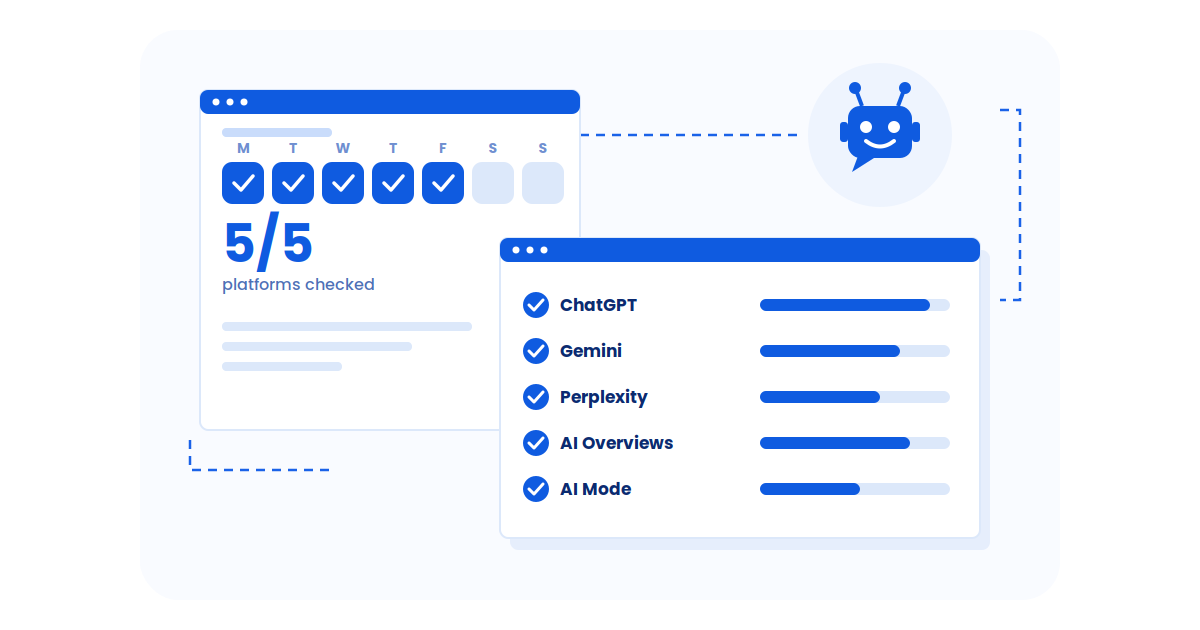
Wellows treats AI answer variability as a visibility problem, not a content issue. As an AI visibility platform, it analyzes real AI-generated answers to show where brands appear, rotate, or disappear across ChatGPT, Gemini, Perplexity, and Google AI Overviews.
Instead of relying on rankings alone, Wellows focuses on repeatability signals such as entity mentions, citation frequency, and contextual consistency. This makes it possible to detect visibility gaps even when SEO performance looks stable. Its ai prompt tracking runs each prompt repeatedly across engines, so you can measure how often your brand is included rather than trusting a single answer.
Reducing AI answer variability requires reinforcing how a brand is interpreted by generative systems, not replacing existing SEO tools.
Implicit Wins: Wellows surfaces AI answers where competitors are mentioned but your brand is missing.
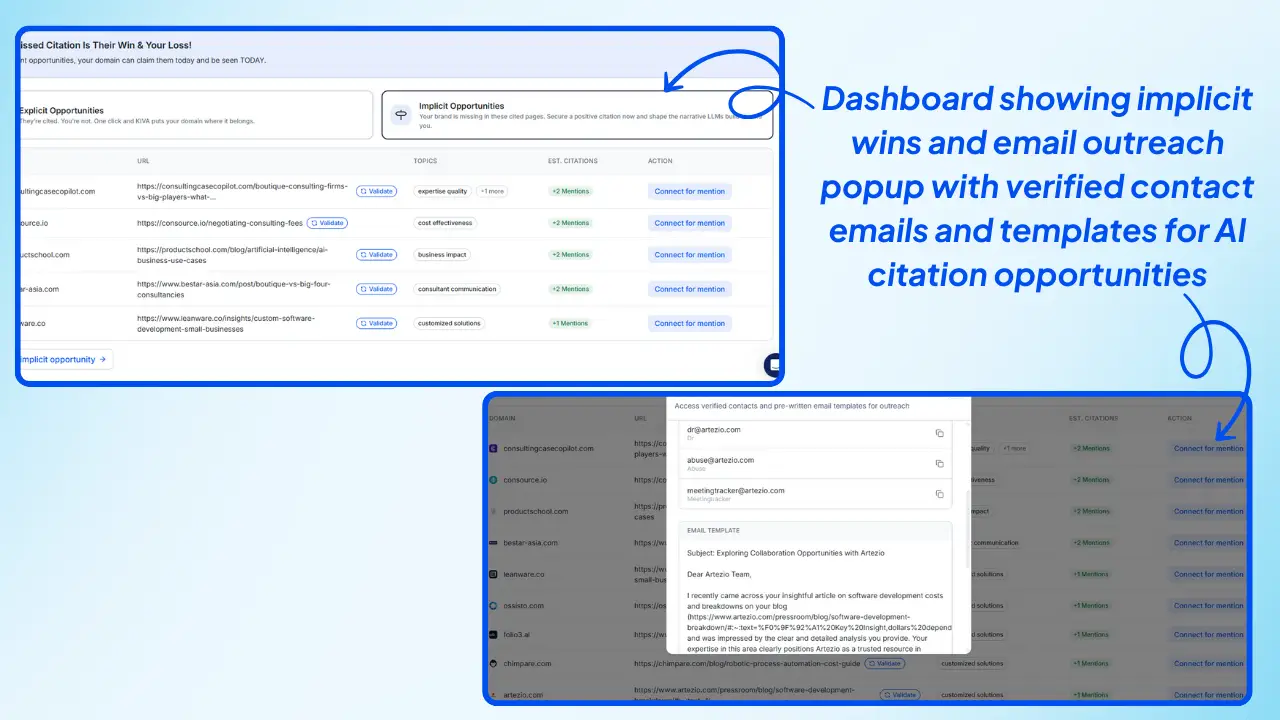 These pages already influence AI systems, making them the most practical targets for earning AI search mentions.
Explicit Wins: Wellows identifies where competitors are cited across Gemini, Perplexity, Google AI Overviews, and AI Mode but your brand is missing.
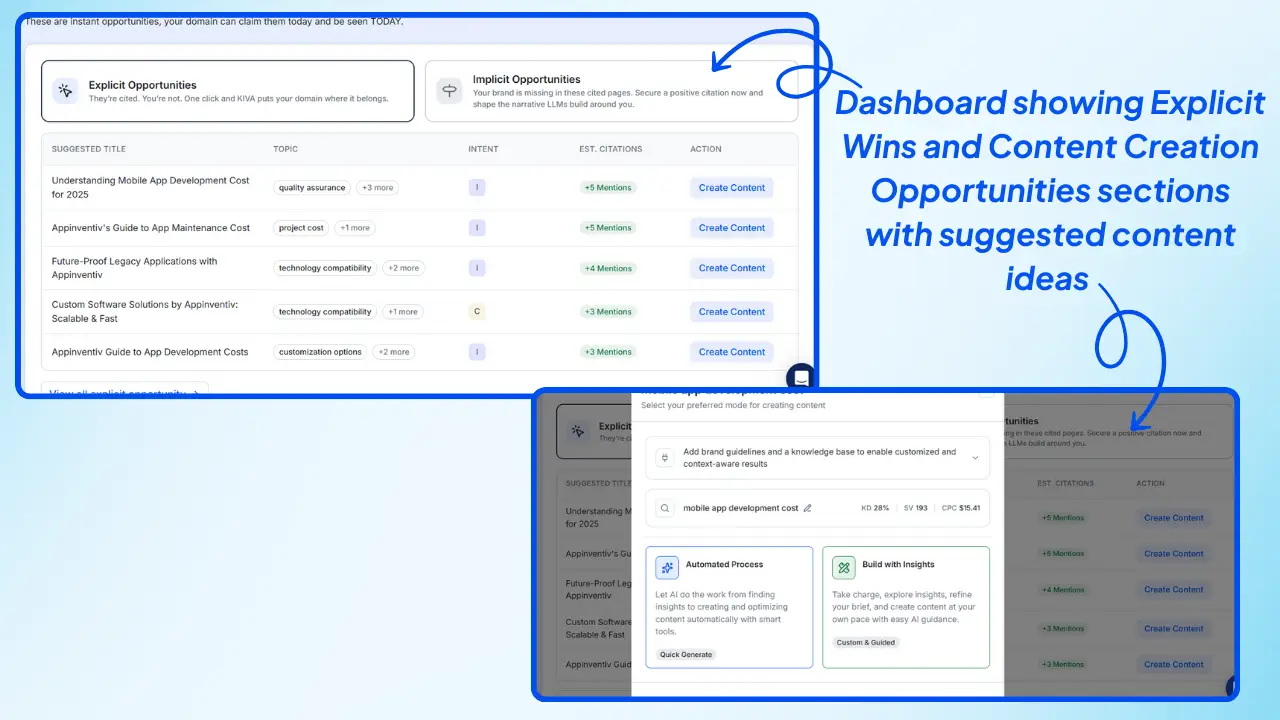 These AI-cited pages already influence generative answers, making them the highest-impact opportunities to turn competitor citations into explicit wins.
Outreach: Once opportunities are identified, Wellows enables direct execution by revealing verified publisher and editor contacts tied to pages AI systems already rely on, supported by ready-to-send inclusion requests.
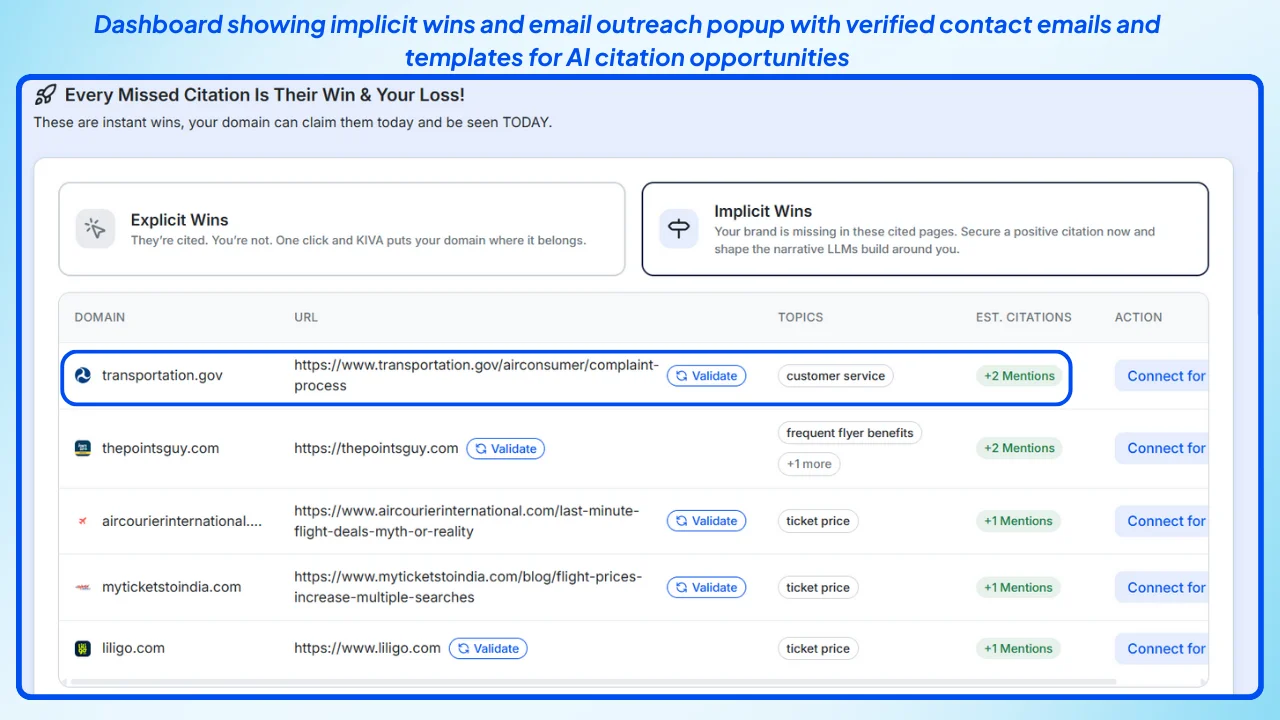
Validator: Validator ensures AI mentions are accurate, relevant, and correctly attributed, preventing weak or misleading signals from being reinforced.
Monitoring: Wellows tracks mentions and citations across ChatGPT, Gemini, Perplexity, and Google AI Overviews to surface growth trends and early visibility drops.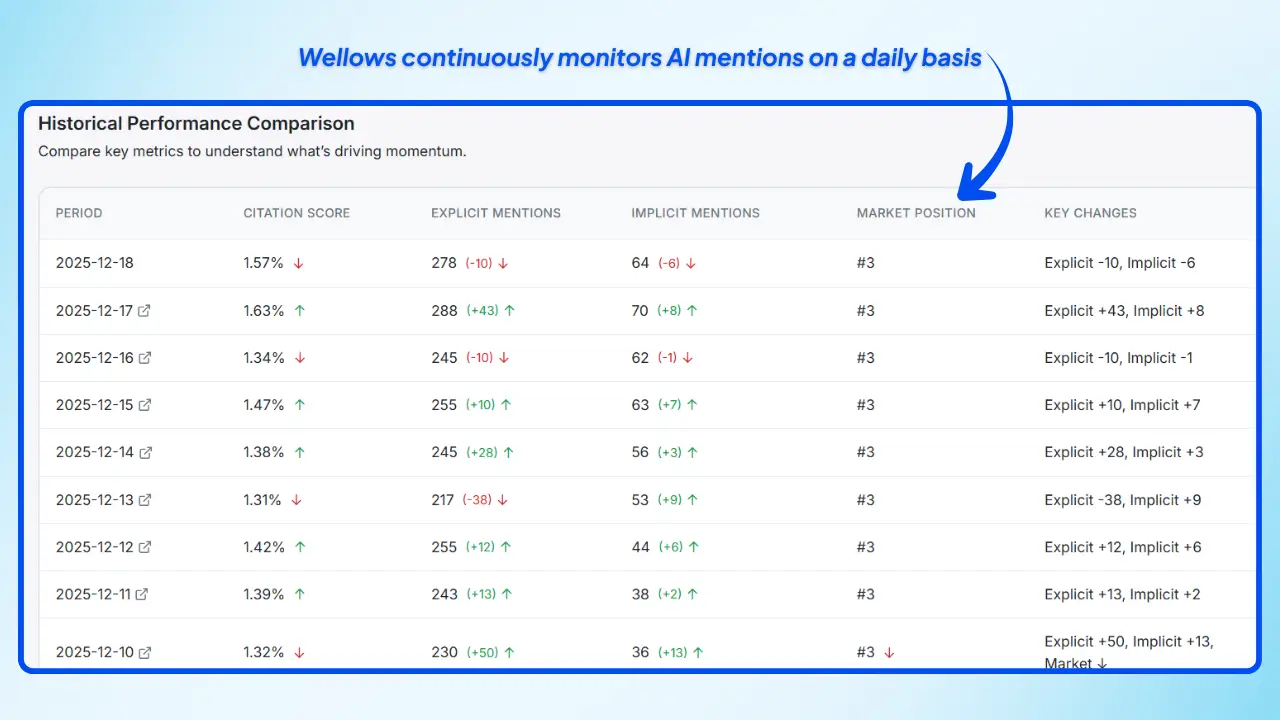
Historical Overview: Historical visibility tracking shows how mentions and citations change over time, helping teams connect gains or drops to content updates, outreach, or competitive shifts.
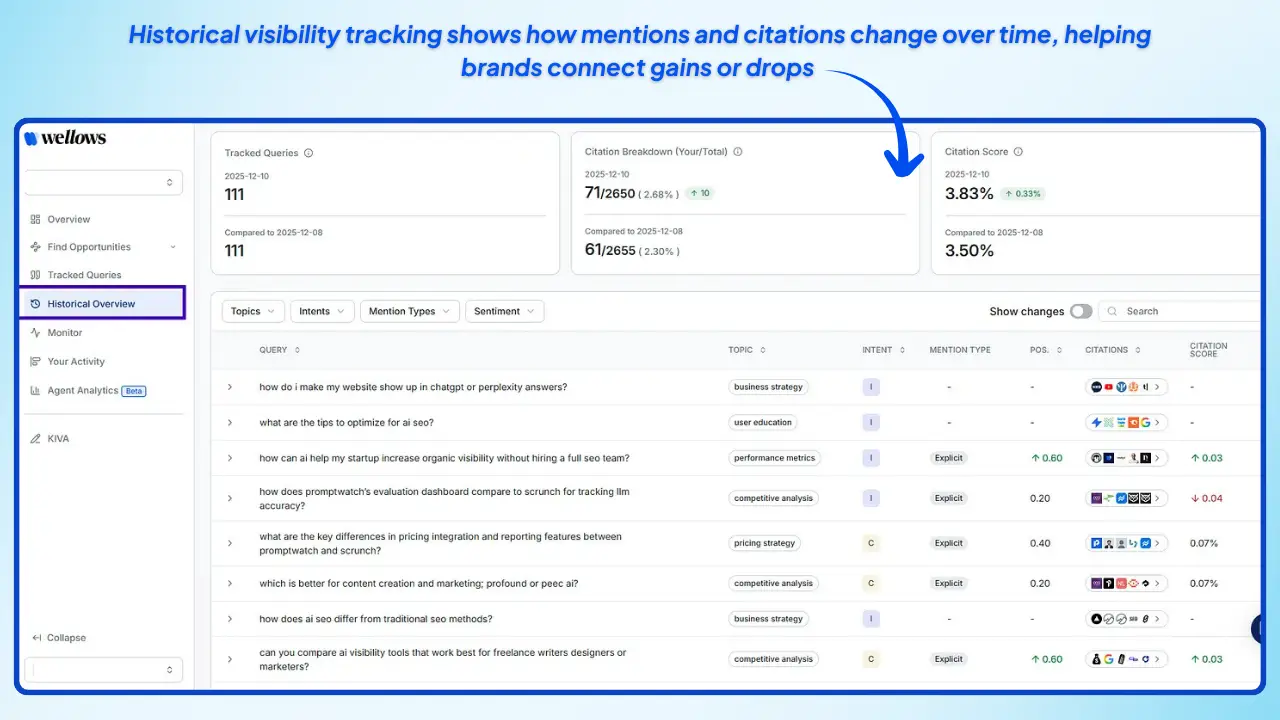
This system-level approach reflects how brands get recommended in AI search engines, where repeated, trusted inclusion matters more than one-time exposure.
By connecting SERP data with LLM behavior, Wellows enables teams to move from chasing rankings to building stable, repeatable presence across AI-driven discovery.
Practical Strategies to Reduce AI Answer Variability
- Brand names, descriptions, and positioning vary across pages
- Conflicting descriptors confuse AI interpretation
- Isolated mentions lack supporting context
- AI answers rotate between brands unpredictably
- One canonical brand identity is used across all channels
- Content, PR, and references reinforce the same entity context
- Claims are supported by multiple trusted sources
- Effective LLM citation strategies improve repeat selection
- Strong brand signals increase stable inclusion in AI answers
From Rankings to Reliability in AI-First Search
Then
Ranking-First SEO Era
➡️ Visibility was tied to page position in SERPs
➡️ Consistency came from stable algorithms and rankings
➡️ Success was measured through clicks, traffic, and CTR
Now
Reliability-First AI Search Era
➡️ Visibility depends on inclusion inside AI-generated answers
➡️ Consistency comes from repeated entity selection across sessions
➡️ Success is defined by answer stability and citation persistence
This shift reflects the Great Decoupling, where strong rankings no longer guarantee visibility inside generative engines. AI systems prioritize probability, context, and corroboration over fixed positions.
As a result, brands must move beyond traditional optimization and focus on reliability across discovery paths. This is why combining SEO and GEO for AI visibility is becoming essential for maintaining consistent presence in AI-first search experiences.
FAQs
AI answer variability means that generative systems may provide different answers to the same query based on context, probability, and source selection. For brands, this affects which entities are mentioned, cited, or omitted across AI-generated responses.
AI chatbots infer intent rather than retrieve fixed results. Differences in prompt phrasing, session context, and model behavior cause responses to vary even when the underlying question appears identical.
When AI answers change across sessions, users may receive inconsistent recommendations or explanations. This can reduce trust, create confusion, and weaken brand recall, especially in high-stakes decisions.
Yes. In regulated industries, variability is more noticeable because accuracy, compliance, and consistency are critical. Even small changes in AI-generated answers can create legal, ethical, or trust-related risks.
AI systems recommend brands based on repeated corroboration and entity confidence. When signals are inconsistent, recommendations rotate, reducing stable visibility even if rankings remain unchanged.
Brands reduce variability by strengthening entity clarity, aligning content across sources, and reinforcing corroborated signals. Consistent framing increases the likelihood of repeated selection in AI-generated answers.
Conclusion
How AI Answer Variability Impacts SEO has turned visibility into a competitive advantage. Brands that appear consistently inside AI-generated answers gain trust, recall, and preference, even when traffic patterns fluctuate. This makes answer stability a growth lever, not a technical edge.
Winning in AI-first search requires treating visibility as a system. Rankings, content, PR, and entity signals must work together to reinforce how AI models understand and select your brand. Tactics alone cannot deliver reliable presence across changing answers.
Teams that adapt early will build durable visibility across SERPs and LLMs, while others continue to chase metrics that no longer reflect how users discover information.