Gemini Search Visibility Tips are becoming essential as Google’s Gemini redefines how brands show up in AI-powered search. Every day, millions of interactions shape how Gemini decides which passages, insights, and brands deserve visibility inside AI-generated answers.
That’s where Wellows comes in. As a Search Visibility Platform, Wellows helps brands see how Gemini interprets their presence — blending citation tracking, schema insights, and sentiment analysis to reveal how AI systems actually “see” your content.
Unlike traditional search, Gemini doesn’t display a list of links. It delivers structured, conversational answers built on clarity, trust, and authority. This marks a major shift from keyword rankings to AI citation readiness — where success means being selected, summarized, and surfaced inside generative results.
By mid-2025, Gemini had already reached 47 million users. Competition for visibility is fierce. Brands using Gemini Search Visibility Optimization inside Wellows gain a clear advantage — spotting which passages are cited, which are missed, and how to refine structure and schema for stronger AI coverage.
To stay ahead, focus on structured formatting, clean schema markup, and conversational sections. These help Gemini interpret your content more effectively — and with Wellows, you can measure exactly where your brand stands across every generative engine.
Want to see how Gemini fans out a prompt into micro-intents? Open the Query Fan-out Generator in Wellows and map sub-intents your sections should cover.
But here’s the shift: Gemini doesn’t just retrieve content like Google Search — it breaks a single query into dozens of micro-intents, scanning for the most relevant, structured, and credible passages across the web.
That means visibility is no longer about one page ranking well — it’s about providing the right answer for the right sub-intent at the right time.
To achieve that, align your Generative Engine Optimization (GEO) strategy inside Wellows. See how Gemini retrieves, ranks, and cites your content — and use those insights to design content that’s truly AI-visible.
TL;DR
This blog explains how Google Gemini works as an AI answer engine and what it means for your search visibility in 2025. Gemini doesn’t rank pages the old way — it selects, extracts, and cites passages that are clear, structured, and trustworthy.
Inside this guide, you’ll learn:
- What Google Gemini is and how it reshapes search
- How Gemini retrieves, breaks down, and presents information using micro-intents
- Practical visibility tips to help your content get quoted inside Gemini’s AI-generated answers
In short: if your content isn’t structured, credible, and prompt-aligned, Gemini won’t cite it. This guide shows you how to fix that.
What is Google Gemini?
Google Gemini is not just another AI model—it functions as Google’s answer engine built for the generative era. Unlike traditional search, which presents a list of links to click through, Gemini delivers full responses directly on the results page. These responses remain conversational, structured, and often include citations to trusted websites, tools, and brands.
For marketers, this shift changes how visibility works. Instead of focusing only on keyword rankings, you must apply Gemini search visibility tips that align with how the model retrieves, structures, and cites content. By doing so, your pages become citation-ready and more likely to appear in generative results.
Here are the key features of Gemini:
1. Generative Answer Engine, Not Just a Search Tool
Gemini doesn’t return a list of links—it generates full, structured answers directly on the page. This allows users to get what they need without clicking through to external sites, changing the game for traditional search visibility.
3. Uses Query Fan-Out for Deeper Understanding
Rather than processing a single query, Gemini breaks a user’s prompt into multiple micro-intents. It pulls relevant passages from across the web to answer those sub-questions—then stitches everything together into a cohesive response.
4. Cites Real Sources, Brands, and URLs
Gemini often includes citations in its answers, referencing real websites, blog posts, tools, or expert names. Getting quoted by Gemini now holds as much weight as earning a top SERP ranking.
5. Multimodal Capabilities
While Gemini is primarily used in text-based responses within SGE, it’s also capable of interpreting and generating images, audio, and code—making it a true multimodal model. Expect these features to expand across the Google ecosystem.
6. Tied Closely to Google’s Index
Gemini doesn’t work in isolation. It’s backed by Google’s massive web index, giving it access to live, crawlable content across the internet. This means your visibility in Gemini is often tied to how well your site is indexed and optimized.
7. Supports Conversational Follow-Ups
Users can continue the conversation directly in Gemini—asking follow-up questions or clarifications. This allows for deeper, more personalized discovery journeys—ones your content can be part of if it’s structured correctly.
8. Trained for High-Trust, High-Authority Responses
Gemini prioritizes trustworthy, accurate, and well-sourced content. That means E-E-A-T (Experience, Expertise, Authoritativeness, Trust) isn’t optional—it’s built into the way Gemini selects and serves answers.
While Gemini is deeply tied to Google’s index, it also benefits from Bing integration in certain browsing scenarios, reinforcing its ability to pull real-time data for generative answers.
How does Gemini retrieve, rank, and present information in responses?
Here’s how Gemini typically retrieves, rank, and present information in responses and why that matters for generative engine optimization:
| What Gemini Looks For | Why It Matters for Visibility |
|---|---|
| High Organic Rankings Gemini pulls from top-performing content in traditional SERPs. |
Ranking well organically increases your chances of being cited in Gemini’s AI responses. |
| Structured Data & Schema Use HTML structure and markup like FAQ, HowTo, Product. |
Helps Gemini parse, understand, and extract passages more easily. |
| Snippet-Ready Passages Short, clear blocks of 40–60 words that directly answer questions. |
These “pre-packaged” insights are ideal for AI summaries and citations. |
| Query Fan-Out Relevance Gemini breaks one query into many micro-intents. |
Content that covers related angles and follow-ups is more likely to be included. |
| Trust & Authoritativeness Signals like E-E-A-T, citations, and credible sourcing. |
Gemini prefers citing expert-driven, well-sourced, and trustworthy content. |
Which Technical SEO Elements Strengthen Gemini Search Performance?
Gemini may be powered by AI, but it still relies on strong technical foundations to identify, index, and cite your content accurately. These core elements help ensure your site performs well across Gemini’s retrieval and ranking layers.
1. Site Speed and Mobile Optimization
Gemini prioritizes pages that load in under 2.5 seconds and adapt seamlessly across devices. A responsive, mobile-friendly design improves crawl efficiency and aligns with user expectations (AnonSystem, 2025).
2. Structured Data for AI Interpretation
Apply FAQPage, HowTo, and Article schemas to give Gemini a semantic map of your content. This structured markup improves comprehension and citation potential.
3. Logical Site Architecture
Maintain a clear internal link hierarchy with contextual anchors. A well-connected structure helps Gemini understand topic relationships and passage relevance across pages.
4. Core Web Vitals
Focus on Largest Contentful Paint, First Input Delay, and Cumulative Layout Shift. These metrics directly influence user experience and remain ranking signals in Gemini’s model evaluation.
5. Security and HTTPS Implementation
Gemini prefers secure, encrypted domains. HTTPS not only protects users but also increases your content’s trustworthiness within AI-generated responses.
6. XML Sitemaps and Indexation Health
Regularly update and submit XML sitemaps to ensure Gemini can crawl all relevant content. Validate indexation in Search Console to detect and resolve visibility gaps.
For larger sites, Crawl Budget SEO helps ensure crawlers prioritize your most valuable pages instead of wasting requests on low-value URLs.
7. Technical Monitoring Through Wellows
Inside Wellows, you can track how Gemini interacts with your domain’s technical signals — from schema validation to crawl frequency. The platform highlights:
- Pages skipped by Gemini’s AI crawler
- Schema or Core Web Vital issues
- Structured content improvements that boost citation readiness
In short, strong technical SEO ensures your content is both discoverable and interpretable by Gemini. With Wellows, teams can translate backend improvements into measurable AI Search Visibility gains.
Improving Gemini Search Visibility Tips: 8 Actionable Tactics for 2025
To show up in Gemini’s answers, your content must be clear, credible, and easy for Google to interpret. By following proven Gemini search visibility tips, applying Gemini Search Visibility Optimization, and using Gemini Search Ranking Improvement practices, you position your brand for better citation opportunities.
For a broader blueprint, see the most effective strategies for AI visibility enhancement, which go beyond individual tips to build a foundation for lasting GEO visibility.
Here are the 8 Top strategies to rank higher in Gemini’s AI-generated answers in 2025—without guesswork.
Best Practices for Increasing Visibility in Google Gemini’s AI Overviews
To enhance your content’s visibility inside Gemini’s AI Overviews, follow these practical best practices:
- Craft Clear and Concise Content – Provide direct answers in short, accessible language for easier extraction.
- Structure Content Effectively – Use headings, lists, and clean formatting for better AI parsing.
- Implement Schema Markup – Apply FAQPage, HowTo, and Article schema to boost citation potential.
- Showcase E-E-A-T – Highlight expertise, author credentials, and cite authoritative sources.
- Optimize for User Intent – Write content that addresses conversational queries, not just keywords.
- Enhance Technical SEO – Keep your site fast, mobile-friendly, and error-free.
- Regularly Update Content – Refresh pages with new stats, trends, and examples.
- Use Multimedia Elements – Add images, videos, and infographics to strengthen AI-overview inclusion.
💡Key takeaway
Applying these best practices makes your content more citation-ready inside Gemini’s AI Overviews, reinforcing long-term GEO visibility.
1. Target Conversational, Prompt-Like Queries—Not Just Keywords
Gemini is trained to understand how people ask questions, not just how they search. It mirrors human intent in a conversational format. If your content still focuses on short-tail keywords like “project management tools” or “best SEO software,” it’s missing the mark.
What this means for your content:
You need to build content around full questions and natural prompts that match how users type into Gemini — for example: “What’s a good project management tool for remote teams working asynchronously?”
Use tools like:
- AnswerThePublic and AlsoAsked for branching query structures.
- Wellows — a Search Visibility Platform that helps identify real subqueries Gemini might fan out and analyze prompt intent patterns across AI engines.
- Reddit and Quora to surface phrasing real users actually use.
Once you’ve mapped those real, prompt-like questions, make sure your draft still reads like a human wrote it. Even strong AI outputs can sound slightly robotic or flat if left untouched.
A fast final pass through the free AI humanizer tool by Wellows helps smooth out stiffness, improve flow, and keep your tone natural — which increases the chance Gemini interprets and cites your content correctly.
Example
Use <h2> or <h3> headings that echo the prompt itself. This helps Gemini extract the right answer chunk with minimal guesswork.
Key takeaway
Content that answers how users actually ask is what Gemini prioritizes. Don’t just optimize for what they search — optimize for what they say.
2.Write in Modular, Extractable Passages for Fan-Out Queries
Gemini doesn’t just retrieve full articles—it dissects content by sub-intent. This is called query fan-out. One user question becomes 5–10 smaller internal queries the LLM tries to solve from various sources.
What this means for your content:
You need to stop thinking in paragraphs and start thinking in passages. Each passage should:
- Be 40–60 words long.
- Answer a single micro-question clearly.
- Use semantic HTML (e.g., <section>, <p>, <li>) for better extraction.
Example
Instead of: “Generative engines use AI to provide answers… (300-word blob)”
Use: If you’re targeting visibility inside Google Gemini, structuring your content with question-style headings and concise, cited answers gives you a better chance of being featured—especially when answering prompts like ‘What’s the best way to optimize for Gemini AI search?
Key takeaway
Gemini extracts passages, not posts. Structure your insights in short, standalone blocks that answer one clear user intent.
[/llm_tracking_conversions]
Gemini Search Visibility Techniques for Mobile Platforms
Mobile-first indexing shapes how Gemini retrieves passages. Users on smaller screens prefer short, structured answers. To adapt, create extractable passages under 50 words, add bullet lists, and maintain clear headings. This approach improves readability and makes your passages easier for Gemini to lift into mobile results. Enhancing Gemini search performance for mobile users ensures your content remains citation-ready in environments where traditional SERPs are rarely explored.
3. Refresh Content Frequently—But with Real Updates
Gemini values freshness signals. That includes:
- Updated timestamps
- New stats and references
- Recently added sections
- Better structure and schema
However, superficial updates—like swapping “2024” to “2025”—won’t cut it.
What this means for your content:
Every 3–6 months, revisit key pages. Add:
- A new case study
- A recent stat from Google, HubSpot, or Writesonic
- A user quote or product update
- A “2025 Edition” TL;DR at the top
Example
“As of Q2 2025, real-time Gemini citation trackers have become more widely used—helping marketers monitor which pages are getting surfaced in AI-generated summaries.”
Even better? Add a new section titled “What’s New in GEO for 2025” or “Recent Gemini Citation Shifts
Key takeaway
Fresh content gets crawled, cited, and summarized more often. Update meaningfully and visibly.
4. Demonstrate E-E-A-T with Human-Centric Content
Gemini doesn’t just summarize facts—it evaluates trust. And Google’s E-E-A-T signals (Experience, Expertise, Authoritativeness, Trustworthiness) are built into how Gemini scores content for citation.
What to do:
Make it easy for Gemini to see that your content is written by real experts.
- Add author bios with
- Use first-hand examples
- Embed trust markers (Mentions of awards, recognitions, S=atructured data like author, reviewedBy, FAQPage)
Example
“According to Masab Gadit, CEO of Wellows, LLMs like ChatGPT increasingly cite content that’s grounded in lived experience—especially when it aligns with how real users phrase prompts.
Key takeaway
To be cited in AI answers, you need more than content—you need visible credibility.
Boosting Gemini Search Visibility with Keyword Optimization
Gemini connects prompts with passages that match intent. To align with this behavior, optimize for semantic keywords and long-tail phrases that reflect how users phrase their questions. Place intent-rich terms naturally into passages so Gemini can cite them with confidence. This approach transforms keyword optimization into a direct driver of Gemini search visibility tips, helping your brand become a consistent citation source.
5. Structure Content with Schema and Semantic HTML
Gemini is still Google at its core—and Google loves structure. Schema markup and semantic HTML help Gemini crawl, understand, and index your content with precision.
What to do:
1. Use semantic tags:
- <h2> for sections like “Best CRMs for Startups”
- <ul> for lists of features or comparisons
- <blockquote> for citations and expert quotes
2. Add schema markup
- FAQPage, HowTo, Article, Product, LocalBusiness, etc.
- Use tools like Google’s Rich Results Test to validate
3. Include scannable formatting
- Bullet lists
- Summary boxes (like TL;DR)
- “Jump to section” anchor links
Beyond basic markup, you can strengthen Gemini search visibility by using Schema.org types such as FAQ Page for FAQs, Local Business for regional services, and How-to for tutorials. These structured signals help Gemini parse intent-rich answers and match them to user prompts more effectively.
Key takeaway
Gemini favors structured content. Speak its language with schema, semantic tags, and scannable formatting.
Does Gemini Prefer Schema.org Markup More Than ChatGPT or Claude?
As of November 2025, there is no definitive evidence indicating that Gemini, ChatGPT, or Claude inherently prefer Schema.org markup over one another. However, the integration of structured data can influence how these AI models interpret and utilize web content.
- Gemini: Developed by Google, Gemini may leverage structured data like Schema.org markup to enhance content understanding, especially in resolving ambiguities. For example, when parsing live search results, Gemini might use schema to determine whether “avatar” refers to a movie or an icon. This suggests Gemini uses schema for disambiguation, though it doesn’t necessarily favor it more than others.
- ChatGPT and Claude: Both models can interpret structured data to some extent. However, their reliance on Schema.org markup is not as strong. ChatGPT, for instance, can read raw HTML but may not fully interpret JavaScript-rendered content, limiting its schema processing.
- General Insight: Implementing Schema.org markup improves content clarity and accessibility for all AI systems, potentially increasing visibility in AI-generated search results. While Gemini might utilize schema more effectively for disambiguation, there’s no evidence of a stronger inherent preference compared to ChatGPT or Claude.
Schema markup benefits all AI models — it doesn’t guarantee favoritism but does enhance discoverability and structured content interpretation across generative search engines.
Did you know?
What Content Structure Works Best for Gemini AI: FAQ Format or Narrative Style?
To optimize content for Gemini AI, a hybrid approach combining FAQ and narrative formats works best. This structure balances clarity for AI parsing and depth for user engagement.
FAQ Format:
Incorporating a structured FAQ section addresses specific user queries directly, making it easier for Gemini to extract concise answers. This aligns well with Gemini’s preference for clear, question-based formatting. Adding FAQPage schema further boosts visibility.
Narrative Style:
Supporting your FAQs with explanatory paragraphs gives context, builds authority, and keeps users engaged. Organize content with descriptive headings and include visuals like images or short clips for readability.
Best Practices:
-
- Use structured data like
FAQPageandArticleschema to help Gemini understand context. - Develop topic clusters with linked pages to strengthen topical authority.
- Begin each section with a concise summary to align with Gemini’s extraction model.
- Use structured data like
Gemini favors structured, mixed-format content — FAQs for extractability and narrative context for authority and completeness.
6. Build Topical Authority with Content Hubs and Internal Links
Gemini uses topical relevance to determine expertise. If your site only has one article on “AI tools for writing,” it sees you as a participant. But if you have 10 interconnected articles, it sees you as a source.
What to do:
1. Build content clusters:
- One hub page (e.g., “GEO”)
- Multiple spoke pages (e.g., “What is GEO?,” “GEO Stats and Trends,” “Top 10 Visibility Tips for Gemini”)
2. Interlink strategically:
Use anchor text like: “Explore our AI writing tool comparison →”
- Link hubs to spokes and vice versa
- Include a “Resources” or “Topics” page that groups your content semantically
Example
Wellows’ GEO content is grouped into:
- What is GEO?
- GEO vs SEO
- How to do a GEO audit
- Tools for GEO visibility
This creates a clear thematic footprint—Gemini sees topical consistency and depth.
Key takeaway
Topical authority isn’t about quantity—it’s about strategic coverage. Make Gemini see you as the source on your subject.
Gemini Search Presence Enhancement
Building topical authority increases your chances of being cited across multiple Gemini queries. Create hub-and-spoke clusters where one central page connects to detailed supporting articles. For example, a hub on Generative Engine Optimization can connect to spokes on schema, prompt targeting, and Gemini-specific strategies. This interlinked structure creates a clear semantic footprint that enhances Gemini search presence and positions your site as a reliable authority.
7. Earn Citations Through Reddit, Quora, and Forums
Gemini pulls from user-generated platforms like Reddit, Stack Overflow, and Quora—especially for product comparisons, real-world use cases, or niche questions.
What to do:
- Contribute to Reddit threads that already rank on Google:
- Use natural language, not marketing speak
- Share real experiences (“We switched from multiple SEO Tools to Wellows, Autonomous marketing platform for saving time”)
2. Use GummySearch or SparkToro to find:
- High-ranking Reddit threads in your niche
- Common question formats used in Quora or Stack Overflow
3. Test seeding discussions that mention your product or insights—genuinely, not spammy
Example
A post in r/SaaS titled “Which AI SEO Agents worth it in 2025?” gets cited by Gemini for its balanced insights between Wellows, writesonic, Semrush.
Key takeaway
You don’t need a backlink to be cited—just a meaningful mention in the places Gemini listens.
Gemini Search Discoverability Tips
User-generated platforms like Reddit and Quora influence Gemini citations. When you provide real insights in discussions on subreddits such as r/SEO or r/AISEO, Gemini often extracts those mentions as trusted answers. Focus on addressing micro-intents—the side questions people raise inside forums. By participating in these conversations, you increase your discoverability and reinforce Gemini’s trust in your brand’s authority.
Repurposing long-form posts into Substack newsletters also boosts discoverability, since Gemini often surfaces passages from creator-friendly ecosystems where credibility and author identity are transparent.
8. Track AI Citations and Prompt-Based Visibility
You can’t improve what you don’t measure. Tracking Gemini citations, prompt performance, and brand mentions in AI answers is crucial for evolving your GEO strategy.
What to do:
1.Run manual tests:
- Ask Gemini: “What are the best tools for tracking AI citations across ChatGPT and Gemini?” See if your brand shows up—even without links.
2. Use tools that:
- Monitor citations across Gemini, ChatGPT, Perplexity
- Detect hallucinated or unlinked brand mentions
- Show which prompt types are pulling your content
3. Use AI QA loops:
- Prompt Gemini with your own article titles
- Ask: “Summarize this page,” “Is this a good resource for ___?”
- Refine based on what Gemini sees vs. what you intended
Example
“Act like a content strategist. Is wellows.com a good resource to learn about Generative Engine Optimization?”
Analyze Gemini’s answer. Is it citing your top pages? Are the summaries accurate? If not, rework your structure and passages.
Key takeaway
GEO visibility isn’t static—it’s interactive. Test, prompt, analyze, and adapt in real-time.
Did you know?
Can I Use Google Search Console Data to Predict Gemini Citation Likelihood?
While Google Search Console (GSC) is valuable for tracking traditional SEO performance, it’s not fully indicative of Gemini’s citation behavior. Gemini’s citation logic relies on semantic relevance, passage structure, and contextual depth rather than rank position alone.
- Limited Correlation: Studies reveal that only about 12% of URLs cited by AI systems like ChatGPT, Gemini, and Copilot also rank in Google’s top 10 for the same query (Ahrefs, 2025).
- Optimization Tip: Use Google Search Console (GSC) to find high-impression queries and then reformat your content into concise, extractable passages (~40–50 words) that support structured data and improve selection chances (Ghergich & Co./SEMrush, 2017).
- Data Integration: Monitor impressions and CTR shifts to spot patterns suggesting AI inclusion. Then, cross-reference them with Wellows data for citation visibility.
GSC insights can complement your Gemini strategy but won’t predict citations directly. Focus on structure, schema, and intent alignment — metrics that generative engines actually prioritize.
Tools That Track Gemini Crawls and Citations
Yes, several analytics tools now specialize in tracking Gemini AI crawl activity, citation frequency, and prompt-level visibility. These help marketers understand how their content is being discovered, parsed, and cited across AI-driven search environments.
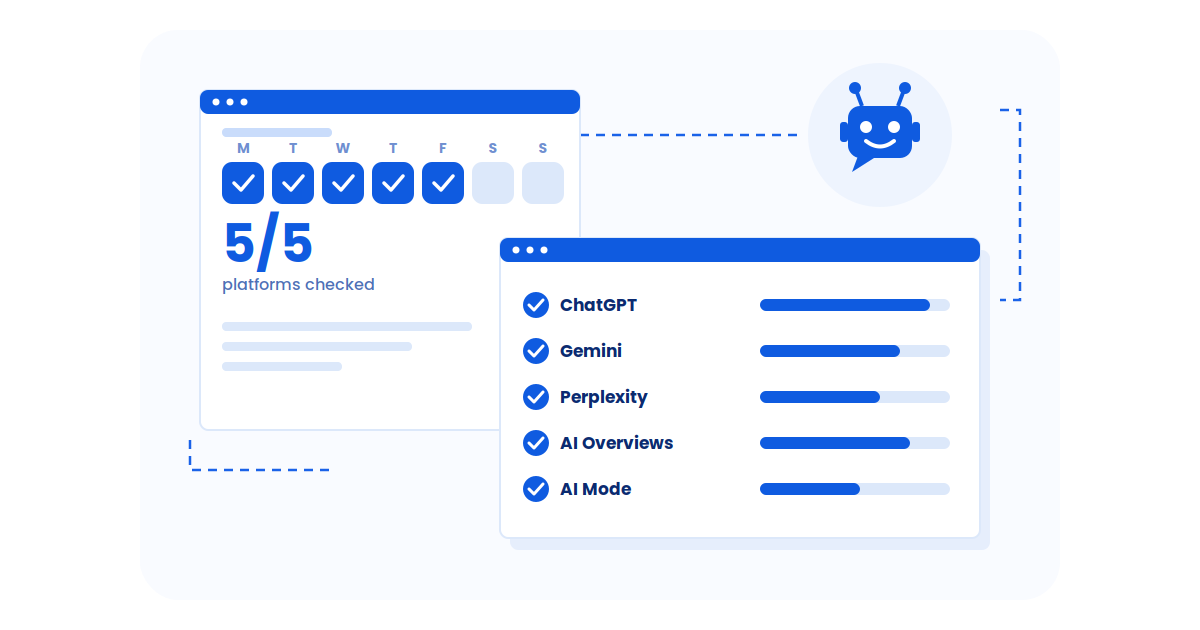
- Wellows: Wellows tracks AI Search Visibility across ChatGPT, Gemini, Perplexity, AI Overviews, and AI Mode, merging citations, sentiment, and visibility data to help brands measure, optimize, and grow their AI presence effectively.
- AI Bot Tracker: A free analytics suite that monitors AI bot visits, including Gemini. It displays crawl frequency, traffic origin, and agent type for each visit.
- Spyglasses: Provides real-time alerts when AI bots such as Gemini interact with your pages. It can even auto-generate
robots.txtrules to manage crawler access. - Goodie AI — Agent Analytics: Monitors page-level crawl activity, agent types, and request volumes from Gemini’s indexer. Great for understanding how different content formats perform in AI crawls.
- LLM Bot Tracker (WordPress Plugin): Logs Gemini bot visits directly inside WordPress dashboards. Displays detailed timelines of crawl patterns and prompt triggers.
- PromptMonitor.io: Tracks live AI search bot visits, showing which URLs and prompts triggered Gemini crawls. Ideal for optimizing prompt phrasing and internal linking.
By combining these tracking tools, you can see how Gemini and other AI systems interact with your site. Inside Wellows, this data is layered with schema validation, prompt visibility tracking, and citation scoring — giving your team a single dashboard for managing AI Search Visibility end-to-end.
How to Optimize Content for Gemini’s AI-Powered Answer Engine
Optimizing for Gemini’s AI-powered answer engine is less about ranking signals — and more about teaching the model how to understand your content. Gemini doesn’t just crawl text; it interprets meaning, hierarchy, and trust. Your goal is to write and structure content the way an AI reads: semantically, contextually, and logically.
1. Design for Semantic Understanding
Gemini processes meaning before keywords. Use descriptive headings, consistent entity references, and contextual cues that connect concepts naturally. This helps the model link your content to user prompts with precision.
2. Create AI-Readable Hierarchies
Think of your content like a decision tree — each section should answer one core question. Use <H2> and <H3> to mirror how users phrase follow-ups (“how,” “why,” “when”). This structure signals clarity and logic to Gemini’s retrieval layer.
3. Build Contextual Continuity
AI engines like Gemini read beyond isolated paragraphs. Place examples, data, and definitions close to the question they explain. The closer the supporting content is to its parent query, the stronger your visibility signal.
4. Write in Extractable Micro-Passages
Gemini cites fragments, not full pages. Write 40–60 word answer blocks that are self-contained, factual, and verifiable. Each block should feel like a mini source Gemini can quote directly in its generative responses.
5. Incorporate AI-Friendly Metadata
Beyond schema, use descriptive meta titles, alt text, and canonical tags that reinforce topical relevance. Gemini’s citation logic often references this metadata when identifying trustworthy passages.
6. Maintain Temporal Accuracy
Gemini values time-sensitive relevance. Timestamp key data, stats, or insights within your text. Phrases like “as of Q1 2025” signal freshness and reliability — two factors Gemini weighs heavily when surfacing answers.
7. Track Interpretation Patterns with Wellows
Use Wellows to analyze which parts of your content Gemini reads, interprets, and cites. The platform identifies:
- Which headings trigger citations
- How context proximity affects AI extraction
- Opportunities to improve passage segmentation
This data-driven feedback helps refine content for AI comprehension — not just human readability; and the platform you rely on will largely decide how accurate that feedback actually is. A close look at Wellows vs AIClicks highlights which tool actually surfaces Gemini-level citation signals and which one stops at surface-level visibility scores you can’t act on
By structuring your content for semantic precision and contextual flow, you make it easier for Gemini to recognize and cite your work. With Wellows, teams can see how Gemini perceives their structure, tone, and passage depth — turning every optimized section into a potential AI citation source.
Effective Strategies to Boost Google Gemini Visibility
Improving your website’s visibility in Google Gemini goes beyond traditional SEO — it’s about optimizing for AI Search Visibility. Gemini surfaces answers, not just links, so your content must deliver clarity, structure, and authority.
By mid-2025, Google Gemini surpassed 47 million active users, becoming one of the fastest-growing AI-integrated search tools globally (Business of Apps, 2025).
Moreover, a recent Search Engine Land report shows that 68% of digital marketers now prioritize AI-driven visibility and generative optimization in their 2025 SEO strategies.
1. Develop Comprehensive Topic Clusters
Organize content into thematic clusters around a main topic. For instance, a hub like “AI Search Visibility” can branch into subtopics such as schema optimization, prompt-based SEO, and generative ranking factors. This interconnected structure establishes authority and helps Gemini understand topical depth and hierarchy.
2. Optimize for Conversational Queries
Gemini processes natural language efficiently. Instead of targeting “AI SEO tools,” use real conversational phrasing like “What are the most effective AI SEO tools for startups in 2025?”. Writing in a question-and-answer tone ensures your passages are citation-ready.
3. Enhance Readability and Structure
Use short paragraphs, H2/H3 headings, bullet points, and bold text for scannability. Gemini prefers structured, well-formatted content that can easily be extracted into summaries. Each section should answer a single intent or question in 50–80 words.
4. Implement Schema Markup
Structured data helps Gemini interpret your content contextually. Add FAQ, HowTo, and Article schema markup to increase the likelihood of your content being cited in AI summaries. Schema not only signals clarity but also supports passage-level ranking within Gemini’s answer system.
5. Demonstrate E-E-A-T (Experience, Expertise, Authoritativeness, Trustworthiness)
Showcase first-hand expertise, verified author credentials, and transparent sourcing. Include “Reviewed by” tags, author bios, or expert commentary. Gemini’s AI model favors content with visible authenticity, experience, and factual accuracy.
6. Regularly Update Content
Gemini rewards freshness. Update data, industry trends, and visuals at least once every 90 days. Add new case studies, 2025 stats, or emerging SEO insights to signal continuous relevance and expertise.
7. Optimize Multimedia Elements
Integrate optimized visuals — infographics, screenshots, and short explainer videos. Use descriptive filenames and alt text like “gemini-search-visibility-report-2025.png” to improve accessibility and machine readability.
8. Strengthen Technical SEO
Ensure a clean, efficient architecture. Gemini’s crawler favors:
- Page load speed under 2.5 seconds
- Mobile-first responsiveness
- XML sitemaps and HTTPS validation
These technical improvements directly affect crawl frequency and visibility in AI summaries.
9. Optimize for Local Search
Update your Google Business Profile with accurate NAP (Name, Address, Phone) details and user reviews. Gemini integrates location-based AI citations, making regional optimization crucial for service-based brands.
10. Monitor and Adapt with Wellows
Use Wellows to track how your content performs in Gemini’s AI-generated answers. The platform helps identify:
- Which queries trigger your brand’s appearance
- Which passages are being cited or skipped
- Schema or structure improvements needed for better visibility
This AI-led loop allows your team to refine strategy and build ongoing AI Search Visibility in the generative ecosystem.
With Wellows, you can go beyond keyword analytics — uncovering how your brand appears inside Gemini’s generative answers. From identifying missed citation opportunities to structuring content that AI trusts, Wellows ensures your SEO evolves with the next wave of AI-powered discovery.
Does Gemini Favor YouTube Transcripts Over Blogs?
No. Gemini is a multimodal system that can process text, images, audio, and video, but it does not inherently favor YouTube transcripts over written posts. It rewards clarity, topical relevance, and well-structured, accessible information across formats.
- YouTube Video Transcripts: Gemini can analyze YouTube videos and use transcripts alongside visual/audio cues to generate summaries and extract information. This capability is documented in Google’s video understanding docs. It does not automatically boost visibility just because the source is video.
- Multimodal Understanding: Gemini can reason across inputs (video + transcript + images + text) to form richer answers. This makes high-quality video content usable, not intrinsically preferred.
- Traditional Blog Posts: Well-structured HTML (clear headings, short answer blocks, internal links, and schema) remains highly parseable and citation-friendly. Text often provides the cleanest passage-level extraction for AI summaries.
How to maximize Gemini visibility (regardless of format):
- Create a companion blog post for each important video. Publish a clean transcript, plus a 40–60 word TL;DR answer block near the top.
- Use semantic HTML (H2/H3, lists) and add relevant schema (e.g.,
FAQPage,HowTo,Article). - Keep data fresh and cite sources inline; timestamp key stats (e.g., “as of Q4 2025”).
- Ensure accessibility: descriptive alt text for images, proper captions for videos, readable contrast and font sizes.
Format doesn’t win—structure and clarity do. Pair optimized transcripts with a structured article so Gemini has multiple, high-quality inputs to understand, cite, and surface.
Read More Articles
Top 8 Visibility Tips to Get Quoted on ChatGPT in 2025
Top 8 Visibility Tips to Get Quoted on Perplexity in 2025
Top 8 Visibility Tips to Get Quoted on Claude in 2025
What are Generative Engines Visibility Factors?
FAQs
Some of the most common mistakes include ignoring schema markup, failing to update content regularly, neglecting E-E-A-T signals, and skipping conversational formatting. These gaps reduce the chances of your content being cited by Gemini in AI-generated responses.
Yes. In 2025, Gemini introduced stronger emphasis on passage-based extraction and user intent matching. It now prioritizes structured, fresh, and well-optimized content, making it essential to follow Gemini search visibility tips for consistent citations.
Unlike traditional Google SEO, Gemini search visibility optimization focuses on making content citation-ready. Google ranks pages; Gemini extracts snippets, stats, and structured answers. To succeed, you need both keyword relevance and prompt-like formatting.
Local businesses can enhance Gemini visibility by using LocalBusiness schema, maintaining consistent NAP details, and adding region-specific FAQs. Publishing fresh reviews, local guides, and community mentions further increases chances of being cited in Gemini’s AI responses.
What Does It Take to Apply Gemini Search Visibility Tips and Get Quoted?
Visibility in Gemini isn’t about luck — it’s about building discoverability in a generative-first world with precision and purpose.
Google’s AI-powered engine no longer rewards the most optimized page — it rewards the most useful one. The clearest one. The one that answers the question directly, with credibility and context.
If your content isn’t structured with semantic clarity, backed by E-E-A-T, and aligned with real user queries, Gemini won’t cite it — no matter how strong your SEO once was.
Gemini is redefining what “ranking” means. The AI answer box is the new page one. Unlike traditional SEO that focuses on links and SERPs, Gemini visibility depends on passage clarity, structure, and semantic alignment. Success is no longer about being ranked first — it’s about being the most quotable answer in AI summaries.
By applying Gemini Search Visibility Optimization practices, you increase your chances of being cited — earning not just clicks, but recognition and authority inside AI ecosystems.
Key Takeaways for Gemini Visibility
- Gemini doesn’t just rank — it selects passages. Structure content in scannable, citation-ready segments.
- E-E-A-T and schema are foundational. They define how AI engines evaluate expertise and authority.
- Conversational queries are replacing keywords. Write the way users ask — not the way SEO used to work.
- Freshness, accuracy, and context drive discovery. Static pages fade quickly in generative search results.
- Being quoted in Gemini means becoming the source, not just another result.
Gemini is already reshaping how users discover brands. The only question is — will yours be one of them?
With Wellows, you turn visibility data into strategy. It’s not just about monitoring citations — it’s about understanding why Gemini chooses certain passages, and how to make your content more discoverable, trustworthy, and aligned with AI intent. It helps brands grow AI Search Visibility — not just rankings.