Search has changed faster in the last two years than in the previous decade. Today, when users type a query, they’re just as likely to see an AI-generated overview or chatbot-style response as a list of blue links.
This shift is creating a new battleground: AI visibility — often called Generative Engine Optimization (GEO) — the likelihood that your brand, product, or content is cited, referenced, or recommended by AI systems like Google’s AI Overviews, ChatGPT, or Perplexity.
Recent research shows that AI answers already appear in over a billion Google searches each month. (Activate Digital Media, 2025)
For businesses, the implications are clear. Ranking well in traditional SEO is no longer enough if AI systems skip over your content. Brands that aren’t visible in AI responses risk becoming invisible to customers at the exact moment they’re making decisions.
This guide breaks down the most effective AI visibility strategies for boosting AI search presence — from citation building and topical authority to technical fixes and measurement. If you’ve wondered about the best methods for enhancing AI exposure or how to enhance AI visibility effectively, the following sections provide clear answers.
- AI visibility means getting cited/mentioned inside AI answers, not just ranking.
- Traditional SEO still matters, but AI decides who gets referenced.
- Fill citation gaps by earning trusted third-party mentions.
- Build topical clusters so AI sees end-to-end authority.
- Use schema markup + clear entities for better AI parsing.
- Keep content fresh; AI favors recent, reliable updates.
- Structure content for AI reuse: direct answers, clean H2/H3s, FAQs.
- Use UGC/community signals (reviews, forums) to boost trust.
- Track visibility continuously (share of voice, citations, sentiment).
What is “AI Visibility” and How Is It Measured?
As AI-driven search reshapes how users discover information, understanding AI visibility is essential. It goes beyond traditional SEO rankings, focusing on whether your brand is cited, mentioned, or recommended inside AI-generated answers. Let’s break down what it means and how you can measure it effectively.
What Does AI Visibility Mean?
AI visibility refers to how often a brand, product, or content source is cited, mentioned, recommended, or used by AI systems — including large language models (LLMs), Google’s AI Overviews, chatbots, and voice assistants.
In other words, it’s about improving the visibility of AI systems so your brand consistently shows up in these answers.
Unlike traditional SEO, which focuses on keyword rankings and clicks, AI visibility measures whether your brand shows up inside AI-generated answers.
For many teams, this introduces a new measurement challenge: understanding where their brand is explicitly cited, implicitly referenced, or missing altogether — often tracked through a ChatGPT Visibility Tracker that reflects how AI systems surface and reference sources beyond traditional SERPs.
For example, when Google’s AI Overview cites your site in a summary, or when ChatGPT references your product in a response, that counts as AI visibility.
How Is AI Visibility Different from Traditional SEO?
While traditional SEO focuses on optimizing for search engine rankings, AI visibility introduces a new layer of competition. Instead of just earning clicks from blue links, the challenge is ensuring your content is trusted and cited within AI-generated responses.
- Traditional SEO ranking: based on keyword optimization, backlinks, and SERP positions.
- AI citations and mentions: based on whether AI systems view your content as authoritative enough to reference in their generated answers.
- Brand mentions: extend beyond links — AI may reference your brand name, data, or product directly, even without a clickable citation.
Brands can measure AI visibility through several concrete metrics:
- Share of Voice in AI Responses – What percentage of AI-generated answers feature your brand compared to Competitor.
- Citation or Mention Frequency – How often your content or name appears in AI responses.
- Prompt-Level Presence – Which specific queries or prompts trigger your brand’s inclusion.
- Sentiment of Mentions – Whether AI mentions are positive, neutral, or negative.
- Freshness of Citations – How recent the sources are that AI pulls from your content.
- Topical Authority – Consistently ranking within a content cluster boosts your chances of AI citations. Build clusters and content briefs to strengthen authority.
Why Traditional SEO Alone Is Not Enough
Traditional SEO still matters, but it no longer guarantees visibility. AI-driven search now decides whether your content is cited in answers, not just ranked in results. To stay competitive in this shift, your content has to sound genuinely human and on-brand—not just optimized. A quick way to polish AI drafts before publishing is to run them through the free AI humanizer tool by Wellows, so the final output feels natural, trustworthy, and citation-ready for LLMs.- Crawlability: Optimized architecture, sitemaps, and robots.txt for indexing.
- Backlinks: Inbound links that signal trust and authority.
- Site speed & Core Web Vitals: Fast, mobile-friendly pages that improve UX and rankings.
- Keyword optimization: Targeted keywords aligned with user intent.
- Content depth: Comprehensive articles that fully answer queries.
- Authority bias: AI favors academic, government, and well-cited third-party sources over lesser-known sites.
- Entity clarity: Without schema and structured data, AI may misinterpret or skip your content.
- Citations over rankings: A high SERP position means little if your brand isn’t cited in AI answers.
- Freshness and UGC: Updated stats, reviews, and forum mentions matter more than static pages.
- Technical access: Blocking AI crawlers, heavy JavaScript, or uptime issues can keep content out of AI systems.
What Are The 8 Most Effective Strategies for AI Visibility Enhancement?
Improving AI visibility requires more than isolated tactics. It demands a structured approach rooted in data, consistency, and intent alignment. These core strategy pillars outline the practical steps brands can follow to secure citations, build topical authority, and stay visible in AI-generated answers.
Below are eight core strategy pillars that will help your brand secure citations, build topical authority, and stay present in AI-generated answers, especially if you are looking for the best of an AI search visibility tool on a limited budget.
8 Top strategies to boost AI visibility
1- Strengthen Your Presence with Third-Party Citations & Mentions
AI systems rely heavily on citations from trusted third-party sources. If competitors are consistently cited while your brand is absent, that’s a citation gap.
- Audit citation gaps: Check which high-authority articles, forums, or community posts cite competitors but not your brand.
- Guest posting and expert quotes: Contribute to industry sites, research summaries, or media publications to increase likelihood of AI citations. Digital outreach through AI-powered PR and methods to enhance AI visibility through content marketing can accelerate this process.
- Leverage UGC: Encourage mentions in forums like Reddit, Quora, or niche communities — AIs often scrape these when generating answers.
2- Topical Authority & Content Clustering
AI tends to cite sources that cover topics comprehensively. Creating a network of content around one subject signals authority.
- Identify 3–5 core clusters around your domain (e.g., “AI SEO,” “content optimization,” “generative search”).
- Create pillar content that gives an in-depth overview, supported by pages targeting narrower sub-queries. This aligns with user intent and improves relevance in AI responses.
- Use FAQ pages, “X vs Y” comparisons, and listicles — formats AI prefers for clear citation.
3- Use Structured Data & Clear Entities
AI engines depend on structured context to interpret information correctly. Without schema markup, content may be overlooked or misclassified.
Improving your AI Search Visibility with Knowledge Graphs ensures that these systems don’t just “see” your words, but understand the specific connections between your brand and its industry context.
- Add schema types like FAQPage, HowTo, Product, and Organization.
- Clearly define entities (brand names, features, product specs) and their relationships. For example, “Wellows is an AI Search Visibility Platform, and KIVA is its legacy content-execution layer that generates semantic briefs.” signals a brand + function pairing.
- Ensure schema data matches the visible content to avoid inconsistencies.
4- Maintain Freshness & Regular Updates
AI models and retrieval systems favor recent, reliable data. Outdated content is less likely to surface— as shown in our AI search visibility statistics.
- Update statistics and references quarterly.
- Refresh old case studies with current examples.
- Monitor content visibility in AI responses and prioritize refreshing pages that drop out.
5- Technical Accessibility for AI Crawlers
If AI crawlers can’t access your content, visibility is impossible. Many of these failures stem from underlying Technical SEO Issues, such as blocked bots, heavy JavaScript rendering, or misconfigured access controls, which prevent AI systems from properly crawling and using your content.
- Use server-side rendering or static rendering to ensure readability.
- Check robots.txt and CDN rules to confirm AI-crawler agents aren’t blocked.
- Fix broken pages and maintain high uptime to avoid exclusion from crawls.
6- Optimize Format & Content Structure for AI Consumption
AI pulls structured, concise content more easily than dense paragraphs.— one of the most effective techniques for improving AI presence in search engines.
- Use Q&A formats, clear headings, and bullet points.
- Write in snippet-friendly styles, answering key questions within 2–3 sentences.
- Add comparison tables, pros/cons lists, and decision matrices — formats often cited by AI systems.
7- Harness UGC and Community Content
AI frequently references community-driven sources because they reflect authentic user experiences— making platforms like Reddit
valuable for AI visibility. This shows why strategies for AI visibility enhancement in social media and forums matter just as much as search engines.
- Monitor platforms like Reddit, Quora, or niche forums where AI models scrape conversational data.
- Encourage user reviews and testimonials on third-party platforms.
- Run engagement campaigns that stimulate discussion and organic mentions.
8- Monitor & Audit Continuously
AI visibility is fluid — what gets cited today may vanish tomorrow.
- Track share of voice, mentions, sentiment, and prompt presence regularly.
- Benchmark against competitors.
- Set up automated dashboards to monitor performance and adjust strategy.
What Are Proven Strategies to Improve Visibility in ChatGPT and Perplexity?
AI engines like ChatGPT and Perplexity are not picking results only from “top blue links.” They cite brands that look clear, trusted, and complete across a topic. So improving visibility here means making your content easier for AI to understand and worth referencing.
- Answer the full intent, not just the keyword: Add short, direct answers plus the follow-up questions people ask next. AI prefers pages that feel “complete.”
- Build strong topical coverage: Create clusters around one theme (main guide + supporting pages). When your site covers a topic end-to-end, AI is more likely to treat you as an authority.
- Use clean structure AI can reuse: Clear H2s/H3s, bullet lists, and simple definitions help AI extract and cite your content correctly.
- Keep content fresh and citation-ready: Update stats, examples, and key pages regularly. AI engines lean toward newer, reliable sources.
- Earn visibility outside your own site: Mentions and citations on trusted third-party sites and communities increase the chance AI models pull your brand into answers.
To operationalize these tactics, teams often standardize inputs early—entity naming, benchmark prompts, and citation targets—which is why a Client Onboarding Checklist for AI Visibility Platforms helps ensure ChatGPT and Perplexity efforts stay measurable and consistent from day one.
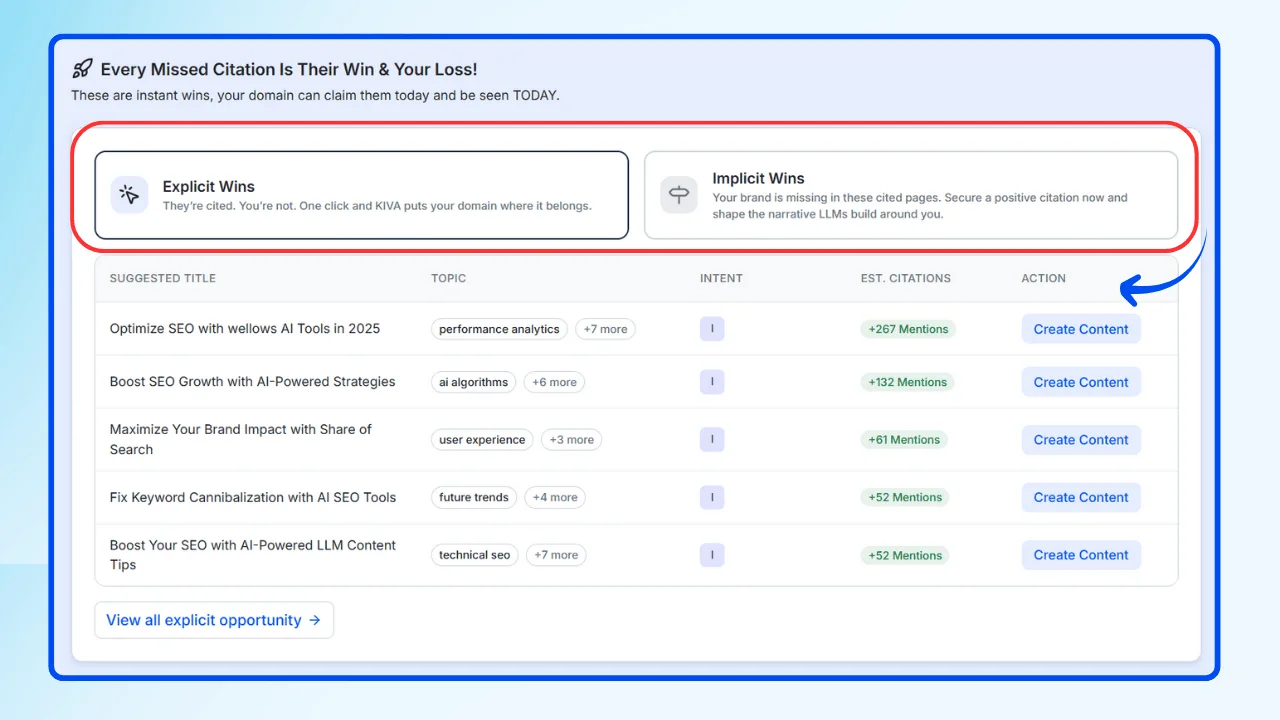
How the Wellows AI Search Visibility Platform helps you execute this:
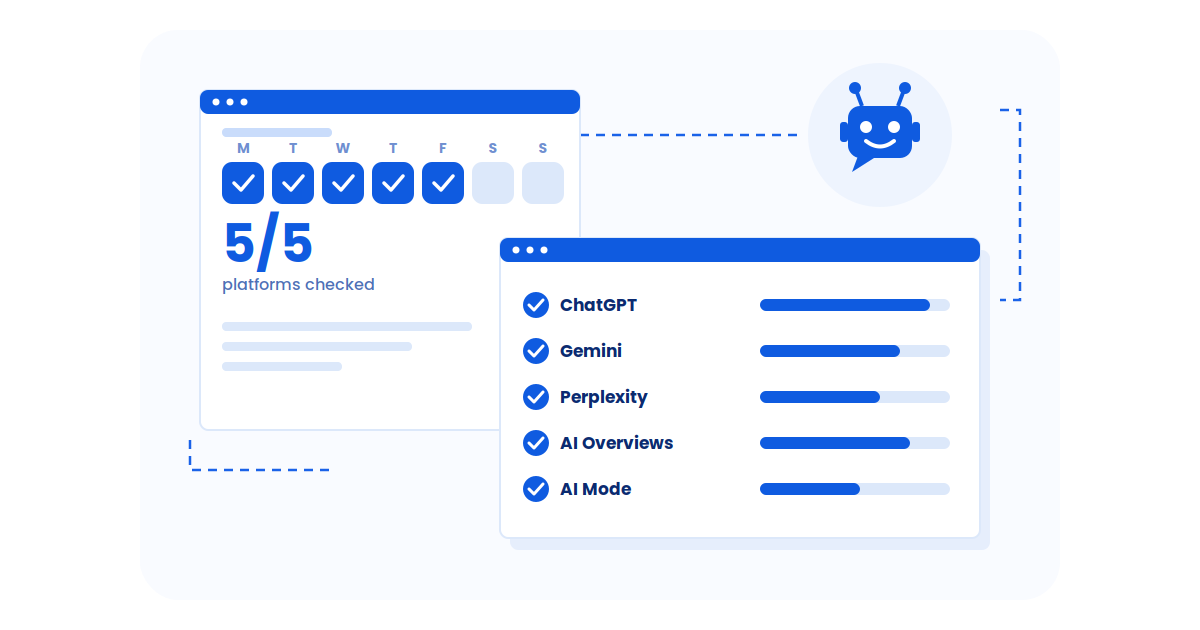
Wellows AI Search Visibility Platform is built to show where your brand is visible or missing across ChatGPT, Perplexity, Gemini, and Google AI surfaces. You can track your Citation Score, see Explicit and Implicit Wins, and compare visibility against real competitors. That means you do not guess what AI might cite.
You see the exact topics, queries, and surfaces where competitors are showing up and you are not, then fix those gaps with a clear priority order.
In short, these strategies work best when you can measure them. Wellows gives you that measurement layer and turns AI visibility improvement into a repeatable workflow.
What AI Visibility Strategies Work Best for Ecommerce Brands in 2025?
In 2025, ecommerce discovery is shifting inside AI answers, not just blue links. Shoppers ask ChatGPT or Perplexity what to buy, and those systems recommend brands they can clearly understand, trust, and cite. So visibility now depends on how strong your content and product data look to AI, not only how high you rank in Google.
These strategies apply across industries, but ecommerce brands face unique AI-driven buying behavior. Here’s how they should adapt in 2025.
- Build citation-ready category and product content:
Create pages that answer full buying intent, add clear summaries, comparisons, and FAQs. AI prefers structured, complete answers. - Make product data entity-rich and structured:
Use complete attributes (size, material, compatibility, audience, outcomes), keep naming consistent, and add Product/Offer/Review/FAQ schema. - Strengthen topical authority around buying themes:
Build clusters (one pillar + supporting subpages) so AI sees your store as an authority in the niche. - Earn third-party mentions and reviews:
Get cited on trusted sites and discussed in communities like Reddit/Quora. AI pulls from credible external proof. - Track AI visibility gaps and fix them fast:
Use the Wellows AI Search Visibility Platform to see where competitors are cited and you’re missing, prioritize gaps by demand, then execute inside Wellows refine with the AI Humanizer.
Ecommerce AI visibility in 2025 comes from clear entities, strong buying-intent coverage, trusted off-site proof, and continuous tracking. Wellows makes this measurable and repeatable so you’re not guessing what AI will recommend next.
Putting It All Together — Action Plan & Roadmap
AI visibility isn’t built overnight. It requires a structured plan that balances quick fixes, mid-range projects, and long-term authority building— in short, actionable strategies for improving AI system visibility.
Roadmap to Maximize AI Visibility
What Are the Immediate Wins (Next 1–4 Weeks)?
- Audit existing content for technical issues: Check robots.txt, confirm AI crawlers aren’t blocked, and ensure schema markup (FAQ, HowTo, Product, Organization) is implemented correctly. A technical baseline makes your content discoverable by both search engines and AI systems.
- Identify 5–10 citation gaps: Use tools like Semrush AI SEO Toolkit to see where competitors are cited in AI answers but you are missing. These become your first set of “visibility opportunities.”
- Create or update a comparison piece: Formats like “Tool A vs Tool B” or “Best [Topic] Tools” are frequently cited in AI overviews and chatbots. Updating at least one of these gives you a quick chance to capture citations.
What Are the Medium-Term Strategies (1–3 Months)?
- Build topical clusters: Develop pillar content supported by in-depth articles that cover related queries. Clusters help AI models recognize you as an authority.
- Launch outreach and guest contributions: Contribute to third-party sites, industry blogs, and forums to earn citations beyond your own domain. AI favors diverse, authoritative sources.
- Set up monitoring systems: Implement dashboards for tracking metrics like share of voice, sentiment of mentions, and competitor presence in AI results. This ensures you measure progress and adjust strategy.
What Are the Long-Term Priorities (3–12 Months)?
- Grow authority through industry recognition: Aim for features in respected publications, expert roundups, or collaborations. Trusted mentions increase the likelihood of AI citations.
- Continuously refresh high-value content: Update statistics, case studies, and evergreen guides. AI models give preference to fresh, updated information.
- Expand to new AI platforms and languages: Don’t limit visibility to Google’s AI Overviews. Optimize for ChatGPT visibility, Perplexity, and Gemini as well as voice assistants.. If your market is global, consider multilingual content for wider AI adoption.
This roadmap ensures you start with quick technical and content wins, then scale to authority and long-term dominance in AI-driven visibility.
Key Challenges in Achieving AI Visibility (and How to Solve Them)
Achieving AI visibility isn’t straightforward. While traditional SEO lays the foundation, AI-driven search brings new hurdles — from shifting citations to bias toward big brands. Understanding these challenges is the first step, and solving them ensures your content stays present in AI-generated answers.
Challenges & How to Overcome Them
- Measuring AI Visibility
- Hard to track because AI results change by user and query.
- Use tools like Semrush or Writesonic GEO to spot trends.
- Resource Constraints
- Creating content, outreach, and fixing technical issues take time and money.
- Focus on quick wins first, outsource where possible.
- Maintaining Freshness
- AI favors recent content, but updating everything is tough.
- Refresh key pages regularly and track which ones lose visibility.
- Bias Toward Big Brands
- AI often cites large, well-known sites.
- Build niche authority with expert quotes, guest posts, and topic clusters, while strengthening brand signals across the web.
Read More Articles
FAQs
Publish expert, entity-clear content, earn third-party citations, and keep key pages fresh. Use Wellows to see where Claude-style engines cite competitors but skip you, then fill those gaps.
No single guaranteed “300%” play, but big lifts usually come from stronger third-party mentions, deeper topic clusters, and clearer entities/schema. Wellows shows which one you’re missing.
Add relevant schema (FAQ/HowTo/Product/Org), write with clear entities and attributes, then track citation gains. Wellows verifies what actually improves AI visibility.
Conclusion
Enhancing AI visibility is now a core requirement for digital success. Whether through effective tactics for increasing AI prominence
or strategies for AI visibility enhancement in social media, the key is to act consistently across platforms.
Winning in AI-driven search doesn’t mean abandoning SEO, but expanding it. Technical basics like crawlability, backlinks, and content depth remain vital, yet must be paired with AI-specific practices.
Citations from trusted sources, structured data for clear entities, community-driven mentions, and consistently updated content are what AI systems reward. These elements ensure your brand appears not only in search results, but inside the AI-generated answers users increasingly rely on.
The path forward is manageable if tackled step by step. Start with a site audit to fix technical barriers and identify citation gaps. Then build topical clusters, strengthen authority through outreach, and use monitoring tools to track visibility over time.
The best time to start is now. Choose one or two strategies from this roadmap, implement them, and measure the results. Each small improvement compounds, building sustainable AI visibility and long-term authority.