AI search engines are changing how brands earn visibility, trust, and recommendations. Instead of browsing multiple pages, users increasingly rely on AI-generated answers to compare products and brands.
A SparkToro, 2024 study found that over 58% of Google searches now result in zero clicks, signaling a major shift toward in-answer discovery rather than website visits. In this environment, only a small set of brands mentioned in AI answers receive attention.
This behavior is reinforced by how generative systems surface information. According to Adobe Analytics, generative AI search referrals grew more than 10× year over year in 2024, showing rapid adoption of AI-led discovery paths.
These systems evaluate brands using principles aligned with Generative Engine Optimization, where structured data, entity clarity, citations, and real-world authority determine which brands are included.
Strong AI search visibility now decides whether a brand appears inside AI-generated answers at the exact moment users are making decisions.
How Do AI Search Brand Recommendations Work?
AI search brand recommendations are based on how clearly and confidently a brand can be referenced in AI-generated answers, so improving those signals helps you boost brand authority with AI in search SEO. Systems like ChatGPT, Perplexity, and Gemini prioritize brands that are consistently mentioned in authoritative sources and are well-defined in context.
Brands are recommended when they are clearly identified as entities and linked to specific use cases, which is why brands that understand how to earn mentions in AI search are more likely to appear inside AI-generated answers.
Brands are recommended when they are clearly identified as entities and linked to specific use cases, which depend heavily on how AI selects sites to cite during answer generation.
This is achieved when a brand is repeatedly cited in reliable content, described consistently, and tied to well-defined products or services. Many teams validate this behavior using a ChatGPT Visibility Tracker to see which sources and entities AI systems consistently rely on when forming recommendations.
Did you know?
- Citations: Repeated mentions in trusted content increase the chance of being recommended.
- Entities: Clear brand definitions help AI identify when to recommend a brand.
- Trust: Verified facts and third-party validation ensure reliability.
- Context: Brands associated with specific use cases are recommended more accurately.
AI systems prioritize clear, verifiable brands, and LLM citation tracking helps explain why some SEO-optimized brands still fail to appear in AI-generated responses.
How AI Influences Brand Choices Across Search Engines
AI influences brand choices by prioritizing personalization and context over traditional SEO metrics like backlinks. Unlike classic SEO, which focuses on keyword rankings and link popularity, AI-driven systems tailor recommendations based on user behavior, preferences, and the context of their queries, reflecting the shift toward LLM SEO.
AI models, such as ChatGPT and Perplexity, analyze user intent to offer highly relevant brand suggestions, ensuring that the recommendations align with the user’s specific needs. AI also considers brand signals to assess which brands are most relevant for a given query.
Signals like consistency, trustworthiness, and authority matter more than sheer popularity, reflecting how AI selects sites to cite before making brand recommendations. Brands with strong, well-defined signals are recommended more often, as AI systems can more easily verify their credibility.
How Do I Audit My Brand’s Citation Frequency in ChatGPT and Perplexity?
I start by entering my website domain into Wellows.
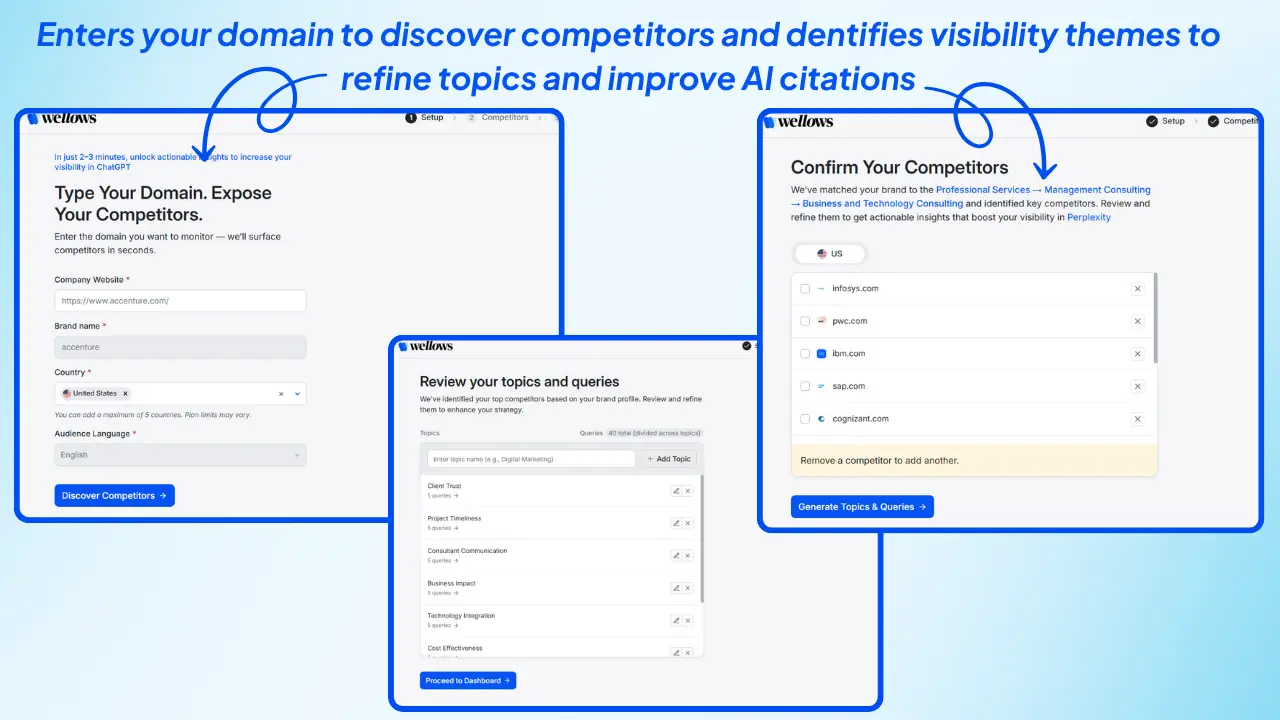 The platform automatically identifies my brand name, feature names, product entities, and direct competitors without any manual setup or prompt guessing.
Wellows scans AI-generated results to uncover the queries, topics, and recommendation contexts where my brand should appear. This removes the need to manually test prompts in ChatGPT or Perplexity because the platform already maps real AI visibility surfaces.
Once the analysis runs, Wellows performs a structured audit that audits brand visibility on LLMs.
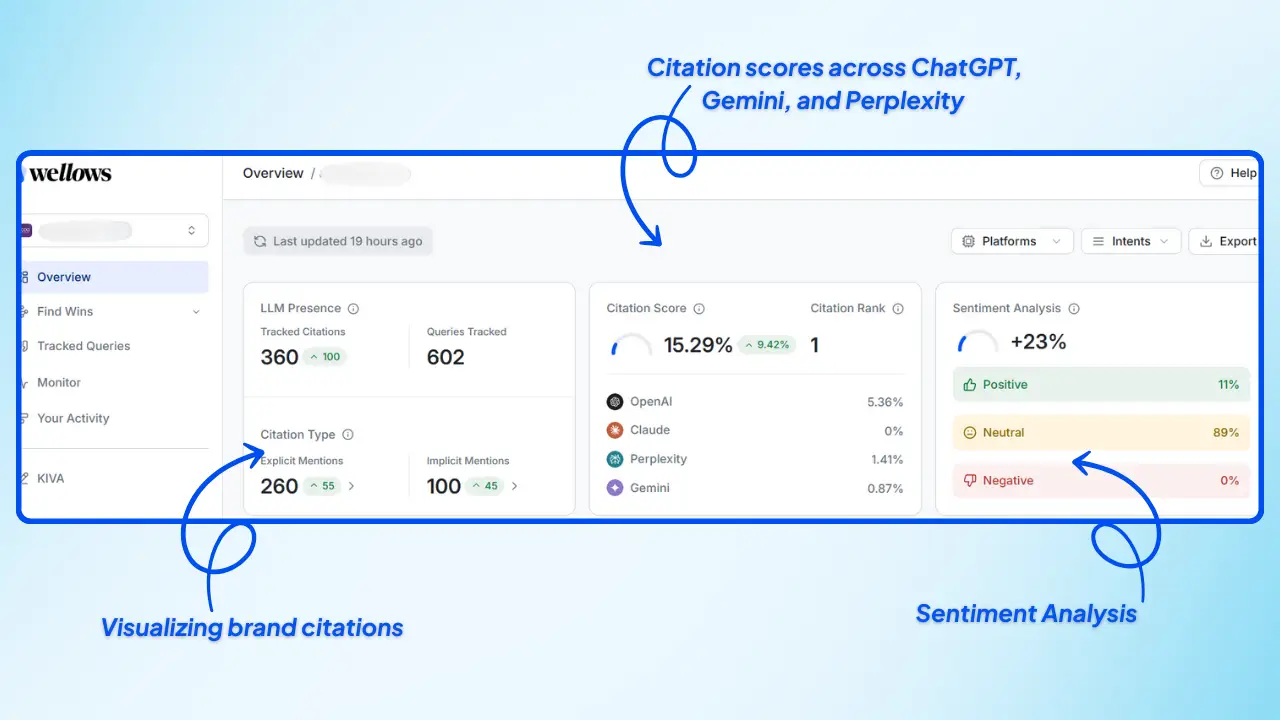 It shows where my brand is explicitly cited, implicitly referenced, or missing across ChatGPT, Perplexity, and other AI systems, and calculates Citation Score to quantify visibility against competitors.
I can clearly see explicit mentions where my brand is credited, implicit mentions where my brand is used without attribution, and missed opportunities where competitors are cited instead.
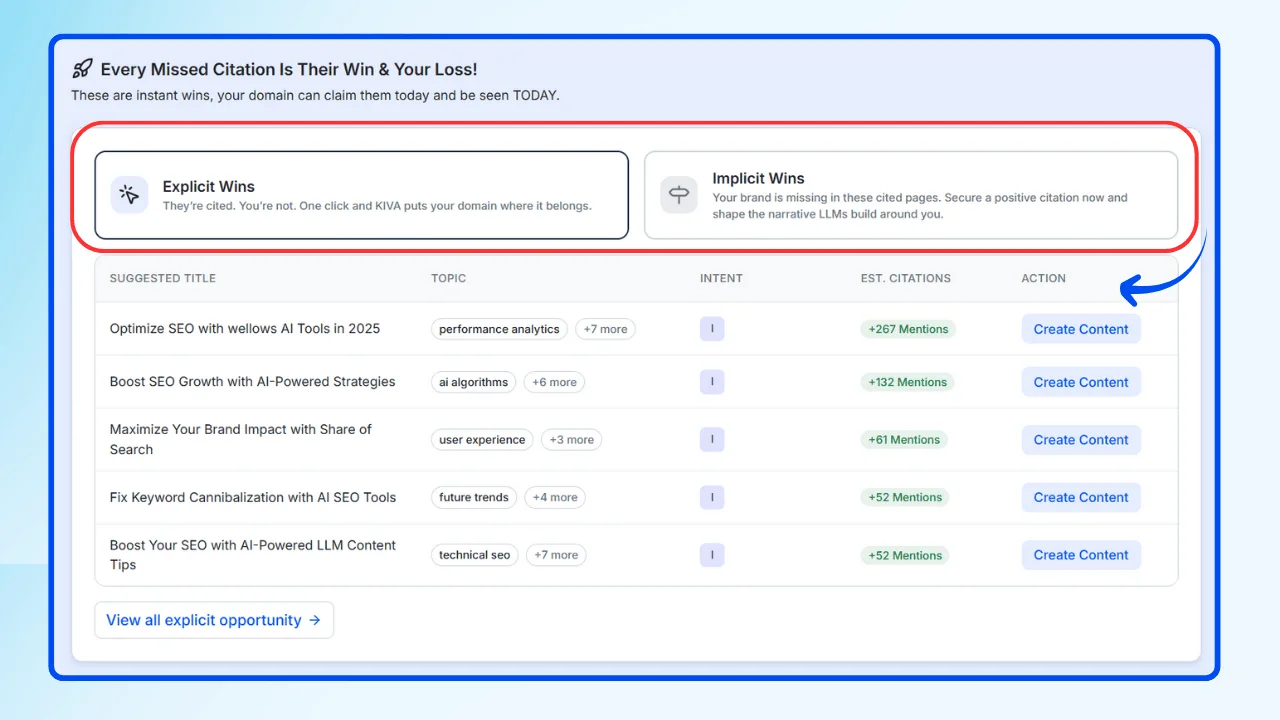
These patterns match real AI behavior demonstrated in the ChatGPT visibility experiment.
Wellows provides historical data showing when my citation frequency increased or dropped over time.
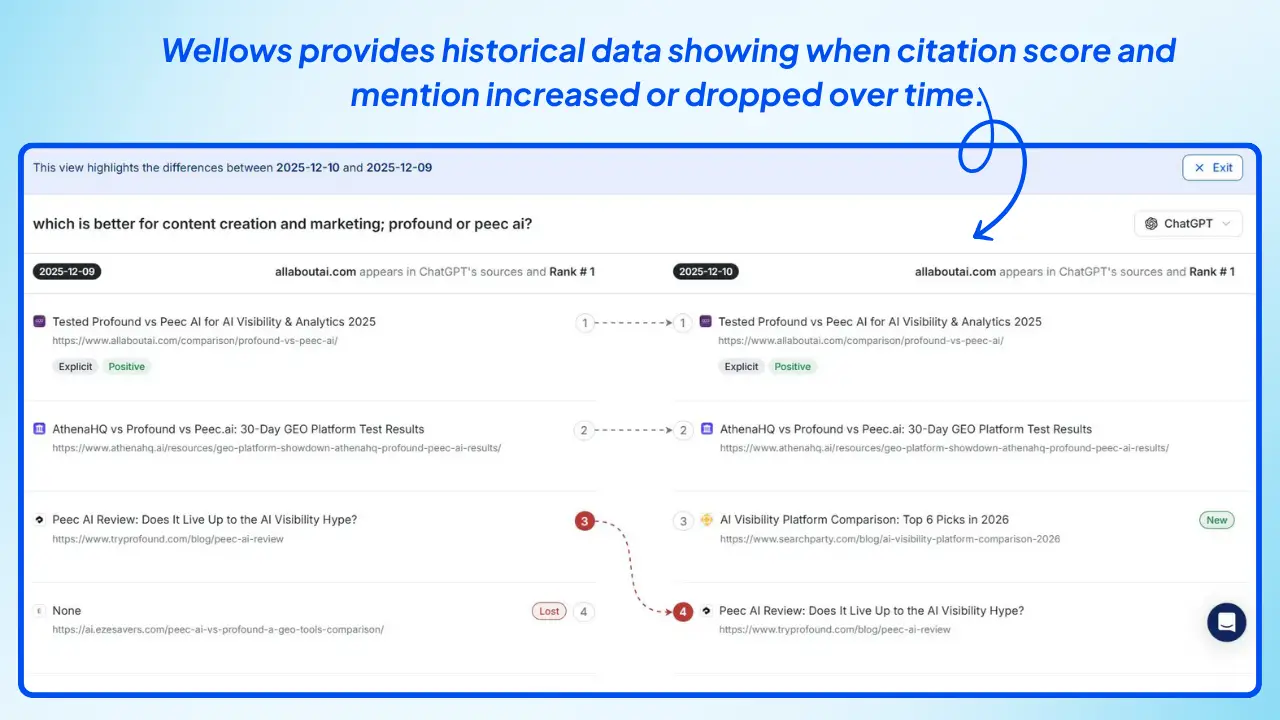 This helps me connect visibility changes to content updates, competitor improvements, or shifts in AI recommendation behavior.
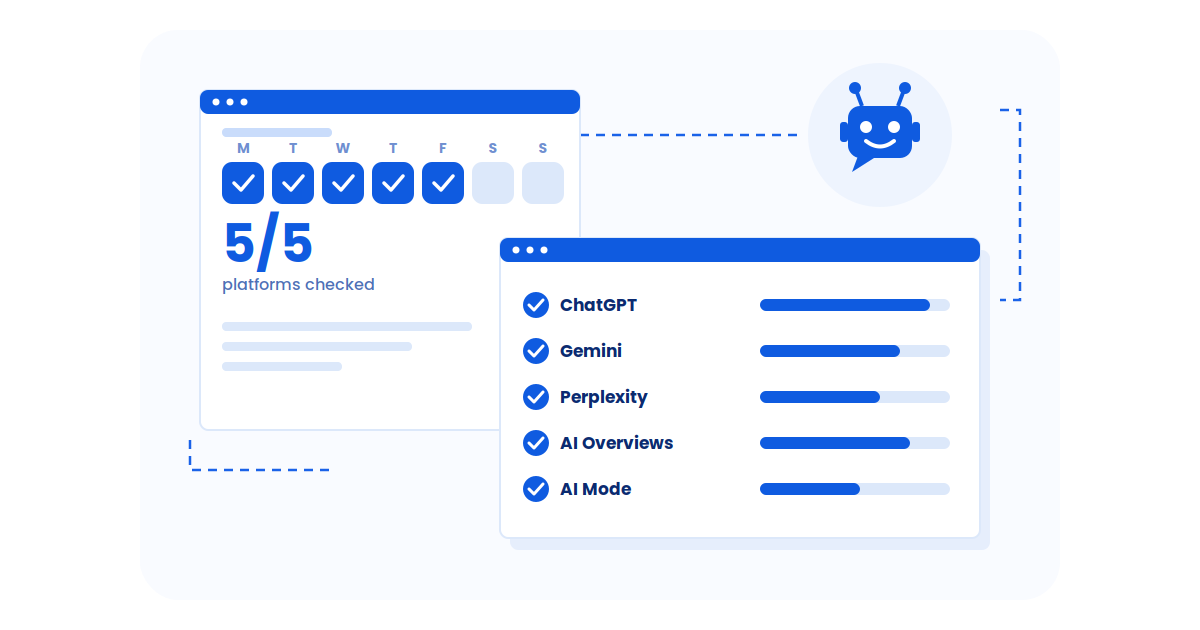
Wellows continuously monitors AI mentions on a daily basis.
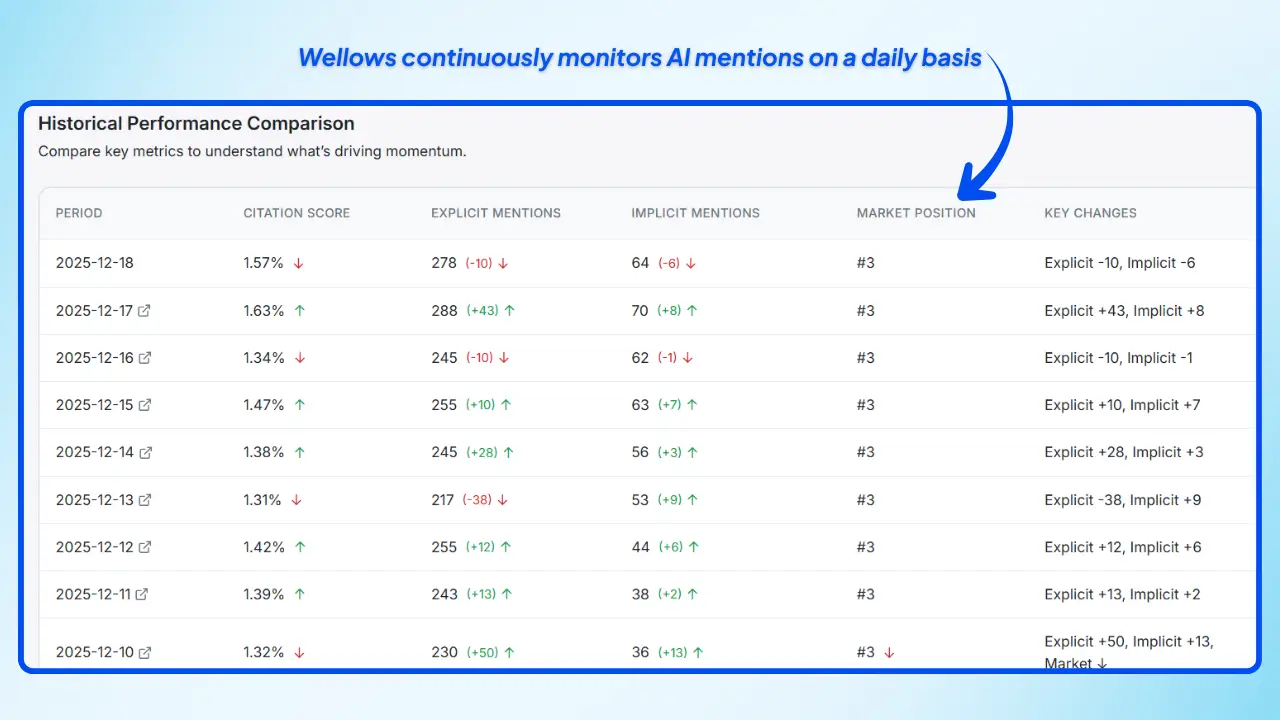
Using these insights, I fix entity gaps, improve structured content, and strengthen authority signals so AI systems can verify and cite my brand more consistently in future responses.
Want to see how often your brand is cited inside AI answers?
How Do Different AI Search Engines Compare for Brand Visibility?
Different AI search engines recommend brands in different ways because each system relies on distinct data sources, ranking logic, and response formats. Understanding these differences helps brands align their content, entities, and trust signals with how each platform evaluates visibility.
Did you know?
| AI Search Engine | How It Recommends Brands | What It Prefers |
|---|---|---|
| ChatGPT | Generates conversational answers and cites brands it can clearly explain and verify. | Strong entities, consistent brand descriptions, authoritative explanations, and structured content aligned with ChatGPT SEO. |
| Perplexity | Acts like an answer engine, showing sources alongside recommendations. | Clear citations, trustworthy references, comparison-friendly content, and signals aligned with Perplexity search visibility. |
| Google Gemini | Surfaces brands inside AI Overviews and blended search results. | Strong SEO foundations, schema, entity consistency, and topical authority tied to Google’s knowledge systems. |
Each platform rewards clarity over popularity. Brands that maintain consistent entities, trusted references, and structured explanations are more likely to appear across all three systems, even though the recommendation mechanics differ.
Are AI Brand Recommendations Reliable for Users and Brands?
Consumer reliance on AI-generated answers is rising quickly. Bain & Company research shows that a majority of users now rely on AI summaries for a significant share of their searches, changing how brands are discovered and evaluated (Bain & Company, 2024).
According to reporting on Bain’s analysis, around 60% of searches now end without a click because answers are delivered directly by AI or search interfaces, increasing the importance of in-answer brand visibility (Yahoo Finance, 2024).
Consumer trust in AI recommendations is growing but not absolute. An Omnicom Media Group study found that 44% of consumers trust AI-recommended products or brands, indicating cautious but increasing acceptance (Omnicom Media Group, 2024).
Reliability improves when AI systems rely on authoritative, consistent information. Brands aligned with experience, expertise, authority, and trust signals outlined in the E-E-A-T checklist are cited more accurately and consistently.
Academic research shows that user trust increases when AI answers include citations, even if the responses are imperfect, because citations signal verifiability and transparency (arXiv, 2025).
These findings show that AI brand recommendations are increasingly influential, but their reliability depends on citation quality, entity accuracy, and transparent sourcing rather than usage alone.
- AI brand recommendations change over time. Models update, sources shift, and competitor signals improve. Without monitoring, brands cannot detect when citation frequency drops or when competitors start replacing them inside AI answers.
- Wellows tracks how often your brand is cited, implied, or excluded across AI systems like ChatGPT and Perplexity. This visibility helps brands identify recommendation gaps before they impact discovery and demand.
- Misattribution is a hidden risk. AI systems often use a brand’s expertise but credit another entity with stronger signals. Wellows surfaces these implicit opportunities so brands can reclaim attribution.
- Historical tracking reveals cause and effect. When citations decline, Wellows shows whether the drop aligns with content changes, competitor improvements, or shifts in AI behavior, enabling faster correction.
- Daily monitoring turns AI visibility into an actionable metric. Instead of relying on assumptions, brands can continuously optimize entity clarity, trust signals, and content structure based on real AI citation data.
If AI systems influence how users discover and trust brands, monitoring how those systems cite your brand is no longer optional. Start Your 7-Day Trial
AI-Driven Brand Recommendations Across Industries
AI systems recommend brands differently across industries based on how clearly products, attributes, and use cases are defined. Brands that structure their information to match industry-specific intent are more likely to appear in AI-generated recommendations. Did you know? AI systems recommend tech brands when product capabilities, integrations, and use cases are clearly defined and consistently referenced across authoritative sources. In B2B contexts, LLMs favor vendors with strong entity clarity, documented features, and proof of adoption, which is why platforms optimized for AI search visibility for B2B SaaS brands are cited more often in comparisons and shortlist-style answers. Did you know? For beauty and personal care, AI recommendations are driven by ingredient transparency, category fit, and user sentiment. Brands with clear product taxonomy, consistent claims, and third-party validation are more likely to appear in generative answers, a pattern reflected in how AI search visibility for beauty brands improves when entities and attributes are structured correctly. Did you know? When users ask for sustainable or eco-friendly brands, AI systems prioritize verifiable environmental claims, certifications, and contextual relevance. Brands that clearly connect sustainability attributes to specific products are recommended more reliably, while vague or unverified claims are often excluded from AI-generated suggestions.AI recommendations for tech brands
AI brand suggestions for beauty products
AI search for eco-friendly brand recommendations
Best AI Tools and Systems for Brand Recommendations
AI-driven brand recommendations are shaped by three main categories of systems, each influencing visibility in different ways.
Search-based AI systems focus on retrieving and summarizing information from indexed sources. They favor brands with strong SEO foundations, clear entities, and consistent references across the web.
LLM-based assistants generate answers by synthesizing patterns from training data and live sources. These systems recommend brands they can explain confidently, based on clarity, consistency, and contextual fit rather than keyword rankings.
AI visibility platforms sit between brands and AI systems by measuring how brands actually appear inside generative answers. Wellows An AI visibility platform helps brands understand citation frequency, attribution quality, and competitive gaps across AI engines.
Across all categories, tools that support structured topic expansion and intent coverage, such as query fan-out, improve recommendation outcomes by aligning brand content with how AI systems interpret and surface brand options.
How Brands Can Improve AI Search Brand Recommendations
Measuring Success: KPIs for AI Search Brand Recommendations
Tracking AI search brand recommendations requires metrics that go beyond traffic and rankings. AI visibility focuses on how often and how accurately a brand is referenced inside generative answers, which is why understanding both Google Ranking and ChatGPT visibility is essential for modern SEO strategy.
Citation Score is a primary KPI that measures how frequently a brand is cited or referenced across AI systems relative to competitors. A rising score indicates stronger recommendation visibility, while declines signal emerging gaps in entity clarity or trust.
Recommendation coverage tracks how many relevant queries surface the brand inside AI answers. This shows whether AI systems associate the brand with the right use cases and decision contexts.
Attribution quality measures whether AI systems credit the brand directly or imply its expertise without naming it. Higher direct attribution reflects stronger entity verification.
Competitive share of voice compares brand citations against peers within the same recommendation space, highlighting where competitors outperform or lose ground.
These KPIs align with broader Generative Engine Optimization KPIs and can be validated against behavioral signals found in GSC data to understand how AI visibility influences downstream search demand and engagement.
Read More Articles
FAQs
AI brand suggestions are generated inside answers, not rankings. Instead of listing pages, AI systems recommend brands they can clearly explain, verify, and match to a specific user intent. Traditional search relies more on keywords and links, while AI focuses on context and entity clarity.
AI systems rely on a mix of structured website content, authoritative third-party sources, reviews, documentation, and historical patterns. Brands with clear product descriptions, consistent features, and trusted references are more likely to be recommended.
This usually happens when AI understands your product or expertise but cannot confidently attribute it to your brand. Weak entity signals, inconsistent naming, or missing verification often cause implicit mentions instead of direct citations.
Yes. AI recommendations shift as models update, sources change, and competitor signals improve. Brands can gain or lose visibility depending on how well their information stays consistent, current, and verifiable.
Yes. AI systems do not favor brand size by default. Smaller brands can appear in recommendations if their entities are clear, their use cases are well defined, and their information is easier for AI systems to verify than larger but less structured competitors.
Final Thoughts
AI search brand recommendations are now shaping how users discover, compare, and choose brands across generative search platforms. Visibility depends less on rankings and more on whether AI systems can clearly understand, verify, and explain a brand in context.
- AI systems recommend brands they can confidently interpret, not brands that simply rank well.
- Clear entities, structured content, and consistent trust signals directly increase recommendation visibility.
- Citation frequency and attribution quality matter more than raw traffic in AI-driven discovery.
- Brand visibility in AI search is measurable, monitorable, and improvable with the right signals.