I’ve seen it happen again and again. Brands ranking on page one but still getting ignored. Why? Because search has changed. Today, it’s not enough to rank. If AI doesn’t recognize your brand, trust it, or mention it, you’re already losing visibility.
Search is no longer just about blue links. AI-powered search engines now answer questions, recommend brands, and decide who deserves attention, .especially platforms like Perplexity, where understanding how to rank in Perplexity has become part of modern AI search strategy.
If your brand isn’t being cited, summarized, or referenced by AI, you’re invisible where real search decisions are made.
That’s why it’s time to boost brand authority with AI in search SEO. This isn’t about chasing keywords anymore. AI-driven search rewards brands that show expertise, consistency, and strong authority signals across the web. The brands winning today aren’t just ranking, they’re being chosen and recommended by AI search engines based on strong authority and trust signals.
In this guide, I’ll walk you through practical, proven ways to boost brand authority with AI in search SEO, so your brand shows up in AI Overviews, zero-click searches, and conversational results and doesn’t just appear in search, but stands out and leads.
- Brand authority is about trust, credibility, and recognition — not just rankings.
- In AI-powered search, being trusted matters more than simply appearing on page one.
- AI systems prefer brands that show consistent expertise, clear authorship, and reliable information.
- Strong brand authority increases chances of being cited in AI Overviews, summaries, and zero-click results.
- E-E-A-T (Experience, Expertise, Authoritativeness, Trustworthiness) is the foundation of AI search visibility.
- AI-generated content without human expertise, verification, and editorial oversight often underperforms.
- Traditional SEO signals like backlinks and Domain Authority still matter, but they no longer work alone.
- Brand authority helps AI decide which source to recommend, not just which page to rank.
- Authority signals include brand mentions, expert authors, citations, structured data, reviews, and trust signals.
- Measuring brand authority requires tracking branded searches, mentions, engagement, backlinks, and share of voice.
- To win in AI search, brands must combine strong E-E-A-T, structured data, attribution, and real-world credibility.
What is Brand Authority?
Brand authority is the level of trust, credibility, and recognition your brand has across the web. It reflects how confidently people, search engines, and AI systems see your brand as a reliable source in your industry.
When a brand has strong authority, it is not just visible — it is believed. Users trust its content, other websites reference it, and AI systems are more likely to mention or recommend it in search results.
Brand authority is built over time through consistent expertise, accurate information, and positive recognition—while domain authority tips supports the site-level strength that helps those signals travel farther.. It comes from factors such as expert-led content, brand mentions, backlinks from reputable websites, customer trust, and a clear public presence.
In modern search, brand authority goes beyond rankings. AI-powered search engines evaluate whether a brand is well-known, frequently cited, and associated with a specific topic or expertise. If AI systems recognize your brand as an authority, they are more likely to surface it in AI Overviews, summaries, and zero-click results.
This is also the logic behind how to rank in chatgpt. ChatGPT is more likely to reference brands it can confidently associate with a topic, use case, and trusted sources.
In short, brand authority answers a simple question for both users and AI systems:
“Is this brand trustworthy enough to recommend?”
Strong brand authority means your brand is not just found, it is chosen.
Why Brand Authority Matters (Especially for AI Search)
In an AI-powered search environment, building strong brand authority has become essential for visibility and credibility. AI systems are designed to surface information from sources they consider reliable and low-risk. Brands that demonstrate authority are far more likely to be referenced, summarized, or recommended in AI-generated search responses.
- Enhanced Visibility: AI-driven search engines are more likely to surface content from brands they recognize as authoritative. This increases the chances of your brand appearing in AI summaries, answer boxes, and conversational results.
- Increased Trust: People naturally trust information from brands they are familiar with and see as knowledgeable. AI systems mirror this behavior by prioritizing brands that consistently demonstrate expertise and reliability.
- Competitive Advantage: Strong brand authority helps your business stand out in crowded search spaces. When AI systems must choose between similar sources, trusted brands are more likely to be selected over lesser-known competitors.
What Role does E-E-AT play in AI SEO?
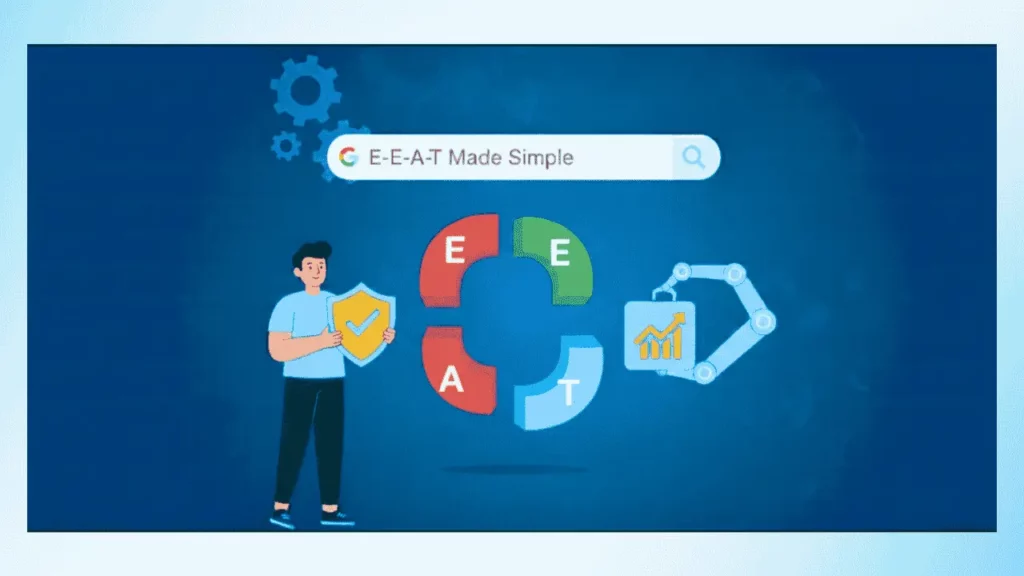
E‑E‑A‑T (Experience, Expertise, Authoritativeness, Trustworthiness) is a set of quality signals Google uses to evaluate content and it plays a growing role in how AI and E-E-A-T affect modern marketing strategies.. In AI SEO it’s the framework that determines whether AI‑assisted content will rank well or be downgraded — so you must build AI content pipelines that demonstrate real expertise, first‑hand experience, verifiable authority, and trustworthiness.
Why E-E-AT matters for AI SEO
Google uses E-E-A-T signals through both human quality raters and automated systems to assess content quality—especially for YMYL (Your Money or Your Life) topics.
Google has publicly documented that its systems look for signals aligned with E‑E‑A‑T, and that it uses search quality raters to evaluate whether results reflect strong E‑E‑A‑T—especially for YMYL topics.
AI-generated content that feels shallow, repetitive, poorly verified, or clearly automated is far more likely to underperform.
Strong E-E-A-T doesn’t just improve visibility; it also drives better engagement and reduces risk by minimizing factual mistakes, user complaints, and brand trust issues.
Most importantly, showing clear E-E-A-T lowers the chances of AI-assisted content being classified as low-quality or mass-produced automation.
How does E-E-AT influence AI Search Visibility?
E-E-A-T, which stands for Experience, Expertise, Authoritativeness, and Trustworthiness, is a framework that significantly influences AI search visibility. As AI-driven search engines become more prevalent, they prioritize content that demonstrates these qualities to ensure users receive accurate and reliable information.
- Experience: AI systems value content that reflects first-hand knowledge and real-world experience. For instance, a travel article written by someone who has personally visited the destination and provides original insights is more likely to be favored.
- Expertise: Content that showcases deep understanding and specialized knowledge in a particular field is prioritized. This includes well-researched articles, data-backed reports, and insights from professionals with relevant qualifications.
- Authoritativeness: AI search engines assess the credibility of content by considering factors such as author credentials, domain authority, and the presence of citations from reputable sources. Websites with high domain authority are more likely to be cited by AI systems, enhancing their visibility.
- Trustworthiness: Content that is transparent, accurate, and free from misleading information builds trust with both users and AI systems. Including clear author information, citing reputable sources, and ensuring content accuracy are essential practices.
In the evolving landscape of AI search, adhering to E-E-A-T principles is crucial for content creators aiming to enhance their visibility. By demonstrating experience, expertise, authoritativeness, and trustworthiness, content is more likely to be recognized and cited by AI systems, leading to increased exposure and credibility.
Concrete ways to apply E-E-A-T when using AI for SEO
Let’s break down actionable ways to implement E-E-A-T for AI-powered SEO:
- Involve subject-matter experts to write, review, or enrich AI drafts with first-hand insights, real examples, case studies, or on-the-ground experience.
- Include a clear author bio that highlights credentials, experience, and links to other trusted or authoritative work.
- Reference trustworthy primary sources such as academic studies, official government sites, or respected industry publications. Use accurate quotes and relevant links.
- Add a dedicated sources or references section, and avoid making claims that can’t be verified.
- Earn backlinks, mentions, and expert quotes from credible and relevant websites.
- Strengthen authority through visible signals like detailed author profiles, About pages, press mentions, awards, certifications, or industry affiliations.
- Ensure your site uses HTTPS and includes transparent contact details, privacy policies, editorial guidelines, and clear disclosures where needed.
- Fix mistakes openly, keep content current, and show last-updated dates to signal ongoing maintenance and accountability.
AI content should never go live without review by a qualified human, using an E-E-A-T checklist to confirm accuracy, trust, and editorial quality.
Maintain documentation that shows human involvement, edits, and editorial oversight.
- Use AI to speed up research or draft creation, but go beyond it by adding original analysis, proprietary insights, real testing, or unique perspectives.
- The goal is to create content that offers something new—not just a reworded version of what already exists.
- Apply schema markup for authors, articles, organizations, reviews, and FAQs where relevant.
- Design content to be easy to scan, clearly structured, and transparent—helping both users and AI systems understand it better.
Checklist to use before publishing AI-assisted content
- Is a real author clearly identified with verifiable credentials?
- Are all factual statements supported by reliable sources?
- Did a qualified human review and approve the content?
- Does the content offer original insight instead of repeating existing information?
- Are trust elements visible (contact info, privacy policy, HTTPS, editorial standards)?
- Is the content accurate, current, and suitable for the topic’s risk level (YMYL vs non-YMYL)?
Which Authority Signals Do AI Systems Prioritize?
AI systems look for many of the same authority cues that people and search engines rely on—but they don’t always evaluate or prioritize them in the same way. Each system applies its own weighting logic. Below is a clear, practical breakdown of the key authority signals, how different AI systems use them, where mistakes commonly happen, and how you can assess authority in AI-generated outputs.
What “Authority Signals” are Commonly Used
- Source reputation and domain trust: The credibility of the publisher, domain age and history, and editorial standards—such as peer-reviewed journals, established news organizations, and government or educational websites.
- Authorship and credentials: Clearly identified authors, their professional background, institutional ties, and subject-matter expertise.
- Citations and inbound references: Academic citations, backlinks and PageRank signals on the web, and reference patterns that show where information originated.
- Editorial oversight and moderation: Evidence of curated content, fact-checking labels, and material reviewed or approved by qualified editors or experts.
- Consensus and cross-verification: Claims supported by multiple independent and reputable sources, rather than a single voice.
- Freshness and timeliness: Recently updated sources, especially for topics where accuracy depends on current information.
- Behavioral and feedback signals: User interactions such as engagement, shares, upvotes, corrections, and direct feedback.
- Content quality indicators: Clear writing, strong use of evidence, specific details, supporting data, and transparent sourcing.
- Structured metadata and provenance: Identifiers like DOIs, publication dates, dataset references, schema markup, and links to knowledge graphs.
- Verification markers: Platform verification badges, accreditations, and inclusion in trusted or approved publisher lists.
- Training data influence and model context: For large language models, how often and how prominently a claim appears in the training data can affect how confidently it’s reproduced.
Why Is Brand Recognition the Strongest Authority Signal?
Strong brand recognition stands as the ultimate authority signal in the AI search ecosystem, driven by consistent brand signals that AI systems use to identify trusted entities across the web. When users directly search for or mention your brand name, AI engines interpret this as a mark of trust and topical dominance within your sector. Frequent branded search queries and unprompted brand mentions signal that your company deserves to be recommended in AI search engines as a trusted source in your domain.
This strength cannot be easily replicated through generic content or broad keyword targeting. Instead, it emerges over time via repeated exposure, industry contributions, and visible authority-building activities, making brand recognition a powerful asset in the quest to boost brand authority with AI in search SEO.
Proven Strategies to Build Brand Authority
To boost brand authority with AI in search SEO, teams must move beyond traditional SEO and focus on technical and reputational excellence. Here are five practical steps that blend both dimensions, backed by data and actionable examples:
1. Implement Detailed Content Schema
Add organization, author, and product schema markup to every key landing page. This allows AI engines and search bots to interpret the authority and context of your brand, raising your Citation Score.
2. Monitor and Optimize AI Authority Metrics
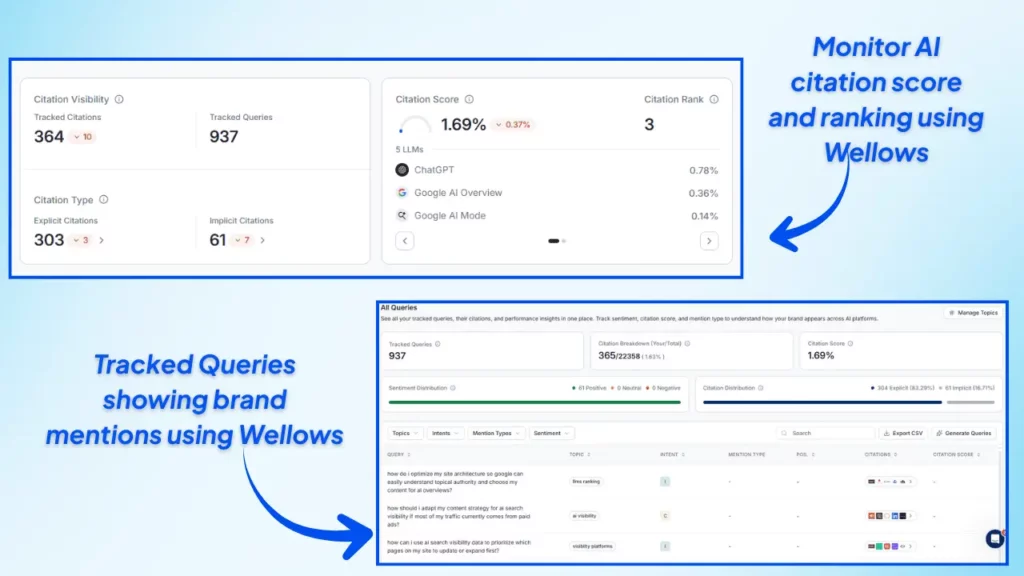
Track citations and brand mentions in generative search ecosystems such as ChatGPT, Gemini, Perplexity, and Google AI Overviews using Wellows Tracking feature. Benchmark your performance and surface new visibility opportunities with AI-powered monitoring.
3. Prioritize Content Attribution
Be explicit with bylines, named sources, and contribution details for every research article, case study, or whitepaper.
4. Design for Zero-Click Results
Design for Zero-Click Results (because it’s already the default behavior). In 2024, 58.5% of U.S. Google searches ended with no click. (Sparktoro, 2024)
Structure content to appear in AI-generated answer boxes and featured snippets. Use succinct Q&A sections, bulletized summaries, and clear organization schema so your brand is positioned for AI search authority even when readers don’t click through.
5. Build and Promote Explicit Trust Signals
Continuously publish third-party endorsements, compliance credentials, and customer proof at the point of discovery. These actions prove reliability to both buyers and algorithms, increasing citation rates and zero-click visibility.
Brands must use this blend of schema, structured attribution, and AI authority metrics to increase citations from major AI search engines.
Regularly audit your authority signals by checking brand visibility on LLMs, update schema as needed, and focus on trust signals that both humans and AI systems can verify., update schema as needed, and focus on actionable user trust signals that can be verified both by humans and AI.
How to Measure Brand Authority
Measuring brand authority means understanding how visible, trusted, and influential your brand is across digital channels. Instead of relying on a single metric, brand authority is best evaluated through a combination of signals that reflect recognition, credibility, and engagement.
- Branded Search Volume: Track how often users search specifically for your brand name. Growth in branded searches usually signals stronger awareness, trust, and demand for your brand.
- Domain Authority (DA) and Domain Rating (DR): SEO tools like Moz and Ahrefs provide metrics that estimate a website’s strength based on link quality and quantity. Higher scores generally suggest a stronger online presence and greater perceived credibility.
- Social Media Engagement: Review how users interact with your brand on social platforms by analyzing likes, shares, comments, and follower growth. Consistent engagement often reflects brand trust and influence.
- Referral Traffic and Backlinks: Examine how many external websites link to your content and send traffic to your site. Links from respected and relevant sources strengthen your brand’s credibility and authority.
- Customer Reviews and Testimonials: Assess customer feedback across review platforms and marketplaces. Positive, consistent reviews indicate strong customer trust and reinforce brand authority.
- Share of Voice (SoV): Compare how often your brand is mentioned online against competitors. A higher share of voice shows stronger market presence and increased authority within your industry.
By regularly reviewing these indicators together, you can build a clearer picture of your brand’s authority and identify opportunities to strengthen it further.
FAQs
Final Thoughts
The shift to AI-powered search demands a sharper focus on authentic authority signals and structured trust.
Consistently applying E-E-A-T principles, harnessing robust content schema, and prioritizing brand recognition will position your organization to boost brand authority with AI in search SEO especially as zero-click and generative results become the norm.
Ongoing adaptation and clear, verifiable expertise are now essential for sustained online reputation and visibility.