Starting a new website can be frustrating. You write good content, follow SEO tips, and still your site doesn’t show up on Google. At the same time, older websites with less content often rank higher. The main reason is simple — your website has no authority yet.
New websites start with zero trust. Google doesn’t know your site, your content, or your brand. Without trust signals like backlinks, strong content, brand mentions, and visibility across emerging AI ecosystems influenced by generative engine optimization agencies, it’s hard for a new site to rank.
This is where Domain Authority becomes important. While Domain Authority is not a Google ranking factor, it still reflects your site’s SEO strength. Today, trust is also measured in AI search, making LLM citation tracking a key signal of whether AI engines trust your content enough to cite it.
In this guide, you’ll learn simple and practical domain authority tips to improve your site rankings. These tips are especially useful for new websites that want to build trust, grow authority, and start ranking over time.
-
- New websites struggle to rank because they start with zero trust and authority
- Domain Authority (DA) is not a Google ranking factor, but it reflects how strong your SEO signals are
- Higher DA usually correlates with better rankings, stronger backlinks, and higher trust
- Authority comes from topical depth, quality backlinks, brand signals, and clean technical SEO
- Focus on earning links, not buying them
- Build topic clusters, not isolated blog posts
- Use internal linking to distribute authority across key pages
- Remove or improve thin, outdated, or low-value content
- Expect 6–12 months for meaningful authority growth on new sites
- Track trends, not just DA scores—watch traffic, rankings, and referring domains
- Build trust first; rankings and visibility follow naturally
What Is Domain Authority?
Domain Authority (DA) is a search engine ranking metric that estimates how likely a website is to rank in search engine results pages (SERPs) when compared to other websites competing for similar keywords.
It is calculated using multiple signals—most notably the quality and relevance of backlinks pointing to a domain—and then expressed on a logarithmic scale from 1 to 100.
Because the scale is logarithmic, early gains are easier to achieve, while increases at higher levels require significantly more authority, trust, and competitive link equity. This makes DA most useful as a comparative metric, helping you benchmark your site’s strength against direct competitors rather than aiming for a specific number.
How Domain Authority Is Calculated (High-Level)
Domain Authority using multiple signals, including:
-
- The number of linking root domains
- The quality and relevance of backlinks
- Overall link profile strength
- Spam signals and link patterns
These signals are fed into a machine-learning model that compares your site against others.
Domain Authority vs Page Authority
-
- Domain Authority (DA) measures the ranking potential of an entire domain or subdomain.
- Page Authority (PA) measures the ranking potential of a single page.
A site can have a high DA while individual pages still struggle—and vice versa. Strong rankings usually happen when both the domain and the page show authority.
Does Domain Authority Affect Google Rankings?
This is where many SEO myths begin.
Myth vs Reality
-
- Myth: Google uses Domain Authority as a ranking factor.
- Reality: Google does not use DA in its ranking algorithm.
Correlation vs Causation
Domain Authority doesn’t cause rankings — but data shows that sites with DA 50+ are about 3.7× more likely to rank in the top 10 for competitive keywords than sites with DA 20–30 (Ranktracker, 2025).
It measures the impact of factors that do influence rankings, such as:
-
- Link quality: Authoritative, relevant backlinks from trusted sites
- Brand signals: Mentions, citations, and branded searches
- Content authority: Depth, topical coverage, and consistency
In short, DA mirrors SEO success—it doesn’t create it.
Why Domain Authority Matters for SEO in 2025
SEO in 2025 is far more competitive than ever — and over 53% of all website traffic comes from organic search, proving that ranking well is critical to attracting visitors. (Digitalsilk, 2025)
Ranking isn’t just about keywords anymore—it’s about trust, authority, and visibility across multiple surfaces.
That shift is why many teams rethink what authority really changes in AI search, not just Google rankings. If you’re unsure whether domain authority matters for AI citations or only traditional SEO, the answer determines whether content alone is enough or if you also need to build the authority signals AI engines consistently reward.
-
- More content is published daily than ever before
- Established brands dominate competitive queries
- Thin or low-authority sites struggle to break through
Domain-level authority influences visibility across:
-
- AI Overviews: AI systems favor trusted, authoritative sources
- Zero-click searches: Only the most credible sites get surfaced
- Brand visibility: Recognizable brands earn clicks even without top rankings
Low-authority sites often hit a ceiling where content improvements alone stop moving the needle. Authority is what allows rankings to scale.
Domain Authority Tips to Improve Your Site Rankings
Improving Domain Authority isn’t about chasing a score—it’s about strengthening the signals that search engines associate with trust, relevance, and authority.
The strategies below focus on building a solid SEO foundation that naturally improves Domain Authority while also driving better rankings, traffic, and long-term visibility.
1. Create High-Quality, Topical Authority Content
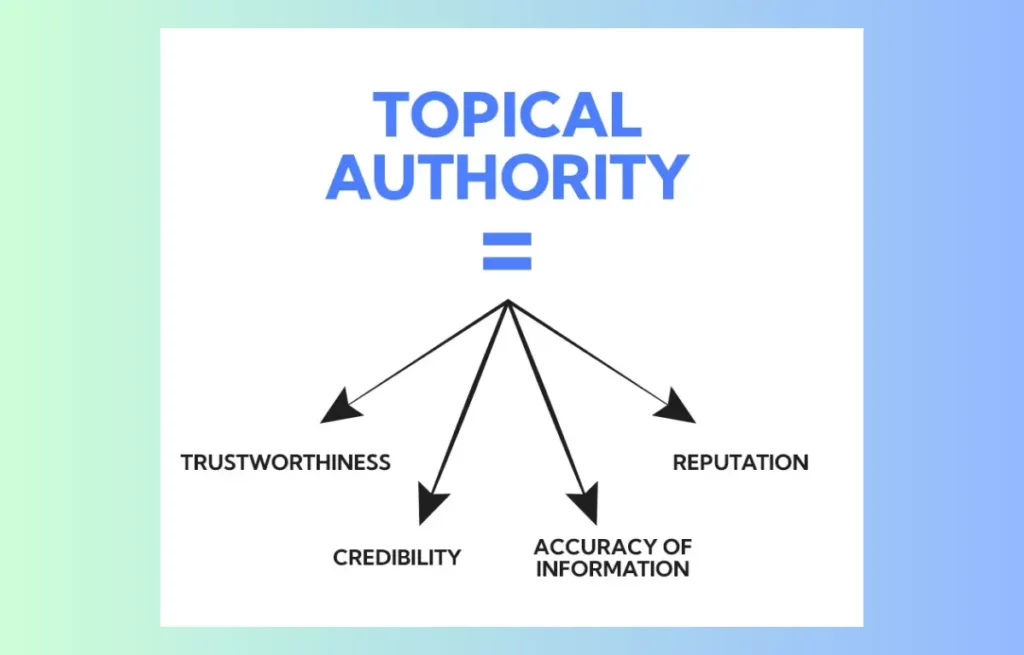
Authority starts with content depth, not volume.
-
- Build topic clusters instead of isolated blog posts
- Cover search intent completely—informational, commercial, and navigational
- Regularly update outdated content to maintain freshness and accuracy
Google and users trust sites that demonstrate expertise across an entire topic, not just single keywords.
2. Earn High-Quality Backlinks (Not More Backlinks)

Backlinks remain one of the strongest authority signals—but quality matters far more than quantity.
-
- Prioritize relevant, niche-specific links
- Focus on editorial links earned through value, not manipulation
- Avoid toxic practices like paid link schemes or PBNs
A few authoritative links can outperform hundreds of low-quality ones.
3. Improve Internal Linking Structure

Internal links help distribute authority across your site.
-
- Pass link equity to important pages strategically
- Use contextual internal links within content
- Strengthen cornerstone pages and commercial URLs
A strong internal structure helps Google understand what matters most.
4. Optimize Technical SEO Foundations
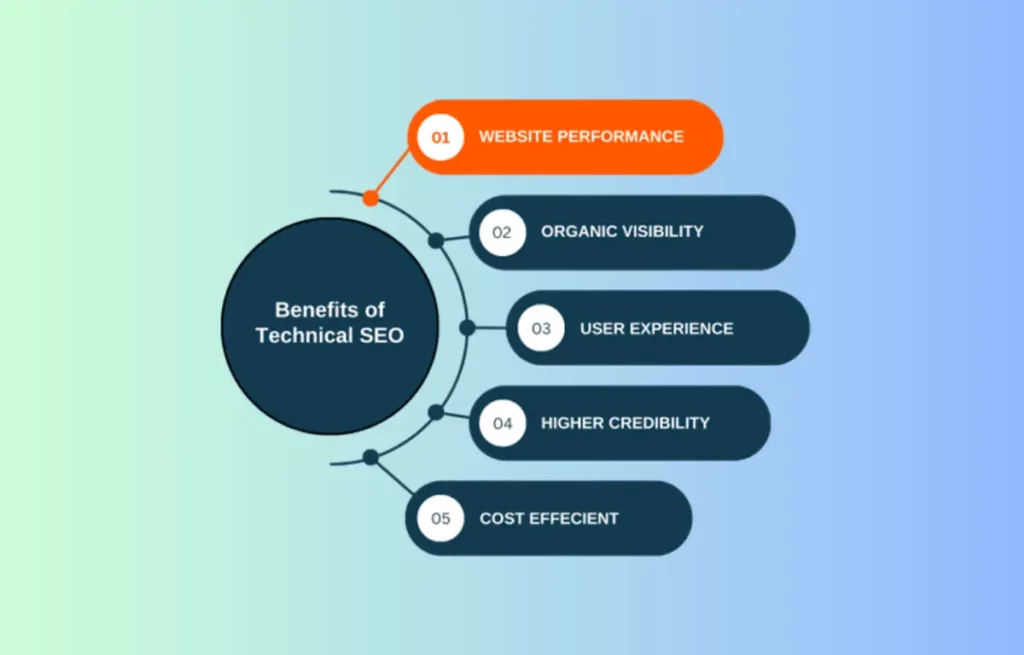
Authority is fragile if technical SEO or foundational on-page SEO elements are broken.
- Improve site speed and Core Web Vitals
- Ensure proper crawlability and indexability
- Fix broken links, redirect chains, and orphan pages
Technical issues dilute authority and waste crawl budget. Before scaling authority-building, review key on page SEO elements to ensure pages convert that equity into rankings.
5. Build Brand Signals and Online Mentions

Brand authority increasingly influences SEO performance.
-
- Encourage branded searches
- Earn unlinked brand mentions on trusted sites
- Maintain consistent presence across reputable platforms
Even without links, brand mentions help establish trust and credibility.
Building brand signals in 2026 extends beyond traditional mentions and link profiles. As AI search engines increasingly draw from citation patterns and third-party references to determine which brands to surface in answers, GEO for startups has become a complementary strategy to domain authority building — one focused on earning mentions in the sources LLMs already trust rather than waiting for domain metrics to catch up.
6. Remove or Improve Low-Quality Pages

Not all content helps your site.
-
- Audit and improve thin or outdated pages
- Reduce index bloat by noindexing or removing weak URLs
- Consolidate overlapping or similar content
Fewer, stronger pages often outperform large but diluted sites.
7. Maintain a Clean and Natural Link Profile

Authority growth should look natural.
-
- Monitor backlinks regularly
- Disavow harmful links only when necessary
- Avoid sudden, unnatural link spikes
A clean profile protects long-term trust.
How Long Does It Take to Improve Domain Authority?
There’s no instant growth with DA.
Realistic Timelines
-
- New sites: 6–12 months to see meaningful movement
- Established sites: Gradual growth over quarters, not weeks
Factors That Affect DA Growth
-
- Niche competition: Harder niches grow slower
- Site age: Trust compounds over time
- Content velocity: Consistency matters more than speed
Patience is critical—authority compounds.
Common Domain Authority Mistakes to Avoid
Many websites fail to see real SEO gains because they approach Domain Authority the wrong way. Instead of strengthening long-term rankings, these mistakes often lead to wasted effort—or even penalties.
1. Chasing DA Numbers Instead of Real Outcomes
Focusing solely on increasing a DA score misses the point. Domain Authority is a proxy metric, not a business goal. Higher rankings, organic traffic, and conversions matter far more than a numerical score that varies by tool.
2. Buying Links to Inflate Authority
Paid or manipulative link-building tactics may temporarily raise DA but often damage trust in the long run. Google’s algorithms are designed to detect unnatural link patterns, which can result in ranking drops or manual actions.
3. Ignoring Content Quality
No amount of backlinks can compensate for thin, outdated, or low-value content. Authority is built when content demonstrates expertise, depth, and relevance—especially across entire topics, not isolated pages.
4. Overlooking Technical SEO Issues
Broken links, slow page speed, crawl errors, and index bloat quietly erode authority. These Technical SEO Issues mean even strong content and backlinks won’t perform well if search engines struggle to access or trust your site.
5. Comparing Your DA to Unrelated Websites
Benchmarking against sites in different industries or scales creates false expectations. Domain Authority should only be evaluated relative to direct competitors, not global brands or unrelated niches.
6. Expecting Fast Results
Authority growth takes time. Impatience often leads to shortcuts that backfire. Sustainable DA improvement comes from consistent publishing, earning links naturally, and maintaining a clean site over months—not weeks.
Avoiding these mistakes keeps your SEO strategy focused on building real authority, not artificial signals—ensuring long-term rankings and stability.
How to Track Domain Authority Progress
Tracking Domain Authority progress helps you understand whether your SEO efforts are strengthening your site’s overall trust and competitiveness.
While the score itself shouldn’t be treated as a primary KPI, monitoring DA trends alongside core SEO metrics can reveal whether your content, links, and technical improvements are moving in the right direction.
Tools to Measure DA
-
- Moz
- Ahrefs (Domain Rating)
- Semrush (Authority Score)
Each uses different calculations, so focus on trends, not exact numbers.
Metrics to Track Alongside DA
Domain Authority on its own only tells part of the story. To understand whether authority gains are translating into real SEO success, it’s essential to track supporting metrics that reflect visibility, performance, and business impact—not just a third-party score.
-
- Organic traffic growth
- Keyword ranking improvements
- Referring domain quality
If these metrics improve, authority is improving—regardless of the score.
FAQs
Conclusion
Domain Authority isn’t the goal, it’s the result.
For new websites, the biggest challenge isn’t content quality, it’s trust. Search engines need proof that your site is credible before they reward it with strong rankings. Domain Authority reflects that trust by mirroring the signals that matter most: quality backlinks, topical depth, solid internal structure, clean technical SEO, and growing brand presence.
Instead of chasing a DA number, focus on building real authority. Publish content that covers topics deeply, earn relevant links you deserve, fix technical issues, and remove weak pages that dilute trust. These actions compound over time.
Watch the trends, not the score. When rankings improve, organic traffic grows, and strong pages start lifting new ones, your authority is working.
Build trust first. Visibility follows.