According to Moz’s 2024 Search Ranking Factors report, keywords and backlinks now account for less than 40% of ranking influence. The rise of semantic signals means SEO is shifting toward topical authority, the ability to prove deep expertise across a subject.
What search engines and AI platforms value most now is topical authority in SEO, the ability to prove you’re a true expert by covering a subject from every possible angle.
Think of it this way: domain authority shows that your website is reputable, but topical authority shows that your content actually deserves to rank for specific themes. You can have a strong link profile and still lose rankings if your coverage is thin, scattered, or lacks depth.
Search engines want to see structured clusters, semantic connections, and clear expertise that users (and machines) can trust.
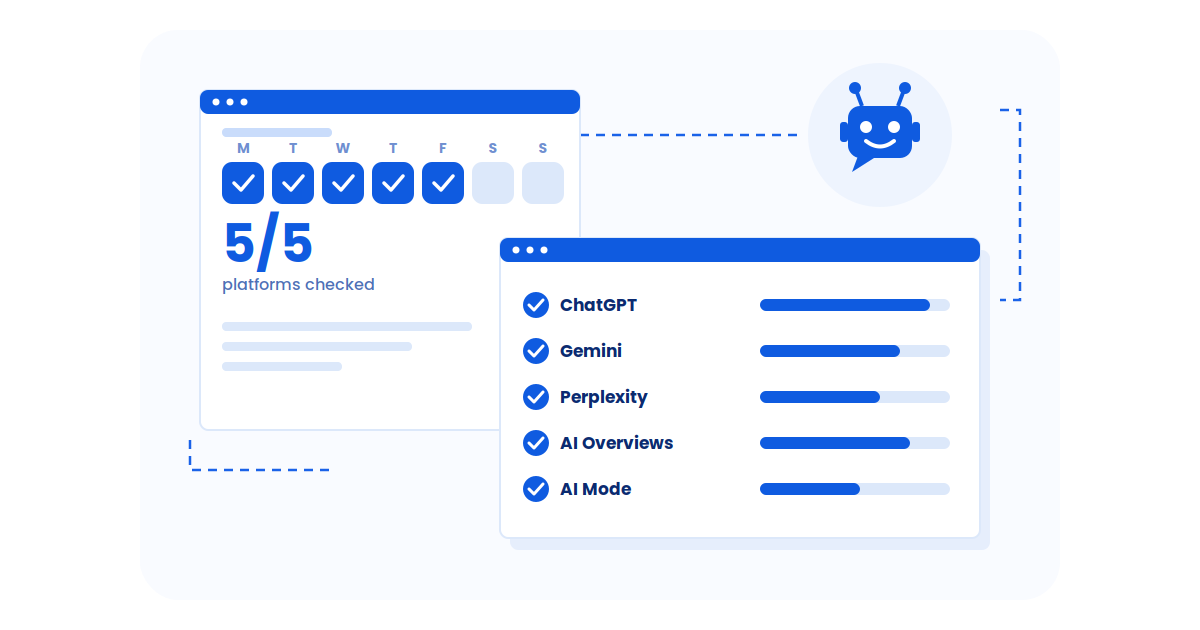
This shift has become even more critical in 2025 with the rise of AI Search engines like ChatGPT, Claude, Gemini, and DeepSeek.
These systems don’t just crawl pages, they cite sources. So pages that pass structural and relevance checks from an On Page SEO Checker are more likely to be extracted and referenced cleanly. And the sites earning those citations aren’t the ones spending thousands on tools; they’re the ones publishing content ecosystems that demonstrate authority.
Building topical authority is no longer optional, it’s the difference between being found everywhere or not being found at all.
What Is Topical Authority in SEO and Why Does It Matter in 2025?
The way search engines evaluate websites has evolved dramatically. Where backlinks and keyword density once dominated, today topical authority in SEO has become the defining factor of long-term visibility.
Topical authority in SEO is the ability of a site to demonstrate consistent expertise across an entire subject area by covering related subtopics, entities, and queries in depth.
This is also where AI SEO comes in: it focuses on making that expertise understandable not only to Google, but also to AI systems that summarize, cite, and reuse content in generative answers.
Instead of publishing a one-off blog, you cover an entire theme definitions, FAQs, case studies, comparisons, trends, and supporting subtopics.
This is different from domain authority, which reflects overall link profile and brand credibility—something you can improve using practical domain authority tips. You could have high domain authority but still lack topical authority if your content is thin or scattered.
Why does this matter in 2025? Because SERPs and AI Search engines like ChatGPT, Claude, Gemini, and DeepSeek now prioritize structured, authoritative coverage. The websites being cited in AI-generated answers are those that demonstrate topical mastery.
If you want your brand to be visible not only on Google but also in AI-powered responses, building topical authority is no longer optional it’s essential.
How Does SEO Topical Authority Work in Search Rankings?
Topical authority influences how Google and AI systems interpret your relevance for entire clusters of queries. Instead of rewarding pages that just “mention” a keyword, the algorithms look at how comprehensively you’ve addressed related concepts.
Here’s how SEO topical authority works in practice:
Semantic entities: Google recognizes concepts, not just keywords. Covering synonyms, related terms, and entities around a subject builds stronger authority.
Internal linking in SEO: By connecting related pages, you signal hierarchy and reinforce topical depth. A blog on “keyword clustering” should link to content on “LSI” and “SEO strategy with user intent.”
Important Note: Strong clusters work best when each piece follows on page SEO factors, not just internal linking.
On-page SEO depth: Longer, semantically aligned coverage of a theme signals expertise.
These align directly with search engine ranking factors. When you cover a topic with interconnected content and clear signals, you don’t just rank for one keyword you earn visibility across dozens of related terms.
Why Is Topical Authority in Search Engine Optimization Critical Today?
In the era of AI-driven search, topical authority in search engine optimization is no longer a “nice-to-have.” It directly influences whether you show up in front of your audience or disappear behind competitors.
Sites that fail to invest in topical depth often face SEO visibility issues, such as:
Ranking only for one or two queries instead of a whole cluster.
Keyword cannibalization (multiple weak pages competing for the same term).
While backlinks and technical optimization remain supportive, algorithms increasingly prioritize comprehensive topical coverage. Without interconnected clusters, sites risk stagnating even with strong link profiles.
What Builds Content Authority in SEO?
To build content authority in SEO, you need more than just long-form blogs. Authority is built through:
Content Authority in SEO
- EEAT principles → Expertise, Experience, Authoritativeness, Trustworthiness. This includes expert authors, transparent bios, and credible references.
- References and data → Using updated statistics, case studies, and sources signals reliability. For example, SEMrush’s 2025 study found content with 3+ cited sources achieved 37% higher SERP visibility. HubSpot reported that case studies generate 62% more backlinks than standard blogs.
- Interlinking and structure → An organized content hierarchy helps users and crawlers navigate your expertise. When you’re wiring up those hubs, use this reference on how many internal links per page for SEO to keep linking intentional.
Running regular SEO Site Audits ensures your authority is not undermined by weak, outdated, or disconnected content. Audits help you identify thin coverage and refine interlinking strategies, while an on-page SEO checklist helps ensure each page supports that authority with stronger structure, relevance, and internal alignment.
How Can You Build Authority in Niche SEO Topics Without Overspending?
Many assume you need expensive tool stacks to dominate a niche. The reality is, you can start building authority in niche SEO topics affordably by following three key practices:
- Keyword clustering: Group semantically related terms around one theme. For instance, “SEO topical authority,” “content authority in SEO,” and “SEO visibility issues” all belong in one cluster.
- LSI (Latent Semantic Indexing): Use related terms naturally to strengthen semantic relevance.
- Internal linking in SEO: Interlink niche-specific content to form hubs and topic silos.
Competitors often recommend enterprise tool suites such as Ahrefs ($499/month) or MarketMuse ($600+/month) for clustering and topical mapping.
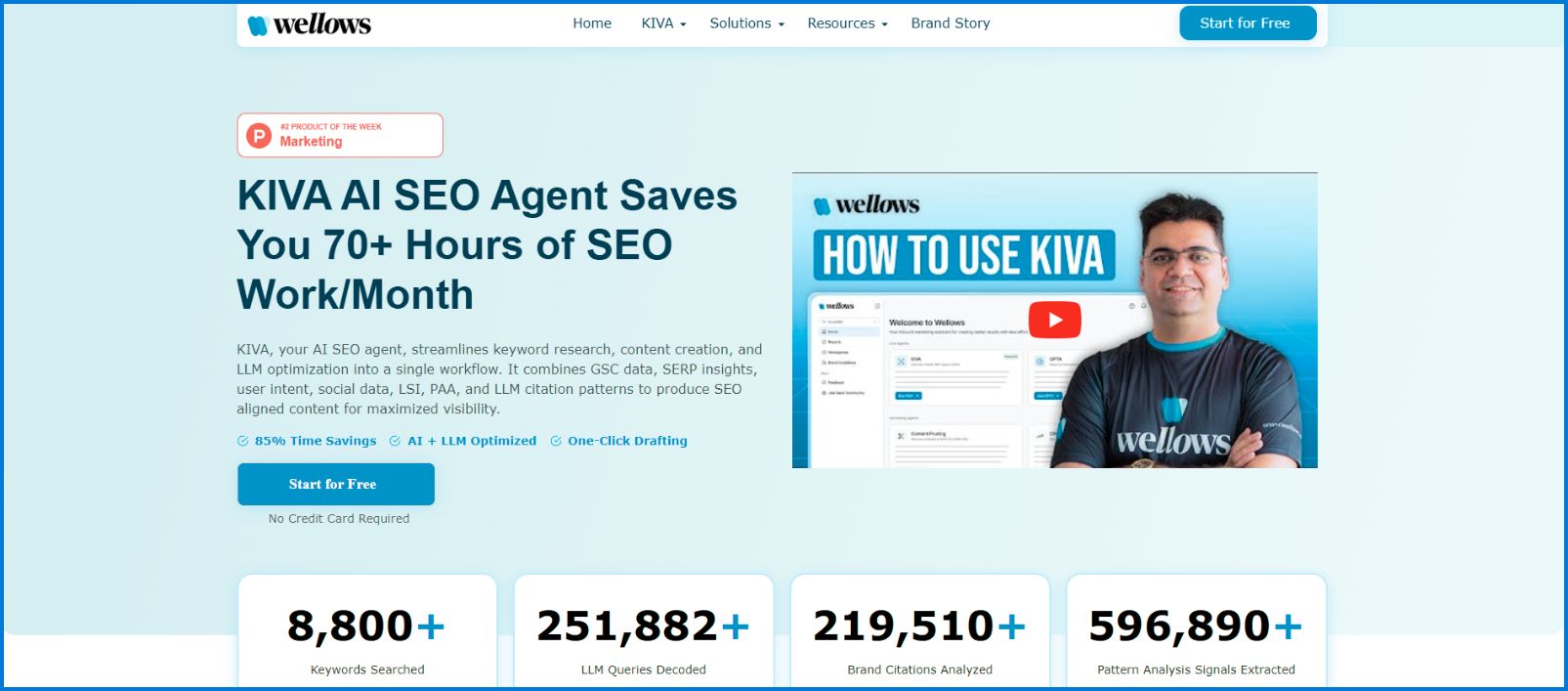
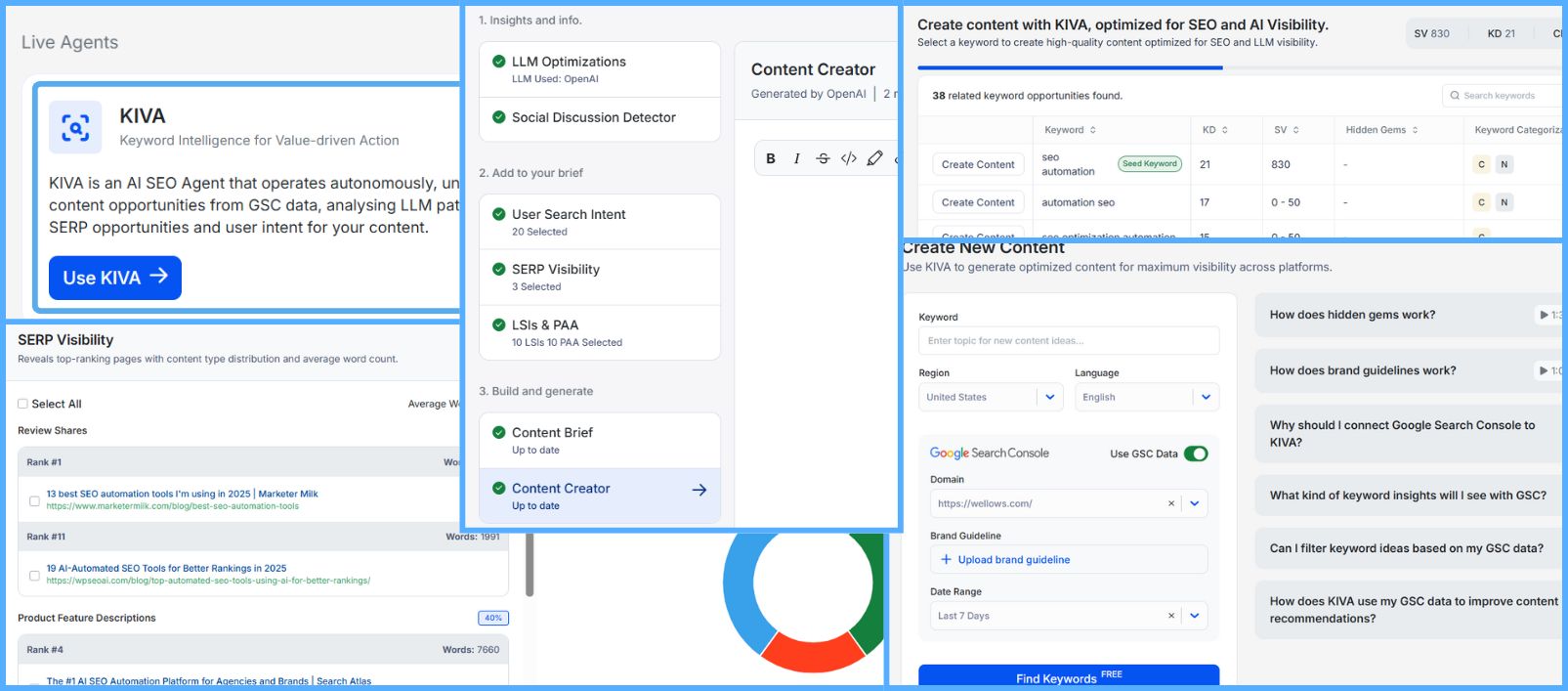
But AI SEO agents like KIVA automate keyword clustering,LSI enrichment, content brief, content creation, and automate seo outreach in one workflow, saving time and eliminating tool overload.
How Do You Develop Topical Authority in Local SEO?

Local businesses face unique challenges. To develop topical authority in local SEO, you must combine keyword targeting with community-specific expertise.
Steps include:
- Running Google Search Console keyword analysis to identify local terms already driving impressions.
- Creating local content clusters (e.g., “best SEO agency in [city],” “local SEO visibility issues”).
- Following a competitor-driven strategy study who ranks locally, then cover gaps they miss.
KIVA’s “Hidden Gems” feature makes this easier by surfacing overlooked keywords from GSC data. Instead of spending weeks on manual research, you find low-competition, high-opportunity queries instantly.
How Do You Establish Expertise in SEO Through Content?
Search engines look for signals of expertise beyond keyword usage. To establish expertise in SEO through content, you should:
Publish content authored by experts with bios and credentials.
Cite external reports, surveys, or case studies.
Build content aligned with SEO strategy with user intent each page must meet actual user needs.
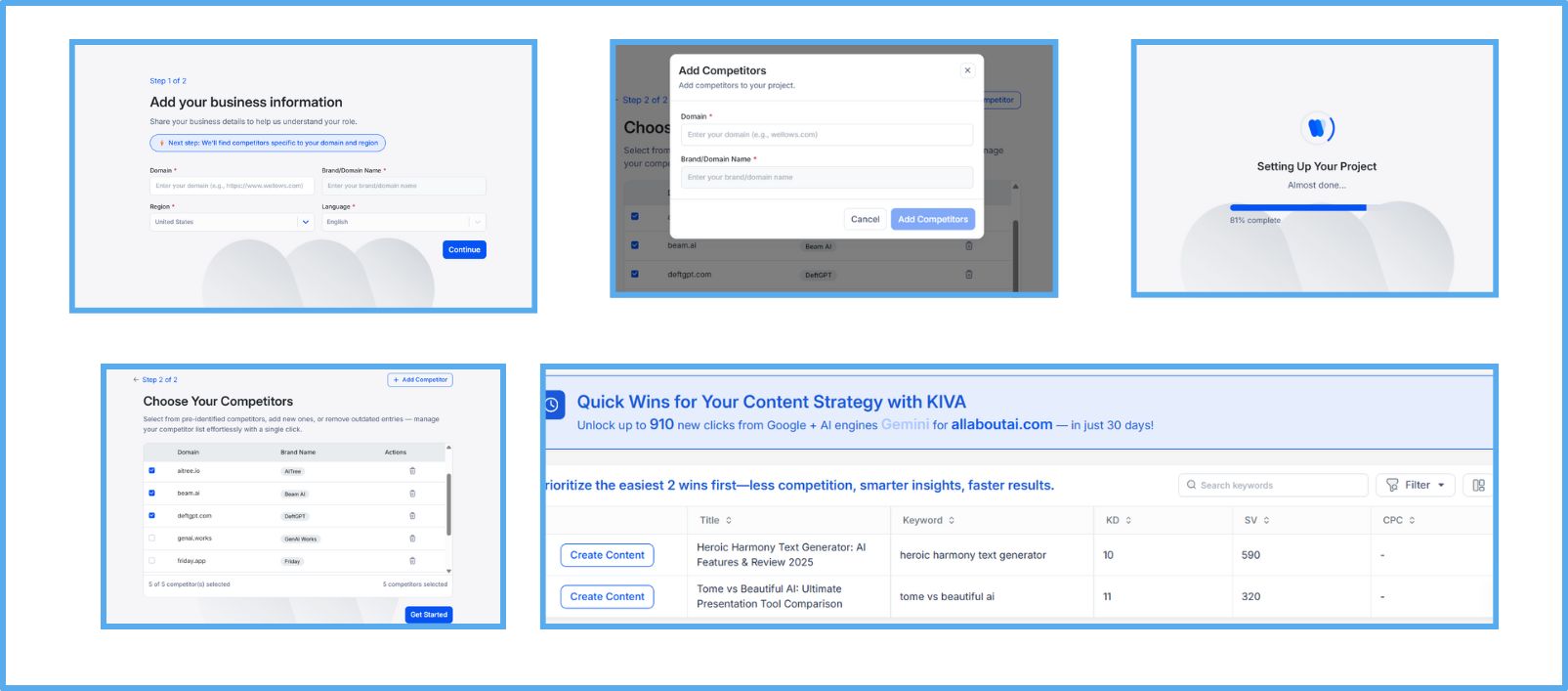
For many, the barrier is time. Researching, outlining, and planning can take hours. With KIVA, you can create a 7-day content plan in just seconds, effectively cutting blog research time and still maintaining EEAT standards.
How Can You Improve Topical Relevance in SEO?
Improving topical relevance in SEO is about expanding beyond one-dimensional keyword targeting.
Ways to do this include:
- Using LSI and semantic keywords.
- Pulling in “People Also Ask” (PAA) queries and answering them directly.
- Structuring content with entities and semantic connections.
This is where AI-Driven SEO vs Traditional SEO comes into play. Traditional SEO relies on manual clustering and static tools, whereas AI-driven approaches like KIVA integrate SERP data and LLM citation patterns to keep your content contextually relevant.
How Can You Achieve High Topical Authority in Competitive Markets?
In competitive niches, achieving high topical authority in SEO requires scaling without losing quality.
Here’s how smaller teams can compete with bigger brands:
- Use AI SEO Automation to accelerate research and clustering.
- Focus on quality interlinked content rather than one-off blogs.
- Leverage semantic optimization across clusters.
The benefits of AI SEO agents like KIVA are clear here: automation reduces manual work by 70+ hours a month, making it possible to publish more while maintaining semantic depth.
What Are the Practical Steps to Build Topical Authority on a Budget?
You don’t need enterprise budgets to grow authority. Follow this six-step framework:
- Run an SEO Site Audit to identify topical gaps.
- Perform Google Search Console keyword analysis to uncover opportunities.
- Apply keyword clustering + LSIs to build coverage.
- Publish interlinked content that forms clear topic hubs.
- Add authority signals (expert quotes, stats, FAQs).
- Monitor SERPs and refine your competitor-driven strategy as the market shifts.
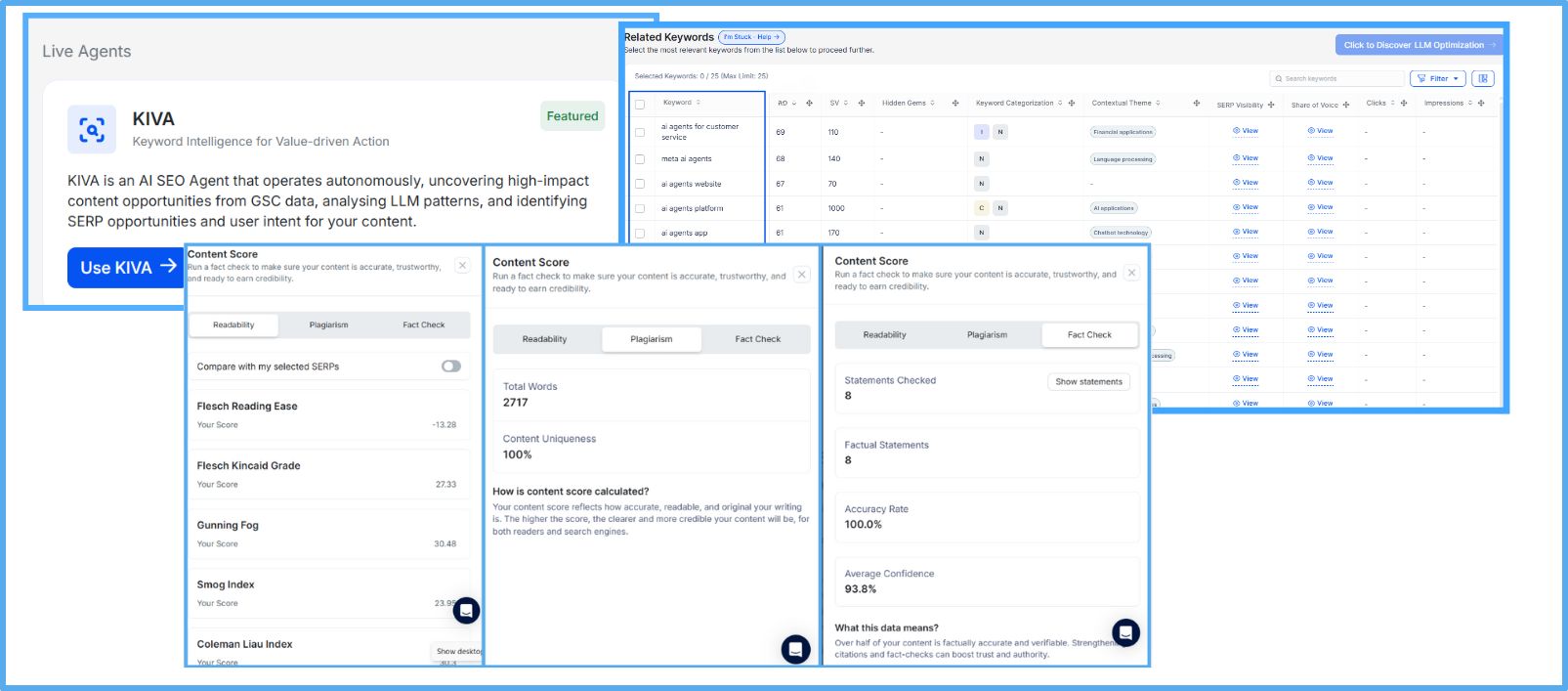
With an AI SEO Agent like KIVA, these steps become faster, especially with automation around clustering, auditing, and content scoring.
What Is the Future of Topical Authority in the AI Search Era?
AI-driven platforms are reshaping SEO. In this environment, topical authority in SEO becomes even more critical.
Here’s why:
- LLMs like ChatGPT, Claude, and Gemini cite structured, comprehensive sources. OpenAI’s 2024 evaluation showed citation accuracy improved by 41% when models were trained on schema-structured content clusters.
- Thin or disconnected content is ignored in AI-generated results.
- Authority signals semantic clusters, interlinking, and references make your brand AI-visible.
This is why AI SEO is inseparable from SEO in 2026. Platforms like KIVA are built to optimize for both Google and AI engines simultaneously, ensuring your content isn’t just ranking it’s being cited.
How Can You Build Topical Authority Smarter Without Overspending?
The truth is, topical authority in SEO isn’t about who spends the most it’s about who works the smartest. Thousands of dollars on enterprise tools won’t guarantee success if your content lacks depth, interlinking, or semantic alignment.
By following structured strategies auditing gaps, clustering keywords, aligning with user intent, and monitoring SERPs you can achieve authority affordably.
Did you know?
Read More Articles
FAQs:
Conclusion:
In 2025, topical authority in SEO is the new competitive edge. Whether you’re an agency, freelancer, or brand, success depends on proving expertise across an entire subject not just sprinkling keywords across a blog.
The good news? You don’t need massive budgets to compete. By focusing on structured clusters, semantic optimization, and intent-driven content, you can steadily grow authority without overspending.
With an AI SEO Agent like KIVA, the process is faster, smarter, and scalable. KIVA transforms scattered ideas into citation-worthy topical ecosystems that win in both Google and AI-driven search. that win in both Google and AI search engines.
Authority is no longer bought. It’s built one connected topic at a time.