Search is no longer just about ranking. In 2026, AI is reshaping how people search and how brands get discovered. Search engines now pull answers directly from AI models, draw from multiple sources at once, and prioritize clear, authoritative entities over simple keyword matches.
Did you know?
AI-generated answers, multimodal result blocks, and conversational search experiences have become part of everyday discovery. Brands can now appear across traditional results, AI summaries, and chat-based experiences, even when users do not click through to a website.
This guide breaks down what AI SEO really means, how Google’s AI-driven search has evolved, and how to build, measure, and adapt your SEO strategy so your content can be clearly understood, trusted, and surfaced across AI-driven search results.
- AI SEO in 2026 is about being understood and cited by AI systems, not just ranking pages.
- Search intent, topical authority, and content clarity matter more than keyword density.
- Google’s AI search features favor accurate, well-structured, and up-to-date content.
- Measuring AI SEO success requires tracking AI visibility, citations, and engagement, not only traffic.
- Wellows helps with AI search by identifying visibility gaps, competitor citations, content creation and outreach opportunities.
What is AI SEO?
AI SEO refers to optimizing your content so it can be found, understood, and trusted within AI-powered search environments — not just traditional search results. It expands on core SEO principles like high-quality content, technical performance, semantic clarity, and authority, adapting them to match how AI models process and present information.
Rather than focusing solely on rankings, AI SEO ensures your content is structured for retrieval, interpretation, and citation inside AI-generated responses. It takes into account how AI systems analyze entities, recognize relationships, extract meaningful passages, and decide which sources to surface when generating answers across platforms such as:
- Google AI Overviews and AI Mode
- Bing Copilot
- Perplexity
- ChatGPT with browsing capabilities
- Other emerging AI-driven discovery platforms
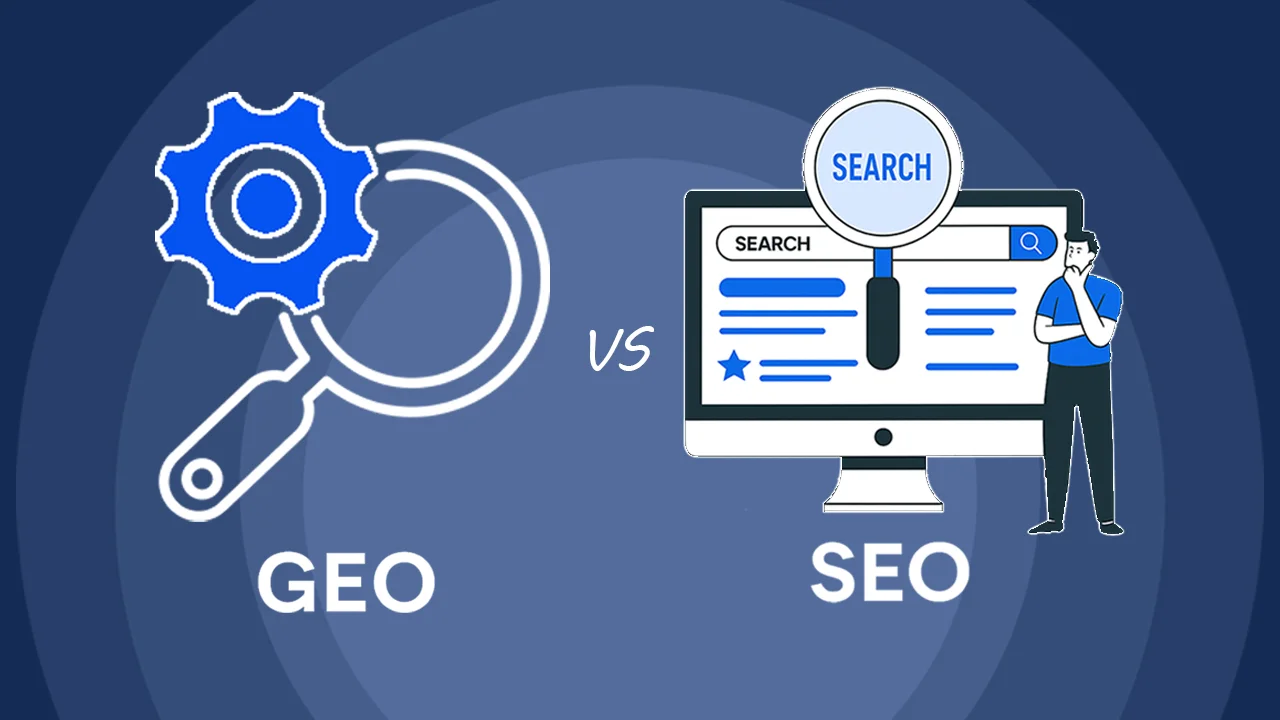
As the landscape evolves, related terms have emerged. Phrases like generative engine optimization (GEO) and answer engine optimization (AEO) describe different aspects of how large language models retrieve, interpret, and reference content — reflecting the growing shift toward AI-mediated search experiences.
Get clear visibility into how your brand appears in AI search.
Book a demo to track AI visibility, sentiment analysis, content gaps, and outreach opportunities with Wellows.
Why AI SEO Matters in 2026?
Search is no longer just about ranking pages and earning clicks. In 2026, discovery is happening inside AI-generated answers, conversational experiences, and summary layers that often satisfy intent before a user ever reaches a website.
That’s why AI SEO matters: it helps your content become understandable, extractable, and trustworthy enough to be surfaced inside AI-driven search experiences, not just traditional SERPs.
The rise of AI-generated answers
AI systems don’t just “index” a page anymore. They interpret it, extract key passages, and synthesize information across sources to generate a direct response.
If your content isn’t structured in a way AI can confidently reuse, it’s more likely to be ignored even if it ranks.
In 2026, AI SEO helps by:
- Making your answers quote-ready: clear definitions, short explanations, and scannable formatting that models can lift accurately.
- Improving entity clarity: consistent names, terms, and relationships so AI systems know exactly what your brand is and what it does.
- Reducing summarization errors: precise wording and context that prevents AI from misrepresenting your message.
Did you know?
Zero-click and AI-first discovery
In many markets, the “first impression” of your content happens in a summary, not on your website. Users ask a question, read the AI response, and move on. Even when they do click, AI has already shaped what they believe is true.
AI SEO matters here because it shifts your goal from “get the click” to “get included.” That means optimizing content so it can appear across:
- Google AI Overviews / AI Mode
- Bing Copilot
- Perplexity
- Chat-based search experiences and assistants
If your page answers the question clearly, supports it with verifiable specifics, and is easy to extract from, it becomes a stronger candidate for AI summaries even in zero-click scenarios.
The shift from traffic to visibility
Traffic still matters, but it no longer tells the full story. In 2026, brands can influence decisions even when users don’t visit their site, because AI answers can surface:
- your brand name
- your product category and positioning
- your recommended steps, comparisons, or definitions
So AI SEO expands what “winning” looks like. Success becomes a blend of:
- AI mentions and citations (being referenced inside answers)
- qualified clicks (fewer clicks, but higher intent)
- topic-level visibility (showing up across related questions, not one keyword)
- brand recall (users remembering the name they saw in the answer)
Brand representation inside AI systems
AI systems don’t just surface links. They summarize brands, compare options, and describe products in a way that can influence perception instantly.
If your site has unclear entity signals, inconsistent messaging, or vague claims, AI can:
- misinterpret what your brand offers
- blur your positioning with competitors
- omit your differentiators entirely
- surface outdated or incomplete information
AI SEO helps you control representation by reinforcing trust signals and clarity:
- Entity consistency: same product names, features, and definitions across pages.
- Verifiable specifics: concrete details AI can repeat without guessing.
- Structured answers: headings, lists, and short blocks that are easy to cite.
- Freshness signals: updates that reduce the chance of stale claims being repeated.
How is AI SEO Different from Traditional SEO?
Below I have shared 7 aspects on how AI SEO is different than traditional SEO:
| Aspect | Traditional SEO | AI SEO |
|---|---|---|
| Primary goal | Rank pages in SERPs and earn clicks | Get cited/mentioned in AI answers |
| Success metrics | Rankings, organic traffic, CTR, impressions | Citations/mentions, inclusion in AI summaries, qualified clicks, brand recall in answers |
| Content structure | Long-form depth plus keyword coverage for crawlers and users | Answer-first formatting, clear entities, tight definitions, scannable sections, quote-ready lines |
| Keyword strategy | Target keywords plus variations | Cover topic clusters, query fan-out, user search intent, entities, and extractable content AI platforms pull into responses |
| Authority signals | Backlinks, topical authority, on-page SEO relevance | E-E-A-T plus entity credibility, including author profile, sources, consistent claims across the web, and verifiable specifics |
| SERP features vs. AI surfaces | Optimize for snippets, PAA, featured snippets, schema | Optimize for retrievability plus extractability. AI can lift concise blocks, tables, how-to steps, and crisp comparisons |
| Content freshness and maintenance | Periodic updates; focus on ranking stability | More frequent updates for rapidly changing facts, tools, pricing, and model updates; avoid stale claims AI may repeat |
Did you know?
How Google’s AI-Driven Search is Changing SEO?
Google’s transformation of search from a traditional results list into an AI-driven answer engine has unfolded over more than a decade, reshaping how users find information and how SEO works.
| Phase | Timeline | What Changed in Google Search | Impact on SEO |
|---|---|---|---|
| From Keywords to Understanding | 2015–2022 | Introduction of RankBrain, BERT, and MUM to better understand intent, context, and relationships between concepts rather than exact keywords. |
Shift from keyword-heavy optimization to intent-focused, semantic, and context-aware content. |
| The Generative Turn | 2023–2024 | Launch of AI Overviews that generate summarized answers above traditional search results using multiple sources. | Reduced reliance on clicks; increased importance of being cited as a trusted source in AI answers. |
| Conversational Search | 2025 | Introduction of AI Mode, enabling follow-up questions and conversational interactions directly in Search. | SEO shifts toward supporting multi-step queries and deeper topic exploration instead of single-query optimization. |
| Gemini-Powered Search | 2025-2026 | Deeper integration of Gemini models to power reasoning, context retention, and richer AI search experiences. | Greater emphasis on topical authority, clarity, accuracy, and trustworthiness over traditional ranking signals alone. |
Google’s AI-driven search marks a shift from ranking documents to interpreting and synthesizing information. Search systems now pull insights from multiple sources, assess reliability, and generate explanations at scale rather than simply listing links. This shift has led to the emergence of concepts like GEO, AEO, and LLMO:
As AI-generated answers become standard across search experiences, generative engine optimization (GEO) has emerged as a key part of AI SEO. GEO focuses on making content easy for generative systems to select, extract, and synthesize into AI summaries and answer panels.
Unlike traditional SEO, which aims to rank pages, GEO aims to have content chosen as a trusted source that informs AI-generated answers. It emphasizes entity clarity, factual accuracy, structured formats, and concise explanations that AI systems can reliably reuse.
Answer engine optimization (AEO) focuses on increasing direct-answer visibility. Rather than competing for rankings, AEO prioritizes clear, verifiable responses that search engines and AI systems can surface with minimal user interaction.
AEO relies on question-aligned content, definitions, FAQs, and plain-language phrasing, making it especially important for queries where precision matters, such as pricing, requirements, or technical details.
LLM optimization (LLMO) ensures content is discoverable, retrievable, and accurately citable by large language models like ChatGPT and Gemini. While GEO influences whether content is selected for AI answers, LLMO affects whether that content becomes part of what models can reference during generation.
This layer emphasizes semantic grounding, citation reliability, clean architecture, and consistent source signals across the web.
AI Overviews, generative AI platforms, and chat-based interfaces have accelerated zero-click search, where users get answers without visiting a website. In this environment, visibility is measured by presence and authority rather than traffic alone.
Top-of-funnel informational queries are most affected, reinforcing why AI SEO focuses on being surfaced across both traditional results and AI-generated experiences.
For those thinking how to optimize for Google AI Overviews, clear structure, trusted entities, and high-quality content are now essential for staying visible in an AI-first search landscape.
What are the Core Components of AI SEO?
AI SEO is built on a few core components that work together to improve how content is discovered, understood, and ranked by modern search engines. These 8 components go beyond traditional keyword tactics and focus on meaning, context, and user behavior.
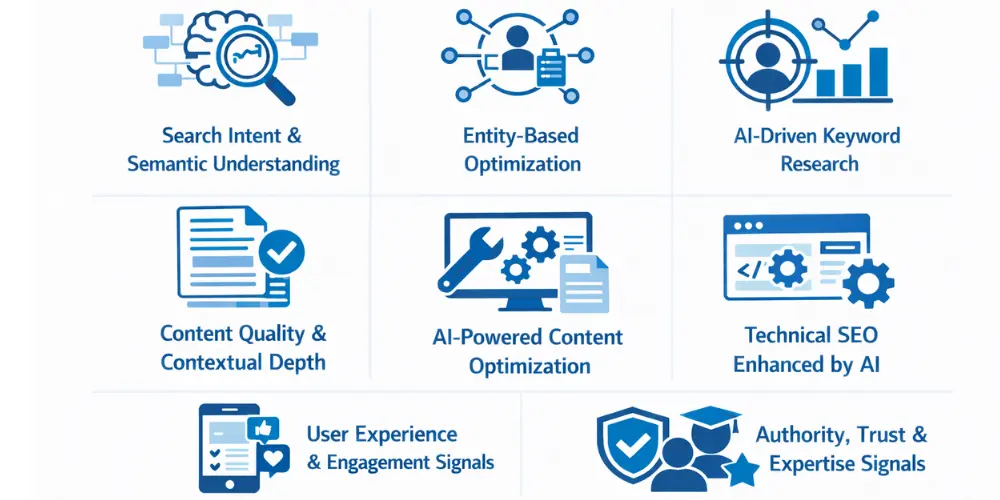
- Search Intent and Semantic Understanding: At the core of AI SEO is intent matching. Search engines use AI to understand what a user is actually trying to solve, not just the words they type. Content needs to answer questions clearly, cover related subtopics, and reflect real user needs instead of forcing keywords.
- Entity-Based Optimization: AI relies heavily on entities such as people, brands, places, and concepts, and how they relate to each other. Optimizing for entities means building topical authority, using consistent terminology, and connecting ideas logically across your content.
- Content Quality and Contextual Depth: AI evaluates content depth, clarity, and usefulness. Thin pages struggle, while well-structured content that explains topics fully tends to perform better. This includes natural language, supporting examples, and covering follow-up questions users are likely to ask.
- AI-Driven Keyword Research: Traditional keyword lists are replaced by intent clusters. AI SEO focuses on grouping queries by meaning, not volume alone. This helps create content hubs that align with how search engines understand topics.
- User Experience and Engagement Signals: AI models pay close attention to how users interact with content. Page speed, mobile usability, readability, and engagement metrics like dwell time all influence visibility. Good UX supports AI SEO directly.
- AI-Powered Content Optimization: Modern SEO uses AI to analyze competitors, find gaps, improve structure, and optimize links. With AI content optimization, teams can identify pages to update, uncover gaps, and improve linking without cannibalization.
- Technical SEO Enhanced by AI: AI assists with crawling, indexing, and site health analysis. It helps identify issues like poor internal linking, crawl waste, or duplicate content faster and at scale, making technical SEO more precise.
- Authority, Trust, and Expertise Signals: AI SEO strongly overlaps with E-E-A-T principles. Clear authorship, accurate information, original insights, and trustworthy references help AI systems assess credibility and rank content accordingly.
Together, these components form an AI-first approach to SEO that focuses on understanding, relevance, and experience rather than mechanical optimization.
BrightEdge reported AI Overview citations’ overlap with organic results grew from about 32% to about 54% over a 16-month period, suggesting that strong SEO foundations plus AI-friendly formatting can translate into both rankings and citations.
How to Build an AI SEO Strategy for Your Website in 2026? [7 Steps]
Building an AI SEO strategy in 2026 is about positioning your website as a trusted knowledge source that AI systems can understand, extract from, and confidently recommend.
Rankings still matter, but they are no longer the end goal. Visibility across AI Overviews, answer engines, and conversational search is.
Here’s a clear, step-by-step way to build that strategy.
- What problem is the user trying to solve?
- What decision are they trying to make?
- What follow-up questions naturally come next?
- One primary intent per page
- Clear answers early, with deeper explanations later
- Avoid mixing informational and transactional goals on the same page
AI SEO begins by understanding why someone is searching. Every page on your site should be mapped to a clear user intent.
Before creating or optimizing content, ask:
For example, the keyword “email marketing” usually carries informational or navigational intent, where users want definitions, strategies, tools, or examples. In contrast, “email in marketing” is purely informational, signaling a learning-focused query rather than a product or service comparison.
Using Wellows, you can identify if the user search intent for your keyword is informational, transactional, commercial or navigational.

Here’s what to focus on:
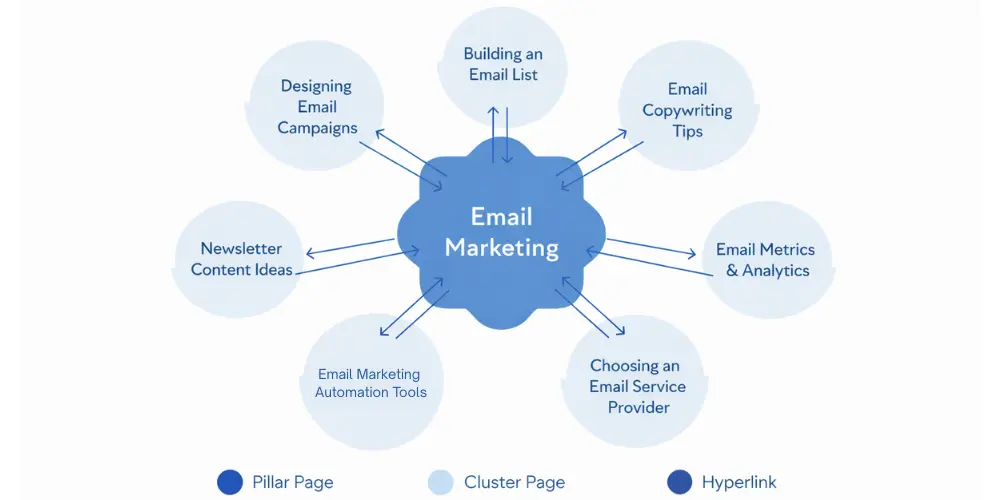
- Create core “pillar” pages for major topics
- Support them with detailed subtopic articles
- Interlink related content naturally and contextually
In 2026, AI systems rarely trust single pages in isolation. They look for patterns that show consistent understanding across a topic. Your site should be structured like a knowledge map for LLM SEO.
Best practices to follow:
For example, instead of one article on email marketing, create a pillar page supported by cluster pages like email copywriting tips, designing email campaigns, newletter content ideas, etc and internal link these pages to build your topical authority.
- Use descriptive headings that reflect real questions
- Keep paragraphs short and focused
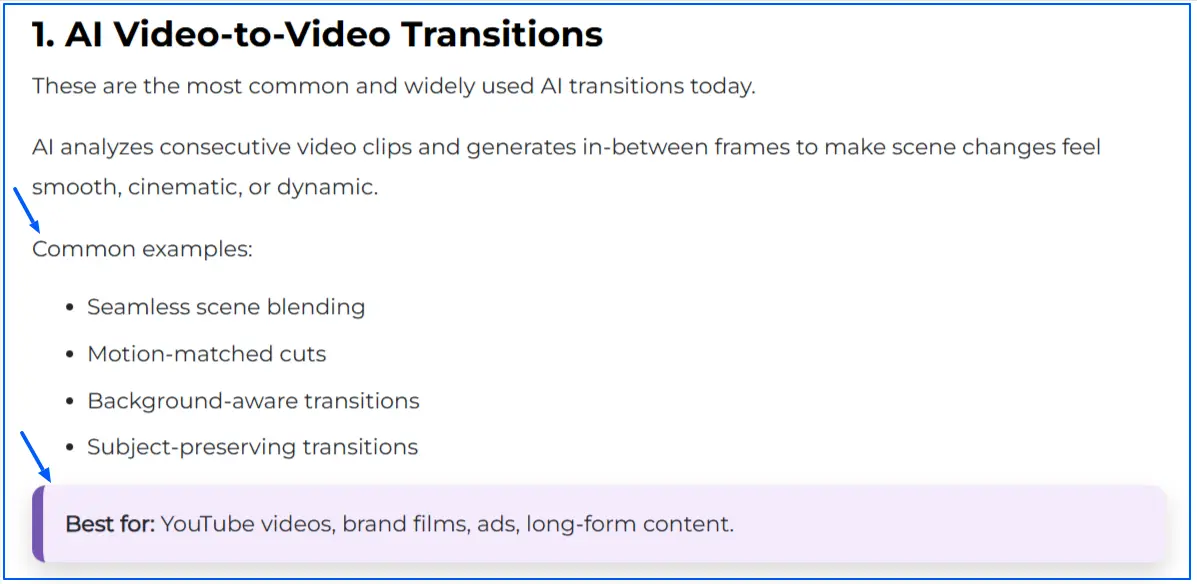
- Answer the main question first, then expand
- Use lists, definitions, and comparisons where helpful
AI systems prefer content that is easy to parse, summarize, and reuse. Even high-quality information can be ignored if it is poorly structured.
What you can do:
For example, a section that answers the query clearly in the first few lines, followed by concise examples and practical tips in bullets, is far more likely to be used in an AI summary than content that only has wall of simple text.
- Keep facts, examples, and data current
- Be consistent across related pages
- Avoid exaggerated claims or unsupported statements
- Clearly explain complex ideas instead of glossing over them
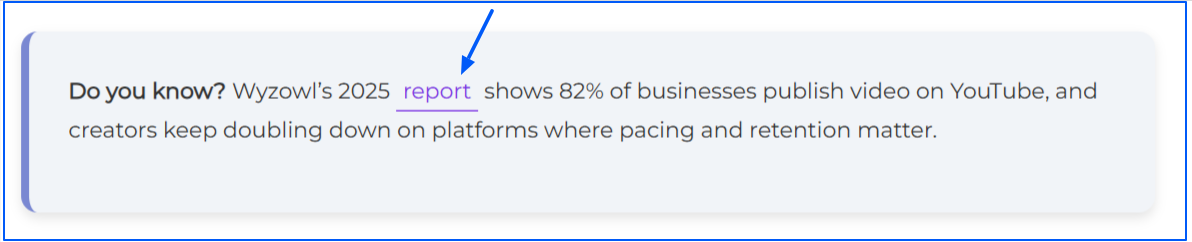
- Provide source to all the reports or statistics you add
AI systems are risk-averse. They avoid pulling information from sources that feel vague, outdated, or inconsistent. Trust is built quietly through precision.
Here’s what to prioritize:
For example, if you reference statistics about Video marketing, clearly explain the context and cite the original report instead of making broad claims.
- Refresh content when facts or tools change
- Add new sections as user questions evolve
- Improve clarity based on engagement signals
- Merge or prune pages that overlap or underperform
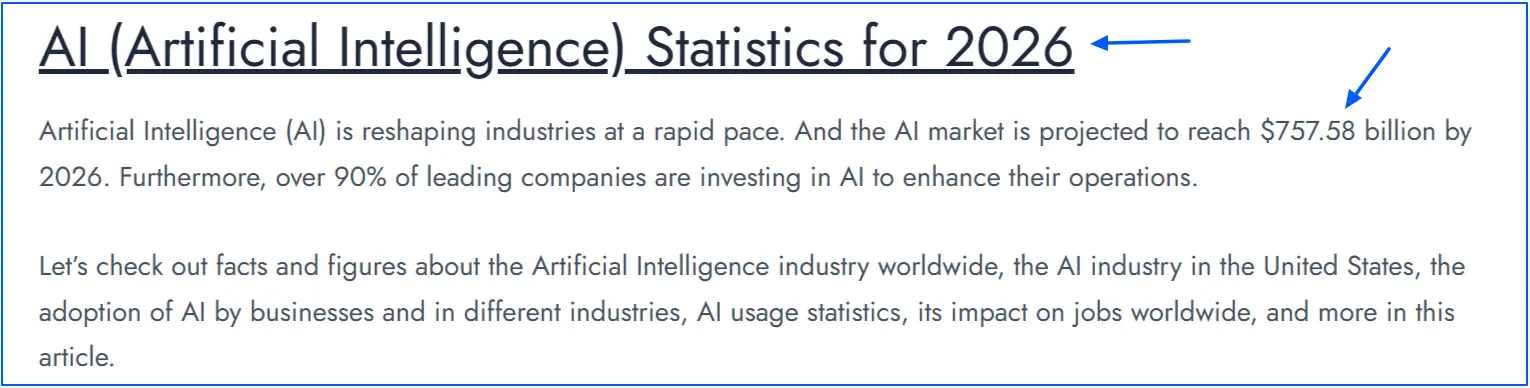
- Add update signals on your page
AI SEO is not a one-time optimization. It is an ongoing process of refinement as user behavior and AI systems evolve. Static content loses value over time.
Focus on these habits:
For example, a blog on AI statistics should be refreshed in 2026 to include the latest data, findings, and reports. When updating statistics, clearly mention the relevant years so both users and AI systems can understand the timeframe and accuracy of the information.
- Intent analysis and topic mapping
- Content gap identification
- Internal linking suggestions
- Clarity and structure improvements
- Mass-produce shallow content
- Replace subject understanding
- Skip fact-checking or editorial review
AI tools are powerful, but in 2026 they are everywhere. What matters is how you use them. If you are wondering how to use AI for SEO, ensure that you are using it for efficiency not for mass production.
Use AI for:
For example, you can use Wellows for creating AI SEO content briefs by combining keyword research, LLM-optimized queries, search intent, PAA data, share of voice, and competitor gaps into one workflow.
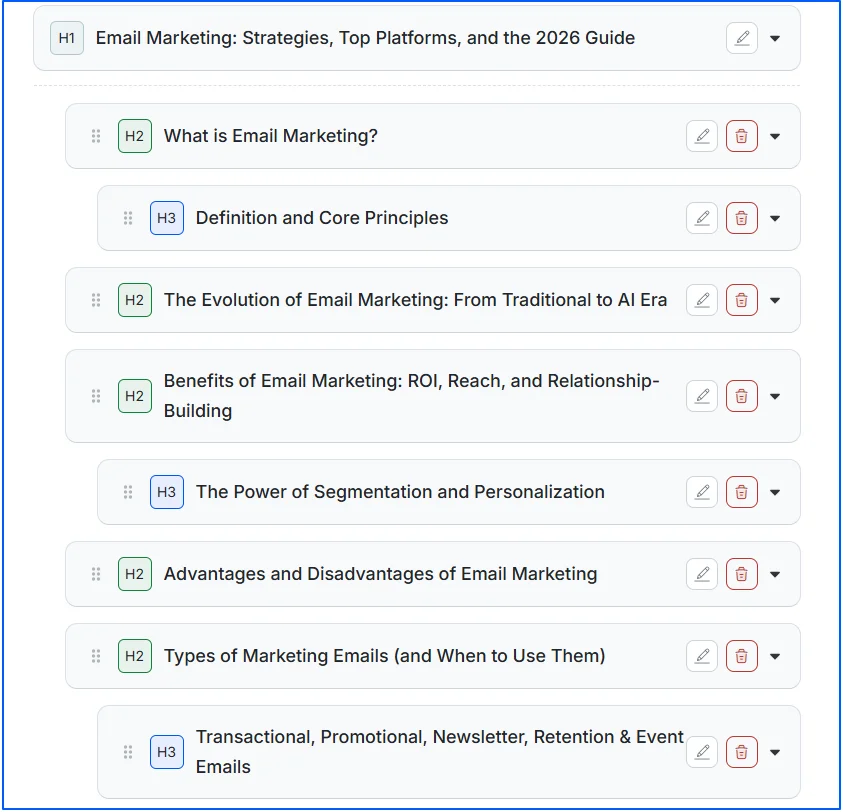
According to benchmark data from Influencer Marketing Hub, 49.2% of businesses saw improved search rankings after algorithm updates by using AI-assisted optimization.
However, avoid using AI to:
- Presence in AI Overviews and answer engines
- Growth in long-tail query impressions
- Engagement quality and time on page
- Topical coverage expansion
- Internal linking performance
- Increase in organic sessions and LLM traffic
Traditional metrics still matter, but they no longer tell the full story. AI SEO success includes visibility and influence, not just clicks.
For example, a SaaS startup offering a project management or marketing platform may not rank first for a competitive keyword, but its content can still appear in AI Overviews or be cited by answer engines when users ask questions like “How do remote teams collaborate?” or “What tools help manage distributed teams?”
These citations signal strong AI visibility and help build trust, even without top rankings.
Here is what you can track:
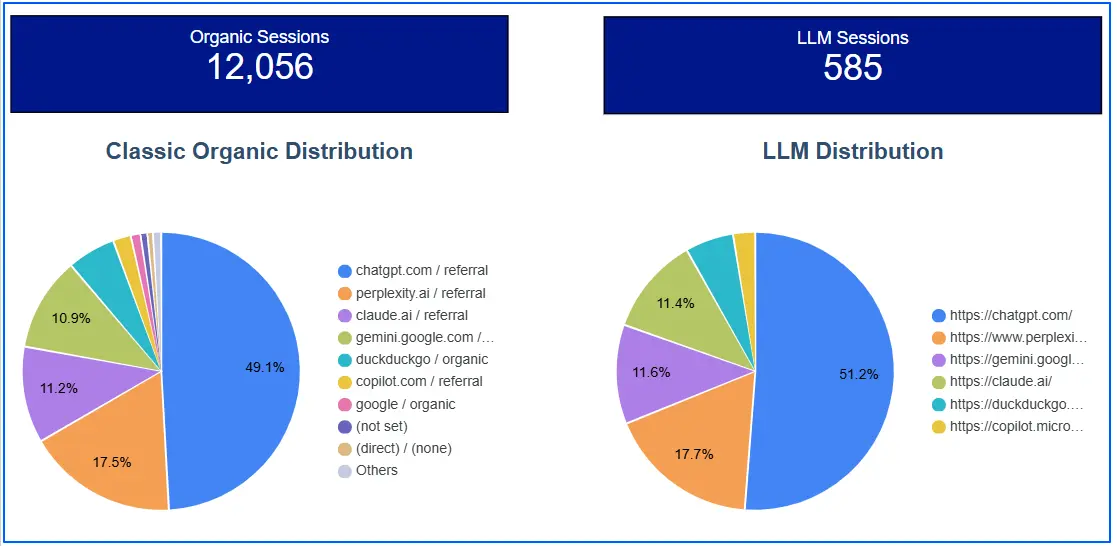
An effective AI SEO strategy in 2026 is built on intent clarity, topical depth, strong structure, and ongoing trust. When your site consistently explains topics well and stays accurate over time, AI systems are more likely to surface your content across search and answer experiences.
How Can I Get My Content Cited in ChatGPT, Perplexity or Google AI Overviews Using Wellows?
Getting cited in AI answers is no longer about rankings alone. AI systems like Google AI Overviews, ChatGPT, Gemini, and Perplexity choose sources based on visibility, relevance, and trust across multiple platforms. Wellows is built specifically to help brands understand and improve that visibility.
Wellows works as an AI search visibility platform that brings all your brand’s AI mentions, citations, and competitor signals into one place. Instead of guessing why competitors are being referenced in AI answers, you can see exactly where they appear, how often, and why.
Here’s how Wellows helps you improve AI search performance:
1. Tracks Your Brand’s AI Visibility
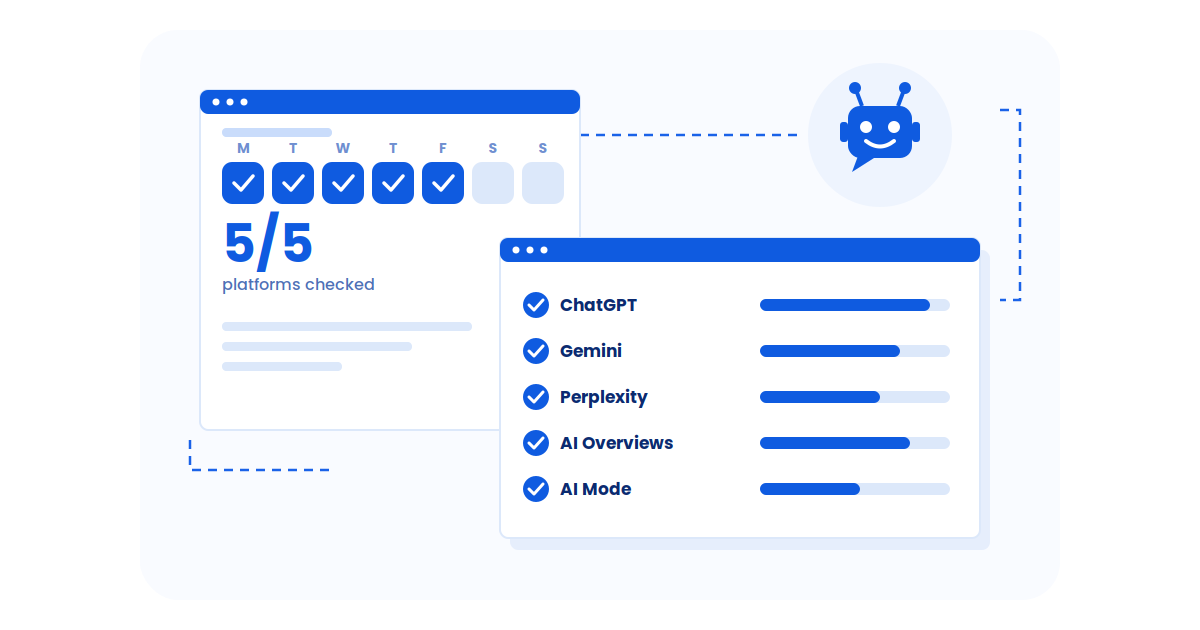
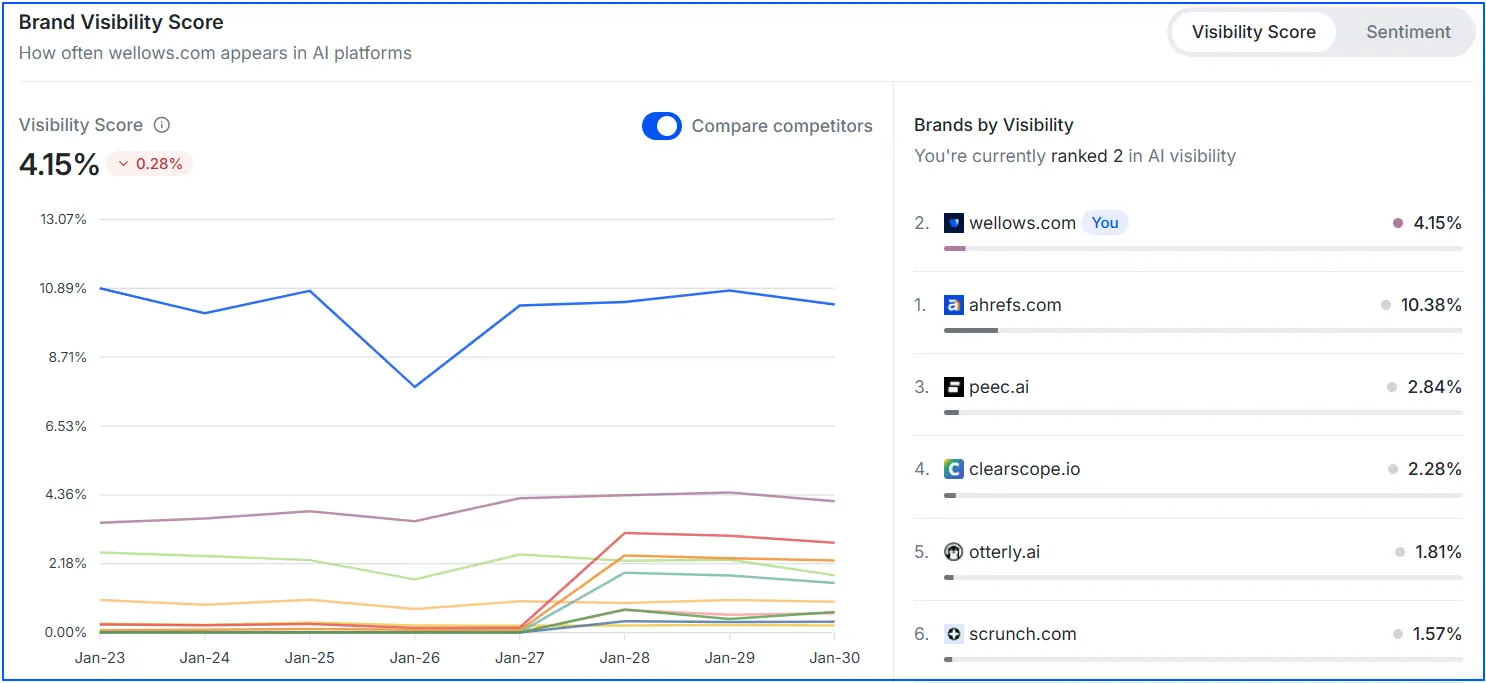
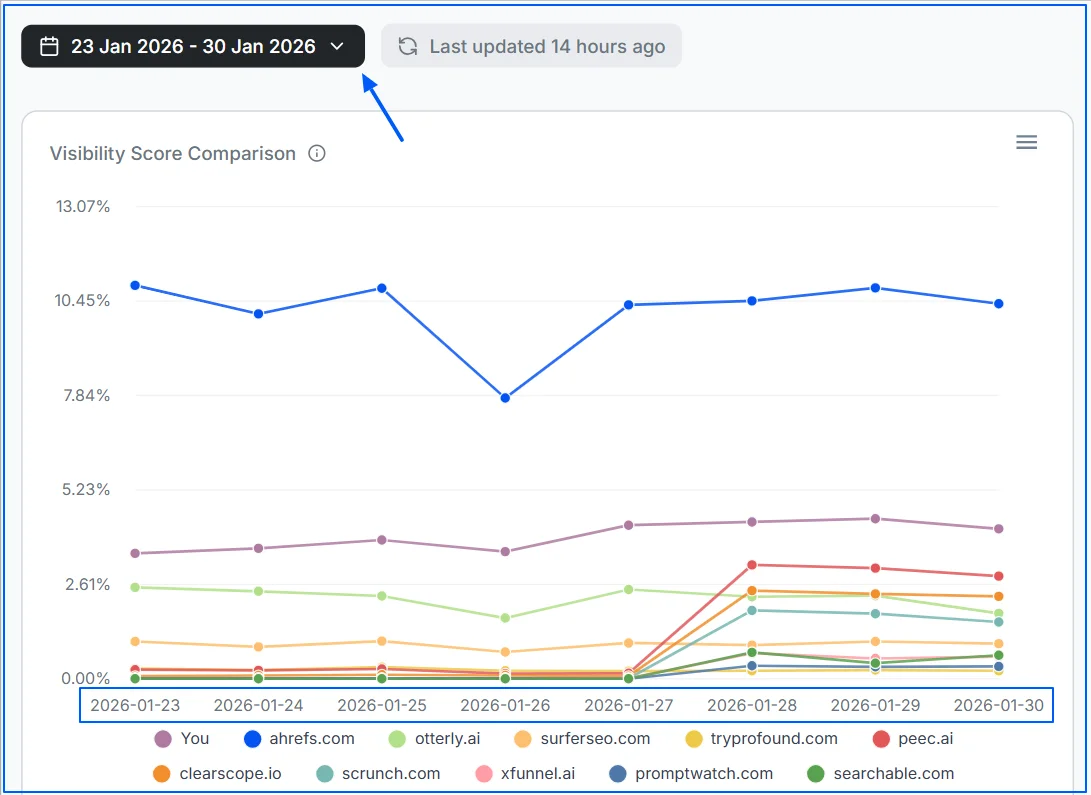
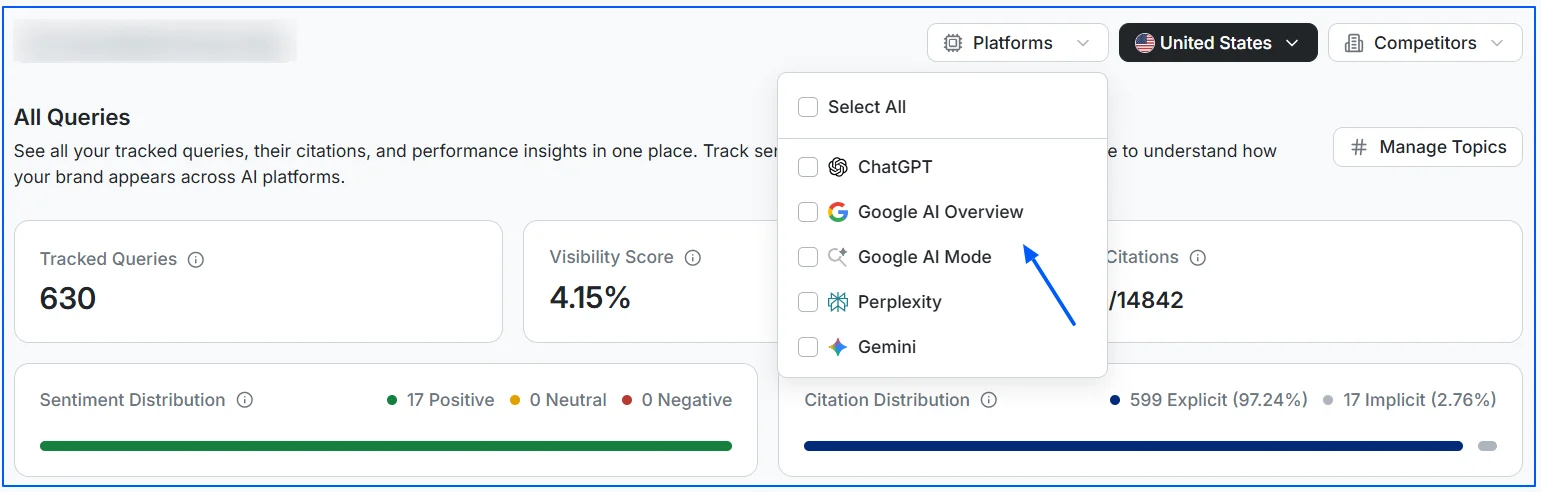
Wellows monitors brand mentions and citations across all five Answer Engines: ChatGPT, Gemini, Perplexity, Google AI Overviews, and Google AI Mode, on every plan. You can see visibility trends, sentiment, and changes over time, all from a single dashboard. This makes it clear whether your AI visibility is improving or slipping.
In the overview section, you can also see the AI visibility of your competitors and compare the insights.
2. Identifies Implicit Citation Opportunities
Wellows finds publishers and sources that mention your competitors but not your brand. These are strong automate SEO outreach opportunities, because AI systems already trust those sources. You can use this data to earn mentions or backlinks where they matter most.
3. Find Content Gaps for Explicit Citations
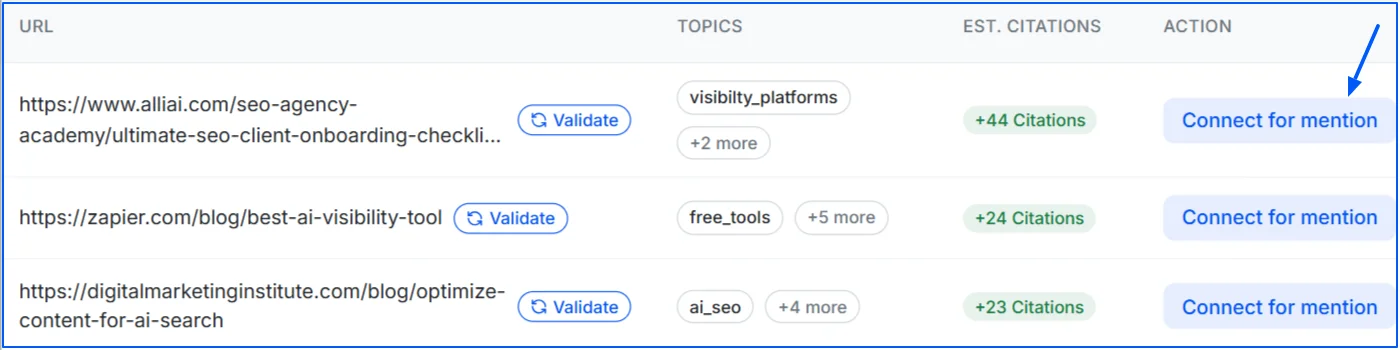
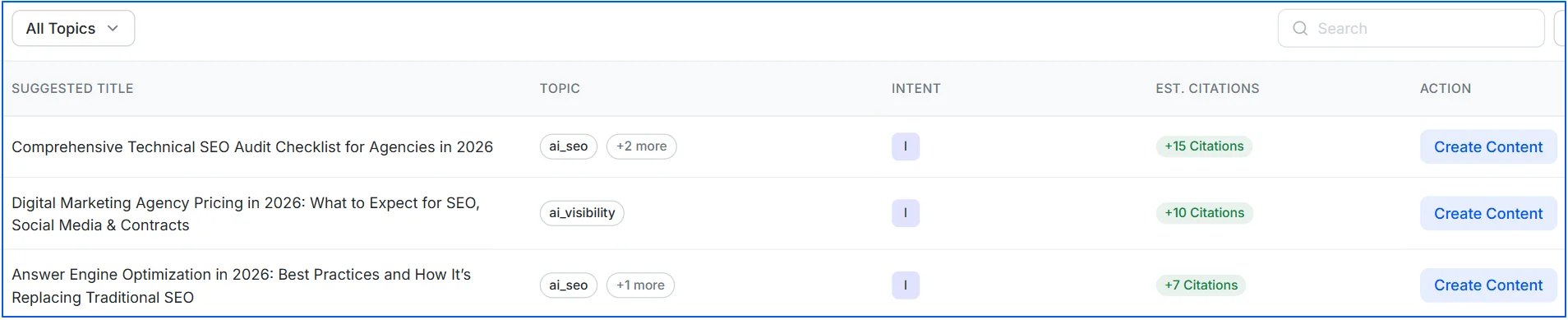
The platform highlights pages that AI systems are citing for competitors, but where your brand is missing entirely. These explicit gaps show you exactly which topics or answers you need to cover to increase your chances of being cited.
The estimated citation shows the number of citations you can get after publishing the content on the specific topic. If you want assistance in creating the content, you can click on Click Content option on Wellows.
4. Measures AI visibility and Citation Performance Over Time
Wellows tracks performance across different AI platforms so you can see where your content appears, at what position, and how frequently. This helps you understand which platforms are driving visibility and where to focus next.
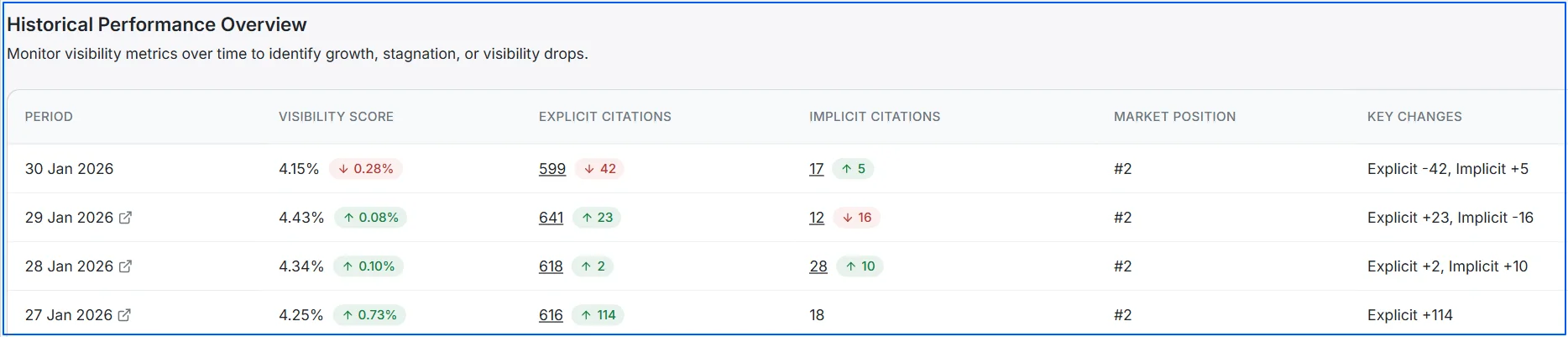
If you want to see these insights in more detail, you can check the historical performance overview table.
5. Supports Content Creation
Wellows lets you create content directly within the platform. You can either generate content quickly or review deeper insights like LLM queries, user intent, People Also Ask data, and community discussions before content creation.
6. Allows Team Collaboration
You can add team members to a project so everyone works from the same data. This includes shared regions, competitors, tracked queries, GSC connections, brand guidelines, and content, while keeping clear project ownership and access controls in place.

12 Common AI SEO Mistakes in 2026 and How to Fix Them
As search becomes answer-driven, even small missteps can reduce your chances of being surfaced, quoted, or trusted inside Google AI Overviews, AI Mode, and other answer engines.
Below are the most common AI SEO mistakes that quietly hurt visibility, plus exactly how to fix them.
1. Publishing AI content at scale without human review
AI can produce drafts fast, but unreviewed content often becomes repetitive, vague, or slightly wrong, which makes it risky for AI systems to cite.
Example: Publishing 20 “best tools” posts where the features, pricing, or pros/cons were never verified.
Fix: Add a mandatory editorial layer. Fact-check tools, dates, and claims. Remove filler, add original examples, and rewrite weak sections in human language that’s easy to quote.
2. Writing for keywords instead of intent
If your page doesn’t match what the user is truly trying to solve, it won’t be selected for AI summaries, even if the keyword appears everywhere.
Example: A page targeting “AI SEO tools” that talks about “what is AI SEO” for 800 words before it ever lists tools.
Fix: Map one primary intent per page. Answer the main question early, then expand with comparisons, steps, and follow-ups that match the user’s journey.
3. Creating thin pages for multiple keyword variants
Splitting one topic into many near-duplicate pages weakens topical authority and confuses both crawlers and AI systems about which page is the best source.
Example: Separate pages for “AI SEO software,” “AI SEO platform,” and “AI SEO tool” with 70% repeated content.
Fix: Consolidate into a strong hub page and support it with cluster content (use cases, comparisons, how-tos). Strengthen internal links so the structure is obvious.
4. Incomplete topic coverage
AI systems prefer sources that answer the full question, including common follow-ups, edge cases, and comparisons.
Example: A “How to optimize for AI Overviews” guide that never explains citations, entity signals, or content formatting.
Fix: Expand coverage using People Also Ask, related queries, and “next question” thinking. Add definitions, examples, and clear takeaways per section.
5. Poor content structure that isn’t extractable
Even great information can be ignored if it’s buried in long paragraphs without headings, definitions, or scannable blocks.
Example: A strong explanation written as one continuous wall of text with no H3s, lists, or summaries.
Fix: Use answer-first formatting: short paragraphs, clear H3s, bullets, mini-definitions, and quote-ready lines that can stand alone without extra context.
6. Unclear entity signals
AI systems rely on entities (brands, products, concepts) and their relationships. If your page is inconsistent, AI can’t confidently interpret what it’s about.
Example: Using acronyms without defining them, or switching between different names for the same product.
Fix: Define key entities early. Use consistent naming, add “what it is / who it’s for / when to use it,” and reinforce relationships across internal links.
7. Using outdated facts, stats, and examples
Outdated information reduces trust and increases the chance of AI skipping your page or misrepresenting your content.
Example: A 2024 guide still describing AI Overviews as “experimental” in 2026.
Fix: Refresh pages on a schedule (quarterly for fast-changing topics). Update dates, screenshots, tools, features, and citations. Add “last updated” signals where appropriate.
8. Having no strategy for AI citations
You can rank well and still be invisible in AI answers if you don’t optimize for being referenced and reused.
Example: Competitors get cited in AI summaries because they publish clearer comparisons, while your page is more generic.
Fix: Track where competitors are being cited, identify the exact topics and angles they own, then publish content that fills explicit citation gaps and supports outreach for mentions.
9. Over-optimized, robotic writing
Content that reads like an SEO template reduces credibility, engagement, and reuse. AI systems tend to favor natural, precise writing that sounds human.
Example: Repeating the same keyword in every sentence and forcing awkward phrasing.
Fix: Write naturally. Prioritize clarity and specificity. Use semantic variations without stuffing. Replace generic lines with concrete details and examples.
10. Ignoring internal linking and topic structure
AI needs to understand how your content connects. Weak internal linking makes your site look like isolated pages rather than a coherent knowledge source.
Example: Publishing a pillar guide but not linking it to supporting subtopics (or vice versa).
Fix: Build topic clusters with clear hub-and-supporting page links. Add contextual links (not just “read more” links) so relationships are obvious.
11. Measuring success only by rankings
AI visibility can increase even when clicks stay flat. If you only track rankings and sessions, you’ll miss the real impact.
Example: Your brand appears in AI answers, but traffic doesn’t rise because the query is zero-click.
Fix: Track AI mentions, citations, query coverage, brand inclusion, and assisted conversions. Combine visibility signals with engagement quality for the full picture.
12. Treating AI SEO as a one-time task
AI search changes fast. A “publish and forget” approach leads to content decay and lost visibility as models, SERP features, and user behavior evolve.
Example: A “2026 AI SEO strategy” post that never gets updated as Google changes AI Mode features.
Fix: Build an ongoing workflow: monitor AI visibility, refresh priority pages, expand clusters, update facts, and keep improving structure based on what’s being cited.
What Metrics Should I Track for SEO Success in the AI era?
Measuring success in AI SEO goes beyond rankings and traffic. In 2026, performance is defined by how often your content is recognized, trusted, and reused by AI-driven search experiences.
Here are 4 ways you can measure success in AI SEO:
1. Visibility in AI-generated Answers
The strongest signal of AI SEO success is whether your content appears in AI answers. This includes Google AI Overviews, AI Mode results, and answer engines like ChatGPT, Gemini, and Perplexity — which is why using an AI Overviews Tracker helps you systematically monitor when and how your content is being surfaced inside these AI-generated summaries.
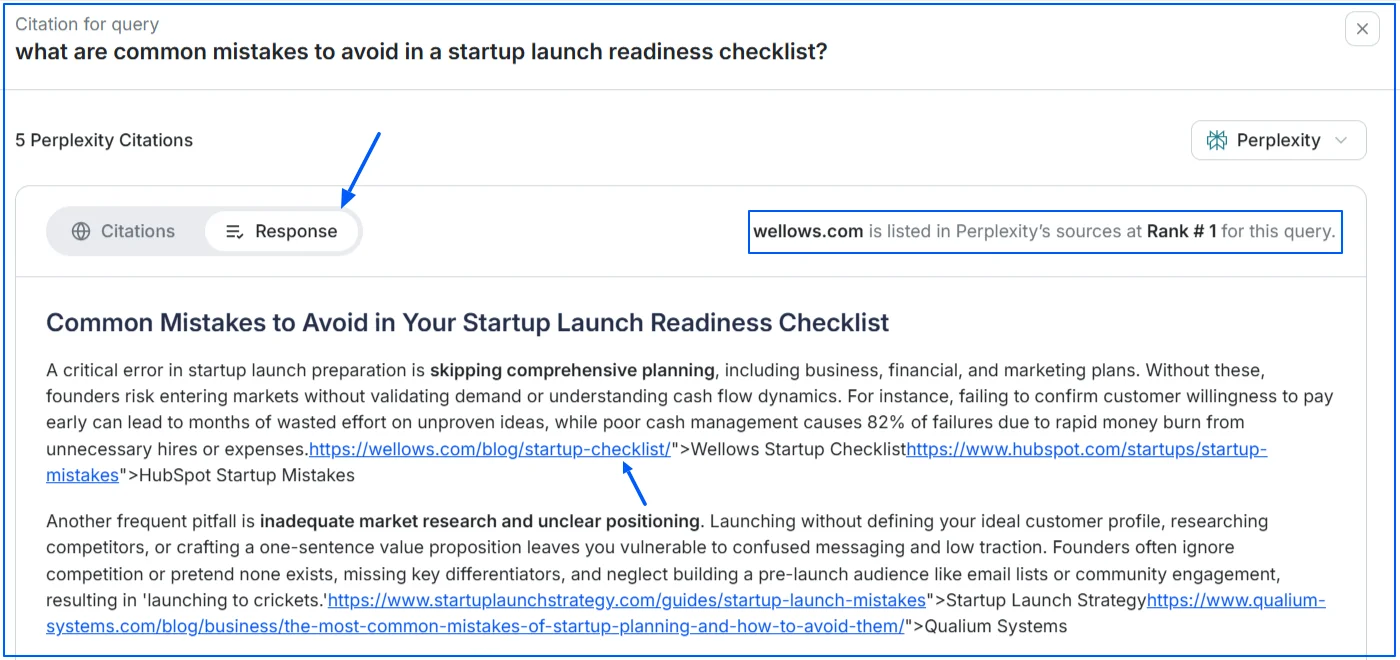
When your brand or pages are consistently referenced, it shows that AI systems consider your content reliable and relevant, even if it does not always receive a click. In Wellows, you can check if you are appearing in AI answers for your tracked queries and if not, you can optimize your content accordingly.
2. Visibility in GSC for Long-tail and Conversational Queries
AI systems surface content for detailed, conversational searches that traditional keyword tools often miss. Growth in long-tail visibility indicates that your content is being matched to user intent at a deeper level.
You can check the long-tail queries in Google Search Console for which you are getting visibility in Google AI Overviews. This helps you optimize for Google AI Overviews with granular insights instead of guesswork.
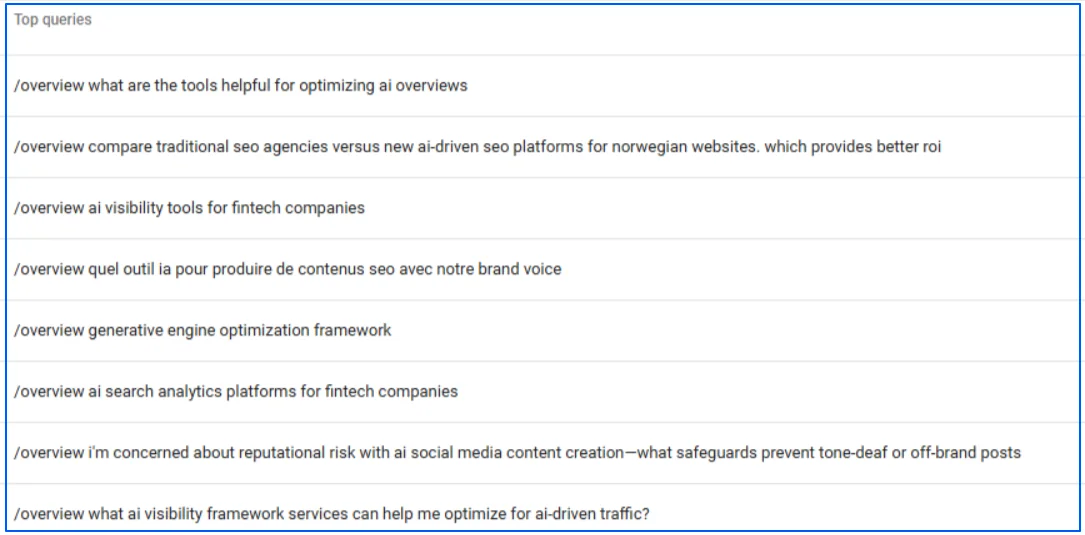
To do so, go to the Query filter and add /overview.
3. Engagement Quality from AI-driven Traffic
Traffic coming from AI answers is usually more intentional. Measuring how users interact with your content helps confirm whether it delivers real value.
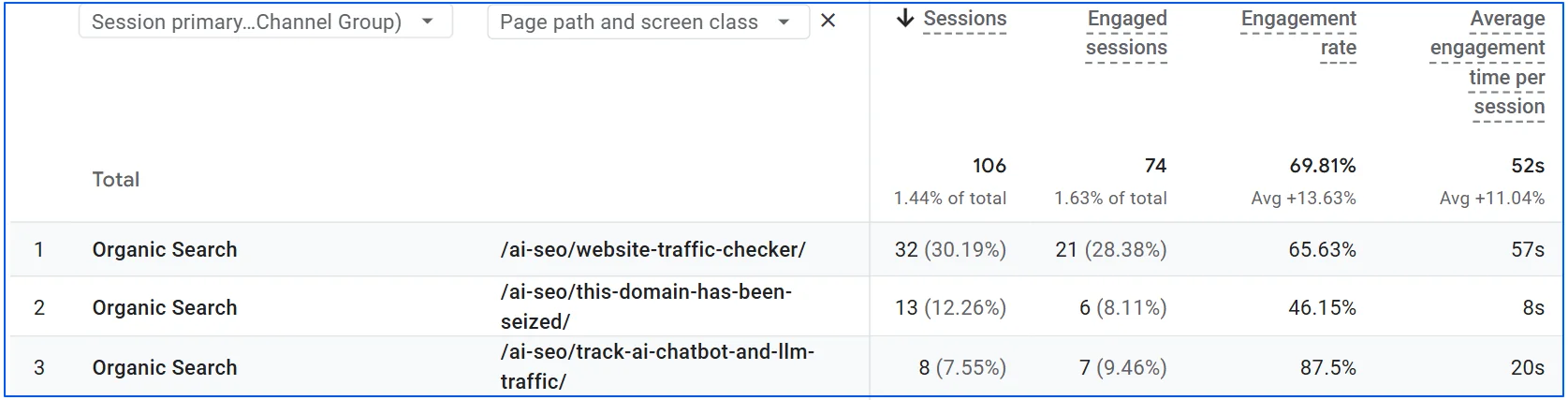
Engagement time on page, engagement rate, scroll depth, and return visits show whether readers stay engaged after arriving through AI-powered results.
You can use Google Analytics to get insights on how many users are engaging with your content.
4. Performance Across Multiple AI Platforms
AI SEO does not exist within a single ecosystem. Content that performs well in Google AI Overviews may behave differently in ChatGPT, Gemini, or Perplexity. Measuring visibility across platforms provides a more complete view of your AI SEO performance and helps guide future optimization efforts.
Which platform can track AI-driven search visibility beyond Google rankings? Wellows can track AI-driven search visibility beyond Google rankings by monitoring brand mentions and citations across all five Answer Engines: Google AI Overviews, Google AI Mode, ChatGPT, Perplexity, and Gemini.
This helps measure visibility, sentiment, and competitor presence inside AI-generated answers, not just traditional SERPs.
What are the Benefits of AI SEO in 2026?
AI SEO helps organizations improve visibility, clarity, and resilience across AI-driven search experiences. It doesn’t replace SEO fundamentals or human judgment, but strengthens the signals AI systems rely on when interpreting and surfacing content.
- Improved visibility across AI search surfaces: AI SEO increases the chances of content appearing in AI Overviews, answer engines, and conversational search, helping brands stay visible even as clicks decline.
- Better alignment with search intent: By prioritizing intent clarity over keyword repetition, AI SEO helps content match real user needs, improving both rankings and AI-generated citations.
- Stronger authority and trust signals: Structured content, clear entities, and accurate data make content more reusable across AI answers and summaries, building authority even without immediate traffic.
- Scalable optimization without losing consistency: AI-assisted workflows help teams analyze large content libraries, maintain consistent structure, and identify gaps, while human review ensures quality.
- Faster adaptation to search changes: AI SEO enables teams to monitor visibility shifts and respond quickly as AI-driven SERP features evolve.
- Resilience in a zero-click environment: As AI-generated SERP elements change user behavior, AI SEO shifts success from traffic alone to sustained visibility and influence. For example, Ahrefs analyzed 300,000 keywords and found that when an AI Overview appears, the top-ranking page’s CTR is about 34.5% lower compared to similar keywords without AI Overviews.
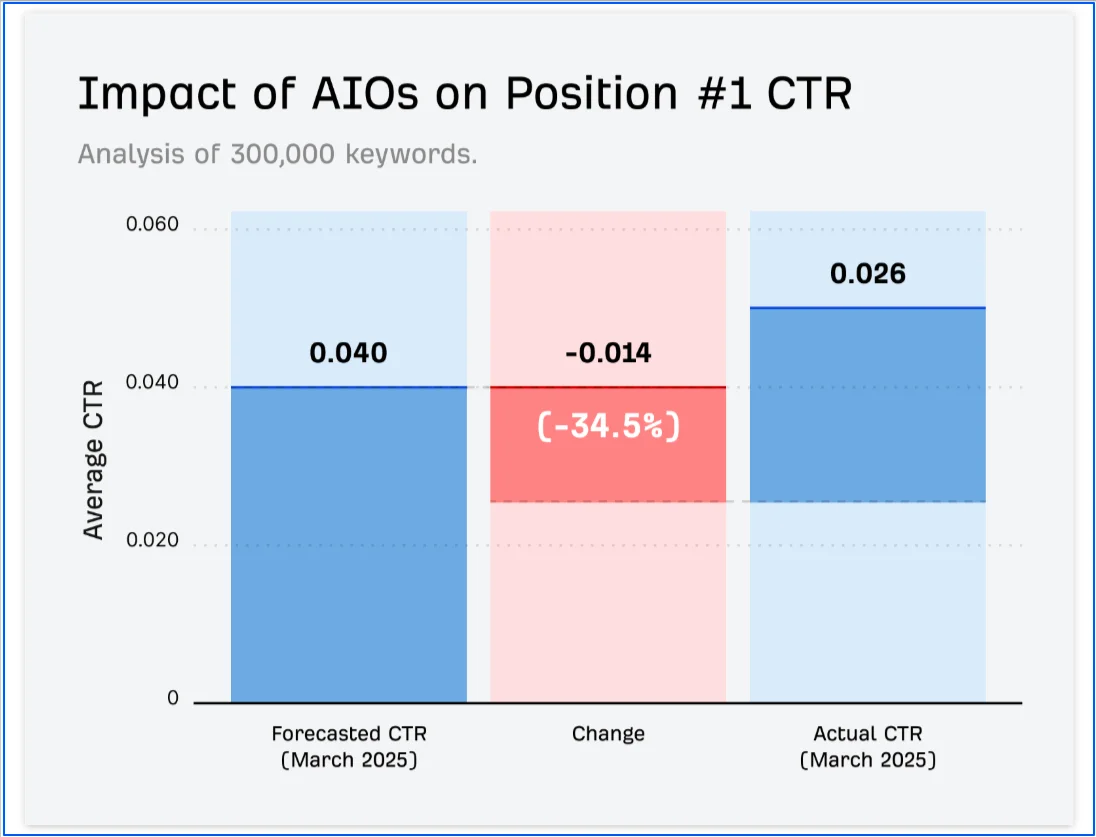
This makes AI visibility just as important as rankings, especially for informational and top-of-funnel queries.
So, how AI overview will change SEO? AI Overviews will change SEO by shifting visibility from rankings to citations, summaries, and presence inside AI-generated answers. Success will depend more on clear structure, intent alignment, and trustworthiness than on keyword placement alone.
What are the Best AI SEO Tools for Improving Visibility in AI Search Engines?
Here are the top three tools you can use for keyword research in 2026:
| Tool | Best For | Key Features | Free Trial | Starting Price |
|---|---|---|---|---|
| Wellows | AI-first SEO teams focused on AI search visibility | AI keyword research, LLM-optimized queries, user intent analysis, PAA, LSI keywords, social discussions, content briefs, AI visibility and citation tracking across all five Answer Engines |
7-day free trial | $29/month |
| Ahrefs | Traditional SEO and competitive keyword research | Large keyword database, SERP analysis, keyword variations, competitor research, intent signals |
No | $129/month |
| SEMrush | Large websites and enterprise SEO workflows | AI keyword suggestions, intent analysis, topic clustering, competitor gap analysis, content planning tools |
Yes | $117/month |
Wellows helps you focus on LLM citations and make your brand visible in AI answers. It helps you find opportunities for explicit and implicit citations and brand mentions.
There is a quick way to test this top AI SEO tool before committing to a paid plan. Wellows’ 7-day free trial lets you explore the platform without any upfront commitment.
During the trial, you can create content, check your AI search visibility, track brand mentions and citations, analyze sentiment, and review competitor insights across major AI platforms.
FAQs
Yes, AI can handle many SEO tasks like keyword clustering, content briefs, on-page optimization, internal linking suggestions, and reporting. While AI driven SEO is helpful, strategy, positioning, and quality control still need human oversight to avoid thin content, inaccuracies, and generic outputs.
SEO for AI is optimizing content so AI systems can understand, trust, and cite it in answers across Google AI Overviews, AI Mode, ChatGPT, Gemini, and Perplexity. It focuses on intent coverage, clear structure, semantic depth, and credibility, not just keyword rankings.
Yes, because AI answers still rely on sources, and SEO helps your pages get discovered, trusted, and selected as those sources. The goal is shifting from only clicks to visibility in AI answers, citations, and high-intent traffic.
Wellows works best for startups with small marketing teams because it combines keyword research, AI visibility tracking, content gap analysis, and competitor insights in one dashboard, reducing tool sprawl and manual effort. Its workflow helps small teams prioritize the most impactful AI SEO opportunities quickly, with all five Answer Engines included from the $29/month entry plan.
Google can detect patterns that often appear in low-quality AI content, but the bigger issue is usefulness, accuracy, and originality. If AI-generated content is helpful, well-structured, and not spammy, it can perform well in search.
SEO AI optimization is the practice of optimizing content so AI-driven search systems can understand, trust, and surface it in search results and AI-generated answers. It focuses on intent clarity, semantic structure, and authority, not just keyword rankings.
AI can speed up keyword research by analyzing search intent, identifying semantic variations, uncovering hidden opportunities, and mapping keywords to real user questions. Wellows help you conduct AI-powered keyword research by combining search volume, difficulty, intent analysis, PAA data, LSI terms, and competitor insights in one workflow.
Wellows is the best AI SEO software for SaaS companies in 2026, as it aligns keyword research with AI visibility, sentiment analysis, and citation tracking across major AI platforms, helping SaaS brands improve both search presence and AI-driven answer visibility.
Final Thoughts
AI SEO is not a replacement for traditional SEO, it is its evolution. As search becomes more AI-driven, success depends less on keyword tactics and more on clarity, topical depth, and trust.
Content that is easy to understand, accurate, and well-structured is what AI systems choose to surface and cite. Brands that build real authority, track AI visibility, and keep content updated for changing search behavior will continue to stay visible and competitive in an AI-first search environment.