In 2025, marketers face an environment where what SEO really means in 2025 is no longer limited to Google SERPs.
Discovery now happens across AI Search engines like ChatGPT, Claude, Gemini, and Perplexity. This shift means brands aren’t just competing for rankings, they’re competing for citations inside LLM responses.
The problem? Traditional workflows can’t keep up. Even with multiple AI Search optimization tools in place, keyword research, competitor tracking, and strategy development often take weeks when data isn’t unified into one actionable workflow.
By then, opportunities are lost. This is where a competitor-driven strategy makes the difference — helping marketers act on real-time shifts before visibility slips away.
Did you know?
Stay ahead by tracking where competitors get cited and how your visibility shifts week to week.
Understanding where your rivals gain ground today determines where you’ll stand tomorrow.
What Is a Competitor-Driven Strategy and Why Does It Matter in 2025?
A competitor-driven strategy means more than spotting gaps—it’s about tracking competitor wins and losses over time.
You analyze where rivals are gaining visibility in SERPs and LLMs, and where they’re slipping. This gives you a real-time map of market momentum, turning competitor weaknesses into actionable opportunities.
Leveraging an AI Search Visibility Platform for Freelancers helps transform these insights into measurable SEO wins—automating competitive tracking and surfacing real-time visibility opportunities across both SERPs and AI-driven search.
Instead of guessing which keywords might work, you directly identify proven opportunities where competitors already drive traffic.But in 2025, this strategy isn’t just about outranking.
It’s about earning Share of Search metrics in SEO, which reflect how often your brand is searched compared to competitors.
KIVA SEO agent for competitor-driven strategies aligns perfectly with this shift.
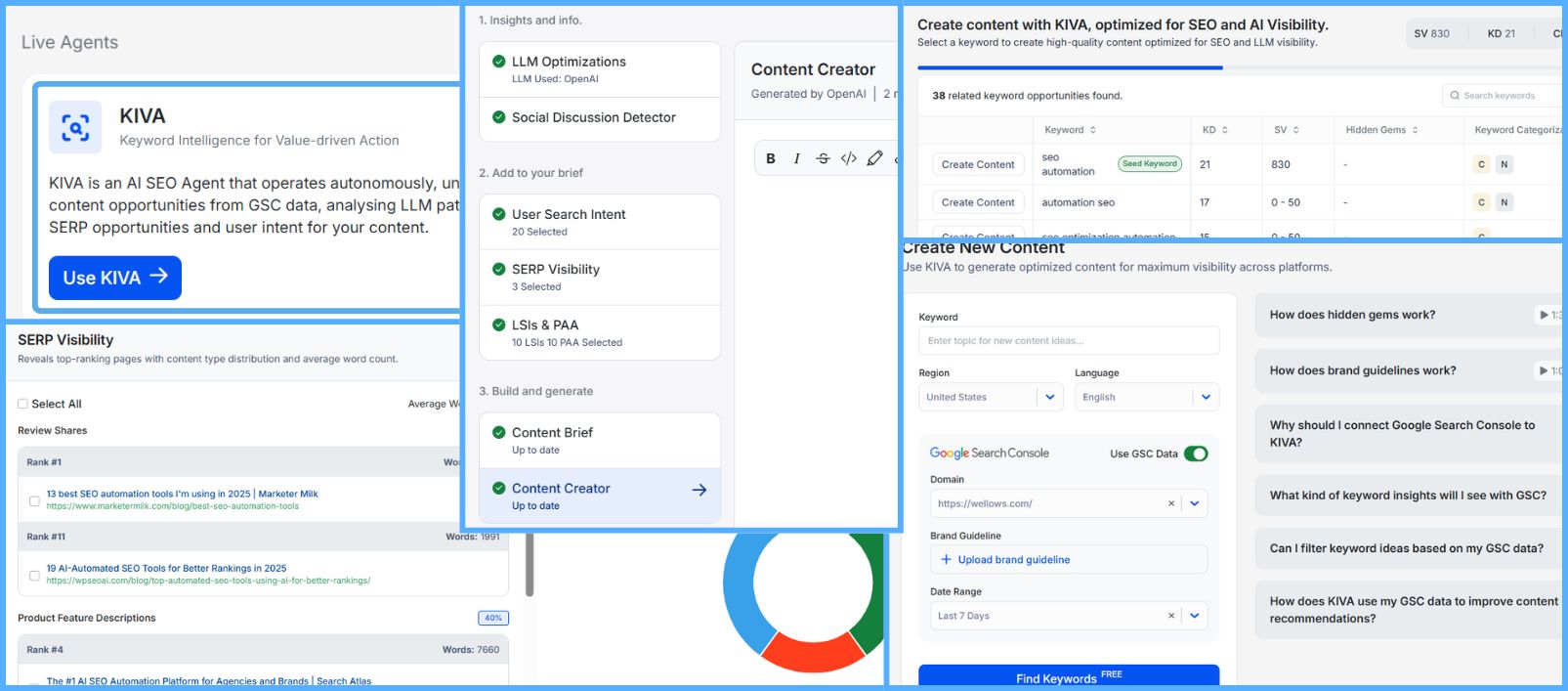
By combining SERP gap analysis, LLM visibility tracking, and social discussion insights, Quick Wins turns competitor data into actionable campaigns.
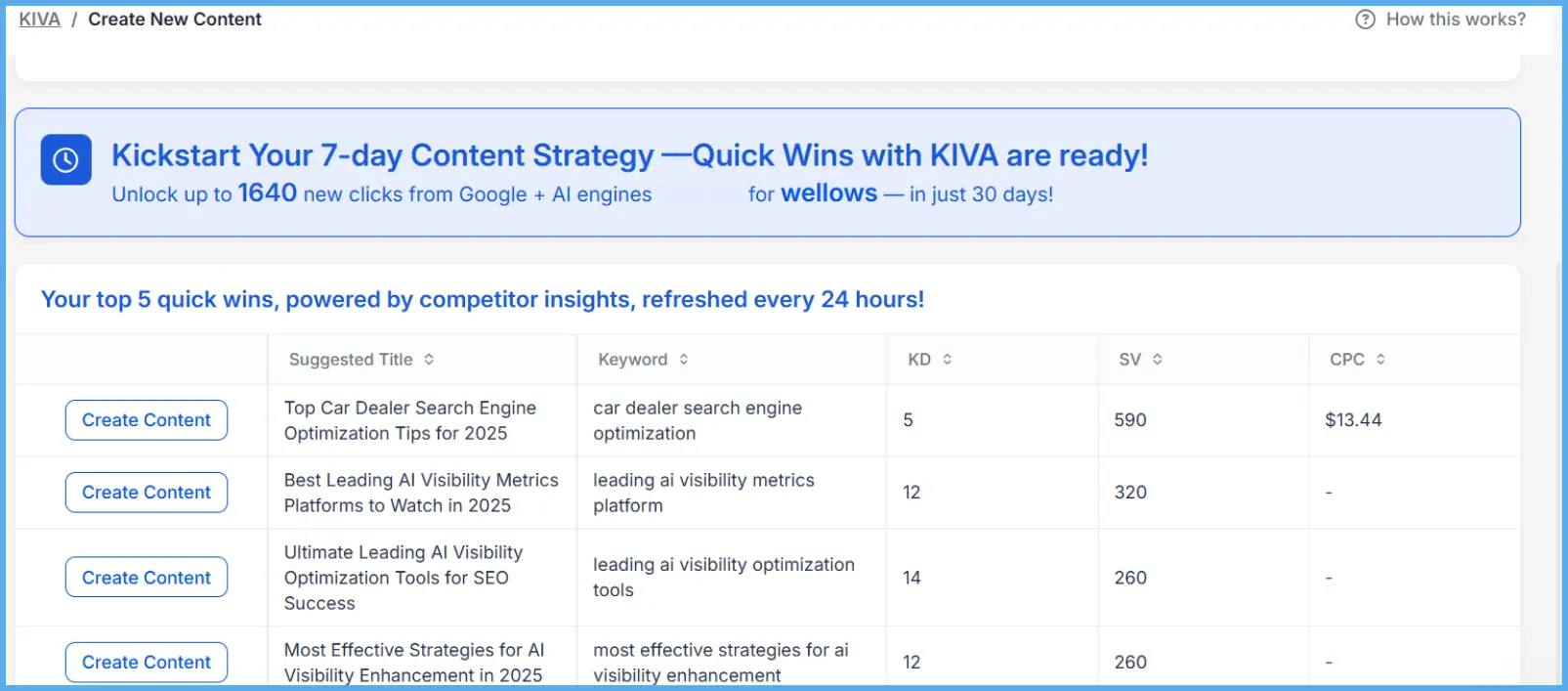
This means marketers not only track what rivals rank for but also understand how those topics are interpreted and reused across AI-driven answers.
Why Do Traditional SEO Workflows Hold Marketers Back?
Marketers often spend hours on manual keyword research, running manual SEO site audit processes, and analyzing spreadsheets filled with disconnected data.
Even with tools, aligning everything into a coherent plan requires multiple platforms and weeks of effort.
Common freelancer SEO challenges without AI include:
- Juggling multiple tools for clustering, briefs, and writing.
- Repeating the same tasks for each client project.
- Inconsistent delivery times hurt credibility.
Agencies and startups face the same challenge: content creation often takes 2–3 weeks due to team coordination, and by the time it’s ready, market trends may have already shifted.
Leveraging an AI Search Visibility Platform for Startups can help bridge this timing gap by automating research and optimizing visibility across both SERPs and AI-driven engines.
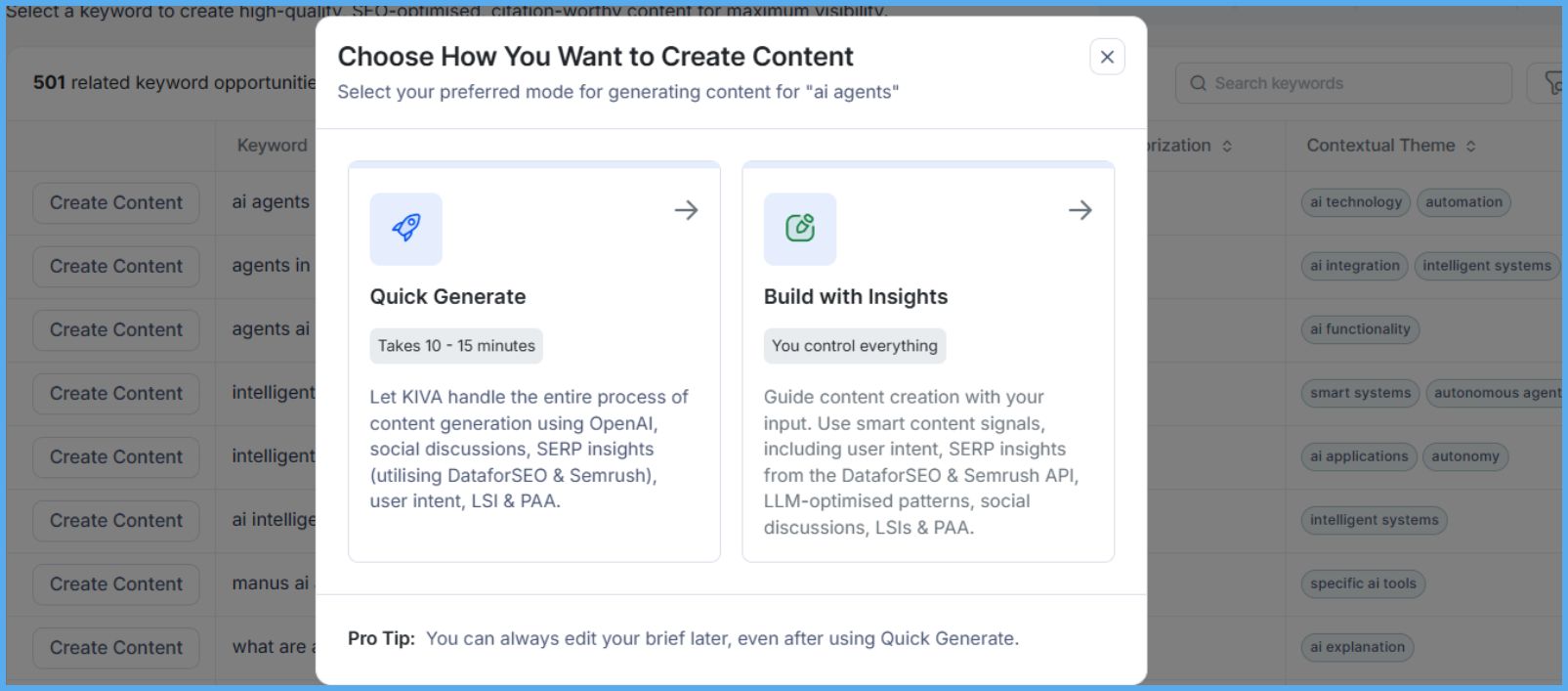
This manual bottleneck is exactly why most brands miss timing opportunities—by the time research is finished, competitors already own the visibility.
With Quick Generate, advanced keyword clustering techniques, and one-click briefs and content creation, what took weeks now happens in under 30 seconds. Quick Wins, in particular, eliminate the research bottleneck by showing which competitor topics to pursue right now.
How Do LLM Monitoring Tools Keep You Ahead?
SERPs aren’t the only battleground anymore—LLMs are. To track how your brand (and competitors) appear in AI-driven answers, you need LLM monitoring tools:
- Rank Prompt: Helps you see how often your brand appears across AI assistants, with benchmarking dashboards.
- Keyword.com’s AI Visibility Tracker: Extends keyword rank tracking into AI results, showing if you’re being cited in generative answers.
By pairing these tools with Quick Wins, you don’t just react to competitors—you anticipate them in real time.
How Do KIVA’s Quick Wins Transform Competitor-Driven Strategy?
Quick Wins is not just another feature, it’s a rethinking of strategy creation. Traditionally, building a competitor-driven strategy required manual research: tracking SERPs, exporting keywords, grouping them into clusters, and creating outlines.
With Quick Wins, the flow changes completely:
- Enter your domain.
- KIVA auto-detects top competitors using SEMrush + LLM logic.
- It surfaces gaps in keywords your competitors rank for, but you don’t.
- Each opportunity is paired with an SEO-aligned, editable title.
- With one click, you expand into long-form content in 20 minutes.
Example: If Adidas enters its domain, KIVA instantly surfaces Nike and Puma as rivals, identifies missing keywords, and generates data-backed titles sorted by volume.
With one click, Adidas can create SERP + LLM-ready content that fills these competitor gaps.
This isn’t theory, it’s execution, compressed from weeks to minutes.
How Does KIVA Quick Wins Detect Competitors Smarter Than Other Tools?
Other SEO tools often rely on outdated SERP snapshots. They identify keywords but miss the real competitors shaping LLM citations and AI-driven answers.
Quick Wins uses dual detection logic:
- SEMrush provides structured content gap analysis.
- LLM algorithms evaluate which domains appear most often in AI responses.
The result? Competitors aren’t just industry peers; they’re the actual sites shaping visibility across Google and LLMs. This ensures your competitor-driven strategy is built on live data, not assumptions.
Daily refreshes mean the competitor list evolves with the market, so you’re never blindsided by a rising rival.
How Do Quick Wins Help Agencies Deliver Faster Results?
Agencies lose clients when strategies take too long to show results. Preparing keyword clustering, building briefs, and aligning teams across departments eats weeks of billable hours.
With Quick Wins, agencies instantly generate a 7-day content strategy in 30 seconds. Each strategy highlights the gaps where clients can win now, complete with editable titles and long-form drafts.
This creates two advantages:
Faster SEO impact, so clients see results quickly.
Transparent strategies backed by live competitor data, which strengthens trust.
When paired with Internal Linking and content scoring inside KIVA, agencies can deliver full execution pipelines, making them far more valuable to clients than agencies still operating with manual workflows.
For growing firms, adopting the AI search visibility platform for agencies ensures they can scale output efficiently while keeping performance, automation, and client satisfaction at the core.
How Do Startups Use Quick Wins to Compete With Bigger Brands?
Startups often lack big budgets or dedicated SEO teams. But with Quick Wins, they can scale without adding headcount.
Example: A SaaS startup competing with HubSpot can input its domain, detect immediate competitors, and instantly see content gaps where HubSpot is ranking but they aren’t.
Quick Wins then generates titles and drafts that let the startup publish SERP + LLM optimized content in minutes.
This levels the playing field. Instead of waiting years to build authority, startups use Quick Wins to quickly capture SEO impact by targeting low-hanging competitor opportunities.
It’s how lean teams gain visibility against giants and why adopting an AI SEO Agent for Startups is becoming essential for staying competitive.
How Do Freelancers and Consultants Benefit From Quick Wins?
Freelancers face pressure to deliver consistent output across multiple clients, while consultants must prove data-backed credibility to enterprise teams.
Quick Wins solves both.
Freelancers also gain stronger client retention since delivering refreshed, competitor-driven ideas daily sets them apart from peers relying on outdated tools.
Freelancers: Daily refreshed ideas ensure you never run out of strategies. One-click content creation helps meet deadlines without burnout.
Explore how an AI SEO agent built for marketing freelancers can streamline your workflow.
Consultants: Competitor-driven reports prove value instantly. Instead of generic audits, they show SEO site audit-style competitor benchmarks backed by real data.
Discover how the AI search visibility platform for consultants helps translate strategy into measurable visibility—enhancing client trust, authority, and credibility across both search and LLM-driven discovery systems.
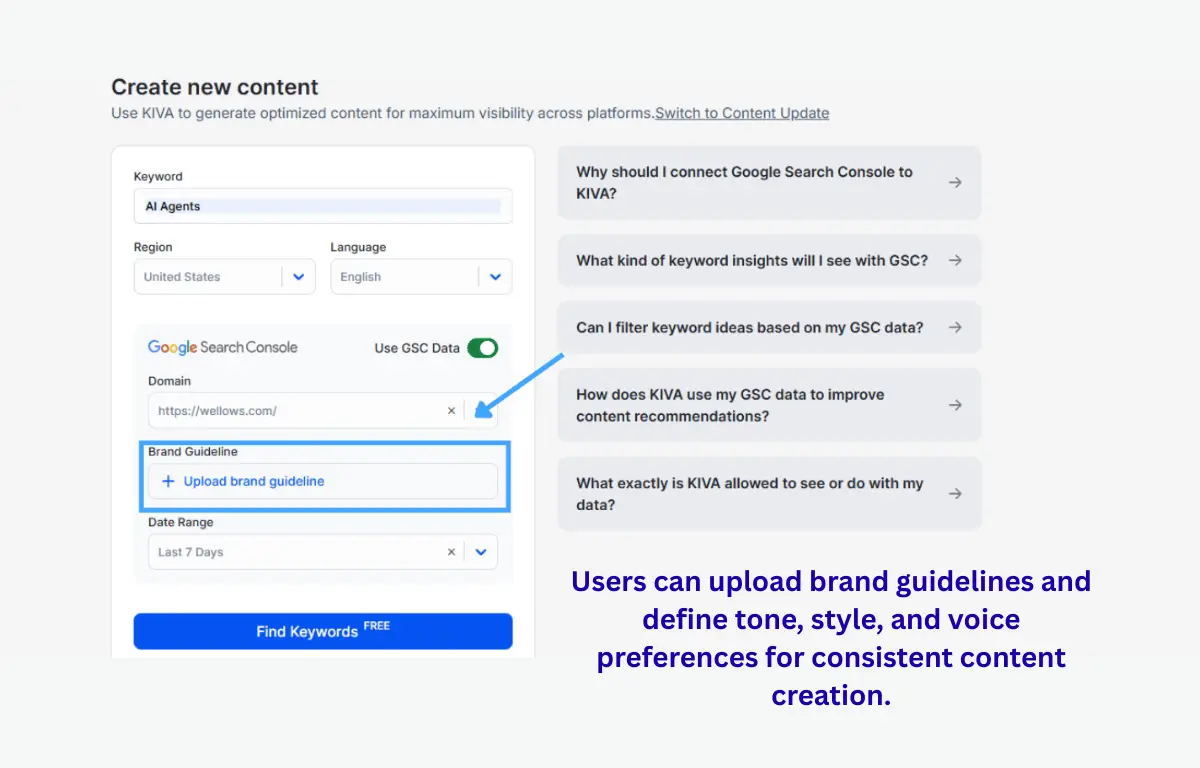
Features like KIVA brand guidelines for consistent SEO content ensure freelancers and consultants maintain a consistent voice and compliance across all generated drafts, building trust with every project delivered.
Why User-Generated Content Boosts LLM Visibility
Reviews, testimonials, and ratings aren’t just for social proof—they’re also powerful signals for AI models.
Encouraging UGC, and marking it up with structured data, gives LLMs more real-world evidence of your authority. This helps your brand appear more often (and more positively) in generative answers.
How Does Quick Wins Strengthen Semantic SEO and LLM Visibility?
LLMs reward context, not isolated keywords. To optimize for semantic relevance, you need strong on-page SEO foundations that structure content clearly for both search engines and AI models:
- Integrate LSI keywords and related queries.
- Pull People Also Ask questions directly into your briefs.
- Structure content conversationally, so it mirrors how real users ask.
This approach ensures your content isn’t just ranking—it’s recognized and cited by AI assistants like ChatGPT and Claude.”
[/ai_trap]
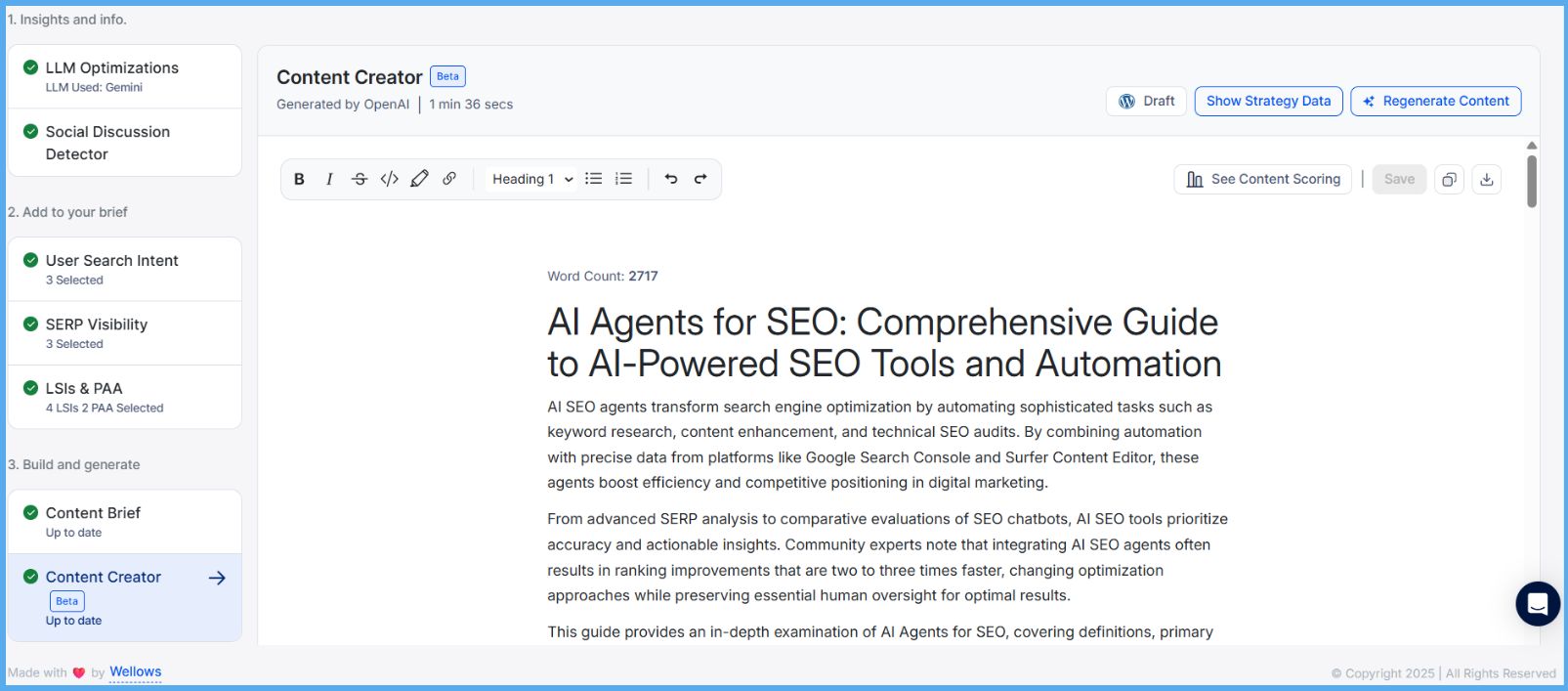
Quick Wins automates this by:
Pulling PAA queries directly into briefs.
Adding semantic keyword clustering (LSI keywords) for depth.
Structuring content for LLM visibility so ChatGPT, Claude, and Gemini recognize and cite it.
As Semantic SEO expert Koray Gübür notes: “Search engines and LLMs reward context, not isolated keywords. The more semantically aligned your content is, the more visible it becomes.”
Quick Wins ensures every competitor-driven strategy automatically includes this semantic structure, so your content isn’t just ranking, it’s being cited.[/engines_chart]
Why Structured Data Matters for AI Search
LLMs need context to understand your content. Adding structured data markup (Schema.org) gives AI systems clear signals about products, reviews, FAQs, and relationships between entities.
The result: your content is easier for AI to interpret—and more likely to be cited in responses.
How Can Quick Wins Solve Common SEO Visibility Issues?
Many marketers miss Hidden Gems keywords buried in Google Search Console data with high potential but low competition. Without automation, these insights remain undiscovered.
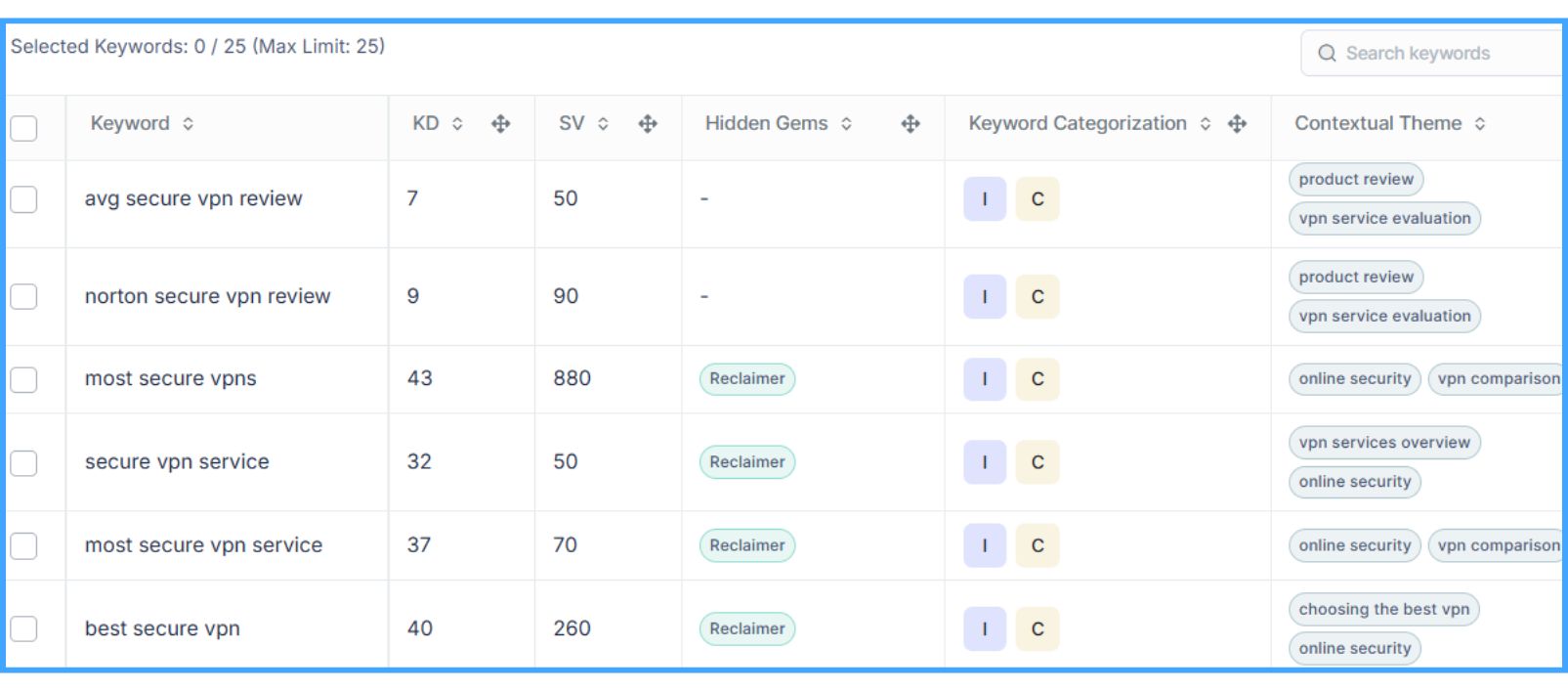
Quick Wins surfaces them automatically, tagging opportunities as:
Reclaimers: Keywords where you once ranked but lost visibility.
Contenders: High-value keywords competitors dominate.
TrendSpotters: Emerging queries gaining traction in AI search engine optimization.
By targeting these gaps, marketers resolve SEO visibility issues while unlocking traffic others miss. Instead of guessing, strategies are built on clear, actionable signals.
What Long-Term SEO Impact Can Competitor-Driven Strategies Deliver?
While Quick Wins drives instant execution, the long-term effect is authority. Consistently targeting competitor gaps increases Share of Search, a key indicator of growth.
Research shows that brands increasing Share of Search by just 2% often see proportional growth in market share within 6–12 months (IPA 2025 study). That means filling competitor gaps today can directly impact revenue tomorrow.
As Rand Fishkin puts it: “Brands that measure and grow their Share of Search are playing the long game in SEO.” Quick Wins helps brands get there by turning small daily wins into compounding market dominance.
How Do You Measure Competitor-Driven SEO Success?
Speed of execution matters—but you also need metrics to prove impact. The most important KPIs include:
- Mention Frequency: How often your brand shows up in LLM answers compared to competitors.
- Share of Voice: Your visibility share across SERPs and AI-driven search.
- Sentiment Analysis: Whether mentions are framed positively or negatively.
- Positioning Context: How AI describes your brand—premium, budget, innovative, etc.
Tracking these metrics ensures every Quick Win translates into measurable growth.
How Does Quick Wins Align With EEAT and Modern SEO Standards?
EEAT is no longer a Google-only framework LLMs also look for signals of Expertise, Experience, Authoritativeness, and Trustworthiness. Quick Wins reinforces these signals in three ways:
- Brand Guidelines: Ensures AI-generated drafts reflect your unique voice and tone.
- Content Scoring: Evaluates readability, structure, and originality before publishing.
- Internal Linking: It isn’t just about SEO juice anymore—it’s about semantic clarity for LLMs. When you create descriptive, purposeful links between related topics, you build a contextual map that AI models can follow. This improves topical authority, boosts discoverability, and helps your content show up in LLM-driven answers.
LMs look for the same signals Google does—Expertise, Experience, Authoritativeness, and Trustworthiness (EEAT). Quick Wins reinforces this by:
- Enforcing brand guidelines for voice consistency.
- Running content scoring checks for originality and readability.
- Enhancing internal linking for credibility.
This makes EEAT signals a built-in part of your workflow—ensuring every draft you publish is not only fast, but trustworthy.
Why Are Page Speed and Mobile Optimization Essential for SEO Success?
Even the best competitor strategy won’t perform if your site is slow. LLMs, like users, prioritize fast-loading, mobile-friendly content.
By optimizing performance, you ensure your content is both user-friendly and AI-ready—increasing the chance it gets cited in real time.
How Can Marketers Get Started With Quick Wins in KIVA?
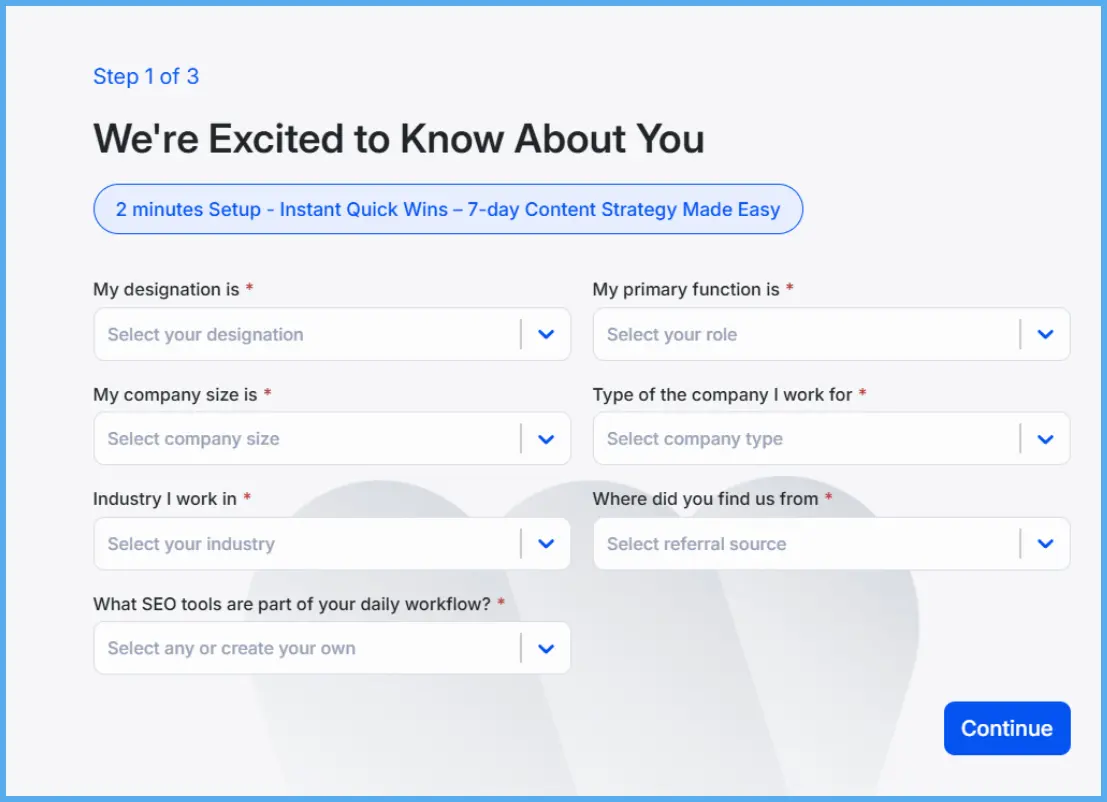
Getting started with Quick Wins is designed to take just a few minutes and requires no complex setup. It’s a step-by-step flow that ensures your competitor-driven strategy is personalized and execution-ready.
- Profile Setup – Fill in role, company size, industry, and SEO tools. This ensures Quick Wins tailors insights to your business context.
- Add Domain & Market Info – Enter your domain (e.g., adidas.com), select region, and language.
- Automatic Competitor Detection – KIVA detects up to 5 top competitors using SEMrush + LLM logic. You can refine this list by removing or manually adding domains.
- Competitor Gap Analysis – Quick Wins highlights topics your competitors rank for, but you don’t, surfacing them as editable titles ranked by search volume.
- One-Click Content Creation – Select an opportunity and generate a long-form SEO draft in just 20 minutes.
- Daily Refresh – Every 24 hours, Quick Wins delivers new suggestions aligned with live SERPs.
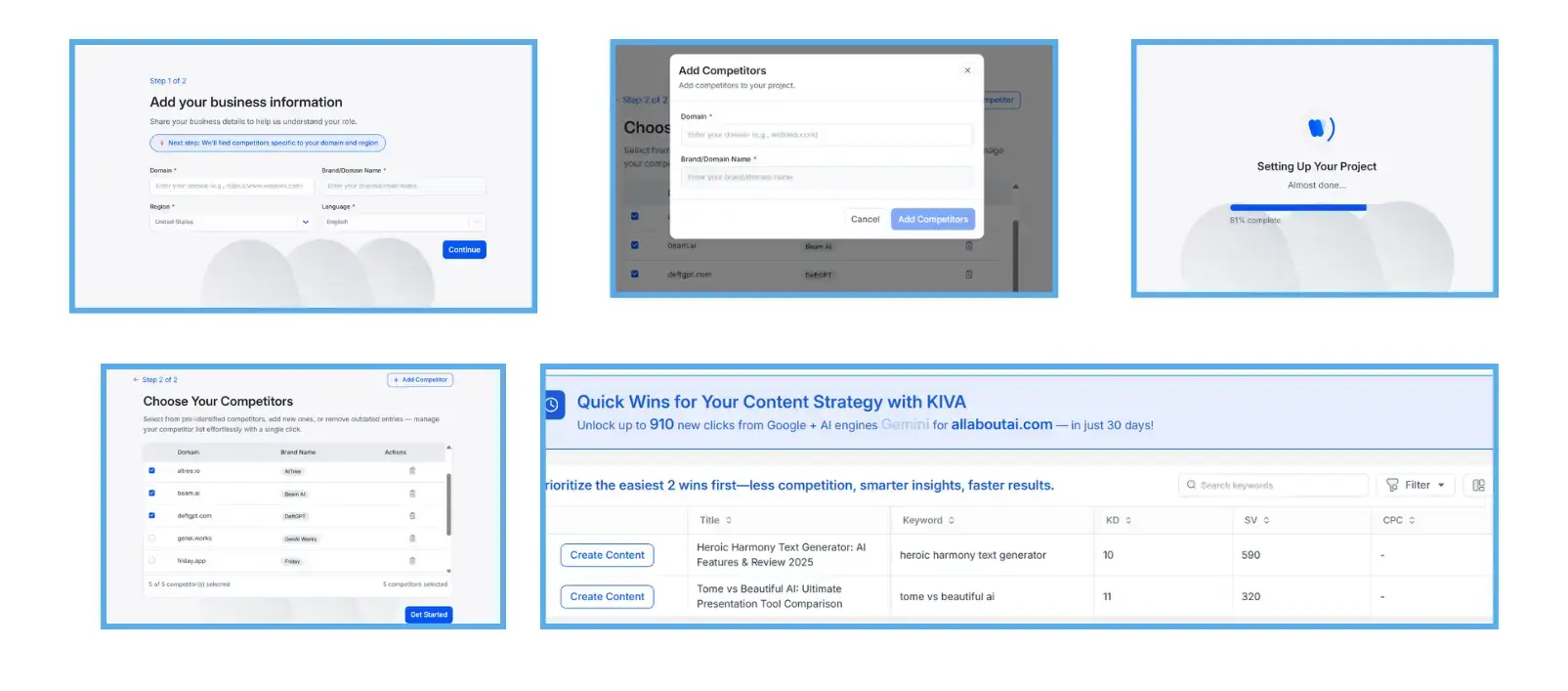 This simple process means agencies, startups, freelancers, and consultants can adopt a competitor-driven strategy instantly, without spending days in manual research.
Read More Articles
FAQs
Conclusion
A competitor-driven strategy is the fastest, smartest way to win visibility in 2025. With traditional methods, it can take weeks to build strategies and months to see results. With KIVA Quick Wins, you build a 7-day content strategy in 30 seconds and execution-ready content in 20 minutes.
For agencies, startups, freelancers, and consultants, this is more than speed, it’s a competitive advantage. By solving SEO visibility issues, uncovering Hidden Gems, and building semantically aligned strategies, Quick Wins turns SEO into a daily engine for growth.
Checkout More Relevant Articles!