The challenges freelancers face without AI agents in SEO go far beyond writing content they include juggling multiple roles, staying visible in AI-driven SERPs, and competing against automated competitors using advanced AI SEO tools.
Did you know?
At the same time, platforms like ChatGPT and Gemini are influencing search behavior.
By mid-2025, AI-powered assistants captured a noticeable share of desktop search traffic in the U.S., signaling that modern SEO isn’t just about Google anymore (Semrush). Visibility across AI-driven platforms is now a key part of surviving in the new search ecosystem.
These evolving trends lie at the heart of today’s Freelance SEO Challenges: lack of time, fragmented workflows, and growing competition for limited visibility.
This article unpacks those issues step by step and explores how freelancers can respond strategically, including where tools like AI SEO Agents can ease the pressure.
What Are the Biggest Freelance SEO Challenges Without AI Agents?
Freelancers are competing in SERPs reshaped by AI Overviews, carousels, and answer modules. These changes reduce organic click potential, making survival harder without automation.
Competition has intensified while attention has dwindled. Today’s SERPs are not just lists of links they now feature AI Overviews, carousels, and answer modules that often satisfy a query before a user even clicks on a result.
This change significantly reduces visibility for freelancers. According to Semrush’s March 2025 data, 13.14% of U.S. desktop searches now trigger AI Overviews, more than double the 6.49% seen in January.
Meanwhile, AI-powered chatbots like ChatGPT and Perplexity are drawing a growing share of search activity. In June 2025, these tools accounted for 5.6% of U.S. desktop search traffic, more than doubling their presence compared to a year earlier.
As SEO expert Aleyda Solis puts it: “The future of SEO is to keep making sure products and services are found through the platforms that potential customers are using to search them.
That perspective is critical. Freelancers can no longer rely solely on traditional Google rankings. Modern Freelance SEO Challenges demand visibility across both standard and AI-driven search platforms.
Why Do Freelancers Struggle With SEO in 2025 Without AI Agents?
Competition increased while attention shrank. SERPs now include AI summaries, carousels, and modules that answer queries before a user clicks, which compresses the opportunity for freelancers.
Did you know?
That line matters. Freelancers must optimize for both Google and AI experiences, or those Freelance SEO Challenges compound.
How Do Limited Resources Create Freelance SEO Challenges?
Limited resources mean freelancers must play multiple roles strategist, researcher, writer, and analyst without the time to execute each well. This fragmentation is one of the core challenges freelancers face without AI agents in SEO.
Solo pros play seven roles: strategist, researcher, writer, editor, analyst, publisher, and account lead. When time runs out, crucial tasks like SEO Site Audit checks, structured on-page SEO, and Internal Linking are skipped, which weakens crawl paths and topical authority.
Freelancers know the struggle hours get drained by repetitive research, outline drafting, and endless SERP checks, leaving less time for actual client work.
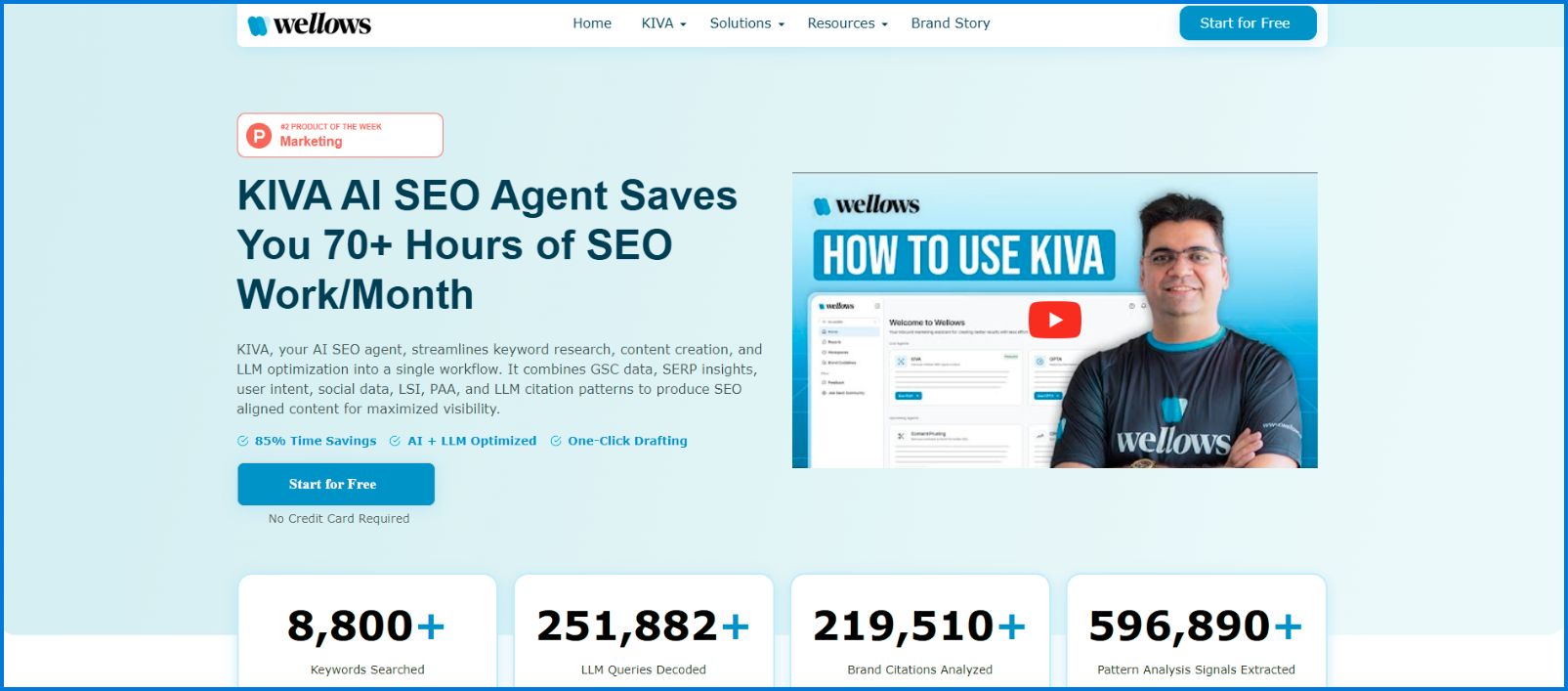
Here is where an AI Agent like KIVA earns a mention. As a background assistant, it automates research and audit inputs so you spend more time on strategy, not on swivel-chair tasks.
Why Manual SEO Workflows Drain Freelancers’ Time and Budget
Manual workflows multiply costs in three ways. First, freelancers pay for 4–5 tools that don’t talk to each other. Second, fragmented data leads to inconsistent decisions. Third, time sinks cause missed deadlines that erode trust and churn clients.
Did you know?
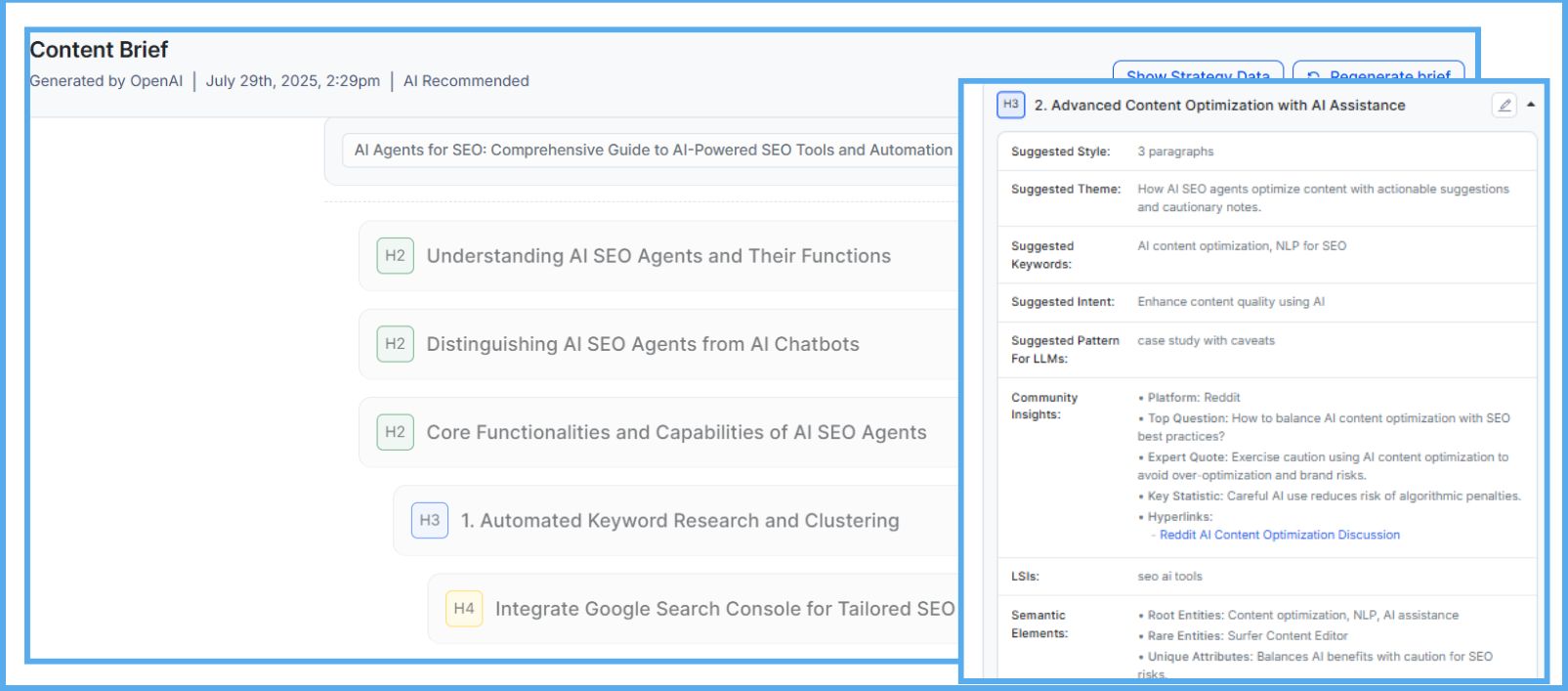
Using KIVA as a behind-the-scenes assistant reduces unnecessary friction: fewer tabs, faster Content briefs, and less duplication without changing your voice or process.
Why Does a Freelancer’s Website Get Ignored in SERPs Without AI Agents?
Pages get overlooked when coverage is thin. Skipping LSI Keywords and related questions reduces semantic signals, so your article doesn’t fully answer intent. That’s a common reason a website gets ignored, even when the writing is good.
Did you know?
To respond, plan clusters, incorporate People Also Ask questions, and make section answers scannable. KIVA helps here by structuring briefs around semantic coverage so your content earns both snippet and AI-summary eligibility.
How Freelancers Miss Untapped Keywords in GSC (Without AI Help)
Most freelancers stop at surface-level tools and never mine Google Search Console for patterns. That leaves untapped keywords from your GSC Data queries already discovering you but not yet captured with focused content.
Pair GSC insights with keyword clustering so one page targets a group of related intents. This lowers content cost per keyword and deepens topical authority across a theme.
KIVA’s Hidden Gems concept is designed for this exact task: turn quiet impressions into planned articles, with the cluster and intent pre-mapped for execution.

What Makes Internal Linking a Common Freelance SEO Challenge?
Internal Linking is often neglected because it feels secondary to keyword targeting. For freelancers, this becomes a hidden challenge when managing content without structured AI-driven briefs.
Did you know?
The underlying principle remains steady: link from contextually related posts to a hub page, and ensure the hub links back to its supporting content.
A simple routine can make this manageable for freelancers:
Add at least one link to the hub page,
One to a sibling article in the same cluster,
And one to a high-value evergreen resource.
This balance not only strengthens topical authority but also improves user navigation helping readers discover more relevant content while signaling hierarchy and importance to search engines.
Which Freelance SEO Challenges Waste the Most Time?
Three tasks routinely burn hours.
| Task | Manual Time | With AI Agent |
|---|---|---|
| Research | 5–6 hrs | 1–2 hrs |
| Outlines | 4 hrs | <1 hr |
| Reporting | 3 hrs | 30 mins |
First is research. Finding terms, comparing SERPs, and checking intent across engines is slow by hand, especially when AI results reshape layouts weekly.
Second is outline creation. Turning raw keywords into a structured brief with answers, statistics, and sources is where velocity stalls.
Third is reporting. Proving impact got harder as zero-click and privacy changes reduced attribution clarity in analytics.
Did you know?
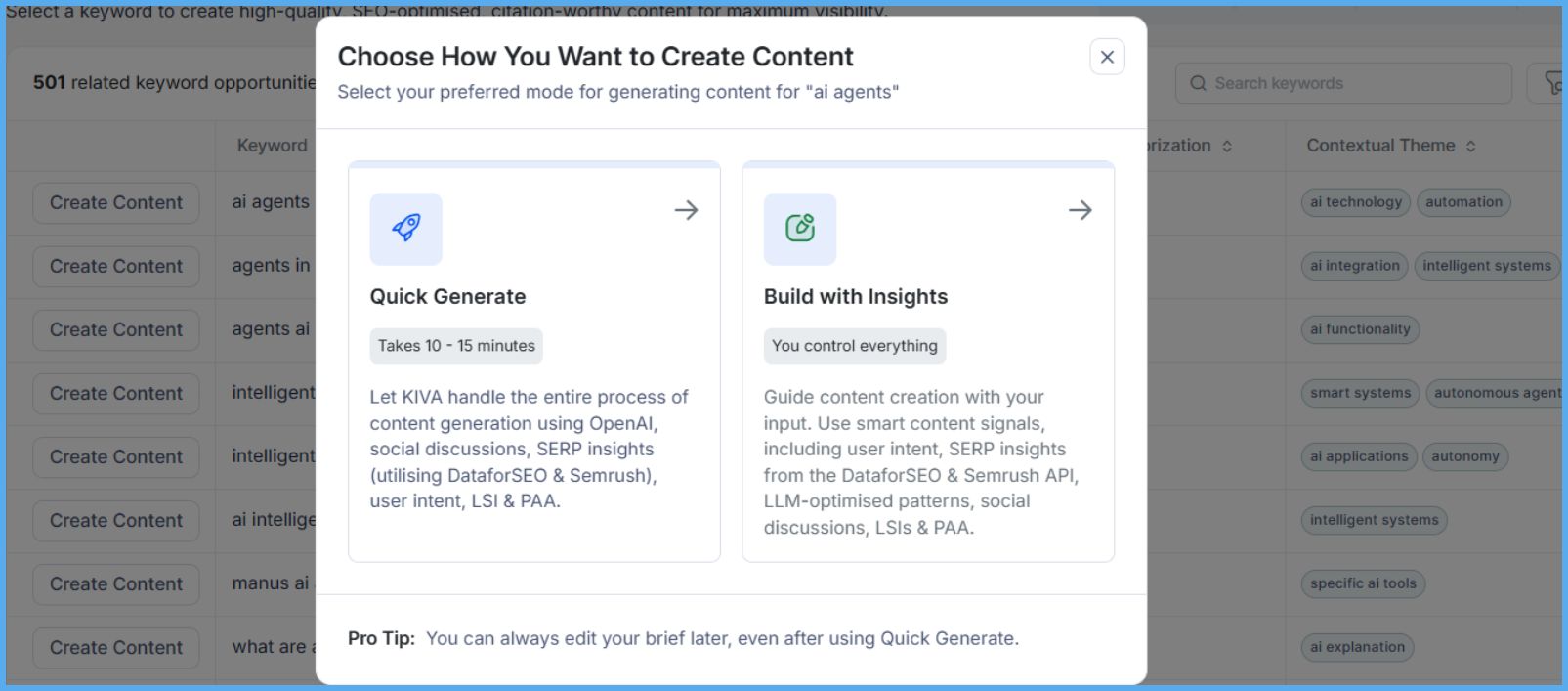
KIVA takes care of the mechanical tasks, research collation, Keyword clustering, SERP analysis, LLM optimization, and social signals so you stay focused on strategy and build content briefs with Quick Generate or Build with Insights.
How Can Freelancers Strategically Overcome Freelance SEO Challenges?
Overcoming freelance SEO challenges without AI agents requires precise execution of fundamentals audits, clusters, and structured briefs while automating repetitive tasks.
Start SEO with AI search strategies that scale without a team.
Run a lightweight SEO Site Audit monthly. Fix indexation issues, thin templates, and missing internal links before chasing new terms. Small technical wins compound.
Invest in Keyword Clustering to answer a topic completely. Plan a centerpiece guide, then publish support posts that link both ways to signal coverage.
Use an “answers-first” style. Place definitions, steps, and comparisons near the top so both users and LLMs can recognize structure quickly. That improves snippet and AI-summary eligibility.
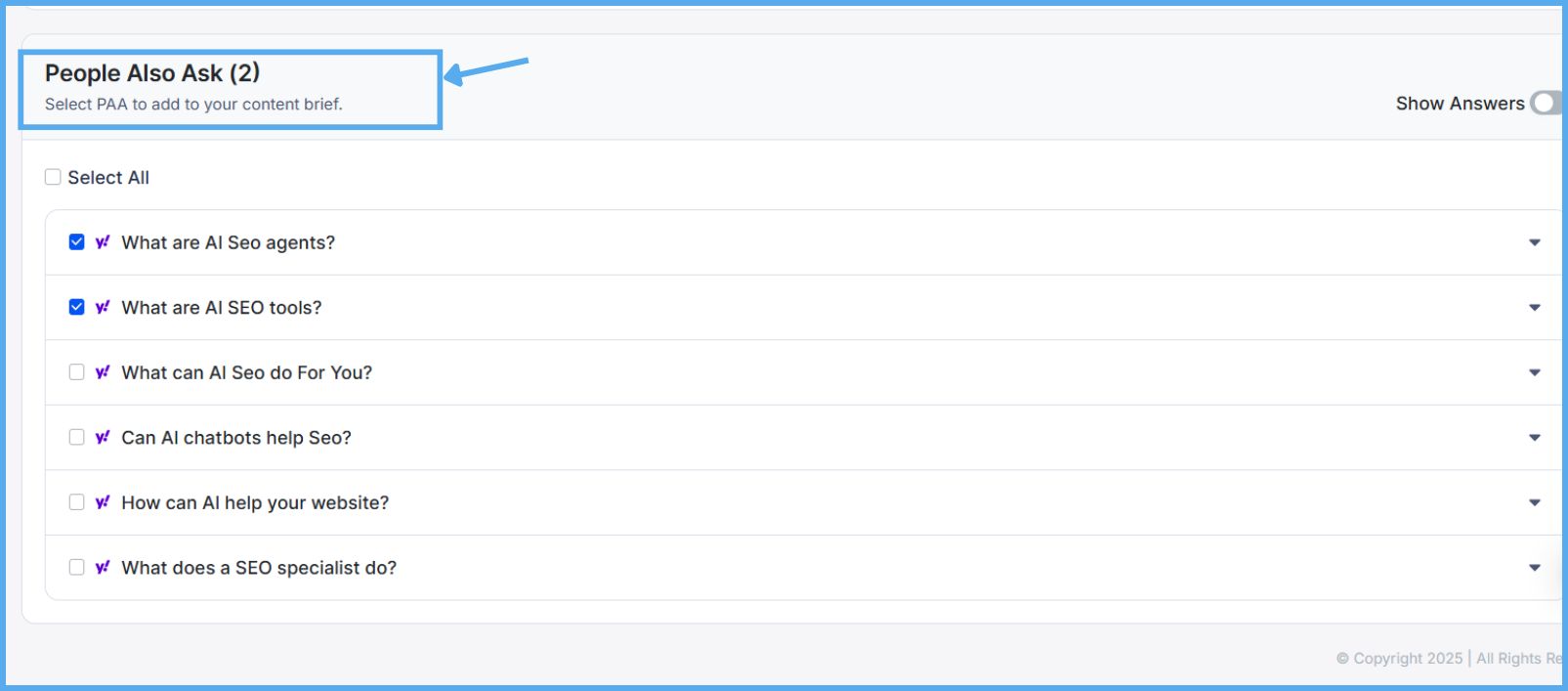
Lean on the benefits of AI SEO Agents when workload spikes. Here, KIVA is a helper: it mines GSC for hidden terms, drafts scannable briefs, and aligns sections with People Also Ask questions so you execute faster without changing your voice.
Where Do LSI Keywords Fit in Modern Planning?
While LSI Keywords is a legacy concept, freelancers still face SEO challenges without AI agents when trying to identify semantically related terms. AI-driven clustering now replaces old-school LSI workflows.
You can collect related terms by scanning SERP features, competitor headings, and user questions. KIVA bundles those into each brief so you naturally include adjacent entities without stuffing.
How Should Freelancers Think About Click Scarcity?
Across multiple 2024–2025 studies, zero-click behavior remains high, and AI Overviews often absorb attention that once flowed to blue links. That calls for dual optimization: be discoverable in classic results and eligible for AI-generated answers.
News publishers have quantified steep declines, but the structural lesson applies to freelancers: expect fewer clicks per query, and design content for answers, relationships, and clusters that earn citations
For freelancers, this makes AI-agent support crucial because without automation, click scarcity magnifies every SEO challenge.
What Is the Future of Freelance SEO Challenges in an AI-Driven Era?
Expect AI-generated summaries to expand in coverage and to favor well-structured, citation-ready content. Semrush-Datos data shows AI Overviews spread quickly in early 2025, especially on informational queries where freelancers publish the most.
Freelancers who ignore AI-driven visibility risk fading out of SERPs entirely this is the defining SEO challenge without AI agents going forward.
The practical takeaway is clear. Keep your human strategy, but use automation for the heavy lifting. That balance helps you meet deadlines, protect margins, and stay visible as search evolves.
Practical Checklist: Turn Challenges Into a Routine
Here’s a freelancer-focused SEO checklist designed to counter the main challenges without AI agents, step by step.
Challenges Into a Routine
- Audit monthly for crawl, index, and internal links; fix what’s easy first.
- Cluster from one seed into related subtopics; plan a hub and 5–8 spokes with reciprocal links.
- Extract Untapped Keywords from Your GSC Data; promote pages earning impressions but few clicks.
- Answer user questions near the top; add short definitions and comparisons in two-line paragraphs.
- Use a helper like KIVA to collect signals and structure briefs; keep final editorial control.
- Measure engagement and coverage over vanity volume; report on solved questions, not just ranks.
Read More Articles
FAQs
Freelancers often bounce between 5–7 tools for research, clustering, briefs, rank checks, and reporting losing focus and time. KIVA unifies core workflows: SERP Visibility, LLM Visibility, Keyword Clustering, and Content Briefs live together, so insights flow straight into execution. Fewer tabs, fewer copy-paste errors, and a single source of truth for topics and intent. That consolidation means faster delivery, clearer reporting, and less overhead per client.
Conclusion:
Freelancers face mounting SEO challenges without AI agents compressed clicks, fragmented workflows, and rising competition. By combining fundamentals with automation, solo marketers can protect visibility and margins.
Use KIVA to handle audits, clusters, and GSC insights so you can meet modern SEO challenges without burning out.
This article showed how to overcome Freelance SEO Challenges Without AI Agents by combining precise fundamentals with smart automation.
Checkout More Relevant Articles!