If you’ve ever wondered how to cut your blog research time in half without sacrificing the quality or accuracy of your articles, you’re not alone.
Every content writer, blogger, or SEO strategist has been there. You open a blank Google Doc, ready to write, but the first three hours are spent collecting sources, checking stats, scanning SERPs, and piecing together what readers actually want.
By the time you finish research, your creative energy is drained. This is the hidden challenge of blogging: research often takes longer than writing.
On average, bloggers spend 2–5 hours on prep work before drafting. That’s unsustainable if you want to publish consistently or scale content for clients.
But what if you could learn how to cut blog research time from three hours to just 30 minutes — without sacrificing quality or EEAT (Expertise, Experience, Authority, Trust)? The solution lies in smarter workflows, semantic SEO practices, and modern AI SEO tools like Wellows that automate the repetitive tasks.
This blog breaks down the exact methods to research faster, keep credibility high, and align with modern SEO — so you write better, not just faster.
TL;DR
- Most writers spend 2–5 hours on research per blog, not because research is hard, but because the workflow is messy: too many tabs, scattered tools, no clear intent, and lots of duplicate fact-checking.
- If you don’t fix your research process, you risk inconsistent publishing, weak SEO + AI visibility, creative burnout, and low ROI on content—while faster competitors take over SERPs and AI answers.
- You can cut research to around 30 minutes by: starting with search intent, clustering related queries, using People Also Ask + community questions, turning everything into a clear brief, and batching research → outline → draft.
- A visibility platform like Wellows speeds this up by showing which queries you (and competitors) already appear for across Google + AI engines, tracking citations and gaps, and helping you turn those signals into briefs and content instead of starting from scratch.
- The goal isn’t to do less research—it’s to do smarter, structured research that protects EEAT, cuts wasted time, and lets you publish high-quality content more consistently.
Why Does Blog Research Usually Take 3 Hours or More?
At first glance, spending hours on research feels “normal.” But when you break it down, most of that time is wasted in inefficient processes:
- Information Overload: Writers open 10–15 tabs of articles, many of which repeat the same ideas. Filtering what’s relevant eats time.
- Unclear User Intent: Without defining reader questions first, you end up researching broadly instead of specifically.
- Manual Keyword Sorting: Looking at keywords one by one instead of grouping them into clusters.
- Constant Fact-Checking: Stopping mid-flow to confirm data kills momentum.
- Tool Switching: Using Google, Excel, and multiple SEO tools without integration wastes mental energy.
A survey by Orbit Media (2024) showed the average blog post now takes over 4 hours to create, with research consuming nearly half of that time.
The fastest way to reduce research time is to simplify how you collect information. Start by defining the exact question your article must answer, then group related queries so you cover an entire topic in one sweep instead of researching keyword-by-keyword. This eliminates duplicate effort.
Next, scan the first page of SERPs once—looking for formats, common angles, and data points you’ll need—rather than opening multiple tabs for every keyword variation. Pull 3–5 authoritative sources immediately so you’re not fact-checking mid-draft.
Finally, turn everything into a quick outline before you start writing. A clear structure keeps you from stopping to “figure out what comes next,” which is where most writers lose time. With this workflow, research becomes a focused, 20–30 minute step instead of a long, open-ended process.
What Are the Risks If You Don’t Learn How to Cut Blog Research Time?
When blog research takes hours, it slows publishing, weakens SEO, and makes it harder for your content to compete in search and AI results. Without a faster, structured workflow, you risk burnout, missed opportunities, and losing visibility to brands that move quicker and smarter.
Not fixing your research workflow costs more than just time — it weakens your SEO performance, publishing consistency, and long-term ROI, while competitors move faster and gain more search and AI visibility.
Inconsistent Publishing and Lost Momentum
When one blog takes a full day to finish, it’s nearly impossible to maintain a steady publishing rhythm. SEO and AI search reward brands that publish regularly and stay present with useful, fresh content.
Meanwhile, your competitors publishing 2–3x more content every week will dominate visibility and capture the searches your audience is typing into Google and AI assistants.
Wellows’ keyword clustering and opportunity insights help you uncover long-tail terms and People Also Ask–style questions in minutes, instead of manually digging through endless SERPs.
Instead of spending hours sifting through search results, you get the most valuable content opportunities upfront — so each article is easier to plan, deeper in coverage, and faster to publish.
Weak SEO Visibility in SERPs and AI Search
Poor research doesn’t just waste time — it leaves gaps. Without long-tail queries, topical clusters, and common questions covered, even strong articles can struggle to rank or be pulled into AI-generated answers.
And in 2025, where AI-powered search and share of search are shaping visibility, being slow is more than inefficient — it’s a strategic threat. Brands that cover semantic angles first will own SERP real estate and AI-generated answers before you do.
By automating SERP and topical analysis, it shows how visible your brand is across ChatGPT, Gemini, Perplexity, Google AI Overview, and AI Mode, and where you’re missing. Your article isn’t just well-written — it’s strategically positioned for both Google and AI search engines.
Creative Burnout and Writer Fatigue
When 70% of your time goes into “collecting” research instead of writing, fatigue sets in fast. Endless tabs, scattered notes, and duplicate effort leave little energy for creativity and storytelling, and blogs start to feel generic.
Wellows takes over the repetitive discovery and analysis stage, surfacing topics, questions, and pages that matter most. That frees you to focus on unique insights, stronger narratives, and EEAT-driven authority, so your content is both efficient and high-impact.
Lower ROI for Agencies and Freelancers
If every blog requires 3–4 hours of research, scaling content quickly becomes unsustainable. Agencies lose margin. Freelancers lose bandwidth. Brands lose publishing velocity just when they need more visibility.
Teams using it cut research time by combining keyword discovery, SERP visibility, AI citation tracking, and content prioritization in one workflow. That efficiency makes content projects profitable to scale — without lowering quality or sacrificing visibility across search and AI platforms.
How to Cut Blog Research Time Without Sacrificing Quality
The truth is, research doesn’t have to take hours. The real issue isn’t the steps themselves — it’s the way most writers handle them.
Jumping between tabs, chasing keywords one by one, and gathering far more information than you’ll ever use all make the process drag on.
Cutting research down to 30 minutes doesn’t mean doing less. It means doing things in the right order, so your research supports stronger structure, clearer intent alignment, and better on-page SEO from the start. Wellows helps you do that by showing you what’s already working in AI and search before you start writing.
What is the fastest way to gather credible sources for a blog post without spending my entire day on Google?
The quickest method is to pull all essential sources in a single, focused scan instead of researching throughout the writing process. Start by checking the top SERP results to identify which data points, studies, or expert references appear consistently—these usually signal the most credible sources.
Then add 2–3 authoritative industry reports or known publishers to cover accuracy and EEAT. This way, you avoid collecting random tabs and instead build a small, verified source set before you begin writing.
This single-pass approach prevents constant context switching and saves hours normally lost to mid-draft fact-checking.
Strategize
Start by understanding where your brand already stands. In Wellows, you can see which queries trigger your site, how often you’re cited, and where competitors are winning attention across AI search.
Features like Citation Score, user-intent analysis, and SERP/LLM visibility give you a strategic view: which topics you own, which ones you’re missing, and which competitors are being surfaced more often.
Instead of guessing “What should I write?”, you’re looking at real demand from Google, AI Overviews, ChatGPT, Gemini, Perplexity, and more.
If you want to explore this layer deeper, you can use it’s visibility and intent tools (for example its intent analysis or SERP visibility) to turn raw AI and search signals into a focused content plan.

Execute
Once you know which queries and topics matter, you’re ready to turn strategy into content. Instead of starting from a blank page, you can build briefs and drafts directly from the signals Wellows surfaces.
It lets you pull together the key questions, supporting pages, and competitive angles into a structured brief so you research once and write once.
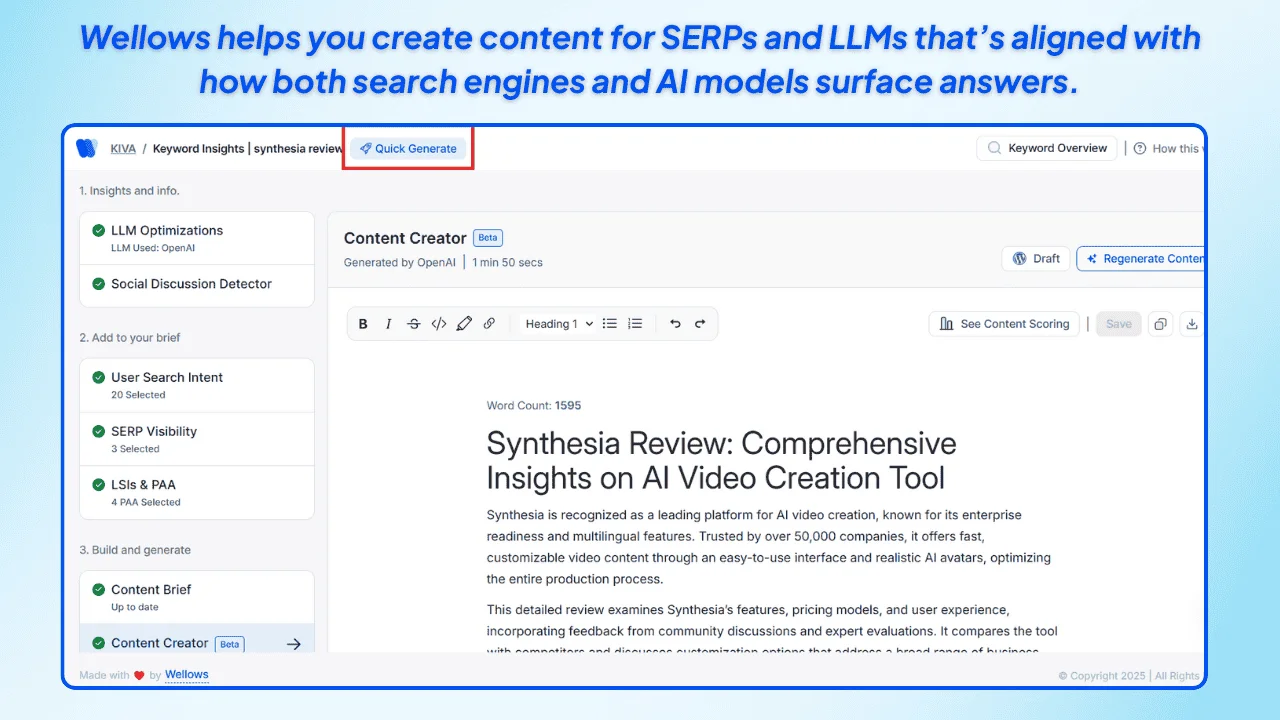
Its legacy feature, KIVA, powers brief generation and AI writing workflows inside the platform, helping you create content that stays aligned with how AI engines and SERPs already talk about your topic.
A simple 30-minute execution sprint can look like this:
- Scan SERPs and People Also Ask to confirm angles
- Collect a handful of high-authority, relevant sources
- Organize your notes into a clear outline
From there, you can use Wellows’ brief and writing tools (such as its brief generator or AI writing support) to move quickly from outline to draft without losing depth or EEAT.
How Can I Pre-Plan A Month Of Blog Topics And Preliminary Research So Weekly Writing Is Much Faster?
The simplest way to make weekly writing faster is to move most of the thinking and research to one dedicated planning session. Start by choosing 3–4 core themes you want to cover for the month (for example: workflows, tools, case studies, strategy). Then, outline one blog idea under each theme and turn them into working titles. This gives you a clear, focused list of posts before the month even starts.
Next, do a single research sprint for all of those topics at once. In one sitting, scan SERPs, pull relevant People Also Ask questions, and save 3–5 strong sources for each future post. Add quick notes under each topic—key angles to cover, important stats, or examples you don’t want to forget. You’re not writing yet, just collecting what your “future writing self” will need.
Finally, store everything in a simple content calendar or doc: title, target query, short outline, and links to sources for each week. When it’s time to write, you’re not starting from zero—you already know the topic, intent, structure, and references. That turns weekly writing from a 3-hour research + draft session into mostly drafting and refining.
Monitor
Research gets faster over time when you don’t start from zero for every article. Wellows keeps your strategy live with ongoing tracking, monitoring, and daily updates across AI search and traditional SERPs.
You can see how new content changes your Citation Score, which pages begin to earn explicit or implicit citations, and where competitors gain or lose ground.
That means your next research session starts with “What changed since last time?” instead of “Where do I even begin?”.
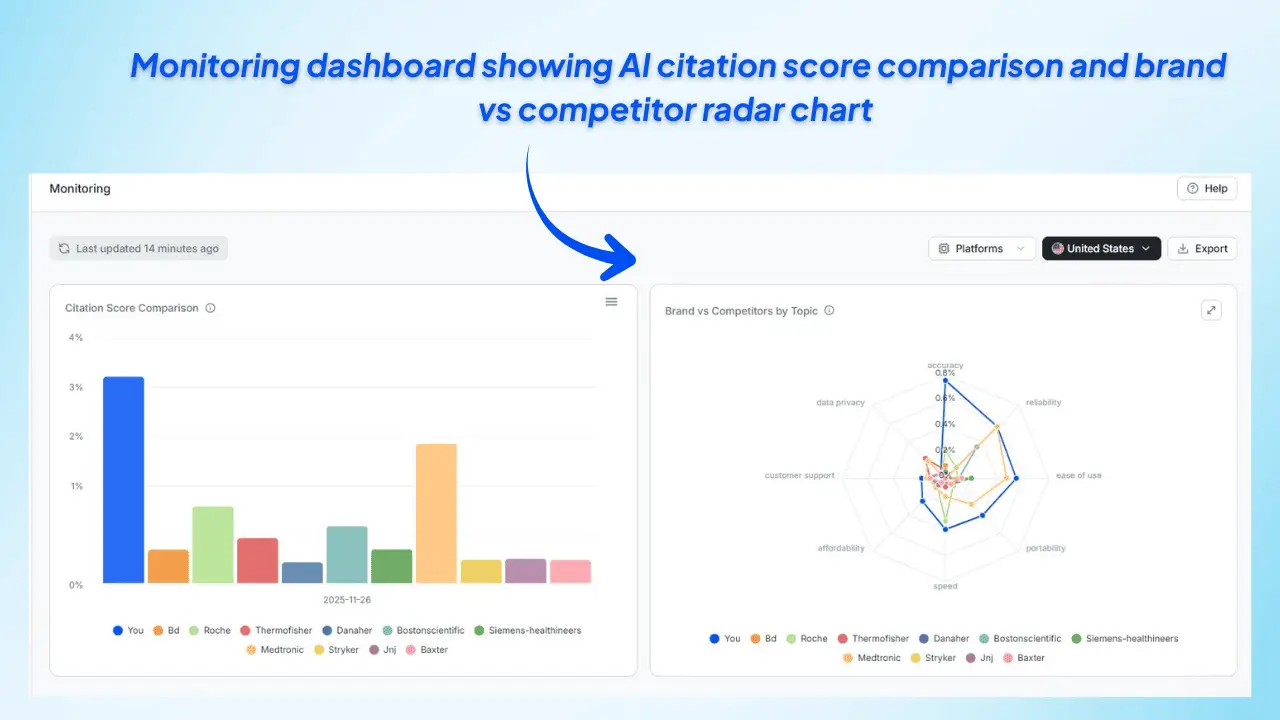
By leaning on Wellows’ tracking and monitoring features (for example its tracking dashboards and daily updates), you keep each research sprint short, targeted, and connected to real performance — so every new blog builds on what’s already working instead of repeating the same manual work.
How Does Wellows Use AI to Speed Up Blog Research?
Traditional blog research means opening dozens of tabs, checking SERPs manually, and guessing what’s actually working for your competitors. Wellows flips that workflow.
It shows you, in one place, how AI search engines and SERPs already talk about your topics, so you can research faster and write with confidence instead of starting from scratch every time.
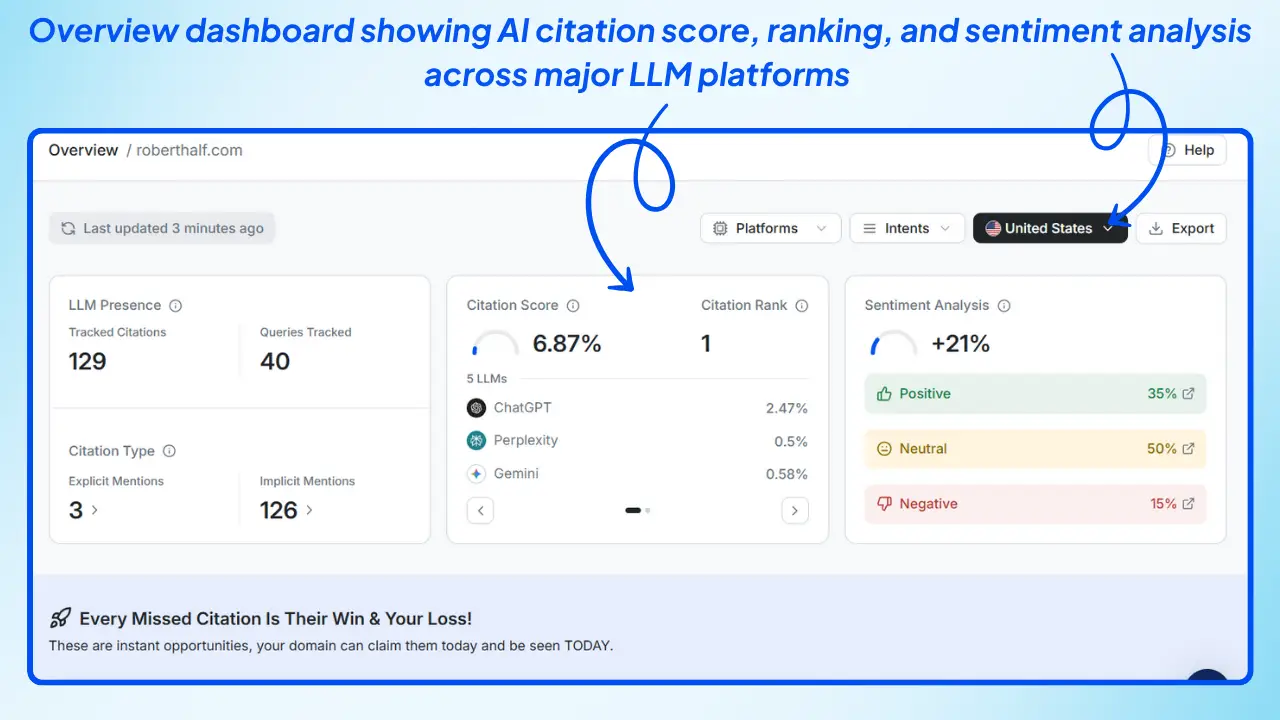
- Track queries, citations & brand presence across AI: Tracking layer shows where your brand appears inside AI responses, which queries trigger you, and how you’re mentioned across models like ChatGPT, Gemini, Perplexity, Google AI Overview, and AI Mode. You instantly see what AI already “knows” about your site before doing manual research.
- See visibility at a glance with Citation Score & monitoring: Instead of manually checking rankings for every topic, it uses its unified Citation Score plus ongoing Monitoring to show how visible you are inside AI search over time. Daily updates highlight which pages and topics are gaining or losing ground, so you know where new or refreshed content will matter most.
- Find explicit & implicit opportunities for new content: It separates places where you’re clearly credited (explicit wins) from places where your content is used but not attributed (implicit wins). With Explicit Wins and Implicit Wins, you can quickly spot gaps: queries and URLs where competitors are cited instead of you. Those gaps become high-impact content ideas, ready to turn into briefs and articles.
- Compare performance across multiple LLMs to guide topics: AI engines don’t all surface the same brands or angles. Wellows’ Multiple LLMs view shows how differently each model treats your brand, helping you prioritize topics and formats that will work across AI systems—not just in a single SERP.
Together, these features give you a research-ready snapshot in minutes: which queries matter, where you’re visible, where you’re missing, and where competitors are ahead.
From there, you can move into content creation using Wellows’ Brief Generator, AI Writing Generator, or Quick Generate flows to turn those insights into outlines and drafts.
Instead of spending three hours collecting data, you let it handle the heavy lifting—so your time goes into strategy, angles, and storytelling, not into hunting for information.
What 30-Minute Blog Research Workflow Replaces the 3-Hour Cycle?
Blog research doesn’t have to take half your day. With a clear process and automation from Wellows, you can shrink a 3-hour workflow into about 30 minutes. Here’s how that looks when you build your research around Wellows’ visibility and content features.
Did you know?
1. Define The Scope
Start by writing down your main topic — for example, how to cut blog research time — plus three or four related problems your audience cares about (e.g., publishing faster, keeping quality high, reducing burnout). This keeps your research anchored to intent, not just a single keyword.
Did you know?
2. Use Wellows To See Queries & Intent
Instead of guessing which variations matter, use it to see which queries actually surface your brand and your competitors across search and AI engines. Its tracking, intent, and visibility features (like Tracking and User Intent Analysis) show you:
- Which questions people and AI systems already ask around your topic
- Which competitors show up most often for those queries
- Where your brand is missing but should be visible
In a few minutes, you have a focused list of queries and intents to cover instead of a random keyword dump.
Did you know?
3. Scan SERPs & Competitors In One View
Next, quickly review what’s working today. With it’ SERP and AI visibility views (for example, SERP Visibility and LLMs Visibility), you can see:
- What formats dominate results (blogs, guides, tools, AI Overviews)
- Which competitors own the most citations or mentions
- Where content gaps exist in angle, depth, or format
Instead of opening dozens of tabs, you get a snapshot of the landscape and clear ideas for how your article can be different and better.
Did you know?
4. Capture Opportunities & Supporting Evidence
Now pull in the angles that will make your piece stronger. Wellows helps you find:
- Queries and pages where rivals are credited more than you, via Explicit Wins and Implicit Wins
- Questions people ask in SERPs and communities (using People Also Ask and Social & Community Insights)
- A few high-authority sources or stats to support EEAT
In this step, you’re not hoarding links—you’re picking the 3–5 strongest gaps, questions, and references that should shape your article.
Did you know?
5. Turn Everything Into A Brief & Outline
Finally, turn those signals into a structure you can write from. Wellows can transform your queries, gaps, and visibility data into a clear outline using tools like its Brief Generator. The platform’s legacy KIVA engine powers this workflow, so you get:
- Suggested H2/H3 sections aligned with intent and queries
- Key questions to answer pulled from search and AI systems
- Notes on competitors and citations to reference or outperform
From there, you can either write the article yourself or use it’ content tools (such as its AI writing and quick-generate flows) to draft faster—without losing strategic direction.
How Do You Keep EEAT Strong While Cutting Blog Research Time?
EEAT (Expertise, Experience, Authority, Trust) is critical to ranking. Cutting time doesn’t mean cutting credibility.
- Expertise: Use fresh, accurate data and stats from reliable 2025 industry reports and official sources.
- Experience: Add real examples or case studies that show how you or your clients improved research speed or results.
- Authority: Support key claims with citations from recognized brands, research, and trusted tools instead of low-quality blogs.
- Trust: Include clear author bios, link to original sources, and be transparent about data, tools, and methods.
A platform like Wellows helps maintain EEAT by surfacing credible queries, citations, and competitor mentions across AI and search, while its validation and visibility features keep your research grounded in real, up-to-date signals.
What Is The Best Way To Use Outlines And Headings For A Blog Post?
The best way to use outlines and headings to guide your research for a blog post is to build the structure before you start digging into sources. Begin by defining your main topic and turning the key questions you want to answer into H2 and H3 headings. This instantly shows you which parts of the post need data, examples, or definitions, so you’re not researching blindly.
Here’s a simple way to turn outlines into a research shortcut instead of an extra step.
- A. Build Your Structure Before Research: Start by writing your outline first. Turn the main questions your blog needs to answer into H2 and H3 headings. This makes it clear which sections need statistics, expert quotes, or definitions, so you’re not collecting random information you’ll never use.
- B. Turn Headings Into Research Targets: Under each heading, list 1–3 bullet points or sub-ideas. Treat these as specific research targets—facts to verify, examples to find, or studies to reference. This keeps your research focused on what will actually appear in the article instead of sending you down endless rabbit holes.
- C. Use The Outline As A Research Checklist: As you research, fill each heading with notes and sources and treat your outline like a checklist. Once a section has enough supporting material, you move on. This approach reduces duplicate research, prevents over-collecting links, and makes it much easier to draft a clear, well-structured blog post in less time.
How Can Smarter Planning Save Research Time?
Writers often delay structuring until after research, which leads to rework and lost time. Smarter planning flips this so research follows a clear outline.
Map internal linking early: While outlining, decide which existing pages you’ll link to. This supports topical authority and saves you from hunting for internal links after drafting.
Batch external linking: Collect a small set of authoritative sources during one research pass, instead of sprinkling them in at the end. This keeps your EEAT strong without breaking your writing flow.
Use structured content briefs: Build briefs from query and visibility data so each section of your outline aligns with real search intent, AI citations, and competitor coverage. Features such as a dedicated brief generator or content scoring system help keep your plan tight and on-target from the start.
The result: less scrambling mid-draft and a smoother path from idea to finished article.
What Common Mistakes Stop People from Cutting Research Time?
Even with the best intentions, most writers fall into habits that slow them down. Here are the most common mistakes — and how a visibility-first workflow helps fix them.
Over-researching: Many writers read 15+ sources when 4–5 strong ones are enough. A central visibility dashboard that aggregates SERP data, AI signals, and People Also Ask questions helps you focus only on information that moves rankings and citations.
Mixing modes: Researching, writing, and editing at the same time kills momentum. When queries, clusters, and outlines are prepared ahead of time, you can keep research, planning, and drafting as separate steps — which makes each one faster.
Ignoring intent: Targeting keywords without understanding user problems leads to scattered research. Grouping queries by intent (informational, transactional, navigational) ensures every section of your outline answers a clear need.
Tool overload: Jumping between multiple keyword tools, spreadsheets, and docs wastes time. A single workspace that combines tracking, SERP and LLM visibility, query insights, and briefs removes most of that friction.
No system: Treating every blog as a brand-new process slows consistency. Reusing the same research and brief framework across topics and clients turns research into a repeatable system instead of a fresh struggle each time.
Fixing these habits alone can cut your research time significantly and make your workflow easier to scale.
Read More Articles
FAQs
Blog research takes hours when writers collect more sources than they need, research keywords one by one, and mix research with drafting. The lack of a clear workflow creates endless tab-hopping and fatigue. A structured system that centralizes queries, SERP data, AI visibility, and opportunities in one place removes most of that drag.
You cut research time by reorganizing the process, not by skipping depth. Start from search intent, group queries into clusters, use People Also Ask and community questions, and time-box research into short sprints. Pair that with a brief-building step so every draft starts from a clear structure and your quality stays consistent.
An AI-powered visibility platform replaces scattered manual checks with a single view of queries, citations, sentiment, and competitor presence across multiple LLMs. It shows where you appear (or don’t), highlights gaps you can win, and helps turn those insights into structured briefs and content — so you spend less time collecting data and more time deciding what to say.
Faster, structured research lets you publish more consistently, react to new queries sooner, and adapt to AI-powered search behavior before competitors. Consistency and topical depth build authority over time, especially when tied to clear visibility and performance signals.
Avoid skipping intent analysis, researching keywords in isolation, multitasking during research, and spreading work across too many disconnected tools. These mistakes slow you down and weaken content quality. A single, repeatable workflow for visibility, planning, and briefs helps you reduce those errors while keeping depth and relevance intact.
Conclusion
Research is the foundation of every high-ranking blog — but it doesn’t need to take three hours. By combining semantic SEO workflows, a repeatable structure, and an AI-powered visibility stack, you can bring research closer to a 30-minute process without losing EEAT credibility.
This isn’t about cutting depth; it’s about cutting inefficiencies — fewer open tabs, no duplicate fact-checking, and a clear flow from visibility insights to outline to draft.
In an AI-driven search era, the advantage goes to writers and teams who can research fast, adapt to how AI answers questions, and publish consistently, while still protecting expertise, authority, and trust.
Checkout More Relevant Articles!