AI and EEAT in SEO are changing how content ranks and how trust is built in the eyes of both users and search engines.
As AI-generated content floods the internet, Google has sharpened its focus on Experience, Expertise, Authoritativeness, and Trustworthiness (E‑E‑A‑T).
Without these elements, even the most well-written AI content risks getting buried in search results.
That’s a problem for marketers relying on automation to scale content. The solution lies in integrating AI with E-E-A-T for better content, balancing machine efficiency with human insight.
Did you know?
To meet today’s standards, a report by Search Engine Journal suggests that AI-generated answers should prioritize sources that display real-world experience, recognized expertise, and reliability as part of AI and EEAT.
In other words, only content with strong E‑E‑A‑T signals is routinely selected and referenced by AI answer engines. So marketers who blend AI support with authentic, E‑E‑A‑T-driven strategies will lead the next wave of discoverable, trusted content.
What Is E‑E‑A‑T and How It Works with AI Content?
E‑E‑A‑T stands for Experience, Expertise, Authoritativeness, and Trustworthiness. These are key quality criteria used by Google’s search quality raters to assess whether a piece of content is reliable, helpful, and produced by someone who knows what they’re doing.

While not a direct ranking factor, E-E-A-T influences how well content aligns with Google’s emphasis on value and trust. It helps separate helpful, credible content from low-quality or misleading information.
This is where E-E-A-T criteria and AI applications overlap, with AI assisting in structure and efficiency, but human oversight ensuring reliability.
Breaking Down the Four Elements of E‑E‑A‑T
Experience
This refers to first-hand, personal involvement with the subject matter. Content created by someone who has used, tested, or interacted with a product, process, or service is seen as more useful.
Expertise
Expertise reflects the depth of knowledge the content creator has. This could come from formal training, professional work, certifications, or years of experience in the field.
Authoritativeness
This is about how well the content creator or website is recognised in their field, and learning how to boost brand authority with AI in Search SEO can help strengthen that recognition over time. Indicators include being referenced by other trusted websites, having credentials listed, or having content regularly cited in respected publications.
Trustworthiness
Trust is built through accuracy, transparency, and integrity. This includes citing sources, displaying the author’s name and background, publishing contact information, using secure HTTPS domains, and correcting any outdated or incorrect content.
As more marketers use AI tools to support content creation, applying E‑E‑A‑T principles becomes even more important. AI can help speed up research or writing, but it cannot replicate lived experience, judgment, or credibility.
Google doesn’t penalize content simply because it’s AI-assisted. What matters is whether the final piece offers useful, accurate, and trustworthy information—and whether a qualified human is clearly behind it.
AI strategies for improving E-E-A-T include:
- Use AI for drafts or structure, not as a substitute for expertise.
- Add unique insights, examples, and first-hand experience.
- Attribute content to real authors with relevant background or credentials.
- Provide citations, links to sources, and disclose editorial involvement.
For a deeper look at missteps that can weaken trust and accuracy, visit 10 AI Content Mistakes Marketers Should Avoid.
AI and EEAT Are More Important Than Ever
As AI becomes more common in long form content creation and search experiences, the need for trustworthy, expert-driven information has only grown.
The following points explain why E‑E‑A‑T is not just relevant, but essential in a world where AI plays a bigger role in how content is evaluated and recommended.
1. AI Answer Engines Choose Based on Trust and Authority
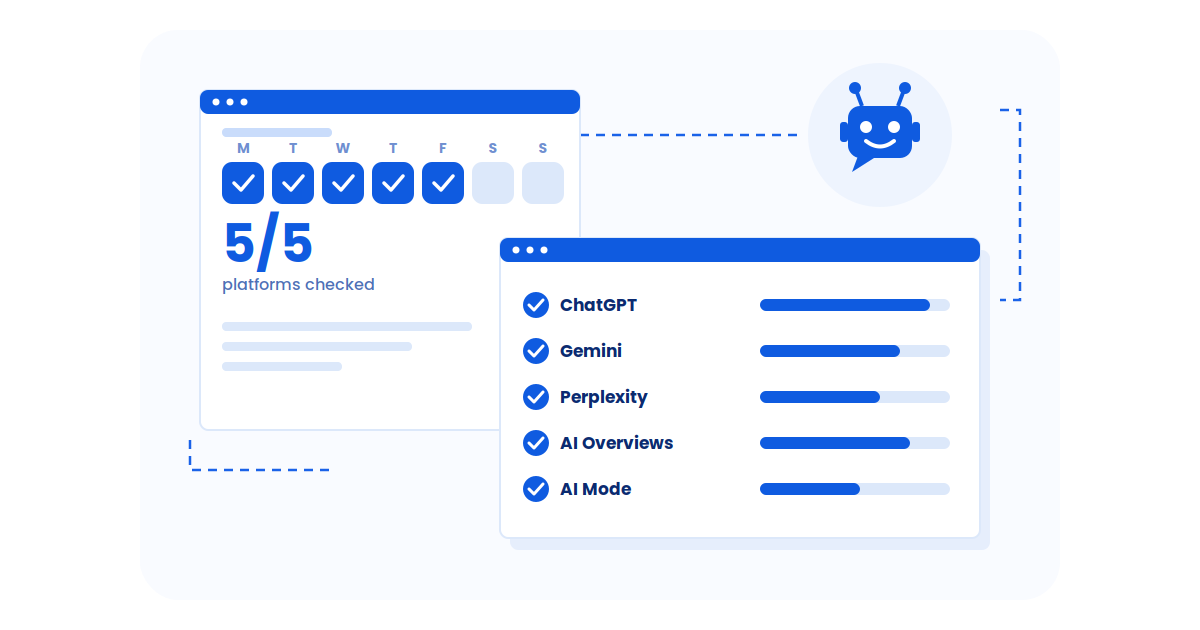
AI-powered features, such as Google’s AI Overviews, ChatGPT-integrated search, and Perplexity, don’t just list links. They summarise content and link only to sources they deem credible.
That means content deemed high in experience, expertise, authority, and trustworthiness is far more likely to be quoted or cited.
Brands without these signals are often skipped entirely.
2. Visibility Now Goes Beyond Traditional SEO with AI and EEAT
While traditional SEO still matters, AI tools are reshaping how content gets recognized.
Google’s AI Overviews often pull sources from the top organic results, especially those that all show strong E‑E‑A‑T traits, making AI Overviews Optimization a critical step for brands looking to maintain their authority in a changing search landscape.
One report shows over half of AI Overview citations come from the top ten search results, favoring publishers with clear credibility signals.
For a deeper look at how AI content impacts visibility and rankings, see Does AI Content Hurt Google Rankings?.
3. AI Still Relies on Human Oversight
AI tools can generate content quickly, but they can’t show real-world insight or credentials.
Google has emphasised that even AI-assisted content must deliver real value and must be vetted by a person.
Automated writing without verification or author attribution is more likely to underperform or be flagged.
If your team is struggling to keep up with the growing demand for content, it may be a sign that AI support is overdue. Read the 5 signs your content team needs AI now.
4. AEO and GEO Strategies Depend on E‑E‑A‑T
Optimisation strategies like Answer Engine Optimisation (AEO) and Generative Engine Optimisation (GEO) invest in structured, conversational content designed for AI systems.
These strategies rely heavily on E‑E‑A‑T: clear authorship, factual accuracy, and expertise are essential to getting cited in AI answers or featured snippets.
If you’re exploring automation here, check out Marketing With Agentic AI for real-time campaign use cases.
5. Ignoring E‑E‑A‑T Comes with Risks
Failing to focus on E‑E‑A‑T can reduce both trust and visibility. Your content may not be selected by AI answer engines and may even lose rankings over time.
Additionally, audiences are quick to distrust content without transparent authorship or credible sources.
6. Brands Can Stand Out by Demonstrating Real Value Through AI and EEAT
Brands that publish case studies, expert insights, and original research earn more recognition both from users and AI systems.
Establishing a strong Knowledge Graph presence, building reputable backlinks, and providing expert author bios also help AI tools treat your content as a trusted source.
- 1. Let AI Assist—but Don’t Depend on It Alone::
Use AI tools to help with draft ideas, outlines, research, and basic phrasing. But don’t stop there.
Add your own observations, experience, and expert insights to avoid content that feels generic or superficial. Human expertise ensures the content is credible.
- 2. Highlight Real Experience and Examples::
Whenever possible, include case studies, hands‑on testing, customer stories, or step‑by‑step walkthroughs. This showcases true Experience—a signal Google favors.
It tells readers that the advice comes from actual use, not theory.
- 3. Showcase Author Expertise Clearly::
Make sure each article includes an author bio featuring relevant credentials, certifications, or background in the topic.
If possible, have experts or industry professionals review content before publishing. A clear author identity builds Expertise and Trustworthiness.
- 4. Build Authority Through External Validation::
Securing mentions, links, or quotes from established sources strengthens your Authoritativeness.
Aim to be cited or referenced in reputable publications or by influencers in your industry. Each backlink and mention reinforces your credibility.
- 5. Use Transparent, Trust-Building Practices::
- Cite reliable sources and provide clear attributions.
- Display author and company contact details.
- Ensure your site uses HTTPS and includes privacy policies or disclaimers.
These trust signals reassure both readers and search systems.
- 6. Format Content for AI-Friendly Use:: Structure articles with clear headers, bullet-point lists, tables, and FAQs. Use schema markup where appropriate. This helps both human readers and AI systems understand your content quickly and accurately
For a breakdown of how to do this effectively, check out Improving Your Content Through Chunk Optimization for Search Visibility.
- 7. Monitor and Continuously Improve Reputation::
Track feedback and performance metrics to ensure content maintains credibility and usefulness.
Update articles when needed, correct errors promptly, and respond transparently to any fact-checking needs.
This monitoring extends beyond rankings into Brand Performance Metrics in AI Search, which track how your authority, accuracy, and visibility evolve across AI-generated answers.
AI can be a valuable hand for long form content creation, but using it effectively requires more than just automation.
Below are practical ways content marketers can integrate AI while still maintaining the EEAT that both audiences and AI Search Engines look for.
Check out this guide on how to humanise AI Content to make AI-generated content feel more credible and relatable.
Creating AI‑Friendly Content That Meets E‑E‑A‑T Standards
To meet both user expectations and search quality guidelines, content needs to be well-structured, credible, and easy for AI systems to interpret.
The following practices will help ensure your AI content supports EEAT while remaining accessible to both people and machines.
1. Structure Content for AI Comprehension
Use clear headings (H2, H3), bullet points, tables, and short paragraphs. These formatting tools help AI understand your content’s layout and purpose. They also increase the chance of being featured in answer boxes or AI overviews.
Implement relevant schema markup, such as Article, FAQ, or HowTo schemas—to provide AI systems with explicit metadata on authorship, dates, questions, and steps.
An AI SEO agent like KIVA can automatically generate SEO content briefs, and add visibility insights based on search behaviour and AI-query patterns. This helps content marketers organise their work in a way that’s easier for both search engines and language models to interpret while still supporting human oversight and E‑E‑A‑T alignment.
2. Use Precise, Direct Language
AI tools and search overviews favor concise, declarative phrasing. Avoid long, winding sentences or vague generalities. Present information as clear facts, which help AI accurately extract snippets and quotes.
3. Add Unique Human Value with AI and EEAT
AI-generated content often lacks original insights. It may repackage existing content without fresh contributions.
To stand out, include your own insights such as case studies, real-world examples, professional commentary, or data-driven analysis. AI-generated content often lacks originality unless a human adds meaningful input.
Did you know?
According to AIModeHub, 91% of consumers say they are more likely to trust AI-generated content when it includes clear signs of human review and expertise. This reinforces the need to blend automation with human value.
4. Apply Human Oversight at Each Stage
Every AI draft should be reviewed by a subject-matter expert. Fact-check all claims, verify statistics, refine the tone, and ensure brand consistency. This human editing step is critical to satisfying Google’s quality expectations and improving content accuracy.
5. Cite Reliable Sources and Build Credibility5
Using credible sources such as academic research, government websites, or peer-reviewed journals helps reinforce the accuracy of your content. It also strengthens your authority and shows that your work is built on reliable, expert-backed information.
When working with AI-generated material, verifying information is essential. The guide on how to fact‑check AI content provides a straightforward process to validate claims before publishing.
6. Showcase Author Credentials and Transparency
Include detailed author bios that clearly highlight credentials, relevant expertise, and professional affiliations.
If AI tools were used during long form content creation, make that clear and explain how the content was reviewed before publishing.
This level of transparency builds trust with readers and also helps AI systems identify who created the content and why it can be considered reliable.
7. Encourage Engagement and Continuous Improvement
Create content that engages readers—use visuals, storytelling, interactive elements, or FAQs. Engagement signals like time on page, social shares, and comments help both users and AI infer content value.
Track performance after publishing, update outdated information, correct errors, and refine based on feedback.
FAQs
Final Thoughts: AI and EEAT Work Best Together
AI is changing the way content is created, but trust, experience, and credibility still matter just as much—if not more. E‑E‑A‑T gives content marketers a reliable framework to ensure their work remains helpful, respected, and discoverable.
The real advantage comes when you combine the speed of AI with the judgment of a skilled human. AI can help you scale and streamline your efforts, but your voice, knowledge, and transparency are what build long-term trust.
Whether you’re writing a blog, publishing a product review, or creating educational content, always ask:
- Have I shown real experience?
- Do I have the authority to speak on this topic?
- Can the reader trust what I’ve written?
When your content checks those boxes, it doesn’t just meet today’s search expectations—it sets you apart.