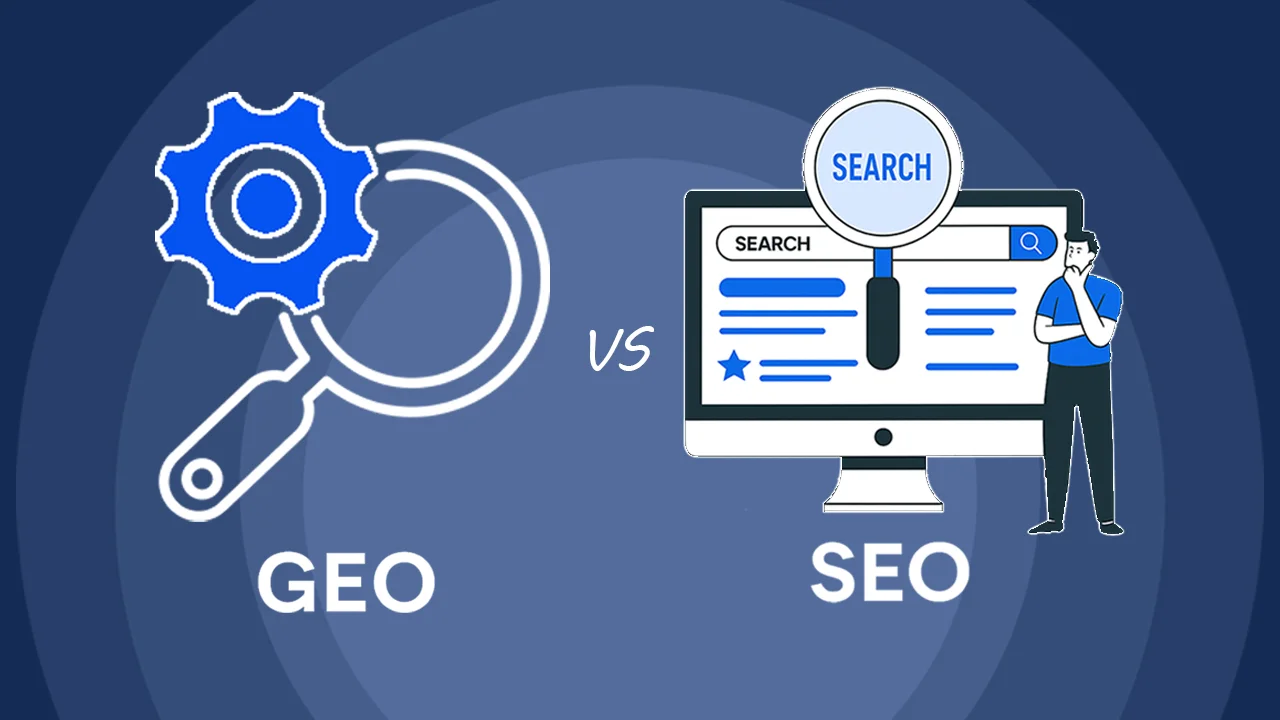
Search is evolving faster than ever. If you’re still relying on methods from five years ago, your visibility is slipping—even with access to advanced AI SEO tools. Understanding the difference between AI SEO vs Traditional SEO is no longer optional it’s essential for growth.
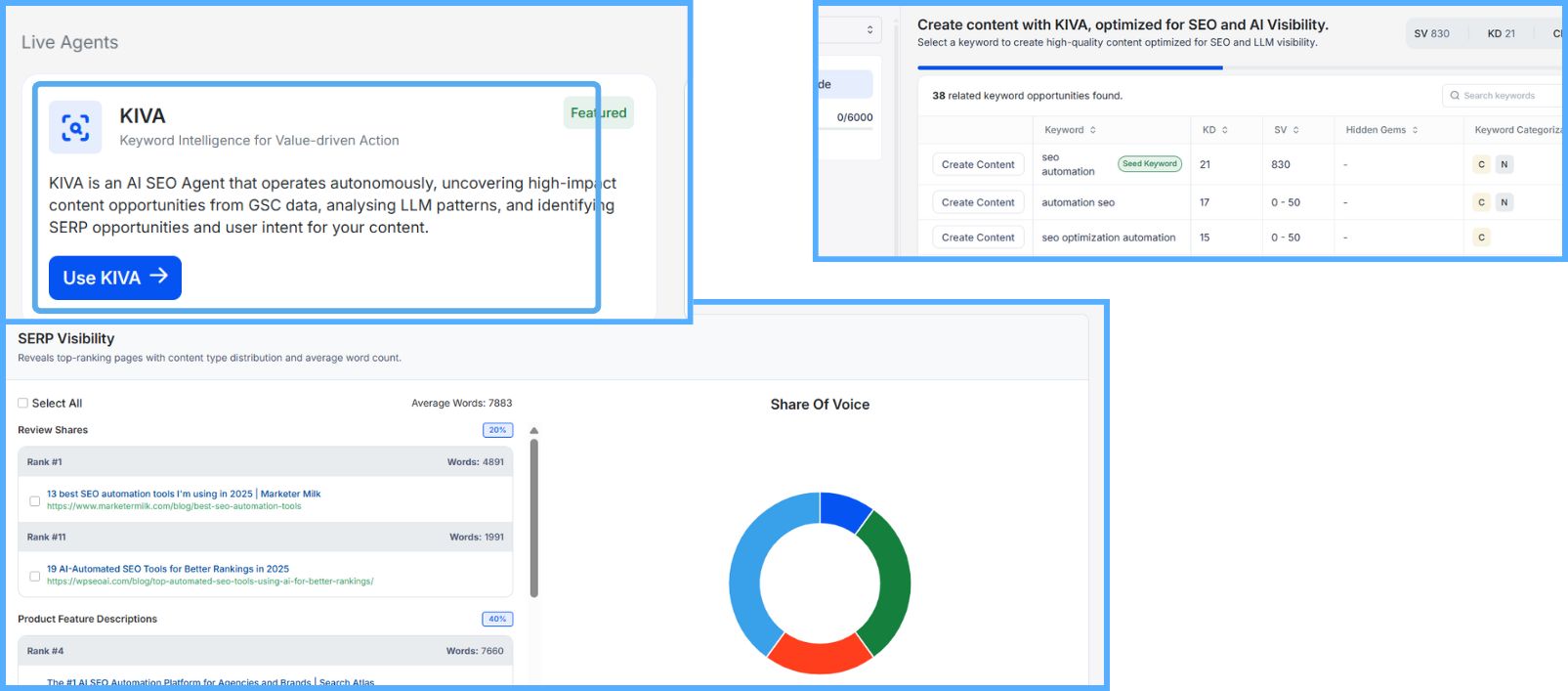
KIVA, an AI SEO Agent by Wellows, powers keyword discovery, intent clustering, SERP analysis, and cross-model visibility. It defines what optimization means in an era where search engines and large language models converge.
This guide breaks down how both old-school and AI-driven approaches compare, where each excels, and how to combine them into a hybrid strategy that actually future-proofs your SEO.
In today’s landscape, where SEO for AI-driven search is the norm, knowing when to apply traditional methods and when to leverage intelligent systems determines whether your content is found or buried.
What Is Traditional SEO and Why Has It Worked So Far?
Traditional SEO refers to manual efforts to improve a site’s search visibility. These include:
- Keyword research and placement.
- Meta tag optimization.
- Backlink building.
- Site architecture structuring.
- Technical audits using tools like SEO Site Audit.
These practices worked well in the early 2010s when algorithms focused heavily on static signals.
Platforms emphasized content freshness, link juice, and keyword mapping. Traditional SEO has shaped much of what we know about search today.
Yet, it often lacks agility. When engines prioritize user intent, manual updates fall behind.
Traditional SEO still matters for storytelling, branding, and building editorial depth, and this is where strong frameworks for how to maintain brand voice ensure consistency even as teams adopt automation.
But in today’s fast-moving search landscape, relying only on manual work without support from tools like KIVA’s clustering and SERP analysis can leave you behind.
What Are the Key Differences Between AI SEO and Traditional SEO?
Artificial Intelligence (AI) is rapidly changing the way Search Engine Optimization (SEO) works. Where traditional SEO depends on human expertise, manual research, and time-consuming audits, AI SEO introduces automation, real-time data processing, and smarter personalization. Both approaches share the same goal—better search visibility—but the way they achieve it is very different.
1. Content Creation and Optimization
- Traditional SEO: Relies on human-written content that captures brand tone, creativity, and emotional connection. Keywords are manually researched and added into copy.
- AI SEO: Generates drafts fast, suggests keywords, and optimizes for relevance. AI content optimization helps identify pages to improve, find gaps, and boost visibility without cannibalization. Human editors refine tone and brand.
2. Keyword Research and Analysis
- Traditional SEO: Involves manual keyword research, intent mapping, and competitor analysis—effective but slow and prone to missed opportunities.
- AI SEO: Uses machine learning to scan massive datasets, cluster related terms, and detect real-time trends, making keyword strategies more dynamic and scalable.
3. Technical SEO and Site Audits
- Traditional SEO: Requires manual audits to detect errors like broken links, slow page speeds, or duplicate content, alongside structured on-page SEO improvements. Fixes often take longer to implement.
- AI SEO: Automates audits, flags technical issues instantly, and can even suggest fixes, saving teams days of work.
4. Link Building
- Traditional SEO: Depends on manual outreach, networking, and relationship-building to secure backlinks. Effective but highly resource-intensive.
- AI SEO: Identifies high-quality link prospects and automates outreach campaigns, while still leaving personalized relationship-building to humans.
5. Data Analysis and Decision-Making
- Traditional SEO: Analysts manually collect and review data from multiple tools, often reacting slowly to performance changes.
- AI SEO: Processes huge datasets instantly, surfaces actionable insights, and uses predictive analytics to forecast trends before they happen.
6. Adaptability to Algorithm Changes
- Traditional SEO: SEO experts track updates through industry news, then manually adjust strategies—often lagging behind rapid search engine changes.
- AI SEO: Monitors algorithm updates in real time and adapts automatically, reducing ranking fluctuations during updates.
7. User Intent and Personalization
- Traditional SEO: Optimizes content around broad keywords, offering limited personalization and general targeting.
- AI SEO: Uses natural language processing (NLP) to understand context and intent, delivering more personalized content tailored to conversational and long-tail queries.
8. Speed and Scalability
- Traditional SEO: Time-intensive, with manual processes slowing growth. Scaling campaigns across hundreds of pages requires larger teams and longer timelines.
- AI SEO: Automates repetitive workflows—like clustering, reporting, and optimization—allowing SEO strategies to scale across thousands of pages in seconds.
Summary:
Traditional SEO emphasizes human expertise, storytelling, and hands-on strategy, but it’s slower and harder to scale. AI SEO brings speed, automation, and predictive intelligence, but it still needs human oversight for authenticity and creative direction.
The future of SEO lies in a hybrid approach—combining the efficiency of AI with the creativity and strategic insight of humans.
How Does AI Impact Content Creation in SEO?
Artificial Intelligence (AI) has significantly changed the way SEO content is created and optimized. It brings speed and efficiency but also comes with challenges that require human oversight.
Advantages of AI in SEO Content Creation
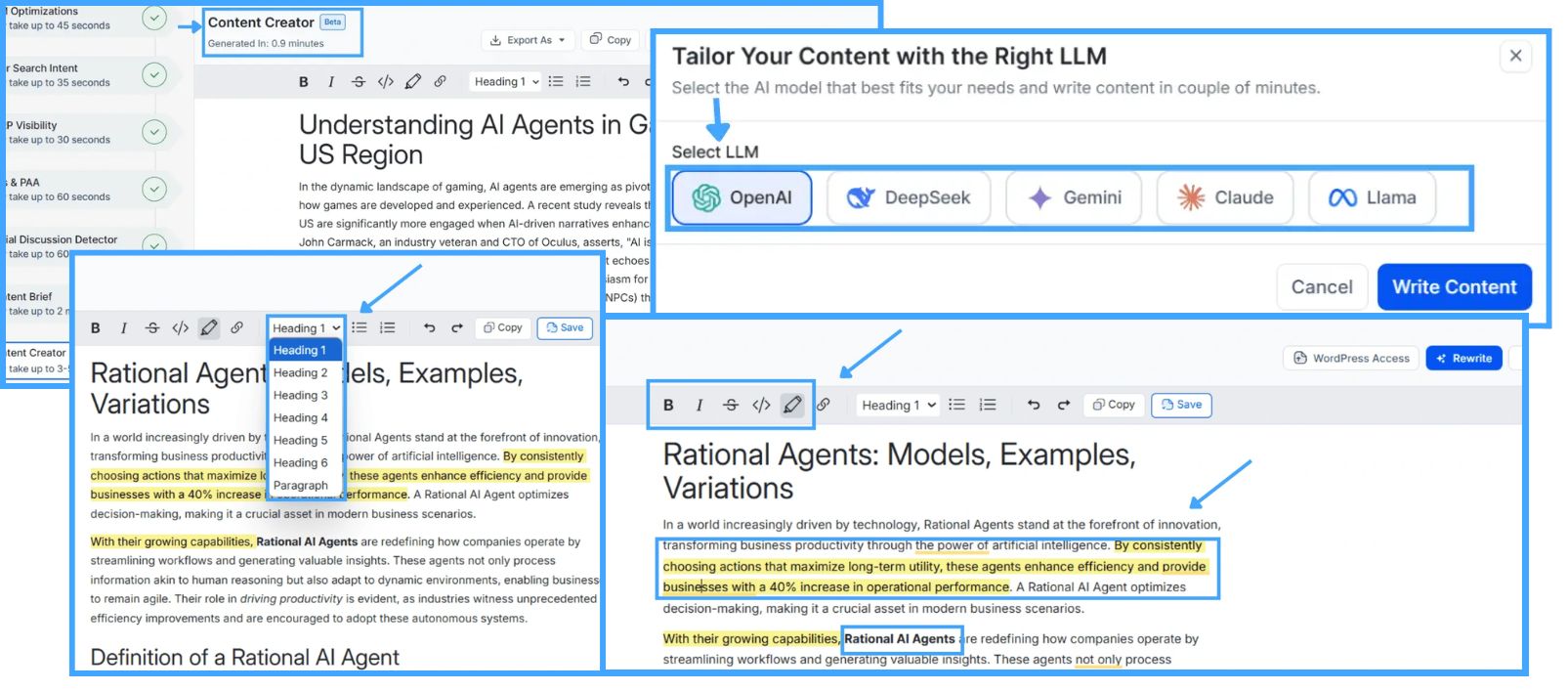
- Enhanced Efficiency – AI can generate content in seconds, allowing brands to scale production quickly.
- Improved Keyword Research – AI tools analyze large datasets to suggest relevant and long-tail keywords.
- Personalization – AI analyzes user data to tailor content for specific audiences, boosting engagement.
- SEO Audits & Tracking – AI helps run audits and predict performance, streamlining optimization.
Where KIVA Fits In:
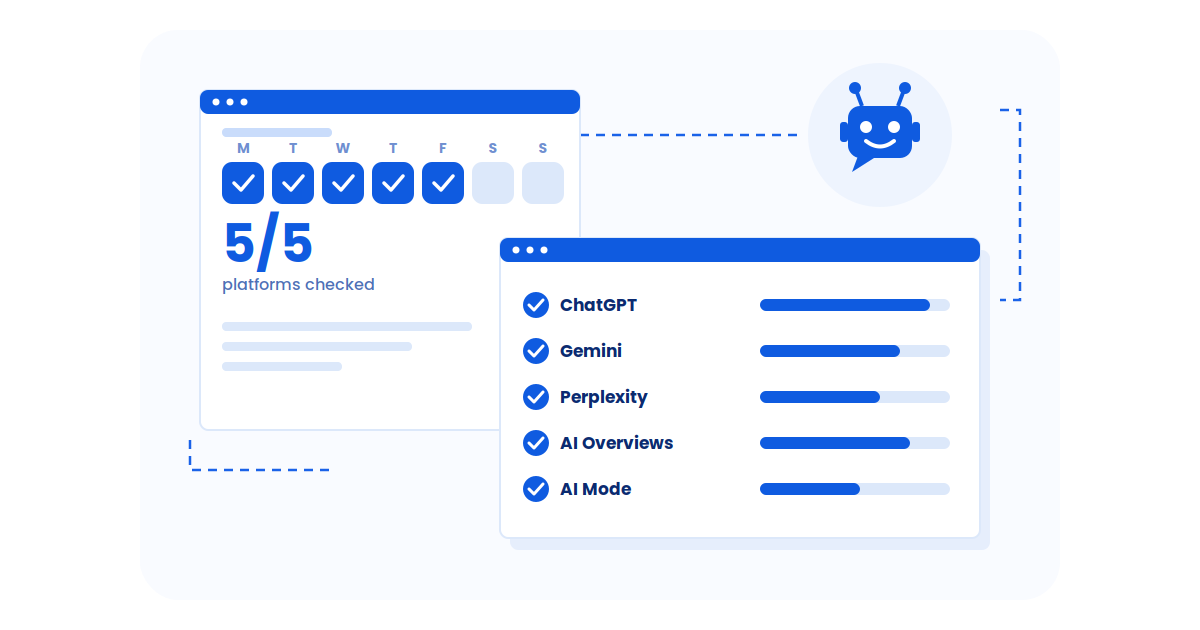
KIVA by Wellows brings these advantages to life. It uncovers hidden keyword opportunities from Search Console data, clusters them by intent, and analyzes SERPs with precision. Beyond that, it tracks visibility across large language models like ChatGPT and Gemini, generates data-driven content briefs, and even detects real-time conversations on social platforms.
In short, KIVA transforms these AI SEO benefits into a complete, actionable workflow helping brands achieve visibility across both search engines and AI-powered platforms.
Challenges of AI in SEO Content Creation
While AI brings speed and efficiency to SEO, it isn’t without drawbacks. Over-reliance on automation can lead to issues that affect both content quality and brand credibility. Here are some of the main challenges:
- Quality & Originality: AI-generated content often lacks depth, nuance, and creativity, making it feel generic.
- Duplicate Content: Using similar prompts may lead to near-identical outputs, which can be flagged or penalized by Google.
- Over-Optimization: AI may focus too heavily on keywords, resulting in unnatural phrasing or keyword stuffing.
- Brand Voice Limitations: AI struggles to capture a unique tone or personality, producing content that feels flat or inconsistent.
- Misinformation Risks: Without oversight, AI can generate factual errors or “hallucinations” that damage credibility.
Best Practices for AI in SEO Content
To make the most of AI in content creation, businesses need to balance automation with human judgment. Understanding AI startup recommendation signals and following these best practices can help you leverage AI effectively while avoiding its pitfalls.
- Maintain Human Oversight: Always edit and refine AI drafts to ensure accuracy, consistency, and alignment with your brand’s voice.
- Be Transparent: If AI is used in content creation, disclose it when relevant to maintain reader trust.
- Prioritize Value: Use AI as a support tool, but focus on delivering original, high-quality, and engaging content that satisfies user intent.
Takeaway: AI accelerates content production and scaling, but its true effectiveness comes when paired with human creativity, strategy, and editorial oversight.
Is AI SEO More Effective Than Traditional SEO?
Artificial Intelligence (AI) is reshaping the way Search Engine Optimization (SEO) is done. Compared to traditional SEO methods, AI-driven strategies bring automation, scalability, and predictive insights that help businesses adapt faster and achieve better results. Here’s how AI SEO stacks up against traditional approaches:
AI SEO automates keyword research, content optimization, and technical audits—tasks that typically take hours or days. With AI, strategies can be implemented in minutes, accelerating results. Traditional SEO often depends on intuition and manual analysis, while AI uses large-scale data processing to provide precise insights. This reduces errors and ensures smarter allocation of resources. Search engines frequently update their algorithms. AI SEO tools monitor changes in real time and suggest immediate optimizations, helping maintain or even improve rankings. AI understands user intent and behavior, making it easier to create content that is more relevant, engaging, and conversion-focused. This improves organic visibility and user engagement. While AI SEO tools may require upfront investment, they reduce labor costs and improve efficiency over time. Traditional SEO, on the other hand, can become resource-intensive and expensive as campaigns scale. AI automates repetitive tasks like audits and clustering, allowing businesses to scale SEO across thousands of pages or multiple sites quickly. Traditional SEO requires more human resources to achieve the same. AI can forecast keyword trends, ranking shifts, and even content decay before issues arise. This predictive power transforms SEO from reactive to proactive planning. AI-driven SEO personalizes content based on user behavior and preferences, enhancing engagement and reducing bounce rates—something traditional SEO handles less effectively. In summary: AI SEO outperforms traditional methods in efficiency, adaptability, scalability, and personalization. However, the best results often come from a hybrid model—using AI for automation and insights while relying on human expertise for creativity, storytelling, and strategic vision.1. Efficiency and Speed
2. Data-Driven Decision Making
3. Adaptability to Algorithm Changes
4. Content Quality and Relevance
5. Cost Considerations
6. Scalability
7. Predictive Analytics
8. Personalization and User Experience
AI SEO tools have revolutionized optimization by automating keyword research, content analysis, audits, and performance tracking. They bring unmatched speed and scalability, processing vast datasets to identify trends and provide actionable insights. However, AI cannot fully replace human SEO experts. Professionals bring creativity, strategic thinking, and an understanding of user intent and brand identity that machines cannot replicate. Human oversight ensures content is not only optimized for algorithms but also engaging, authentic, and aligned with brand voice. AI-generated content, for instance, often requires human refinement to maintain originality and avoid sounding repetitive or generic. Without this balance, businesses risk producing content that fails to resonate with their target audience. Fact 1: A HubSpot report (2025) found that 79% of marketers say AI reduces manual work, but 73% agree human creativity and strategy remain irreplaceable. Fact 2: According to Search Engine Journal, 65% of SEO professionals believe AI can enhance their work but cannot replace human expertise, especially in areas like brand storytelling and ethical strategy. Bottom line: AI SEO tools are powerful supplements, but they work best when paired with human expertise. The most effective SEO strategies come from a hybrid approach—where AI handles automation and data, while humans drive storytelling, creativity, and strategic direction. The hottest AI startups are proving that the winning formula isn’t automation alone, it’s pairing scalable tools with sharp human strategy to build brand visibility faster.Can AI SEO Tools Replace Human SEO Experts?
Artificial Intelligence (AI) has transformed link building by automating prospecting, improving outreach, and ensuring higher link quality. Instead of relying only on manual research and cold emails, AI-driven tools streamline the process while making campaigns more strategic and effective. Here’s how AI enhances link building: AI can analyze massive datasets to uncover backlink opportunities. By evaluating content relevance, backlink profiles, and social signals, AI pinpoints authoritative websites for outreach—saving hours of manual research. With Natural Language Processing (NLP), AI helps craft personalized outreach messages tailored to the recipient’s tone and content. This leads to higher engagement and better response rates compared to generic outreach. Not all backlinks are equal. AI evaluates potential link sources based on domain authority, relevance, and trustworthiness, ensuring campaigns focus on quality rather than quantity. AI can predict which outreach strategies are most likely to succeed by analyzing historical data and response trends. This allows SEO teams to make data-driven decisions and improve ROI from link-building efforts. Beyond external backlinks, AI also improves internal linking. By scanning site content, AI suggests relevant internal links, enhancing site structure, navigation, and link equity distribution. In summary: AI in link building automates time-consuming tasks, personalizes outreach, ensures link quality, and provides predictive insights. Combined with human relationship-building, these tools make link acquisition more efficient, scalable, and sustainable.What Role Does AI Play in Link Building for SEO?
1. Automated Prospecting
2. Personalized Outreach
3. Quality Assessment
4. Predictive Analytics
5. Internal Linking Optimization
How Search Behavior Has Changed Over the Years
According to a higher visibility study, 71.5% of users now turn to generative assistants for certain types of searches. However, only 14% use them on a daily basis. This shows a shift toward augmentation, not abandonment. People rely on LLMs for depth, context, and creativity.
Meanwhile, traditional search remains dominant for fact-based and navigational tasks. LLMs are primarily leveraged for depth, contextual relevance, and creative or educational queries, whereas traditional search remains dominant for fact-based and navigational tasks.
Importantly, 20.2% of Americans have changed their primary search platform in the past year, driven not by dissatisfaction with Google but by new use cases best served by LLMs. These include comparative reasoning, how-to guides, and long-form information synthesis.
In essence, user behavior now reflects platform fluidity: people switch between Google, ChatGPT, social platforms, and niche engines based on what they’re looking for, how urgently they need it, and how nuanced the answer should be. LLMs haven’t killed search, they’ve diversified it.
Why Intelligent SEO Tools Are Changing the Game
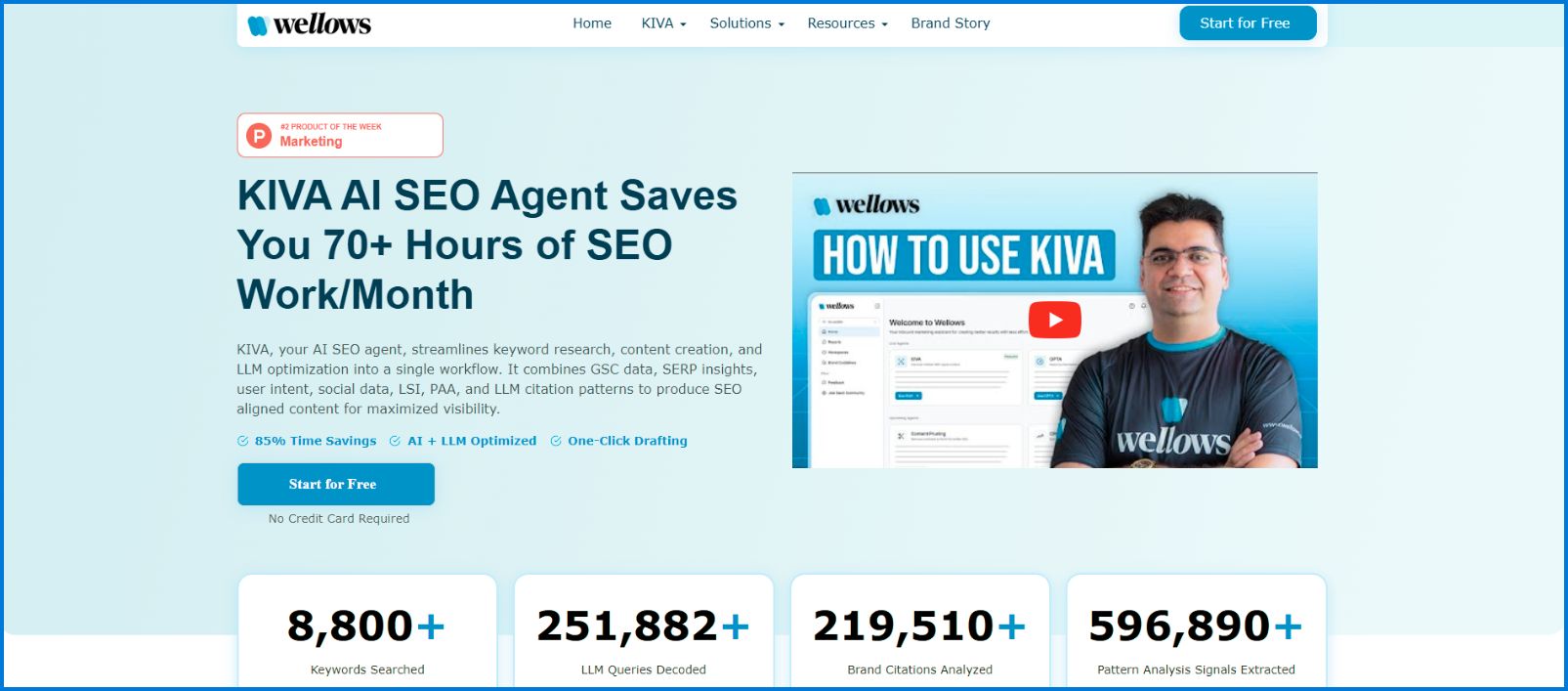
Smarter platforms have changed the game. What used to take days, like running audits or organizing keyword themes, is now done in minutes. From keyword clustering to page scoring and fixing metadata, many tasks are now handled by systems that learn over time.
An agent like KIVA now runs these processes at scale adapting strategies in real-time based on LLM visibility, SERP shifts, and social conversations captured through its Social Discussion Detector.
According to HubSpot’s 2025 State of Marketing Report, teams using automation reported 2x faster campaign execution and a 41% boost in ROI within 6 months.
Intelligent SEO agents not only eliminate busywork but also enable real-time optimization and user behavior modeling. These capabilities mark a major leap in the future of SEO.
AI-Driven SEO vs Manual SEO: Where the Differences Are Most Visible
Here’s the bottom line: AI-Driven SEO vs Traditional SEO boils down to scale and speed. Traditional tactics require time, testing, and repetition.
Intelligent systems detect SEO visibility issues, automate fixes, and recommend content updates in real time.
KIVA, for instance, flags overlooked keywords within GSC using its Hidden Gems feature, while offering live SERP structure suggestions tailored to each query’s user intent.
These tools crunch huge datasets to fine-tune your strategy around audience behavior and shifting search trends this is where AI gives SEO a real performance edge.
Common Questions Users Ask About AI SEO vs Traditional SEO
- Is AI SEO replacing traditional SEO? – No. AI speeds up execution, but human-led SEO is still vital for creativity and strategy.
- Which is better for scalability? – AI SEO. Intelligent systems process huge datasets in real time.
- Which is better for storytelling? – Traditional SEO. Human content still wins for emotion and originality.
- When should you use both? – A hybrid strategy works best: AI for data and automation, humans for branding and engagement.
What Are the Real Benefits of AI SEO in 2025?
According to a 2025 Content Marketing Institute study, brands that adopted AI SEO optimization saw an average 37% increase in organic visibility compared to traditional-only teams.
This measurable improvement reflects how AI tools are rewriting the rulebook for execution speed, relevance scoring, and SERP adaptation.
For instance, platforms like KIVA by Wellows showcase how these concepts work in practice.
Its clustering and SERP analysis features help organize keywords by intent and evaluate search patterns at scale, while its LLM visibility and Social Discussion Detector highlight how AI is expanding SEO beyond traditional engines into conversational and social platforms.
By combining these approaches, AI SEO agents illustrate why automation and data-driven insights are becoming central to modern optimization strategies.
Tasks That Still Need a Human Touch
Even the best automation can’t replace critical thinking. Choosing the right tone, aligning with brand voice, and earning backlinks still depend on experience.
Ethical concerns, accessibility, and storytelling are beyond the scope of machines. As SEO consultant Lily Ray puts it, “Automation helps, but ethical and creative SEO needs real people behind it.”
Similarly, Aleyda Solis, International SEO Consultant, highlights that “AI is powerful for efficiency, but the strongest SEO results still come from combining automation with human strategy and empathy.
Strategic decisions like prioritizing high-intent pages or auditing for brand tone are still best made by experts who understand the nuances of searcher behavior and content value.
This reinforces the point that while automation accelerates execution, human creativity and strategic oversight remain irreplaceable.
How to Combine AI SEO Automation with Human-Led Strategy
The most successful marketers don’t pick a side. They let platforms handle the heavy lifting, site audits, SEO Site Audit, metadata fixes, while humans refine messaging, build authority, and ensure alignment with brand strategy.
Traditional Agencies vs AI SEO Platforms
While the debate often focuses on AI SEO vs Traditional SEO techniques, there’s also a difference in who delivers the work:
- Agencies act as partners, delivering strategy, creativity, and human-led storytelling. They thrive in building brand authority, nurturing backlinks, and tailoring campaigns.
- Platforms are software-driven. They specialize in automation, data-driven insights, and real-time adaptation, enabling brands to run large-scale campaigns at speed.
The most effective approach isn’t choosing one over the other — it’s blending them. Businesses can leverage platforms for scalability while relying on agencies for strategic direction and creative execution.
Why the Future of SEO Is Real-Time, Not Static
Search is no longer static. Google’s Search Generative Experience (SGE) and Generative AI SEO workflows now power conversational search results that adapt dynamically to user intent.
Structured content, schema markup, and clear answers now rank better than traditional keyword-stuffed pages.
This shift has elevated the role of AI in SEO, pushing teams to produce content that’s not just keyword-optimized, but also contextually rich and logically structured.
Best Scenarios for Traditional vs Intelligent SEO
Manual SEO still has its place, especially in crafting thought leadership, niche pages, or emotional storytelling.
Intelligent systems are better suited for scaling ecommerce pages, handling metadata at scale, or updating old content efficiently.
The real win lies in combining both. Use smart tools for execution, then layer in creativity.
This duality helps teams avoid over-reliance on templates or underperformance from human-only strategies.
Metrics That Matter in Modern SEO Performance
It’s no longer enough to track keyword positions. You need to monitor content engagement, schema coverage, zero-click impact, and snippet presence.
A good SEO Site Audit today checks for performance in seo for AI-driven search, structured data compliance, and real-time behavioral signals.
This includes visibility in SERPs, featured snippets, local packs, and conversational search experiences.
New Challenges That Come With Intelligent SEO
Automation introduces challenges like over-optimization, thin content risks, and blind reliance on AI scoring.
Human oversight is essential to validate suggestions and ensure brand tone, accessibility, and trustworthiness remain intact.
Tools can guide, but they cannot fully understand context, nuance, or emotional storytelling.
How to Future-Proof Your SEO Strategy in 2025
The future of SEO isn’t about machines replacing humans, it’s about machines empowering them. As artificial intelligence in seo becomes more accessible, marketers can spend less time on the technical and more on strategy, storytelling, and value creation.
Tools now suggest AI SEO Optimization strategies tailored to your niche, competitive landscape, and user behavior.
AI’s impact on SEO is clear it speeds up decisions, makes strategies scalable, and improves performance tracking across the board.
Read More Articles
FAQs
Conclusion:
So what’s the verdict in the AI-Driven SEO vs Traditional SEO conversation?It’s not a war, it’s a merger. AI agents like KIVA deliver scale and speed, while human strategists provide nuance and authority.
Together, they define the future of SEO across search engines and large language models.Brands that blend tools and human insight will lead the future of the SEO industry.
If you want to show up for users in 2025 and beyond, embrace a hybrid SEO model built for AI SEO Strategy, powered by automation, and guided by creativity.