Startup discovery used to be predictable. If your rankings improved and your presence grew, investors and customers eventually found you.
AI has changed that. Today, discovery often happens inside ChatGPT-style answers and AI search summaries, with fewer clicks going out to websites. That means visibility is selective, not equal.
Multiple studies show that AI systems favor sources with stronger historical signals such as brand mentions, funding visibility, and media coverage. Recent research suggests that nearly 38% of AI-generated “common-sense” facts reflect measurable bias, often tilting recommendations toward already established startups rather than emerging ones.
So the real question is no longer “how startups rank?” but “what signals make AI confident enough to recommend my startup,” and how founders can earn those signals.
- AI has shifted startup discovery from rankings and links to selection inside AI-generated answers, where visibility is selective and signal-driven.
- AI recommends startups based on credibility signals like team strength, funding validation, market fit, data availability, and ethical readiness, not equal exposure.
- New startups face a cold-start disadvantage, where lack of machine-readable authority often means lack of recommendation, even if quality is high.
- Wellows turns AI visibility into strategy by providing Citation Context, Platform Coverage, and signal alignment so startups are understood, trusted, and repeatedly recommended by AI systems. Importantly, it makes these AI visibility insights affordable and practical for startups.
How AI Decides Which Startups to Recommend to Investors?
AI tools decide which startups to recommend to investors by analyzing measurable signals like growth metrics, market traction, execution strength, and long-term sustainability. AI search visibility for startups replace intuition with data-driven models that combine financial data, market trends, and textual insights to predict future performance.
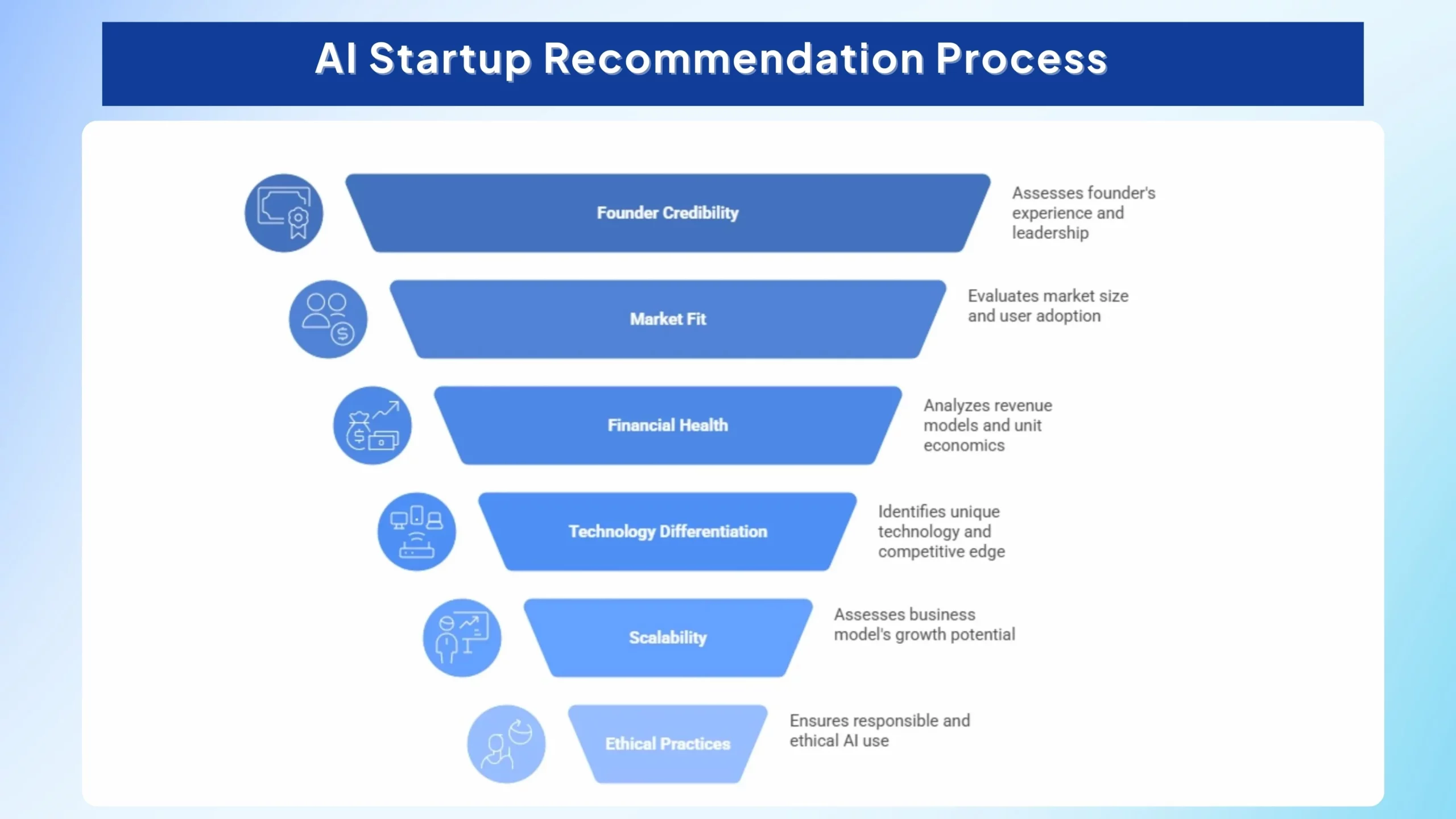
Factors on which AI recommends the startups:
- Founder and Team Credibility: Proven experience, prior exits, and deep industry knowledge act as strong trust signals
- Market Size and Product-Market Fit: Large, expanding markets and strong user adoption signal real demand
- Financial Health and Growth: Clear monetization strategies, predictable revenue, and healthy unit economics
- Technology and Differentiation: Proprietary data, unique technology, or hard-to-replicate systems stand out
- Scalability: Startups that can grow without proportional cost increases rank higher
- Ethical AI Practices: Transparency, bias controls, and data security strengthen investor trust
💡 Tip: Early founders can strengthen their team credibility by using an HR checklist for startups to formalize hiring, onboarding, and documentation from the start.
The Core Startup Pain Point
Here’s where startups feel the pressure: even with promising startup ideas, you can be building a strong product and still remain invisible in AI recommendations.
Founders still ask, “Why aren’t we being mentioned?”, “Why do competitors keep showing up?”, or “Is our startup failing?” But AI recommendation systems replace equal exposure with selective inclusion, contextual trust, and probability-based relevance.
Without understanding how AI filters credibility, startups can look less investable even when their fundamentals are strong. In AI-driven discovery, visibility is not distributed evenly. It is earned, reinforced, and repeatedly selected.
New Recommendation Systems Require New Thinking
AI startup recommendations are not rankings. They are probability models. If founders rely on old SEO logic instead of llm seo, they misread how modern AI systems select and surface startups.
- From “We’re a great startup” to “We match the trust signals AI looks for”
- From “Why aren’t we visible?” to “We lack reinforcement signals”
- From “AI is biased” to “AI is pattern-driven, not fair”
AI does not aim to be equal. It aims to be predictive.
Founders can use the AI discoverability checklist for startups to align with the visibility signals AI now relies on, avoiding outdated SEO assumptions.
Core takeaway: AI often chooses startups the way humans once did at scale, through signals, reinforcement, and perceived safety. If a startup is not being recommended, it’s rarely random.
This change is already visible across AI-driven investor tools and generative search results. Analyses of AI-generated startup summaries show that recommendations cluster around startups with repeated validation signals, such as media mentions, funding disclosures, and founder credibility.
Research into AI-generated “common-sense” outputs found that 3.4% to 38.6% of AI “facts” depend on the dataset and metric, disproportionately favoring established or well-documented entities. For startups, this means absence of data often equals absence of recommendation, not lack of quality.
The Pain Point: What Factors Influence AI’s Choice of Startups to Suggest to Users?
The factors that influence AI’s choice of startups to suggest to users are rooted in an AI-first discovery ecosystem shaped by startup trends 2026. Instead of relying on equal visibility or manual discovery, AI prioritizes data-driven selection signals that determine which startups get surfaced and which remain invisible.
The goal is no longer limited to being discoverable through searches or platforms; it’s about being chosen inside the AI response. That is why startups must move beyond surface-level visibility into:
- Algorithmic Trust Signals: building credibility markers AI systems rely on for safe recommendations
- Contextual Relevance Optimization: aligning startup positioning with user intent, timing, and market context
In practical terms, this shift matters because users increasingly rely on AI suggestions instead of exploring lists or platforms. If a startup is not selected in the AI-generated answer, it effectively doesn’t exist to that user. That doesn’t mean the startup lacks value. It means the value hasn’t been translated into machine-readable trust.
- User Behavior and Preference Signals: AI analyzes browsing, search, and engagement history to infer interest patterns
- Collaborative Filtering Effects: Startups gain visibility when similar users or investors engage with them
- Content-Based Matching: AI compares startup attributes like industry and business model against known preferences
- Contextual and Market Signals: Recommendations shift based on timing, trends, and economic conditions
- Data Availability and Quality: Startups with sparse or inconsistent data struggle to be trusted
- Privacy and Ethical Readiness: Compliance and transparency increase AI confidence in suggesting a startup
Did you know?
“AI helps investors go beyond personal networks, scanning vast data to find startups that match strategic criteria rather than relying on intuition alone.”This reflects the industry understanding that AI-powered deal sourcing tools automate and expand opportunity discovery far beyond traditional methods.IngestAI
Understanding your startup’s AI Visibility shouldn’t require an high budget. Wellows makes these insights accessible for startups from the start.
How Do AI Systems Handle New Startups With No Prior Data for Recommendations?
AI systems struggle with new startups because recommendations are built on historical signals. This challenge, known as the cold start problem, affects a significant portion of emerging companies.
Studies on recommender systems show that the cold-start problem for new startups persists, with accuracy dropping 40-70% without interaction history, as hybrid models still prioritize established data patterns.
To compensate, AI systems rely on alternative strategies that infer credibility and relevance without past performance.
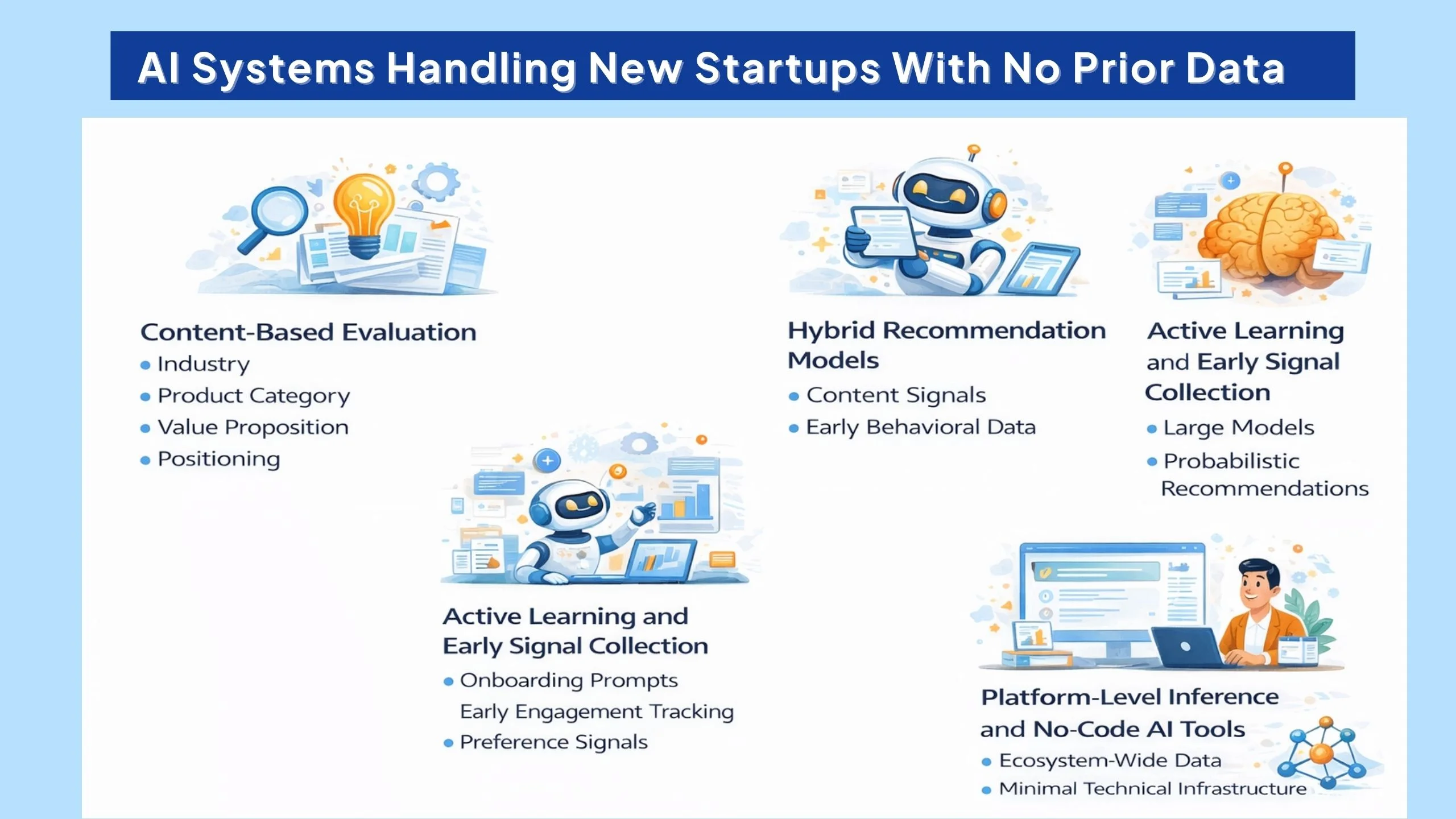
- Content-Based Evaluation: If a new fintech startup offers budgeting tools similar to Mint or YNAB, AI may recommend it early because its features and positioning match already trusted products.
- Hybrid Recommendation Models: A SaaS startup with limited users but strong early clicks and sign-ups can surface faster when AI combines its product details with initial user behavior instead of waiting for large usage data.
- Active Learning and Early Signal Collection: When users interact with a startup’s profile, such as saving it or spending time on its demo, AI quickly learns and boosts its visibility based on those early actions.
- Pre-trained Models and Transfer Learning: Even without traction, an AI health startup may get recommended because models trained on similar successful health platforms recognize familiar growth and credibility patterns.
- Platform-Level Inference and No-Code AI Tools: On platforms like startup directories or AI search tools, new startups can appear in recommendations quickly because the platform already understands ecosystem-level trends and categories.
The reality:
Does AI Prioritize Startups Based on Funding History or Team Background?
No, AI systems do not choose between funding history or team background. They evaluate both as risk-reduction signals, using them to estimate execution probability rather than raw potential. In AI-driven recommendations, these factors act as credibility shortcuts when direct performance data is limited.
How AI weighs these signals:
- Funding History as Confidence: Capital raised, investor quality, and funding velocity assess market validation
- Team Background as Execution Predictor: Founder experience, technical depth, and prior exits predict delivery capability
- Combined Risk Assessment: Funding reduces uncertainty about demand; team strength reduces uncertainty about execution
Why These Signals Matter More Than Ever (Stats Snapshot)
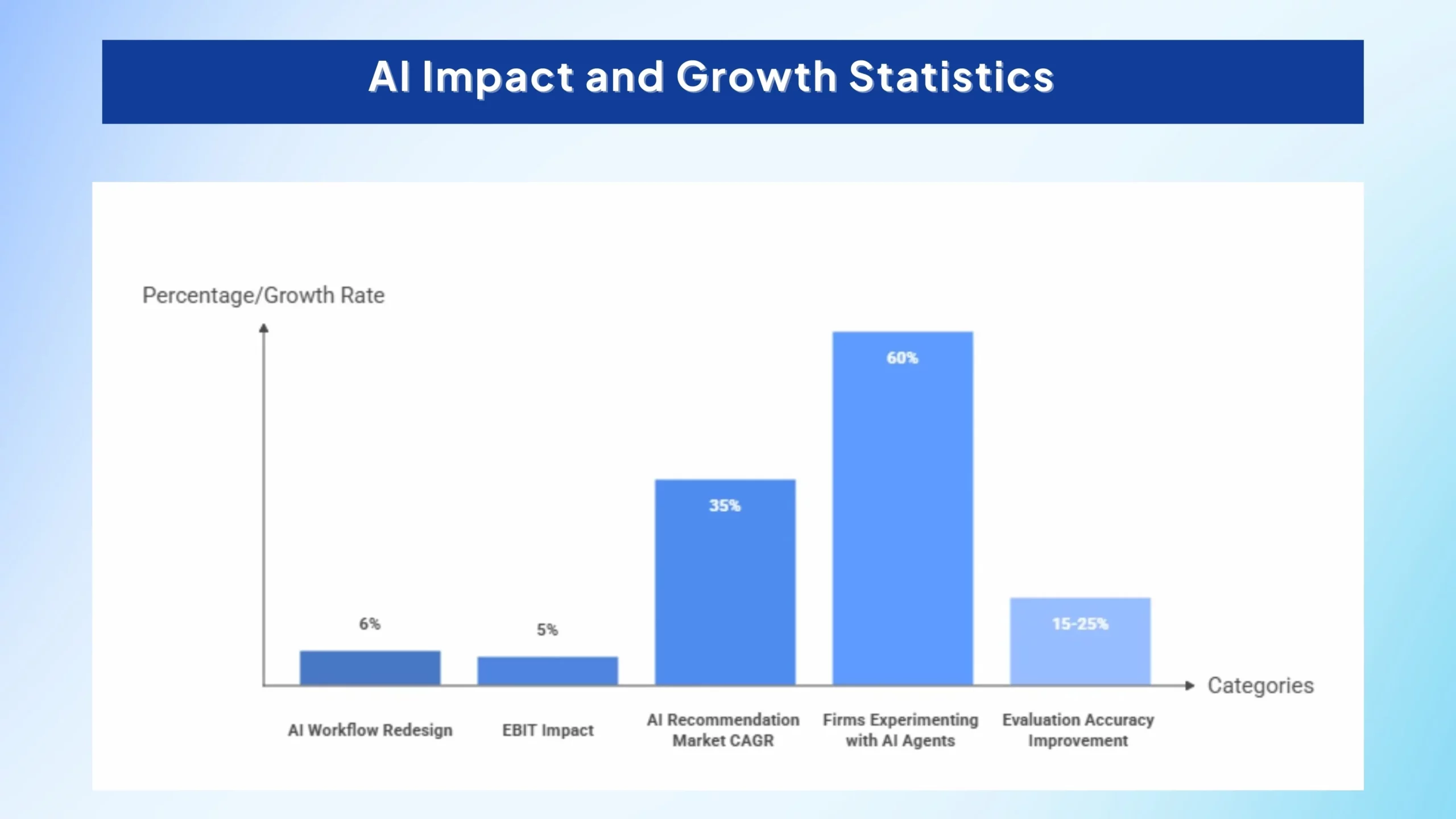
- Only ~6% of organizations using AI at scale redesign workflows effectively, but those that do see 5%+ EBIT impact and up to 3× faster scaling, reinforcing why AI prioritizes proven operators.
- The AI recommendation market is projected to grow from ~$3B in 2025 to over $100B by 2034, expanding at roughly 35% CAGR, accelerating reliance on automated startup evaluation.
- Around 60%+ of firms now experiment with AI agents for multi-step startup assessments, improving evaluation accuracy by an estimated 15–25%.
Source: SuperAGI
Bottom line:
AI favors what looks safest to recommend. Funding history signals market belief. Team background signals execution strength. Startups lacking both are not invisible, but they must compensate with stronger structural and contextual signals to earn recommendation trust.
Where Wellows Fits: Turning AI Visibility into a Strategy
After understanding how AI filters, ranks, and excludes startups, the real question becomes
how founders can influence those systems instead of being evaluated by them passively.
This is where Wellows moves AI visibility from chance to strategy.
The Visibility Problem Founders Are Reporting
“I’ve noticed that more and more customers are using ChatGPT and other AI assistants instead of traditional Google search.
When I test what these AI tools recommend for our keywords, our competitors are mentioned but we’re not — even though we rank #1 on Google.”
This highlights a growing reality for B2B SaaS founders: ranking well on Google no longer guarantees visibility inside AI assistants.
AI systems rely on citations, topic coverage, and cross-platform authority signals rather than classic SEO rankings alone.
As a result, strong brands are being algorithmically overlooked.
How Wellows Solves This AI Visibility Gap
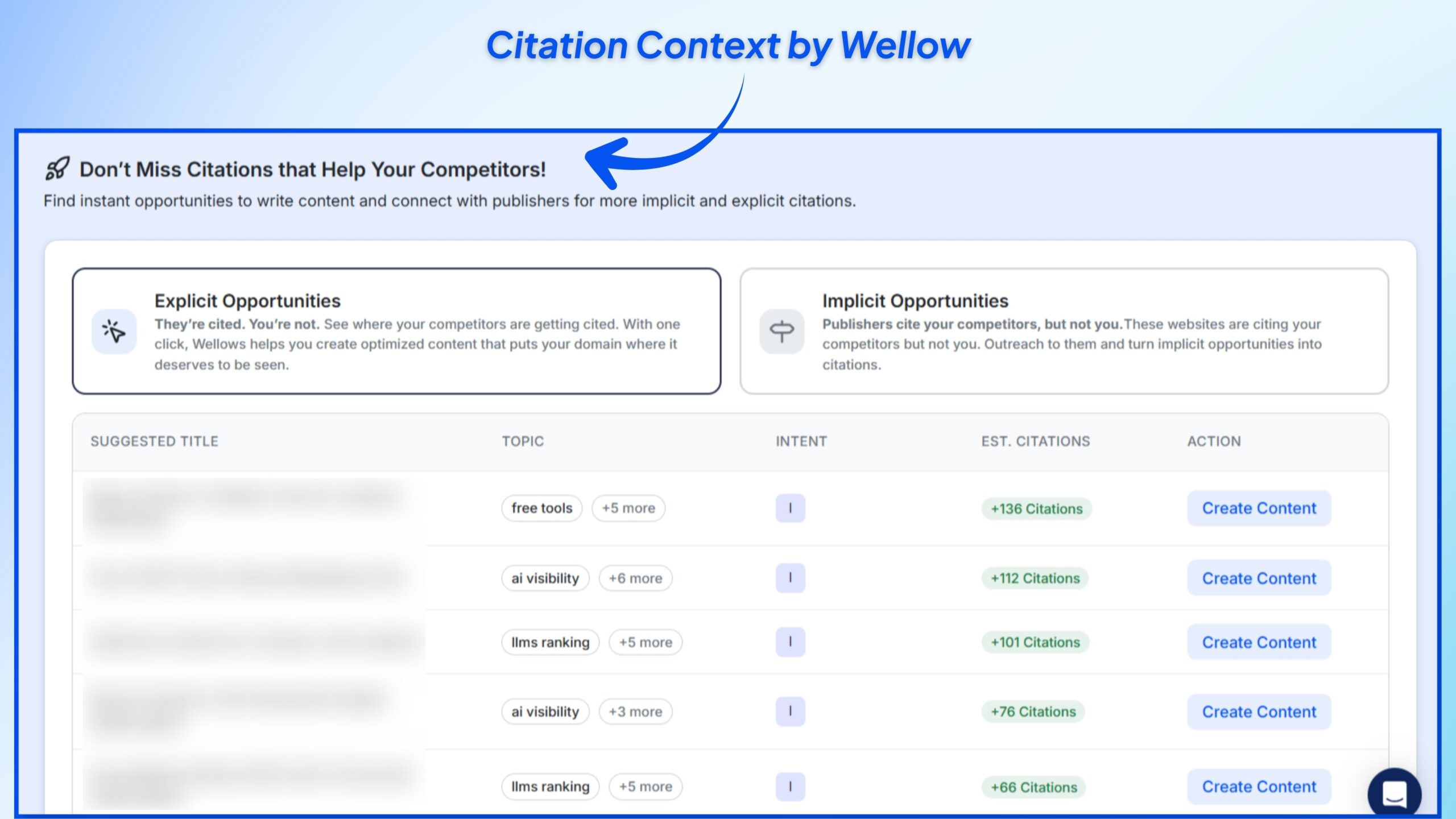
Wellows Feature: Citation Context
As shown in the Citation Context screenshot, Wellows identifies where competitors are already being cited in AI-generated answers
and exposes both explicit and implicit gaps where your startup is missing.
This allows founders to intentionally place their brand into the reference pathways AI systems already trust.
- Reveals competitor mentions inside AI-generated answers and summaries
- Turns missed citations into actionable content opportunities
- Helps AI confidently justify why your startup should be recommended
Wellows Feature: Platform Coverage
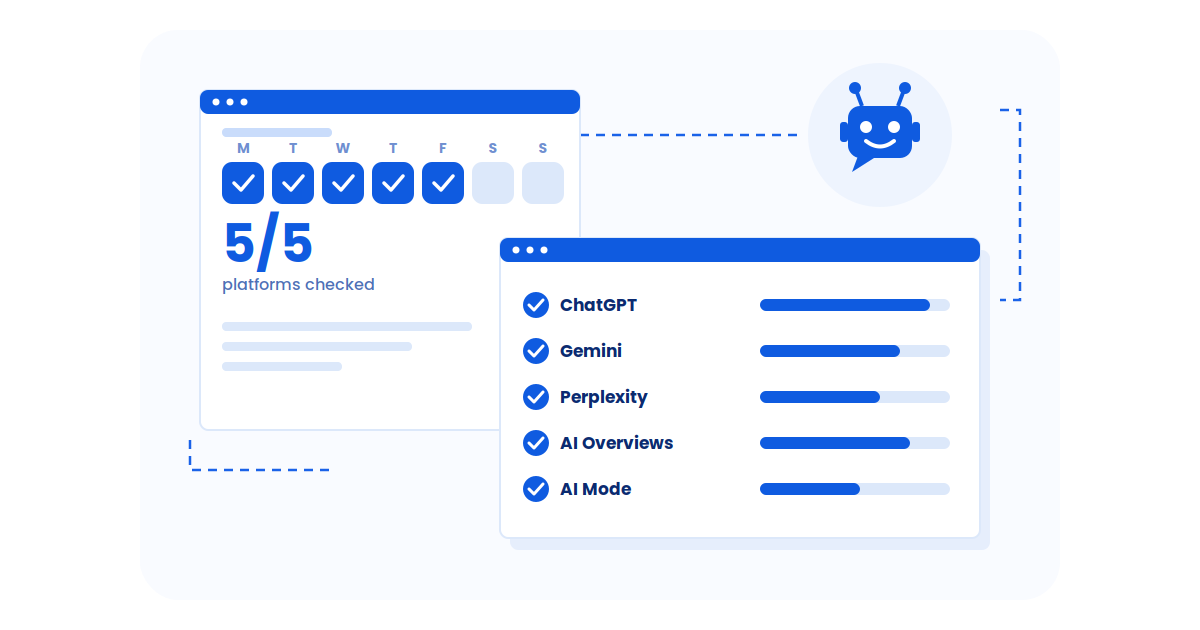
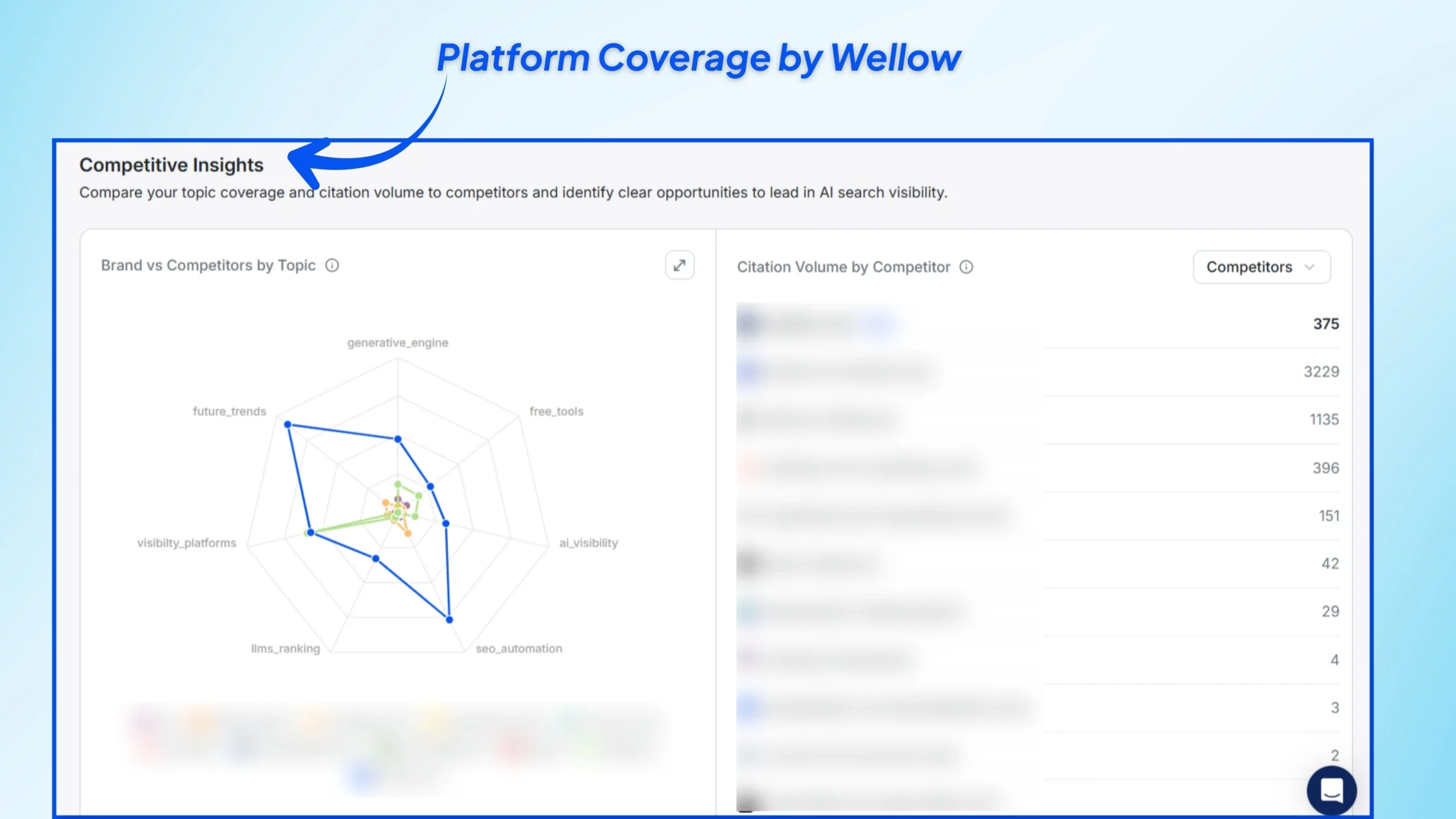
As illustrated in the Platform Coverage screenshot, Wellows compares topic-level coverage and citation volume across AI-relevant platforms.
Founders can clearly see where competitors dominate AI visibility and which topics or platforms are limiting their exposure.
- Shows brand vs competitor citation volume across AI-driven topics
- Identifies high-impact platforms influencing AI assistants like ChatGPT and Perplexity
- Helps founders expand visibility beyond a single discovery channel
What Founders Can Learn From This
AI assistants prioritize verifiable authority, structured citations, and consistent platform signals. Wellows helps founders align their startup narratives with how AI systems actually evaluate trust, ensuring they are not just indexed — but repeatedly selected. And unlike other AI analytics tools, Wellows keeps AI Visibility tracking affordable for early-stage teams.
How Can Startups Optimize Their Profiles to Be Recommended by AI-Driven Investor Platforms?
Startups can optimize their profiles to be recommended by AI-driven investor platforms by understanding how these systems evaluate information. Much like AI search engines assess content, investor platforms synthesize multiple signals, measure credibility, and determine which startups to surface often before any human review takes place.
In this environment, success is no longer about simply being listed; it is about being algorithmically selected.
- Define a Clear Startup Narrative AI systems prioritize startups that clearly explain what they do, who they serve, and why they matter without ambiguity. For example, instead of writing “AI-powered HR platform,” a clearer narrative would be “An AI hiring tool that helps mid-size companies reduce recruitment time by 40% by automating candidate shortlisting.”
- Demonstrate Execution and Traction Signals Measurable proof of progress helps AI assess credibility and lowers perceived execution risk. For example, stating “$30K monthly recurring revenue, 150 active customers, and a signed partnership with a logistics provider” carries more weight than vague growth claims.
- Optimize for AI Parsing and Classification AI evaluates startups more accurately when industry, technology, and business models are described consistently and explicitly. For example, using terms like “B2B SaaS,” “FinTech,” “subscription-based pricing,” and “SME-focused” across all profiles helps AI categorize the startup correctly.
- Maintain Cross-Platform Consistency AI systems cross-check information across multiple sources to validate trust and accuracy. For example, if your website, pitch deck, and investor profile all reflect the same funding stage and metrics, AI is more likely to treat the startup as credible.
- Leverage AI-Based Investor Matching Tools AI-powered platforms improve exposure by matching startups with investors whose past activity aligns with the startup’s domain. For example, a ClimateTech startup may be surfaced to investors who have recently funded sustainability or energy optimization companies.
- Signal Adaptability and Learning Startups that demonstrate learning, iteration, and awareness of market shifts are seen as lower risk by AI models. For example, documenting a pivot based on user data or improved retention after product changes signals strong execution discipline.
Startups must focus on clarity, consistency, and reinforcement, not promotion. If you’re still forming your narrative and positioning, this startup checklist can guide your foundational steps.
What Startups Can Learn from AI Search Behavior
When AI Overviews appear in search results, organic click-through rates can drop by over 50%. The work did not fail. The value moved upstream into the AI answer.
Startup discovery follows the same logic.
Instead of thinking:
- “We are visible to investors”
- Startups should aim for:
- “Our startup is being used as a trusted reference inside AI-driven investor recommendations.”
In an AI-first ecosystem, visibility is selective, and startups that structure themselves for AI understanding are the ones that get chosen.
A Reality Check: When ChatGPT Recommends Everyone Except You
A founder raised an uncomfortable question on Reddit:
“If someone asks ChatGPT about your industry and only your competitors get mentioned, what’s your move?”
The replies circled around a shared truth. AI tools don’t invent preferences. They reflect what’s already visible, cited, and reinforced across the web. If competitors dominate AI answers, it’s usually because they’re easier for models to recognize, summarize, and reference.
Several commenters pointed out that this isn’t bias. It’s signal strength. Brands with clearer positioning, consistent mentions, and presence in places AI systems learn from naturally surface first. The problem is most founders don’t know where those signals are coming from or why they’re missing.
By the time a user lands on your site, their trust may already be formed elsewhere.
How Wellows Makes AI Visibility Measurable
When brands notice they’re absent from ChatGPT recommendations, the instinct is to “do more SEO” or publish more content. But AI discovery works differently. Generative systems favor content that is easy to reference, confidently cite, and repeatedly encountered in authoritative contexts.
This is where Wellows provides clarity.
Citation Context places startups into AI-readable, reference-worthy content. Instead of hoping a model understands your value, your brand appears inside structured explanations, comparisons, and use-case narratives that generative systems can confidently reuse when answering questions.
That matters because AI tools don’t just look for keywords. They look for brands that already exist inside explanatory frameworks.
At the same time, Platform Coverage expands startup presence beyond traditional SEO. It surfaces whether your brand appears across AI search results, investor platforms, and knowledge-graph-driven surfaces that shape how models understand your category. A startup can rank on Google and still be invisible in the ecosystems AI systems rely on for authority.
- A Clear Comparison for Modern Content Teams: Wellows vs Promptwatch
- Hottest AI Startups: What Are The Hottest AI Startups To Watch
- SaaS Startups: Leading SaaS Startups: Y Combinator, Unicorns & SMS Rankings
- Ignoring AI Search: The Real Cost of Ignoring AI Search
- Startups Can Build a Distribution Moat: How Startups Can Build a Distribution Moat Before Competitors Do
- AI Misunderstood Startup: How AI Misunderstood What My Startup Does
FAQs
User data helps AI understand your interests, behavior, and intent by analyzing searches, clicks, and engagement patterns. This allows AI systems to recommend startups that closely match what you are likely to find relevant.
AI recommends a startup based on signals like your past behavior, market relevance, and the startup’s credibility indicators. You can interpret the recommendation by looking at factors such as funding signals, team background, content relevance, and how closely the startup aligns with your interests.
Generative AI shifts startup recommendations from static matching to contextual reasoning by explaining why a startup fits a user or investor’s needs. It synthesizes behavior, market context, and credibility signals to deliver more personalized, timely, and confidence-driven recommendations.
AI recommendation engines balance risk and reward by combining predictive analytics with real-time market and startup signals. They evaluate execution risk, market potential, and alignment with investor preferences to surface startups that offer upside without excessive uncertainty.
Conclusion: Startups That Align With AI Logic Will Be Recommended
AI-driven discovery is not about gaming algorithms or chasing visibility everywhere. It is about aligning how startups present themselves with how AI systems actually evaluate, filter, and recommend companies.
AI did not eliminate startup opportunity. It eliminated the assumption that quality alone guarantees discovery. Startups that succeed will be those that replace passive exposure with structured authority, vague storytelling with machine-readable clarity, and hope with intentional signal-building.
Visibility in AI systems requires a new mindset and a new strategy. Startups that understand this shift will move from waiting to be found to being confidently selected, positioning themselves as credible, reference-worthy choices in an AI-first ecosystem.