The startup ecosystem in 2026 is witnessing an unprecedented surge in entrepreneurial activity. With 5.2 million new business applications filed in the United States in 2024 alone, a staggering 49% increase since 2019, ambitious founders are racing to build the next generation of transformative companies.
However, the path to success remains treacherous. 90% of global startups fail at some point during their lifecycle, and only 0.05% of startups secure venture capital funding, that’s approximately 1 in 2,000 companies. The difference between becoming a unicorn and joining the failure statistics often comes down to one critical factor: choosing the right startup idea at the right time.
This guide focuses exclusively on true startup ideas – scalable, technology-driven opportunities that can realistically achieve billion-dollar valuations. All examples are curated specifically for startup ideas 2026, where timing and leverage matter more than ever.
Not sure how competitive your niche is?
Before building anything, analyze how established players in your niche perform in AI-driven search.
and uncover where you can win.
Tech-Focused Ideas
- AI Infrastructure: Multi-agent orchestration platforms, monitoring, cost control, debugging, and security for AI agent fleets.
- AI-Native Enterprise Software: AI-first replacements for legacy CRM, ITSM, ERP, and HR systems.
- Vertical AI Agents: Department-specific agents for legal, finance, HR, operations, and compliance with audit trails.
- AI in Health Tech: AI mental health platforms, hospital-at-home infrastructure, personalized nutrition, and remote patient monitoring.
Service, Marketplace, and E-commerce Ideas
- Low-Cost, Scalable Services: AI-powered virtual assistants, content repurposing bundles, resume and LinkedIn optimization, and micro-SaaS tools.
- Marketplaces & Platforms: B2B wholesale marketplaces, gig platforms for specialized professionals, local services marketplaces, and equipment rental.
- Consumer & Social: Creator monetization infrastructure, sustainable resale platforms, hyperlocal community products, and experience marketplaces.
Tips for Finding Your Idea
- Start with a painful problem: Focus on issues people already spend money or time trying to fix.
- Validate before building: Interview potential customers, test demand with a landing page, and analyze competitors. For any startup in 2026, early validation is no longer optional, it’s table stakes.
- Use AI for leverage: Choose ideas where small teams can build and operate faster at lower cost.
- Choose scalable models: Subscriptions, software-enabled services, and marketplaces outperform hourly work.
- Build defensibility early: Data, integrations, network effects, and compliance moats protect long-term growth.
Explore detailed insights across AI, HealthTech, Consumer & Social, Home-Based, E-commerce, Marketplaces, and SaaS Infrastructure startup business ideas, with many options requiring low costs—covering a wide range of 2026 new business ideas designed for scalability.
How Do You Determine the Best Startup Idea?
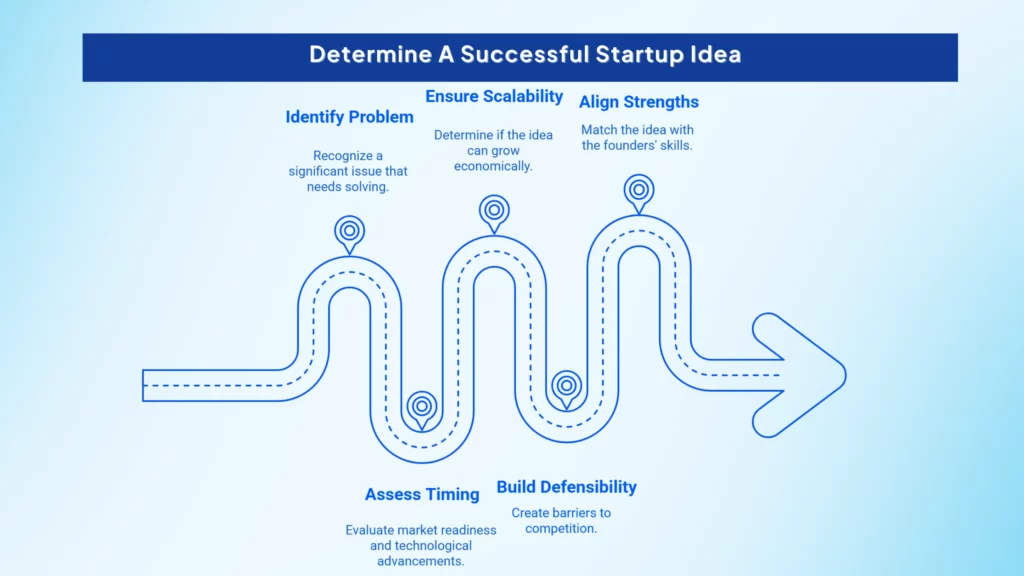
Selecting a startup idea isn’t about chasing trends or building something “cool.” The best startup 2026 will be the one that aligns timing, leverage, and founder strengths—not hype. Strong founders use a clear framework to validate ideas that can scale, survive competition, and justify the effort by building defensible distribution channels early on.
This can include testing messaging against real keyword intent, measuring conversion from a simple landing page, or leveraging Content Marketing Agencies that already understand how your ICP discovers solutions.
1. Start With a Real, Painful Problem: The best ideas solve problems people already spend money or time trying to fix. Y Combinator consistently emphasizes building for problems you’ve personally experienced or deeply understand.
- Do people actively pay to solve or avoid this problem?
- Are current solutions broken, expensive, or inefficient?
- Can you explain the pain point in one sentence?
Many of the strongest software company ideas in 2026 focus on solving urgent problems for specific ICPs where evident market gaps already exist. Narrowly defined customers, broken workflows, and high switching costs often signal opportunities competitors have overlooked.
Reddit Validation: Browse communities like r/Startup_Ideas and r/Entrepreneur to identify recurring complaints and unmet needs. One founder noted: “In 2026, the best startup business ideas won’t be the unique. They’ll be the ones that fix something broken, save real time or money.”
2. Check Market Timing and Tech Leverage: Breakout startups ride technology shifts that suddenly make solutions viable. The highest-potential startup ideas consistently emerge at the intersection of new technologies, shifting market trends, and underserved opportunities.:
- Cloud → SaaS at global scale
- Mobile → on-demand platforms
- AI → automation, personalization, 10x productivity
If a small team can now do what once required 50 people, timing is on your side, especially when lean teams pair that leverage with AI content optimization tools that turn limited content output into outsized visibility.
Y Combinator partner Aaron Epstein notes: “Thanks to new AI tools, we believe it’s now possible for small, high-agency teams—even solo founders—to build multi-billion dollar companies with as little as $500K in funding.”
3. Ensure the Idea Can Scale Economically: A startup should grow revenue faster than costs. This is the baseline filter for identifying profitable startup ideas 2026, not just interesting ones.
- Software or platforms that scale without linear hiring. This is why SaaS Startups continue to outperform service-based businesses on margins and growth.
- Automation replacing manual workflows
- Unit economics that improve with volume
- Network effects where each user increases value
This is where market size matters. Ideas targeting billion-dollar markets have room to grow without capping upside early.
Most successful Tech Startups intentionally enter large, fragmented markets with room to compound. When founders compare the top tech business ideas, they increasingly evaluate initial investment, realistic break-even points, and execution tips for 2026. The strongest ideas typically show a clear path to break-even within 12–18 months through subscriptions, automation, or software-enabled margins.
4. Build in Defensibility Early: Ask what stops competitors from copying you once traction appears:
- Proprietary data that compounds over time
- Technical complexity or deep domain expertise
- Regulatory barriers that slow fast followers
- Strong brand, trust, or community
5. Align the Idea With Founder Strengths: The best ideas fit the founder as much as the market.
- Relevant industry or technical experience
- Direct access to customers or partners
- Personal motivation to stay committed for years
Founder-market fit often outperforms “perfect” ideas built by the wrong team.
Quick reality check: A strong startup idea solves a real problem, rides a tech wave, scales efficiently, is hard to copy, targets a large market, and matches the founder’s strengths—these traits consistently define the top startup ideas 2026 across markets, and the startup checklist ensures these criteria are met before building.
45 Scalable Startup Ideas with Real Revenue Potential in 2026
Below are 45 top startup ideas for 2026 designed to generate real revenue, scale efficiently, and tap into high-growth markets – organized into 8 distinct categories for easy comparison across technology, markets, and business models.
Here are the 8 startup categories these ideas fall into:
Artificial Intelligence & Automation Startups Health, Wellness & Life Tech Startups Consumer & Social Innovation Startups Home Startup Ideas Service & E-commerce Startup Ideas Marketplaces & Platform Startups SaaS & Business Infrastructure Startups Finance & Future Economy Startups
Artificial Intelligence & Automation Startups
Market Context: The global AI market will reach $347.05 billion in 2026, with 79% of enterprises now using AI in at least one business function. AI infrastructure investments are expected to dominate, with $2 trillion in global AI spending projected for 2026 alone. Most importantly, 65% of total VC deal value flows to AI startup ideas.

- The Problem: Sales reps have 5-10 calls daily. Each should end with detailed follow-up notes sent to prospects—key points, action items, next steps. Instead? Reps forget, send generic templates three days later, and lose deals. It costs them $50K+ in lost revenue. They need AI writing personalized follow-ups instantly after every call.
- Here’s what you can build: Zoom/Meet integration recording calls, Whisper API transcribing, Claude extracting key points and writing personalized emails. One-click send. Build with APIs and Python for $10K over 8 weeks. Charge $200/user/month. A 10-rep team pays $2K/month. At 50 teams, that’s $1.2M annually with 80% margins.
- How can you stand out: Offer a “compliance guarantee” where you refund fees if AI misses a discrepancy that causes visa denial. No competitor offers this, it builds instant trust.
- Market Potential: Sales tech is a $50B+ market. Every B2B company with sales teams needs better follow-up. Improve close rates 2% and ROI is immediate.
- Examples: Gong, Chorus analyze calls but don’t automate follow-ups. Build the automation layer and win.
- The Problem: Immigration lawyers drown in paperwork. Solo practitioners handling 100+ cases simultaneously need to review 50-200 pages per visa application – birth certificates, bank statements, employment letters. One missed inconsistency gets applications denied. A paralegal doing this earns $4,000 monthly, spending 60% of time just reading documents.
- Here’s what you can build: AI that extracts data from uploaded PDFs, cross-references everything, flags inconsistencies automatically, for instance, “Employment letter says January 2020 start, tax returns show March 2020 income: discrepancy flagged.” Use Claude API and Python. Build for $8K. Charge $400/month. API costs $30/customer. Need 13 customers for $5K MRR-$60K annually with 85% margins.
- How can you stand out: Integrate directly with CRMs (Salesforce, HubSpot) so follow-ups auto-sync to deal records. Competitors are standalone tools, you become part of their existing workflow.
- Market Potential: There are 21,029 immigration law firms in the US handling millions of visa applications. The immigration legal services market is $9.9 billion. Capture 0.5%-that’s 105 firms at $400/month = $504K annually.
- Examples: Harvey AI ($100M+ raised) targets Big Law. Small immigration firms are completely underserved.
- The Problem: Government contractors pay consulting firms $65+ billion annually for FedRAMP compliance, regulatory analysis, policy review. Deloitte charges $300/hour for consultants reading documents and writing summaries. AI does this for $0.50 per document. The government wants to cut consulting spend, this is how.
- Here’s what you can build: AI analyzing government RFPs, generating compliant responses, tracking regulatory changes, automating FedRAMP docs. Upload policy, get compliance report in minutes vs. weeks. Use Claude, Python, React. Build for $30K over 20 weeks. Charge $2K/month. At 50 contractors, that’s $1.2M annually with 85% margins.
- How can you stand out: Partner with government agencies to pre-approve your AI outputs for specific compliance types. Being “government-certified” makes you the only safe choice.
- Market Potential: $100+ billion government consulting market with political pressure to automate. Replace consultants at 10% of cost.
- Examples: Y Combinator funded FedRAMP automation startups. Category is nascent, massive opportunity.
- The Problem: AI infrastructure needs 211,100 new skilled trade workers by 2033 – electricians, HVAC techs, welders. Traditional schools take 2-4 years and cost $15K-30K. They can’t scale. We need electricians trained in months using AI tutors watching apprentices work, providing real-time feedback via computer vision, and VR simulations for dangerous tasks.
- Here’s what you can build: AI tutors using GPT-4 Vision watching students work and correcting technique. Unity VR for simulations. Personalized learning paths. Build for $40K over 24 weeks. Charge $199/month per student or $5K for certification. At 500 students subscription model, that’s $1.2M annually.
- How can you stand out: Offer job placement guarantees. This eliminates risk and makes you irresistible to career changers.
- Market Potential: 81,000 electrician openings annually plus similar demand across trades. Government funding supports rapid retraining.
- Examples: Interplay Learning offers VR but targets enterprise. Build for individual learners.
- The Problem: HR teams screen 250+ resumes per role. Recruiters spend 15 hours weekly reading applications, scheduling interviews, sending rejections. They miss great candidates. Hiring takes 45 days when it should take 15. Companies lose top talent to faster competitors. They need AI screening resumes, scheduling interviews, conducting initial phone screens, and ranking candidates automatically.
For early-stage companies hiring their first team, an HR checklist for startups can streamline every step, from role definition to compliant onboarding. - Here’s what you can build: AI agents screening resumes (Claude), scheduling via Calendly API, conducting voice screens (Bland.ai), ranking by fit. Recruiters only see pre-vetted finalists. Build for $18K over 10 weeks. Charge $300/month per recruiter. A 5-person team pays $1,500/month. At 100 customers, that’s $1.8M annually.
- How can you stand out: Build candidate “diversity scoring” showing how well shortlists match DEI goals. Companies are desperate for this but current tools don’t offer it.
- Market Potential: HR tech is $60B+ market. Every company with 50+ employees needs better hiring. AI automation reduces time-to-hire 60%.
- Examples: Paradox.ai, HireVue offer pieces. Build full end-to-end AI recruiting and own SMB market.
- The Problem: Small businesses like restaurants, gyms, and salons want AI benefits but have zero technical know how. They see competitors using chatbots and predictive scheduling, but hiring a dev shop costs $50K+. One owner said: “I don’t even know what prompt means, I just want customers answered at 2 a.m.”
- Here’s what you can build: Done-for-you AI implementation: Integrate ChatGPT into their booking site, set up automated review requests via Zapier, and train staff in 2 hour workshops. Tech: API wrappers + no code tools. Build cost: $8K. Charge $2,500 setup + $300/month retainer. At 20 clients: about $80K/year with about 70% margins.
- How can you stand out: Offer an “AI in a Week” rollout with a measurable scorecard (response time, lead capture rate, missed calls reduced). Add a monthly prompt and workflow refresh so they never feel stuck or outdated.
- Market Potential: AI consulting market: $8.75B in 2024, projected $58.19B by 2034. About 75% of U.S. SMBs are investing in AI.
- Examples: FirstMovers.ai; Hakuna Matata Tech.
Health, Wellness & Life Tech Startups
Market Context: The global wellness technology market reached $57.1 billion in 2025 and is predicted to reach $208.36 billion by 2035. NYC healthcare startups alone raised over $2.3 billion in 2024 with particularly strong activity in digital health and mental health. The wellness industry now has 27 unicorn startups, with telehealth and digital health services dominating.
- The Problem: Therapy costs $150-300 per session with 2-3 month waitlists. Insurance is terrible. 970 million people worldwide have mental health disorders but 75% get zero treatment, they can’t afford it or access it. Meanwhile, AI delivers evidence-based CBT therapy at $50/month with 24/7 availability. That’s game-changing access.
- Here’s what you can build: AI chatbot trained on CBT/DBT with licensed clinician oversight. Users text daily, escalate to humans when needed. Track mood, identify triggers, provide coping strategies. HIPAA infrastructure. Use Claude fine-tuned, React Native, AWS. Build for $35K over 20 weeks. Charge $79/month. At 1,000 subscribers, that’s $948K annually with 85% margins.
- How can you stand out: Get insurance reimbursement approval so users can submit claims. Being the first AI therapy platform covered by insurance unlocks massive market.
- Market Potential: U.S. behavioral health is $96.9 billion in 2025. Telepsychiatry is $13.18 billion. AI therapy captures underserved millions.
- Examples: Woebot, Wysa exist but haven’t dominated. Build with better clinical validation.
- The Problem: Wealthy people want to live longer but longevity medicine is fragmented—expensive clinics ($10K+ annually), confusing supplements, unreliable testing. No unified platform exists. They waste money on unproven interventions while legitimate science (rapamycin protocols, NAD+) lacks accessible delivery. They need one platform for testing, protocols, and tracking.
- Here’s what you can build: Platform connecting users with biological age tests (epigenetic clocks), evidence-based protocols, physician networks for prescribing, longitudinal tracking. Partner with TruDiagnostic for testing, Hims/Hers model for telemedicine. Build for $25K. Charge $199/month or $2,500 annually. At 500 subscribers, that’s $1.2M annually.
- How can you stand out: Create a “longevity leaderboard” where users compete on biological age improvements. Gamification drives retention, people stay subscribed to beat their friends.
- Market Potential: Longevity market is $31.63 billion in 2026, reaching $63.03 billion by 2035. Affluent consumers spend $5K-50K annually on lifespan extension.
- Examples: Inside Tracker, Function Health offer pieces. Build complete longevity operating system.
- The Problem: Hospital-at-home programs save 30-40% vs. traditional hospitalization but coordination is chaos—scheduling nurses, delivering equipment, monitoring vitals remotely, billing Medicare. Health systems want to scale but lack software. They’re using spreadsheets. One platform orchestrating everything would unlock billions in cost savings.
- Here’s what you can build: Software orchestrating nurse/doctor scheduling, equipment logistics, remote monitoring dashboards, care plans, Medicare billing automation. Use Twilio, FHIR APIs for EMRs, custom dashboards. Build for $50K over 24 weeks. Charge $10K/month per health system. At 20 customers, that’s $2.4M annually.
- How can you stand out: Guarantee 30% cost savings vs. traditional hospitalization or you don’t get paid. Outcome-based pricing makes you risk-free for health systems.
- Market Potential: Hospital-at-home could replace 25% of admissions-$200B+ opportunity as Medicare expands reimbursement.
- Examples: Medically Home, DispatchHealth pioneered this. Build the software layer powering all programs.
- The Problem: Continuous glucose monitors reveal which foods spike your blood sugar, but then what? Users see data with no idea what to eat. They need AI analyzing CGM data, genetic tests, microbiome results to generate personalized meal plans. Add grocery delivery and you’ve solved metabolic health for millions trying to lose weight or manage diabetes.
- Here’s what you can build: AI analyzing Dexcom/Freestyle Libre APIs, 23andMe data, activity levels to create nutrition plans. Auto-generate meal plans, grocery lists, recipes. Partner with Instacart. Use Python for modeling, React for app. Build for $30K over 16 weeks. Charge $149/month (includes CGM). At 1,000 users, that’s $1.8M annually.
- How can you stand out: Partner with endocrinologists who prescribe your app to prediabetic patients. Doctor endorsement makes you medical-grade, not just another diet app.
- Market Potential: Weight loss is $200B+ market. CGM adoption exploding beyond diabetics. Metabolic health personalization is the frontier.
- Examples: Levels, Nutrisense offer CGM + insights. Add AI meal planning and grocery delivery.
- The Problem: 10,000 Baby Boomers turn 65 daily. Adult children coordinate care from across the country—caregivers, medications, fall detection, health tracking. Everything is fragmented. Families spend $5K-15K monthly with zero visibility into what’s happening. They need one platform showing everything in real-time with vetted caregivers.
- Here’s what you can build: Platform connecting families with caregivers plus scheduling, medication tracking (photo confirmations), health monitoring (wearables), video check-ins, care plans. Use marketplace model, Twilio, IoT APIs. Build for $40K over 20 weeks. Take 20% of fees + $99/month premium. At 500 families paying $3K/month in care, that’s $3.6M annually.
- How can you stand out: Offer 24/7 emergency response where families can video call caregivers instantly if something seems wrong. Real-time visibility creates unbeatable peace of mind.
- Market Potential: Elder care is $400B+ U.S. market growing as Boomers age. Families desperately need coordination.
- Examples: Care.com, Honor focus on marketplaces. Build complete family coordination layer.
Consumer & Social Innovation Startups
Market Context: After years of underinvestment, VCs are calling 2026 “the year of the consumer”, with investment rebounding as consumer behavior trends show shifts toward hyper-personalization, always-on connectivity, and experience-driven spending. Key trends include local-first preferences and health consciousness.
- The Problem: Gen Z has $360 billion in disposable income but existing apps feel like they’re for their parents. They want crypto integration, social features (share portfolios), gamified saving challenges, fractional investing, values-based options—all in one app. Traditional banks don’t get it. Neobanks like Chime are boring.
- Here’s what you can build: Neobank combining checking/savings, fractional stocks/crypto, P2P payments, group savings challenges, carbon tracking, social features (leaderboards, shared portfolios). Partner with Unit/Synapse, use Plaid. Build for $50K over 24 weeks. Charge $5/month or monetize interchange. At 50K users paying $5/month, that’s $3M annually.
- How can you stand out: Let users earn crypto rewards for hitting savings goals. No other neobank combines gamified saving with actual crypto earnings, Gen Z will love it.
- Market Potential: Gen Z is 2+ billion globally with 70+ years of lifetime value. First mover owns the generation.
- Examples: Step, Greenlight target teens. Build for 18-27 year-olds with crypto and social.
- The Problem: Secondhand is $367 billion globally by 2029 but discovery sucks. You scroll 10,000 random items hoping to find your size. AI can auto-tag items, verify authenticity, recommend sizes, personalize discovery, but ThredUp and Poshmark haven’t built it well. Superior AI wins this market.
- Here’s what you can build: AI resale where sellers upload photos and AI identifies brand, condition, suggests pricing. Buyers get personalized feeds matching their size/style. Add authentication for luxury. Use GPT-4 Vision, Python recommendations, Stripe. Build for $35K over 18 weeks. Take 20% commission. At $1M monthly GMV, that’s $2.4M annually.
- How can you stand out: Use AI to predict which items will resell fastest at highest prices, telling sellers exactly what to list. Being the “data-driven resale platform” attracts serious sellers.
- Market Potential: U.S. secondhand is $74 billion by 2029, growing 9% annually. Resale grows 3x faster than traditional retail.
- Examples: ThredUp, Poshmark, Depop have weak AI. Build superior discovery and authentication.
- The Problem: Nextdoor is filled with complaints and spam. People want to connect with neighbors for local commerce (buy/sell/borrow), recommendations (plumbers, babysitters), events (block parties), community, but need better moderation. The demand exists; execution is terrible. Build Nextdoor that doesn’t suck.
- Here’s what you can build: Neighborhood platform with verified residents (address verification), AI moderation preventing arguments, integrated commerce (classifieds, services), event coordination, reputation systems. Use OpenAI Moderation API, React Native, Stripe. Build for $40K over 20 weeks. Monetize via local business ads. At 10K neighborhoods with 10% paying $2/month, that’s $240K annually + ads.
- How can you stand out: Implement AI moderation that detects neighborhood disputes before they explode and suggests mediation. Being the “peaceful neighborhood app” differentiates from toxic Nextdoor.
- Market Potential: Every neighborhood globally. Network effects create moats once you dominate a neighborhood.
- Examples: Nextdoor has category but poor execution. Build better moderation and commerce.
- The Problem: 50+ million creators juggle Patreon, Gumroad, Kajabi, Substack, Mailchimp—paying $200-500 monthly. They want one platform handling subscriptions, digital products, courses, community, email, analytics. The creator economy is $252.33 billion in 2025. Build the operating system.
- Here’s what you can build: All-in-one combining subscription management, digital products, courses, community, email marketing, analytics. Use Stripe, AWS, React. Build for $45K over 22 weeks. Charge 5% revenue + $29/month base. At 1,000 creators earning average $2K/month, that’s $1.5M annually.
- How can you stand out: Offer revenue-based financing where creators borrow against future earnings with auto-repayment from platform revenue. No competitor offers creator-specific financing.
- Market Potential: Creator economy is $252.33 billion. Creators pay 5-15% for tools—massive TAM.
- Examples: Patreon, Gumroad, Kajabi are fragmented. Build complete creator OS.
- The Problem: Americans spend $157 billion annually on pets across fragmented services—vets, groomers, sitters, trainers. Booking a vet takes days. Finding good sitters requires endless Rover scrolling. Pet parents want one platform: telehealth vet consults, grooming/sitting bookings, training, supplies.
- Here’s what you can build: Platform offering telehealth vets (video + prescriptions), marketplace for groomers/sitters/trainers, subscription boxes, health tracking. Partner with vets, marketplace model, Shopify. Build for $50K over 24 weeks. Revenue: 20% commission + vet fees + e-commerce margin. At 5K users spending $200/month, that’s $12M GMV = $2.4M revenue (20% take).
- How can you stand out: Provide pet insurance bundled with your subscription at wholesale rates. Being a one-stop-shop for pet health + insurance + services makes you irreplaceable.
- Market Potential: $157 billion in 2025 with 66% of households owning pets. Pet owners pay premium for convenience.
- Examples: Chewy (e-commerce), Vetster (telehealth), Rover (sitting). No one offers complete ecosystem.
Home Startup Ideas
Market Context: 69% of all startups are home-based. While many “home businesses” are small lifestyle ventures, certain home-based startup categories can scale to significant venture-backed companies through technology leverage, marketplaces, or network effects.
Important Note: Most traditional “home business” ideas (freelancing, consulting, local services) are small businesses, not startups. This section focuses exclusively on technology-enabled, scalable home-based startup opportunities.
- The Problem: Creators sell digital products (Notion templates, Figma kits, spreadsheets, courses) across platforms taking 30-50% commissions. Gumroad charges 10% + fees. Etsy is oversaturated. Specialized marketplaces for niches (design assets, business templates, developer tools) offer better discovery at lower fees while capturing margin.
- Here’s what you can build: Niche marketplace for specific categories. Build discovery algorithms showing exactly what buyers need. Provide creator tools: file delivery, customer management, affiliates, analytics. Use Next.js, Stripe, AWS S3. Build for $25K over 14 weeks. Take 15% commission. At $100K monthly GMV, that’s $180K annually. Scale to $1M monthly = $1.8M.
- How can you stand out: Implement buyer-seller matching where AI recommends specific products to buyers based on their past purchases and browsing. Personalized discovery beats browsing.
- Market Potential: Digital products are $300B+ with near-zero marginal costs. Niche marketplaces command higher margins through specialized discovery.
- Examples: Gumroad is generalist. Creative Market (design). Build underserved niches (business templates, dev tools).
- The Problem: Subscription boxes are $32.9B growing 13% annually but entrepreneurs fail at fulfillment, churn, acquisition. They want software handling inventory, fulfillment partnerships, billing, churn AI, acquisition funnels. They’ll pay 10-15% of revenue for infrastructure that works. Be Shopify for subscription boxes.
- Here’s what you can build: B2B SaaS powering subscription businesses: inventory, fulfillment integration (ShipBob, Deliverr), billing (Stripe/Chargebee), churn AI, personalization, acquisition tools. Use Python, React, APIs. Build for $45K over 22 weeks. Charge 10% revenue or $500/month + 5% hybrid. At 50 customers averaging $20K monthly revenue, that’s $1.2M annually.
- How can you stand out: Guarantee churn reduction, if customers using your AI don’t reduce churn by 15%, you refund fees. Performance guarantees make you risk-free.
- Market Potential: $32.9 billion market with thousands needing infrastructure.
- Examples: Cratejoy offers pieces but poorly. Build complete OS for subscription businesses.
- The Problem: Online education is $350B+ but generic platforms have terrible completion and no community. Vertical platforms for underserved niches (trade skills, creative disciplines) see 3-5x better outcomes through specialized curriculum, cohorts, job placement. Buyers pay premium ($1K-10K) for results vs. generic $50 courses.
- Here’s what you can build: Vertical marketplace for specific niches (HVAC training, welding, drone piloting). Cohort-based learning with peer interaction, instructor office hours, job placement, certification partnerships. Use Teachable base or custom Next.js. Build for $30K over 16 weeks. Take 25% of fees. At $500K annual GMV, that’s $125K. Scale to $5M GMV = $1.25M.
- How can you stand out: Partner with unions and contractors who commit to interviewing your graduates. Direct employer pipelines make you the only platform with guaranteed job opportunities.
- Market Potential: U.S. online education is $94 billion in 2025. Vertical platforms command higher pricing through specialization.
- Examples: Lambda School (coding), Vet Set Go (veterinary). Build for underserved trades.
- The Problem: Print-on-demand eliminates inventory but Printful/Printify have slow shipping (7-14 days), generic products, limited differentiation. Creators want 2-3 day fulfillment, sustainable materials, unique products, AI design tools. The creator economy demands better merchandise infrastructure. Build it and they’ll pay premium.
- Here’s what you can build: Next-gen POD with distributed micro-factories (fast shipping), sustainable materials (organic cotton, recycled polyester), unique products, AI design tools. Partner with regional manufacturers, use APIs. Build for $40K over 20 weeks. Take 30-40% margin. At $100K monthly GMV, that’s $360K-480K annually. Scale to $1M = $3.6M-4.8M.
- How can you stand out: Offer same-day fulfillment in major cities using local micro-factories. Being 10x faster than Printful (2 days vs. 14 days) justifies premium pricing.
- Market Potential: Creator economy is $250B+ with millions needing merchandise. Speed and sustainability command premium.
- Examples: Printful, Printify are generic. Build premium, fast, sustainable alternative.
- The Problem: 40%+ of workers are remote but virtual team building feels forced. Companies spend $50-100 per employee on terrible Zoom happy hours. They want engaging experiences: interactive games, workshops, wellness activities—that build real connection. Corporate wellness is $60B+ desperate for better remote solutions.
- Here’s what you can build: Virtual experience platform offering interactive games, murder mysteries, cooking classes, wellness (yoga, meditation), custom events—all for remote teams. Provide facilitators, analytics, HR integrations. Marketplace of facilitators, Zoom/WebEx APIs, React. Build for $35K over 18 weeks. Charge $25-50 per participant. At 100 events monthly with 20 people average, that’s $600K-1.2M annually.
- How can you stand out: Create AI-generated custom experiences based on team dynamics assessments. Personalized team building based on actual personality data beats generic activities.
- Market Potential: Corporate wellness is $60B+. Remote work creates new engagement demand. Companies pay premium for working solutions.
- Examples: Outback Team Building, TeamBuilding.com are basic. Build immersive, tech-enabled experiences.
Service & E-commerce Startup Ideas
Market Context: Global retail e-commerce sales are forecast to reach $6.88 trillion in 2026, with over three billion people buying online. Mobile commerce now accounts for 59% of total online retail sales. The e-commerce platform market alone is projected to grow from $13.92 billion in 2026 to $61.83 billion.
- The Problem: Furniture e-commerce is broken. People won’t buy $2,000 couches without seeing them in their rooms. Returns cost 20-30%. Wayfair and Amazon are generic catalogs. AR visualization (“see this couch via phone camera”) reduces returns 60% while commanding premium through better experience.
- Here’s what you can build: Furniture store with AR try-before-you-buy using smartphone cameras. Curate quality furniture, provide AR, offer white-glove delivery, create showrooms in major cities. Use ARKit/ARCore, Shopify Plus, partner with manufacturers. Build for $50K over 24 weeks + inventory. Start dropshipping. Take 30-40% margin. At $100K monthly revenue, that’s $1.2M annually = $360K gross profit.
- How can you stand out: Offer free designer consultations via video where designers help customers visualize rooms using your AR tool. Human + AI makes you premium vs. pure self-service.
- Market Potential: Online furniture is $100B+ globally. AR is differentiator commanding premium and reducing returns.
- Examples: Article, Burrow, Inside Weather built DTC brands. Add AR and focus on specific styles.
- The Problem: Traditional retailers take 60-70% margins. Samsonite charges $400 for $80-cost suitcases. Away proved you can sell quality luggage for $200-300 with 60% margins cutting middlemen. Sustainable materials (recycled ocean plastic, carbon-neutral manufacturing) justify premium pricing appealing to conscious consumers.
- Here’s what you can build: DTC luggage using sustainable materials: recycled ocean plastic shells, carbon-neutral manufacturing, lifetime warranties. Start with carry-ons ($225), expand to checked bags ($295), backpacks, accessories. Build community around sustainable travel. Partner with manufacturers (Alibaba), Shopify, Meta ads. Build for $30K + inventory. Gross margin: 60%. At $50K monthly, that’s $600K annually = $360K gross profit.
- How can you stand out: Implement luggage tracking via AirTag integration so customers never lose bags. Being “the luggage that tracks itself” is a killer differentiator.
- Market Potential: Global luggage is $40B+. Sustainability commands 20-40% premium with growing demand.
- Examples: Away pioneered DTC. Paravel added sustainability. Build better sustainable positioning.
- The Problem: Restaurant procurement is 1990s—phone calls, faxes, opaque pricing, minimums. Restaurants overpay 20-30% through traditional distributors. B2B marketplaces digitizing wholesale (transparent pricing, online ordering, flexible minimums) save thousands monthly while suppliers reach more customers. Win-win nobody has digitized.
- Here’s what you can build: B2B marketplace connecting restaurants with food/equipment suppliers: digital catalogs, online ordering, transparent pricing, payment terms (net-30), delivery integration. Start local (one city), expand. Build on Ruby/Rails, integrate payment terms (Resolve/Finexio). Build for $60K over 26 weeks. Take 5-10% of GMV. At $500K monthly GMV, that’s $300K-600K annually. Scale to $5M = $3M-6M.
- How can you stand out: Offer same-day delivery in metro areas for emergency orders. Restaurants need supplies NOW when they run out, speed justifies premium pricing.
- Market Potential: Restaurant wholesale is $300B+ in US. B2B ecommerce is $32.8 trillion in 2025.
- Examples: Choco raised $300M+ for restaurant ordering. Faire did $500M+ for retail. Massive market remains.
- The Problem: Consumers want sustainable products but face greenwashing and verification difficulty. “Carbon neutral” means nothing without proof. Premium sustainable products command 20-40% higher prices but require trust. Build e-commerce exclusively for verified sustainable products with transparent supply chains and certifications.
- Here’s what you can build: Marketplace exclusively for verified sustainable products: carbon footprint per product, supply chain transparency (blockchain), third-party certifications (B Corp, Fair Trade), carbon-neutral shipping. Every product includes sustainability scorecard. Use Shopify Plus, blockchain, partner with certification bodies. Build for $40K over 20 weeks. Take 25-30% margin. At $50K monthly, that’s $600K annually = $150K-180K gross.
- How can you stand out: Display carbon footprint per purchase and let customers offset it with one click. Making sustainability frictionless and visible drives higher conversion.
- Market Potential: Sustainable products command 20-40% premiums. Consumers increasingly demand transparency. First mover owns category.
- Examples: The Grommet, EarthHero lack robust verification. Build trust through transparency.
- The Problem: People value experiences, spending $5K-20K annually on travel. But booking unique experiences (not generic tours) requires emailing random sites, unclear pricing, no reviews. Experience marketplaces with transparent pricing, verified providers, quality curation unlock spending from consumers seeking authentic adventures.
- Here’s what you can build: Marketplace connecting travelers with adventure experiences: multi-day hiking, wildlife safaris, cultural immersions, photography expeditions. Vet providers, standardize pricing, enable booking/payment, collect reviews. Build on React/Node, use Stripe Connect. Build for $45K over 22 weeks. Take 15-20% commission. At $200K monthly GMV, that’s $360K-480K annually. Scale to $2M = $3.6M-4.8M.
- How can you stand out: Offer “bucket list guarantees” where if weather ruins an experience, customers get a free rebooking. Risk-free adventure travel removes the biggest purchase barrier.
- Market Potential: Experience economy is multi-trillion. Adventure travel is fastest growing, affluent consumers seek authentic experiences.
- Examples: Airbnb Experiences, GetYourGuide exist. Build for high-end adventure travel specifically.
- The Problem: Founders and side hustlers still use Moleskine or random Amazon planners, but none are built for startup workflows. No sections for OKRs, pitch prep, investor pipelines, or weekly sprint reviews. Generic planners waste 10 to 15 minutes daily flipping between tools. Productivity coaches charge $200/hour to teach planning systems. This makes it one of the few notebook business ideas in 2026 that qualifies as a real startup opportunity rather than a commodity product.
- Here’s what you can build: A physical planner designed for startup founders with pre printed sections for quarterly goals, fundraising tracker, customer discovery notes, and weekly retrospectives. Partner with a print on demand supplier like Printful or Lulu. Build: $3K for design + samples. Sell at $35/unit; COGS $8. At 200 units/month: about $65K/year with about 77% margins.
- How can you stand out: Include QR codes that open optional templates (pitch tracker, investor outreach log, weekly sprint review). Add a founder community and monthly planning challenges to boost retention and word of mouth.
- Market Potential: Global stationery market about $22B in 2024. Niche planners like Passion Planner and Panda Planner reportedly do in millions annually.
- Examples: Passion Planner; Full Focus Planner; Rocketbook (digital hybrid).
- The Problem: Mid sized CPG brands like coffee, skincare, and supplements plateau at $2M to $10M revenue and do not know what complementary products to launch. Hiring a brand strategist costs $30K+, and launching the wrong SKU can waste $50K to $100K in inventory. They need data driven upsell product recommendations fast.
- Here’s what you can build: A consulting service + lightweight SaaS. Analyze purchase data, survey existing customers, and suggest 3 to 5 product extensions, for example a tea brand adding honey sticks. Deliver a 20 page playbook + financial model. Charge $5K per brand for analysis and $2K/month retainer during launch. At 2 clients/month: about $84K/year.
- How can you stand out: Provide an “extension risk score” that estimates demand confidence, margin impact, and inventory risk. Add a bundle builder that recommends bundles and tiered upgrades to raise LTV before a full SKU launch.
- Market Potential: DTC and CPG brands want to maximize LTV. Product bundling and tiered upgrades are proven tactics behind many new upsell product ideas for established brands in 2026.
- Examples: Death Wish Coffee (launched merchandise); Glossier (expanded from skincare to makeup).
Marketplaces & Platform Startups
Market Context: There are 59 unicorn startups in the marketplace industry, with companies like Shein and Faire achieving massive valuations. Marketplaces benefit from powerful network effects creating winner-take-most dynamics. Over three billion people buy products online, with worldwide ecommerce sales surpassing $6.42 trillion.
- The Problem: Creators need video editors but Upwork/Fiverr are race-to-bottom cesspools. Quality editors charge $50-150/hour but finding them requires sorting hundreds of mediocre portfolios. Vertical platforms for specific creative roles (video editors, podcast producers, thumbnail designers) curate quality, standardize pricing, provide project tools—commanding premium take rates.
- Here’s what you can build: Marketplace exclusively for vetted video editors: portfolio showcase, skill assessments, project management tools, milestone payments, revision workflows. Creators find editors fast; editors get steady work. Build on React/Node, use Stripe Connect. Build for $35K over 18 weeks. Take 15-20% commission. At $100K monthly GMV, that’s $180K-240K annually. Scale to $1M = $1.8M-2.4M.
- How can you stand out: Provide free sample edits where editors cut 30 seconds of client footage before getting hired. Try-before-you-buy eliminates hiring risk.
- Market Potential: Gig economy is $400B+. Vertical platforms command higher take rates (15-25%) vs. Upwork’s 10% through specialization.
- Examples: Toptal (developers), Catalant (consultants) prove vertical model. Build for video editors.
- The Problem: Small businesses need accounting/bookkeeping/tax help but lack networks finding trusted providers. Google returns sketchy directories. Referrals are hit-or-miss. Marketplaces with vetted providers, transparent pricing, outcome guarantees, review systems solve this—SMBs gladly pay $2K-10K for reliable services found quickly.
- Here’s what you can build: B2B services marketplace for SMBs finding accountants: provider vetting, transparent pricing, project scoping, milestone payments, outcome tracking, reviews. Build on Next.js, use Stripe Connect. Build for $40K over 20 weeks. Take 15% commission. At $500K monthly GMV, that’s $900K annually. Scale to $5M = $9M.
- How can you stand out: Guarantee IRS audit support where if providers make mistakes leading to audits, you cover legal costs. Financial guarantees build trust in money matters.
- Market Potential: SMBs spend $500B+ annually on professional services. Massive fragmentation, digital marketplaces capture value.
- Examples: Paro (accounting), Lawclerk (legal) emerging. Build for specific service categories SMBs need.
- The Problem: Camera equipment sits idle 90%. Photographers own $10K-50K gear used occasionally. Rental shops charge $200/day for lenses costing $100/day from owners. P2P rental with insurance, delivery, quality verification unlocks idle inventory while providing renters 50% savings. It’s Airbnb for expensive equipment.
- Here’s what you can build: P2P camera gear rental: owner listings, insurance partnerships, delivery logistics, damage protection, reviews. Start local (one city), expand as network effects kick in. Build on React/Node, partner with insurance, use Stripe. Build for $45K over 22 weeks. Take 25-30% of fees + insurance. At $50K monthly GMV, that’s $150K-180K annually. Scale to $500K = $1.5M-1.8M.
- How can you stand out: Offer instant replacement if gear breaks during rental—backup gear delivered within 4 hours. Eliminating production delays makes you essential for pros.
- Market Potential: Equipment rental is $100B+. Camera/video gear is high-value, high-demand with passionate users.
- Examples: Fat Llama, KitSplit exist but haven’t dominated. Build category-specific with insurance.
- The Problem: Booking home cleaning requires calling 5 companies, getting quotes, checking reviews across sites, hoping they show up. Marketplaces with instant booking, verified cleaners, transparent pricing, quality guarantees simplify this. Homeowners pay $100-200 per cleaning—high transaction value justifying 20-25% take rates.
- Here’s what you can build: Home cleaning marketplace: instant booking (select date/time), verified cleaners (background checks), transparent pricing, satisfaction guarantee (re-clean if unhappy), subscription options for recurring cleaning. Build on React Native (mobile-first), use Stripe Connect, Checkr for checks. Build for $40K over 20 weeks. Take 20-25% commission. At $100K monthly GMV, that’s $240K-300K annually. Scale to $1M = $2.4M-3M.
- How can you stand out: Implement “clean scores” using sensors that objectively measure cleanliness post-service. Data-driven quality control beats subjective reviews.
- Market Potential: U.S. home services are $870 billion in 2025. Geographic density creates network effects.
- Examples: Handy, Homejoy (failed) tried. Thumbtack is generalist. Build category-specific with guarantees.
- The Problem: Boutique retailers struggle sourcing unique products—minimum orders, opaque pricing, trade show travel. Brands want boutique access but manual sales limits reach. Wholesale marketplaces with no minimums, transparent pricing, net-30 terms, white-glove onboarding solve both sides. Faire proved this—$500M+ revenue.
- Here’s what you can build: Wholesale marketplace for specific retail categories (home goods, jewelry, apparel): brand onboarding, retailer discovery, order management, payment terms (net-30/60), returns handling. Start with one category, expand. Build on Ruby/Rails, integrate payment terms (Resolve), Stripe. Build for $55K over 24 weeks. Take 10-15% GMV + processing. At $1M monthly GMV, that’s $1.2M-1.8M annually. Scale to $10M = $12M-18M.
- How can you stand out: Offer net-60 payment terms (vs. net-30) giving retailers more cash flow runway. Better terms win in B2B—retailers will switch for payment flexibility.
- Market Potential: Wholesale is multi-trillion. Millions of retailers need product access. Faire reached $2B+ valuation, massive opportunity.
- Examples: Faire ($2B valuation), Abound exist. Build for underserved retail categories.
- The Problem: Construction firms need 349,000 new workers in 2026. Apprentice recruiting via Craigslist and LinkedIn fails, and trade schools graduate students without job guarantees. HVAC and electrical contractors pay recruiters $5K to $8K per hire, if anyone shows up.
- Here’s what you can build: A two sided marketplace. Contractors post apprenticeships, candidates apply, and get vetted via skill assessments. Add automated onboarding. Monetize with a $500 placement fee per hire or a $200/month subscription for unlimited posts. Build: $12K using Bubble + Stripe. At 100 placements/year: $50K revenue.
- How can you stand out: Create a reliability score using attendance, response speed, and basic readiness checks. Add a “show up guarantee” with quick replacement matching to reduce contractor risk.
- Market Potential: Construction labor shortage: 349K workers needed in 2026. This reflects broader labor marketplace startups 2026 trends and funding, where platforms solving skilled labor gaps attract sustained capital. Apprenticeship searches up 35.4% in 2025.
- Examples: Trade Hounds; Espire Collective.
SaaS & Business Infrastructure Startups
Market Context: Worldwide SaaS revenue is expected to grow at 19.38% annually between 2025-2029, reaching $793.10 billion by 2029. The top 25% of bootstrapped SaaS companies reach $1M ARR in just 2 years – only 4 months slower than VC-backed startups. The SaaS market continues to expand at a yearly growth rate of 8.98%.
- The Problem: HVAC contractors are stuck in 2005. They run $2M-$5M businesses using Excel spreadsheets, paper invoices, and a receptionist drowning in phone calls. Scheduling techs? Whiteboard. Inventory tracking? Guess and pray. Customer follow-ups? Never happens. Generic CRMs don’t understand their world. They need route optimization for service calls, equipment-specific maintenance schedules, EPA compliance tracking, and seasonal demand forecasting.
- Here’s what you can build: One dashboard showing today’s jobs on a map. Drag-and-drop scheduling that texts the tech automatically. Inventory that decrements when parts leave the van. Invoices that generate from completed job tickets. Customer records that trigger seasonal maintenance reminders. All connected. Use Retool or Bubble for the frontend. Twilio API for texts. Google Maps API for routing. Stripe for payments. Total build cost: $15K and eight weeks. Charge $300/month. At 50 customers, that’s $180K annually with 75% margins.
- How can you stand out: Build proprietary EPA compliance automation that auto-generates required refrigerant reports. Being the only HVAC software handling compliance automatically is huge.
- Market Potential: The U.S. HVAC market is $65.20 billion in 2025 with 114,555 contractors. Most still use QuickBooks and prayer. They’ll pay 10x more for software that speaks their language.
- Examples: ServiceTitan ($1B+ valuation), Housecall Pro, Jobber, but most target multi-trade. Build HVAC-specific and own the niche.
- The Problem: Remote work means meeting overload. Teams across timezones schedule 30 meetings weekly when 90% could be async. Slack creates constant interruptions. Email is chaos. Teams need structured async tools—threaded discussions, video messages, document collaboration, decision tracking—reducing meetings by 60%.
- Here’s what you can build: Async-first platform: threaded discussions (by project/topic), video message recording (Loom-style), document collaboration, decision logs, time-zone-aware notifications. Use React, React Native, integrate Slack/email. Build for $40K over 20 weeks. Charge $15/user/month. A 20-person team pays $300/month. At 200 teams, that’s $720K annually.
- How can you stand out: Implement “meeting cost calculators” showing how much money each meeting costs in employee time. Making waste visible drives adoption of async alternatives.
- Market Potential: 150M+ remote workers paying $10-30 per user monthly. Async-first is the future, Zoom fatigue is real.
- Examples: Loom (async video), Notion (async docs), Twist (async messaging). Build comprehensive platform integrating all.
- The Problem: Companies need custom internal tools (admin dashboards, approval workflows, data management) but developers cost $150K annually. Generalist no-code (Bubble, Webflow) lacks depth for business apps. Domain-specific no-code for internal tools with pre-built templates, database connections, workflow automation lets non-technical teams build 10x faster.
- Here’s what you can build: No-code specifically for internal tools: drag-and-drop dashboard builder, database connectors (PostgreSQL, MySQL, Airtable), workflow automation, user permissions, mobile-responsive. Include templates (CRM, inventory, approvals). Build on React with visual builder, integrate database APIs. Build for $50K over 24 weeks. Charge $50/user/month or $500/month flat. At 100 customers, that’s $600K annually.
- How can you stand out: Offer free migrations where you rebuild existing internal tools from scratch in your platform. Eliminating switching costs removes the biggest adoption barrier.
- Market Potential: No-code growing 30%+ annually. Companies building 5-50 internal tools need faster solutions.
- Examples: Retool dominates ($1B+ valuation). Softr, Internal.io compete. Build better templates and SMB focus.
- The Problem: SaaS companies lose 5-7% annual revenue to churn. Customer success teams manually track health, identify at-risk accounts, drive expansion. AI automates this: analyze product usage, predict churn 90 days early, suggest interventions, identify expansion opportunities, automate onboarding. Every B2B SaaS needs this, it’s immediately ROI-positive.
- Here’s what you can build: AI platform: product usage tracking (API integrations), churn prediction models, automated health scoring, intervention playbooks, onboarding automation, expansion identification. Use Python for ML, React dashboard, integrate APIs. Build for $45K over 22 weeks. Charge $500-2,000/month based on customer count. At 100 SaaS companies paying $1,000/month, that’s $1.2M annually.
- How can you stand out: Guarantee churn reduction or you work for free until you deliver results. Performance-based pricing makes you risk-free, every SaaS will try you.
- Market Potential: 100,000+ B2B SaaS companies need customer success tools. Reducing churn 2% pays for itself 10x.
- Examples: ChurnZero, Gainsight are expensive enterprise tools. Build affordable AI solution for SMB SaaS.
- The Problem: Companies store data in warehouses (Snowflake, BigQuery) but need it pushed to operational tools (Salesforce, Marketo, Zendesk). Reverse ETL moves data from warehouses to apps. Building custom integrations requires engineers. Platforms serve this but pricing is expensive for mid-market. Build affordable alternative.
- Here’s what you can build: Reverse ETL with transparent pricing: connect warehouse to 50+ SaaS tools, visual field mapping, transformation rules, scheduling, monitoring. Focus on mid-market affordability. Use Python for pipelines, build connectors. Build for $50K over 24 weeks. Charge $500/month + usage. At 100 customers, that’s $600K+ annually (base) + usage.
- How can you stand out: Offer fixed pricing regardless of data volume (vs. usage-based competitors). Predictable costs appeal to budget-conscious mid-market companies.
- Market Potential: Data integration is $10B+ growing rapidly. Mid-market underserved by expensive enterprise tools.
- Examples: Hightouch, Census lead reverse ETL. Build affordable mid-market alternative with better UX.
- The Problem: Mid size contractors juggle 10 to 30 job sites daily using pen, paper, and phone calls. They lack real time visibility on crew locations, double bookings happen, and invoicing lags by weeks. Generic project tools like Monday and Asana do not map crews to GPS tracked sites or handle daily payroll tallies.
- Here’s what you can build: Vertical SaaS for construction with a live crew dispatch map, clock in and out via mobile app, automated timesheet to invoice pipeline, and materials tracking. Tech stack: React Native + Twilio + Stripe. Build: $18K over 10 weeks. Price: $400/month. At 40 crews: $192K/year with about 70% margins.
- How can you stand out: Add instant job site change alerts (weather delays, safety notes) plus one tap “crew re route” suggestions based on distance and skills. Include payroll export that matches common accounting workflows.
- Market Potential: Vertical SaaS for construction remains under served for mid market contractors. Procore focuses heavily on large general contractors.
- Examples: Procore; Buildertrend (for residential).
Finance & Future Economy Startups
Market Context: The global fintech market reached $394.88 billion in 2025 and is projected to hit $1.13 trillion by 2032. The US fintech market alone is worth $66.82 billion in 2026, growing at a CAGR of 15.18% to reach $135.42 billion by 2031. There are over 13,100 fintech startups in the United States.
- The Problem: Non-financial apps want banking features (checking, cards, lending) but building requires licenses, compliance, technical expertise. BaaS platforms provide APIs for financial services, but existing players (Stripe Treasury, Unit) are complex. Niche BaaS serving specific verticals (creators, gig workers, SMBs) can offer better tailored solutions.
- Here’s what you can build: BaaS specifically for creator platforms: checking accounts, creator cards, instant payouts, invoicing, tax withholding. Partner with banking providers (Unit), build creator-specific features on top with React dashboard. Build for $60K over 26 weeks. Revenue share: 0.5-1% transaction volume + subscriptions. At $10M monthly transactions, that’s $600K-1.2M annually.
- How can you stand out: Build instant tax withholding for quarterly estimates based on creator earnings. Solving the “quarterly tax nightmare” makes you indispensable to creators.
- Market Potential: Embedded finance is forecast to reach $7.2 trillion by 2030, becoming commonplace across industries. As a result, FinTech Startups focused on embedded finance are attracting strong investor interest.
- Examples: Stripe, Unit, Bond offer horizontal BaaS. Build vertical-specific for underserved niches.
- The Problem: Real estate is $300T+ globally but illiquid selling takes months. Blockchain enables fractional ownership and 24/7 trading. Tokenization platforms let anyone invest $100 in commercial real estate previously requiring $1M+ minimums. Regulatory frameworks emerging, early movers win massive market unlocking trillions in illiquid assets.
- Here’s what you can build: Real estate tokenization: property onboarding (legal structuring), blockchain infrastructure (Ethereum/Polygon), investor marketplace (buy/sell tokens), custody solutions, dividend distribution, SEC compliance. Use Ethereum smart contracts, React marketplace. Build for $80K over 28 weeks + legal. Revenue: 2-3% transaction volume + annual management fees. At $10M tokenized assets, that’s $200K-300K annually.
- How can you stand out: Offer fractional ownership starting at $10 (vs. $100 competitors). Lowering barriers 10x opens the market to millions more investors.
- Market Potential: Real-world asset tokenization could unlock $16T+ in illiquid assets. Real estate is largest category.
- Examples: RealT, Lofty remain niche. First mover achieving scale wins category.
- The Problem: Gig workers (Uber, freelancers, creators) lack traditional employment but need loans. Banks reject them using FICO scores ignoring gig income. Alternative credit models using bank transactions, gig platform earnings, behavioral signals better predict creditworthiness. Build lending specifically for gig workers capturing underserved $300B+ market.
- Here’s what you can build: Lending for gig workers: connect gig accounts (Uber, DoorDash, Upwork), analyze income patterns, build ML credit models, offer personal loans ($1K-$25K). Interest rates: 12-25% APR (vs. 400% payday). Use Plaid for connections, Python for ML, partner with lenders. Build for $50K over 24 weeks. Revenue: interest spread (borrow 8%, lend 15% = 7% spread). At $10M loan portfolio, that’s $700K annually.
- How can you stand out: Provide flexible repayment that adjusts based on weekly gig earnings—pay more in good weeks, less in slow weeks. Income-responsive loans fit gig worker reality.
- Market Potential: Alternative lending is $300B+. 60M+ U.S. gig workers underserved by traditional banks.
- Examples: Upstart (AI lending), Earnin (wage advances) prove model. Build for gig workers with income-smoothing.
- The Problem: Mass affluent investors ($100K-1M assets) get terrible advice. Robo-advisors are basic. Human advisors charge 1% AUM ($5K-10K annually) for quarterly calls. They want AI-powered advice—tax optimization, estate planning, alternative investments—at $100-300/month vs. $10K annually. It’s 10x better value with AI doing 90% of work.
- Here’s what you can build: AI wealth platform: personalized portfolios (stocks/bonds/alternatives), tax-loss harvesting automation, estate planning guidance, alternative investment access (private equity, real estate), human advisors for complex questions. Use AI for portfolio management, integrate with brokers (Alpaca, DriveWealth), React dashboard. Build for $55K over 24 weeks. Charge $199/month. At 1,000 subscribers, that’s $2.4M annually with 85% margins.
- How can you stand out: Offer unlimited human advisor access (vs. competitors limiting to 1-2 calls/year). Hybrid AI + human beats pure robo-advisors for anxious investors.
- Market Potential: Mass affluent is fastest-growing segment (40M+ US households). They want better advice than robo-advisors.
- Examples: Betterment, Wealthfront are robo-advisors. Empower is expensive ($5K+). Build AI-powered middle option.
- The Problem: Migrant workers send $700B+ annually in remittances paying 6-10% fees to Western Union/MoneyGram with 2-5 day settlement. Digital platforms using blockchain/stablecoins charge 1-3% with instant settlement. Latin America receives $150B+ annually, capturing 3% of fees is $4.5B opportunity. Build Venmo for cross-border payments.
- Here’s what you can build: Cross-border payment app for Latin America: mobile app (sender in US), instant transfers using stablecoins (USDC), local cash-out partnerships (banks, mobile money), recipient app for spending. Use Circle API for stablecoins, partner with local payment rails, React Native. Build for $70K over 28 weeks. Charge 2% fee. At $10M monthly volume, that’s $2.4M annually. Scale to $100M monthly = $24M.
- How can you stand out: Partner with local retailers so recipients can pick up cash at corner stores instead of banks. Convenience beats competitors requiring bank accounts or special locations.
- Market Potential: Global remittances are $700B+. Latin America is $150B+ annually—massive digital disruption opportunity.
- Examples: Wise, Remitly, Xe compete. Build for specific corridors (US-Mexico) with better local cash-out.
The 2026 Venture Capital Landscape
The funding environment shows promising signals for ambitious founders—effectively signaling which startups to invest in for 2026.
- $205 billion raised in H1 2025 alone, up 32% from H1 2024—the strongest half-year for VC since 2021
- AI startups captured 65% of total VC deal value, with more than half of new unicorns being AI companies
- M&A activity accelerating as strategic acquirers deploy capital for innovation
- IPO market building momentum after years of drought
- Secondary markets going mainstream, providing earlier liquidity options
The global AI market is projected to reach $347.05 billion in 2026 with an annual growth rate (CAGR of 31.5%), creating unprecedented opportunities for founders who can harness this technological wave.
Y Combinator Startup Requests (RFS): Ideas Investors Want Built
Y Combinator outlines five startup areas where investors are actively backing new founders. These themes come directly from Y Combinator RFS, highlighting what investors want built next, thus you can consider these ideas to send YC request for startups 2026:
1. AI Retraining for Physical Work
- Build: AI-powered vocational training for electricians, HVAC, welders.
- Why now: Labor shortages + government funding.
- Edge: Vision-based tutors, AR/VR training, employer-backed placement.
2. Video as a Computing Primitive
- Build: Apps using generative video as infrastructure, not media.
- Why now: Near-zero-cost photorealistic video generation.
- Uses: Personalized media, virtual try-ons, simulations.
3. The 10-Person, $100B Company
- Build: AI-first companies optimized for revenue per employee.
- Why now: AI replaces entire teams across dev, support, and marketing.
- Edge: Speed, low burn, extreme leverage.
4. Multi-Agent Infrastructure
- Build: Orchestration tools for large-scale AI agent fleets.
- Why now: Enterprises deploy thousands of agents without tooling.
- Edge: Observability, cost control, reliability.
5. AI-Native Enterprise Software
- Build: CRM, ERP, ITSM rebuilt with AI at the core.
- Why now: Incumbents can’t refactor fast enough.
- Edge: Autonomous workflows, natural language interfaces.
How to Get Started with a Startup Idea?
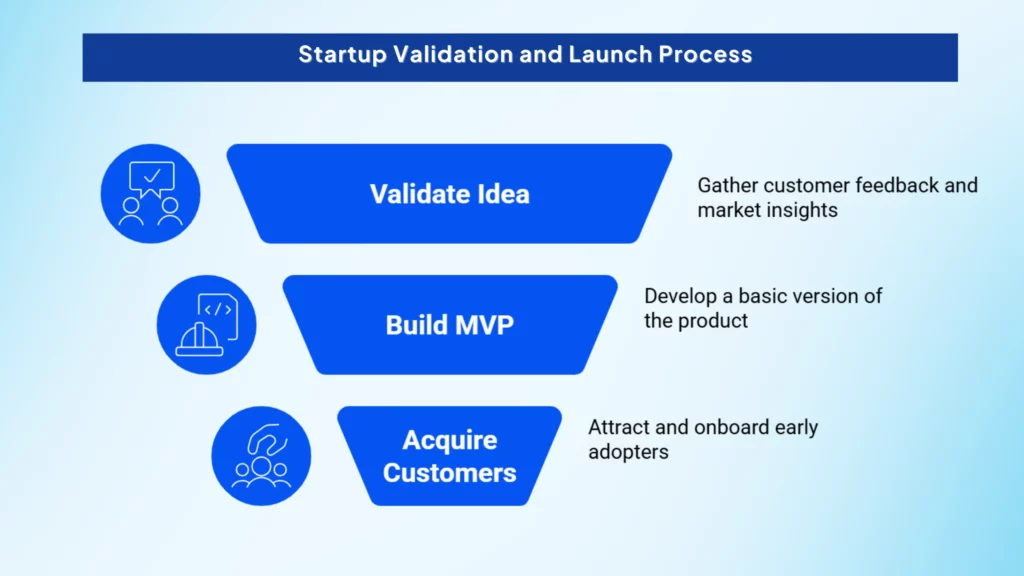
- Interview 20–50 potential customers to confirm real pain points, existing solutions, and willingness to pay. This step helps you quickly discard weak ideas for a startup and double down on those customers actually care about.
- Launch a simple landing page to test demand (5–10% conversion shows interest, 20%+ signals strong validation)
- Study direct and indirect competitors to find gaps in pricing, features, or experience
- Focus on solving one core problem with the smallest useful feature set
- Use no-code tools like Webflow, Bubble, Glide, Adalo, Airtable, or Make to ship in weeks
- Alternatively, outsource to a fractional CTO or small dev team with clear milestones (3–6 months)
- Launch early, iterate weekly, and make decisions using real user data guided by a launch readiness checklist.
- Start with warm channels such as friends, colleagues, and LinkedIn connections
- Engage in relevant communities on Reddit (r/Entrepreneur, r/SaaS), Twitter/X, Discord, and Slack groups
- Offer early-adopter incentives like lifetime discounts or free beta access in exchange for feedback
- Personally onboard users and overdeliver on support to turn them into advocates
What are the Best Practices for Growing a Startup?
1. Prioritize Product-Market Fit
2. Obsess Over Customers
3. Scale With Small, High-Agency Teams
4. Track Unit Economics Early
5. Design Growth Loops
What are the Best Startup Ideas for 2026 that Require Low Startup Costs?
The most profitable low-cost innovative startup ideas for 2026 are AI-powered content repurposing services, virtual assistant offerings, lean property management for short-term rentals, and social media management—all requiring under $5,000 in initial capital while delivering 60–80% gross profit margins.
- Content repurposing services are particularly promising: businesses can charge $200/month per client while using tools like ChatGPT and scheduling platforms to transform single pieces of content into multiple formats across channels. Service-based businesses typically achieve 25–45% profit margins, while digital products can reach 60–70%.
A Reddit user in r/Entrepreneur confirmed: “Service businesses are always great places to start. Low barrier to entry and competition to make a living isn’t that high.” - Virtual assistant services represent another high-margin opportunity, with industry platforms reporting VAs charging around $300/month per client while handling email management, scheduling, data entry, and social media—requiring only organizational skills and basic technical proficiency with minimal upfront investment.
- Property management for Airbnb hosts involves coordination rather than capital, with entrepreneurs charging 15–25% of rental income by managing guest communications, coordinating cleaning, and handling maintenance.
Based on profitability data and Reddit community validation, these service models consistently outperform product-based businesses in capital efficiency: a $500 initial investment in AI tools and scheduling software can generate $2,000–5,000 in monthly revenue within 6–12 months when executed with strong customer acquisition.
Quick tip: For startup-style upside on a low budget, favor ideas that become subscriptions, marketplaces, or software-enabled services, these patterns dominate the most profitable startup ideas 2026.
Is a Neobank for Gen Z with Crypto Features a Good Startup Idea for 2026?
A Gen Z-focused neobank with integrated cryptocurrency features represents a high-potential 2026 startup opportunity, backed by a generational trust inversion and the largest wealth transfer in history. Gen Z trusts crypto platforms five times more than Baby Boomers, with 40% of Gen Z giving high trust scores (7+/10) to crypto platforms compared to just 9% of Boomers, according to an OKX-sponsored survey of 1,000 Americans conducted.
The timing is critical: Gen Z stands to inherit $15 trillion through 2045 as part of the $84 trillion Great Wealth Transfer. This capital is flowing from a generation where 74% highly trust traditional banks to one where one-in-five Gen Z and Millennials express low trust in banks altogether.
Market Validation: The neobanking sector shows explosive demographic concentration. 62% of neobank users are aged 18-35, with Millennials and Gen Z comprising 78% of the global neobank user base in 2025. The global neobanking market reached $261.4 billion in 2025 and is projected to hit $552 billion in 2026 at a 47.3% CAGR.
Crypto Integration Is Essential, Not Optional: 40% of Gen Z plan to increase crypto trading in 2026, nearly four times the 11% rate among Boomers. Over half of Gen Z and Millennials (52% and 50% respectively) believe crypto will eventually rival or surpass traditional finance, while 71% of Boomers remain convinced banks will dominate.
Successful implementations already exist: Revolut and N26 have expanded offerings to include crypto trading, stock investing, and automated savings. Newer crypto-native neobanks are emerging: ether.fi pivoted from liquid restaking to on-chain banking with a Cash Card offering 3% crypto cashback. Mantle transitioned from Layer-2 Ethereum to banking infrastructure with payments, cards, and cross-asset liquidity.
Critical Success Factors: Design for 24/7 accessibility and borderless transfers—the two features Gen Z values most in crypto over traditional banking. Implement robust security (cited by 50-59% of Gen Z/Millennials as top trust factor) while maintaining intuitive UX.
Partner with established banking infrastructure providers like Unit or Synapse for compliance and use Plaid for account connections. Revenue models include $5-10 monthly subscriptions, interchange fees (2-3%), and crypto transaction fees.
Expert Opinion: The generational preference shift isn’t temporary—it’s structural. When Bank of America Private Bank surveyed wealthy Americans, 72% of investors aged 21-43 believe it’s impossible to achieve above-average returns with just stocks and bonds, compared to only 28% of investors over 44.
Young wealthy investors allocate 14% to cryptocurrency versus 1% for older cohorts. The portfolios being inherited are heavy in stocks and bonds; the heirs receiving them have radically different investment strategies ready to deploy.
What Are Sustainable Startup Ideas in Climate Tech That Investors Love Right Now?
Investors are aggressively funding carbon removal technologies, next-generation energy systems, sustainable manufacturing, and AI-powered climate verification platforms, with climate tech VC investment reaching record levels in 2026 as companies like Fervo Energy ($462M Series E) and Commonwealth Fusion Systems ($2.9B raised) approach IPO milestones.
1. Carbon Removal & Sequestration—The $1 Trillion Opportunity
Direct Air Capture (DAC) startups are capturing investor attention alongside carbon credit verification platforms. Climeworks raised $1 billion (Seedtable’s top carbon removal startup list) and operates the world’s largest DAC facility in Iceland, removing CO₂ at scale. CarbonCapture develops modular DAC units powered by renewable energy with proprietary sorbent technology.
Biochar Production: Y Combinator-funded Releaf Earth converts agricultural waste into biochar, a carbon-negative soil amendment that sequesters CO₂ for centuries while improving crop yields. The biochar carbon removal (BCR) market is projected to scale rapidly as carbon credit prices rise.
Why investors love it: Carbon removal addresses the $1 trillion voluntary carbon market opportunity. Microsoft, Stripe, and Alphabet collectively committed over $1 billion to purchase carbon removal credits through 2030, creating guaranteed demand for verified removal tons.
2. Enhanced Geothermal Systems—Firm, Scalable Clean Power
Fervo Energy raised a $462 million Series E in December 2025 (led by B Capital with participation from Google and Breakthrough Energy Ventures) to accelerate development of its Cape Station facility in Utah, which begins delivering 24/7 clean power to the grid in 2026. Fervo is considered a top IPO candidate for 2026 alongside Commonwealth Fusion and Redwood Materials.
Fervo uses horizontal drilling techniques pioneered by the fracking industry to access hot rock formations 7,000+ feet underground, creating artificial reservoirs where water circulates to generate steam for turbines. Unlike solar and wind, geothermal provides firm baseload power with 95%+ capacity factors.
Market validation: Google signed the world’s first corporate geothermal PPA with Fervo in 2023. With AI data centers demanding constant, carbon-free power, enhanced geothermal perfectly addresses the AI infrastructure energy crisis.
3. Floating Nuclear Reactors—Maritime Decarbonization
Core Power is developing floating nuclear reactors designed for offshore applications and maritime shipping, targeting the hard-to-decarbonize shipping sector responsible for 3% of global emissions. Nuclear startups received ~20% of climate VC funding in the first nine months of 2025 as investors recognize nuclear’s role in 24/7 clean energy.
Why maritime nuclear matters: International Maritime Organization (IMO) mandates require shipping to reduce carbon intensity 40% by 2030 and achieve net-zero by 2050. Traditional battery/hydrogen solutions lack energy density for long-haul shipping. Floating reactors solve this.
4. Sustainable Materials & Manufacturing
ALT TEX (Y Combinator) creates carbon-neutral fabrics from food waste through fermentation, offering sustainable alternatives to polyester (which accounts for 60% of textile production and uses petroleum feedstocks). Fashion contributes 10% of global carbon emissions—sustainable materials address a $1.5 trillion market.
MAA’VA produces eco-concrete by recycling plastic and non-plastic waste, reducing embodied carbon in construction by up to 70% compared to traditional Portland cement. The StartUs Insights 2025 Climate Tech Trend Report identifies sustainable construction materials as a top-10 climate innovation area.
5. AI-Powered Climate Data & Verification
Pachama employs satellite imagery and AI to verify and monitor forest carbon projects in real-time, ensuring transparency and preventing greenwashing in the $2 billion+ voluntary carbon market. Investors recognize verification as critical infrastructure—without it, carbon markets collapse due to fraud.
The 2026 investor thesis: According to Greentown Labs’ analysis, climate tech investors in 2026 prioritize scalability, proven unit economics, and regulatory tailwinds. Fervo’s $462M raise demonstrates that companies with commercial contracts (Google PPA), regulatory approvals (DOE support), and clear paths to profitability attract massive capital despite capital-intensive business models.
What Mental Health App Startup Ideas are Investor-Ready in 2026?
Investor-ready mental health app startup ideas in 2026 focus on AI-powered therapeutic chatbots with clinical validation, B2B employer wellness platforms, and specialized treatment areas such as addiction recovery and chronic pain comorbidity.
The mental health apps market is valued at $8.64 billion in 2026 and is projected to reach $35.29 billion by 2034. At the same time, global mental health funding increased 38% to $2.7 billion in 2024, signaling renewed investor interest in the category.
However, investor focus has shifted sharply toward clinical efficacy and enterprise distribution following high-profile challenges in direct-to-consumer models. Woebot, a pioneering therapy chatbot that served nearly 1.5 million users, shut down its consumer app on June 30, 2025, highlighting the sustainability limitations of consumer-only mental health apps.
The most fundable opportunities now combine clinical validation with B2B distribution. Platforms demonstrating measurable outcomes—such as Woebot’s 22% reduction in PHQ-9 scores within four weeks (83% adherence) and Wysa’s 30% reduction in GAD-7 scores—attract stronger investor confidence when paired with employer or payer contracts rather than consumer subscriptions.
B2B-focused infrastructure startups are also gaining traction. Ritten, an AI-enabled system of record for behavioral health providers that combines EHR, CRM, and revenue cycle management, raised $35 million in Series B funding in December 2025 by targeting provider infrastructure instead of direct patient engagement.
Specialized treatment platforms are another investable category. Empathy Health’s Sober Sidekick, a relapse prevention platform for substance use disorder that combines peer support with predictive intervention signals, secured $7.6 million in funding in December 2025 by focusing on a high-need segment with strong clinical outcomes.
A Reddit discussion in r/therapists questioned: “Mental health startups worth BILLIONS — WHY and HOW?” referencing Lyra Health ($6B valuation), Cerebral ($5B), and Ginger ($3B). The consensus emphasized that venture-backed mental health companies must demonstrate clear clinical outcomes and ethical practices to justify their valuations.
Based on funding patterns, the most investor-ready mental health apps in 2026 are those that target B2B employer channels ($200–500 per employee annually), demonstrate clinical validation through peer-reviewed studies, focus on specialized treatment areas with high unmet need, and maintain strong ethical standards around data privacy and therapist oversight—rather than relying on direct-to-consumer subscription models that face retention and monetization challenges.
Where can I Find Funding for Aging-in-place Services Startups?
Aging-in-place startups can access funding through specialized AgeTech venture capital firms, healthcare innovation funds, and government grant programs—a sector experiencing renewed investor interest as the $8.3 trillion longevity economy reaches critical mass. The funding landscape has matured significantly in 2025-2026 with dedicated capital vehicles now operational.
- Specialized AgeTech Venture Capital: Equitage Ventures closed its inaugural $47.3 million fund in April 2025 specifically for early-stage senior care and aging technology companies. The fund writes checks up to $1 million for seed-stage companies and targets technologies addressing physical, mental, spiritual, and social needs of senior adults. Equitage provides capital, distribution through senior living operator partnerships, and strategic guidance.
Primetime Partners is another early-stage AgeTech VC fund incubating and investing in companies transforming quality of life for older adults. The fund emphasizes marketing expertise, strategic distribution partners, and an engaged network of advisors to help portfolio companies scale within the longevity economy. - Healthcare Technology Investment Funds: The California Health Care Foundation (CHCF) Innovation Fund provides program-related investments to healthcare technology companies serving low-income populations. Investment amounts range from $50,000 to $250,000 for seed-stage companies and up to $1 million for growth-stage companies, with up to $3 million over the life of a company.
The fund partners with emerging companies bringing innovations to California’s healthcare providers, payers, and patients—particularly within the Medicaid ecosystem. - Government Grant Programs: The Maryland Aging-In-Place Program provides grants supporting seniors living safely and independently at home. Eligible applicants include non-profit organizations and Area Agencies on Aging. The National Community Care Corps Program offers funding to develop and scale volunteer programs providing non-medical assistance to older adults and family caregivers, with the application deadline February 26, 2026.
- Philanthropic Organizations: The John A. Hartford Foundation supports initiatives enhancing aging services and improving care for older adults. While not exclusively funding startups, the foundation provides grants for innovative care models and technology demonstrations that could benefit aging-in-place services.
- Investor Network Resources: The AgeTech Collaborative from AARP brings together startups, investors, enterprises, and testbeds in a unique ecosystem. The DignifiedAging platform highlights innovations and startups addressing aging challenges while providing insights into investor interests and funding opportunities.
Strategic Approach: Target investors with healthcare and technology expertise rather than generalist VCs. As noted in AgeTech funding analysis by Keren Etkin, not all startups should pursue venture capital—VC is suited for companies aiming for substantial growth and scalability.
Alternative financing through revenue-based models, strategic partnerships with senior living operators, or Medicare Advantage plan collaborations may better align with aging-in-place business models focused on sustainable margins over hypergrowth.
Expert Opinion: The aging-in-place market is entering a “money follows evidence” phase. Equitage Ventures’ successful $47.3M close with participation from senior living and skilled nursing operators signals that distribution partners are now co-investing alongside financial VCs—validating business models with committed customer channels.
This dual validation (capital + distribution) dramatically de-risks commercialization for aging-in-place startups.
How do Decentralized Social Networks Work as Startup Ideas?
Decentralized social networks operate through distributed architectures where no single entity controls user data or content moderation, representing a viable startup opportunity as Bluesky grew 60% in 2025 to 41.2 million users while traditional platforms face trust erosion.
Unlike centralized platforms where companies like Meta or X control data, infrastructure, and algorithms, decentralized networks use open protocols enabling user autonomy, platform interoperability, and community-driven governance.
Core Technical Architecture: Decentralized social networks rely on two primary architectural patterns. Federated networks (like Mastodon using ActivityPub protocol) consist of independently owned nodes (instances or servers) that interoperate to form the network. Users can host their own server or join existing ones, maintaining data ownership while connecting across the federation.
Peer-to-peer networks eliminate servers entirely, with users connecting directly. Bluesky pioneered the AT Protocol (Authenticated Transfer Protocol), enabling decentralized identity management, data portability, and algorithmic choice while maintaining familiar Twitter-like UX.
Market Validation & User Adoption: Bluesky reached 41.2 million users by year-end 2025, up from 25.9 million at the start of the year—a nearly 60% increase. Projections suggest Bluesky could reach 60-80 million users by end of 2026 based on current growth trajectories. In contrast, Mastodon has approximately 690,000 monthly active users, down from a 2.6 million peak in November 2022 but stabilized at higher levels than pre-2022.
Key Competitive Advantages: Decentralized networks solve five critical problems traditional platforms cannot address:
- Data ownership—users retain control through cryptographic keys and can export/migrate their social graph;
- Censorship resistance—community-driven moderation through voting rather than centralized editorial control;
- Creator monetization—direct audience connections via cryptocurrency, NFTs, or sponsorships without platform fees;
- Interoperability—single identity across platforms eliminates lock-in;
- DAO governance—users vote on platform rules, policies, and feature development.
Startup Execution Model: Successful decentralized social network startups balance two seemingly contradictory requirements: maintaining true decentralization while delivering consumer-grade UX.
Bluesky succeeded where Mastodon struggled by simplifying onboarding—users don’t choose servers upfront, avoiding the “which instance?” confusion that limited Mastodon adoption. As one Reddit user noted: “Bluesky works just like OG Twitter…Mastodon has different servers, is bifurcated and is generally more complex“.
Monetization Strategies: Unlike ad-dependent centralized platforms, decentralized networks can monetize through: premium subscriptions for enhanced features (custom domains, advanced analytics), transaction fees on creator payments (5-10%), protocol licensing to enterprises building on the infrastructure, and governance token models where users earn tokens for network participation and vote on protocol changes.
Critical Challenges: Scalability remains the primary technical hurdle—ensuring performance with millions of users without compromising decentralization. Content moderation at scale requires sophisticated distributed systems; Bluesky processed 29,000 user reports in 2025 with only a small Trust & Safety team.
Regulatory compliance becomes complex when no single entity “owns” the platform—GDPR, COPPA, and DSA requirements must be addressed through protocol-level solutions.
Expert Opinion: The decentralized social network market is experiencing a critical “usability breakthrough” moment. Bluesky demonstrated that decentralization doesn’t require sacrificing user experience—the platform’s 60% annual growth while maintaining protocol openness proves the two can coexist.
For startups, this validates a “progressive decentralization” strategy: launch with simplified centralized onboarding to achieve product-market fit, then incrementally decentralize infrastructure as scale demands.
The inverse approach (start fully decentralized) has consistently failed to capture mainstream users, as Mastodon’s plateau demonstrates.
How can Early-Stage Startups Increase their AI Visibility to Attract Investors and Customers?
Early-stage startups must optimize for Large Language Model (LLM) discovery to attract investors and customers in 2026, as AI platforms now influence 50% of B2B buyer journeys and ChatGPT shows the highest correlation (.542) with brand popularity among all AI search platforms.
This represents a fundamental shift: traditional SEO drove traffic to your website, but LLM visibility means being cited as the answer within AI responses, often with zero clicks to your site.
Early-stage founders are increasingly asking a question traditional SEO never had to answer: is our brand showing up when someone asks ChatGPT or Perplexity who the best tool in our category is? That’s where AI search visibility for startups becomes a genuine growth lever — helping founders understand how AI models perceive their brand, track citation momentum against well-funded competitors, and build the kind of third-party mention footprint that LLMs treat as a trust signal before your domain authority has had time to mature.
1. Build Authoritative Brand Presence Through Strategic Citation Sources
ChatGPT citations favor Wikipedia (7.8% of all citations), established competitor websites (+11.1 percentage points higher than Google search), and high-authority publications. For startups, this means:
- Secure coverage in tier-1 publications through newsjacking, exclusive data releases, or founder thought leadership;
- Contribute expert quotes to journalist queries on HARO and Terkel to build citation footprint;
- Publish original research with quantified insights—LLMs preferentially cite sources with specific statistics and methodologies.
2. Structure Content for AI Extraction & Comprehension
LLMs parse content differently than humans. Optimize through:
- Schema markup (Organization, Product, FAQPage schemas signal structured data)
- Clear hierarchical structure with descriptive H2/H3 headers that answer specific questions
- Concise first-sentence answers—LLMs extract opening sentences as direct responses
- Quantified claims with attribution (e.g., “67% of enterprise buyers…” with inline source links)
- Comparison tables for competitive positioning (LLMs frequently cite tabular data)
As one Reddit user noted in r/DigitalMarketing’s 2026 strategy discussion: “For 2026, I’m prioritizing AI visibility alongside traditional SEO. That means structuring content for LLMs with clear headers, FAQs, summaries…”
3. Leverage Distribution Through VC-Backed Validation
65% of total VC deal value in 2026 flows to AI startups, creating a signaling opportunity. When you raise funding, maximize PR distribution: Issue press release on Business Wire or PR Newswire (cited frequently by LLMs), secure investor quotes highlighting your differentiation, and update Crunchbase profile immediately (LLMs query funding databases).
List on startup directories: Y Combinator Directory, Product Hunt, BetaList.
4. Optimize for Platform-Specific Ranking Factors
Different AI platforms prioritize different signals: ChatGPT correlates most strongly with overall brand popularity and recency (favors 2025-2026 content); Perplexity mentions the most brands per query but weights domain authority heavily; Claude emphasizes consensus sources and academic citations; Google AI Overviews (Gemini) prioritize Google’s own index signals (backlinks, E-E-A-T).
5. Implement Continuous AI Visibility Monitoring
Track your brand’s LLM performance using specialized AI visibility tools: SE Ranking AI Visibility queries ChatGPT, Claude, Gemini, and Perplexity with your target keywords and tracks mention frequency; Conductor Searchlight monitors brand authority scores across AI platforms; Citation Labs LLM Mentions tracks ranking of your “money pages” in LLM responses versus competitors.
Measure mention frequency, sentiment (positive/neutral/negative citations), position (cited first vs. buried in response), and source attribution (whether LLMs link to your domain).
Use AI Visibility Tool for Startups
Wellows solves the AI discovery gap that prevents most early-stage startups from being found by OpenAI, Gemini, and other LLM platforms. While traditional SEO tools measure Google rankings, Wellows provides comprehensive AI visibility analytics: how LLMs discover, understand, and recommend your brand to investors and customers.
Expert Opinion: The transition from search optimization to AI visibility optimization isn’t about replacing SEO—it’s about recognizing that citations have become the new rankings.
As Kevin Indig writes in his State of AI Search Optimization 2026: “Brands that build systematic optimization programs now will compound advantages as LLM traffic scales. The shift from ranked lists to definitive answers means only cited sources capture value.”
For startups, this creates a narrow window: establish authoritative presence now while competition remains low, or risk permanent invisibility as category leaders cement their LLM dominance.
What are the Common Challenges for Startups and How to Overcome Them?
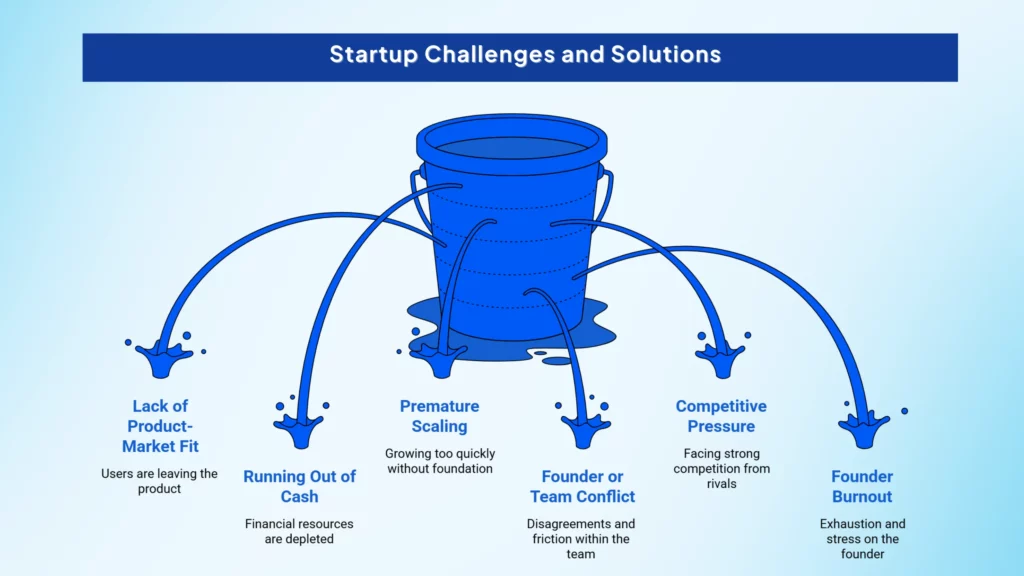
- Lack of Product-Market Fit: It is often the result of pursuing ideas for startups that haven’t been validated. Good startup ideas reveal themselves through retention, repeat usage, and willingness to pay. Talk to users who left, track retention, and test messaging before rebuilding.
- Running Out of Cash: Cut costs fast, focus on revenue, and raise funding only when traction is clear.
- Premature Scaling: Slow hiring, fix systems, and ensure unit economics work before growing.
- Founder or Team Conflict: Define roles early, communicate openly, and get outside help if needed.
- Competitive Pressure: Focus on customer needs and win through speed, focus, and defensibility.
- Founder Burnout: Protect your health, delegate tasks, and build a strong support network.
FAQs
The most trending startup ideas today focus on AI-first software, automation, and infrastructure that replaces manual work. AI agents, vertical SaaS, digital health platforms, and creator monetization tools are gaining traction because they scale fast with small teams.
A good startup idea solves a real, expensive problem in a large market and can scale without costs growing linearly. The strongest ideas also have defensibility through data, workflows, or network effects.
The best startup opportunities in the United States in 2026 are shaped by clear market demand, not novelty. Founders are winning by targeting large, fragmented industries where customers already spend money but existing solutions are inefficient, outdated, or poorly integrated.
AI-native startup ideas in 2026 are built with AI at the core, not added as a feature later. These startups rely on AI to automate decisions, replace manual workflows, or enable outcomes that were not possible with traditional software architectures.
Emerging markets in 2026 create strong new product opportunities because demand often grows faster than infrastructure. Mobile-first adoption, underserved customers, and fewer entrenched competitors allow startups to launch lean solutions that scale rapidly with the right localization.
Strong startup ideas come from real problems people already spend time or money solving. Talk to potential customers, study broken workflows, and look for gaps where new technology makes better solutions possible. Always validate demand before building.
Final Thoughts on Startup Ideas
In 2026, the startup ideas that win are not chasing trends but exploiting structural shifts in technology, markets, and execution speed—this is the core pattern behind the strongest startup ideas 2026. AI, platforms, and software-enabled models now allow small, focused teams to build category-defining companies faster and cheaper than ever before.
The real advantage lies in choosing ideas that solve painful problems, scale without linear costs, and build defensibility early—this is what defines the best startup 2026, regardless of category. Founders who combine timing, leverage, and founder-market fit won’t just survive the odds, they’ll define the next generation of unicorns.