By the end of this post, you’ll see why SEO metrics can stay green while leads quietly fall—and how startups can spot and fix the gap traditional dashboards miss.
If you run a startup, this probably feels familiar. Your SEO reports look healthy. Rankings are steady. Traffic hasn’t dropped. Yet somehow, leads are drying up, and none of your dashboards explain why.
The problem isn’t that SEO stopped working or that your team messed up. Something more fundamental has changed in how people discover and decide.
AI search answers users before they ever click.
For example, a founder searches “best CRM for early-stage startups.” Instead of visiting comparison blogs, they get an AI-generated answer that recommends two or three tools, explains who they’re best for, and answers follow-up questions instantly. By the time your site appears, the decision is already made.
That shift explains why organic links are now often pushed nearly 1,500 pixels down the page by AI summaries, and why click-through rates drop even when rankings don’t. It also explains the most confusing pattern founders see today: traffic stays flat, but conversions quietly fall.
Let’s break down what this means for your startup, why it matters now, and how to fix the lead gap without chasing rankings that no longer tell the full story.
If your startup’s leads have dropped even though SEO looks strong, it’s usually because:
- AI-powered search is answering users before they ever click, so rankings don’t mean leads anymore.
- Your brand isn’t showing up in AI answers where buyers form shortlists.
- Traffic may even rise, but visitors come already informed and don’t convert without clear decision-reinforcing messaging.
If this sounds familiar, you’re not alone.
And that’s exactly where Wellows helps: it tracks your visibility across AI platforms (like ChatGPT, Gemini, Perplexity, and Google AI) so you can see whether you’re being cited in the very answers shaping buyer decisions, not just in traditional search rankings.
Check your AI Visibility with a free trial
Why Can’t Startups Rely on SEO Alone to Generate Leads Anymore?
Startups can’t rely on SEO alone to generate leads anymore because search behavior has fundamentally changed.
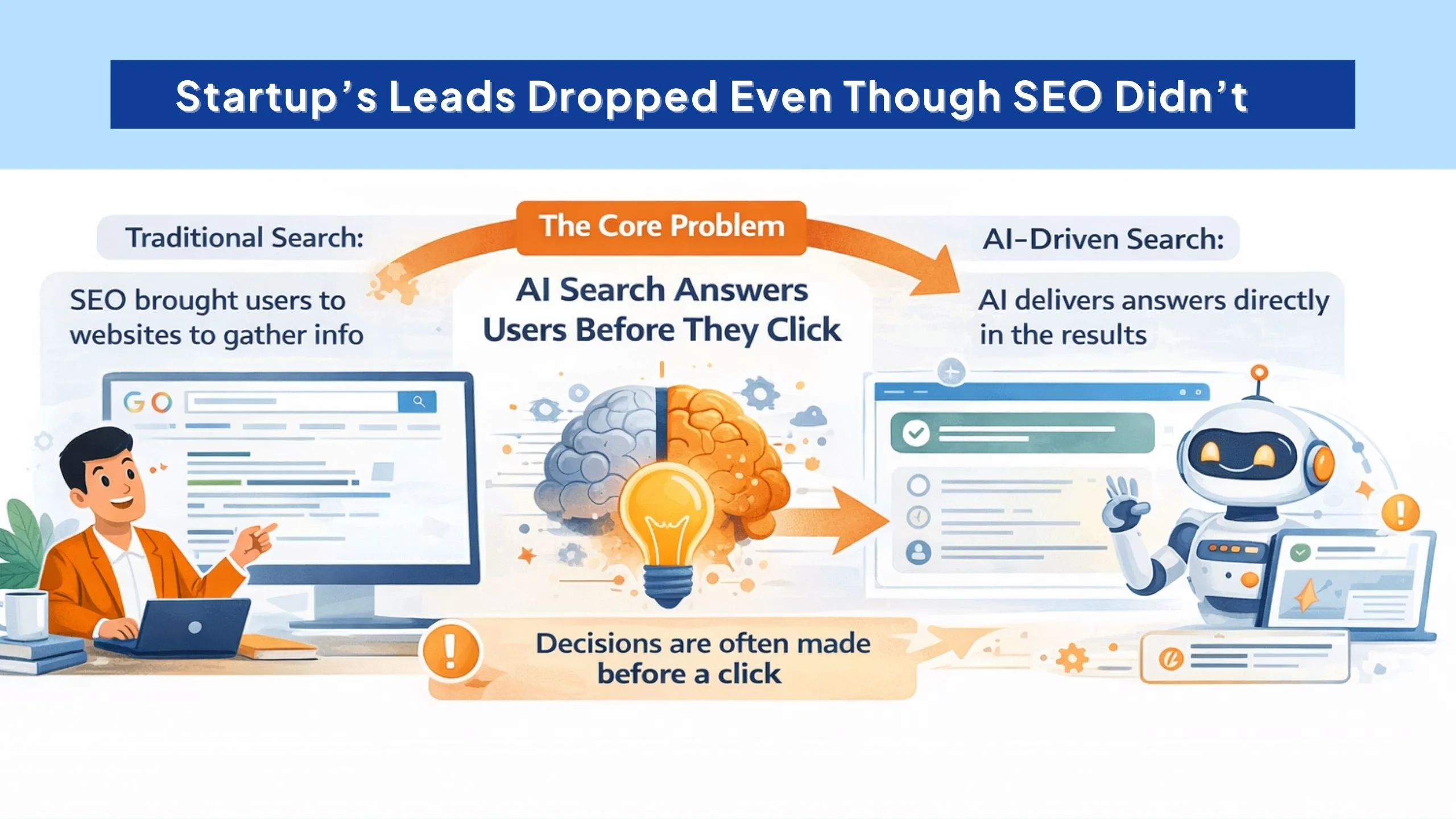
The core problem is simple: AI search answers users before they click.
Traditional SEO worked because users had to visit websites to compare options and decide. Today, AI-driven search summarizes and recommends solutions inside the results, so decisions often happen without visiting your site, even if you rank well.
- Rankings don’t guarantee clicks or leads because AI summaries push organic links far down the page.
- SEO is slow, while startups need faster lead and growth feedback loops.
- Algorithm volatility makes an SEO-only pipeline risky.
- SEO captures existing demand but doesn’t create new awareness by itself.
- Traffic doesn’t equal conversions if users already decide within AI answers.
That’s why startups should complement SEO with AI Search Visibility for Startups so they appear inside AI-generated answers where shortlists are formed, not just in traditional rankings.
AI-powered search has shifted search engines from being lists of links to being answer engines that give users what they need before they click anywhere.”
This reflects how generative overviews and AI summaries satisfy user intent on the results page itself. Forbes
The Startup Challenge
Here’s where it breaks: founders still expect deterministic outcomes from a system that no longer behaves deterministically.
They say: “We’re ranking top three, why did leads drop?”
You think: “Our visibility looks fine, but users may have already decided before they reached us.”
They say: “Traffic is steady, conversions should be too.”
You think: “AI search answers users before they click, so traffic doesn’t reflect influence anymore.”
This expectation gap is quietly hurting growth. SEO dashboards still look healthy, but demand is being shaped elsewhere. Founders assume rankings equal opportunity, while the real decision-making happens upstream in AI-generated answers.
Did you know?
Why This Matters for Your Startup
When you rely on SEO metrics alone to forecast leads, you’re setting expectations on signals that no longer represent buyer behavior. That’s not a strategy failure, it’s a model mismatch.
Consider a real scenario: your startup ranks well for a high-intent query. An AI summary appears above the results, compares three tools, and recommends two competitors. Users feel informed and move on without clicking.
What changed?
- The AI summarized your category but didn’t reference your brand
- User intent was resolved before a visit
- Competitors gained influence without traffic
- Your rankings stayed intact, but demand shifted
- The “missing” leads never entered analytics
None of this shows up in a traditional SEO audit. And that’s exactly why startups now need visibility into where decisions are actually made, not just where clicks used to happen.
What Are the Main Reasons Startup Leads Drop Even When SEO Is Working?
The main reasons startup leads drop even when SEO is working because AI search answers users before they click, reducing traffic and influence. At the same time, high traffic often lacks buying intent, and weak messaging, UX, or CTAs fail to convert interested users.
As a result, rankings stay stable while decisions happen elsewhere, long before users reach your site.
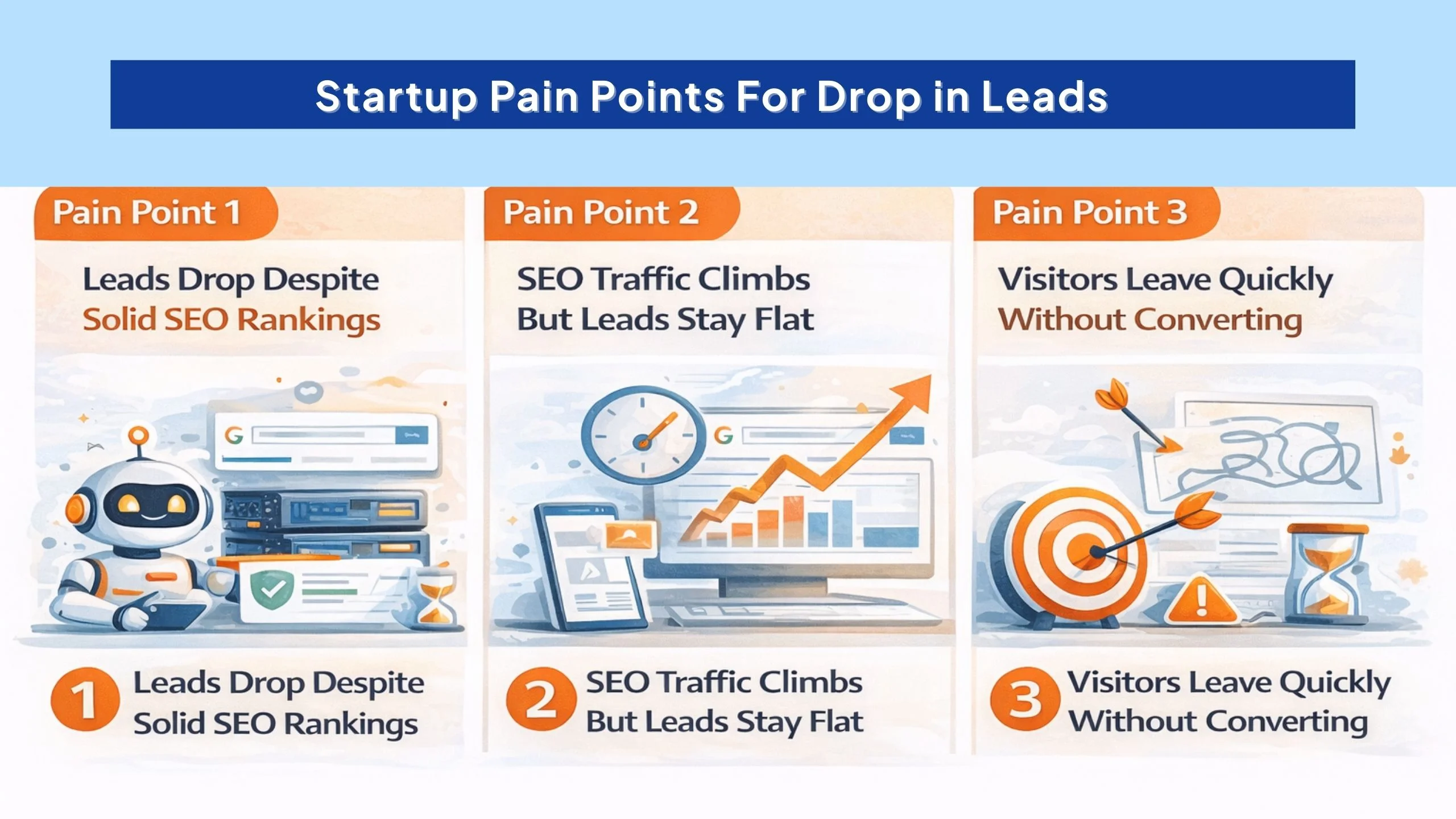
Pain Point 1: Why Are My Startup’s Leads Suddenly Dropping Despite Good SEO Rankings?
Reason: Your Brand Is Invisible In AI Answers (Even If You Rank)
This is the most common “new” failure mode. You can rank page one and still lose consideration if AI answers summarize the category but never mention you.
Did you know?
What’s happening:
- AI systems don’t reference your brand in comparisons or recommendations
- Competitors have stronger authority signals that AI platforms trust
- Your content ranks, but it isn’t written or structured in a way AI tends to reuse
- Users form shortlists inside AI answers, then click fewer links
Why this hurts startups more than incumbents: you have less brand gravity, so if you are absent from AI surfaces, you are absent from the shortlist, which makes it imperative to monitor where you startup appears in AI answers
Try 7-day free trial
Why This Matters
Global zero-click searches account for ~65% in 2024–2025 and are projected to exceed 70%, driven largely by AI summaries and rich results. This means rankings can remain stable while actual lead opportunities quietly shrink, especially for startups relying on organic discovery alone.
Pain Point 2: SEO Traffic Is Up But My Startup Isn’t Getting Any Leads Anymore, Why?
Reason: Traffic Is Up, But Visitors Aren’t Decision-Ready
Rising traffic without leads usually means visibility increased, but decision readiness didn’t. Many visitors arrive to validate what they already learned elsewhere, not to explore.
Did you know?
Common causes:
- Search intent misalignment from informational queries that never convert
- AI-informed visitors leaving quickly when your page does not confirm their choice
- Unclear next steps, too many CTAs, or weak primary CTA
- Missing trust signals like case studies, logos, testimonials, benchmarks, security notes
- Technical friction like slow load times or weak mobile UX
In an AI-first search journey, this happens because users arrive with a decision already forming, and if your page doesn’t reinforce it instantly, they leave.
Why This Matters
MarketingSherpa’s research shows that 79% of inbound leads never convert primarily due to a lack of effective lead nurturing. As AI systems increasingly pre-educate users, this drop-off accelerates unless pages are designed to reinforce decisions and guide the next step, not re-explain basics.
Pain Point 3: Why Do SEO Visitors Leave Without Becoming Leads for Startups?
Reason: The Page Fails to Convert Pre-Qualified Interest Into Action
Some visitors arrive already interested, but they leave because the page doesn’t clearly tell them what to do next or why acting now makes sense. The issue isn’t awareness or intent, it’s execution.
Did you know?
What’s happening:
- The value proposition is vague or buried below the fold
- Pages explain features instead of outcomes relevant to the visitor
- Forms ask for too much too early, creating unnecessary friction
- CTAs lack urgency or clarity about the next step
- Messaging feels generic, not tailored to the visitor’s problem
When SEO brings the right people, but the page doesn’t guide them confidently forward, interest fades, and qualified visitors leave without converting.
Why This Matters
Lindgaard G., Fernandes G., Dudek C., Brown J. (2006) found that users form first impressions of a webpage within 50 milliseconds, with ratings during this brief exposure strongly correlated to impressions formed during longer viewing.
In an AI-first search journey, this means startups don’t get second chances, if relevance and trust aren’t clear instantly, visitors move on.
What Can Startups Fix If SEO Is Working but Leads Aren’t?
If SEO is working but leads are dropping, the problem isn’t rankings. It’s conversion alignment. Startups need to fix who they attract, what message visitors see, and how clearly the next step is communicated across landing pages, CTAs, UX, speed, and mobile flow.
So the real question becomes: If visibility exists, why isn’t influence converting into action?
Because in an AI-driven search journey, SEO must guide decisions, not just clicks.
At this stage, a modern SEO strategy focuses on intent-matched traffic, clear value propositions, trust signals, frictionless UX, and strong lead capture, ensuring visitors instantly understand why your product matters and what to do next.
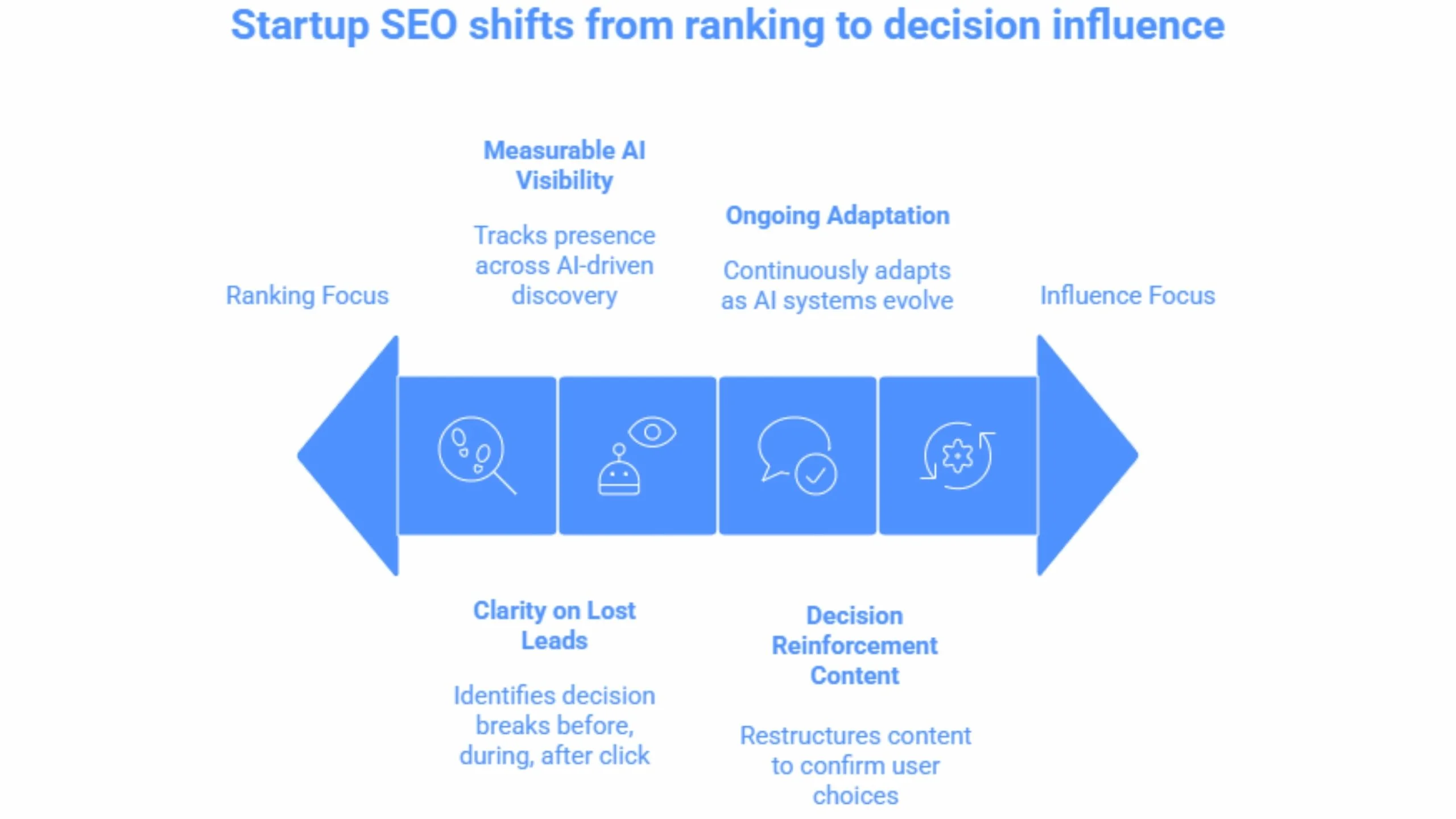
Fix 1: Identify Where Leads Are Actually Lost
You need to know whether leads are lost before the click, during the visit, or after intent is already formed.
- Are AI summaries resolving intent before users visit?
- Are your highest-intent pages validating decisions quickly?
- Are users arriving with a competitor-shaped narrative?
- Is the problem trust, clarity, friction, or relevance?
Why this works:
Fix 2: Track Visibility Beyond Google Rankings
If decisions happen inside AI answers, the new leading indicator is whether your brand shows up there consistently.
That means tracking:
- Presence in ChatGPT, Perplexity, Google AI Overviews, Gemini
- Which competitors are cited instead of you
- How visibility changes over time and by region
- Which query types trigger AI summaries that shape buyer decisions
Example framing:
“we’ll increase AI search visibility for startups across high-intent queries and track changes monthly.”
Fix 3: Reinforce Decisions, Don’t Re-Explain Basics
When AI pre-educates users, your site’s job shifts from teaching to confirmation:
- Clear positioning and differentiation above the fold
- Fewer CTAs, stronger primary action
- Trust signals where users hesitate
- Comparison-proof messaging that matches what AI surfaces
Why this matters:
The takeaway:
SEO still matters. But leads now depend on where influence happens, not where rankings sit. Startups that focus on clarity, AI visibility, and decision reinforcement don’t just recover leads, they build resilience against the next shift in search behavior.
How Wellows Helps Startups Fix the Lead Gap (Not the Rankings)
This is where Wellows becomes essential for startups that understand the shift: SEO can still “work” while leads don’t, because AI search answers users before they click.
Instead of guessing why leads dropped despite good SEO, Wellows shows you where your startup appears (or doesn’t) in LLMs and how that visibility influences decisions before a visit.
What Most AI Visibility Tools Show:
- Track mentions without connecting them to lead impact.
- Monitor platforms separately, without showing which influences buyers.
- Deliver raw visibility data with no conversion context.
What Wellows Shows Instead:
- Startup LLM Visibility: Shows where your startup appears across ChatGPT, Gemini, Perplexity, Google AI Overviews, and AI Mode, revealing whether buyers ever see you when asking category questions.
- Platform Coverage: Maps which AI platforms cite competitors when users ask about solutions like yours, so you know where shortlist decisions are happening without you.
- Citation Tracking: Tracks how often your brand is referenced across platforms over time, helping you spot visibility shifts before they show up as pipeline drops.
- Gap Analysis: Shows queries where competitors are cited but your startup isn’t, pointing directly to the questions causing invisible lead loss.
Reddit founder thread
“Traffic is up, but lead quality feels worse than ever. We’re spending time on prospects that don’t convert, while genuinely interested companies never reach out. I can’t tell what actually signals real intent anymore.”
What the founder is really facing:
Traffic hasn’t dropped, but real buyers are deciding before they ever fill a form. AI answers filter and shortlist vendors early, so low-intent visitors still arrive, while high-intent prospects never reach the site at all. Lead quality feels worse because the best-fit buyers were influenced upstream, outside traditional SEO analytics.
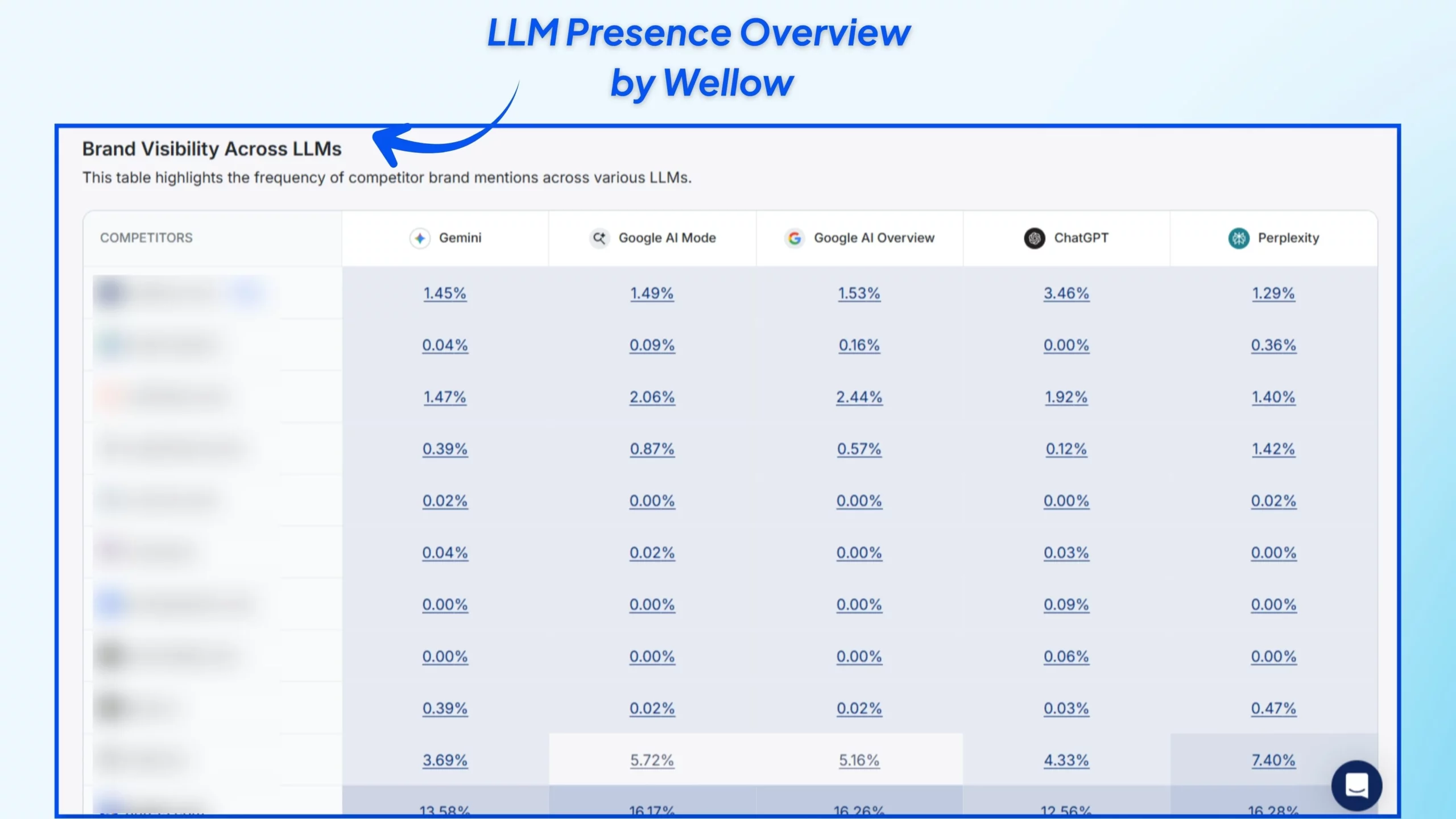
Feature 1: LLM Presence Overview
This founder’s best prospects aren’t “bad leads.” They’re invisible where decisions happen first.
LLM Presence Overview shows whether your startup appears inside AI answers across platforms like ChatGPT, Gemini, and Google AI Overview—before prospects click.
When competitors dominate those answers (as shown in the LLM visibility table), Wellows reveals exactly where influence is lost long before site visits or form fills.
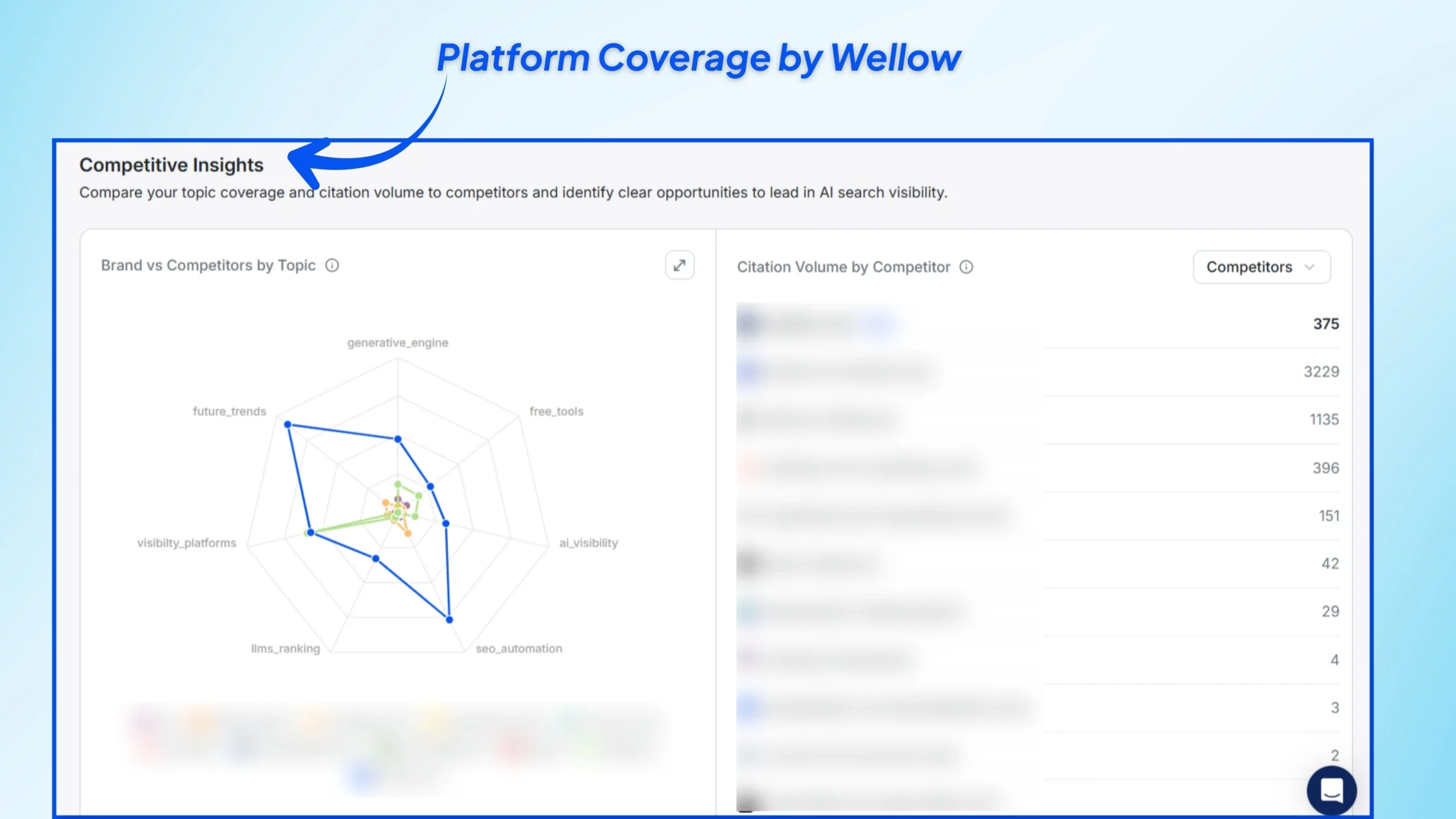
Feature 2: Platform Coverage
Platform Coverage explains why lead quality drops even when traffic grows.
It shows which topics AI platforms associate with your brand versus competitors using topic ownership and citation volume.
Founders can spot high-intent coverage gaps, target whitespace opportunities, and earn citations so AI surfaces their startup at shortlist time, not after decisions are made.
In short: Wellows helps founders stop guessing “intent signals” and instead track where buying decisions shift upstream—so they can regain high-quality leads without chasing vanity traffic.
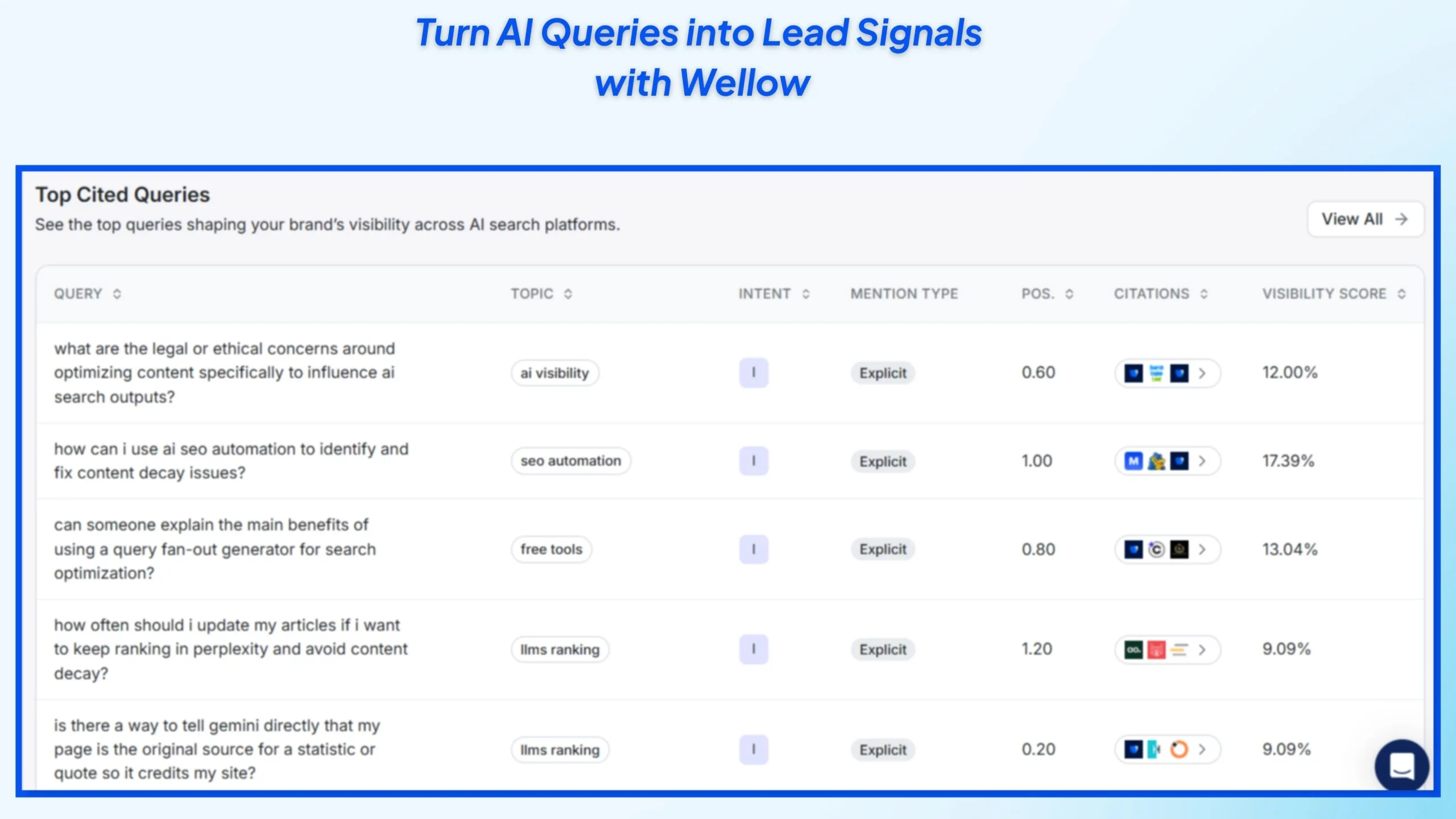
- See visible queries: Identify questions where AI already mentions your brand.
- Prioritize high-intent queries: Focus on visibility that can convert with clearer positioning.
- Diagnose lead gaps: Visibility without conversions signals trust or intent misalignment.
- Create demand-ready pages: Use cited queries as prompts for landing or comparison pages.
Did you know?
The Question Wellows Answers That Other AI Visibility Tools Don’t
Other AI visibility tools say: “You appear in 12% of your AI answers.”
Wellows shows: “ChatGPT cites three competitors but not you, and that’s where most of your ICP researches before deciding. That’s why demo requests dropped even though traffic stayed flat.”
The difference: Wellows connects AI visibility gaps to the exact moment leads disappear, showing where influence shifts before SEO metrics change.
Try Wellows free for 7 days
The Conversation Framework: How to Explain Lead Drops When SEO Still Works
If you need a simple internal script for stakeholders, here’s a clean framework that gets everyone aligned on the actual shift.
Stakeholder: “Rankings are stable. Why did leads drop?”
Your Response: “SEO is still working, but the discovery model changed. AI search answers users before they click, so decisions happen before visitors reach our site. We need to check if we’re visible inside AI answers.”
Then commit to the actions that matter:
- Track AI visibility for our highest-intent queries using LLM Presence Overview
- See which competitors are being cited instead of us across Platform Coverage
- Update pages to confirm relevance and trust immediately
- Monitor changes over time so we adapt before leads dip again
Why This Framework Works for Startups
This approach gives you control over what you can actually measure and fix, rather than guessing why leads disappeared.
Here’s what changes:
Instead of: “We need better SEO rankings”
You focus on: “We need visibility where decisions actually happen inside AI answers”
Instead of: “Let’s wait and see if conversions recover”
You act proactively: “We track AI visibility before it shows up as lost revenue”
The startup advantage: You’re monitoring where buyer decisions form—before the click—which means you adapt faster than competitors.
A Founder Case Study: Why Startups Get Massive Traffic but Zero Revenue
A music entertainment site pulling 100K+ monthly visitors and 125K engaged sessions couldn’t generate revenue despite testing pricing, CTAs, affiliate programs, and checkout flows. Premium features converted under 1%. The audience was engaged and kept returning, they just weren’t buying.
Commenters identified the obvious issue: wrong audience for the offer. One said, “Your premium feature doesn’t appeal to the audience you’re bringing to your site.”
That wasn’t wrong. But it missed something: users may have already formed preferences before visiting the site.
How Wellows Reveals the Hidden Problem
When startups get traffic but zero conversions, the instinct is to fix pricing, CTAs, or funnels. But if AI search answers users before they click, visitors arrive already convinced that competitors offer better value.
This is where Wellows provides clarity.
LLM Presence Overview shows whether your startup appears when your audience researches solutions. If ChatGPT or Google AI Overviews mention competitors but not you, users form preferences upstream.
Platform Coverage reveals where competitors dominate. A startup can rank well on Google while being invisible in the AI answers shaping buying decisions.
In this example, if users researching “best music platforms” only saw competitors in AI answers, they’d arrive skeptical—or already committed elsewhere.
Wellows shows where buying intent is shaped before the click, so startups can fix AI visibility gaps, not just conversion issues.
- Startups Can Build a Distribution Moat: How Startups Can Build a Distribution Moat Before Competitors Do
- Get the Best of an AI Search Visibility Tool: How Can Startups Get the Best of an AI Search Visibility Tool on a Limited Budget?
- AI Misunderstood Startup: How AI Misunderstood What My Startup Does
- Ignoring AI Search: The Real Cost of Ignoring AI Search
- Tech Startups: Top Tech Startups Redefining AI, Robotics and Others
FAQs
Even when SEO looks strong, leads can drop because AI search answers users before they click, changing how and when decisions are made. Visitors now arrive already informed, so weak UX, unclear value propositions, or slow pages stop conversions instantly.
Startup leads ignore SEO-optimized CTAs when they don’t align with user intent or clearly explain the next step. Vague wording, too many competing CTAs, or poor UX make it hard for visitors to take action.
Since speed also affects rankings and UX, fixing performance directly improves lead generation.
Leads can drop even after an SEO audit passes because audits often miss conversion-impacting issues. Hidden problems like weak content relevance, poor UX, low-quality backlinks, or untracked conversions can quietly hurt lead generation.
Conclusion: Embrace the AI-First Reality of Search
The startups recovering leads today aren’t the ones chasing rankings harder. They’re the ones who:
✅ Understand that AI search answers users before they click
✅ Shift from optimizing for clicks to reinforcing decisions
✅ Track where their brand appears across AI-driven discovery
✅ Use tools like Wellows to measure and improve AI search visibility
The bottom line: you can’t rely on SEO metrics alone to explain or fix lead drops, but you can regain control by understanding where decisions actually happen and showing up there consistently.