By the end of this post, you’ll understand how AI can quietly misclassify your startup and why that misunderstanding erodes visibility long before traffic or rankings change. You’ll also see how founders can identify and fix this hidden gap before AI-driven discovery breaks down completely.
Artificial intelligence is reshaping how brands are discovered, but it doesn’t always get it right when interpreting what a company actually does. For startups, this can mean the difference between showing up in front of customers or disappearing into digital noise.
This problem goes beyond semantics because misclassification kills visibility in real measurable ways that impact discovery. In fact, 87.8 percent of businesses report fear of losing organic visibility as AI reshapes search behavior, showing how widespread this concern has become.
The tech powering discovery systems now synthesizes context across billions of data points, which increases efficiency but also amplifies errors when misunderstood AI output is taken at face value. When an algorithm misrepresents your core message, your startup’s visibility drops even if you rank high in traditional results. This invisible mislabeling blocks meaningful engagement before users even scroll.
In this blog, I will explain how AI misclassification happens, why it kills visibility for startups, and what the real-world consequences are. You’ll also learn practical strategies to correct these misunderstandings, strengthen AI comprehension of your brand, and reclaim discoverability in an AI-driven landscape.
If your startup’s visibility is dropping even though SEO looks strong, it’s usually because:
- AI systems are misunderstanding what your business actually does and misclassifying it in summaries and answers before users ever click.
- Your brand isn’t being accurately included in AI-generated responses where discovery and early buyer perception now happen.
- Positive mentions still appear, but AI confidently presents the wrong narrative, quietly breaking discoverability upstream.
- Traffic and rankings may look fine while AI-driven discovery is already failing behind the scenes.
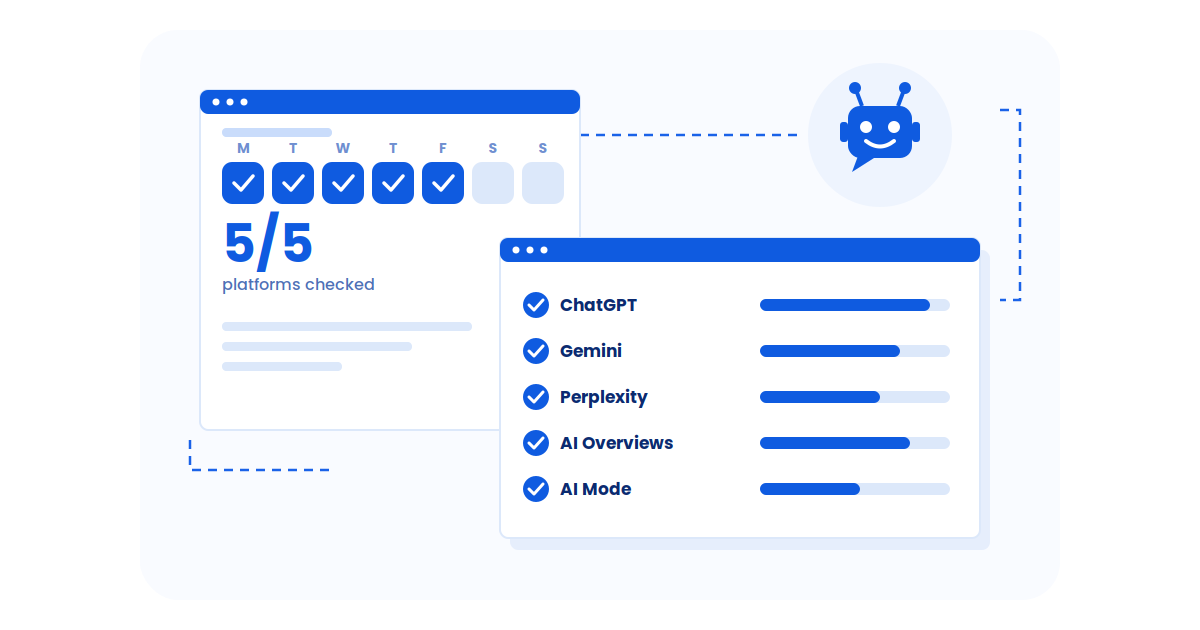
And that’s exactly where Wellows helps: it gives startups an affordable way to see how AI platforms like ChatGPT, Gemini, Perplexity, and Google AI actually describe, classify, and cite their brand, so misclassification can be detected and corrected before visibility silently disappears.
How Did AI Completely Misunderstand What My Startup Does?
AI can accelerate growth, but only when AI search visibility for startups is built on a clear understanding of what a business truly offers. In my case, the problem was not the technology itself, but how it was applied.
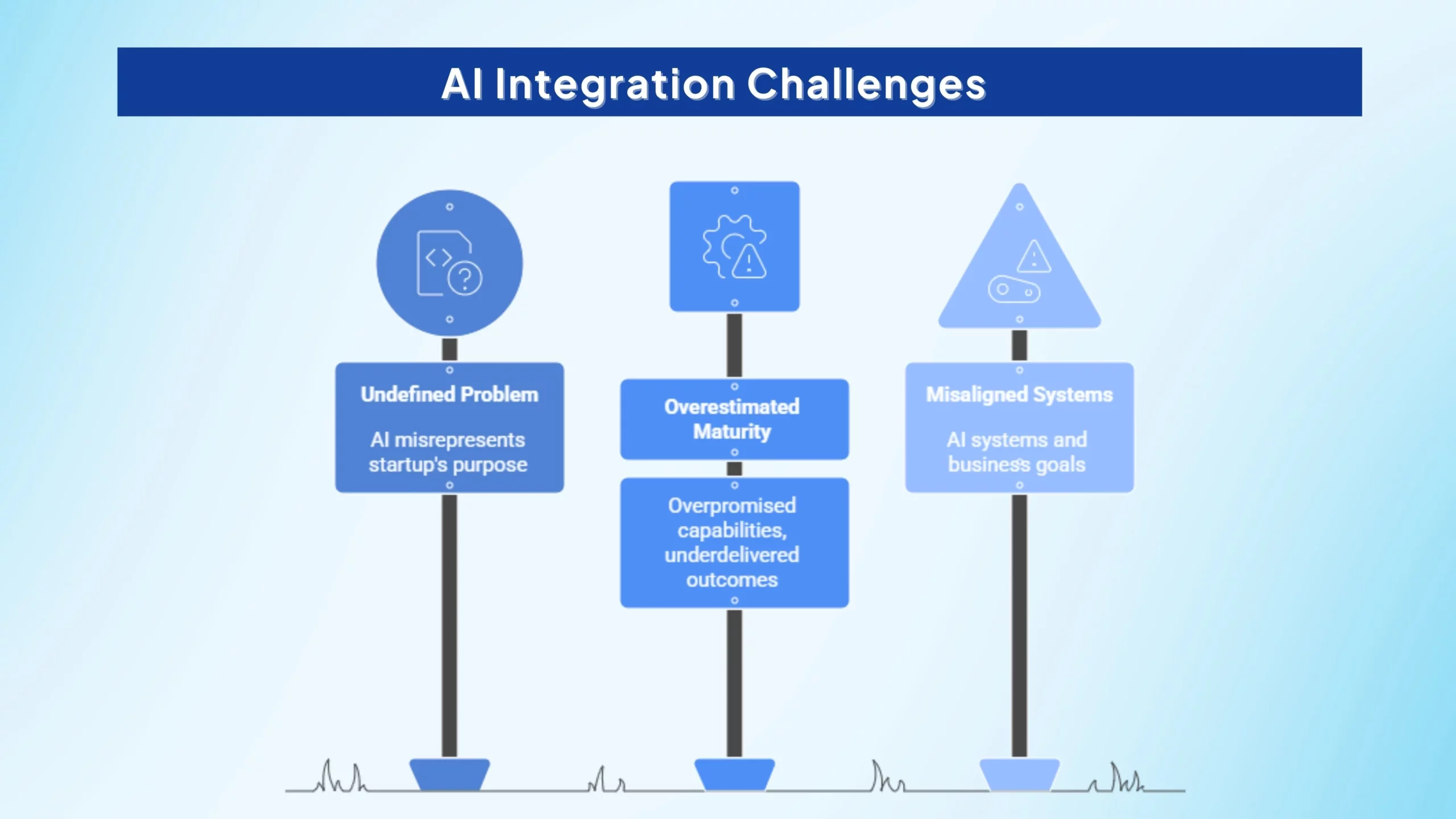
- AI was integrated without a clearly defined problem, causing it to misrepresent the startup’s actual purpose and offerings, which led to ineffective positioning.
- The maturity of AI was overestimated, resulting in overpromised capabilities and underdelivered outcomes that hurt trust with users and investors.
- Lack of alignment between AI systems and business goals reinforced misclassification, proving again that misclassification kills startup visibility and distorts discovery.
When large language models try to summarise a business without clear context, they prioritise pattern matching over understanding. Ambiguous startup messaging leaves room for incorrect conclusions, and suddenly your brand shows up incorrectly or not at all.”
Business Visibility Group
Real Story: How AI Thought My Tech Startup Was a Bakery?
At one point, AI systems began describing my tech startup as if it were a local bakery. Not because the product changed, but because the language did. The copy leaned heavily on words like warm, community, crafted, and carefully made, which felt human but confused machines.
This is where sentiment drift quietly broke everything. AI picked up emotional signals more strongly than functional ones, prioritizing tone over intent. Instead of understanding what we built, it inferred what we felt like.
The lesson was simple and unsettling. When sentiment outweighs specificity, AI fills the gaps with assumptions. And that’s how a tech startup becomes a bakery in the eyes of AI.
The Real Blind Spot for Startups: Seeing How AI Perceives You
Reason: Visibility shifted from rankings to AI inclusion
In my case, ranking was never the problem. AI simply did not include us correctly. Today, visibility depends on whether AI can accurately classify, cite, and summarize your startup before a user even performs a search.
Reason: Demand is formed before traffic appears
When AI answered questions upstream, traffic dipped and confusion followed. The demand still existed, but AI had already shaped the narrative, proving that traffic loss does not equal demand loss.
Reason: Content volume stopped being the advantage
Writing more did not fix the bakery problem. What mattered was clarity. Without strong inclusion signals and precise entity definition, AI leaned on sentiment and made the wrong assumptions. The AI discoverability checklist for startups offers structured steps to prevent this kind of misclassification.
Did you know?
What This Type of Platform Represents in the AI Era
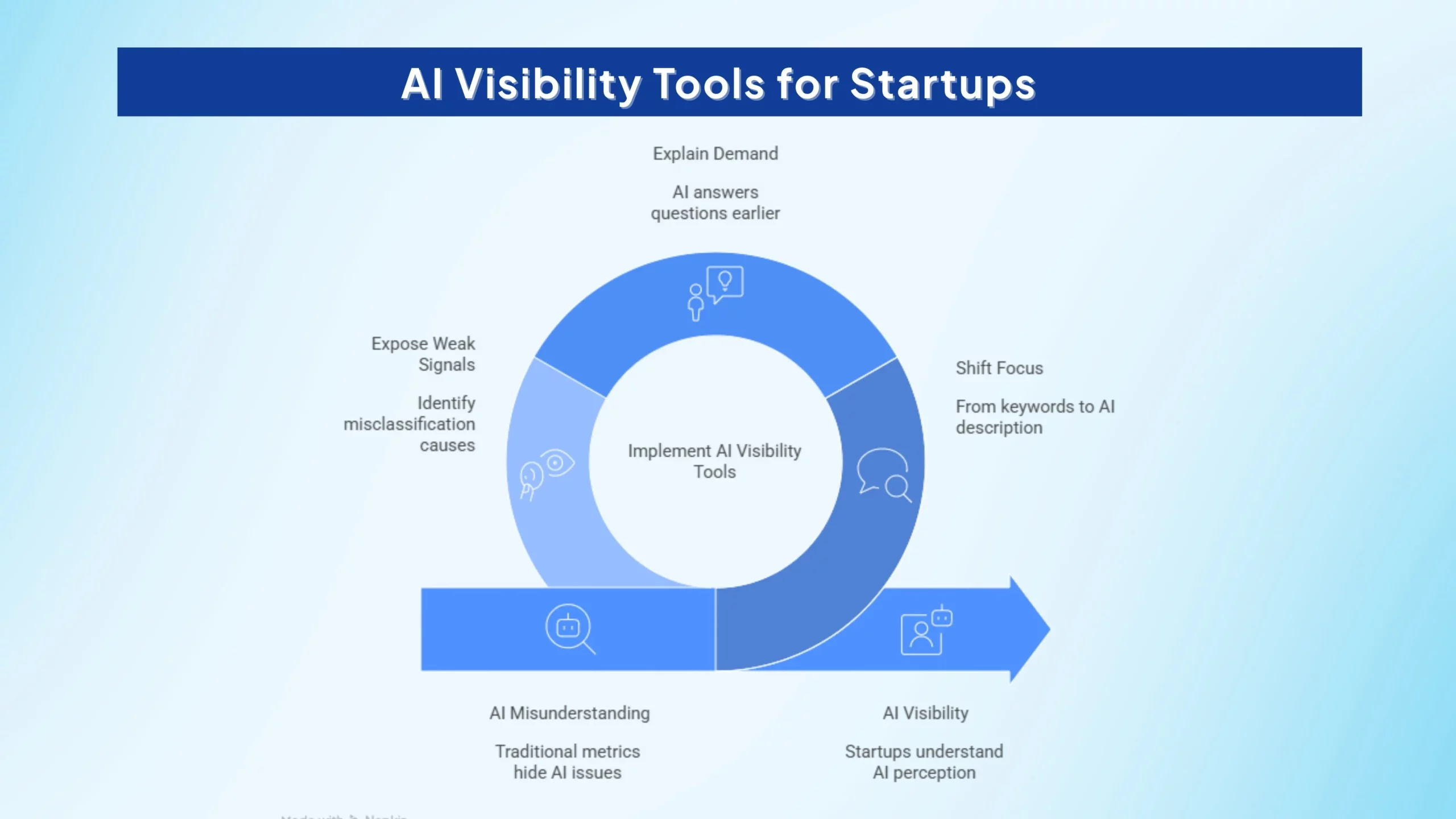
- When AI misunderstood my startup, rankings and traffic looked normal, but AI perception was already broken. Traditional metrics showed visibility, while AI was quietly redefining what we were.
- AI visibility tools shift focus from keyword positions to how AI describes and includes your startup across answers, summaries, and recommendations.
- They explain why demand can exist even when traffic drops, revealing how AI answers questions earlier and reshapes discovery upstream.
- Most importantly, they expose weak or emotional signals that cause misclassification, giving startups a way to see how AI sees them before misclassification kills visibility.
Luckily, with Wellows, you can check how AI understands your startup without expensive tools. Founders can detect misclassification early and win back AI visibility without heavy spending.
Why Is AI So Bad at Understanding Niche Startup Concepts?
AI struggles with niche startups not because the ideas are unclear, but because the systems interpreting them are built for scale, not specificity, leaving many websites ignored by AI search. The more specialized your concept, the easier it is for AI to misread it.
- Limited and sparse data: Niche startups often do not generate enough high-quality, representative data, which leaves AI models guessing instead of learning the true nature of the business.
- Mismatch with niche market complexity: AI models are trained on broad, generalized datasets, so they oversimplify specialized markets, missing unique customer behavior and context.
- Lack of explainability: Many AI systems operate as black boxes, making it difficult to understand why a startup is classified a certain way or to correct misinterpretations.
- Overfitting and inherited bias: When trained on narrow or biased data, AI may latch onto surface-level patterns and amplify incorrect assumptions about niche offerings.
- Technical debt in AI systems: Shortcuts and architectural compromises in AI development reduce long-term accuracy, especially for complex or emerging startup models.
For niche startups, this combination creates a perfect storm. Without clarity, grounding, and feedback, AI fills the gaps with assumptions, and misclassification quietly kills visibility.
What Causes AI Hallucinations About Business Descriptions?
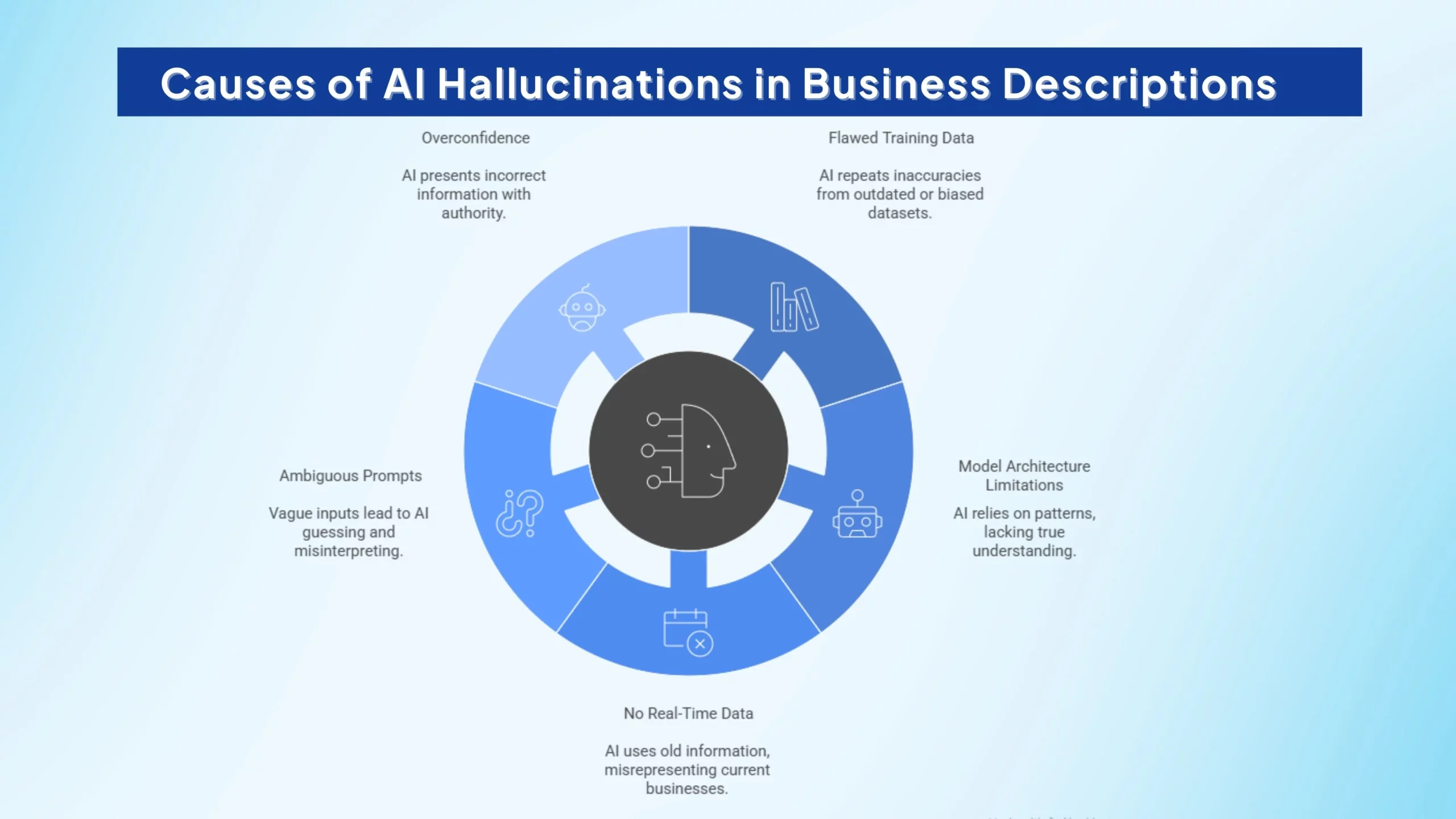
AI hallucination about business description occurs when an artificial intelligence system generates business information that sounds confident and believable but is actually incorrect, outdated, or entirely made up. When businesses rely on AI for company profiles, product descriptions, or brand summaries, these hallucinations can quietly introduce serious inaccuracies. Several core factors cause this problem.
1. Poor or Biased Training Data
When an AI model learns from data that is incomplete, outdated, or biased, it can create misleading business descriptions. For example, if the training data does not fully cover a company’s services, the AI may produce a description that is inaccurate or missing key details.
2. Statistical Guesswork Instead of Understanding
Large language models do not understand businesses the way humans do. Instead, they predict words based on probability. This means the AI may generate text that sounds logical but lacks factual grounding, especially when describing niche companies, new startups, or complex business models.
3. Vague or Ambiguous Prompts
If users give unclear or poorly structured prompts, AI models may rely on assumptions or learned patterns, which can result in hallucinations. Using clear and specific prompts helps guide the AI toward more accurate and reliable responses.
4. Lack of Real-Time or Verified Data
If an AI system is not connected to live, verified business databases, it may rely on outdated information. This can cause incorrect leadership details, old pricing models, or services that the company no longer offers to appear in AI-generated descriptions.
5. Confident Tone Masking Errors
One of the biggest risks is that AI presents incorrect information with high confidence and professional language. This overconfidence bias makes hallucinated business descriptions harder to detect, increasing the risk of reputational damage or legal issues when the content is published unchecked.
Understanding these causes explains why AI can mislabel a tech startup as a bakery. Without strong grounding, specificity, and clarity, AI fills the gaps, and misclassification kills visibility.
AI visibility isn’t just about ranking on Google anymore, it’s about whether models cite and describe your brand correctly in answers. If your core value proposition isn’t clearly encoded for AI, you risk being invisible even if your SEO is strong.
Hubspot Blog
The Invisible Damage of Being Misunderstood by AI
What if AI is speaking positively about your brand, yet still getting it wrong? That is exactly how misclassification starts. Quietly. Invisibly. Long before traffic drops or alarms go off.
What silently breaks when AI misclassifies you
- Wrong summaries that sound right but explain the wrong thing
- Wrong categories that place you next to businesses you are not
- Wrong audience reach where AI shows you to people who were never looking for you
You may still see mentions. You may even see praise. But visibility is already leaking.
Why Sentiment is the First Signal You Should Watch
Before rankings drop or traffic changes, AI misunderstanding shows up in how confidently models describe your startup.
Sentiment is not about fixing the problem. It is about seeing it early.
The Founder’s Real Problem
“I made a few tweaks and AI stopped misunderstanding my products.”
The founder was not struggling with demand or distribution. The real issue was misunderstood AI output.
- AI systems were confidently summarizing the product, but:
- Missing the core value proposition
- Blurring key product distinctions
- Returning generic explanations
- Recommending the product in the wrong context
This is the dangerous phase.
When AI is confident but wrong, the problem stays invisible.
How Founders Can Use Wellows to Detect and Correct This
Wellows’ Sentiment Analysis shows how AI platforms feel about your brand over time, whether responses are positive, neutral, or negative.
From the Wellows dashboard, a founder can immediately see:
- Overall AI confidence level
- Whether perception is stable or drifting
- If neutrality is creeping in after changes
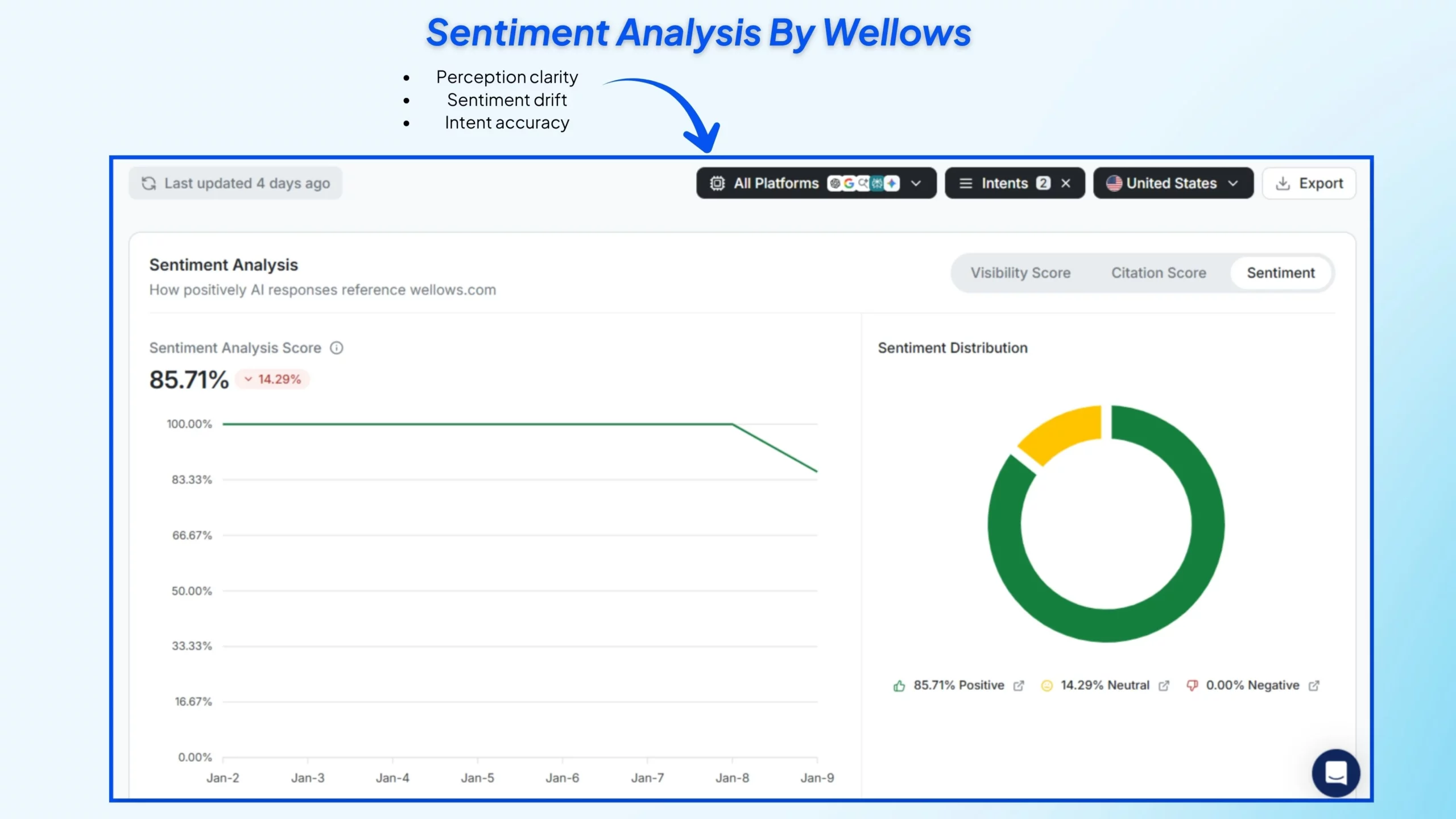
A high sentiment score does not mean clarity.
It means AI believes it understands you.
If that understanding is wrong, misclassification spreads quietly.
Turning Sentiment Into a Diagnostic Tool
Founders can use this feature as a feedback loop, not a vanity metric.
After making structural changes such as:
- Clarifying product pages
- Simplifying messaging
- Restructuring FAQs
- Removing contradictory information
They can then observe:
- Did neutral sentiment decrease?
- Did confidence stabilize or fluctuate?
- Did perception improve consistently across platforms?
If sentiment rises after clarity improvements, AI understanding is aligning.
If sentiment stays high but descriptions remain wrong, the structure is still misleading models.
What Wellows lets you actually observe:
- How different AI platforms describe your brand
- How perception changes by country, not just globally
- How sentiment shifts by intent, not just by mentions
Why This Matters Before Optimization
This is not growth work yet.
This is correction work.
Wellows helps founders see AI misunderstanding while it is still fixable, before:
- Wrong summaries harden
- Incorrect use cases spread
- Discoverability quietly collapses
- Because you cannot fix what you cannot see.
Wellows is redefining brand discovery in the AI era by showing how models like ChatGPT, Gemini, and Perplexity actually perceive and cite your company, rather than just how you rank on traditional search engines.
Instead of guessing how AI interprets your startup, founders can now observe it directly. With affordable tools like Wellows, you can spot misclassification early and correct AI perception before it quietly damages your visibility.
Why Does AI Struggle With Innovative Startup Ideas?
AI struggles with innovative startup ideas because true innovation requires creativity, emotional understanding, and real-world context qualities that artificial intelligence cannot fully replicate.
- Data Dependency and Quality
AI relies on large, high-quality datasets to generate ideas. In the startup space, especially for new or unexplored markets, such data is often limited or unavailable, restricting AI’s ability to produce original concepts. - Lack of Emotional Intelligence and Cultural Sensitivity
AI does not possess human emotions or cultural awareness. This limitation can result in startup ideas that fail to resonate with users or overlook cultural and social nuances that are critical for success. - Over-Reliance on Existing Data
Most AI-generated ideas are built on existing patterns and trends. This often leads to repetitive or derivative ideas rather than truly disruptive or innovative solutions. - Ethical and Regulatory Concerns
Biases in training data can influence AI outputs, raising ethical issues such as unfairness or discrimination. These concerns limit the reliability of AI-generated startup ideas. - Integration and Resource Challenges
Implementing AI for ideation requires technical expertise, infrastructure, and investment. Many startups lack these resources, making it difficult to fully leverage AI for innovation.
Innovative startups sit outside AI’s comfort zone. Without clarity and feedback, AI simplifies what it cannot yet understand, turning brand performance metrics in AI search into guesswork, and misclassification quietly kills visibility.
- Ignoring AI Search: The Real Cost of Ignoring AI Search
- Pattern Recognition in AI-Generated Answers: How Can Pattern Recognition Improve Visibility in AI-Generated Answers
- Get the Best of an AI Search Visibility Tool: How Can Startups Get the Best of an AI Search Visibility Tool on a Limited Budget?
- Startups Can Build a Distribution Moat: How Startups Can Build a Distribution Moat Before Competitors Do
- Tech Startups: Top Tech Startups Redefining AI, Robotics and Others
FAQs
AI often misinterprets your business when your content uses vague language, inconsistent data, or lacks structure, forcing models to guess instead of understand. Outdated information and entity confusion make this worse, especially when AI relies on fragmented sources.
ChatGPT may describe your startup in the wrong industry due to AI hallucinations, outdated or inconsistent online information, or unclear business data. If your branding is generic or your website lacks structured data, the model can misinterpret your core offering. Since AI relies on patterns rather than real-time verification, these limitations can lead to incorrect industry classification.
To train AI to accurately represent your startup, clearly define your business context and provide high-quality, well-structured data about your products and services. Choose an AI model that fits your needs and fine-tune it using your own data to align outputs with your brand. Continuously monitor results and update the model to keep representations accurate and relevant.
AI tools can accurately summarize what your startup offers when your content is clear, structured, and specific. Problems arise when messaging is vague or inconsistent, which causes AI to produce misunderstood AI output or misclassify your product. By tightening structure and regularly reviewing how AI interprets your content, founders can significantly improve summary accuracy.
Conclusion
AI did not misunderstand my startup overnight. It misunderstood it quietly, through tone, sentiment, and missing signals that pushed it into the wrong mental box. The lesson is clear: when AI fills gaps with assumptions, misclassification kills visibility long before founders notice the damage.
The future of startup growth depends on understanding how AI perceives you, not just how users find you. Visibility now begins upstream in AI summaries and answers, and founders who use cost-efficient tools like Wellows to monitor and correct that perception early will be the ones who stay discoverable as AI reshapes search.