AI search is quietly changing the internet, and most startups are not ready for it. When your brand is not visible inside AI answers, you are not just losing traffic. You are losing trust, discovery, and future customers before they even reach your site.
The real cost of ignoring AI search is invisibility that compounds over time. Luckily, it does not happen overnight, but once competitors become the cited source, your startup becomes harder to find. Surprisingly, even strong SEO today is not enough if AI systems do not mention you.
What makes this shift even more serious is how user behavior is changing fast. Roughly 60% of traditional searches now end without a click, and the gap widens with AI summaries. Click rates drop to around 26% with AI summaries, compared to 16% without them, meaning fewer chances for startups to earn attention.
Even worse, only about 8% of users click traditional links when AI summaries appear, while around 15% do when they do not. This is why startups must track baseline visibility early, before traffic loss becomes irreversible. In this blog, I will discuss the real cost of ignoring AI search and how startups can respond.
- Many beginner startups assume “we are too new, so AI visibility does not matter yet,” but invisibility compounds quickly once competitors become the cited source.
- Ignoring AI search makes startups disappear over time, because AI summaries reduce clicks and only a small fraction of users reach traditional links.
- Startups that delay AI adoption face higher costs, slower growth, and missed revenue, while competitors become the brands AI recommends first.
- Data shows AI is already reshaping markets, with companies gaining up to 20% revenue lift and faster innovation when AI is implemented early.
- Wellows gives founders an affordable way to track baseline snapshots, uncover visibility gaps, and build a distribution moat before competitors compound attention.
What Happens To My Strtup If I Don’t Implement AI While My Competitors Are Using It?
If you don’t implement AI while other competitors are using it can quietly damage your startup in ways that are hard to reverse. Especially the AI search visibility for startups is no longer optional. It is the difference between being discovered or being ignored.
Here is what really happens:
1. Competitive Disadvantage
When competitors use AI, they move faster and look smarter in front of customers. They can automate workflows, respond quicker, and appear more often in AI-generated answers. That gives them a huge edge in both product growth and visibility.
Example:
If two startups offer similar tools, but only one shows up in AI search recommendations, users will trust and try that one first. The other startup becomes invisible even if the product is strong.
2. Increased Operational Costs
AI reduces the cost of doing repetitive work. Without AI, startups waste time on manual tasks, slow reporting, and inefficient processes. This makes growth more expensive.
Example:
A competitor uses AI to handle customer support instantly. Meanwhile, your team spends hours replying manually, increasing labor costs and slowing response times.
3. Missed Revenue Opportunities
AI helps businesses spot demand early and unlock new revenue streams. If you ignore AI, you miss the signals that show what users want, what they search for, and where growth is happening.
Example:
Your competitor notices AI search queries trending around a problem your product solves and launches targeted content first. They capture the market while you stay unseen.
4. Reduced Customer Satisfaction
Customers now expect fast, personalized experiences. AI makes it easier to tailor interactions, improve onboarding, and answer questions instantly. Without it, customer experience feels outdated.
Example:
Users ask AI tools for the best solution, and your competitor is mentioned with clear benefits. Your brand is absent, so users assume you are not relevant.
5. Inefficient Resource Allocation
AI supports smarter decisions with data. Without AI, startups often spend limited budgets blindly, without knowing what channels or messages actually work.
Example:
You invest heavily in ads, but AI-driven discovery is where your audience is moving. Competitors optimize visibility while your budget drains with less return.
6. Innovation Stagnation
AI adoption fuels innovation. Startups that ignore AI struggle to keep up with new expectations, new products, and new discovery systems.
Example:
Competitors build AI-powered features or become cited in AI summaries. Your startup remains stuck in traditional SEO while the market shifts around you.
Why this risk is real
This is not a future problem. It is already happening.
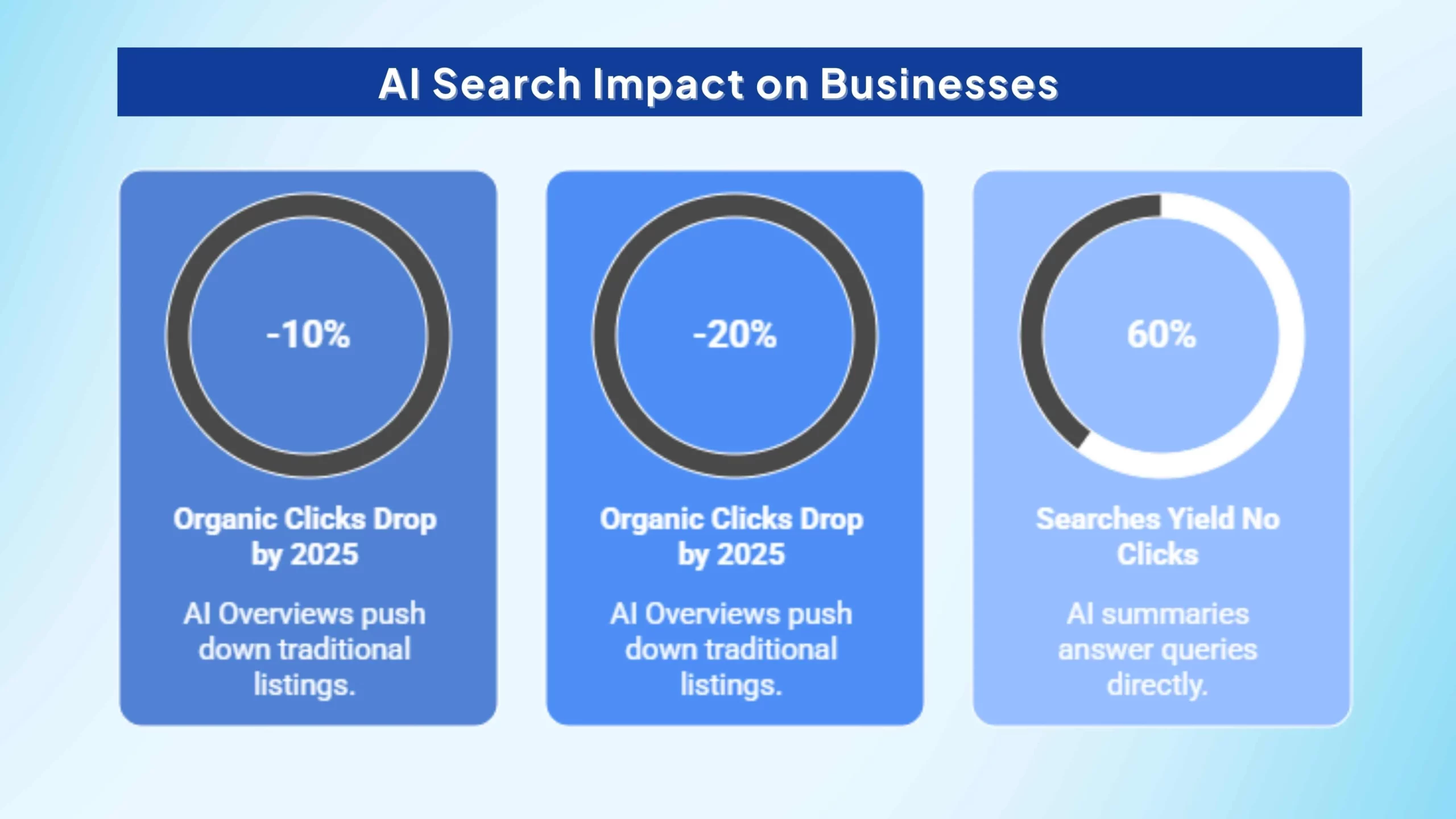
UK businesses ignoring AI search face a 10-20% drop in organic clicks by 2025, as AI Overviews push down traditional listings. Most B2B brands remain invisible in AI-generated responses despite SEO investments, resulting in pipeline leakage to optimized competitors. Over 60% of searches now yield no clicks due to AI summaries answering queries directly on results pages.
How can an AI search visibility tool actually fix this problem?
For startups, the hardest part is not building the product. It is making sure people can actually find it. And most early-stage founders make the same assumption:
“AI is for bigger companies, our startup is too early for that.”
Luckily, that is exactly why the risk grows. In AI search, invisibility compounds, meaning if your startup is missing today, it becomes even harder to appear tomorrow.
That is where an AI search visibility tool becomes essential, especially for budget-constrained teams.
1. It gives you baseline snapshots before invisibility grows
Startups cannot fix what they cannot measure. Even if you are not appearing yet, the tool shows your starting point. If AI summaries never mention your product today, the tool captures that baseline early so you can improve before competitors dominate those answers.
2. It helps you show up where customers are already searching
AI discovery is replacing traditional clicks. Visibility tools reveal the real questions users ask inside AI platforms and search overviews. Instead of guessing keywords, you learn which AI-generated queries drive discovery in your niche, so you can create content that actually gets surfaced.
3. It prevents traffic loss from compounding over time
The real cost of ignoring AI search is that losses stack quietly. Waiting too long often means competitors become the default answer first. If another startup becomes recommended in AI summaries, the tool alerts you early so your pipeline does not start leaking silently.
4. It makes distribution efficient for budget-constrained startups
Startups building a distribution moat do not have unlimited marketing spend. That is why visibility tools matter, because they help founders focus only on the highest-impact opportunities instead of wasting budget on broad campaigns. Instead of relying on expensive ads, startups can invest in the exact AI search surfaces where their audience is already looking for solutions.
5. It builds long-term authority instead of one-time exposure
AI search rewards brands that show up consistently. Visibility tools help startups stay present across modern discovery channels. If your startup becomes repeatedly cited in AI summaries, trust builds over time, creating an authority moat competitors struggle to break.
In simple terms
Most startups think being “too new” means AI search does not matter yet. But an AI search visibility tool helps you take control early by capturing baseline snapshots, preventing compounding invisibility, and ensuring your brand stays discoverable before competitors own the AI answers.
The advantage is that startups can start shaping their AI visibility early without heavy marketing spend. Wellows provides a budget-friendly way for founders to secure discoverability in AI answers before competitors capture that attention.
What Does The Data Say About Startups That Ignore AI Implementation?
The data is clear: startups and companies that delay or ignore AI implementation are not just “waiting for the right time.” They are quietly losing efficiency, revenue, innovation speed, and competitive position.
Here is what research shows in simple terms.
1. Companies that ignore AI fall behind competitors fast
AI is no longer optional. Many startups are already using it to grow faster and operate smarter.
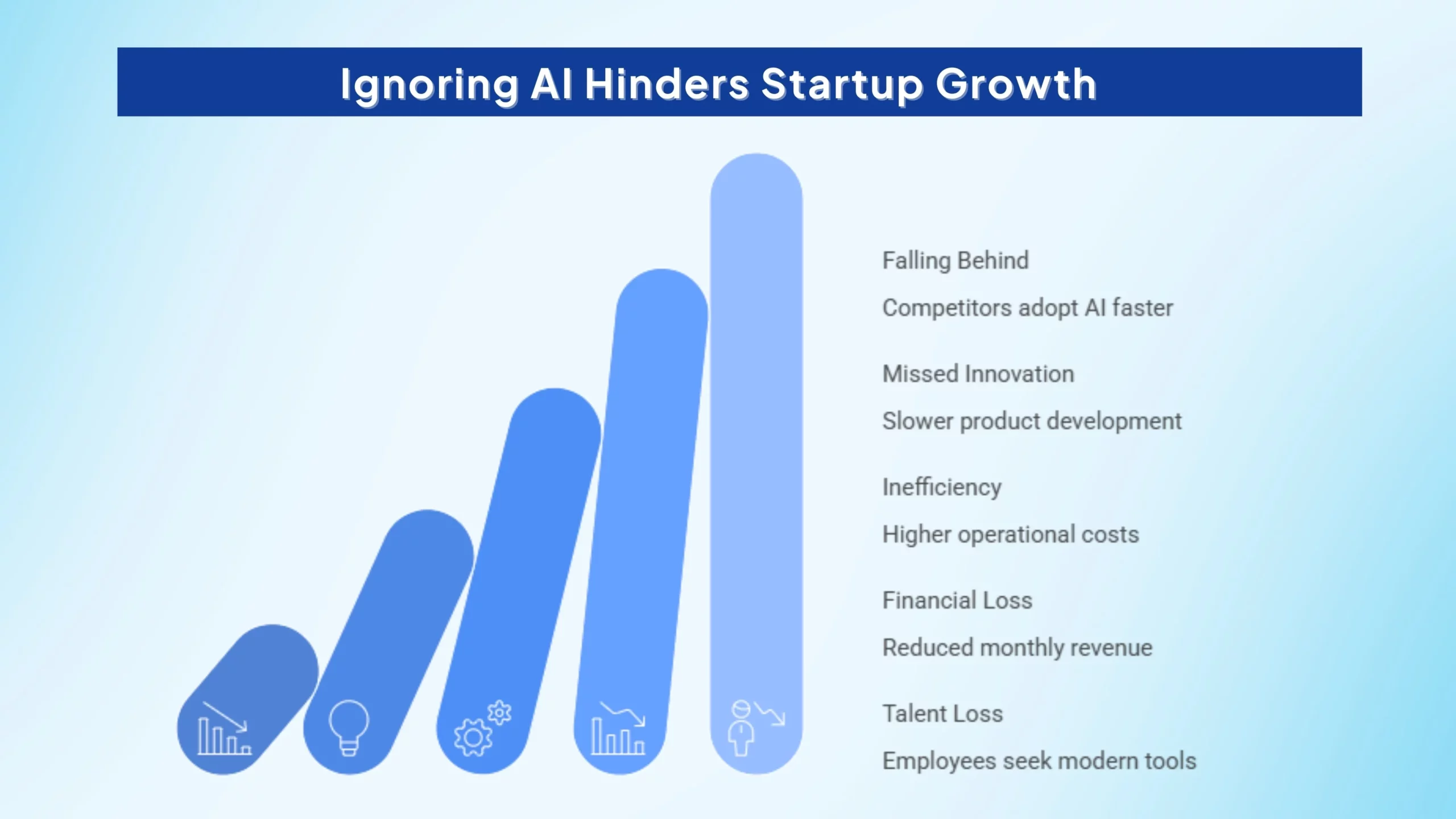
A 2023 McKinsey report found that 50% of companies have implemented AI in at least one function, and those companies reported around a 20% revenue increase. Businesses that do not adopt AI struggle to keep pace.
2. Ignoring AI means missing innovation opportunities
AI helps startups build new products and services faster.
PwC’s 2023 research shows that 72% of businesses using AI are more likely to develop new offerings quicker than competitors. Without AI, companies risk stagnation.
3. Operational inefficiency becomes expensive
AI reduces repetitive work, improves workflows, and cuts costs.
Accenture estimates AI can boost operational efficiency by 40% and reduce costs by 30%. Companies that avoid AI often spend more to achieve less.
4. Financial losses are already happening
Delaying AI adoption has direct revenue consequences.
A Couchbase study found that over half of UK businesses may be losing up to 5% of monthly revenue simply because they are slow to implement AI.
5. AI resistance can hurt talent retention
Employees expect modern tools. Startups that ignore AI may lose skilled workers who want to stay competitive.
A Kelly Services survey found that 69% of executives believe refusing AI is a bigger career threat than AI itself, and 59% would replace workers who resist adopting AI tools.
Did you know?
A key reality check: AI adoption must be done correctly
Interestingly, recent CEO surveys show that many startups still struggle to get results because they treat AI as an experiment instead of a strategy.
- More than half of CEOs report seeing no benefits from AI so far
- MIT research suggests 95% of generative AI projects show no measurable P&L impact when integration is flawed
What Are The Hidden Costs of Delaying AI Implementation For My Startup?
The hidden cost of delaying AI implementation for your startup is that it rarely stays a neutral decision. Many startup founders believe AI can be handled later, after growth, funding, or product maturity, but the reality is that waiting allows inefficiencies, missed opportunities, and competitive gaps to quietly compound over time.
Here are the biggest hidden costs, explained in simple terms.
1. Wasted labor hours on repetitive work:
Without AI, your team spends too much time doing tasks that could be automated. This includes answering the same support questions, sorting leads, writing reports, or entering data manually. For example, instead of focusing on product improvements, your customer support team spends hours replying to identical queries every day. Over a year, those wasted hours become a major cost.
2. Missed opportunities and slower growth:
AI helps startups move faster and spot new revenue opportunities earlier. If you delay adoption, competitors who use AI can launch features quicker, market smarter, and win customers first. Suppose you are still guessing what users want, another startup uses AI insights to target the right audience and captures the market ahead of you.
3. Higher operational costs from manual processes:
Manual workflows are not only slower, they are also more prone to mistakes. AI streamlines operations, improves accuracy, and reduces the cost of running daily tasks. Take an example, your sales team manually updates spreadsheets, but a competitor automates the same process with AI and saves time while closing deals faster.
4. Losing top talent to AI-forward companies:
Skilled professionals want to work where modern tools are embraced. Startups that avoid AI may struggle to attract or retain top talent because employees want to grow with advanced technology. For instance, a strong engineer may choose a competitor simply because they offer AI-driven work instead of outdated manual systems.
5. Rising costs of implementation later:
AI is evolving quickly. Waiting too long can make adoption more expensive. Later implementation often requires more training, deeper integration, and higher maintenance costs. Consider implementing AI early might take a small setup, but doing it years later could require rebuilding systems from scratch.
6. Technical debt and expensive refactoring:
If AI is added too late, startups often patch it into systems not designed for it. This creates technical debt, meaning costly fixes and rewrites down the road. For example, instead of building AI-ready infrastructure early, you end up spending months refactoring code just to catch up.
7. Customer trust and brand perception risks:
Customers now expect smarter, faster, and more transparent experiences. If your startup falls behind, users may lose confidence or assume your product is outdated. When AI recommending startups highlights competitors with personalized experiences while you offer generic interactions, customers may trust them more and switch quickly.
How Much Competitive Advantage Am I Losing By Not Using AI Right Now?
The competitive advantage you are losing by not using AI right now is larger than most startups realize. Many founders assume they are too early to worry about AI, with the common mindset being,
“We are too new to show up in AI answers anyway, so why worry now?”
But the reality is that competitive advantage is being lost quietly every day you delay. AI adoption is no longer just about automation. It is about discoverability, authority, and staying ahead while competitors take the lead.
Here is what you are losing right now.
- Higher costs and slower execution: AI automates repetitive tasks and improves efficiency. Without it, startups rely on manual work, which increases operational costs and slows growth. Competitors using AI can move faster with fewer resources, while you spend more time and money doing the same tasks manually.
- Missed revenue opportunities: AI helps companies identify new market opportunities through predictive insights and smarter data analysis. If you are not using AI, you may miss demand signals that competitors act on first. That means they capture customers earlier, while your startup remains unseen.
- Lower customer satisfaction: AI improves customer experience through personalization and faster service. Startups that ignore AI risk offering slower, less tailored interactions. In competitive markets, even small experience gaps can push users toward AI-enabled alternatives.
- Inefficient use of limited startup budgets:
- Without AI-driven insights, resource allocation becomes guesswork. Startups often waste money on broad marketing instead of focusing on what actually drives growth. AI helps ensure every dollar goes toward high-impact channels.
- Falling behind competitors in visibility and authority: Competitors using AI are not just building better workflows. They are becoming the brands AI systems recommend first. If they appear in AI summaries, LLM answers, and AI Overviews before you, they become the default choice.
- Missing market shifts and emerging trends: AI allows companies to react faster to changes. Without it, startups respond slower, missing key opportunities in fast-moving spaces.
- Limited scalability: As your startup grows, complexity increases. AI helps scale operations efficiently. Without it, growth becomes harder, slower, and more expensive.
Most startups think this is not urgent
Many founders believe search engine visibility is something to care about later. But the screenshots below show why early baseline tracking is exactly what prevents invisibility from compounding.
How Wellows baseline snapshots fix this problem?
The screenshots below show exactly what founders should focus on, even at the earliest stage.
Brand Visibility Overview
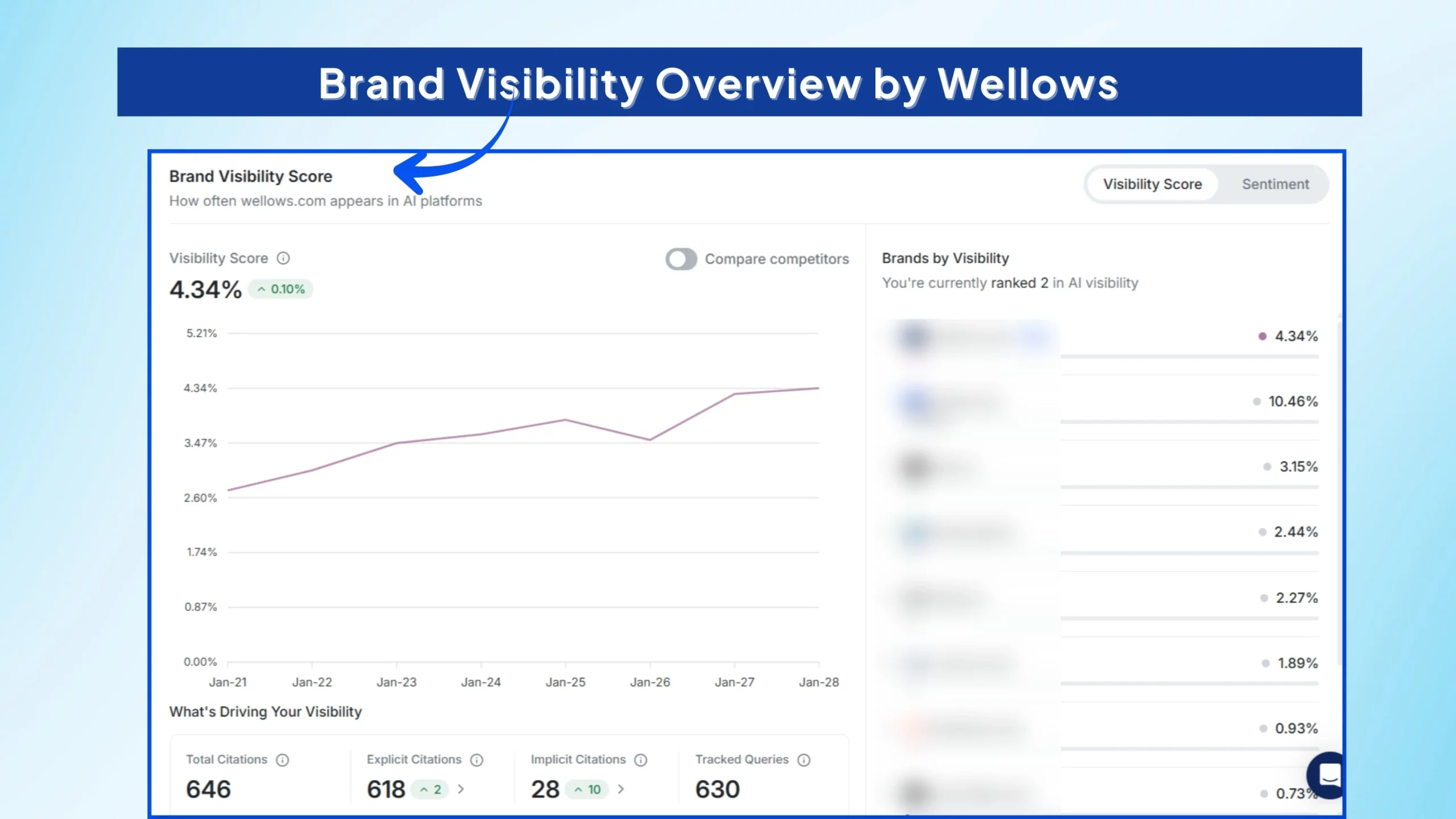
Founders should start by selecting the Overview section to understand the brand visibility score, along with the ranking in AI visibility. This gives a baseline snapshot of where you stand today, even if visibility is still small.
What founders should do here is track whether AI systems recognize their brand at all, and use this as the starting point for future improvement.
Competitive Insights
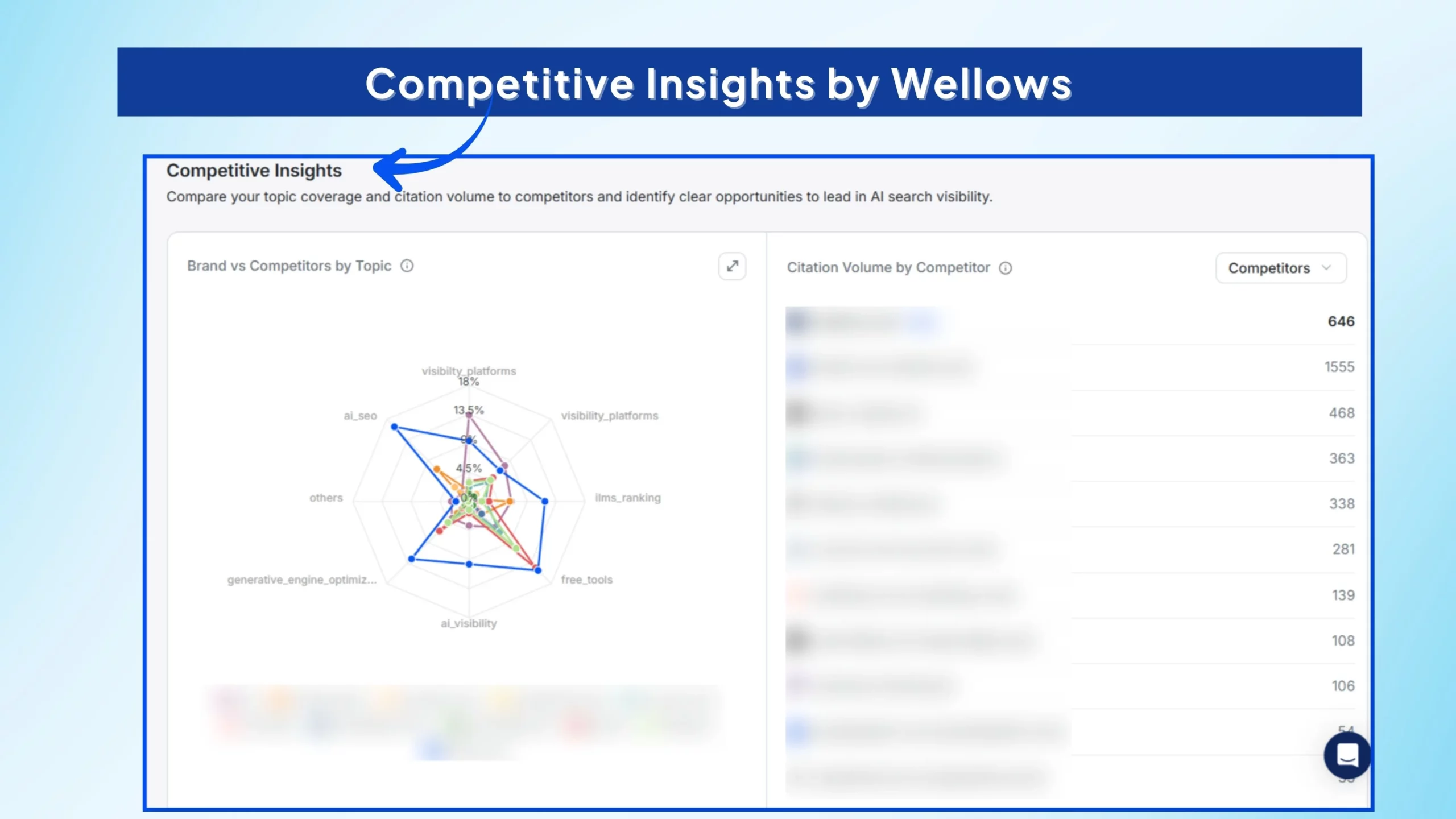
Founders should open the Competitive Insights view to compare their brand against competitors. This helps you understand who is being cited more often and where competitors are already winning attention.
The key action here is identifying gaps in topic coverage so your startup can build authority before others dominate those AI answers.
Visibility Across LLMs
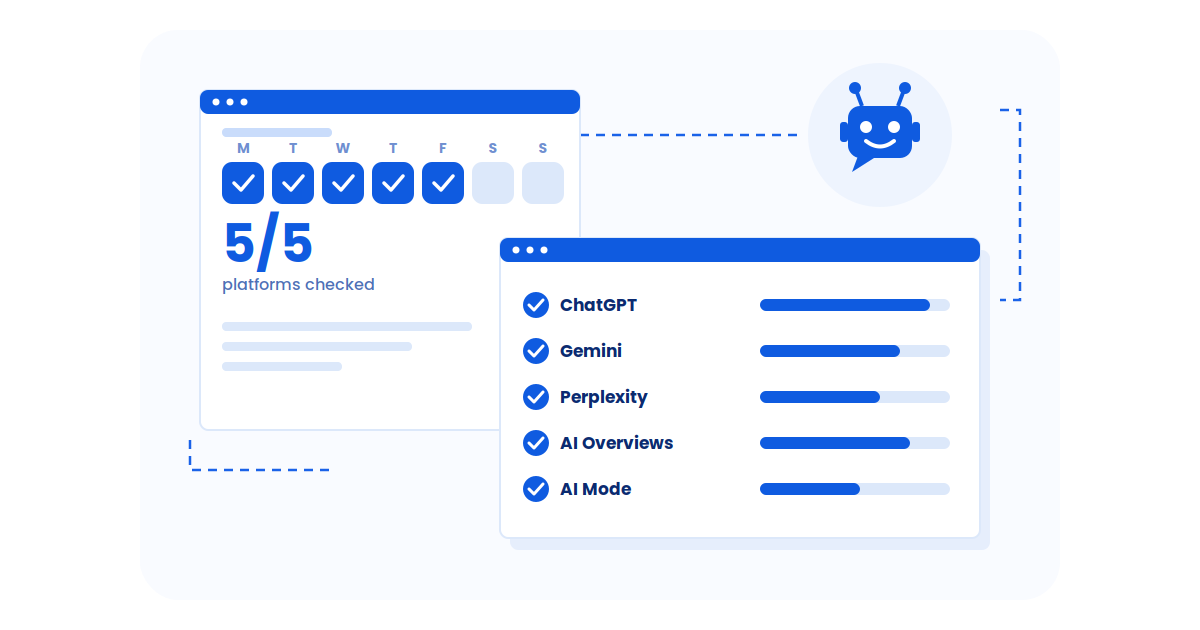
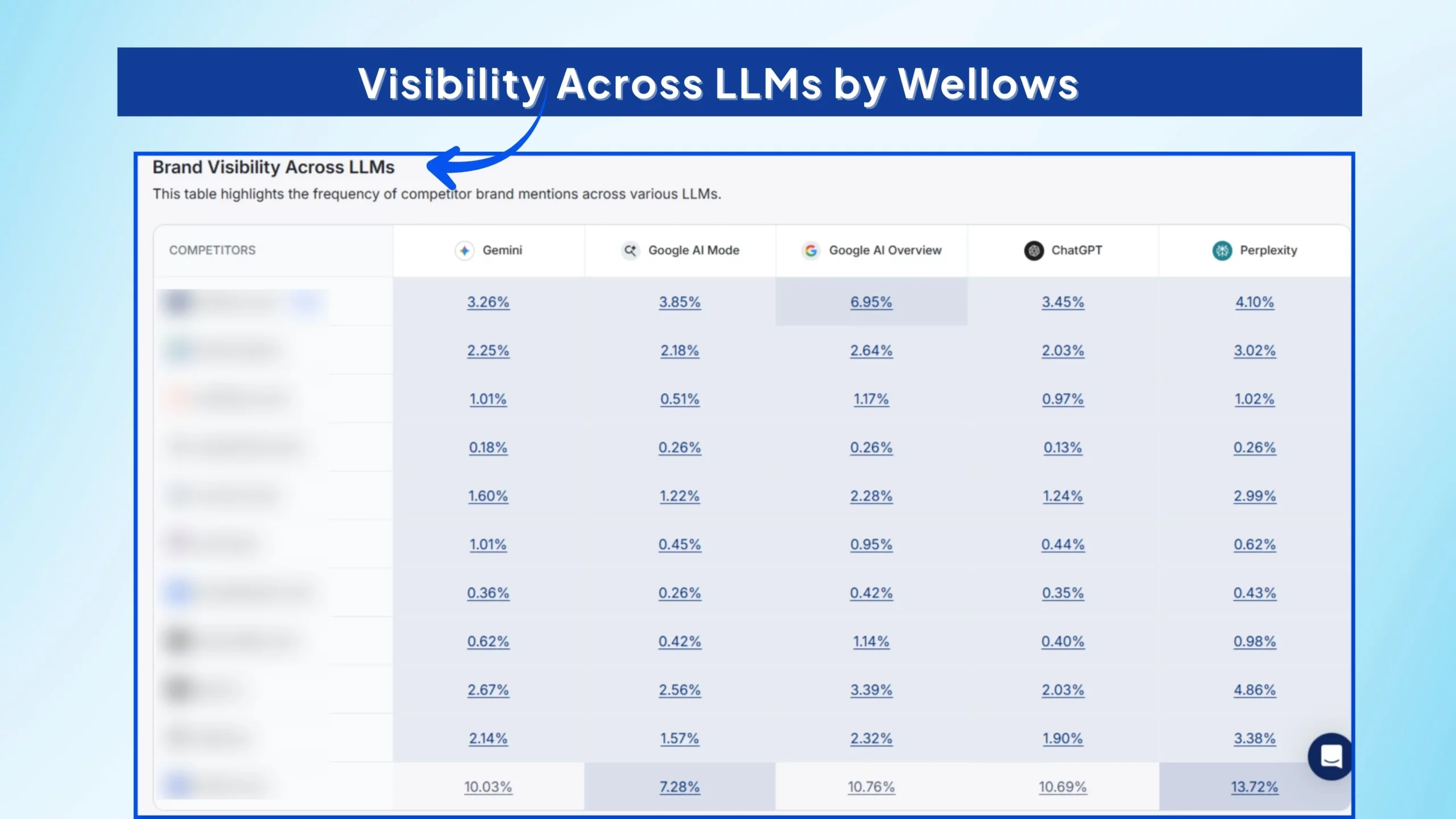
Founders should check the Brand Visibility Across LLMs table to see how their startup appears across platforms like Google AI Overviews, ChatGPT, Gemini, and Perplexity.
The most important step is spotting which AI engines mention competitors more frequently, so you can prioritize where to improve first instead of spreading efforts blindly.
Top Cited Queries
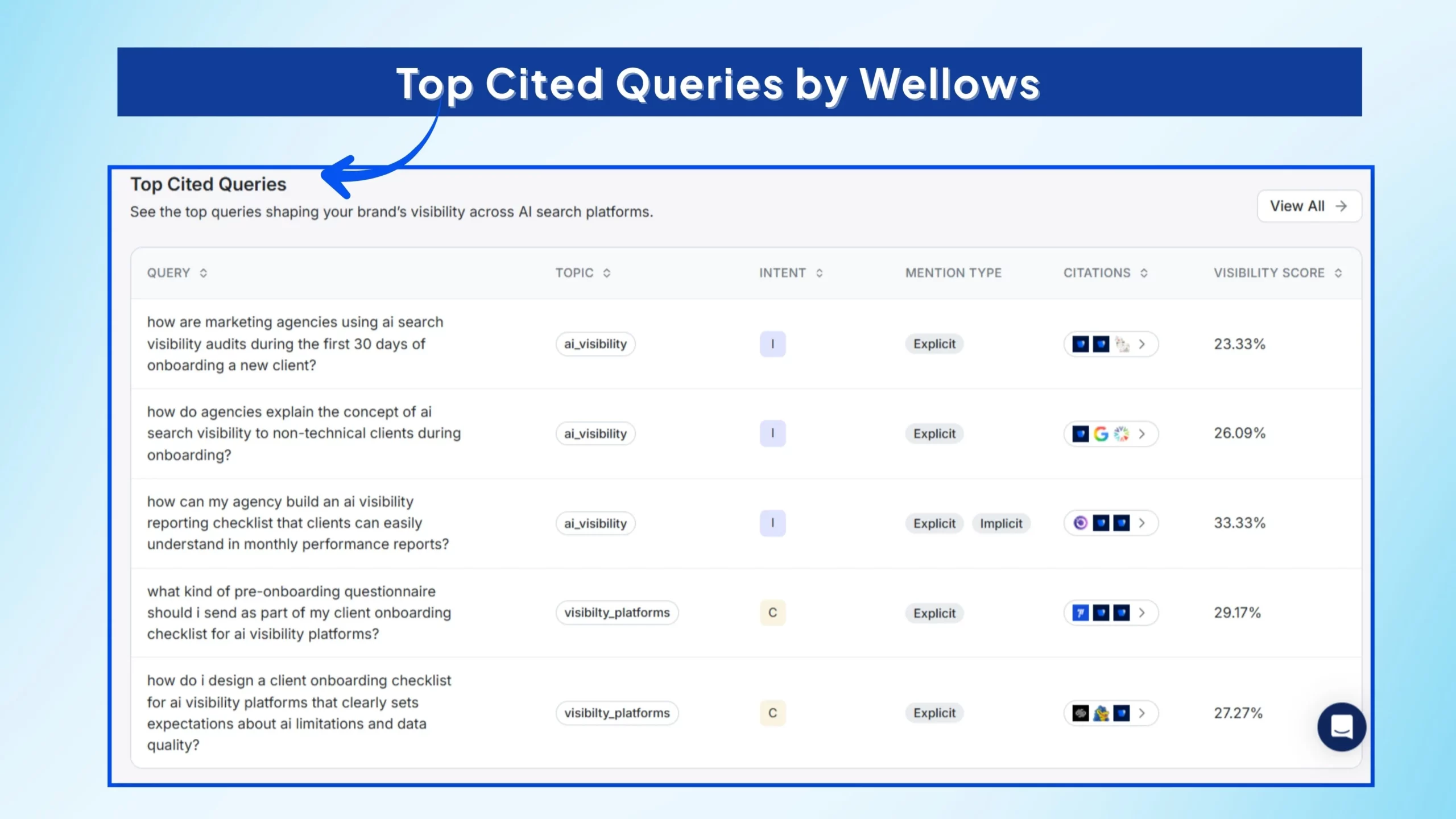
Founders should explore the Top Cited Queries section to see the exact questions that drive AI mentions.
This is where startups learn what people are actually asking AI tools in their niche. The best move is selecting these queries and creating content or positioning that matches them, so your brand becomes part of the AI-generated conversation.
In simple terms
Not using AI right now means losing speed, efficiency, revenue opportunities, and long term visibility. Most startups wait because they think they are too new.
But with affordable AI visibility insights from Wellows, founders can capture baseline snapshots, understand where competitors already appear, and take the right actions to become discoverable before invisibility compounds.
Can I Afford To Wait Longer Before Implementing AI In My Organization?
For most organizations, waiting longer to implement AI may feel like a safe choice, especially when the returns seem uncertain. But the data suggests that delaying AI adoption comes with growing risks, even if the benefits are not immediate.
A recent PwC CEO survey found that 56% of CEOs reported no significant cost or revenue benefits from AI so far, and only 12% said they achieved both higher revenues and reduced costs. This shows an important reality: many companies are still early in their AI journey, and meaningful results often take time and proper execution.
However, the bigger danger is not that AI is imperfect today. The bigger danger is that competitors are adopting it anyway, learning faster, and building long-term advantage while others hesitate. Organizations that delay AI often face rising operational costs, slower innovation, and loss of market share, because manual processes remain expensive and inefficiencies compound over time.
Delaying also creates challenges in talent retention. Teams increasingly expect modern tools, and companies that avoid AI risk appearing outdated internally, making it harder to attract and keep skilled employees.
Some industries are already moving far ahead. In financial services, adoption is accelerating rapidly, with 94% of finance teams integrating AI and 99% of leaders recognizing its importance. AI is being used for automation, risk mitigation, and deeper business insights, showing how quickly AI is becoming a baseline expectation rather than a competitive extra.
In simple terms, while AI may not deliver instant “jackpot” results for everyone today, the cost of waiting is often higher in the long run. Competitors will keep experimenting, improving, and gaining visibility, and organizations that start later may find themselves playing catch-up in efficiency, innovation, and relevance.
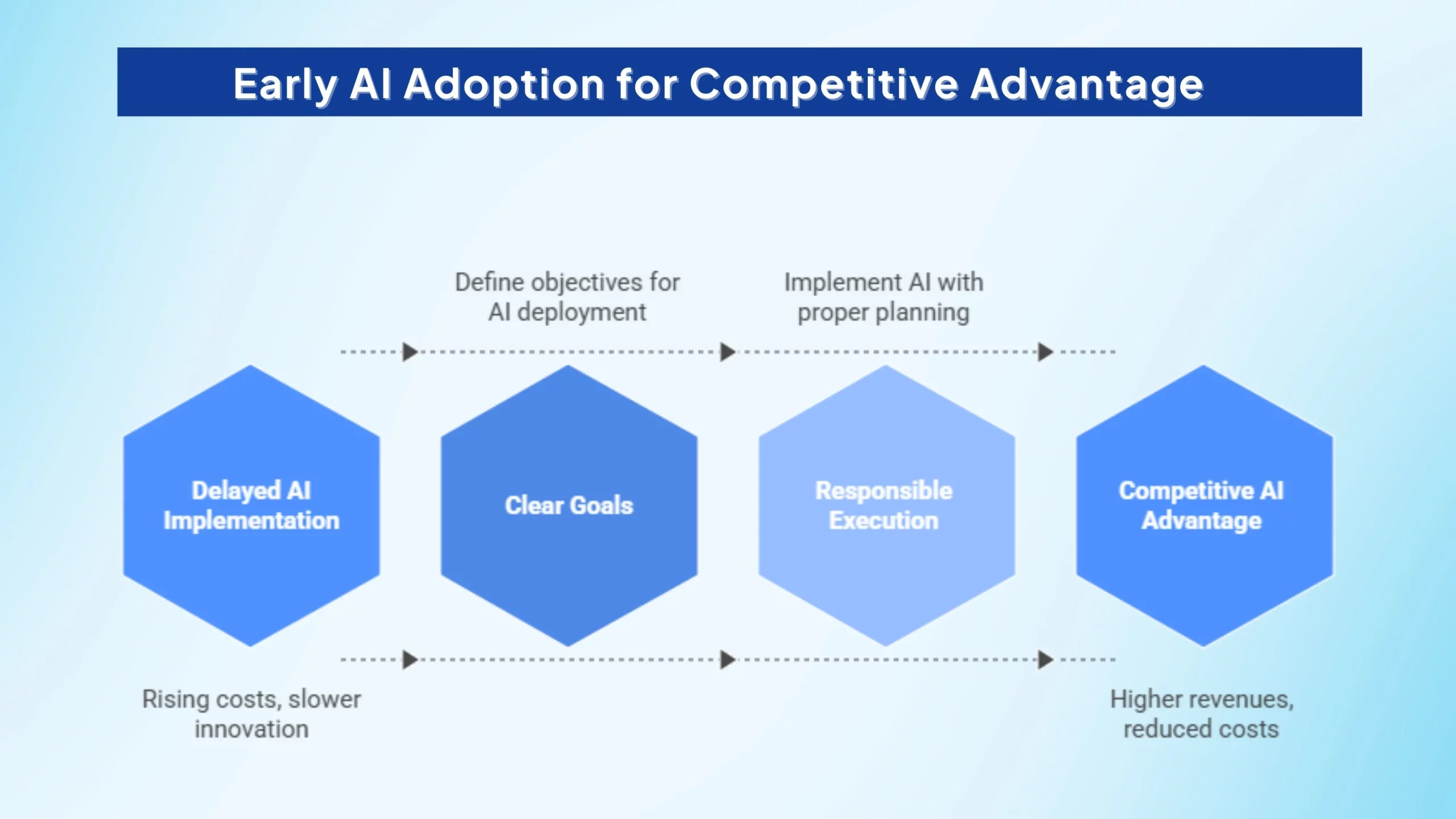
The smartest approach is not to wait for perfect ROI, but to begin integrating AI early, with clear goals and responsible execution, so your organization stays competitive as AI becomes the standard.
“AI is not going to replace managers, but managers who use AI will replace the managers who do not.” — a useful line to show cost of ignoring AI in operational leadership.
Rob Thomas, IBM Senior Vice President
Aiifi
Data From 1000+ Brands: Why Are Startups That Ignore AI Falling Behind In Their Industries?
Insights from over 1,000 brands reveal a clear shift: startups that optimize for AI search are gaining visibility and credibility, while those that ignore it are slowly vanishing from modern discovery channels.
When AI tools cannot find fresh, structured information about a brand, they rely on outdated content or external sources, which means startups lose control of how they are represented. In a world where buyers increasingly use ChatGPT, Gemini, and Perplexity to research products, not showing up in AI answers is no longer just a traffic issue. It is a reputation and relevance problem happening right now.
Did you know?
This is where Wellows baseline snapshots help founders take control early:
- Show how often your startup appears across AI platforms before invisibility compounds
- Identify which competitors are being cited more and where you are missing
- Reveal the exact AI-driven queries shaping discovery in your niche
- Track progress over time so you improve visibility with limited startup budgets
- Legal Checklist for Startups: 15-Steps Legal Checklist for Startups: Complete Guide
- Launch Readiness Checklist: 10-Steps Launch Readiness Checklist: Full Guide
- AI Misunderstood Startup: How AI Misunderstood What My Startup Does
- Saas Startups: Leading SaaS Startups: Y Combinator, Unicorns & SMS Rankings
- Tech Startups: Top Tech Startups Redefining AI, Robotics and Others
FAQs
AI is reshaping the startup landscape by giving adopting companies faster innovation, smarter decisions, and stronger customer experiences. Startups that do not embrace AI risk falling behind in productivity, missing growth opportunities, facing higher operational costs, and struggling to scale efficiently. In simple terms, AI is becoming a baseline advantage, and startups that ignore it may lose visibility, competitiveness, and market relevance over time.
You can calculate the true cost by measuring wasted labor on repetitive tasks, missed revenue opportunities, and the competitive gap created by AI-enabled rivals.
Studies estimate startups can lose an “AI delay tax” of $8,000–$15,000 per month, while automation savings alone can reach $100,000–$180,000 annually. When you add lost market share potential of 10–30% and employee replacement costs of $35,000–$52,000 per hire, the cost of waiting often exceeds the cost of starting early.
AI-driven startups reduce costs by automating routine tasks like support, data entry, and processing, which lowers labor needs and minimizes human error. They also use AI to optimize resource allocation, predict demand, and make faster decisions through analytics, while personalizing customer engagement to reduce marketing spend.
In contrast, non-AI companies rely on manual workflows, inefficient resource management, slower decision-making, and higher acquisition costs, making it harder to compete on efficiency and scale.
Conclusion
Ignoring AI search is no longer a small delay. It is a compounding visibility problem that affects how startups are discovered, trusted, and chosen in modern markets. As AI tools become the first place customers research solutions, being absent from those answers means losing relevance before growth even begins.
The startups that win will not be the ones with the loudest marketing, but the ones that build early authority and measurable presence across AI discovery channels. By tracking affordable baseline snapshots with tools like Wellows, investing in distribution, and adapting now, founders can stay visible, competitive, and ahead before invisibility becomes permanent.